
Weekly Photo Challenge: Big

I thought this picture was a great fit for this week’s photo challenge. Every day at exactly 6pm the Mexican Army (aka Ejercito Mexicano) has a procession from the Palacio Nacional to the center of the Zocalo to lower the national flag. If you don’t know about this ceremony you will most definitely be surprised when you suddenly encounter hundreds of soldiers marching, complete with fanfare forming an enormous human square around the pole. When the flag is lowered the formalities of “standing in line” completely disappear as men scramble to grab the massive symbol of Mexico before it touches the ground. After securing the flag it is folded up and marched back into the palacio for the night.
Playa El Cuco and our departure from El Salvador
If you ever rode on a 2nd class bus in Latin America before the next few sentences will probably stir up some fond retrospective moments buried under years of more comfortable transportation. Hours of loud Latin music with almost unbearable heat casually ticked by while our backs jarred with every single bump, hole, and piece of debris encountered on yet another day travels through El Salvador. Vendors stepped on and off the bus like ants marching towards a melted tootsie pop. At every planned stop they jumped aboard and sold everything from the ubiquitous Latin sweets to meat on skewers. I counted clouds, listened to some live on bus music performances, and watched volcanoes ponder the busy world beneath their shadows before we eventually pulled into the sketchy city of San Miguel. Armed men with enormous guns guarded almost every visible establishment of this busy capital of the south. We were dropped off outside the bus station and told to walk through the small opening in a concrete block wall topped with razor wire. This was the terminal. We grabbed some delicious Pollo Campero (always a crowd pleaser) and were beach bound once again. El Cuco was our immediate destination and we were dropped off in the middle of the “square” of this rough and tumble looking beach town. Immediately we were approached by a young man with a pickup truck asking about our destination and we were surprised to find out his ride would be “gratis”. Confused, but not daunted, we once again blindly accepted that this was norm and hopped on, bouncing down the only other road out of town with our asses planted on a piece of wood. The beach side of the road was lined with 12 foot high concrete walls completely enclosing each compound in from the outside world. Shacks, small tiendas, and uncultivated farm lands were opposite the fortresses. After about 10 minutes on the back of the dusty truck we arrived at the compound of La Tortuga Verde.
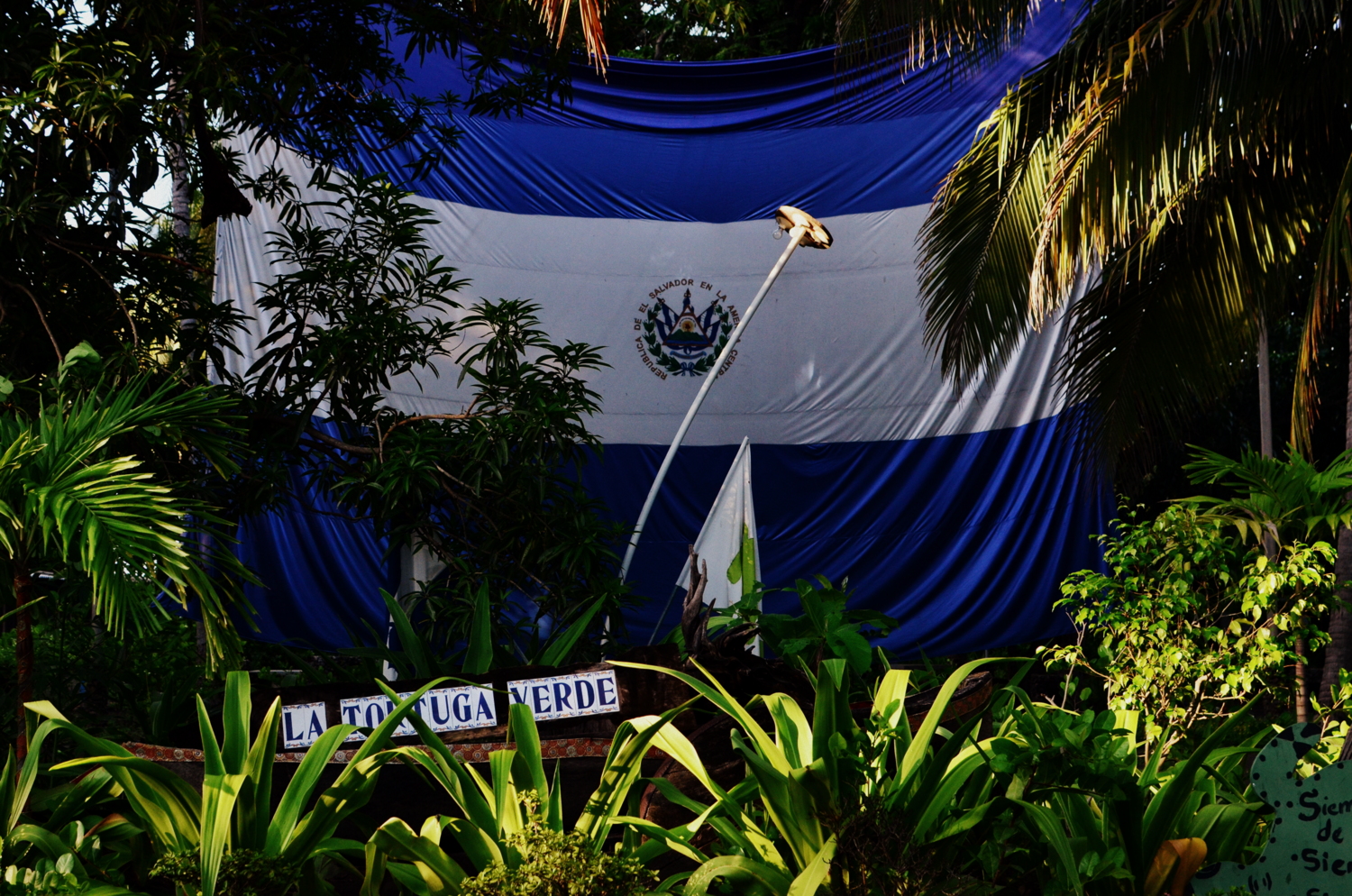
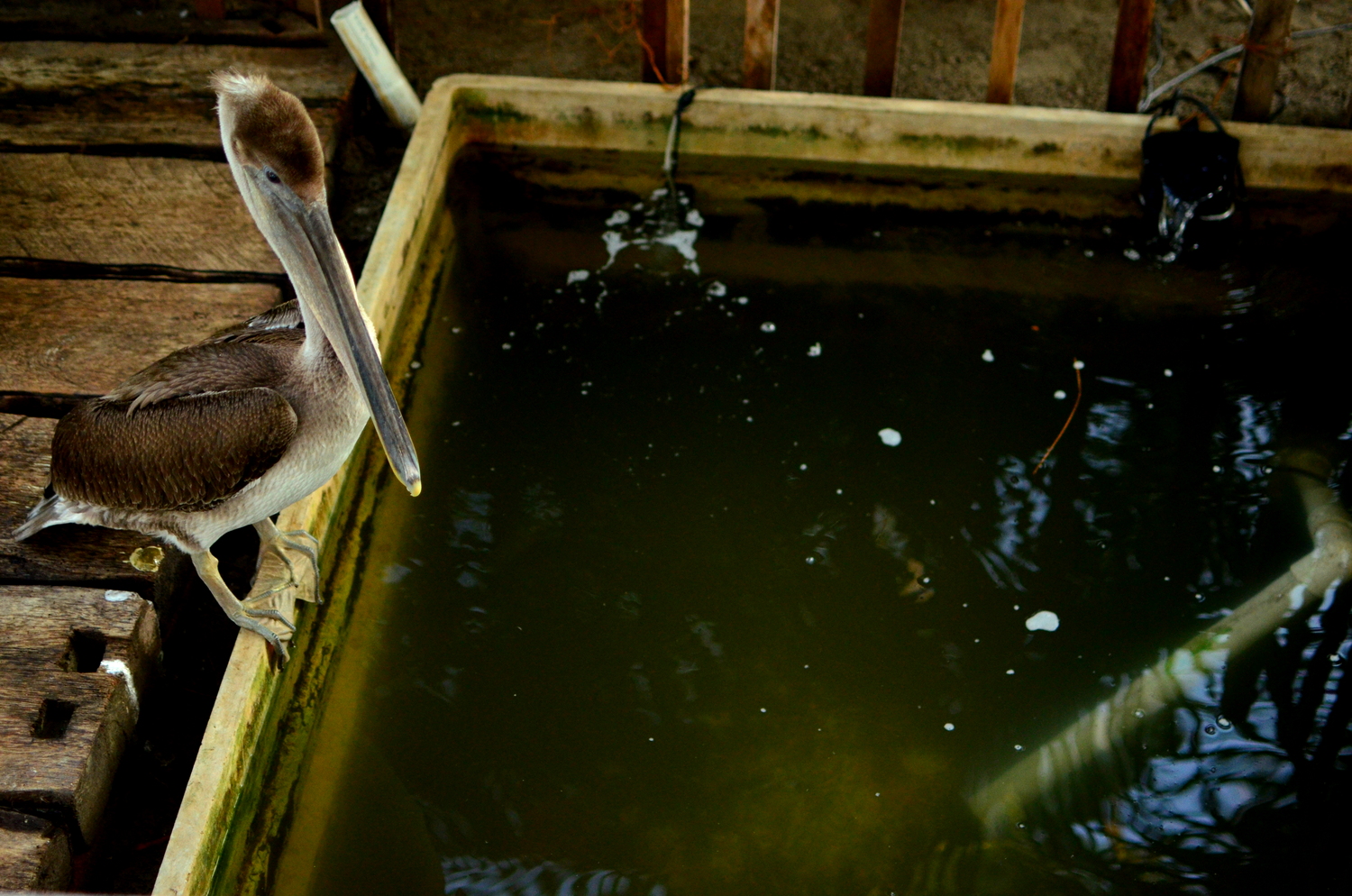
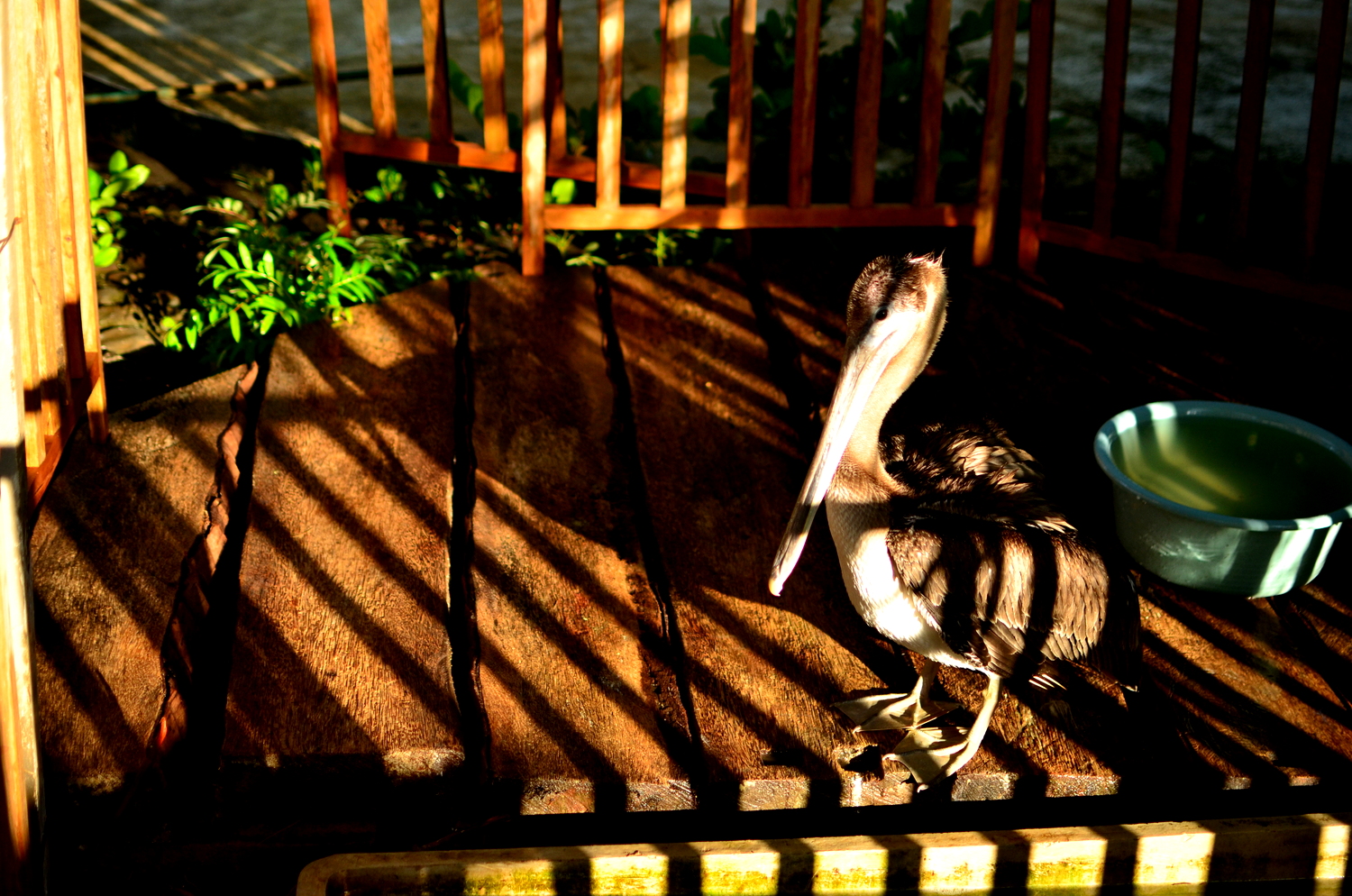
A huge 30 foot flag of El Salvador was strung between Palm Trees at the entrance of the hotel/hostel/small resort created by a visionary of sorts from the United States. Tom was a surfer, real estate guru, and lover of nature by heart. When we walked in Tom was giving a rescued Pelican a bath in a wheel barrow to rid the bird of the fleas and insects that tend to tag along for the ride. I remember thinking, “Now this is an interesting man”. My mind is far too curious to let things like this lay. I knew it was only a matter of time before my mouth would sprint past my mind and figure out what this man’s deal was.


Tortuga Verde was clearly a dream of Tom’s turned into reality. The grounds were immaculately clean with leafy palm trees sprinkled throughout the premises offering shade to the omnipresent sun. There was a blue lit swimming pool and hot tub in the center of the premises and tables, hammocks, and huts lived beach side. This hardly felt like a hostel for backpackers, but the premises offered everything from private house rentals down to hammocks. Tom was a surfer above everything else and offered cheap board rentals and lessons too. When I finally got sit down with Tom he told me about his dream to create a place on the beach that was safe, had the best food around, and created jobs for locals. His place was staffed with about 10 Salvadorans and yet we felt like we were one of the few people staying there (low season, of course). He told me he wasn’t dong this for the money and I truly believe this wasn’t a lie. Aside from the creation of good jobs for this suffering community, his # 1 priority was protecting the turtles. Turtles often lay their eggs on these beaches and are preyed on by locals who then sell the eggs for consumption as a local delicacy. Tom often winds up buying the eggs immediately off the poachers and buries them again to give them a chance at life. He has the system so nailed down that the poachers often come to him first. Job opportunities are scarce here and if Tom didn’t purchase the eggs they would sell them in town anyway. It’s not a cure to the problem, but at least it’s an attempt. Also worth mentioning is Tom’s local TV show, filmed and produced by Tom and his staff, that is aimed at bringing issues such as conservation of the mangroves and turtle awareness to the public’s eye. He’s the gringo with bad Spanish on TV that locals tune into for entertainment.
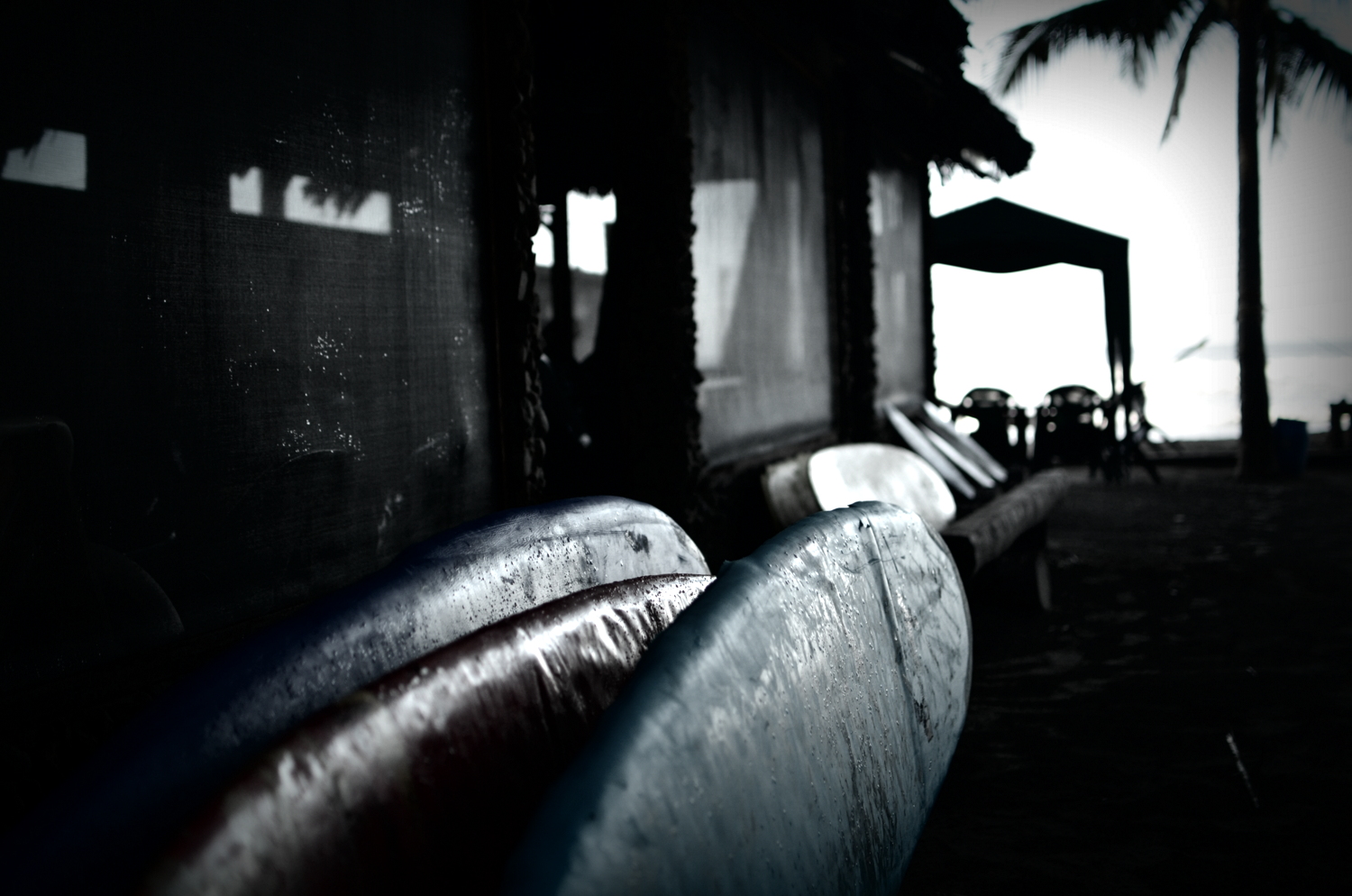
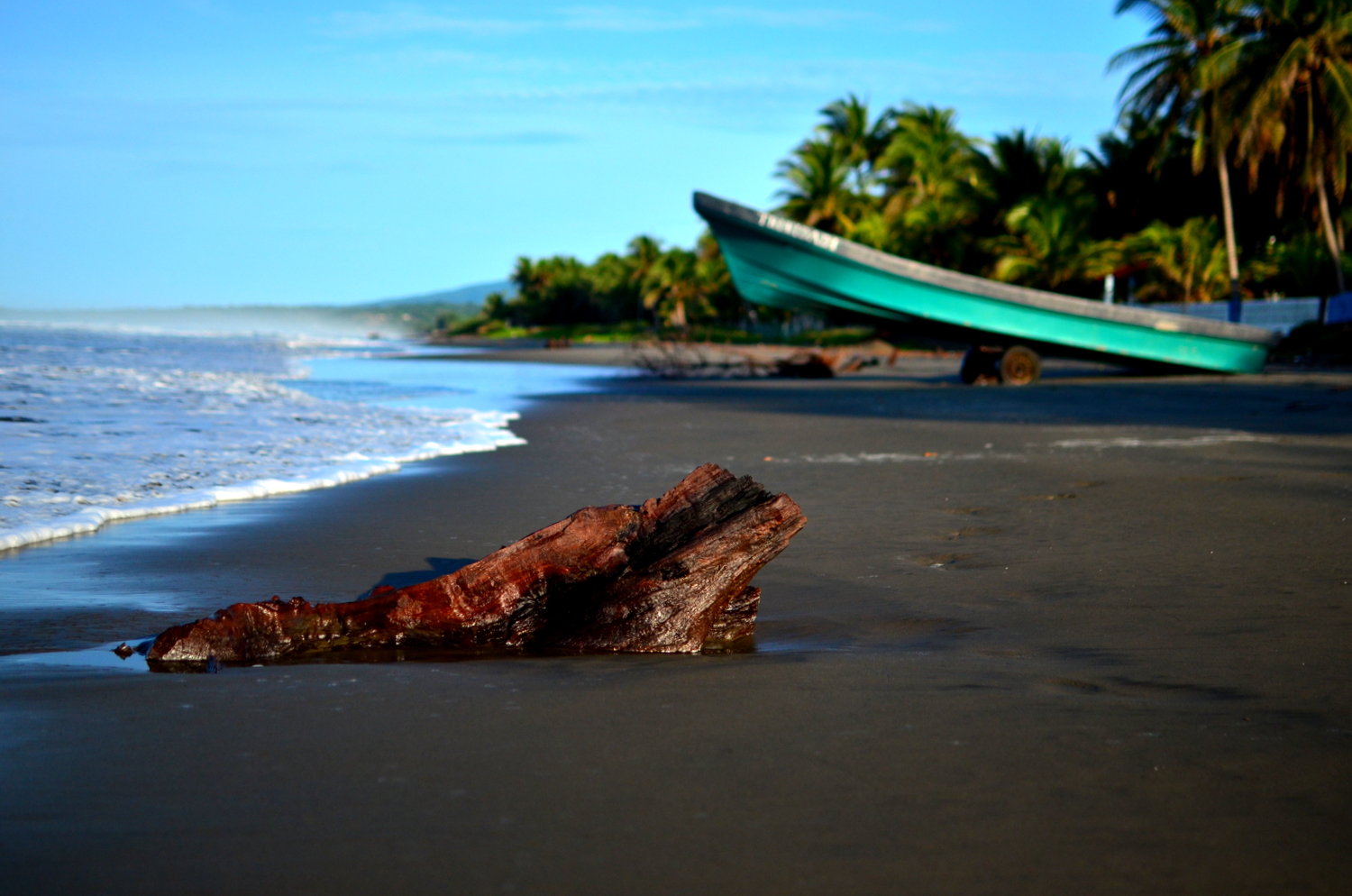
The beach itself offered short, soft and surfable waves to play in. At low tide the beach would become an endless stretch of sand reaching far into the ocean without a single person in sight in any direction. At night thunderstorms would come in off the coast from Honduras and light up the entire sky. At Tom’s recommended we walked down his protected beaches at dark for a starry, tranquil experience listening to the waves and gazing up at the night sky. We brought a flashlight in case we spotted a turtle laying eggs so we could make sure a poacher wouldn’t claim them as his own.
The next day I woke up extra early and rode my first wave in 7 years. It felt awesome to be up experiencing the magic of surfing once again. I think we should all consider ourselves lucky beings to be able to play with nature in such a fashion.


On another fine morning I found myself sitting alone post breakfast taking in the soft sea breeze. Elissa had left me for only a few minutes before I had that instinctively familiar feeling of eyes on me. I looked over my shoulder to see four Salvadorans all staring at me. After calling me over a few times I couldn’t stop pretending I didn’t notice and reluctantly walked over into a booze-fueled Sunday morning scene on a beach in El Salvador. Sitting directly across from me was an inebriated man with glossy red eyes. There was a man in his late 20’s wearing nothing but boxer briefs to my right. An older man in his late 40’s was wearing a mankini right next to a skinny intoxicated Salvadoran missing one foot. After asking where I was from the drunkest of the three expressed disdain with America using familiar swear words and gestures. A moment of silence followed. This awkward introduction was immediately fixed by a few “tranquilos” while I slunk back in my chair thinking of an escape plan. Before I could say no, beers were flowing and very difficult to decipher Spanish was circulating around my head. Turns out the disdain was because he was an illegal immigrant living in Huntington Beach, California. Immigration used a swat team approach to bust into the house he was staying in. He claimed that 60 illegal immigrants were all living in one house trying to eek out a living. He wound up spending 3 years in jail for it, prior to exportation. The conversation felt very uncomfortable at times, but the tension was released through jokes and awful attempts at conversing with these men. They were trying to teach me funny things to say in Spanish while telling me about their lives. They even wound up feeding me some steak and rice eventually. I had won them over and made new, albeit frightening and weird, friends. After about 2 hours of telling them I had a girlfriend (and constantly scanning around for her to come to my rescue) I eventually saw Elissa. Up to that point they thought I was lying about having a girlfriend. We saw them leaving later that night when we walked into town. My amigos told me how beautiful Elissa is, in English of course, and asked if we would see them back in San Miguel. I could only give them honesty. “No.”
El Salvador was yet another country whose history was marred with political instability, civil wars, and government corruption. El Salvador, like many other countries, fought hard to resist Spanish rule but eventually lost. After Mexico separated from Spain, El Salvador resisted joining the Mexican Federation and was pretty much the prime reason that Central American provinces eventually became their own governing territories. Land was taken over by foreign enterprises and the wealthy in the 19th century when crops transitioned from Indigo (used for dyes) to coffee, which resulted in the displacement of Salvadorans who were now landless. The US became involved during the Latin American communism scare of the 80’s and supported the government, which resulted in horrendous human rights violations from both the military and leftist groups that formed. It was a very hectic and confusing time to be a human amidst the chaotic swings of politics in this region. War crimes were eventually forgiven for all sides but El Salvador’s past still remains visible with “no guns” signs lining parks and public spaces. But despite all of the violence in it’s recent past, El Salvador was very warm and very welcoming to two US citizens wandering around it’s dark mercados, it’s beautiful landscape, and it’s sometimes confusing public transportation system. El Salvador might have a long way to go before it becomes a part of the regular tourist trail, but once it is discovered a lot of the truly raw and gritty experiences of our trip will surely disappear. Hasta luego El Salvador. Vamos a regresar.
Let’s go to Suchitoto
In the morning we said adios to El Tunco. I took a short walk to the ocean to take in the morning surf’s trance inducing rhythm. I needed a solid dosage of waves disintegrating onto the sand below my feet before parting ways once again. It’s amazing how much the ocean is missed when it’s not there. The beach is one of the few tangible places on earth where two very different worlds both begin and end. About half of the world’s population live within this interchange between water and land. But we chose to play ball on the other half’s team and headed for the hills of Suchitoto.
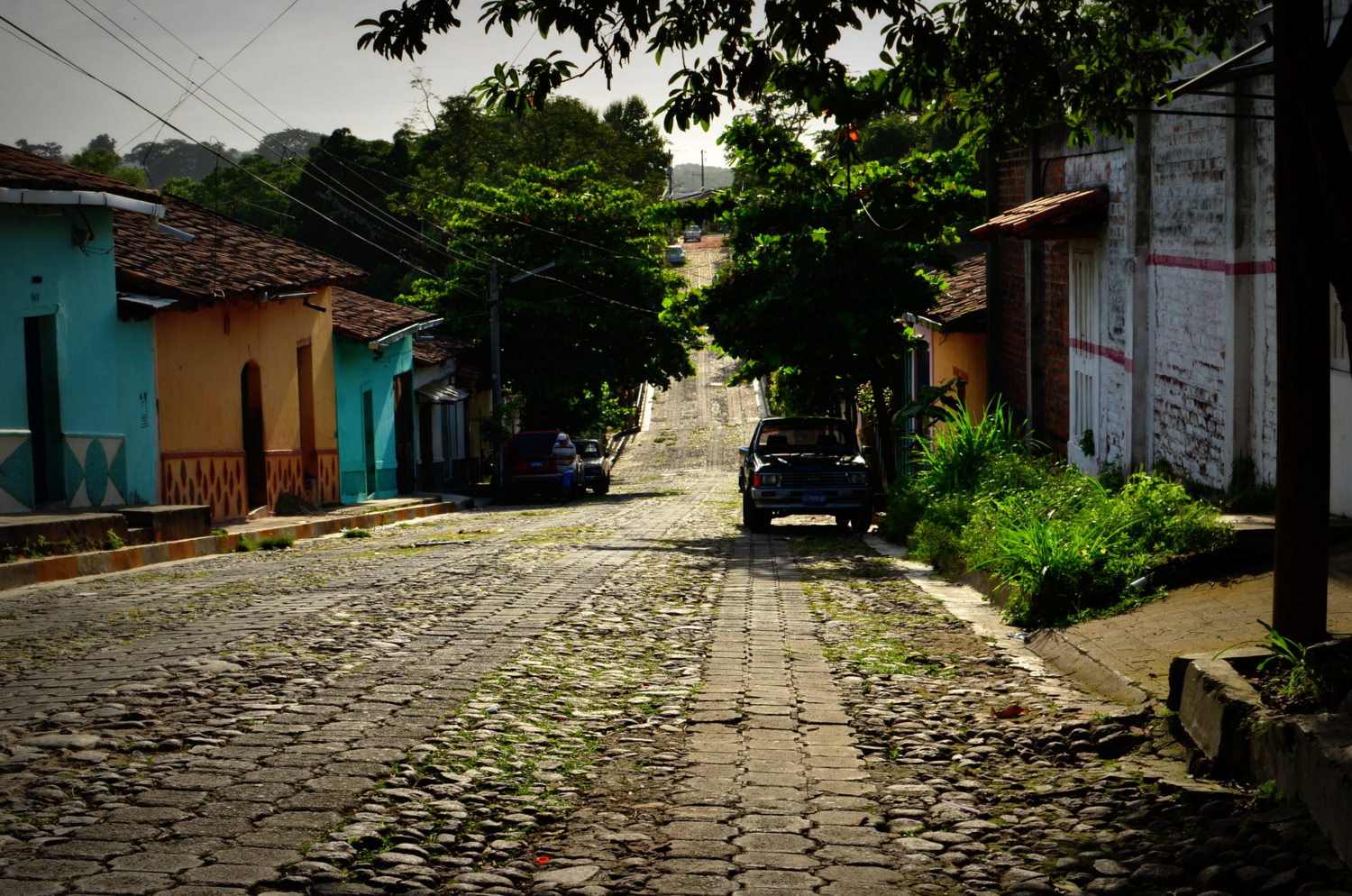
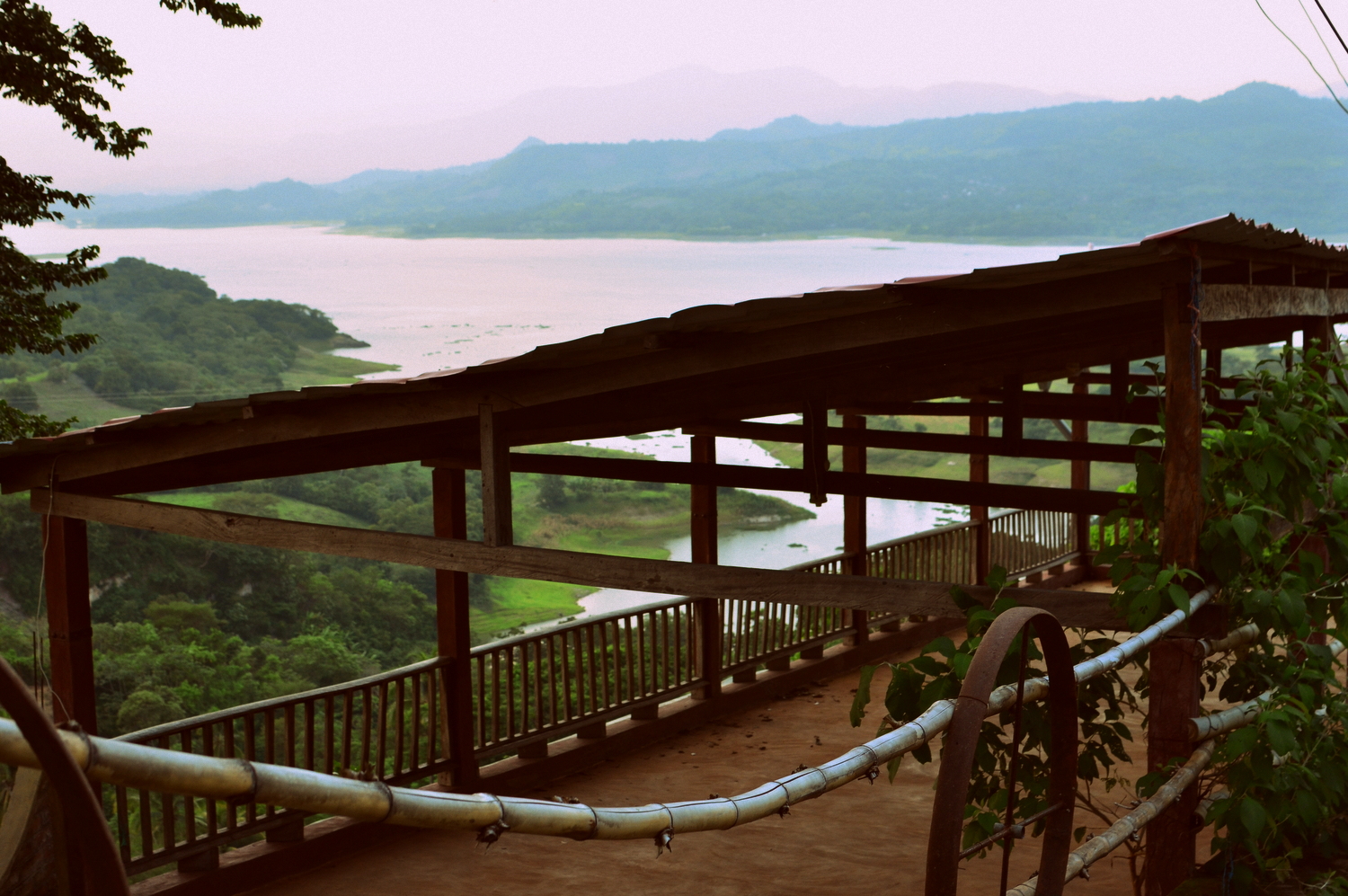
In our minds Suchitoto was going to be a mystical mountain town high up in El Salvador and would provide the solace we were seeking. In only 4 days we had already been on 14 buses and felt just like the worn beasts themselves. This tiny little village is perched far away from the notoriously dangerous and seedy San Salvador and also right next to El Salvador’s largest body of water, Lago Suchitlan. The lake’s grandiose size is due to a concrete gravity dam that doubles as a hydroelectricity plant, resulting in the massive reservoir coined Embaise Cerron Grande. Suchitoto promised dramatic views of the lake and hinted at a slower pace of life, which sounded like just the balance needed to tare out all the frantic bus routes that were taking their toll on our well traveled souls.


After the dust in the hot air settled around the metal dinosaur we rode in on, our feet instantly molded to shape of the cobbles below them. A quick trot around the sluggishly peaceful town with our bulging packs in tow guaranteed a shower in our near future. We eventually stumbled upon a gorgeous hostel with a superb view of the lake from the 2nd floor terrace right outside of our door. The universe was smiling on us once again.
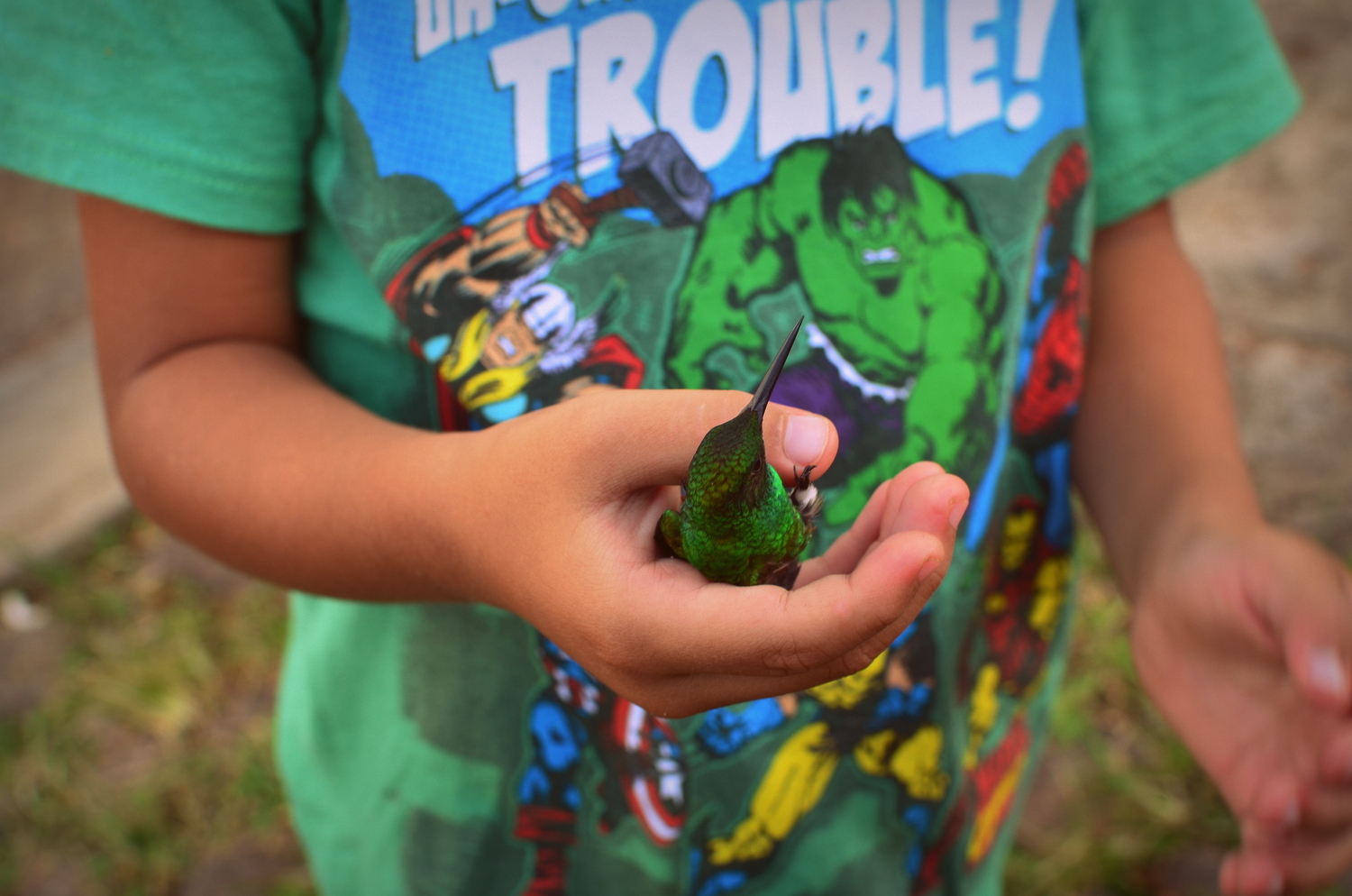
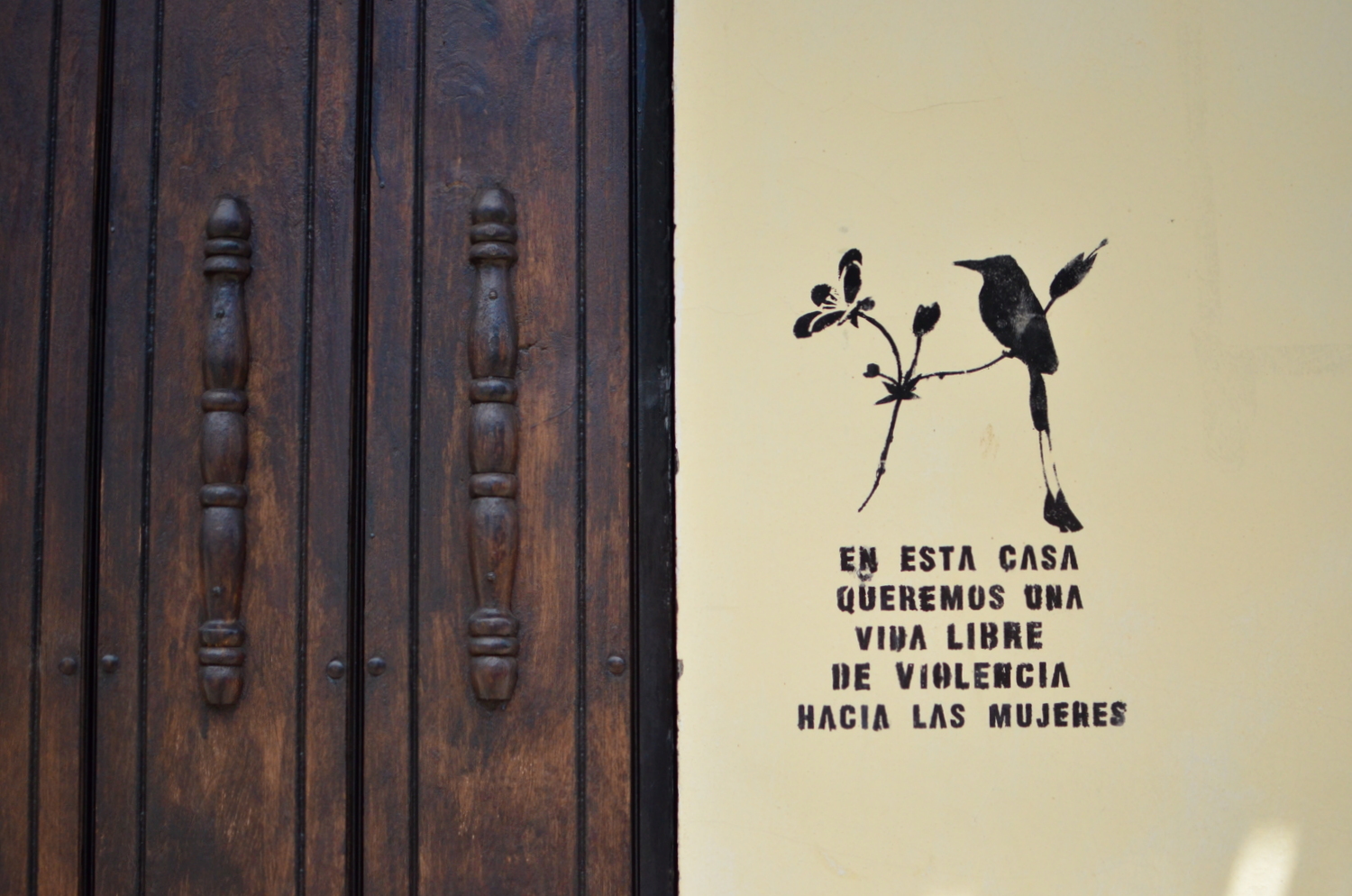
Suchitoto quickly graced us that friendly Salvadoran hospitality we knew was hidden up in those hills through big smiles, gentle demeanors, and a warm sense of welcoming that fosters an instant calming effect . Our hostel owners couldn’t have been sweeter as they eased us into our room. A decent kitchen made for a quick decision to get cooking options. Initial exploration (minus backpacks) revealed expected quiet streets, colonial homes, and silent parks. We had arrived too late to root through the produce during the morning market routine, but luckily found a vendor that would still give us some essentials. On the walk back we noticed that a majority of the houses around town had a small, stenciled hummingbird with a message stating “En este casa nos queremos una vida libre de la violencia hacia las mujeres“. The movement publicly confronting violence against women was refreshing to see in a Latin American country, considering the machismo part of the culture that exists.
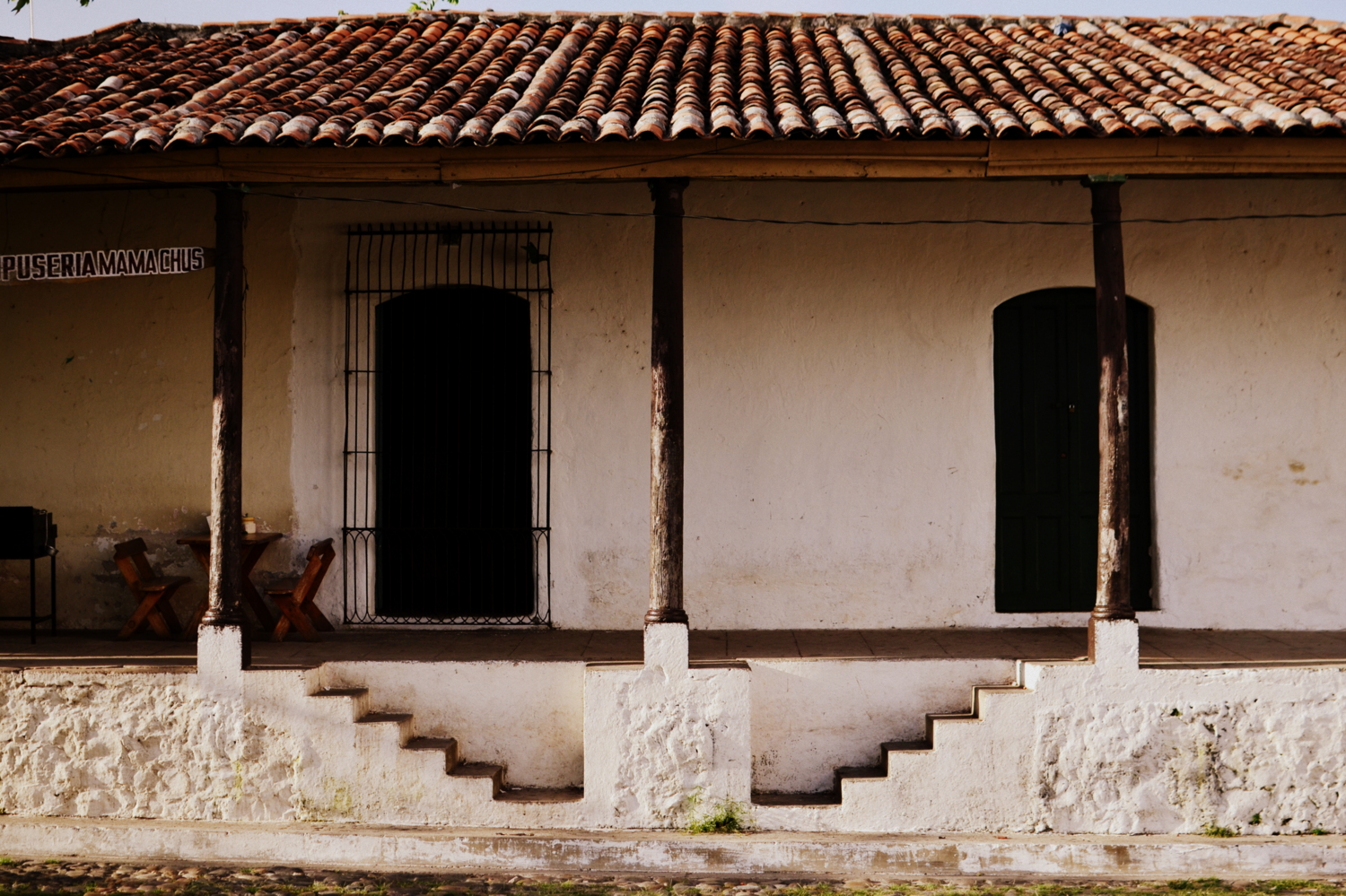
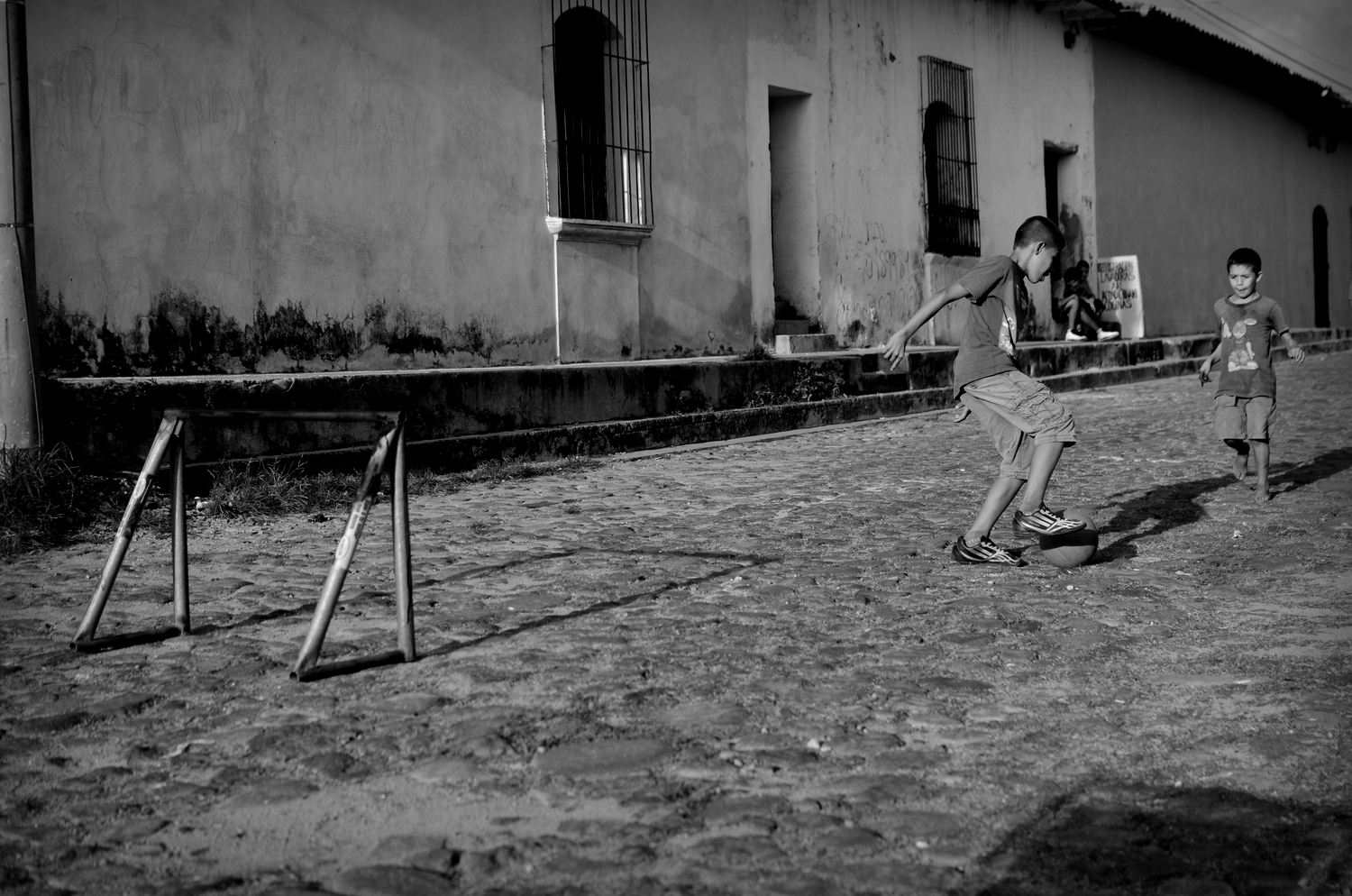


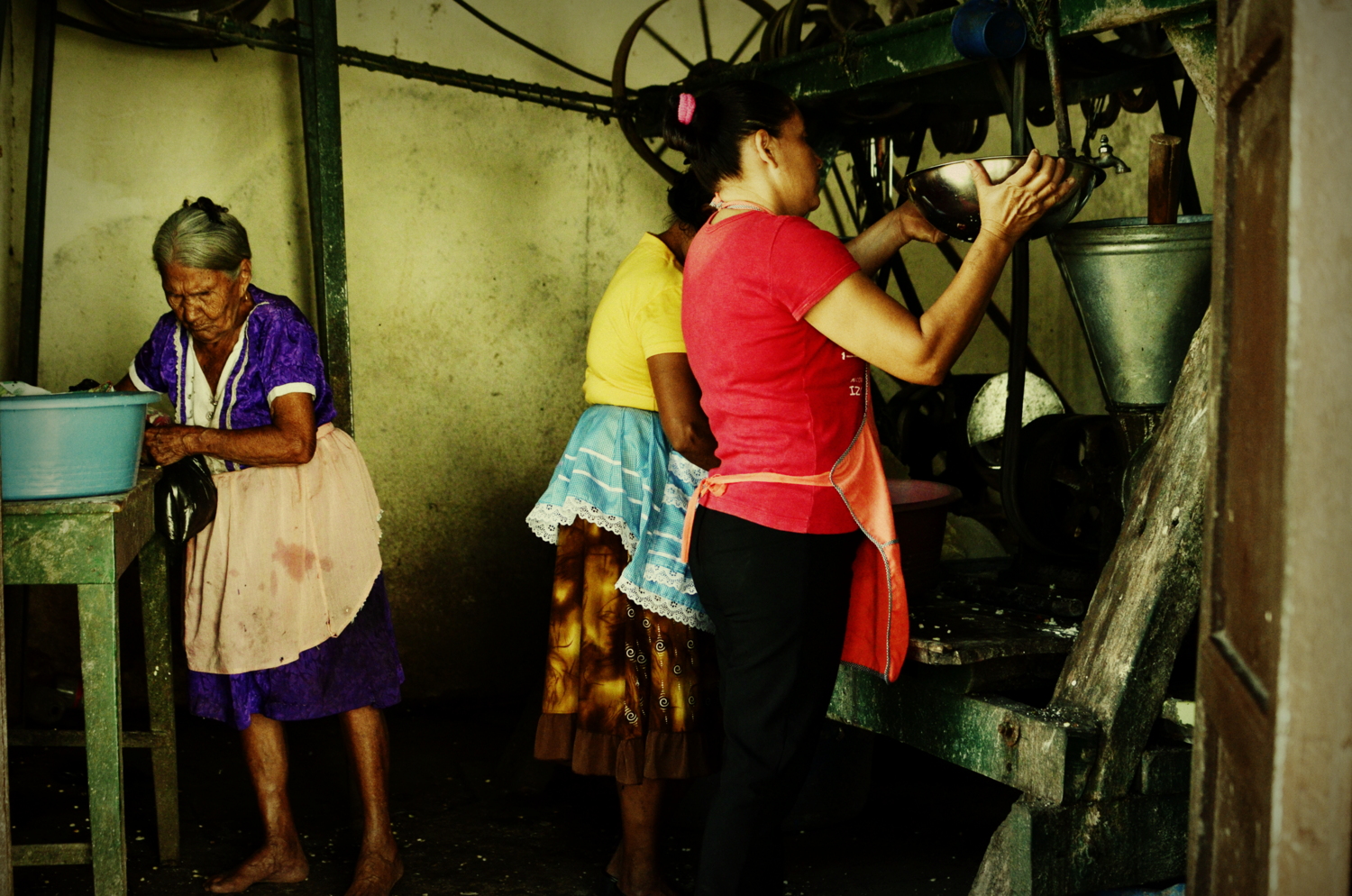
We spent the evening strolling around the petite town square where vendors had set up small stands selling tie-dyed shirts and various crafts, fried potatoes, yuca chips, and muchas papusas. We stumbled across a small community run mill that would mash corn into the pulp that becomes a papusa. The women buying time at the machine let us snap a few photos of them while they prepared their different mixes. We settled on eating a few papusas, chips with hot sauce, followed by a Mexican torta out in the street. Whenever possible we seem to relish street food over restaurant fare. It always feels like a more authentic experience and tends to be the same quality food as most developing country restaurants anyway.
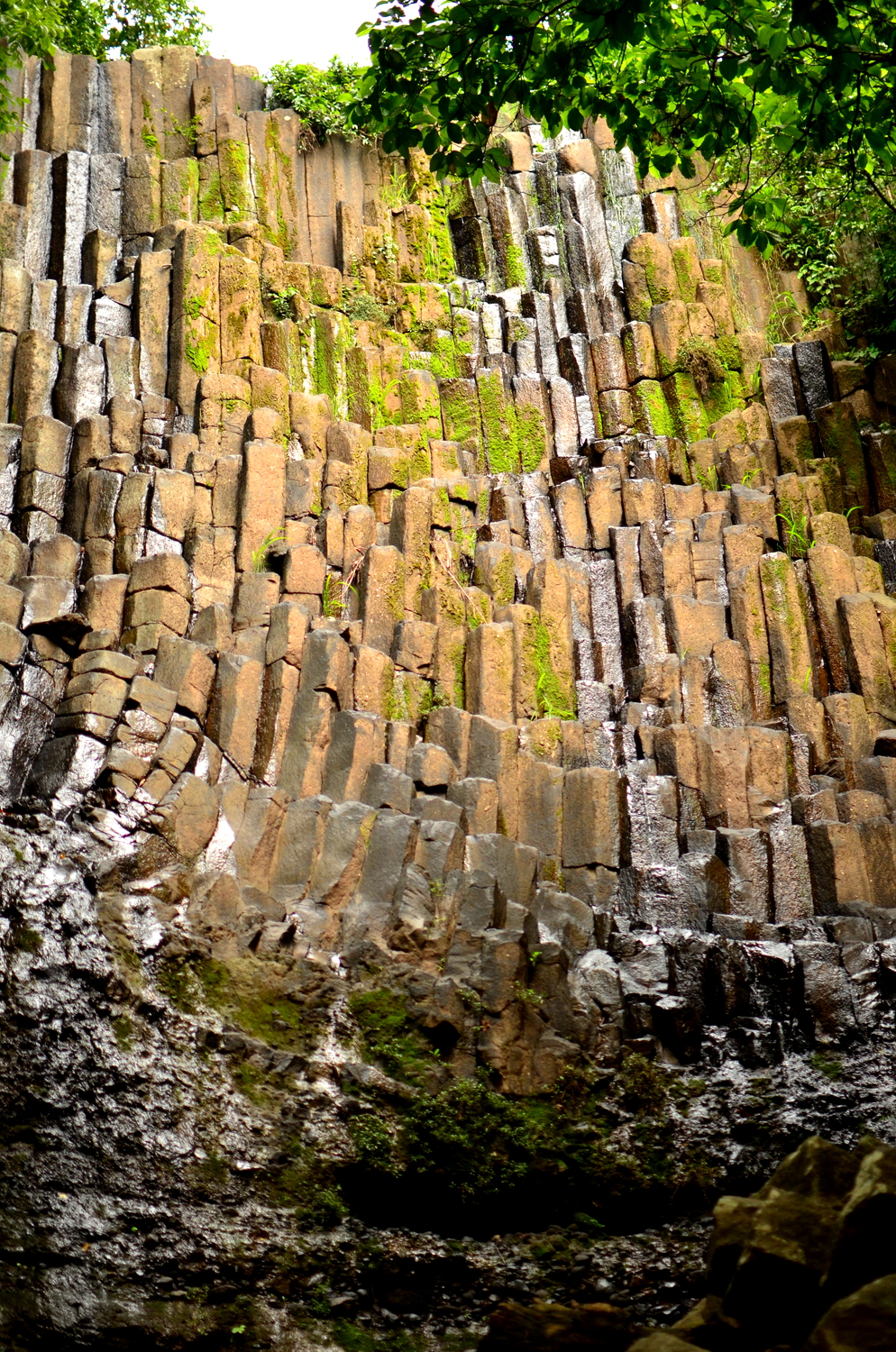
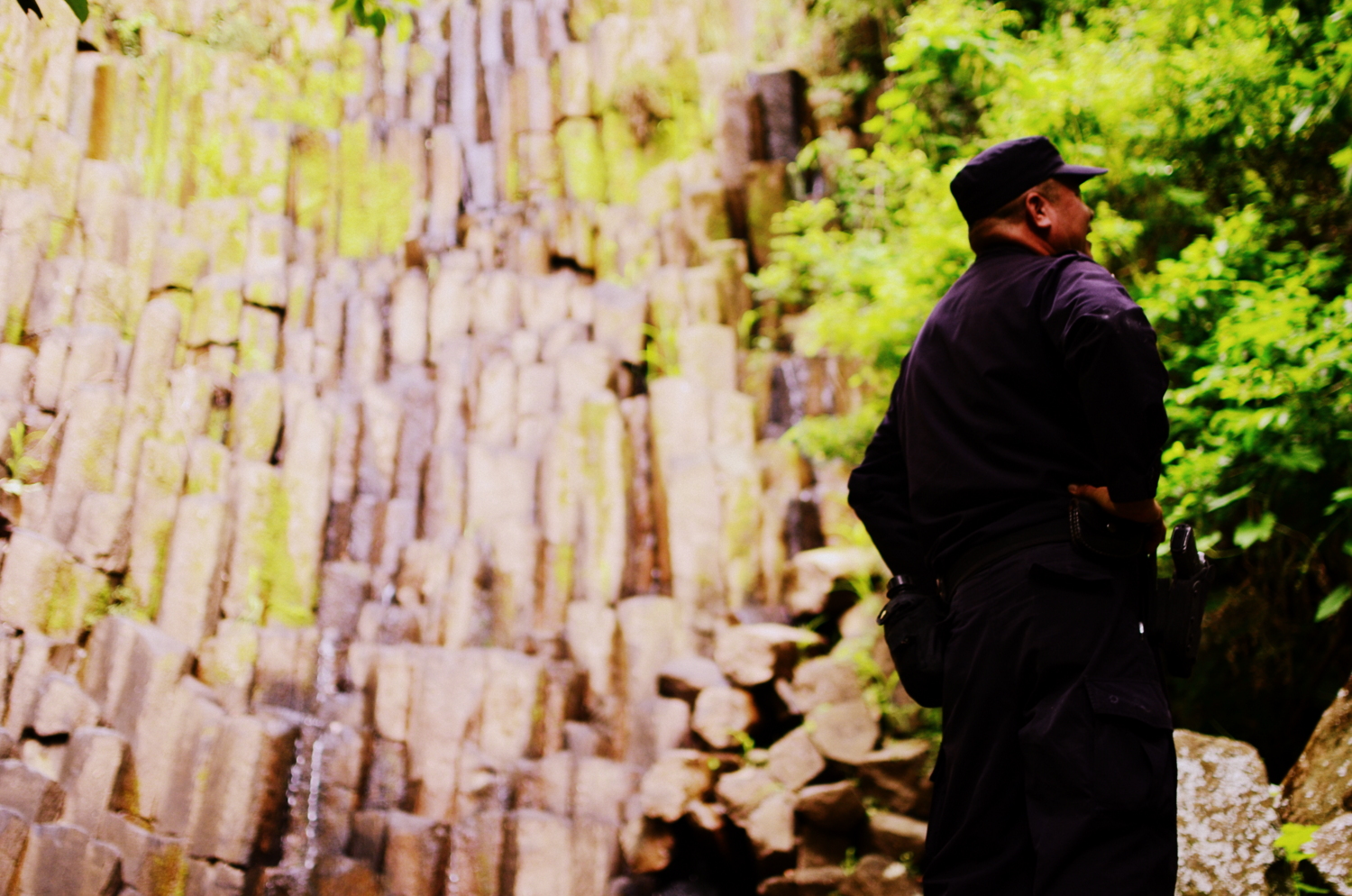
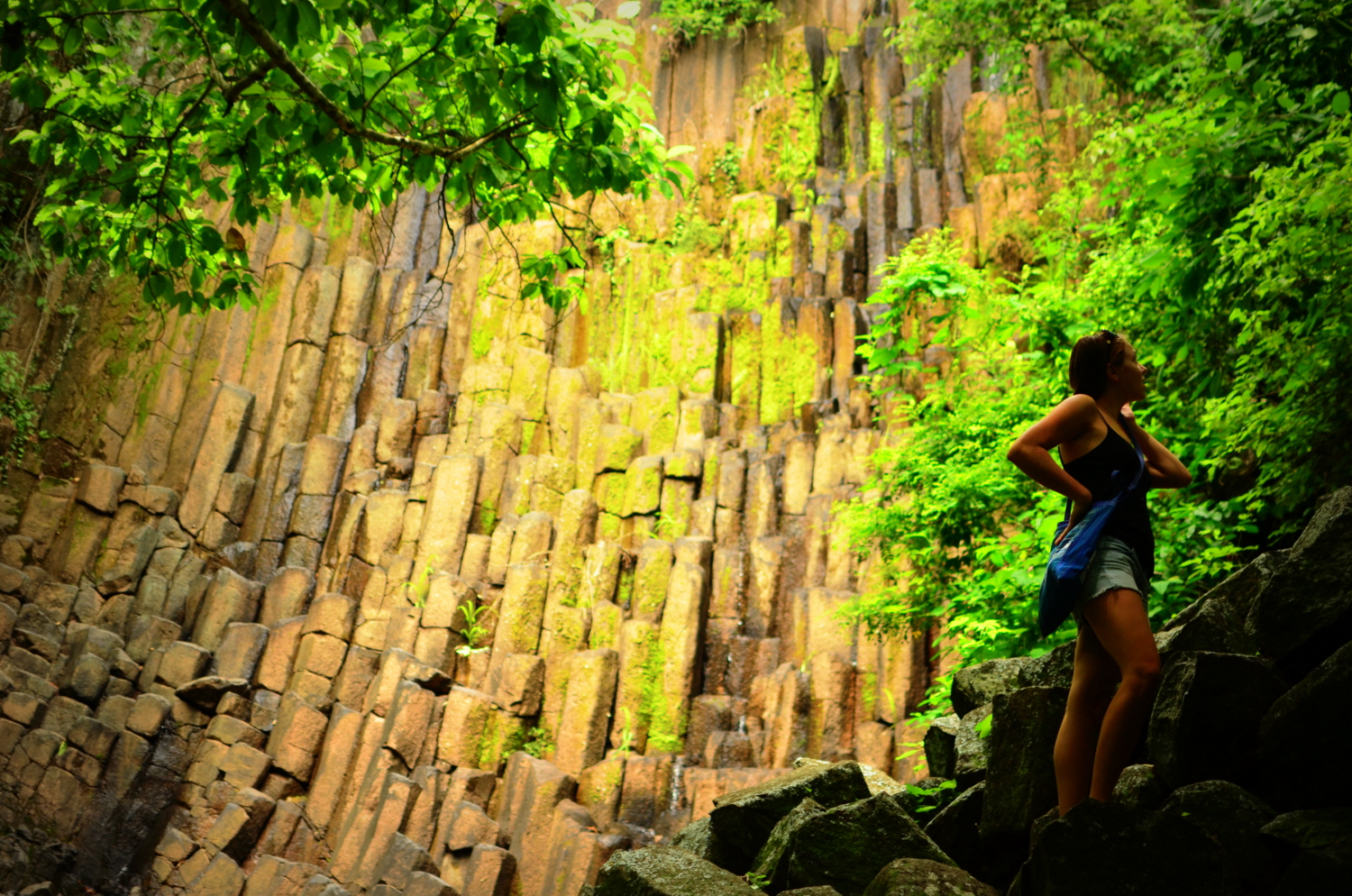
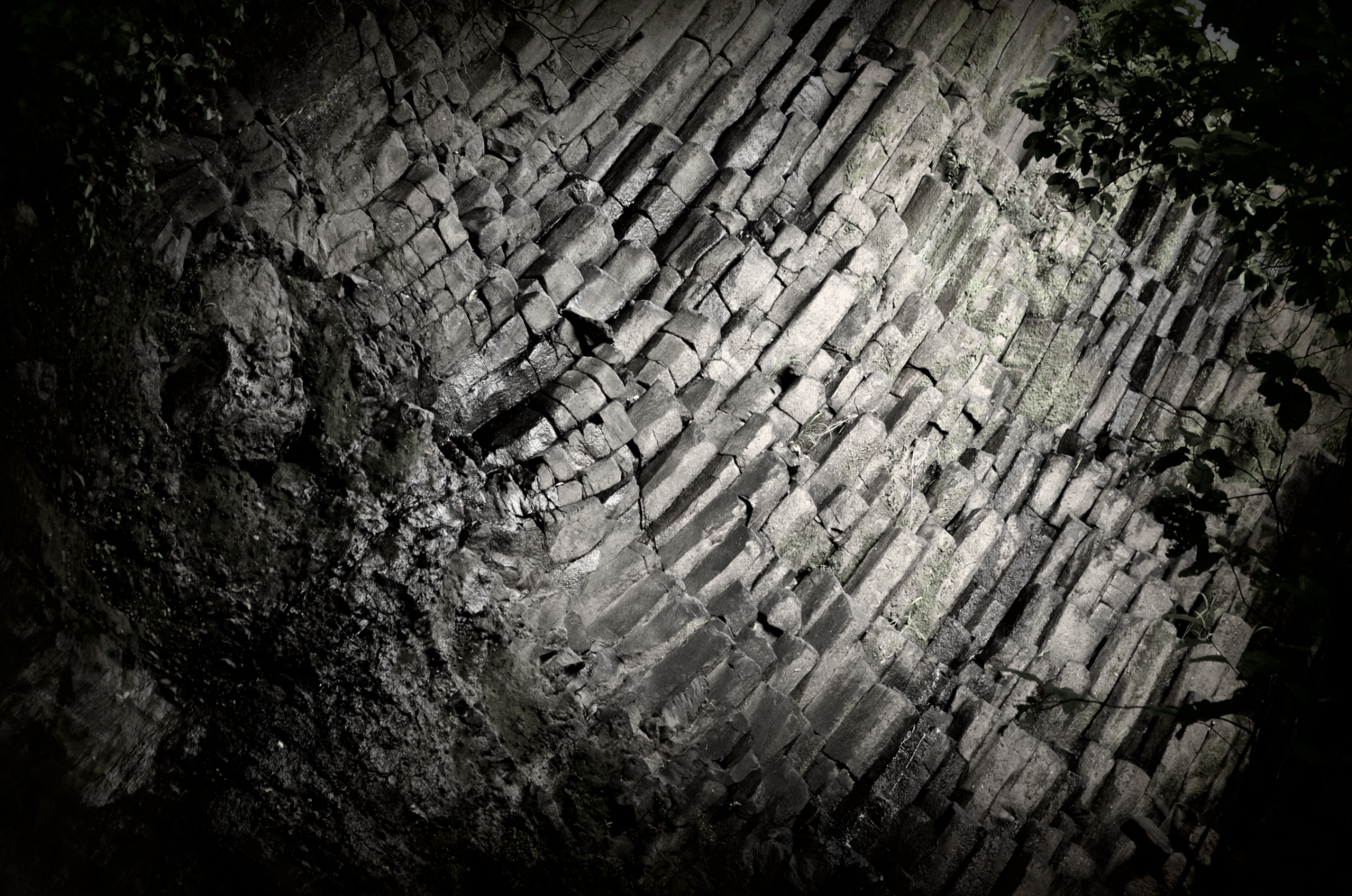
The next morning we wanted to see the rock waterfalls on the fringe of town called Los Tercios. The experience of vising the falls was actually one of the deciding factors for our presence in this area to begin with. We were privy to some information that would promise a very unique experience, that being a free tour via the local police department. El Salvador’s tourism isn’t as developed as other countries and it’s sights are sometimes best accessible using local law enforcement. We parked ourselves in the police station while armed forces of the El Salvador army and police department walked around, chit chatting with massive automatic weapons hanging off their shoulders. It appeared that nobody was keen on taking us and the responsibility kept getting passed on down the ranks until somebody finally agreed to take us, about 30 minutes later. We piled into a small police truck and drove about 15 minutes out of town to a small opening in the fence. One officer led us down a path to the waterfall and gave us a brief history of the waterfalls, complete with recent earthquakes and the effect they had on the appearance of the rocks. The falls were comprised of hundreds of hexagonal columns that swept from the ground into the sky. The last big earthquake toppled over a large section perpendicular to the falls that resulted a top-down view of the columns. Needless to say my attention was captured. The officer then led us to a vista of the lake before we road back to town. Every eye was on us as we drove by, two gringos in the back of a police truck passing by their front doors. We bought our guides some jugos upon arrival back into town as a small thanks for their time. I highly recommend this unique experience if you ever travel to this tiny town.
After our tour we were on the road, beach bound once again. The southern stretch of the coast is less developed and less visited by tourism so we naturally headed there. I noticed on the map that road back to San Salvador intersected with the road we were needed to take, thus eliminating the need to go back into the city to transfer. We were dropped off in the middle of a highway, in the absolute middle of nowhere with the hope that we would flag down a bus. Needless, but worthwhile to say anyway, all eyes were now on us as we waited on the side of the road with hope and desperation on our faces. I remember thinking, “Please bus, show your big, square hulking body and black billowy diesel fumes once again”. Within minutes a large, green bus was careening our way and we were en route once again.

Playa El Tunco
Traveling is one of the most rewarding gifts that we can give to ourselves. Although some of what I write on here can be downright, filter free honesty with a dash of attention to the underbelly of cultural differences, I do sincerely hope that it never, ever discourages anyone from pursuing a visit based on my addictive attention to details.
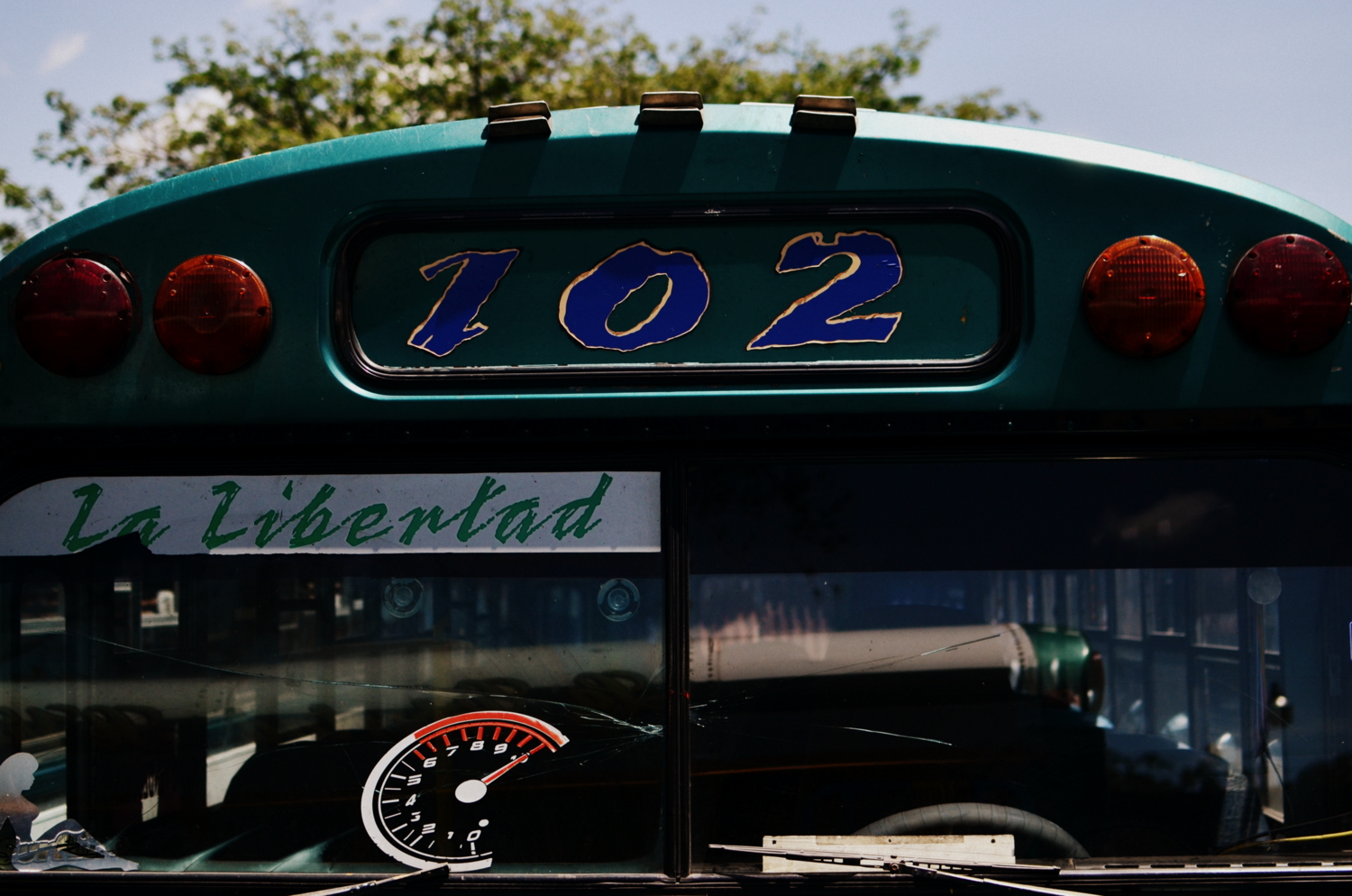
With that being written, Santa Ana was left in the dust for a taste of El Salvador’s frequented surfing beaches south of San Salvador. Having learned surfing about 7 years ago on the coasts of New Zealand and Australia, and also having not surfed since then, I figured this place might just tempt me into the water once again. After a quick transfer in an oven like bus in San Salvador, and one more in the busy market of La Libertad, we were once again sweaty and bound for the beach. It had been quite a long hiatus since we last set our feet in the ocean in the gentle waters of Placencia, Belize. After scoring the cheapest room we could find (15$ w/AC, yes it’s possible), we made a mad dash for the water.

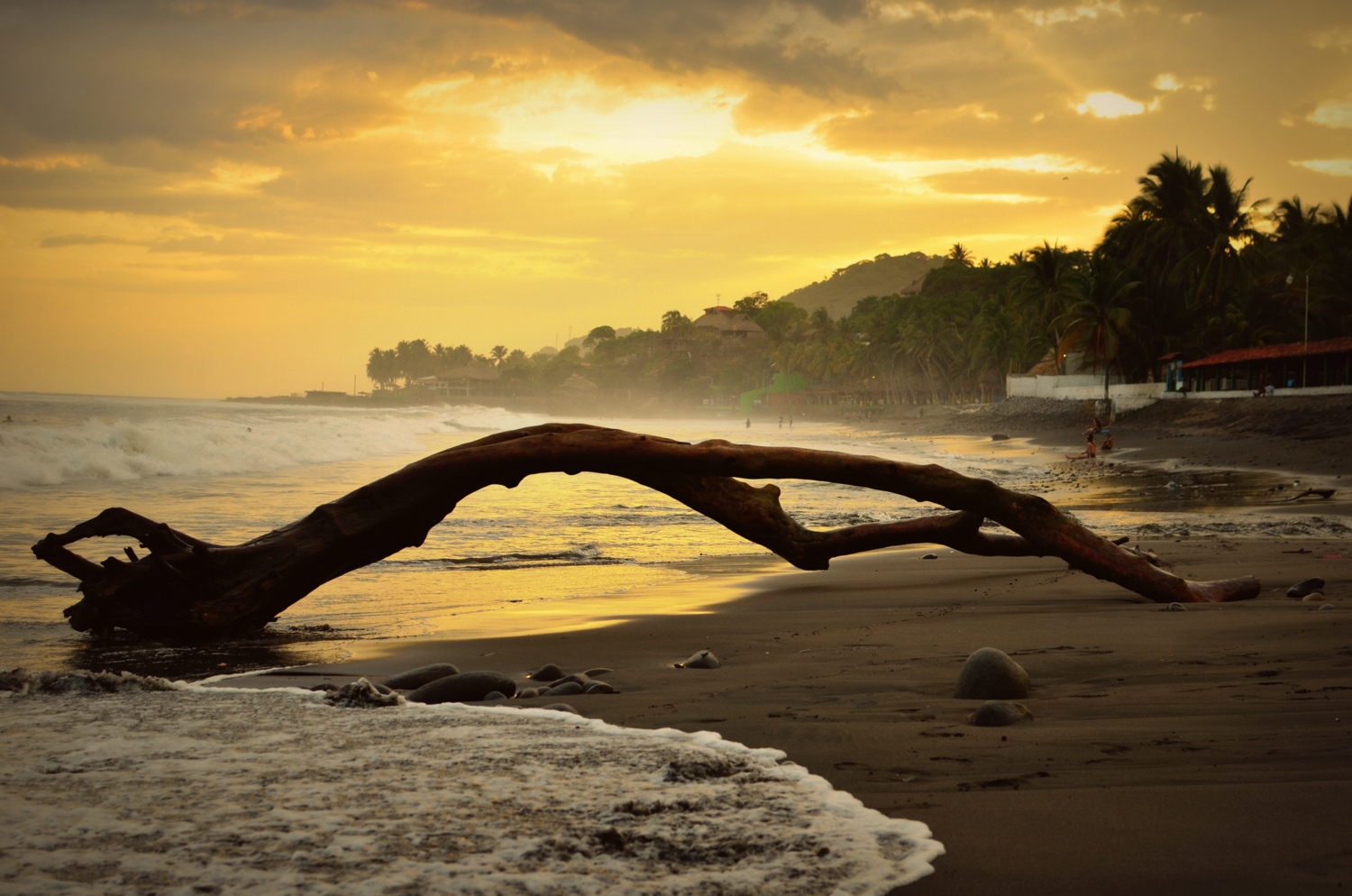
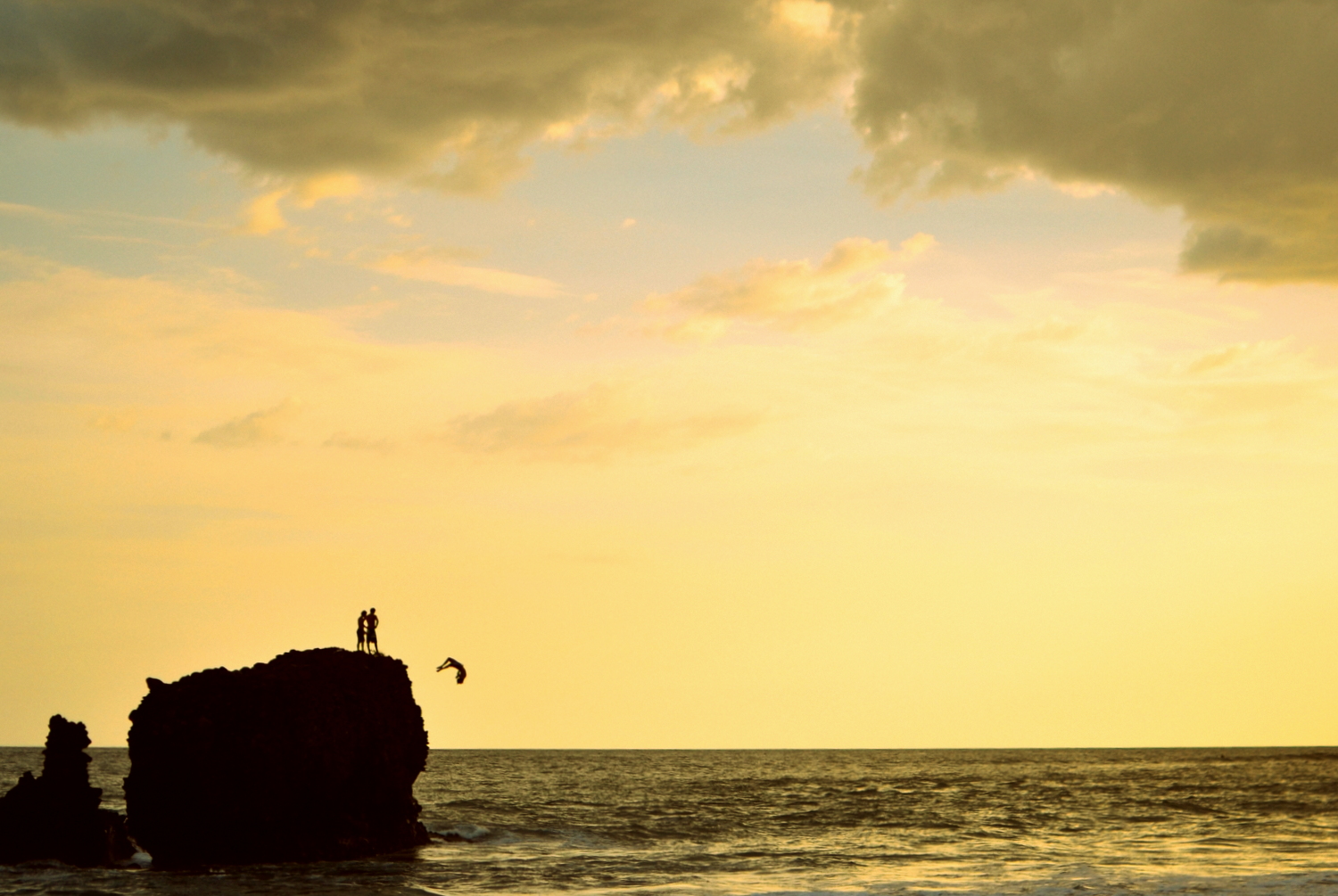
At this point I must share that this beach is quite beautiful set amongst rocky sea stacks, giant driftwood logs that are perfect for sitting, and produces those shimmery summer sunsets that you dream about (Google image search Playa El Tunco for gratuitous “ooh” and “aah” shots). But what I’d also love to cue people in about is why this place is developing into such a surfer haven prone to steal a few months out of your life, if you like to get tubular of course. The current here is gnarly to say the least. It’s world renown for it’s surfing and not for it’s swimming. After a quick dip into the ferocious pit of doom had us being whipped around as if we were on the spin cycle of a high-efficiency Maytag top-loader. After Elissa realized that surfer’s were no longer scouting waves to surf but rather those that would remove her bathing suit we conceded and couldn’t take anymore punishment. The powerful waves here have provoked defensive engineering with the beachfront restaurants and bars all toting fortified concrete sea walls about 6 feet higher than the beach itself. This provided a great place to kick back, watch amazing surfers tame the waves, and take in an awesome sunset. Some local locos provided a free show by doing flips off the sea stacks into the surf while we watched the day melt away. Drugs were prevalent here and although I’m not going to make any personal guarantees for those looking to party, I’d put money on their presence.
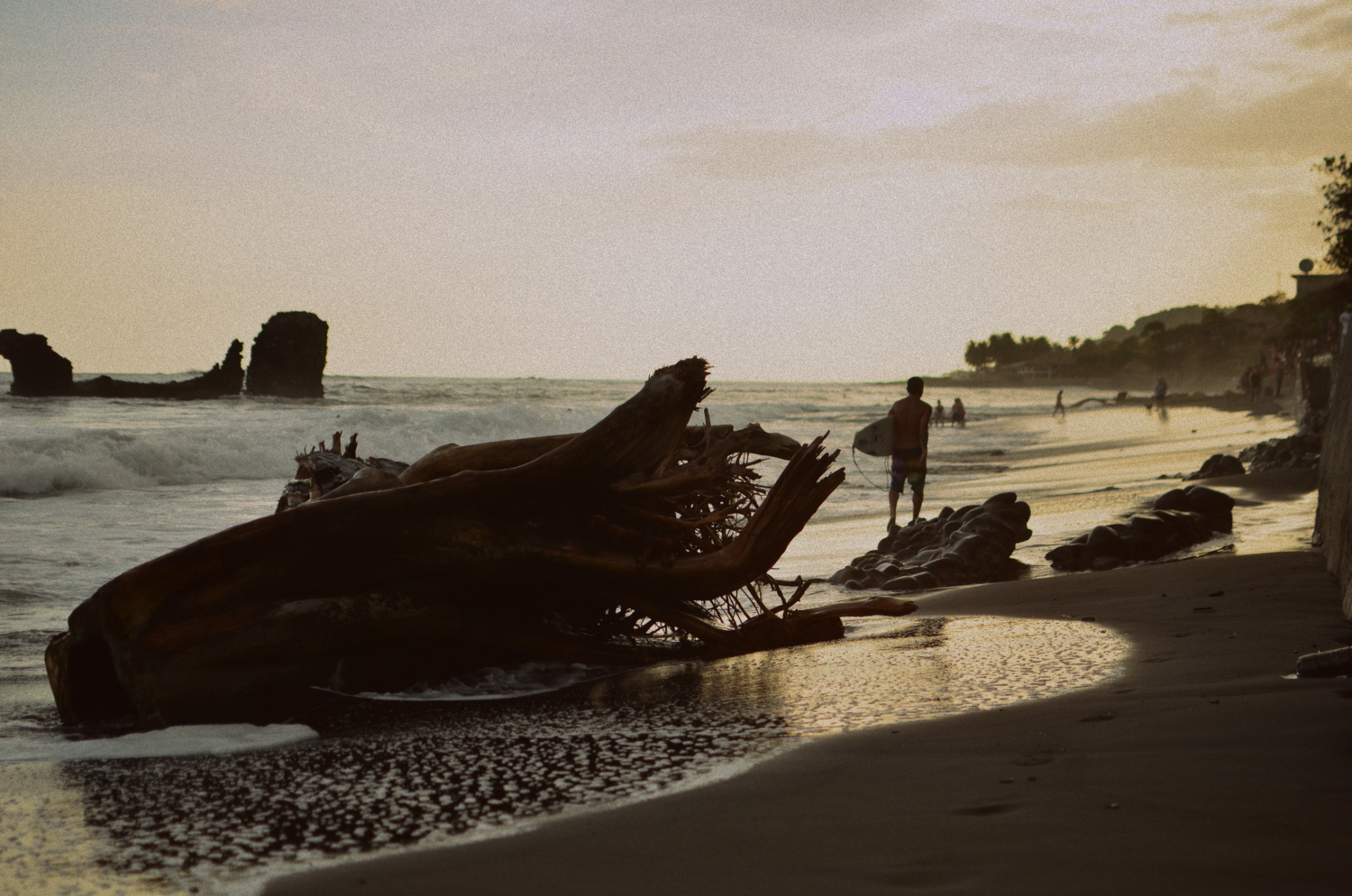
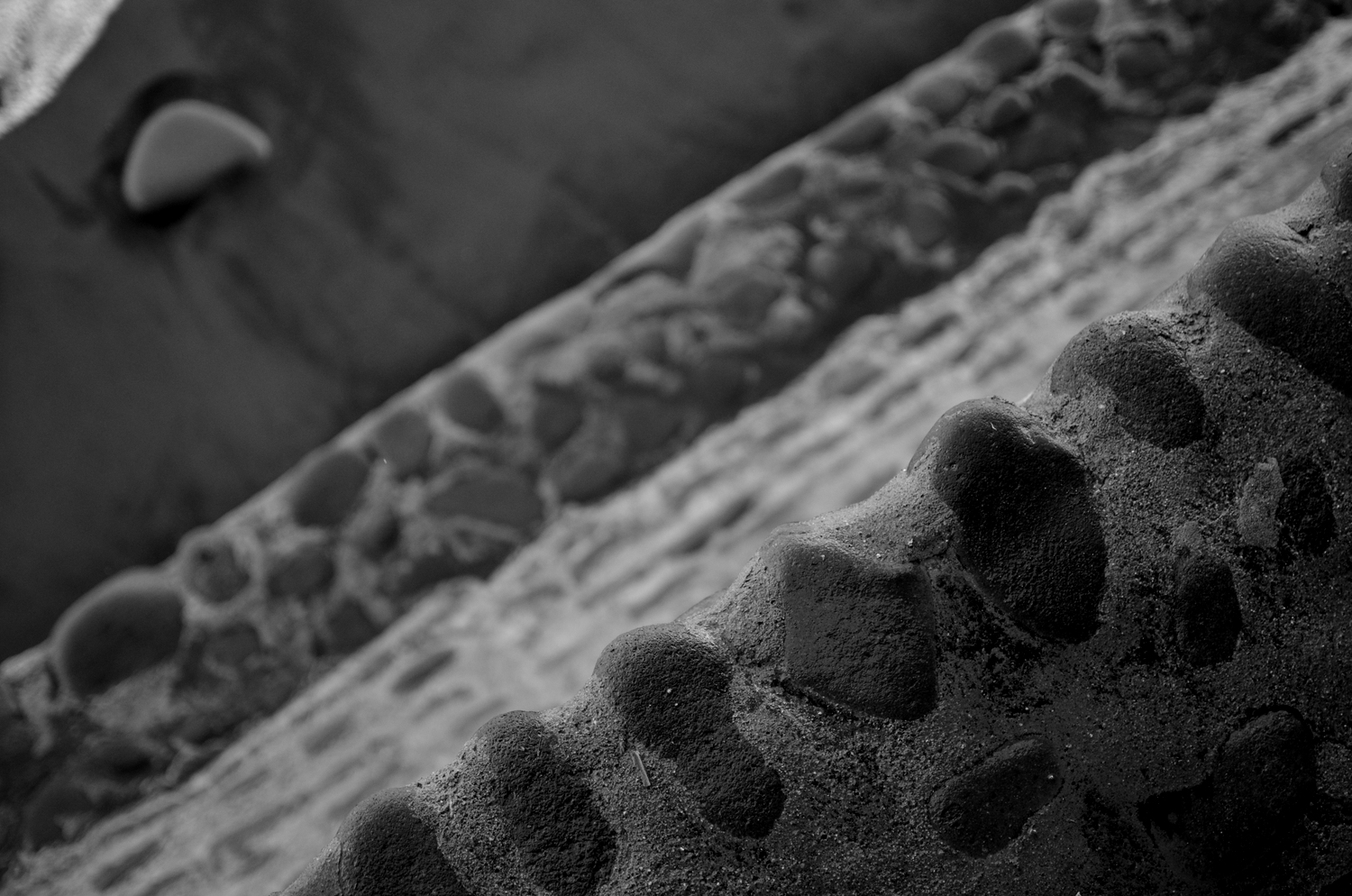
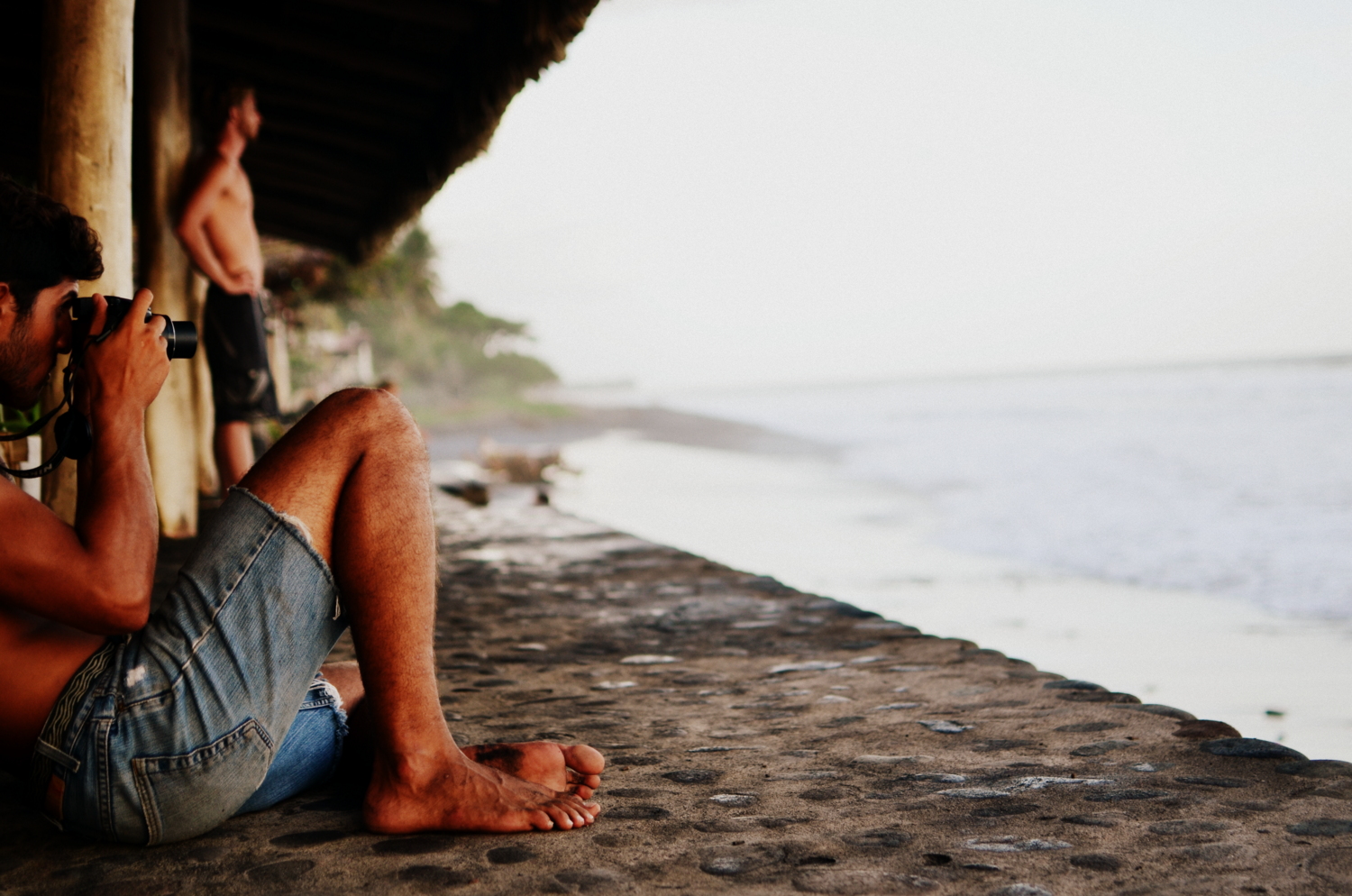
When we visited there were 2 main strips filled with businesses catering to the foreign surf scene. Bars, restaurants, hotels, hostels, and hospedajes lined each of the two dirt roads. Most served up surfer-sized portions of food and offered some sort of live entertainment, usually blasting music into the twinkly night sky. For Elissa, this beach reminded her of a previous visit to Costa Rica’s Pacific coast a few years back and I expected more of the same later on when we made our way south. We went out and found a local brewery called “Brew Revolution” that makes micro-brewed craft batches of whatever ingredients the Californian owner can muster up there. We got to hang out with the man himself while he told of us his past, present, and love for zapote smoothies. We had never heard of zapote (even though we spent time in Cuba) and could not wait to try, as he put it, a sweet potato apple pie concoction. The next morning it was game over for me as I now crave zapote smoothies on a daily basis.

As an aside, I am magnetically drawn to surfing beaches for some reason or another. The easy going attitude that floats through the misty air near a wave break always sedates the chatter in my brain and brings me right into the present. In my travels I’m finding that surfers are some of the most interesting travelers that can be encountered. Surfers tend have a unique way of wandering through life and chasing waves on this planet while respecting the power that exists in mother nature and her lunar cycle. They always have a good, albeit sometimes simple, story to tell. Ask a few questions and before you know it you have a real sense of who that person is, what they’ve been up to in life, and a genuine sense of honesty. I can’t conclude that the conversations involve depth, but you can often be surprised. On the flip side of that you can also be horrified. It can really go either way. But El Tunco had plenty of talented mellow surfers who were there chasing the waves and living out a mellow agenda.
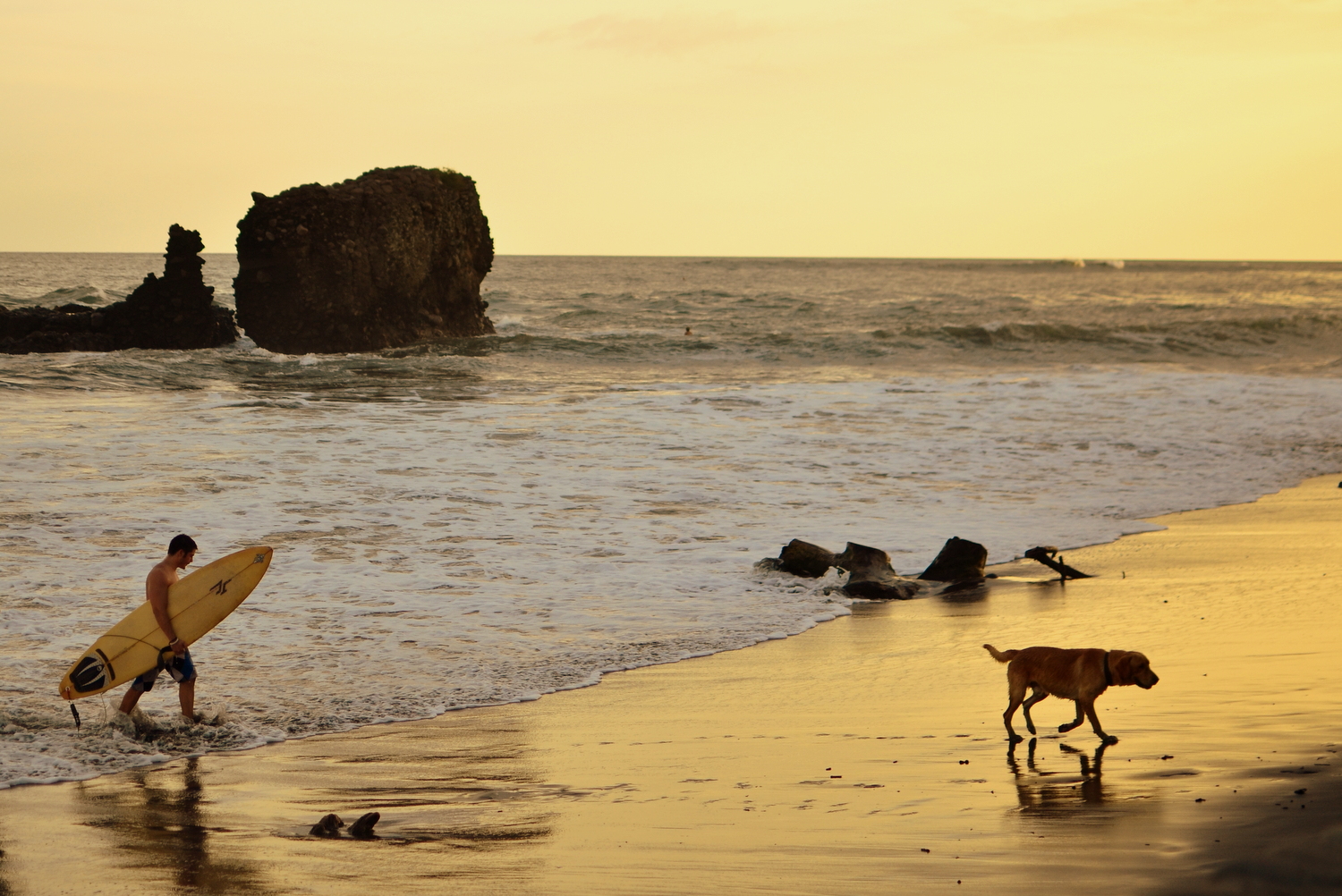
We spent only one night in El Tunco because the surf was over my head (literally). Four more school bus rides later we set foot off the famed gringo trail and into the small, beautiful colonial mountain town of Suchitoto.
Santa Ana and it’s volcano!

The first emotion that is normally encountered with when you become unintentionally stuck somewhere is typically annoyance. But straying from original plans almost always conjures up other opportunities that would have never presented themselves prior.
Santa Ana was not intended to be a place of interest on our impromptu tour of El Salvador. We were dropped off onto some random calle, nowhere near the bus terminal, right across the street from the daily mercado. Santa Ana felt real. I noticed right from the moment we stepped away from the safety of our bus that we should be very aware of our surroundings. The streets were rough, messy, and full of characters that all seemed to be looking in our direction. Our original goal was to get to Suchitoto from Juayua. A friendly cab driver let us know that Suchitoto wasn’t happening on that night. Normally if walking is an option we opt for using our own two feet. On that day however, we felt like walking about 15 blocks as the sun slipped away was not the best idea. Our cabbie didn’t seem to know where the destination was either. After a few loops around the neighborhood we met Carlos of Casa Verde and planted ourselves in one of the nicest hostels we have ever been to. This place felt like a familiar, friendly house and had the best stocked kitchen ever.

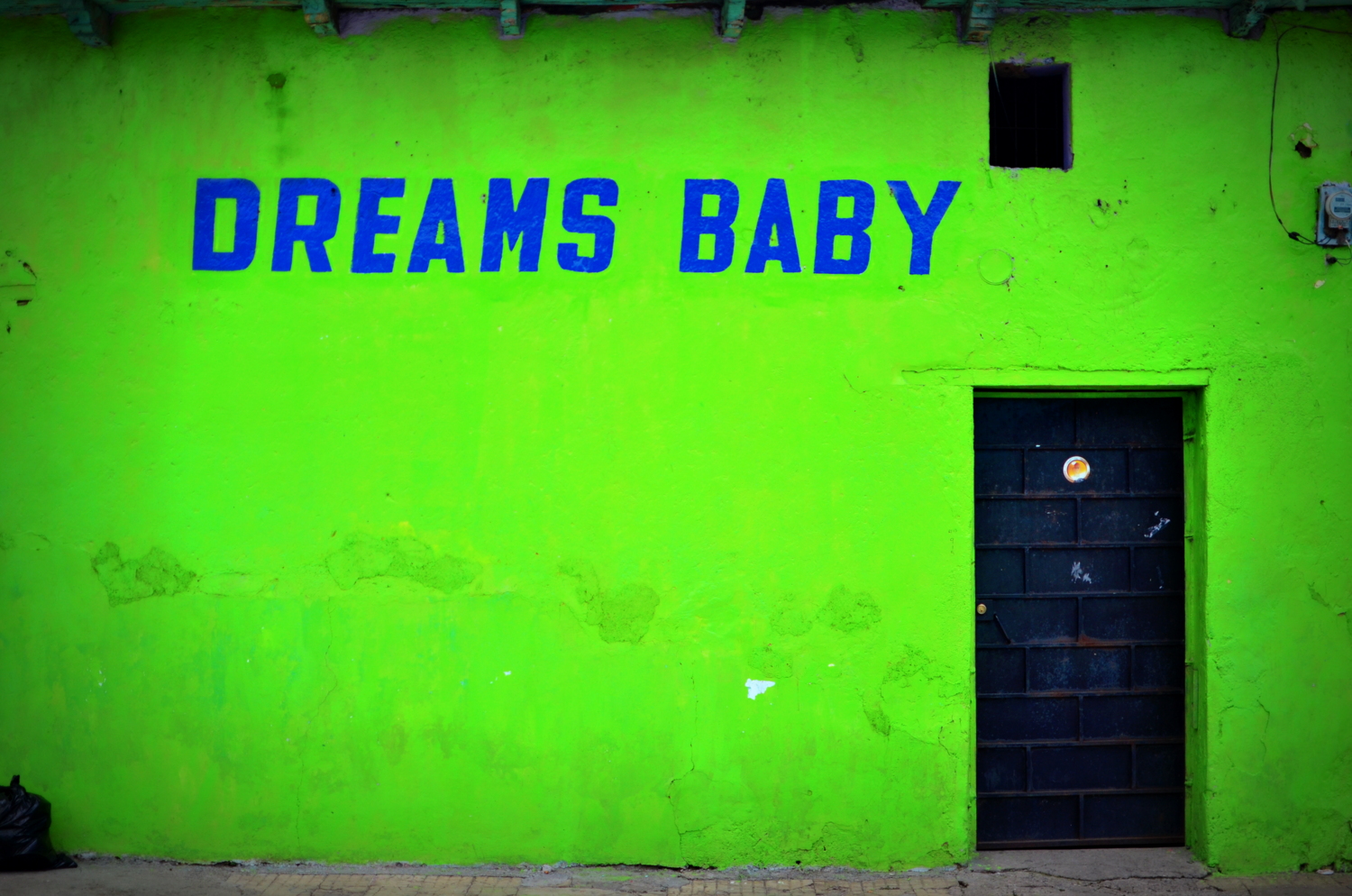


We set off to find a decent restaurant walking down the eerily empty streets of the business district towards the busy strip of this college town. A few bars here and there had Salvadorans swilling beers by the jukebox watching others shoot pool. The restaurant we sought out had a private party that night and was closed to the public. We walked past numerous bars blasting Latin American music in dark, ominous looking holes complete with prostitutes sprinkled along the sidewalks. To say this city felt a little uncomfortable at night would be putting it gently. Our pace picked up as we made our way to the grocery store and back, settling in for some good dinner convo with Carlos and other travelers.

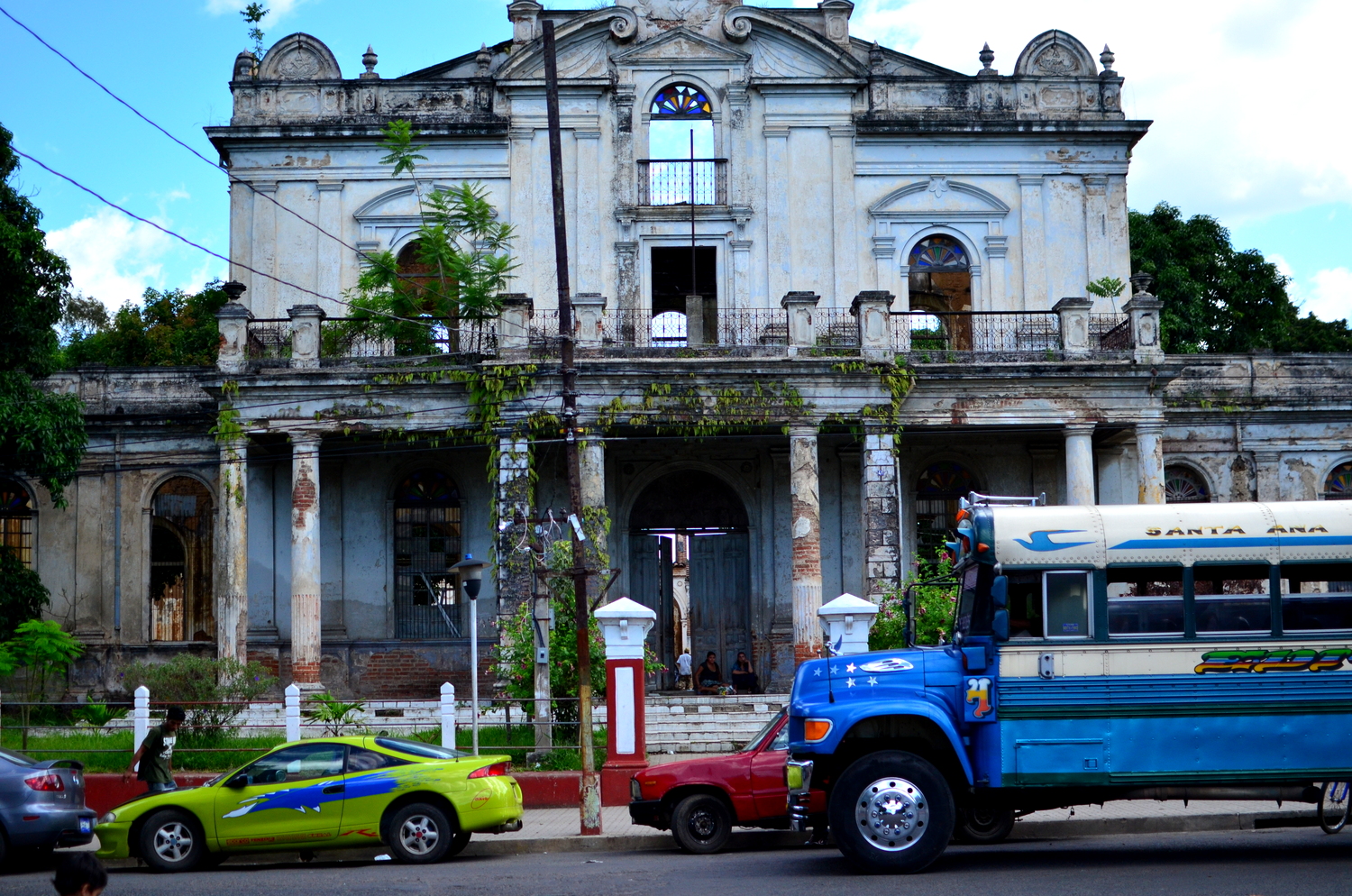


In the morning it was decided that our proximity to Volcan Santa Ana was too convenient to pass up the experience. Another traveling family climbed the ancient living rock that morning and were showing us the images of the view from the crater ridge with a neon green crater lake at the bottom. We also noticed that there was a huge crater lake, Lago de Coatepeque, situated at the foot of the mighty volcano, so why not spend a day there first? We packed up our belongings and headed out through the bustling mercado in the middle of the day. All types of characters were buying this or selling that as we ran our fingers along buses that were somehow pushing their way through the swollen sea of Salvadorans. We followed buses that were lined up like ants marching towards a freshly dropped lollipop into one of the most confusing second class bus stations encountered thus far. Buses were moving, parking, and blasting their horns as all efforts were made to not get hit by the hulking metal beasts. After a few preguntas we were on yet another hot and sweaty bus towards the lake. At every stop en route young men and women would hop on the bus and try to hawk the same candies, fruit, and beverages that every one before them had already offered. Once in a while someone would get on and give a hearty, 5 minute speech about delicious chocolates, brochures of healthy recipes, or about some amazing product that cured all ailments from chapped lips to high blood pressure. After only 2 days in this country I was positive that you could do almost all of your basic grocery shopping on a bus.
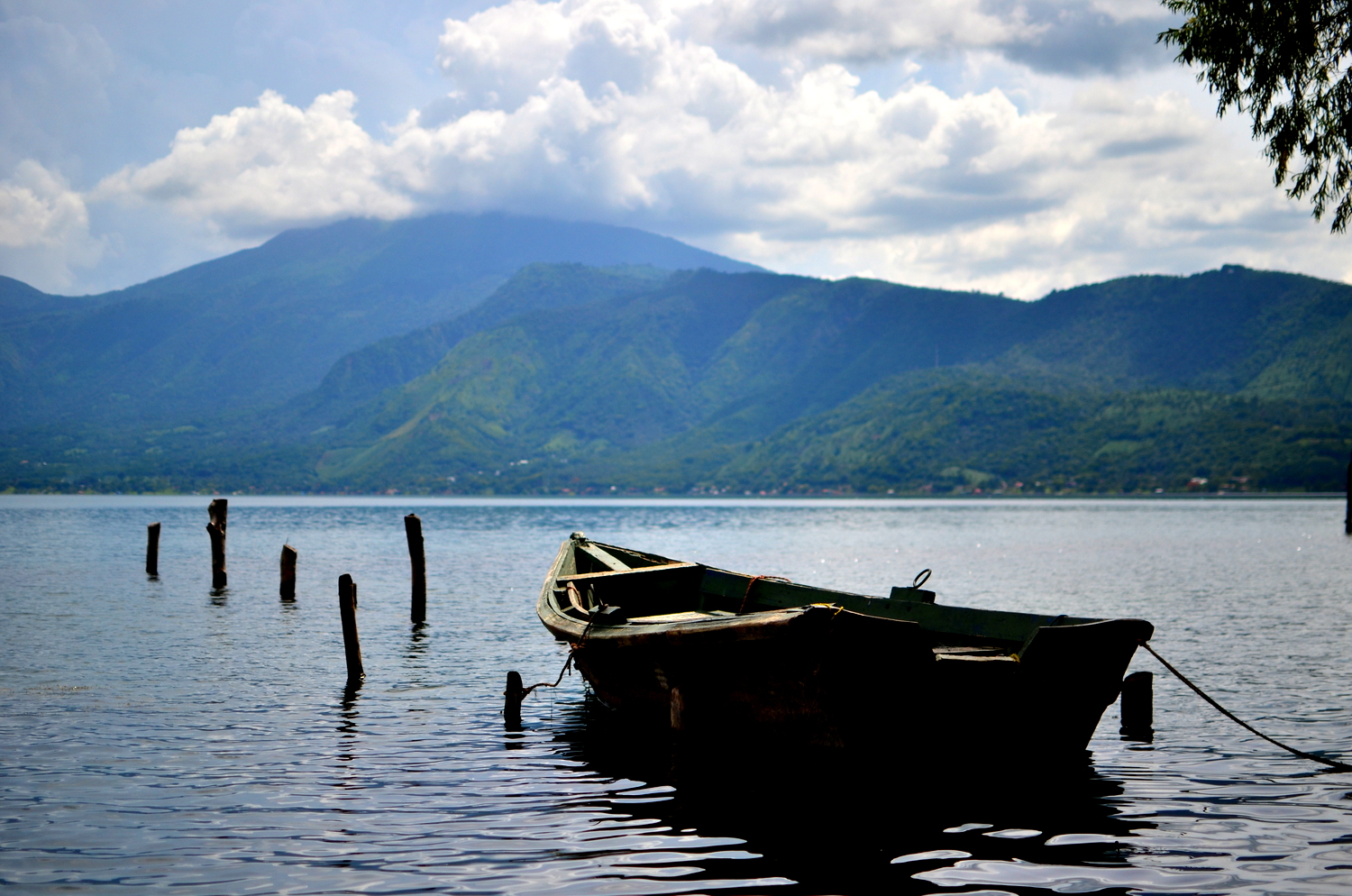

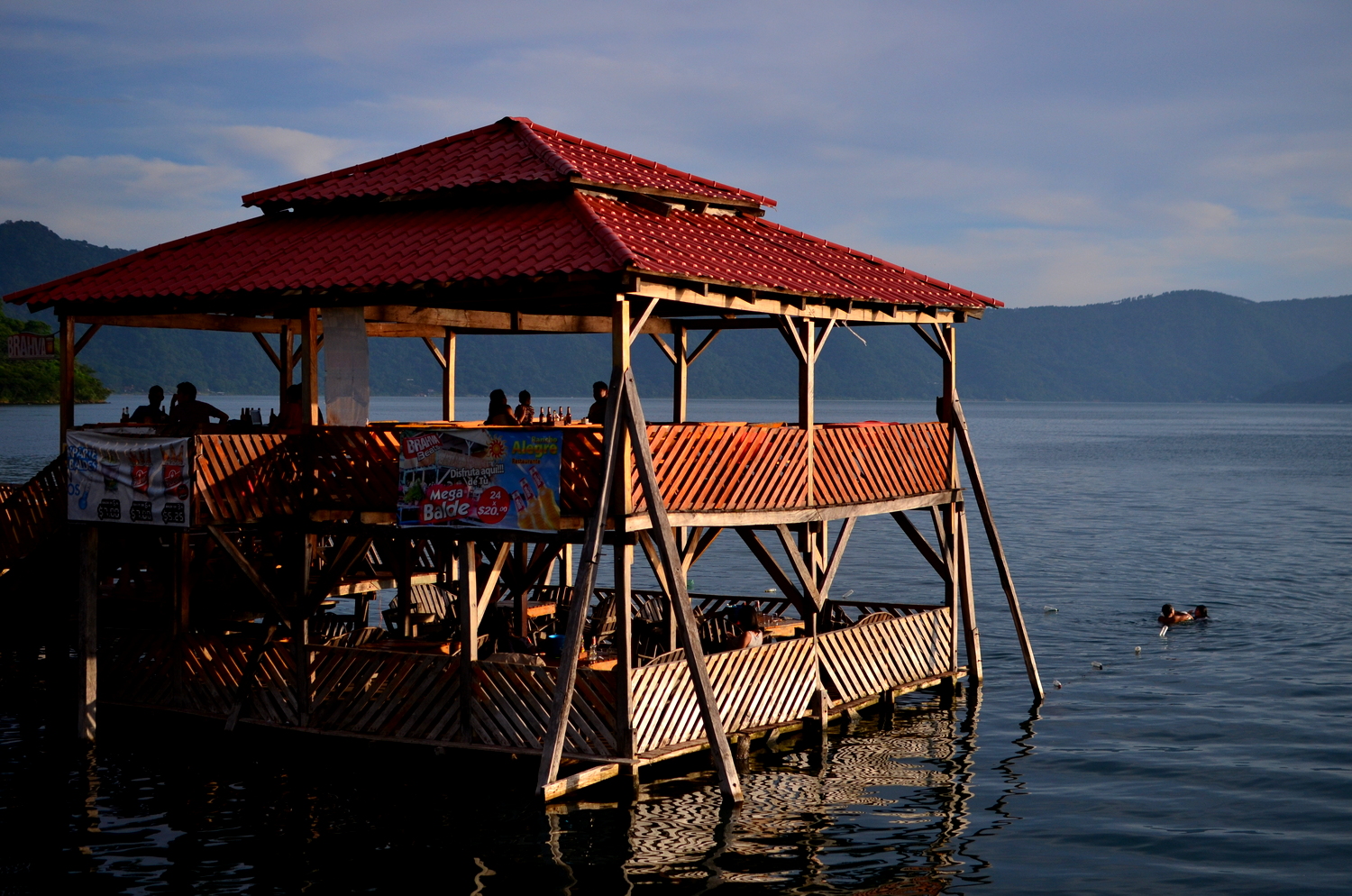
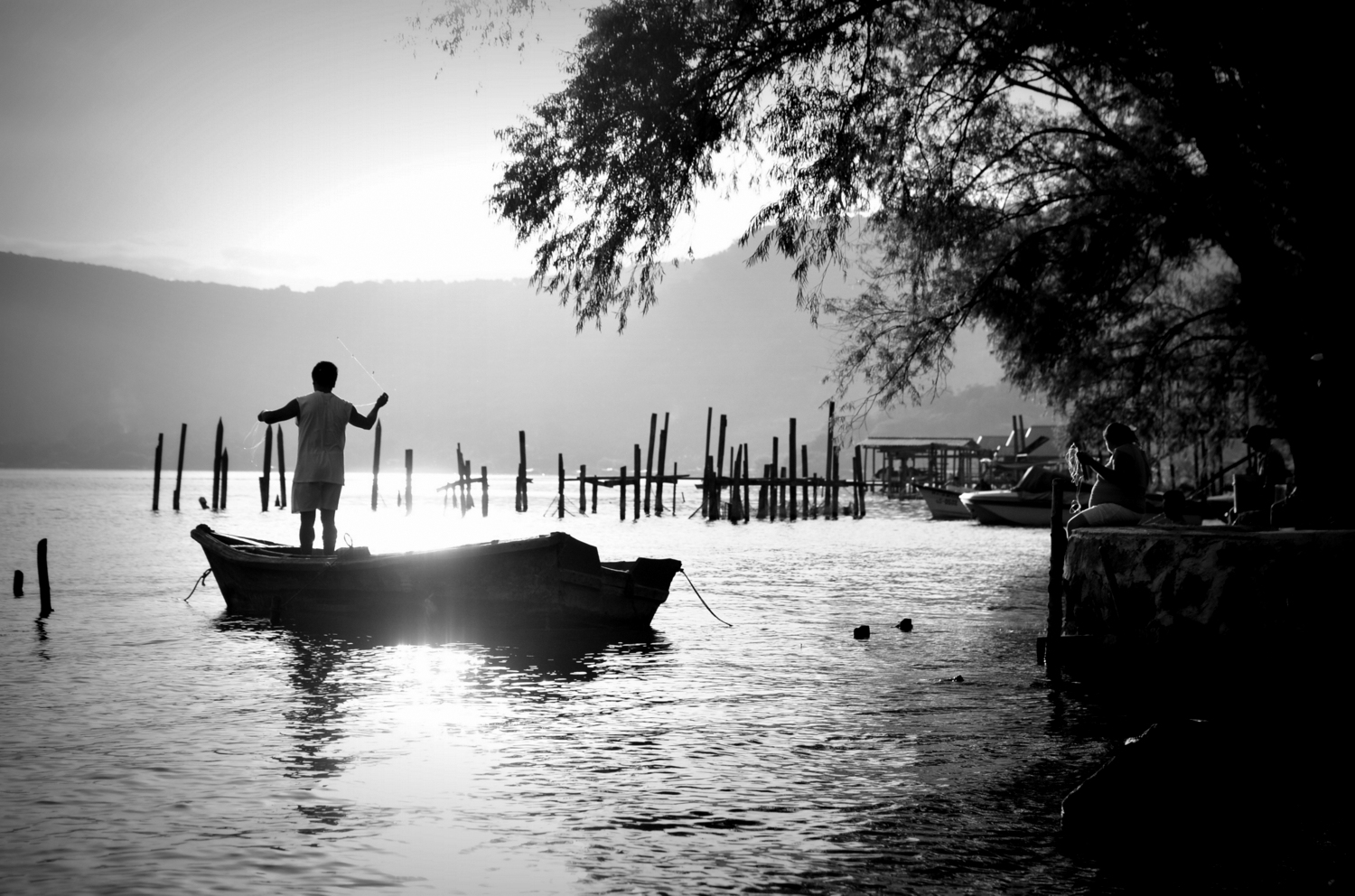
The road into the lake afforded stunning views from the ridge line of the mountain as we descended towards the water. We were dropped off in front of our hostel/tienda and immediately began settling in. The Spanish here seemed to be different, very hard to understand and communicate for us. Most of our efforts were met with questionable expressions. But within minutes we were settling into our stilted private cabin that was literally on the lake. This was complete with a water slide, multiple levels of docks, and more than enough chairs and tables for two. I immediately saw people fishing nearby using homemade reels consisting of a piece of wood wrapped with nylon line and a hook. After asking around we went to an elderly man’s house and purchased a “nilon” for about 1 dollar and a bag of live bait for another. He had Elissa hold the bag open while he scooped the minnows into their new home. I tried fishing for about an hour before giving up on the idea completely. I watched as locals would pull out fish just barely big enough to get the hook in their mouths and drop them in a bucket by their sides. My conclusion, confirmed after asking a friendly man named Jorge, was that the fish in this lake were tiny due to overfishing and pollution. A quick scan around the shore showed that grey water was being dumped into the lake from the houses nearby. Garbage was also visibly present on the bottom of the lake. It was sad to watch people throw their garbage right into the lake they live off of. It’s a part of the culture that I will never understand.
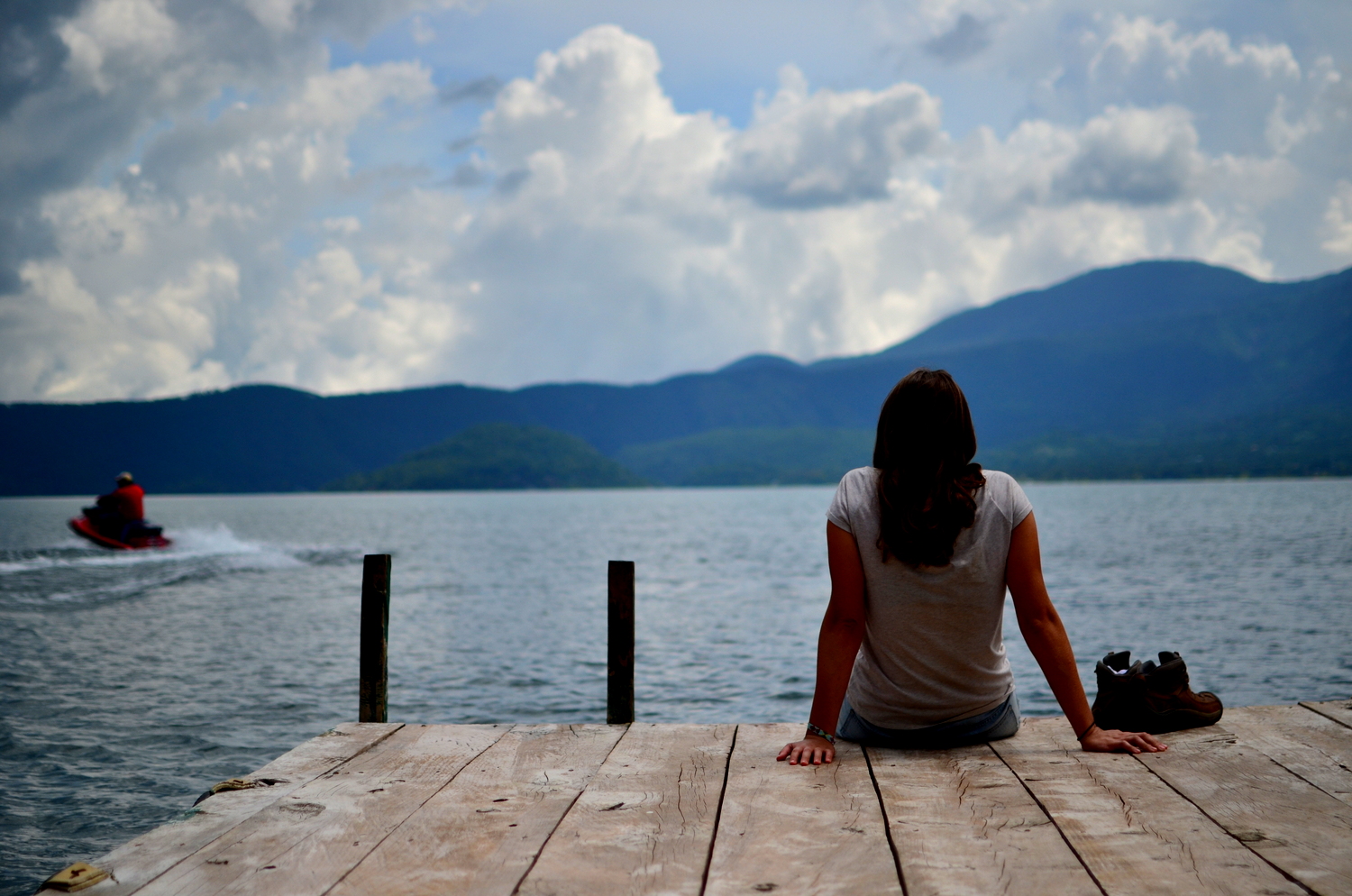

But regardless, we spent a beautiful day lakeside, relaxing in the sun and playing in the water. A full moon was celebrated before we retired with the soft sound of waves lapping against the saturated wood below our backs. Sleeping near or on the water always does it for me. The next morning we discovered the near impossibility of going to the volcano from it’s base at the lake. It turned out we would need to go back to Santa Ana and catch the first bus at 7:30 the following morning to get to the park before the only tour for the day (11AM) would leave. Back to Santa Ana we went.
The next morning we followed these new instructions and hit the road at 7:30 on a bus destined for the park. We teamed up with about a dozen or so others and were escorted by a police detail in the front and the back. Tours in El Salvador tend to have men with big guns on your side. This is a surprisingly refreshing feeling as a traveler because it brings another taste to your tongue. It writes a different story, puts new colors onto the canvas of cultural differences between the growing encyclopedia of countries your feet have been walking through. The police detail also kept quite a pace. We huffed and puffed as we tramped through the forest, up through fields, past the trees, and into the volcanic landscape. Other cones were in the close distance while odd looking plants stretched far up into the sky. Clouds skimmed the surface up the side of the cone and blanketed over the top as we approached the summit. A cool layer of vapor collected on every part of your exposed skin as visibility became more opaque.
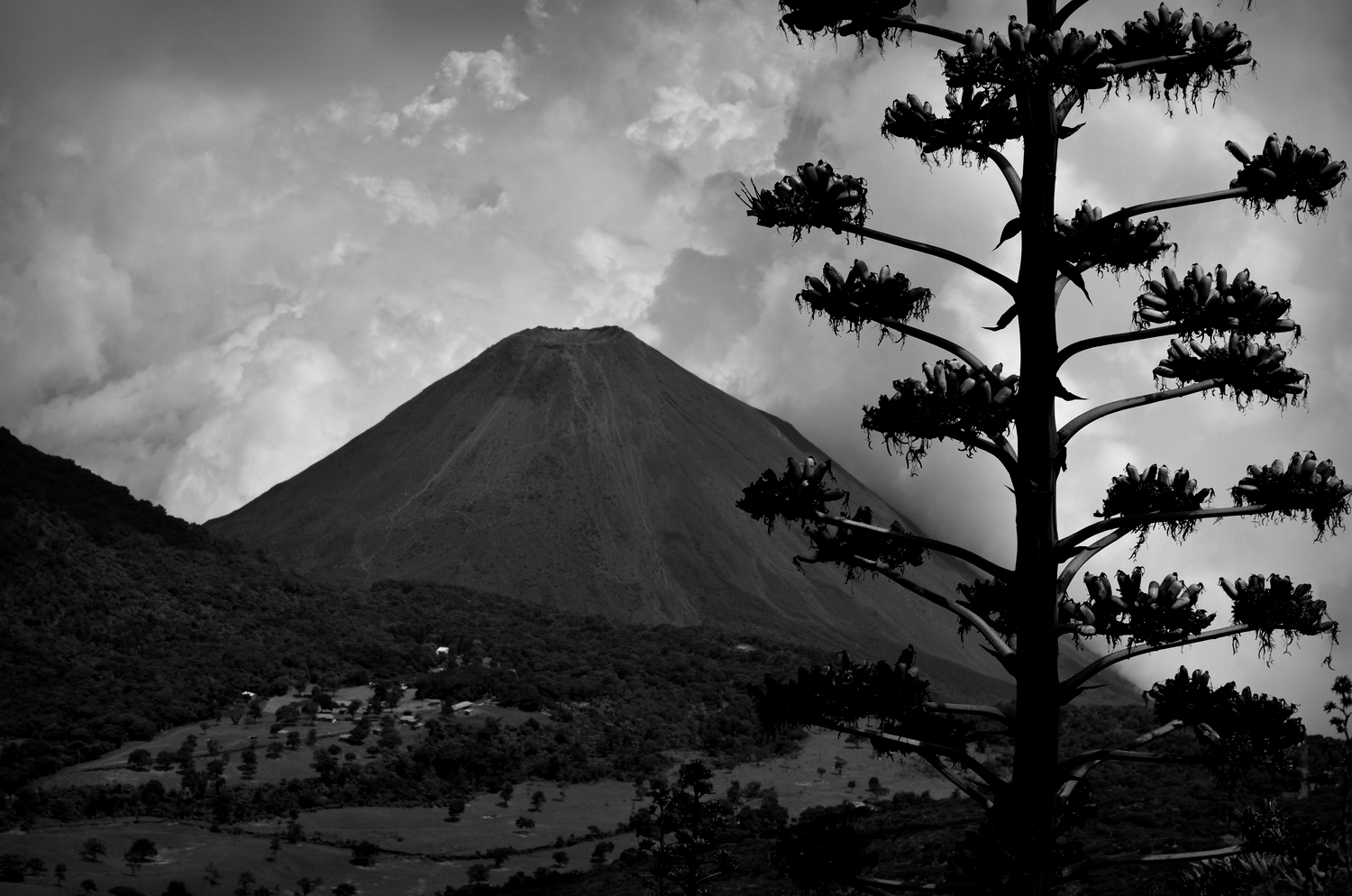
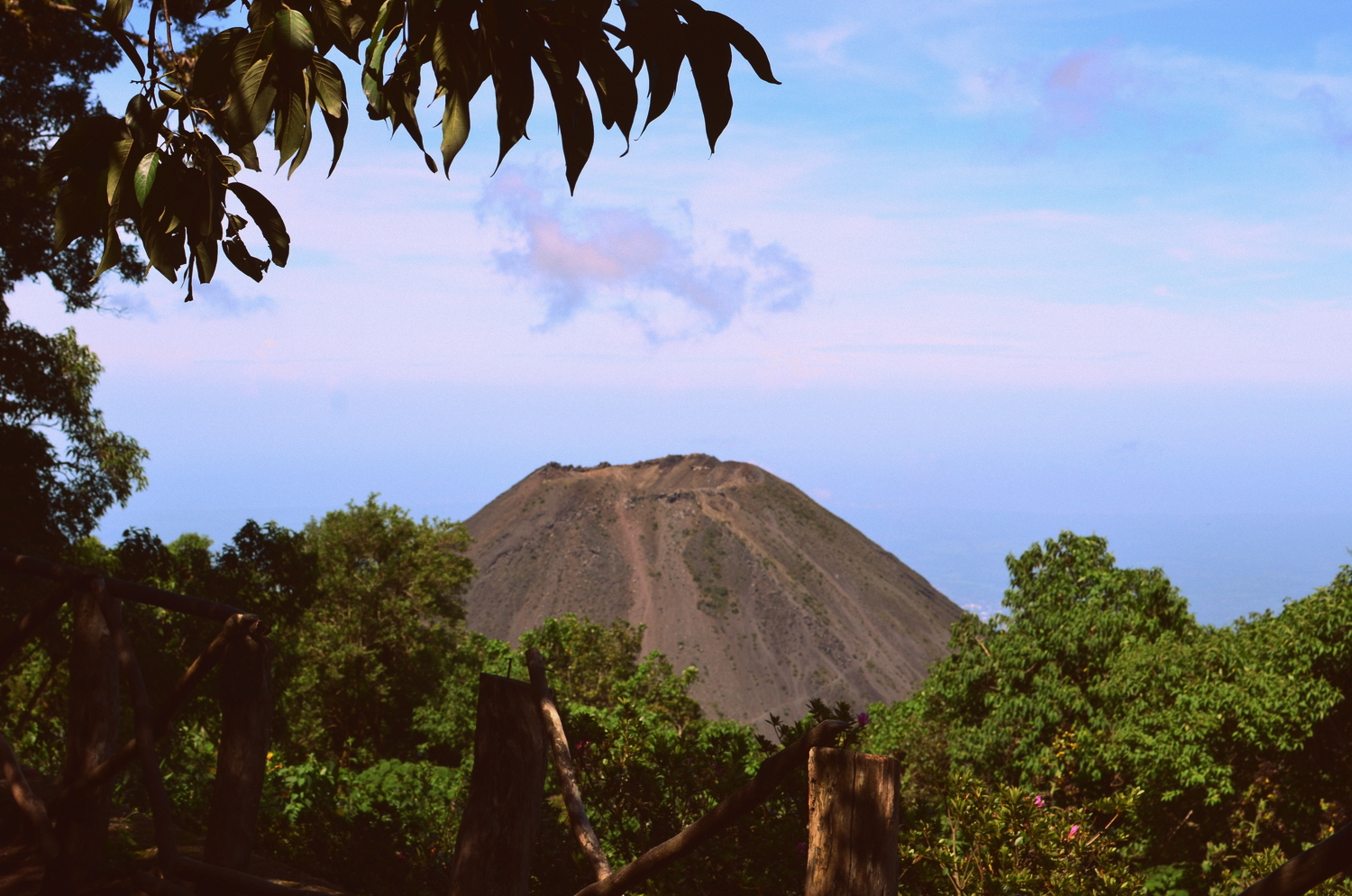
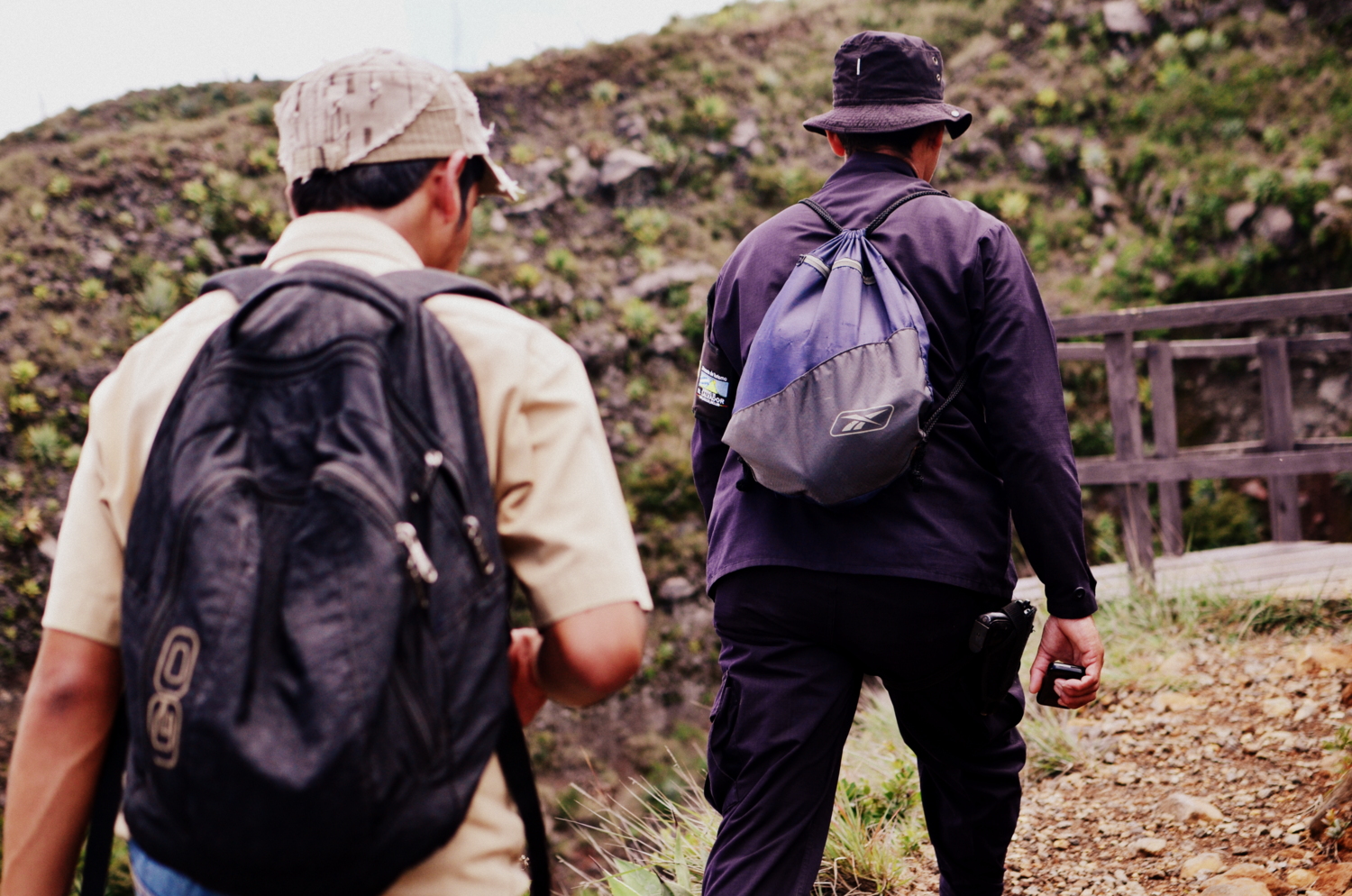
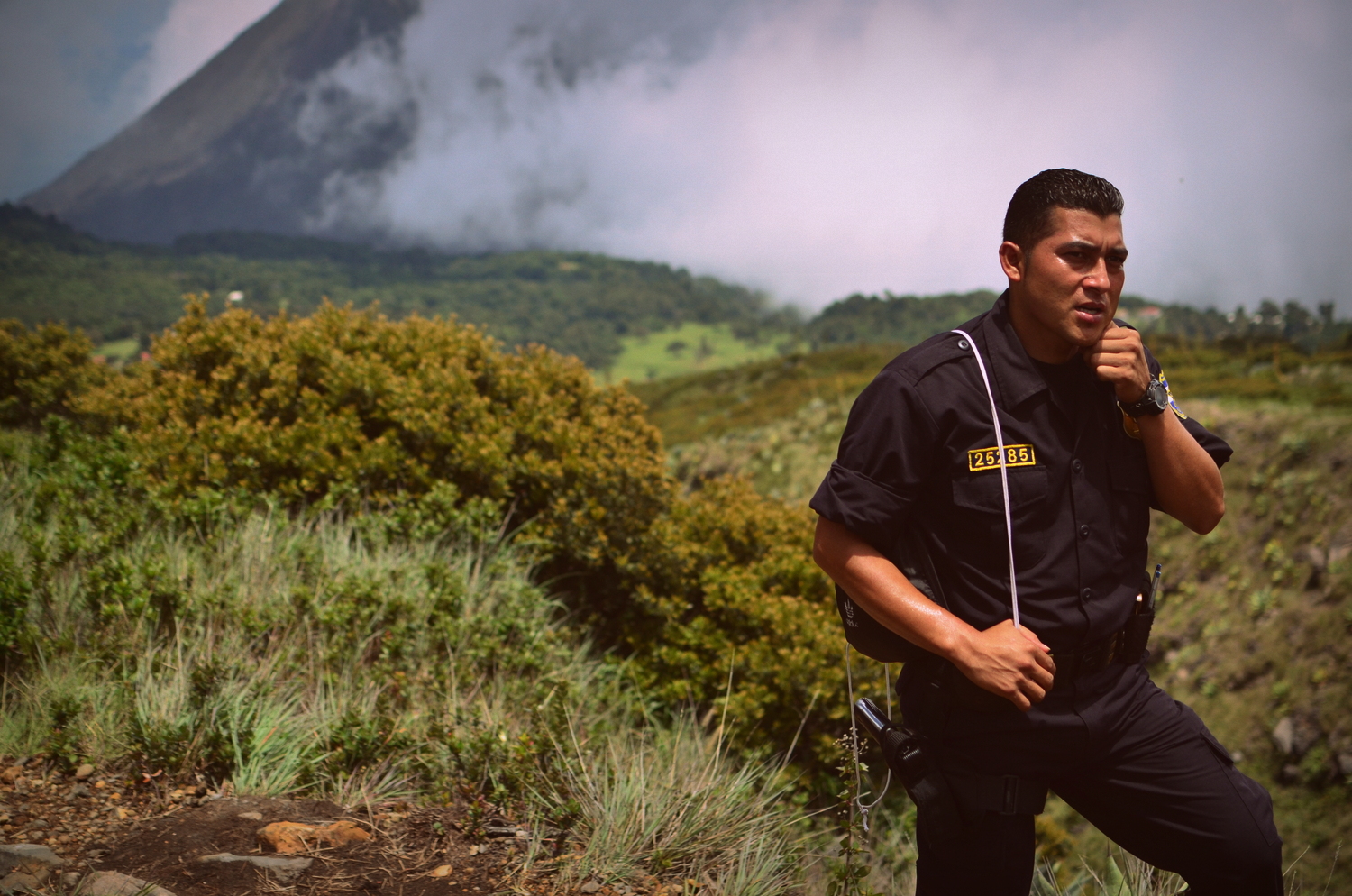
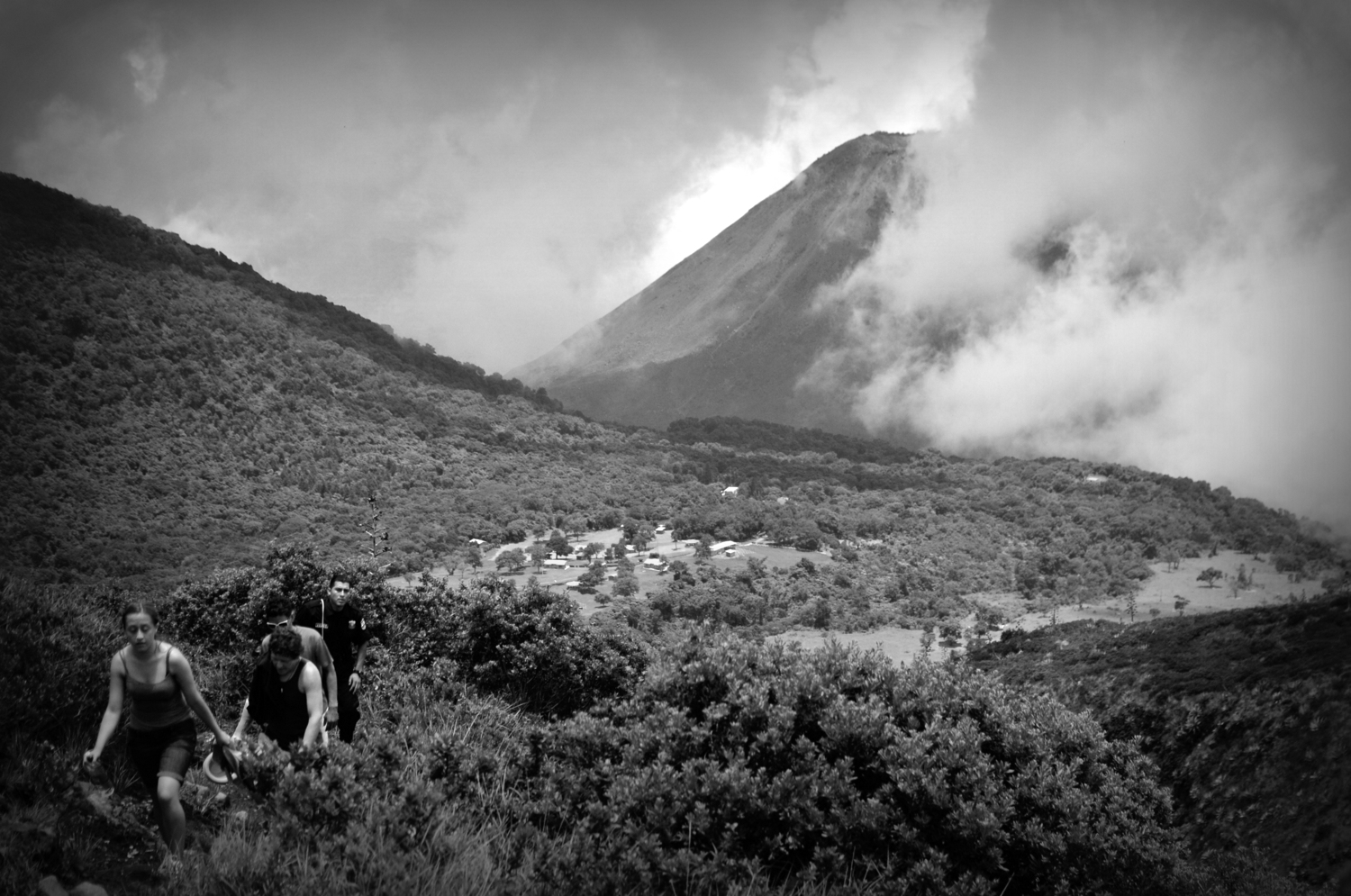


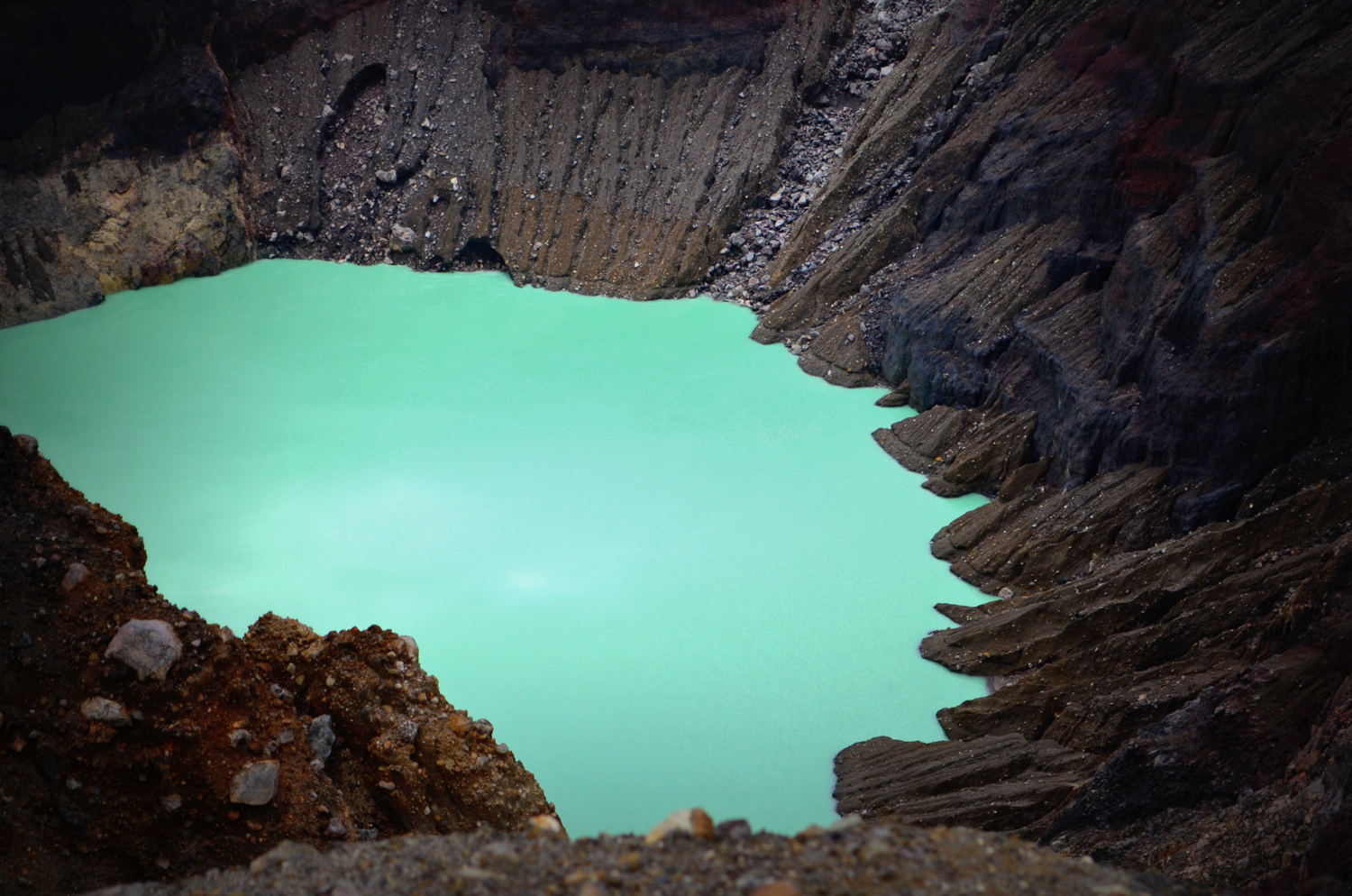
At last the top of our climb had been reached. The view down into the volcano was a stunning display of stratigraphic history with, as expected, a neon blue-green lake at the bottom. As clouds passed over the mouth of Santa Ana different patches of colors played on the surface. 180 degree views of volcanic landscapes, hillside farms, and the massive lake were soaked in while we all caught our breath. It was absolutely worth the shuffling, relocating, and physical effort to reach the end goal that was never really a goal in the first place. We have been finding that a tried and true method is to have loosely based plans, ones that can be traded in at the first fleeting feeling of circumstantial conflict.
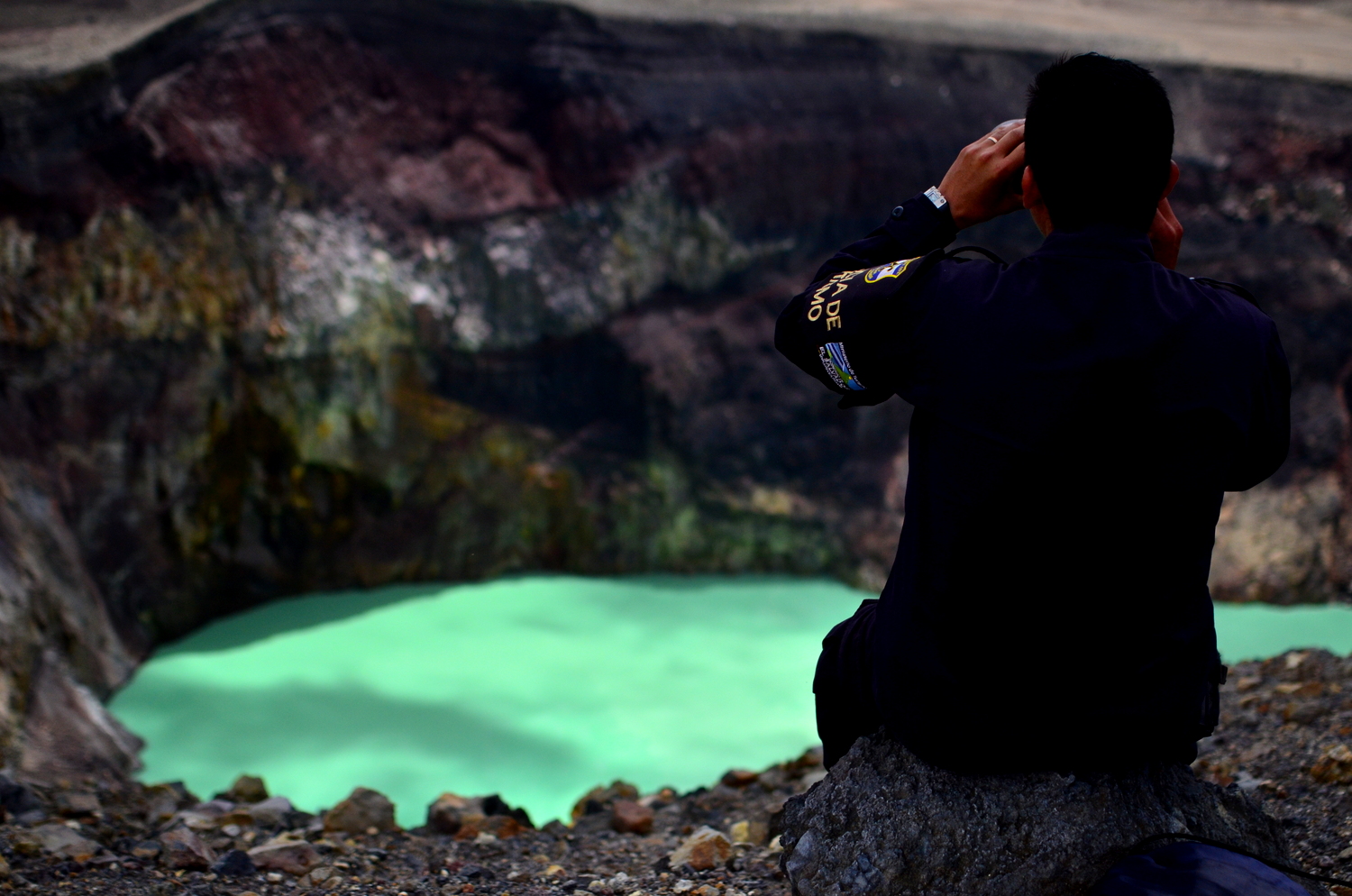
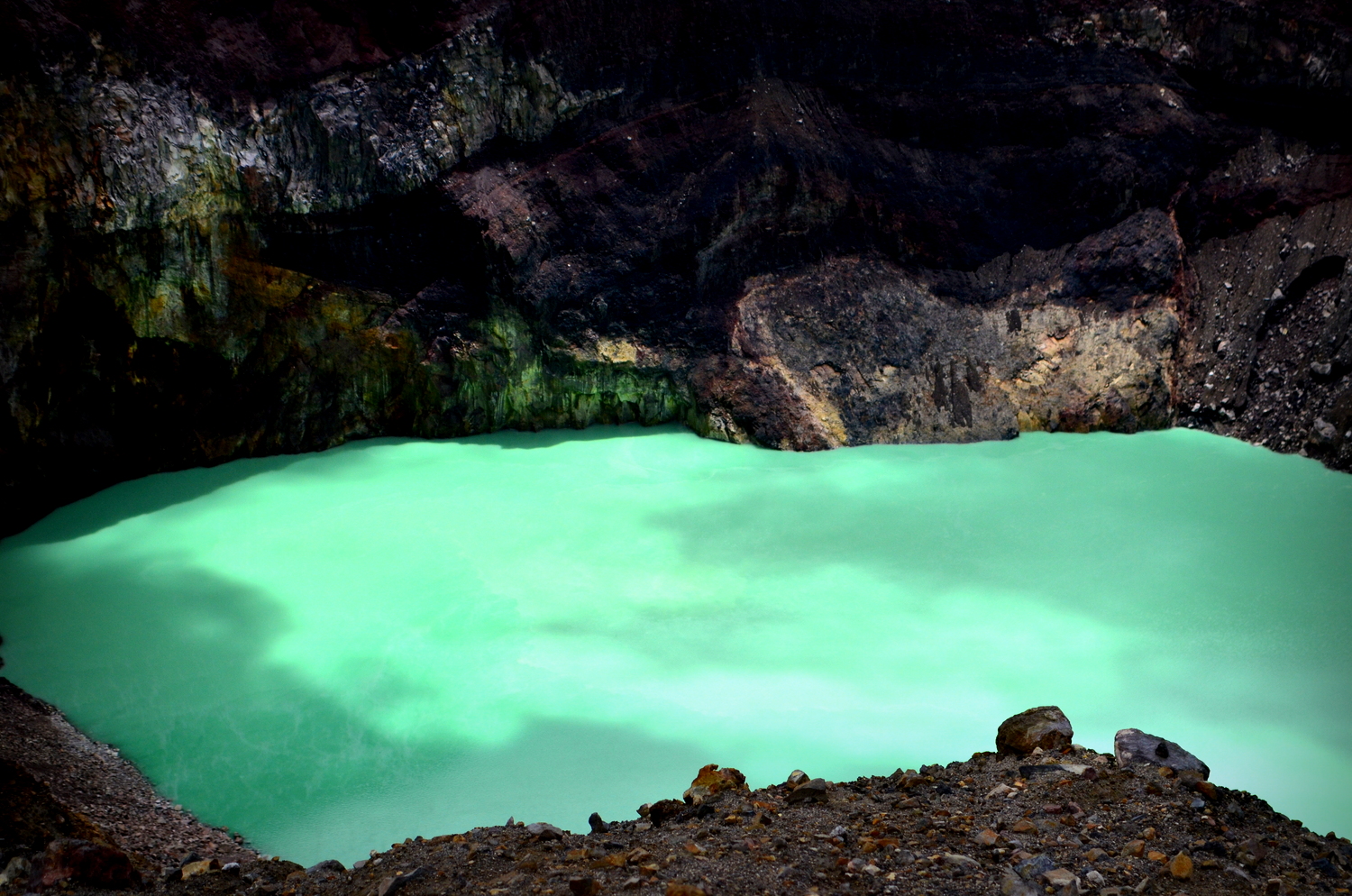

In an attempt to engage the audience (you, trusty readers) in discussion I’ll throw an open invite out there to tell any stories you’ve had of changed plans and chance discoveries that differed from your original itinerary.
Penny Karma project #1 = success!

With the trust and generosity of friends, family, and blog followers we raised money for a full month to send to Flor de Maria. Thanks to your donations, we end with a final sum of $230 to help pay for Flor’s future cleft palate repairs. From here an adventure began.
We were on the Caribbean coast of Colombia, a stretch that stole our full attention despite its not so rave-worthy infrastructure. In moments of lasting internet connection we touched base with Marlon, a wonderful teacher from San Pedro’s Cooperativa Spanish School who eagerly agreed to be a crucial part of, as he put it, our “gran proyecto humano” (our great human project). Marlon suggest that we send the gift safely his way through a moneygram location along with a letter to the family.
First we drafted a letter. This was not the easiest task for a couple of Americans slowly learning Spanish. We wrote with a dictionary and referenced class notes. In the message we told the family how fondly we remember our time in their home. We described how often we thought of their kindness and sincerity in the time after our stay, and how touched we were to have been welcomed into the lives of people who so clearly understand the power of love above all else. We wrote that we had shared Flor de Maria’s future surgeries with our friends, family, and even people who we don’t know personally who have been following our travels. It was with happy hearts that we shared the news that people from around the world had acknowledged how important Flor’s happiness and health are for their family by donating to this cause. We asked only that they keep baby Flor smiling.

Moneygram fought us at every turn. The locations nearby wouldn’t send money. We registered online and fought with internet signals and last-minute failed online applications. We kept traveling, meanwhile toiling over how, when, and where we could send the money. Finally, in Santa Marta, South America’s oldest living city, we took a taxi to a mysteriously located moneygram location.. without our required passport identification. Only after a full loop back around the city and a return with our backpacks in tow was the gift en route to Guatemala.

Emailing Marlon the code for pick-up was equally challenging from high in the Sierra mountains. Though the uncertainty made the moment we got word from San Pedro La Laguna on Guatemala’s magical Lake Atitlan that much richer. Marlon wrote first, telling his tale of finding only Andrea at home when he arrived on a Saturday afternoon. Andrea, Flor de Maria’s mama, often stays close mid-day as she maintains the home of seven. We could imagine the scene as Marlon described Andrea’s genuine surprise and appreciation. A couple days later we also received a message directly from Andrea which read:
Hola, Elissa espero que esten bien y que esten disfrutando de su viaje, por donde andan ahora? Hace unos dias recibimos una gran sorpresa en la casa porque Marlon nos visitó y nos dió un gran regalo de parte de ustedes, por el cual estamos muy agradecidos de todo corazon porque la ayuda economica nos sera de mucha utilidad de verdad mil gracias a todos sus amigos y austedes tambien, ya que este dinero sera de mucha ayuda para Flor de María, de parte de toda la familia, de Sebastian, Andrea y especialmente Flor de Maria muchas gracias nuevamente que Dios los bendiga a todos.
Muchos abrazos y saludos a toda la familia y especialmente a Daniel, esperamos noticias de ustedes muy pronto.
and in English, more or less:
Hello, Elissa I hope you are well and you are enjoying your journey, through where are you both traveling now? A few days ago we received a great surprise at the house because Marlon visited us and he gave us a great gift from you all, for which we are very grateful from all of our hearts because the financial help will be of much use. Truly, a million thanks to all of your friends and family also, as this money will be very helpful for Flor de Maria. From every part of the family, from Sebastian, Andrea and Flor de Maria especially, again thank you very much God bless you all.
Many hugs and greetings to all the family and especially to Daniel, we hope to hear from you soon.
Andrea.
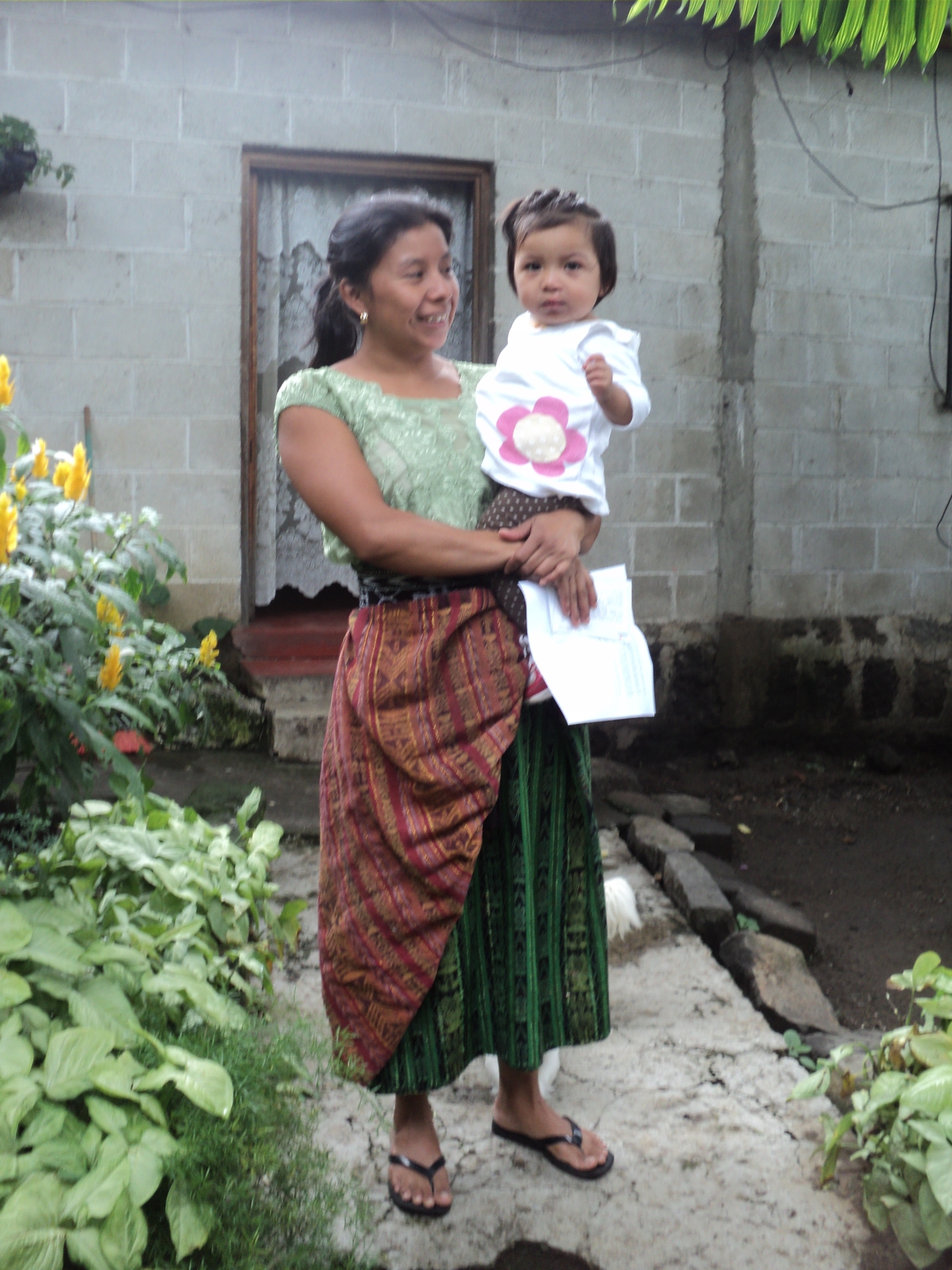
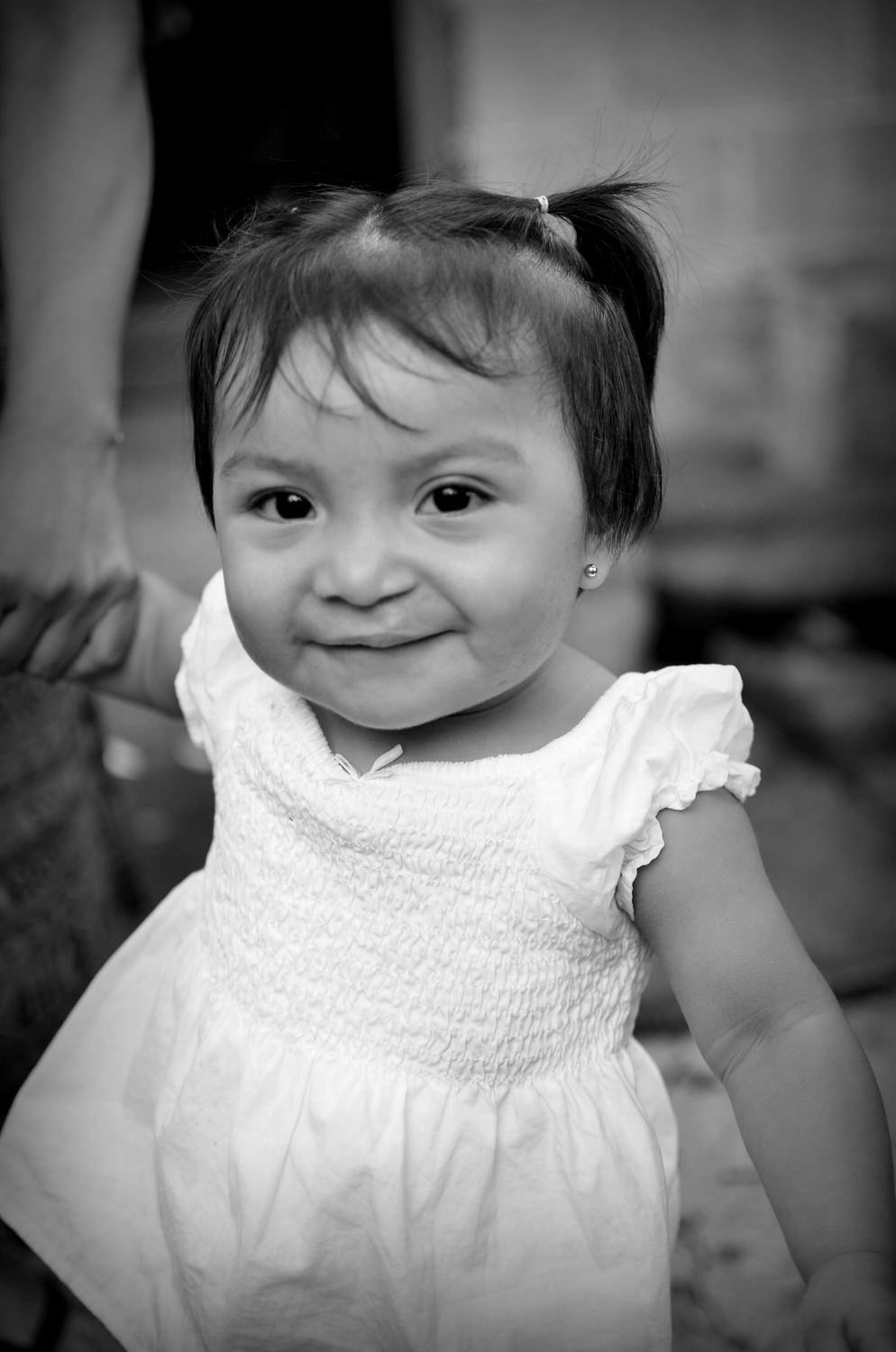
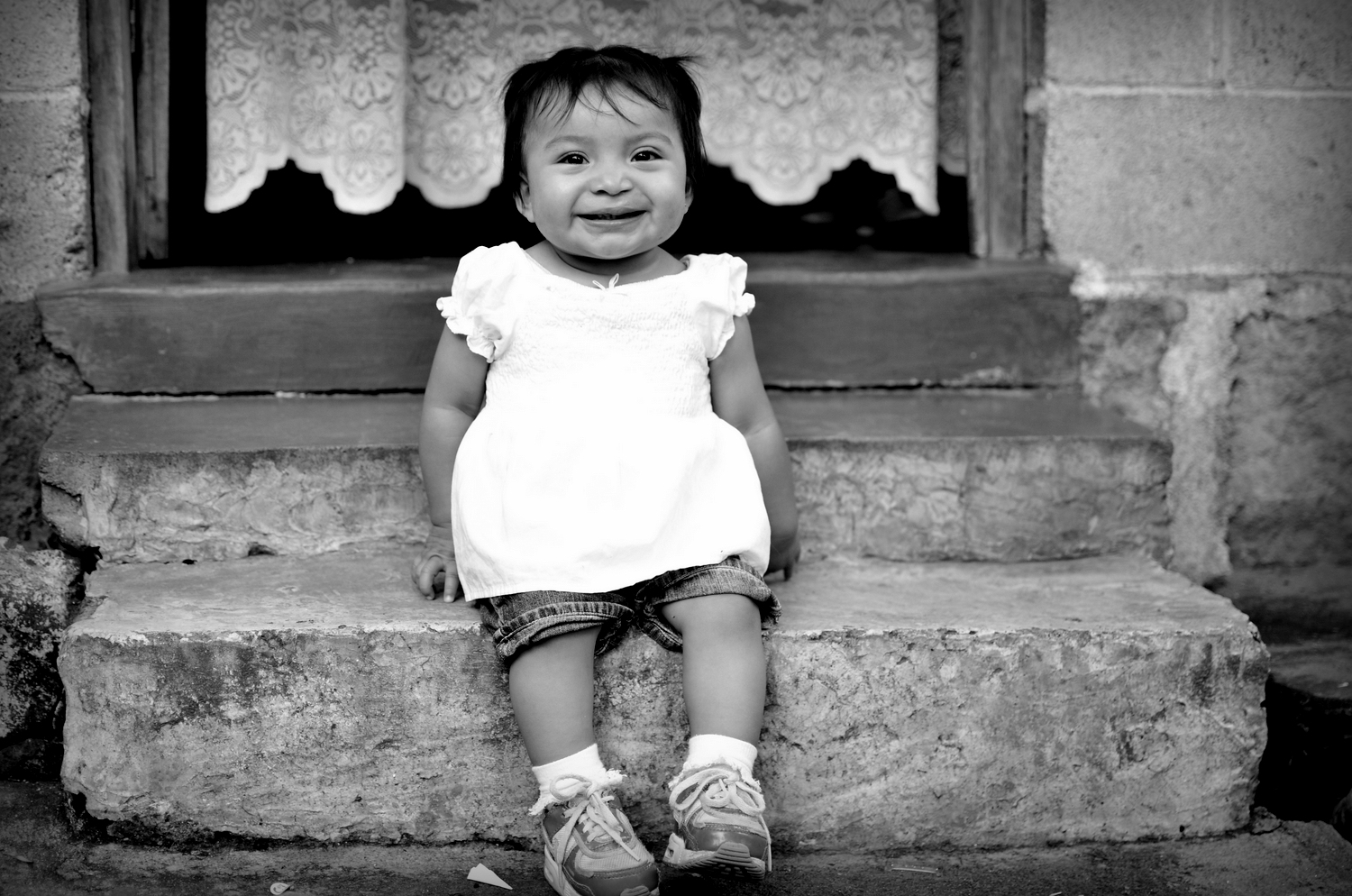
Andrea with baby Flor de Maria, moments after learning about what Penny Karma brought to them. Photo courtesy of Marlon Puac
We have since been emailing back and forth to Andrea and she couldn’t be more sweet, grateful, and deserving of the assistance that was delivered directly from your hearts to theirs. With the help of everyone who graciously gave some of their time to read the story and some of their own money to complete strangers, we all succeeded in changing the life of little Flor. She may never get to thank you in person, but know that she will certainly hear this story in the years to come and be thinking about everyone who helped make it all possible- with a smile on her face.

Keep the Karma flowing
Thank you all so much for making this big first goal a success! Please consider further small donations to help fuel our idea and continue to make smiles along our journey while spreading karma around the globe.
Juayua and the grand entrance into El Salvador
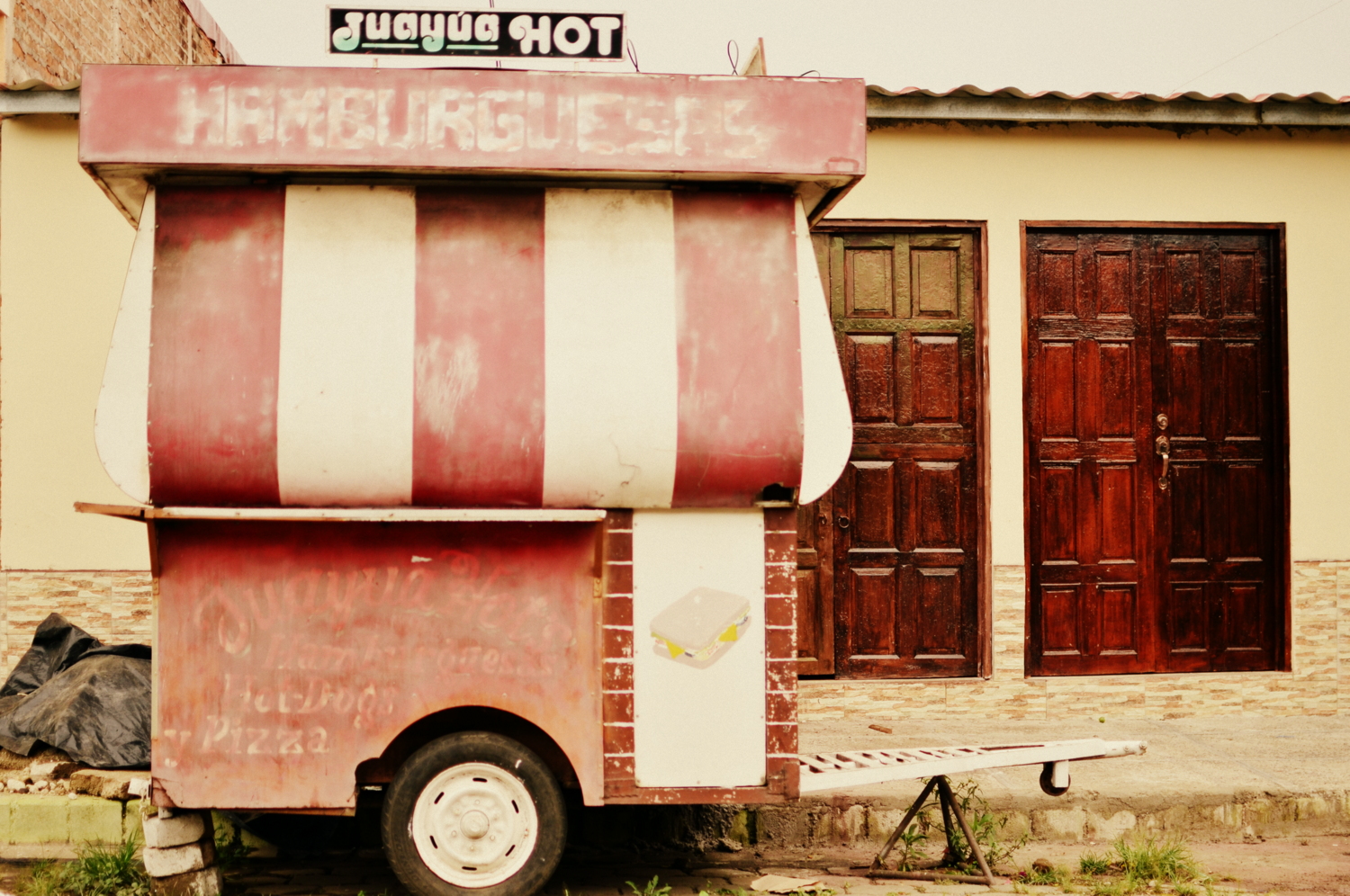
There are some times in your life when you question the decisions you are making from a rational point of view. This moment came to me around the time we squished into bus number three on the Guatemalan side of the border. Deciding that taking the cheapest possible route across a Central American border saving 20$ sounds reasonable. Until you realize that you are in a developing country far away from home, and that math on paper doesn’t always equate to the reality of the situation. When else would you add an additional 4 hours of physically strenuous and uncomfortable Guatemalan school bus rides, thus giving you probably an additional 2 nights of hostel beds? The answer is when you are traveling on a long trip. Budget traveling brings out the ruff and tough attitude of your personality while throwing the common sense part of the equation out of the window. You find yourself making somewhat of a game about figuring out the local transportation puzzle. Points are awarded for the most tolerable and affordable means. We found it between Antigua, Guatemala and Juayua, El Salvador at a cost of about 8$ (I challenge anyone to find a more cost effective solution, besides hitchhiking). Agencies in Antigua went down to about 30$ shuttle to shuttle ending in the capital of San Salvador. Our solution was a bit more non-traditional. We had recently developed a strong proclivity for school buses in Guatemala and made an absolute, but questionable, decision the night before we left.
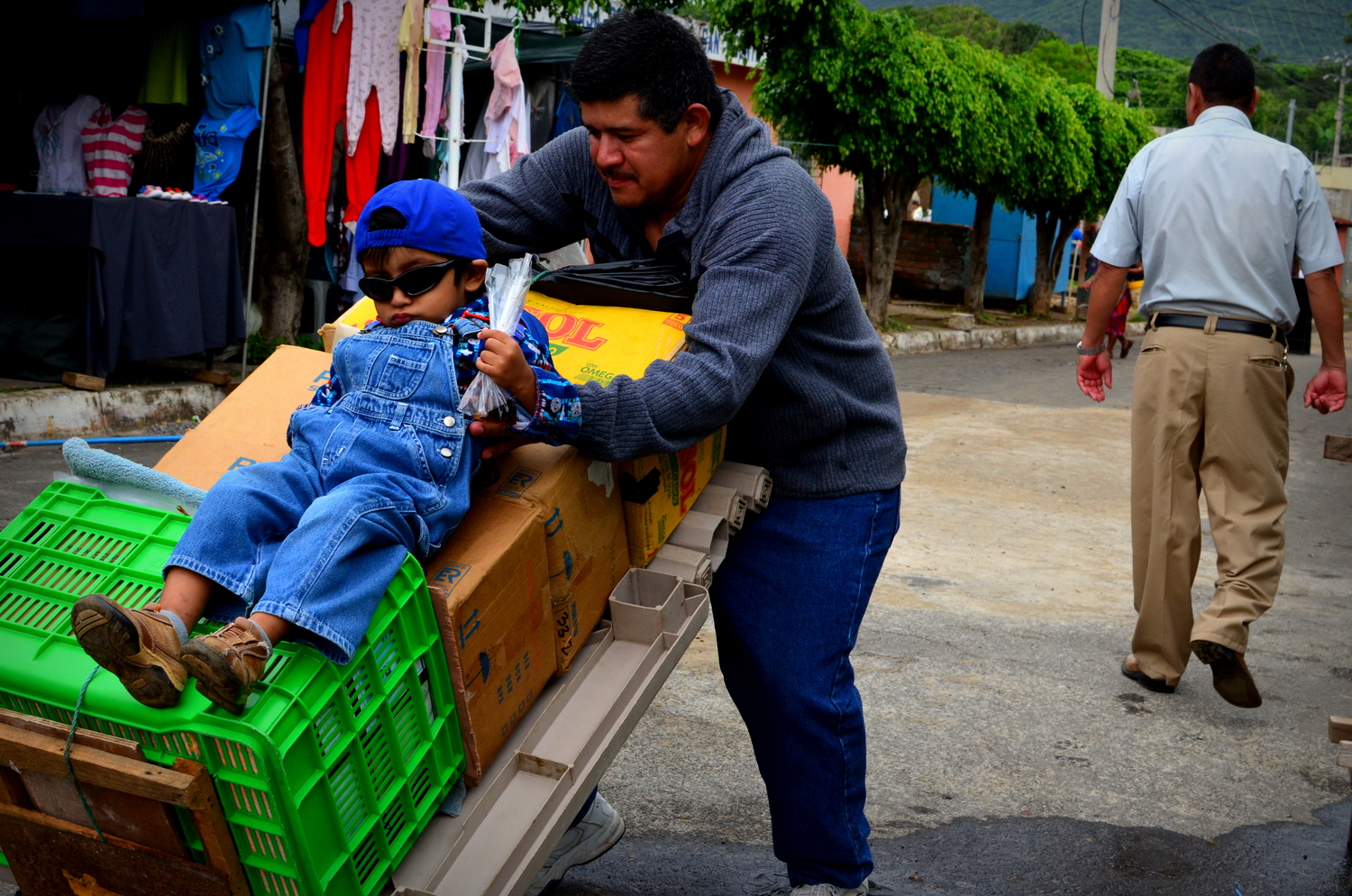
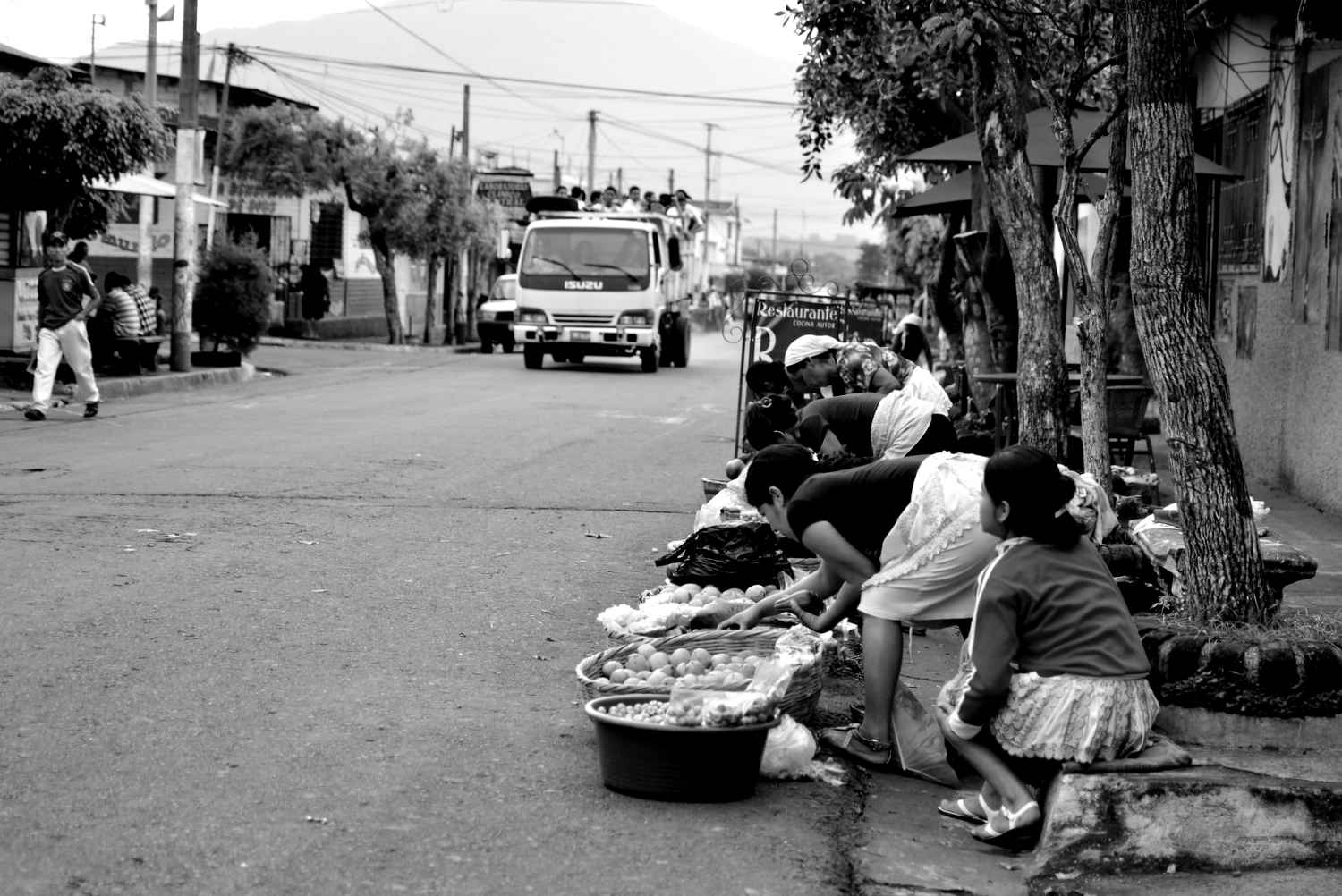
By the end of the day we took a total of 5 chicken buses. We were the only foreigners on the Blue Bird’s that day. Almost every passenger was looking and wondering what we were doing way down that way, so far from the city. The leg from Antigua to the fronterra had two transfers prior to the border. A gas station in a bustling no-where town was our first stop, where were packed into a standing room only bus that rolled away before we knew for sure our luggage made it up on the roof. Our second layover was on the side of a 5 way intersection before heaving onwards to the fronterra. We walked a kilometer on foot through the no-man’s land that only a border crossing in a 3rd world country can cultivate. This one in particular felt very real, very much like there was plenty of room for the situation to run away from our control. After passing around 100 idling cargo trucks lined up for inspection we collected our stamps and walked into El Salvador.
Our bus driver on the other side of the border decided it was time to leave immediately after we set our tired backsides onto a tree root. The first difference I noticed between the two neighboring countries was that the ayudante would now sit in front of you and shake a bag of very familiar currency. Nickles, dimes, quarters, and dollar bills fill pockets of everyone living in or passing through El Salvador. The bus also didn’t get packed to maximum human capacity on our first ride. Our 5th and final bus of the day wiped away that hope in cultural differences as we became worried about how we were going to exit the bulging human container with our massive backpacks. This too, went away when the old Blue Bird dropped us off in a rainstorm in the small, quiet mountain town of Juayua.
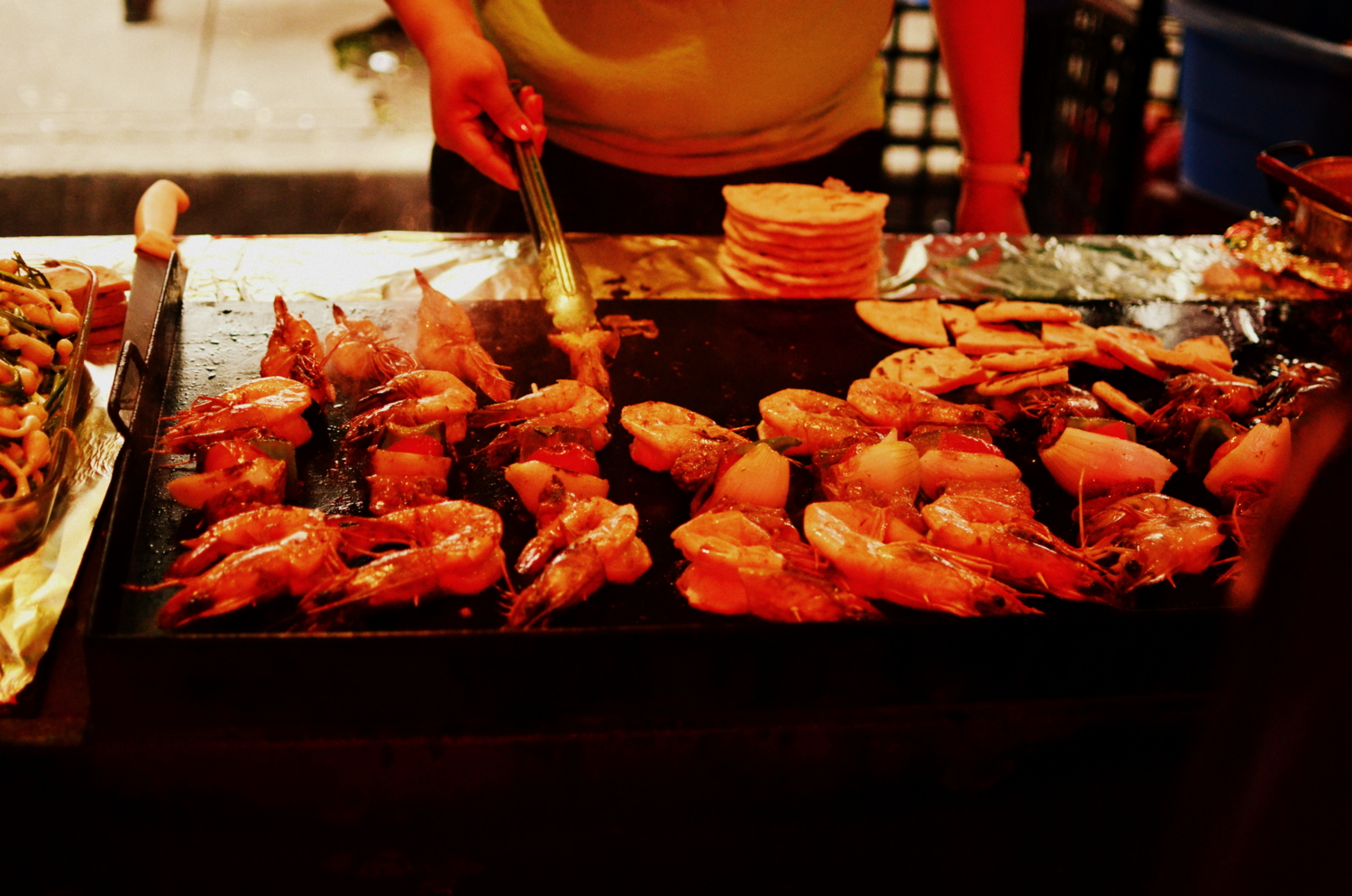
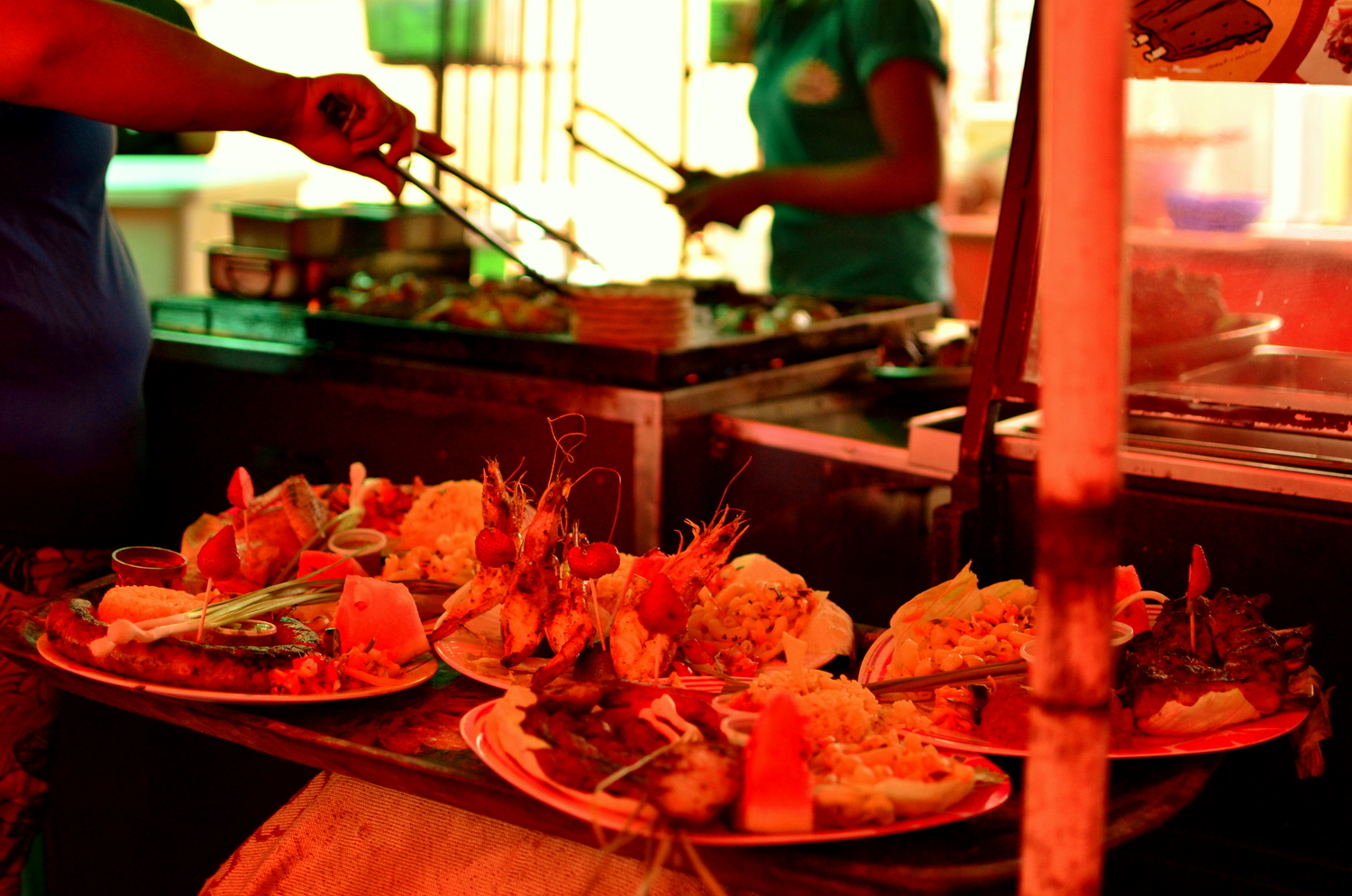
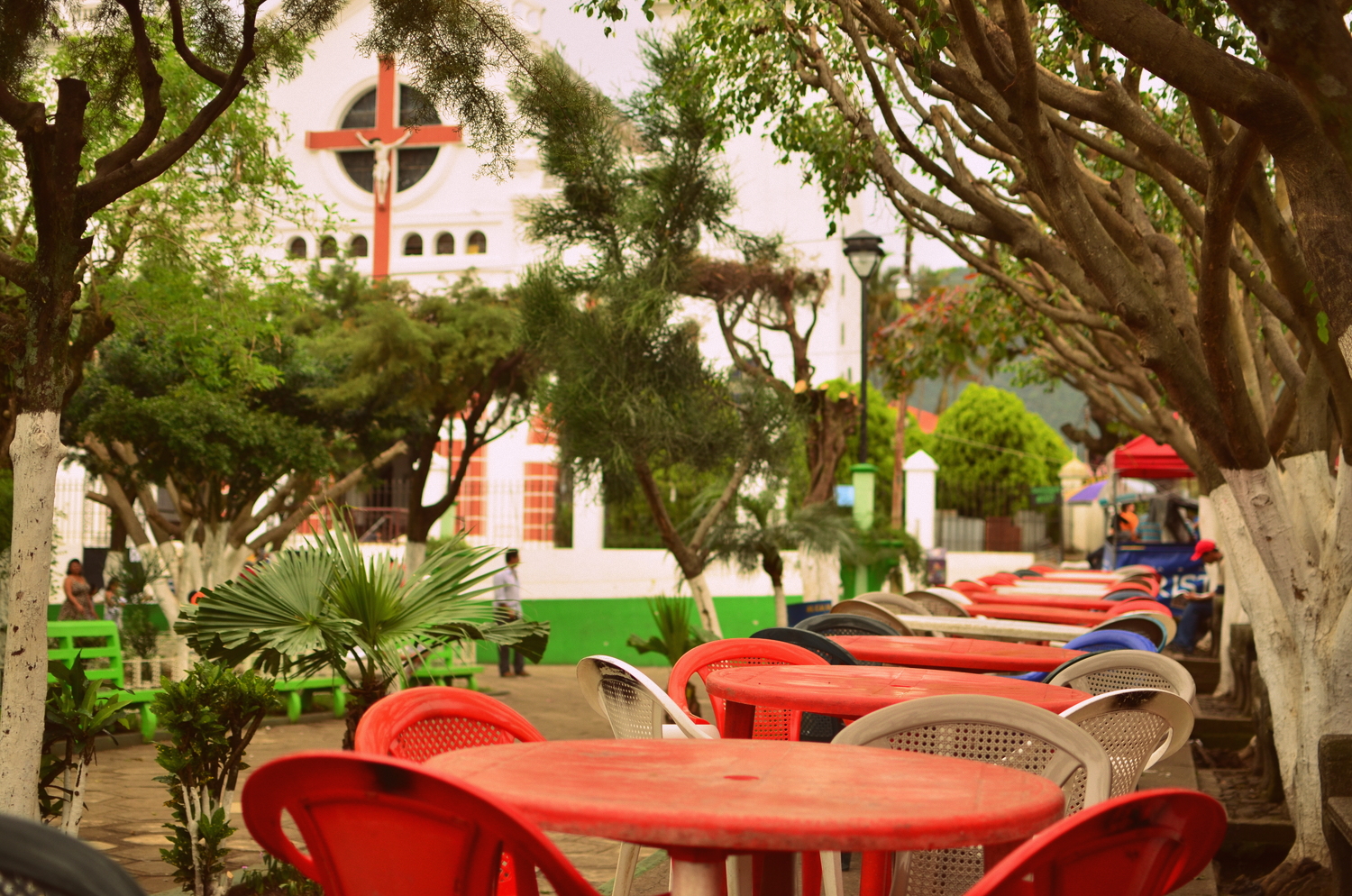
Juayua’s main attraction is to experience the food fair it hosts every weekend. Nestled up in the mountains of El Salvador along the Ruta de los Flores, Juayua clutched it’s small village charm and a slow and easy Central American pace, of course. Latin American towns, especially small ones, have to have some sort of unique quality about them to attract people there since there are so many others in this part of the world. A food festival sounded like the most enticing trait a town could possibly have after a long travel day. We hunted around for hostels through empty food and fair stalls already set up for the weekend’s festivities, wandered around the piecemealed mercado below plastic tarps and stall ceilings before finding a cheapish hotel. By now it was 9 o’clock and we hadn’t really eaten anything since breakfast after being shuffled bus to bus since the morning. We encountered our first of very, very many papusa purveyors and made full bellies in a family run restaurant.
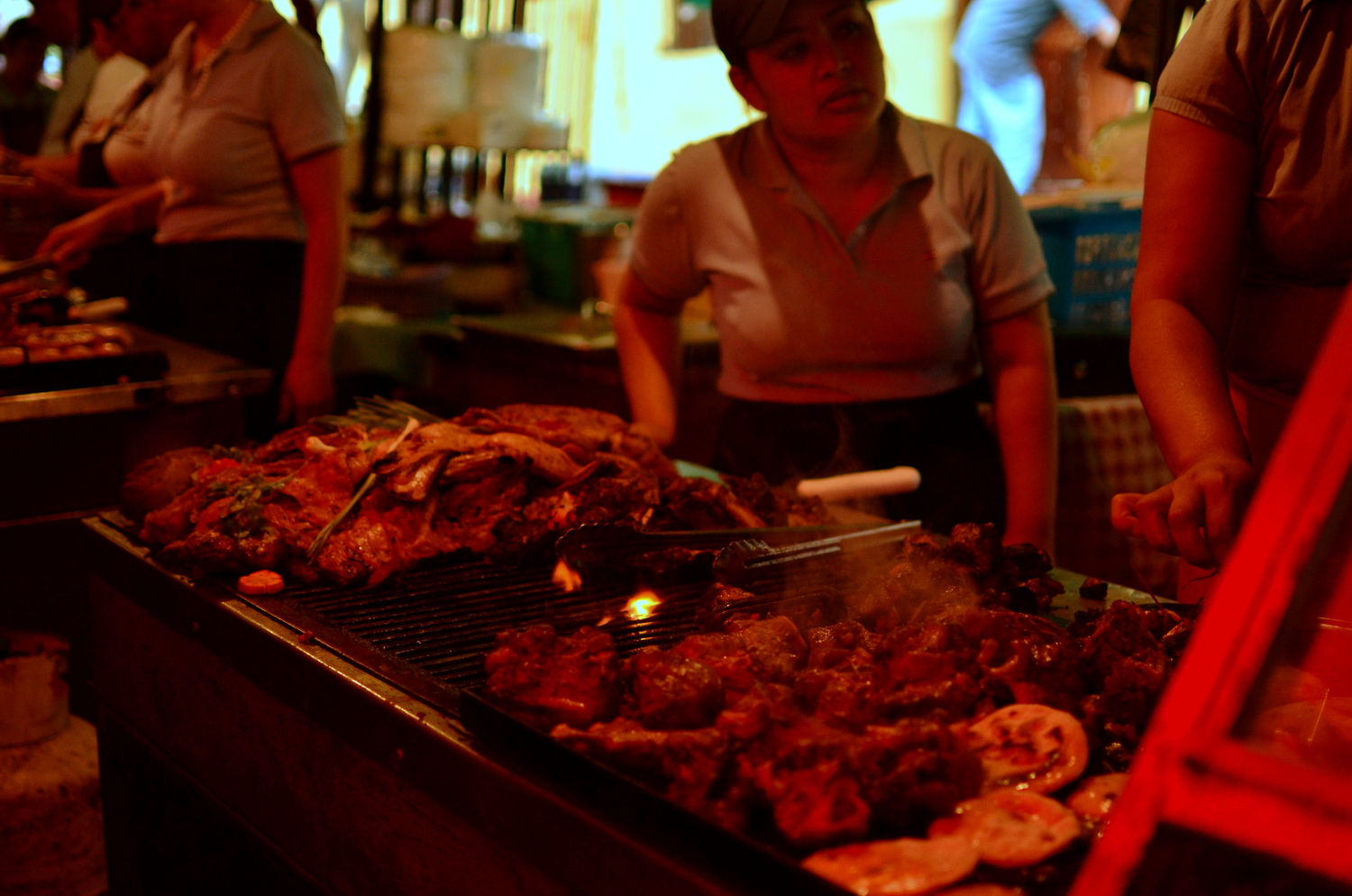
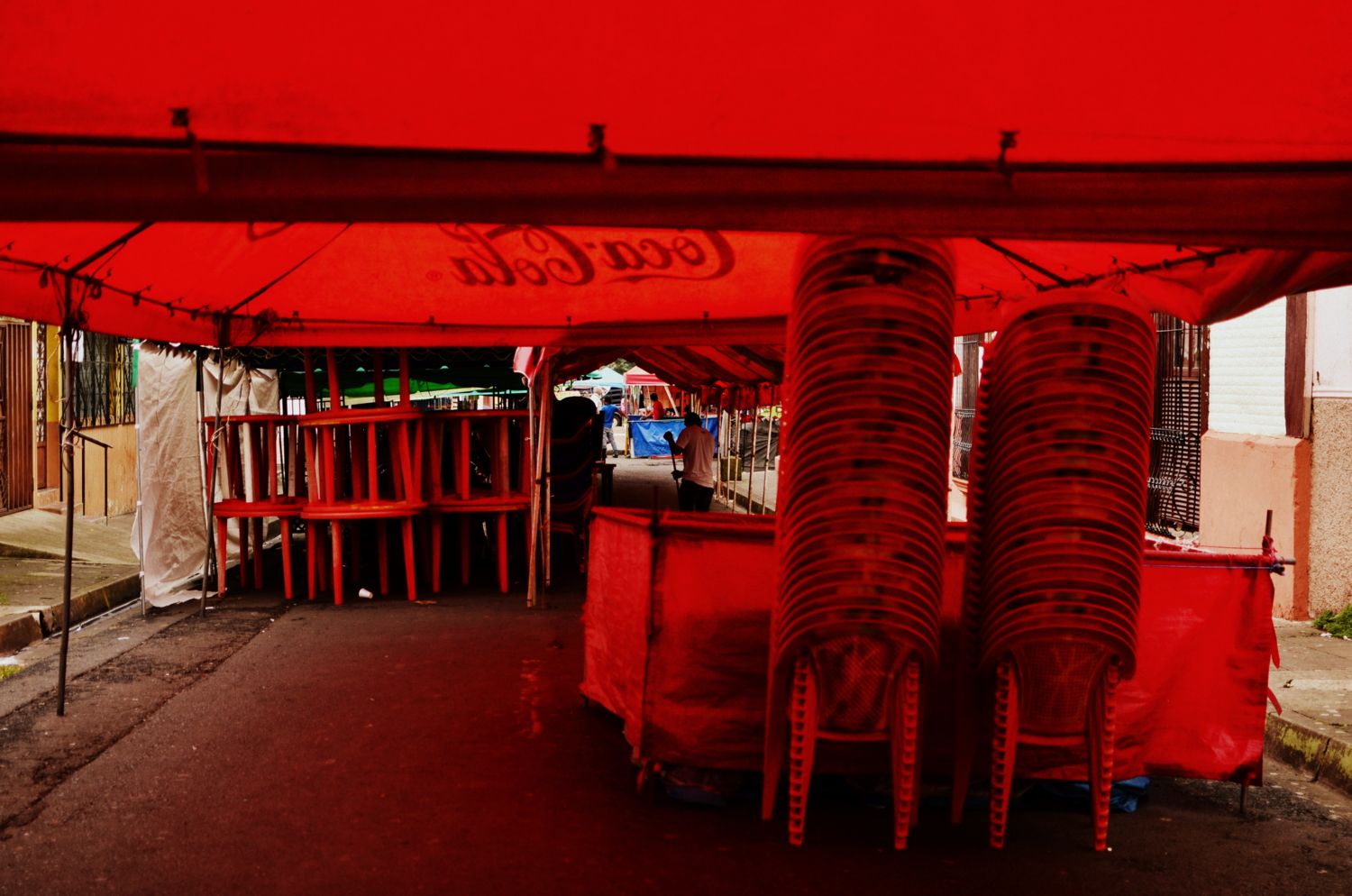
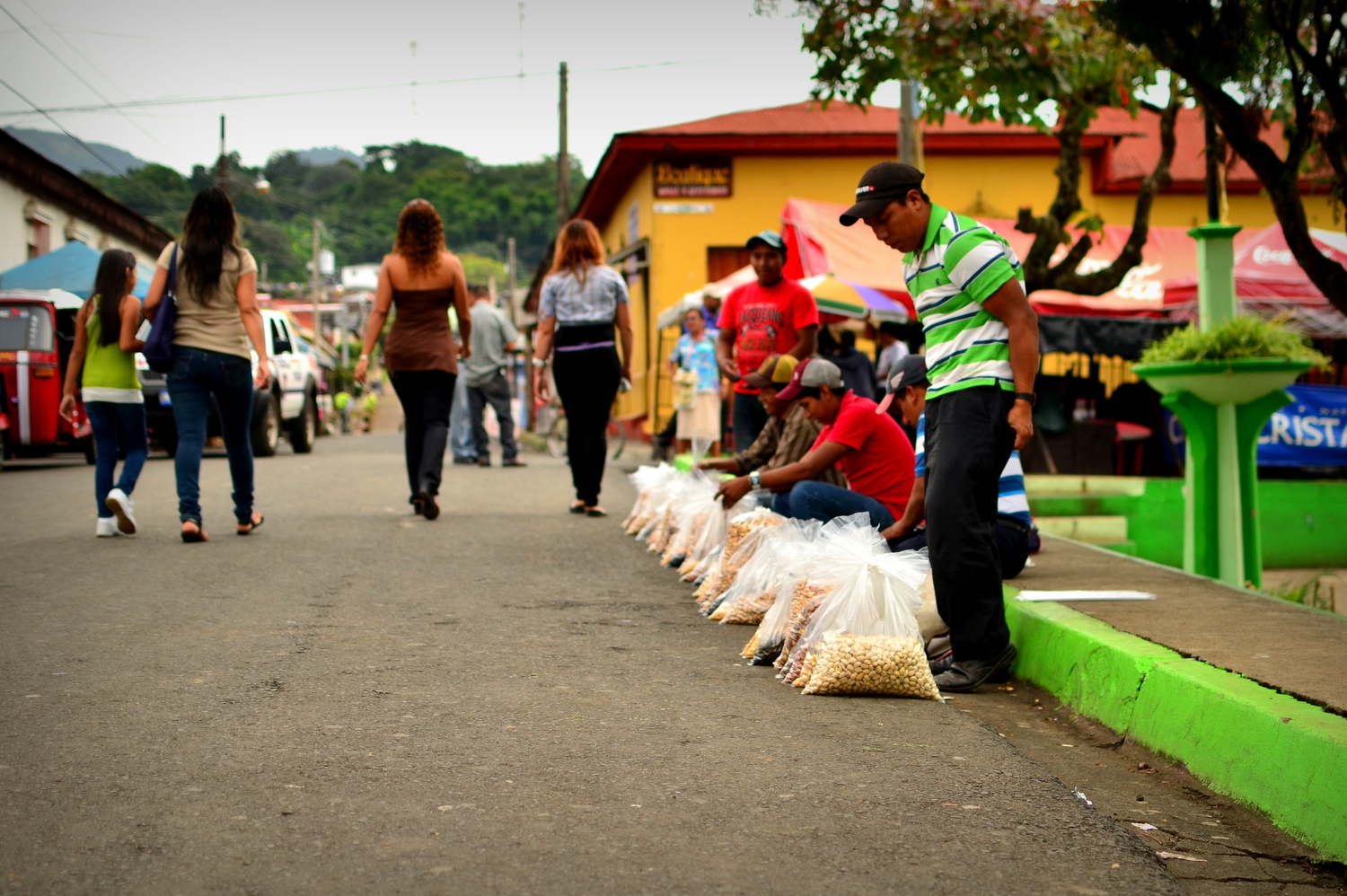
On Saturday the weather was dark, grey, and smelled like barbecue. The long tents had become loaded with chairs, tables, cooking stations, and charcoal pits. The quaintly slow and quiet town had turned into a Latin American festival overnight. Men selling every kind of nut imaginable lined the sidewalks in front of the church. Each vendor under the tents were almost rubbing shoulders with their neighbor while grilling up gigantic shrimp, chicken, beef, chorizo, and sausages. Whole fish were frying in hot oil while soups simmered over cherry red coals. With a bit of luck you could procure a table to eat on and the stall you placed an order with would find you when your dish was ready. Right after we inhaled pork ribs the sky opened up, resulting in a huge influx of bodies into the tents. Tables became extinct while quarter sized rain drops killed any inclination to go anywhere. But that doesn’t mean we stopped drinking special fruit blended apple drinks and eating paella. Performers sang renditions of popular Latin tunes and held their audience captive while a soccer match was aired on a plasma screen TV duck-taped to cardboard boxes. The rain was relentless but eventually decided it had done enough. We took a 20 minute tractor/train trolley tour of the town and were not surprised to find out they had barely anything to point out.
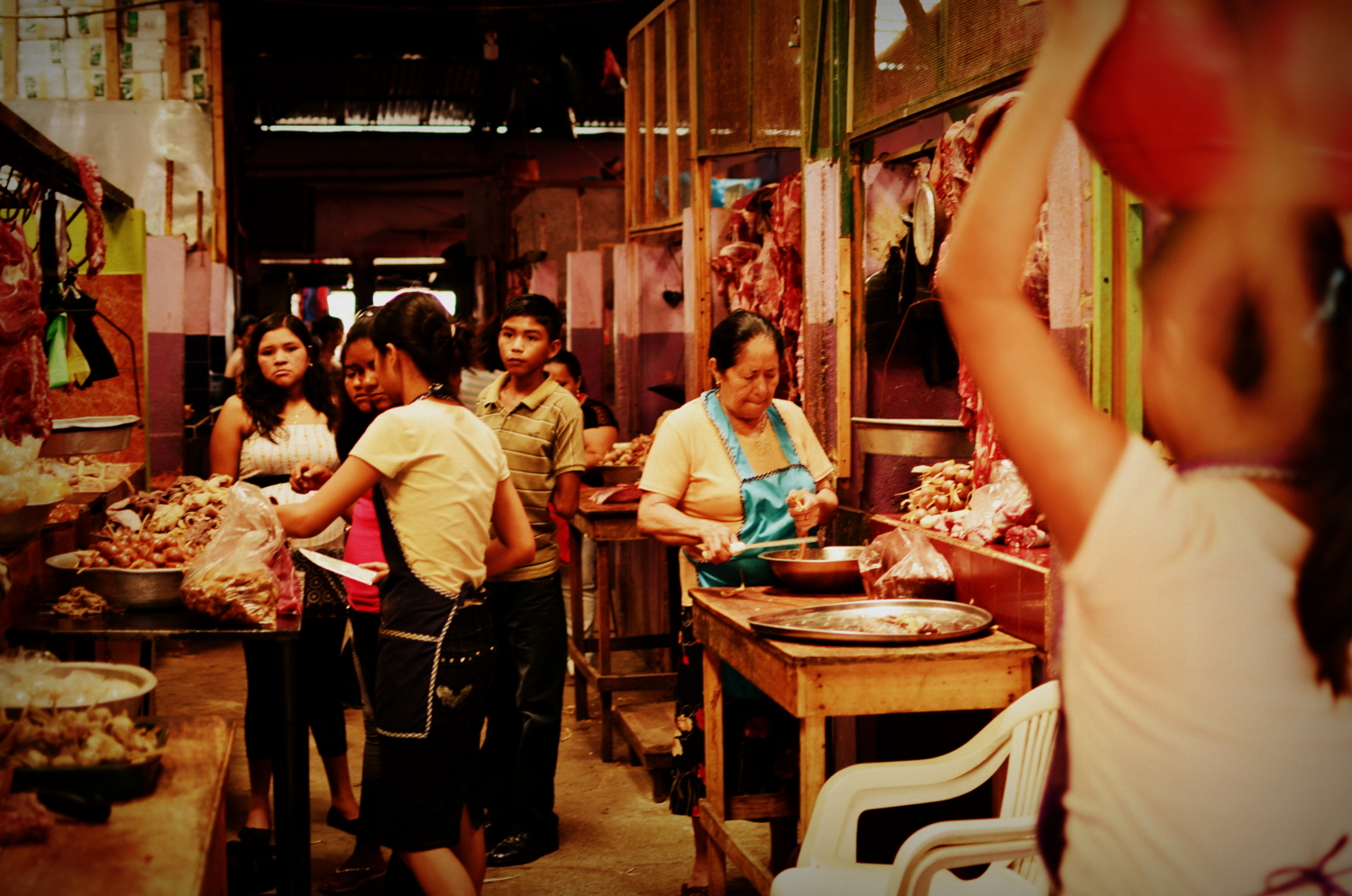
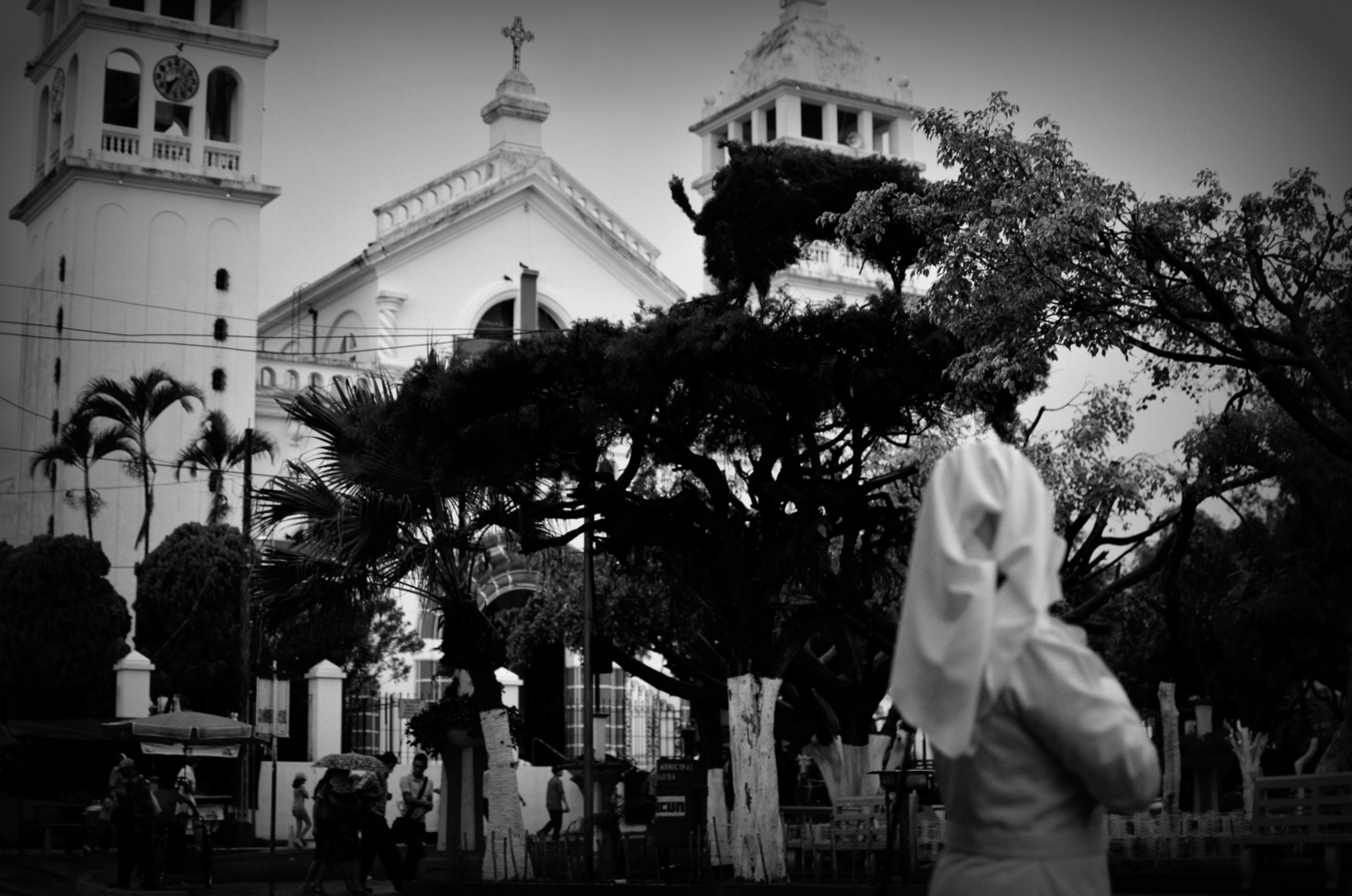
Juayua took us in from the rain and almost kept us from leaving because of it. When the sky finally cleared up we bounded a bus towards Santa Ana with the idea that we were going to transfer there to Suchitoto. When traveling in El Salvador it is important to not make any assumptions based on road maps. There was a direct road to Suchitoto from Santa Ana yet there was no transport offered between the two cities. Upon arrival it was confirmed that to get to the little mountain town it was necessary to head south to San Salvador first, and then northeast to Suchitoto. This also turned out to be a physical impossibility at this time of night. Santa Ana also felt like a very sketchy, very real El Salvador town. Perhaps it was serendipity that this mistake was made because it opened the door to experiences we would have never had if this bus existed.
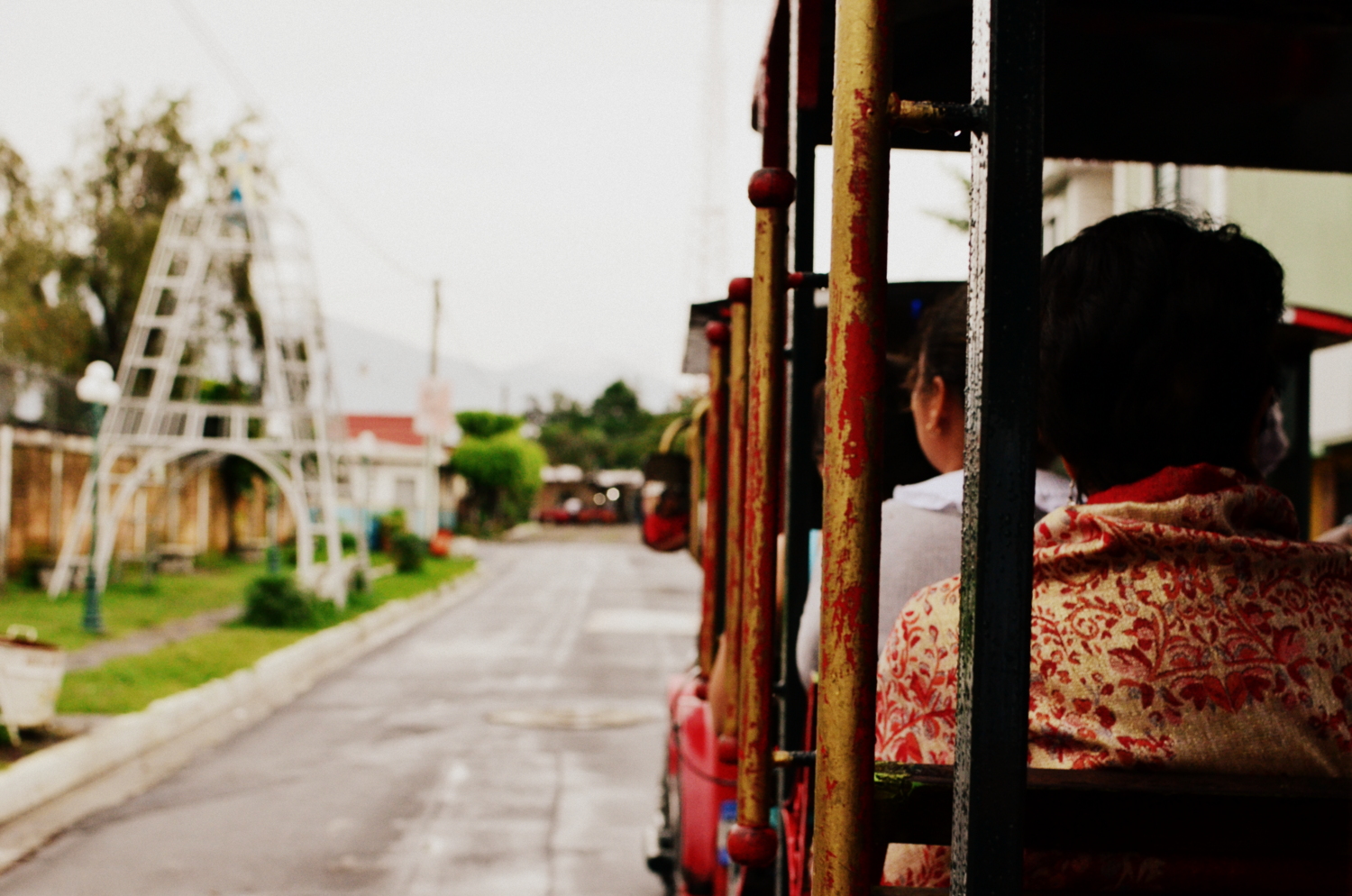
Which leads me to this question for those that read this far; have you ever found yourself stuck in an unexpected situation from transportation while traveling? All stories are welcome.
Antigua, Xela, San Pedro, and a Mom.
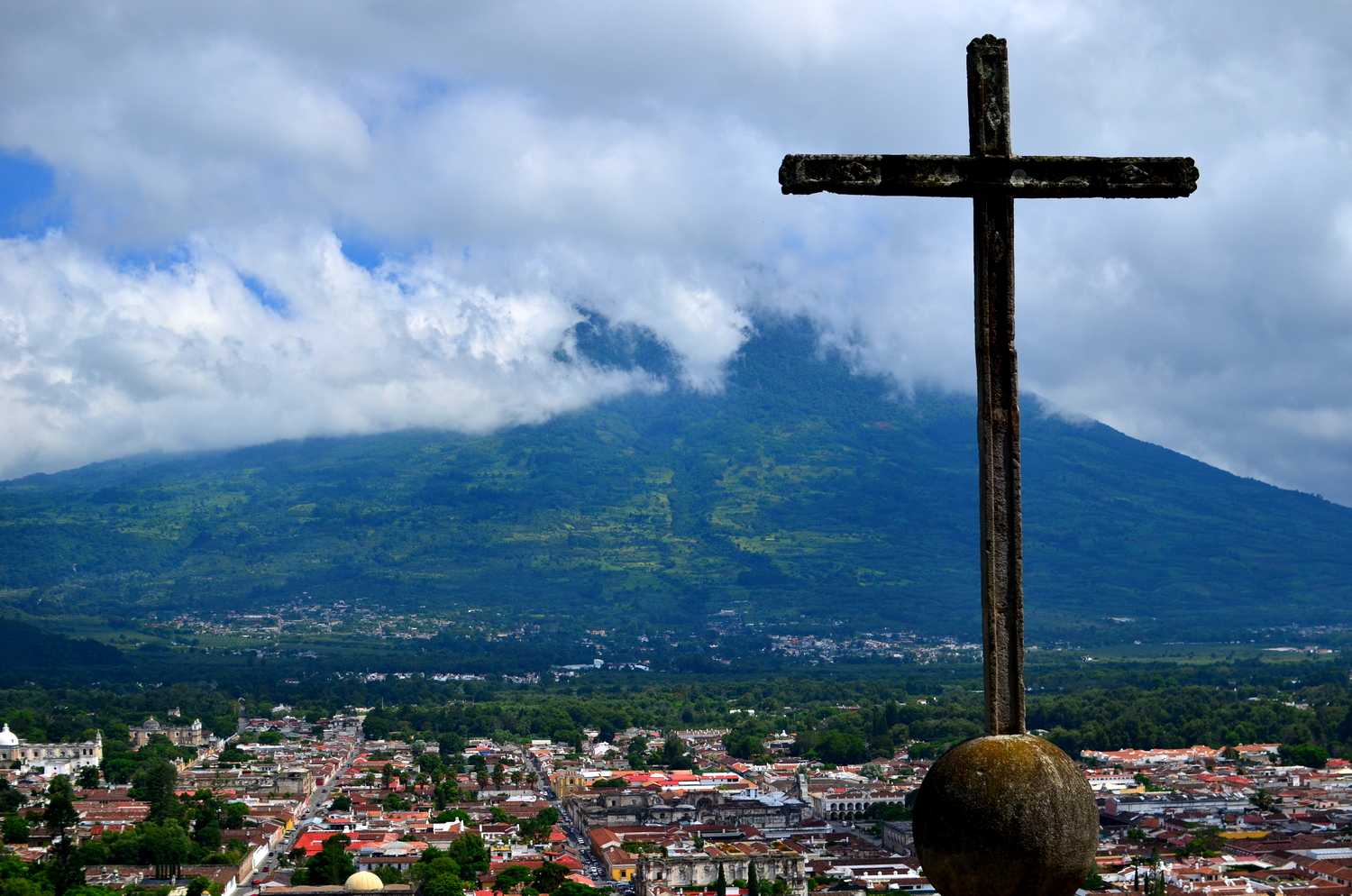
San Pedro was left behind with a little more Spanish under our belts, more memories tucked away, and a hell of a shuttle ride out. It rained hard while we tacked up the road leading out of the lake causing small streams and rivers to form along the asphalt edges. We were sad to leave but excited to see what Antigua held behind it’s name. A seriously last minute airfare deal (4 days prior) pursuaded Elissa to fly her mom out to Guatemala for a week to join us in our journey. The thought of backpacking around with your girlfriend’s mother in a developing country would more often than not cause quite a stir. We, however, could not have been more excited. This was the first time in our journey where someone we knew and loved would be traipsing around with us, seeing and experiencing the adventure first hand. Naturally, we felt the pressure to come up with a solid plan. Our ride dropped us off in the cobblestone streets of the picture frame perfect spread of colonial Antigua. After an hour of backpacking around town trying to find the perfect place for a few days con mama, we gave up and put our bags down at some random hostel. The wet cobbles glistened and the puddles in the streets mirrored the abundance of lighting and ancient buildings. Photographic instincts kicked in and an initial night walk and shoot followed.
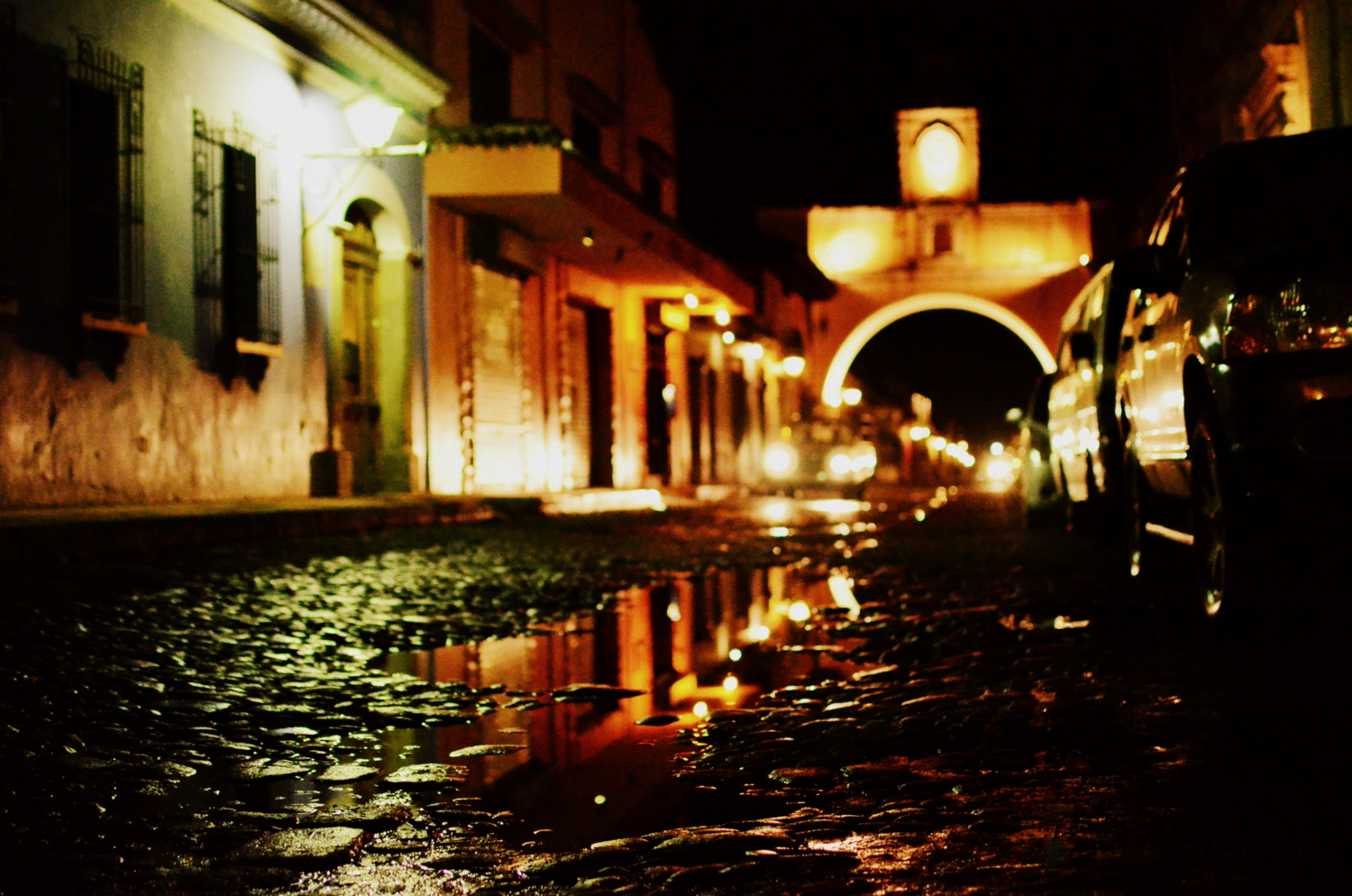


We booked a shuttle to the airport in the morning and picked up Caryn in Guatemala City. It was her first time setting foot out of the US in 40 years, and also, coincidentally, the last time she went backpacking. She was enthralled being in a foreign country from the minute she stepped off the plane and it was easy to see it was going to be a week of showing a very different world to a fresh pair of eyes. We kind of needed that sense of complete stimulation overload that only new foreign eyes posses, because the normalcy of traveling tends to desensitize your perspective. After an emotional greeting we raced back to Antigua to start exploring.


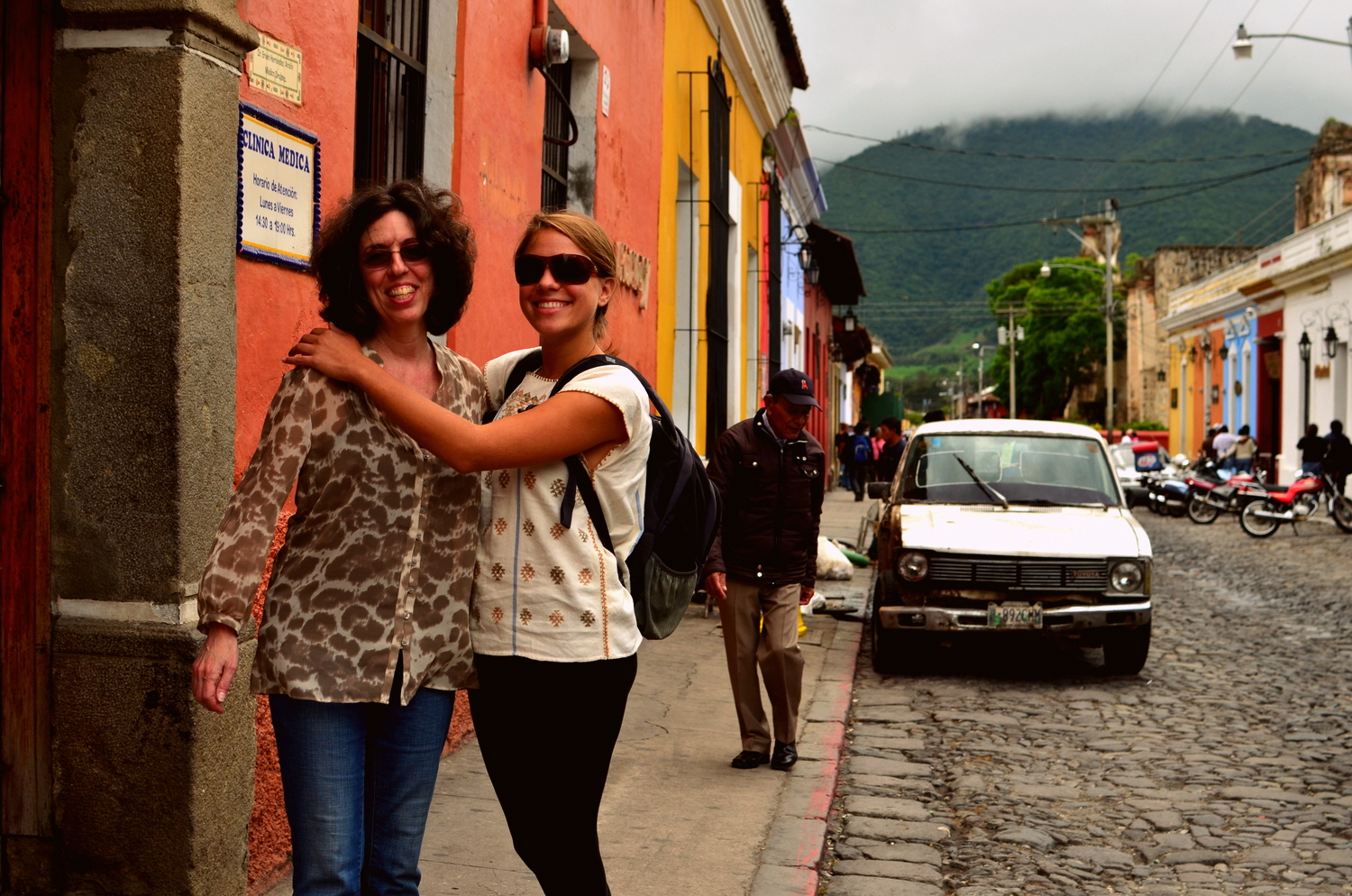
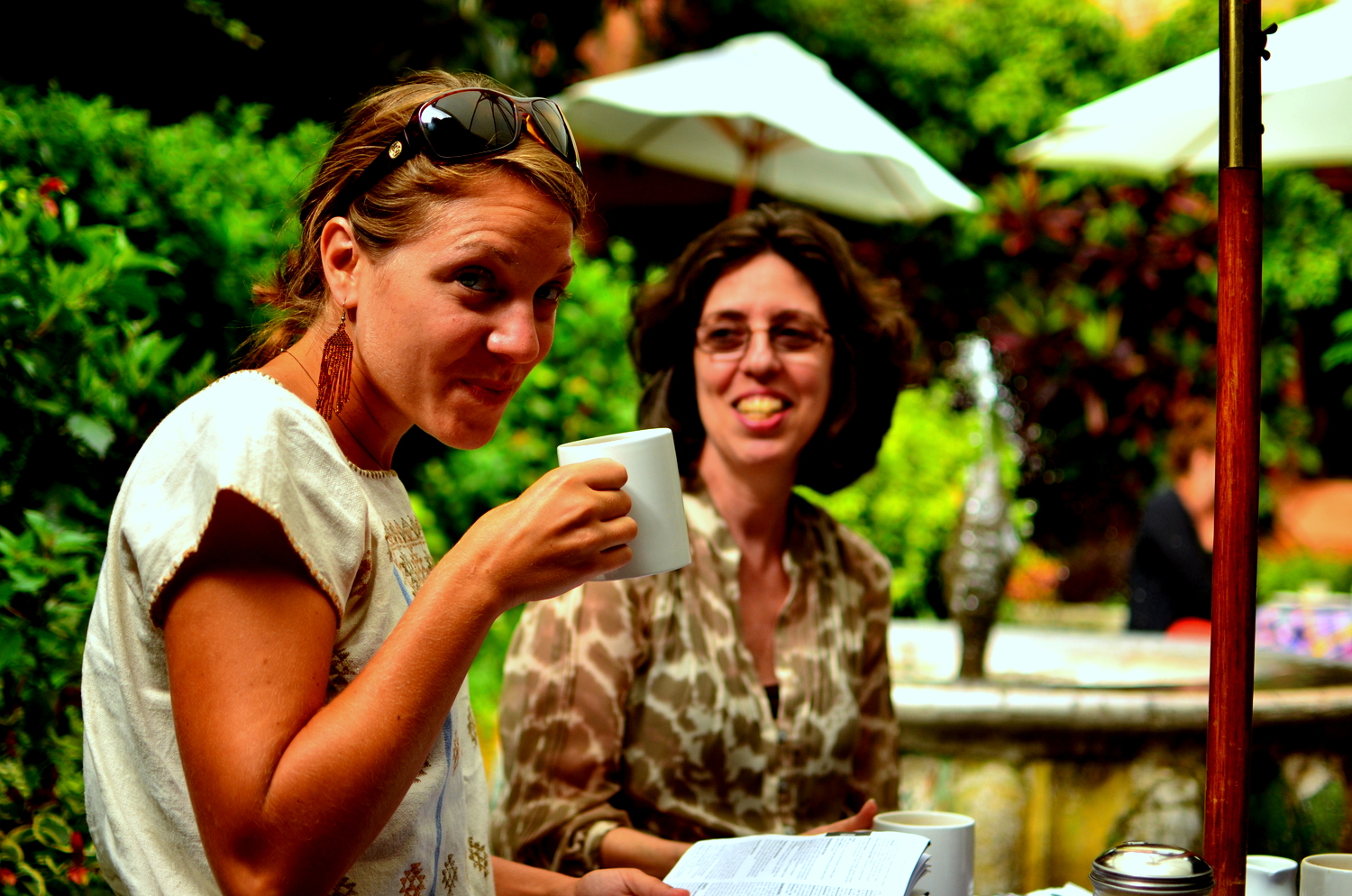
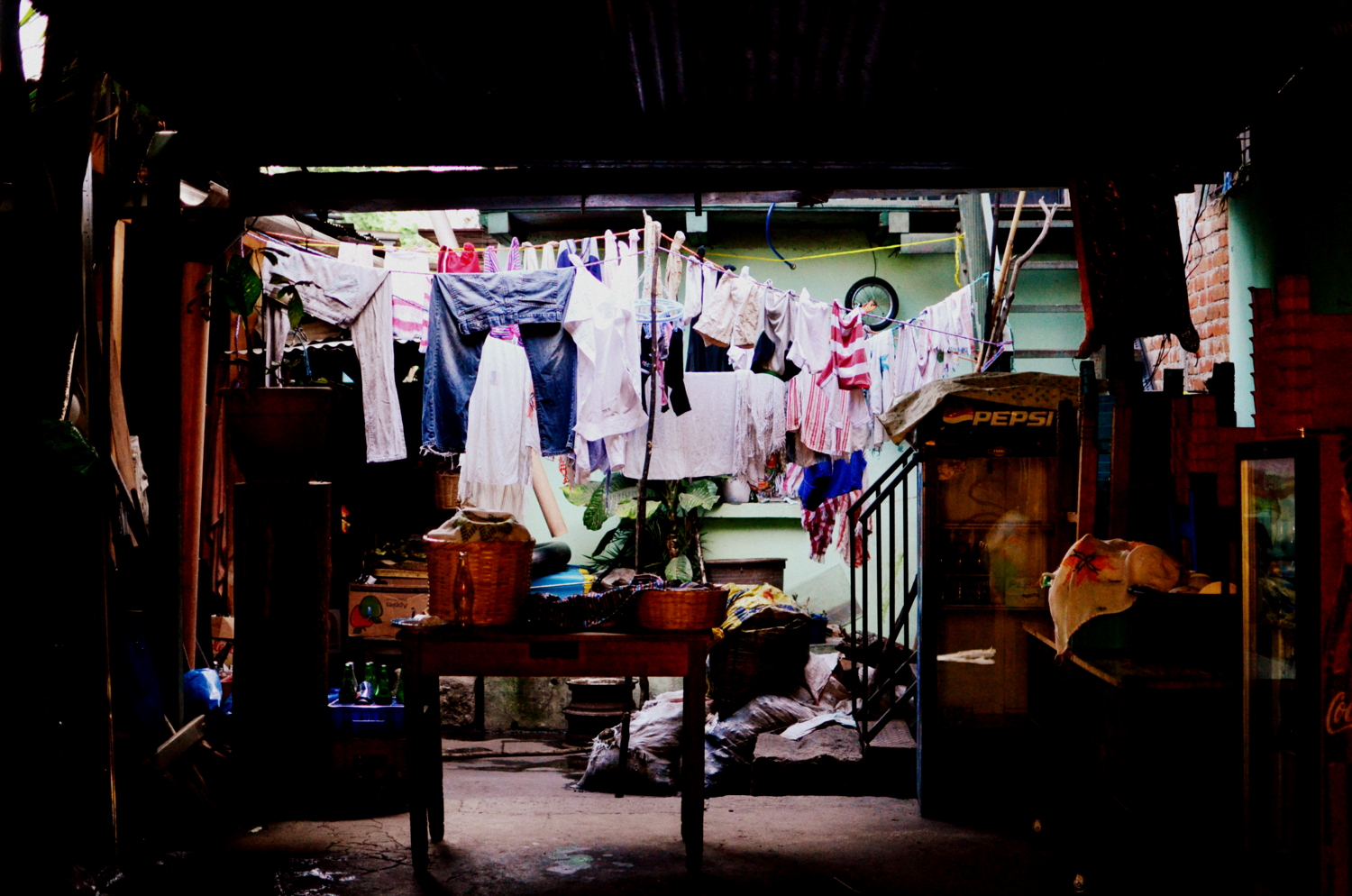
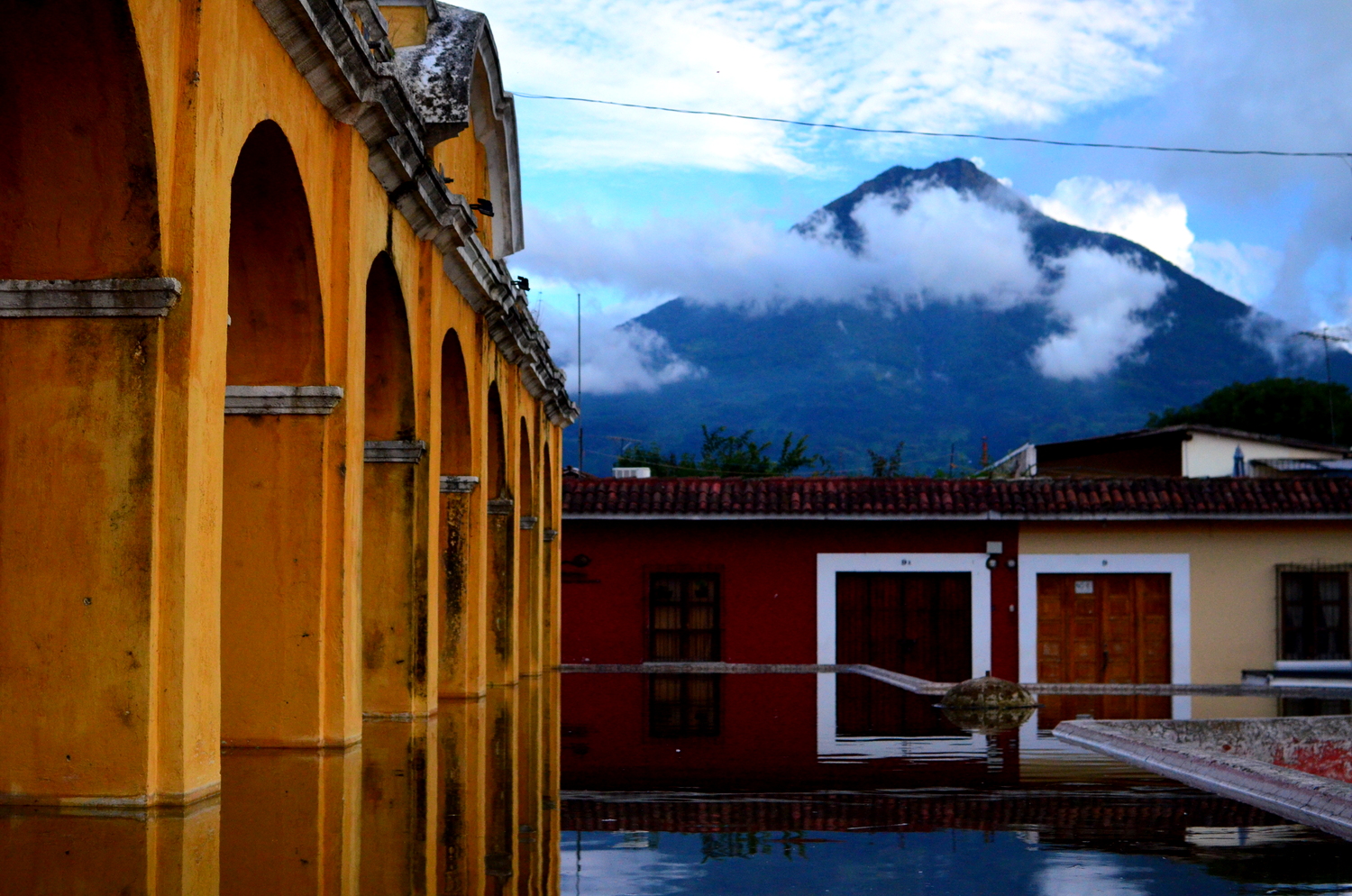

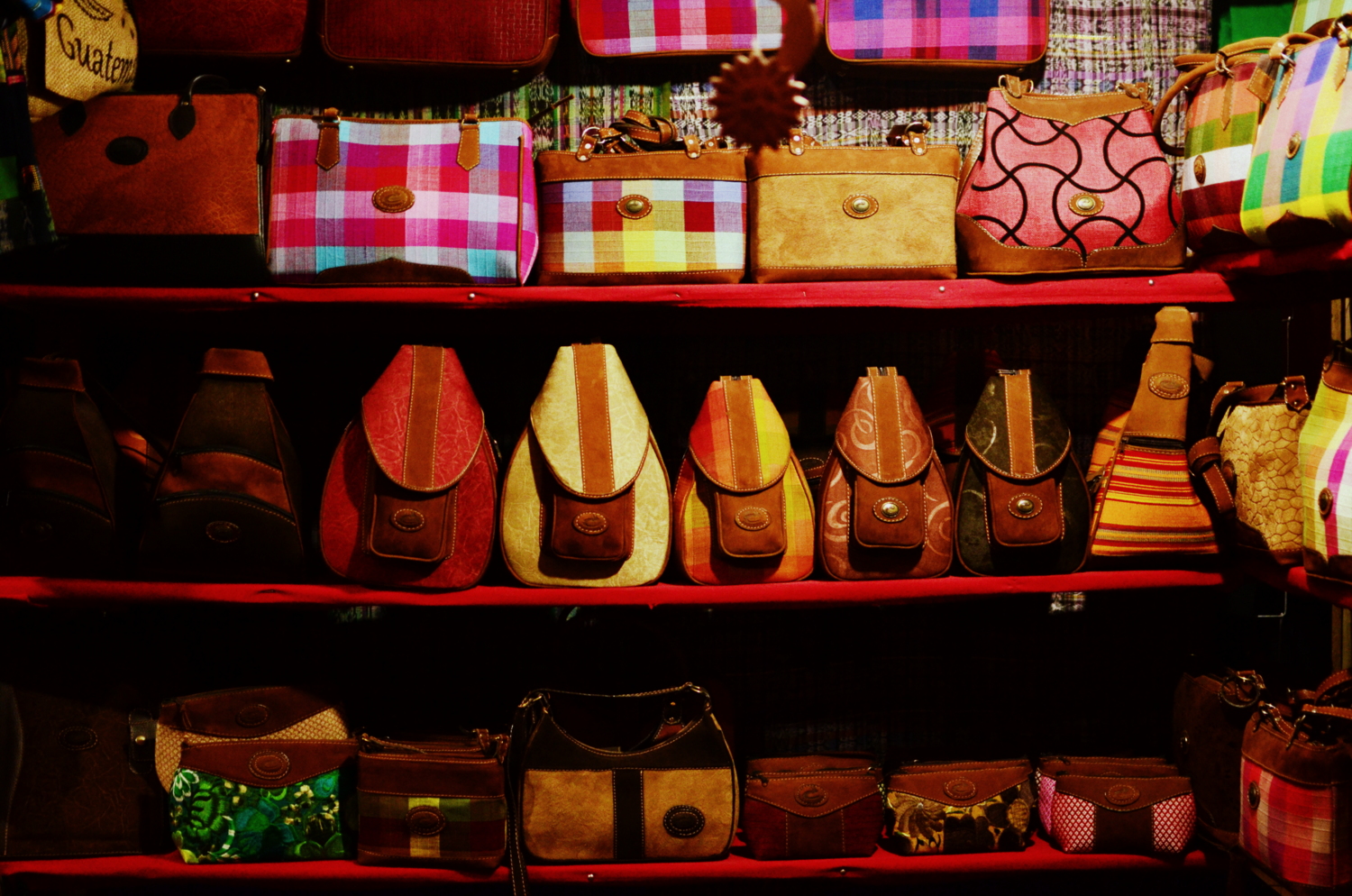
Caryn loves woven fabrics so it only made sense that she needed to visit us in Guatemala. Antigua was a goldmine for her. We would often find ourselves walking down the street and turn around to see that Caryn was missing. All the beautiful, colorful, and artistic crafts would catch her eye and she would get vacuumed through the doors. I watched this phenomenon happen several times. We explored artisan markets, stores, shops, and Mayan women roaming the streets selling everything from fruit to hammocks, setting ourselves a few steps back to watch Elissa’s mom interact with the experience. There was a lot of explaining that we didn’t want to buy crafts. When you look at something with any sort of interest here they see a very high potential for a sale. When they see a wide-eyed craft-loving American woman completely fall in love with their goods, they react. Fun was had, and smiles were dolled out from the general gentle Guatemalan demeanor. A glamorous amount of food was also had, because that’s what mothers like to do. Antigua offered a wide array of cuisine to dine on and we tended to gravitate towards the locally owned eateries. Fresh, delicious coffee was also surprisingly easy to procure.
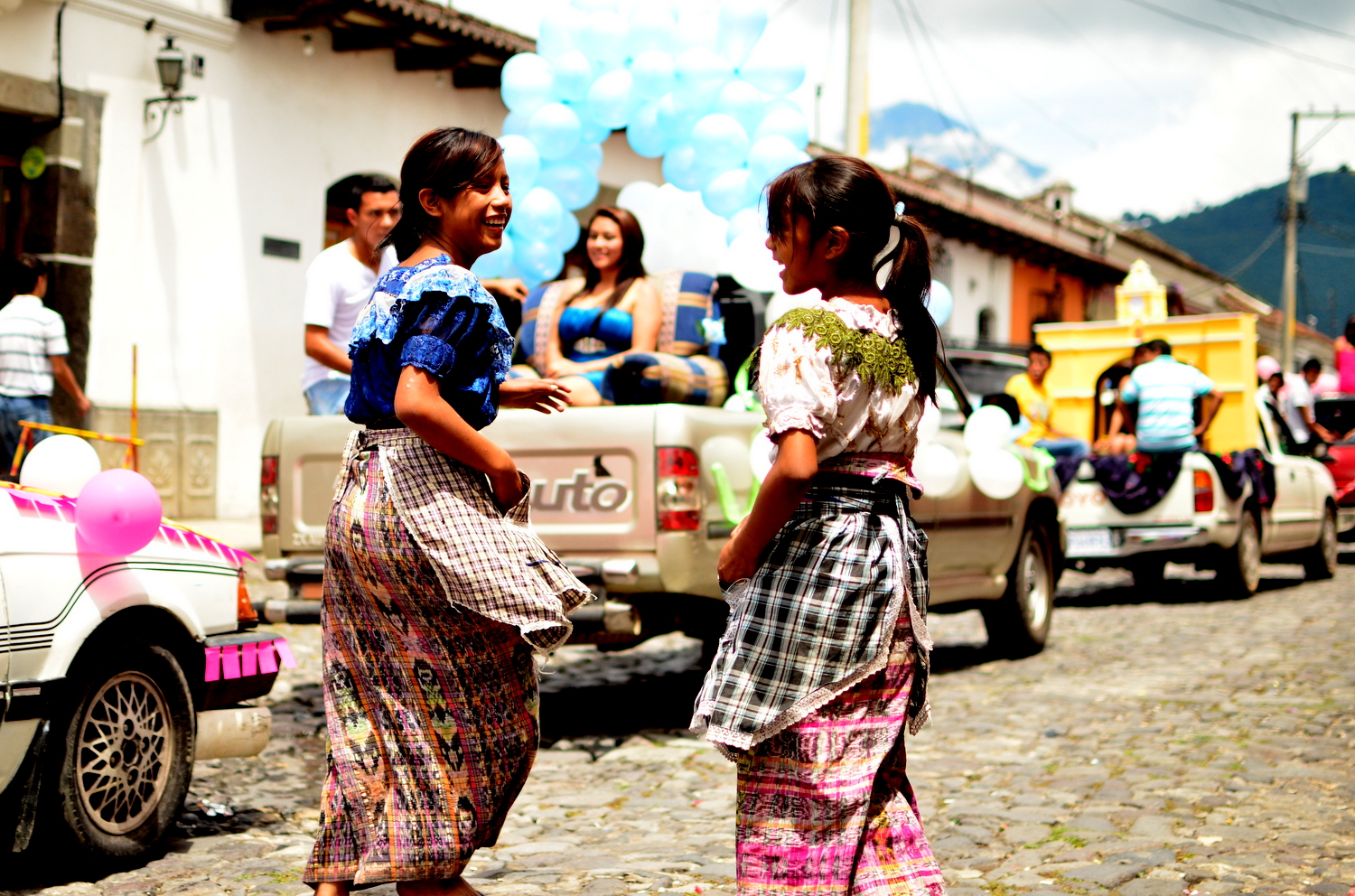
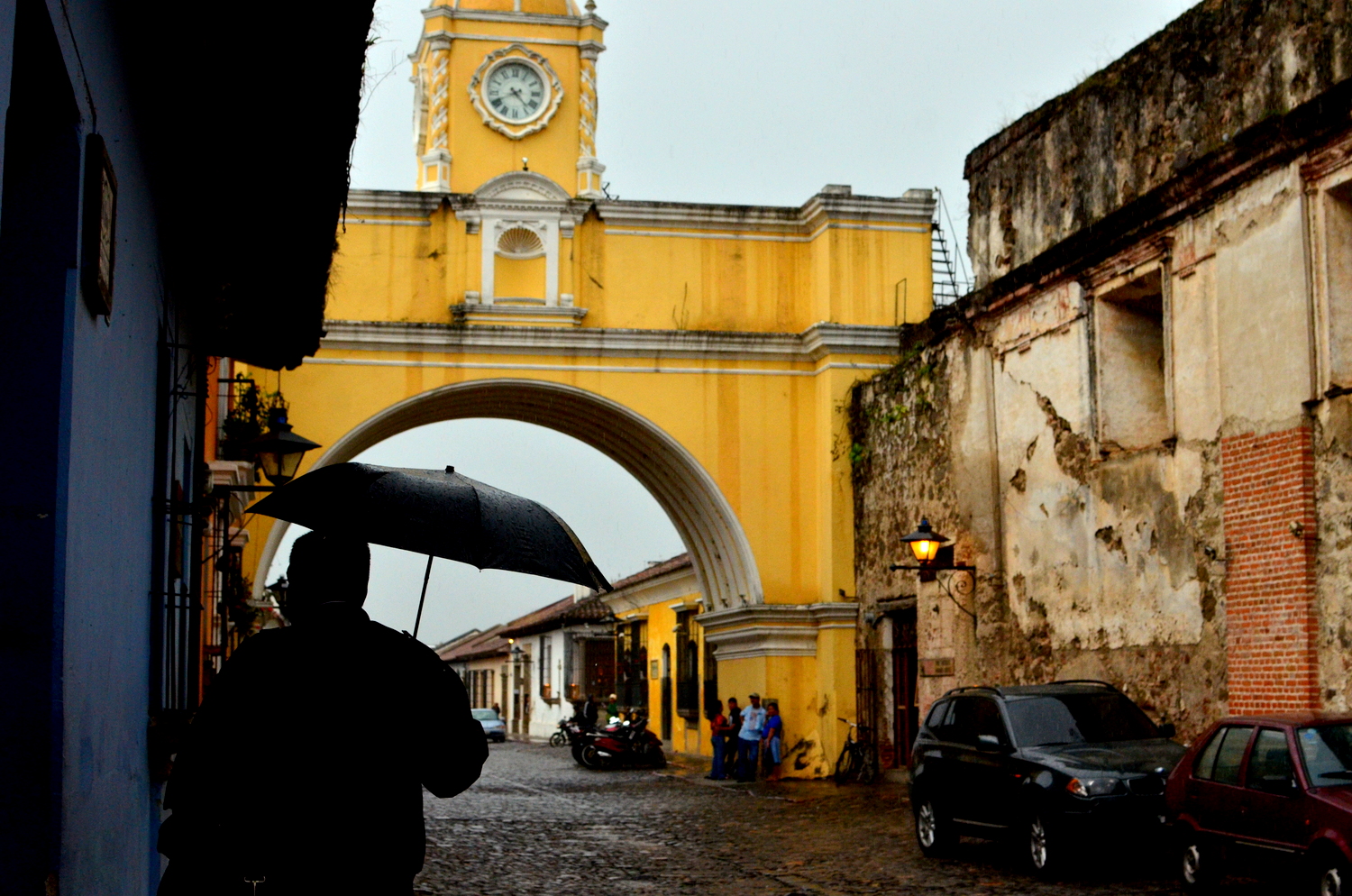
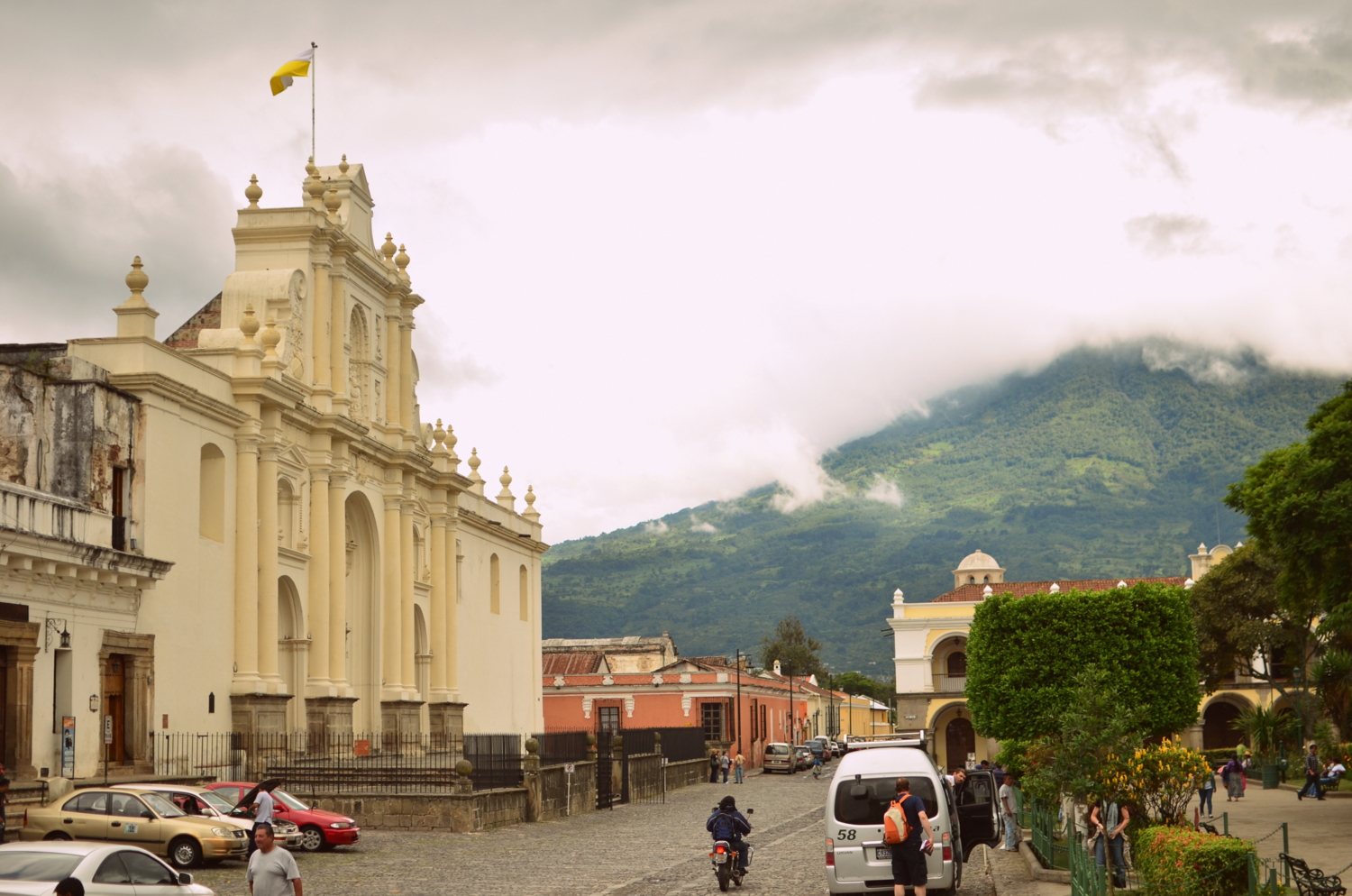

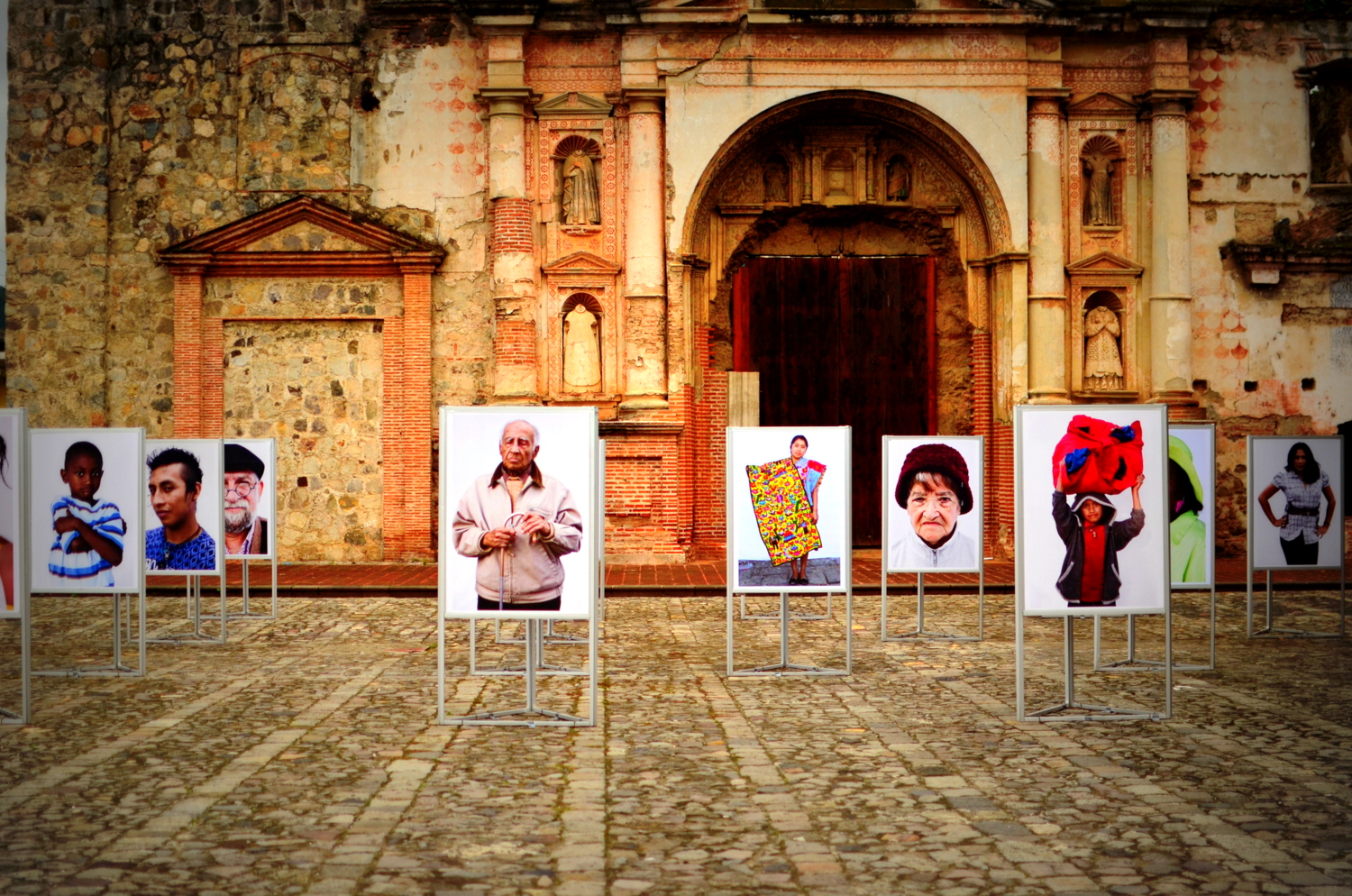


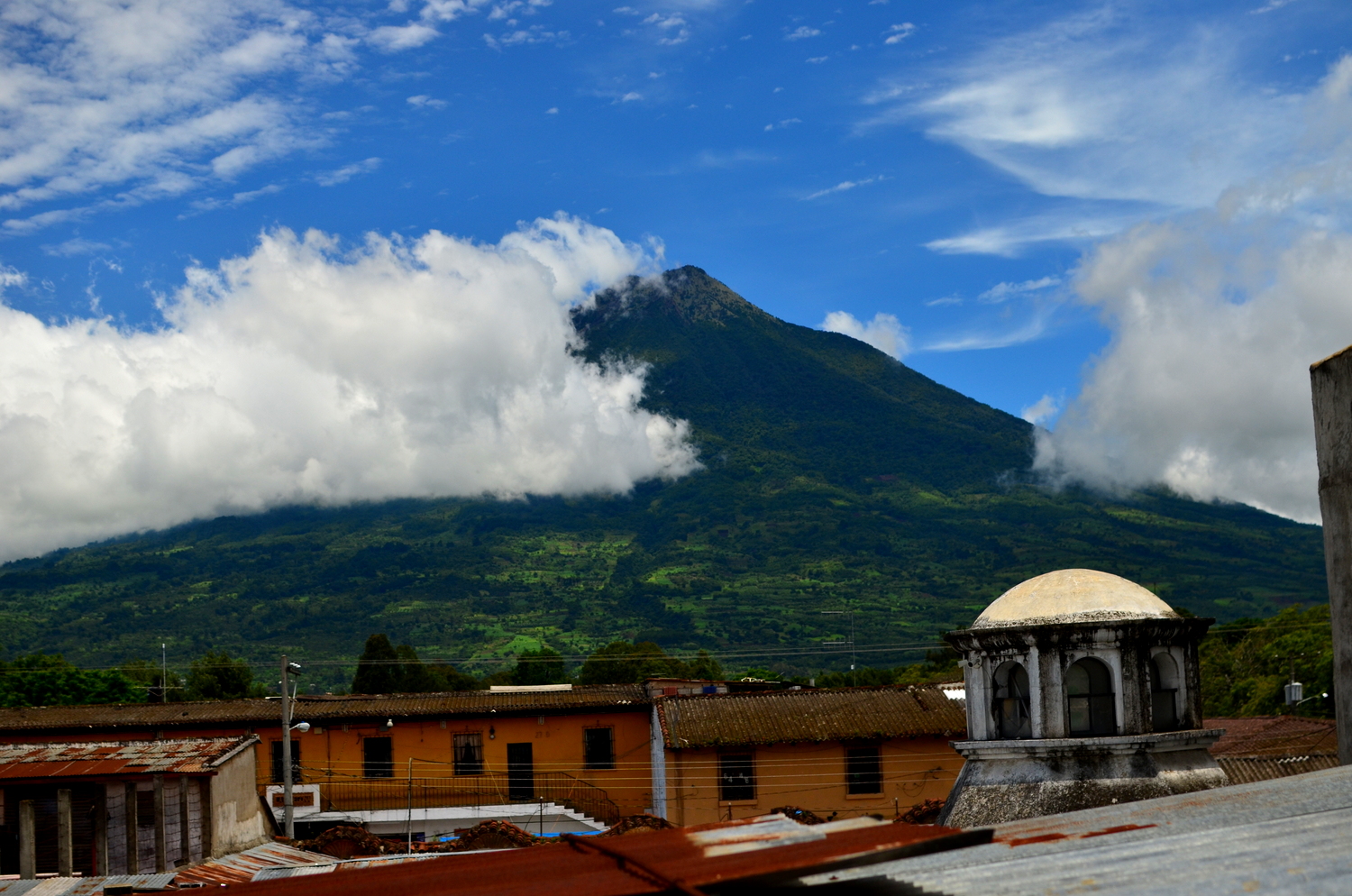
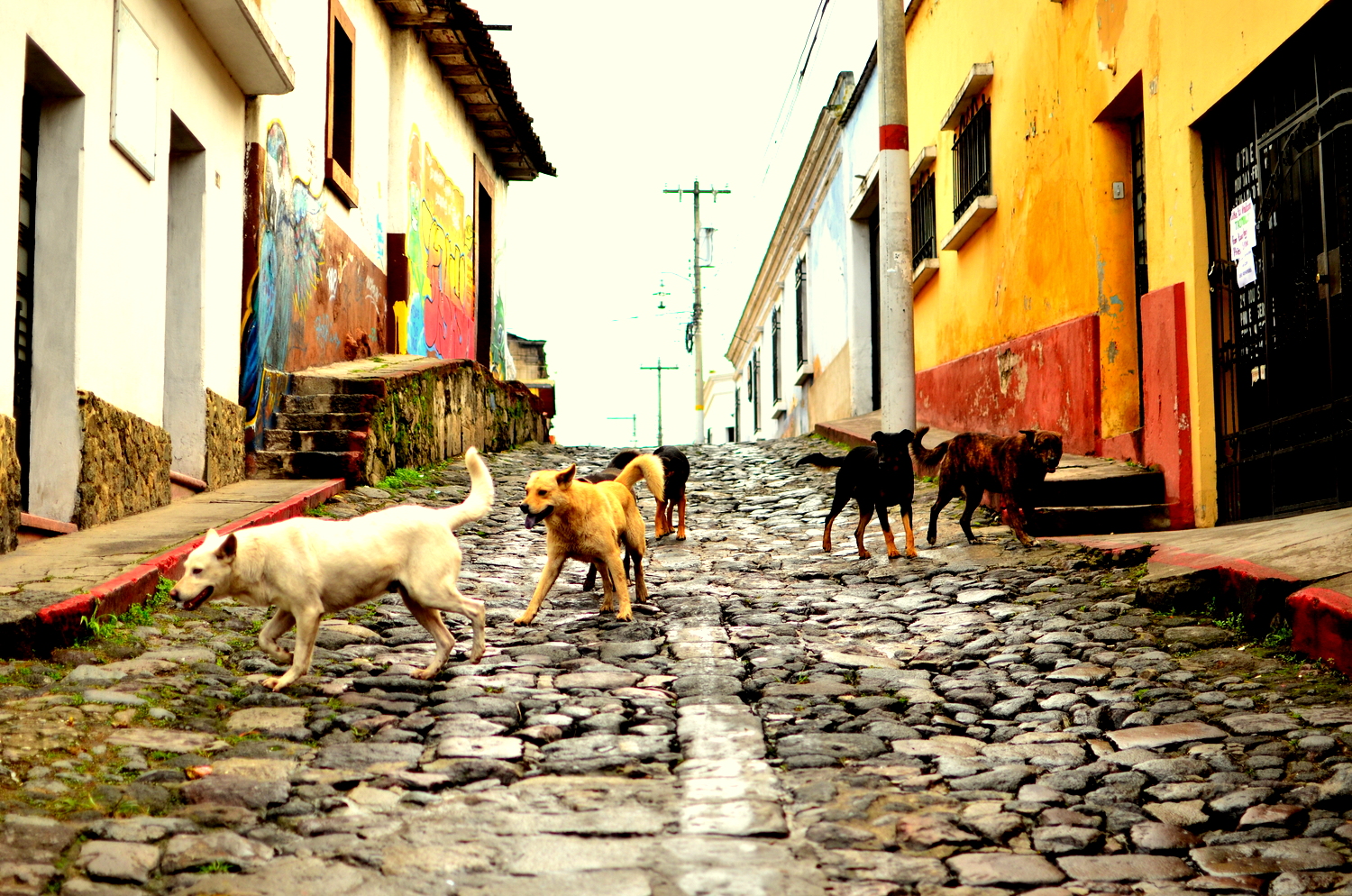
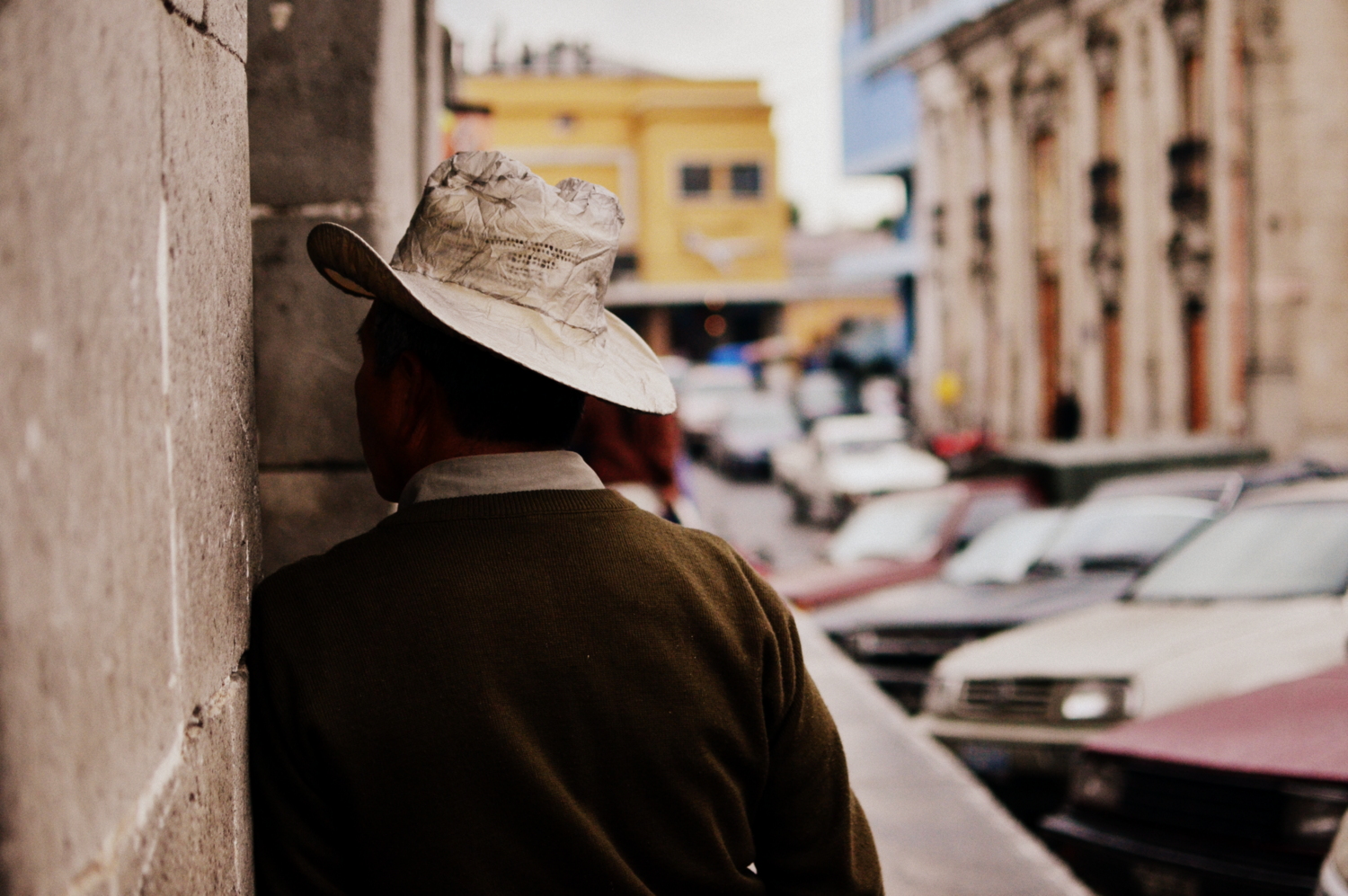
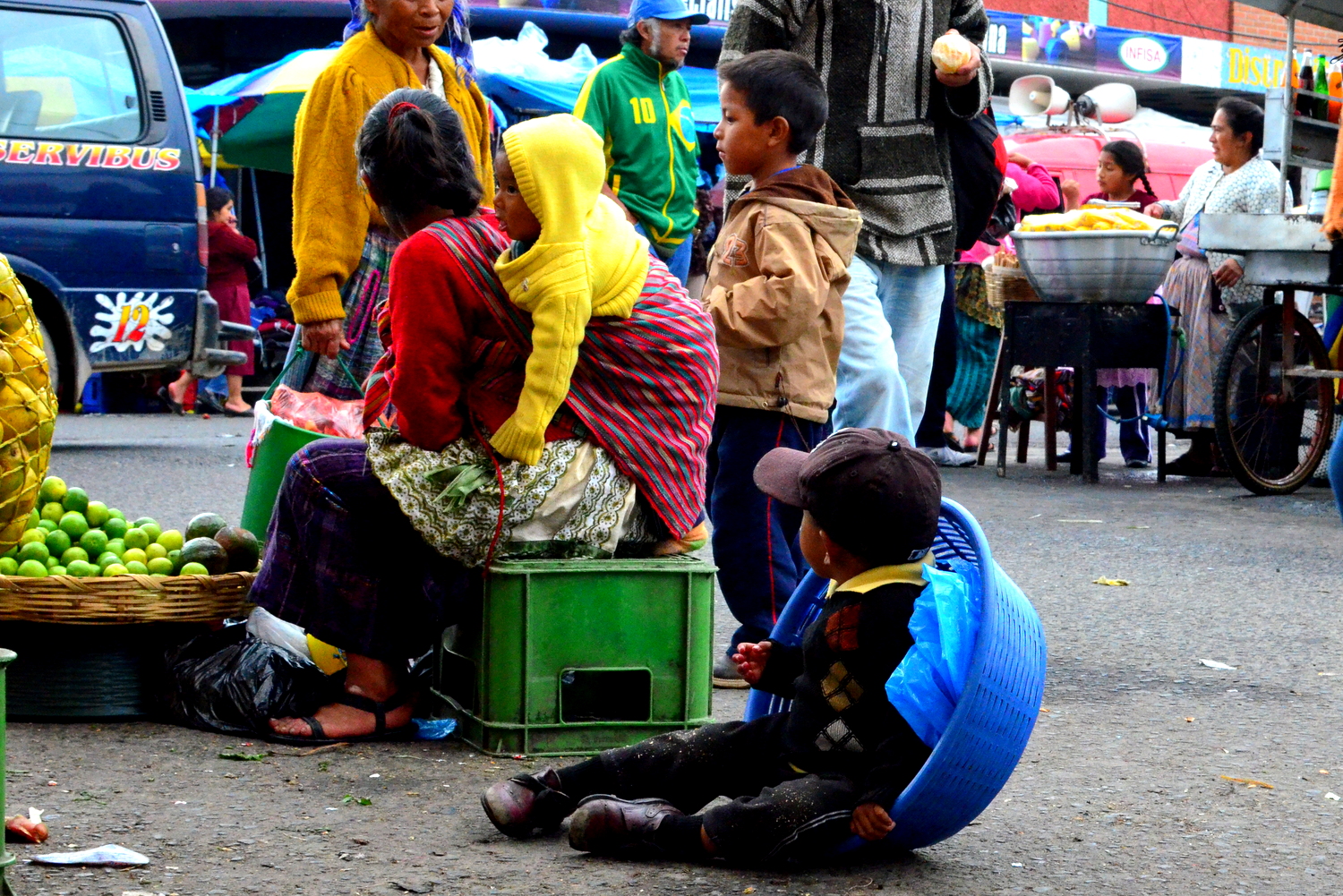
After climbing the hills, seeing the markets, exploring the outskirts, and everything in between, we continued on to Quetzaltenango. Xela has some unique, gothic style looking architecture and a notoriously gritty, but lovable vibe. Xela doesn’t have the omnipresent colonial presence that almost all older cities in Latin America have but instead gives off a late 1800’s feeling. It felt a little bit like the lost towns of my upbringings in upstate New York. Roman style columns held up the roofs of large multi-use buildings, banks, and businesses next to churches with huge, ornate wooden doors. The streets and night life came alive on the weekend with college style bars supporting a live music scene. Getting lost in a new place is how I get to know the areas the best. Walking down random paths you would never normally go usually results in some of my favorite moments and ultimately photographs. This further drives my tendency to roam and these streets kept calling me by my full name. Early one morning I set out before the girls were awake and hung out with Xela before it woke up. Mayan women were carrying goods on their way to the market, dogs were scouting the roads in small gangs, and young men were shuffling on their way to class or to work. It was a quiet, beautiful place to get lost.

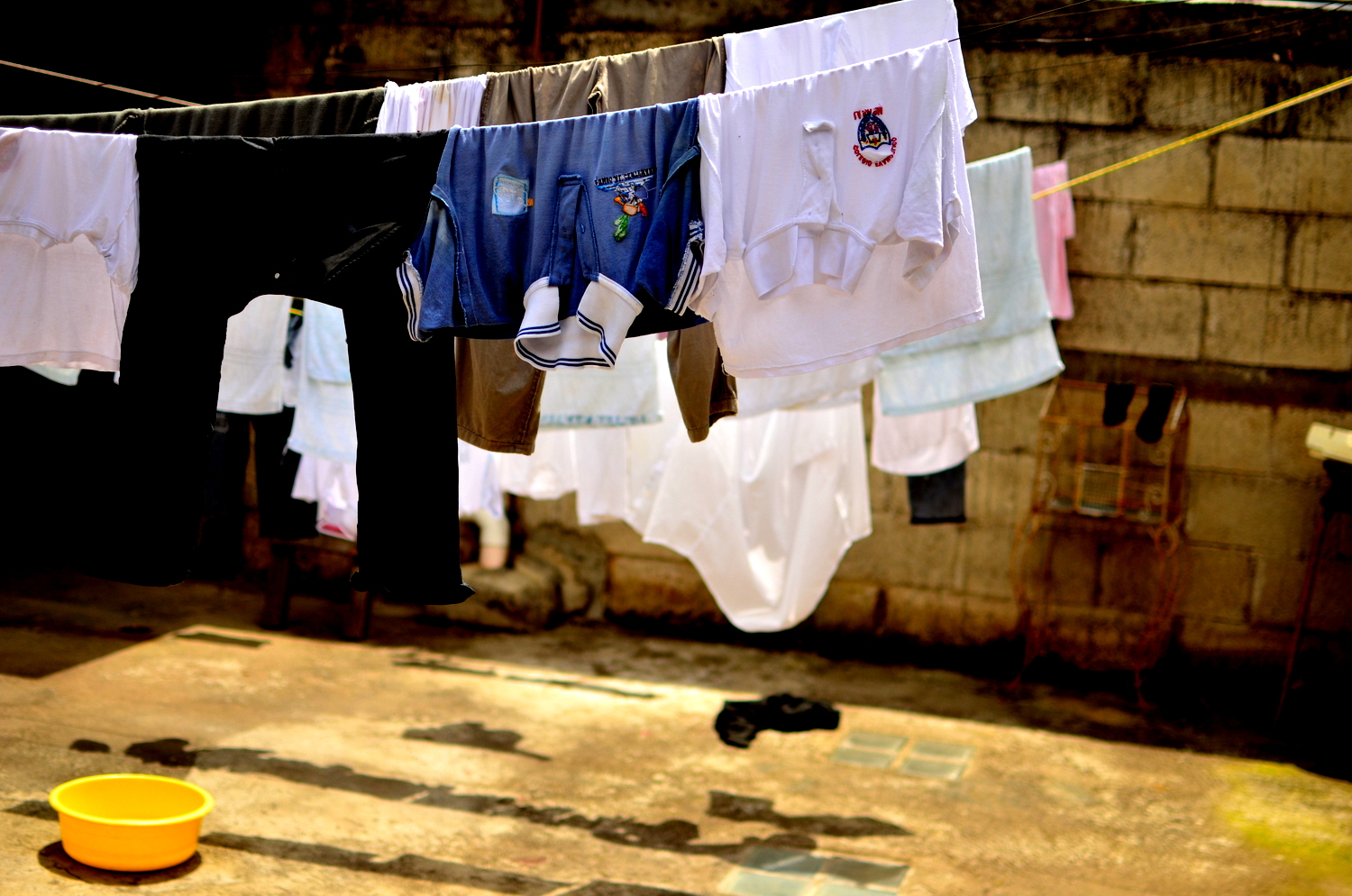


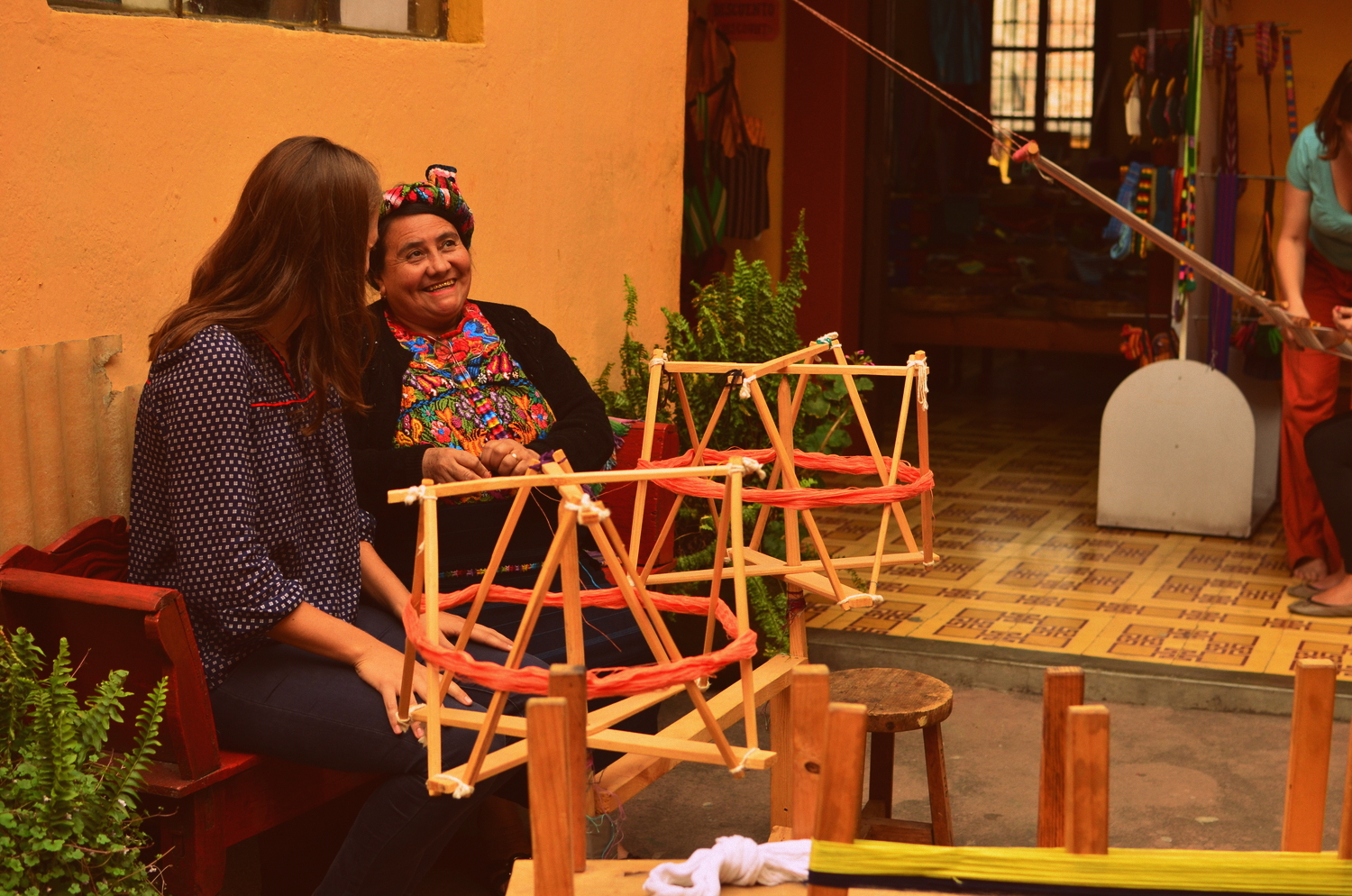
An important stop in Xela was Trama Textiles, a cooperative set up for displaced or abused indigenous women to make and sell their goods at prices they all agree upon. A little research showed us that this cooperativa was part of a network of 17 groups of weavers aiming to give these women a safe place to work and demonstrate their weaving skills. We were the only visitors on that day so there didn’t seem to be any weaving classes offered. After browsing and buying a few gifts we were asked by the in-house volunteer if we would take part in a backstrap and general weaving demonstration in order to provide pictures and video for their website. Caryn found herself transported to heaven while she was given first hand demonstration on Mayan weaving techniques. I snapped away while the girls learned the mystery behind the beautiful textiles created daily by Mayan women. Later that day we took a trip out of the centro and into the fast-paced bustling mercado scene to shock Caryn a little bit. We passed by section after section of freshly prepared fruits, vegetables, live poultry, ceramics, garments, and men making furniture. We disappeared into the large warehouse-like buildings with mom in tow. Little ceramic pots were bought as souvenirs as 8Q liquados were bought next to cobblers repairing shoes. Later that night we found an almost unimaginably delicious Indian restaurant before retiring to our family run hotel.


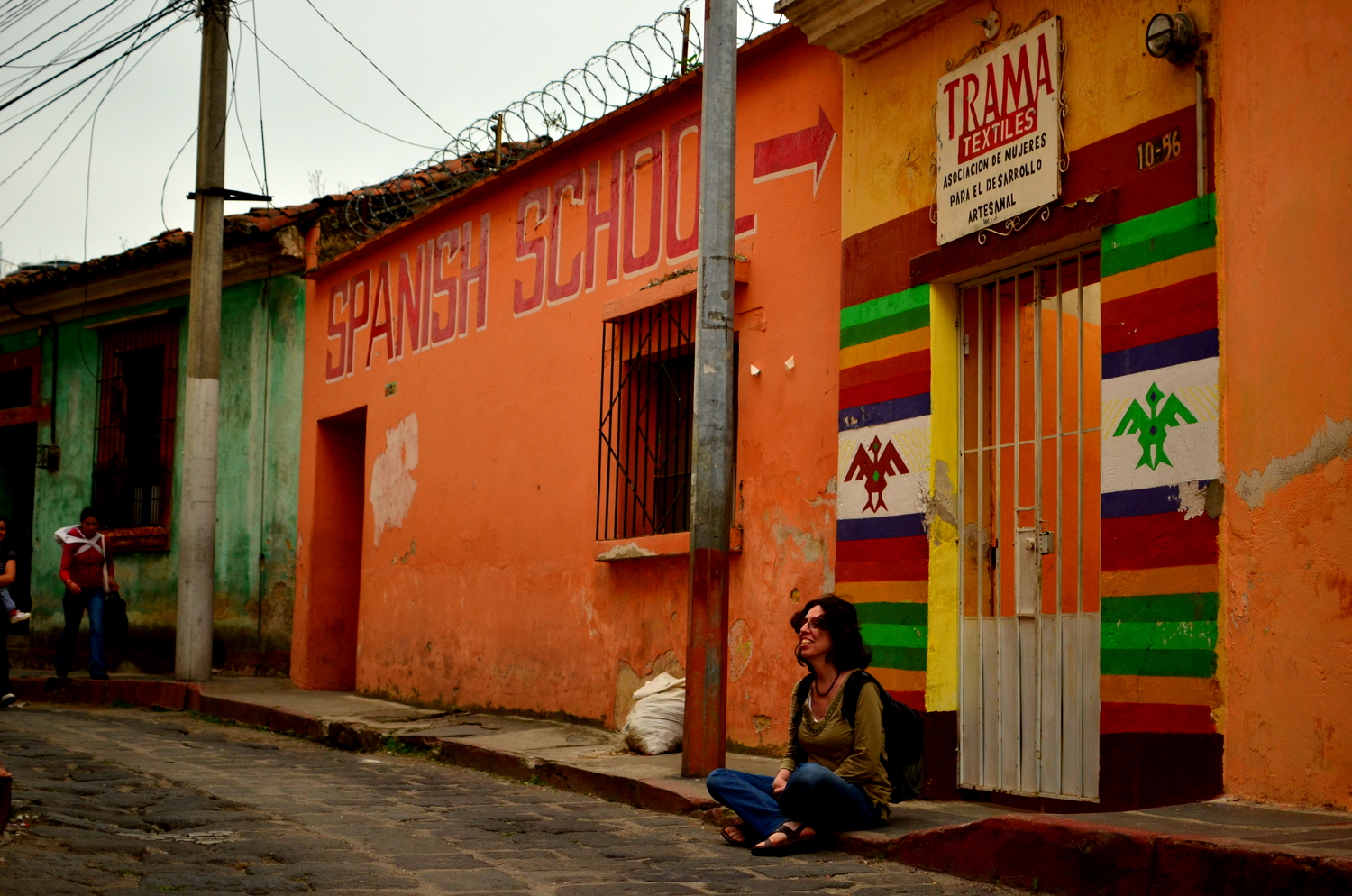

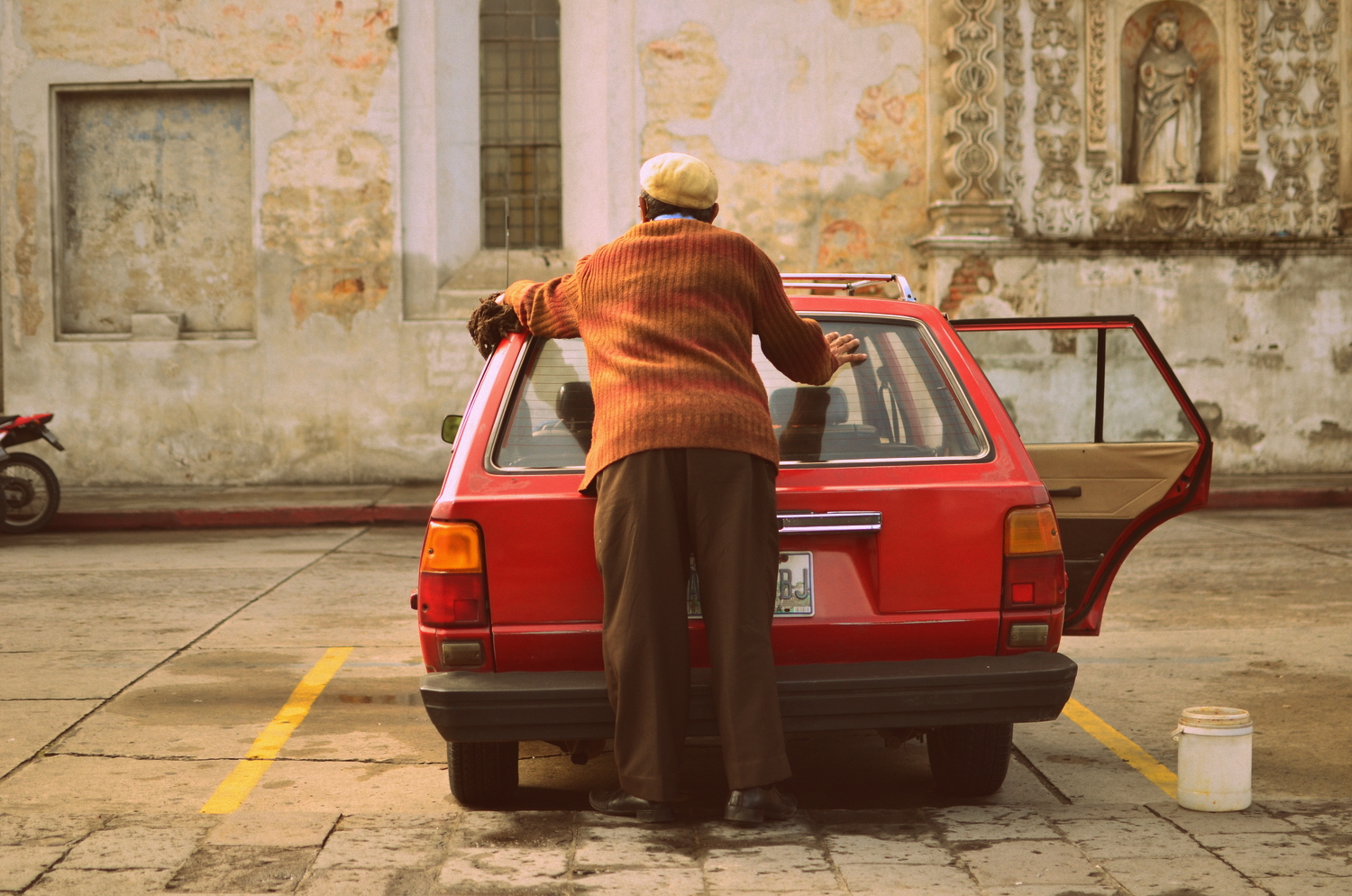
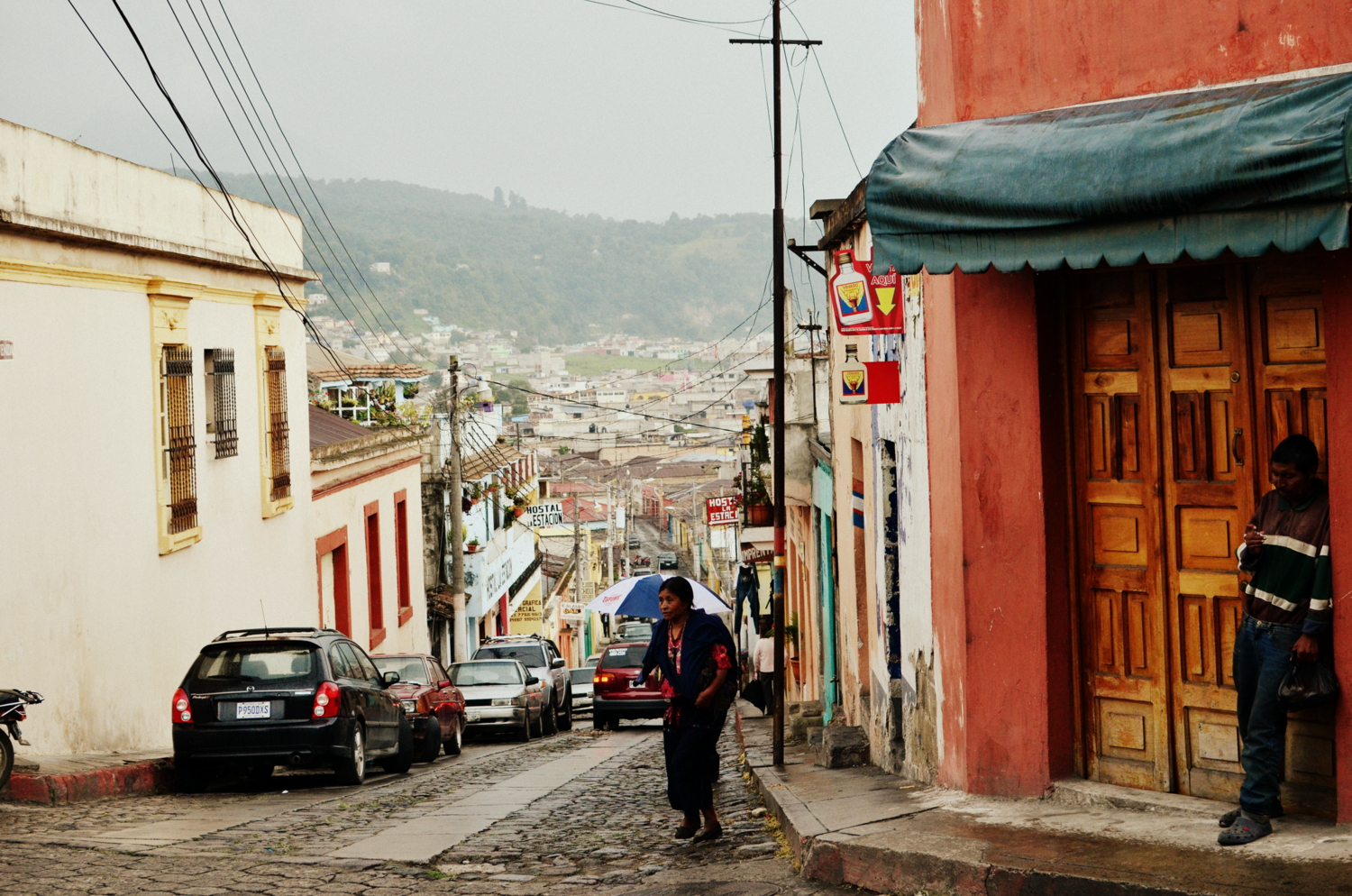
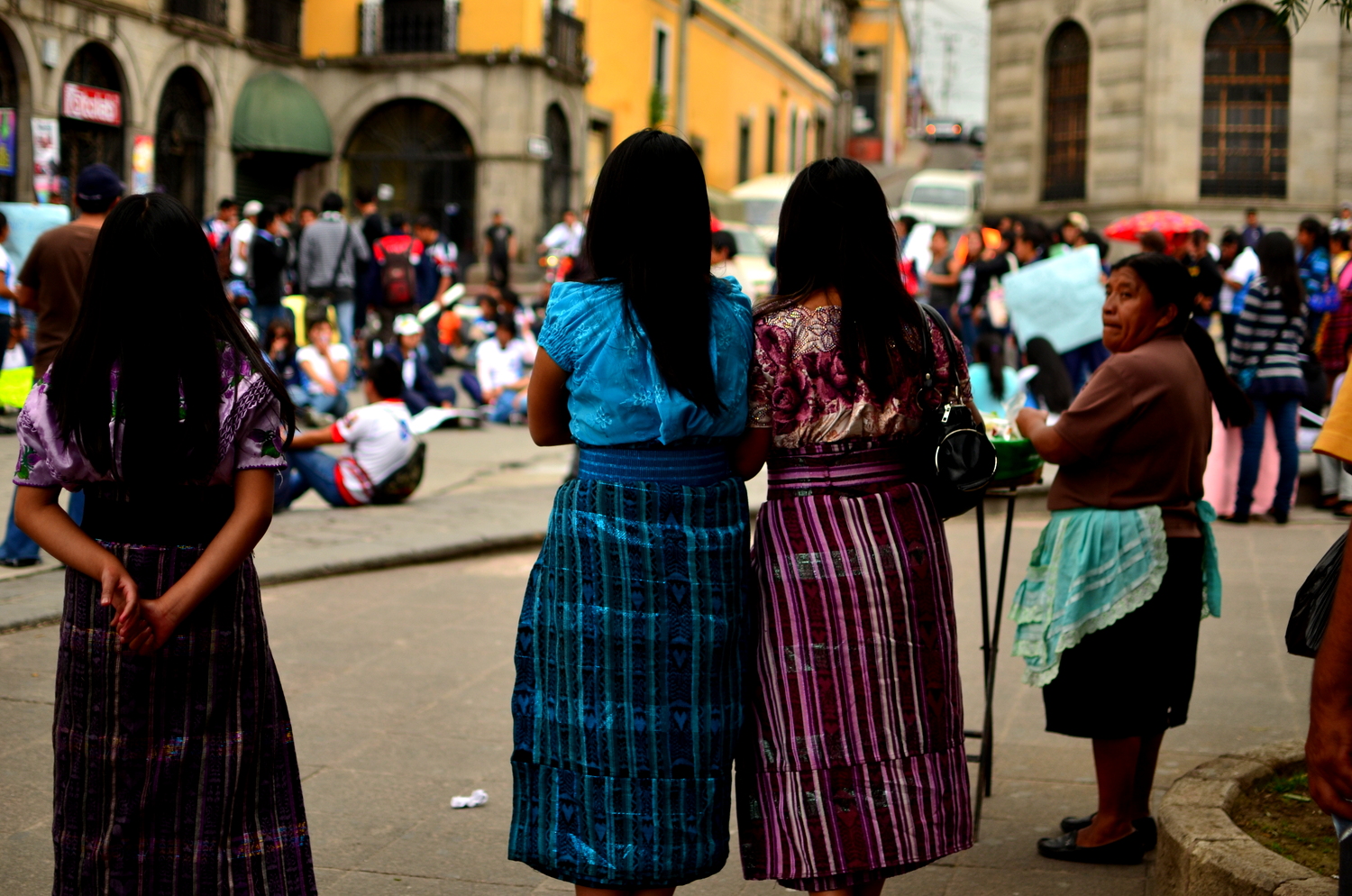
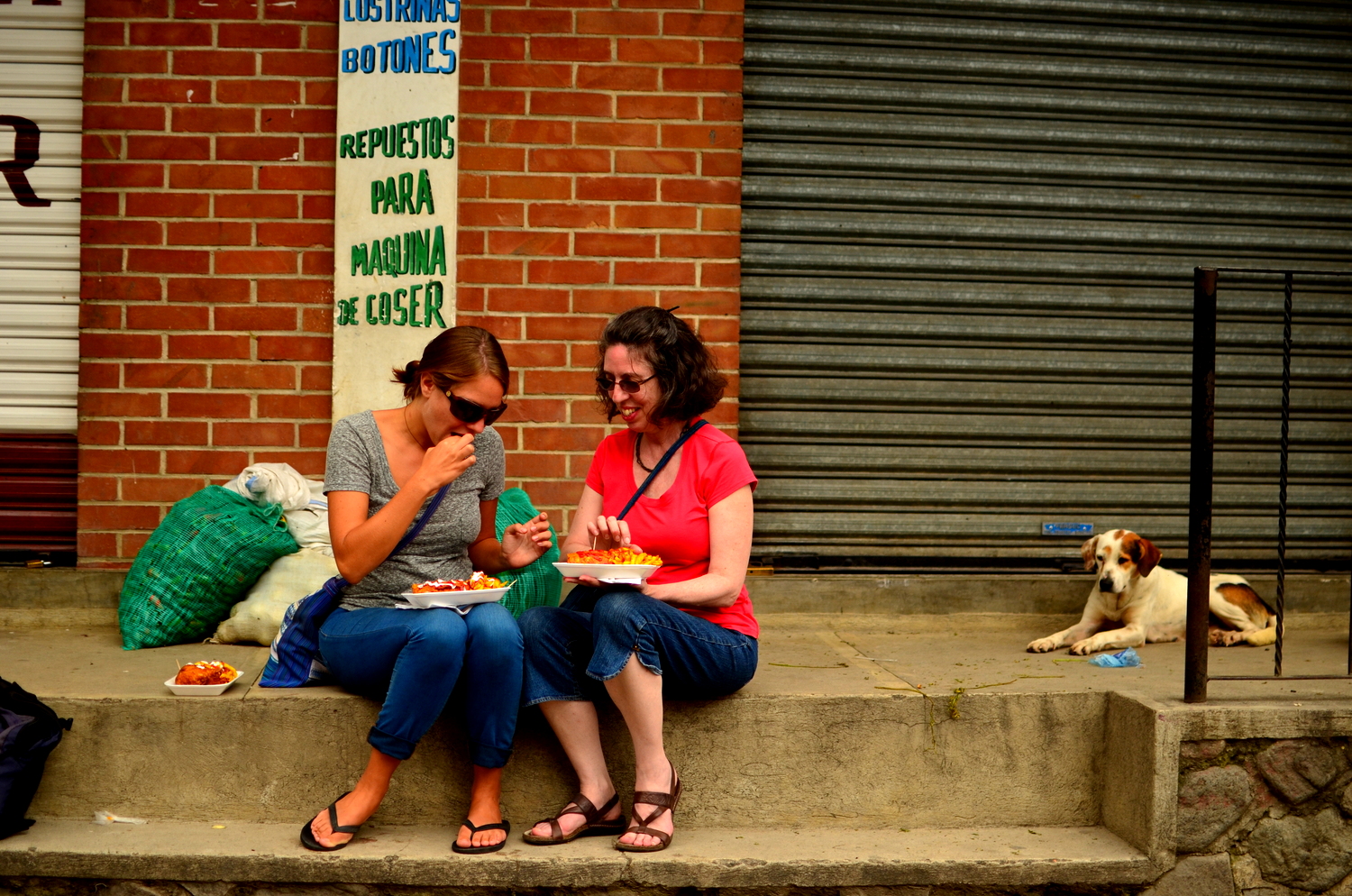
Up until this point we did not try out a chicken bus. I knew that a Guatemalan trip would never be complete without taking a decked out, 1980’s Blue Bird school bus for transportation. Xela was were we met our first chicken bus ride. A quick ride on a city shuttle taught us to keep our eyes close to our valuables. A woman saw me snap a picture with my iPhone and told me to put it away and be careful. After we were dropped off in the outskirts of the mercado we went over some basic street smart guidelines with Caryn. The other sides of Guatemala, the 70% or so that live below the poverty line, was all around us. As we walked single file through the fringe of the mercado we realized that our route was going to carry us right into it’s heart. We were offered everything under the sun on our march to the station. Boxes of live chickens, corn on the cob, tomatoes, razor blades, shoes, belts, hats, deodorant, radios, sunglasses, melons, bananas, pants, boots, water, and ice cream were all at our disposal. I was about a solid foot-and-a-half taller than every living thing around us as we made our way through the maze of elderly Guatemalan sirens chanting out the commodities they had to sell. Women that looked older than the land itself were planted firmly on the ground vending food as they probably have been doing their whole lives. I kept an eye on Elissa and the other on Caryn as we made our way through the buildings towards the light of the bus station. When we breached the mercado it almost felt more secure to be back in there than the pure and utter chaos of a second-class bus station in Guatemala. Luckily a man quickly spotted us and guided us to the bus we were looking for, free of charge. I think these buses are privately run because the ultimate goal is to get as many passengers in it as physically and humanly possible. Forget about getting comfortable on a chicken bus, it’s not meant to be. Before our bus took off I climbed up on the roof to get a picture of the bus station from above. Shortly after two men began placing large portions of sheet metal roofing on top, nearly killing one of the helpers when a piece fell down. All of these details did not ease the maternal mind of Caryn and how her daughter and boyfriend are getting around in developing countries.
After cramming about 60 people on a school bus meant for 40 children we began to take off. Our bags were securely placed behind the last seat of the bus, as were we. What happened in the next 3 hours is a whole story in itself. The ayudante seemed to not understand that there was no more room on the bus. As the bus rolled along it would stop and pick up more and more passengers. Soon we were all sitting 3 adults to each seat with the last person sitting half-floating in the air only suspended by the person across the isle doing the exact same thing. To collect money the ayudante would somehow slither his way through the entire bus. He then opened up the backdoor, while traveling about 70 mph in the pouring rain, climbed up the ladder to the roof, and reappeared feet first at the front door of the bus. All luggage was tossed up to the roof of the bus when passengers came aboard and the ayudante would then tie it down with ropes. At one point, by my best estimate of counting heads, we had approximately 100 people on one school bus, with luggage. It was raining so hard during this trip that the windows had to be shut, thus adding a further degree of discomfort to our transportation situation. Not to mention that we were sitting on seats that had been overused, abused, and punished through years of getting children to school followed by massive amounts of Guatemalan transportation. As we approached the familiar entrance of San Pedro we both wondered how the hell the bus was going to make the almost 180 degree turns down the volcanic landscape into the lake. This question was thankfully answered with harrowing 3-point turns. The man that was the very last soul on the back of the bus would help the driver when he was going to hit the mountainside or go over the edge. Caryn, like any mother in this situation, was not pleased.


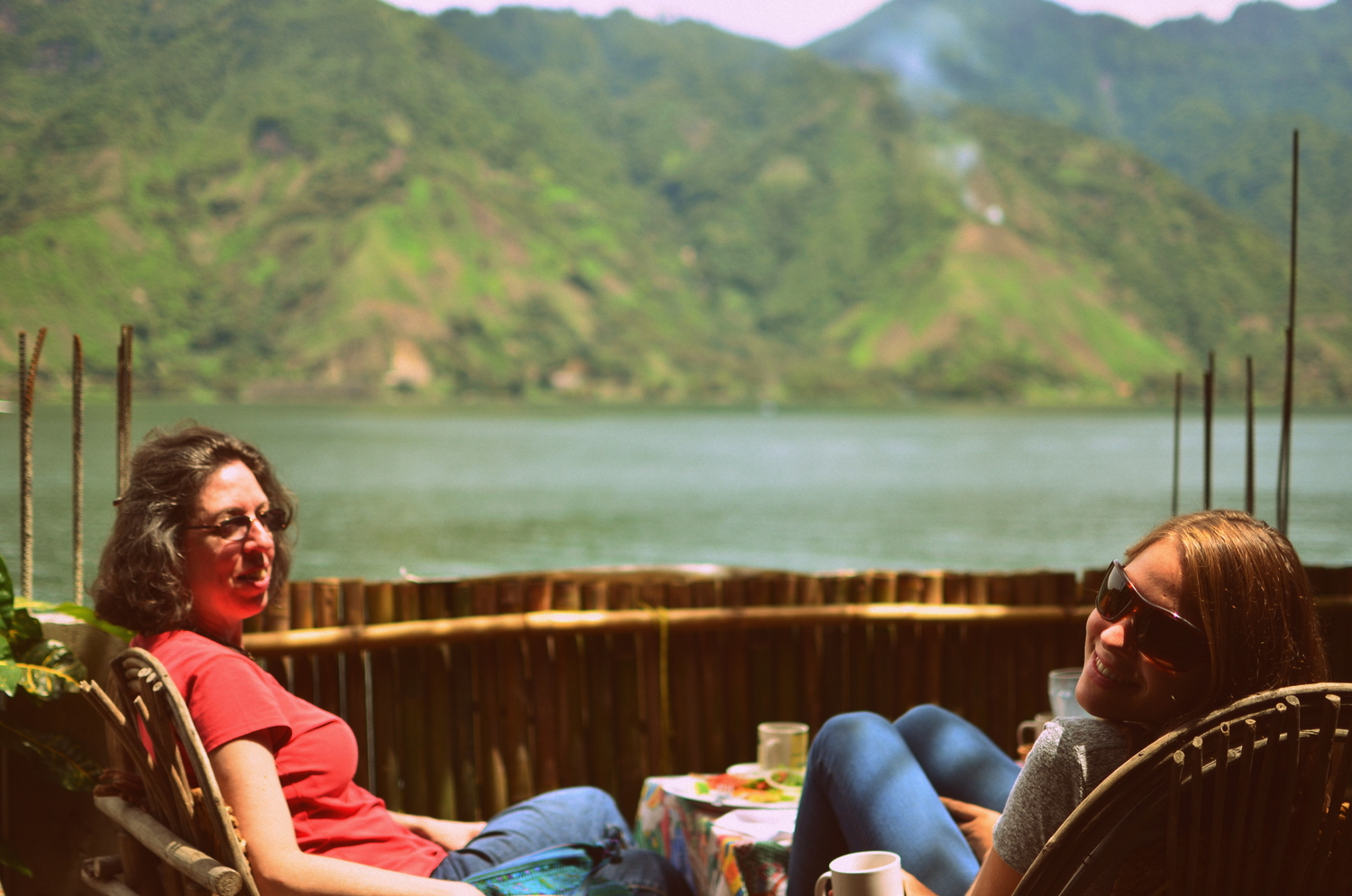
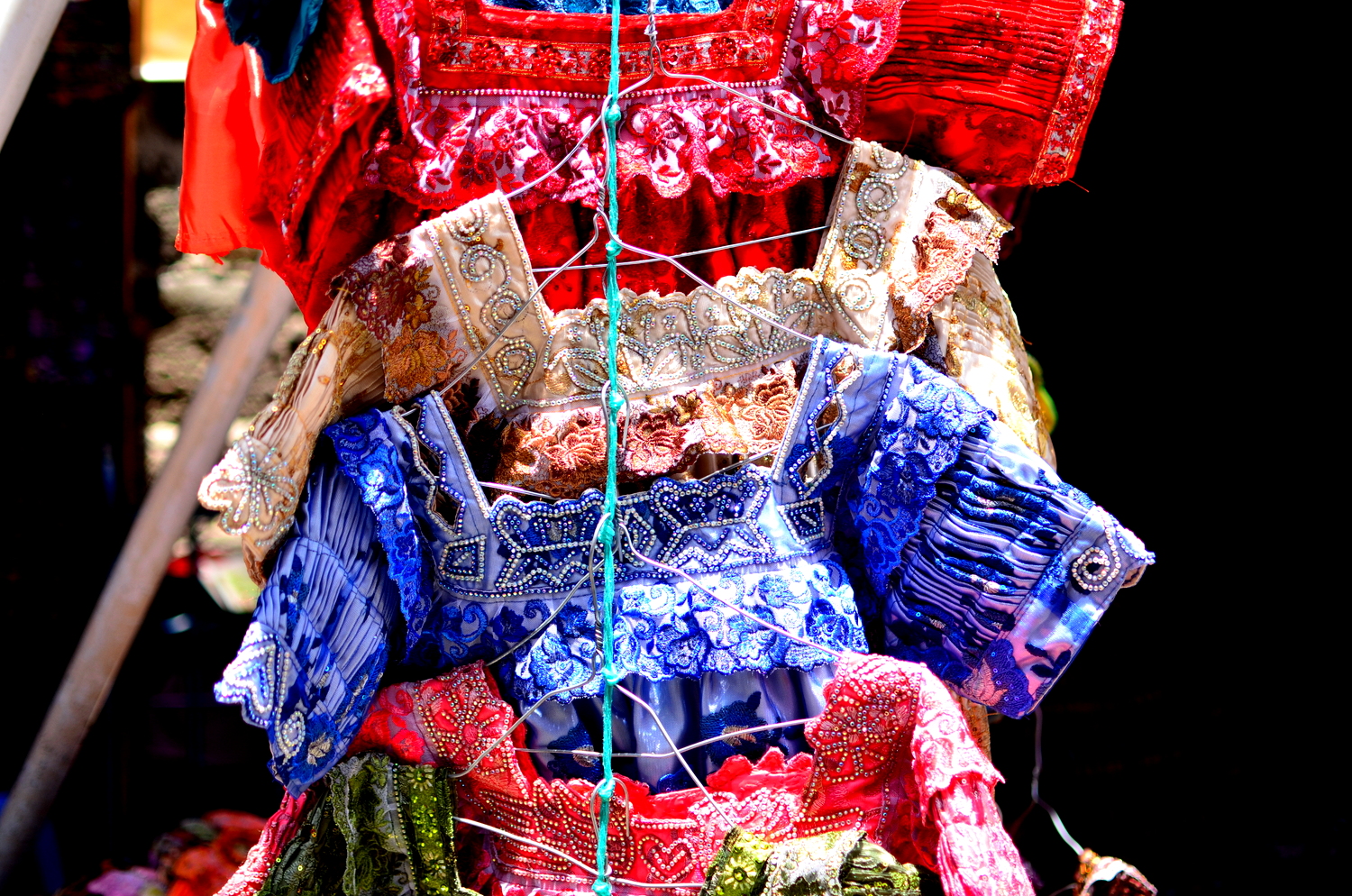
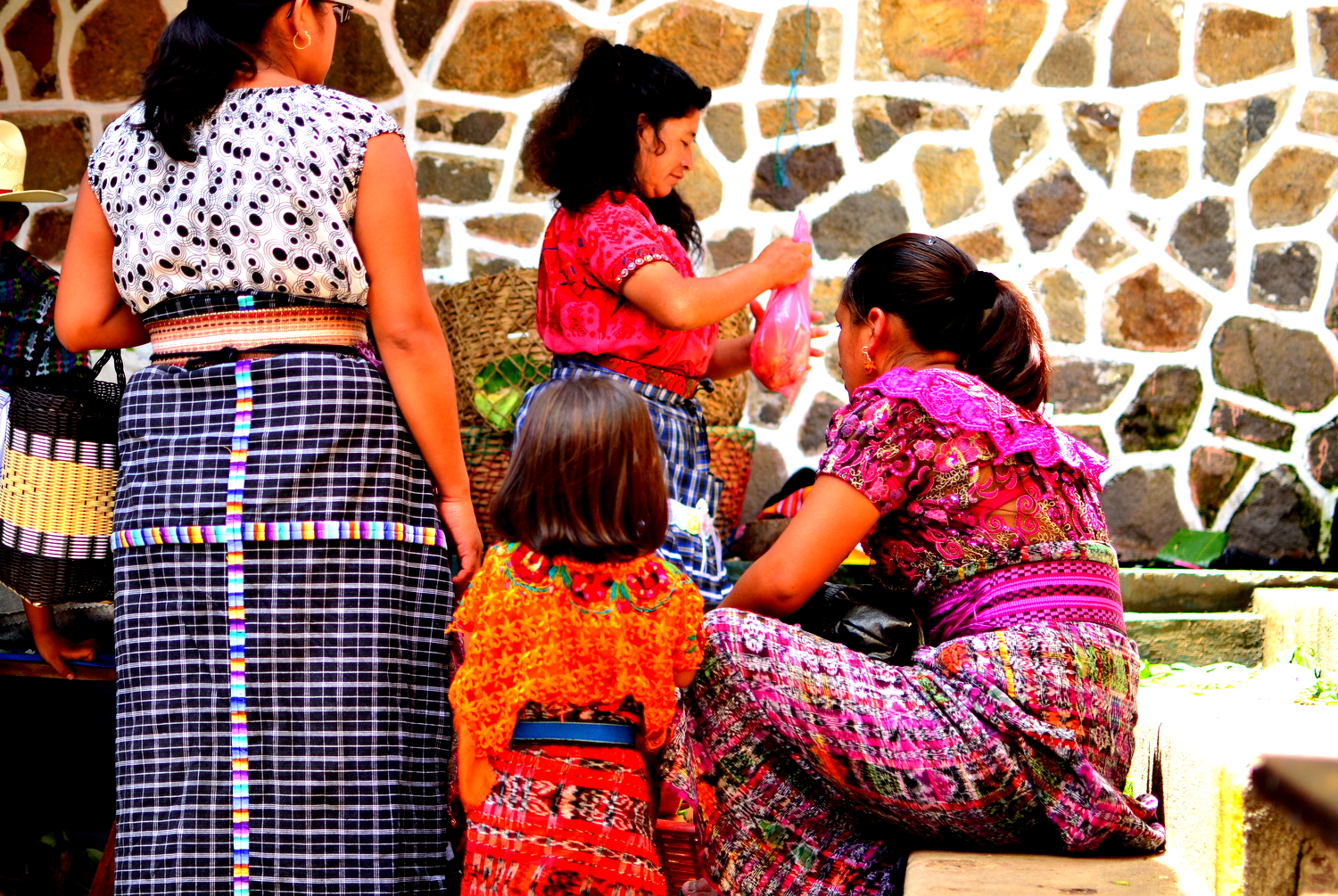

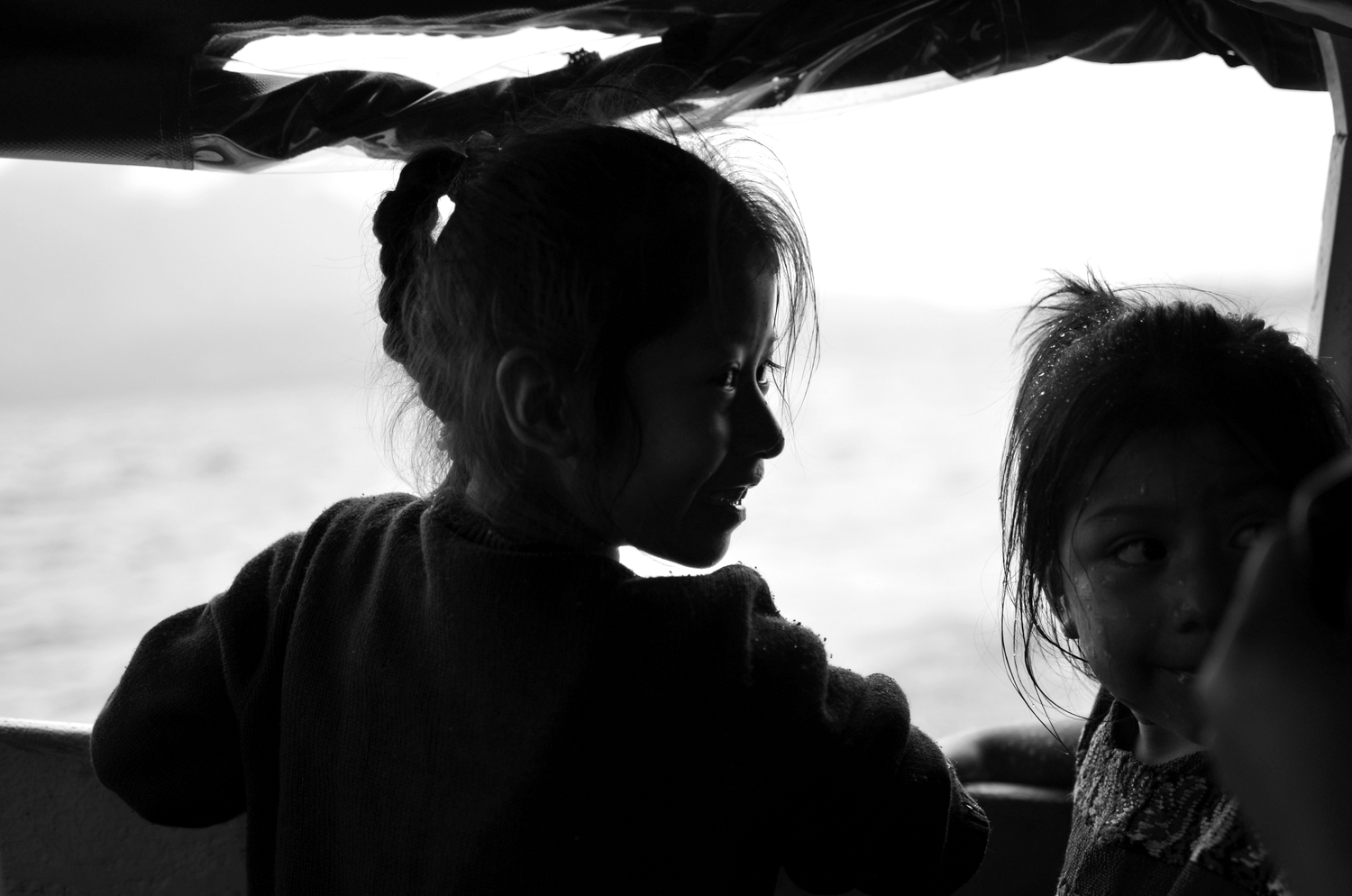
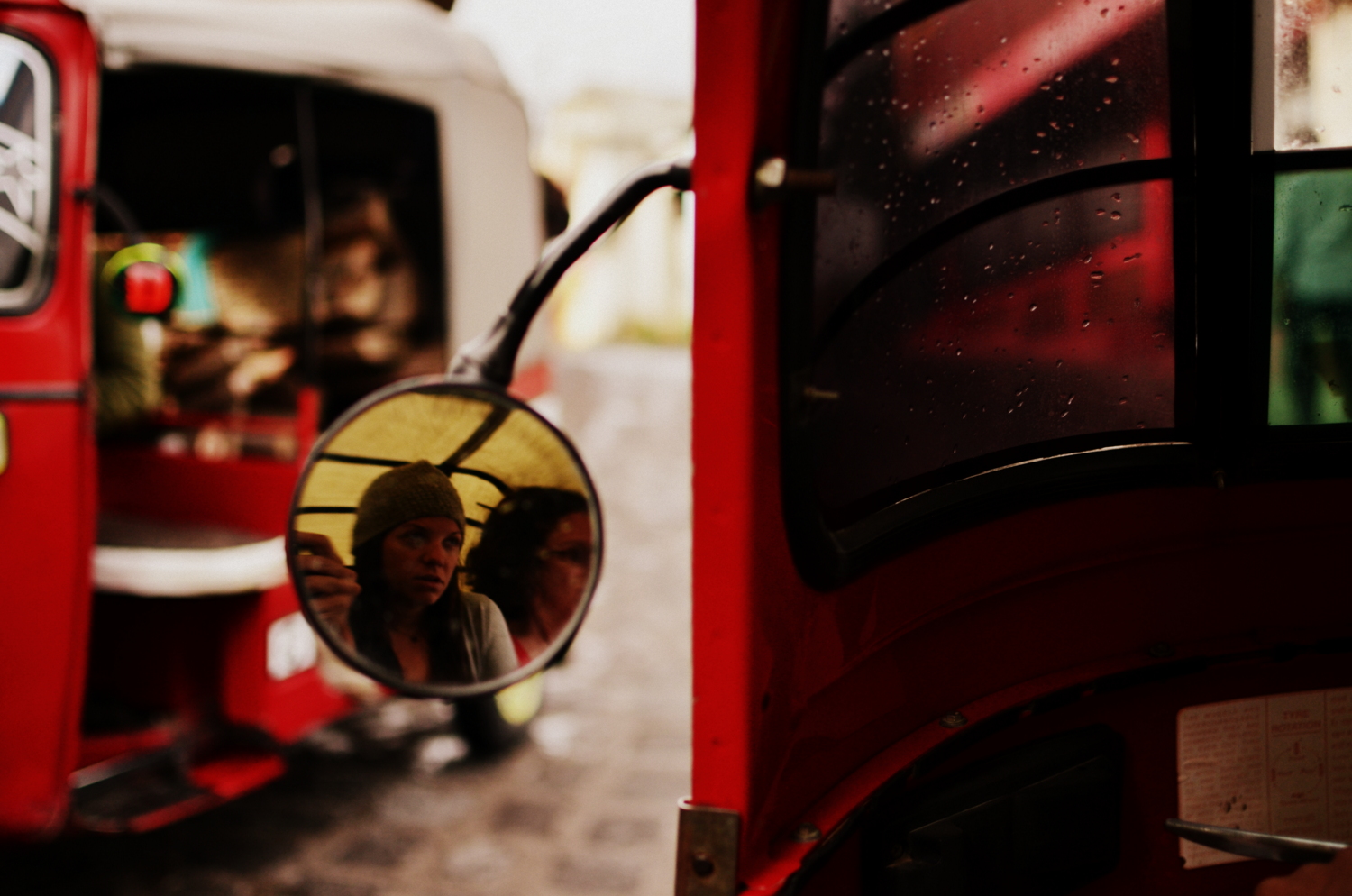
When we finally arrived in San Pedro it was raining harder than I’ve ever seen it rain before. We were dropped off at the center of town, no where near any hotel or hostel. Torrents of water were charging past our feet, making solid footing quite difficult to find. By the time we found our hippy hostel (7$ for 3 people per night) we were absolutely soaked through. The rain left eventually and everything took on that fresh, new mountain air scent that only a passing storm can leave. The next few days were spent showing Caryn everything that this Mayan world could possibly offer to an outsider. We explored the tuk-tuk filled streets of San Pedro to show Caryn everyday life up in the market. San Juan, San Pedro’s neighbor, was having it’s annual fair that weekend so we naturally wound up there. This small village had set up a proper fair, complete with carnival rides, dozens of food stalls, cannon-like blasts every 5 minutes, and Mayan families celebrating their culture. We followed our hearts through the streets and our ears to the music. A large crowd surrounded several dozen men, women, and children donning traditional celebratory costumes and masks dancing to live music. A slow, beautiful boat ride to Panajachel gave Caryn the experience of the lake that words can’t describe. We played with a little Mayan family on the boat and the girls were more than enthralled to get their pictures taken and to take ours with their fathers cell phone. An obligatory shopping excursion followed in Panajachel, which has some of the best prices and biggest selection of Guatemalan good’s to bring home gifts for loved ones.
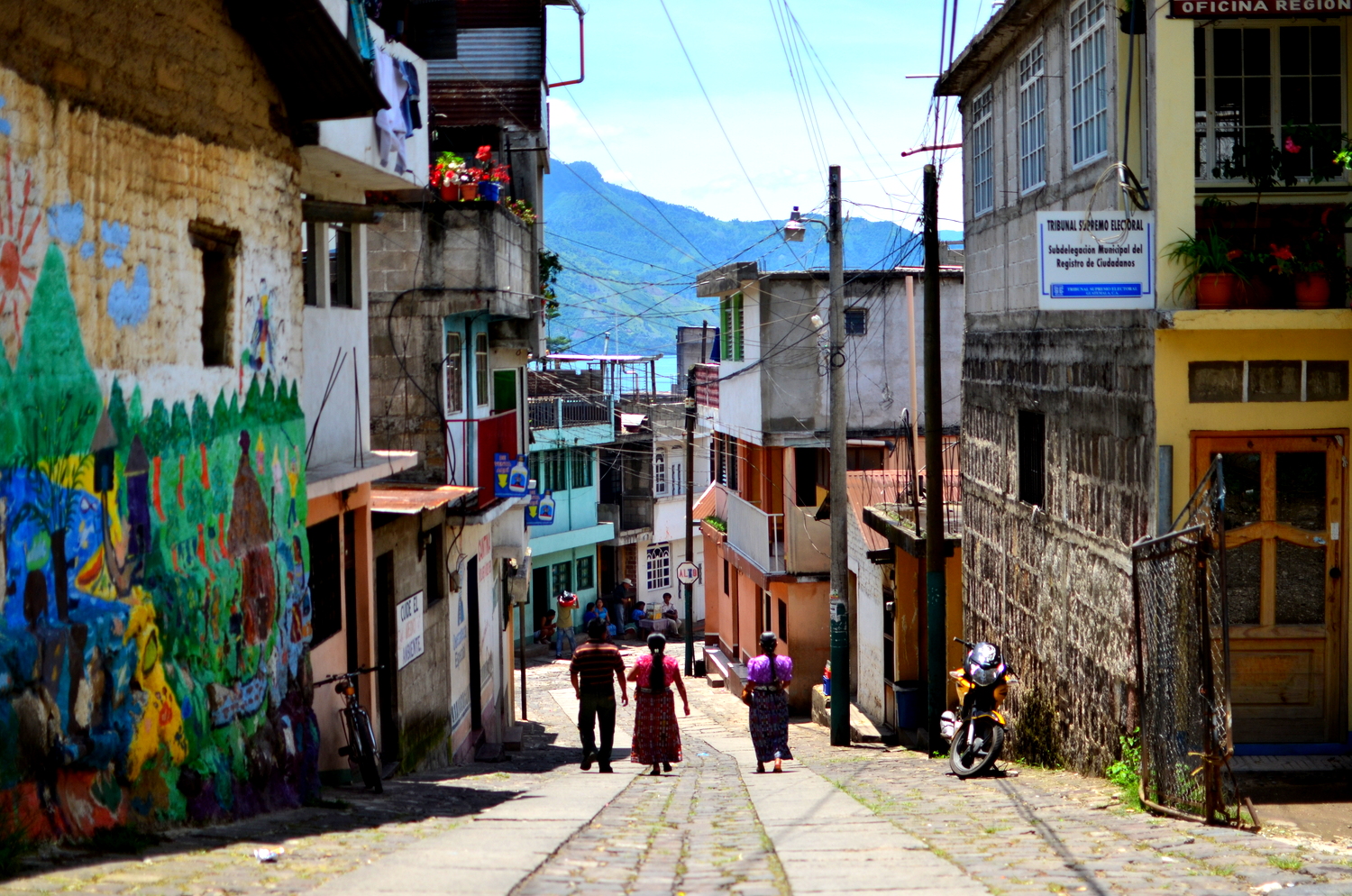

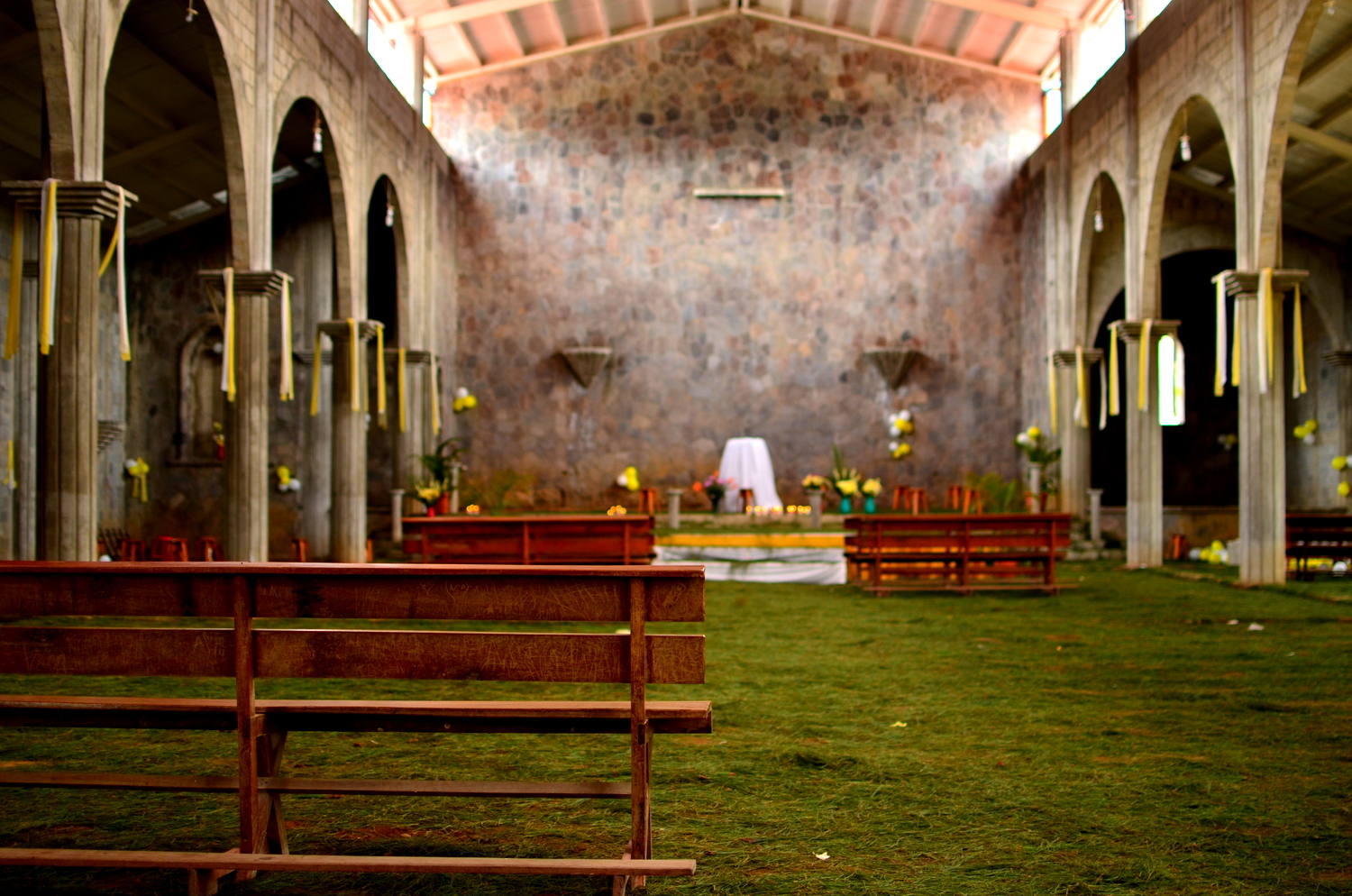


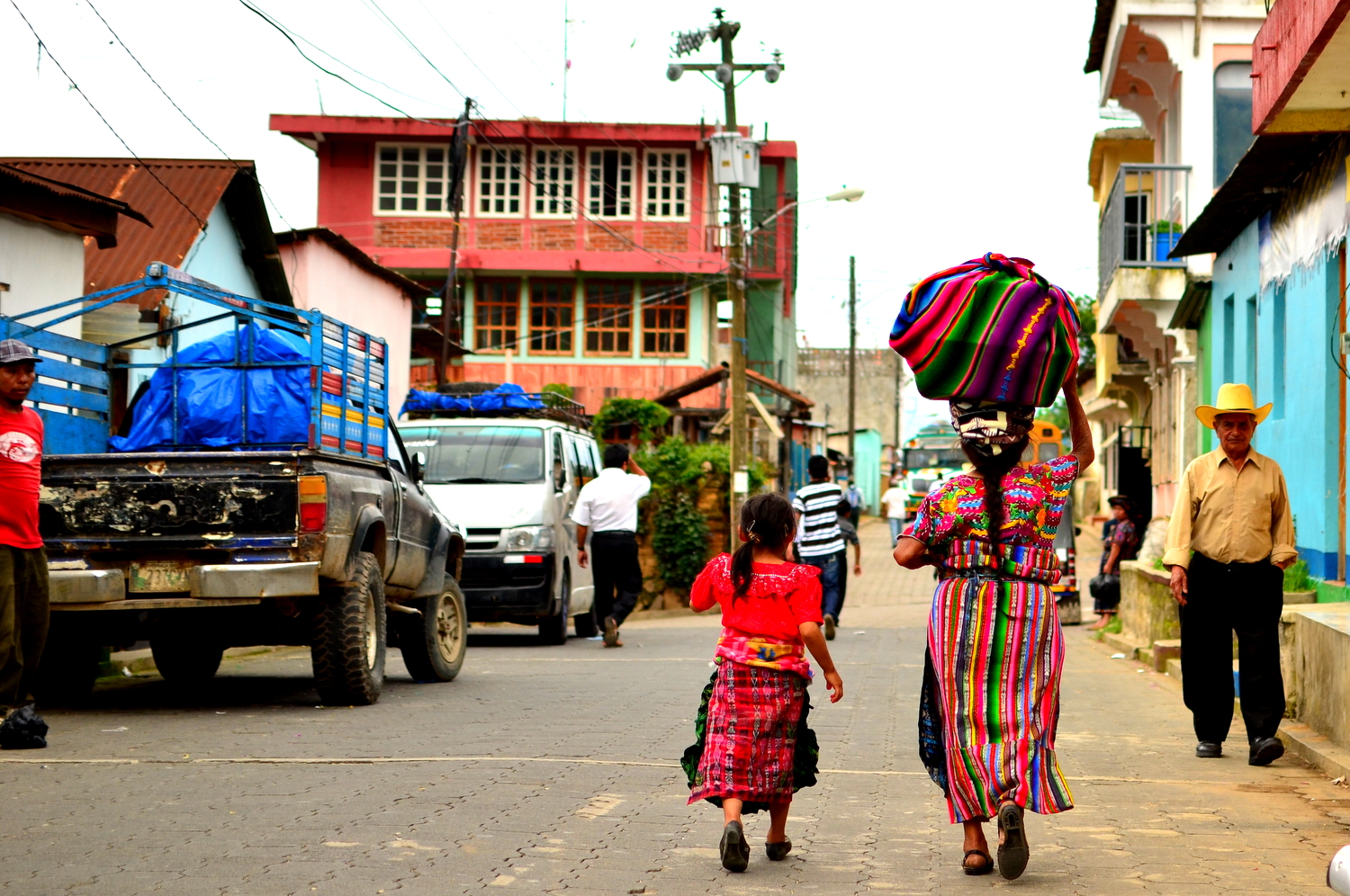
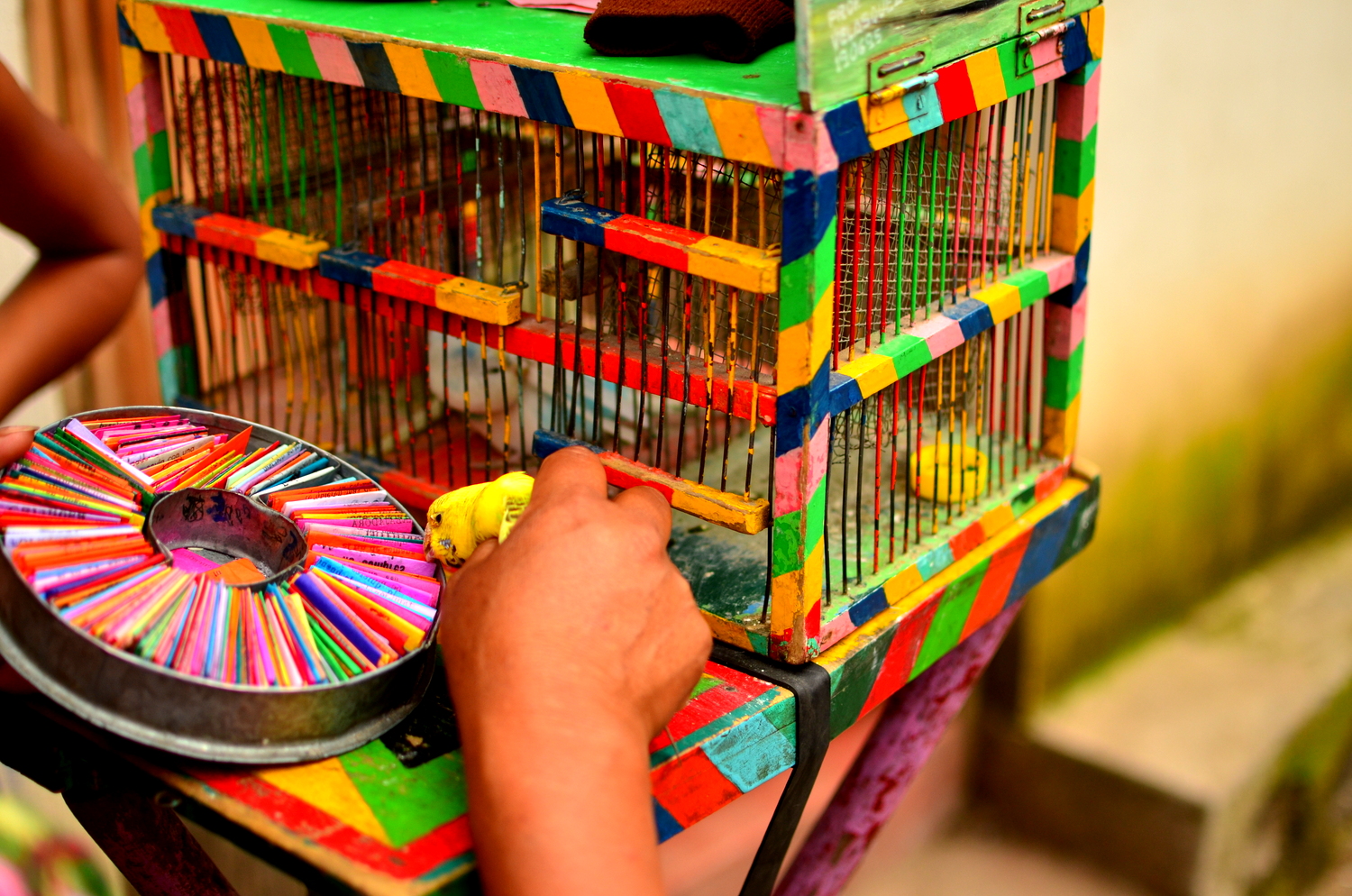
A visit to Rosa’s family was a must so Caryn could see what our experience living here was like. Rosa was surprised to see us and immediately handed Flor de Maria over to Caryn, who was now smiling ear to ear. In English, but still through the universal language of love, Caryn thanked Rosa for taking care of her daughter, to which Rosa acknowledged. She served us up some fresh coffee that her husband grew before setting off on her daily 8AM market routine. We left, gathered up our stuff, and sought out the next chicken bus out of town.
Since it was a chicken bus it naturally did not set off smoothly. Waiting by the church we were informed that there was a bicycle race blocking the entrance and the bus couldn’t make it to town. Instead 25 people were put into the back of 2 pick up trucks, and flew down the bumpy, twisty road hanging on for our lives to a gas station where a bus was waiting. After boarding we waited on the hot, sweaty bus for 1 hour and 45 minutes while cars, bikes, tuk-tuks, and other buses lined up behind us blaring their horns in discontent at the race. Another 90+ person bus ride dropped us off in a random town to catch another bus to Antigua. The bus started taking off before Caryn had both feet in the door, which is not something you should be having your mom experience. After getting back to Antigua we reflected on the absurd but memorable transportation we took Elissa’s mom on. Some of the best memories of a trip outside of your element can quite often feel uncomfortable, dangerous, and completely absurd in the moment. But these moments are more often than not the most real experiences you can have, and often produce the longest lasting memories.


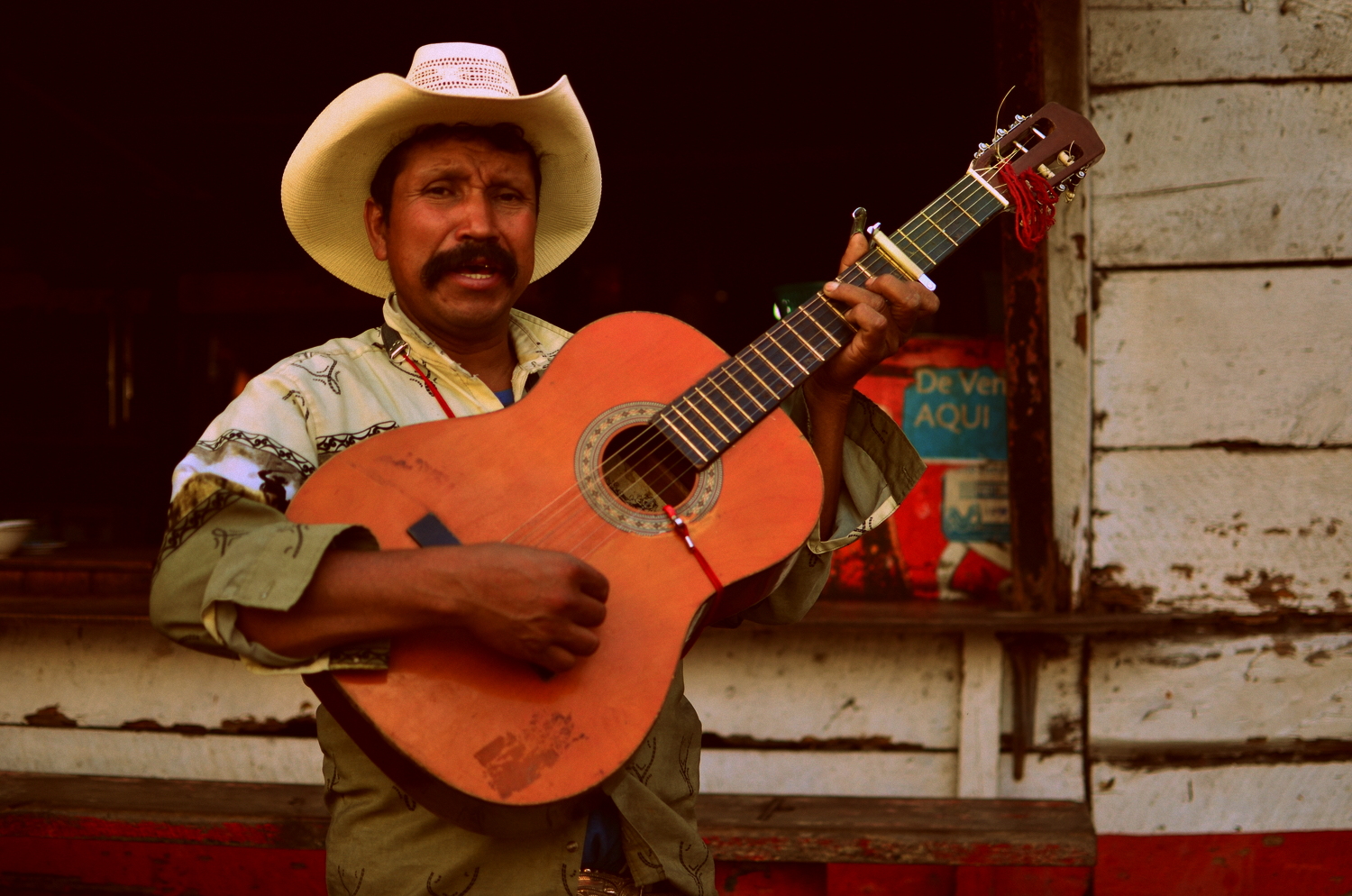
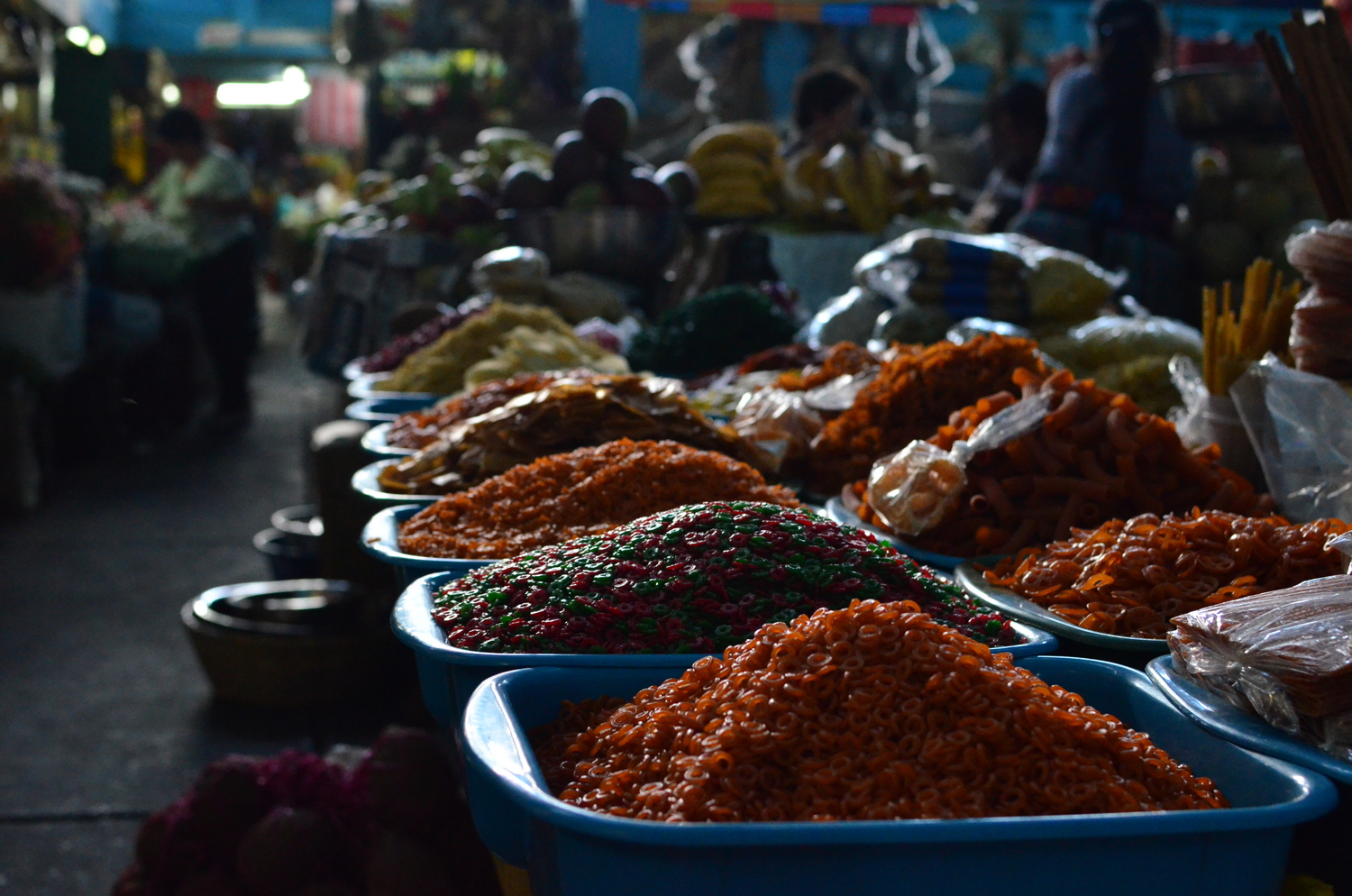
Transportation is a very easy and amazing way to connect with a culture, as long as you are taking the types that the people native to the area are. It’s often more easy (and more costly) to go the travel agency/shuttle route, but the rewards are often greater and give you more of a badge of honor, so to speak. Caryn’s time came to an end with us and a very sad departure ensued. We spent a week as dorm buddies, and in one case triple bed buddies, but had an absolute blast. A piece of home came and left us in Antigua and it took us 2 extra days to recover and leave this touristy but comfortable town.
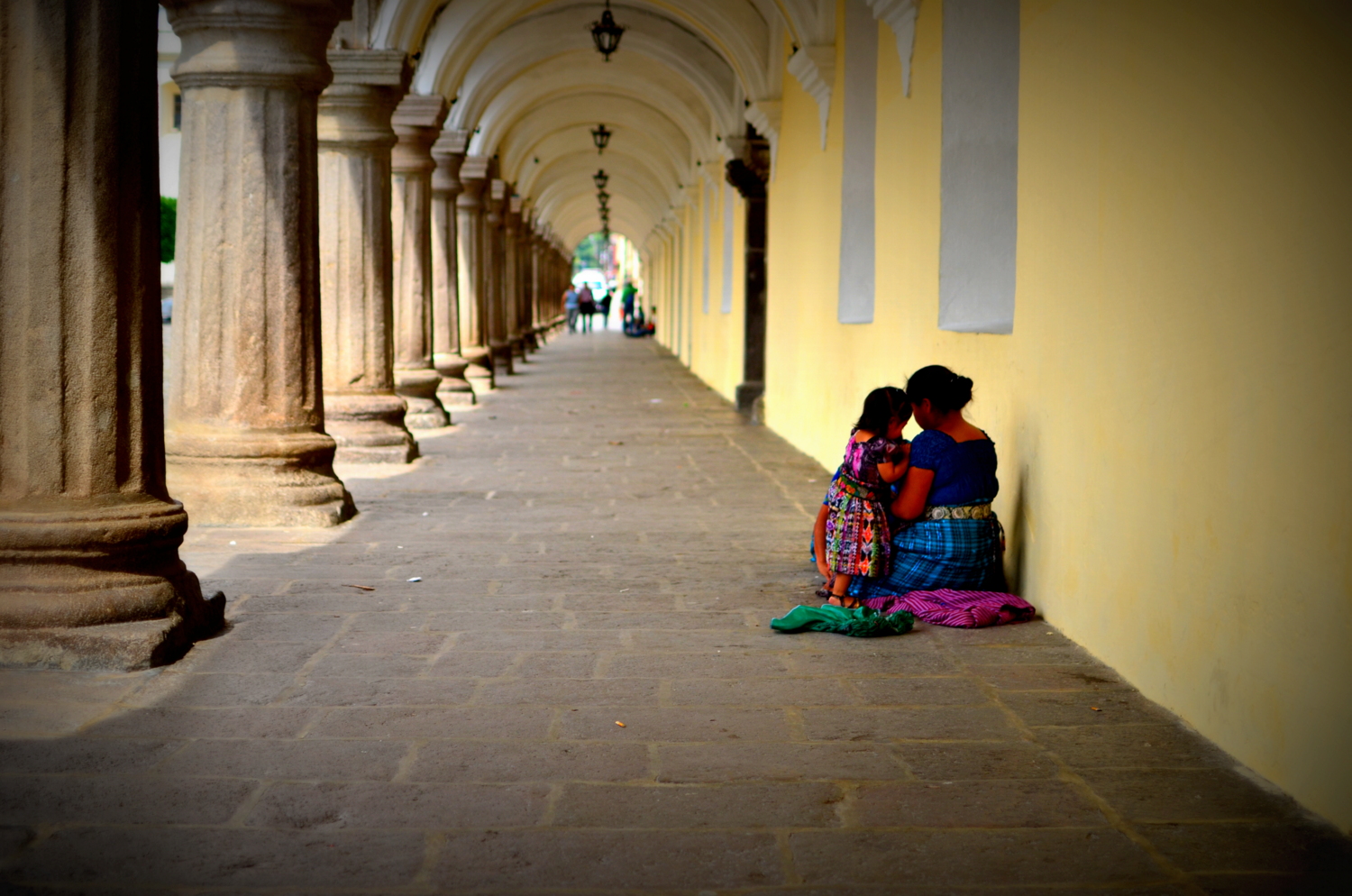
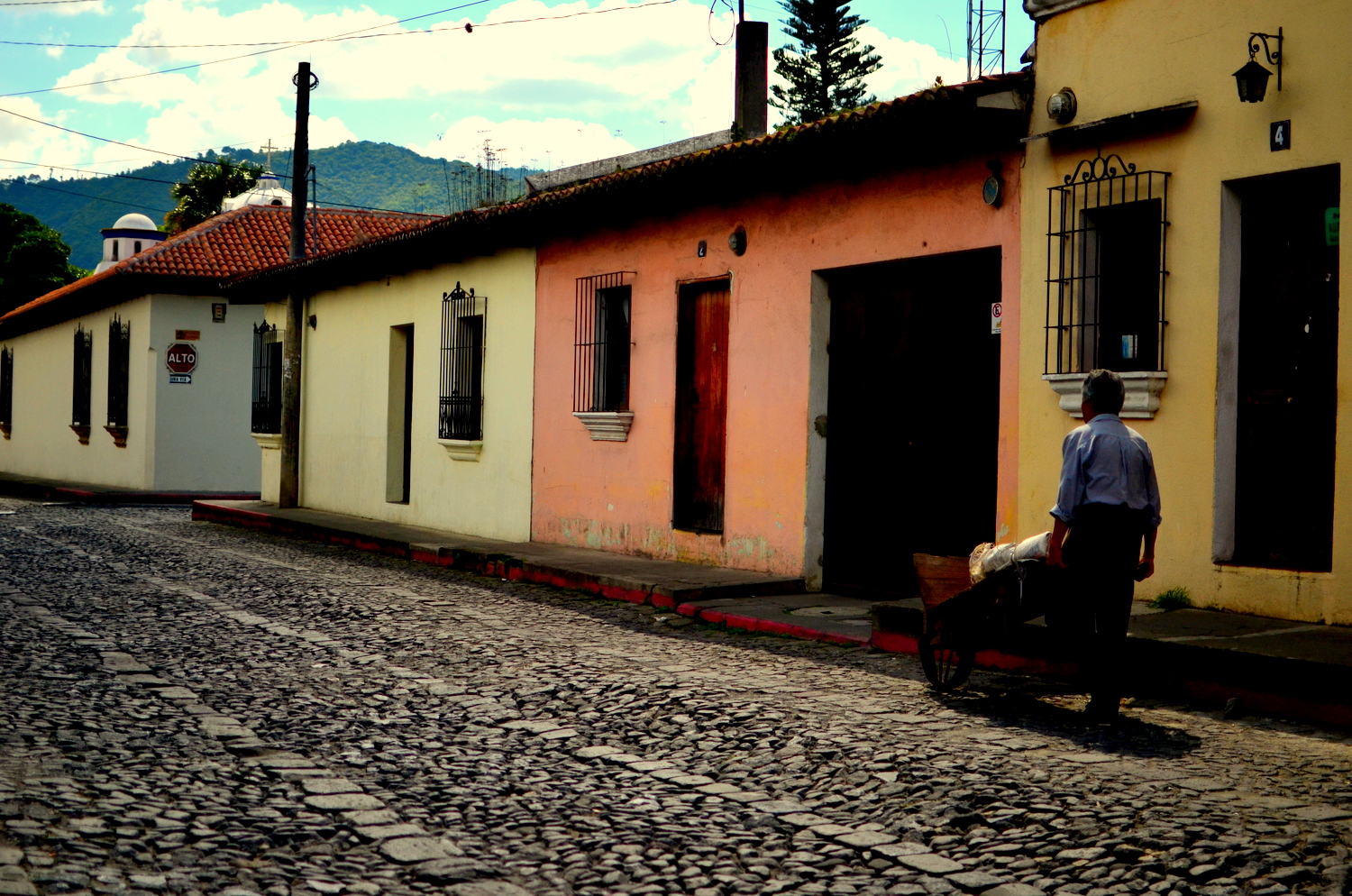

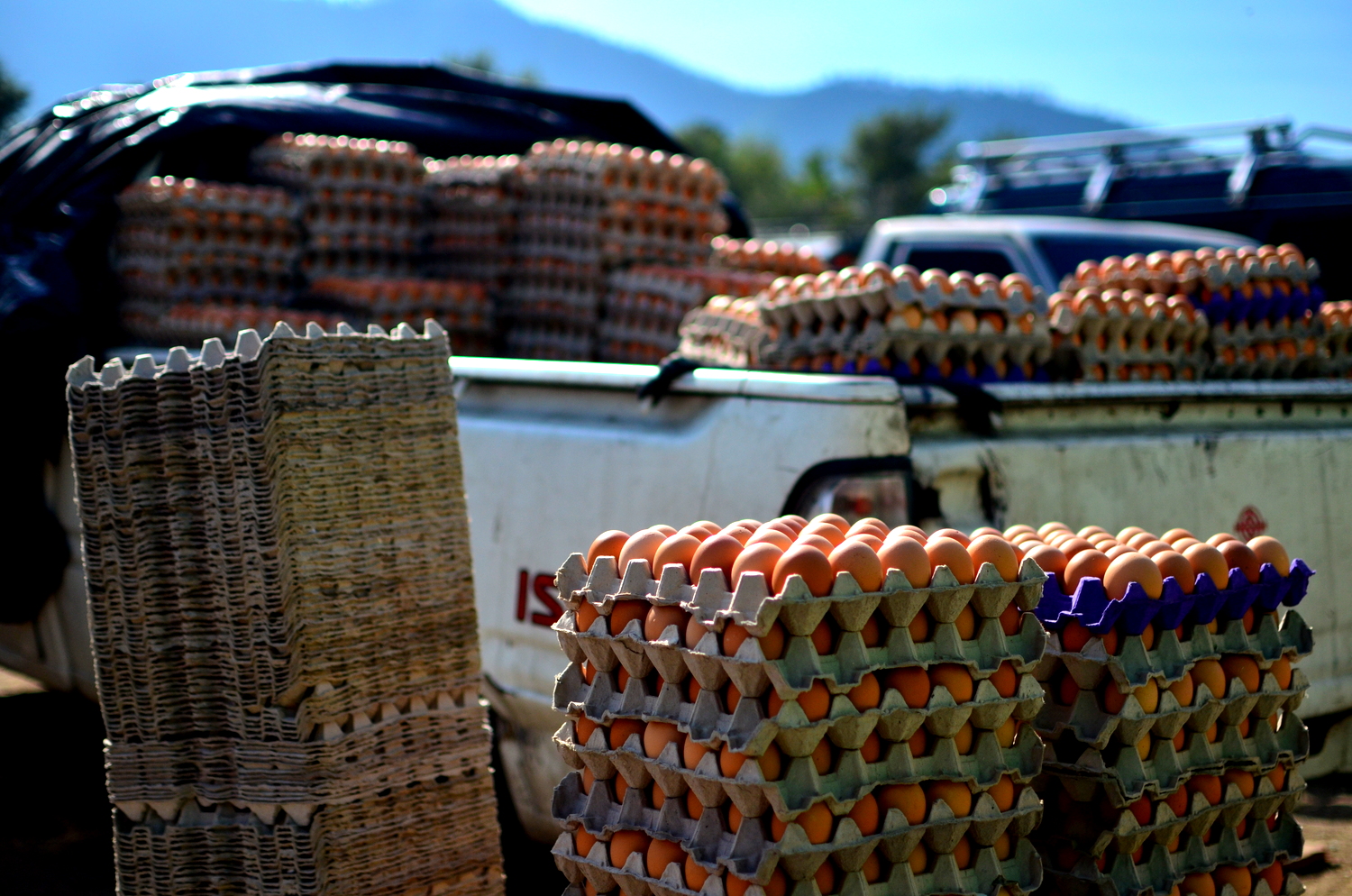


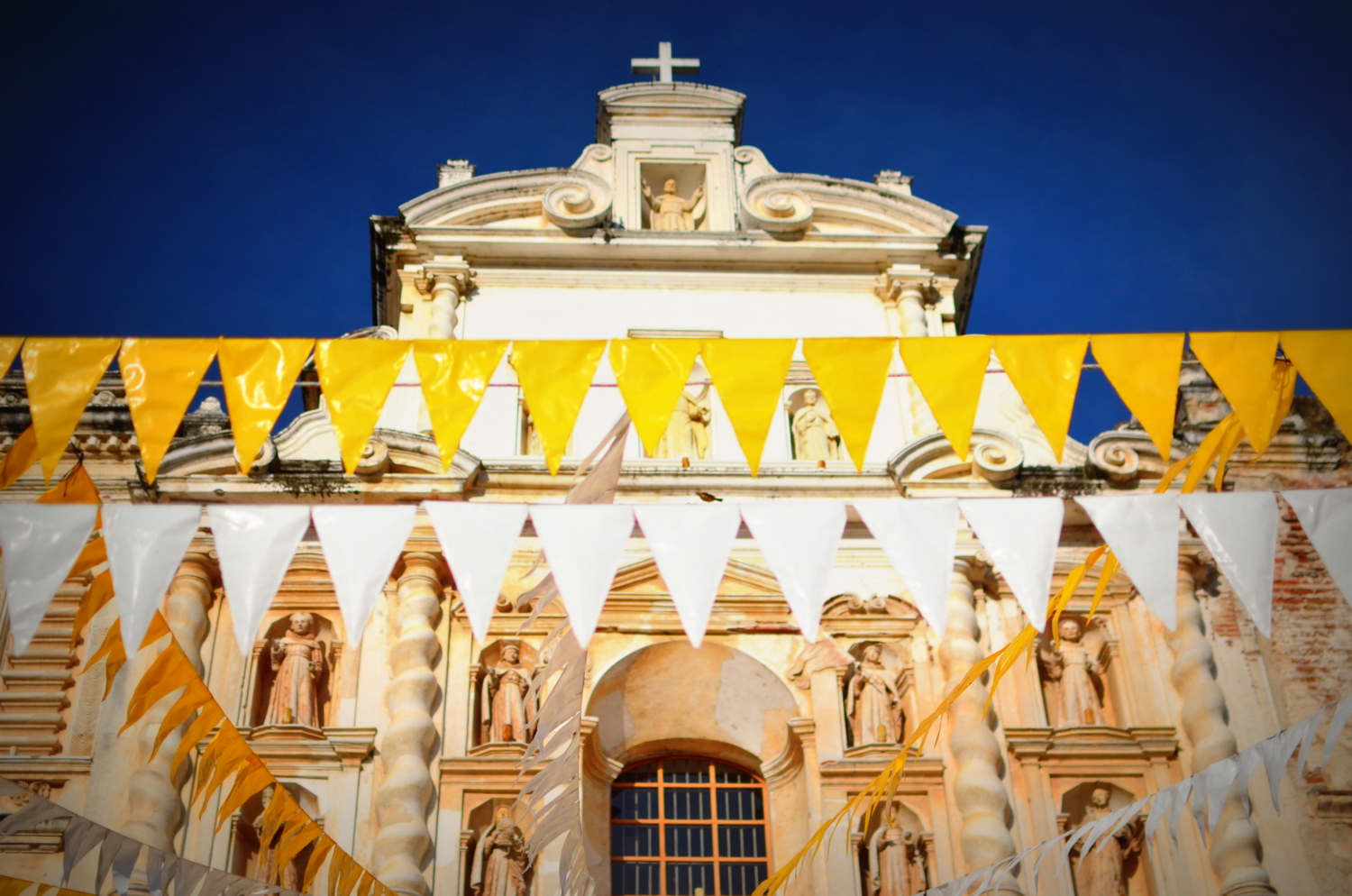

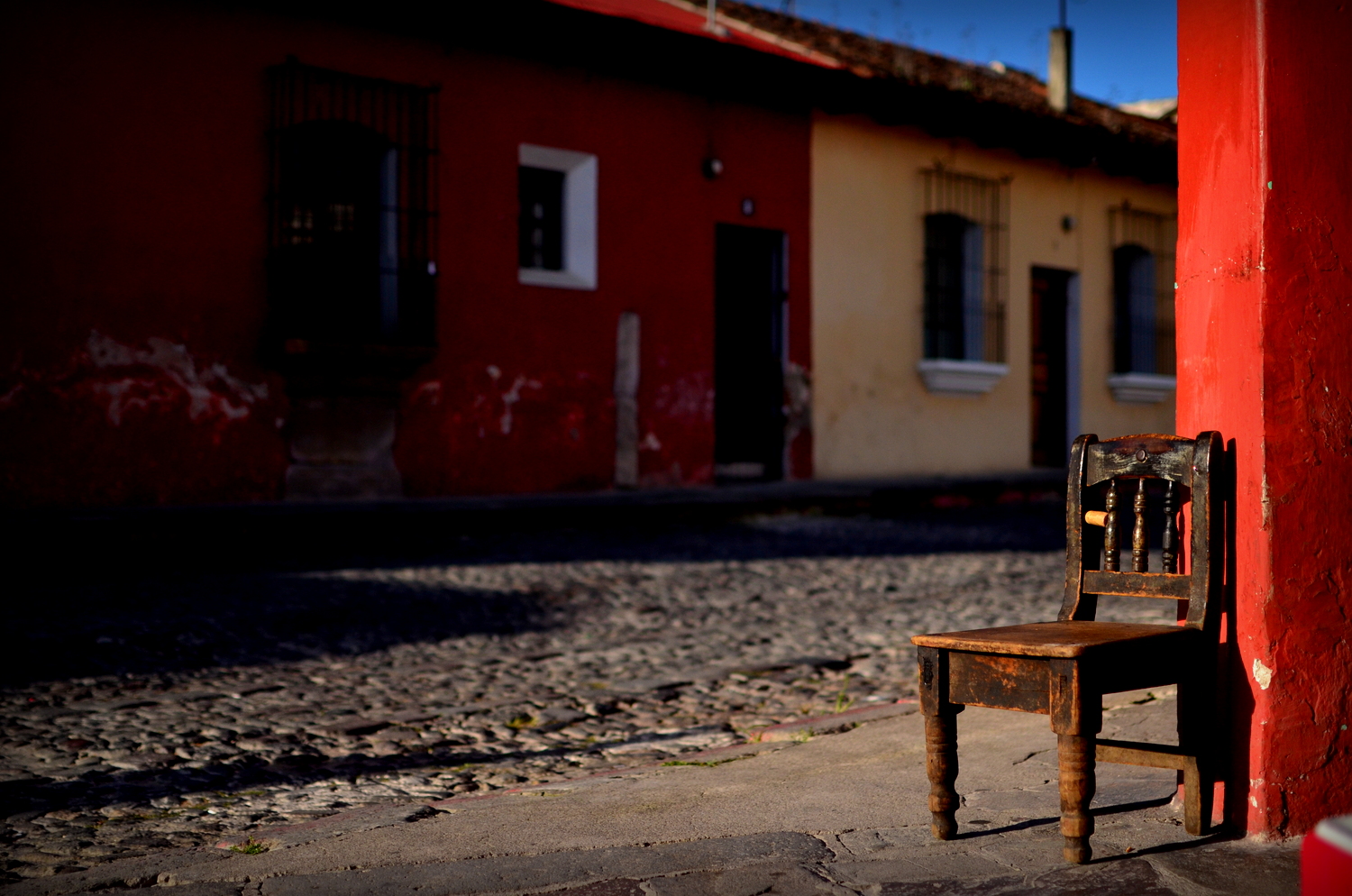
At this juncture I must apologies for the massive quantity of photos. There was a lot to see that week.
A week in the Mayan world of San Pedro la Laguna, Lake Atitlan

At 4:40 AM our alarms chirped us out of a sleepy dreamland and into the reality of a very early morning. Our ride out of this wilderness was a man that helped run the hostel who was a combination of an uncle back home and a Guatemalan Rob Schneider. He was all whistles, jokes, and smiles on only 3 hours of sleep while we were packing ourselves and our gear into the back of his pickup truck. A Mayan family waited patiently at the end of the driveway for us to back out onto the road and give them a free lift. A mother and father helped their kids into the covered bed before sitting contently on the tailgate. The mother wore a traditional woven skirt while the husband was wearing dress pants, a button up shirt, and shoes that were a few sizes too big. We set off, picking up more hitchers en route during the long, bumpy, and slick road back into Lanquin.
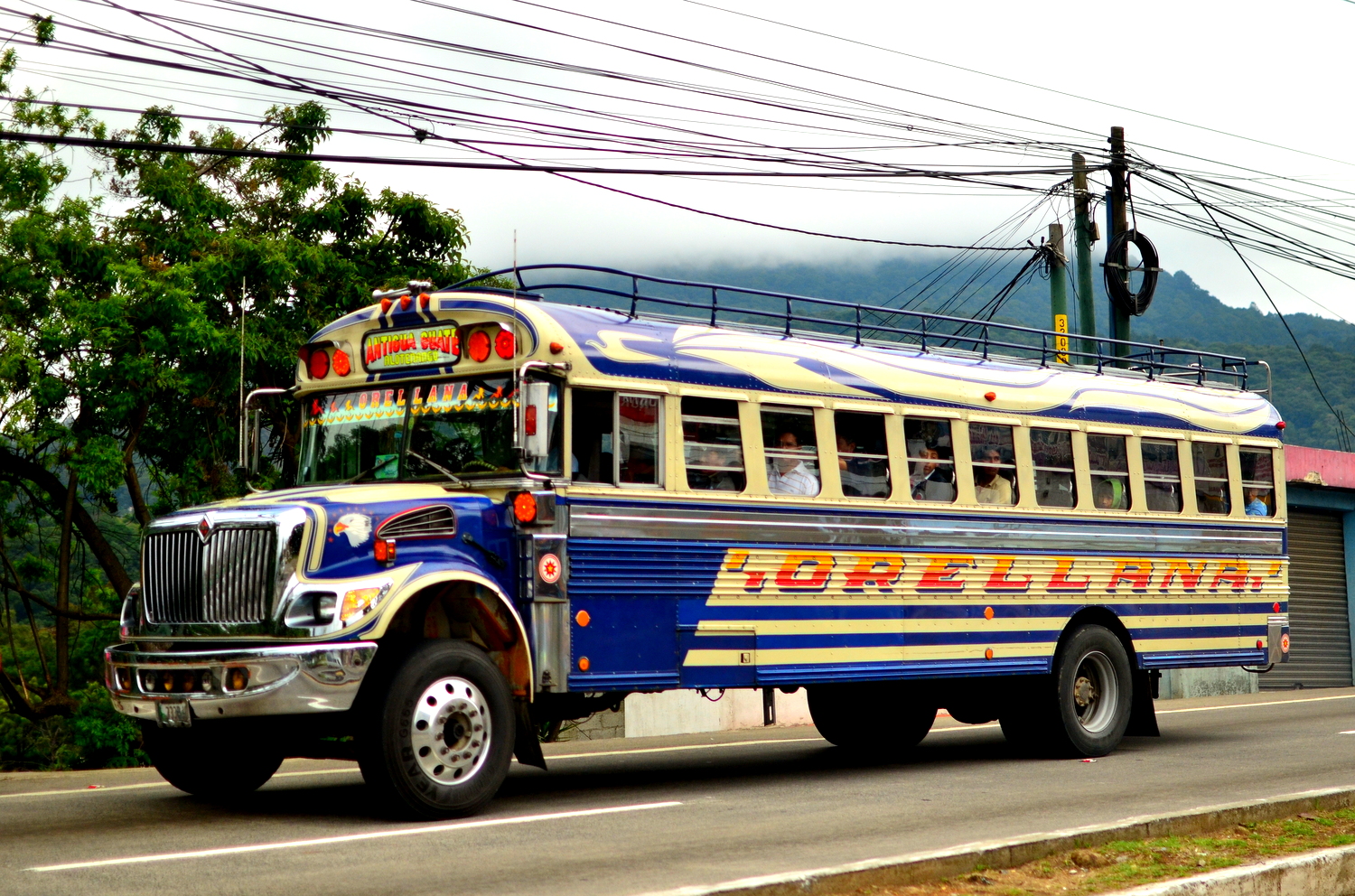
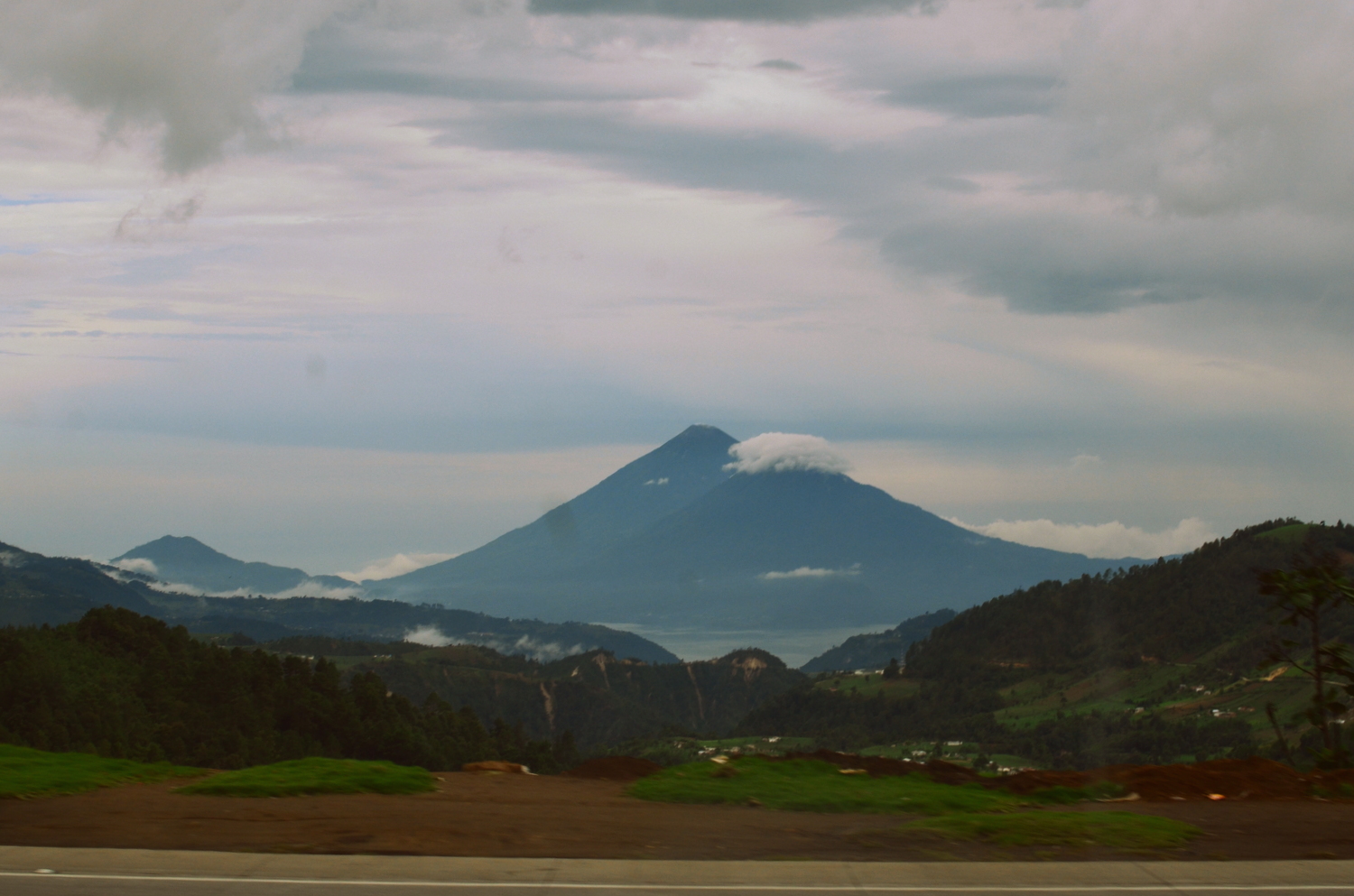

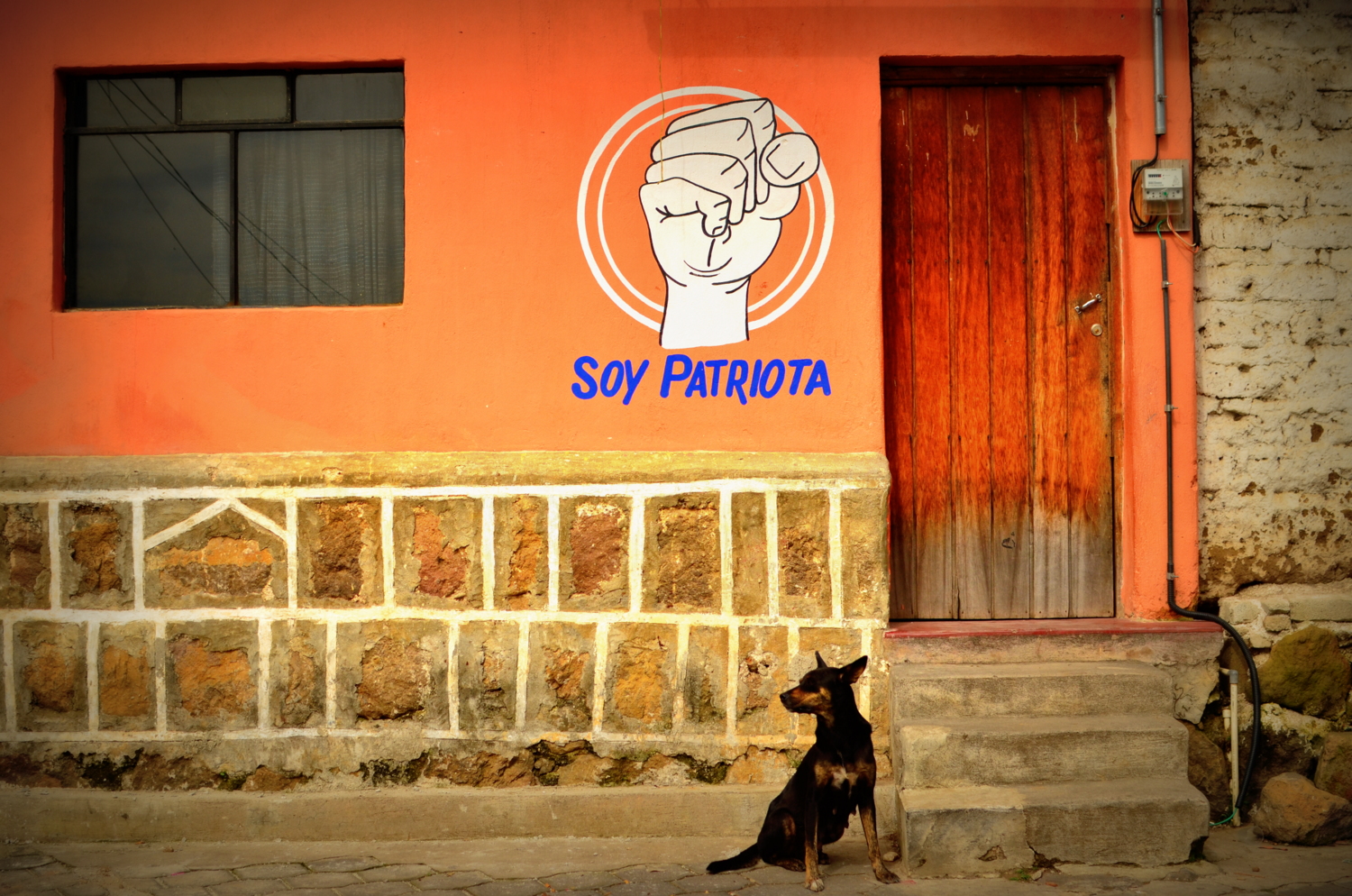
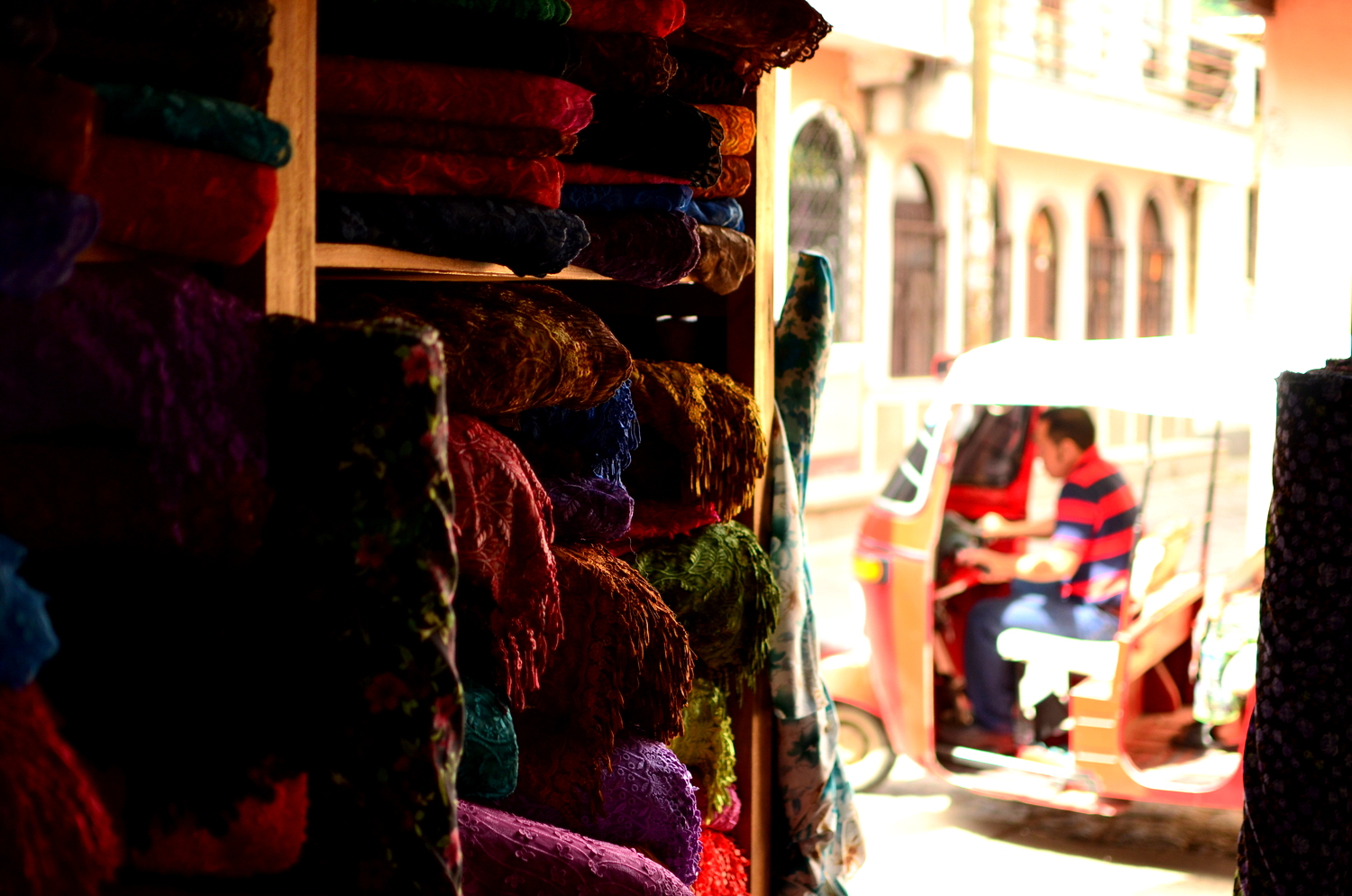
The route to San Pedro was very, very long. The mountains that morning held a thick fog close to them that I refused to look away from. Every once in a while our driver would zip around slower moving trucks, weaving through moving and oncoming traffic in these seemingly unpredictable mountainous pathways. After only a few days in Guatemala I am convinced that if they had a Formula 1 racing team they would be the unprecedented champions of the world. The driver knew every single square inch of his machine. Trucks packed to the extreme limits of human capacity passed us going in the opposite direction. Volcanoes and steep hillsides began dominating the landscape as we forged on westbound. Villages and communities would momentarily appear and disappear, separated by the hilly terrain. Road cuts were often vertically constructed into the clay rich soils to provide a flat hillside surface for the highway. The lack of engineering in road construction is something to be aware of in these countries. I spotted numerous natural disasters waiting to happen and those that already did along the way. Some hair pin turns looked more like someone was smoothing soil-based frosting with an earth-sized spatula rather than bolstering the slope for landslide and rockfall prevention. Huge, car sized clumps of clay appeared roadside from time to time when too much rain saturated the exposed hillsides. But this soon became normal too, like everything that is a bit shocking at first, with a little more exposure.

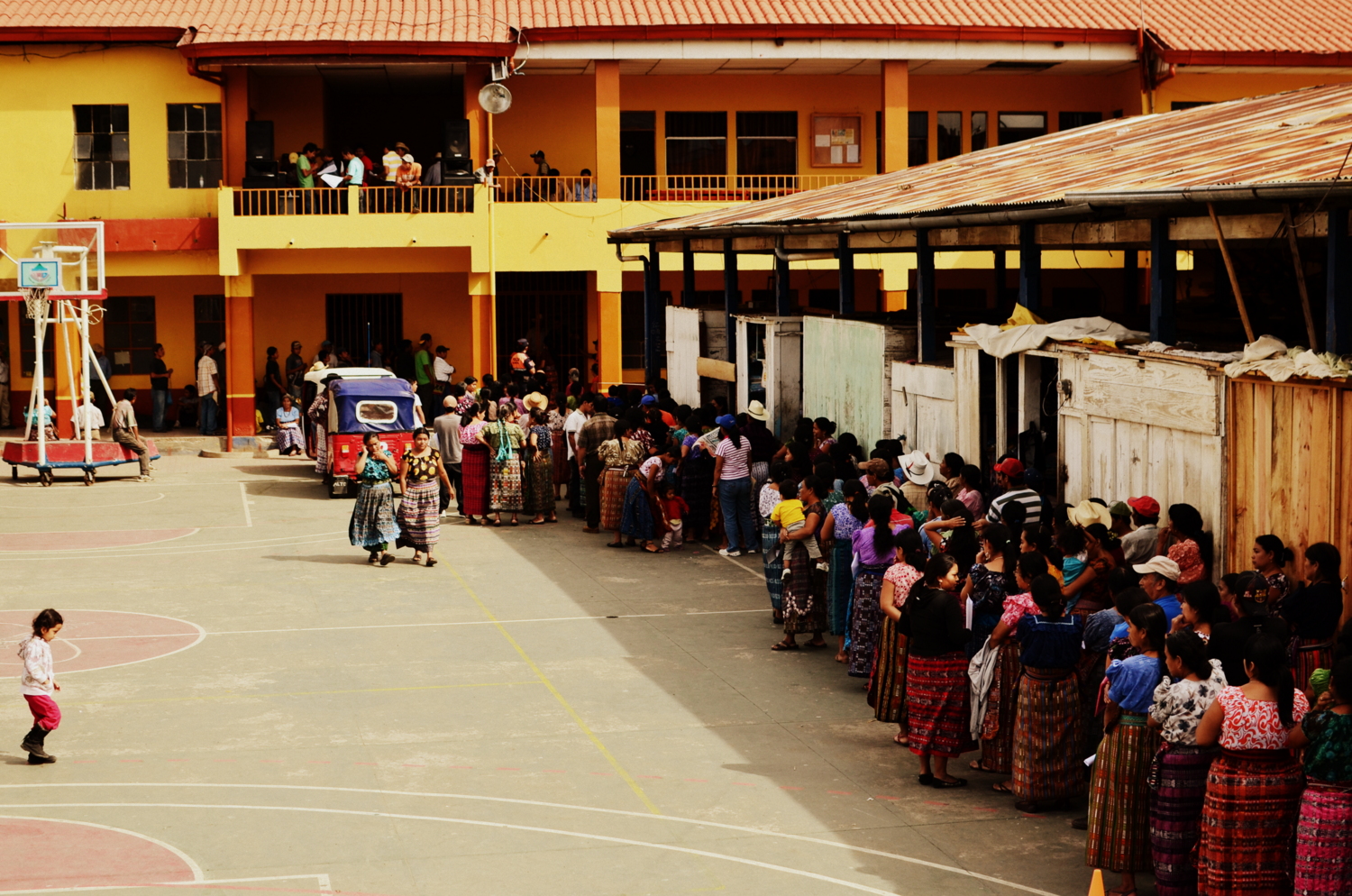

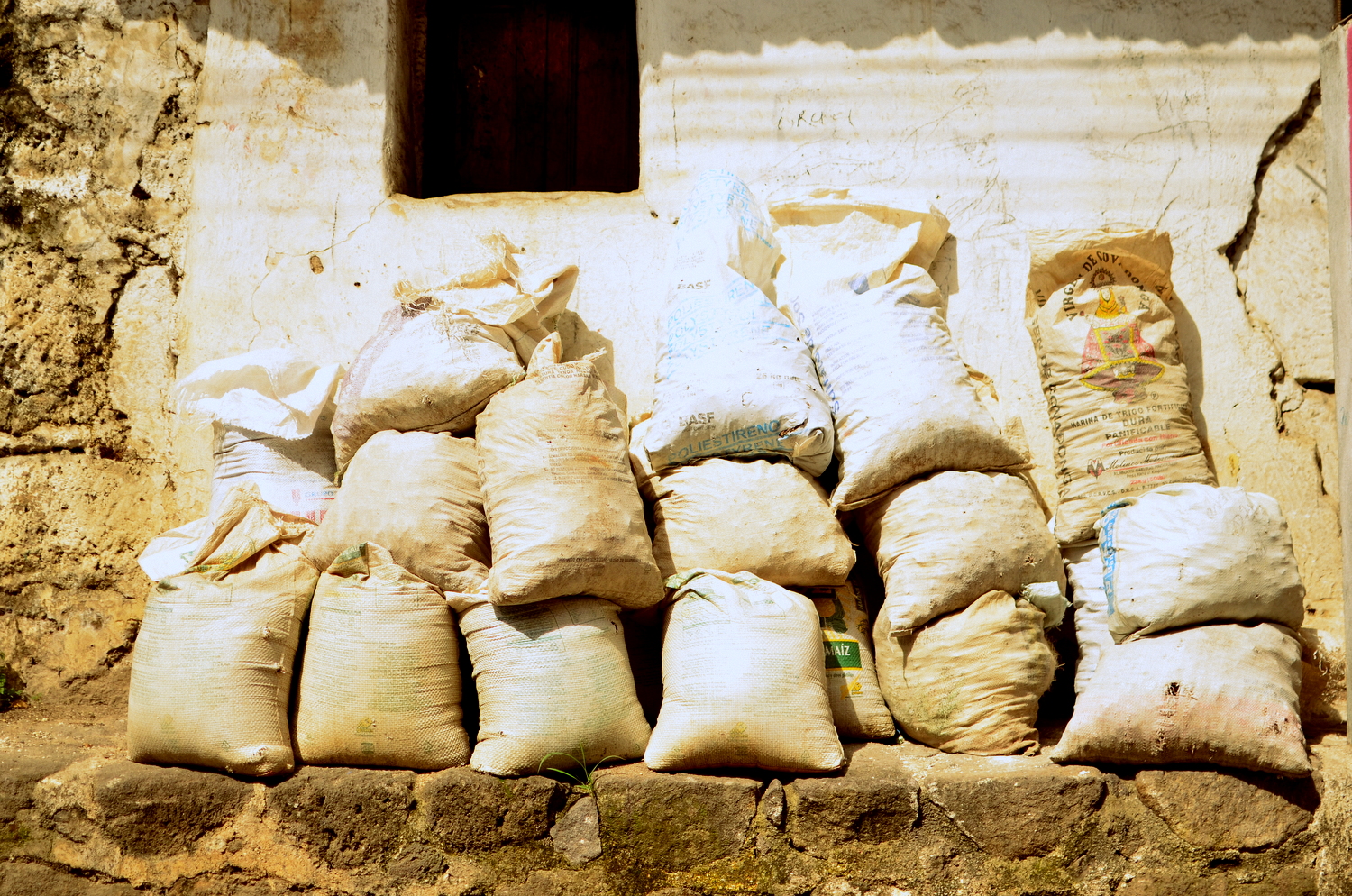


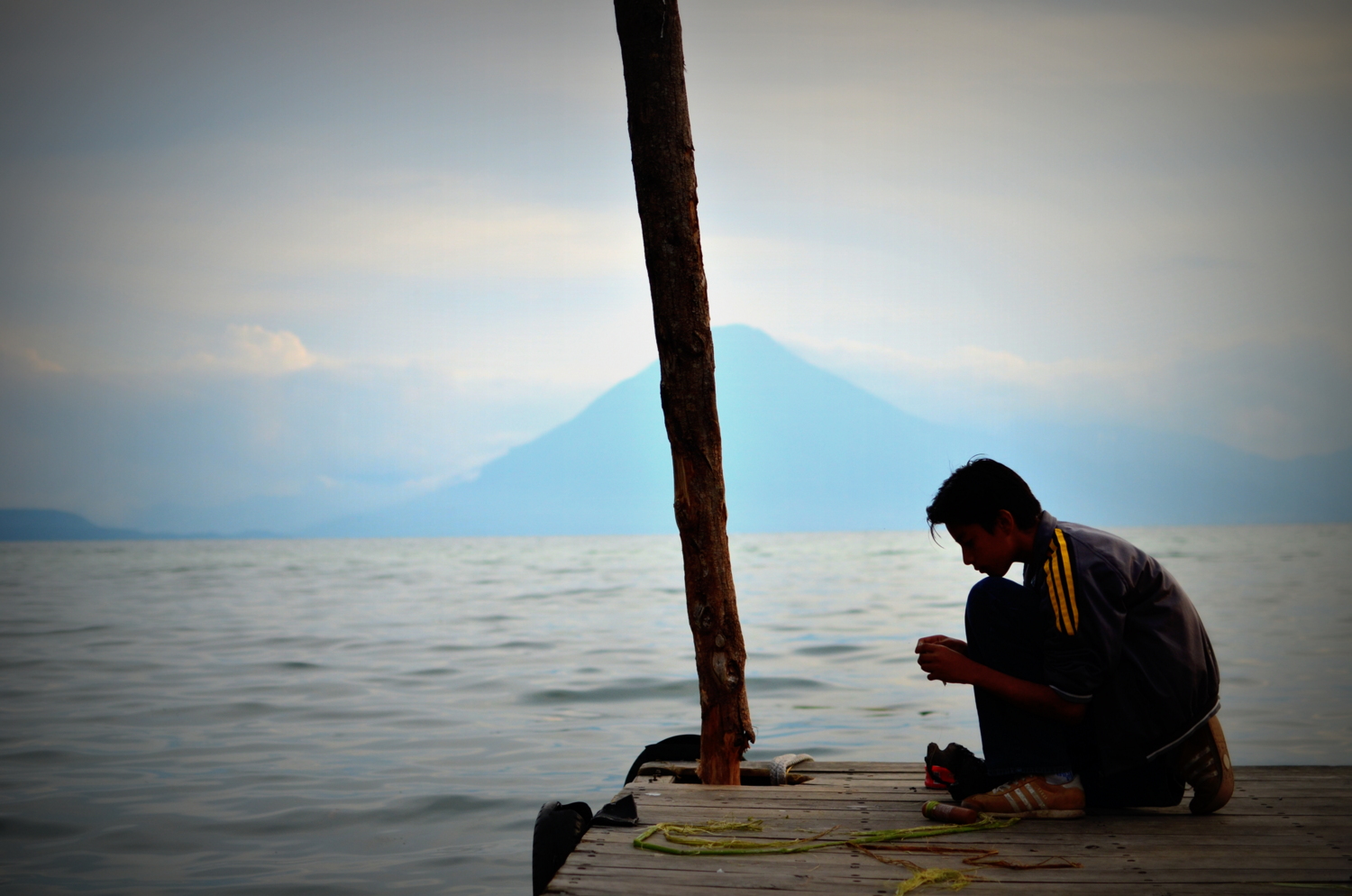
Gigantic volcanoes began rising from the earth as we encroached on the lake. When the road began descending down into the crater our crammed van began switch-backing the seriously steep entrance, affording chance views of the enormous body of water that is Lake Atitlan. My window side view looking over the edge of the asphalt was not for the faint of heart. There was no more than worn guardrails offering protection from certain death on the opposite side of the road’s extremities. We entered several rough-and-tumble Mayan villages prior to San Pedro. We sat wide eyed behind the looking glass watching the lives of indigenous locals in these smoke filled cobble roads. When we entered San Pedro we were in the middle of an ex-pat lakeside village filled with bars, hostels, hotels, and restaurants. After a 10 minute walk we had found our destination and the main reason for our tenure: the Cooperativa Spanish school of San Pedro. 20 minutes later we were at Rosa’s casa getting settled into our Mayan family home stay for the week.
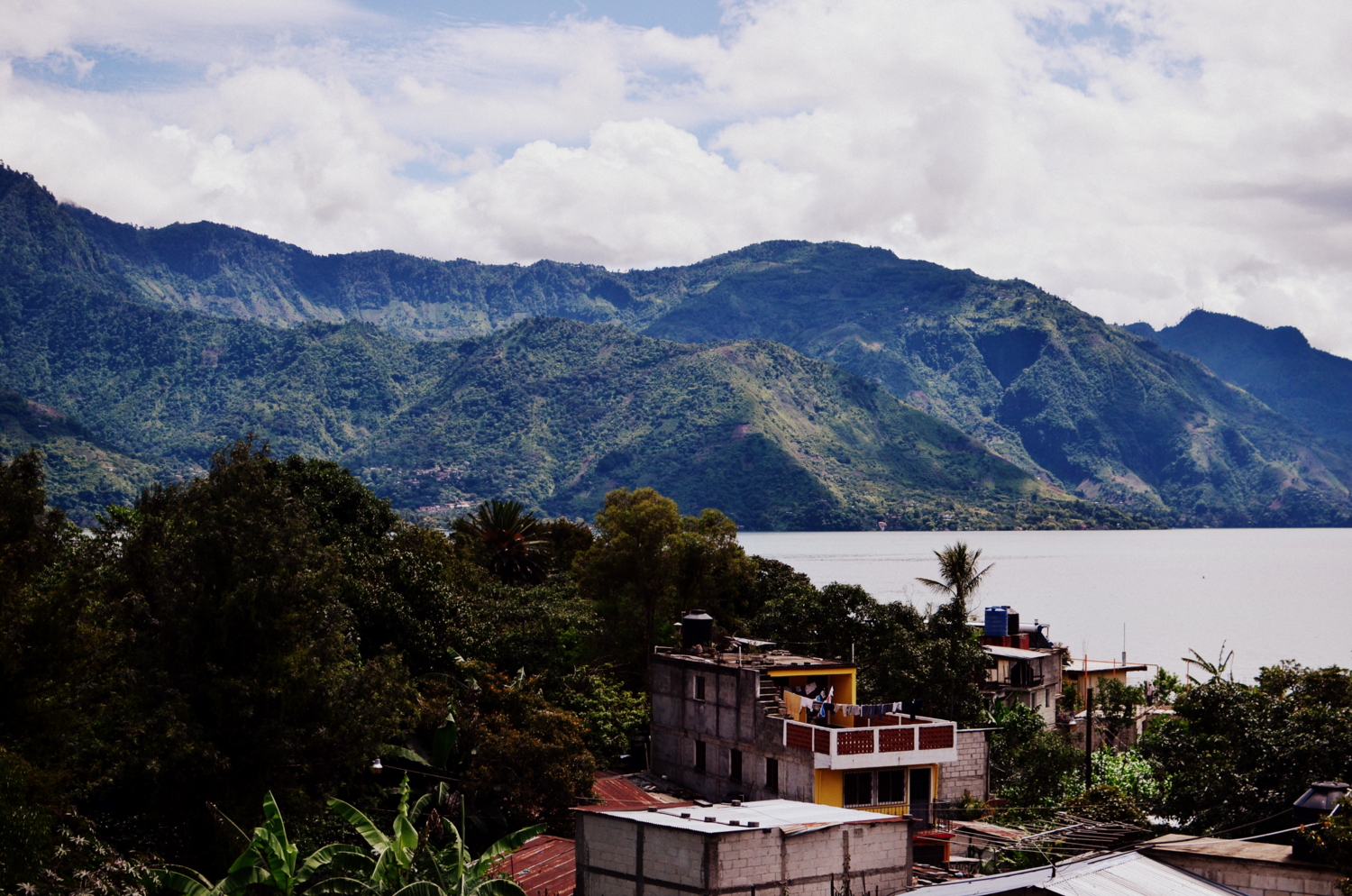


Rosa’s family instantly stole our hearts. Rosa was a short, weathered, hard working Mayan woman who established a relationship with the Spanish school to provide food and housing for home stay students. Every morning at 8 am she would make her daily trip to the market to buy the necessary food items for the day’s meal. We were very fortunate to have our home stay here as she was an excellent cook and a very friendly, warm human. She prepared fresh tortillas daily to serve with a simplistically delicious mix of rice, beans, eggs, fruit, pancakes, some meat, and lots of veggies. All of her meals were cooked using a wood burning stove. Domingo, the father, worked up in the volcanic hillside cultivating beans, corn, and coffee. His pay was the fruits of his labor, getting portions of each of the three crops harvested to use for food and bartering purposes. He was up and out the door around 5:30 every day, regardless of the weather, and appeared again late in the evening around supper time. They had three children, the youngest of which was 18, and a beautiful 1 year old granddaughter named Flor de Maria.




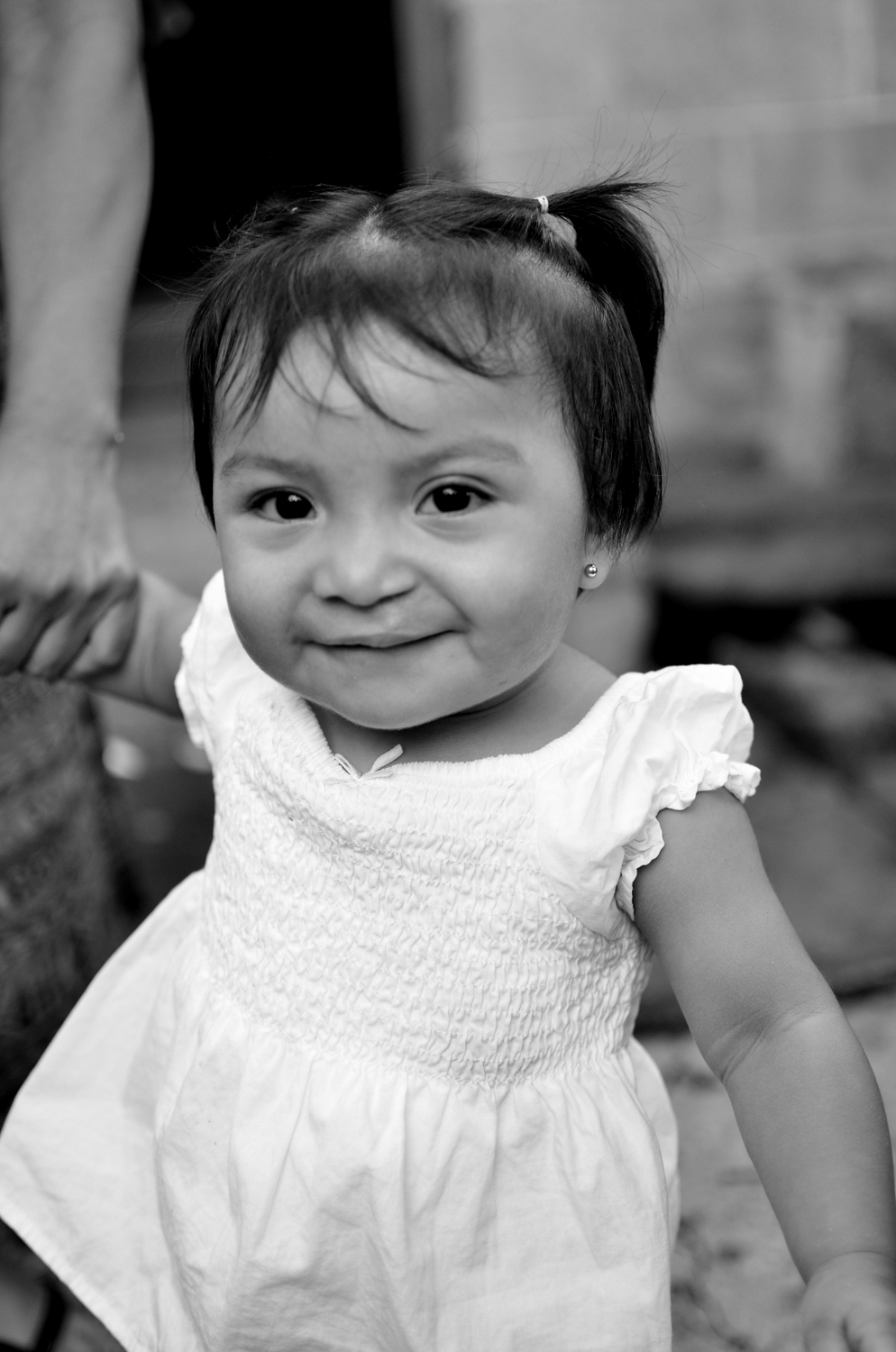
Flor was the daughter of Sebastien and Rosa’s daughter-in-law Andrea. Flor literally learned how to walk before her eyes, needing guidance and helping hands with each little step when we first arrived before graduating to full on stumbling around, kicking cans, and general exploration of a new world of opportunities. Andrea couldn’t have been more proud of her daughter. She spent her days helping with house chores of cleaning dishes, tidying up, and hand washing the family’s laundry. Spanish was practiced at all times during our visit for the complete language immersion experience and the conversations with Andrea were always pleasantly genuine.
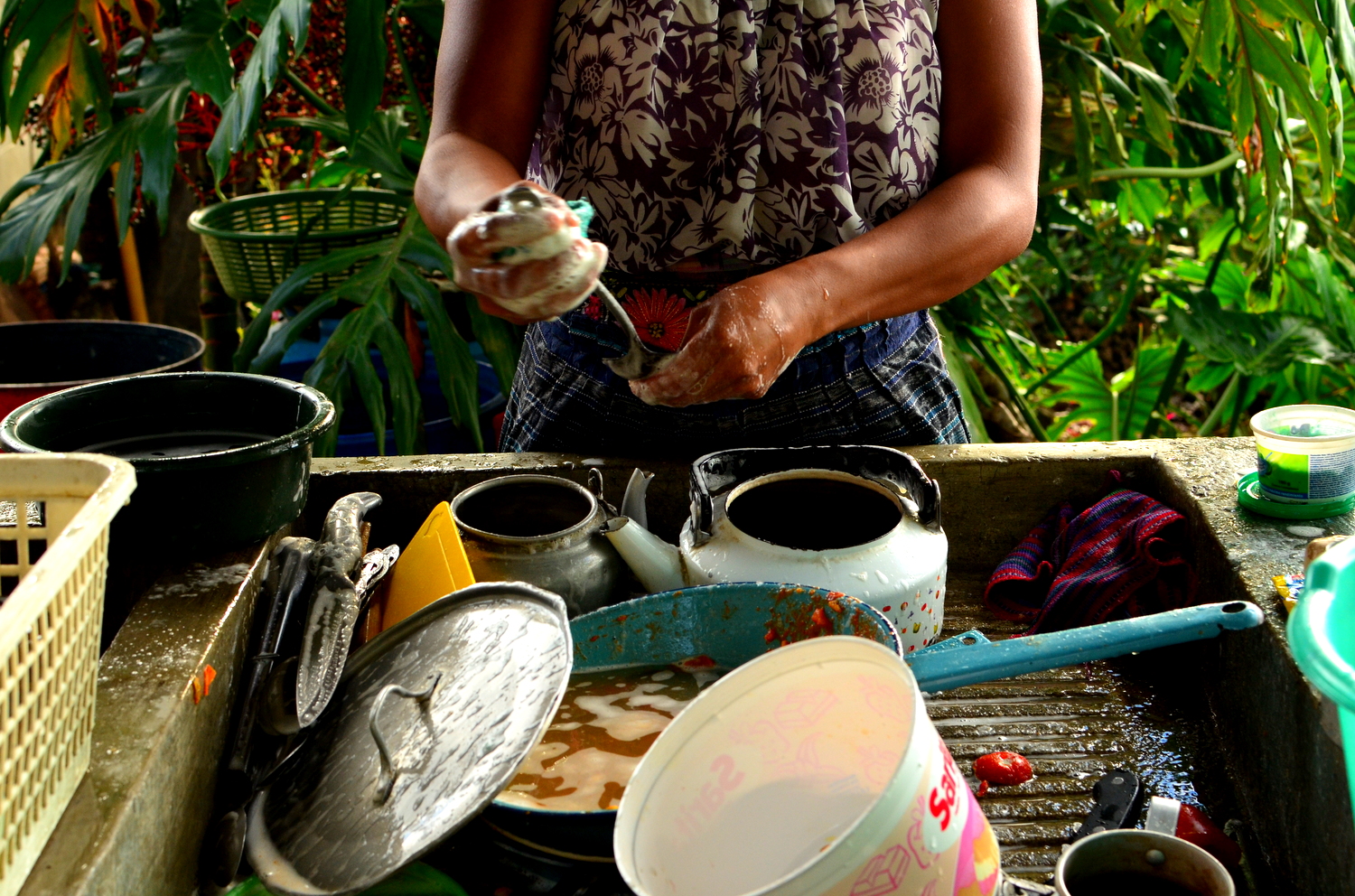
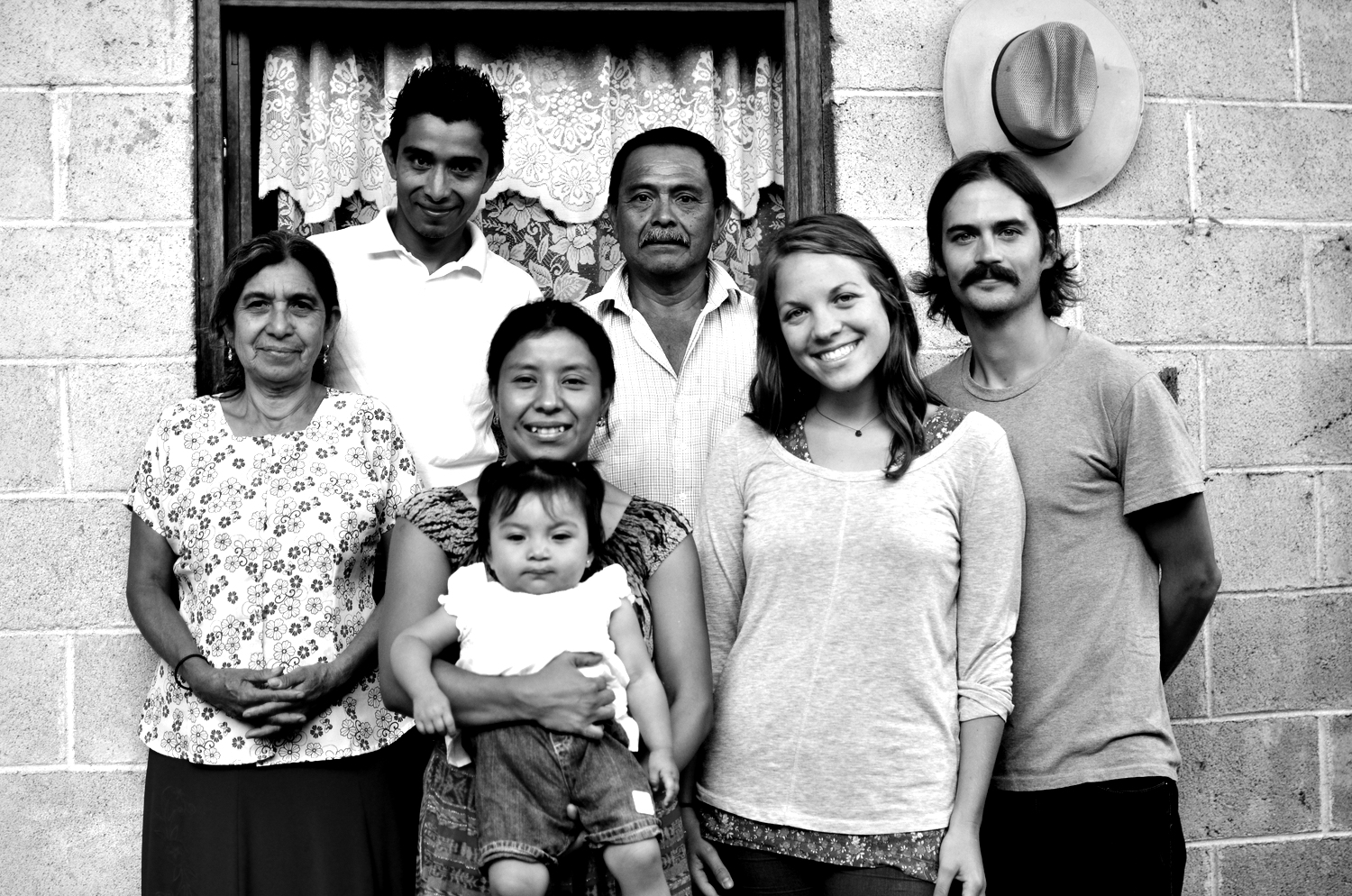
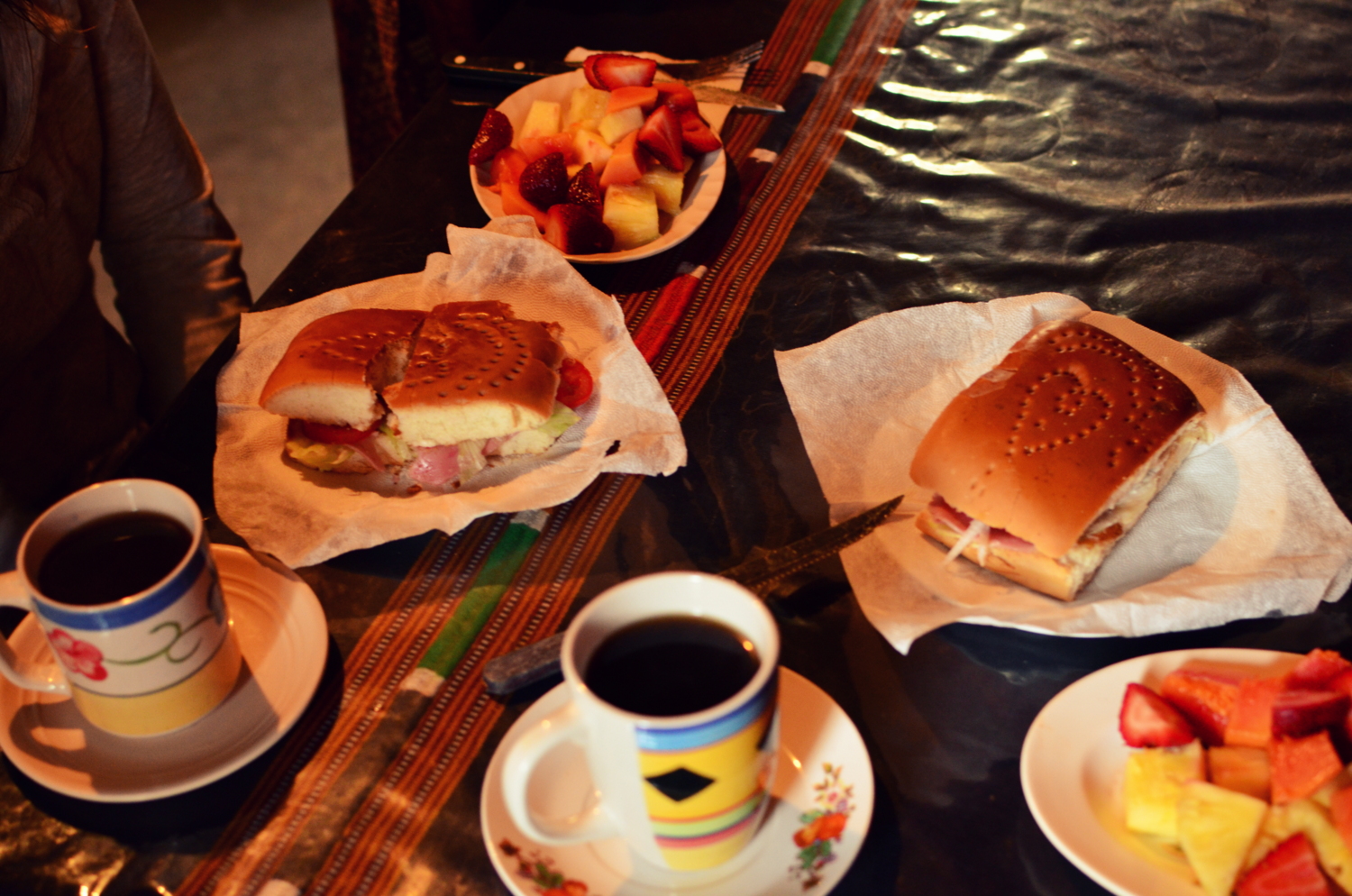

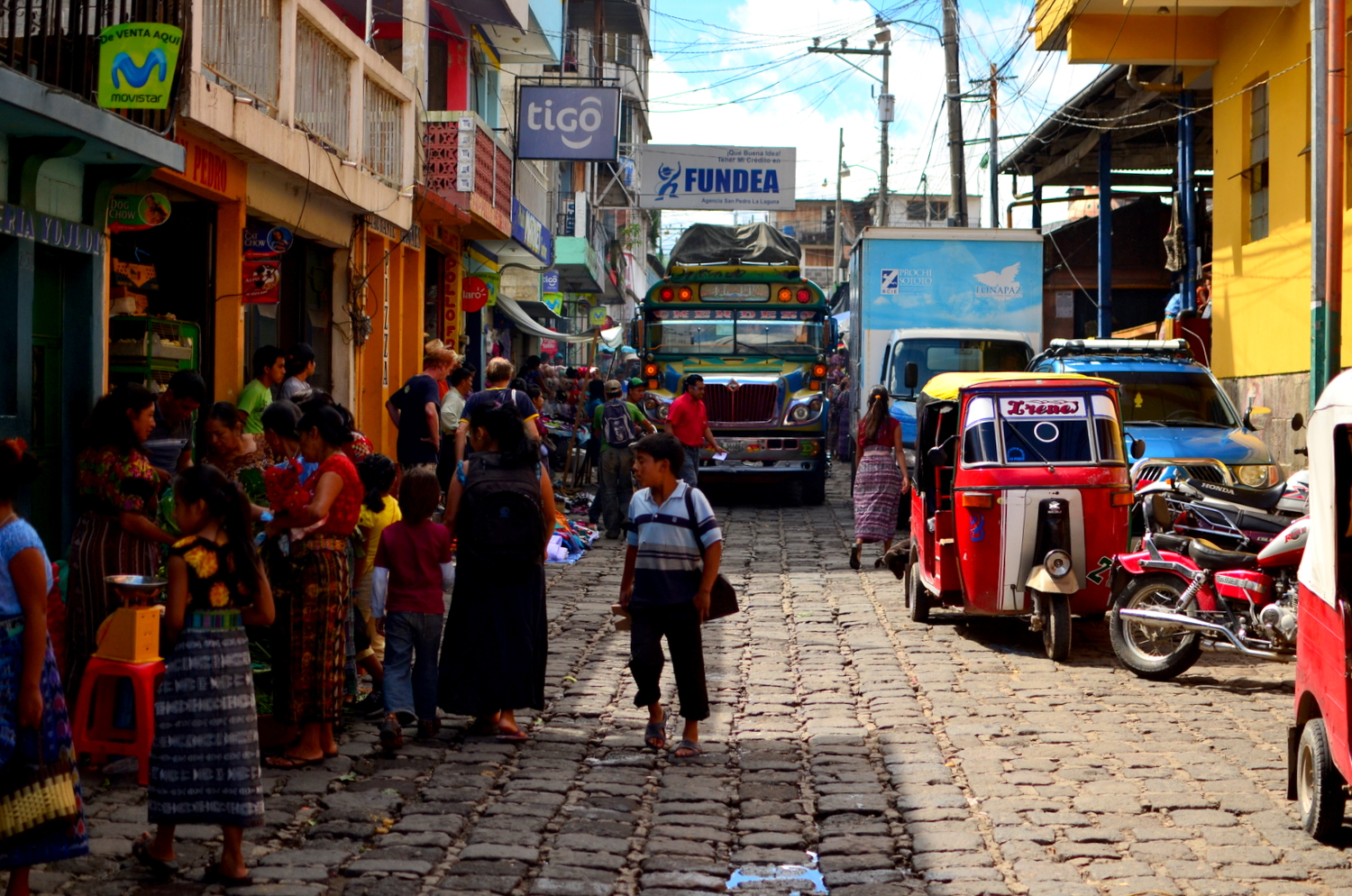
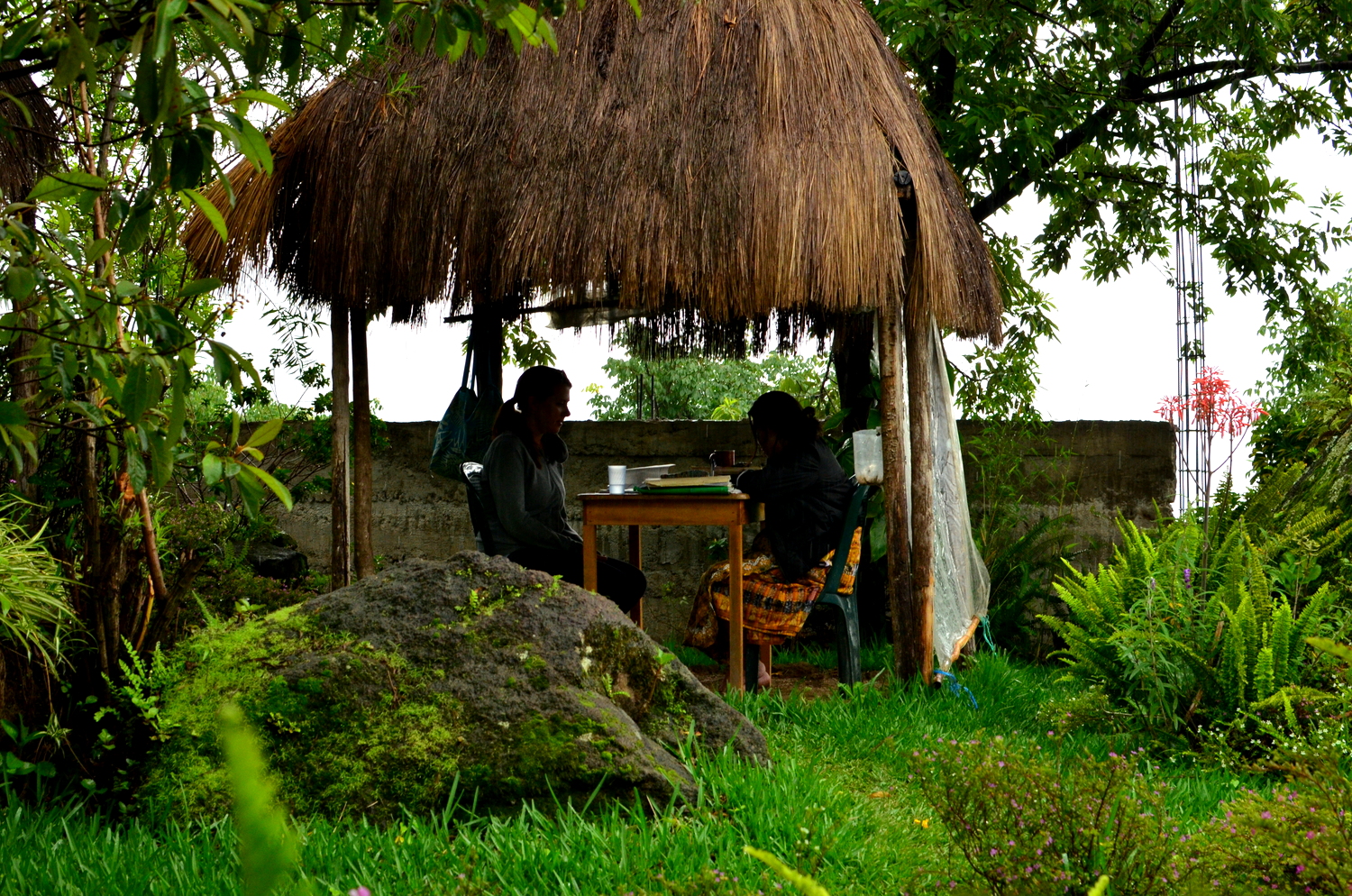
The Cooperativa de San Pedro was built into the hillside offering gorgeously distracting views of the lake. Our one-on-one classes were spent under mini thatched roof huts equipped with rain flaps and a light. Being a cooperativa, all teachers were payed fair wages by the school making it much more appealing than a purely for-profit organization. Classes were taught by Mayan men and women who learned Spanish as a second language and spoke very pure and clear. The pace and homework load depended solely on you and your teacher. After school activities offered us a movie about a Guatemalan protest that stopped a strip mine and a conferencia about the Guatemalan genocide during the 80’s. Further discussions with our teachers shed light on the indigenous culture in respect to the problems they encountered with the government. Our travels are constantly exposing a lot of US involvement with Latin American governments, specifically concerning communistic fears with indigenous populations in Guatemala. Our casa’s father, Domingo, lost his only brother during the genocide and has that painful memory burned into his mind forever.
We usually tend to get deeper into what life is like in such unique, simple villages and easily became aware of how tightly knit this little family town was. The entire village knew each other and was very involved in church, holidays, birthdays, and fiestas. It was refreshing to see the impact that the preservation of family traditions had on this culture and community. It was unheard of for families to break apart and children were always celebrated as one of the best joys of life. During our stay news broke that a Guatemalan girl from the village had died in California. That same day we saw a Mayan funeral procession going up the hill to the church in the city center mourning the death of this native villager. Women were dressed in their ornate, traditional dresses with scarves over their heads with their children and husbands carrying candles in the rain. They were all singing a slow, low song in remembrance accompanied by guitars and accordions matching the tune of their painful pace.
Tourism here is both a blessing and a curse. It brings in money to those that can capitalize on the influx, but it also twists the culture in ways that are not natural to the town. The lower tourist section is a bevy of attractive hostels, bars, cafes, restaurants, and tourism agencies and is almost completely segregated from the town itself. I’ve since spoken with travelers who didn’t even know there was an actual Mayan part of town just up the hill from the ex-pat center. Tourism in San Pedro has also brought drugs into this small town. Any walk around town has a younger crowd of Mayan teenagers offering you a wide array of hallucinogenics, narcotics, and pot. Conversations with other travelers confirmed that drugs were readily attainable and cheap. My teacher at the cooperativa made sullen, honest comments about how younger adults resort to selling drugs because the money is better than other types of work available. A hotel owner died the previous year on a drug overdose, which is a world that these honest Mayan people would never know of if not for negative tourism. I saw this as a wedge that was creating a gap between the traditional family ties in a rapidly changing modern world. We choose to travel consciously knowing the impact our presence can have and wish that more would do the same.
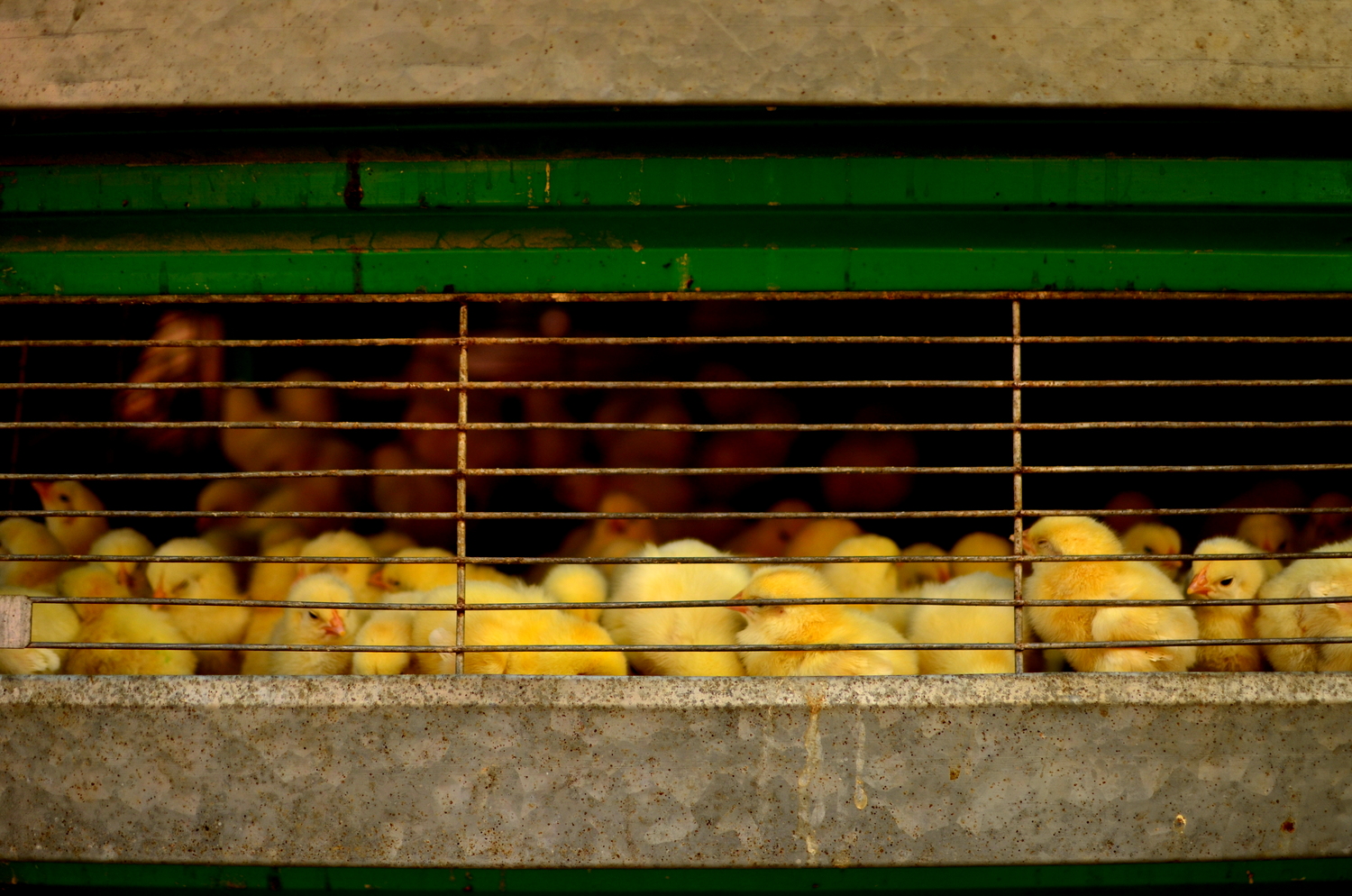

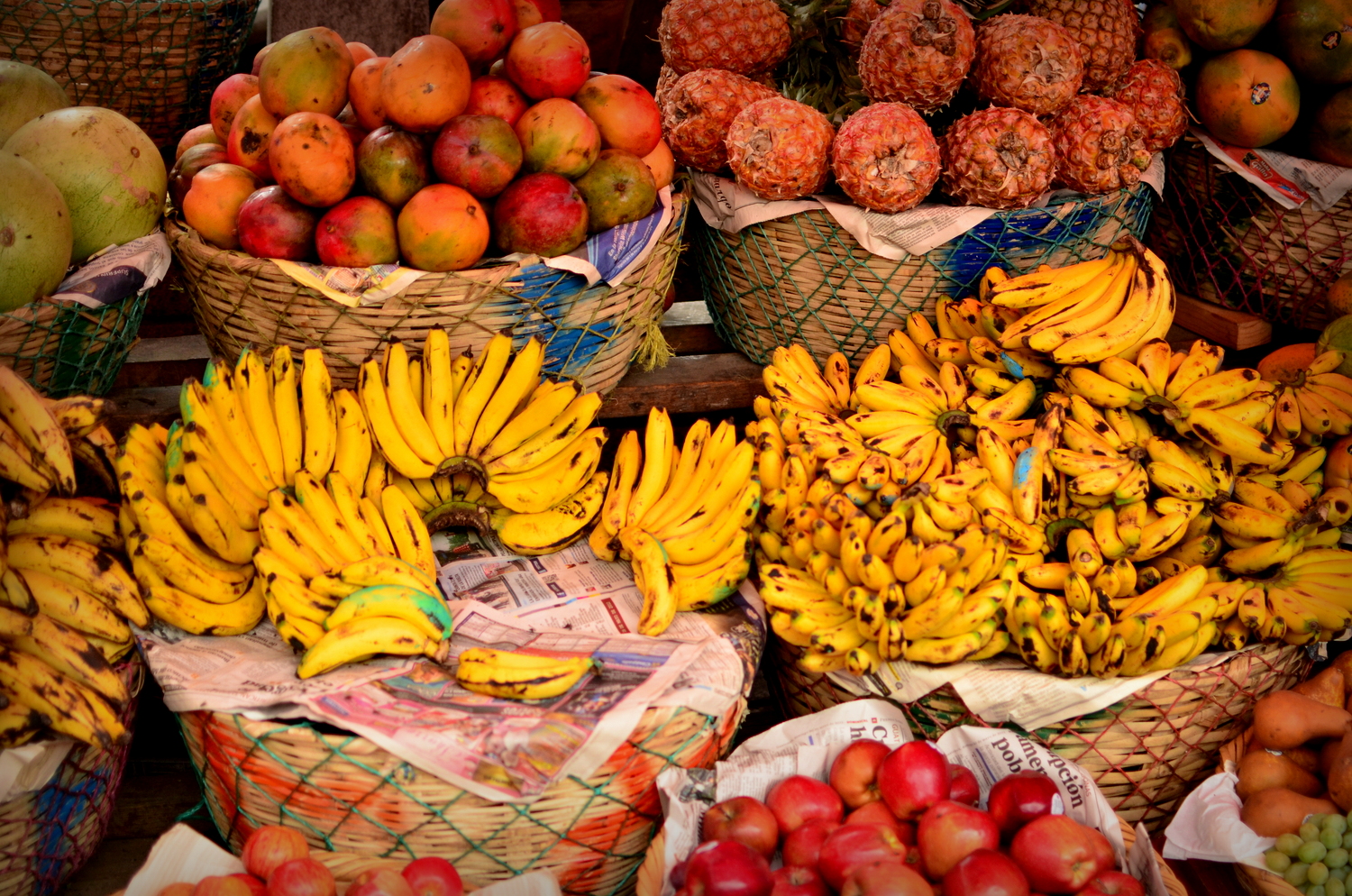
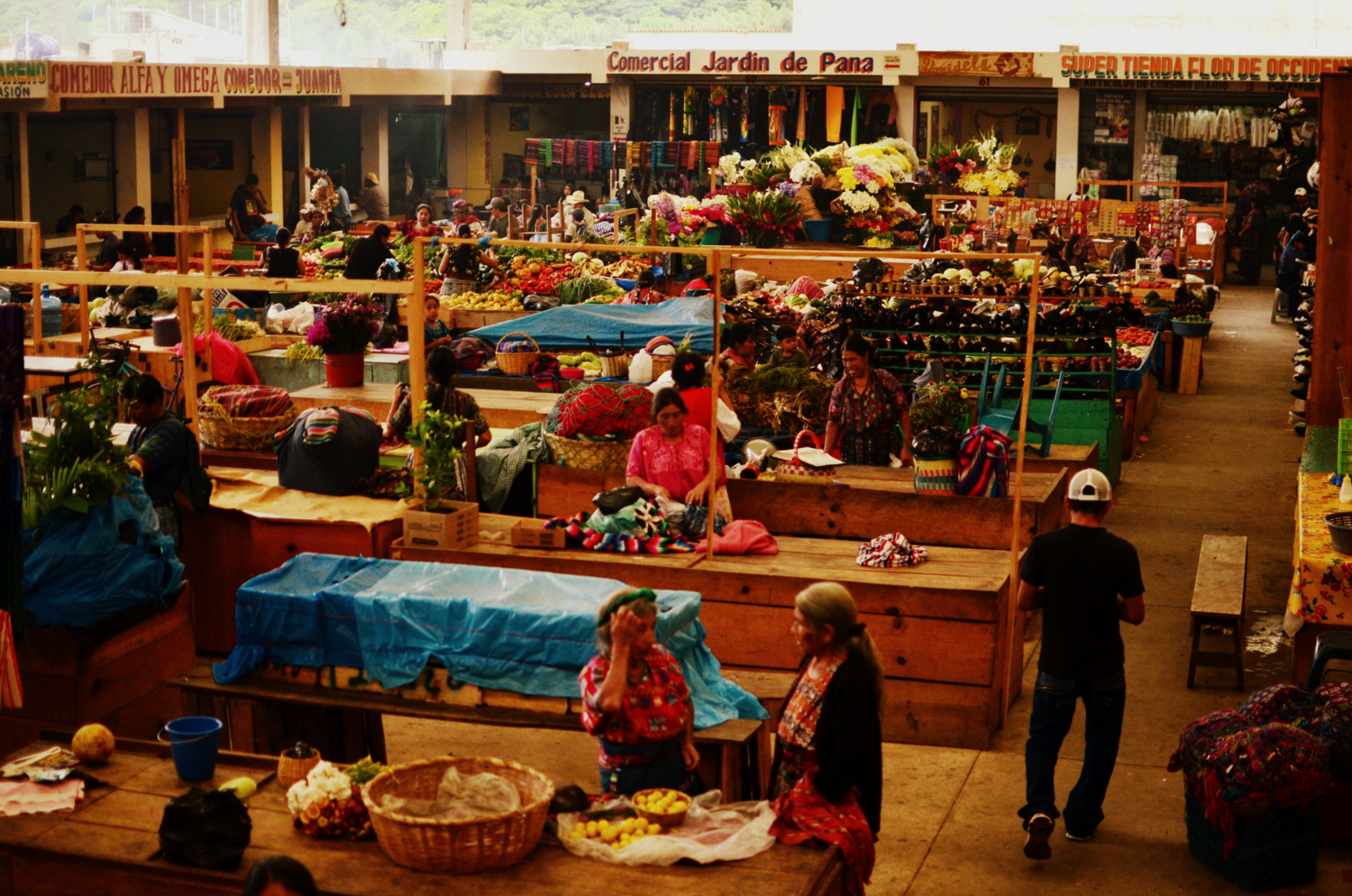


Our week at school came and went, and our stay with Rosa’s family also concluded, coincidentally, on Father’s day. For our parting gift to our Mayan family we wanted to give them useful things that would actually help out in life. We left a care package including new clothespins (they had been tying clothes on the lines to dry in the sun), a butane grill lighter for their in-house wood fired stove, chocolates, flashlights, and a card thanking them for everything. During our first supper there I noticed that their kitchen was devoid of family photos. At the end of the week we asked if they were interested in a portraiture session. Rosa said she would love that because they didn’t even have a single photograph of Flor who was just over a year old. We set up a time one morning and shot away. The only place to print out large digital prints was in Panajachel, a larger city across the lake. We spent an afternoon taking a boat taxi, hunting down frames, and printing out their new memories. We were amazed by the quality of the prints and the amazingly touching moments that were captured of Rosa and her family. When we handed them the photos I heard “precioso” for the first time. It was around then when we came up with the idea for Penny Karma, a small micro-donation page set up to help pay for Flor’s additional cleft-palate surgeries that were tormenting the family. Over the course of July we raised approximately 200$ that we are sending through a teacher at the cooperativa to give to the family.
If you like what we are doing and want to help keep our virtual piggy bank going then you are only a few clicks away from spreading some good karma.

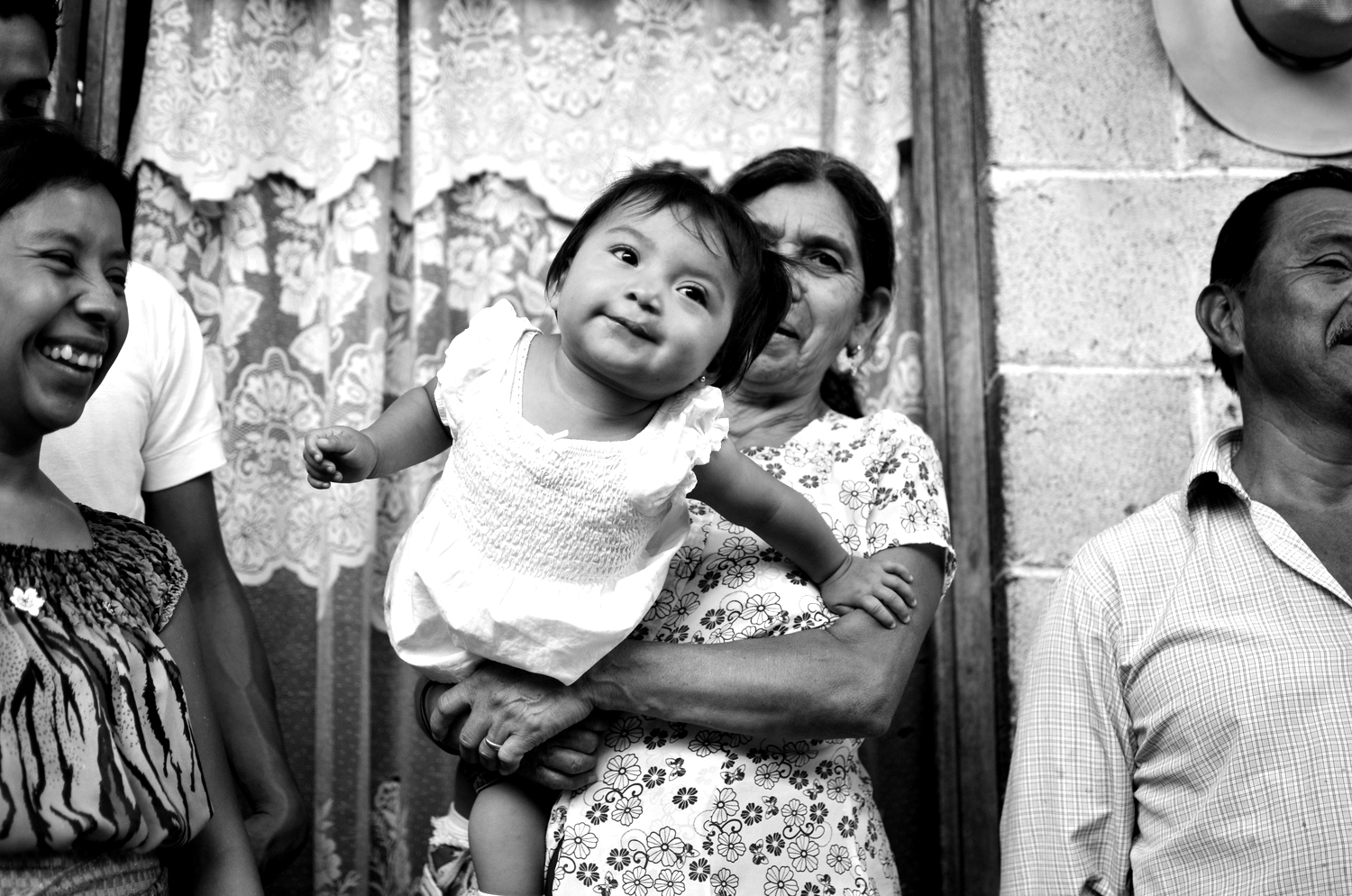

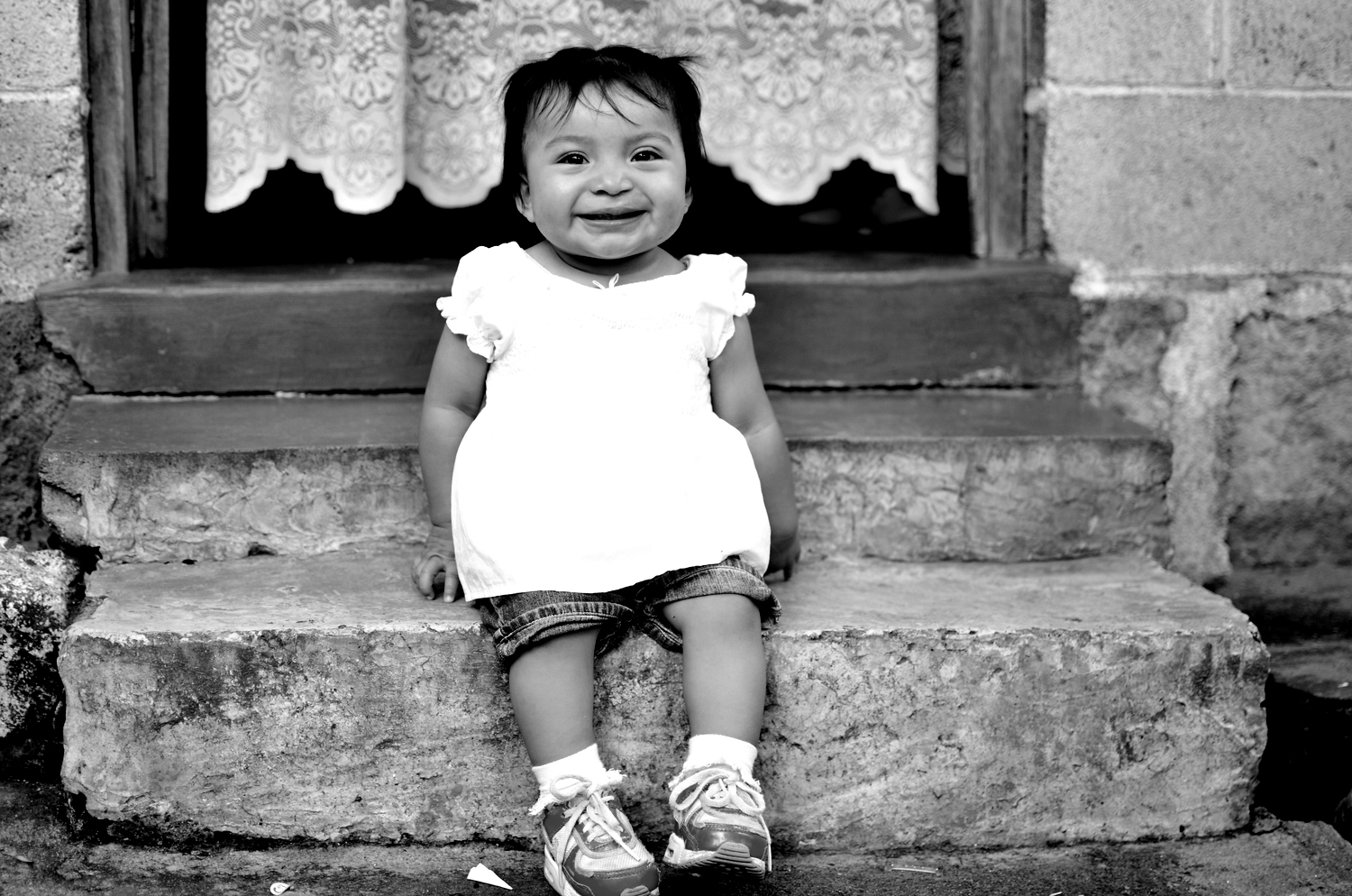

Below is an excerpt I wrote one morning in San Pedro. It might be obvious that I was in love with the experience in this Mayan village.
Rain is falling at an unprecedented rate outside, pummeling the aluminum roofing of our little Mayan abode in San Pedro while I gather my thoughts about life in this wonderful little Guatemalan bubble. I’m learning more and more that the trick to writing while in a location is to lightly touch the delicate microcosm before it pops in your hand, wiping out the important flavors that your tongue can only appreciate while in direct contact with the food itself. Details are best described while still looking at the bubble, watching the colors swirl around the world in your hand and seeing the people, the land, the air itself all while completely immersed inside of its churning gears.

Everything appears more clearly while writing in moment. The sweets taste sweeter and the rain feels like it has always been, the same rain that has passed over the pores of the dozens of generations before you. Its the same sweet water that brings life to the land while the land gives back life in return. Holy rain. Rain clouds have been looming around San Pedro on and off all week and tend to float in daily and then stick around like a bad mood until they finally can’t let out any more deliciously cool drops. When the rain finally does stop I’ve never seen greener greens in the trees and plants of this unprecedentedly deep volcanic laden lake. I’ve never seen skies bluer than when the clouds disperse mid morning. I’ve never tasted crisp, cooler air than when heavy rains roll in, stopping all outdoor routines for the day. The rains produce torrents of water gliding on top of the over sized cobbles beneath your feet. These things are all a daily normalcy this time of year. Come October there won’t be a drop of water for months.
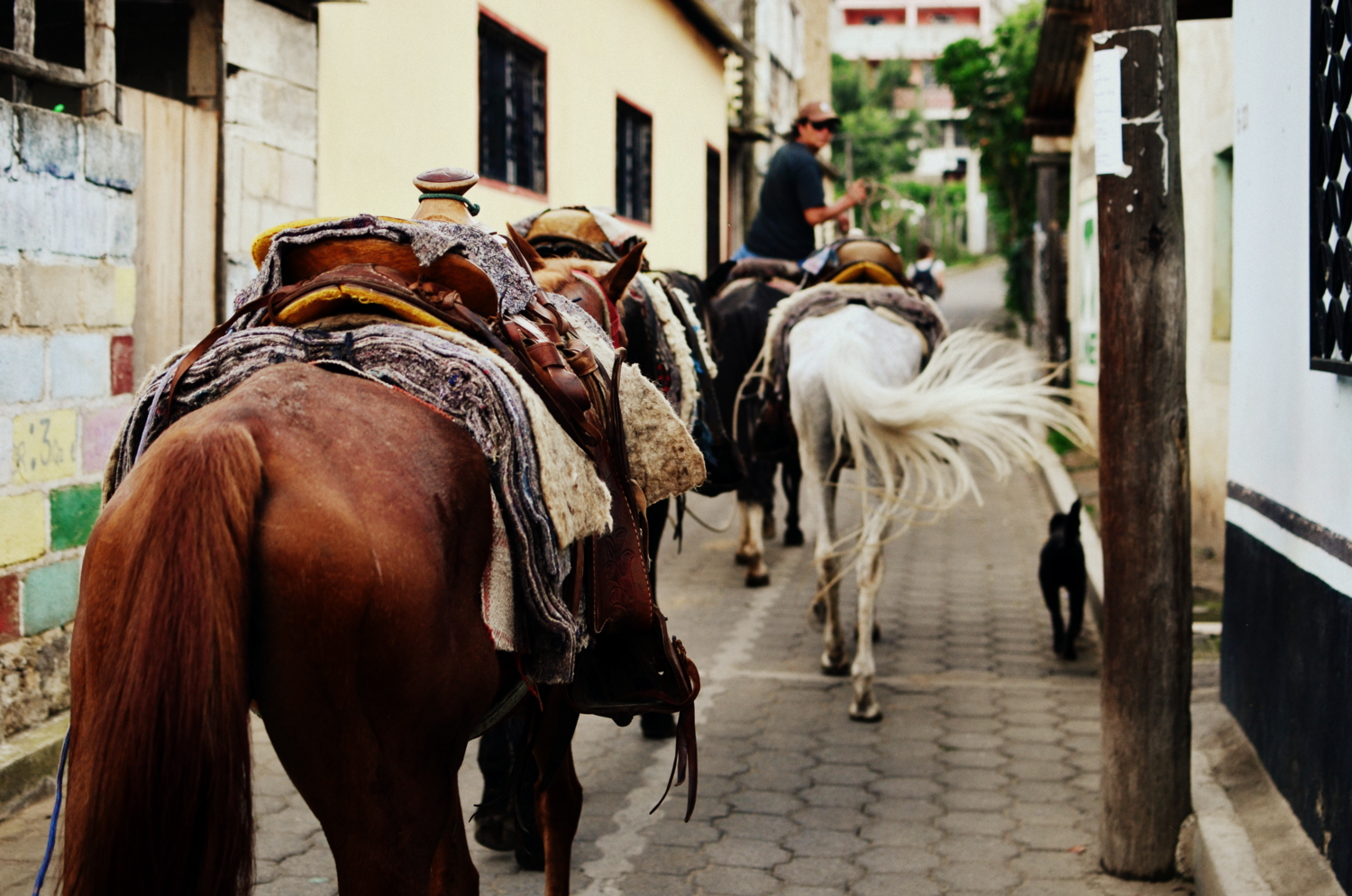
Life starts early in San Pedro. This small Mayan town greets the sun at around 5 AM but daily chores, routines, and rituals can start before the deepest lake in Central American can see it’s own reflection. During our stay it was not uncommon to hear the school’s marching band creating a pulse in this tiny hillside village with deep rhythmic percussion accompanied by horns at dawn. The smell of burning pine wafts throughout the village as families prepare food in their open wood burning stoves. From the roof top just about every house has smoke billowing out from little chimneys or even through the gaps between the aluminum metal roofing held down by cinder blocks, rocks, or other forms of stationary placeholders. Small woodworking shops cut through the smoky mountain air while dogs join in harmony barking out their concerns. Deafening cannon-like blasts shoot off randomly throughout each day as part of a ritual of some sort from sources unknown but always seemingly cerca. Birds weigh down the citrus and avocado trees hanging over the small yard of Rosa’s casa and chime in when the sun rises as well. Andrea begins washing clothes and dishes in the outdoor laundry station just before breakfast.
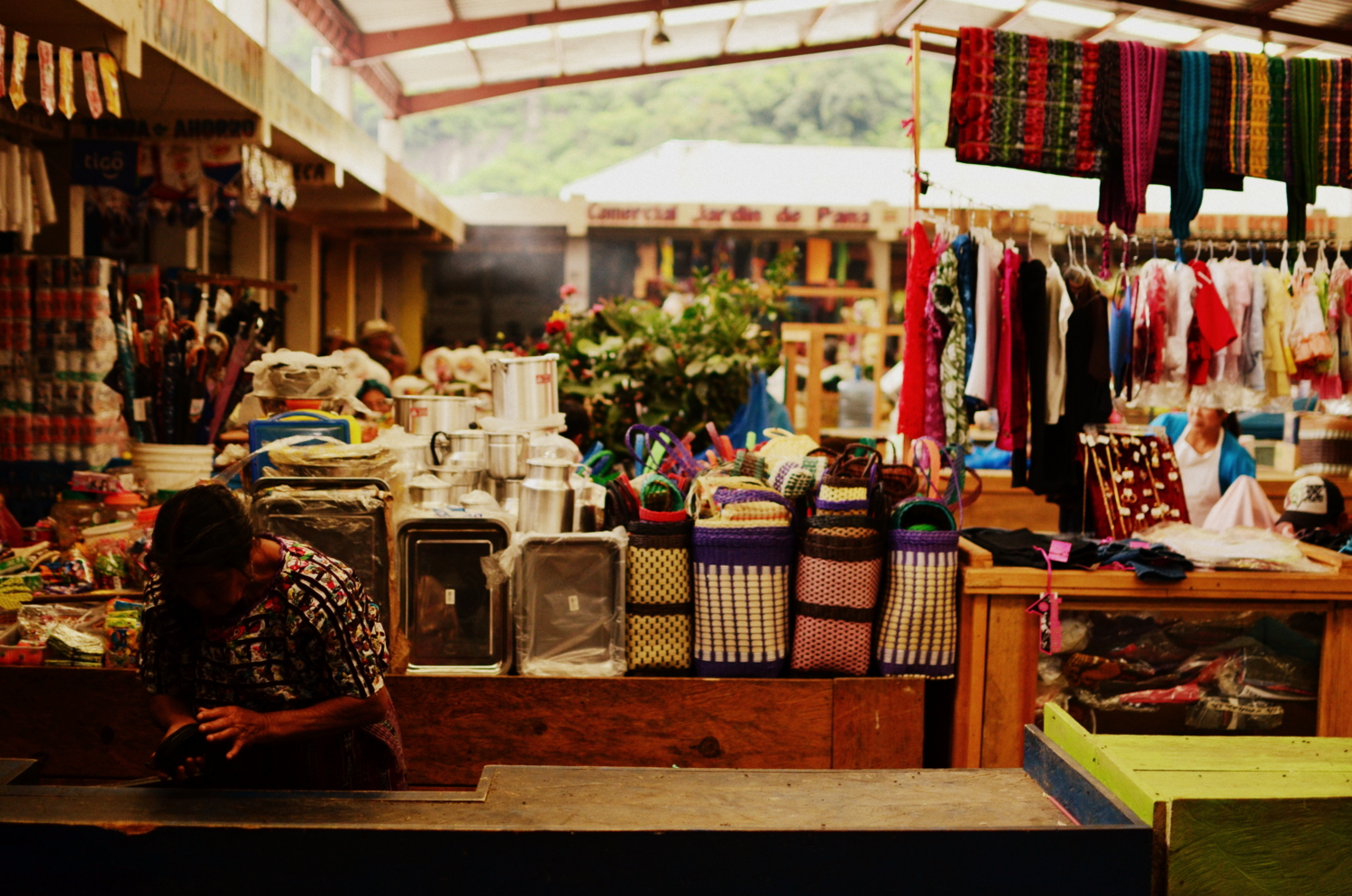
The clouds and fog hang over the lake every day and on great days disperses, letting iridescent light shine onto the deep, teal water. Small fishing boats bob around on the surface of this seemingly abyssal body of water as part of their everyday routines. Fresh, good coffee can be easily procured in this small hill town. Banana bread is never that far away from you when you walk through the more frequented paths. Fresh fruit, vegetables, poultry, woven fabrics, clothes, and household items can be found in the center of town at the mercado. Guatemalan’s taking a siesta during the day appear the small walking alleyways between houses.

I am in a land where tuk-tuks can be found humming down footpaths seemingly too small for their own dimensions. Mayan women dressed in beautiful, traditional clothing are accompanied by their tiny daughters dressed in the same. It was a refreshingly safe hideout where trouble could only possibly be around if you went looking for it, but the place was devoid any reasons to begin with. I’ve found myself right here, completely absorbed by a 5AM sunrise over looking the rooftops and onto the completely still lake. I think I could live in a place like this.

9 hours to Semuc Champey
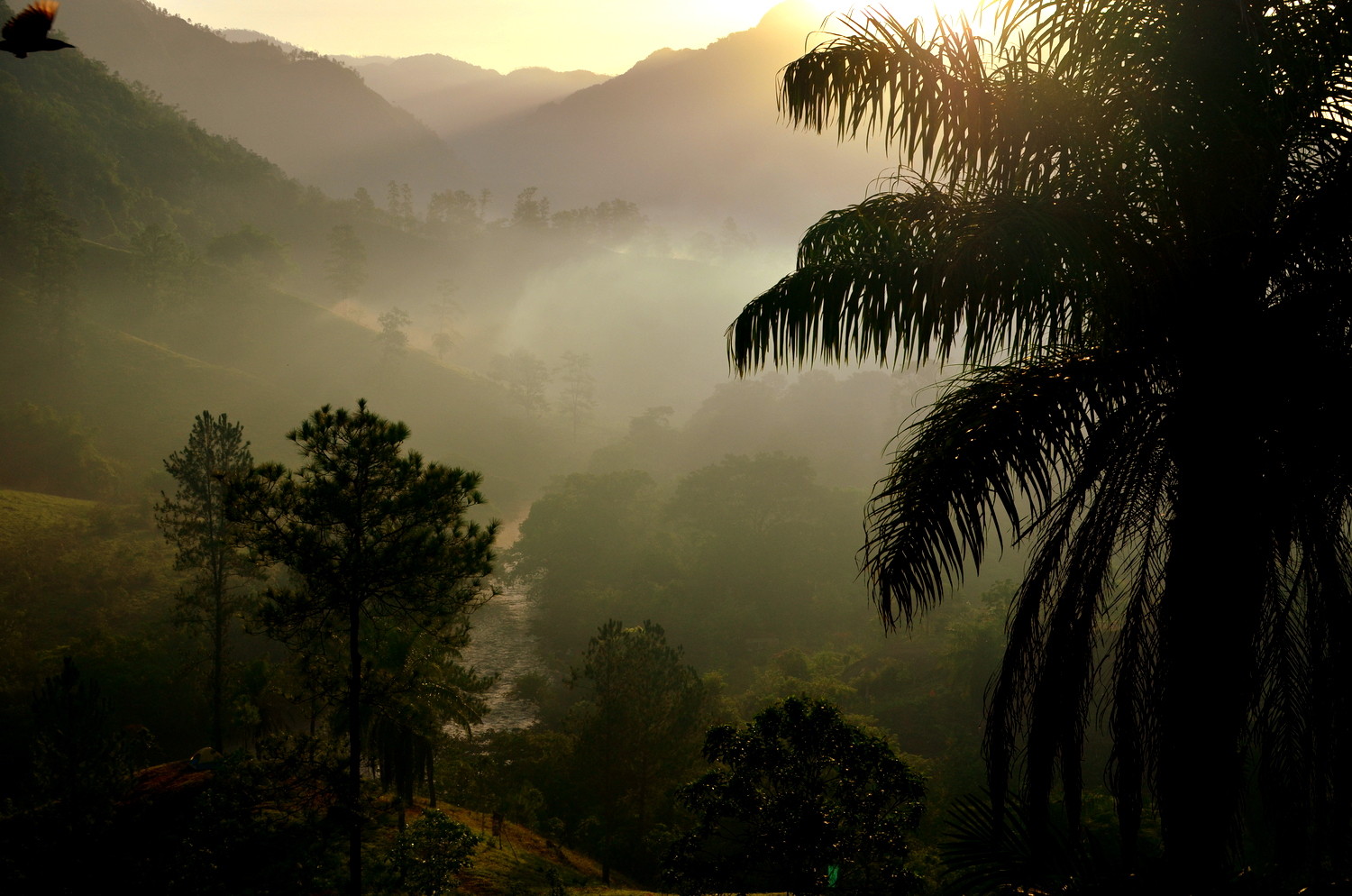
We left bright and early from our hostel in Flores at 6 AM, leaving behind the cobblestone streets of Flores with a big yawn. A shuttle van partnered up with all the hostels in town and picked up other weary backpackers before setting off. Luck was on our side for this 9 hour travel day because there were only 2 other people heading to Semuc. Booking shuttles through hostels can be a tricky situation in Guatemala because they all offer the exact same shuttle at different levels of prices, depending on how big of a commission they include for their booking. It’s normally best to walk directly to an agency and book a trip but in our case the hostel somehow offered the best price. We set off on our hot, sweaty trip with a Canadian neighbor to the north and another man from Holland, chit chatting about travel while miles of flat corn fields held their ground. Tiny bustling ramshackle villages would suddenly appear out of no where in front of our 20 year old banged up shuttle bus. Our van would stop weaving around cows and horses in the country side and start parting a sea of Guatemalans in the midst of their routine morning markets. Food, clothes, bags, belts, animals, and tools were all being sold and traded while our white metallic can would slowly pass eyes momentarily transfixed on us. At the edge of these rusted aluminum roof congregations the land would open up once again to vast open fields. Streams passed along the way were occupied by families washing laundry by hand in the muddy moving waters. It was amazing to see their white dresses and shirts were somehow cleaner than mine giving the circumstances.
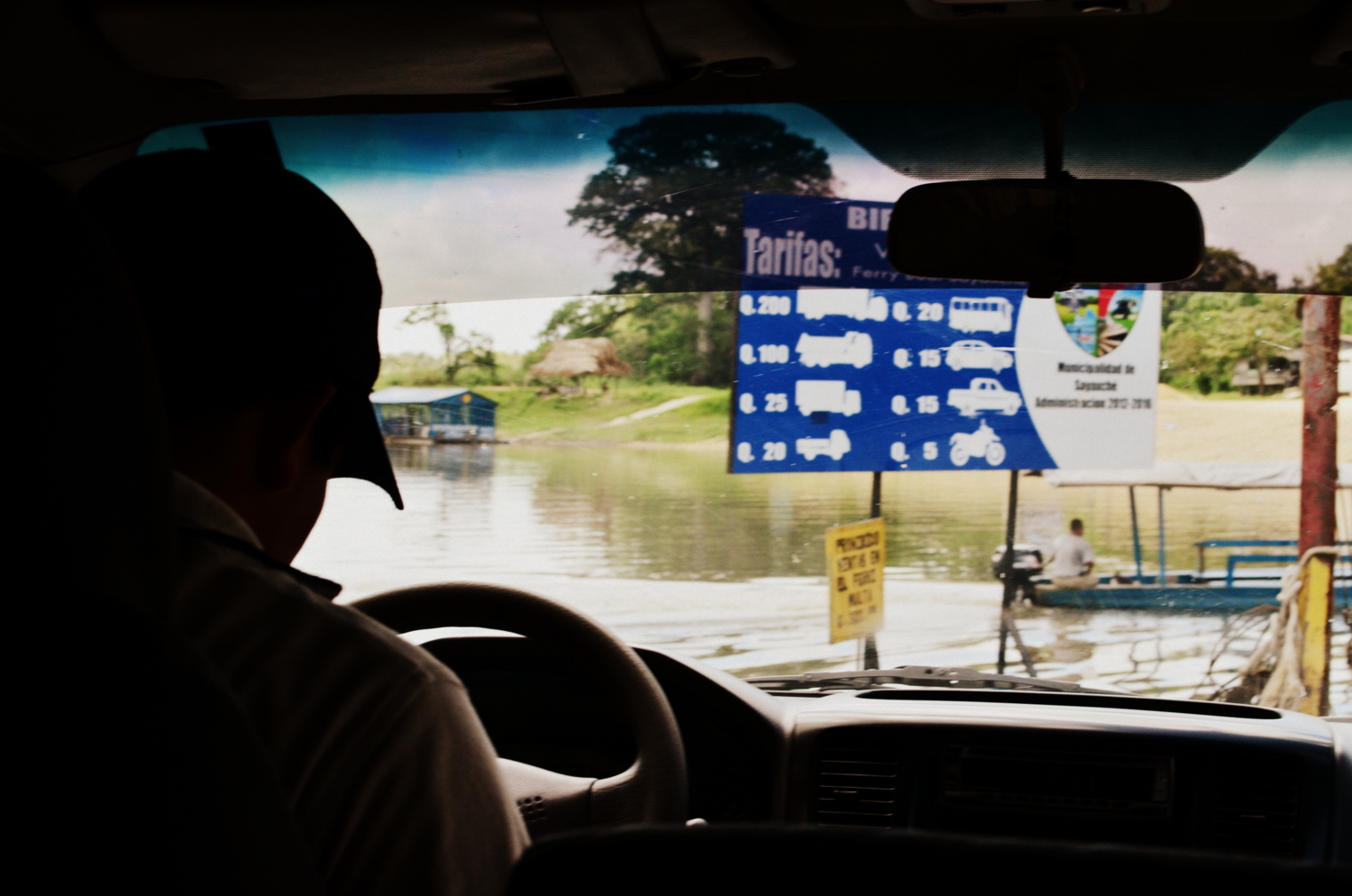
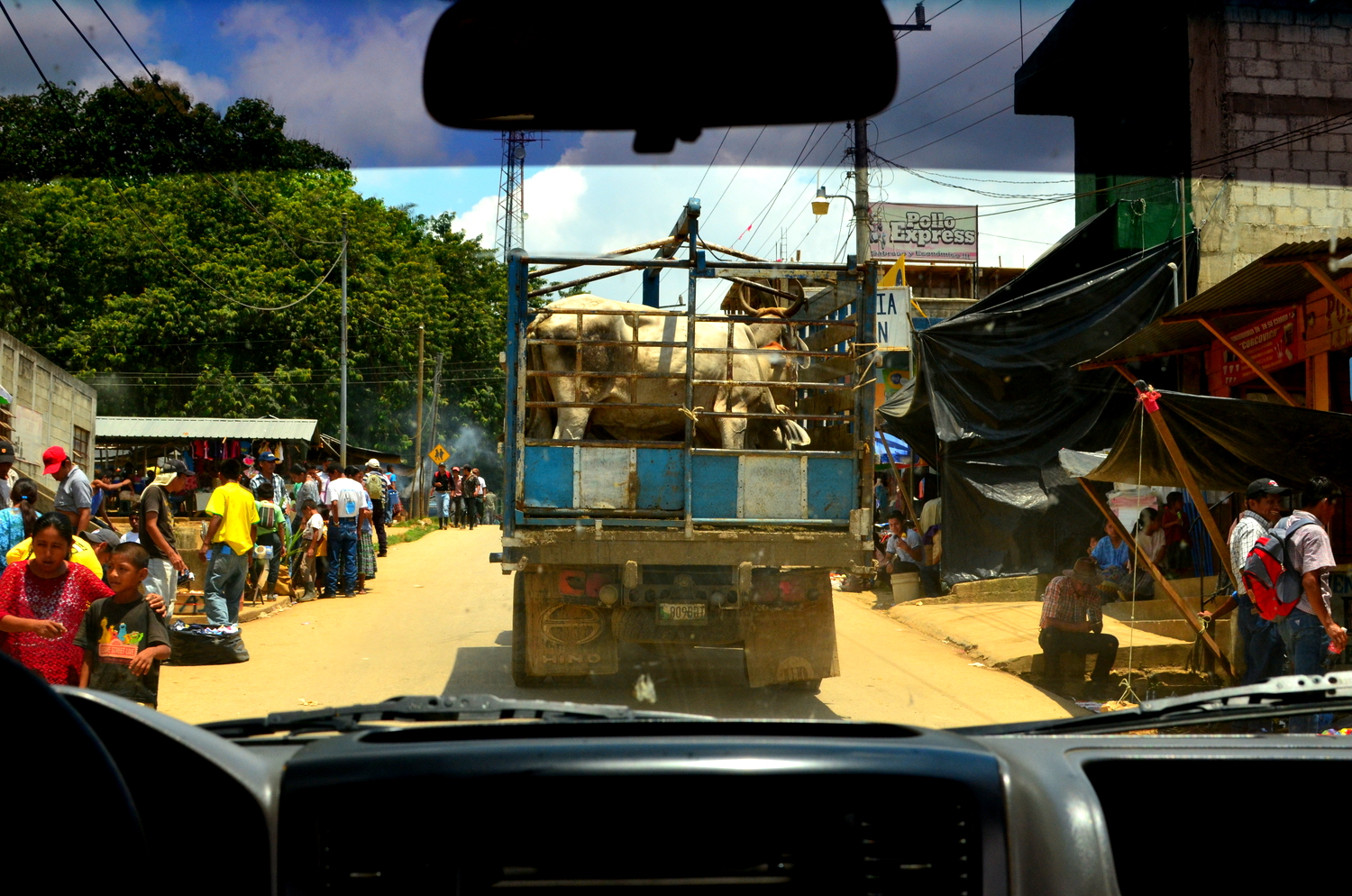
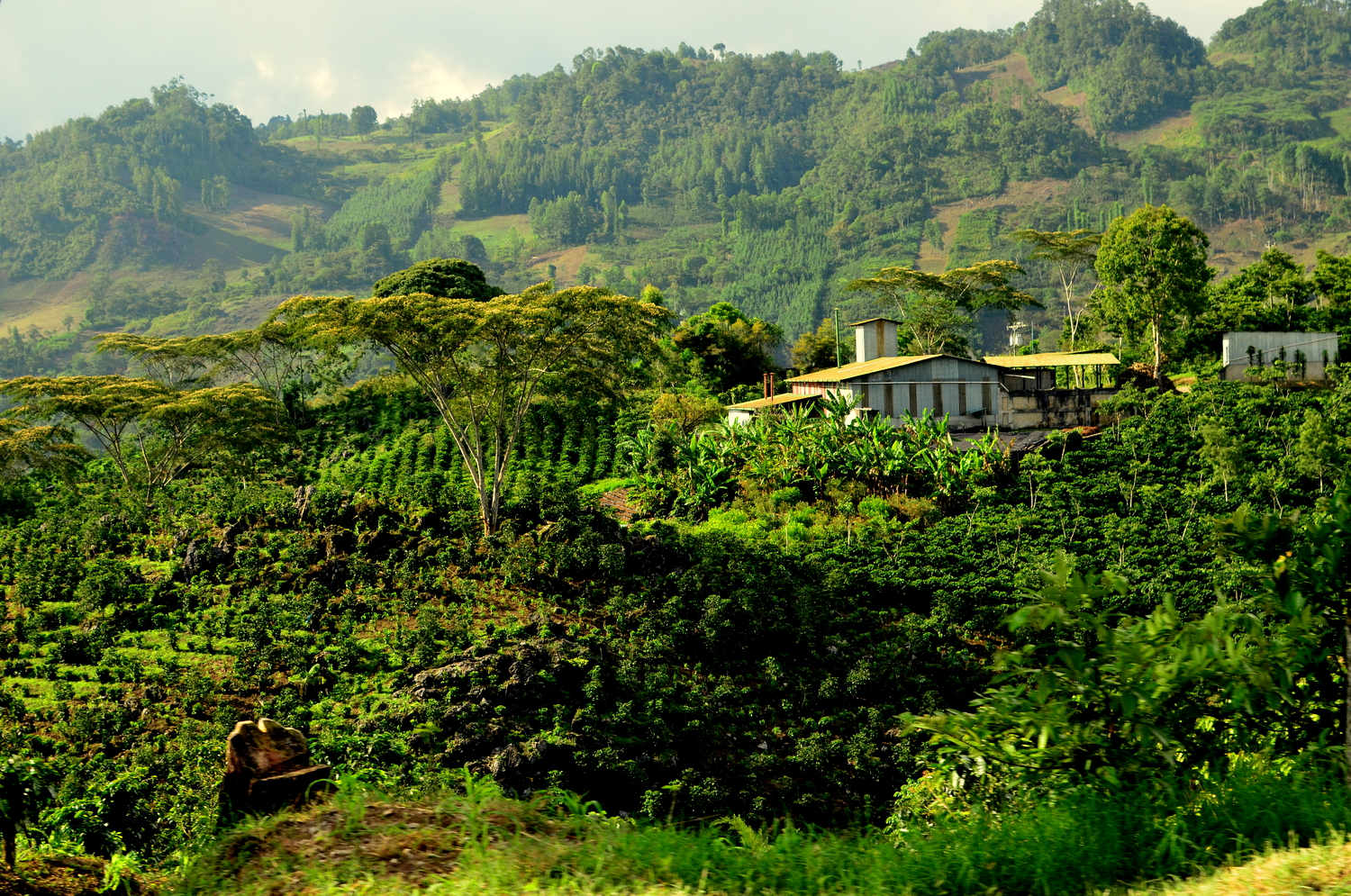
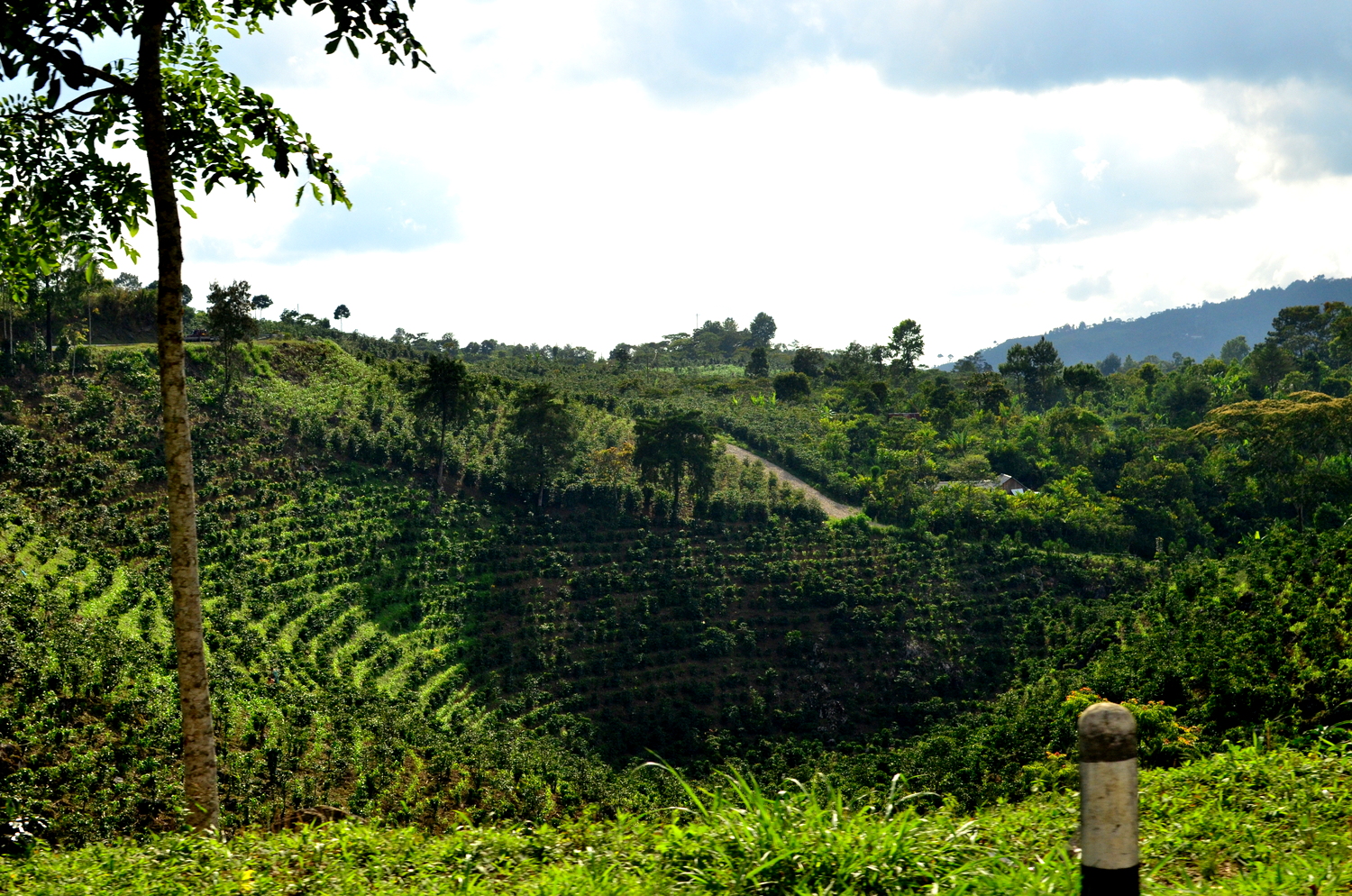
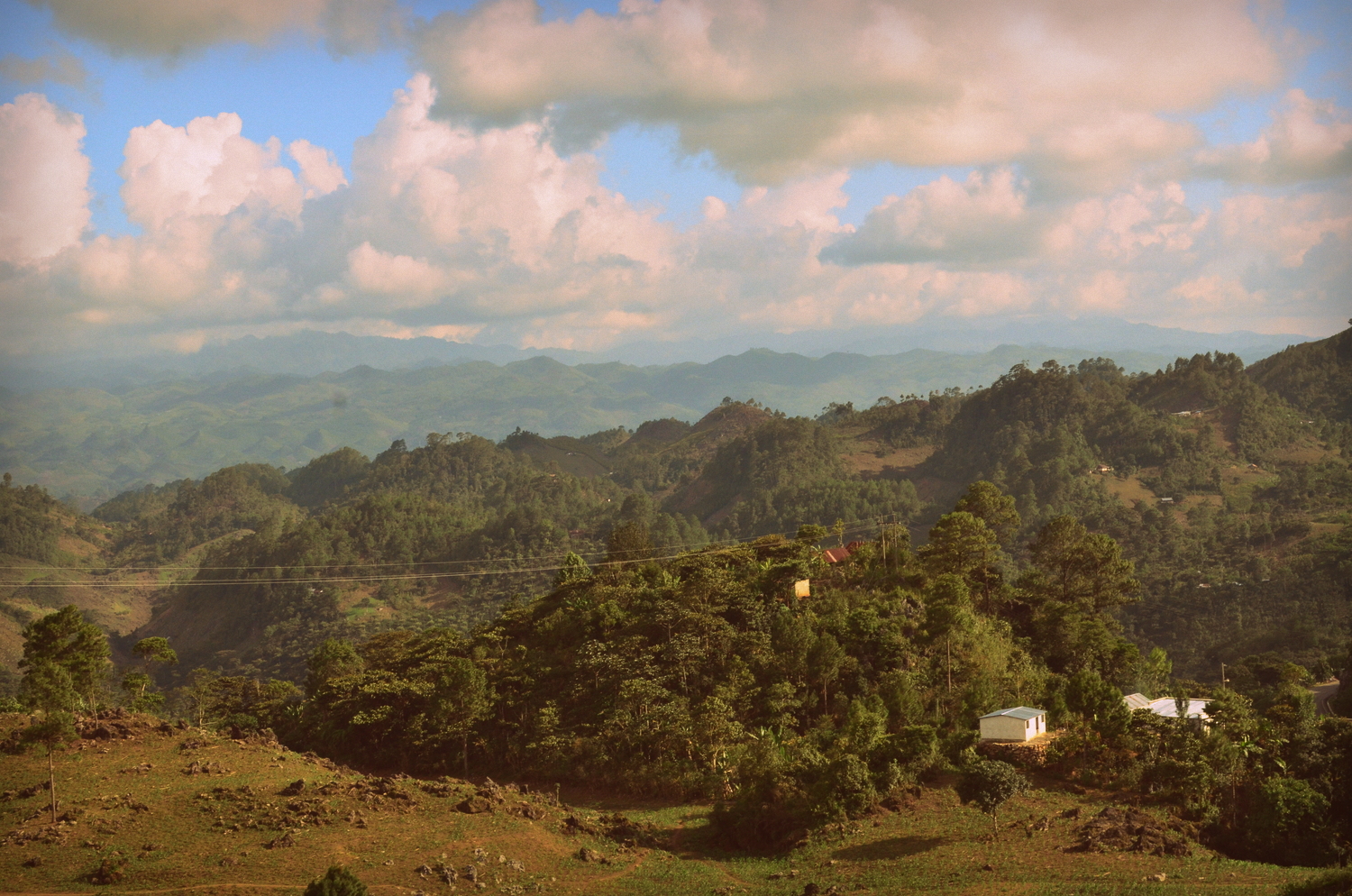
We forded a river on a small barge at one point going from one river village to another, just a another obstacle to get closer to our destination. Roads began climbing up hills and into the mountains. The roads often became a bit treacherous, leaving just one lane open adjacent to a landslide scarring the hillsides. Speed bumps seemed to be placed randomly along the way on this stretch of asphalt and we must have crossed over 100 on this leg. Our shuttle driver stopped for lunch near Coban, where we were given the standard tourist menu (twice the price, less food). A transfer soon after packed us into another shuttle with more people destined for Lanquin.
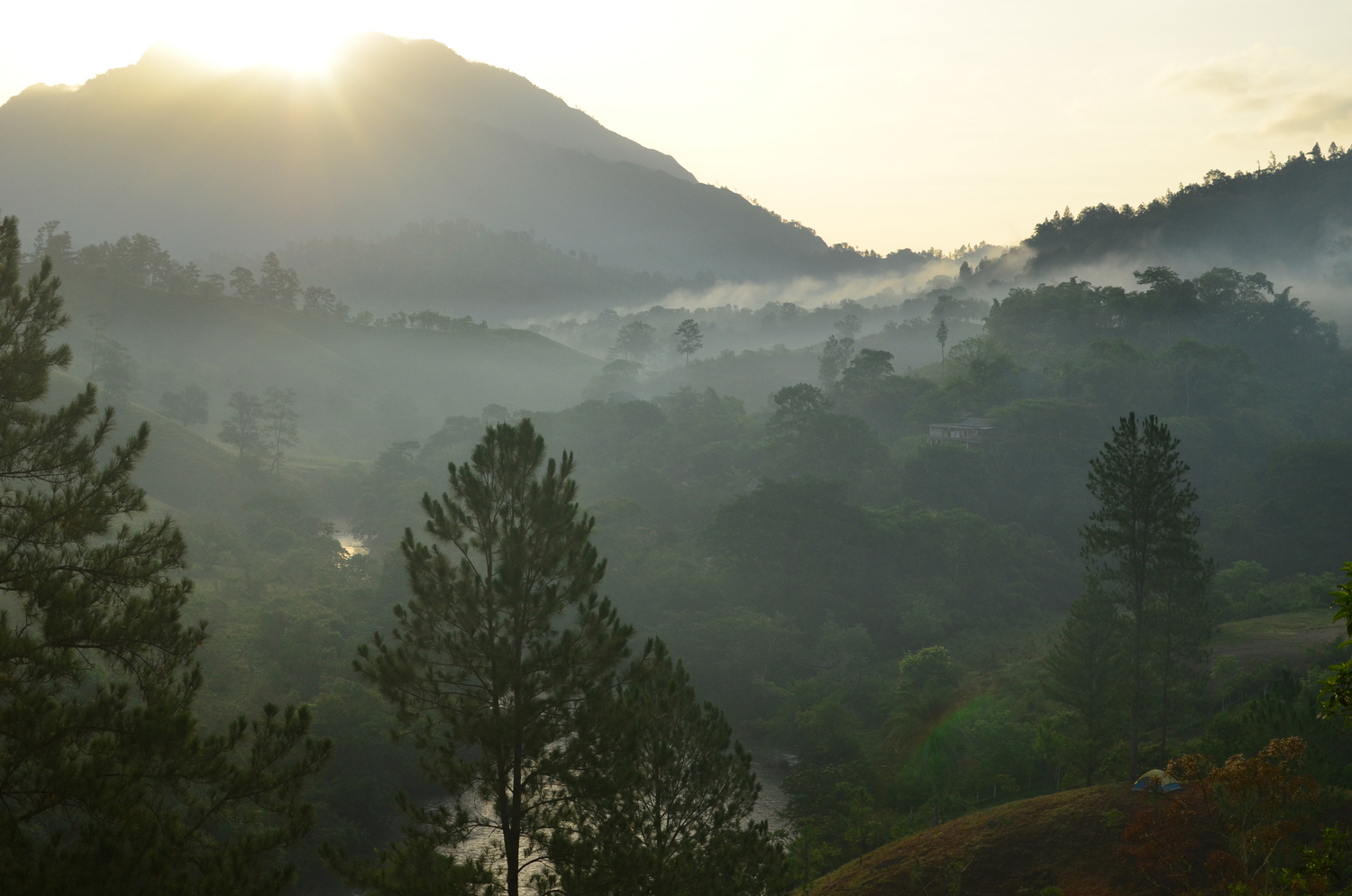
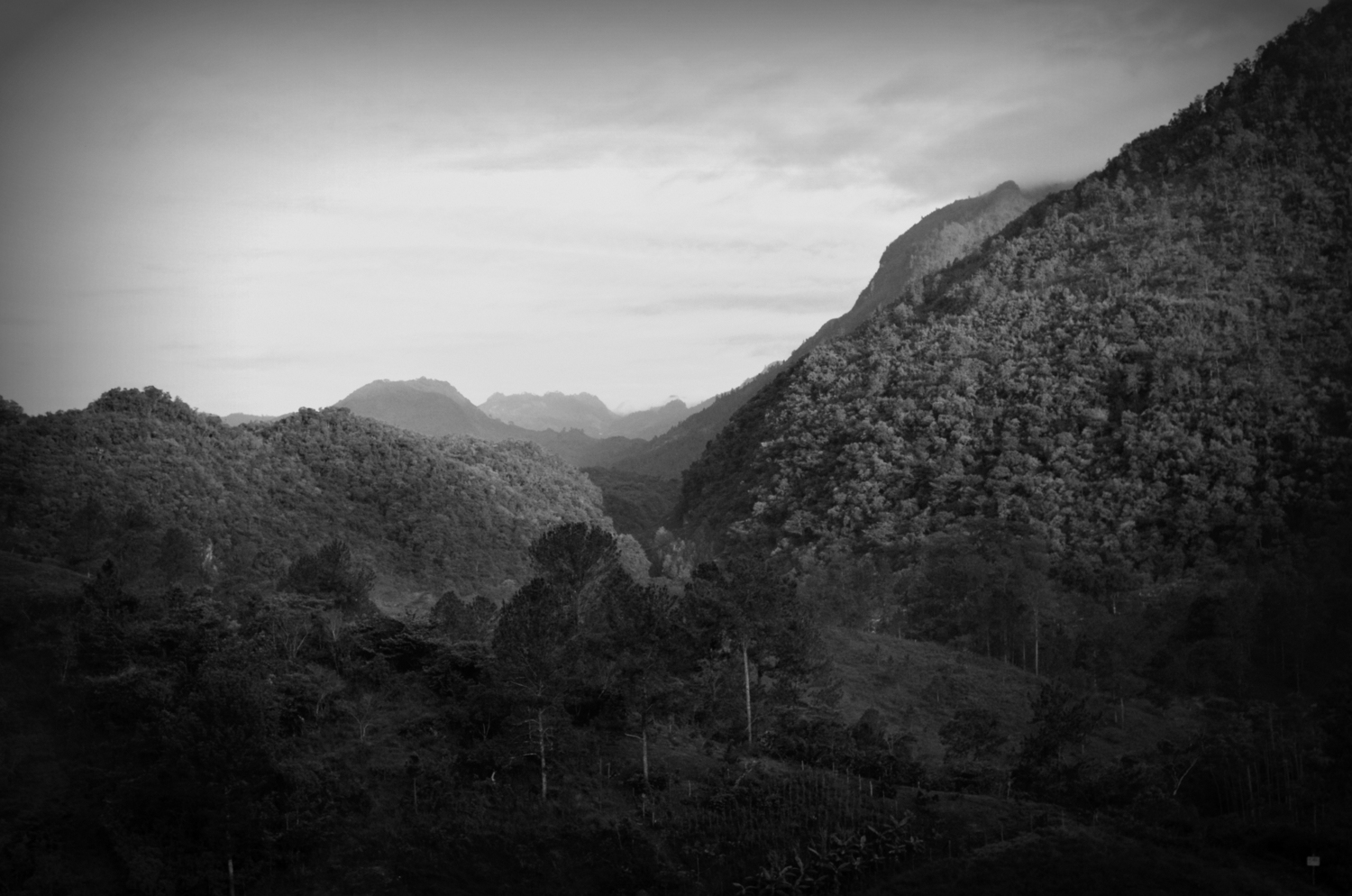


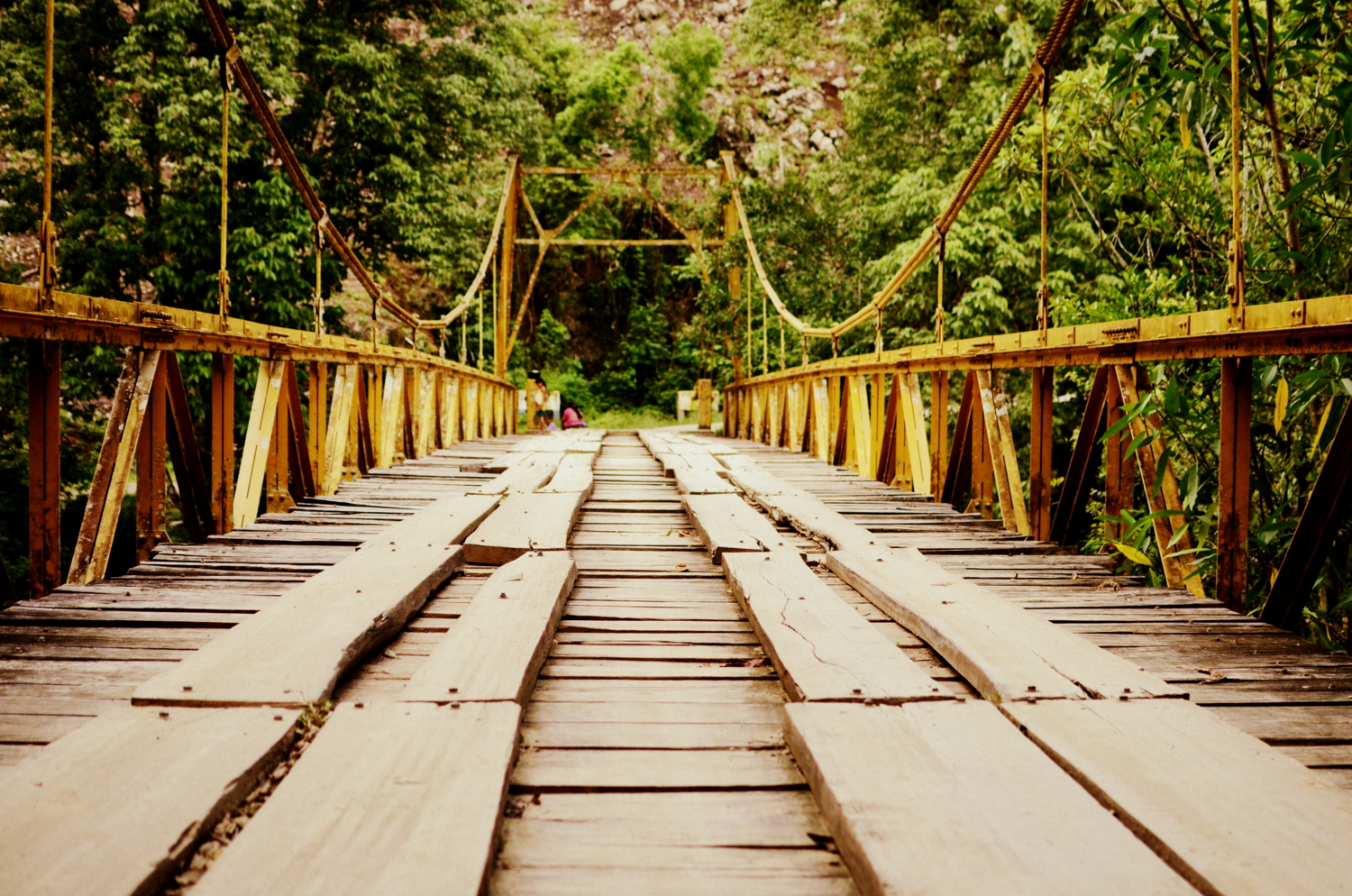
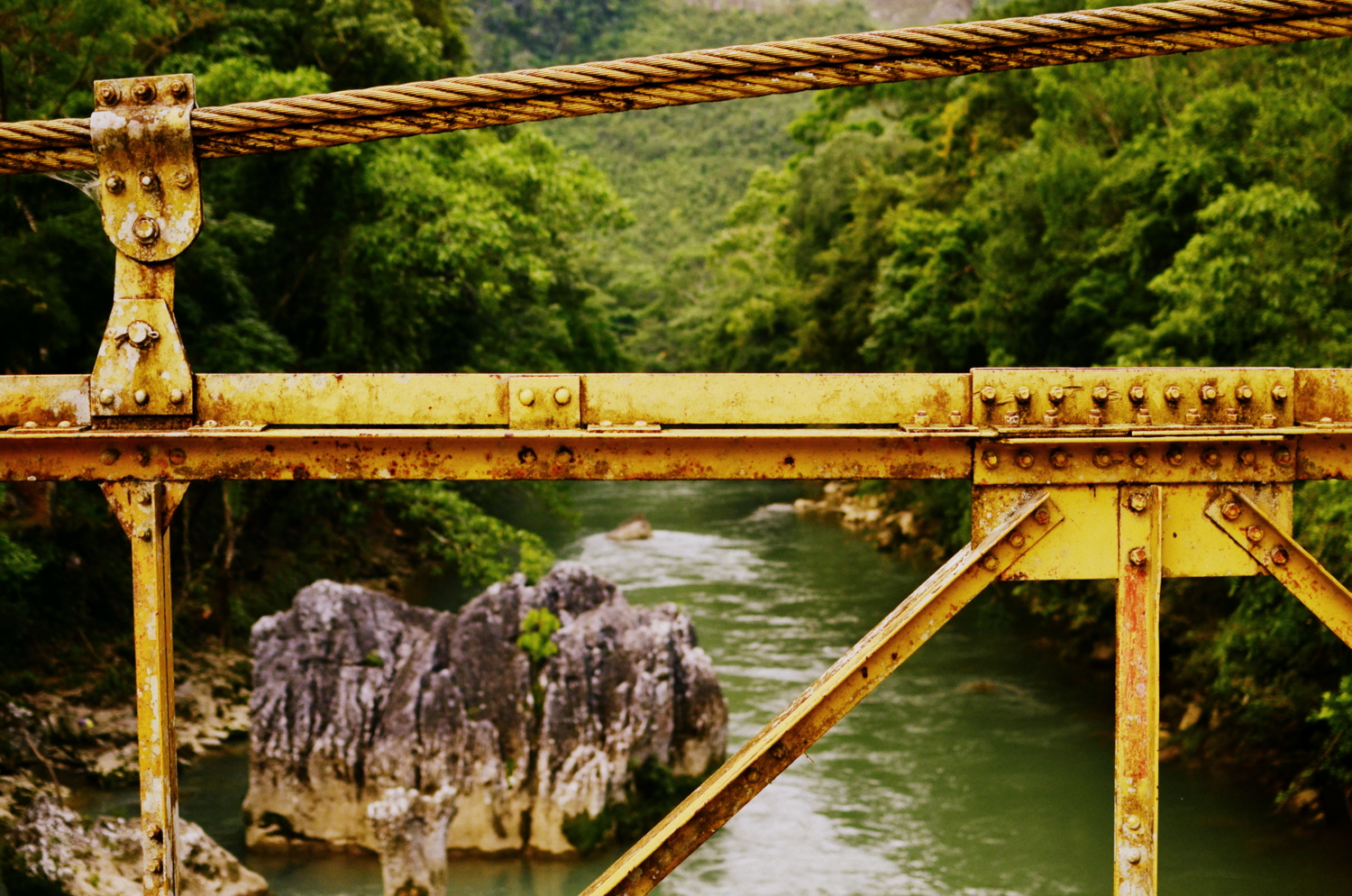
The approach to Lanquin was stunning to say the least. The mountainside country farms, the beautiful valleys, trees, rivers, and animals looked as if they were meticulously painted onto a lush, live canvas. The asphalt eventually ended after an endless ascent and we began traversing down a tiny, gravel road that hung onto the side of the mountains for dear life. I was amazed when a chicken bus was coming the other way and we managed to squeeze two vehicles side by side on the cramped pass. After about an hour of stunning views topped off with a sunset we arrived into a tiny Mayan town finishing up their day. Our destination was the Zephyr lodge, which we knew was another notorious tourist trap with the ever-clever tab/spend tons of money in our hostel system. The hostel was planted in the most beautiful setting a hostel could possibly be. The thatched roof center was perched on top of the ridge of a hill with nearly 300 degree mountain valley views complete with a pristine stream flowing through the middle. We came prepared and equipped with experience, so we checked in and instantly left to spread some money around town. Knowing about the price differences between booking things through a hostel and the DYI approach we set up free transport to Semuc Champey the following morning as part of a hostel transfer deal to El Portal, right at the mouth of the park. We had very little interest in doing the usual caving portion of the park, partly because tours don’t do it for us and partly because it more than tripled the cost of the entrance to Semuc on our own accords.
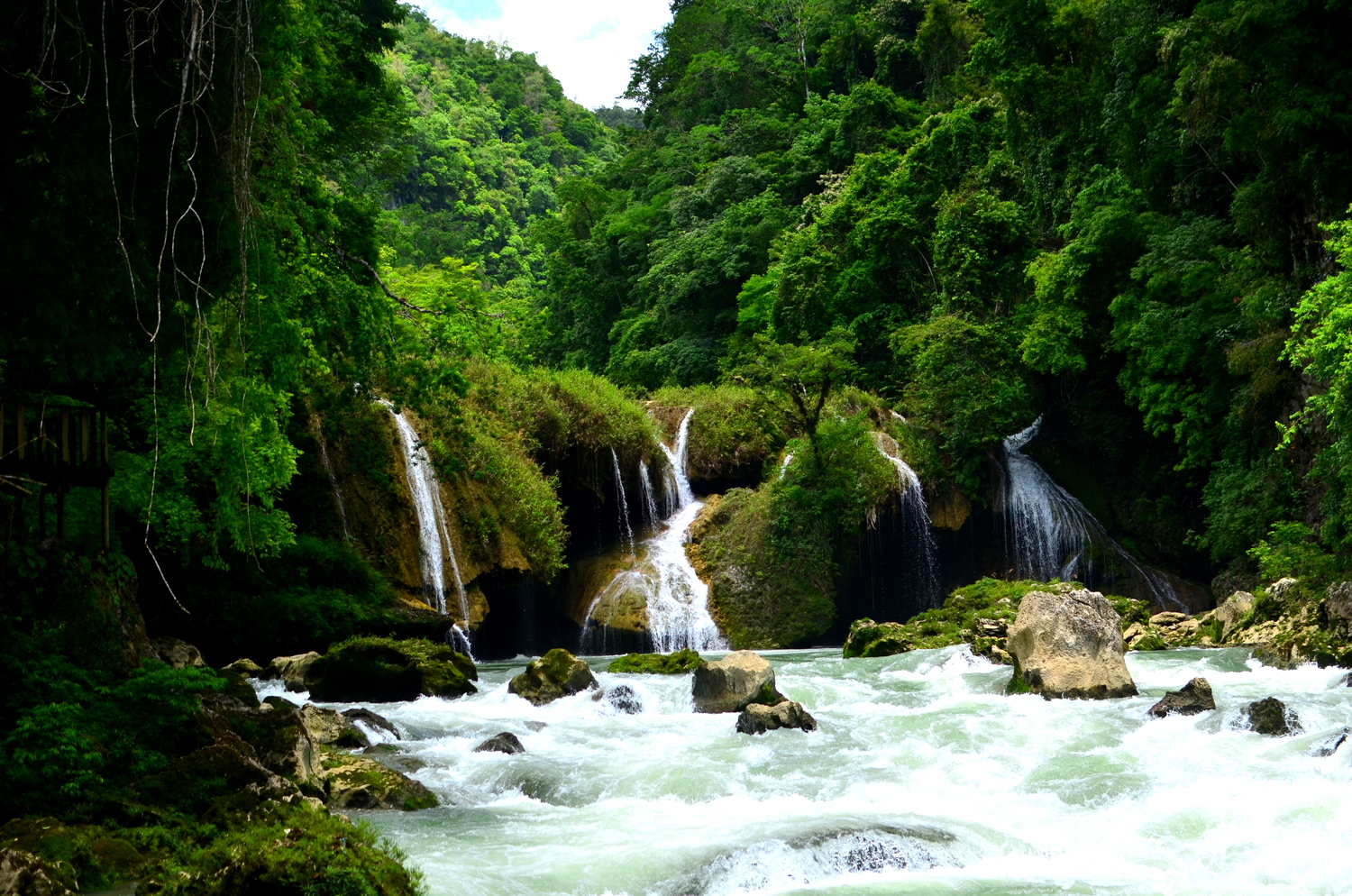
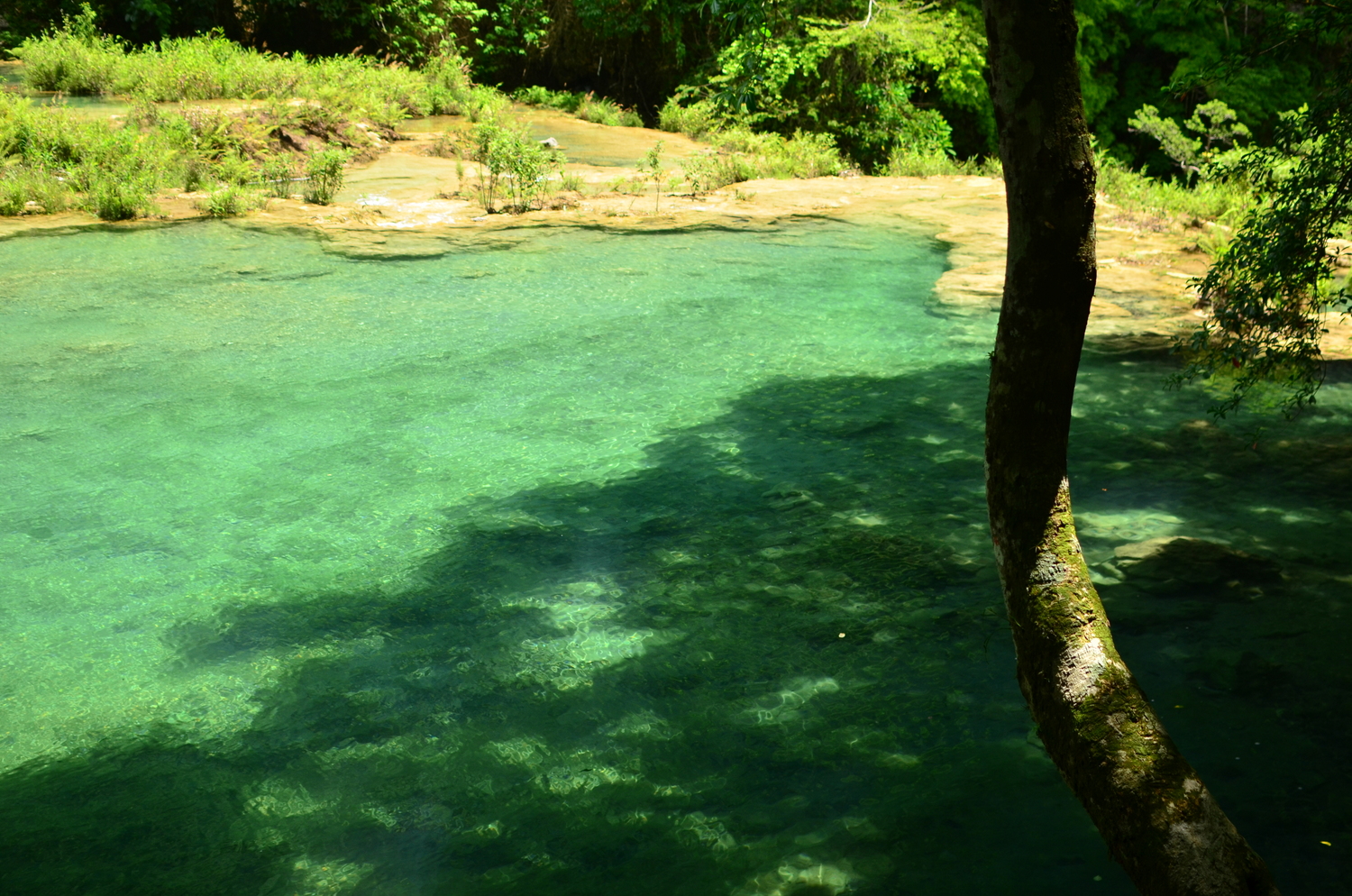
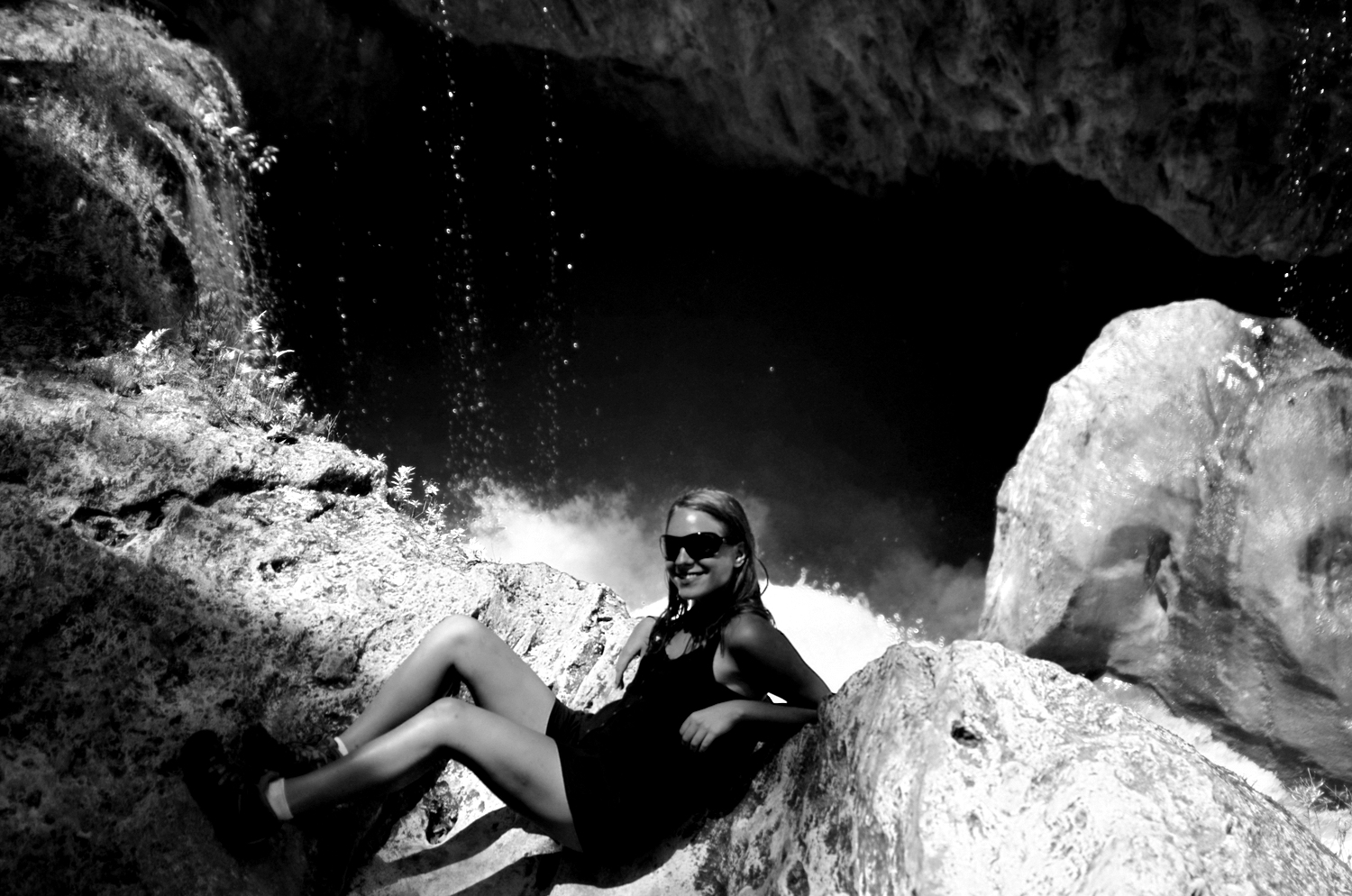

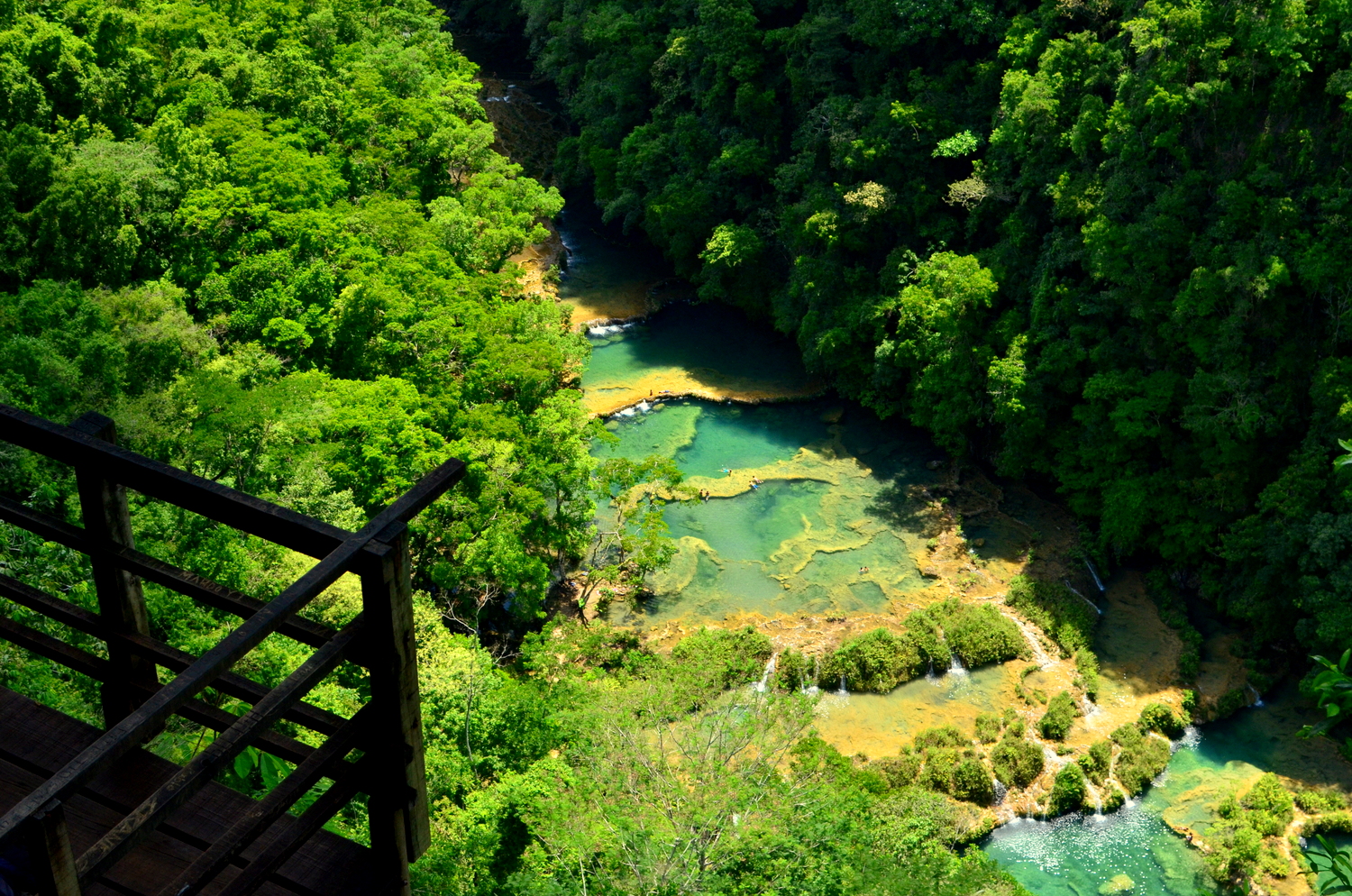
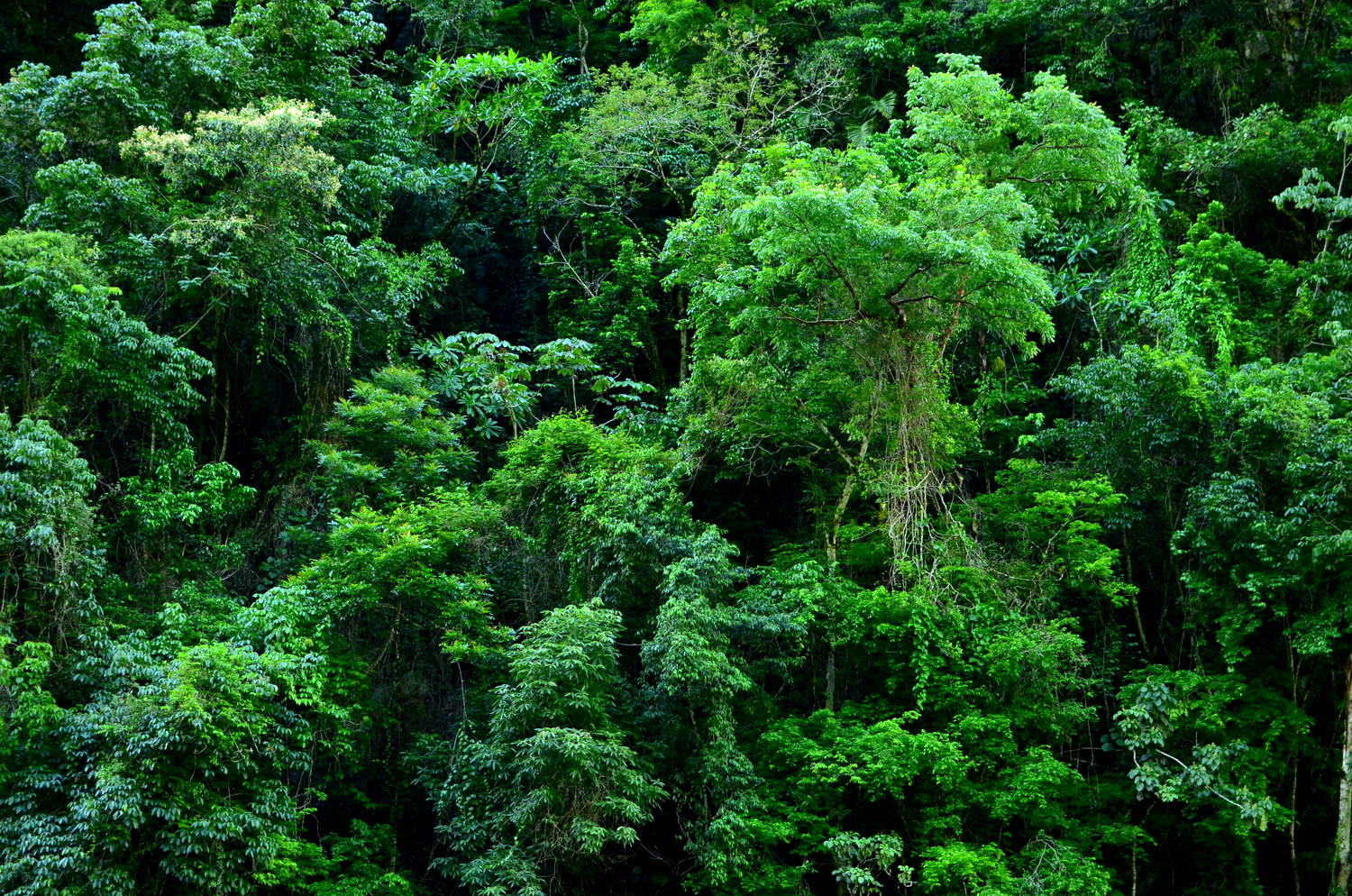
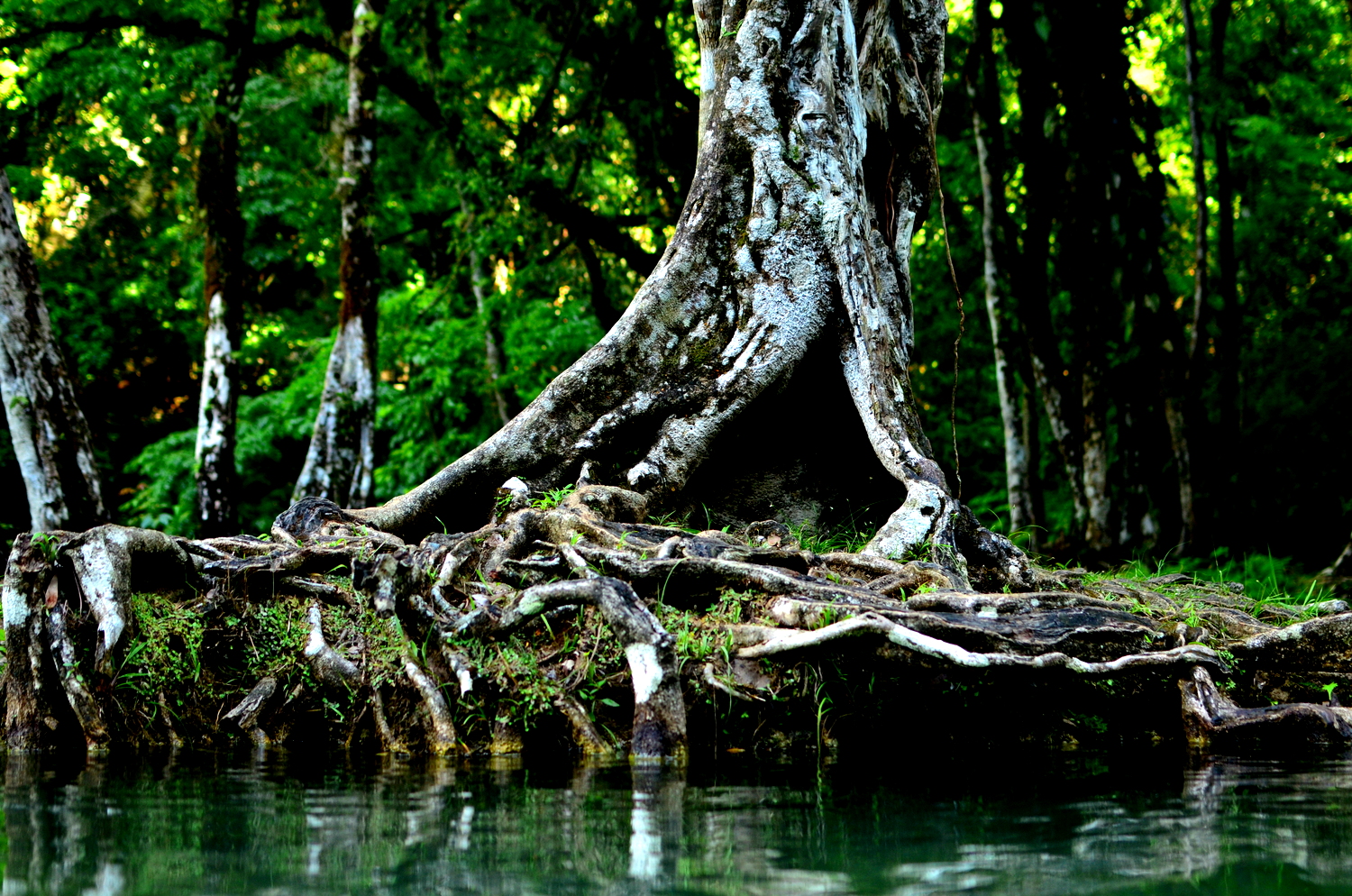
Semuc Champey is a geological anomaly created in a pristine setting amidst highland jungle forests deep in southeastern Guatamala. Words are going to be hard to use to describe the attraction but I’ll give it a stab. The literal translation of Semuc Champey is where water disappears. Picture crisp, cool shallow teal blue translucent water, with fish and submerged logs to walk on that are fed by small little mountain streams collecting rainwater. Next imagine little waterfalls that overflow from the lip of each set of pools collecting into larger pools downstream. Now please imagine, if you can, upstream from the falls where a roaring, powerful, and deadly river disappears underground in a dark, ominous cave below the pools that people are playing and swimming around in. The two sources of waters converge at a larger set of falls downstream and return back to a normal river system. Now set this amazing network of rivers and caves in a thickly covered, mossy forest with a mirador looking down upon the entire scene and you have the beauty that is Semuc Champey.
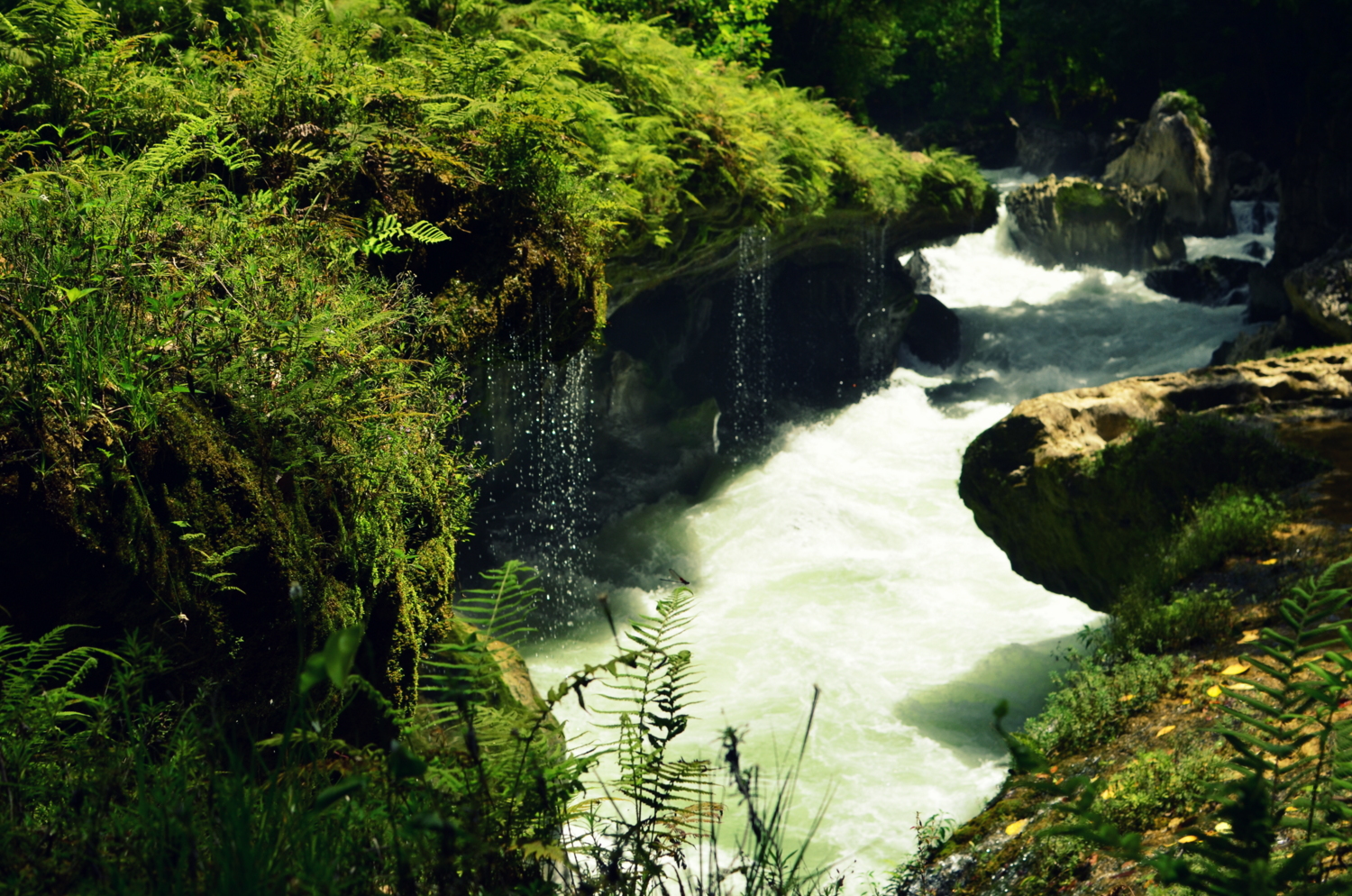
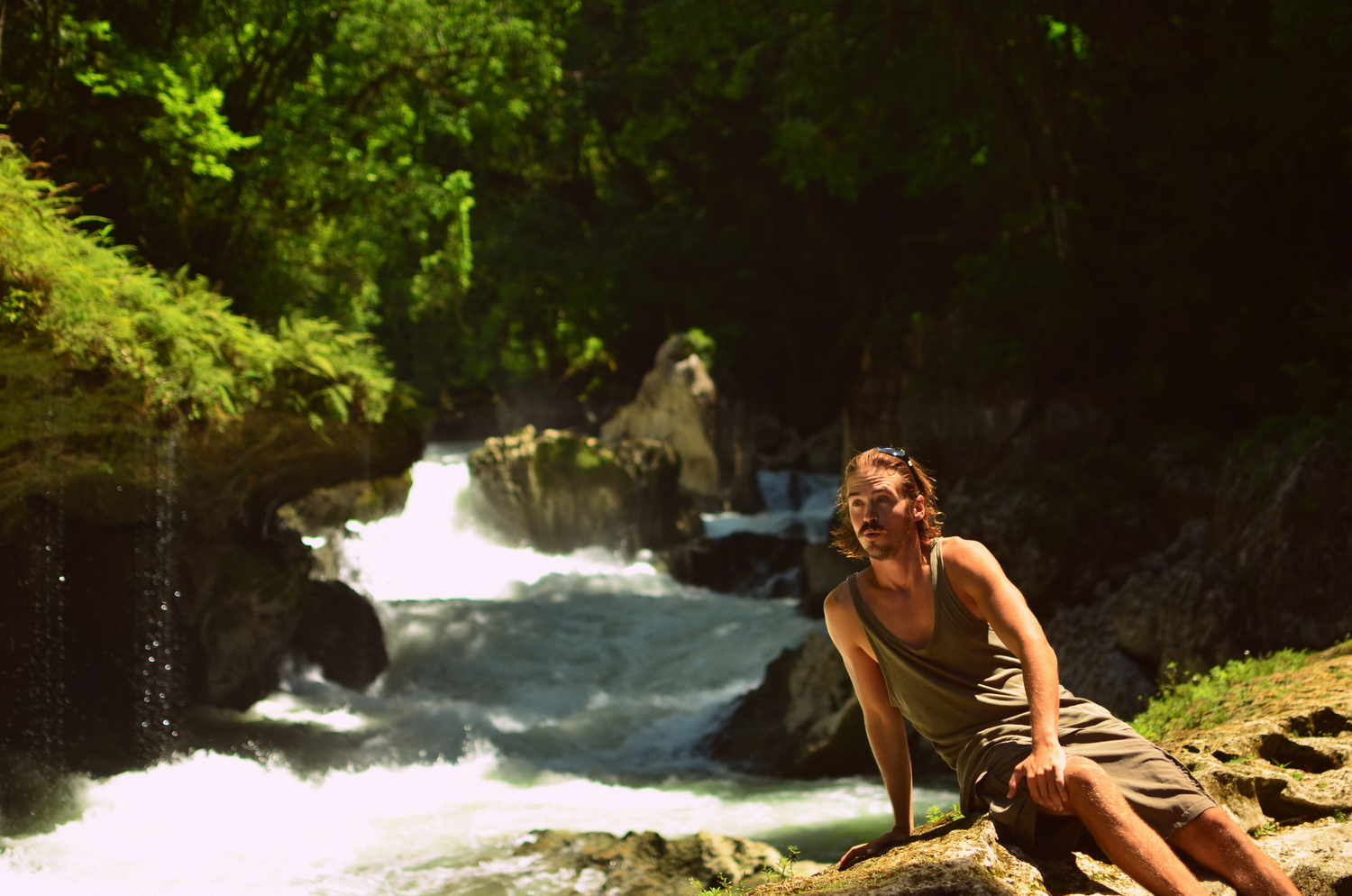
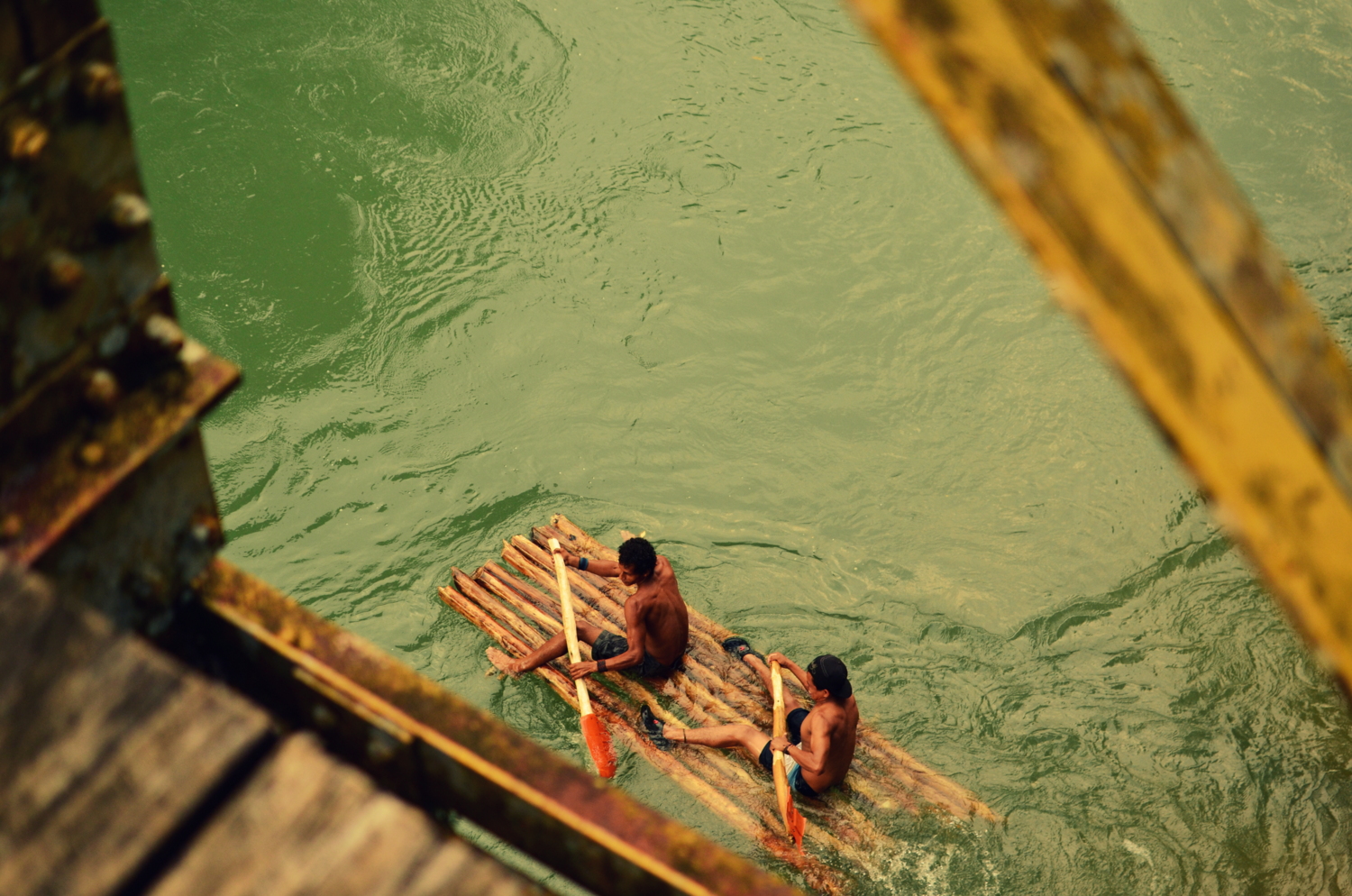

We chose not to do a tour and instead pay half the price to walk around this park all day on our own, a far better choice for budget travelers who don’t like the fast pace of group guided tours. The waters offered a peaceful solace to the brutally sticky heat of the air and the day was wasted playing, splashing, and snapping pictures. As a kid I grew up with streams and ponds to play in and couldn’t picture a better way to melt the whole day away. Flocks comprised of hundreds of agile black birds would echo up and down the gorge as they flew past the thickly forested vertical walls. This felt like nature showing off. All I could offer was my own confusion. I think my old friend Jack said something along those lines before.
A quick night’s rest got us up at 5AM for our shuttle transfers out of Semuc and towards San Pedro, Lake Atitlan. We hopped into the back of a pickup truck with a Mayan Family hitching a ride and watched the sun come up through the foggy mountains with them. They were headed into town for the market, and we were headed out of town forever. We knew it was going to be a 10-13 hour travel day, but it was one of the unavoidable pains of traveling through Guatemala, a right of passage so to speak. As we climbed up the steep, windy mountain rode I tried to take in every single detail of the cloud covered valleys and the mountain peaks of this postcard perfect land.

Come away with me

 TheAdventuresOfDr