
Guatemala: Flores & Tikal
Our transportation of choice leaving San Ignacio was going to be a local bus at the “bus station” next to the mercado on the southern side of town. We needed to get to Benque, more or less a border town, and take a taxi from there to the immigration checkpoint. Prior to leaving town we attempted to convert the last stash of Mexican Pesos to Belizean dollars in order to ship our cigar stash back to the US without having to withdraw more money from an ATM. We were absolutely appalled to find out from the teller that all banks near this border would not convert Mexican Pesos (bad neighbor). They all told us that our best chance to unload the wad of now useless paper would be at the border through the modern day robbers known as change tellers. Knowing that everything would work out somehow we schlepped our belongings over to the bus station to wait for our ride. A man saw us sitting next to a comedor and gave us a decent offer on a private taxi right to immigration thus eliminating the need for a bus/taxi transfer upon arrival in Benque. Within minutes we were at the border and within seconds we were being told that this was the ABSOLUTE last place we could exchange our Mexican Pesos and Belizean dollars, at a horrible rate of course. We only changed a tiny amount of pesos for Guatemalan Quetzales regardless of the warnings and borderline mockery from the official tellers. All sorts of deceitful intimidation techniques used to try and change our minds were deployed unsuccessfully. We left it up to chance and paid our exit fee, parted ways with Belize, and walked into to the completely different and strange world of Guatemala. Walking right past the immigration checkpoint we were kindly guided back to the small awning where we were supposed receive our entry stamps. Moments later we were approached by an exchange teller with a rate that was 25% better than we were given on the Belizean side. Our refusal to succumb to intimidation paid off. I’m writing about this in hopes that at least one reader out there can avoid getting ripped off massively if they are in the same situation we found ourselves in. We’ve done this at every border crossing and have never regretted it. Spread the gospel.
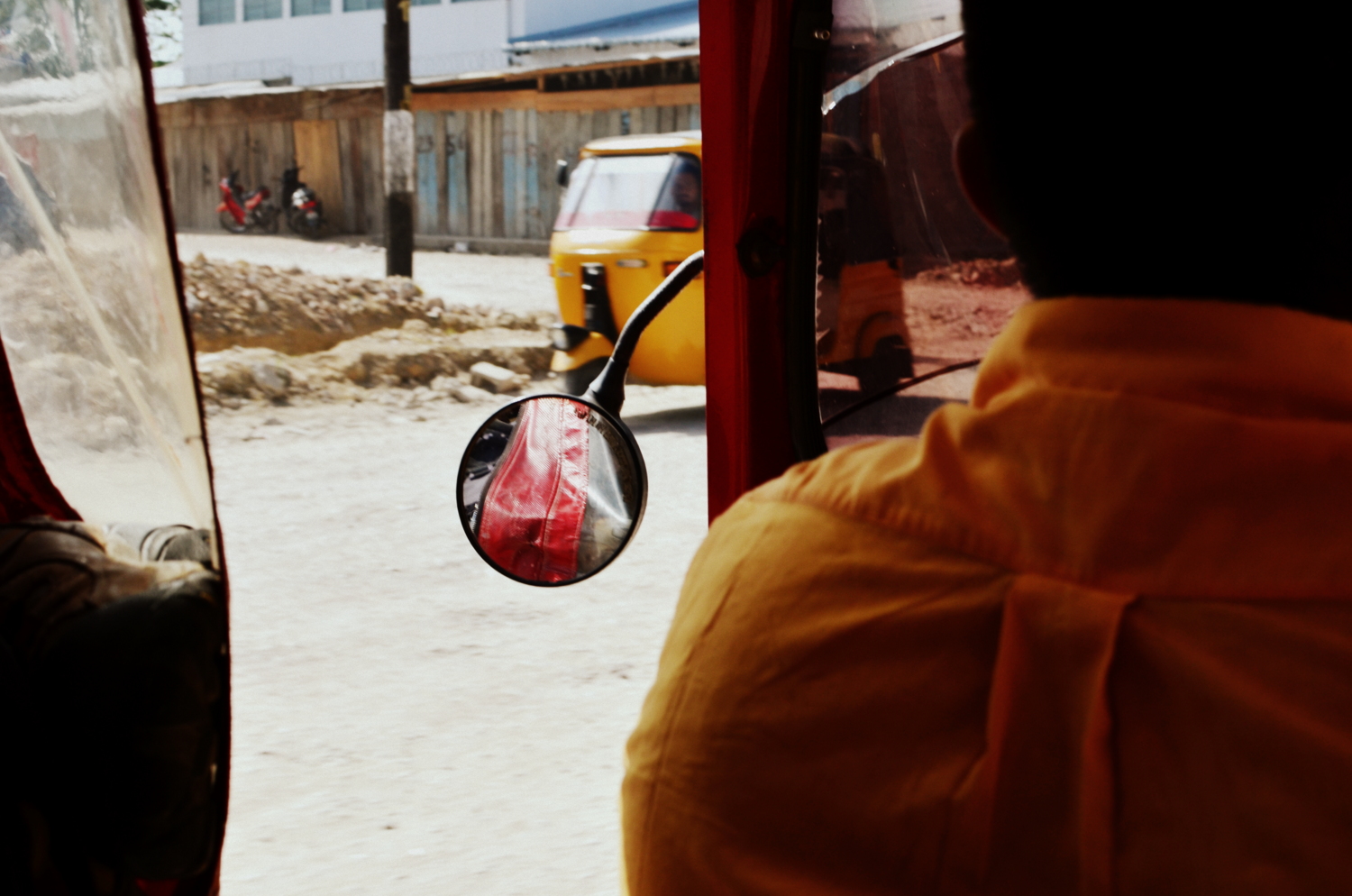


With our gear in tow we crossed a small bridge over a river and took in our first Guatemalan experience. Two young boys were bathing in the river wearing their skivvies and smiles. We waved and said “Hola!” and they chimed back “Hola! Give me a dollar.” Following rudimentary instructions on how to find the bus station we stumbled upon a collectivo shuttle offering rides to Flores at a decent price. We agreed and they immediately began grabbing our bags to throw up onto the top of the van as if they were waiting for us to begin with. Almost All shuttles in Guatemala come equipped with a roof rack and a metal ladder fastened either up the side or the back. After being quickly seated in this mobile oven the driver and his slick ayudante (sidekick, aka “hype man”) took off down the street and immediately began picking up random passengers in town with his deep, throaty shouts of “FLORRRRESSSS, SANTA ELENNAAA”.
Off we were into the country side, picking up strays along the way ranging from farmers wielding machetes, Mayan women with buckets of fish, and children hitching lifts home from school. Guatemala instantly stole our hearts. En route, and always without warning, the roads would suddenly become filled with herds of cows clomping their hooves along the asphalt in unison. Trucks toting massive 200 pound pigs would putter along in the other direction, in and out of our lives too quickly. Horses grazing on the side of the road and casually crossing to the other side would bring traffic to a halt at their discretion. The slick hype man struck a deal with the Mayan woman to my right concerning her massive tub of fish, buying 6 fish for around 3 dollars, and later dropped them off to his grandma at some village along the way.

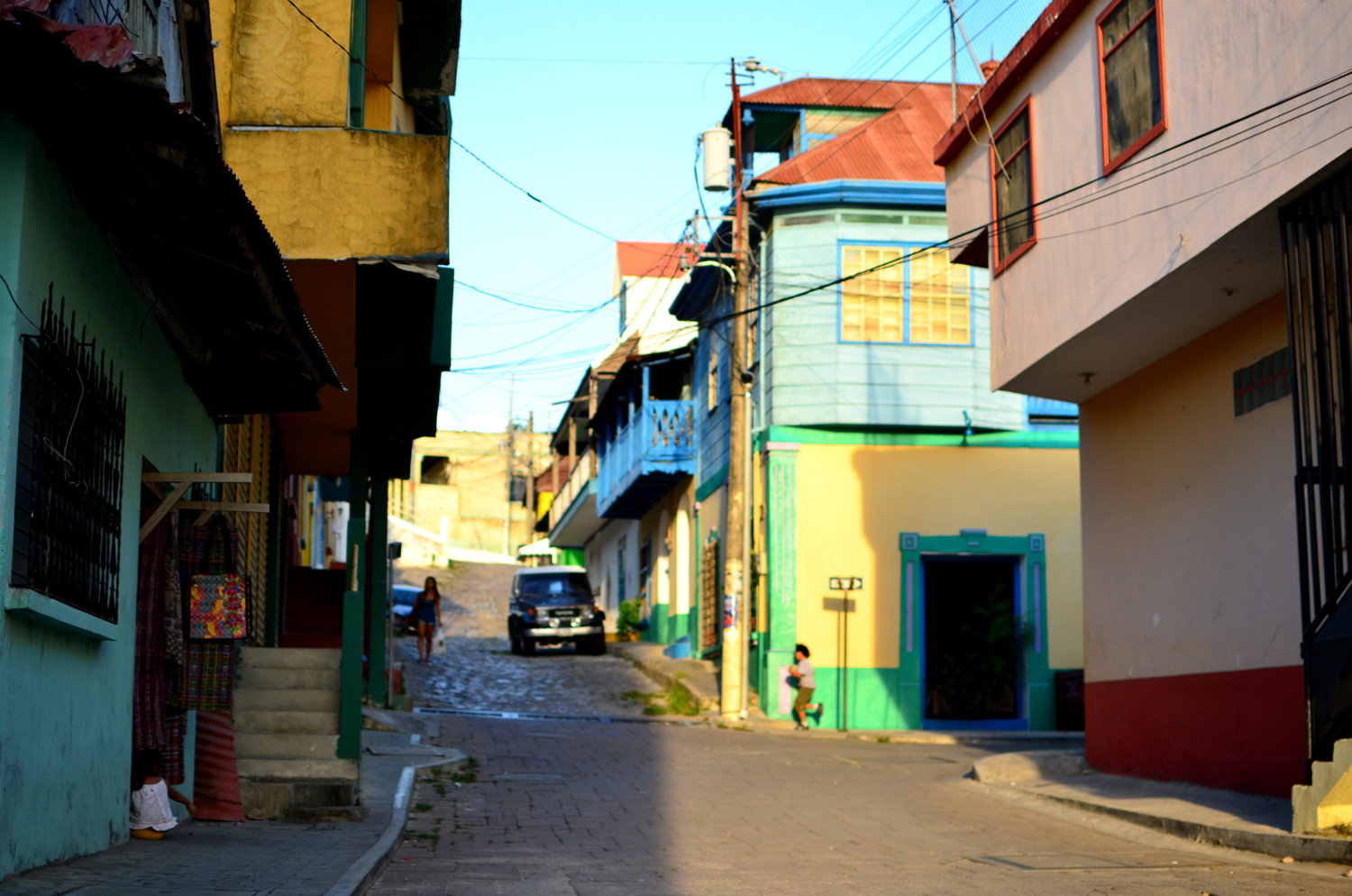

We arrived in the dusty, sweaty town of Santa Elena at the bus station to switch to a Tuk-Tuk taxi for the short jaunt over to Flores. This micro-village mushrooms up from the lake and packs a supremely small town attitude (in the best way possible) with 360 degree views of the gorgeous freshwater basin enveloping it. Red metal and Spanish tiled roofs cover colorful buildings all aiming to get that lakeside sunset view are found throughout the cobblestone hilly streets of this sleepy town. It was the low season here so the overall vibe was tranquilo. We checked into Los Amigos hostel because it was one of the cheapest sleeping options and offered the best tour prices our research could find. It was also a dangerous hostel for budget travelers due to its brilliantly engineered tab system of “buy now, pay later” run by business savvy ex-pats, of course. The goal seemed to be focused on catering towards the seemingly ubiquitous average party-going gringo trail travelers we’ve been bumping shoulders with along the way. The food here was temptingly delicious but ridiculously expensive, with the cost of 2 meals a day more than doubling the price a bed for the night would set you back. Genius, I tell you. Being privy to this system prior to arrival, we checked and immediately headed for the lake to cool off our overheated cores. Sunset prompted us to grab a meal on a sketchy rooftop terrace with views of the lake to which we caved in and agreed to. The food here was somewhat costly and pretty awful in general, but the vista was worth it.


Transportation to Tikal was booked for the following day without a guide. Since we were about 5 hours away from the coast we were quite surprised to find out that the sun begins to rise around 4:30 AM in Guatemala, which was also the first available tour departure option. We would come to find out that most everything in Guatemala begins very early and follows the schedule of the sun, just like their ancestors had been doing since the beginning of their existence. The enormous distances between destinations coupled with the overall condition of the roads would also set the pace for very early morning shuttle runs.
Our tour guide for the drive was a super friendly and full of very interesting information about the history of Guatemala and the Mayan culture of the past and present. He was full of passion and pride when speaking about his cultural upbringings and on the verge of being slightly over dramatic in his long pauses paired with sullen off-in-the-distant-past look in his eyes. His dialogue claimed that 70 percent of Guatemala’s population is of Mayan decent with 20 different Mayan languages spoken today. The mysterious fall of the Mayan empire prior to Spanish arrival is part of the allure of these almost perfectly preserved ruins, aside from the sheer beauty. A pit stop at a souvenir co-op had us sampling natural gum cut from a rubber tree that the Mayan’s have been chewing on for centuries while showcasing a replica of one of a king’s tomb found buried at the site.
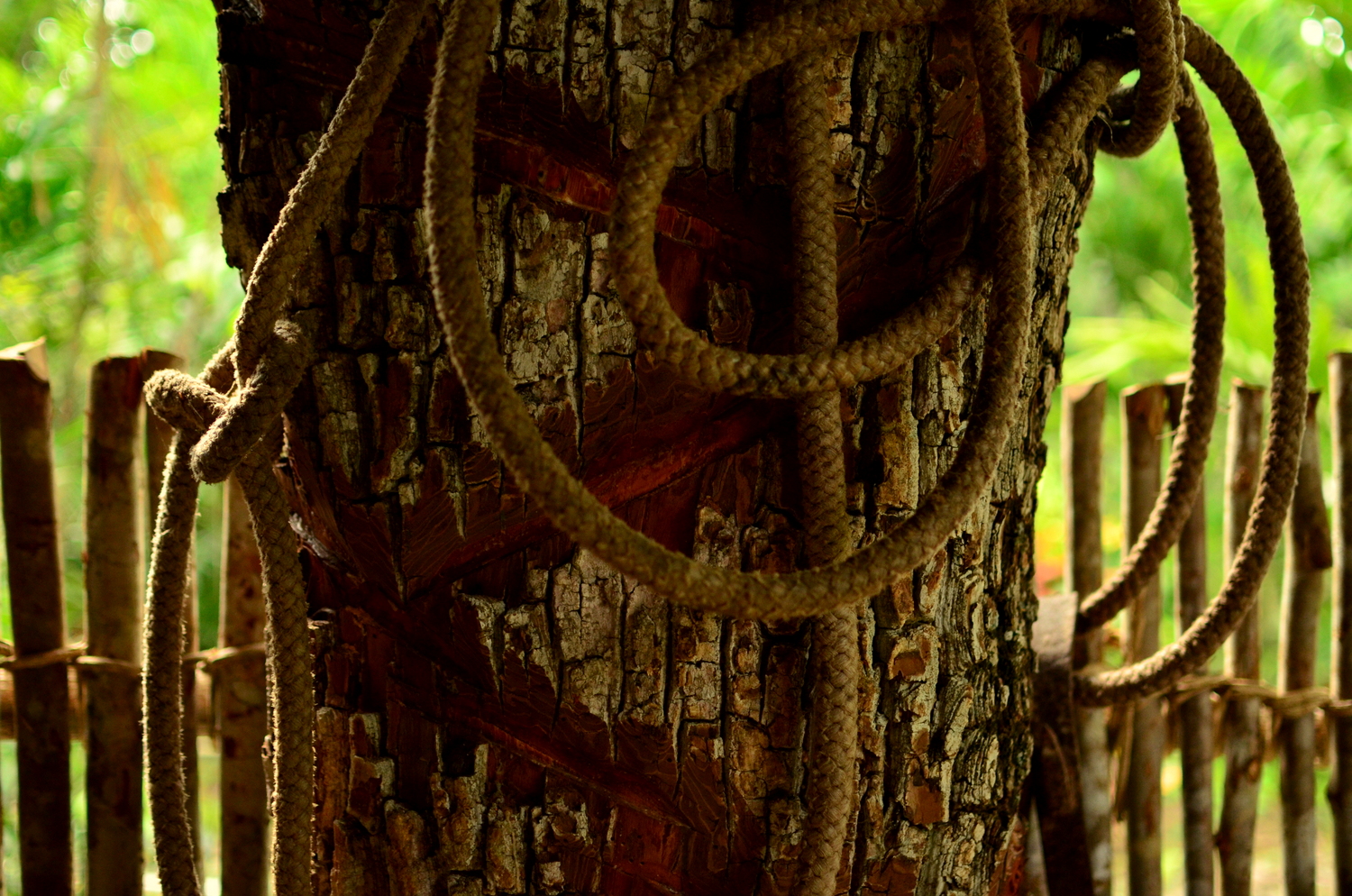

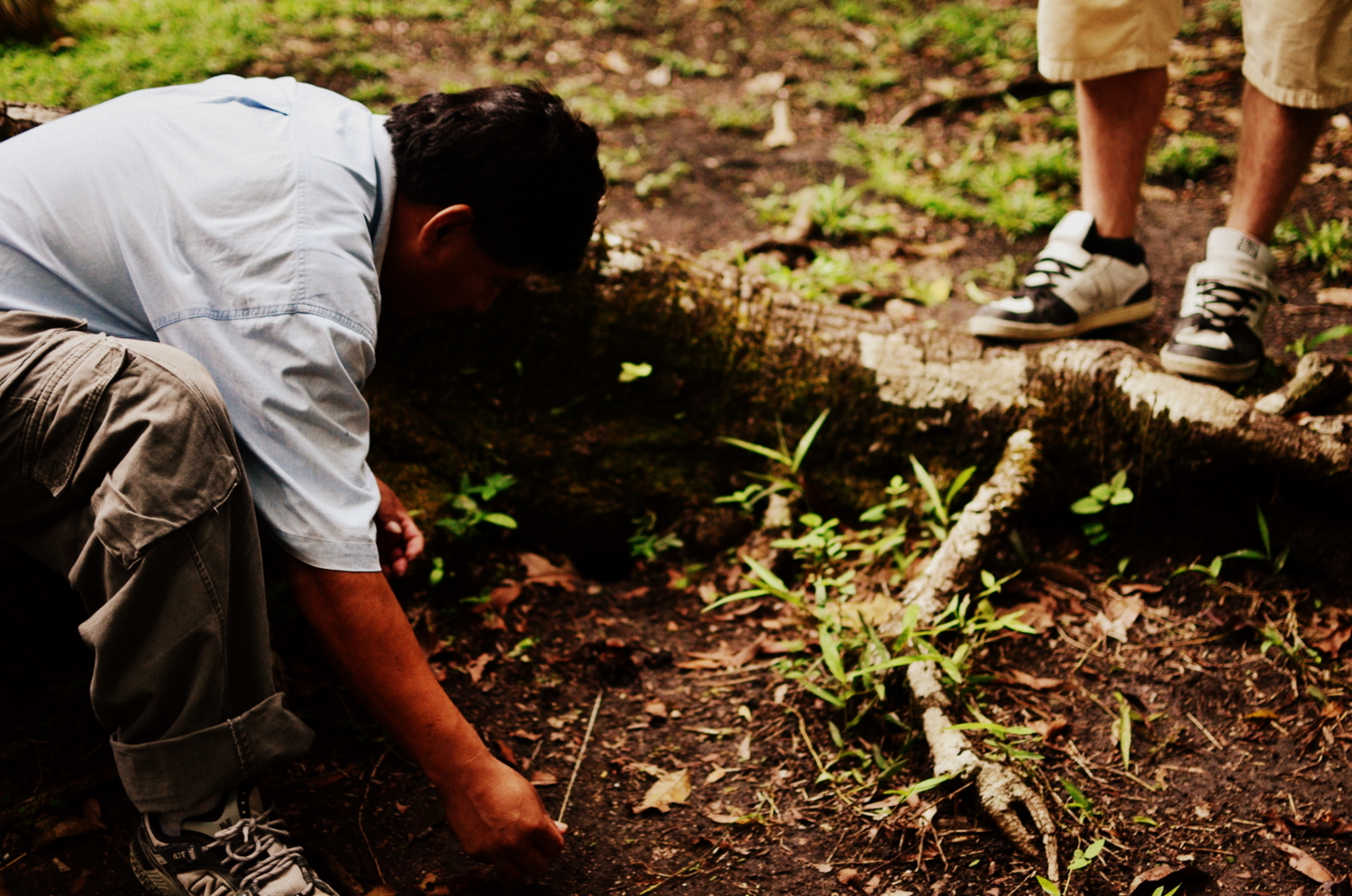
After arriving at Tikal we followed the tour for a bit while our guide explained some background on these ruins. He lured out his 10 legged “friend” from a hole at the base of a giant Ceiba tree and had us pose with this massive tarantula on our heads, hands, and shoulders. This man gave Mel Gibson a 2 hour tour when he was doing research for Apocolypto (laughable considering a normal spin around the park will run you at least 3 hours) and seemed to be in love with Sylvester Stallone for his symbolic work in the Rocky series. I have been noticing that this has been a common theme in central America, and almost weekly we come across a TV beaming the Italian Stallion. Tikal itself breaks down to place of voices, and this is very apparent when you play with the acoustics of the triangulated structures. Priests used to stand on top while people below listened to their naturally amplified vocals created from the positioning of structures and the composition of the stone. Clap halfway between the buildings and you will be surprised to hear the noise that results.



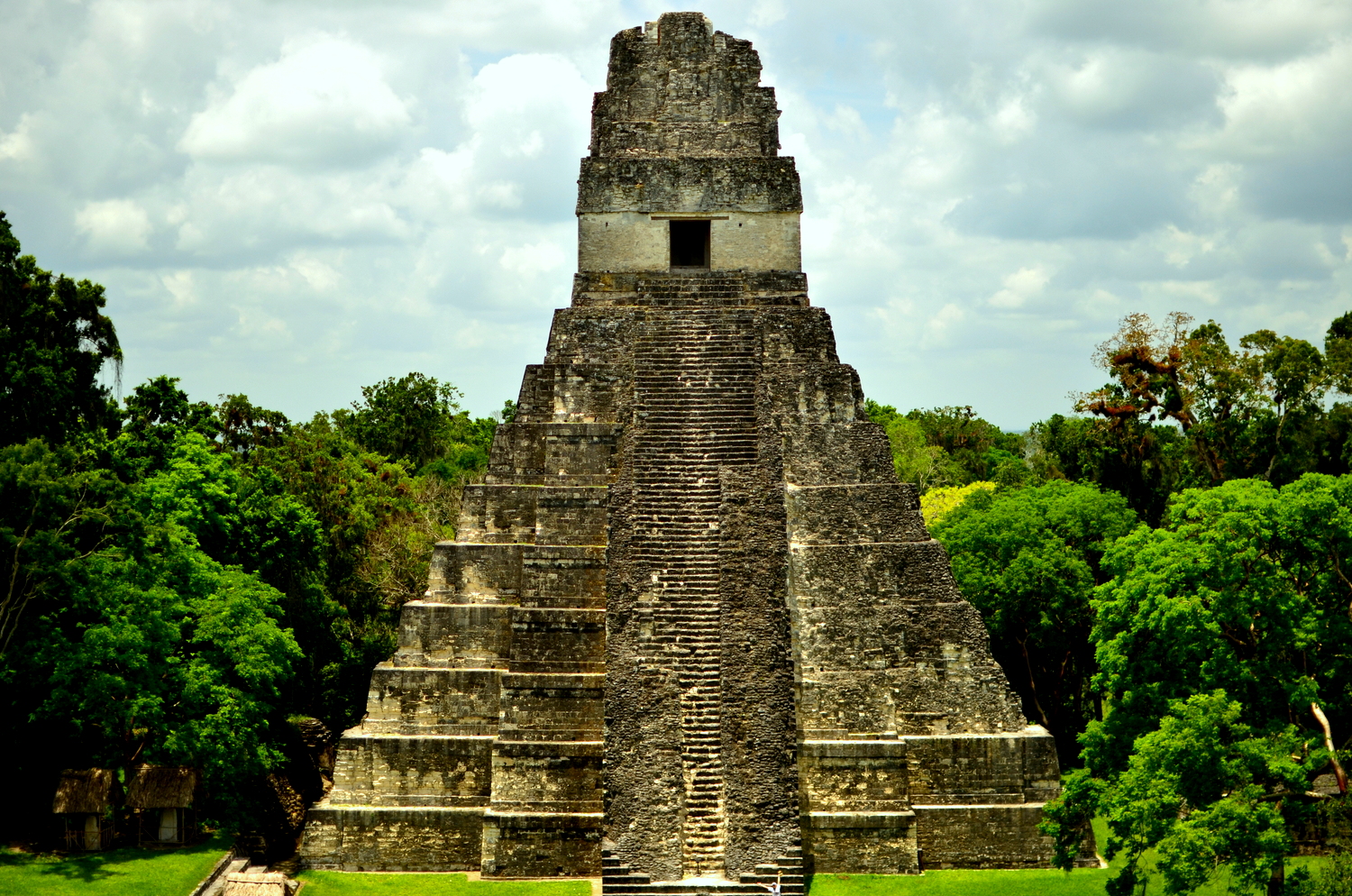
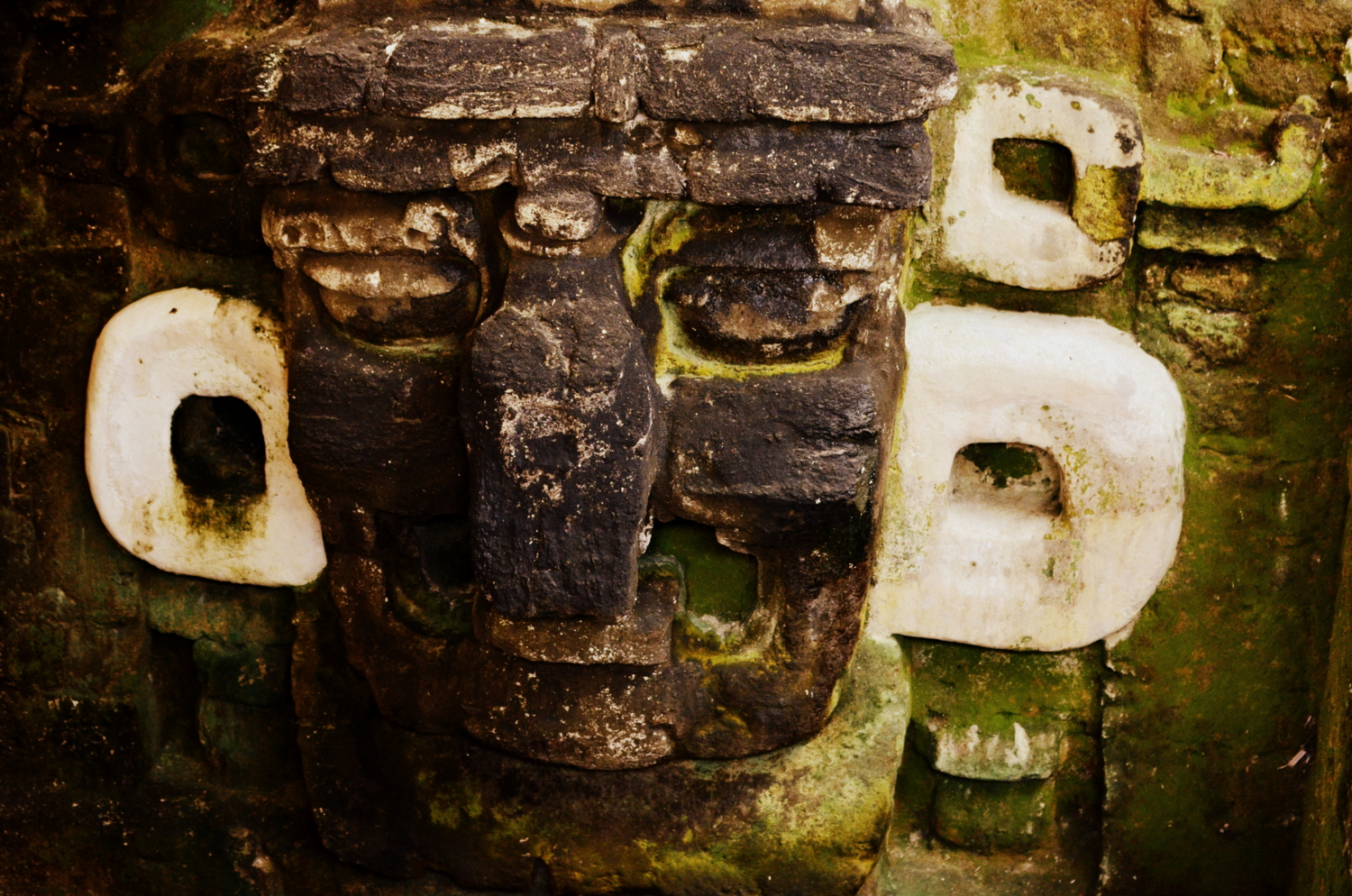
An hour or so of following the tour we began desperately trying to find a moment to break away. This was partly because tours are too structured but mainly because we didn’t pay and knew he was trying to rope us in for the entire lecture and expect payment at the end. Soon a fork in the path presented itself and off we went. Wandering around the park we were in the thick of the Guatemalan jungle amidst spider monkeys, lizards, frogs, huge insects, and finally Tucans (we had been trying to spot these for weeks now)! We went straight for templo 4, one of the taller and better vantage points to see the jungle canopy and the tops of the other buildings. After climbing the cartoon-like steep wooden stairs built to preserve the ruins during the excavation process we fell into an instant meditation once our eyes were casting their gaze on the panoramic view from above. For a good 10 minutes it was just us and this amazingly surreal vista. Then about 50 Guatemalan children in some sort of school group came flooding in and we made our retreat. We ventured over to the central plaza and stood amongst the infamous temples. There we explored small structures housing perfectly preserved Mayan larger-than-life face sculptures before heading for the gate. Tikal was everything we imagined it to be and we needed to catch the bus or we would have to wait out another 4 hours in the intense heat. An oven-like midday bus brought us back into Flores fully cooked.




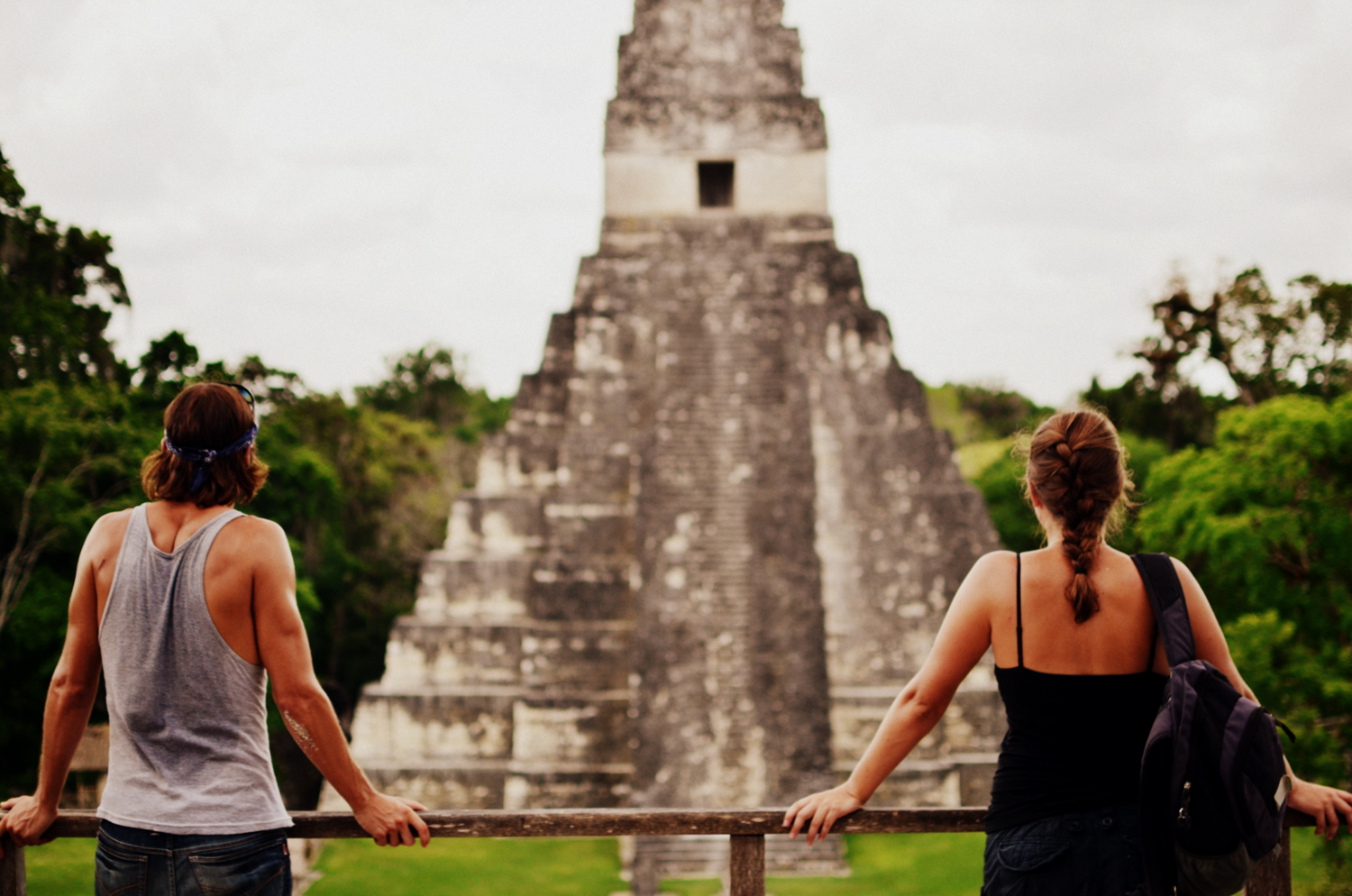

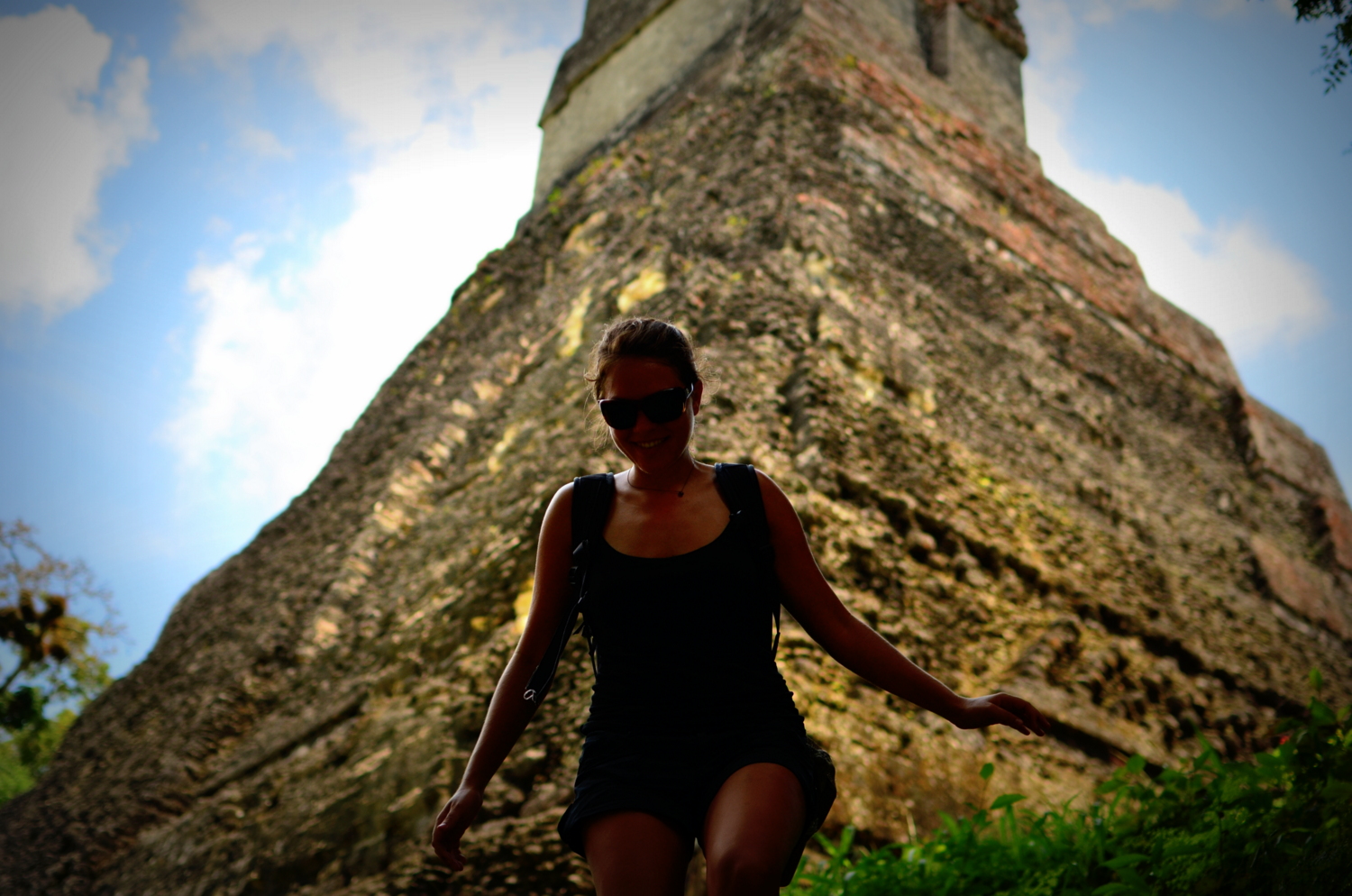

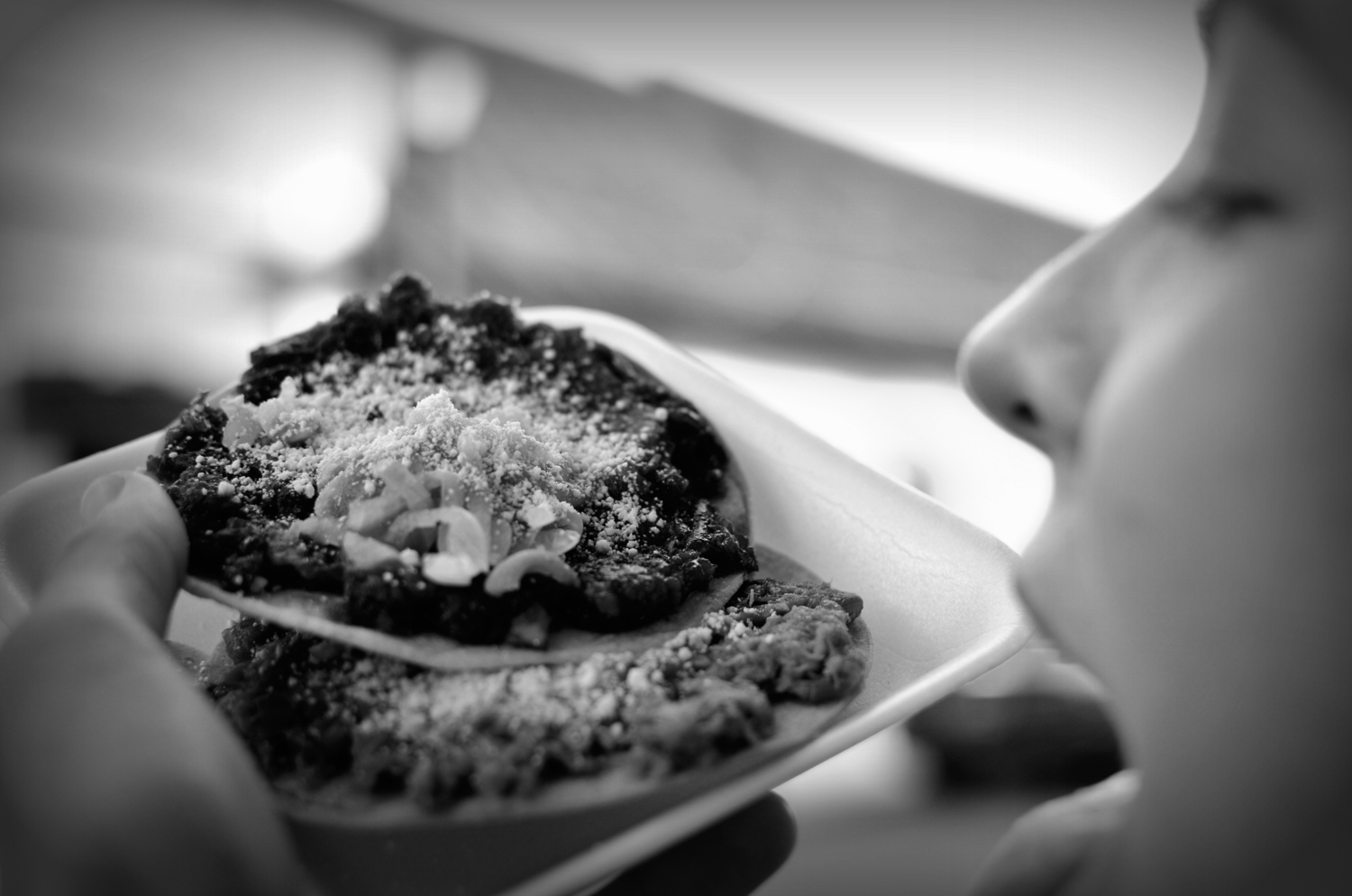
We booked our 9 hour trip for the following day to Semuc Champey and sought out cheaper eating options in town. We found a little row of stands up near the basketball courts that had ridiculously cheap, delicious food and 60 cent liquados (my addiction). We dined the way we liked it and ate for less than a 1/3rd of the price of our hostel. We walked into Santa Elena at night for cash, something we were warned against, and ate with locals at a small taco and sandwich stand right on the main street. Guatemala was welcoming us with open arms and we went right in for the hug.
One Thousand Followers!
One thousand is a 1 followed by 3 zeros. It is also 10 cubed. A thousand in the gambling community is often referred to as a dime. It is believed in Japanese culture that folding a thousand paper cranes will grant you a wish.
A picture is also worth a thousand words.
This past week a message popped up in my feed that marked the invisible milestone of 1,000 followers of this blog. In all honesty, I would have never guessed this would have ever happened. In my head all I really wanted was to get featured on the freshly pressed homepage just once at some point in time. Since this thing started I have had the pleasure of being freshly pressed twice while documenting this traveling photographic journey. I truly appreciate all of the feedback and support and also embrace the on-line community that has been formulating behind this blog. Thank you all for taking interest in whatever it is that I am doing on here, it’s very truly appreciated.
Sincerely,
Dan.

San Ignacio and Placencia

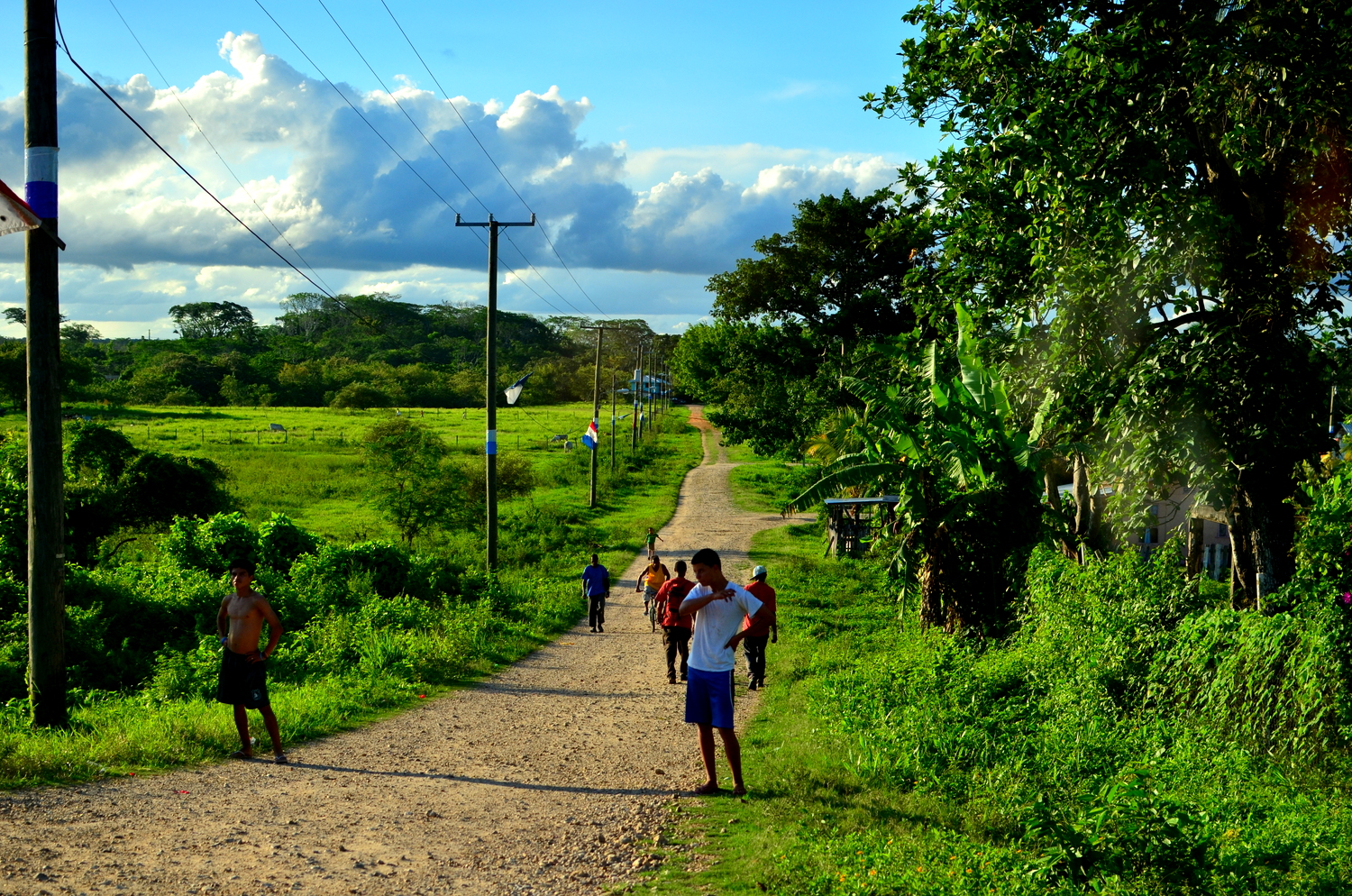
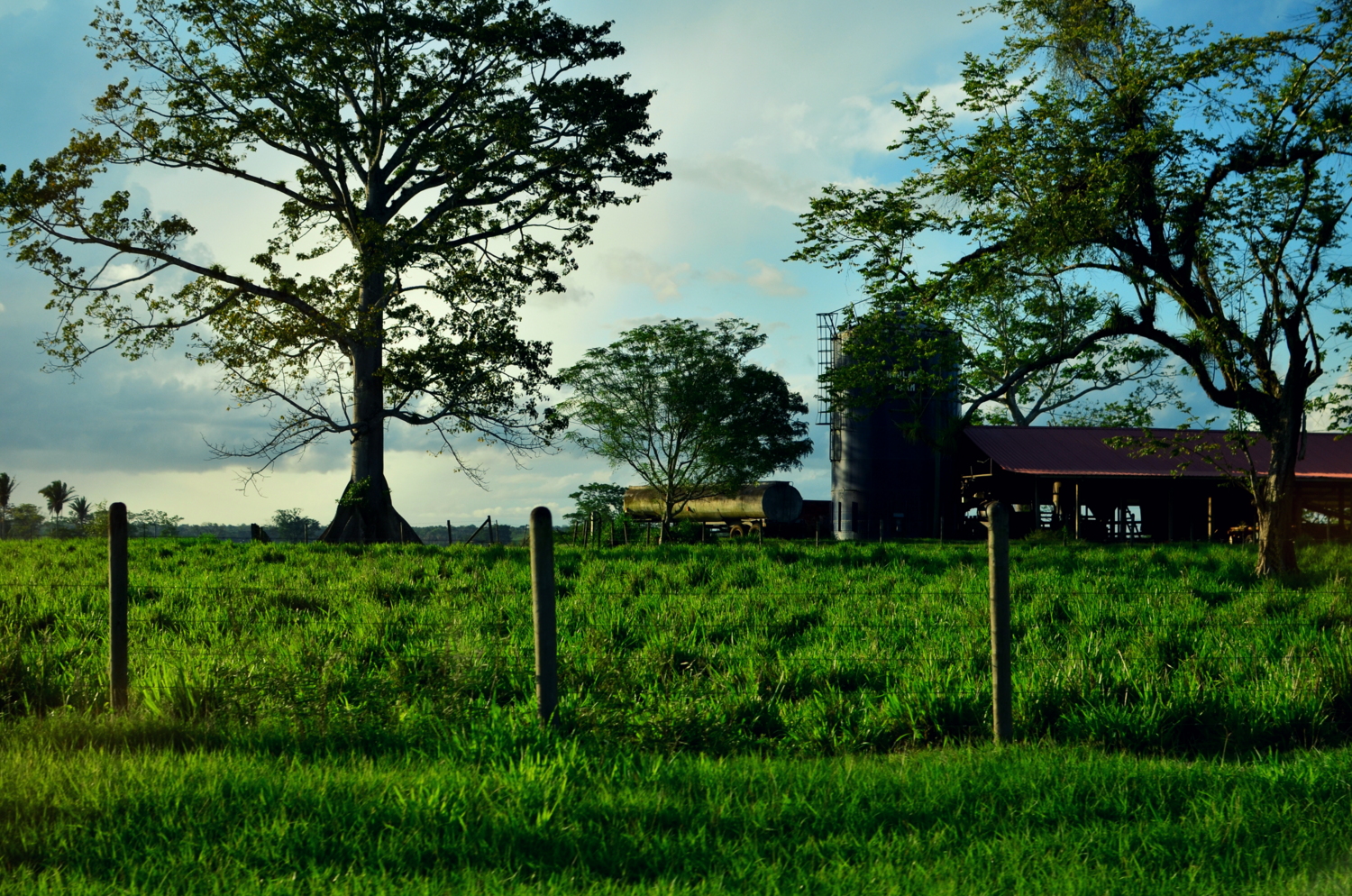

On four rented wheels we blazed our way through Belize onwards towards San Ignacio. The lay of the land became more alive and beautiful as we made our way out west. Little villages popped up out of lush, green forests and small mountain peaks began growing as Guatemala approached. We learned more about our new travel couple increasingly as the time passed by. Our cooperative efforts of making sense of the paper/hand drawn map of the roads that was given to us by the rental company further built some traveling bond. Sam worked with green organics in San Fransisco, quite a lucrative business from the sounds of it, while Kristina tended to customers desires at an authentic Mexican food restaurant.
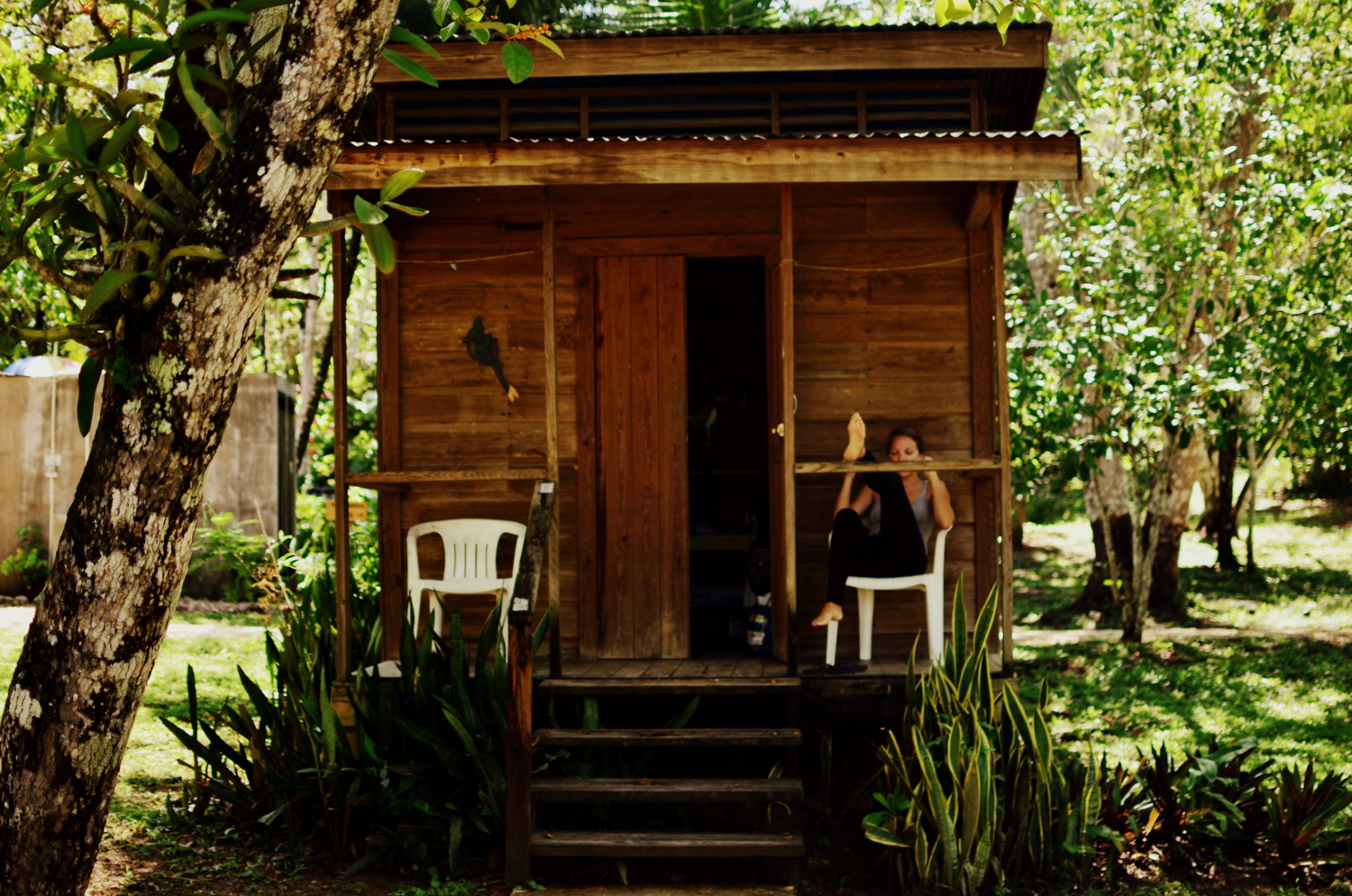
Belize is a relatively small country and is roughly the size of Massachusetts. Just about 2 hours after leaving the coast we were already within striking distance of it’s border with Guatemala. We rolled across a small wooden bridge that looked like it was cut out of a Southern Living magazine and entered San Ignacio around dusk to grab a bite in town. Belize has a lock down on skype and blocks all calls going out of the country, but I managed squeeze in a domestic call to an eco campground nearby. We pulled into the parking lot of the campgrounds and picked our cabins right before the most intense thunderstorm I had ever witnessed swallowed the entire sky. Lightening lit up the entire universe while thunder claps that seemed to have been made by Zeus himself smashed down on the leafy green world around us. A tree fell on top of the rental car when our new travel couple moved it for protection. The dirt road turned into a temporary class 5 rapid while the sky opened it’s water valve onto the earth mat below. I’m convinced a lightening bolt hit our roof because the loudest metallic crunch I have ever heard was created within feet of our eardrums. We ran for the kitchen area and faded the night away with rum, cigars, and stories. The owner came and gave us a brief history of his tropical campground, complete with self composting toilets, rain water showers, and solar powered lighting. He gave education tours to schools and used to work as part of the archeological crew uncovering the ruins nearby that we were seeking the following day.
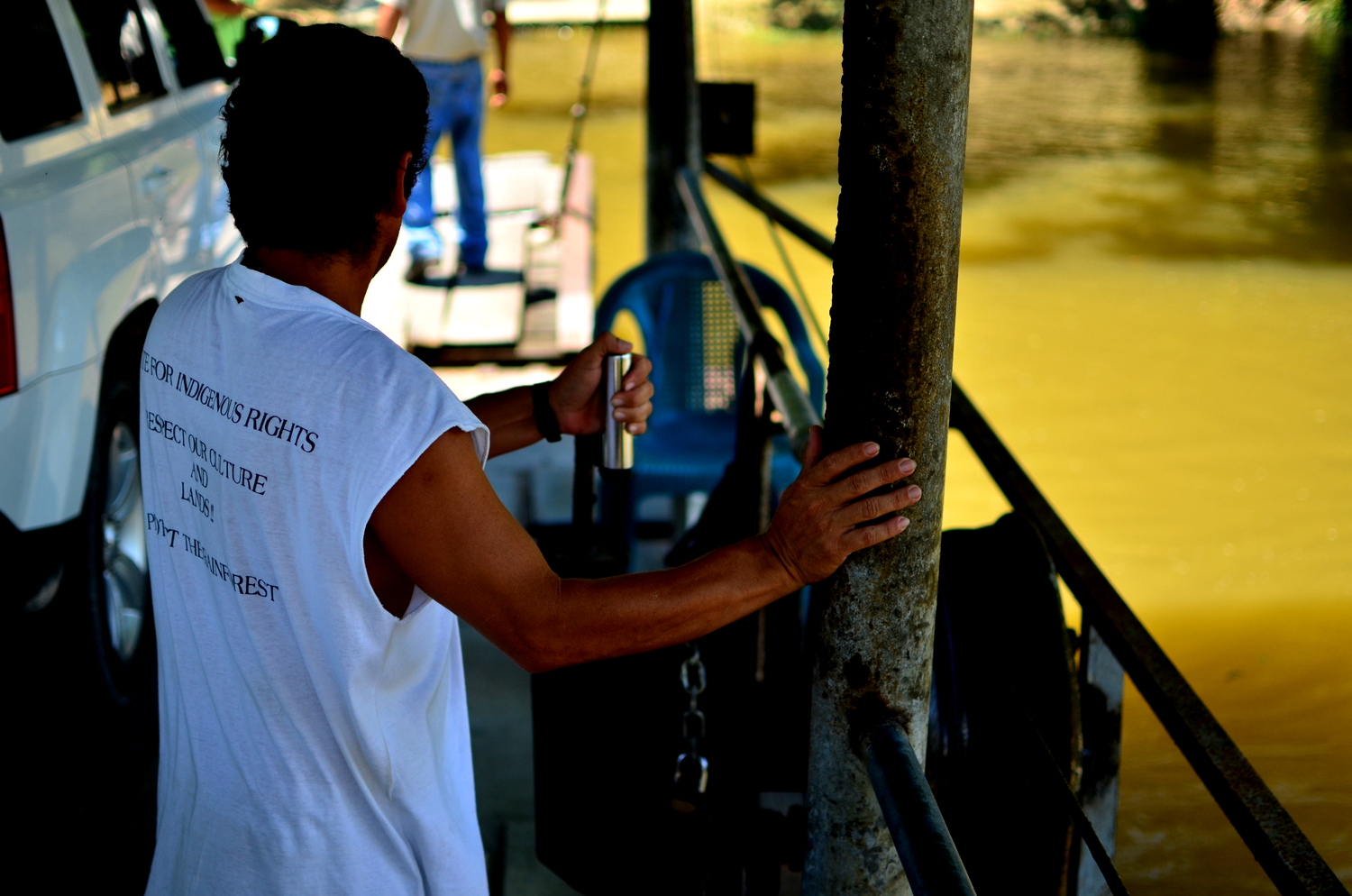
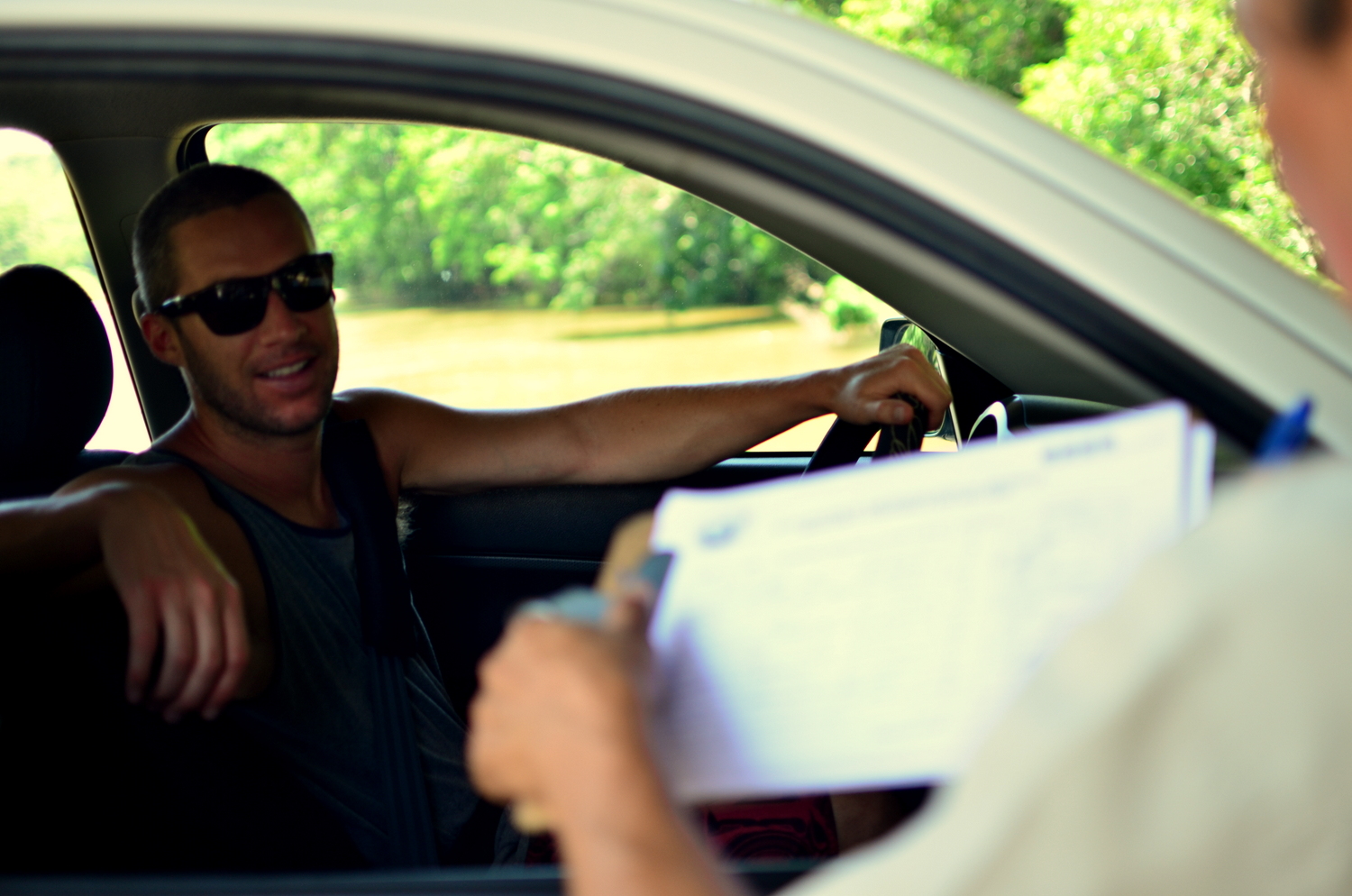
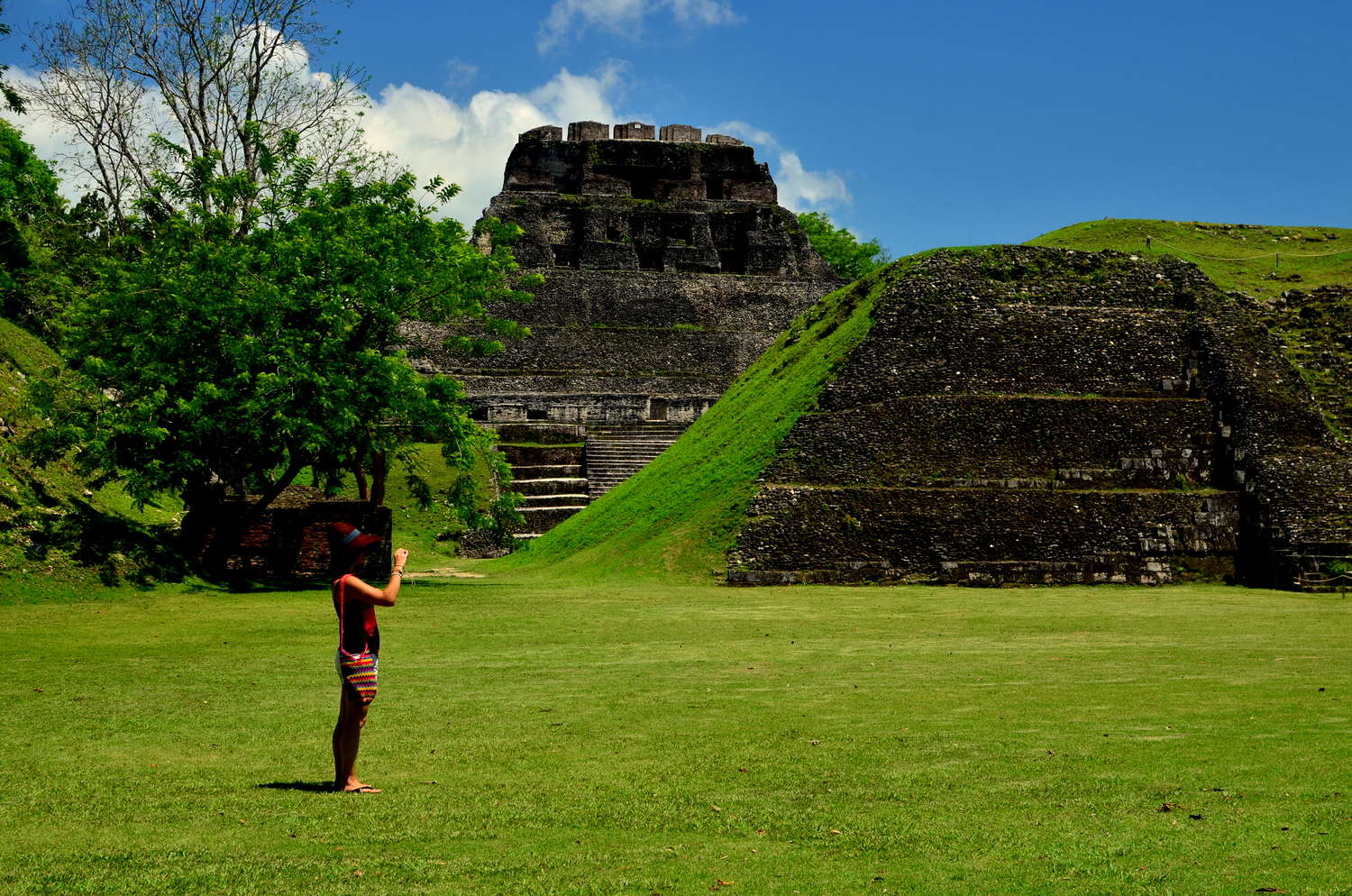

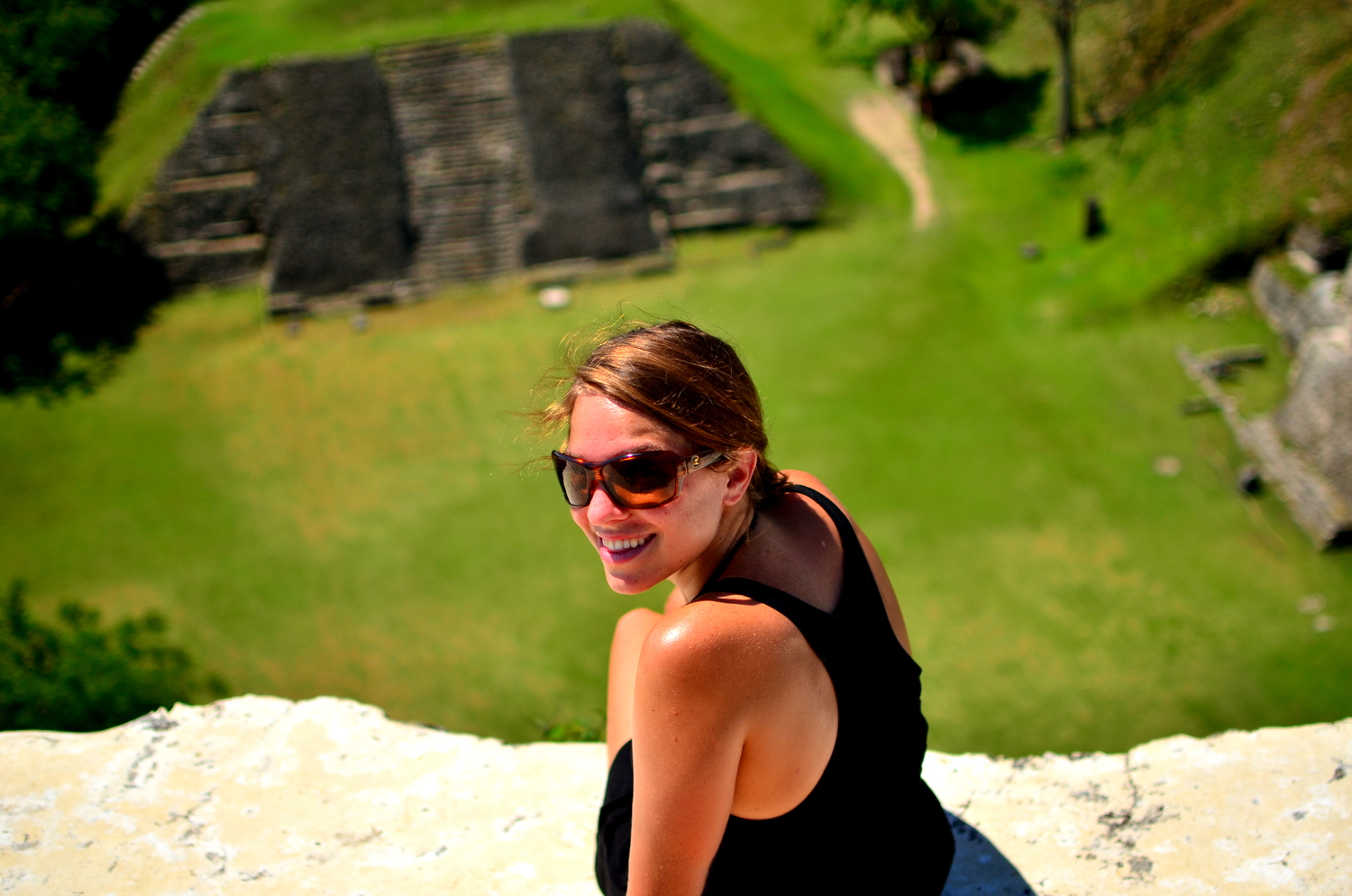
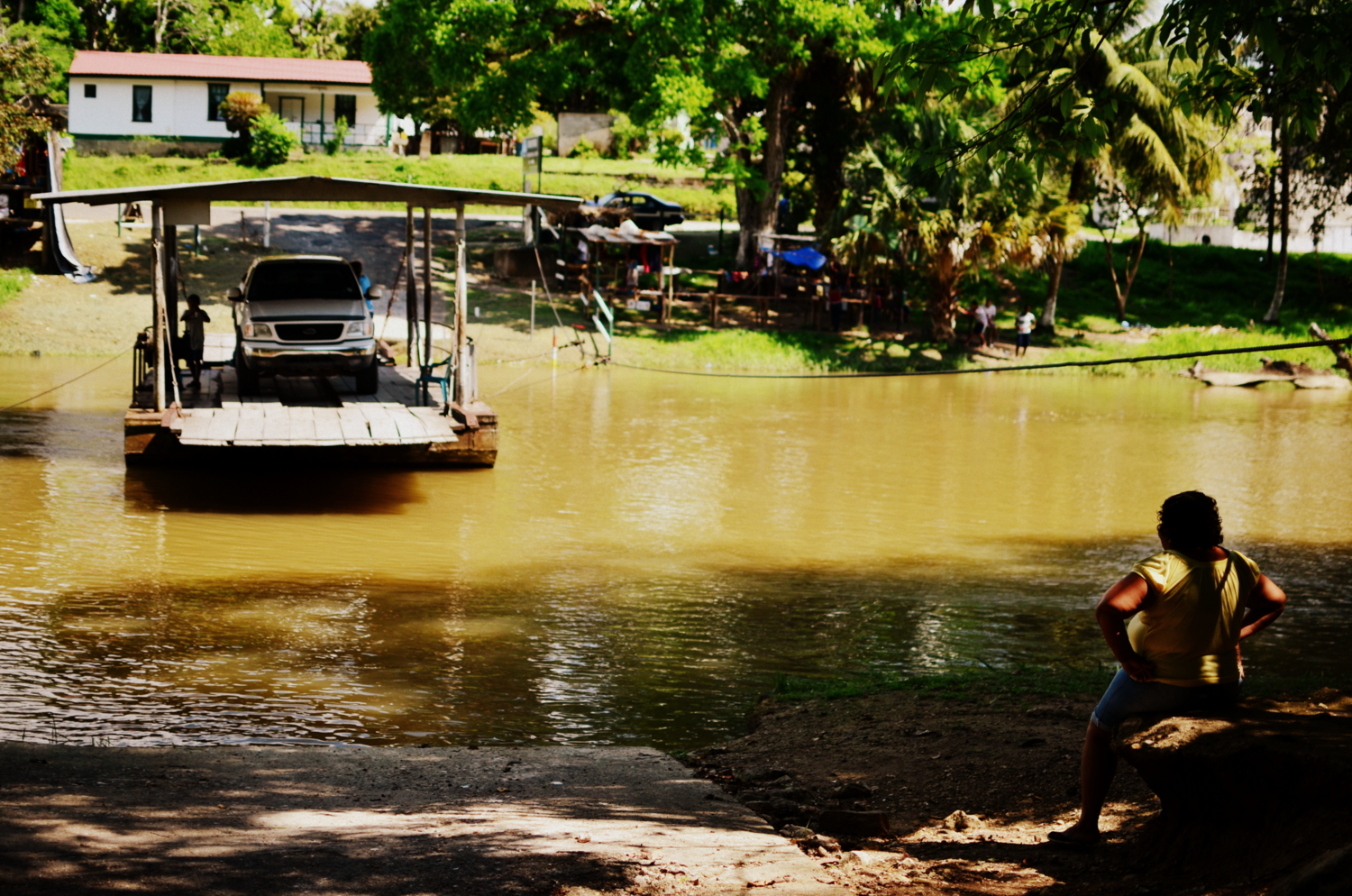
To get to the ruins you can drive your car onto a floating dock that is operated by hand to ford your party to the other side. A young man began hand cranking the bridge as soon as we put the Nissan in park and we slowly made our way across the muddy water. Being early, and also in the middle of the off season, we pretty much had the entire site to ourselves. Belize is speckled with about a dozen uncovered sites and probably many more still unearthed, but are not visited often. We noticed our hostel owner in a picture of the team that helped uncover the massive site. All but one of the temples were accessible by visitors and the view from the very top of the main castle was beautiful, as expected.


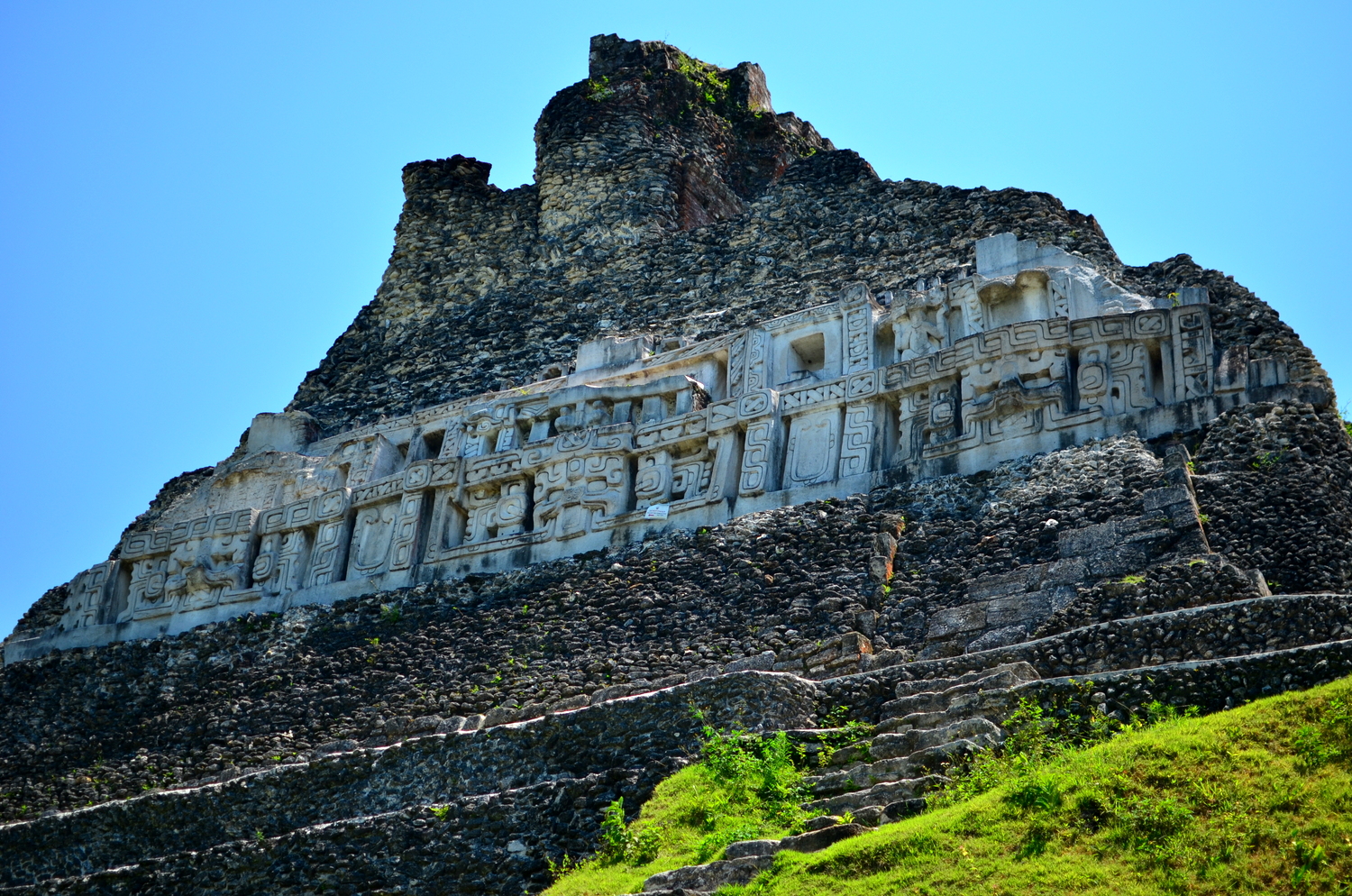
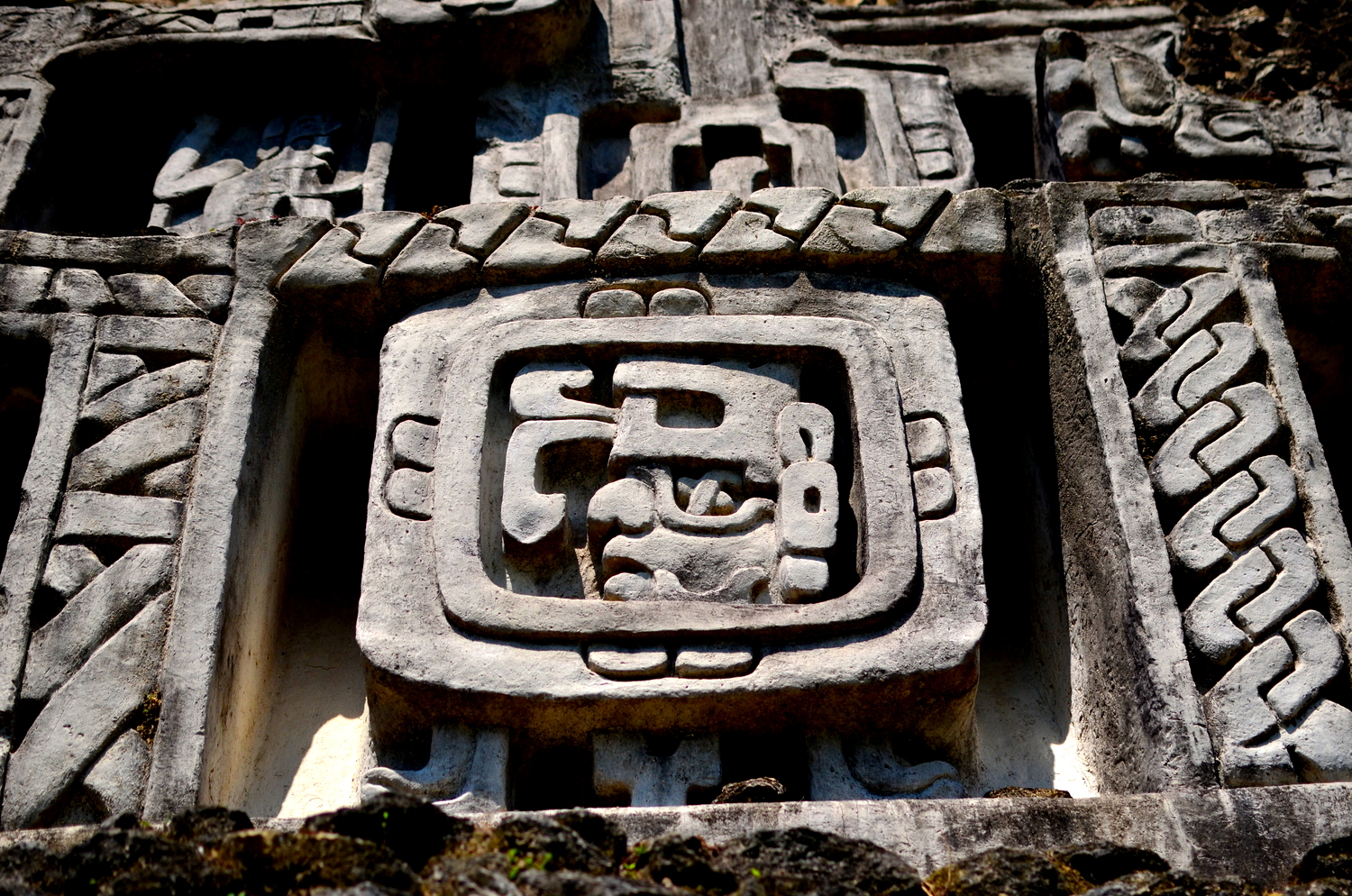
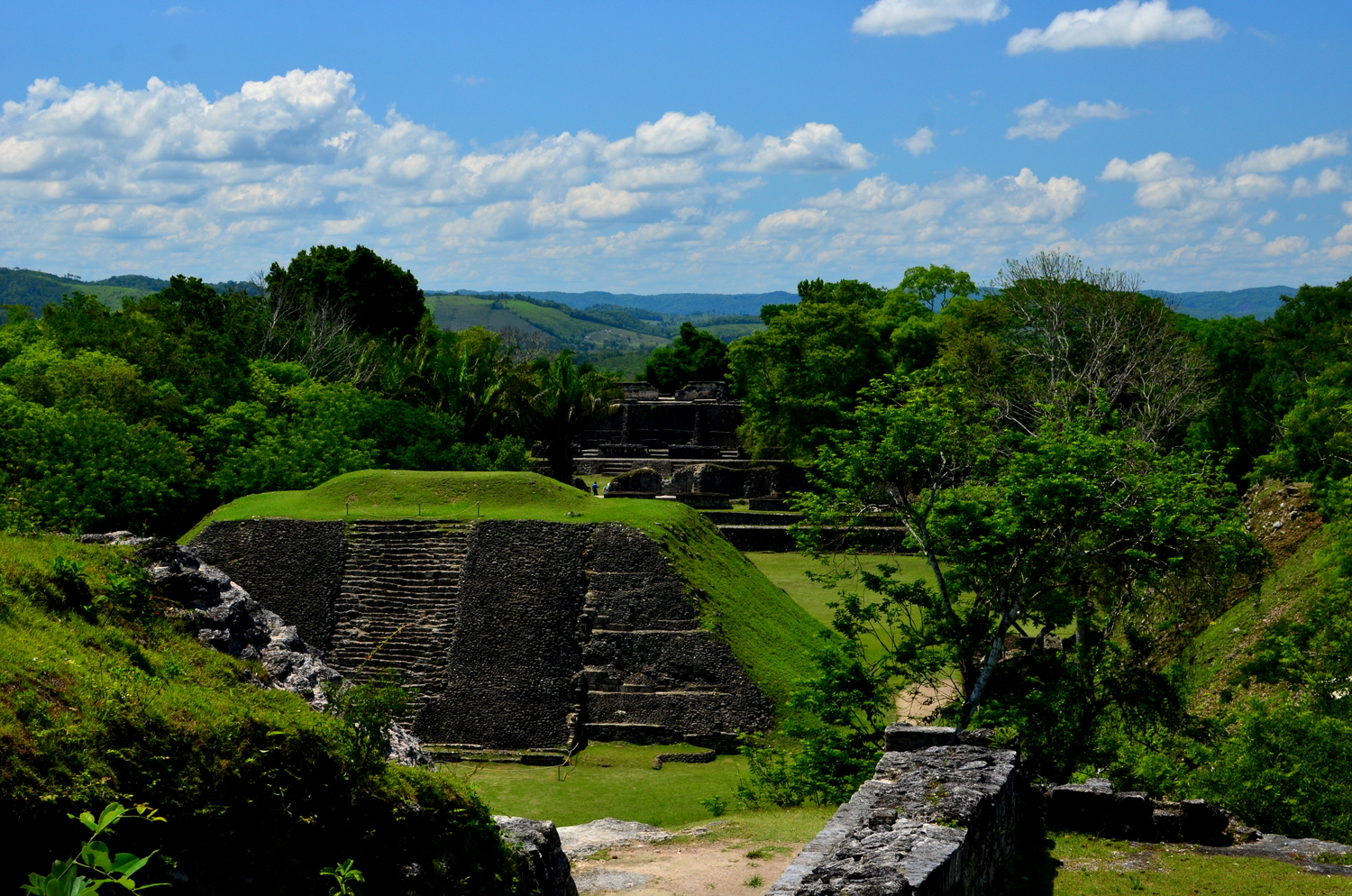
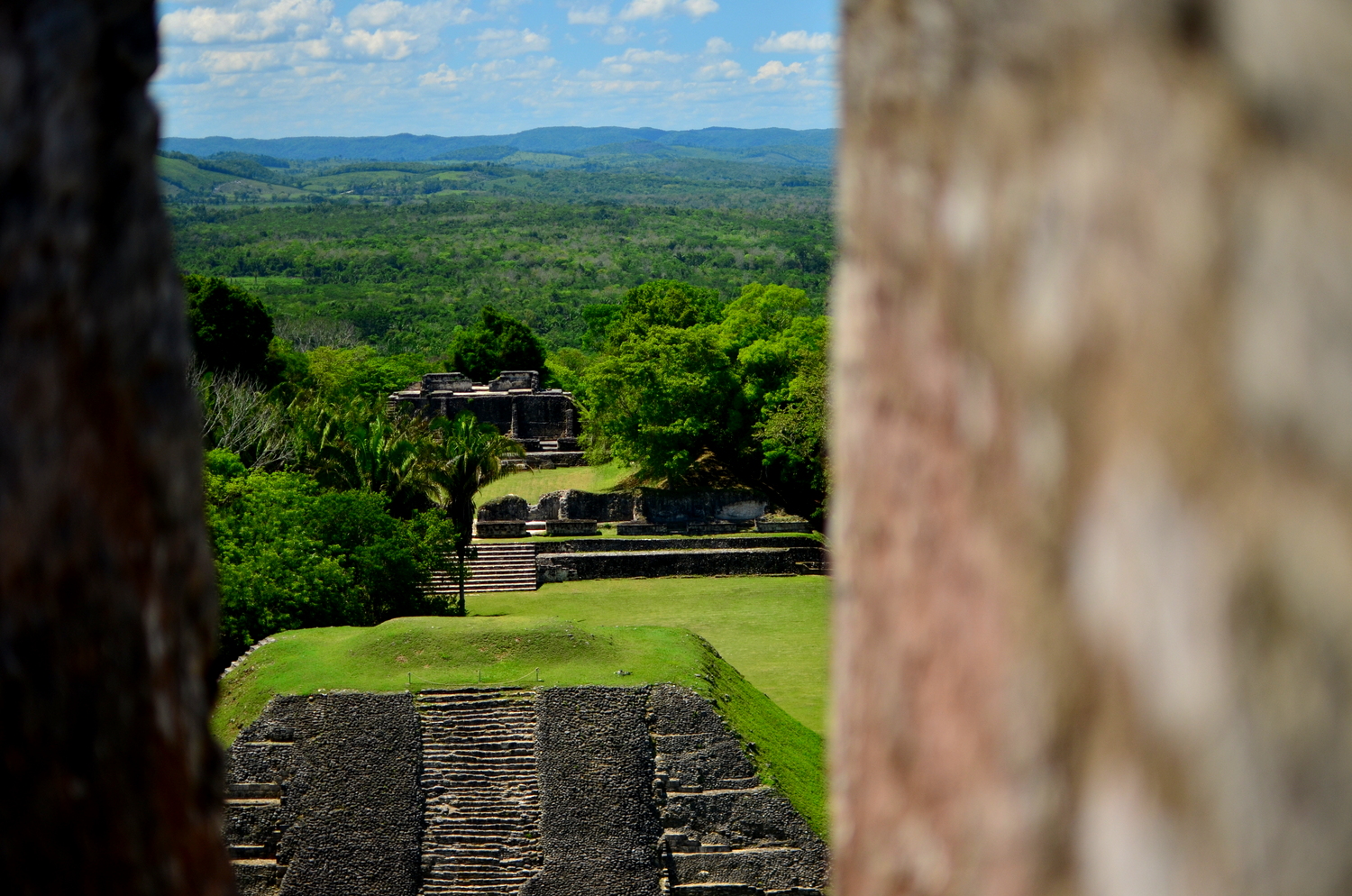
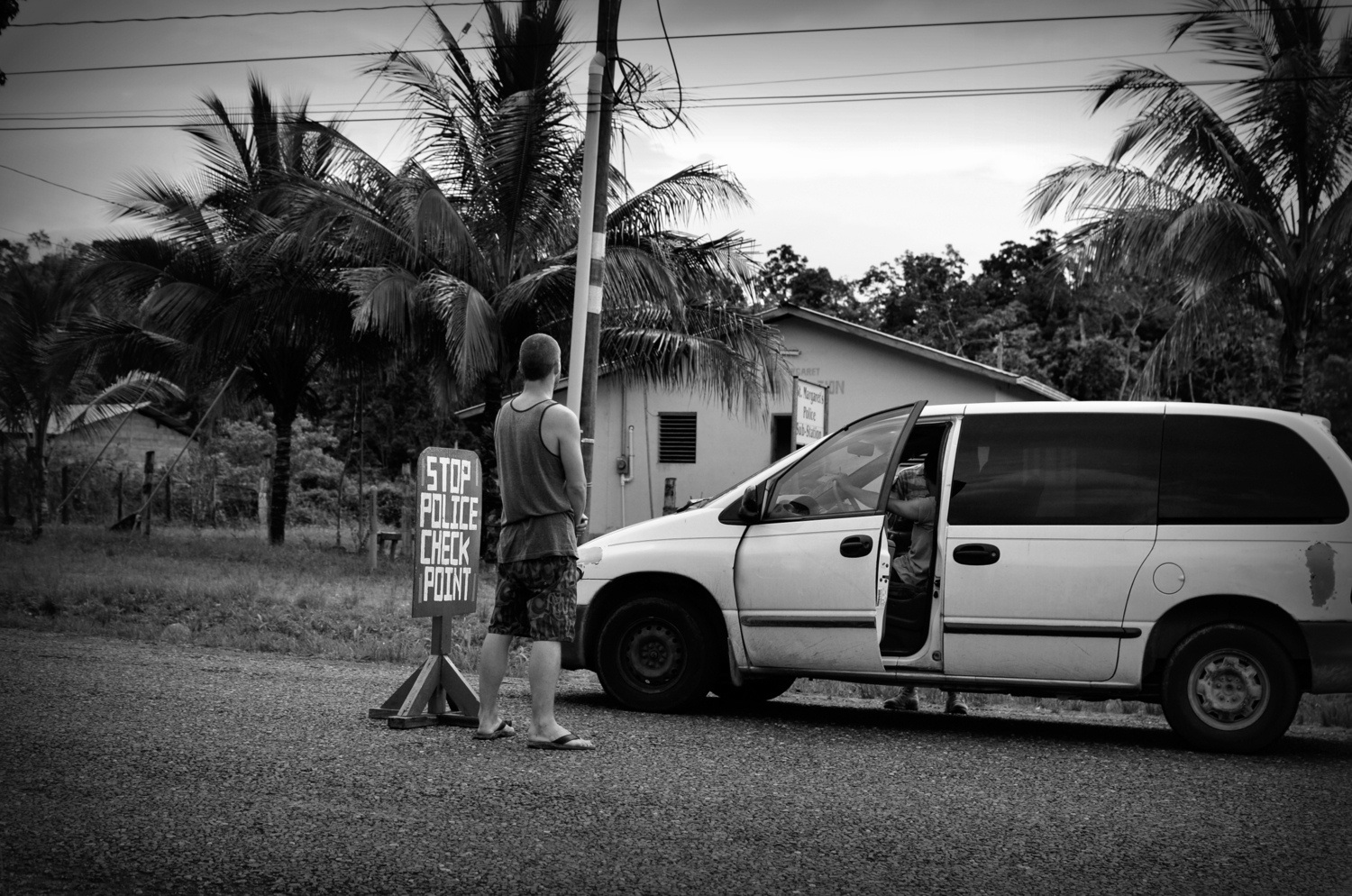
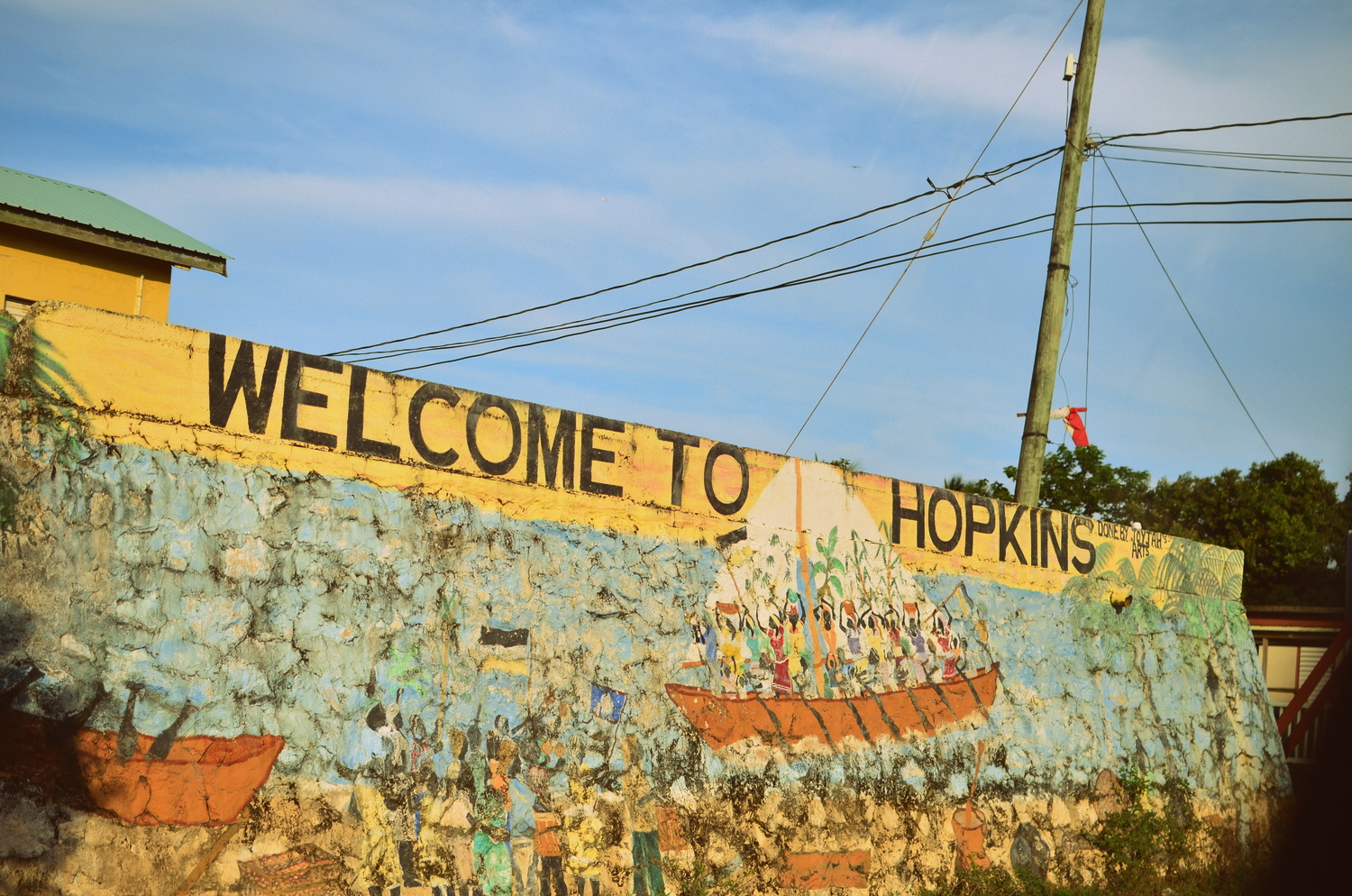
Elissa’s family friends had invited us to use their private house in Placencia for as long as our hearts desired, so we started heading down the Hummingbird Highway back towards the coast. We couldn’t reach them with our contact information, but we knew it would all work out in some weird, Caribbean fashion. The highway took us deep into the mountains and valleys of Belize through farmlands, tiny hillside villages, orange and citrus farms, banana plantations, and tropical jungles. Palm and Ceiba trees were planted firmly in the ground among fields of white cattle munching on vibrant green fields. We all did a double take when we saw a horse drawn carriage carrying a cohort of watermelons driven by a textbook definition Amish man. It was a taste of home for me because upstate NY is filled with Amish, but it was more than surreal seeing them in Belize. They were referred to as Menonites and moved into Belize in the 50’s to begin cultivating the land. Menonites grow most of the produce that feeds Belize, believe it or not, and began appearing stationed at roadside stands selling fruit and veggies just like they do back home. The highway weaved through the green pastures while the sun radiated it’s warm yellow rays through the tropical air. The Hummingbird is definitely the most beautiful drive in Belize, in my opinion, and should be sought out by anyone traveling through. A short stop over in Hopkins for a late lunch brought us into a tiny fishing village that was sleepier than a dog on a hot day in July. Bicycles prevailed here and would leisurely ride in the middle of the road with two or sometimes three people sharing one. We stopped in front of a small roadside restaurant to see if we could get some seafood fare cooked up on the spot. Fish and chips were served up at an island pace while the sun gave up on the day and retreated beyond the hills. With only one way in we headed out on the same bumpy, tire-packed dirt and cobble road.
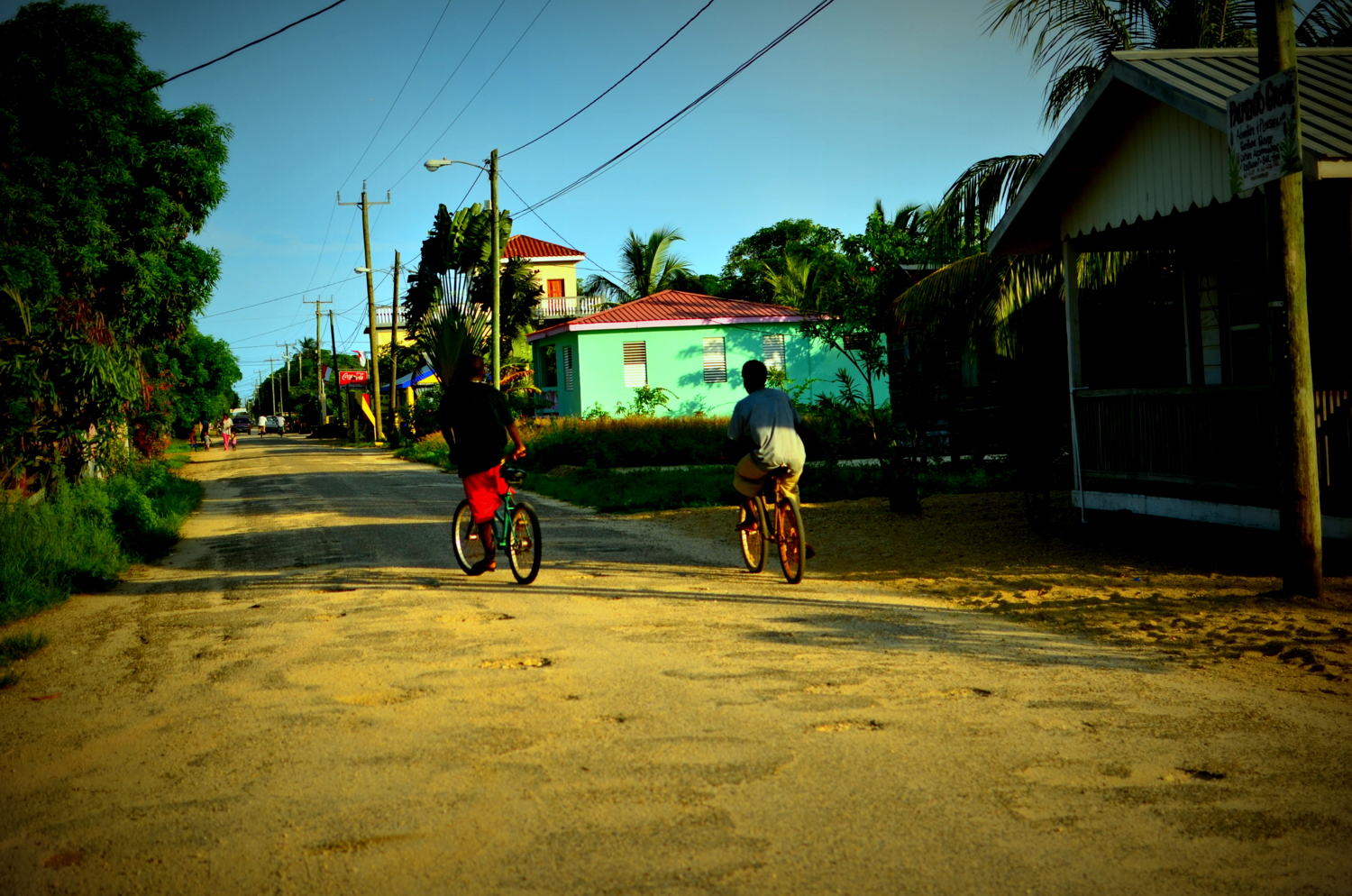

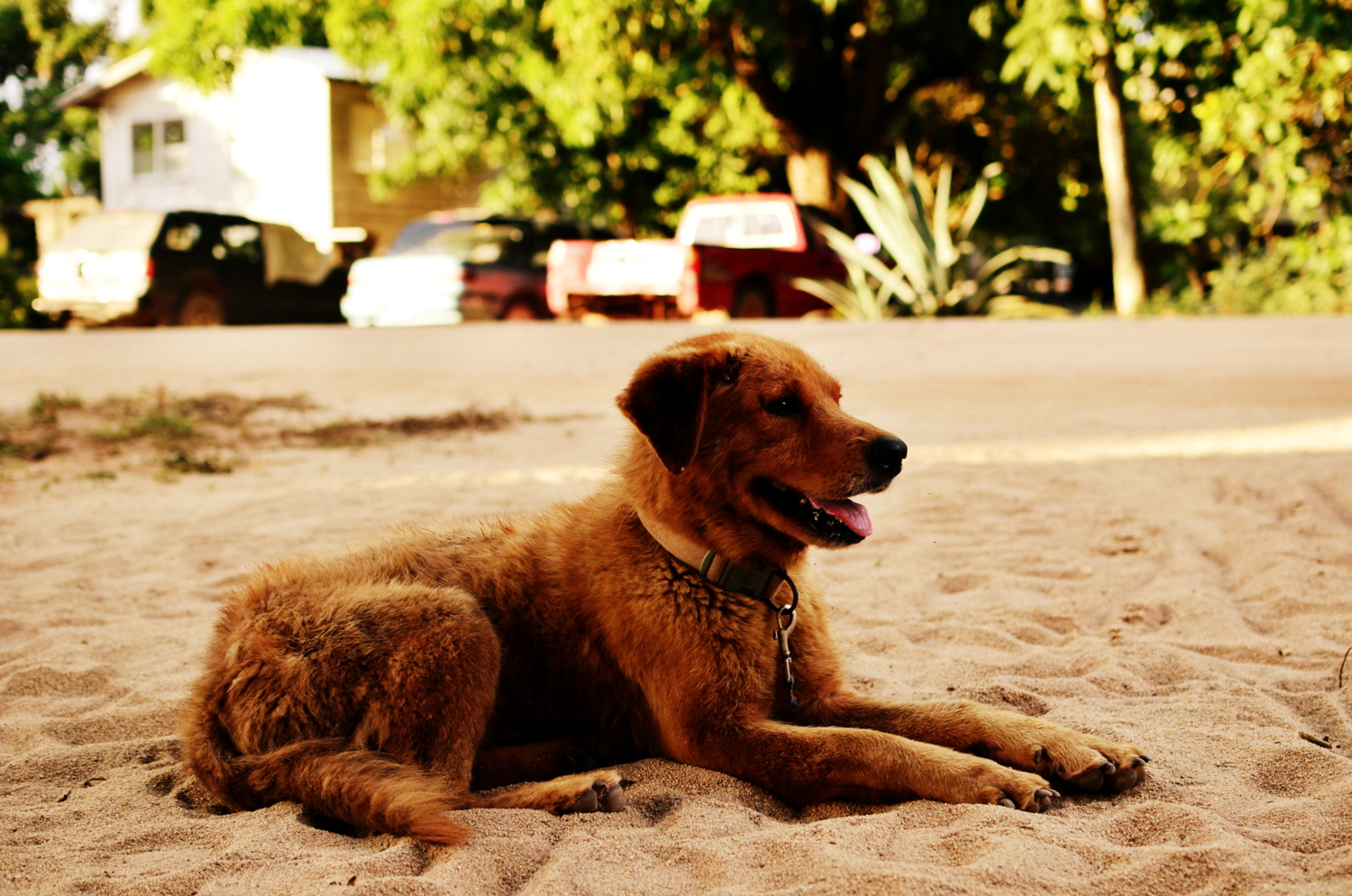
We immediately knew when we were on the road to Placencia by the general condition of the road suddenly improving. Gigantic houses and skeletons of compounds in construction rose from the sand before huge luxury hotels inundated the peninsula. This part of Belize was considered to be paradise, and it appeared that way by the first dose of real estate we encountered miles before entering the creole town. A tiny garifuna village sat stationed between the prime, outer reality boom and the little Placencia center. When we drove through it was filled with men, women, and children walking all over the road in the hot, sticky night.
We parked ourselves in a backpackers hostel when we got into town and hunkered down for the night. The next day we sought out the care takers of the house we were offered to see if the deal was still on. After a few phone calls and asking locals on golf carts where the old Rum Point Inn was we eventually found the hidden, jungly driveway entrance to our casita. The caretaker was a man named John from South Africa who reminded me of a gritty, weathered pirate with a lot of secrets and not much patience for those with a curiosity. When we asked him about how he knew Peter, the owner of the house, he simply replied “Well, I don’t really know the guy much”. This was odd considering Peter owned the house for about 20 years and John lived there for about half of that time. I tend to believe it was because he didn’t know us much and information like that is not offered after a short meeting. This was an ongoing theme that was felt in Belize, for me anyway.
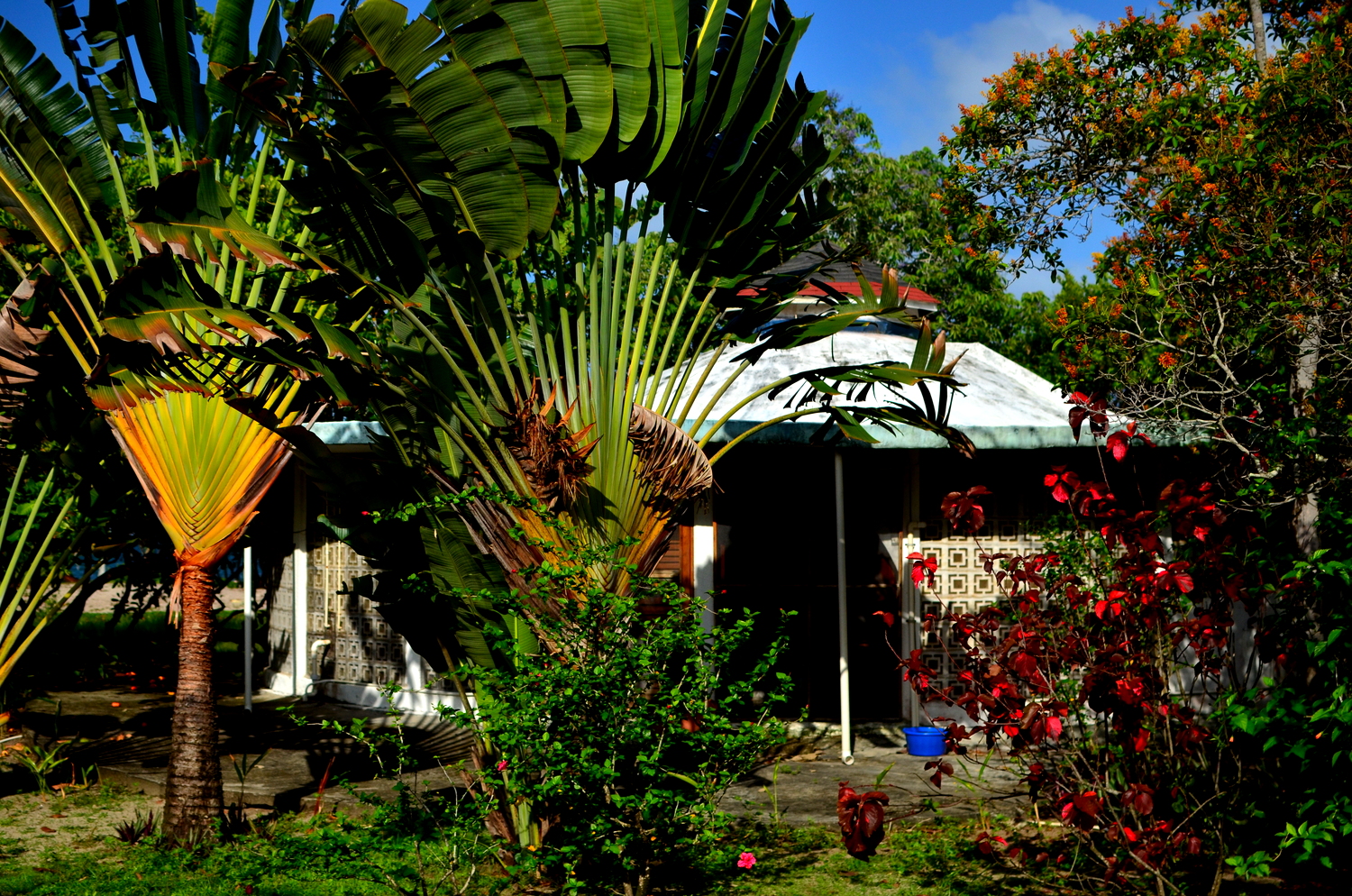
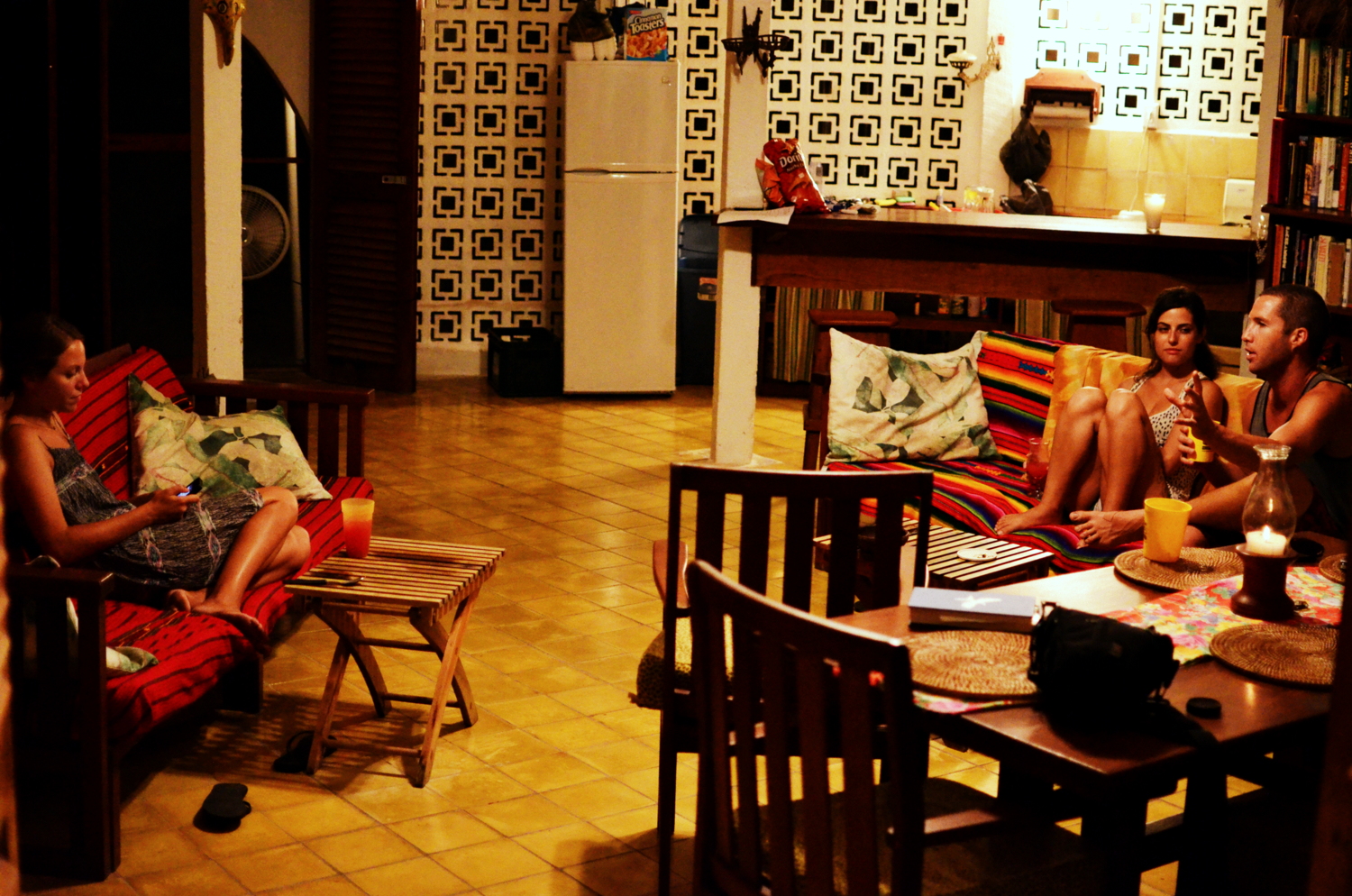
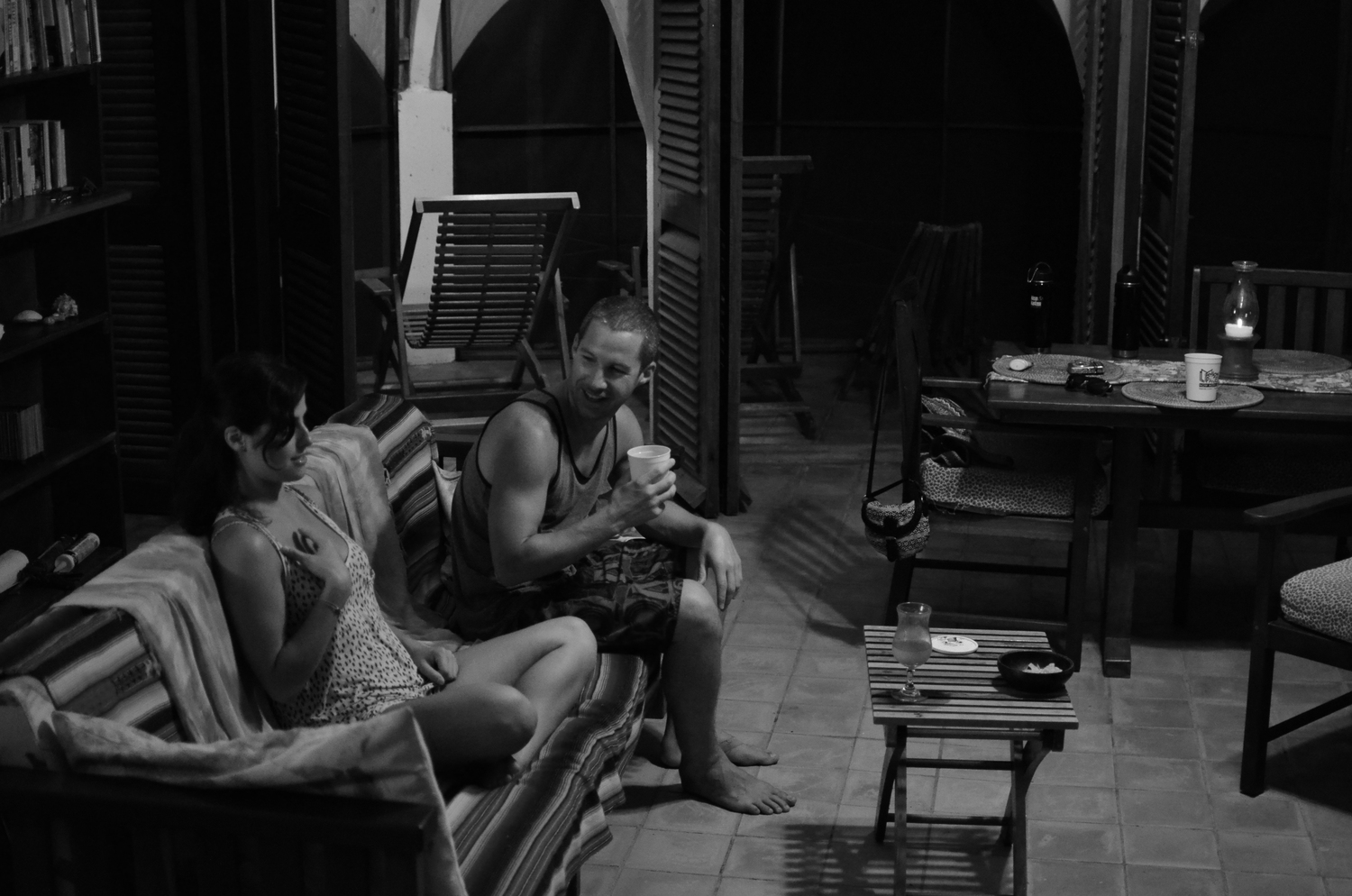
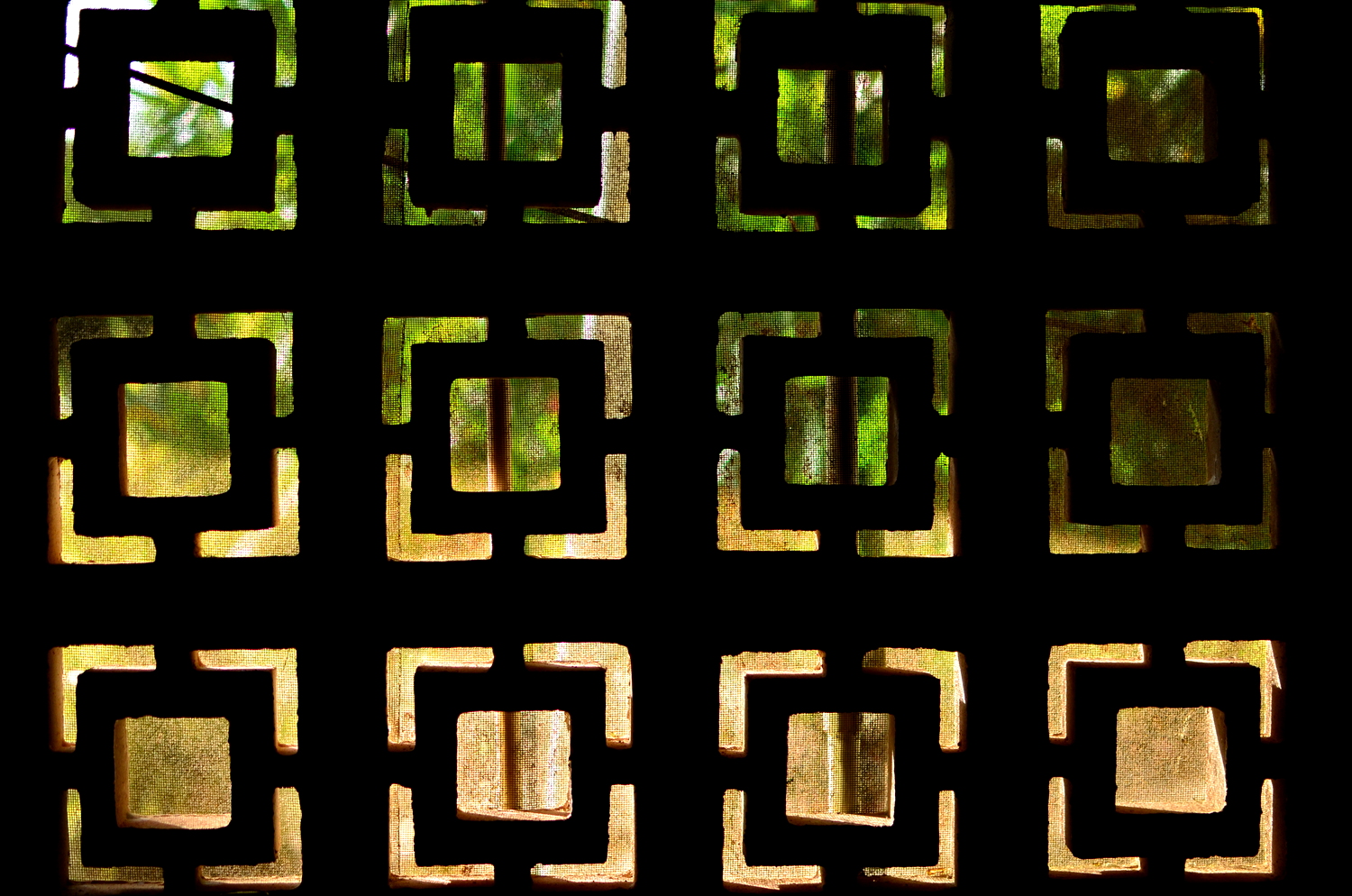
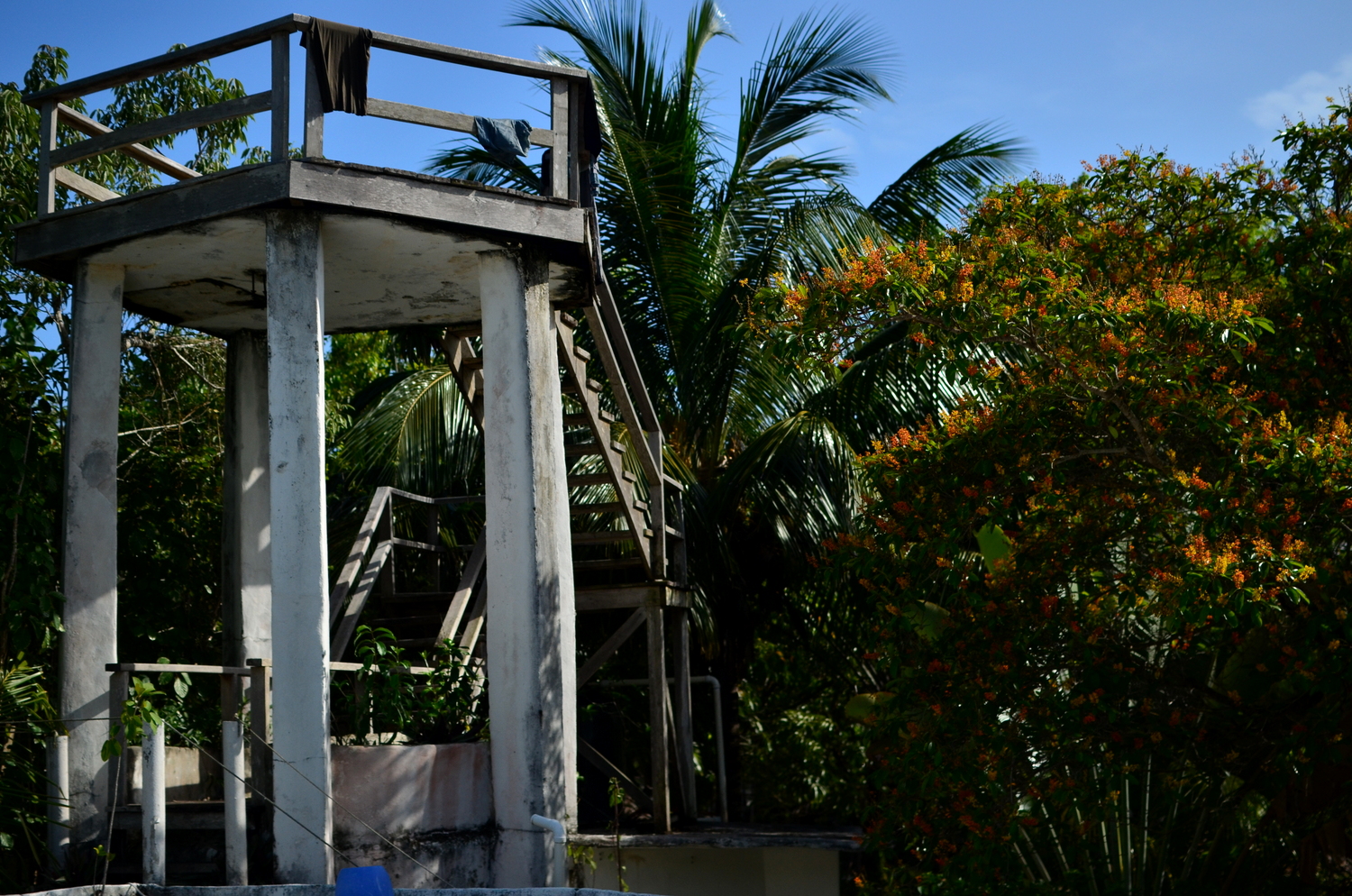
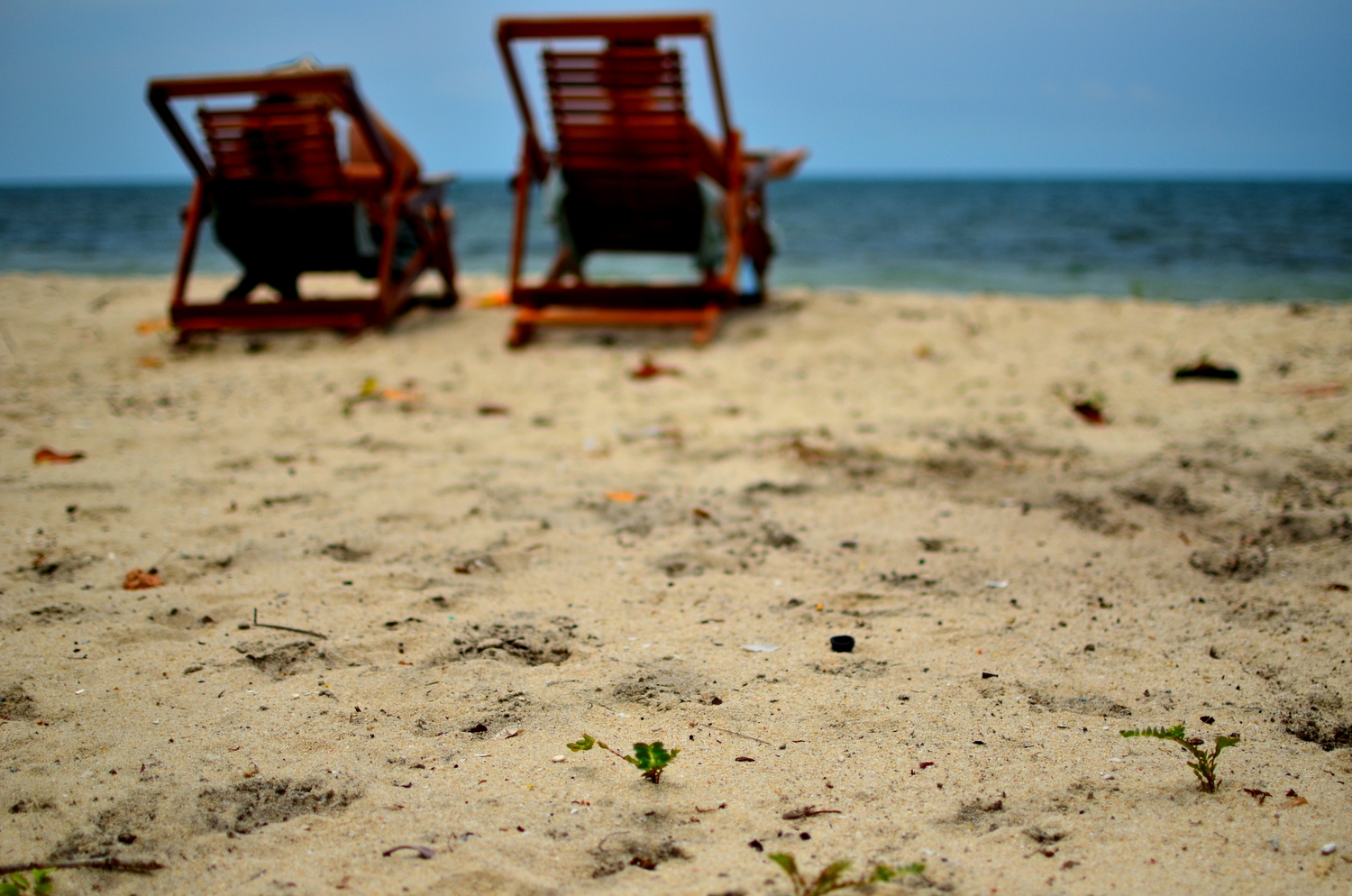


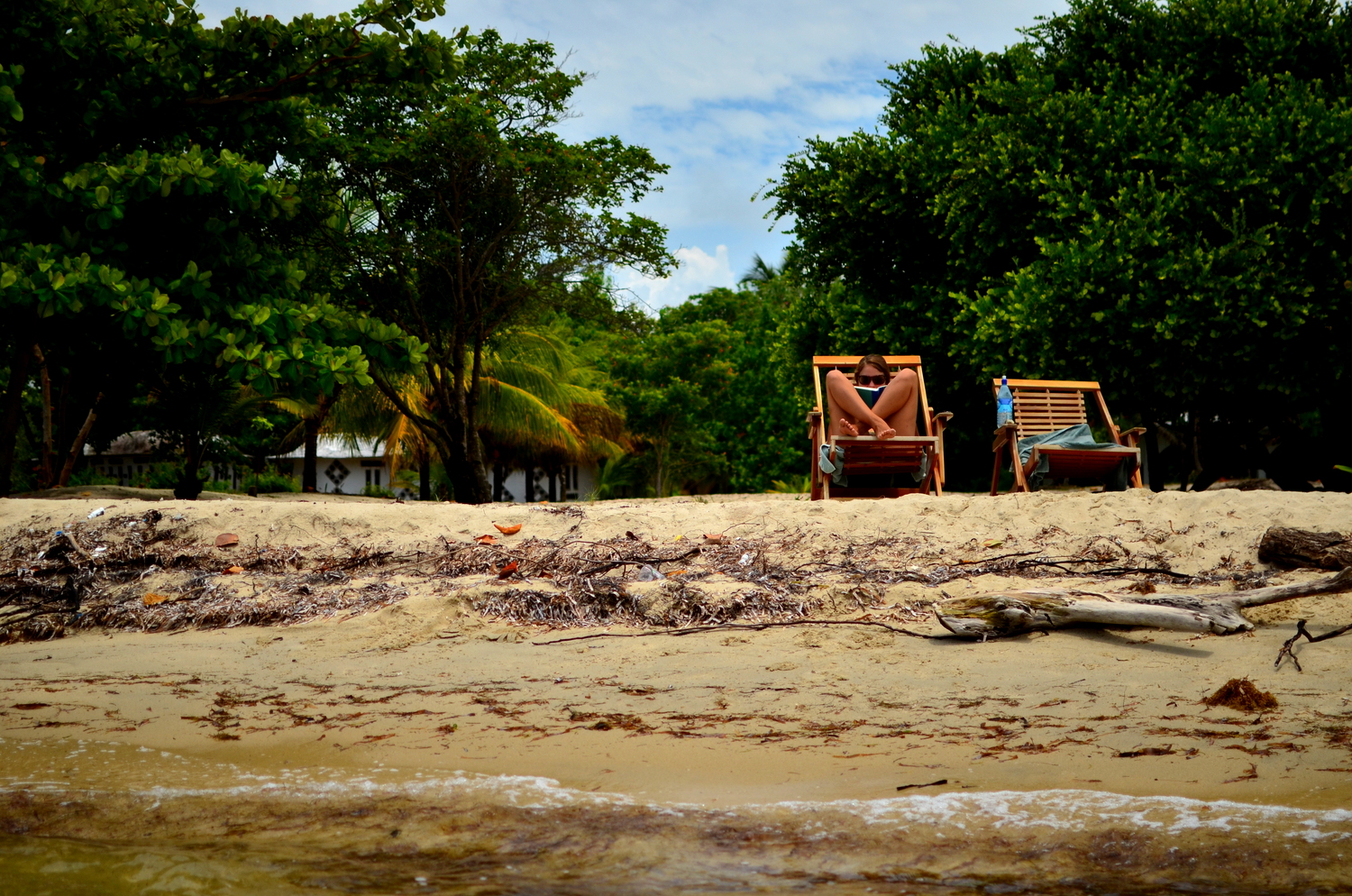

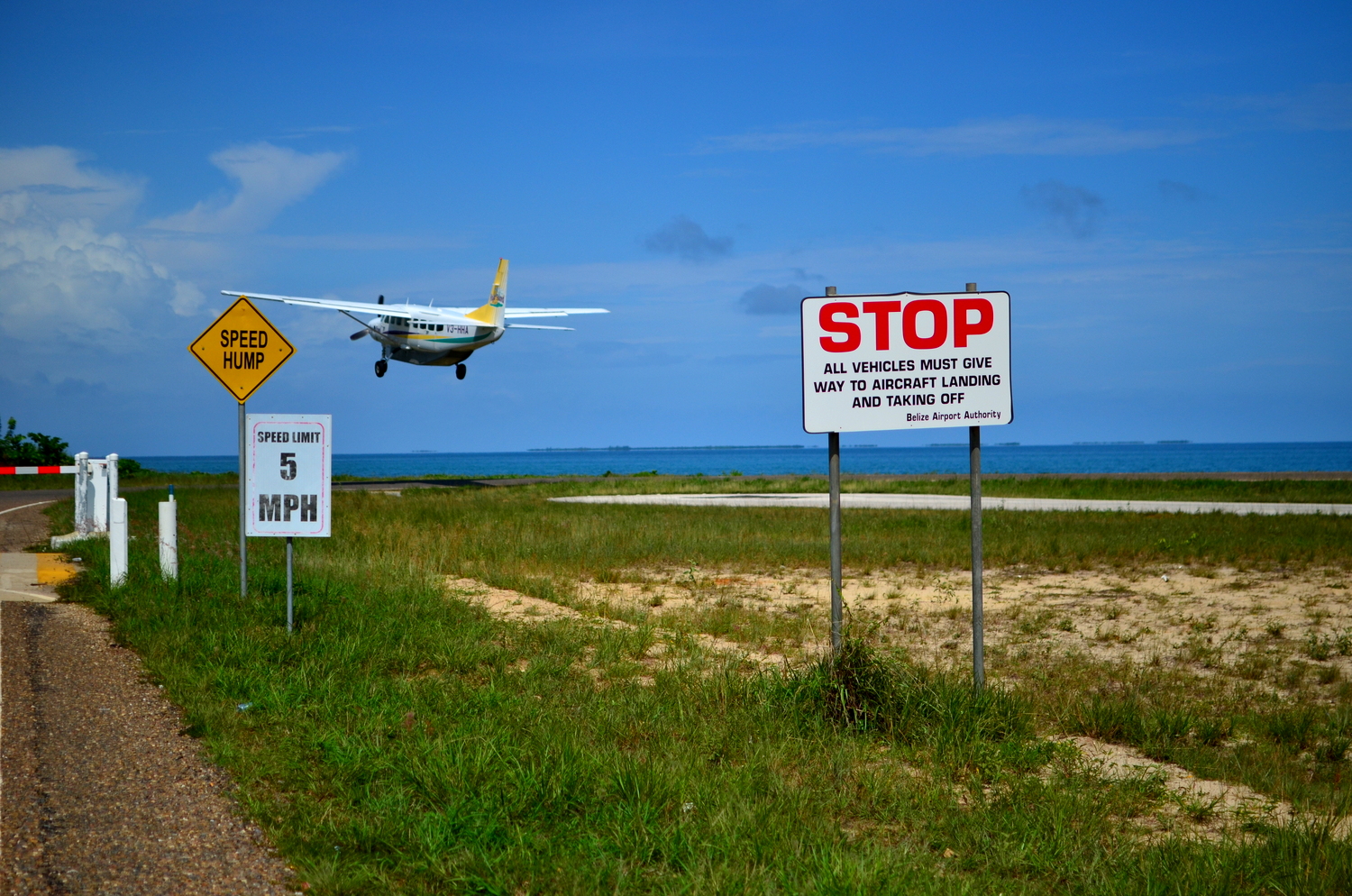
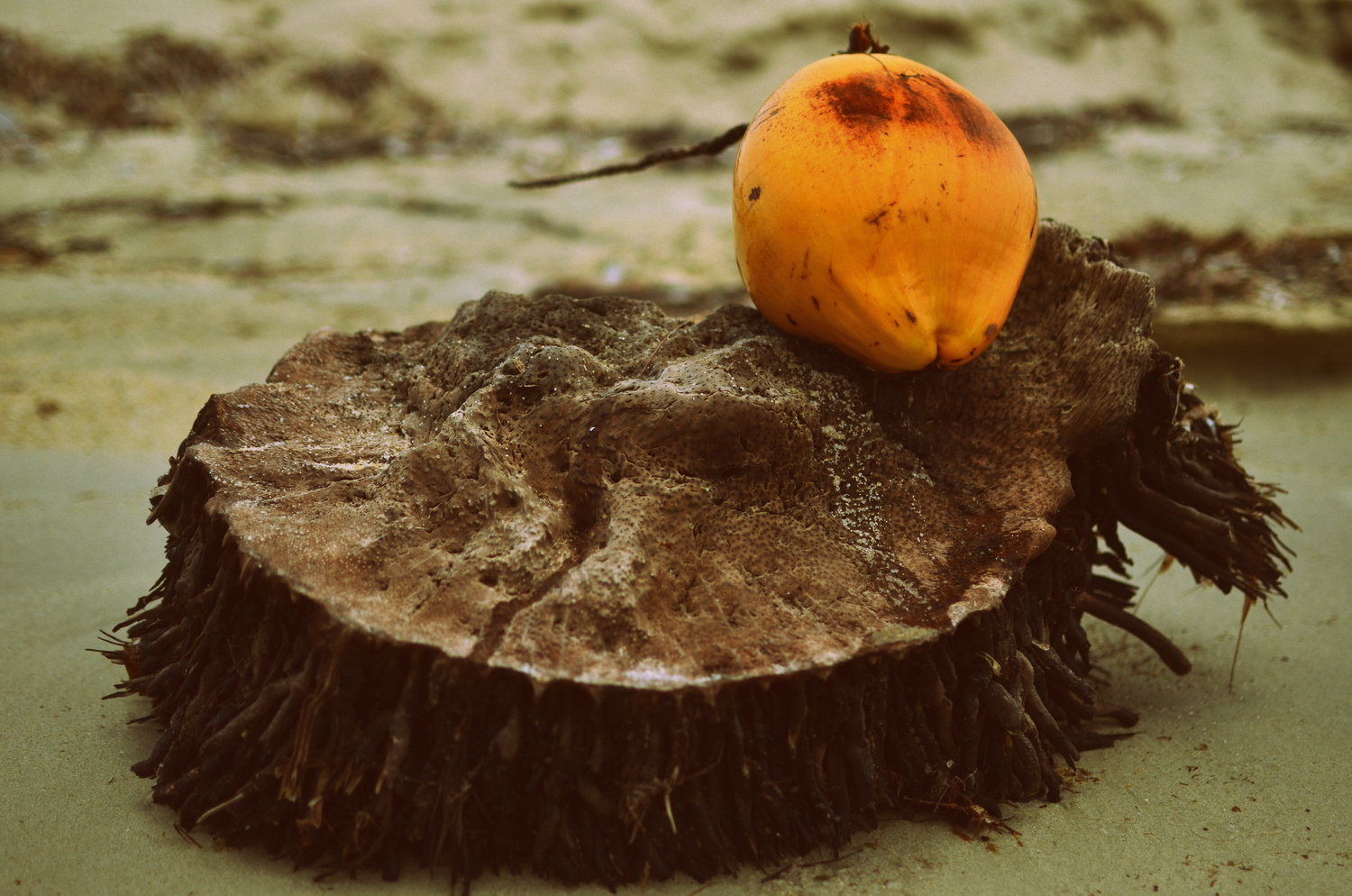
John led us to an round house with a circus tent-like concrete roof that kind of resembled a space ship. There was an air outlet at the top of the dome for heat ventilation and the walls were screened in stucco with the same pattern hollowed throughout each square unit. The house looked like it hadn’t been used in months so we dove into a 3 hour cleaning frenzy sweeping out the dust, sand, and paint chips that had sweated off the ceiling. The place transformed into home with a 30 second walk to our own private beach on a deserted hotel/inn of the past. There were about 12 other buildings in the compound that hadn’t housed any inhabitants in a very long time. We immediately ran to the grocery store and sought out refreshments to battle the morbidly humid, hot Placencia air.
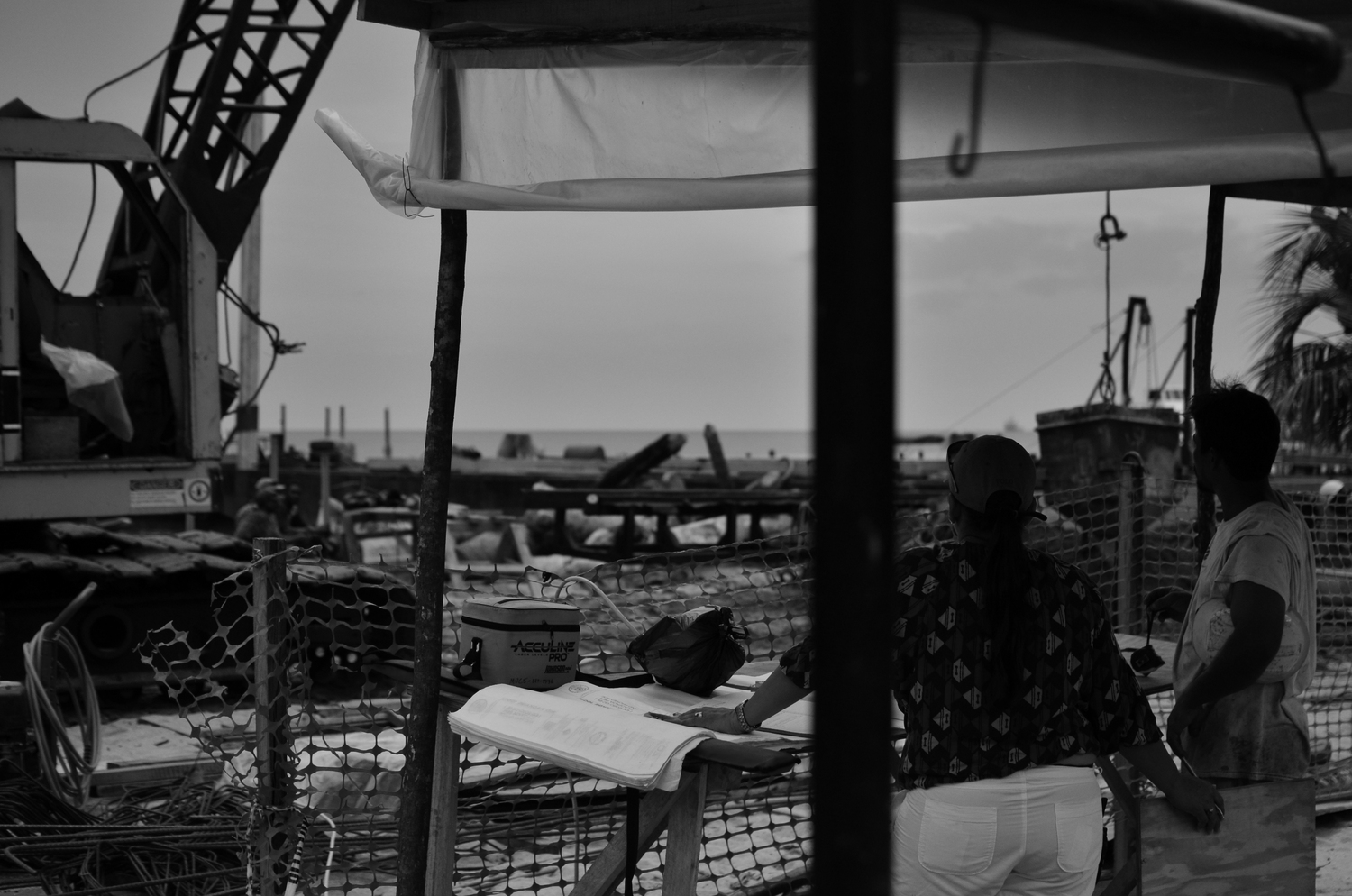
I quickly found out this part of Belize, as well as other parts of the Caribbean, seemed to be filled with people who had something that remained hidden. Perhaps that was why they moved here, to get as far away from home as possible and hide out in a land that takes in whatever character that decides to put the suitcase down and call it home. Belize was full of an eclectic mix of locals, foreigners, and businessmen all holding back any information about their past and focusing only on their day-to-day. Alcohol seems to be more prevalent the closer you find yourself to the water and the small bars near the beach seemed to have customers at any given time of the day. It was low season here, and people seemed to have completely abandoned the idea of opening up stores for the tourists that still come when the droves are away. We attempted to set up a small fishing/snorkeling excursion with a private boat owner who instead blew us off for drinking several days in a row. We had an awful chat with a local bar owner about backpackers vs. cruise ship travelers that almost sent us reeling. A small dock was under construction to bring small cruise ships into Placencia. This action had residents torn, with some touting the benefits of the new tourism access while others saw through the potential benefit of the monetary side of the project and into the reality of what this new industry would bring to the village. Cruise ships are known to damage reefs they anchor in, pollute, and cater to an interesting clientele that never really get to know and contribute to an area by stepping off a ship for a few hours. *steps off soapbox
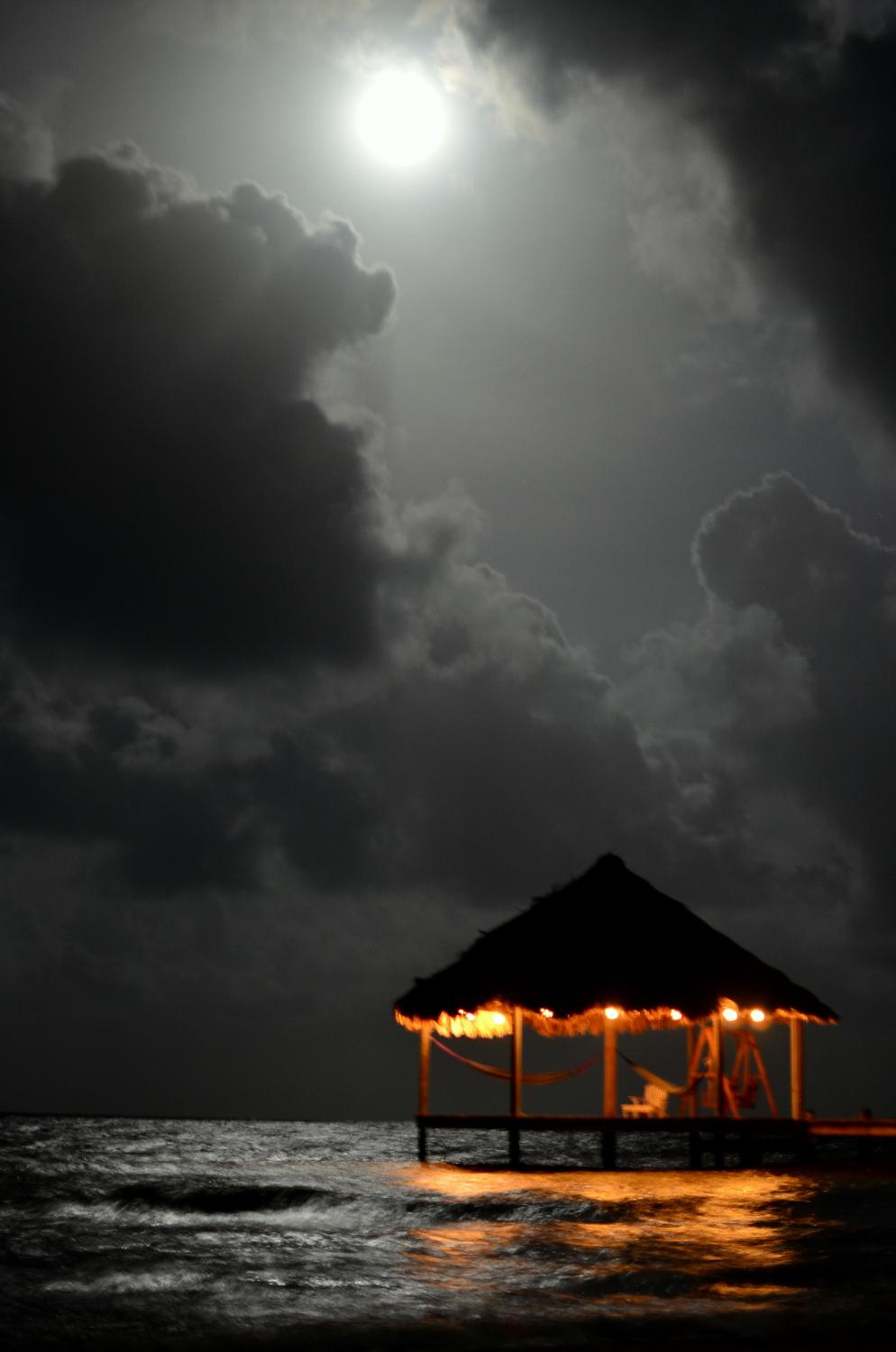
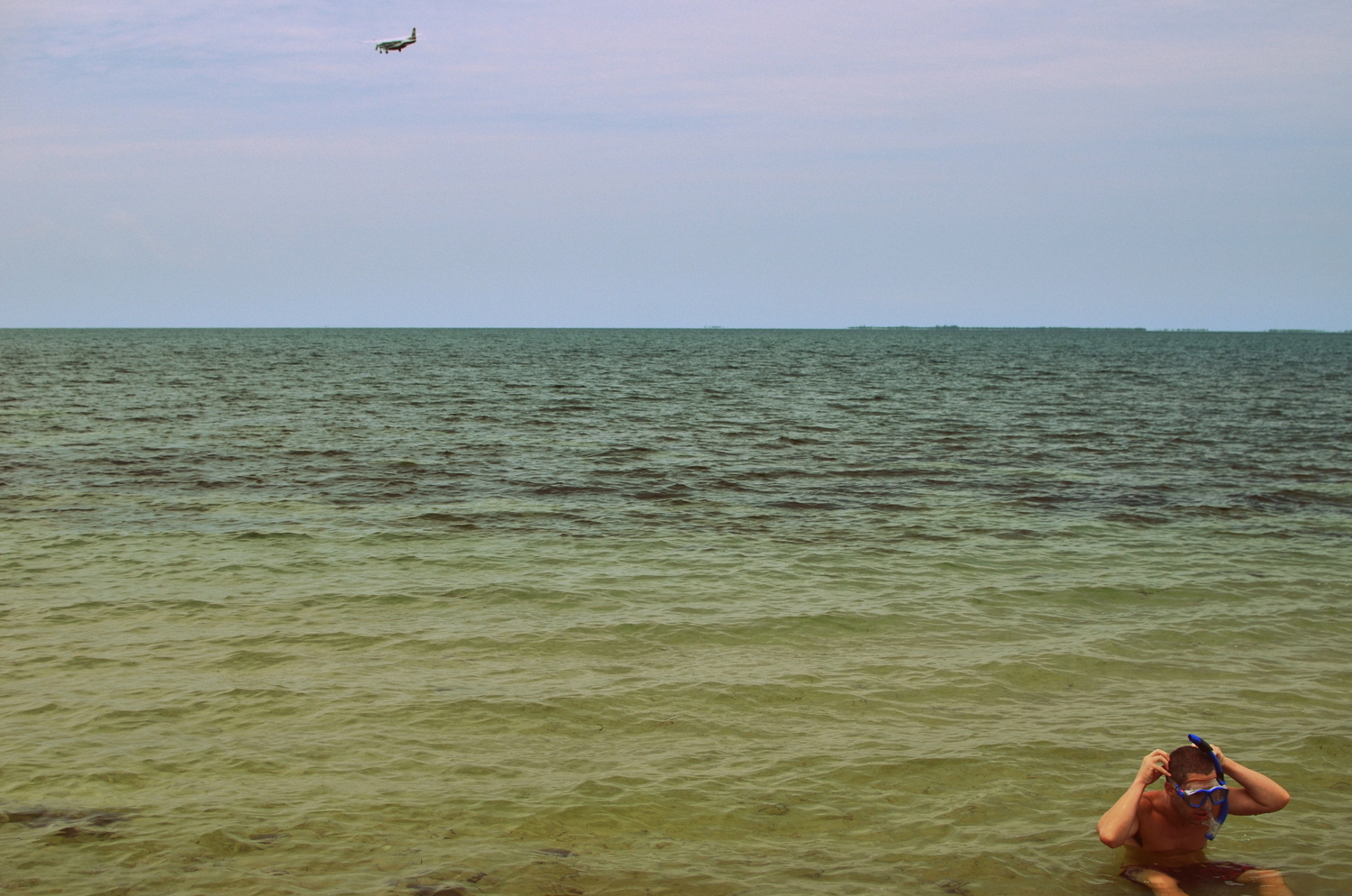
One day we discovered there was an underwater coral garden right outside of our front door shortly after our snorkels got wet. Huge orange starfish were scattered about the sea grass while just beyond a shallow ridge corals, fish, and lobsters lurked about. Nights were passed making frozen watermelon, pineapple, orange, and rum drinks while Cuban cigars were thoroughly enjoyed on the rooftop lookout tower under the blanket of heat lightening. Heat lightening quickly turned into THE most intense thunderstorm we had ever witnessed, trumping the pitiful little squall in the jungle a few days prior. Lightening bolts lit up the entire world, striking the beach in front of us, while we watched and shouted from within the protection of our screened in porch. Thunder was deafeningly loud and rolled around the ocean and atmosphere minutes after each bolt found land. I took a few photos that appeared to have been taken in broad daylight of a warm summer day the exact moment when the bolts were touching down.
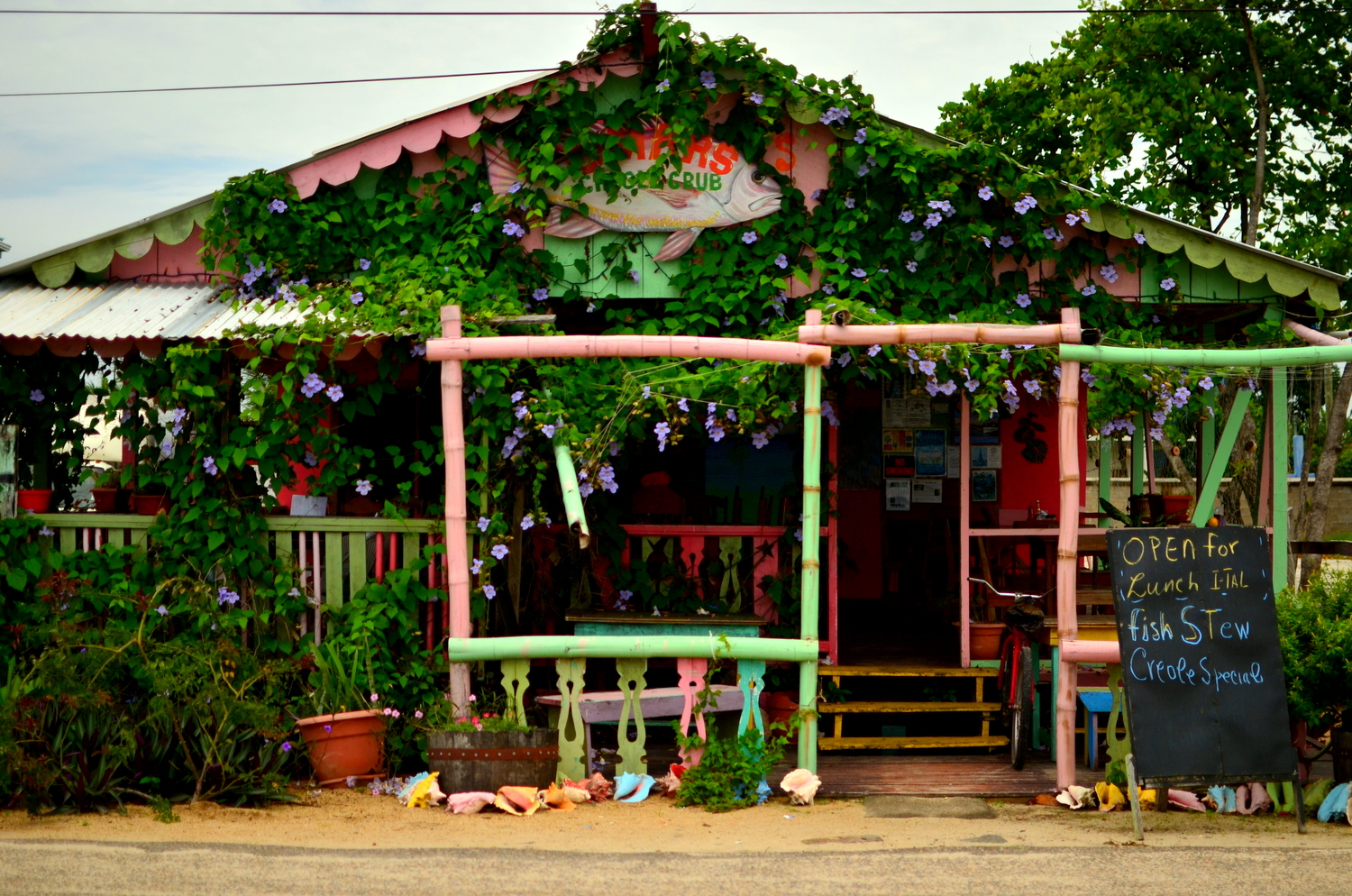
Days were spent playing in the water and rooting through town to find delicious food options that Belize is not short of. Creole cooking is full of coconut rice, oil, barbecue, and seafood. All of these ingredients hit home runs in my food fantasy league. King Henry’s was a favorite for roadside barbecue plates while Omar’s seem to call us in for breakfast. Sam and Kristina wanted to cap their adventure off with 2 nights in a comfortable hotel so they booked nearby that offered free kayaks, beachfront living, and a fully equipped kitchen. We took the kayaks out to a small island about 40 minutes away for our own private reef adventure. The coral here was comparable to the reefs we paid for the week prior and gave us quite a show. I always forget how much I love to kayak until the paddle is welded into the grips of my hands. I spent a whole summer training in the Atlantic in Maine and the memories come flooding back whenever I’m in a straight, narrow craft pointed towards our distant destination. We came back into a beautiful sunset, docked up, and spent our last night in town.
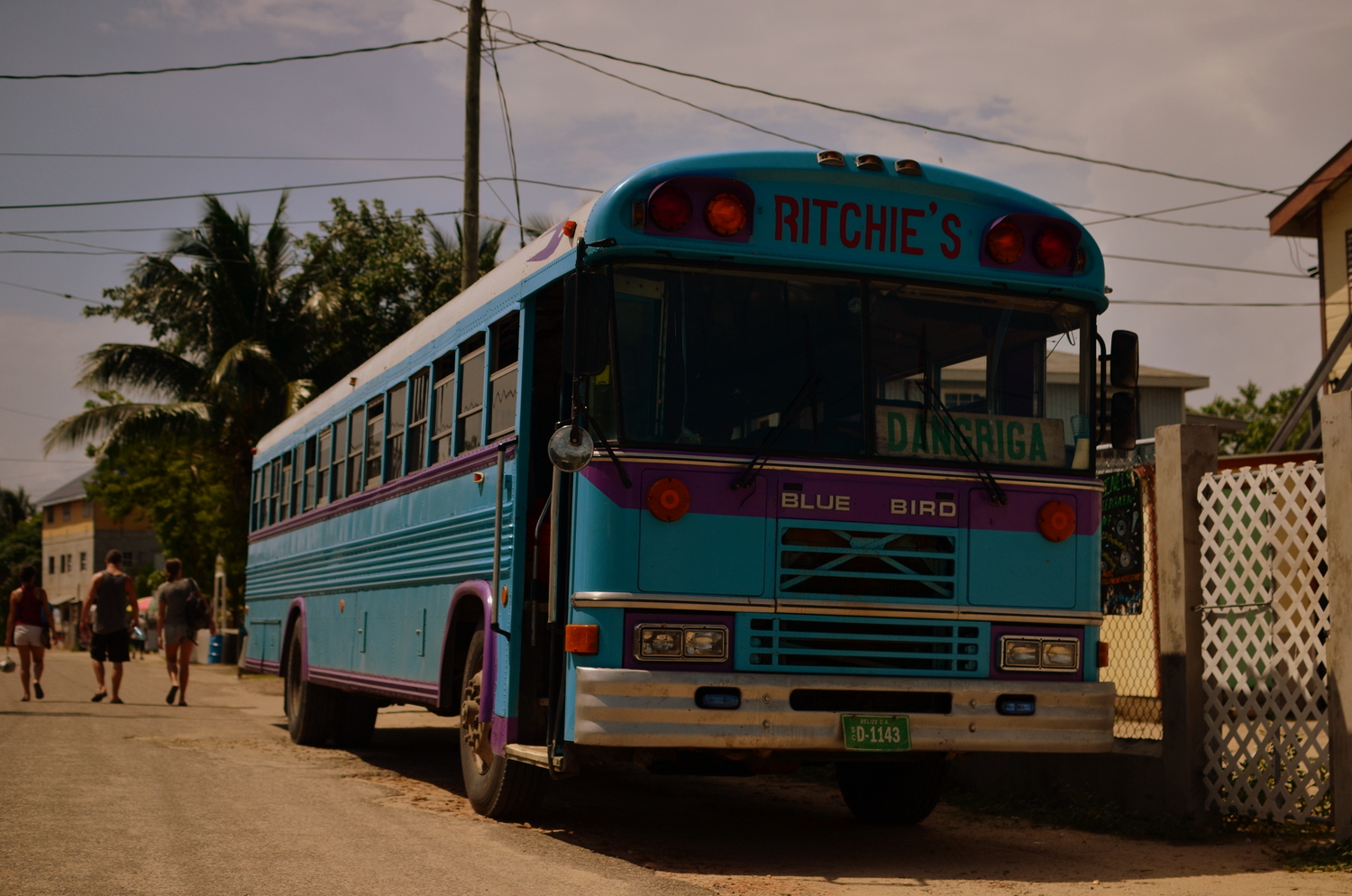
The following morning, with our Cuban son soundtrack playing in the car, we left Placencia headed back towards the city. Sam and Kristina’s vacation was over, much to our dismay, and it was time to go home. They dropped us off in the hub of Belmopan at the bus station and we parted ways with our travel compadres. Reality set back in. Our private house was gone and our rental car disappeared in the dust out of the parking lot. We boarded onto our first 1980’s bluebird school bus since grade school and made tracks back on the hummingbird towards San Ignacio with reggae pumping out of the worn out speakers. Life felt pretty hot, pretty sweaty, and pretty good.


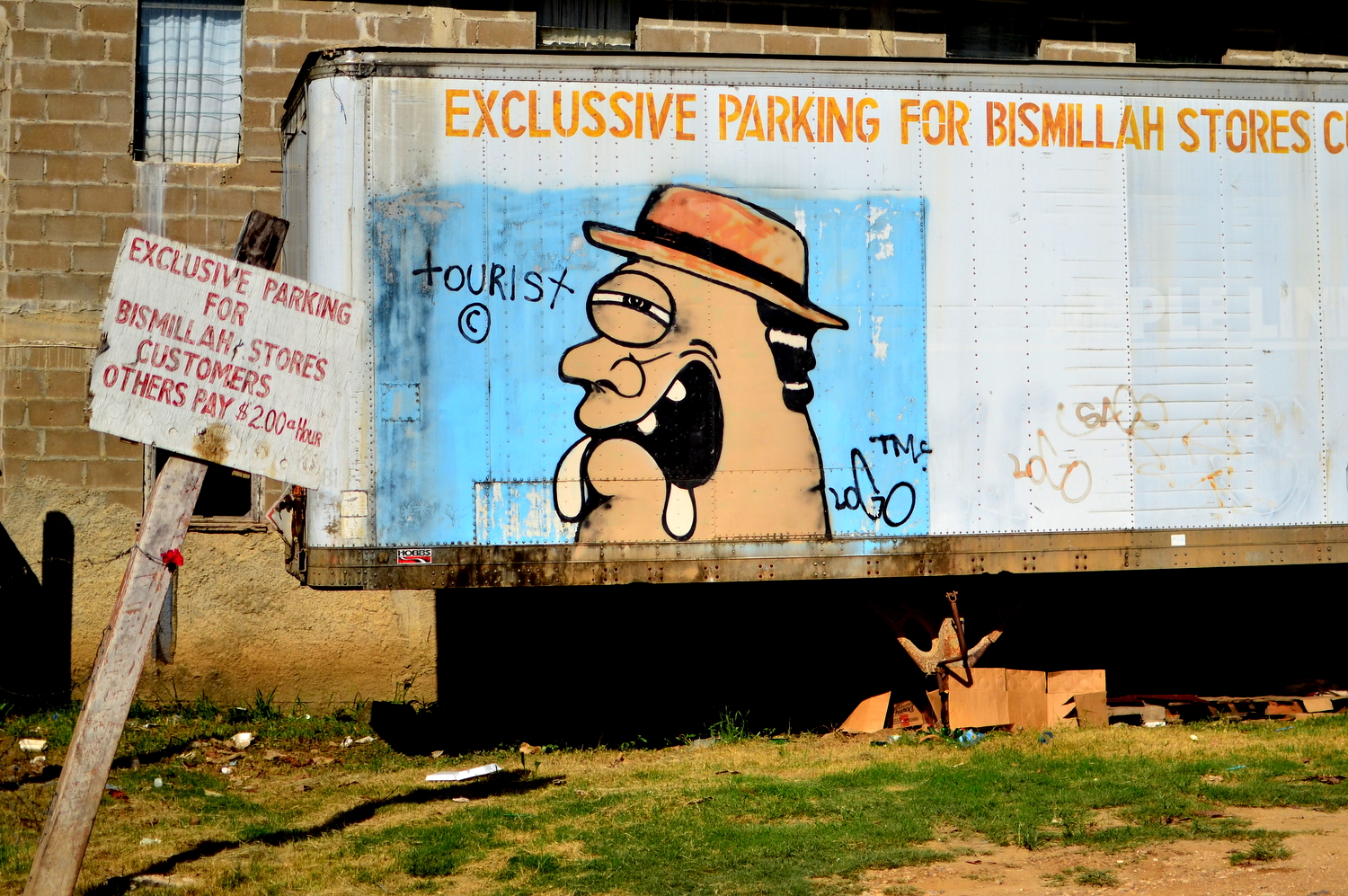
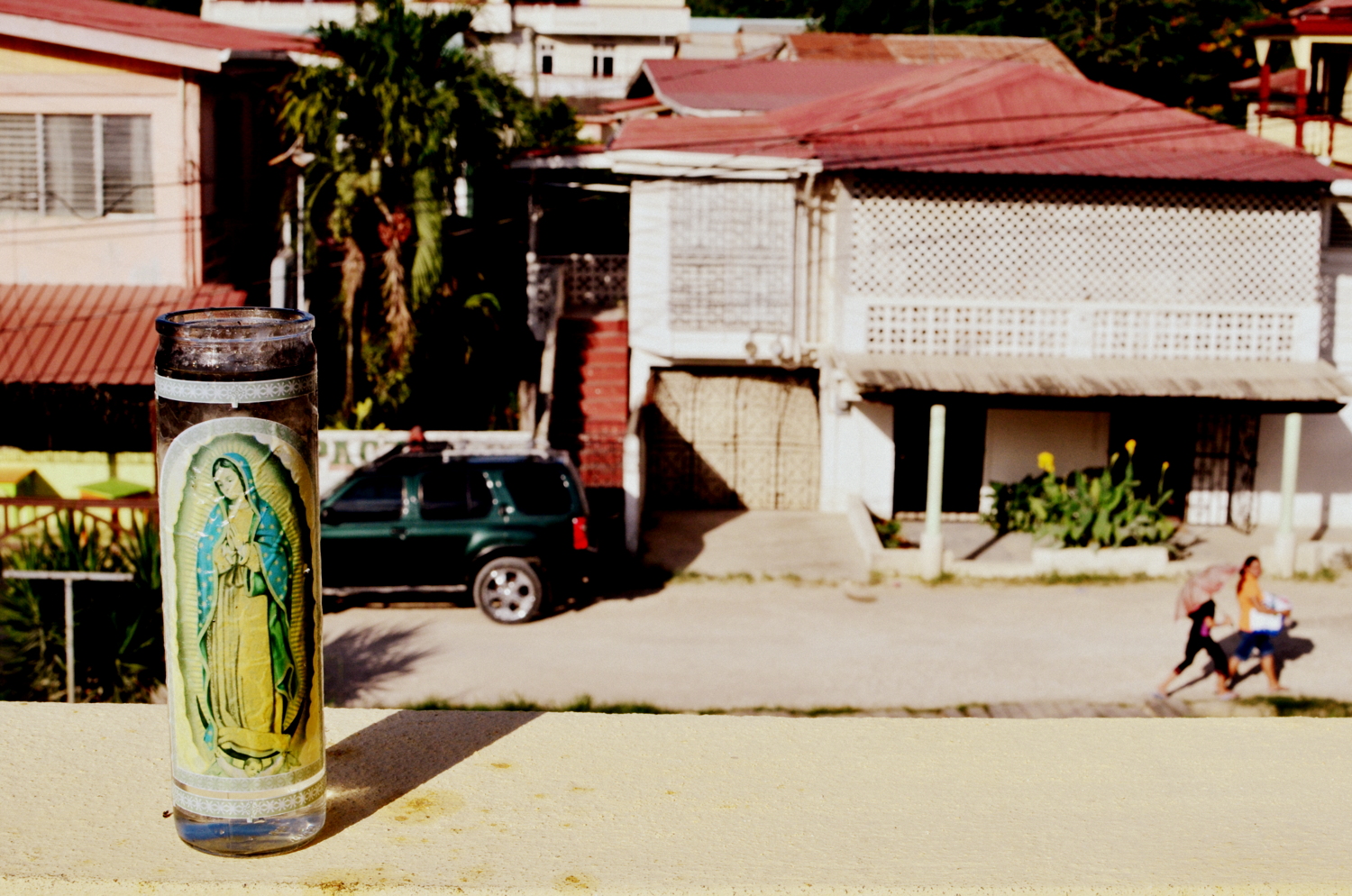

We spent two nights in San Ignacio to get back in the groove of living and traveling cheaply. One downside of teaming up with short term vacationers is that money is spent in a completely different manner. Coming into the country we knew that it wasn’t a cheap place for backpackers but we ripped through a bigger portion of our budget than we had hoped.
I remember walking around the town looking for a lighter and being offered drugs more times in 5 minutes than I’d care to remember. This was considerably odd because getting caught with even a joint on you in Belize was punishable by a strict fine of 10,000.00 USD. This stance on drugs was bothersome to me considering this was one of the kidnap capitals of Central America. This sobering fact that was brought from words to real life while watching the news in a Chinese food take out place. A small girl of 13 that was missing had been found dead near her community while her father painfully spoke about the lack of enforcement for laws regarding kidnapping, rape, and murder in the country. We had a big border to cross ahead of us, and we were both a little intimidated about Guatemala from all the stern warnings we had heard from cautious travelers, especially after this story. I think we had run across a larger than normal percentage that had a taste of the sour side of traveling in 3rd world countries. We heard story after story of armed robberies, dangerous bus stations, and expensive travel in the Mayan land. The morning we left we took a cab from the bus station right to the fronterra, avoided changing cash prior to entering (the best move for travelers by far), and walked into Guatemala.
We Belize in Caye Caulker


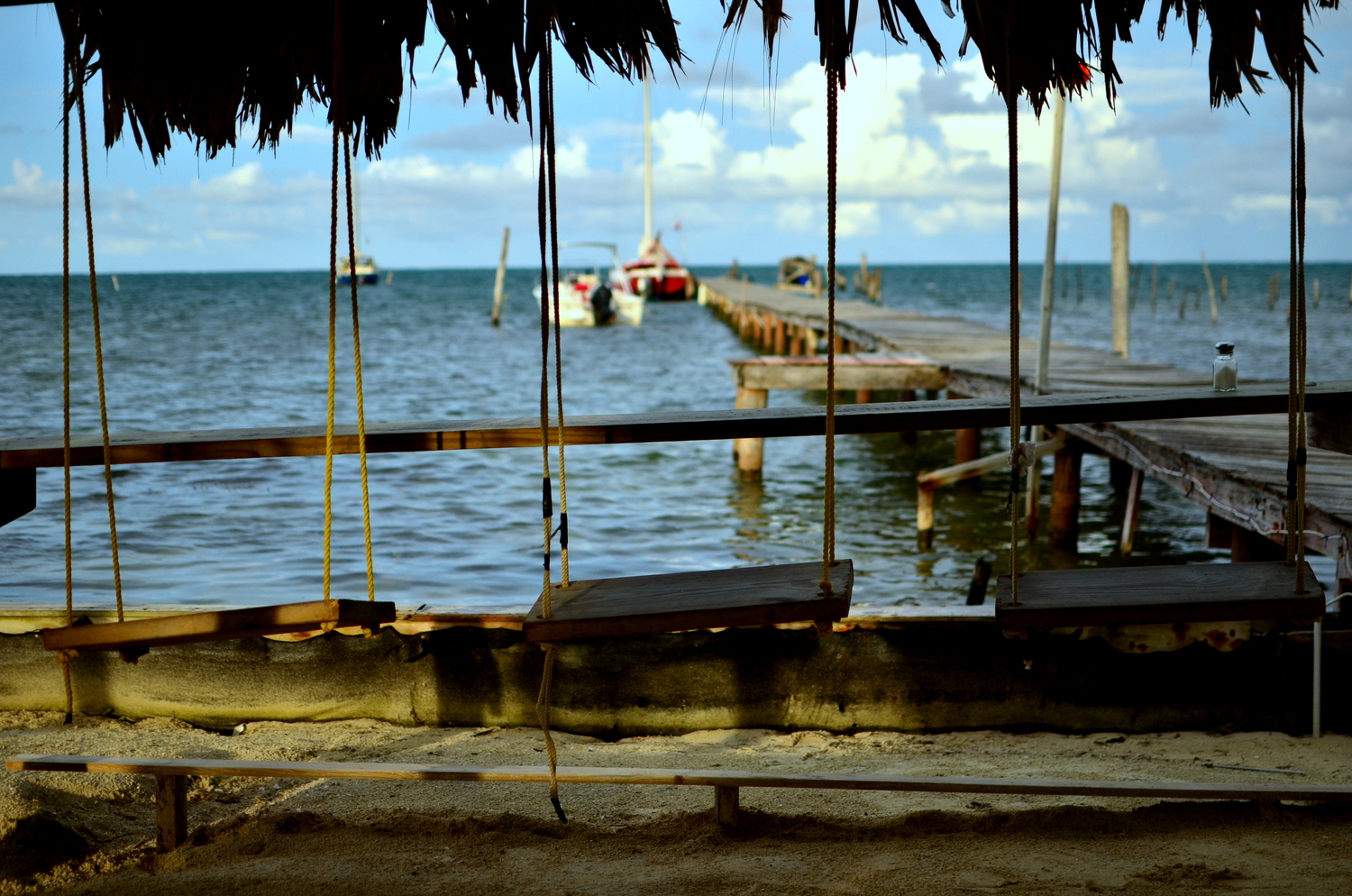
At approximately 4AM on a Friday morning we rolled into the border between Mexico and Belize on an overnight bus destined for Belize City. Overnight bus rides are a strange experience encapsulated by an existence between a half-concious state of mind and very, very light sleep. Any bump along the road reminds you how uncomfortable your position is and how much your neck is craning and straining to hold itself up while you helplessly reach for dreams. It’s entirely annoying to realize that your mouth always finds itself wide open no matter how much effort is exerted to keep it shut. Immigration was a complete joke. We weren’t asked questions, we didn’t give answers, and we just received stamps.
Around sunrise we rolled into a beat up, sun bleached, washed out town and stepped down onto the busted asphalt of Belize City. Morning arrivals in these conditions never feel comfortable or normal. A strange new place presents itself to weary and tired eyes with the same intimidation a police officer has when you get pulled over for speeding. Belize city is a notoriously dangerous place for travelers and residents alike. Problems with drugs, gangs, and robberies are a common occurrence here and it also has the highest murder rate in the whole country. Most residents find themselves indoors with the doors locked around 6pm nightly, knowing there is nothing outside worth the annoyance of petty theft or armed robbery. We followed a man speaking a weird form of Carib English over to the docks to catch the first Ferry to Caye Caulker.


There couldn’t have possibly been more people aboard our fiberglass vessel on route to the key east of the Belizean coast. The air was humid, almost chokingly warm as the hull slapped down across the waves of the shallow sea. Visions of a tropical haven floated in our heads while we all slowly fell into a heat induced nap. I kept thinking that there must be some sort of treat at the end of this path, especially given all that we’d been through to get there. After unloading we were in a half dazed state of mind wandering around the island looking for some cheap digs to plant ourselves in. We trudged around aimlessly with our packs anchoring our feet to the gray lime mud sand until a local purveyor brought us to a hotel that he promised would give us the best bang for our buck. He tried to persuade us to his bar later for drinks to no avail.
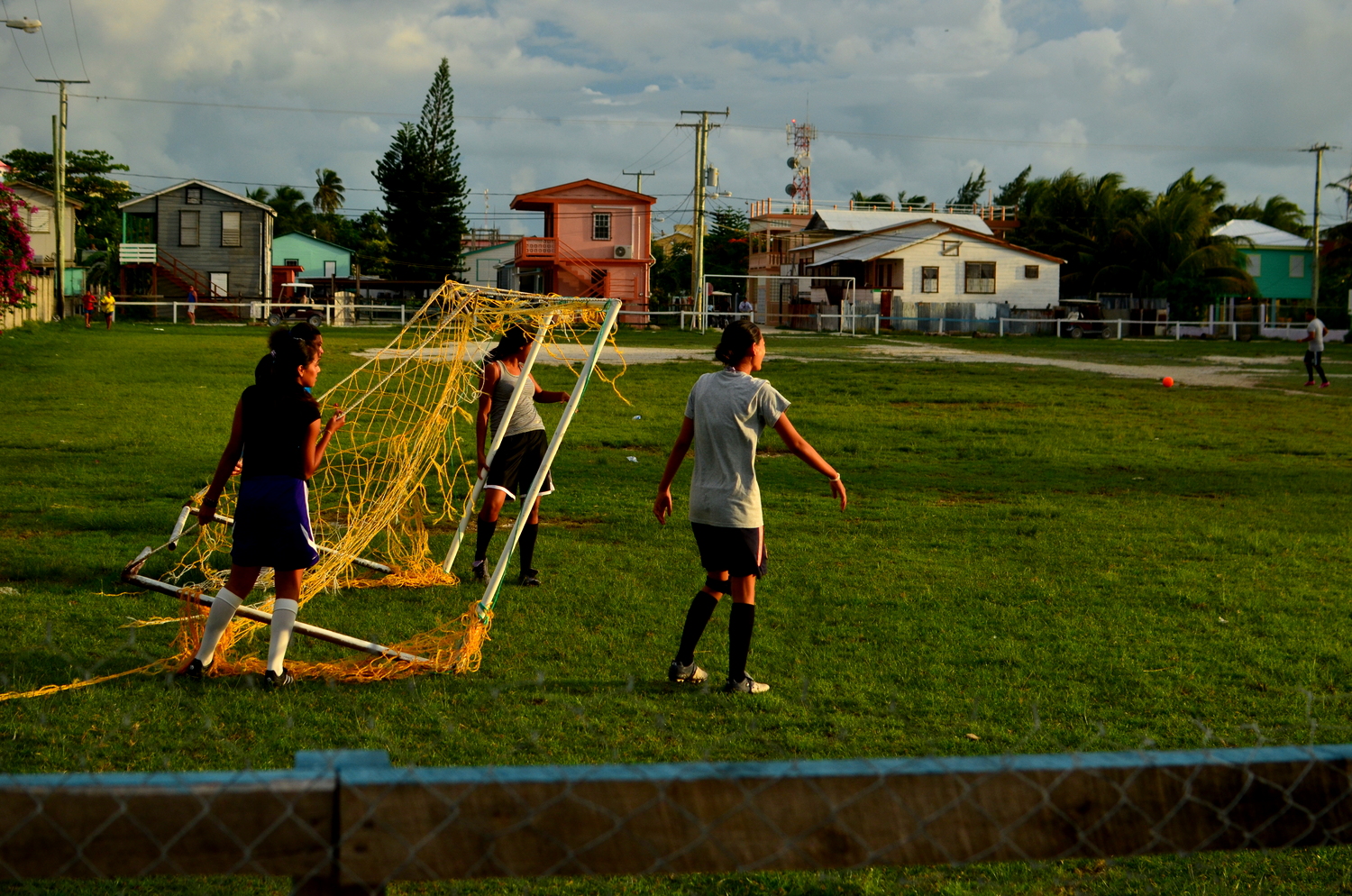
After dropping our extra weight we explored the entire tiny island finding out that beaches didn’t really exist except for one at the split. The split was a tear through the center of the island made by a hurricane that resulted in a channel cutting through to the other side. The clear blue water had a visible current and glistened in the sunshine while snorklers were exploring the view below. The beach appeared to be man made. There was a bar hovering on top of the small sandy spit housing all types of vacationers getting sauced in broad daylight. The pace of the land was slow and easy, and this was heavily enforced by local citizens who caught you walking too fast. A soccer field in the middle of the island filled up at night with kids and soccer leagues practicing for matches against other towns. The young girl who ran our hotel played in this league. She was as kind as any person could ever be and very interested to hear about what it’s like to live with snow in the wintertime. Children wandered about carefree in this island town, not worrying much about any dangers or threats that Belize city kept to itself on the mainland.


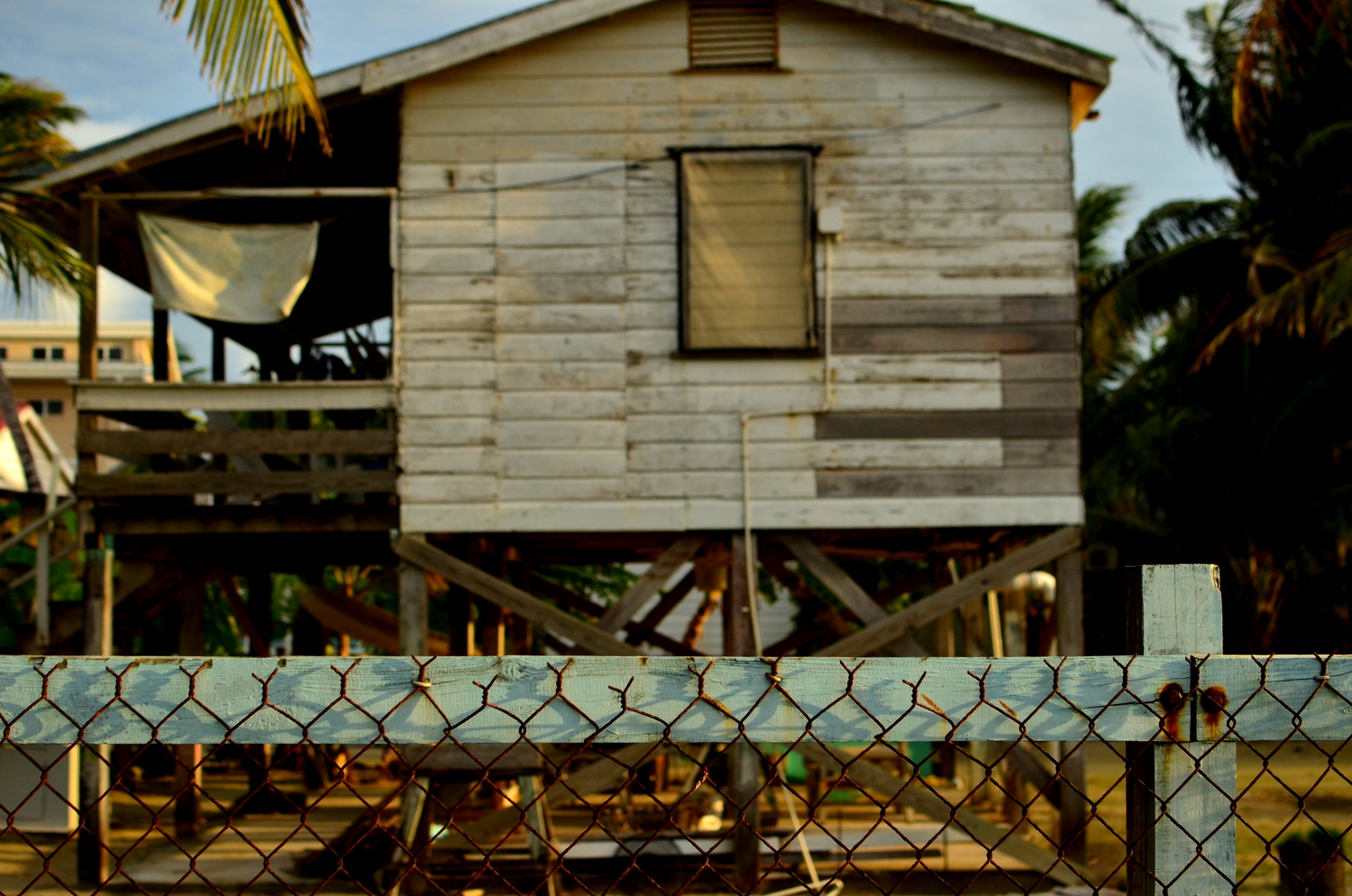
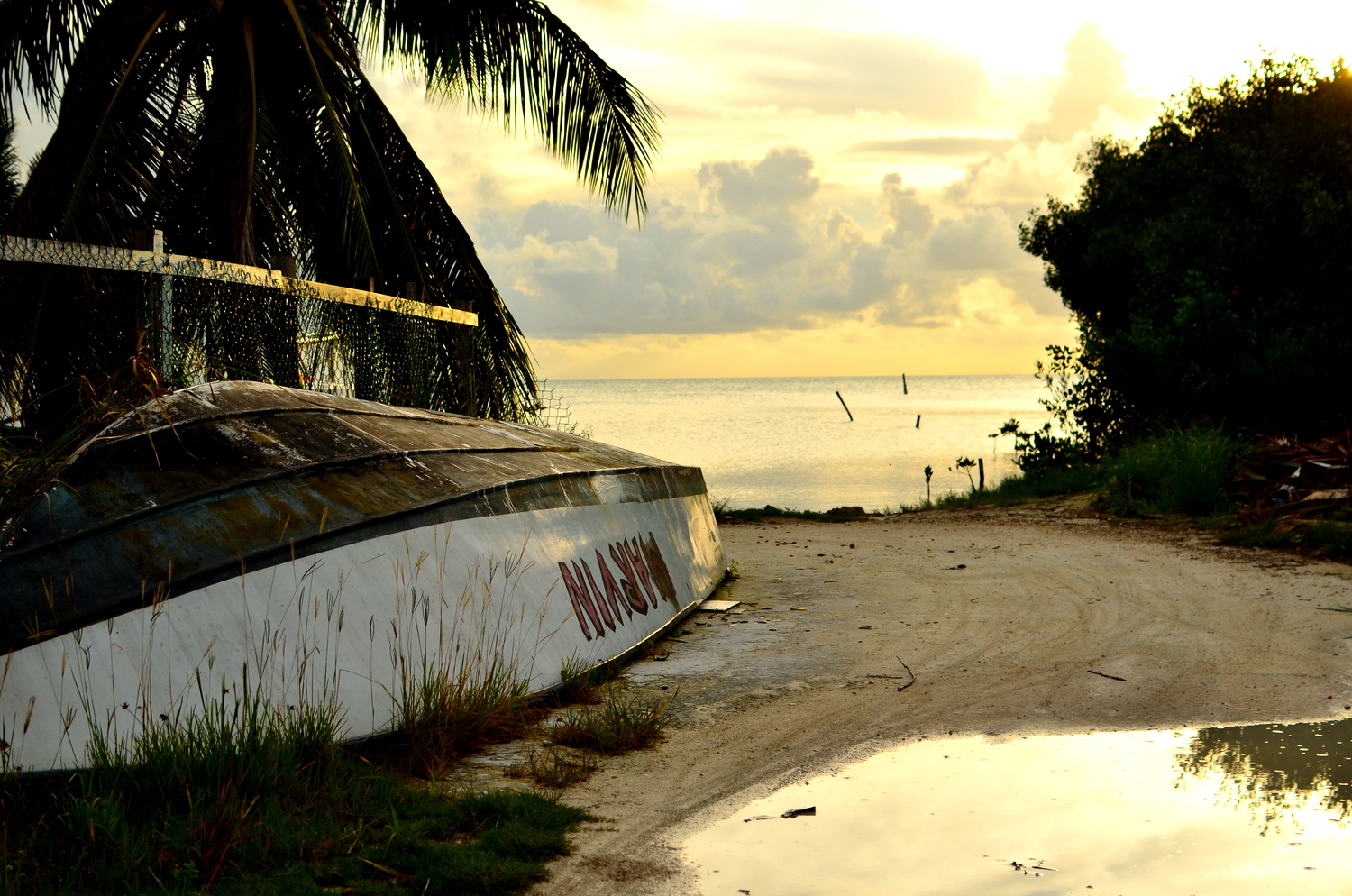
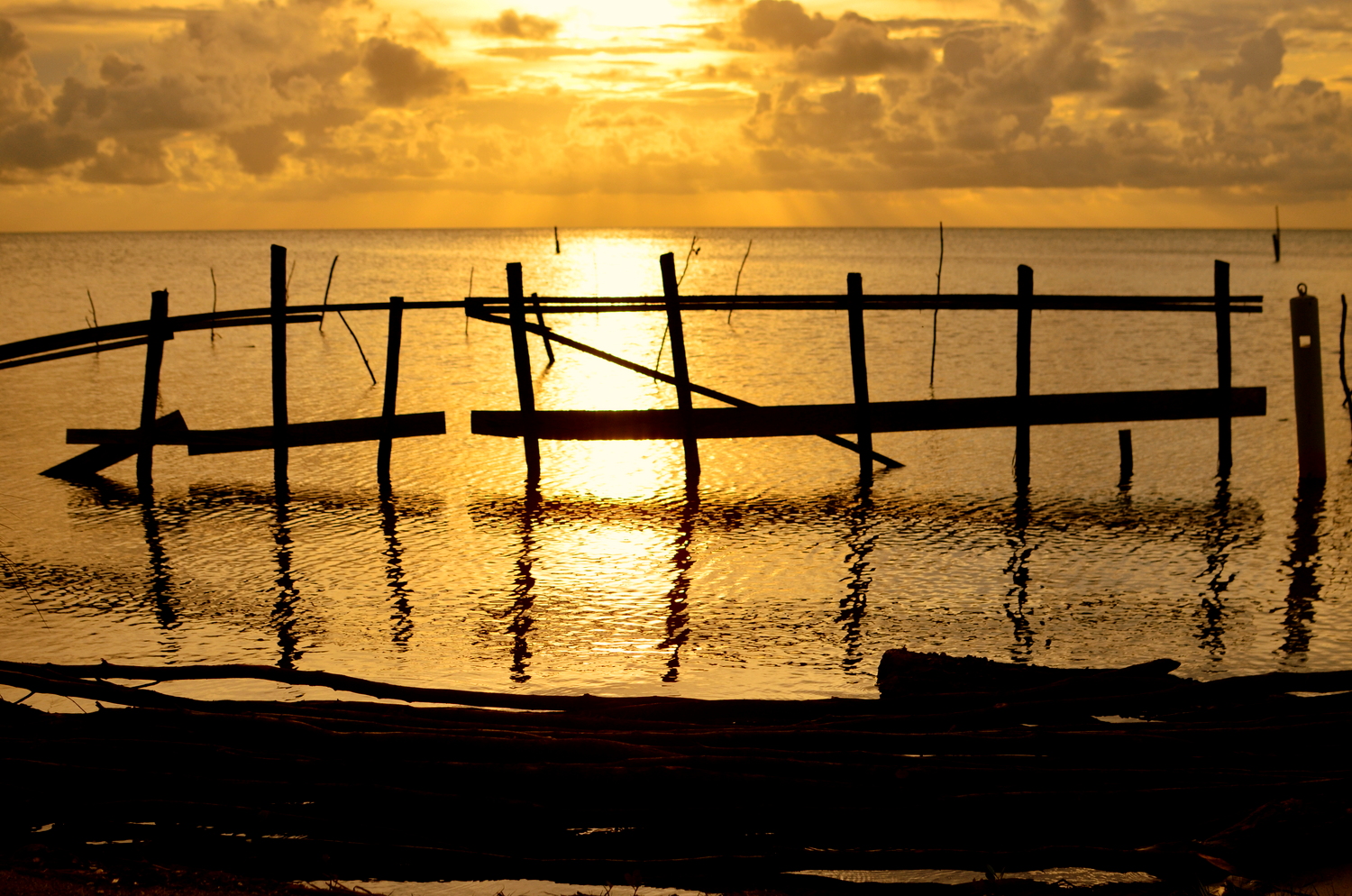

The reason for our trip out the Caye was to find Juni, a guide we had heard about from our Aussie friends Tom and Claire (http://tomclaire.blogspot.com/), who was supposedly an aquatic version of the dog whisperer. They told us of their tale with Juni, an island native, who would attract fish like he had raised them himself. Moments after we arrived we found out Juni had left the Island that morning for the states and may have even got off the first ferry that we boarded. Flustered, we found another outfit and agreed to meet up the next day for a whole day’s worth of snorkeling in the 2nd biggest reef in the world. Realizing we were going to be dropping about 90 bucks doing this we scouted the island for cheap food, but alas, it seemed devoid of any. Life on the island could be described as quiet. There was a bakery, a place to buy breakfast wraps, a gentlemens’ club with papered windows and slot machines, and a wide variety of ex-pat and local restaurants. There was a super relaxed island vibe and super inflated island prices, for us backpackers at least. A cheap Creole meal with the “budget man” turned into a $7.50 lunch that left us both needing something else.
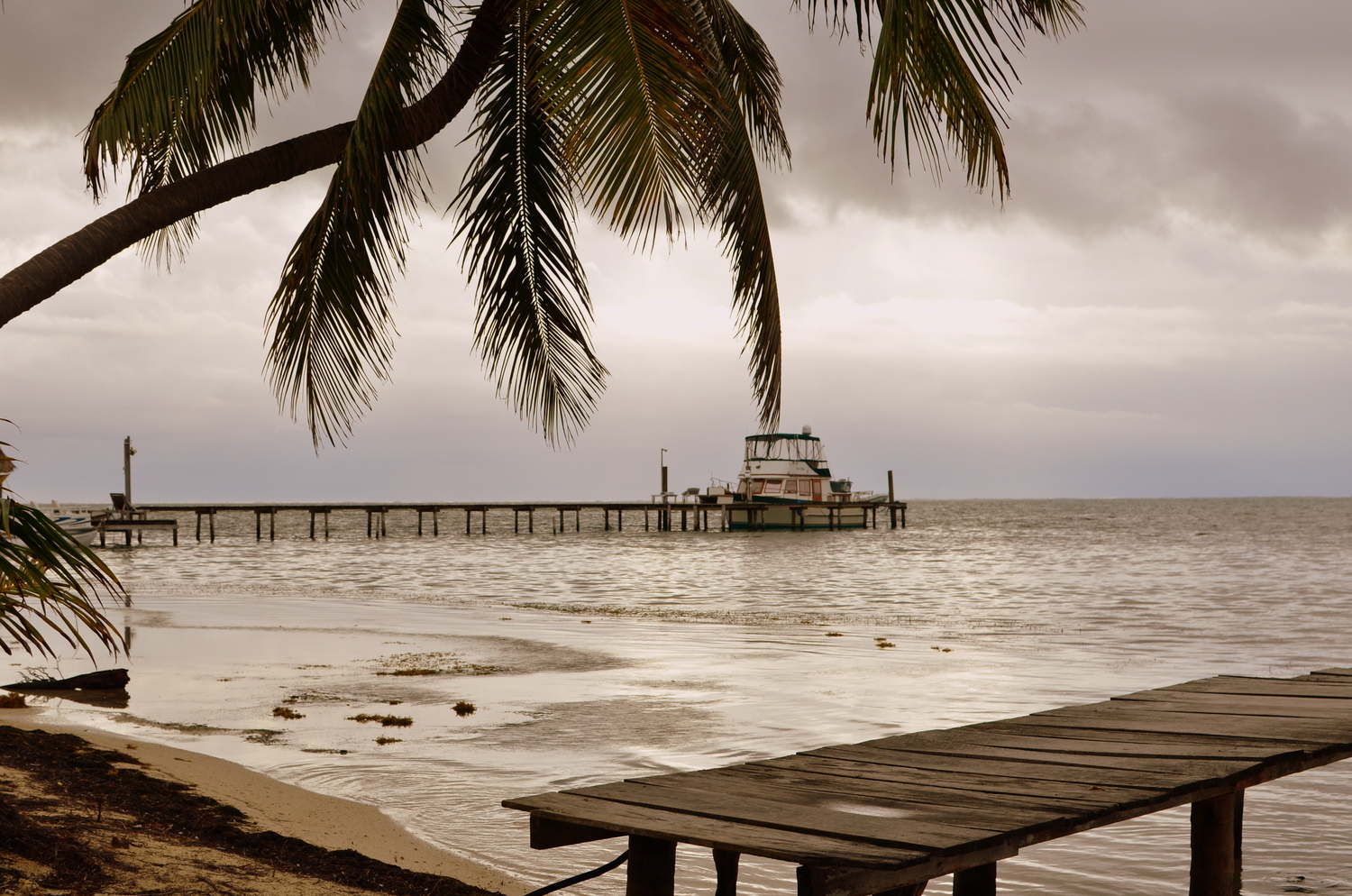



The next day we got up and set off on the tour ready to get our feet wet and see reef life first hand. On the dock we were standing in the middle a conversation between retirees from Arkansas and teachers from Wisconsin, engaging in some seriously mild chit chat about America. The distance between their version of the world and ours was a universe apart. Eventually one of them asked us what we were doing, and we enthusiastically stated we were trying to backpack to Brazil. “Oh, neat” was the response right before U-turning the conversation back to life in the states. Shrugging off the differences between lifestyles we boarded our boat with a younger crowd and set off into the lagoon. The reef break could be seen to our right as we headed north towards our destination at Hol-Chan Reserve. Our guide had a degree in marine biology and years of experience protecting the reef with the conservation police. He knew how to safely interact with the aquatic life without causing harm. After tying off onto a buoy we flopped off the boat and into a whole new world. Large groupers instantly came to the boat knowing that if they played along they would get treats from our guide.
We took off with about a dozen fish in tow through the sea-grassy waters. Sea turtles were approached from a distance so we could silently watch them scour the sea floor for sustenance. After spotting a moray eel our guide lured it out of it’s cave with a conch shell baited with food exposing it’s entire slithery body. Just beyond the edge of the reef shelf the depth dropped about 10 meters and gave shelter to all different types of sea life. A huge eagle stingray was lurking at these depths and giant clusters of coral were teeming with schools of shiny fish.
Our next stop was stingray and shark alley. Our boat pulled up and was instantly swallowed up by a small, rowdy crowd of nurse sharks, large manta rays, and eager fish. We played around for about half an hour petting the somewhat domesticated creatures that reached up to about 2 meters in diameter and length. It’s quite an experience letting a full sized nurse shark swim beneath your fingertips from nose to tail. Our last stop was in a coral garden where we roamed freely in the shallow barrier reef zone near the break. The highlight of this swim was seeing a chameleon flounder that was perfectly camouflaged with the rocks it was perched on. We didn’t want to leave this gorgeous, interactive fish tank but eventually we were back on the island looking at another stunning sunset.


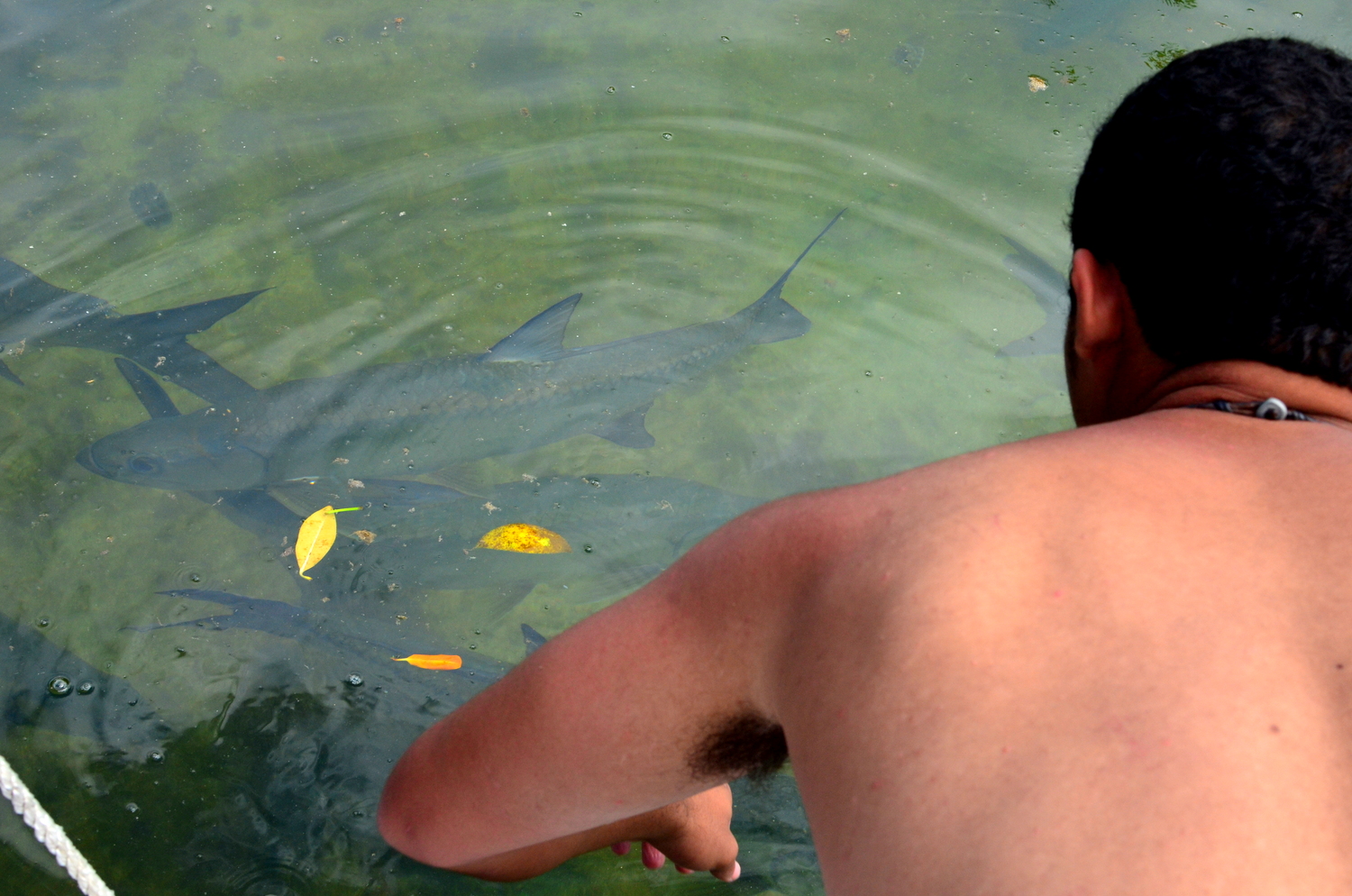
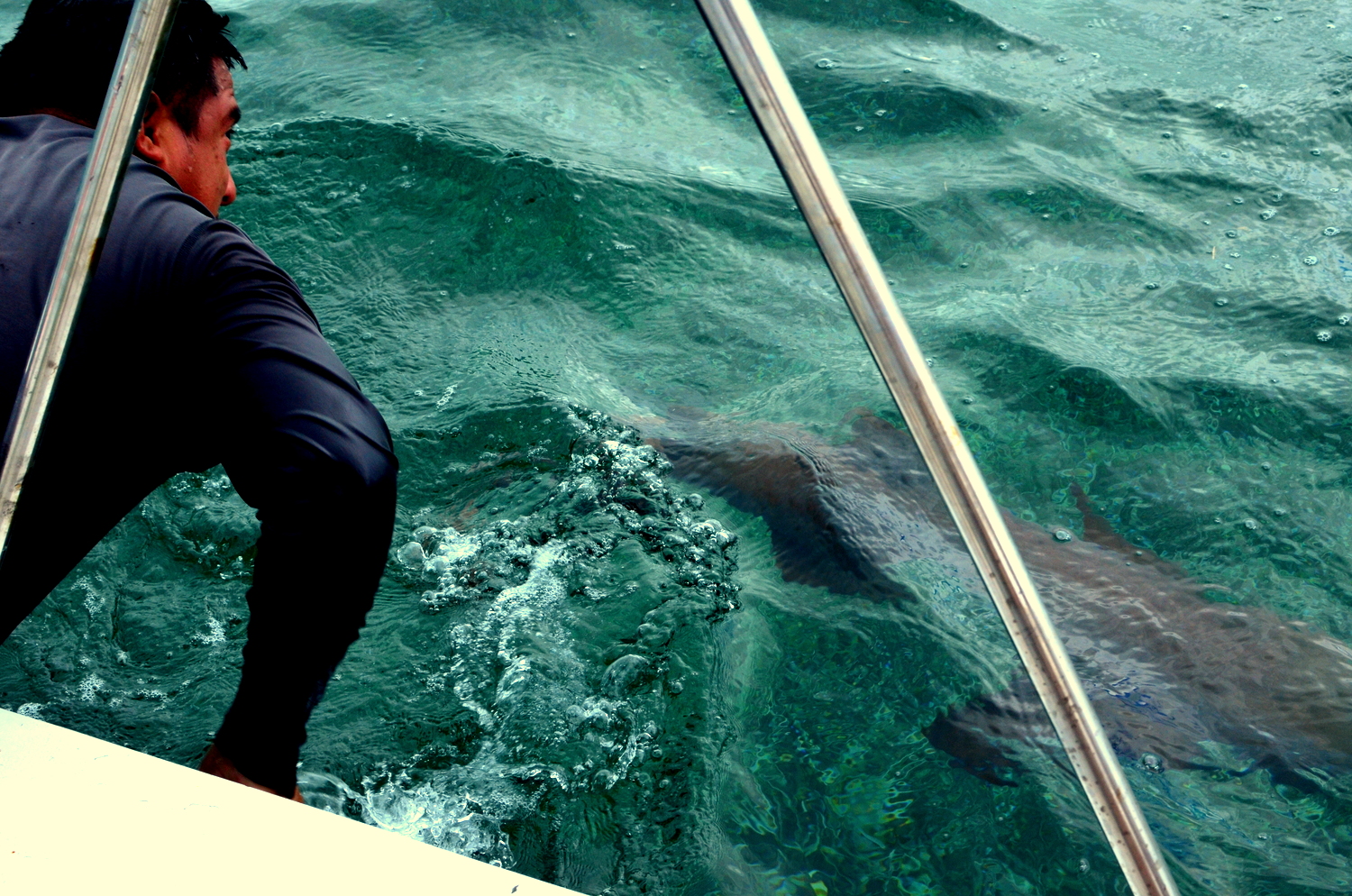
Island storms roll in an out of life on Caye Caulker and eventually get washed away by the sun. We spent hours watching the storms roll in, turning into a swirling barrage of rain and wind. Rainstorms for me are just like reading a good book. They grab my entire being and I can’t put a good one down. The heavy winds carrying quarter sized drops make everyone stop life, seeking shelter to wait out the unavoidable washout. When the water disappears and the sun shows it’s face again everything feels fresh and new, like spring just arrived. After one particularly fantastic storm, I took a stroll and let my feet hang in the water off a dock watching fishermen preparing their freshly constructed wooden lobster traps by submerging them into the water. We had arrived too early for langosta season and there was going to be a huge party about 2 weeks later to celebrate (can’t win them all). The rain also brought a force of relentless island mosquitoes that bred in the small puddles sprinkled all over the island. They were after blood. These insanely fast creatures covered us while we tried to enjoy a sunrise on our last morning. We were forced to run through paths between residents’ yards and houses, swatting at the winged devils and cursing their existence.

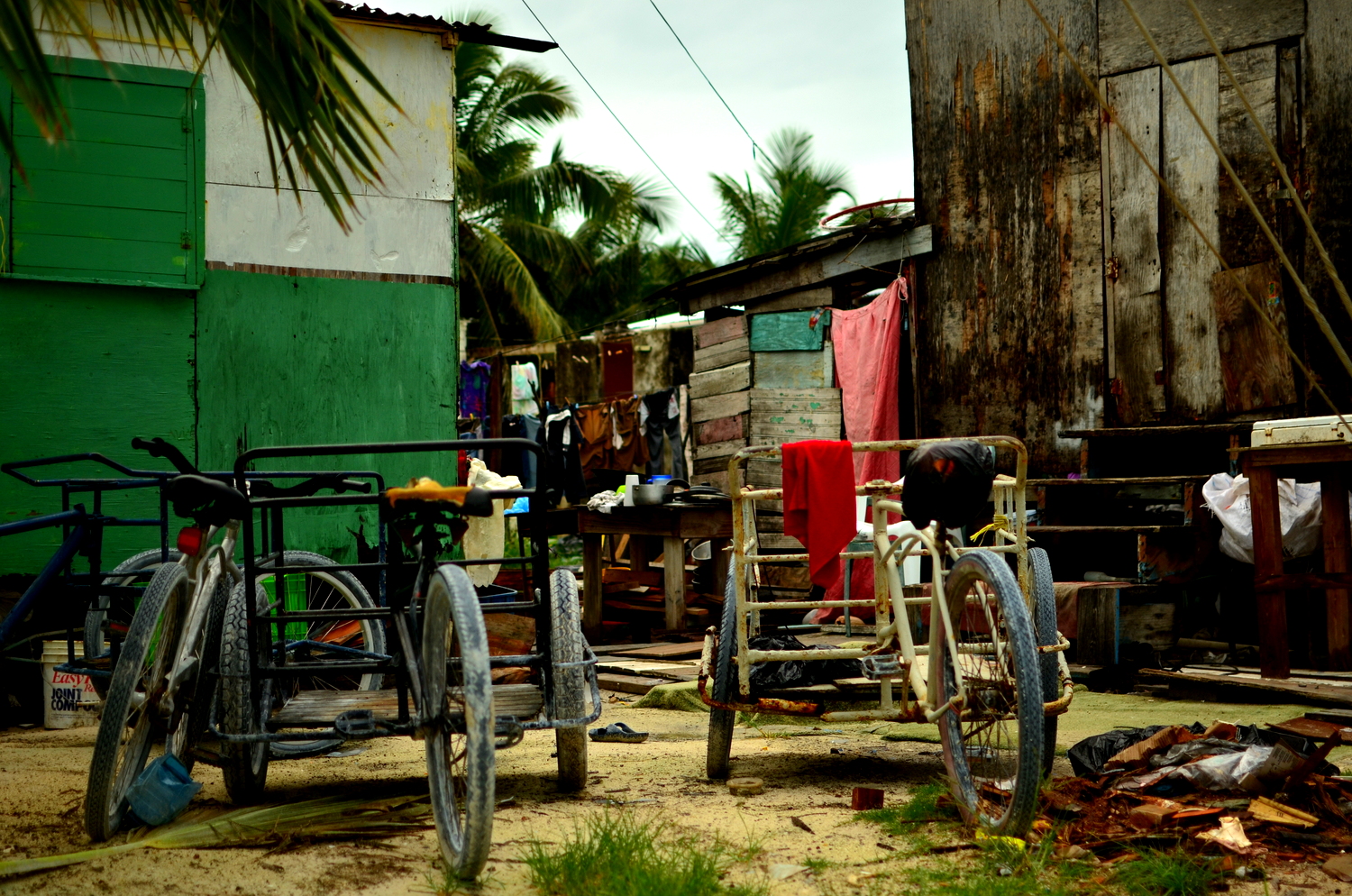
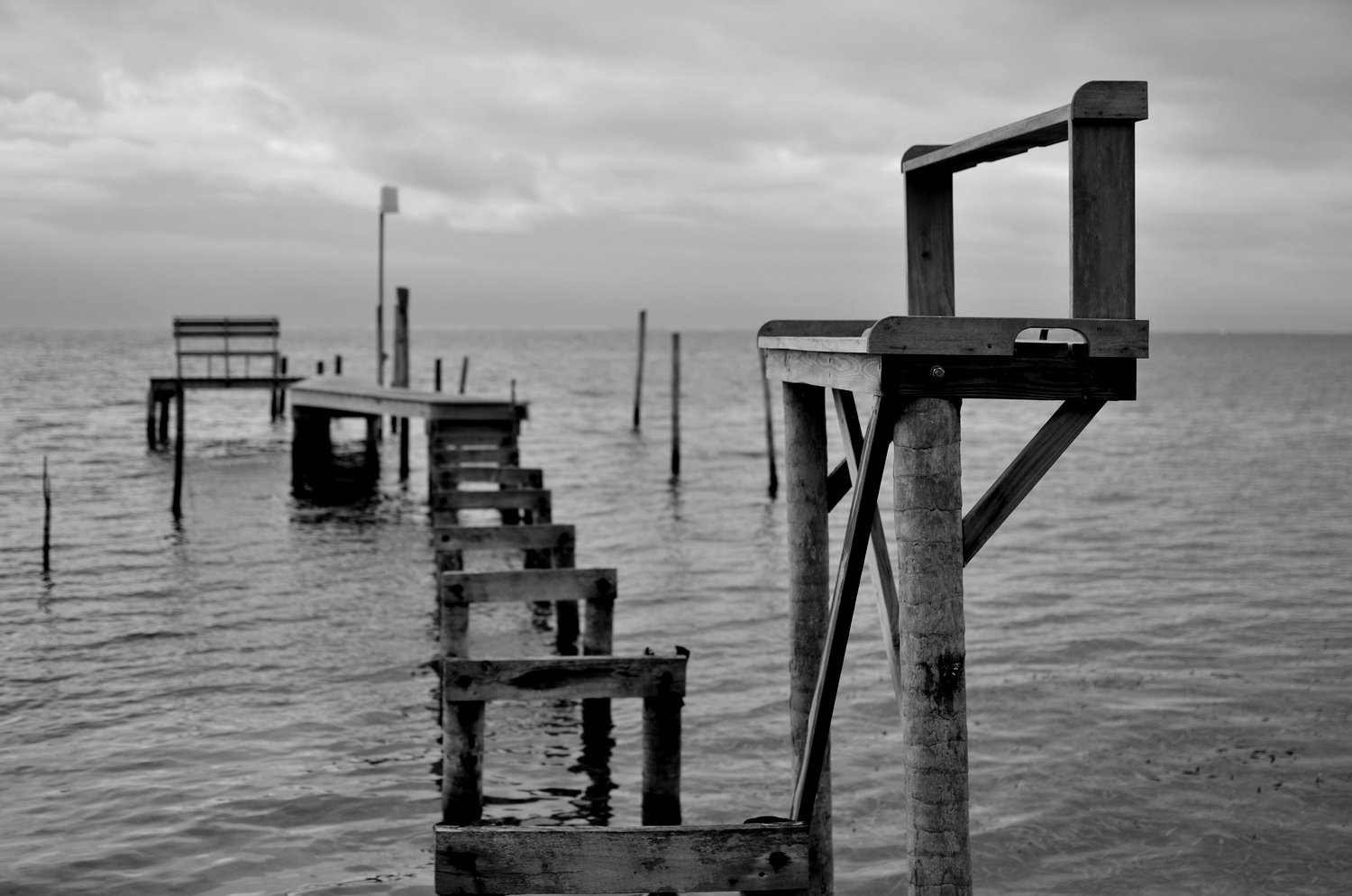
One last huge storm graced us with it’s presence the morning before we boarded the ferry. The rain came down for 3 hours straight, only stopping minutes after the ship set for land. A couple we had dinner with a few nights prior were sitting right across from us and we began to share stories about our island adventures. Sam and Kristina were from San Francisco on a 2 week vacation through Belize. They had reserved a rental car from the airport for transportation. After parting at the dock they turned and invited us to join them instead of busing it around Belize, which we naturally were pumped about. Within minutes we were all getting properly acquainted in a taxi en route to the airport in preparation for discovering what else Belize had to offer.
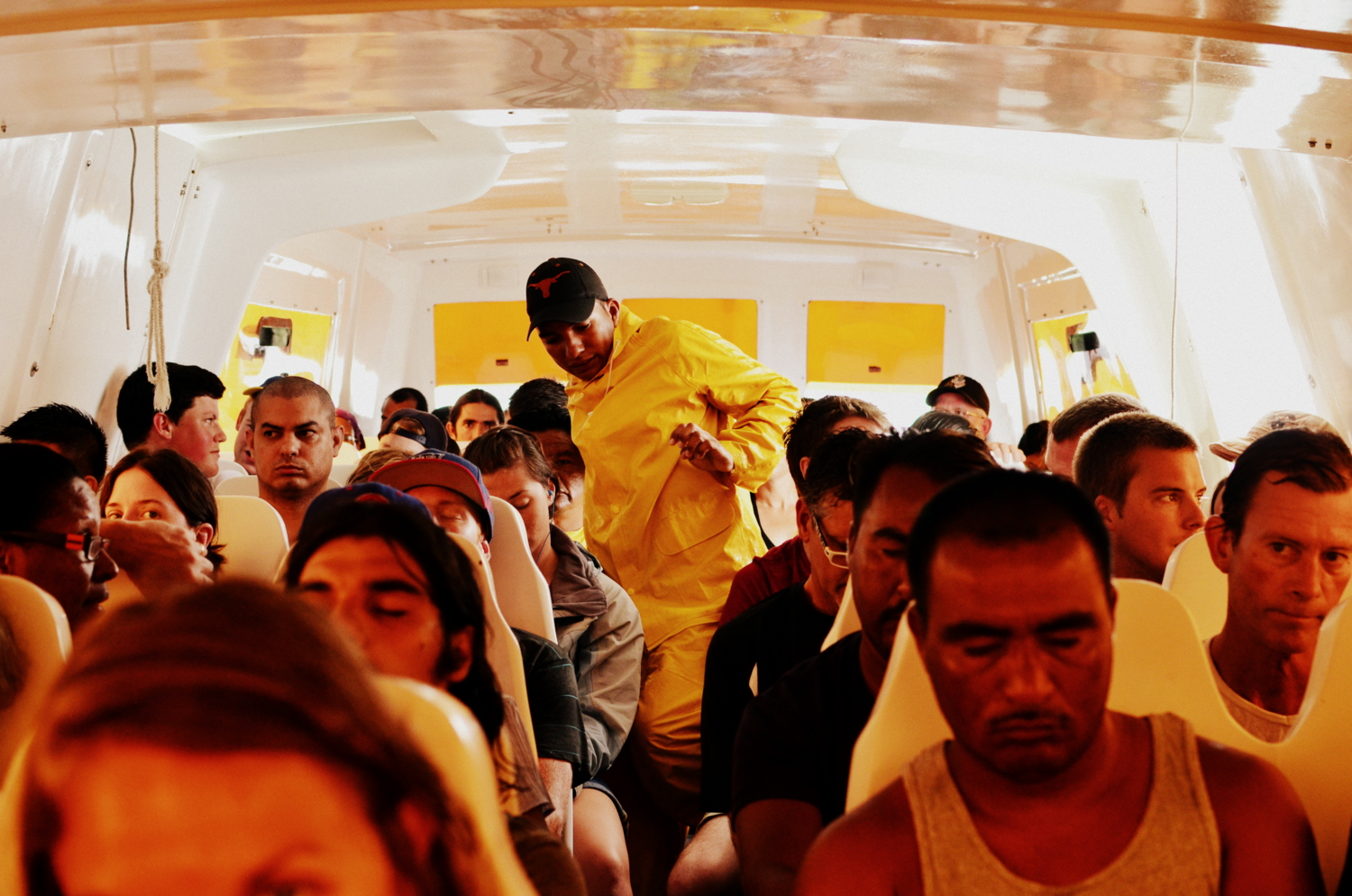
Tulum and our departure from Mexico
The feeling of touching down onto Mexican asphalt could have best been described as pure and complete nervousness. Inside our luggage was 70 Cuban cigars while the legal duty free limit was 25 per person. This isn’t really an issue except for the fact that we had purchased them directly from farmers and didn’t have receipts to prove how little we paid for them. The import taxes alone would just about kill the entire purpose of the whole cigar idea. We patiently waited in line watching series of green lights flash at the roulette-style luggage inspection procedure and felt our hearts surge whenever a red light came on. Our friends ahead of us were unlucky enough to the red light appear, which assured us that we would likely not have a stoplight when we rolled up to the intersection. We both sighed out loud when we were given the go ahead and we quickly disappeared. A bus back to Cancun to find our stored bags was our first priority and we wound up spending the night in a Jazz bar owned by a very strange German purveyor. We attempted shipping the cigars home in several places but were denied constantly they were required by policy to check all boxes visually before shipping internationally. Dismayed and now supremely frustrated we grabbed an early morning ride to Tulum to sort this out.
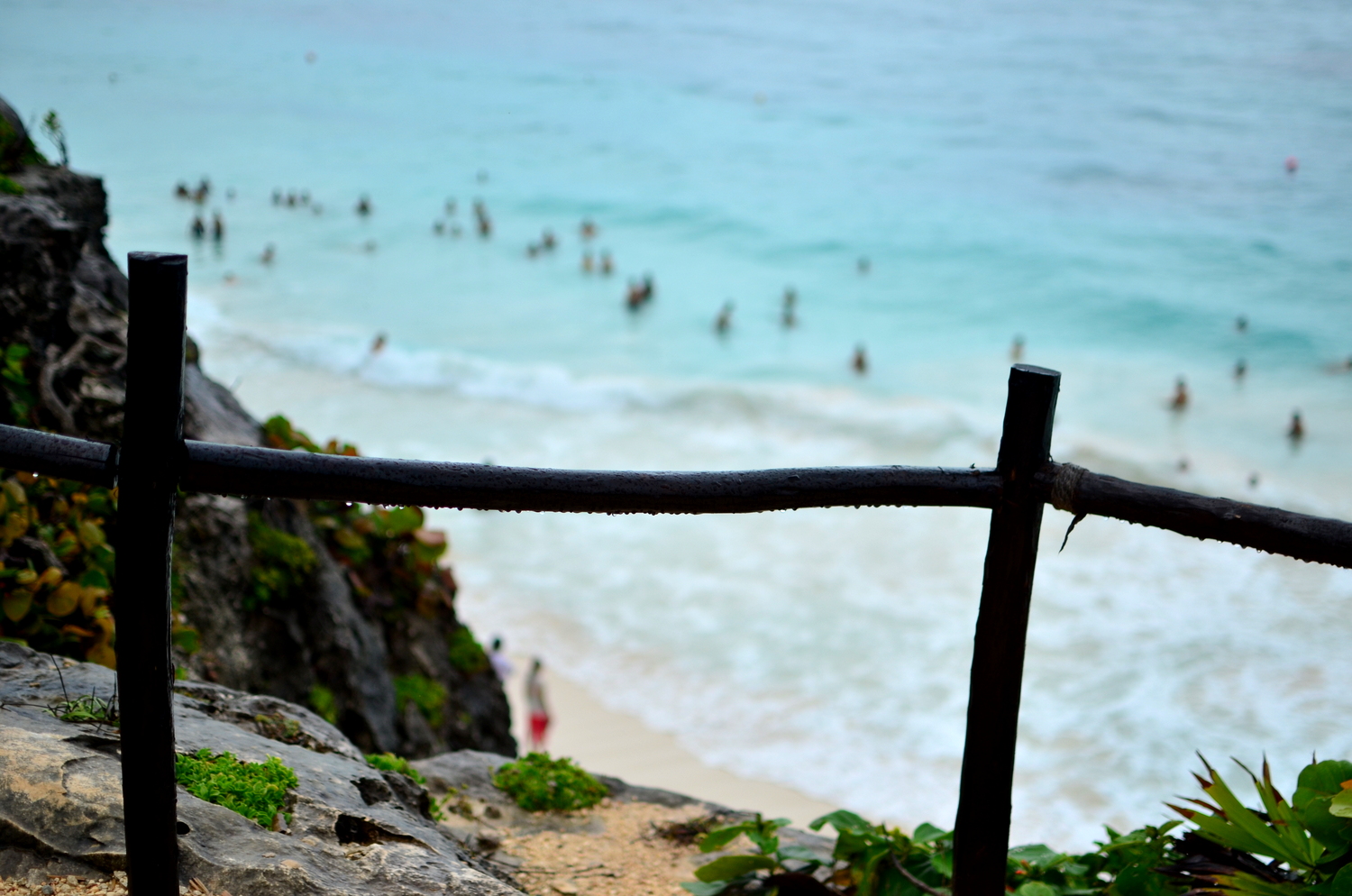
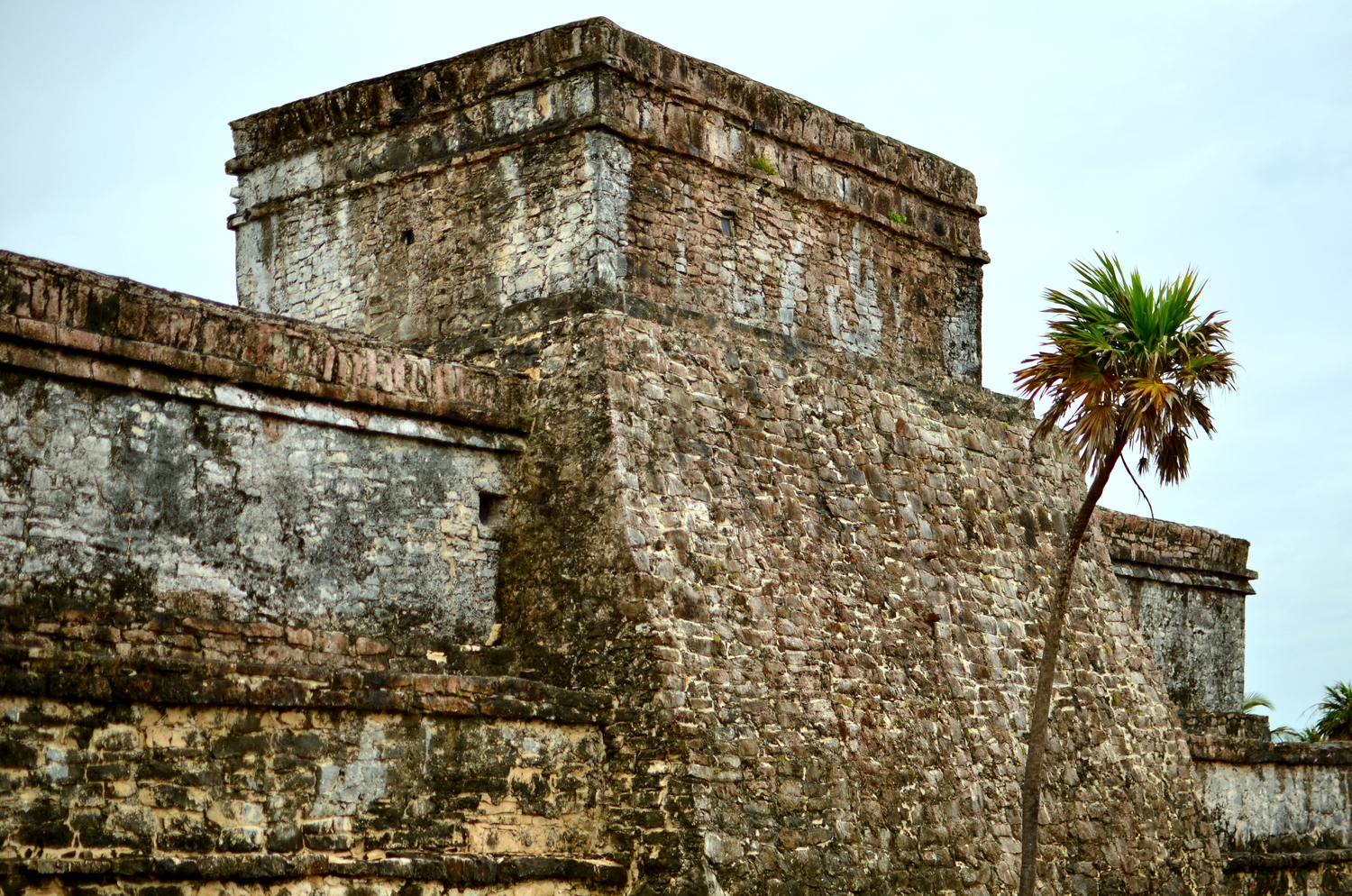
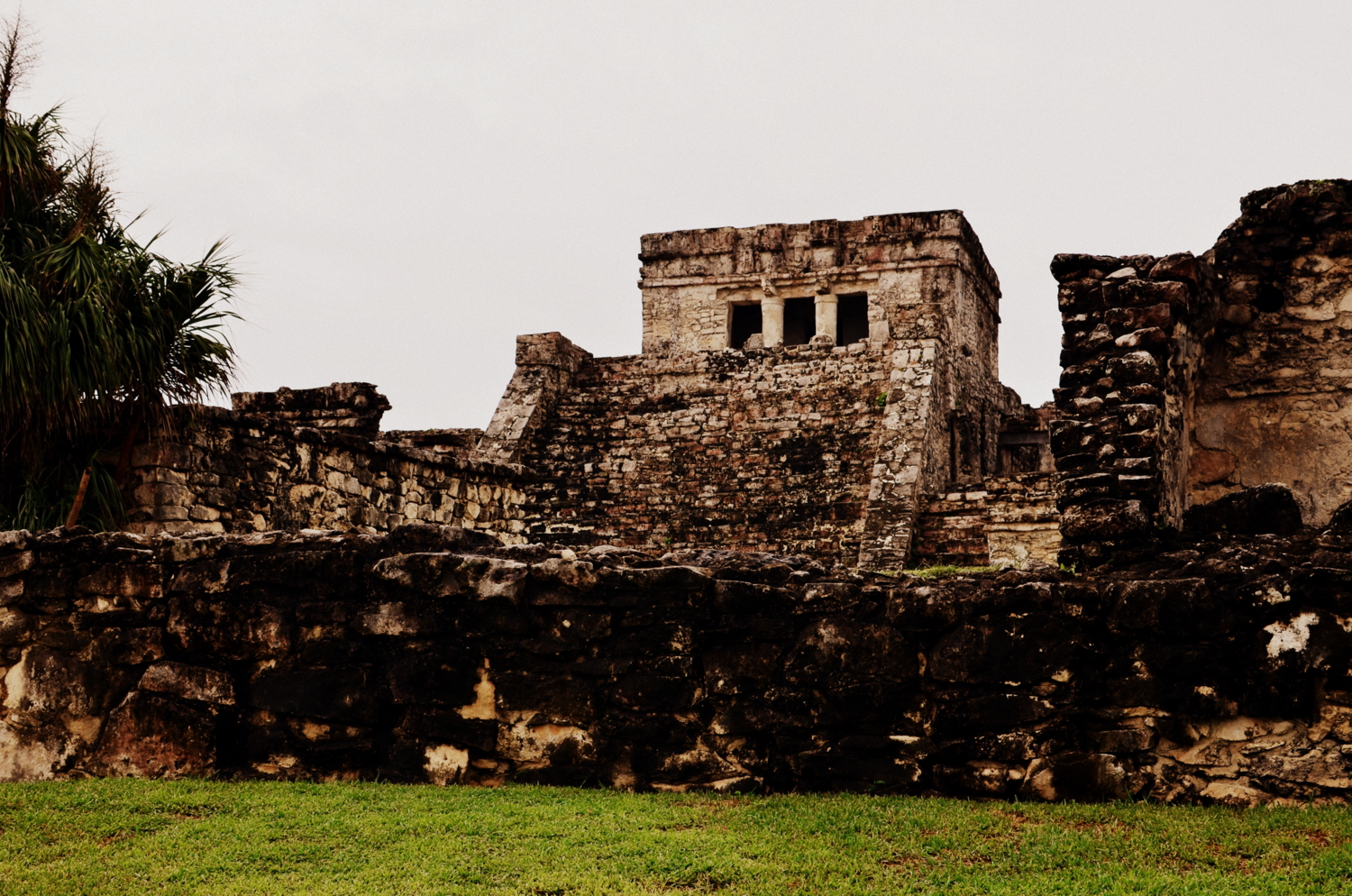
Tulum is a strange little town known best for it´s beautiful beaches and it’s renowned Mayan ruins located right on the Yucatan Coast. Taking in our first night of “relaxation” at the hostel “The Weary Traveler” we found out that after a full night of drinking most travelers are too weary to do much of anything. This was a party hostel, but also had some great accommodations for budget travelers. But, it was a great little post to actually get out and see some cool sights. The only hindrance was the weather, which was pouring buckets at night and did the same the following morning. It was probably serendipity or dumb luck that we missed the first free transport to the beach/ruins because the weather unleashed it´s fury for 3 hours straight. We heard from an older Canadian gentleman that you could jump the wall to the ruins (his preferred choice 15 years prior). Since we blew our budget in Cuba we had this mission in mind. Upon arrival it appeared that this was no longer possible because of the security and exit posts that had been established. We understand that the money used by the entrance fee is used for upkeep of the archeological sight but since it looked like it was about to pour again we couldn’t justify dropping another 10 bucks to see ruins in the rain.
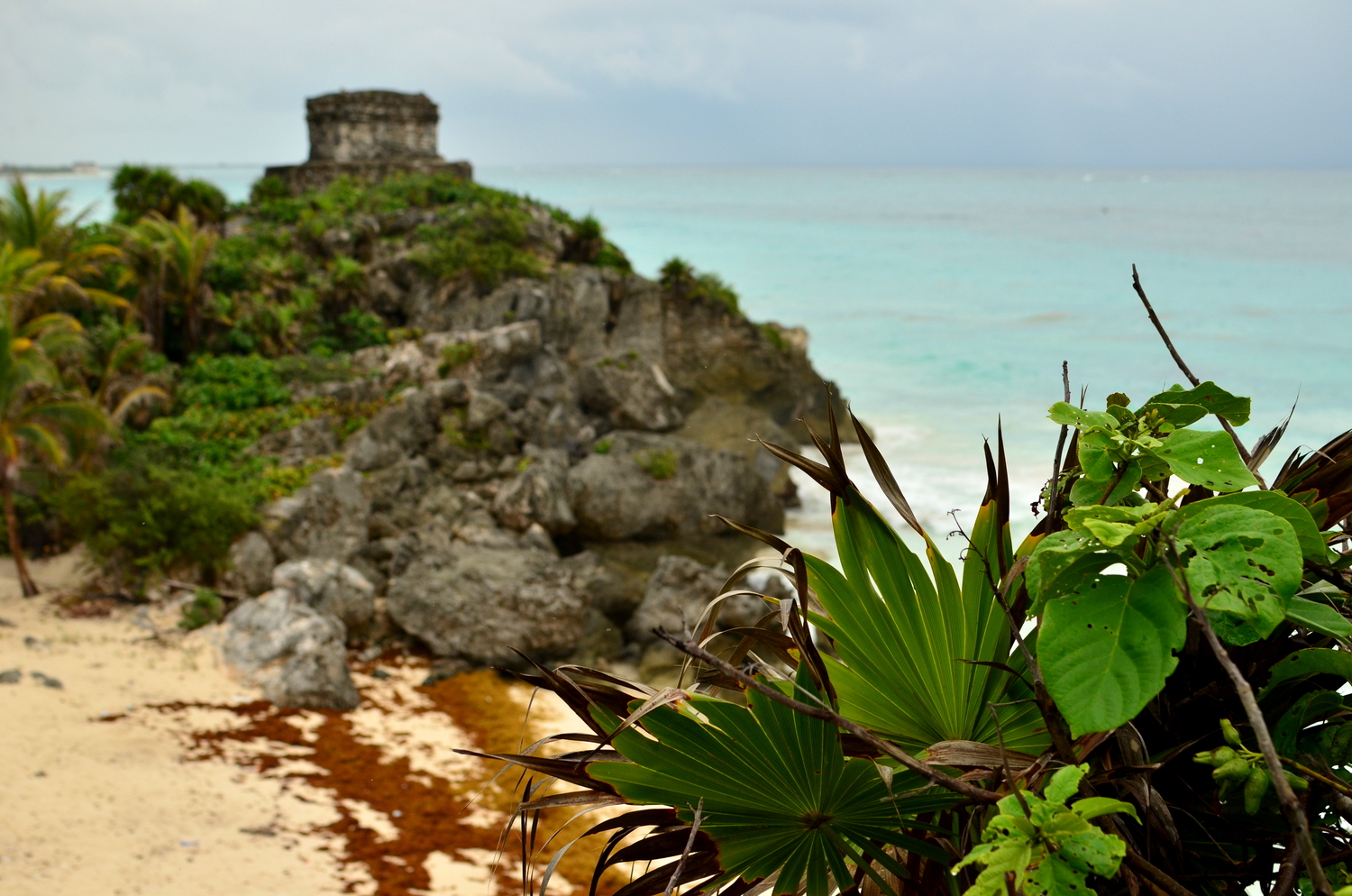

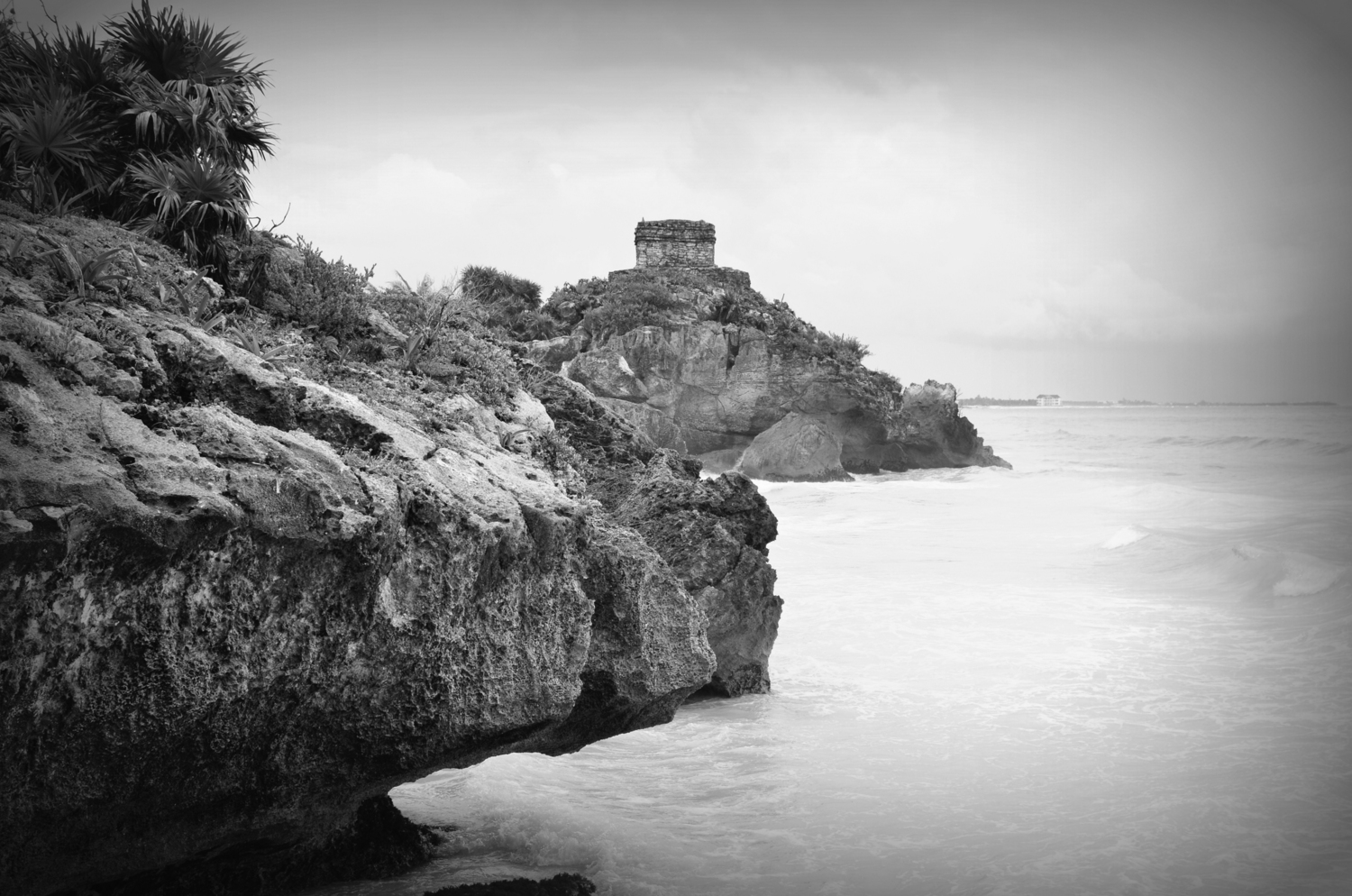

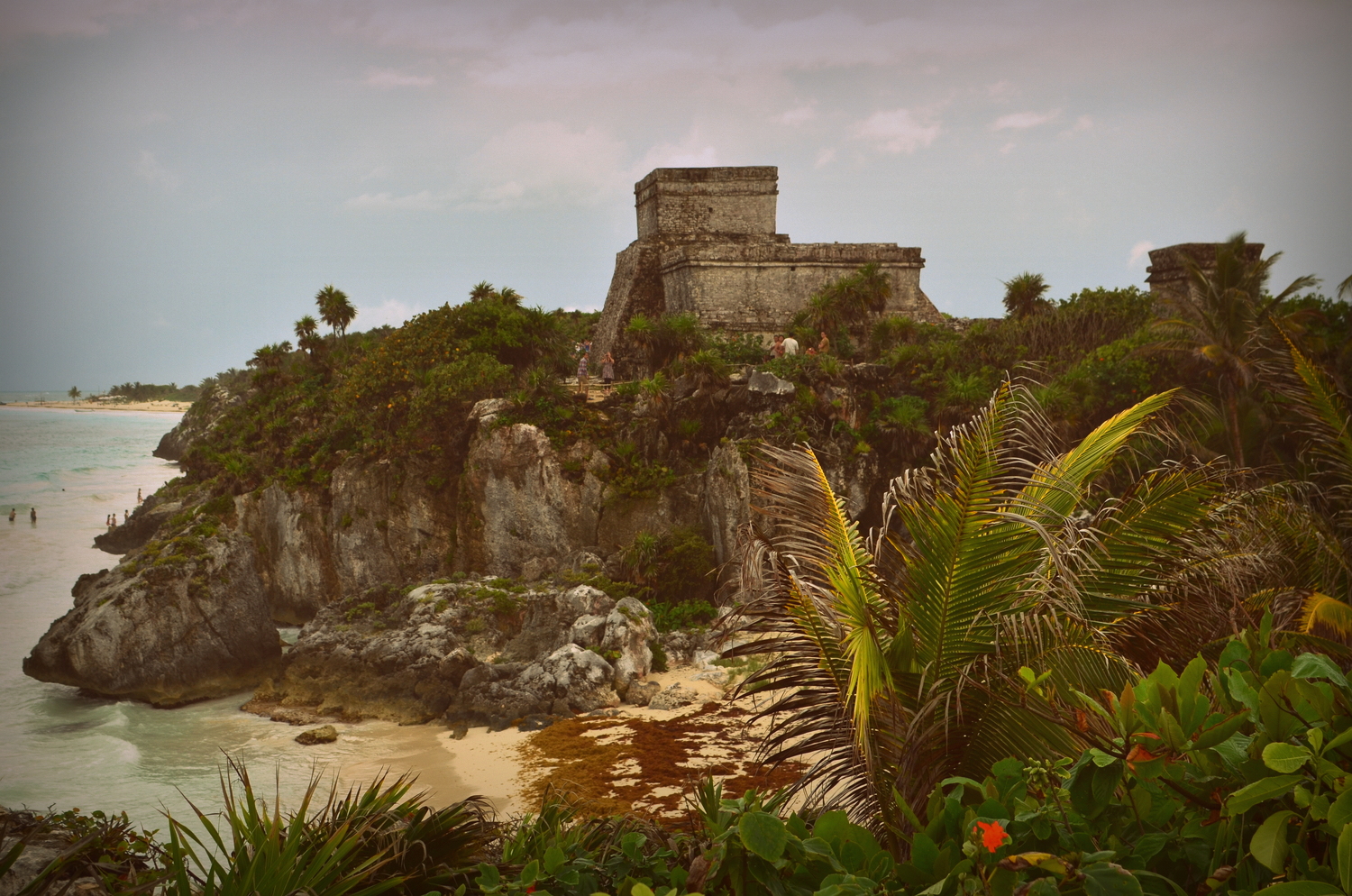
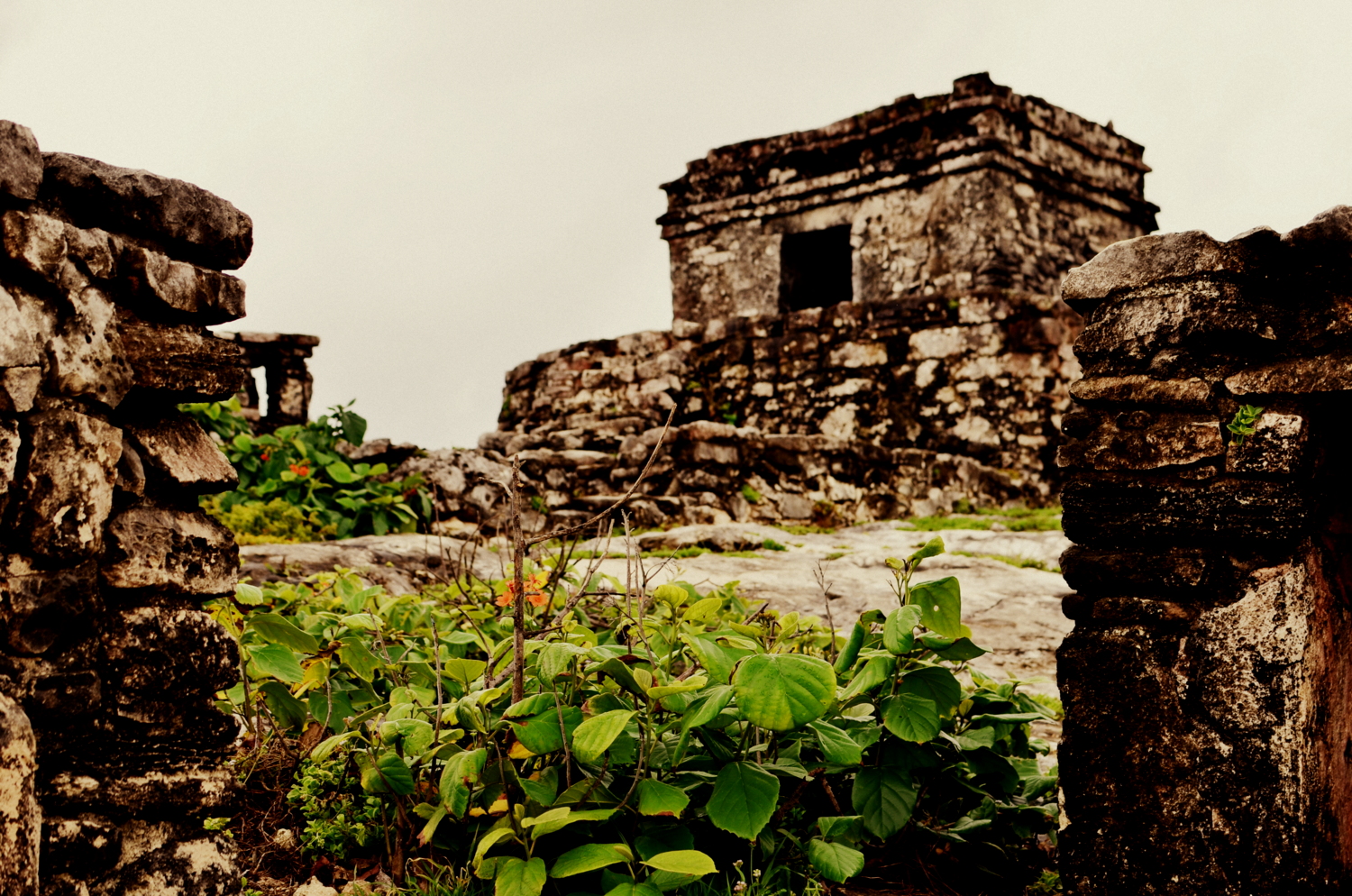
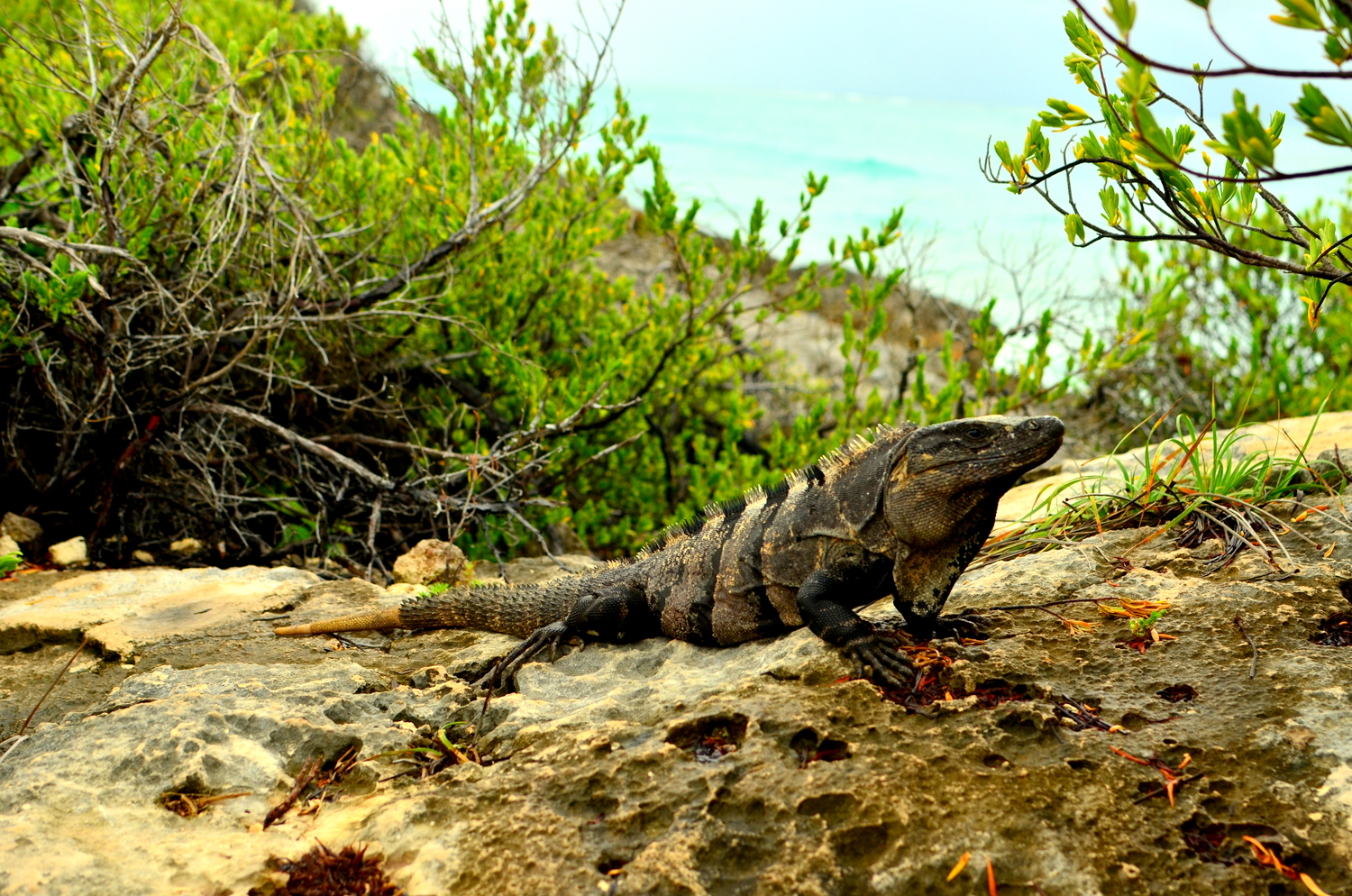
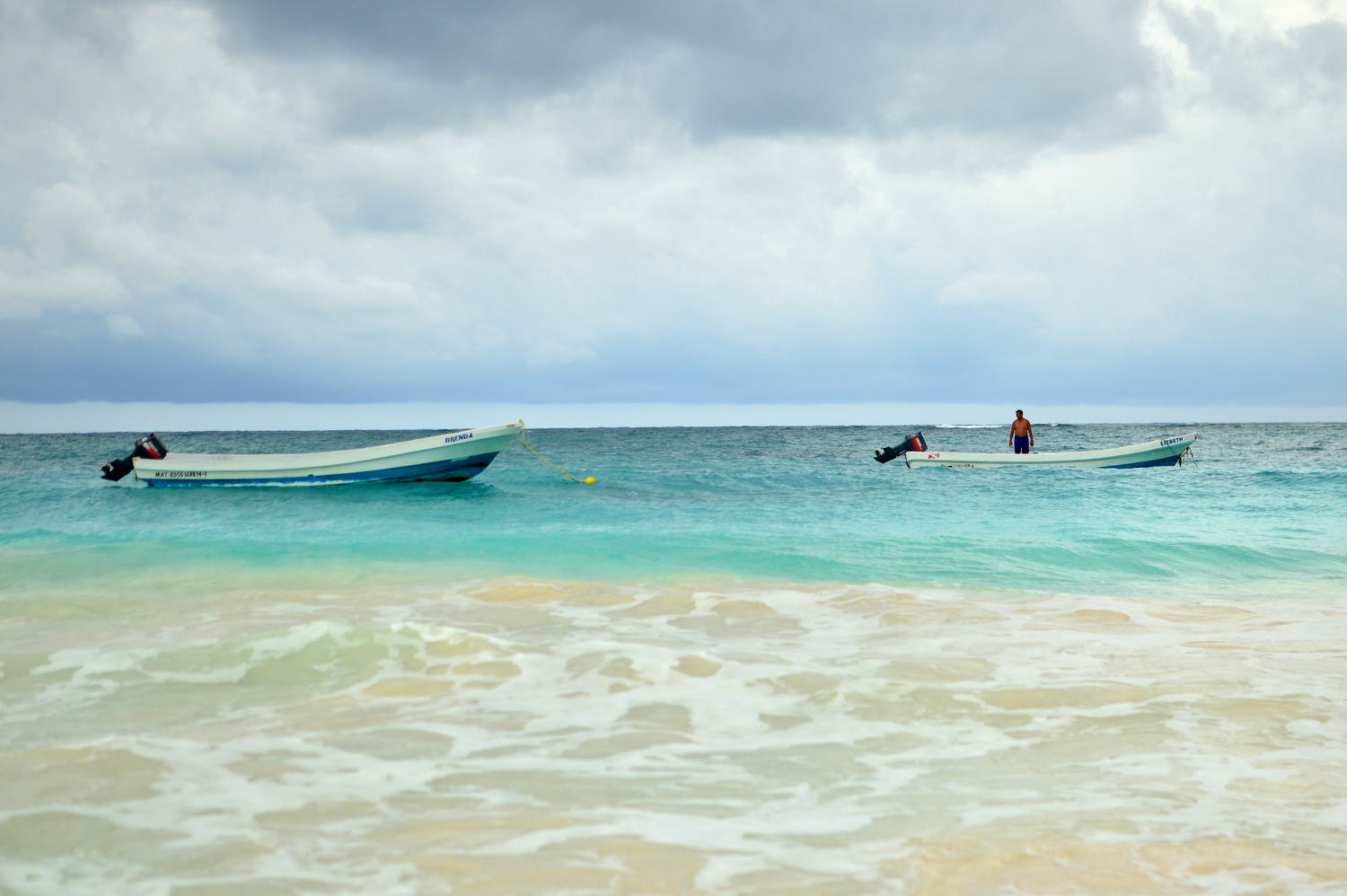
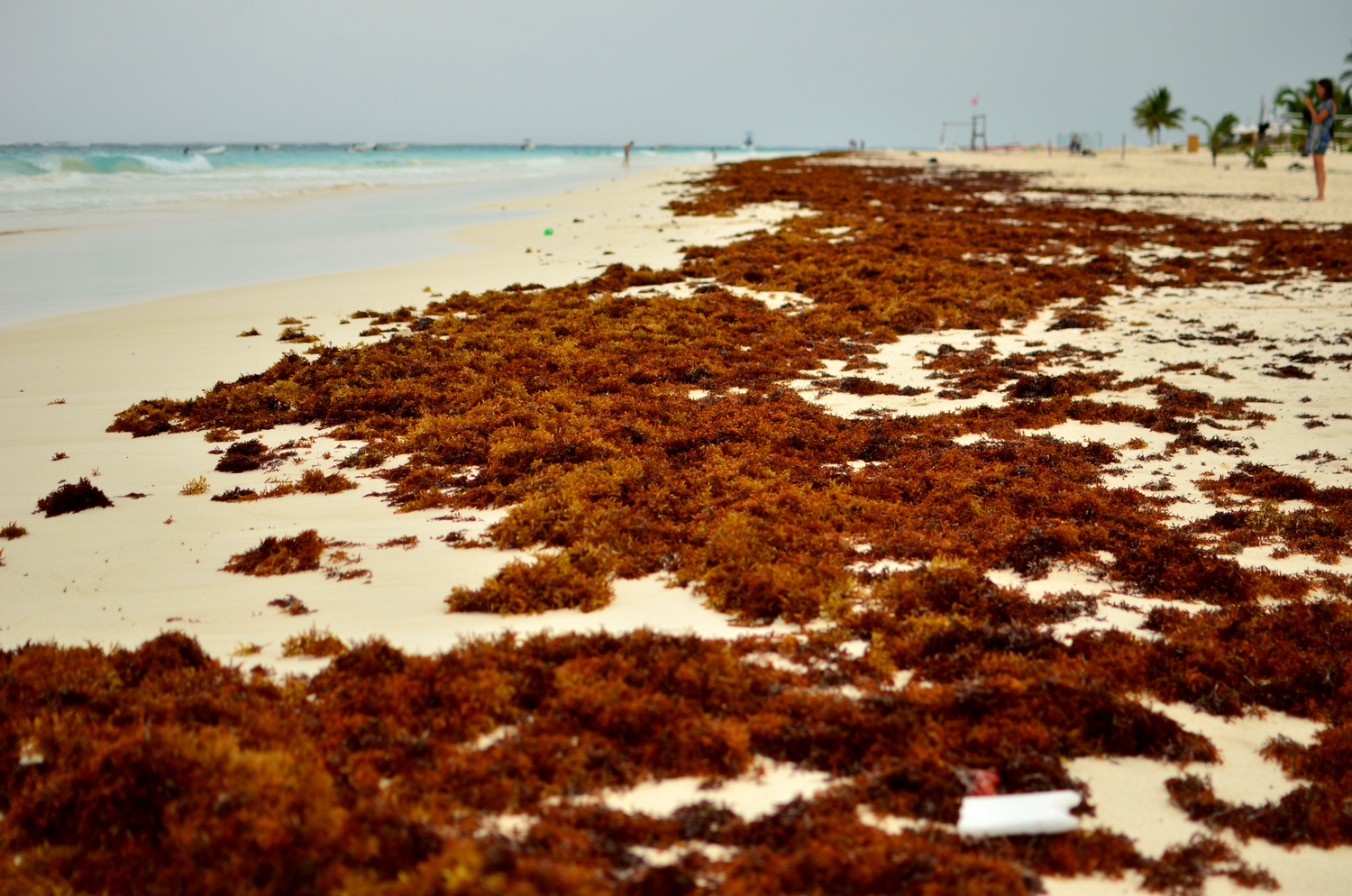
Undaunted, we headed straight for the beach with the idea that we could scale some cliffs to get a better view and possibly find a way in. After about 30 minutes of walking and climbing on karst limestone cliffs(very sharp, very stupid) we came to a few paths that led directly into the jungly terrain. Our first path ended with a snake in a tree branch at about eye-level. Our 2nd path dead ended into the thick leafy plants engorging the lightly worn path. We eventually bushwacked our way into a barbed wire fence and just beyond fence sat the perimeter stone wall. I stealthily peered over the wall and immediately saw what I thought was a guard. With my heart pounding I barked out the orders to Elissa to get her bright red rain jacket off in a not so quiet whisper. When I looked over again I noticed the well dressed gentlemen was soaking wet, taking a phone picture of is girlfriend by the edge of the site. Elissa still makes fun of me to this day. We scooted over and took our free, although not suggested, tour of the rainy ruins. The buildings themselves were not super dramatic but they were beautiful in the wet weather and afforded supremely amazing landscape views. Afterwards we roamed the beautiful white sand beaches listening to the surprisingly loud echoing booms of the occasional thunderstorms touching down nearby and watching fisherman bring in their day’s bounty from the sea.
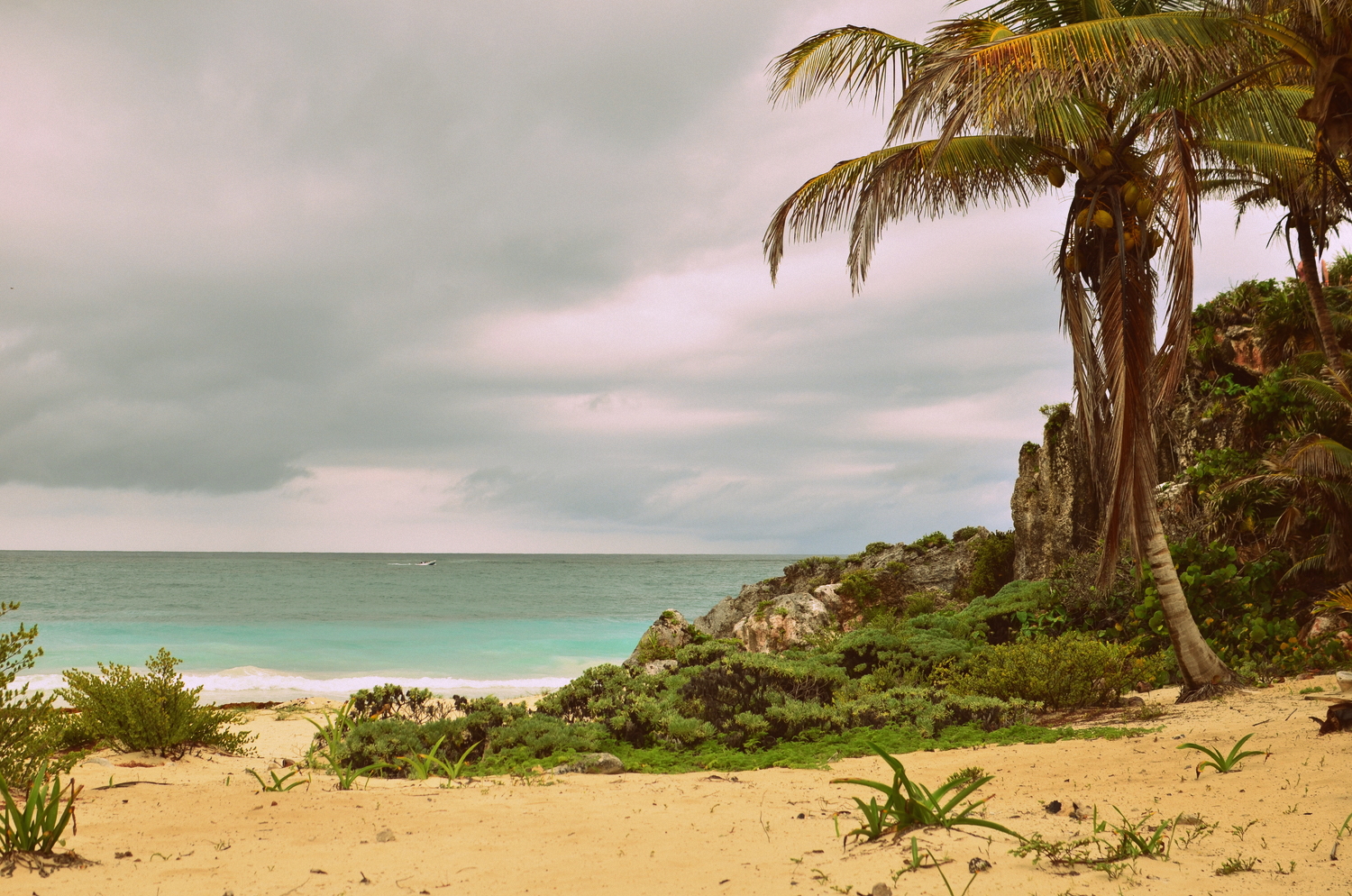
We went back to the hostel and knew our time was up. We didn’t really want to see more of the Yucatan Coast and we were eager to go see our 3rd country, bumping up the time travelled/country ratio to a number that was easier to swallow. Mexico was huge, much bigger than we thought. Our notorious neighbor from the South offered more than we ever expected. There was such beauty, culture, and friendliness in Mexico everywhere we turned. The vast landscapes that Mexico holds close to it’s heart are some of the most beautiful things I’ve seen in this world. We knew we were going to miss the big Mexican frontier and all the amiable folks we met along the dusty road. But we parted ways with our Mexico and bought tickets for the overnight into Belize City with a scheduled arrival of 6AM. Hasta Luego, we’ll come back.

Return to La Habana, return to Mexico

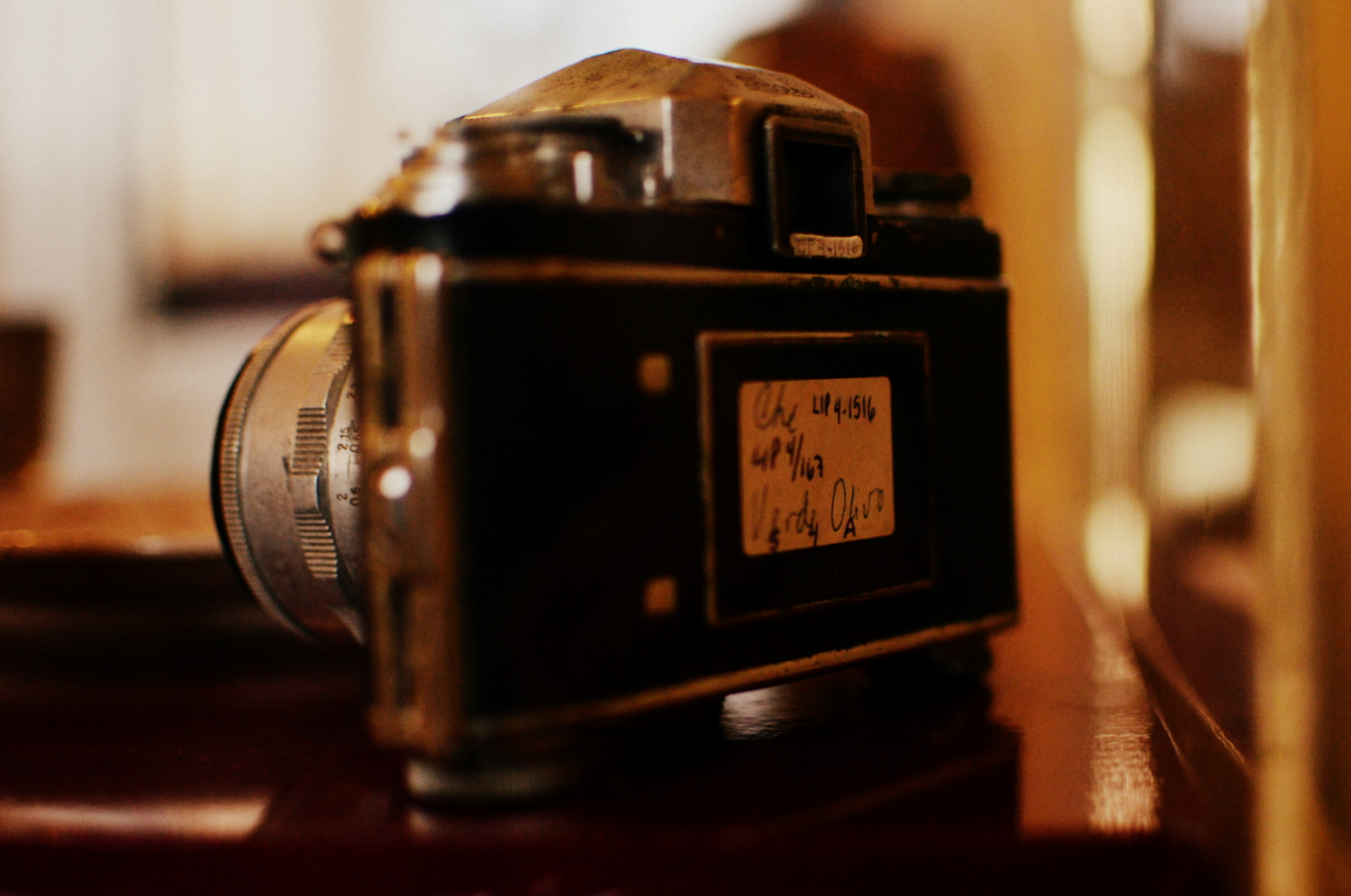
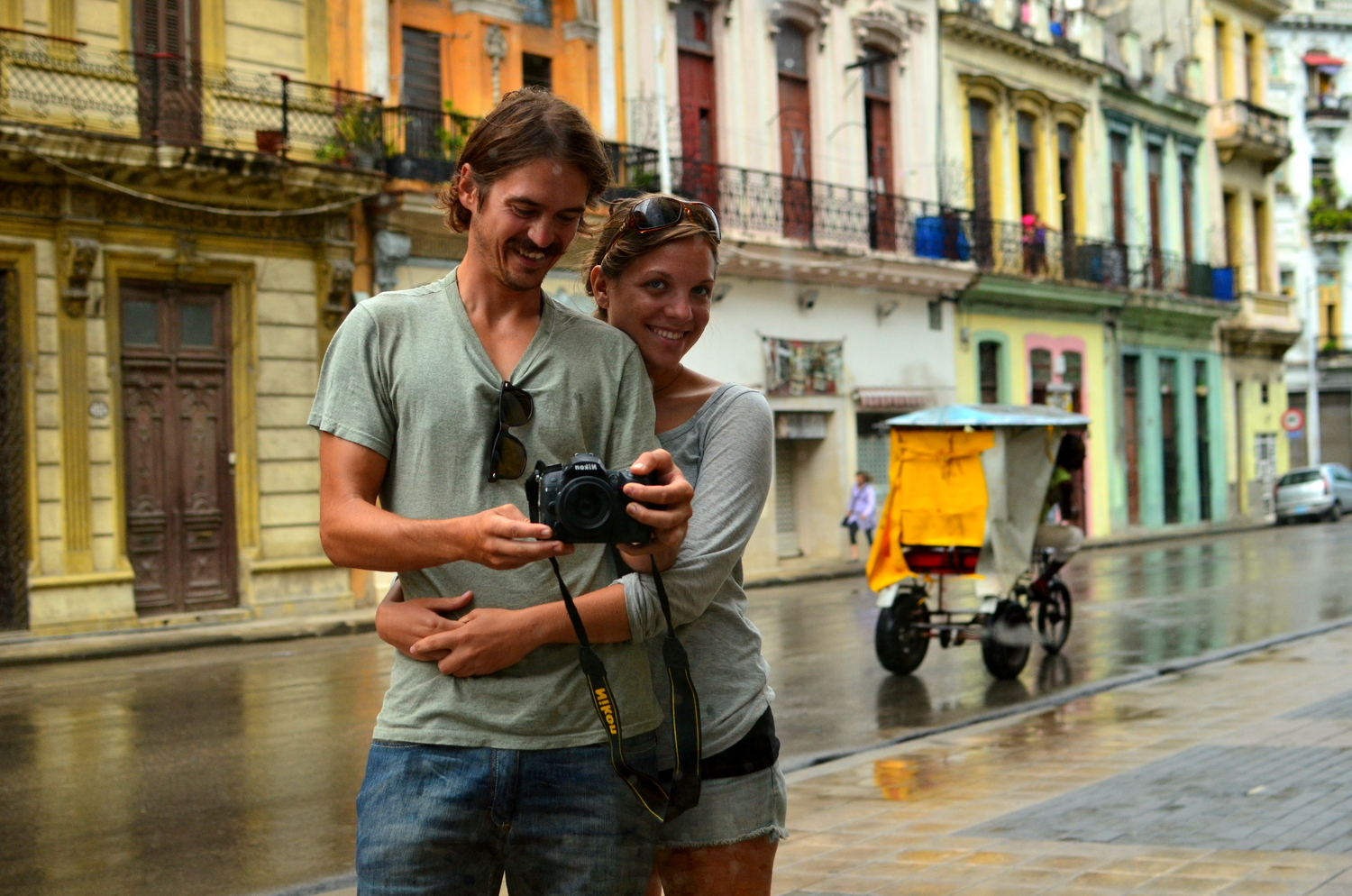
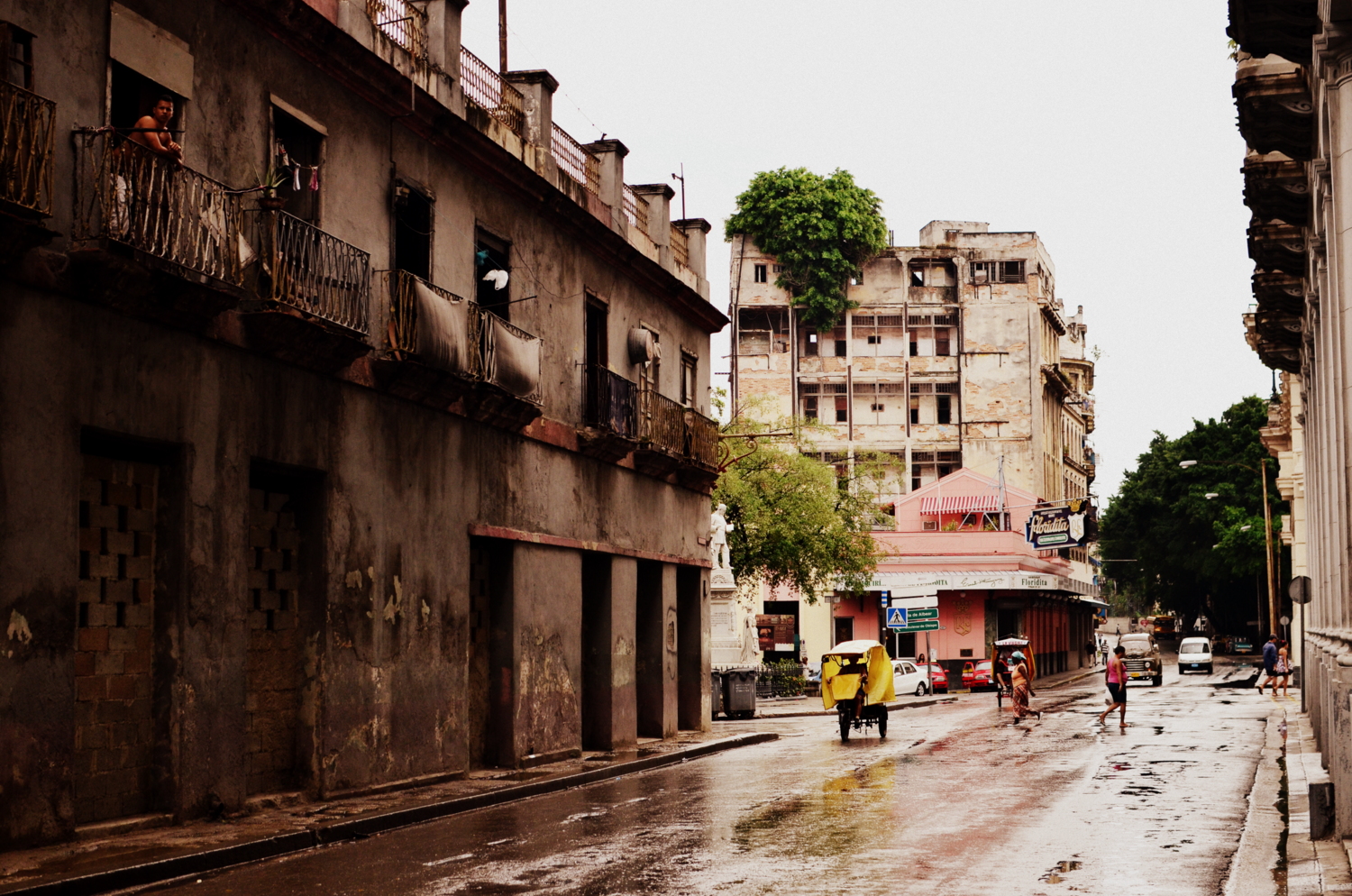


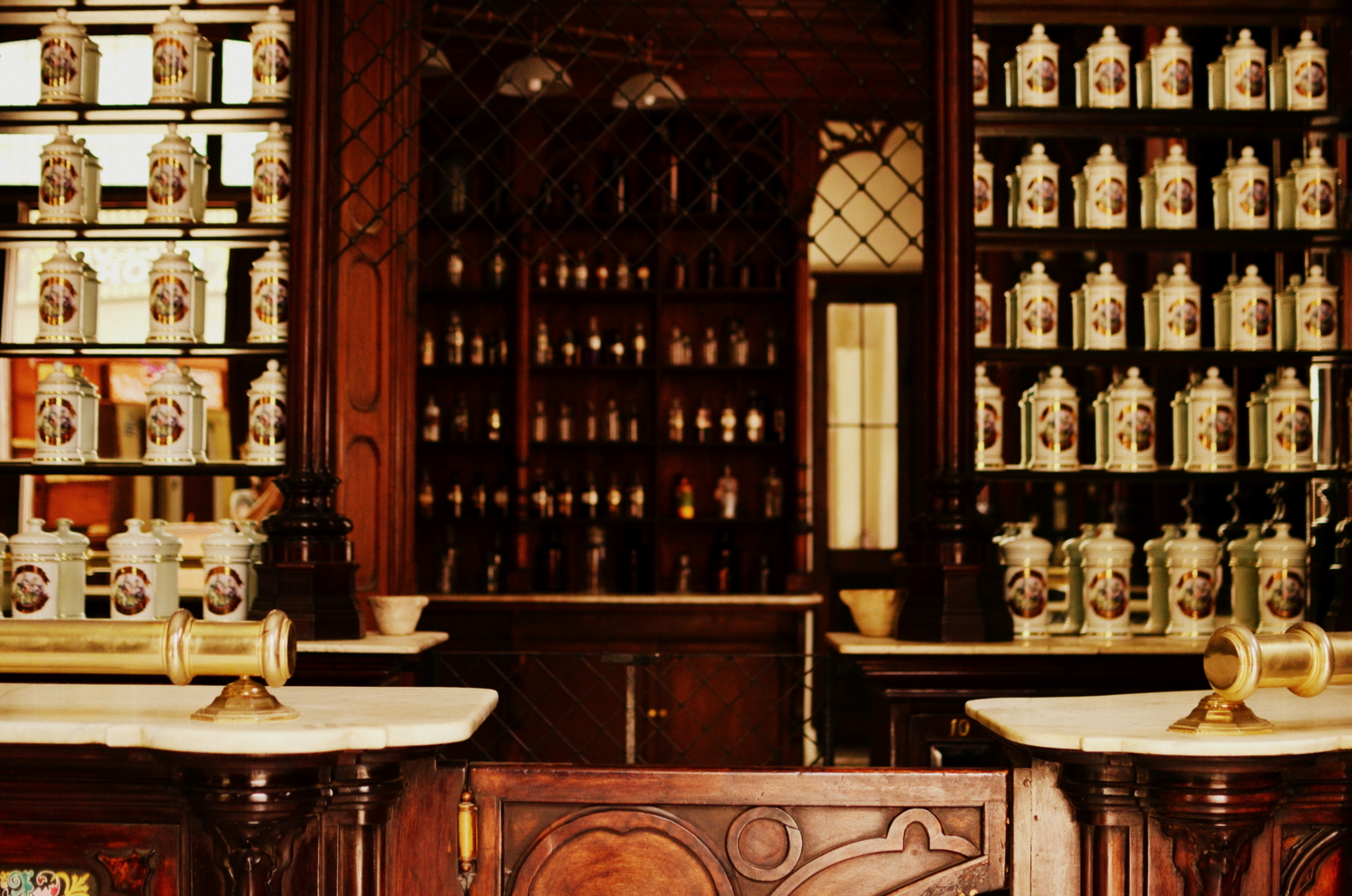

A bit of bad luck left us in a sticky situation when we arrived back at the terminal in Habana. I was in the grips of a tremendous head cold, possibly a flu, and left our survival camel-bak water bottle (this bottle came with a UV light screw on cap that wipes out chances of bacterial replication, retail value 100$) at our casa in Vinales. The groggy morning fog stripped me of my common sense and I could picture the bottle sitting on the concrete shelf next to the kitchen table in the sunlight of the picture perfect Cuban day we left behind. This problem was resolved, with a bit more of that Cuban magic that I was becoming accustomed to, days later when a bus driver brought it back for a special pick up at the station. By now half of Habana seemed to have to the same head cold that I had, and I was suspicious that we had somehow brought it over on the plane we arrived on. This will have to remain a mystery.
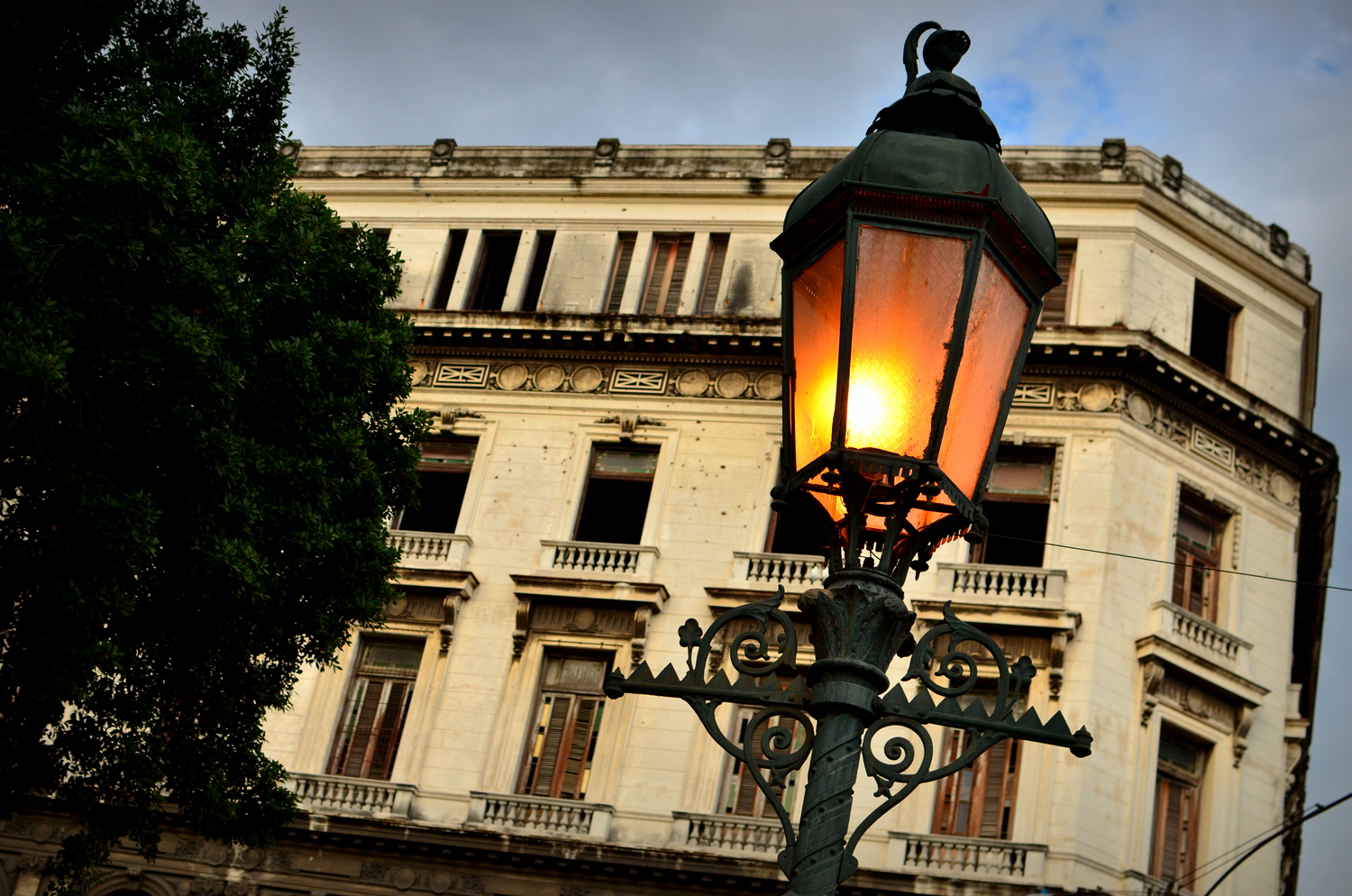

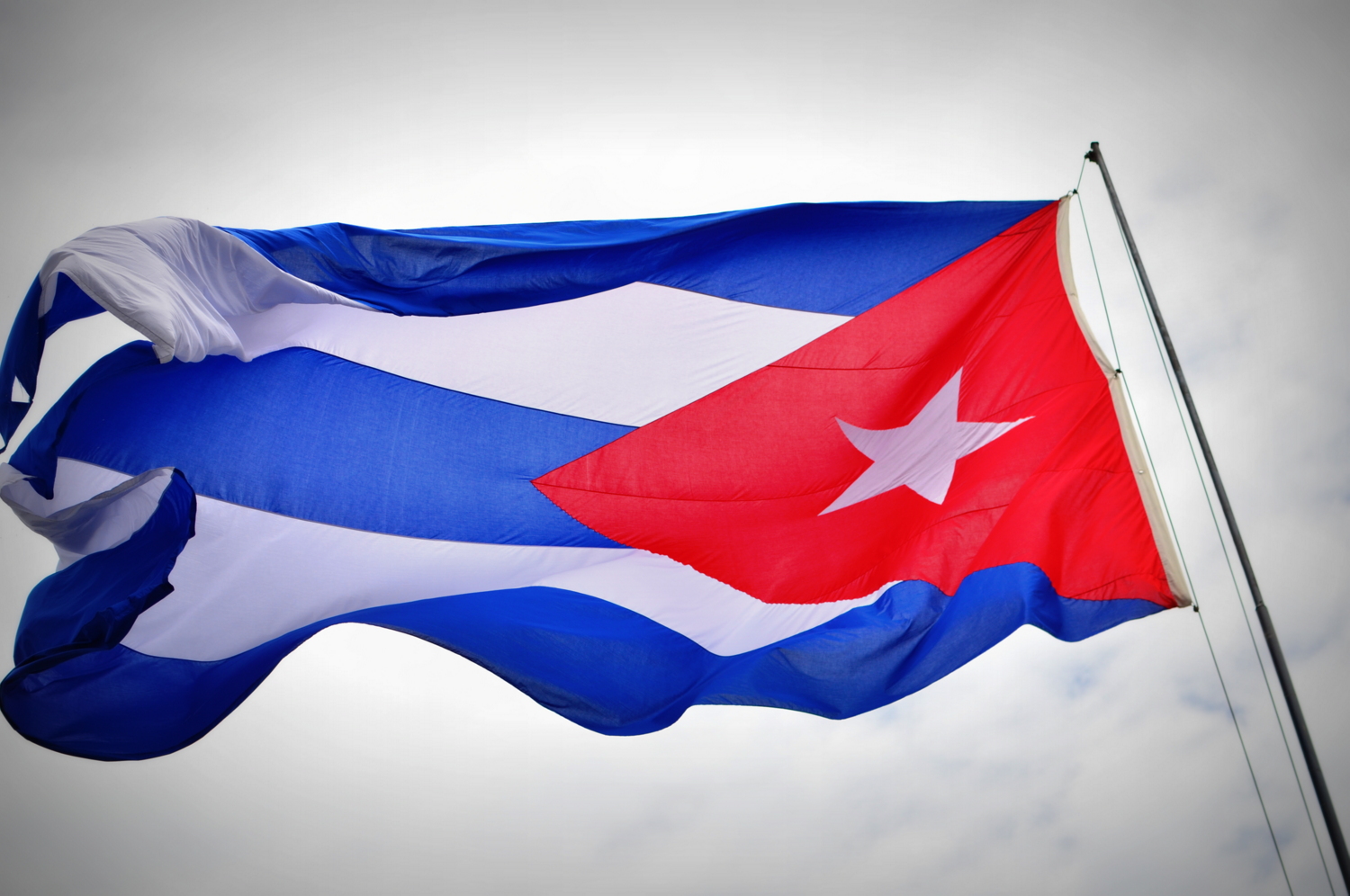
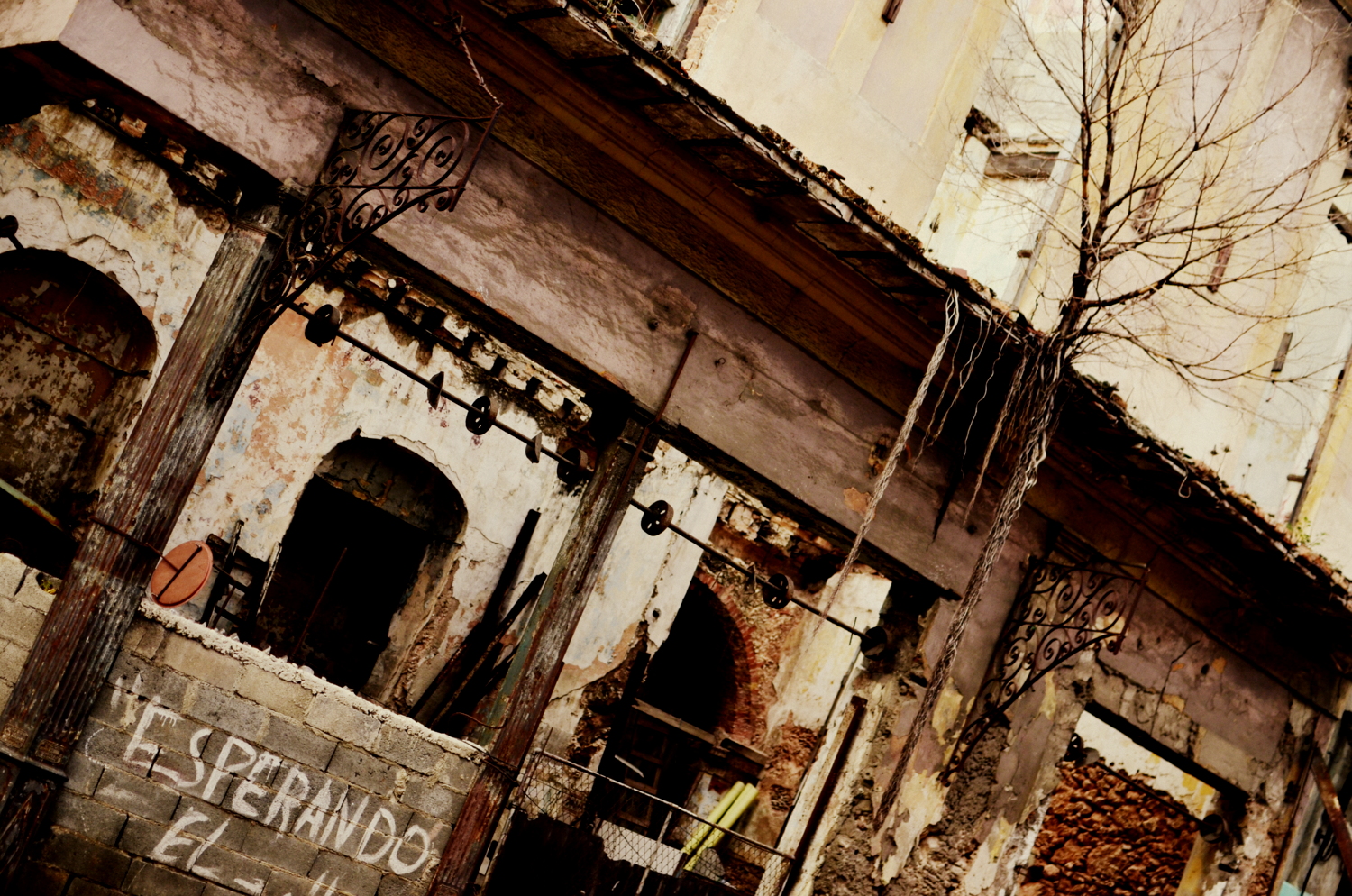


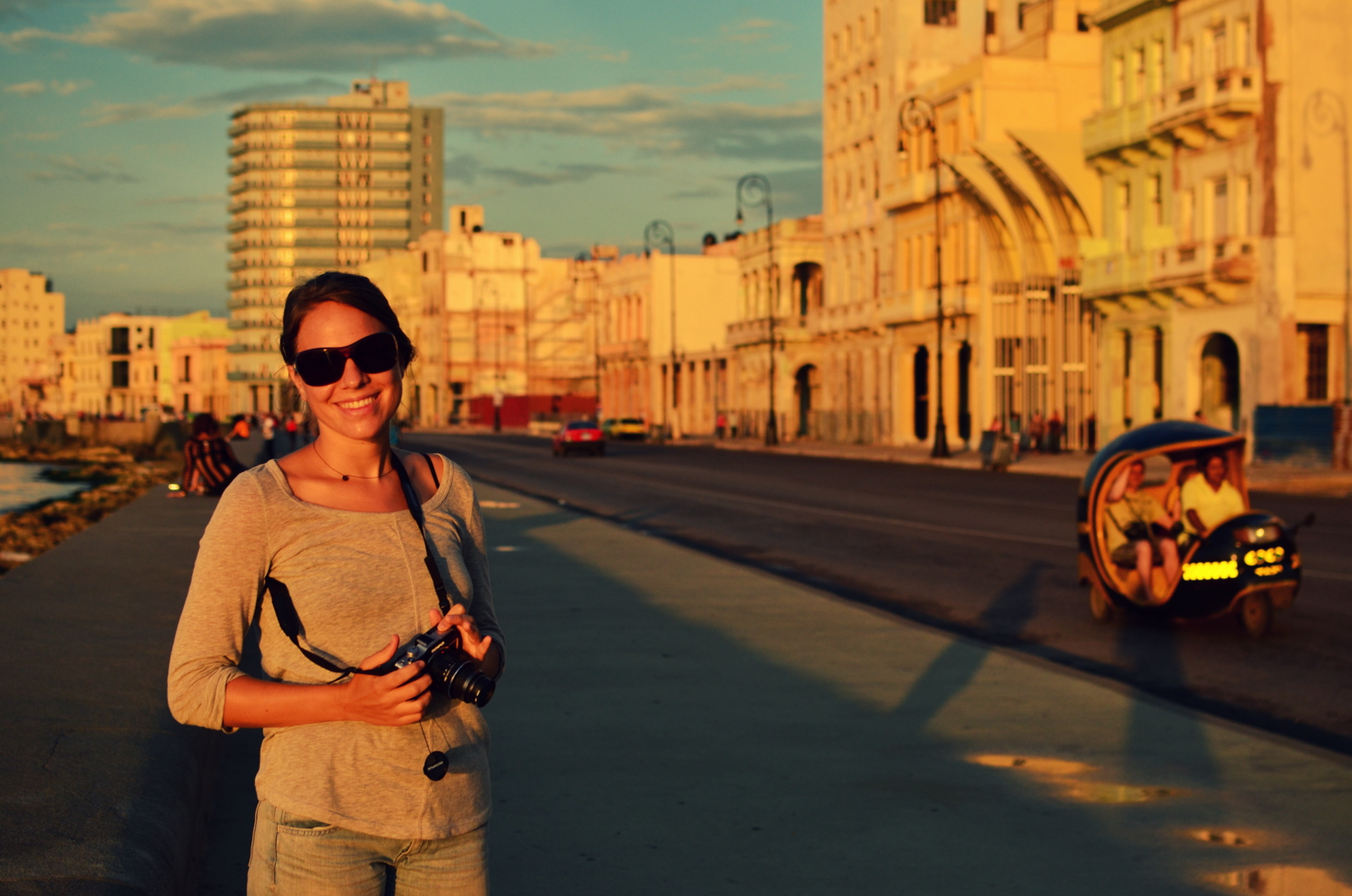
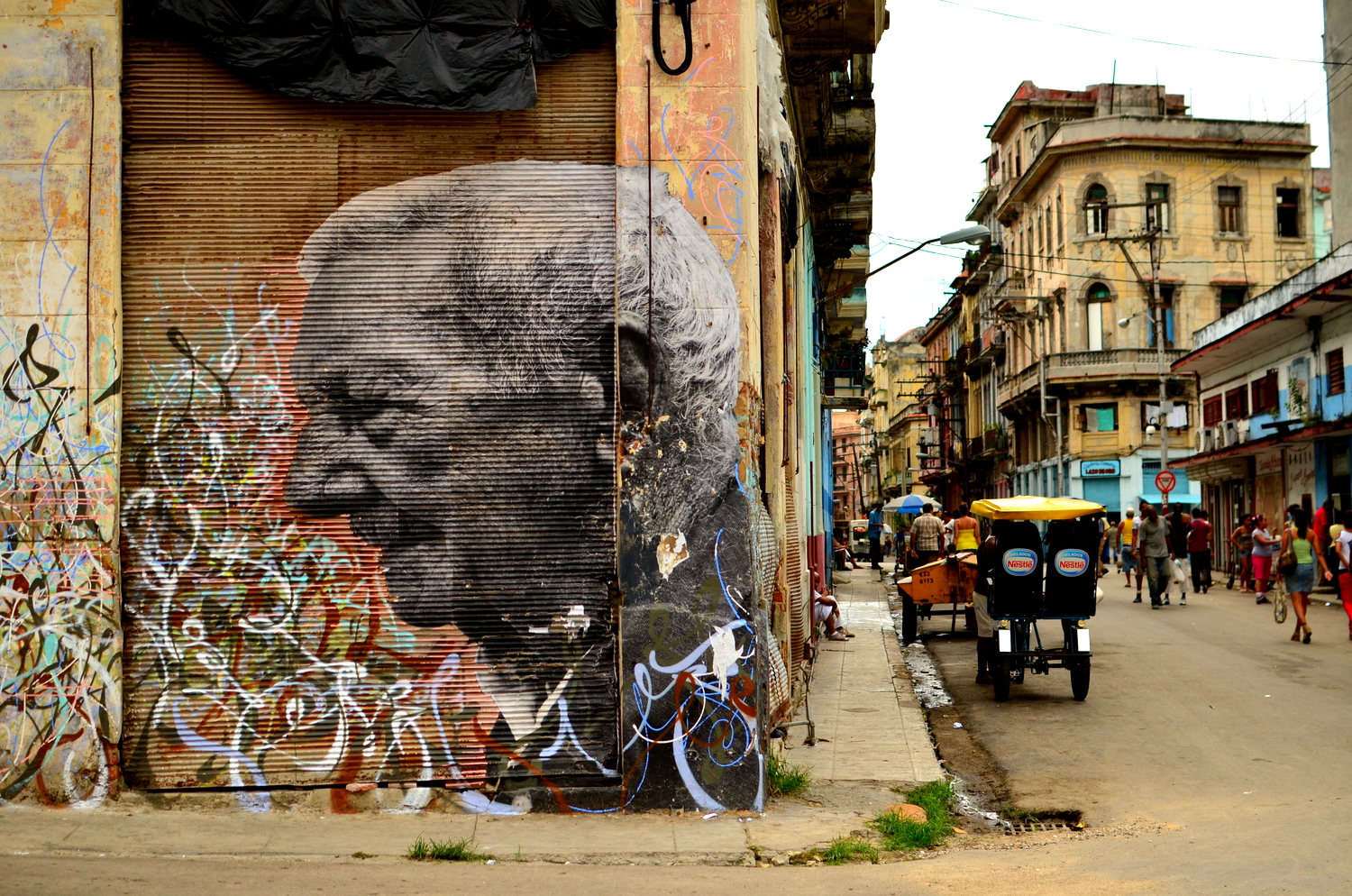
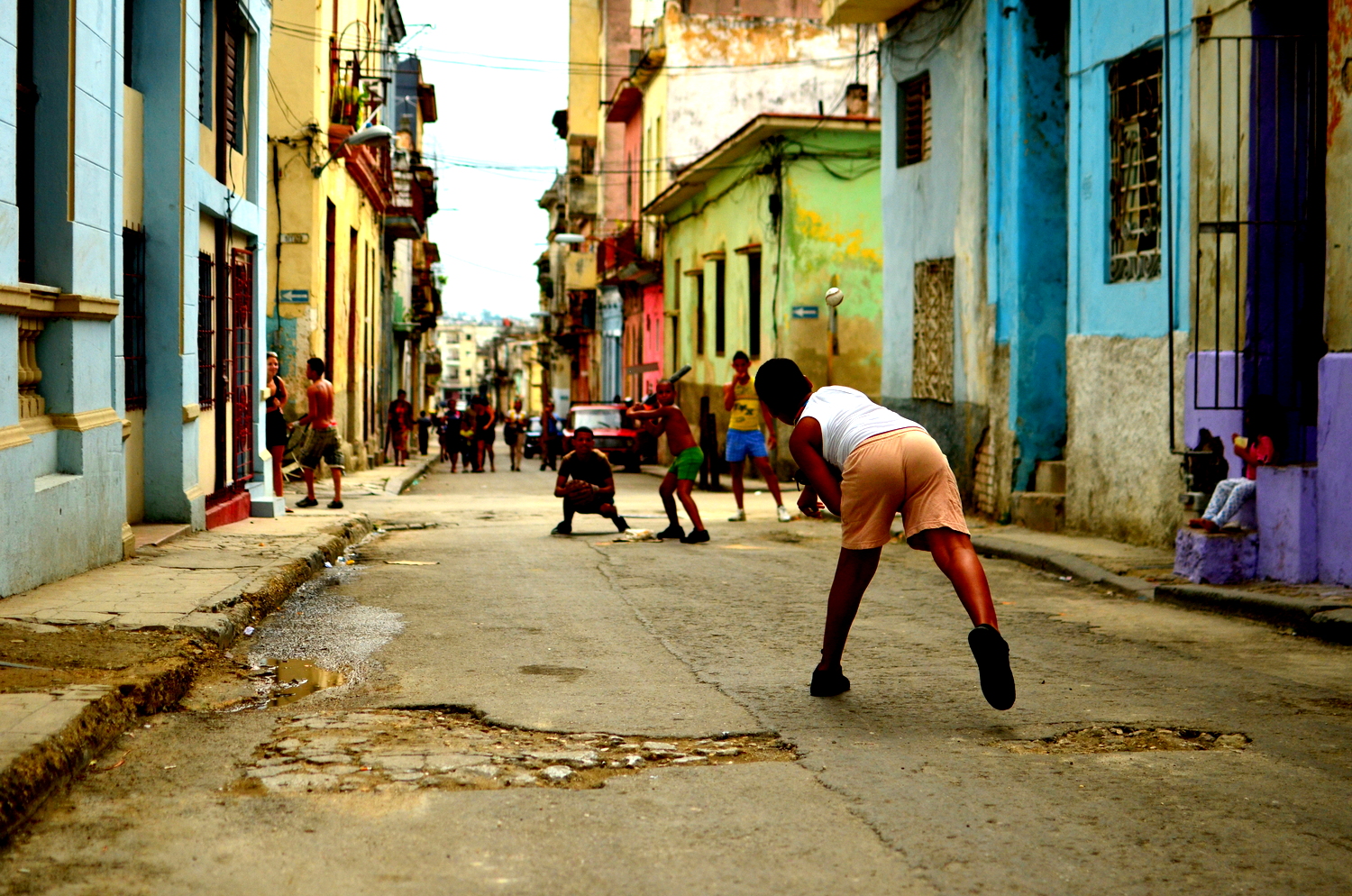
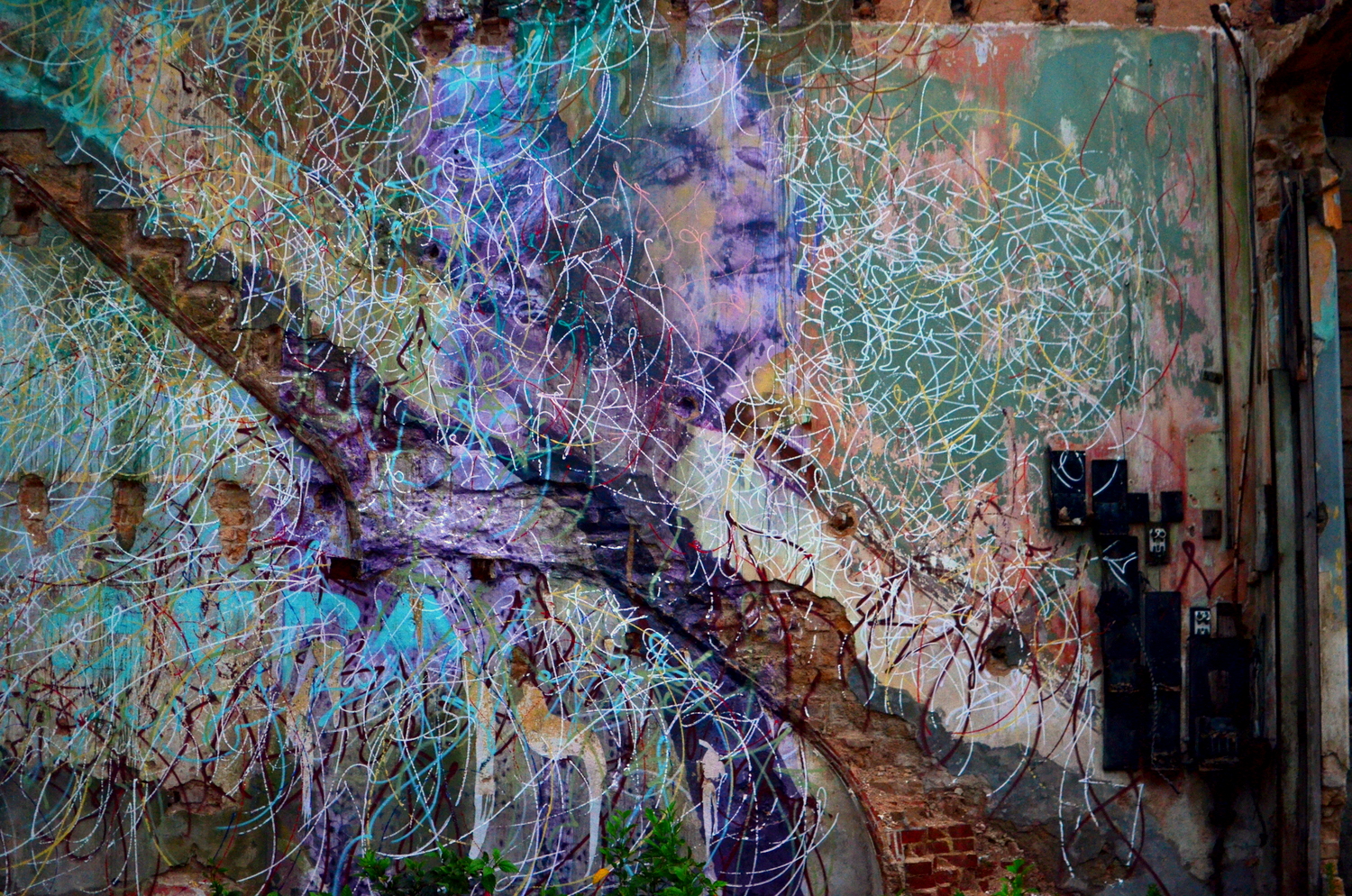
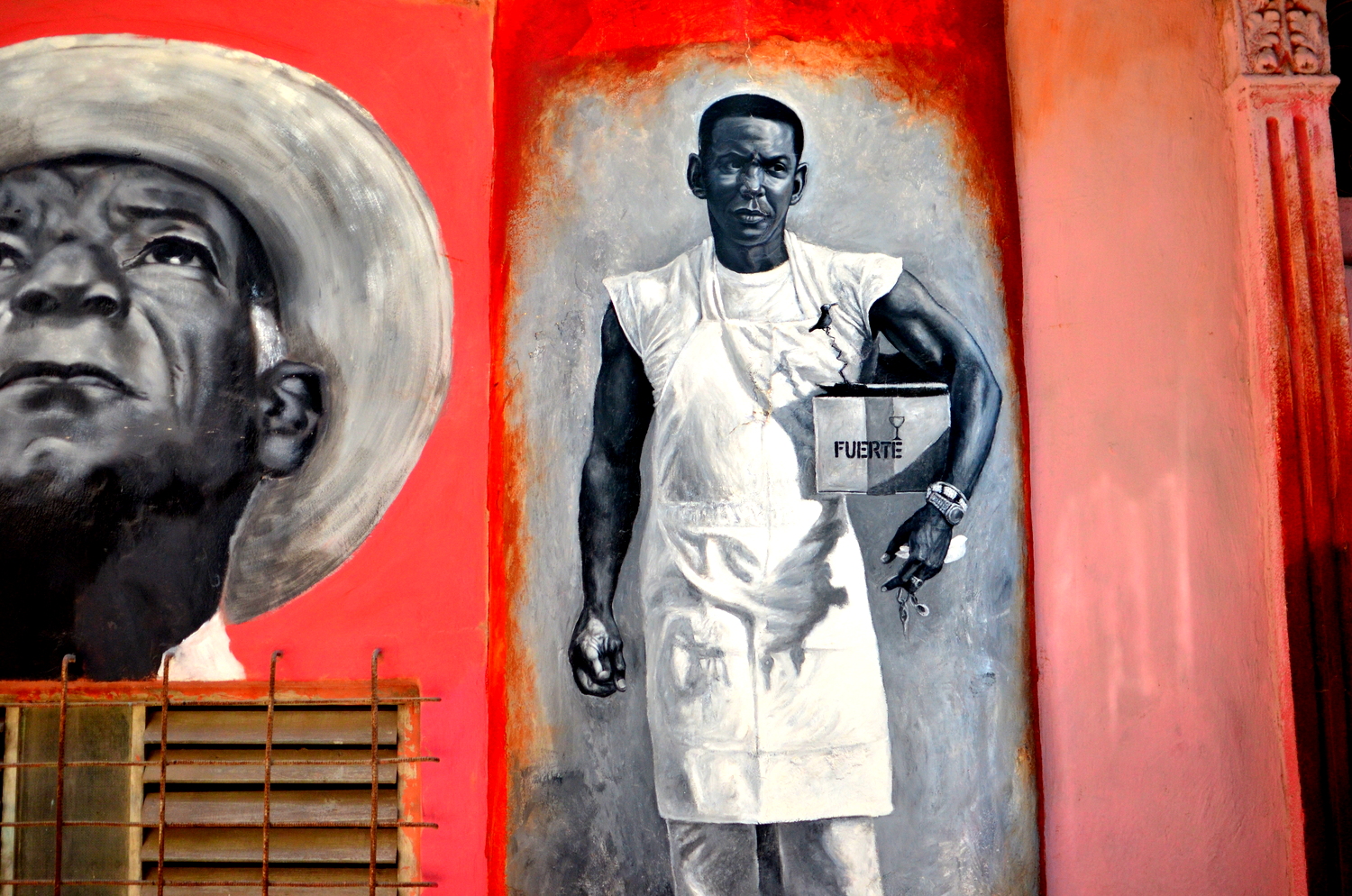
Part 2 of our Habana adventures was a more gentle version of our arrival, kind of a way to better get to know the luster of life in Cuba. We wanted to dig deeper, to feel the heartbeat of the city, and to try and to get a grip on what keeps the clock ticking. Naturally, this was best done by getting lost in it’s maze of neighborhoods outside of the mainstream restaurant strips, away from Obispo, beyond Vedado, and into the unknown. This mission was only due to the beautifully executed collaboration of two artists, J.R and Jose Parla (http://www.ibtimes.com/articles/339625/20120510/havana-biennial-wrinkles-city-jr-jose-parla.htm), for the bienal art festival that Cuba hosts every 2 years. For Cuban artists this is the chance to get some international recognition while the spotlight is turned on, and is an opportunity to stretch out of the unknown and into a whole new league. JR shot portraits of elderly Cuban’s and wheat-pasted larger than life sized black and white images onto the sides of buildings within the neighborhoods they reside in. His accomplice used abstract brushstrokes to enhance the captured faces that already spoke louder than words could ever capture. A newspaper information guide to the bienal listed all the street corners, kind of like a legend of sorts, for a real life treasure hunt to find these portraitures scattered all over different parts of La Habana. A large majority of these pictures were pasted in neighborhoods that travelers would never find themselves in, which I think was part of the theme of this collaboration. With “esquinas” marked off on our map and our eyes finely tuned in on finding these gigantic “Wrinkles of the City”, we sought out on a 6 mile journey through the twisty, time-warped puzzle of the city. The unique part of this mission was getting to know these old, hidden neighborhoods where kids were playing baseball in the streets, men were welding metal bicycle frames, cars were being repaired, and outdoor boxing gymnasiums popped out of nowhere before our constantly scanning retinas. By following this invisible, interactive path we felt like we were part of an exploration, like no tourist before us could have possibly found themselves here wandering these same streets. In total we found about a dozen of the portraits (I think there were about 25 listed, but some seemed to have disappeared) on our photogenic treasure hunt. We eventually ended up back at the Coppeleria for another round of ice cream goodness. I’ll never forget the image of the skinny older gentleman next to us waiting contently with a gigantic 1lb piece of layered cake on the table in front of him. He looked like he could have been one of the portraits we had been seeking out, a wrinkled man with a whole lifetime behind him of work, Cuban living, and social extremism. We imagined what could possibly be stopping him from digging into this massive sweet treat while our order was being processed. The answer to our question came moments later when the server brought three “tres gracias” next to his cake, totally 9 scoops of ice cream. He began mashing the ice cream into the cake and it all quickly disappeared. This time I ordered 3 “tres gracias” for myself as well. When in Habana…


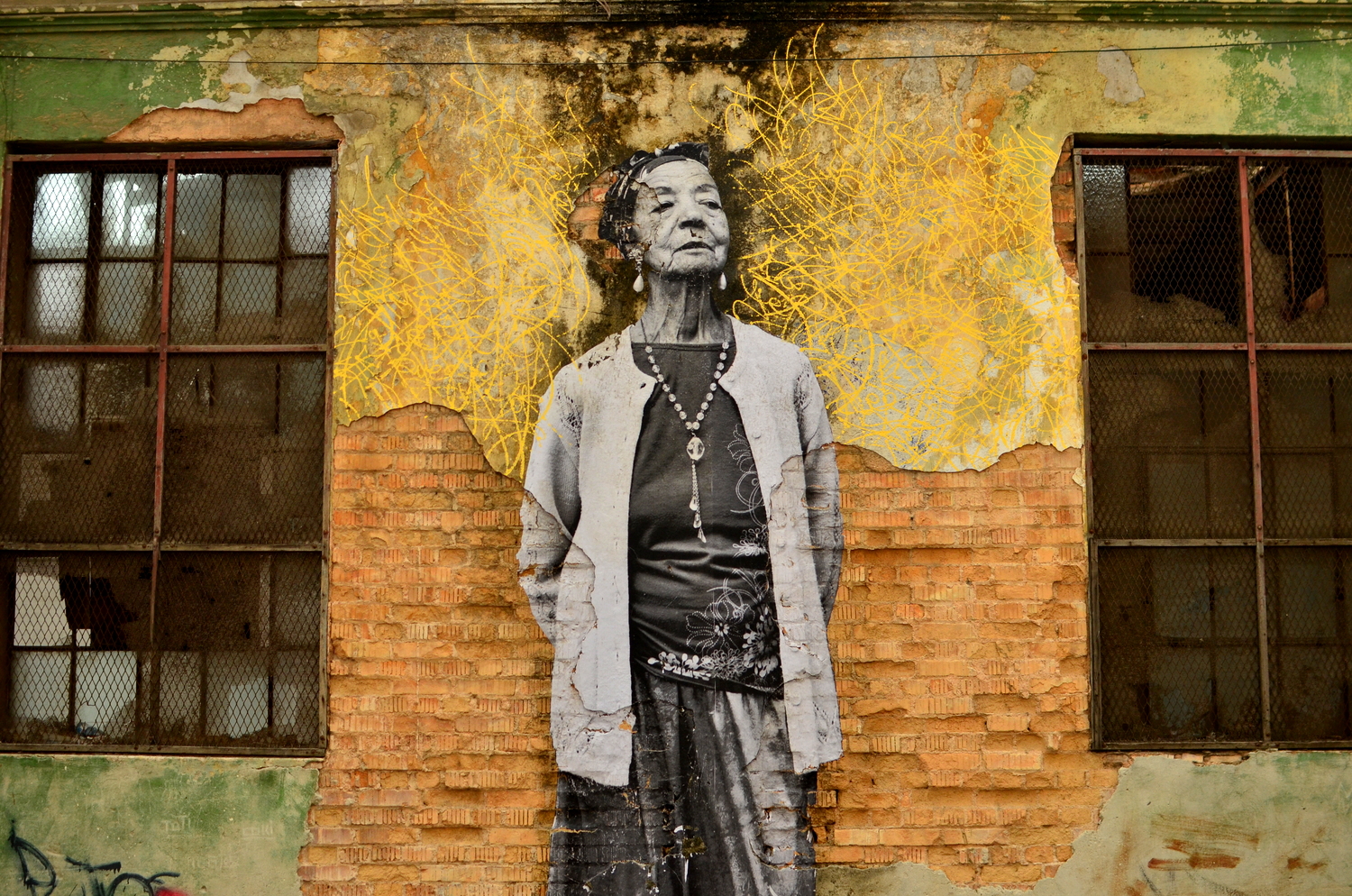


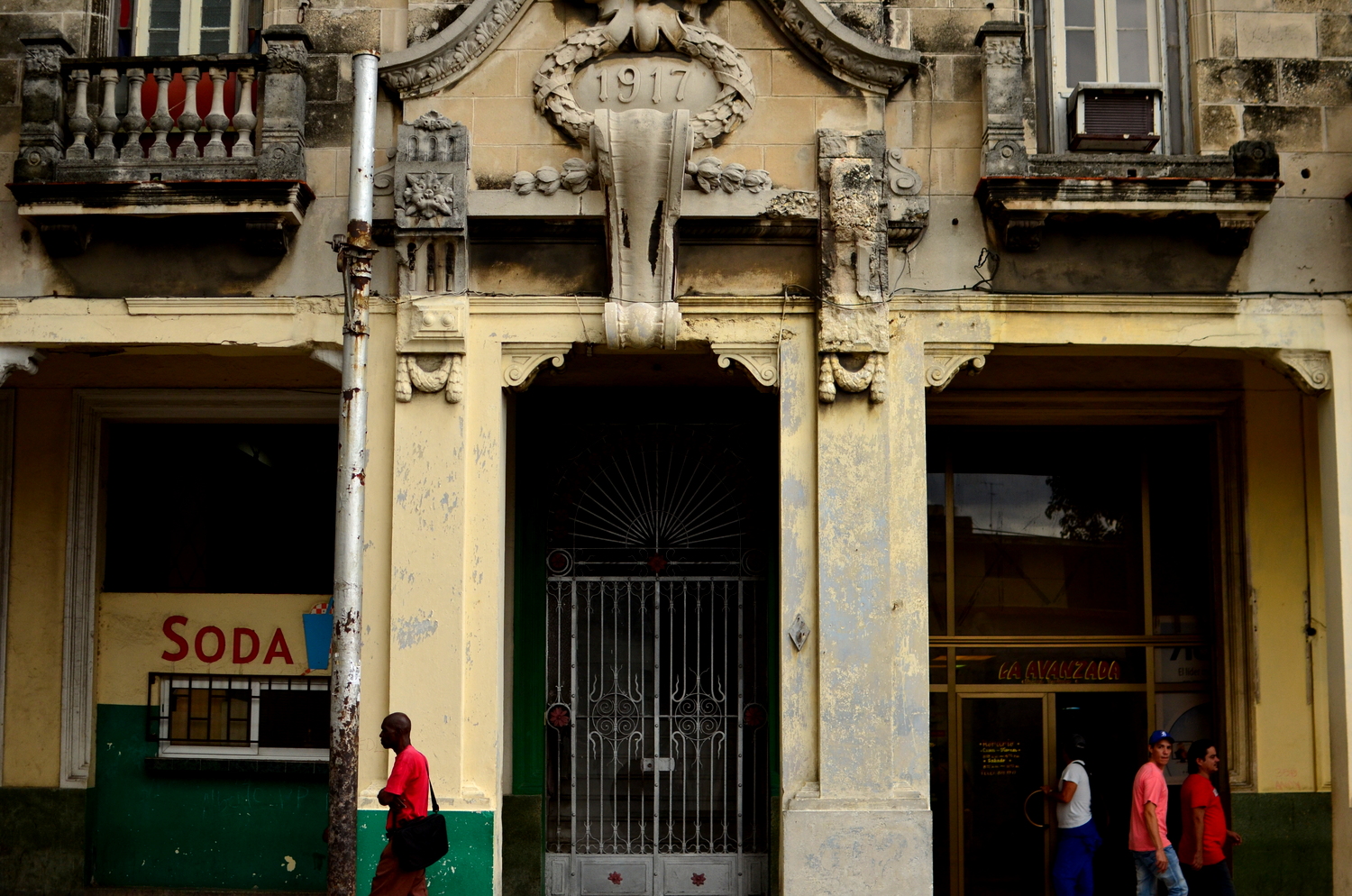
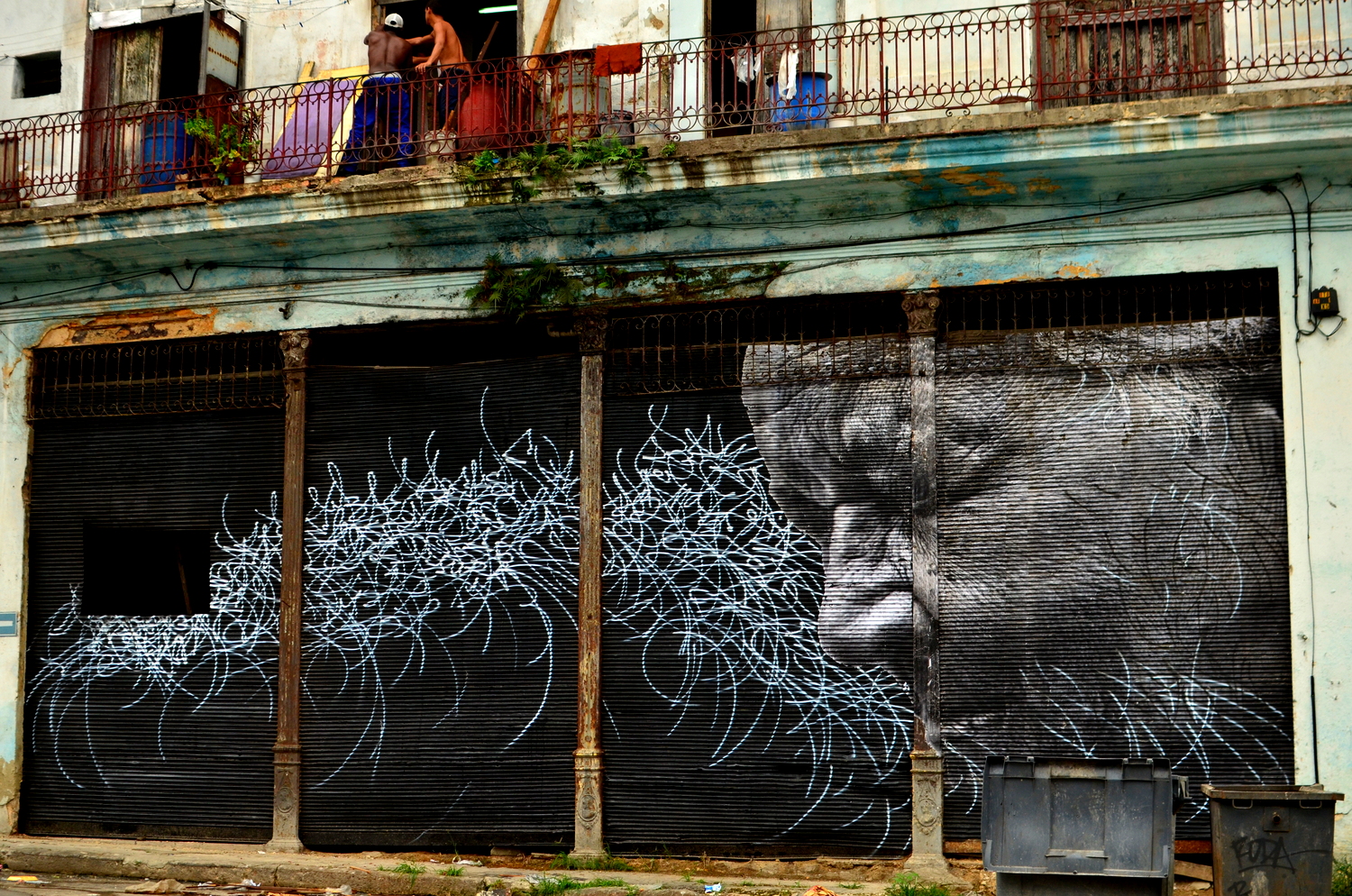
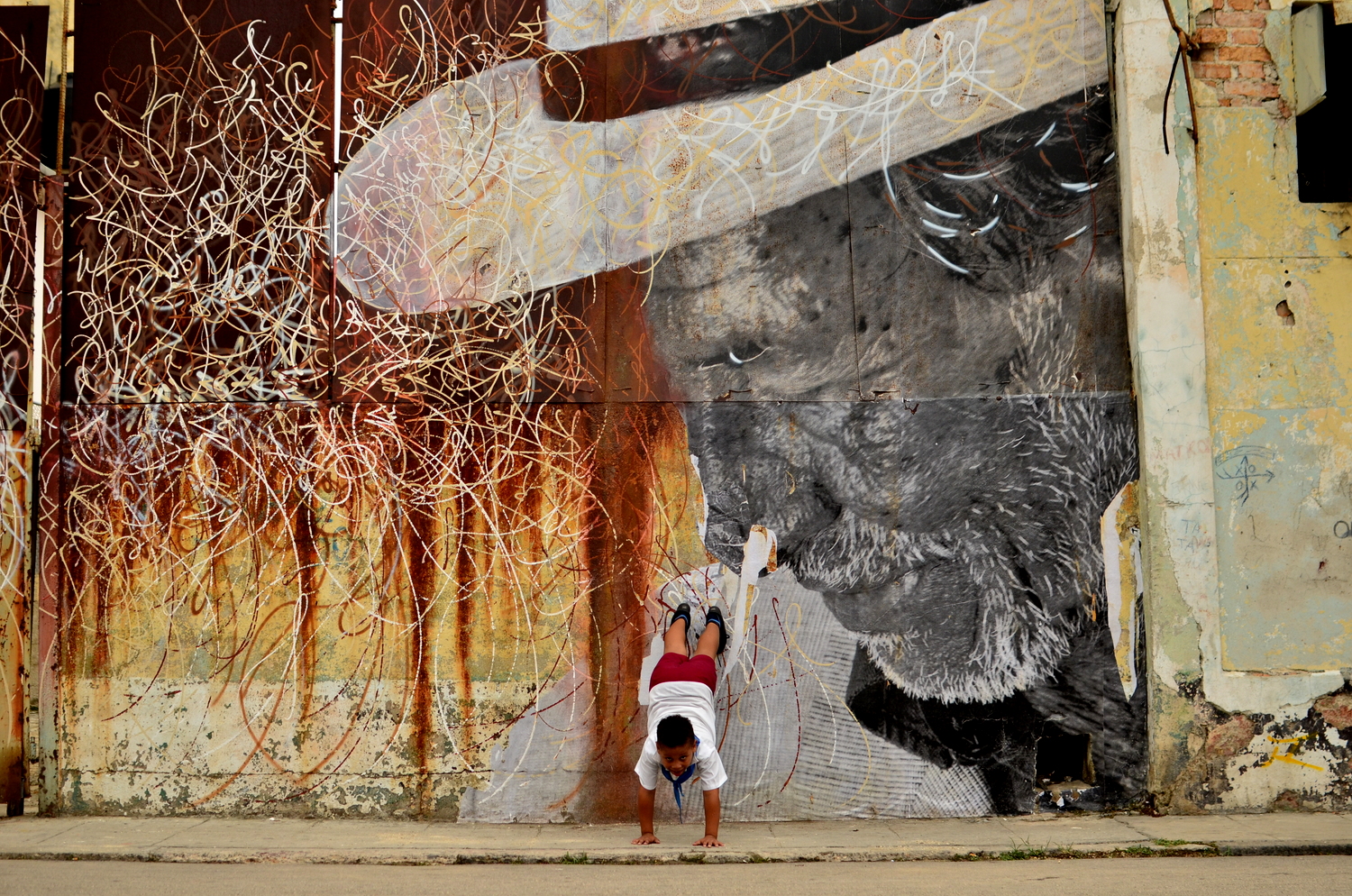

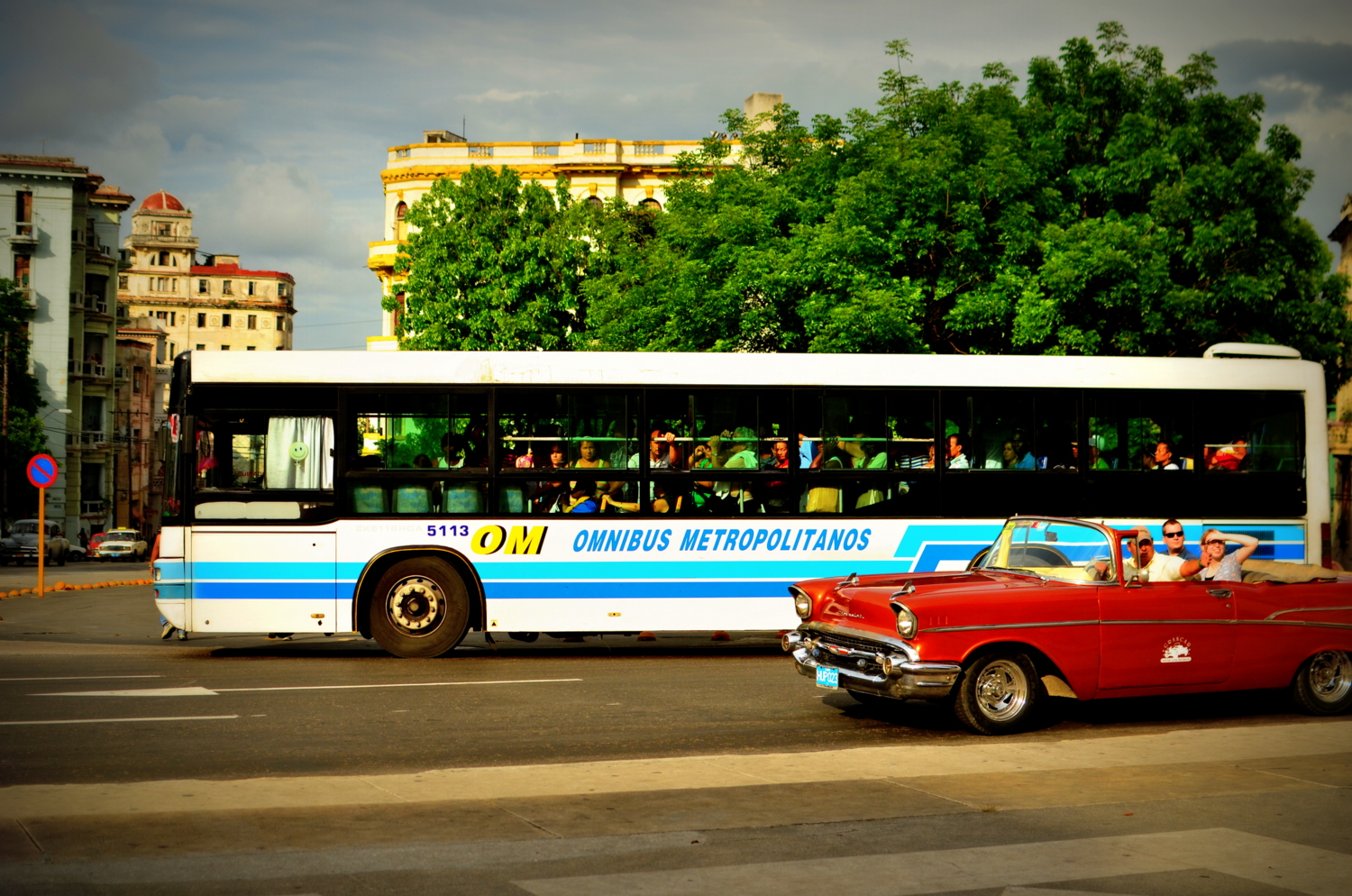
Another necessary stop was the Museo Historia de la Revolucion. This museum was the former presidential palace where the previous president before Fidel, Batista, held his office. Under Fidel’s orders, a team of rebels arrived hidden in a supply truck armed to the teeth with guns and cojones the size of grapefruits. Bullet holes remain inside the building to preserve this ballsy move to oust the leadership and add a touch of reality to the history, as told by Fidel of course. Propoganda and heavily opinionated “truths” cover this museum’s walls and tell his side of the story, mainly the gusto that Fidel, commondante Che, and Camilo Cienfuegos displayed when they took control of Cuba from their base camp in the jungles of the Sierra Maestra. Very interesting artifacts are kept behind glass as well as tons of images of young Fidel and his troops training in the jungles and highlands of Cuba. The history seemed to have stopped suddenly in the early 90’s, probably due to the dissolution of the Soviet Union that helped perpetuate the catastrophic slide of Cuba’s economy. This version of history is a highly polarized one and continually states, and shoves, the ideas that everything is going as planned with the principals of socialism that Fidel created, when present day Cuba tells a much different story. At it’s roots it seems like Fidel’s ideals were beneficial to the people suffering from the prior dictatorship under Fulgencio Batista. Initially Fidel gave back to the country in a socialized platform guaranteeing free healthcare, housing, education, and a general idea that everyone helps out each other. A kind of brotherhood was created, somewhat uniting the country as a whole (in my opinion). Still to this day Cuban’s have a bond with each other that no outsider will ever fully comprehend. They’ve been through thick and thin and it’s in their DNA to help out a neighbor or friend in need. This ideal situation turned sour over time through politics and Fidel’s infamous jabs and punches with the US during the cold war. The embargo began crippling the economy and at the same time it didn’t evolve with the rest of the world. This ultimately kept Cuba in it’s own bubble of yesteryear while families hold on for hope of a more prosperous tomorrow. During the mid 90’s things got so bad that wages were cut drastically to somewhere around 5$ a month in order to keep Cuba from going completely broke. The Cubans had to adapt and survive, coming up with creative ways to eat and live juxtaposed against their ruler having beautiful, private homes in each one of the 40 provinces. But through and through many Cuban’s we interacted with still stand behind the cause and are united through the bond of the tough times they’ve been through. We were finding out more and more that in Cuba there are only 2 types of people: Cubans and foreigners. Us foreigners will probably never understand what’s behind the curtain of Cuban windows because we weren’t born into it.




To beat the now tumultuous heat we sought out Playa Este, just outside of Habana for some Caribbean beach relaxation. The waters were crystal clear and aqua blue while the sun was burning bright in the clear skies. Cuba’s beaches are full of colorful souls playing music under thatched roofs, watching the waves roll in, and enjoying the freedoms of the beautiful surroundings that are available for their enjoyment. They looked like postcard beaches, endless stretches of white sand and gentle, shallow waves rolling repeatedly. I listened in on two Cubans wasting away the afternoon beneath a thatched roof umbrella learning to play a song together. They were bickering over what chords came next, where the next verse was supposed to start, and when to sing. When the song came together it fit the soundtrack perfectly to the day that was happening around them on the shores of the beach. Bueno.



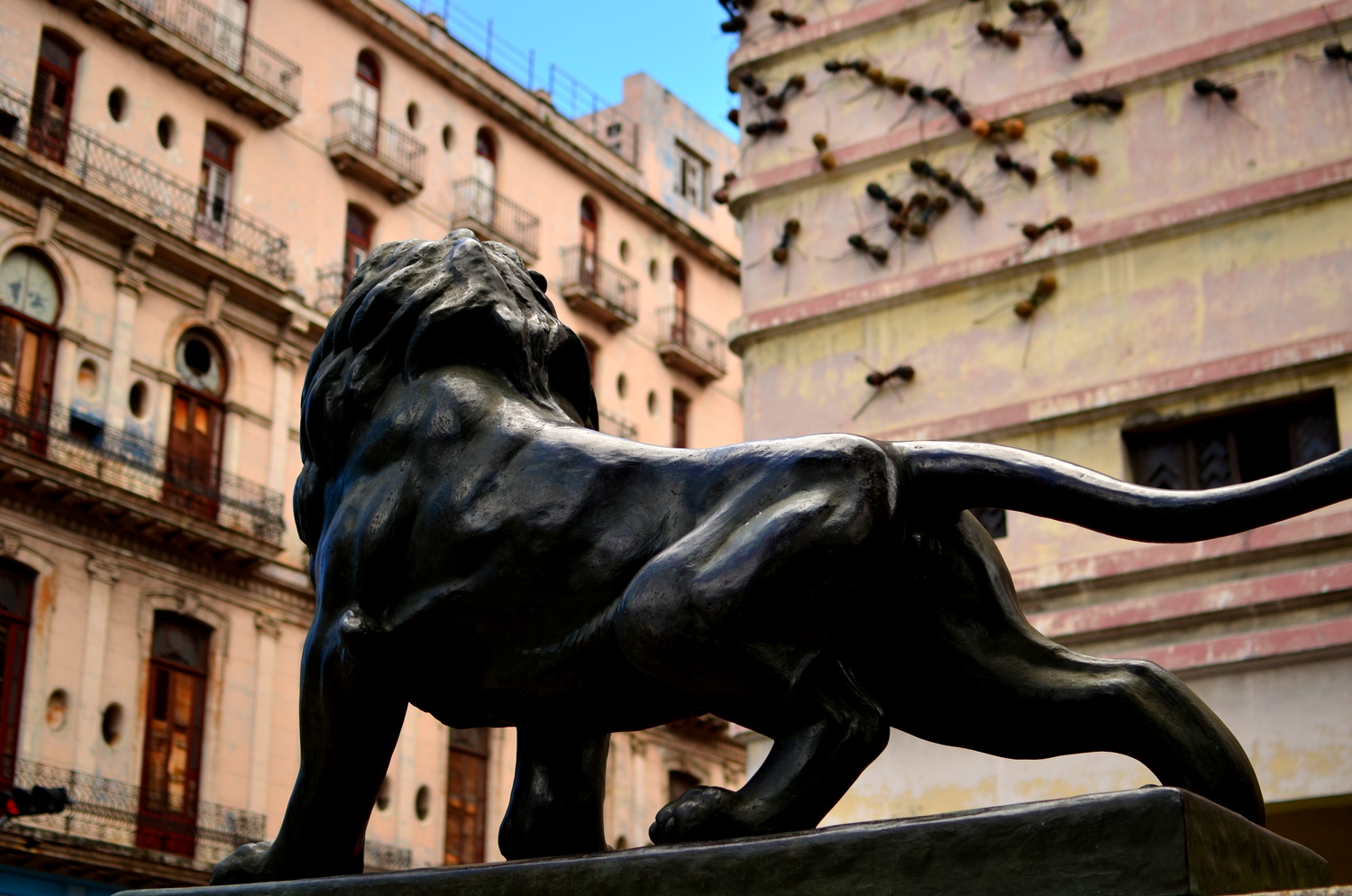
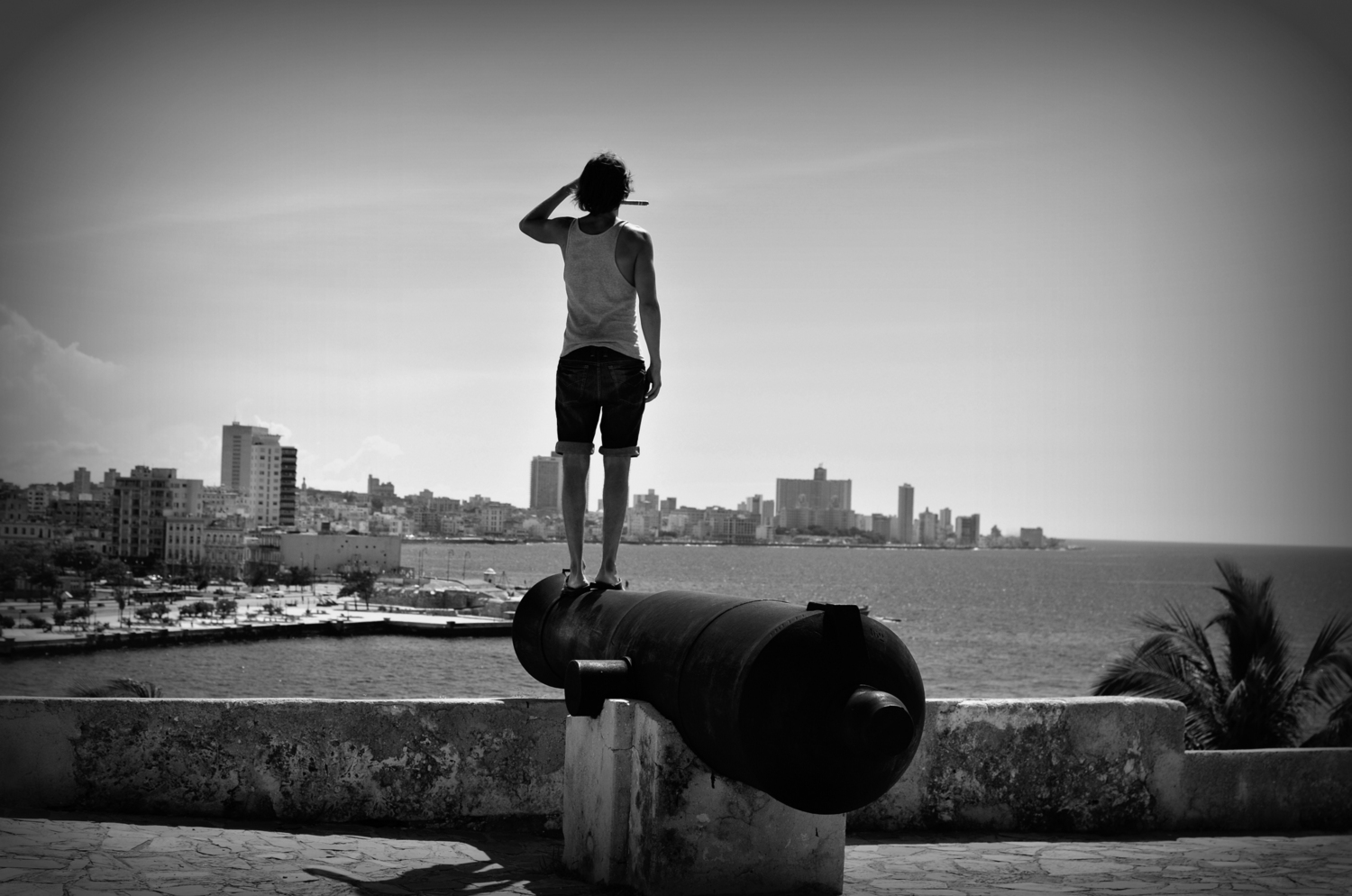
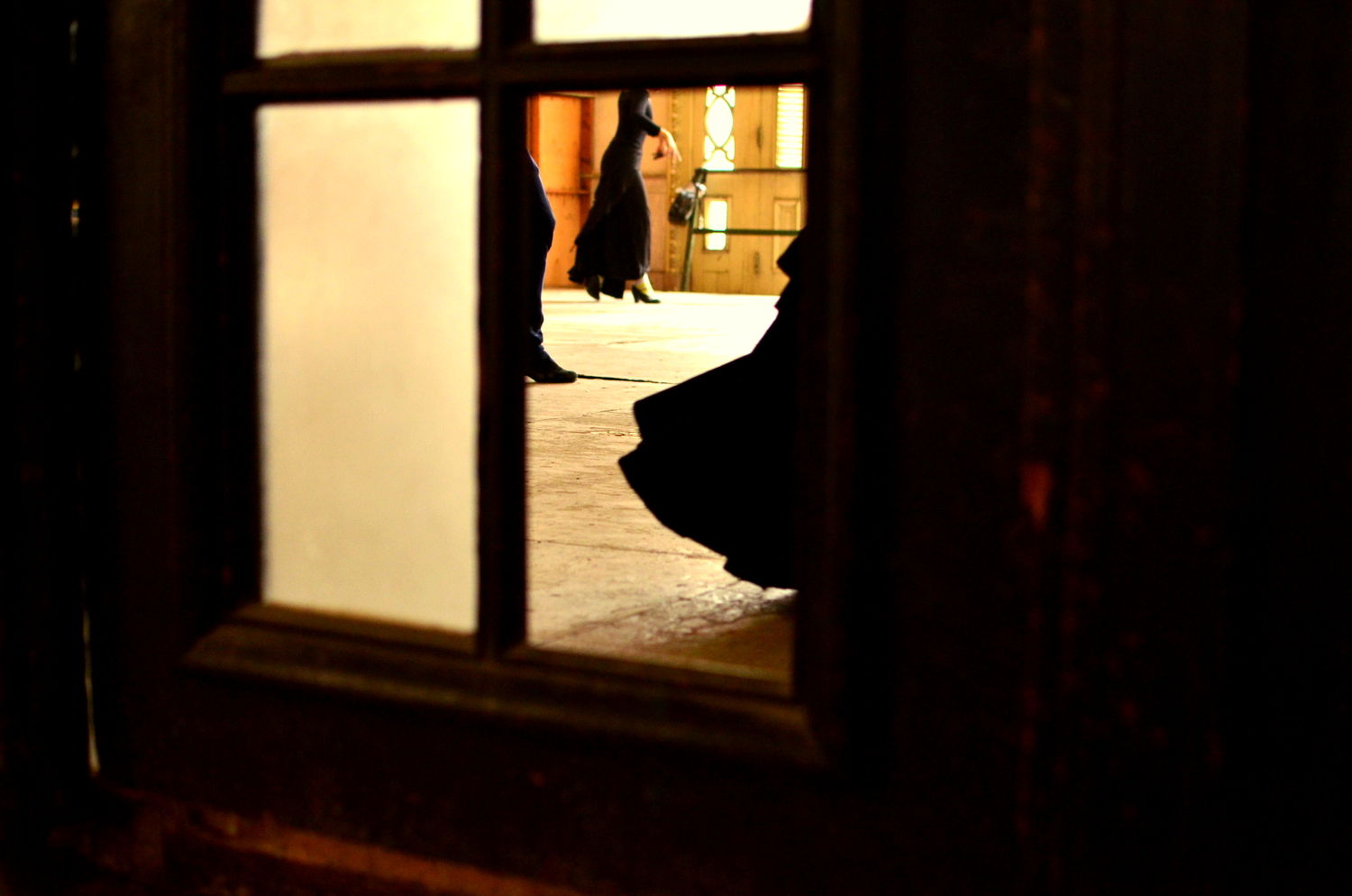
We made it part of our duty to see the massive display of artwork the Bienal was showcasing at the Castillo on the other side of Habana’s harbor. The Castillo is a war fort of the past (built in the 1700’s) complete with massive cannons aimed towards the city, moats protecting it’s foundation, and giant limestone blocks reinforcing it’s outer skin. This was a very unique setting for a modern day art exhibition. The Cuban art scene consists of an otherworldly talented pool of highly skilled artists who produce amazing pieces ranging from paintings, drawings, photography, videography, collages, metal works, pottery, and conceptual. We spent hours wandering the fort in the hot heat while the artists themselves were hanging out in their designated spaces chatting to anyone who wanted to talk about anything. One unique installation consisted of an entire hollowed out palm tree with light bulbs inserted into it’s trunk in an otherwise pitch black empty room. The roof of the castle was not roped off so I naturally climbed up for a bird’s eye view of the city and the horizon lines. When we got back into town we took a guided tour through the Teatro Nacional, Cuba’s gorgeous, otherworldly home for theatre, ballet, and dance performances. Exploring through the grandiose architecture was a definite trip worth every penny. The tour took us through old rooms with workers repairing chandeliers and fixtures, libraries and study rooms, and right in front of a practice room filled with dozens of performers training in class. We could only catch a tiny glimpse of what was going on through a tiny rectangle where clouded glass used to be, watching dancers jump, move, and pose with the soundtrack of 40 feet stomping in a choreographed unison. The thunderous noise echoing off the walls boomed right through our bodies as we listened and imagined what it really looked like on the other side of the portal.






Yet another thing to check off the list was a trip on the Hershey Train. This electric train was built in 1917 by Hershey himself to provide reliable transportation for workers that was always on time. Argelio (our dad in Habana) explained that his dad worked at the sugar factory and shed light on the trains significance. They used to pack his father’s lunch and send it on 10:37AM train so that it would arrive in a lunch box right on time for break. We woke up late in a panicked state because my alarm did not provide enough gusto to snap me out of sleep. We began speed walking down the road, barely awake, and realized we were not going to make the departure. After quickly hailing a cab we caught a more than authentic ferry across the harbor filled to the gills with commuters. Our efforts were in vain because the moment we stepped off the ferry we found out the tracks were under construction and the train was departing from a different location way out of reach. Argelio commented on this outcome by saying “Welcome to Cuba” with a big grin. I was finding out more and more that circumstances like this was part of daily life in Cuba. Patience is engrained in their DNA because there really is no other option but to wait for things to get back up and running or find another way. It is also important to note that when it rains in Habana it pours! We left our casa with a warning about rain from our parents thinking things would be fine. As soon as we got outside we were in the middle of the most torrential downpour I’ve ever been witness to. Drops the size of marbles pummeled us and we immediately became fully saturated versions of ourselves. We almost ran to the Malecon remembering the constant stream of cars night and day driving along the ocean thinking taxi’s would be our savior, but to our surprise there was not a single taxi fording the river that the road used to be on. When it rains in Habana, life disappears into the safety of roofed protection and it is foolish to be outside in the elements.
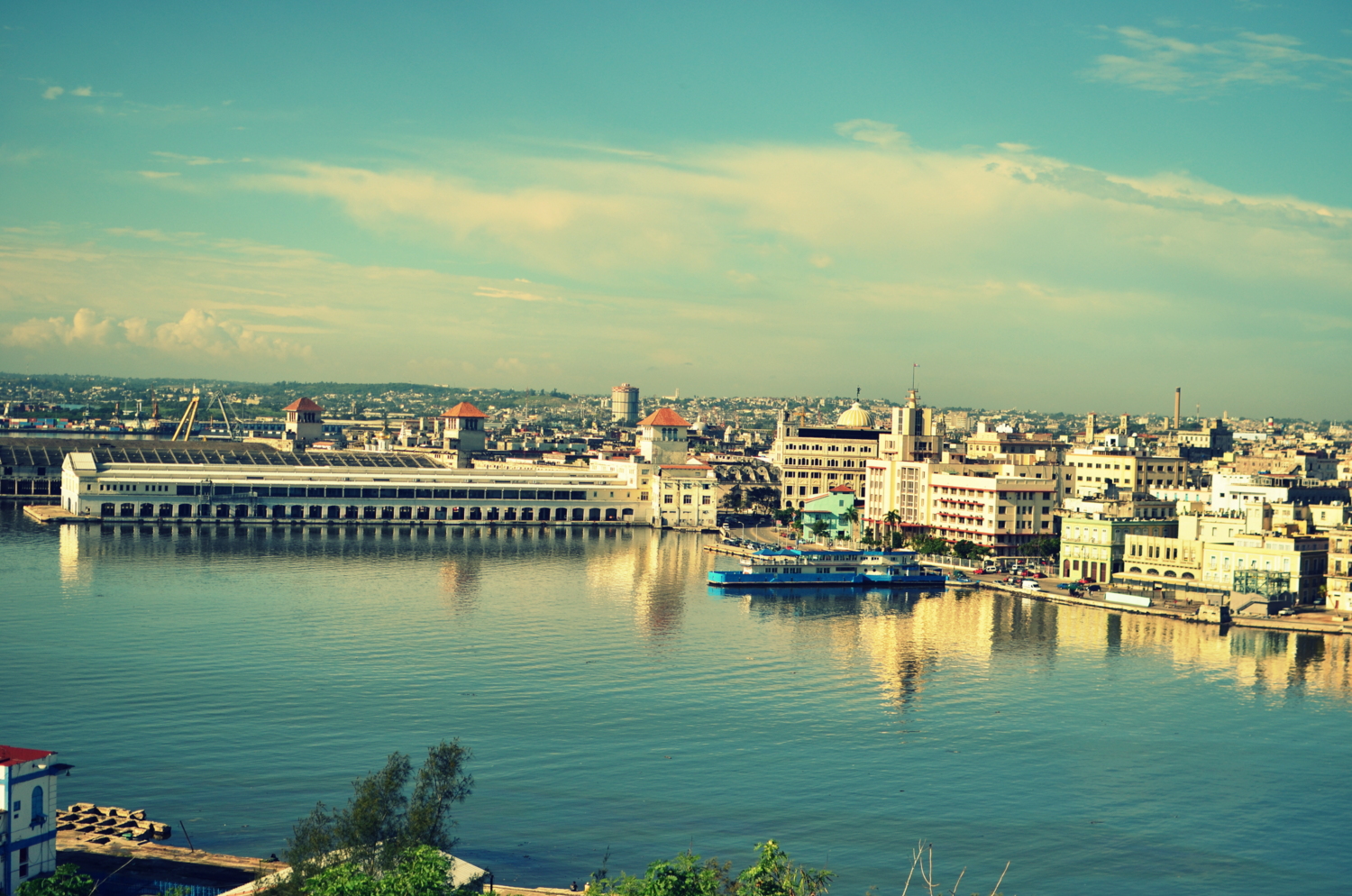


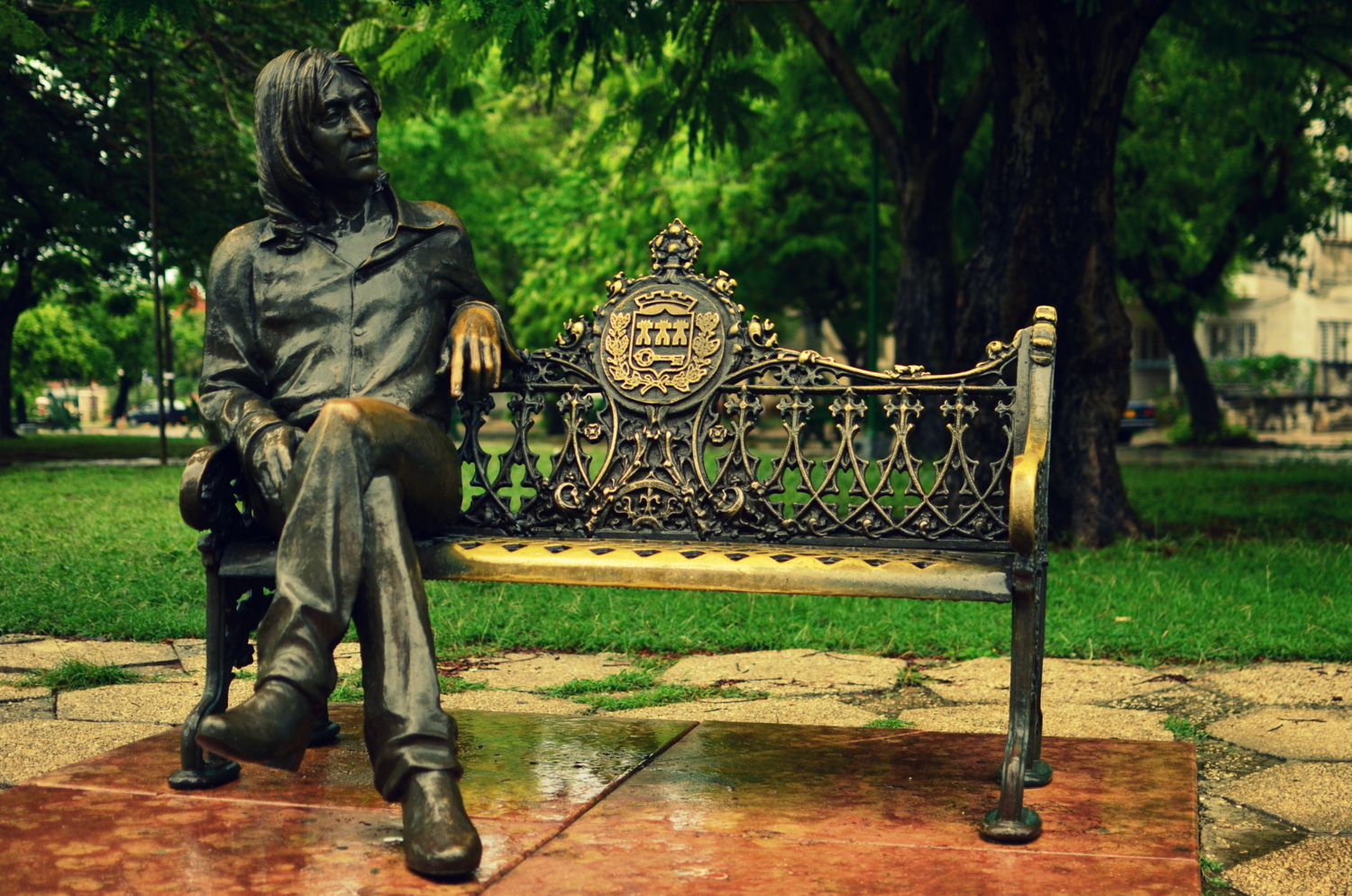


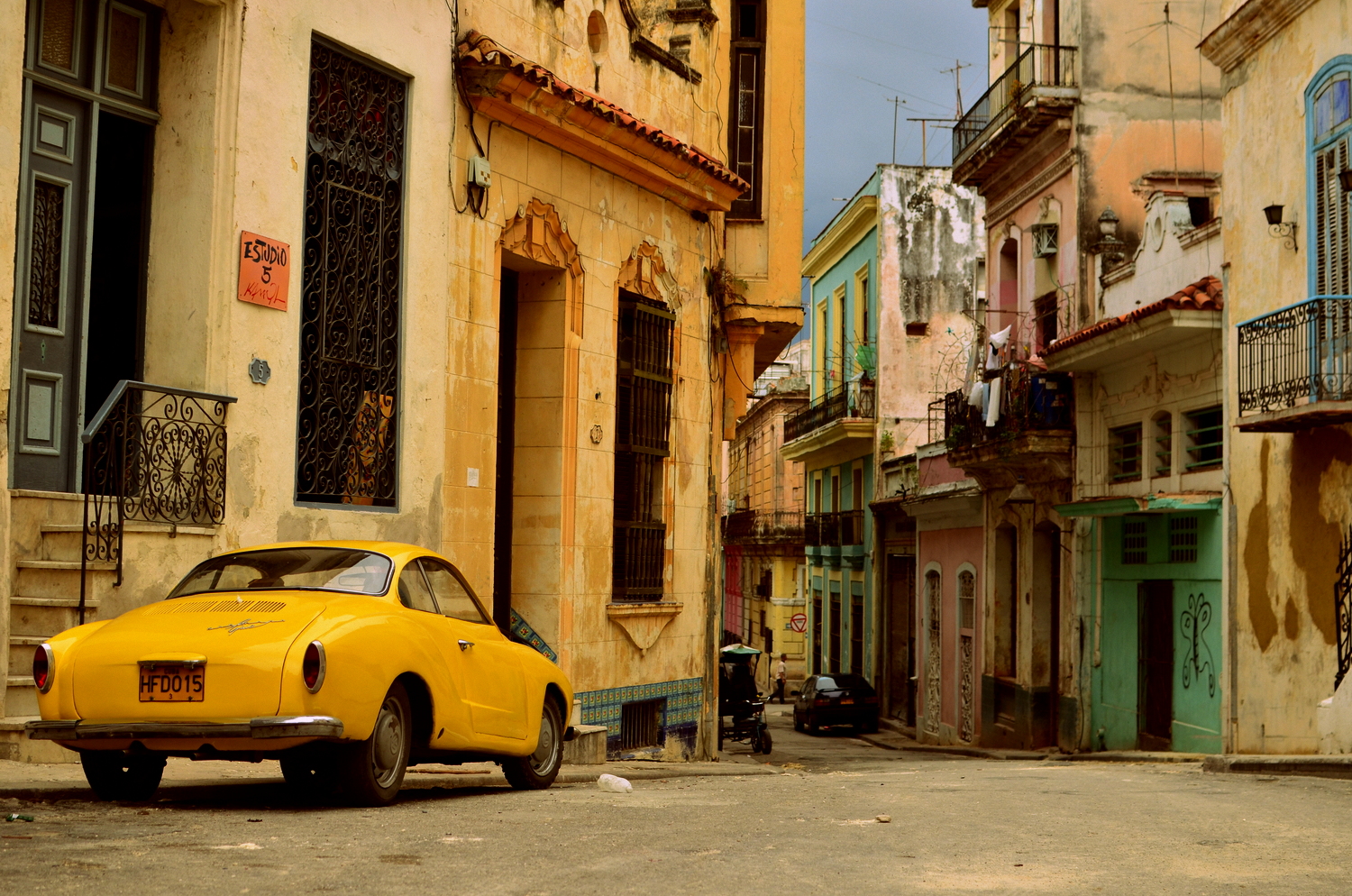

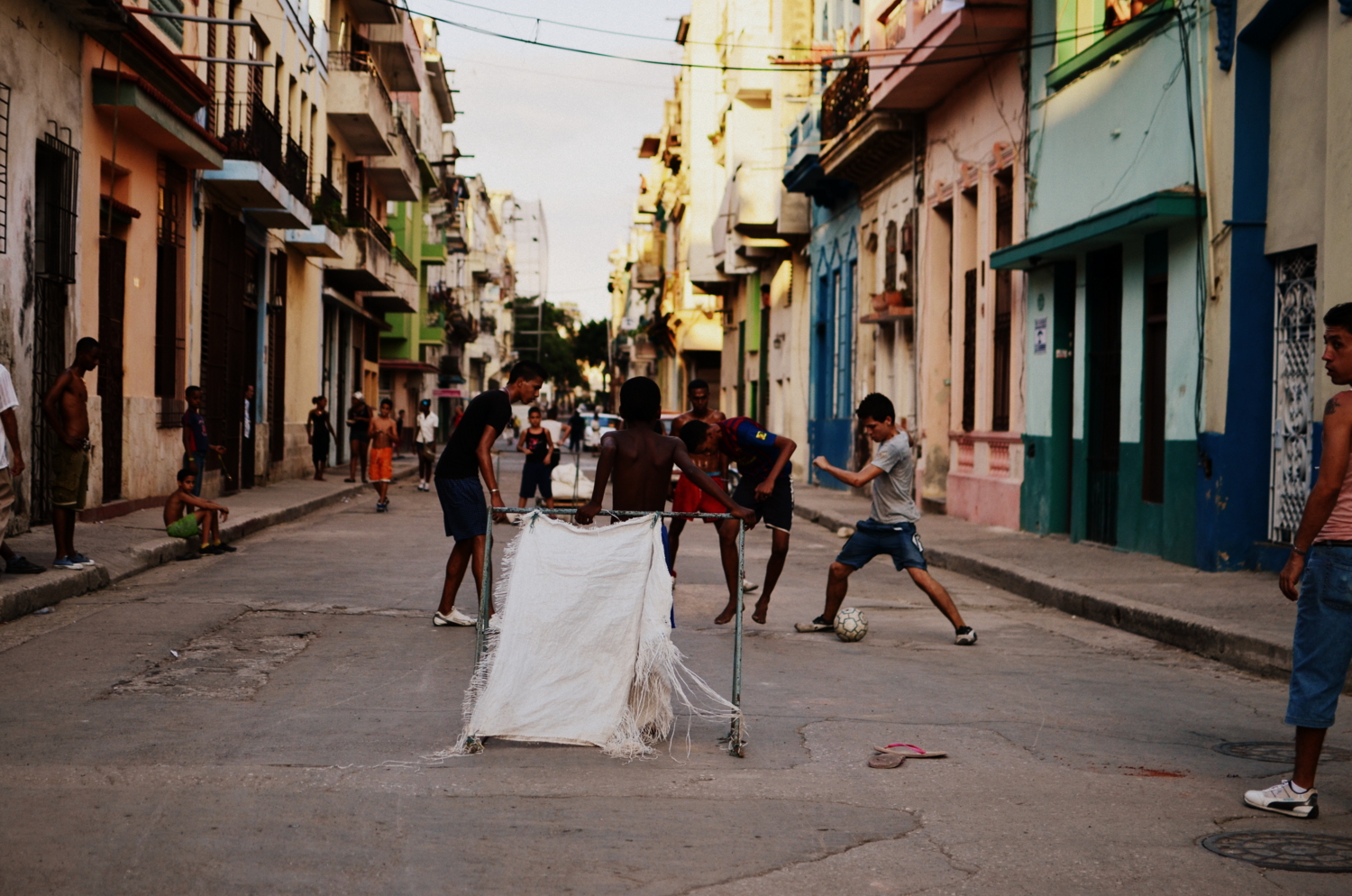
Our last night in town we both felt that we needed more time in this beautifully strange, surreal world. Life here was an anomaly, and there was certainly no other place in the world like it. We both knew we had to return, we just couldn’t say when. Cuba has so much more to offer than just cigars, rum, and old cars. It’s a true social experiment that the world is invited to come through and take a stab at figuring out how it operates. It’s a place where real, genuine people are full of pride and you can sense what it is to truly like be Cuban. They are not entirely bothered by the thousands that flock in with cameras, taking pictures of them eating lunch on the sidewalk like they are some rare leopard in the Serengeti. Through all the hardships and turmoil that this country has been through, you are almost still overcome with the sense that this ship will not sink no matter how many holes get poked through it’s hull. After we ate breakfast Argelio tried to give me one of his geology books of Cuba, something that I would have surely treasured for the rest of my life. I could not accept his humble offer, knowing that material things are so hard to come by for him and are easily procured back where I’m from. I snapped a picture of his amazing book collection for my own shelf when I get back. One last breakfast before we left for the airport in a family friend’s taxi cab back to our metal transport vessel. I don’t think Elissa or I spoke much as we puttered along the highway out of town. My goal is to get back here one day to see how things have evolved since this trip, if at all. I just don’t know when.
If you visit Habana consider staying at Lidia y Argelio’s casa: Crespo No. 105 e/Colon y Trocadero, Centro Habana (email: argonzalez2000@yahoo.com)
If you make it to Vinales consider staying at Villa Blanca: Calle Camilo Cienfuegos no. 20 e/Celso Maragoto y Adela Azcuy (email: blanca77@correodecuba.cu)

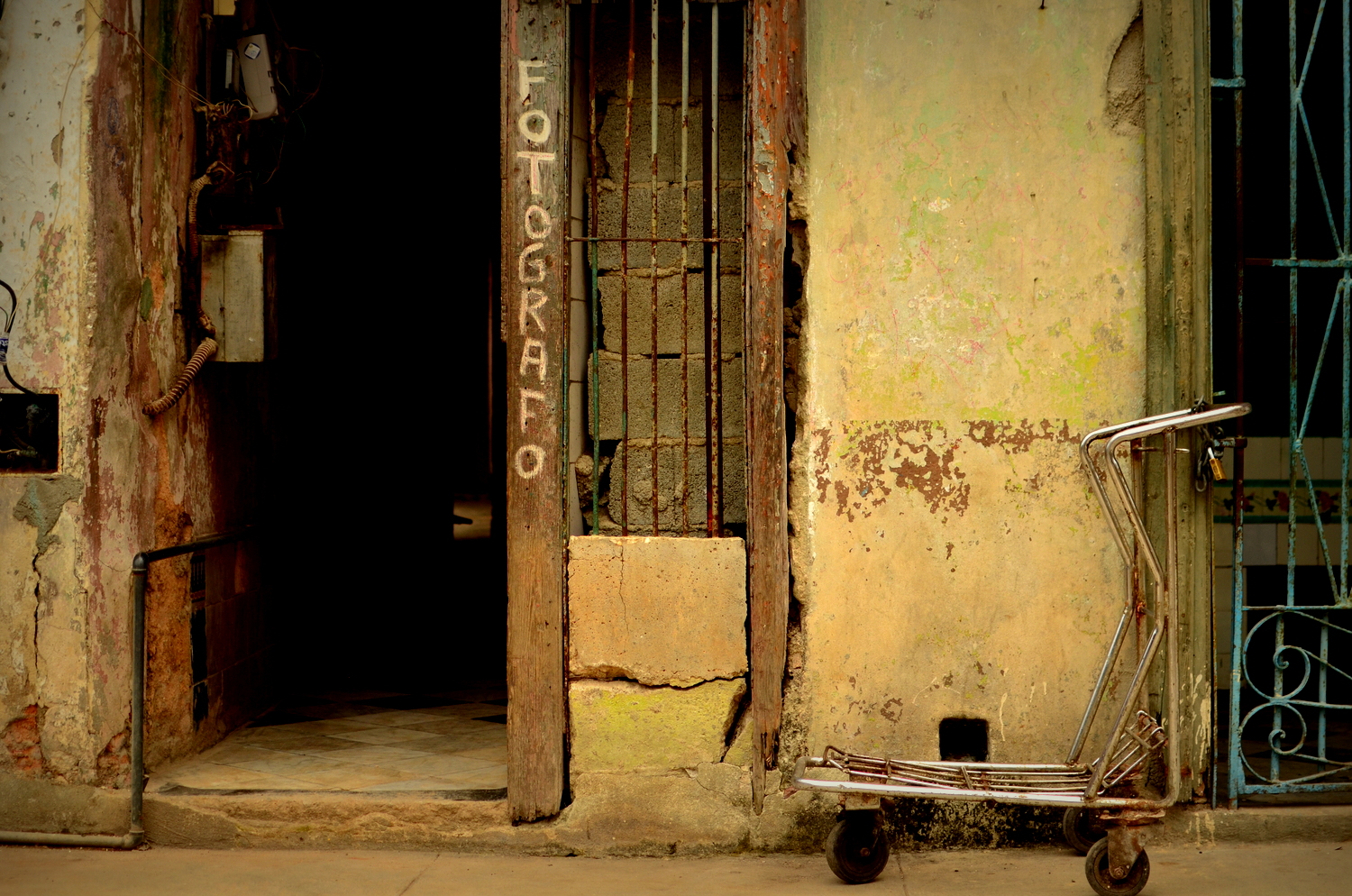
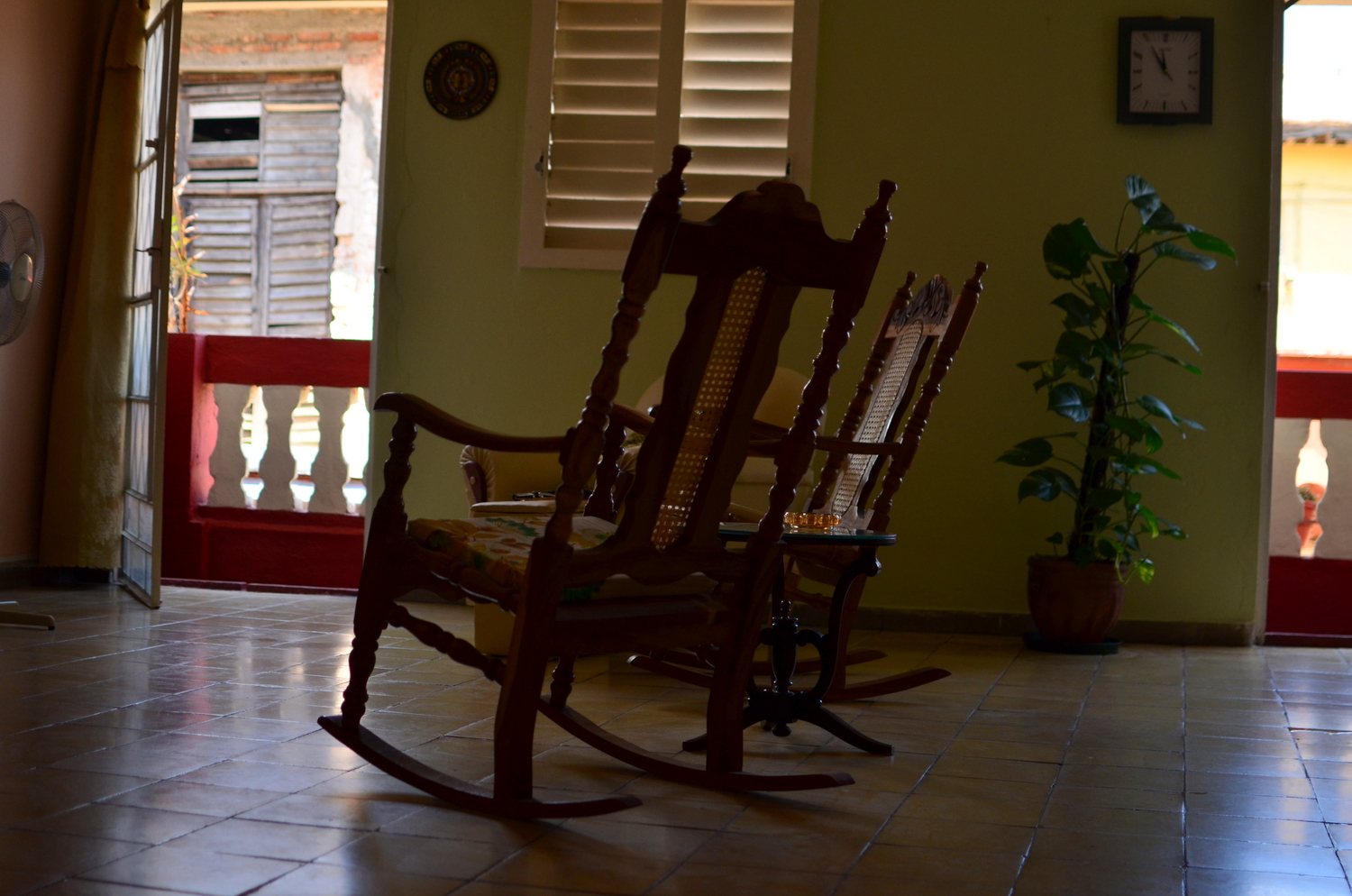
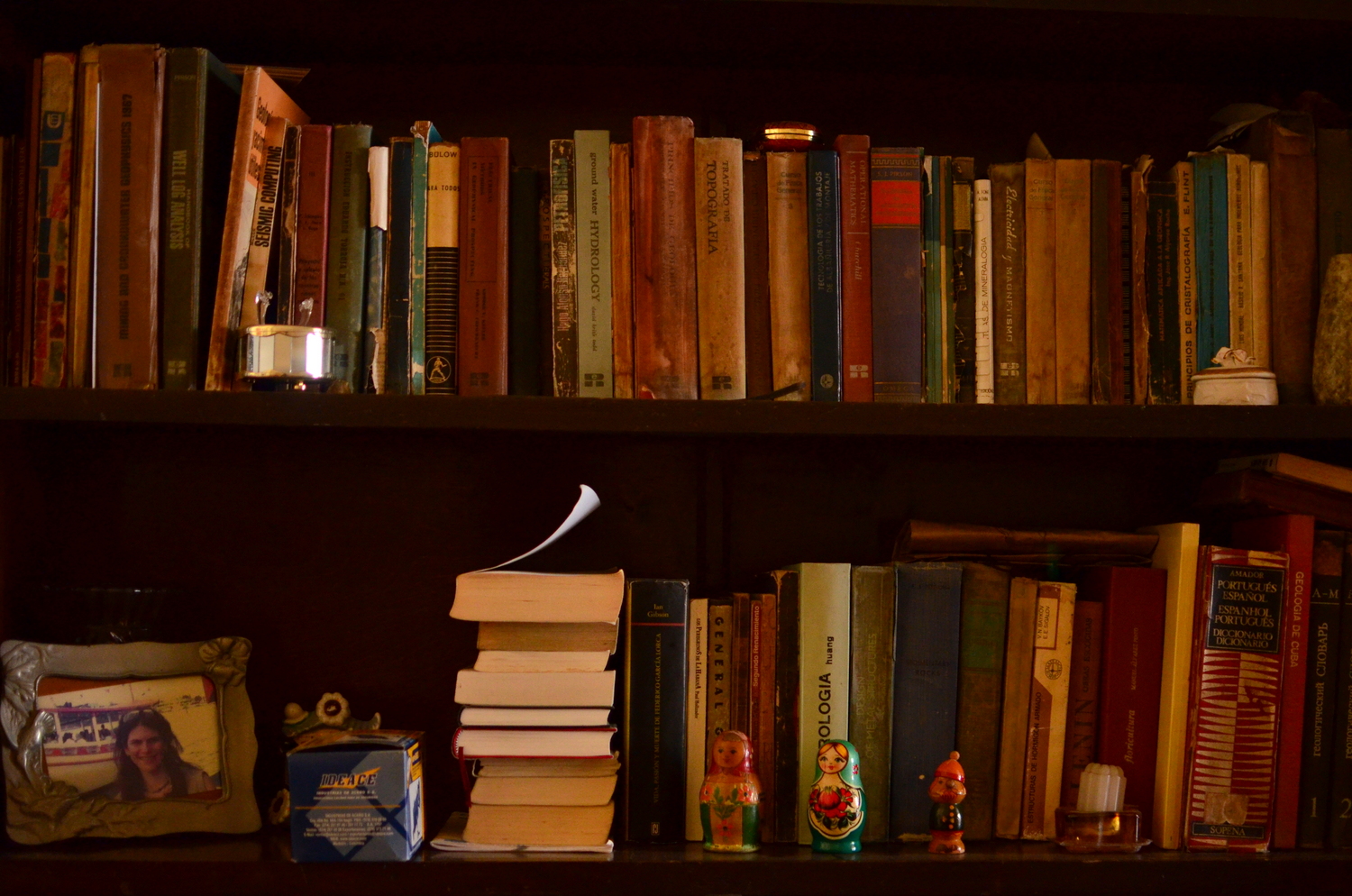
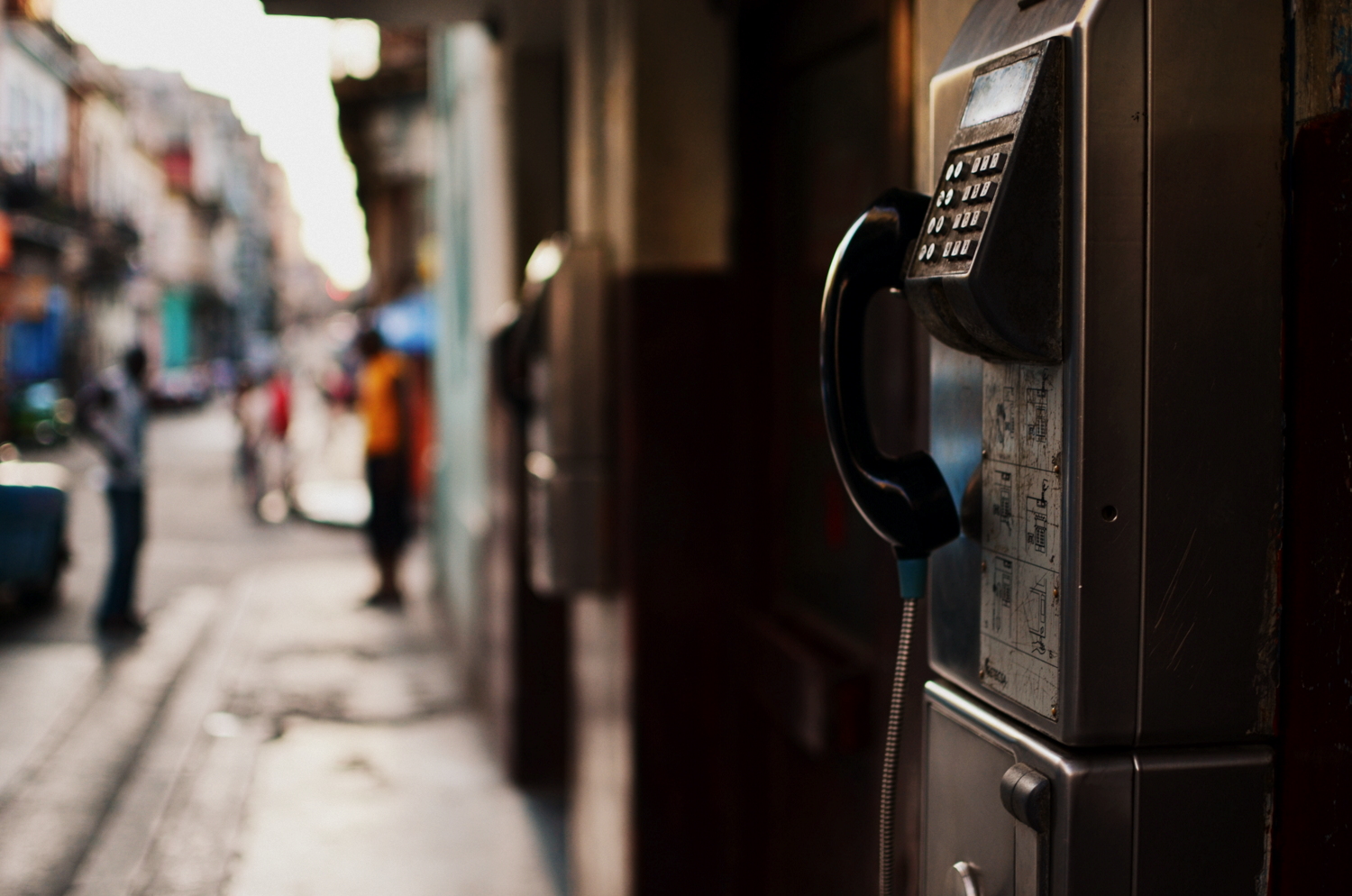
Cuba; Vinales and tobacco country
Complete exhaustion followed me onto our bus to Vinales, regardless of my attempts to ignore it. Apparently the bus was over booked and the driver had to make room for me directly behind him next to his coworker. Rain poured down as we made our way west, leaving the city behind and entering into farm country. Cuba is the land of a million palms and this became increasingly apparent the second we left Habana. Old colonial buildings were replaced with cows, irrigated fields, horse drawn carriages, and lots of old men on bicycles getting pummelled by heavy precipitation. Our mamma in Habana set us up with her family in Vinales so we didn’t have to seek out accommodations. When our bus rolled to a stop in the tiny little town it was swarmed instantly with dozens of Cubans holding up signs advertising their house. The moment we stepped off the bus we were enclosed by a sea of people trying their hardest to fill their rooms. Luckily we spotted our woman with a Daniel y Elissa sign and we were off to Casa Blanca. We were greeted with warm smiles, a great room, and a huge delicious lunch proceeded by a big nap.

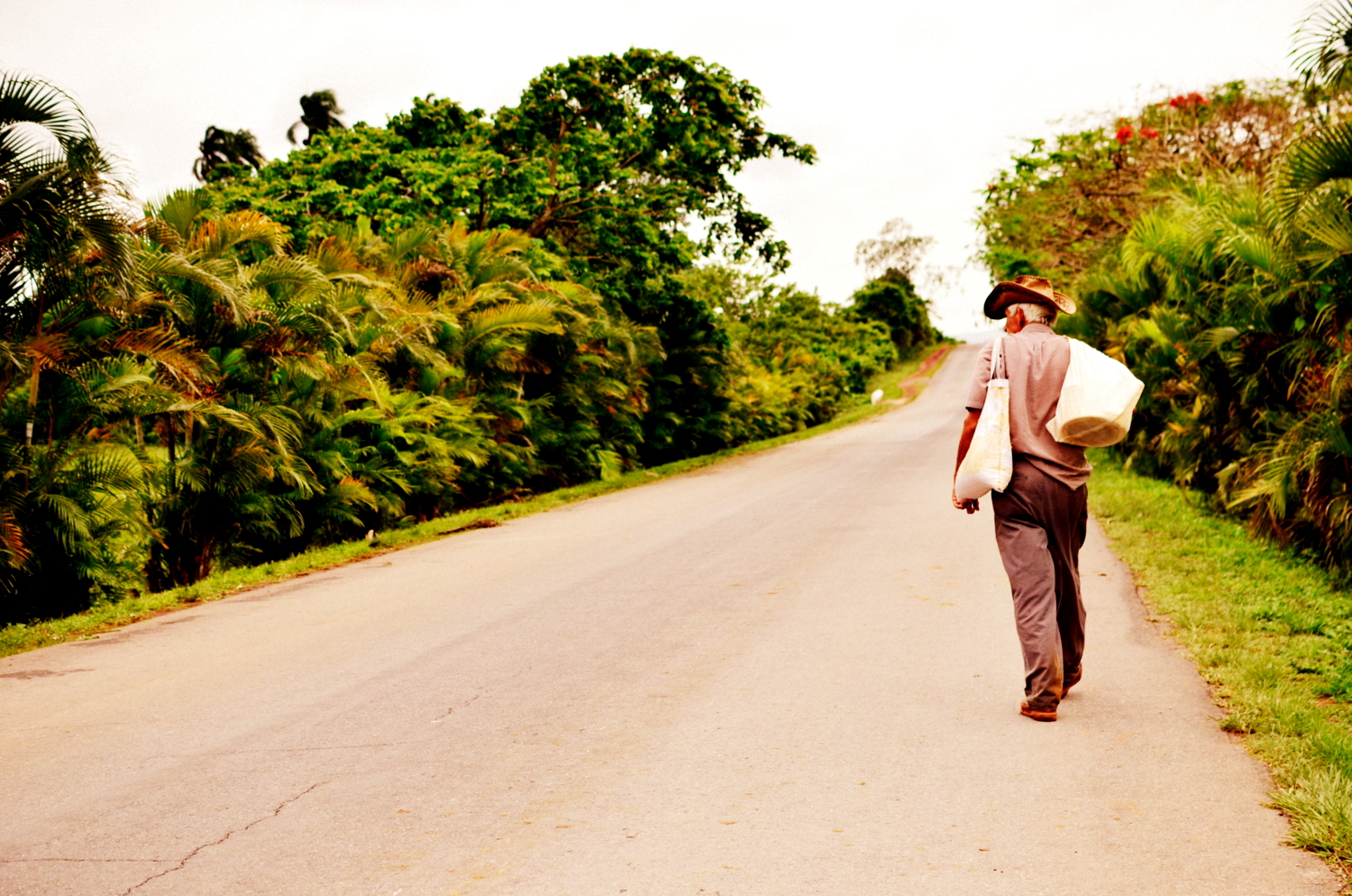
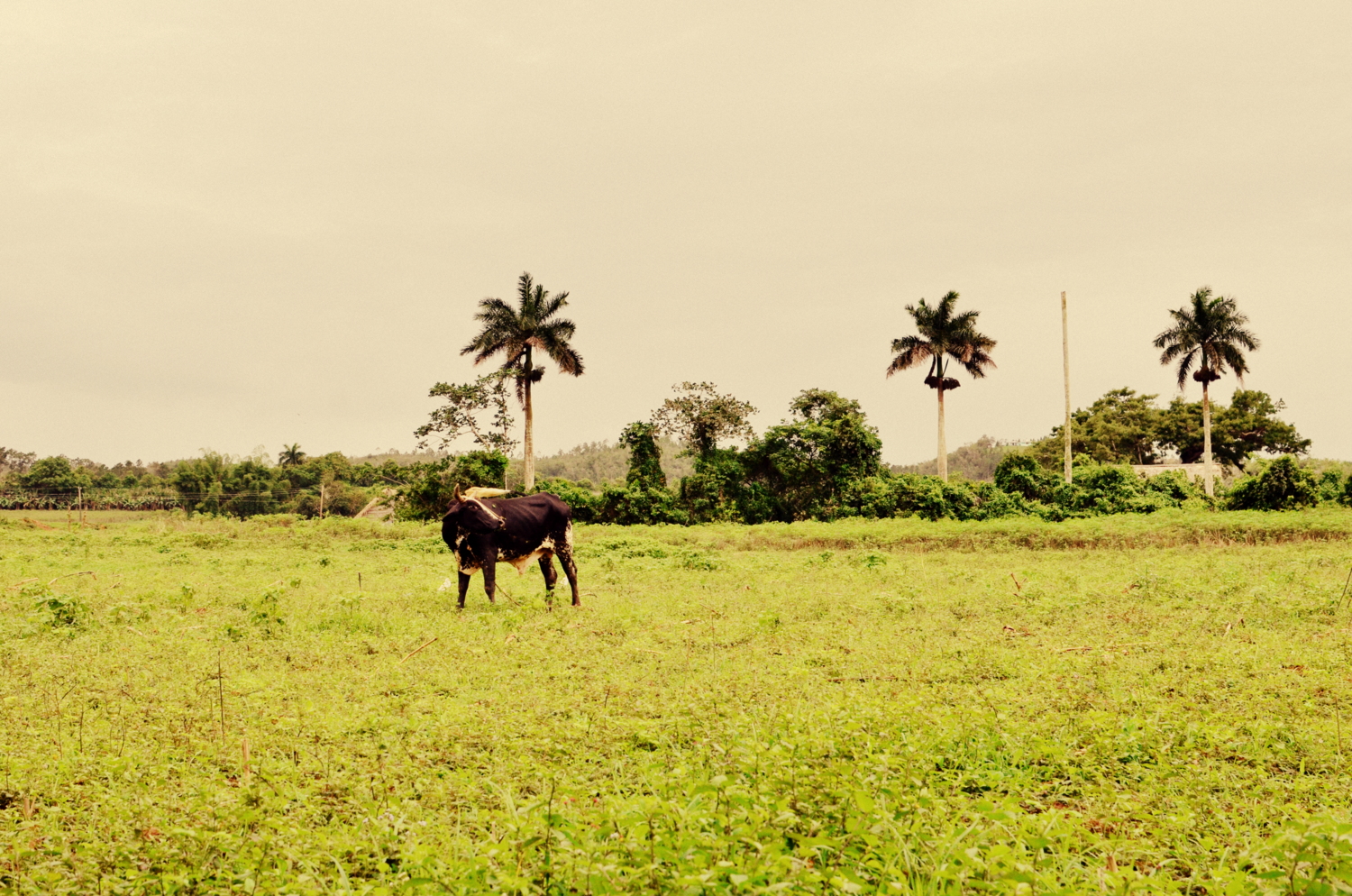

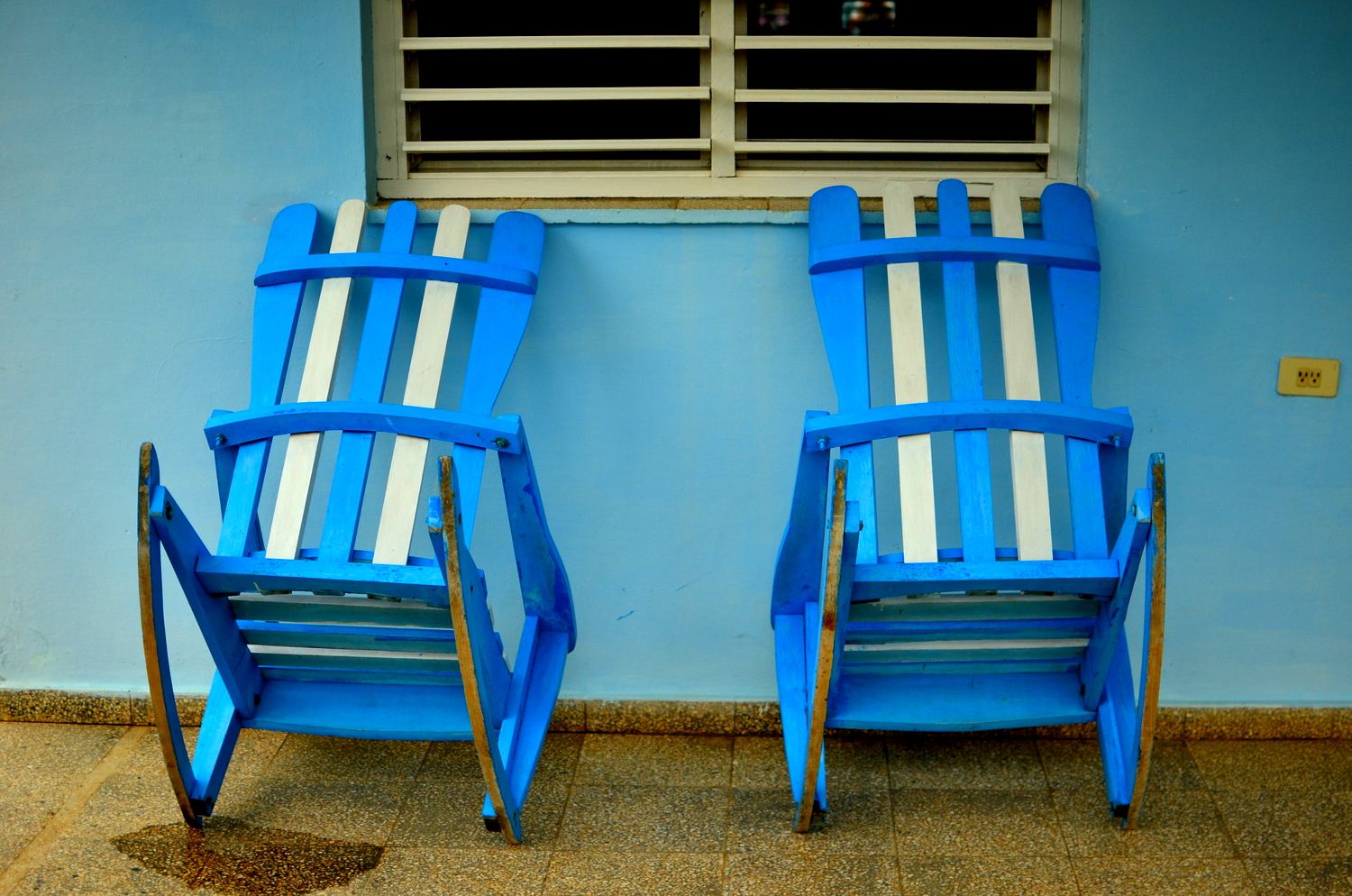

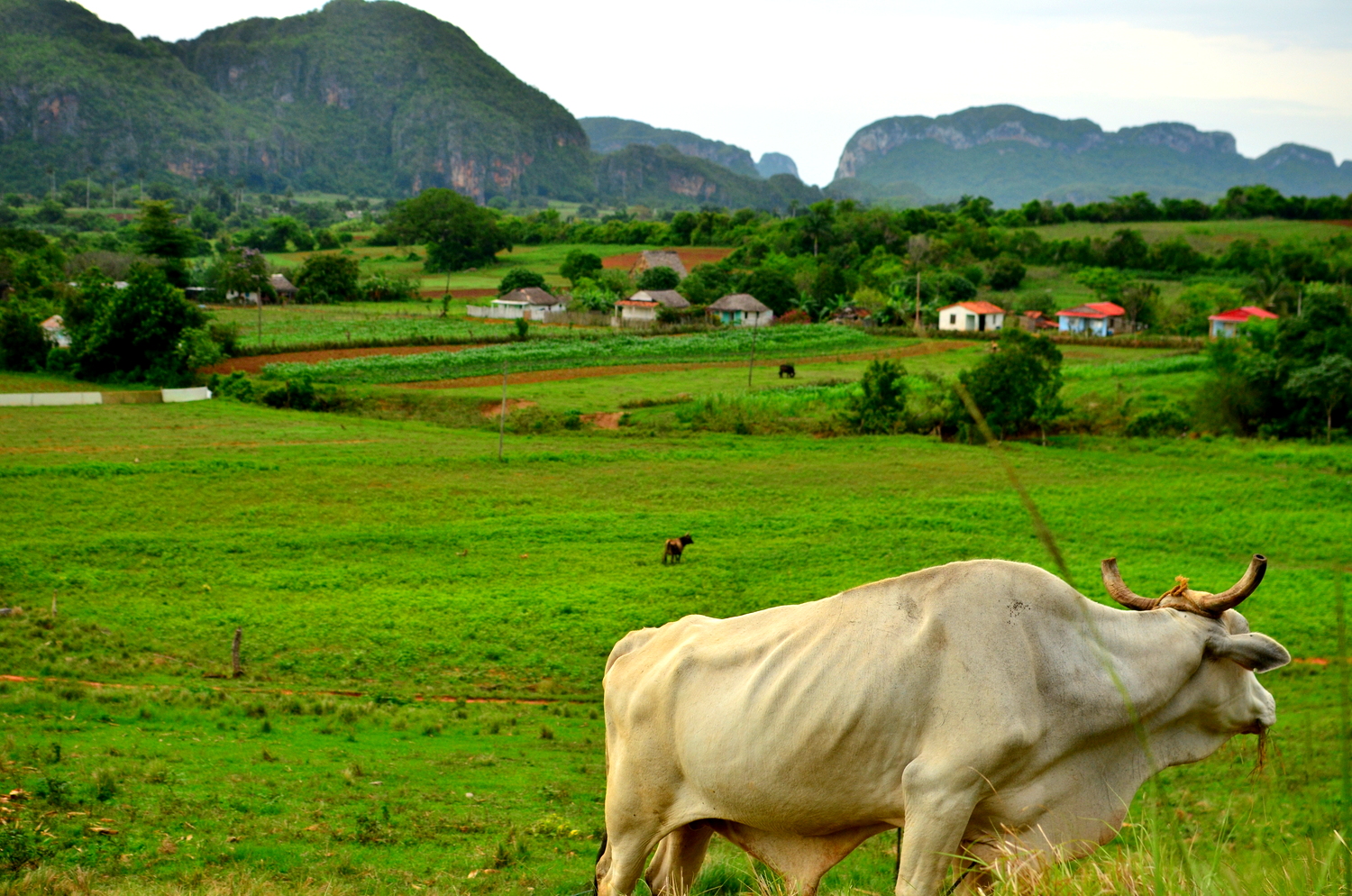

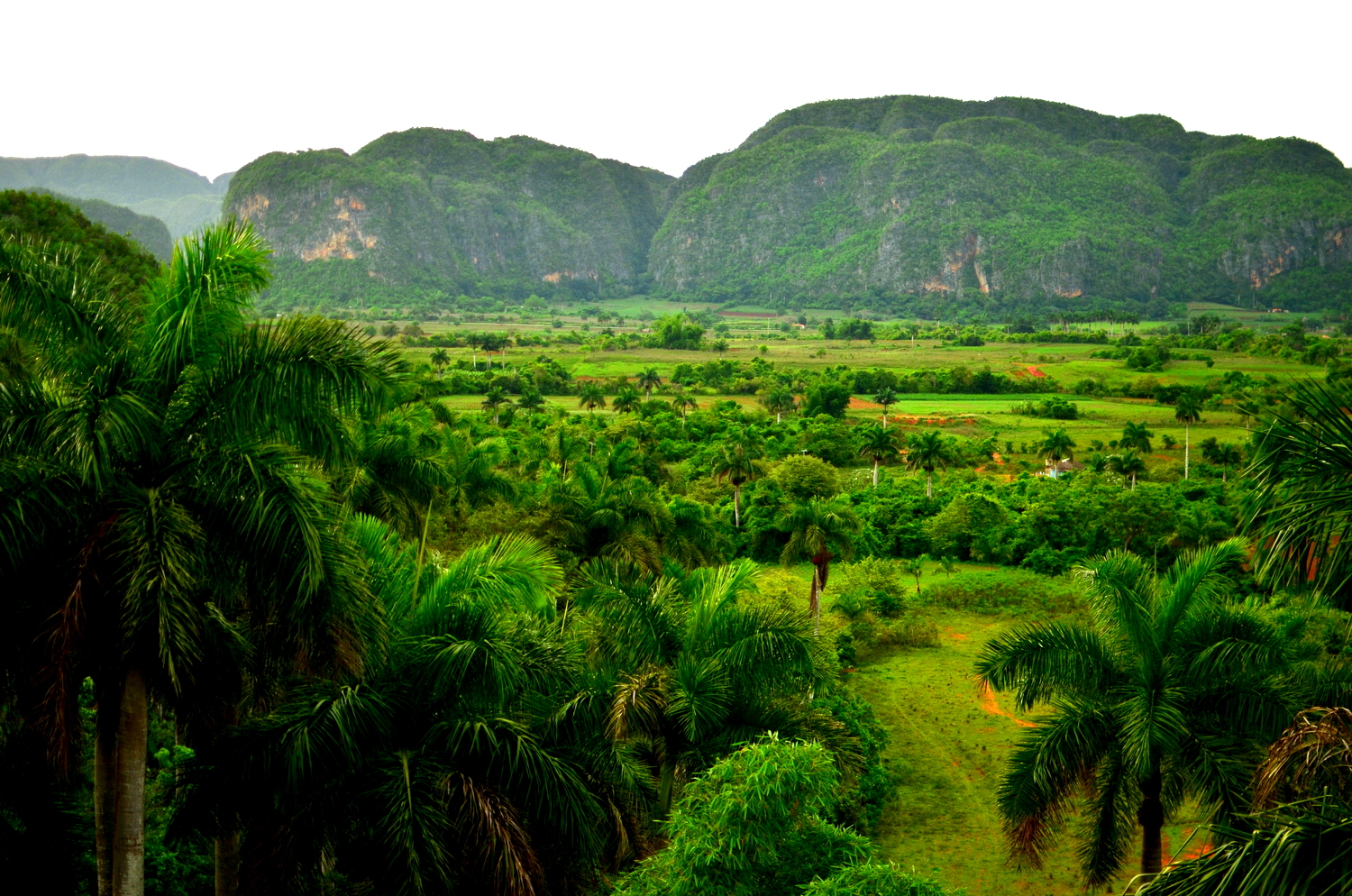
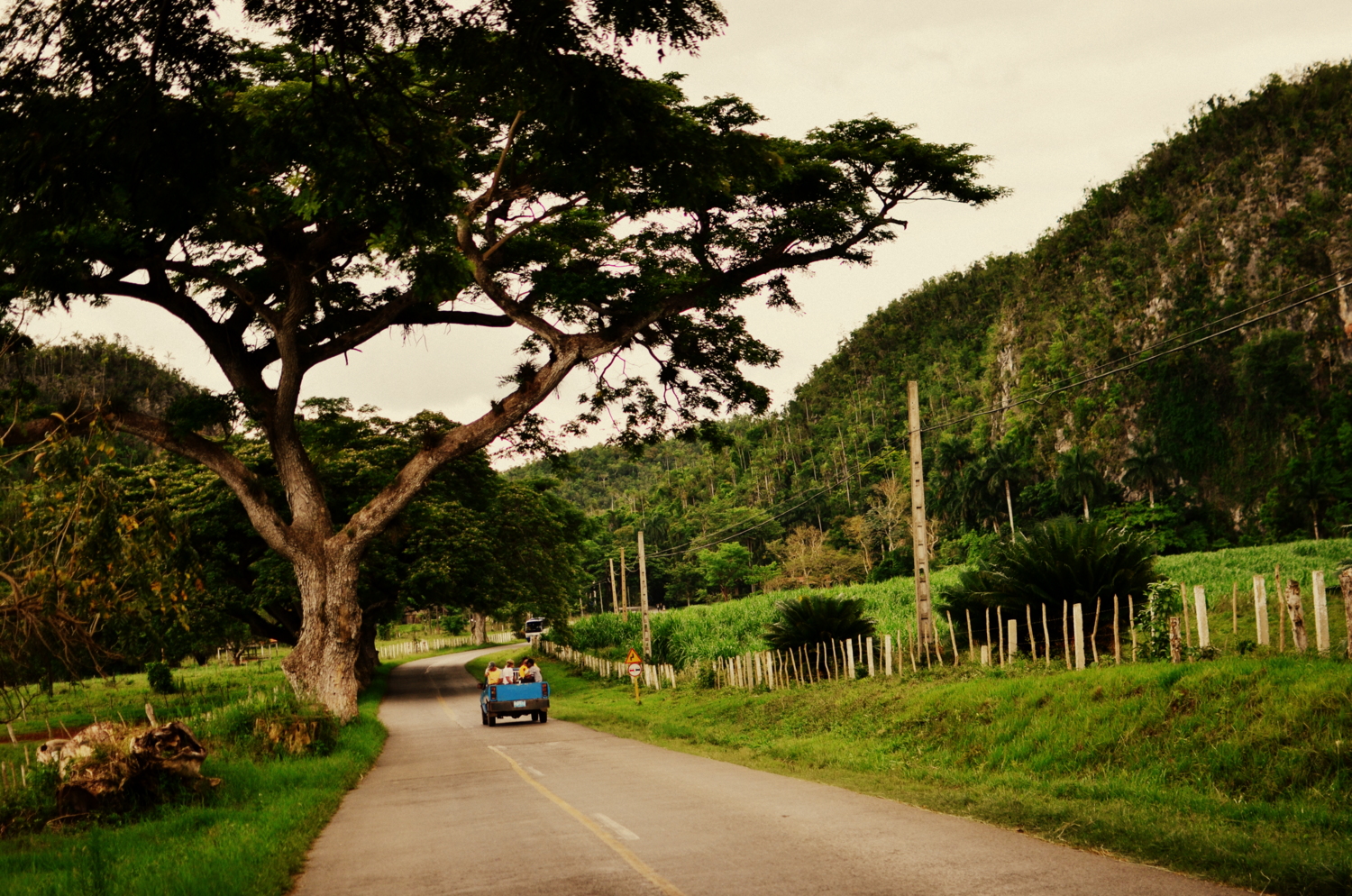
Vinales is set in a picturesque (understatement) tropical mountain range in tobacco, coffee, and sugar cane country. The star attractions and appeal to the lay of the land are the massive limestone mogotes mountain chains dividing the valley and protruding almost vertically from the earth. These insanely gorgeous features were formed by the collapse of massive networks of underground caves and rivers surrounding them. These vertical mounds create micro climates surrounding them drawing in massive amounts of rain to foster some of the finest tobacco and coffee plants in the world. With all of these attributes it was absolutely necessary to get up into the mountains and into the valleys to see how life operates in such a surreal setting. Our casa’s nephew Noel, who stops by routinely every night and is a farm boy through and through, agreed to guide us up through these mountains on horseback for a glimpse into this world. Needless to say it was hard to contain our excitement.

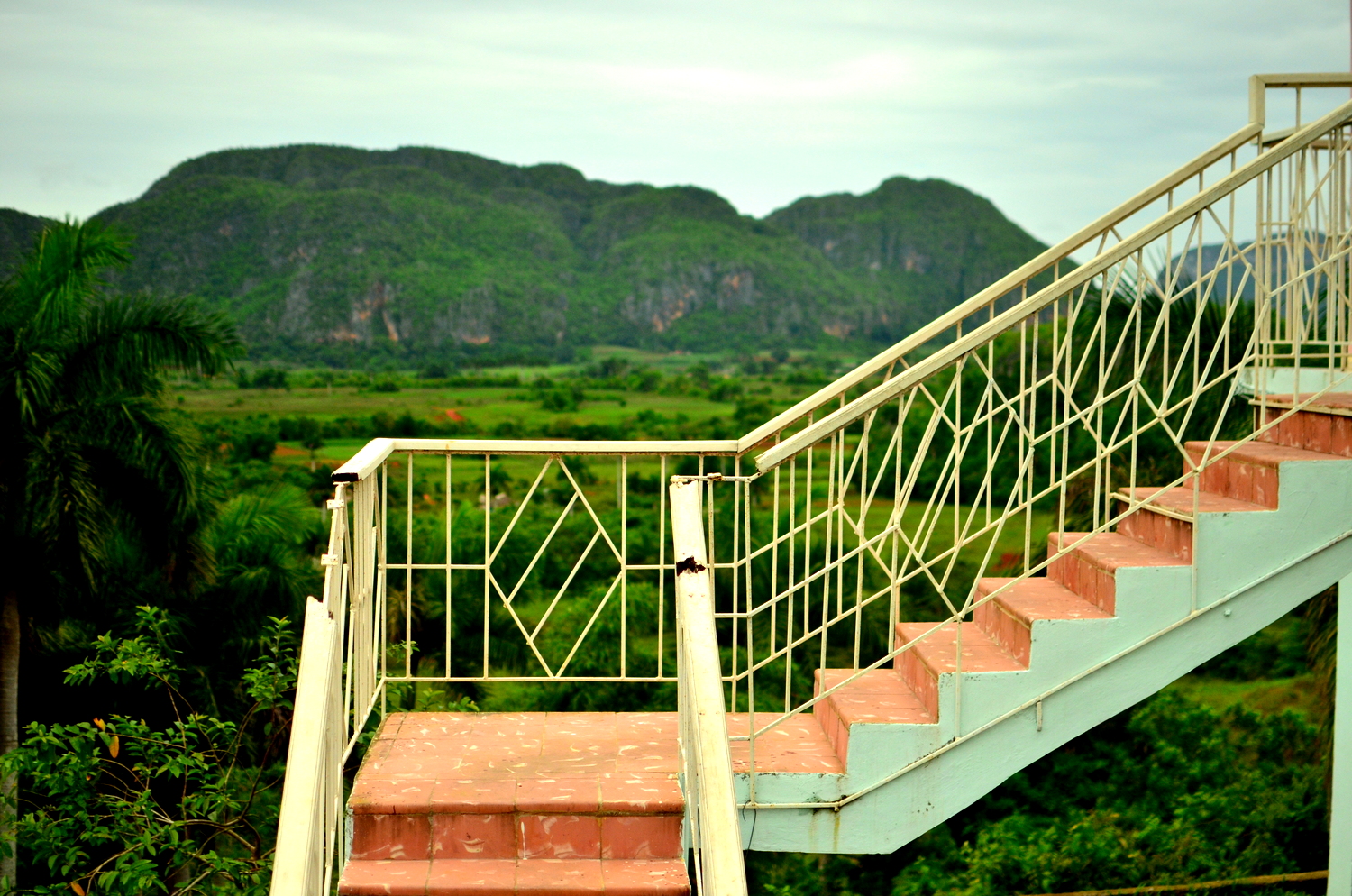
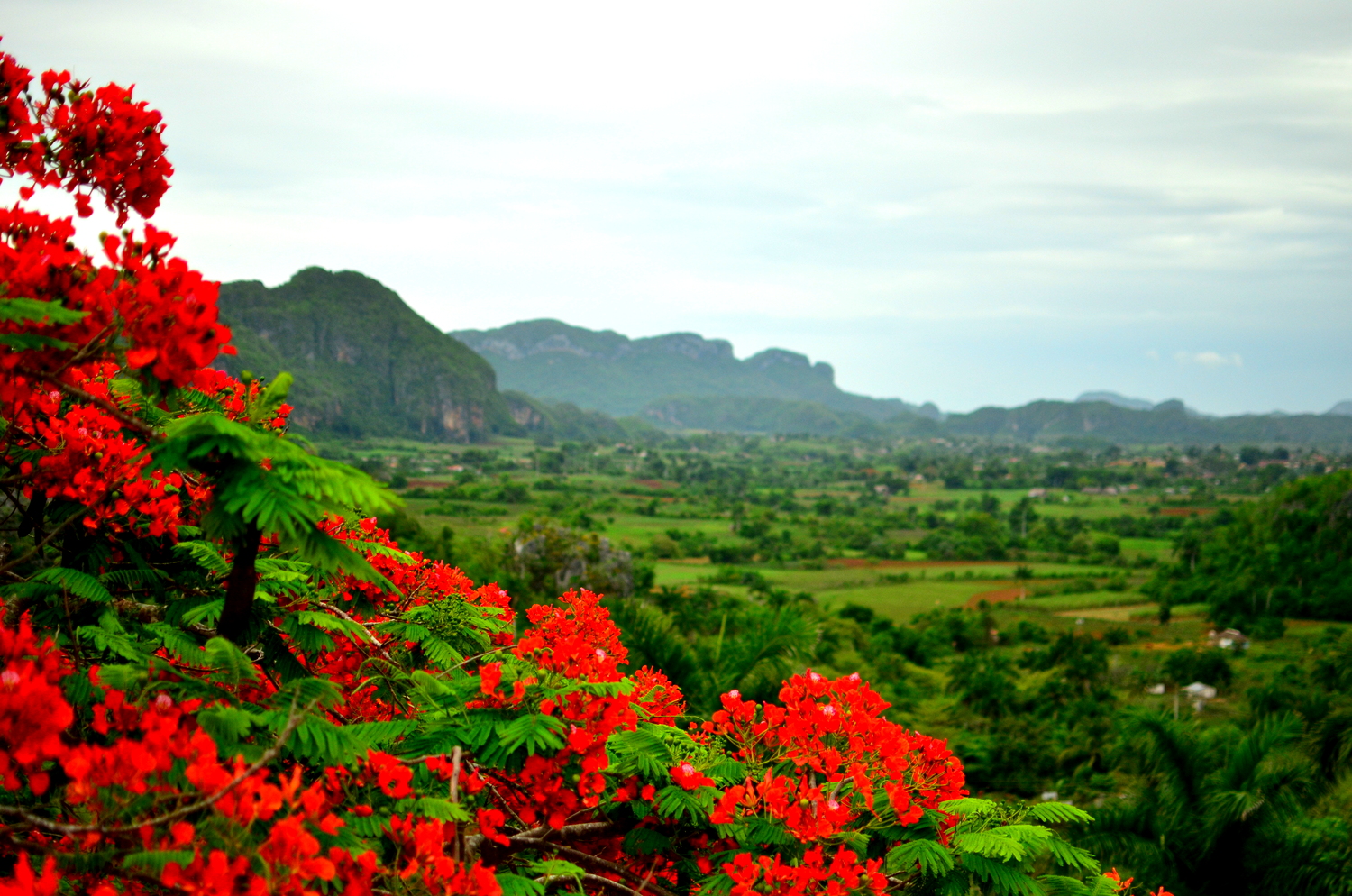
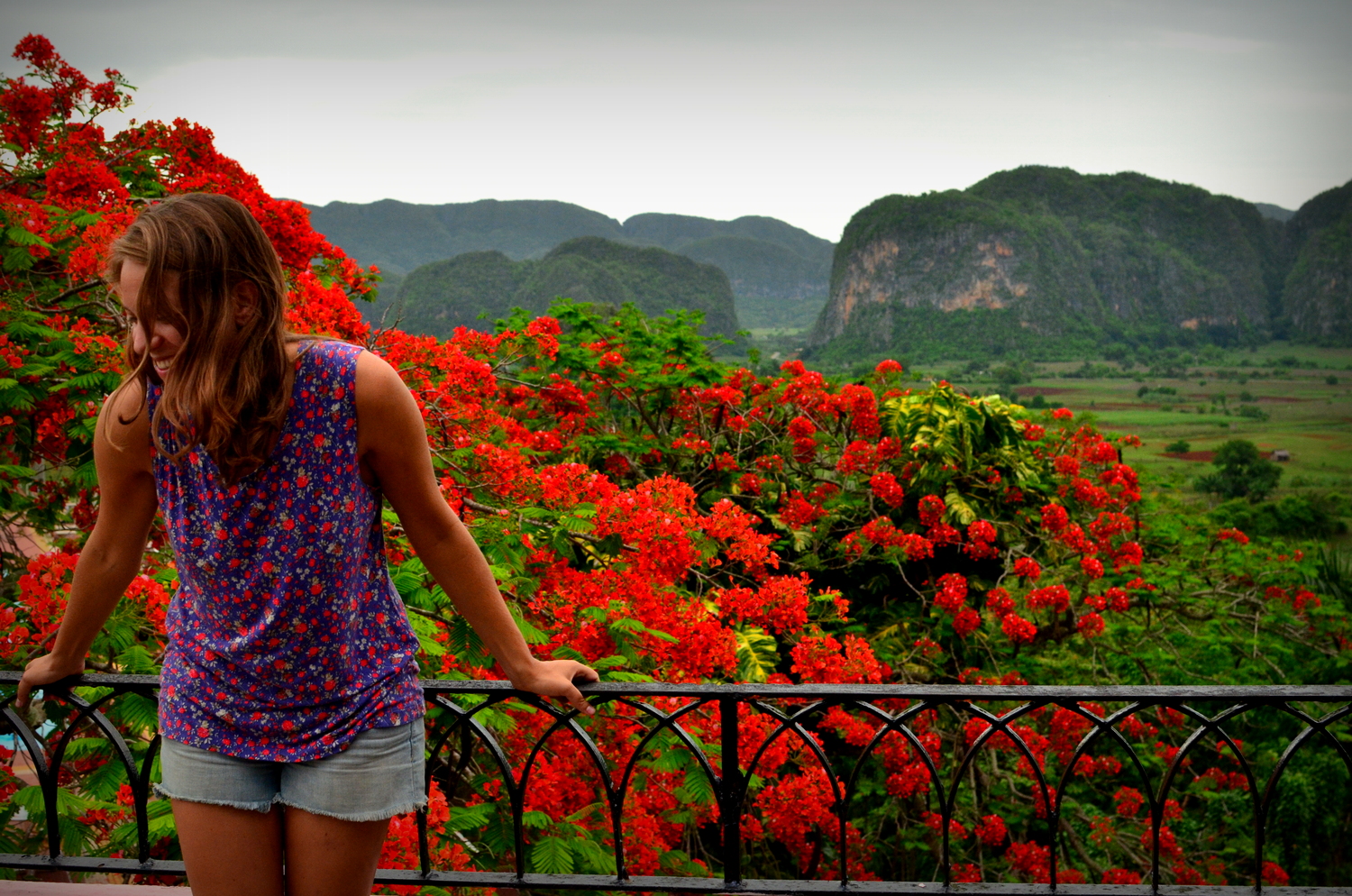
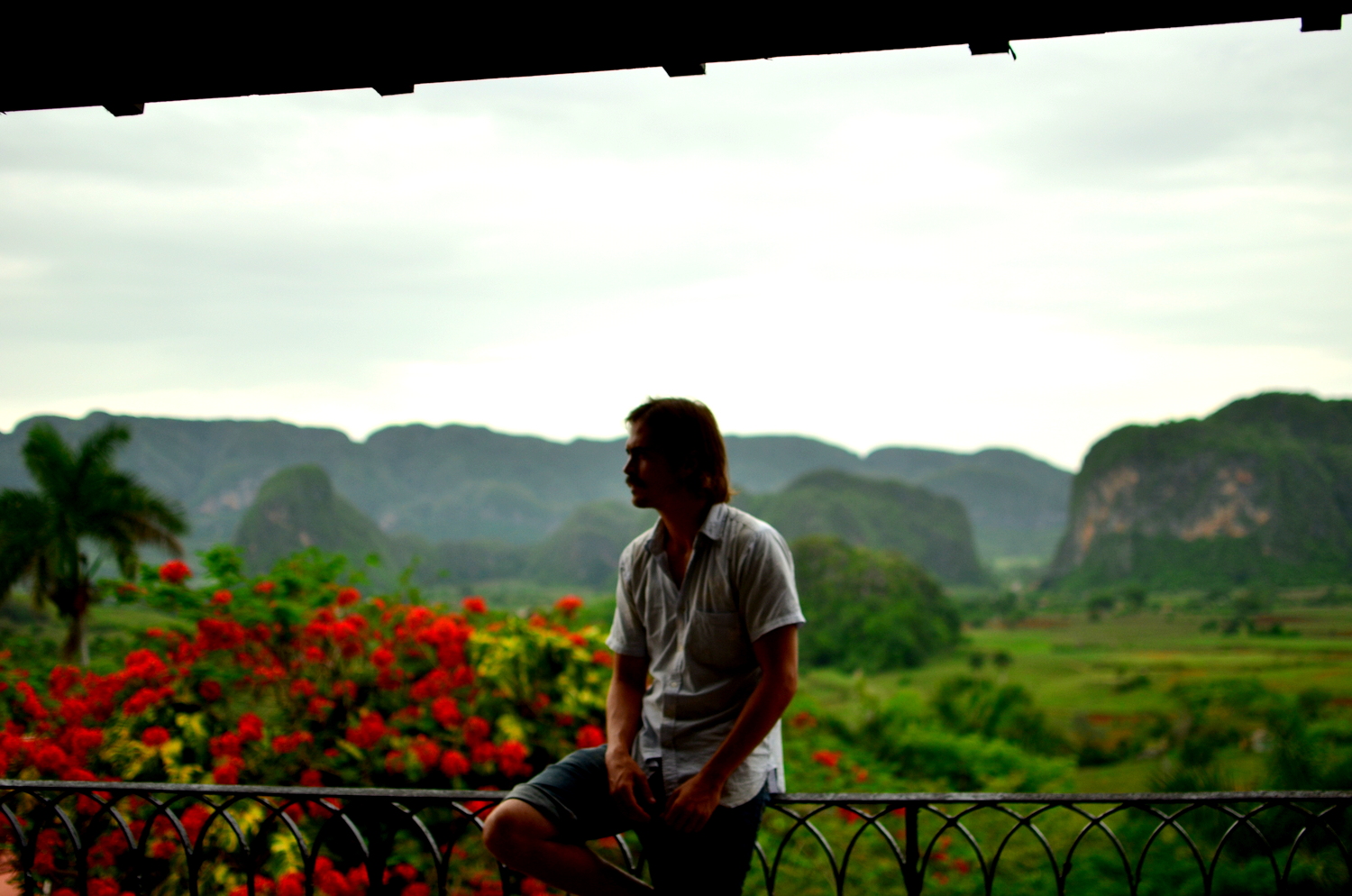

The following morning a young man picked us up in a beat up Russian Lada and took us to Noel’s farm. Two massive mogote chains split opening up a huge, lush flat valley with endless fields of sweet potatoes and birds sing-songing in the trees above. Sometime between arranging for the tour and waking up the next morning my stomach decided it was time to rebel and my intestines agreed. It couldn’t have been a worse day to stage an uprising. The thought of bouncing around on a horse for 5 hours seemed destined for an embarrassing accident, but there was no turning back. Undaunted, we were introduced to our caballos and the rest of Noel’s family. Elissa’s horse, a 16 year old seasoned sweetheart named Caremelo, was as obedient as any golden retriever that was raised from a pup. My 6 year old stud Negro, however, was not ready to have someone new holding his reigns. After a 2 minute crash course in horseback riding I was headed off into the field leading the pack, much to my dismay.

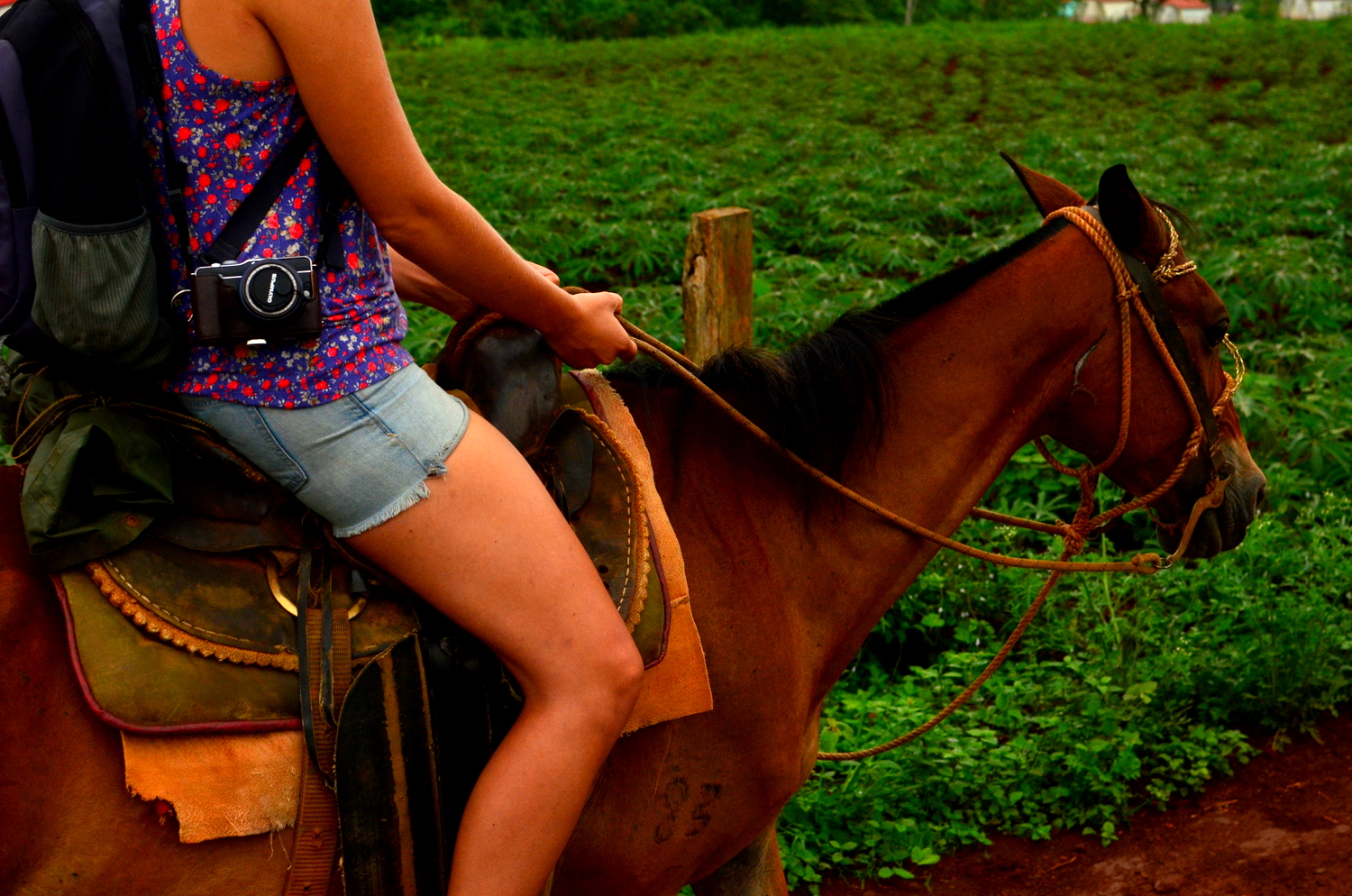

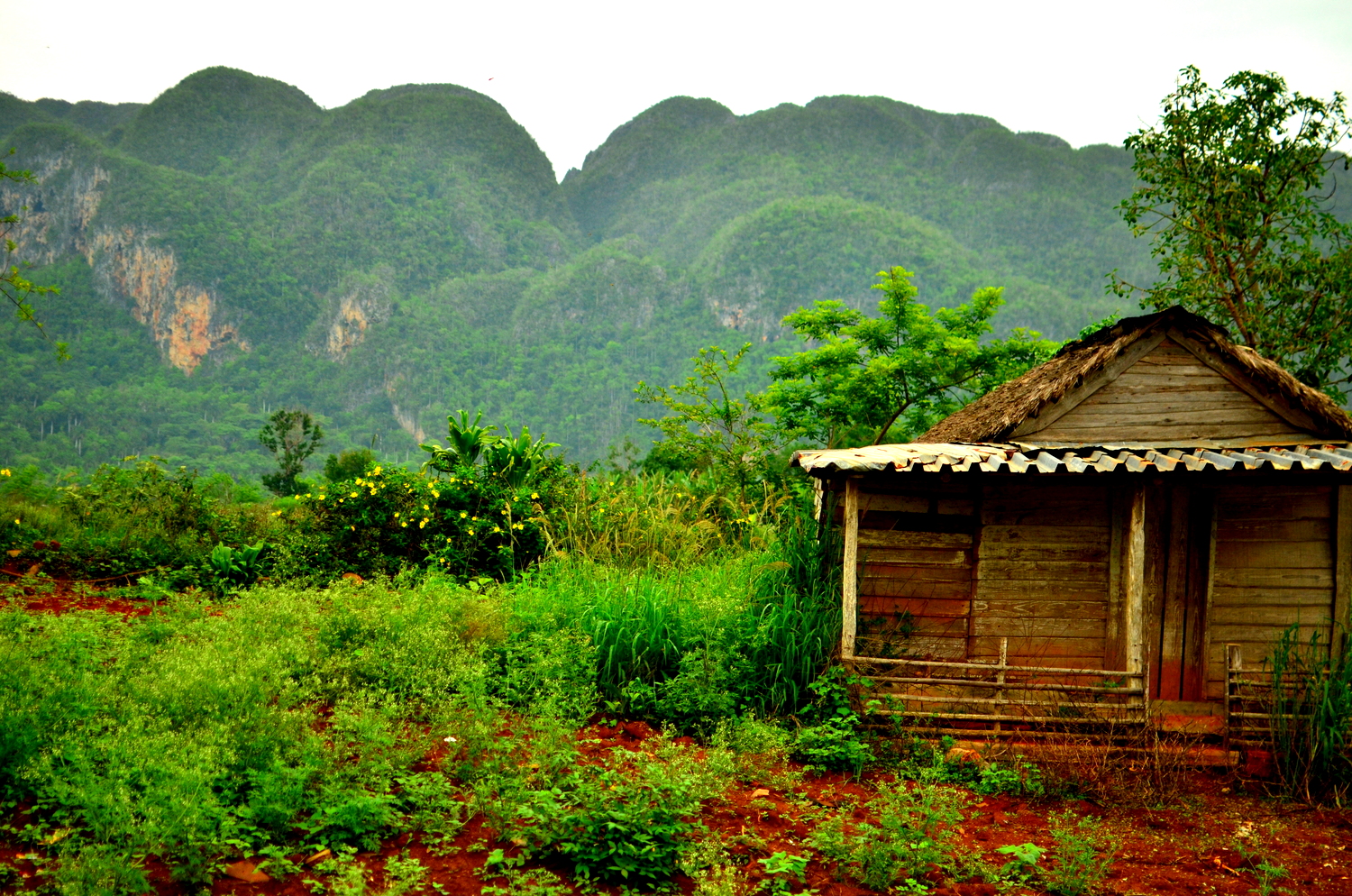
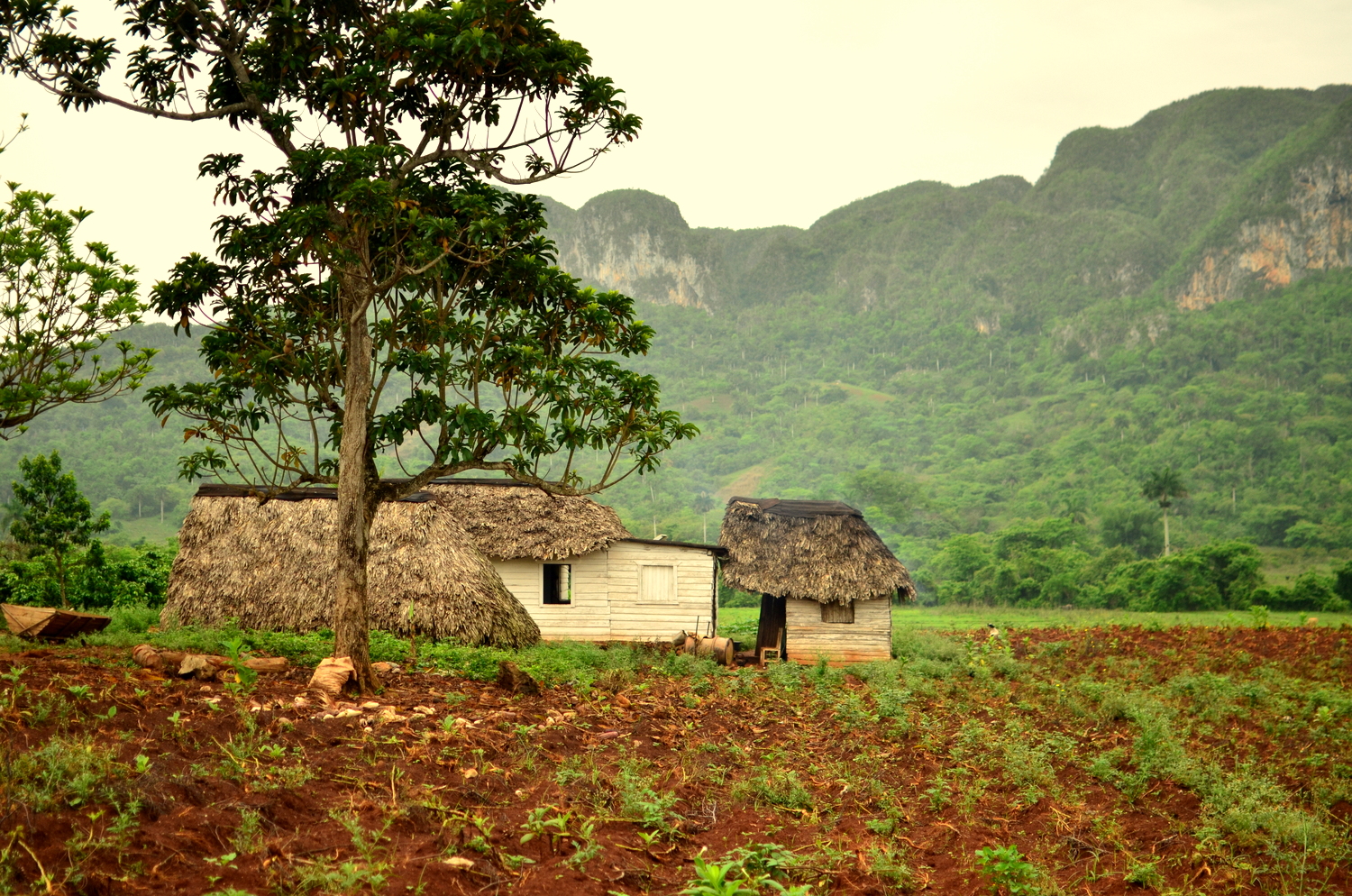
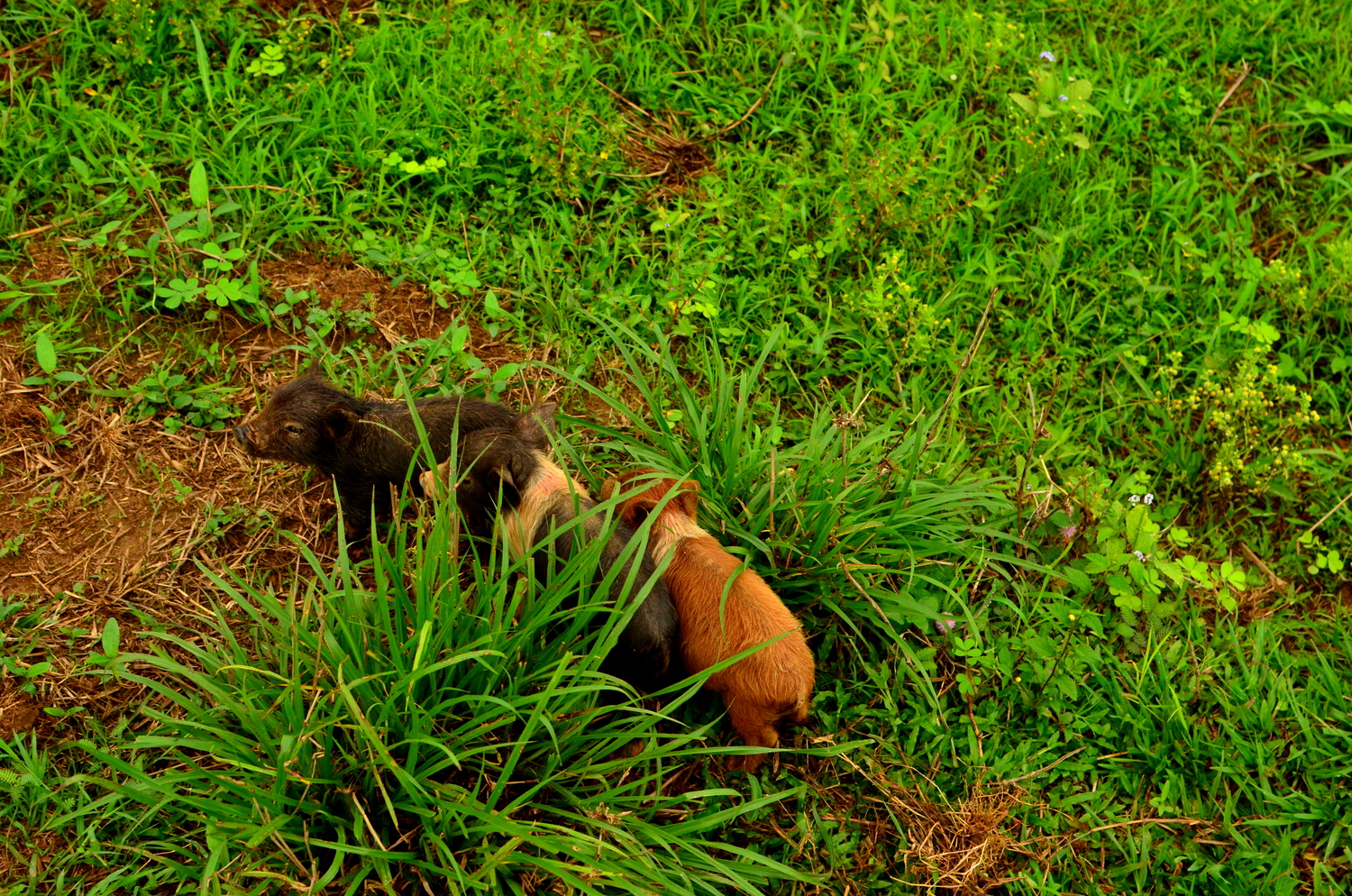
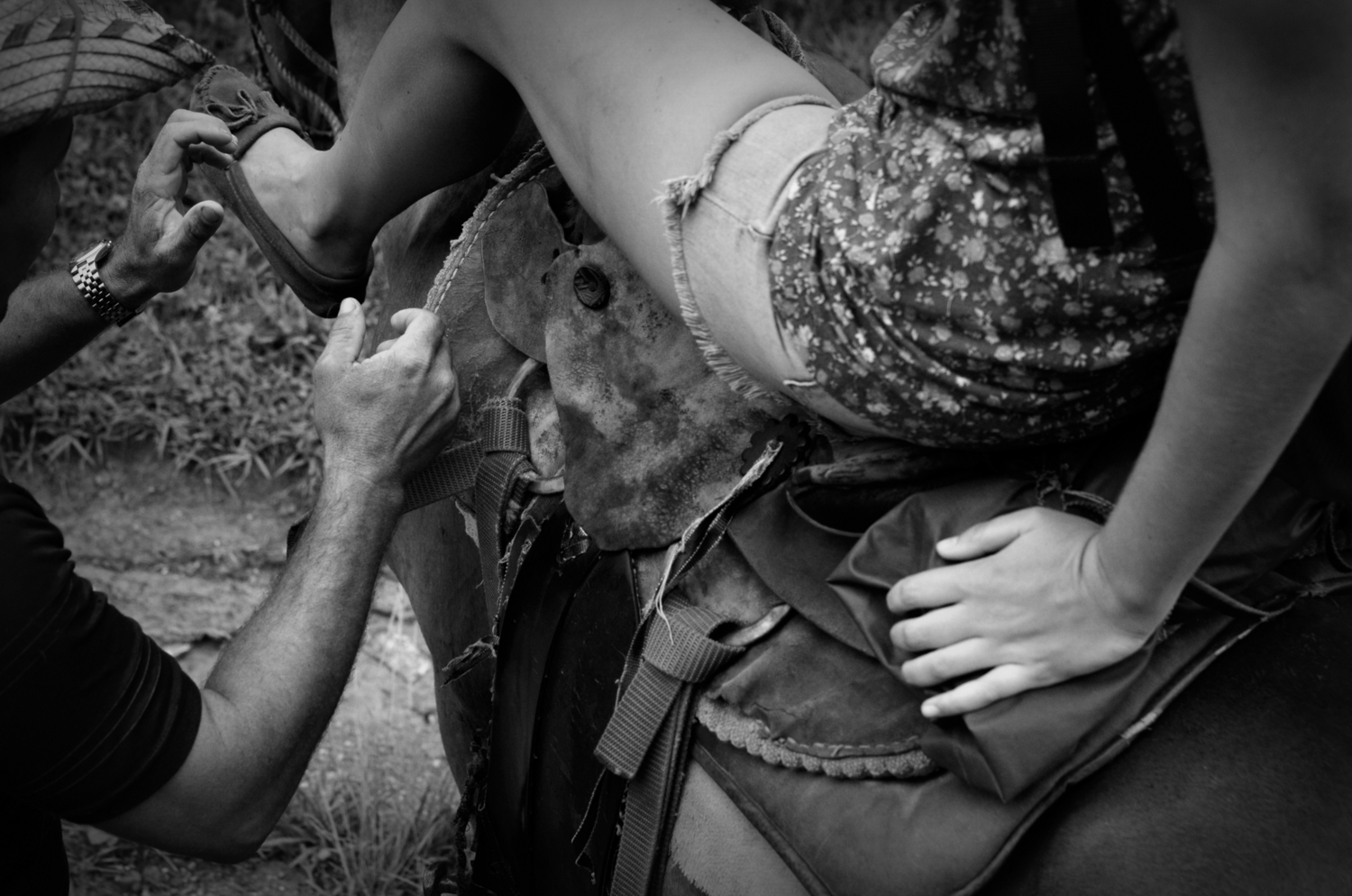


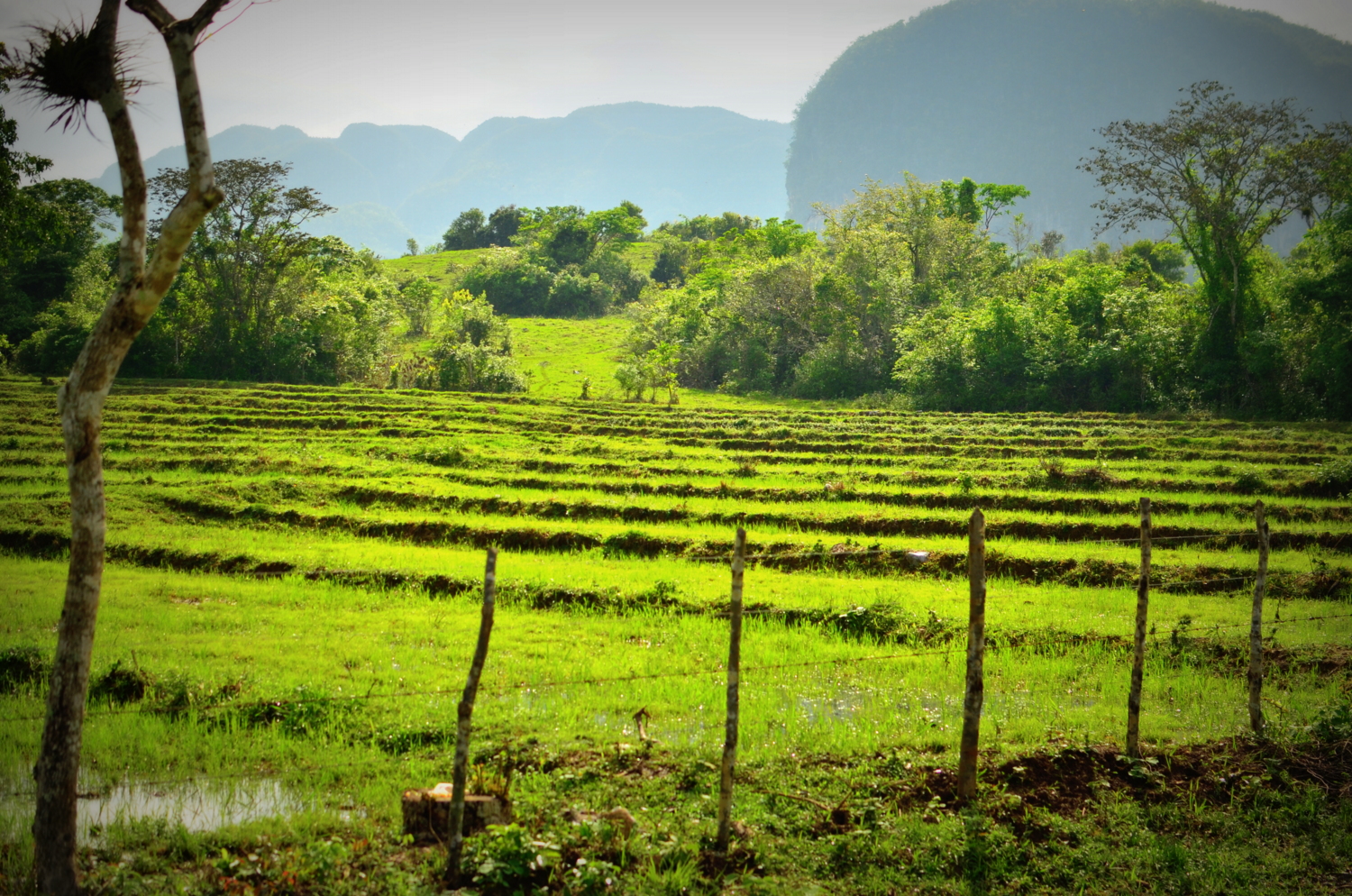
Noel stayed in the back keeping our horses plugging along. It was hard to ignore Negro’s inclination for eating whatever came into his line of sight, wandering off into tobacco fields, and turning left when I couldn’t be any clearer on my yearning to go right. But all that was just one blink away from the realization that we were in the middle of some of the most pristine, beautiful farmland I’ve ever laid eyes on. Limestone walls jumped from the rich burgondy colored soil sheltering miles of sweet potato fields. Our barely recognizable trail weaved through rice paddies and tobacco fields, past baby pigs under palm trees, and between simple thatched roof farm houses with the occasional nod from the owners. We crossed streams and ascended deep up into the mountains, constantly looking over our shoulders down into the valleys. Our guide led us to a friends house in an area dubbed Los Aquaticos, a tiny community established to practice the healing powers the water supposedly possesses. We were treated to banana wine while we learned about the natural way coffee is made and dried way up in the isolated Cuban hills.
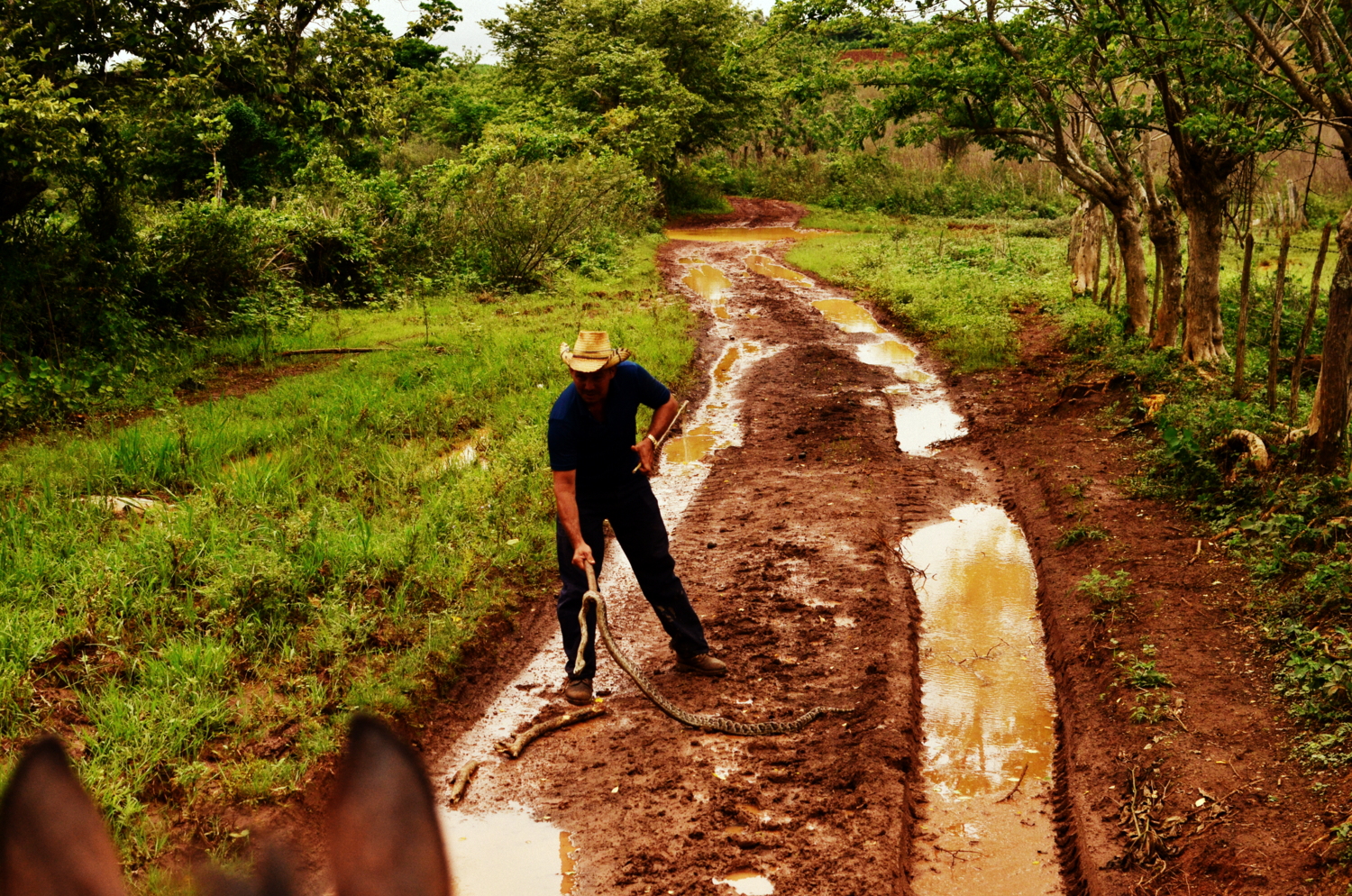
We descended down the muddy, rocky terrain aboard our steeds and back into the flat valley floor. With each step down Negro’s hooves would slide about a foot, which was particularly terrifying on steep slopes. At this point in the trip my intestines started performing acrobatic feats that were exaggerated by the now galloping three amigos. Without a bathroom in eyesight and nothing but beautifully prepared tobacco fields I began to sweat. I’ll leave out the rest of this anecdote for self preservation reasons. We carried on through more muddy pathways occasionally pulling over for farmers clad in their green issued pants and button shirts being pulled by cows on wooden sleds. Some would stop Noel and have him take a pull of a bottle of home made rum. Good ol’ boys, shootin’ the breeze. Afterwards we ran across a 3 foot snake in the middle of the road that was instantly vanquished by Noel with a gigantic stick. He explained the snake wasn’t poisonous, but they did eat baby chickens and sometimes pigs.
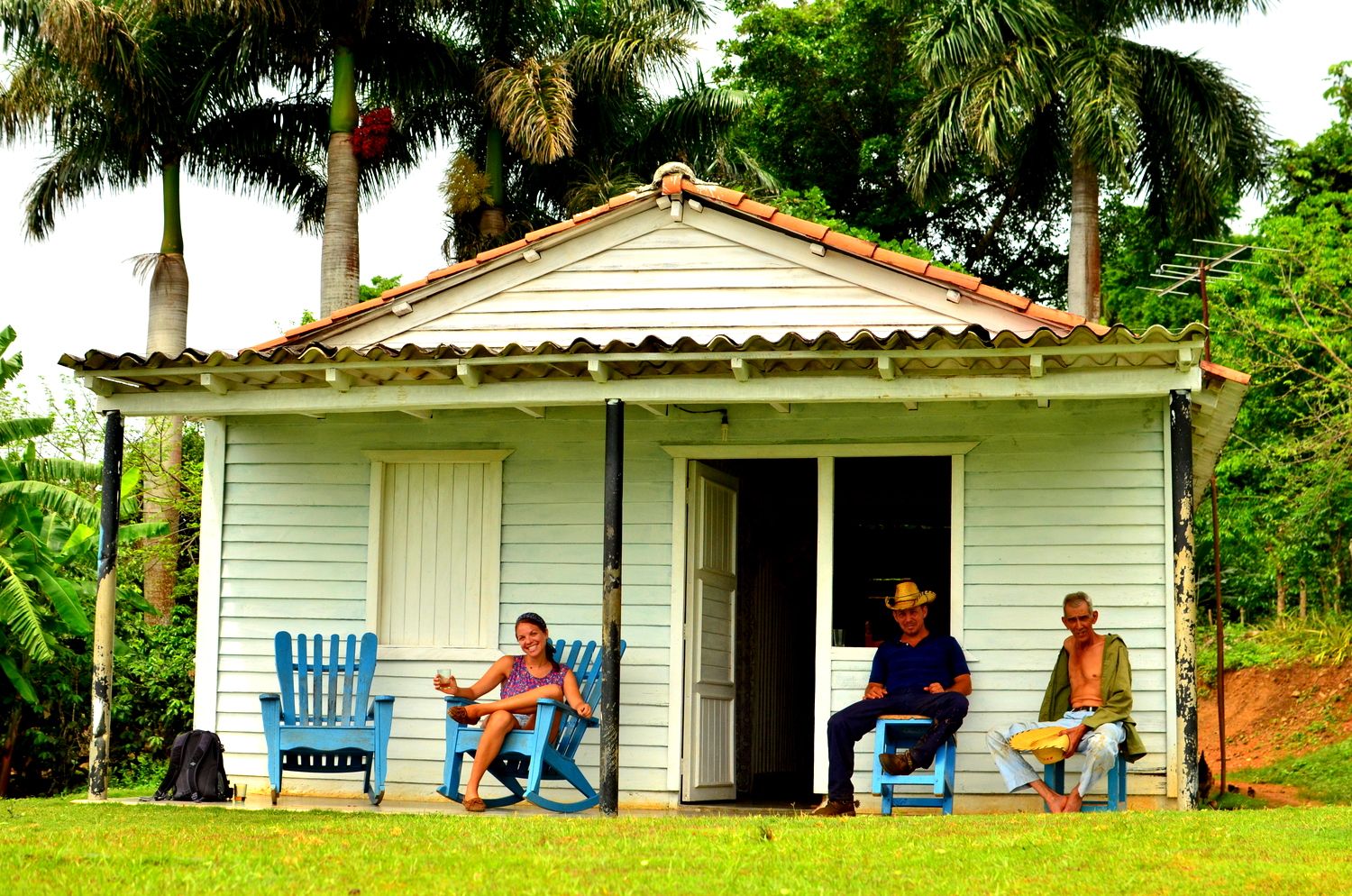

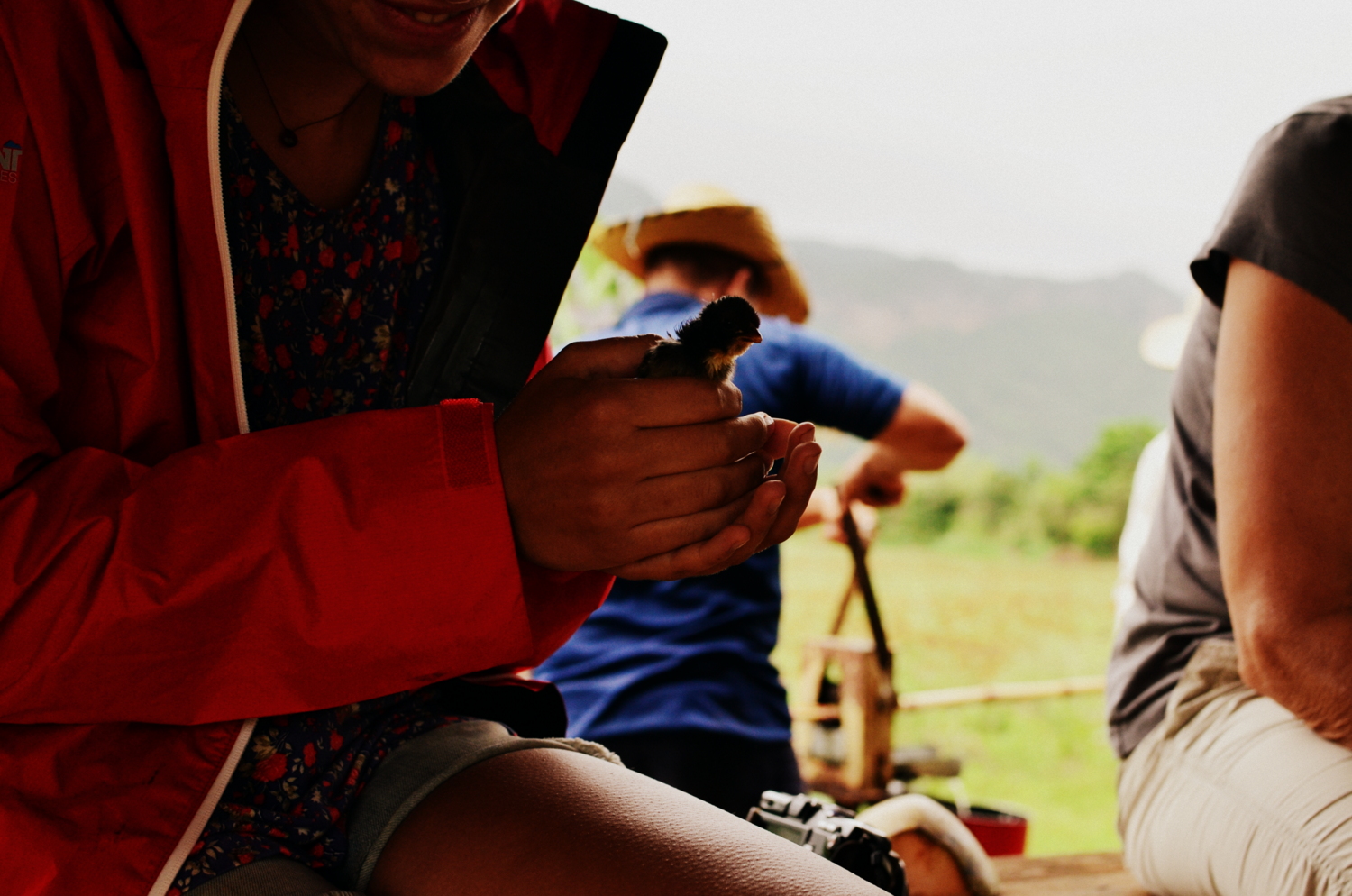

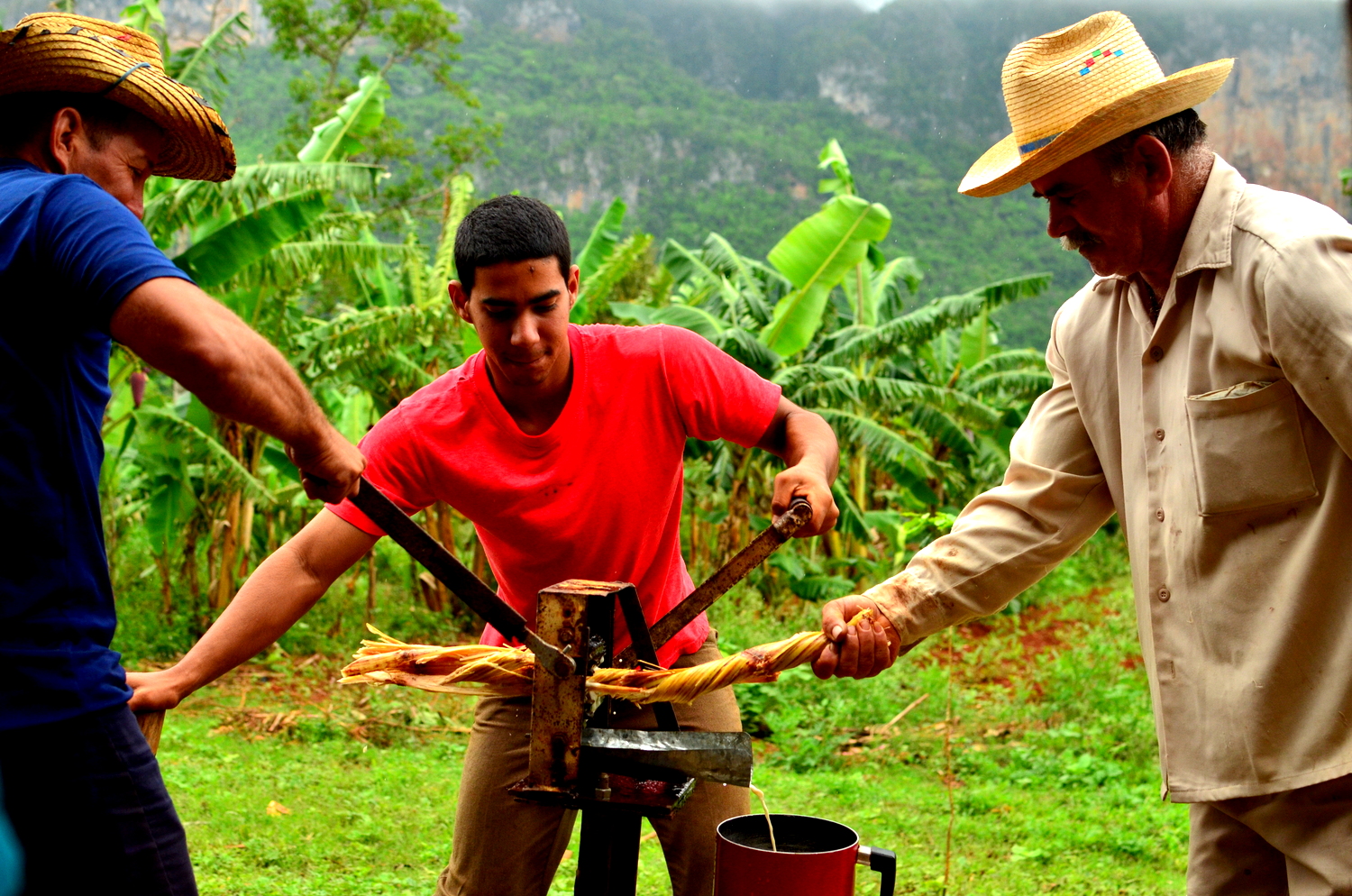
It began to rain as soon as we pulled up to the tobacco farm portion of our tour. We were given a demonstration and a start-to-finish lesson on how cigars are made. It was fascinating seeing leaves turn into perfectly rolled cigars before our eyes. A lot of effort and careful execution goes into the infamous Cuban cigar and this perfect growing environment has a lot to do with it. While fresh sugar cane juice was being sent through a manual press we enjoyed the fruits of his labor under the lull of a heavy tropical downpour and the orchestral section of tree frogs chirping. “Mas medicina?” was a common phrase and I couldn’t bring myself to say no. There is something to be said about smoking a fine Cuban cigar and drinking fresh Cuban rum, these things were created to be enjoyed with each others company. It’s no wonder these plants all grow so close to each other in perfect harmony. This was also the same area that grows tobacco for Cuba’s top brand cigars, each deriving their flavor from different types of plants and fermentation processes. We didn’t have enough cash on hand to buy any off the farmer and felt awful about it. We waved goodbye and rode off into the puddles. Our last stop was at the mouth of a large cave where another one of Noel’s friends gave us a little show. This little old man brought a flash light and his trusty dachshund into the darkness showing us a little stalactite/stalagmite action. After the tour was over Noel brought us back to his farm where we said goodbye and got a ride back into town. After spending about 7 hours on a horse we were dead.



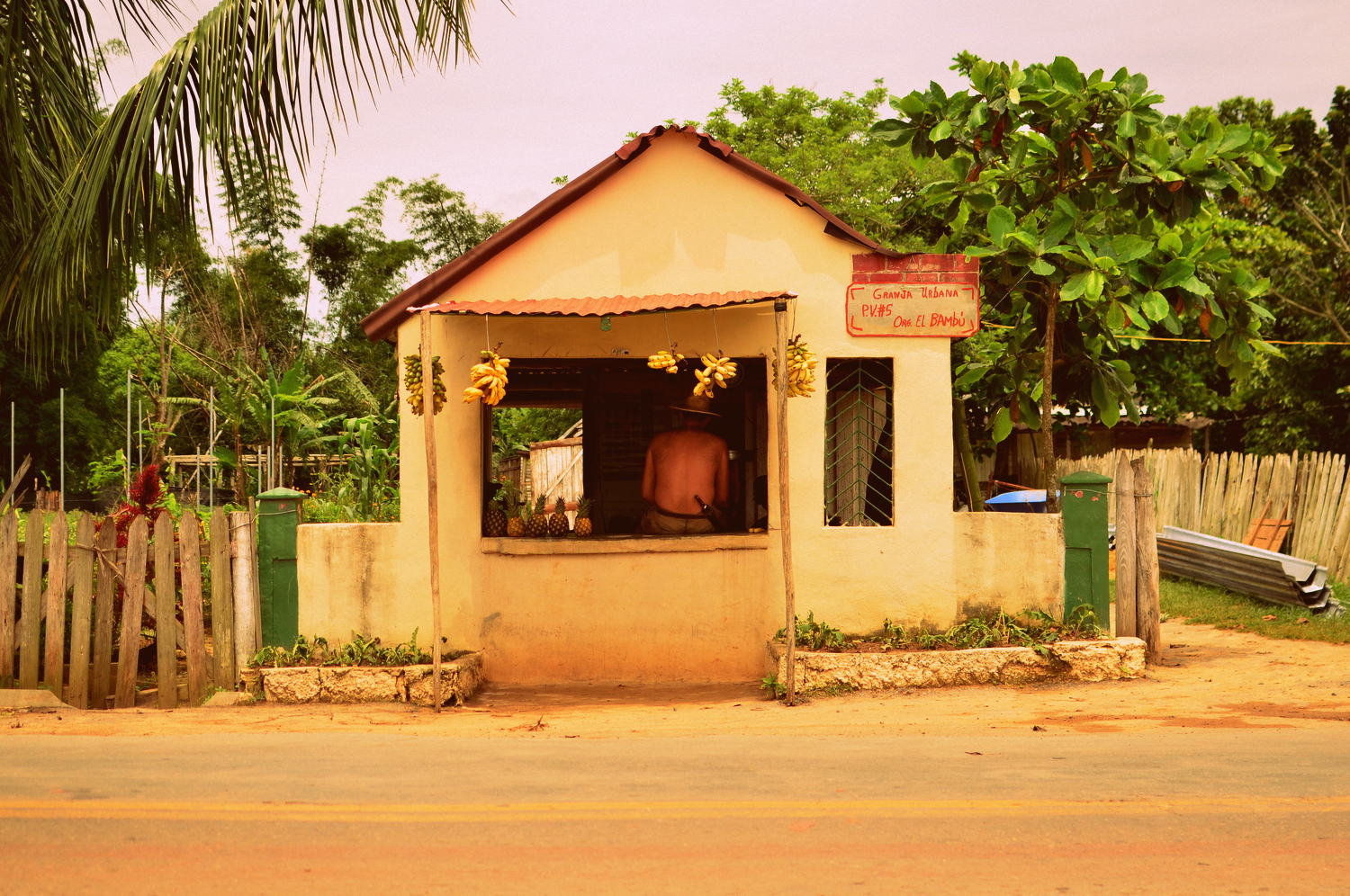
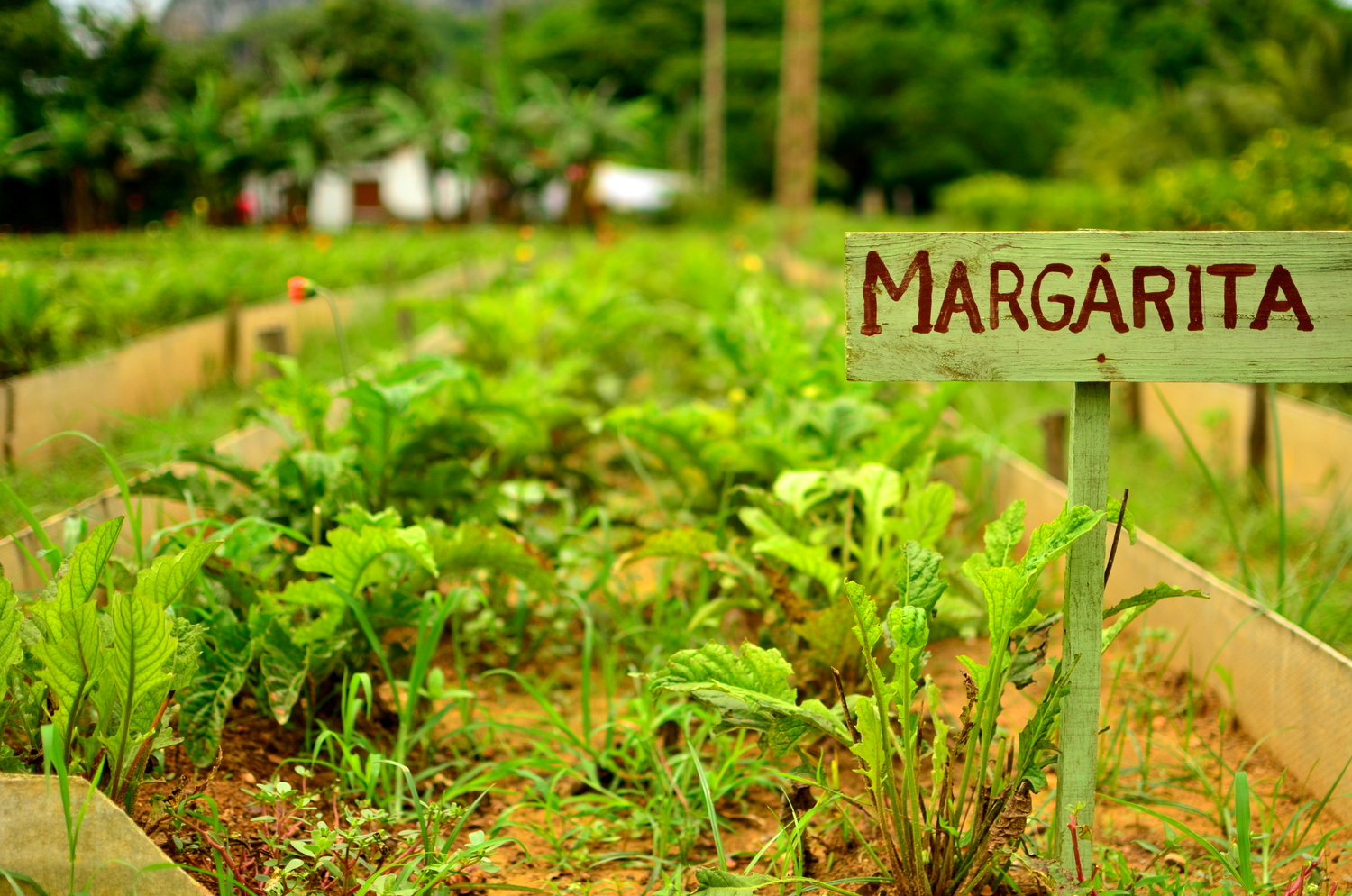
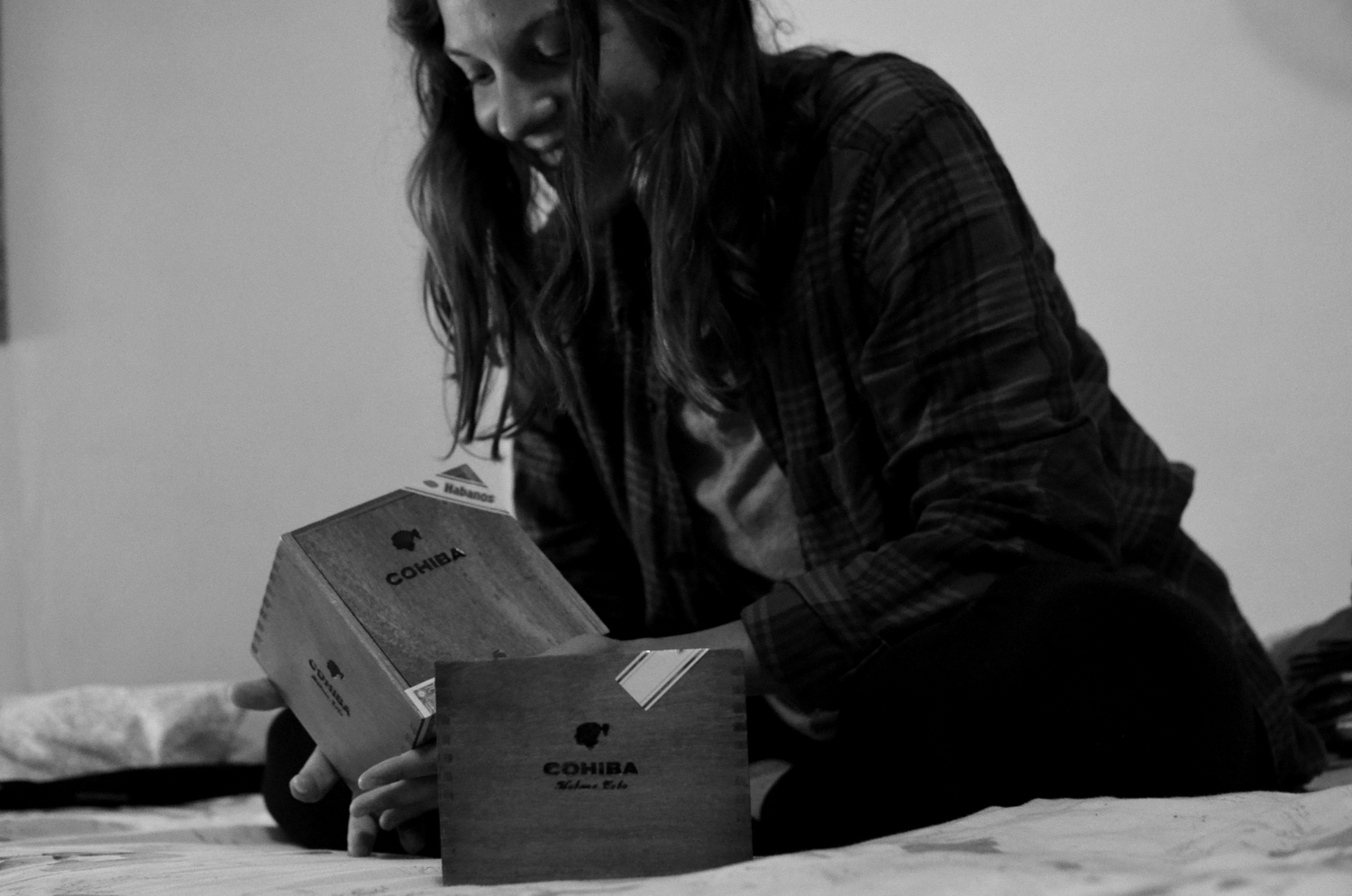
The following day a sore throat and a fever greeted me with an overly joyfull “Salud”. Elissa noted that she too was not feeling very well in her cabeza. Convinced it was from too many cigars I vowed not to smoke another one in Cuba. That did not stop us, however, from striking a deal with a friend of Blanca’s to purchase 2 boxes of Cohiba Robusto’s at a very handsome price. About 10 minutes after inquiring a man with a backpack showed up with official, legit Robusto’s. Cuban magic strikes again. Anyway, being sick in Cuba was not an option so we pretended nothing was awry and rented bicycles from our casa. We rode for miles in the hot, sticky air passing by picture perfect limestone cliffs, rows of houses with their owners rocking away on porches whistling at Elissa, across the hilly landscape between mogote mountain chains and into the almost perfectly flat valley floors. Stopping only for the occasional road stand gaurapa (sugar cane juice) we peddled through our delusional head colds. An absolute must see is the well kept botanical garden on the very edge of town containing probably every single plant species this part of the world could possibly offer, all conveniently located in someone’s amazing backyard.


After a little thinking on the subject we decided to try and see if we could get a hold of some of those farm fresh cigars rolled by Noel’s neighbor. It was nearly dark when Noel came for his nightly visit and he insured us it would not be a problem. In order to get these cigars to us he would have to drive back to his farm, ride his horse to the vega, and repeat these steps in reverse. I almost couldn’t believe it when about an hour later we had two hand tied bundles of cigars in our hands. It was another gift from Cuba, another set of unusual circumstances that became a memory engraved in my cerebrum forever, which in the moment felt like it was pounding from sinus congestion. Life in this valley was very different from that of Habana. It was real small town charm separate from the big city life. An inquiry about a rare palm tree (I read there was one in town somewhere) quickly turned into phone calls, visits from old friends, and a general sense that the whole town knew I was looking for a Palma Corcho within hours. They spoke of hopeful times ahead and became distantly silent when the conversation turned to how things were in the past and how they seem in the present. Life in Cuba is very real, and we were learning this with every passing day. We had to leave Vinales, giving up the most delicious food we had eaten in weeks, and fled back to Habana with hopes of recovering to salvage the rest of the trip and learn more about the culture of this country.


Penny Karma Update
Greetings wordpress followers!
As some of you may already know a joint project with my traveling partner in crime, Elissa, called Penny Karma was born on this blog about a week ago! This page has received some exposure but could use a heck-of-a-lot more in order to meet our lofty first goal and ultimately to keep this form of karmic generosity in motion. Thus far we have a total of about $140 dollars donated in only 9 days! This is a great start and we hope more people get involved along the way. As an added bonus, you get to join in on our traveling adventures in a unique way.

For those not yet privy to this project yet, I’ll give a brief explanation of what it is we are doing. We have created a virtual piggy bank of sorts, a place to put some pennies (or dollars) with the purpose of distributing small gifts, supplies, or money to people we meet throughout our travels that we feel could use a little break in life. Your money donated goes right into a secure PayPal account and will be used by yours truly to give something back along the way. We have a lot of chatter about this idea and want to keep it going. Occasional updates will be posted (with pretty pictures, of course) but I promise not to inundate the blog with pleas for donations. Thank you again for following and for reading. Now come join the fun! The month of July is designated to our little Mayan friend Flor de Maria, who was born with a cleft palate and needs 2 more surgeries to ensure a normal life. Help keep Flor all smiles!
Click on the picture to read Flor’s Story

Cuba; how La Habana stole my heart


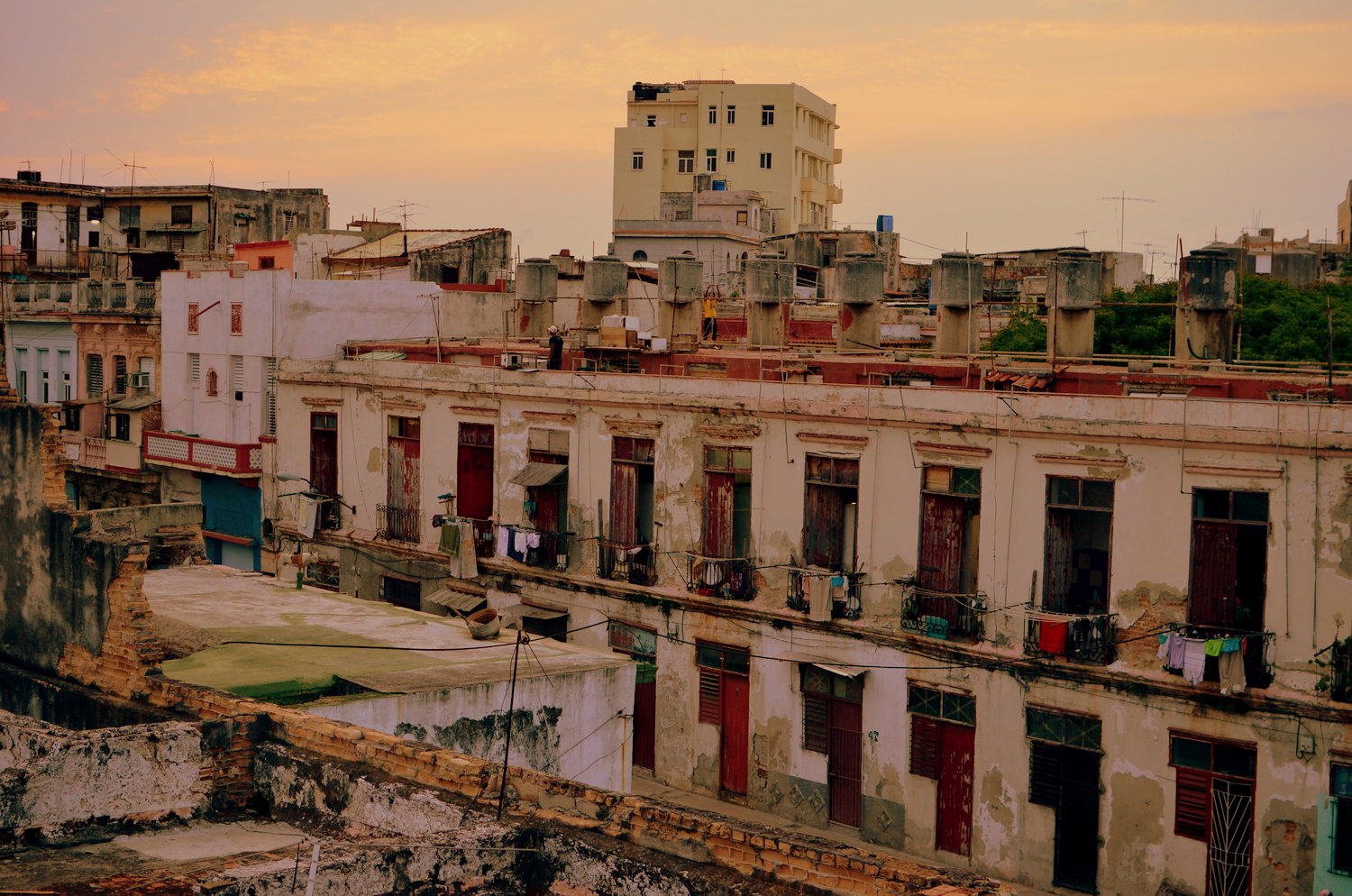
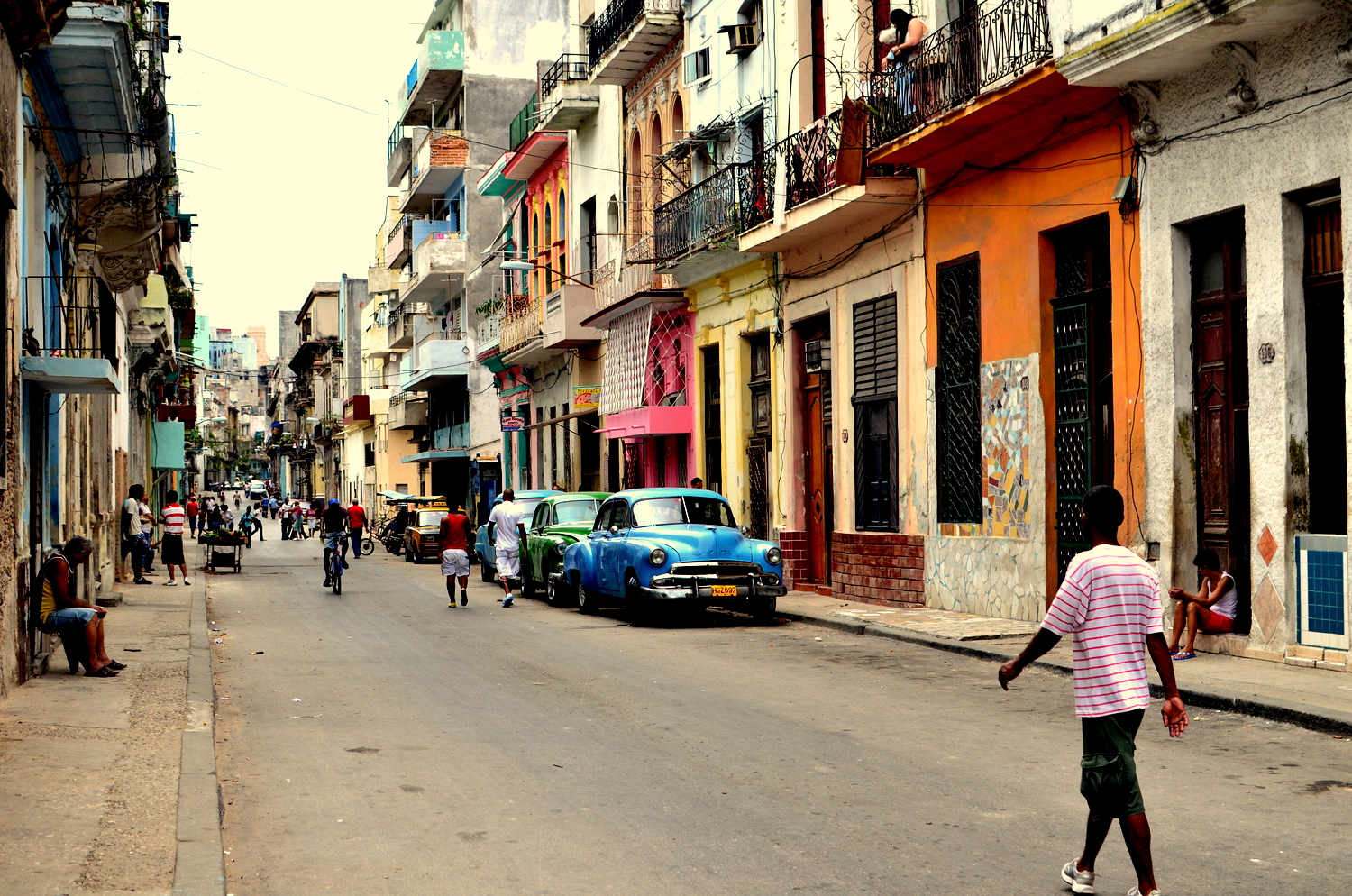


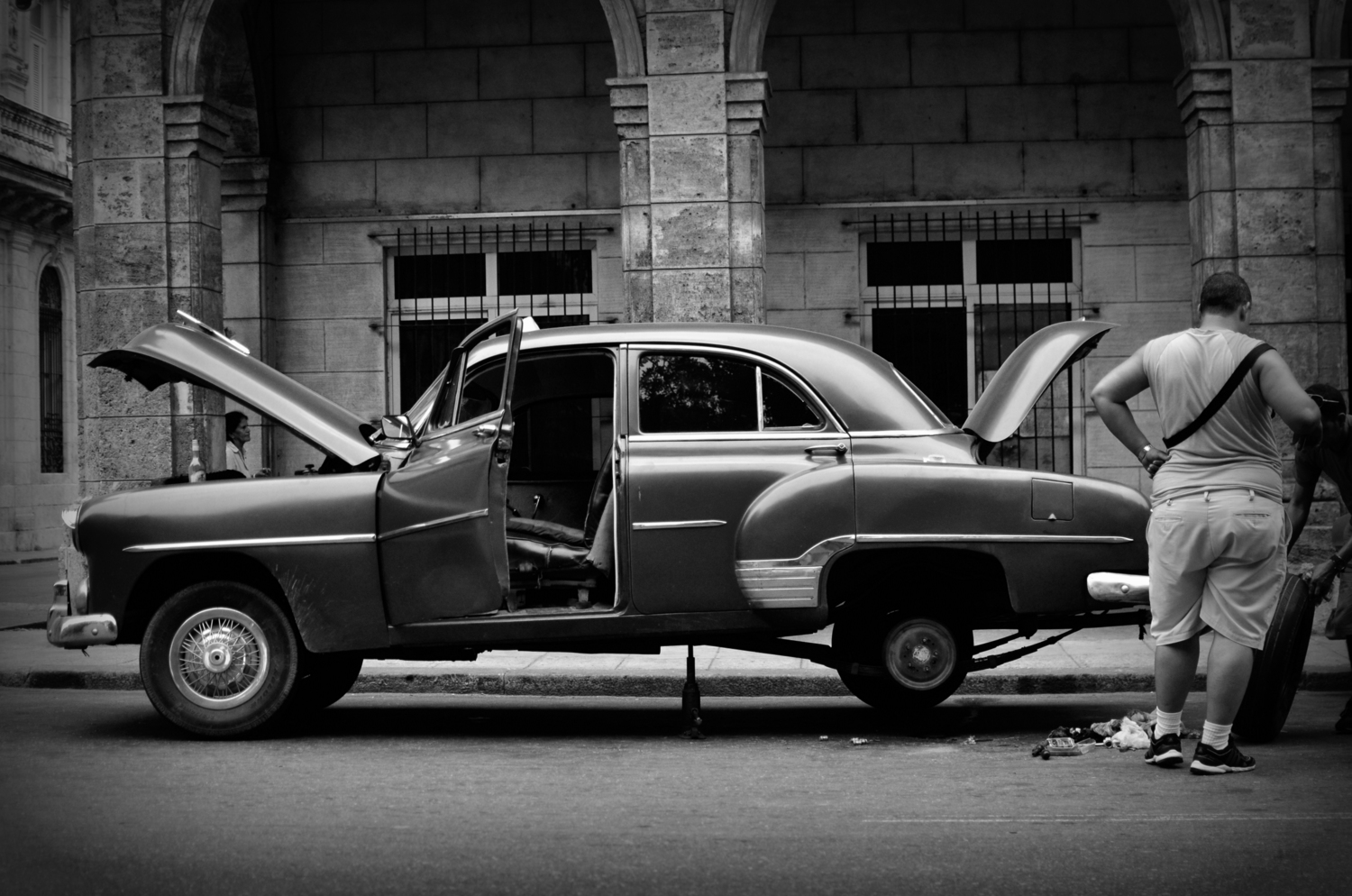
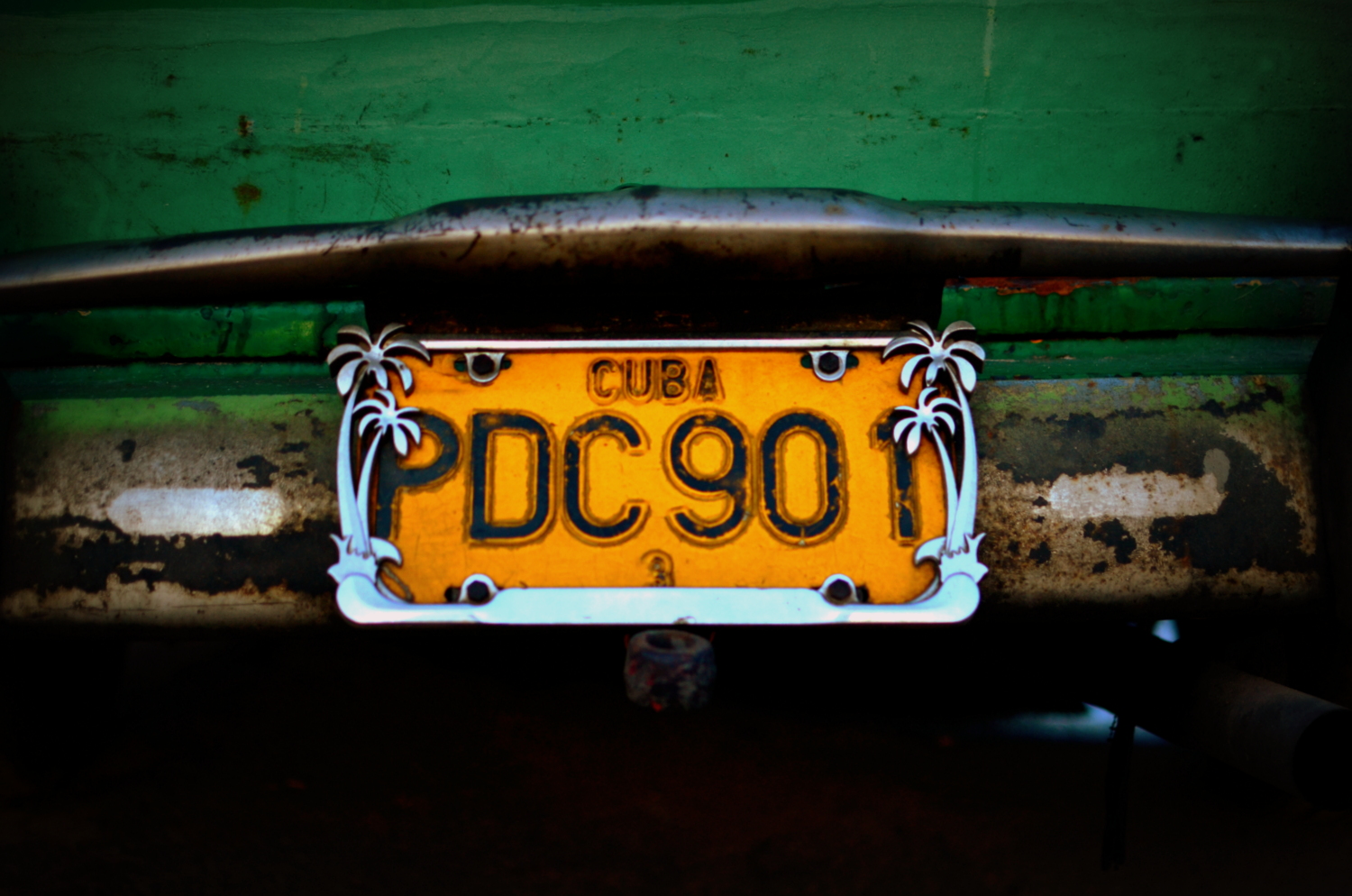
I’m not going to go over the details of how we got to Cuba because I see them as irrelevant to the bigger picture of the circumstances that came to be. It would also be unpatriotic to reveal the ease of purchasing a ticket with cash money from any one of the dozens of travel agencies throughout Cancun, all selling discrete backdoor entrances into the infamous Pearl of the South. Nor will I divulge deeper in the fact that we found ourselves on a plane full of Americans doing the exact same thing for the exact same reason; to see the “surreality” of existence in this mythical, fabled land before the carpet rolls out for capitalism to get it’s hands onto one of the last places on earth that not only hasn’t welcomed it with open arms, but exclusively blocked it with a socialized shield. For some it was our very first sweet taste of the former capital of the sugar cane industry, for others it was a return back to appease their sweet tooth with another fix. I noticed that for a large percentage of the plane it was a trip back to the homeland to visit family, or that time ran out on their visitor visas and they were bound back for reality. But for whatever reasons aside we were all flying through the air on a heavily used 2nd hand 747 purchased from another airline upgrading their fleet. The seats were broken in like a retired catchers mitt, slightly faded from the sun with padding so thin you could almost feel the grain of the wood it covered. It would come to light that recycling and reusing things until they could no longer function was going to be a common theme in this excursion. Cuban’s are known for their creative ingenuity, for making the best of the situation what’s available, which is not much in modern day Cuba. But all of this does not cross your mind while you are illegally crossing into a completely unique, surreal, and unknown territory with a gigantic wad of Mexican Pesos in your bag and your heartbeat providing the soundtrack to the movie you are about to step into. The other passenger seated in our row was a man that will be known as Reverend Rum to protect his identity. The Reverend, aside from being able to legally wed couples, was an entrepreneur from California about to celebrate his 65th birthday in Cuba, a plan hatched years ago finally coming to fruition. His wife was cutting him loose for 2 days and flying in on his actual birthday, leaving him to explore Habana on his own accords. Seeing as how we all did not have accommodations it was decided that we would split a cab into Habana Vieja after landing to see what we could procure. With the image of three Americanos blazing into the forbidden land in an antique classic American land yatch we touched down onto Cuban soil, instantly teleporting into a strange new world.

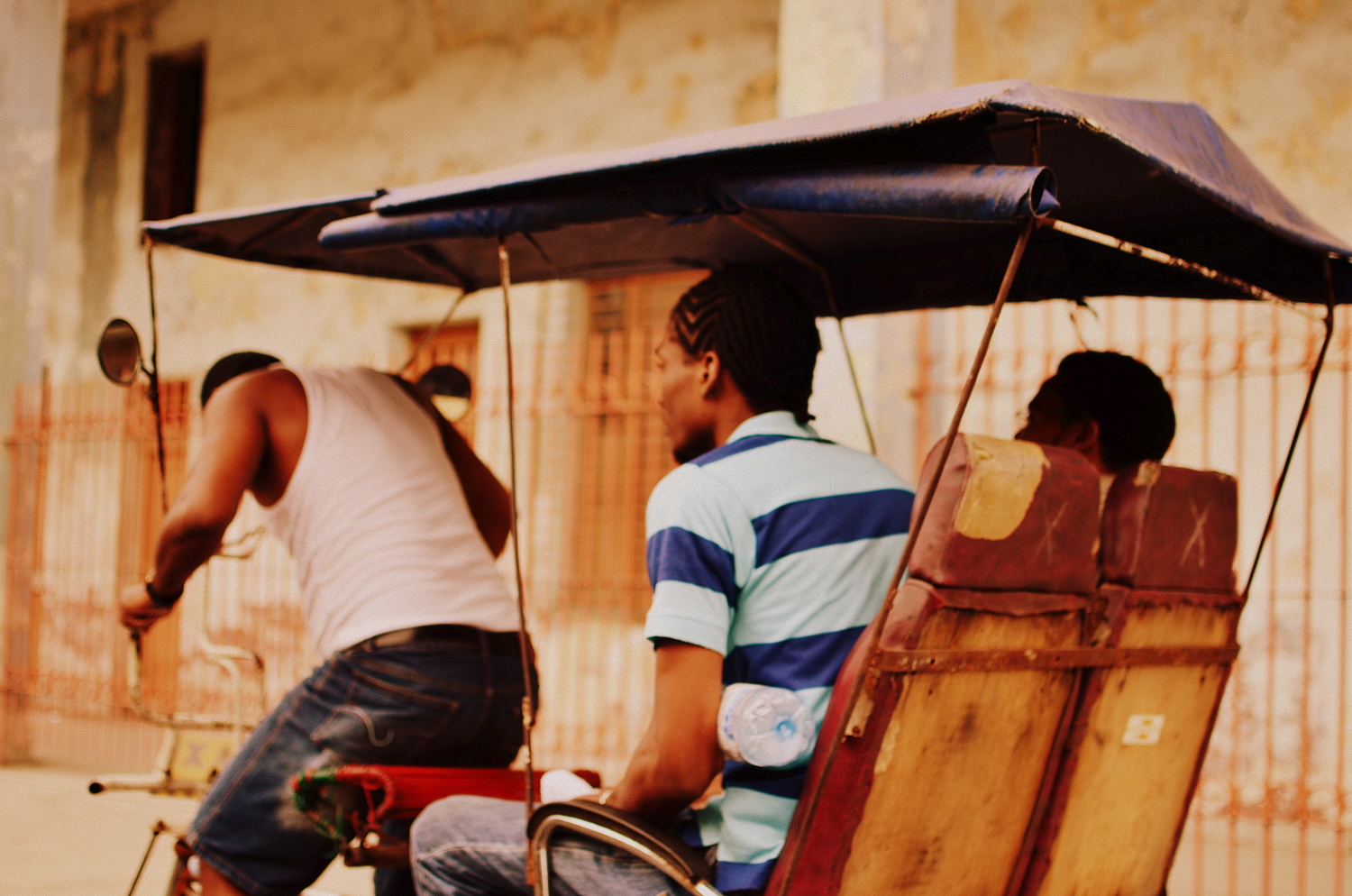
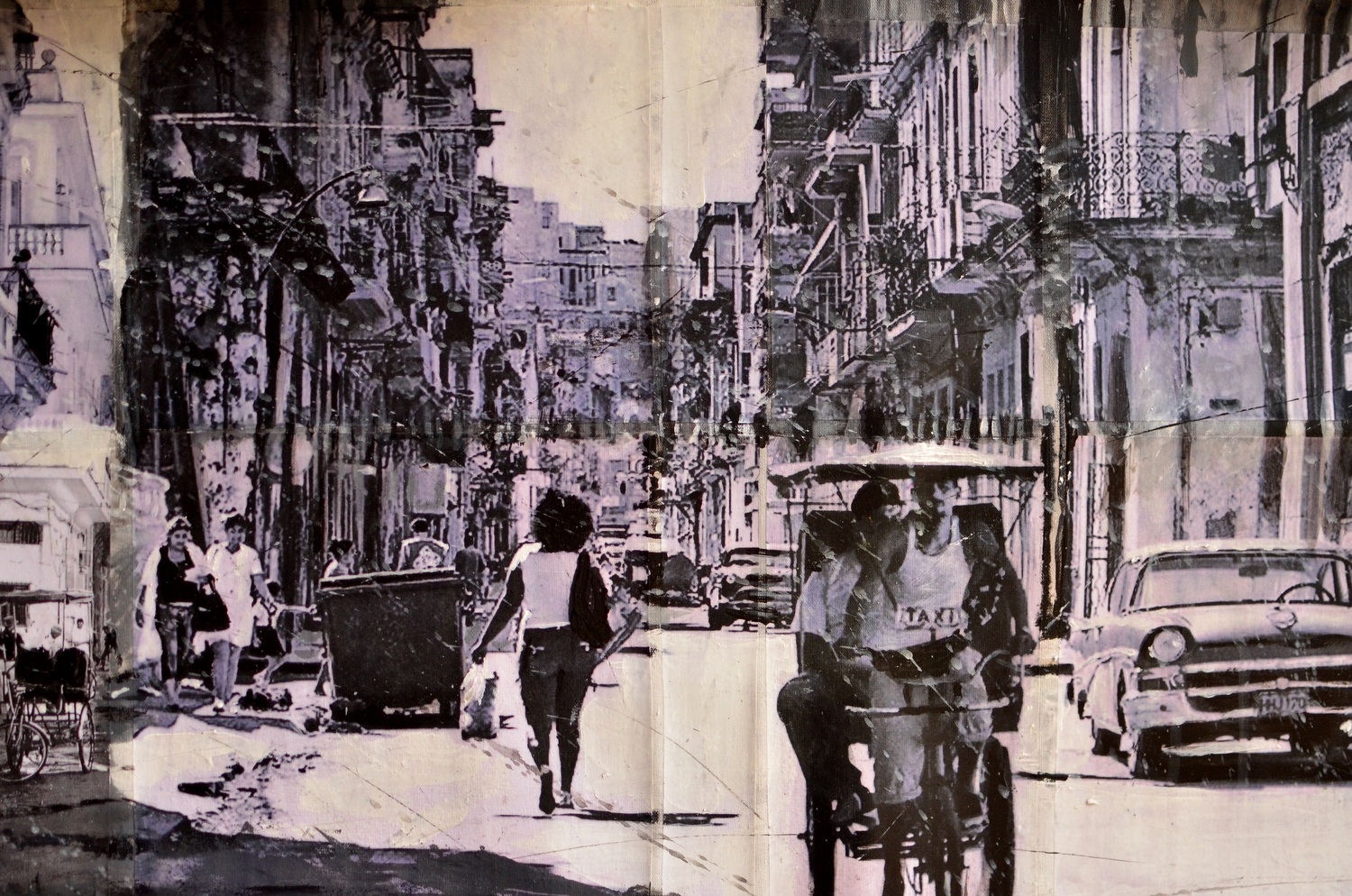


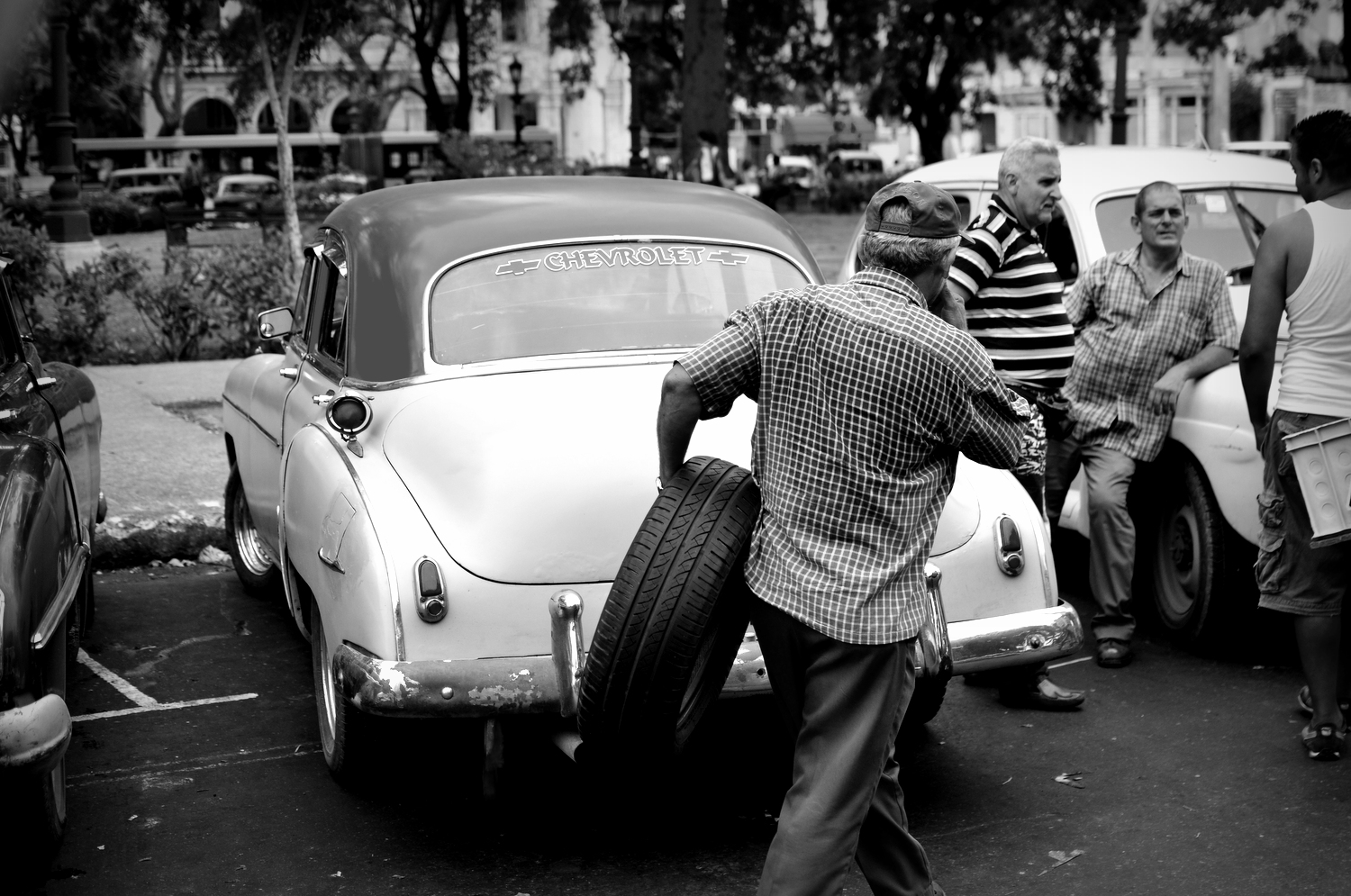

If the immigration process went down as smoothly as the on flight beverage it would have surely broken my streak. As we lined up in neat, single file lines in front of a row of about 15 pale green windowed booths something eerie crept over me and a slight discomfort began to stir within. When entering Cuba you should have documentation declaring where you are staying, although I heard that a verbal statement is all that is usually necessary. I stepped up to the plate anyway and struck out on the first three pitches. I had all my answers previously prepared in my version of Spanish but fumbled them the second I was looking into the most intimidating Cuban eyes that life could possibly create in a woman, who also could read the fear that was stamped onto mine. It seemed like my charm was absent from the entire conversation and uneasy mannerisms most likely dominated the exchange. It also could have been partly due to the fact that my passport photo, taken when I was 20, looks absolutely nothing like me. When looking at the face of the young, short haired Polish American inside my passport compared to my present day appearance of a mildly seasoned traveller donning a poncho villa mustache, hand-sewn jean shorts, shoes adorned with a gigantic rip in the heel, and hair approaching shoulder length. I probably looked as if I was trying to pull a quick one on a sleepy officer. I was instantly pulled aside in an imaginary problem line while I watched others breeze through the exit doors and into the world on the other side. I was a man of mystery, an enemy of immigration.


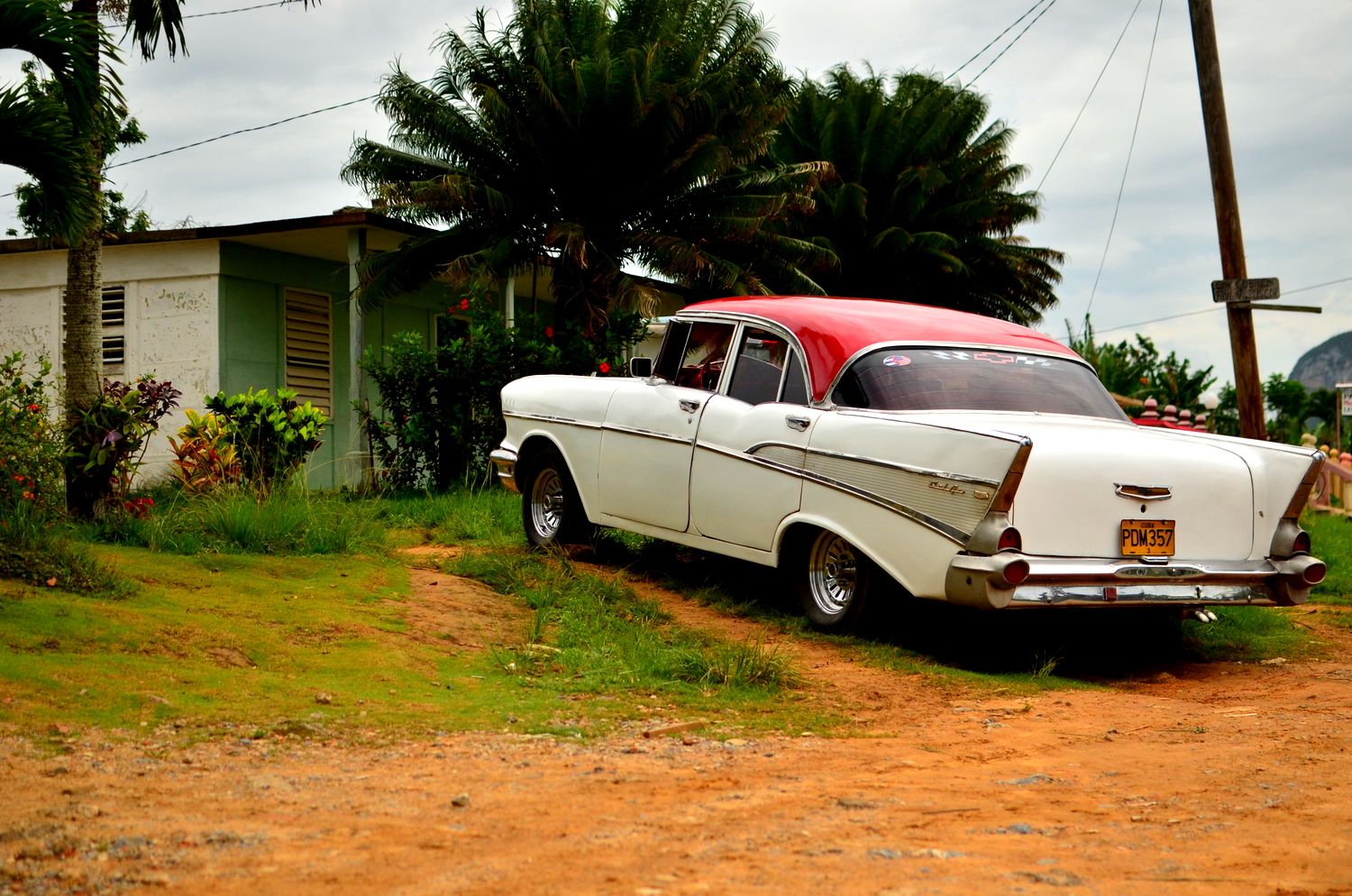
After 30 minutes of incessant questioning and a very thorough inspection of our checked baggage and we were finally off. After changing some peso’s for what would become our confusingly new foe we sought out a state run taxi with CUC’s in tow. Our driver gave us the very first dose of Cuban humor and their genuinely magnetic personalities as he carried us through the time warp. He told us it was much more “seguridad” taking a professional taxi service because illegal taxis were unreliable and sometimes drunk. Moments later he almost came to a stop in the fast lane looking at our map trying to figure out where our destination was. “Seguridad?” we chimed in as cars were flew by blaring their horns. “Mas o menos” he said with big Cuban grin. And after 20 more minutes of turning back the hands of time, our chauffeur pulled onto our road and drove us right into a Polaroid picture. The scene was drenched in a yellowish orange light framing a retired school bus surrounded by kids playing either shirtless or shoeless on crumbly, dusty ancient roads riddled with potholes.


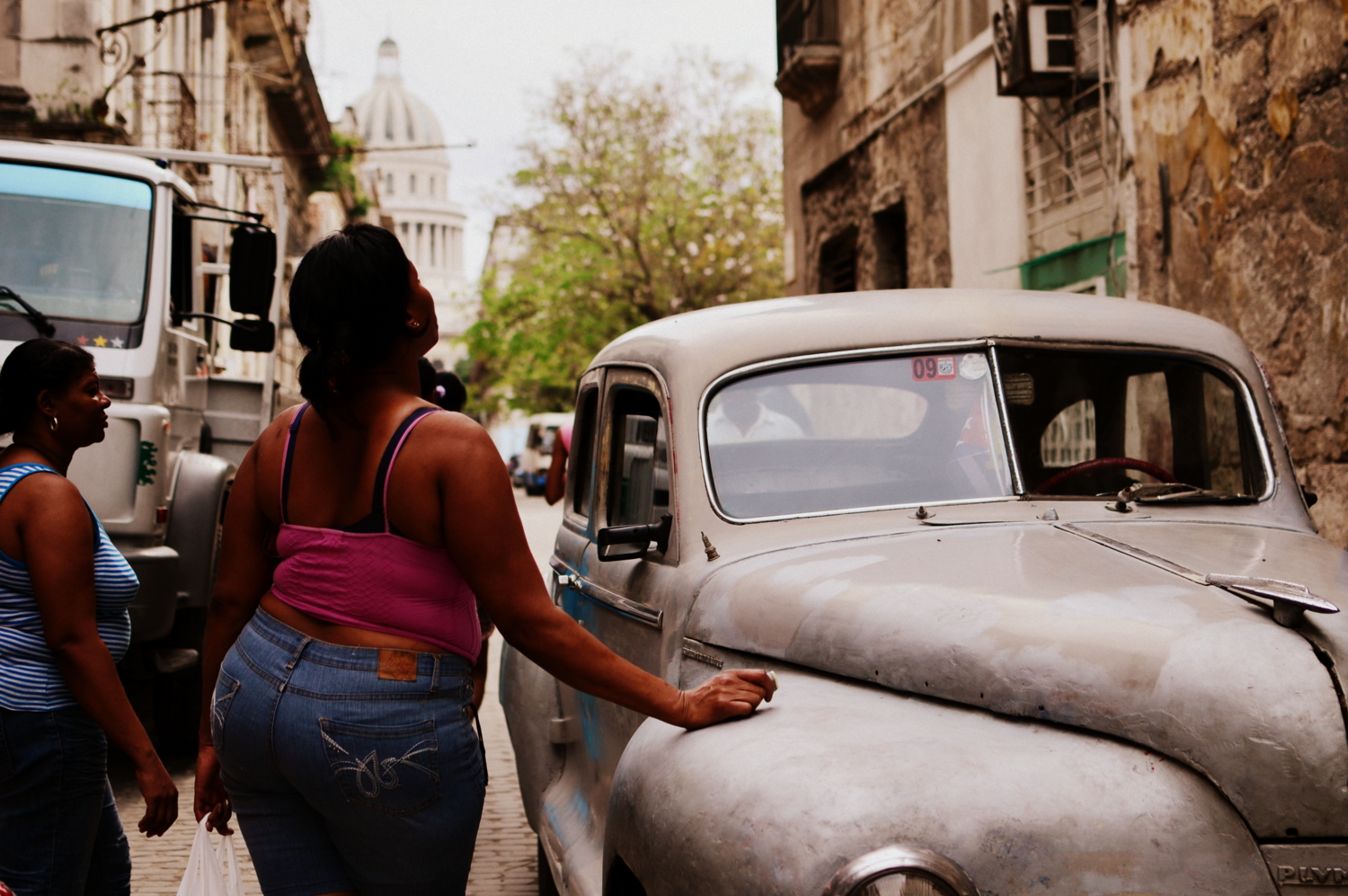
Casa Particulares are cozy hotels set up by families offering a clean room in their house to be able to reach the infamous CUC’s that foreigners are supposed use exclusively. CUC’s are worth about 24 times what a Peso Nacional is worth and are the only way to get access to luxury items that the moneda nacional can’t touch, mainly imported items. Once these were legally allowed it gave Cuban families a chance to stretch away from poverty and into more of a very low middle class. Casas also get tourists out of the hotel bubble and right into the rhythm of the neighborhoods that Cubans live in. When Lidea opened the door we met our momma in La Habana for the very first time. She was one of the most pleasant women I’ve ever encountered and she guided us right into our big, simple rooms with a 20 foot high ceilings. We then were introduced to Lidea’s husband, Argelio, who turned out to be a retired Cuban geologist. It seemed somewhat fateful to end up in their house and we soon found ourselves getting lost in the world Cuban geology, hydrology, and geotechnical engineering projects he’s worked on. Argelio took us up to the roof upon finding out that we were into photography to show us our first Cuban panoramic of the old town. Not wanting this ride to end we soon ventured out exploring to get a drink and some food in this dreamscape city of the past.



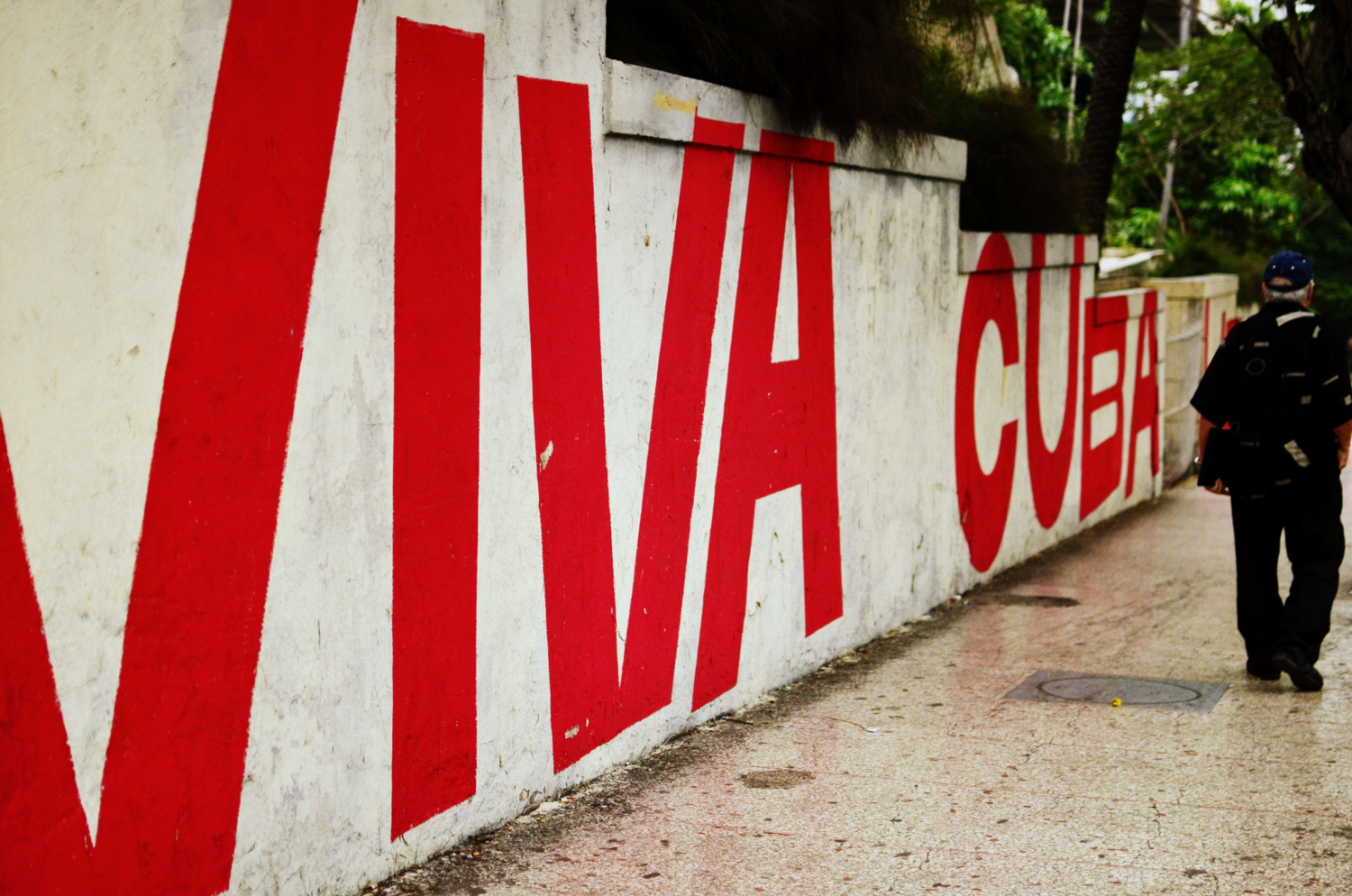
Going on some crude directions from our new parents we were kicking pebbles along dark, empty streets of late night Habana. There were very few cars driving around but tons of Cubans strewn about, lying around on benches, chit chatting the night away while us wide-eyed Americans were approached by touts trying to swindle some of our money. Aside: Touts are very friendly, usually speak enough English to draw you into a conversation, and eventually reveal in some form of another that there is a money interest rooted into this interaction. The black market in Cuba is the only outlet to get ahead of the game touts and street hustlers can be very suave and persuading in their ways. Anyway, we soon found ourselves in La Floridita, an almost 200 year old bar that is the “Cradle of the Daiquiri” and infamous for being Ernest Hemingway’s old haunt. After going out for just 1 drink, we were quickly absorbed in the live Cuban Son playing from the finely tuned house band. We soon began to count the straws on the mahogany bar staffed by clean cut Cubans donning red sports jackets. Cigars rolled out, mojitos went down, and new memories were being created as the unbelievably smooth Havana Club Rum ran past our gums. Completely forgetting about dinner we closed down the bar and followed the sound of music about 1 block away. A massive bouncer was guarding the door to a dive bar with soulful Cuban music blasting out of the open windows. We were soon swept into the saloon style doors and into a room full of bright white fluorescent lighting, salsa dancing, and a live band of about 12 musicians creating beauty on beaten down instruments. They say that music flows like a river through us in Cuba and by the end of the night I felt like I had figured out exactly how the universe worked in this unbelievable corner of the world. All questions immediately had answers and I felt absorbed into the frequency this city was creating. The rum probably had a lot to do with this. I remember feeling something more than just being, that I somehow found a secret grass covered door and tapped into the power grid of the planet and began existing within it’s flow. When the music stopped we found our way back to our Casa, with the help of my internal GPS system and about 8 mojitos . We slept hard that night, and didn’t wake till nearly 11AM. The whole understanding of Cuba in it’s entirety had faded away into the brutal reality of a hangover in Habana.


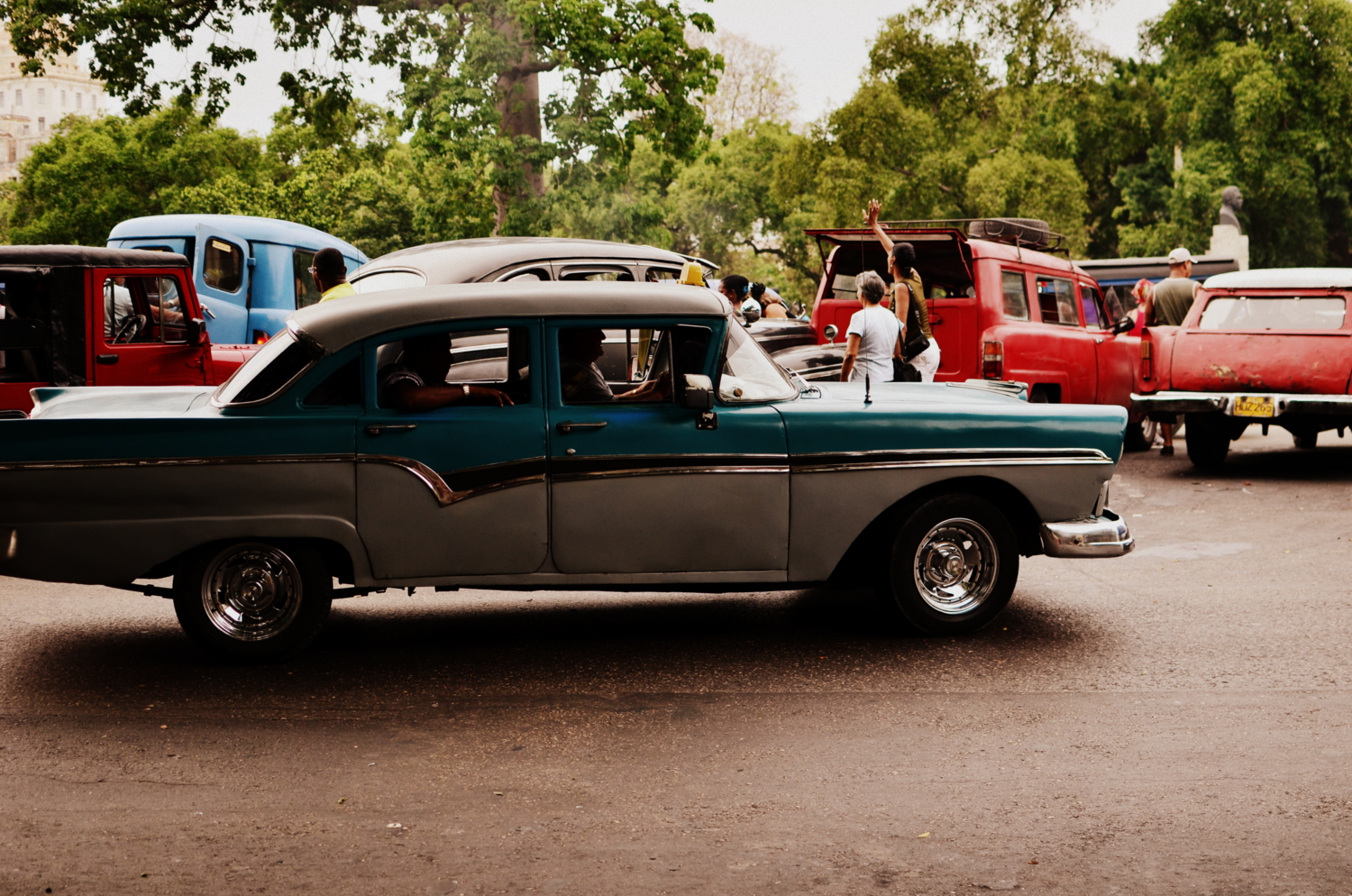

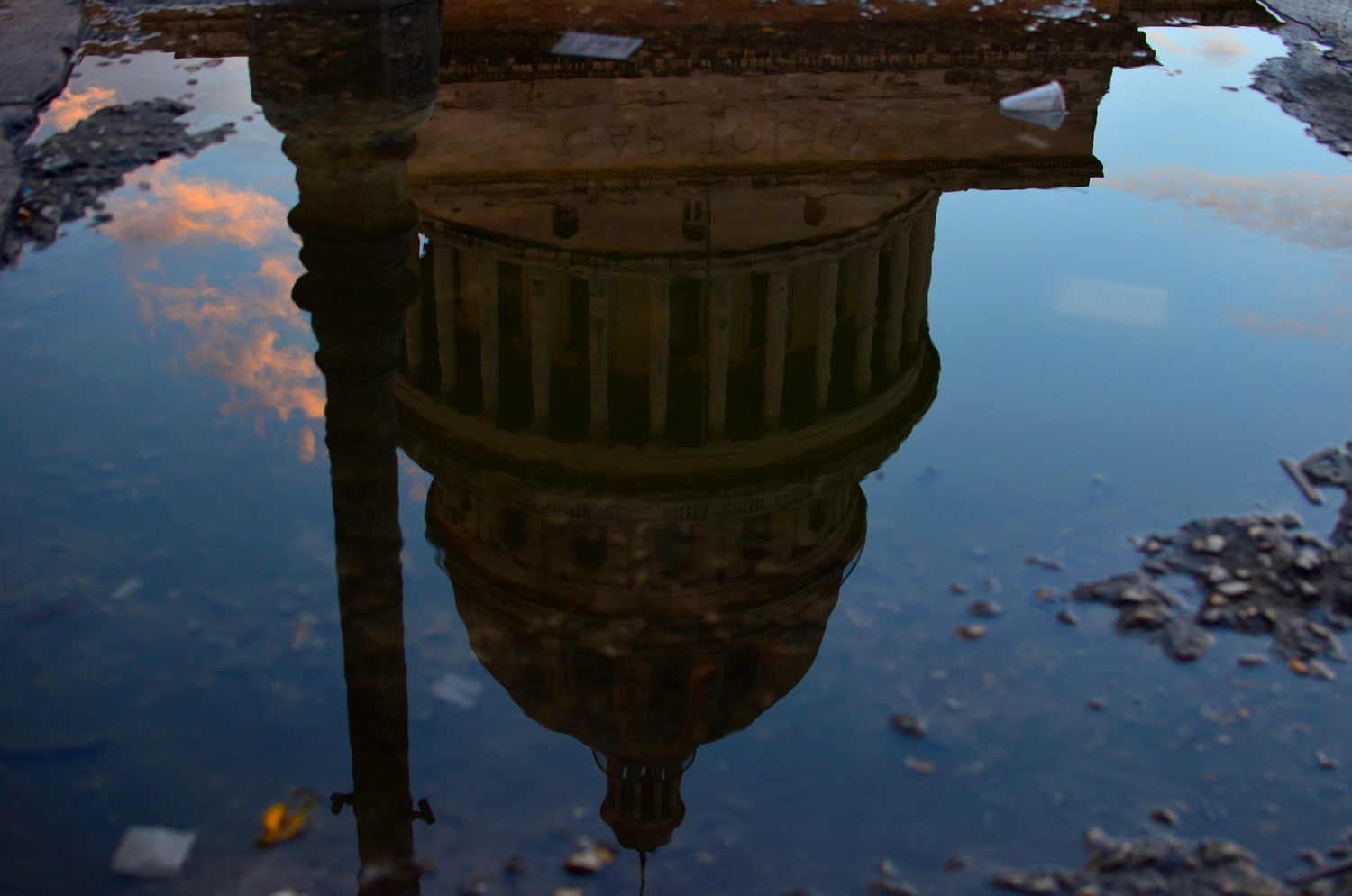
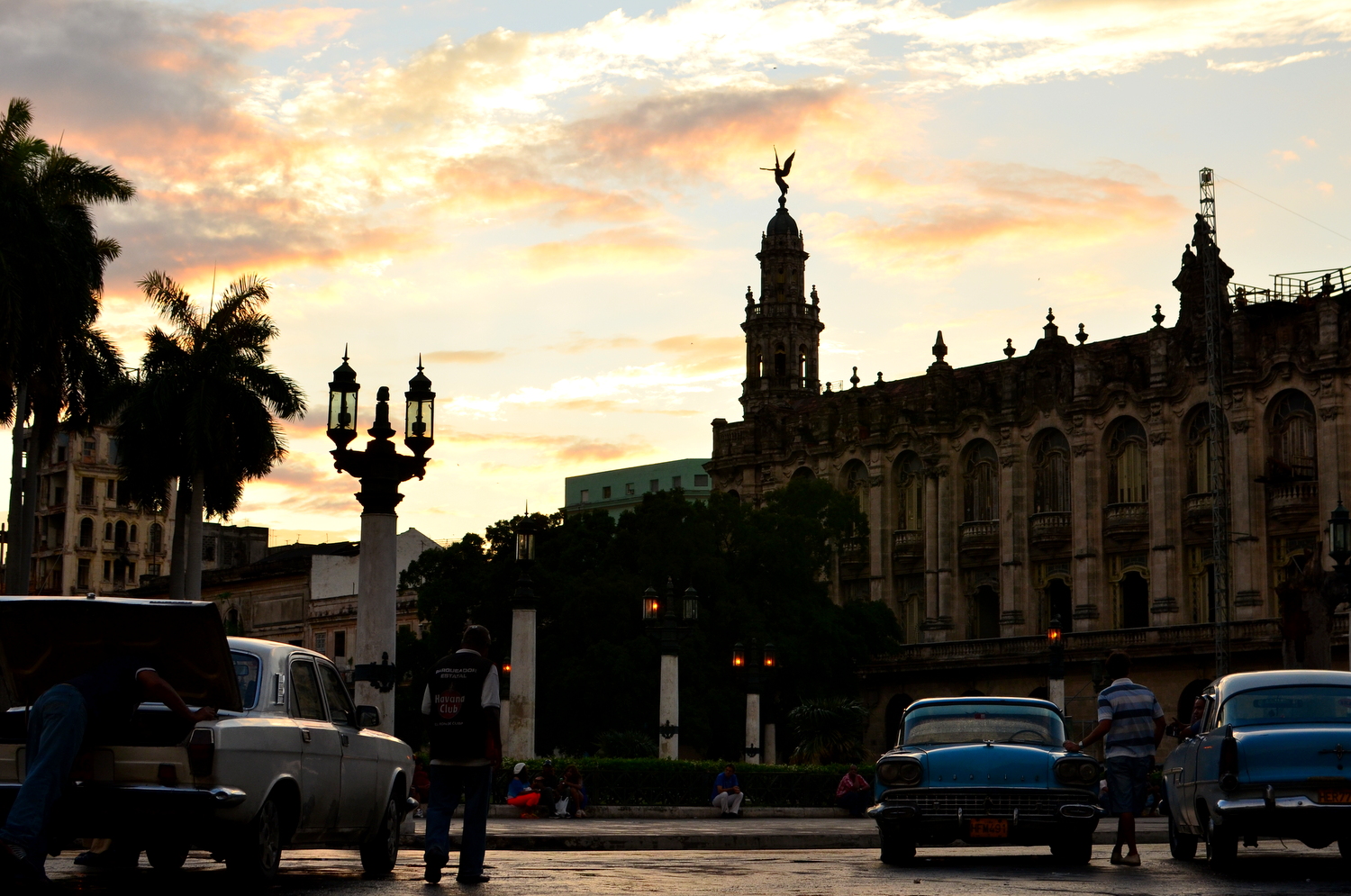
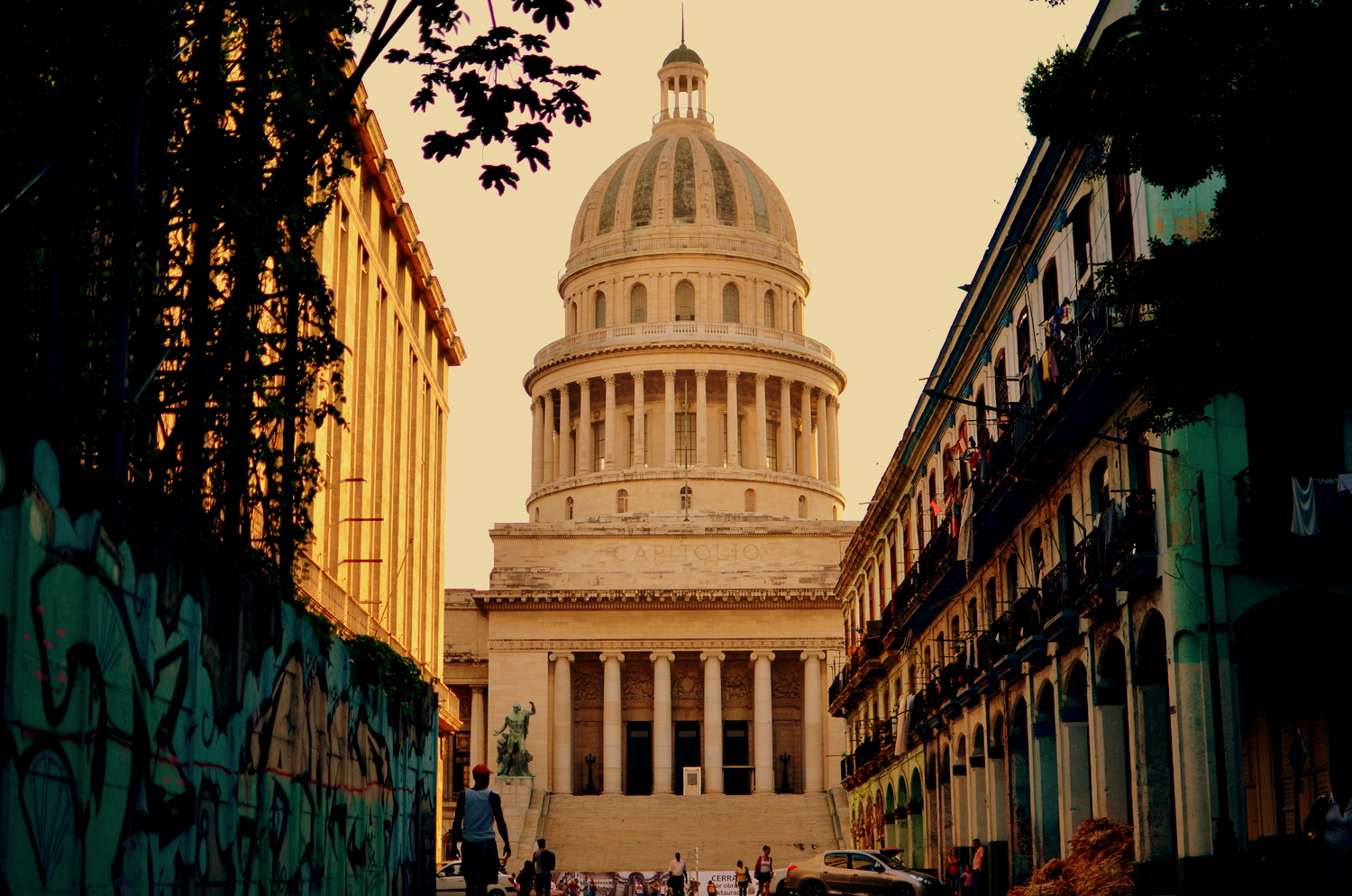
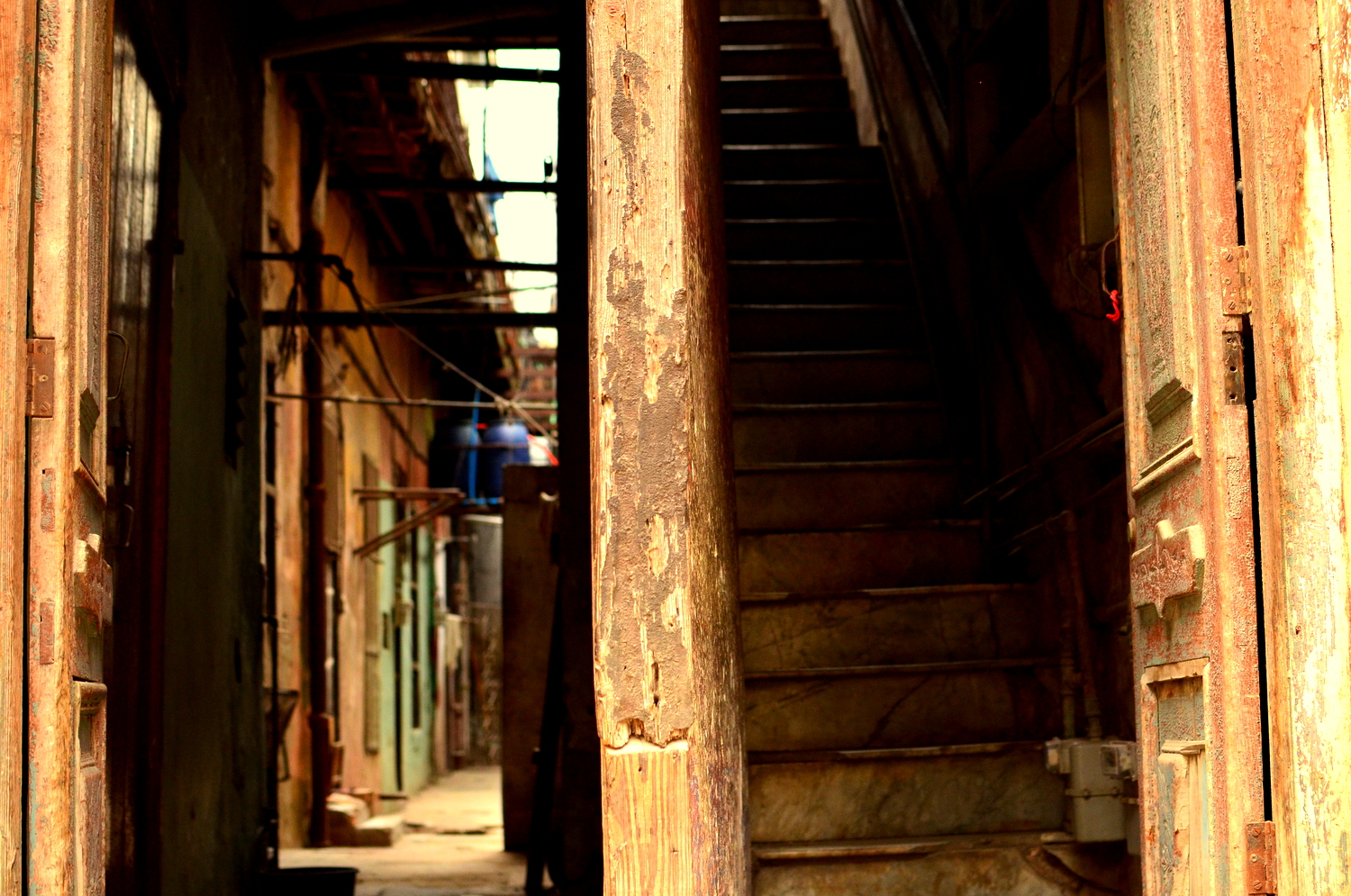
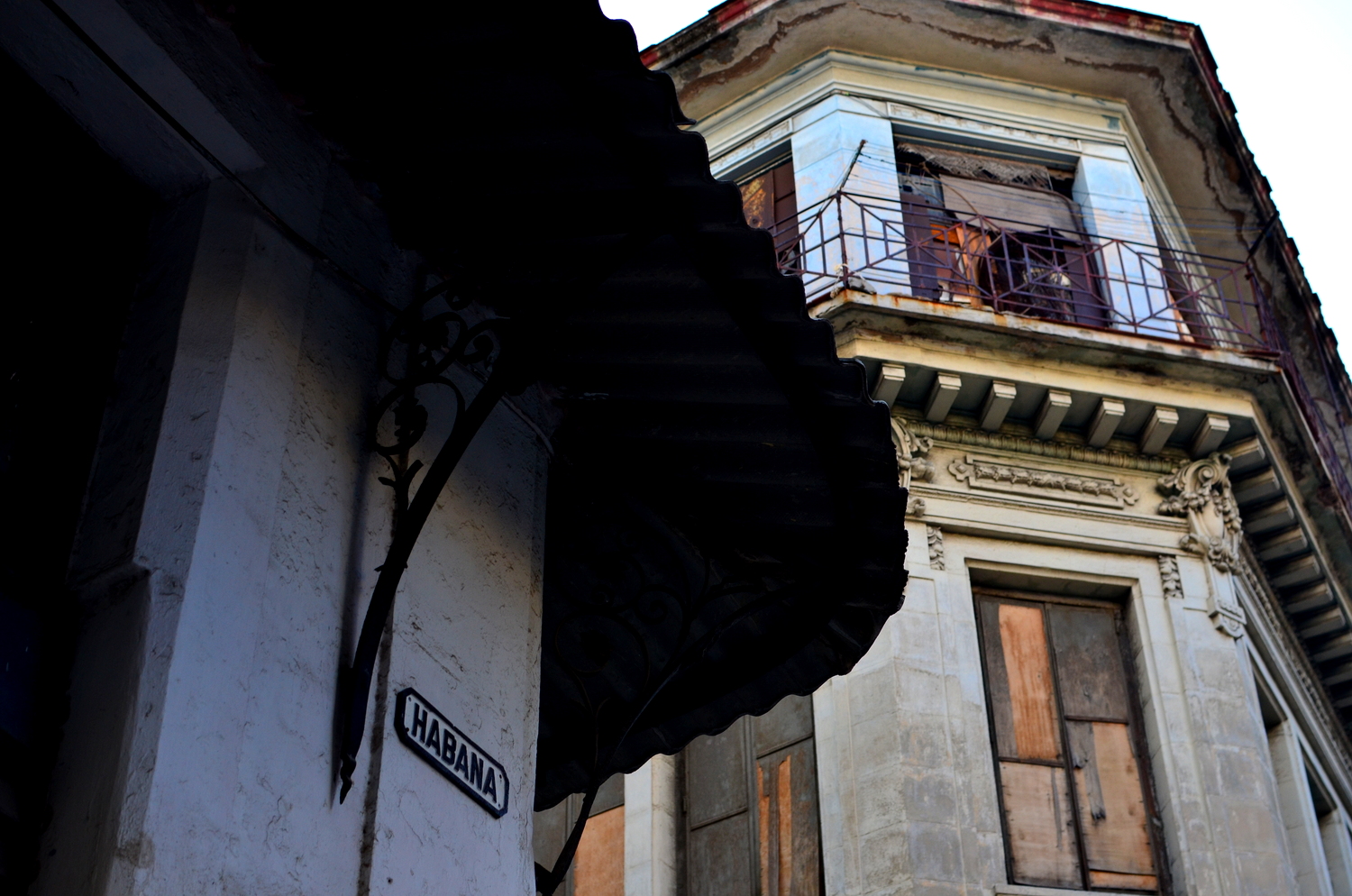
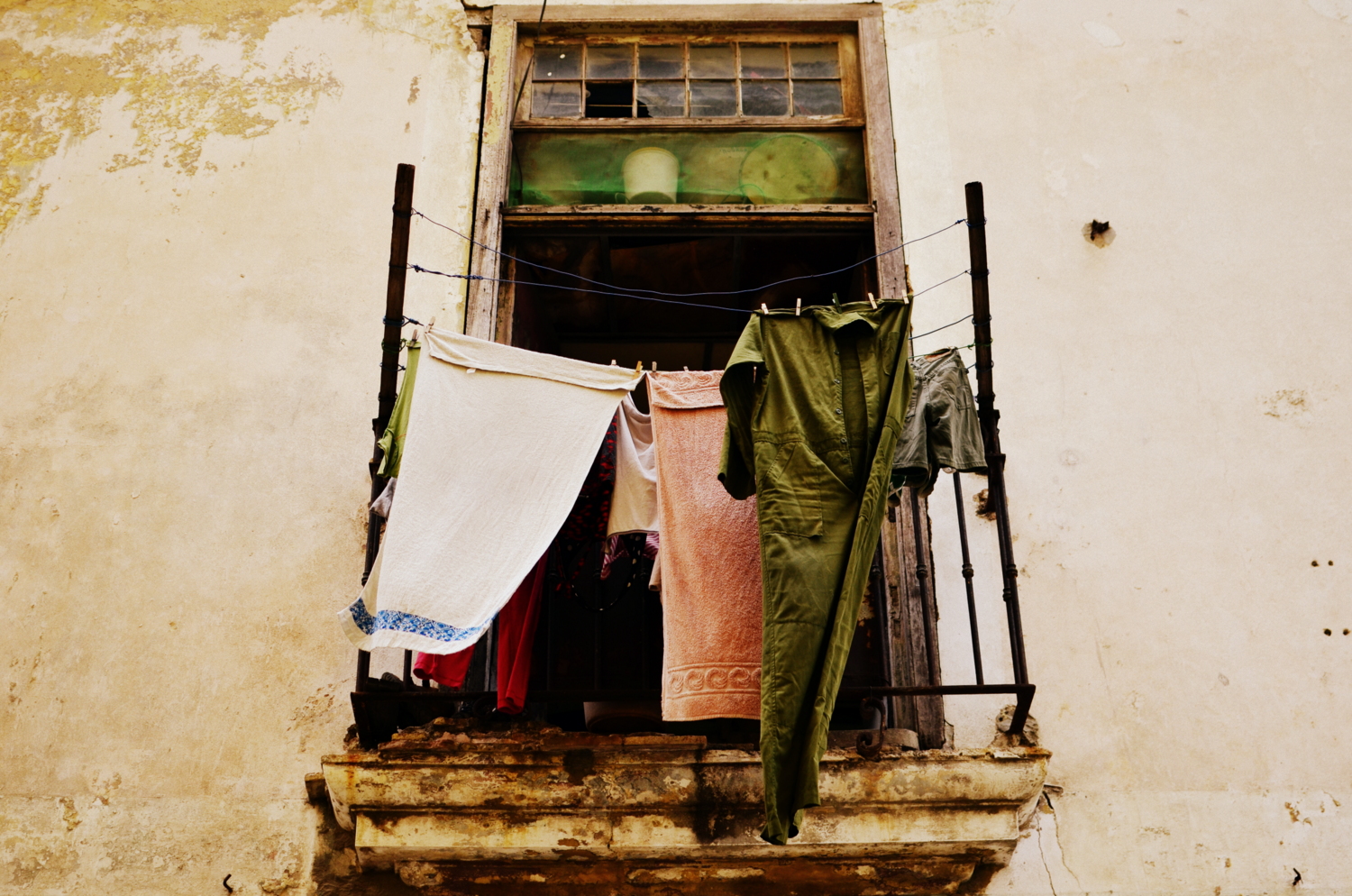
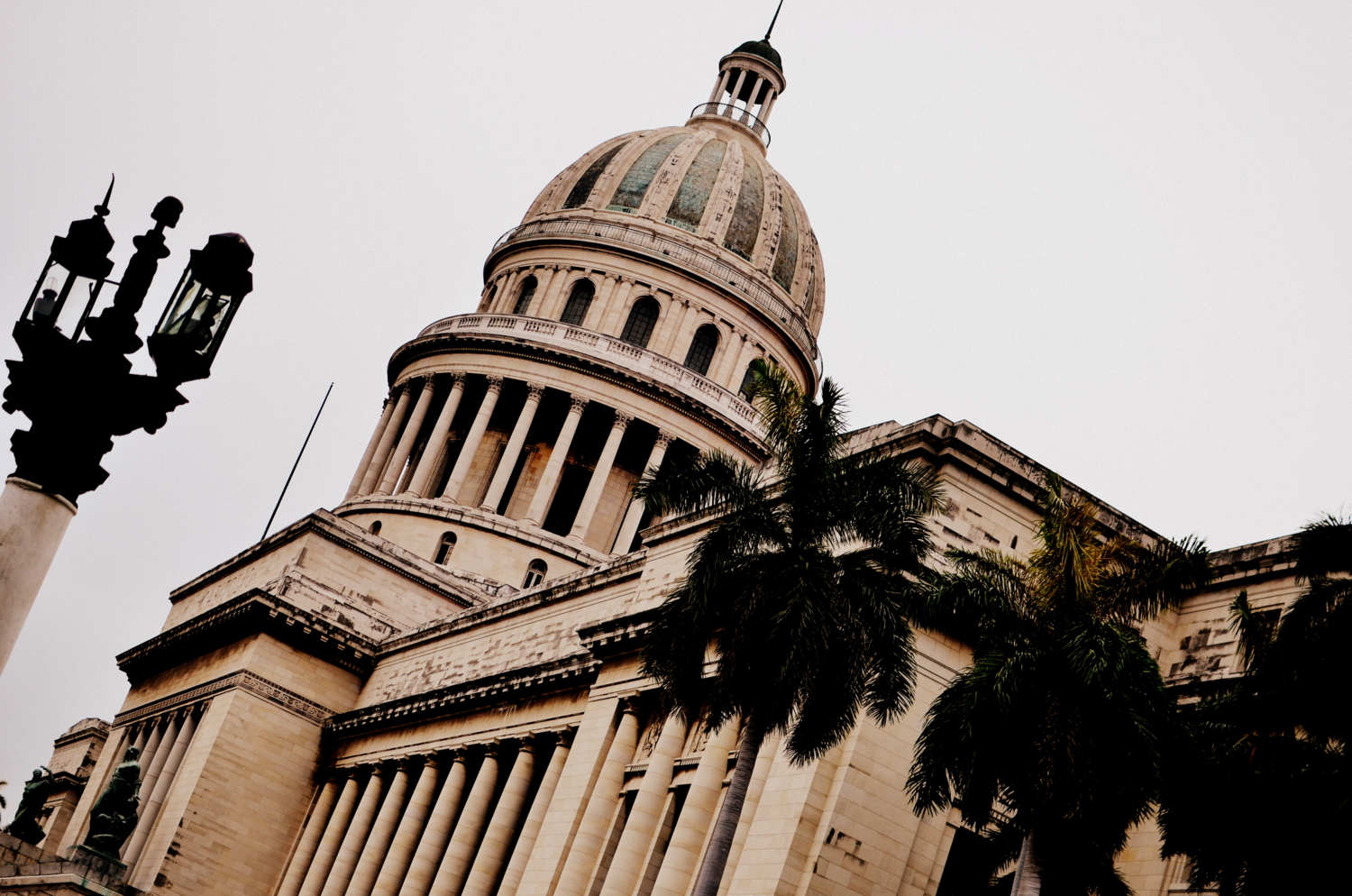
Our first Cuban friend turned out to be a man coined Super Mario. Super Mario convinced us to take his horse drawn tour for the low low price of 15$, which eventually turned into 20$ because he didn’t have change (like everyone else in Cuba). Mario went through the in’s and out’s of life in Cuba (according to him) and shed a little light on how the socialist housing worked in Habana. When Fidel took the reigns of Cuba he abolished all big foreign enterprises and placed people in need of housing into former swanky hotels, banks, casinos, and high end real estate ultimately creating a surreal and unique atmosphere about the town. Just take one look around the Capitolio building, which is an exact replica of the United States’ State House except 1 meter taller, and you will see families hanging their clothes on the balconies of heavily aged formerly high-end real estate amidst a sea of pedestrians, giant city buses, and tourists equipped with cameras. Doors and windows are barely holding onto their hinges while paint is curling up and away from the exterior walls of these ancient edificios. Mario explained that when housing becomes too unlivable for Cuban standards (meaning the floor collapses or the roof caves in) families are relocated outside of the city center. Reconstruction occurs solely for tourism purposes, which is kind of the opposite of what Fidel’s original ideas for socialism where born from.
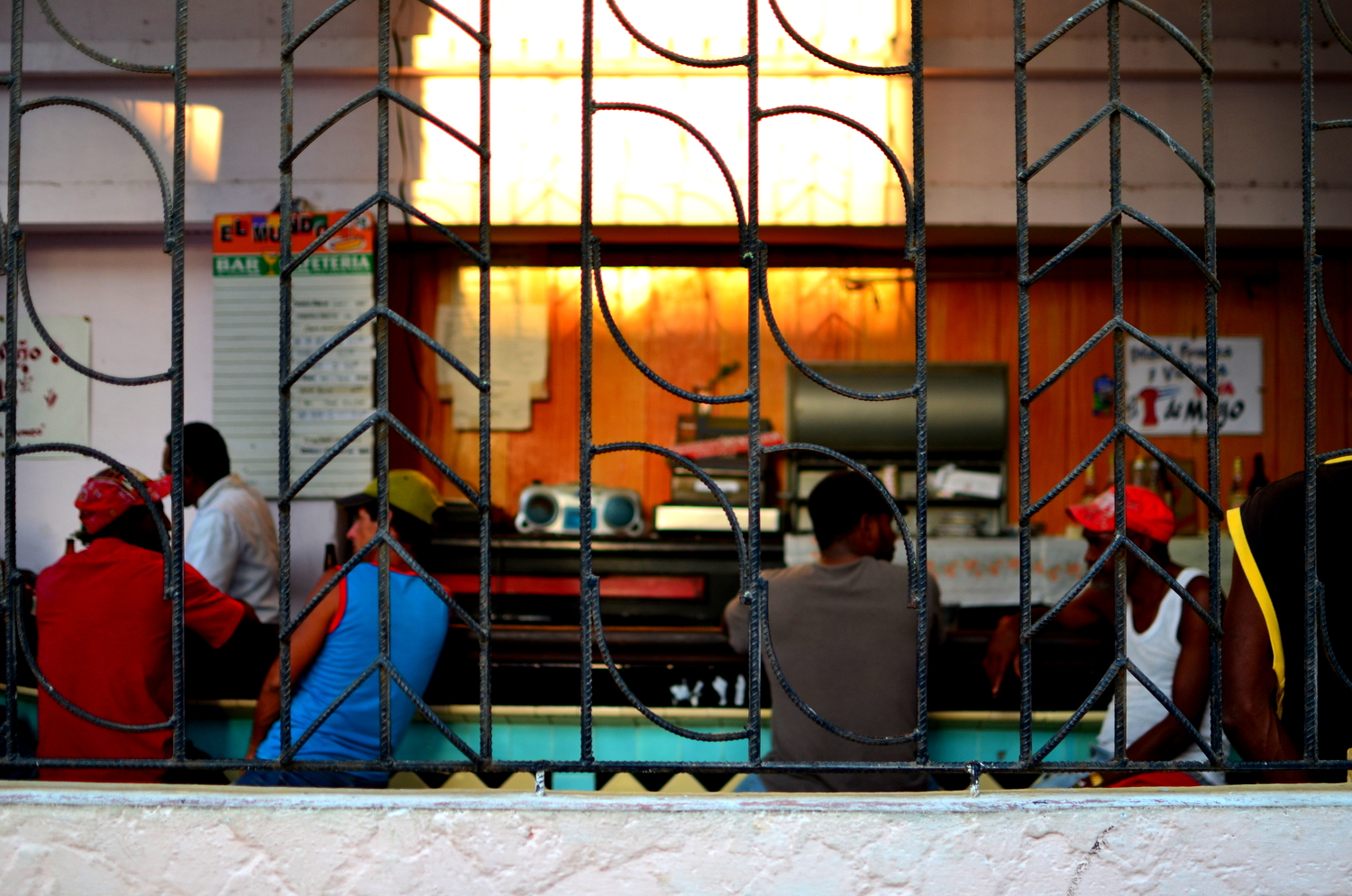
The next few days we spent walking into different neighborhoods in Habana, getting hassled by touts, and figuring out just where we could spend the peso nacionales while also figuring out exactly what was available (spoiler; not much). A trip to Chinatown had us indulging deep fried mystery treats for about 4 cents a piece. Wandering near the Capitolio we discovered pork fried rice complete with eggs, a few carrots, and pork with the hair still on the skin. Up on Obispo we found one of our favorite window paladars serving up piping hot pizzas with a barely noticeable cheese layer and toppings such as hot dogs and pineapple. Ice cream was cheap and delicious and always seem to capture the attention of Cubans throughout the day. We took our stab at finding cheap peso paladars and found ourselves in someone’s incredibly hot living room eating beef sandwiches (steak and bread) and spaghetti especial (hot dogs and ketchup sauce) with a 5 foot tall picture of Jesus looming above us. It’s amazing the strange places you find yourself in when you let wonder preside over self preservation.
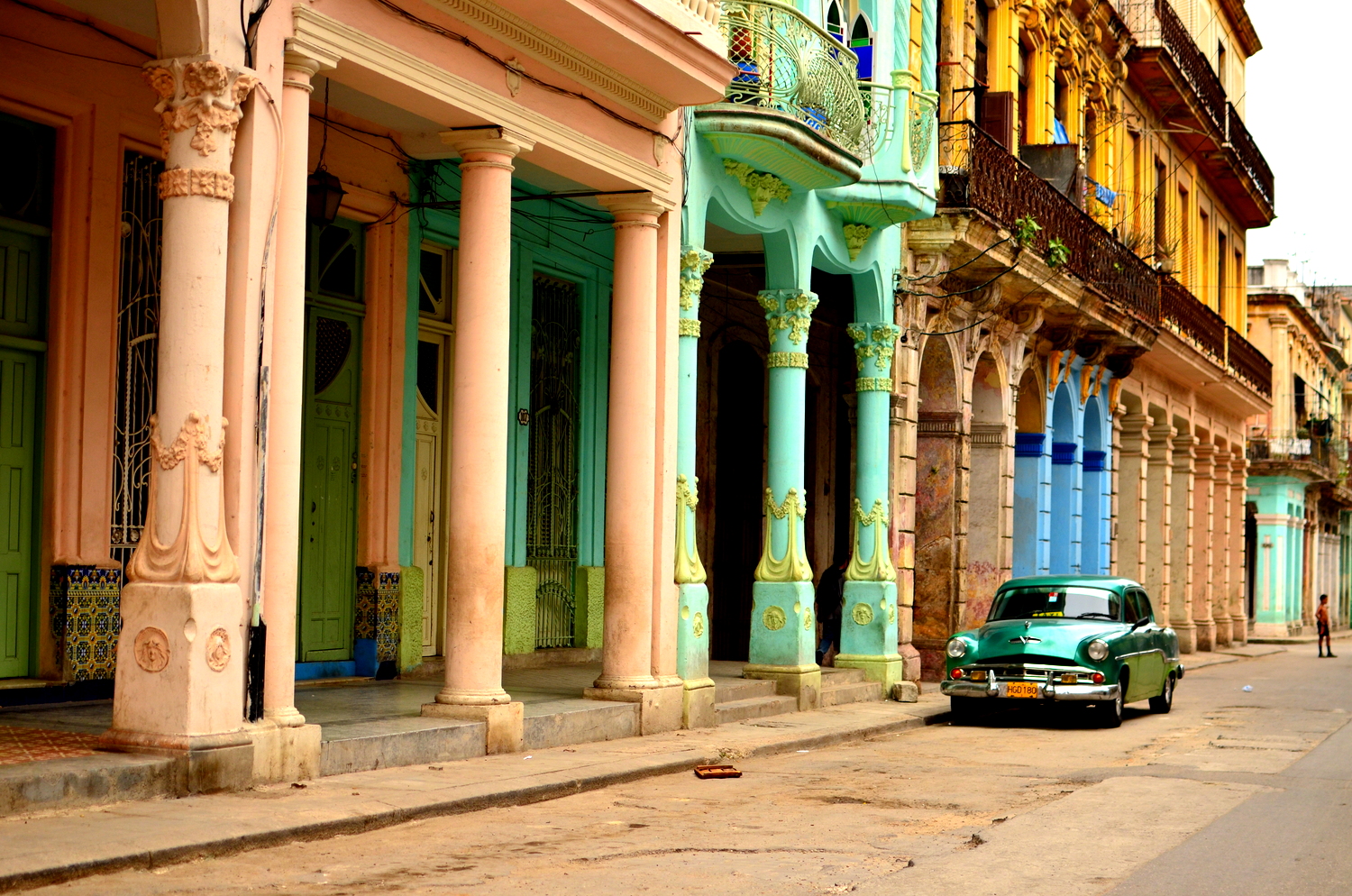


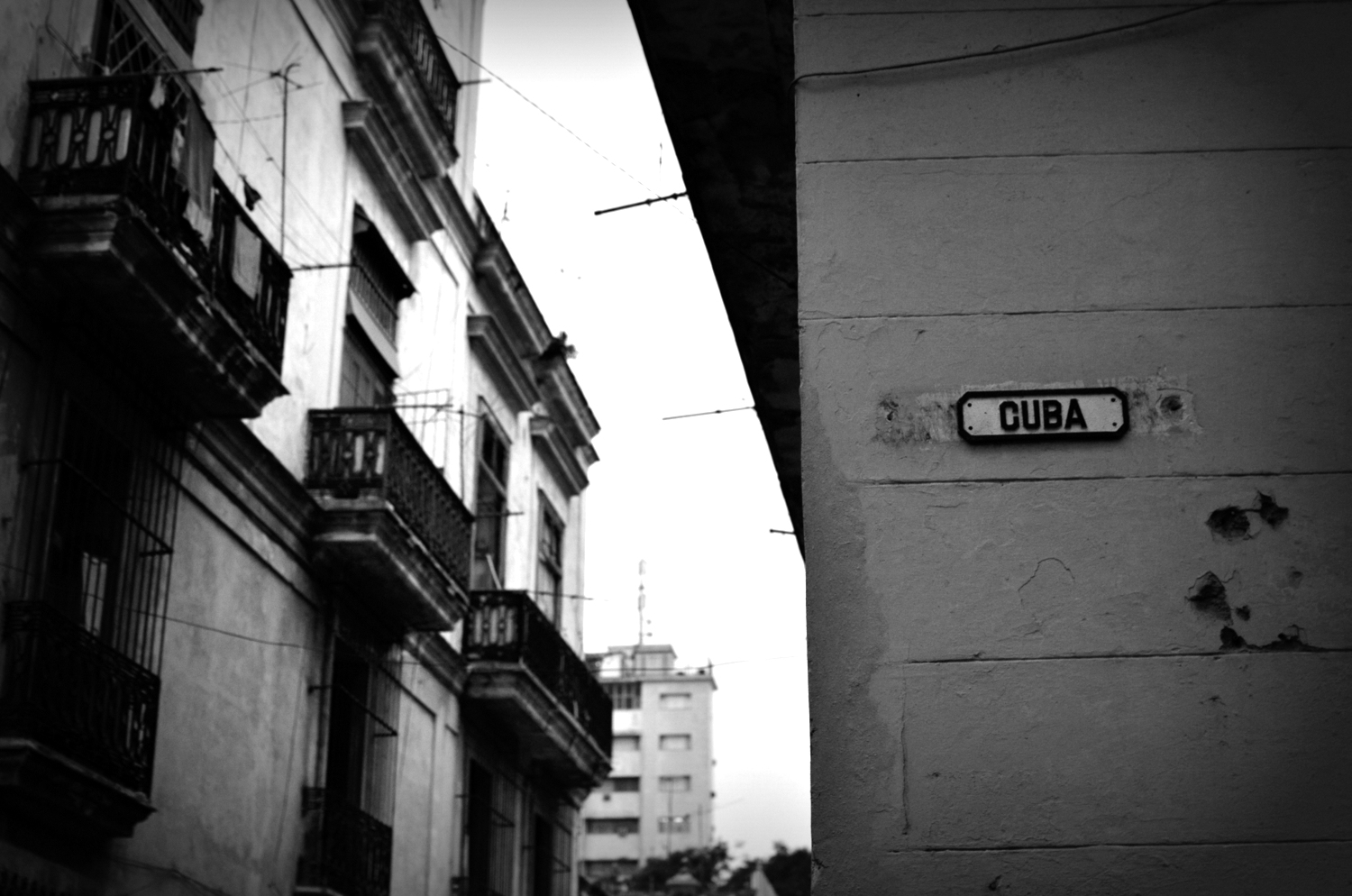
After purchasing our bus tickets in advance (necessary for foreigners in Cuba) we walked forever until we finally found ourselves in Vedado. We killed the afternoon wandering the formerly upscale suburbs that were heavily influenced by the mob scene from the 20’s to late 50’s. Hotels that looked like they had been cut out of a 40’s magazine were still bearing the exact same outside shell, but what lies within their walls will always be a mystery to tourists. After seeing the old Riviera we stumbled upon Coppelia, a state run ice cream establishment that can be as confusing for an outsider as trying to read Hieroglyphics for the first time. There is a center dome-like structure with a huge line and small outdoor cafe-like areas along it’s perimeter. The trick is to wait in the line and get herded into one of the 5 rooms upstairs and hear what kind of ice cream is available. Three scoops of ice cream seems like enough until you look around and notice that people of all shapes, sizes, and ages are ordering between 6 and 9 scoops just for themselves. A stroll along the malecon at night made us late for our date with the Reverend to meet his wife and their friend that flew in with them. This also inevitably made us too late to convert money at the change house to pay our Casa Particulare in the morning. But I somehow knew our wrinkles would smooth out in Cuba and everything would fall into place.

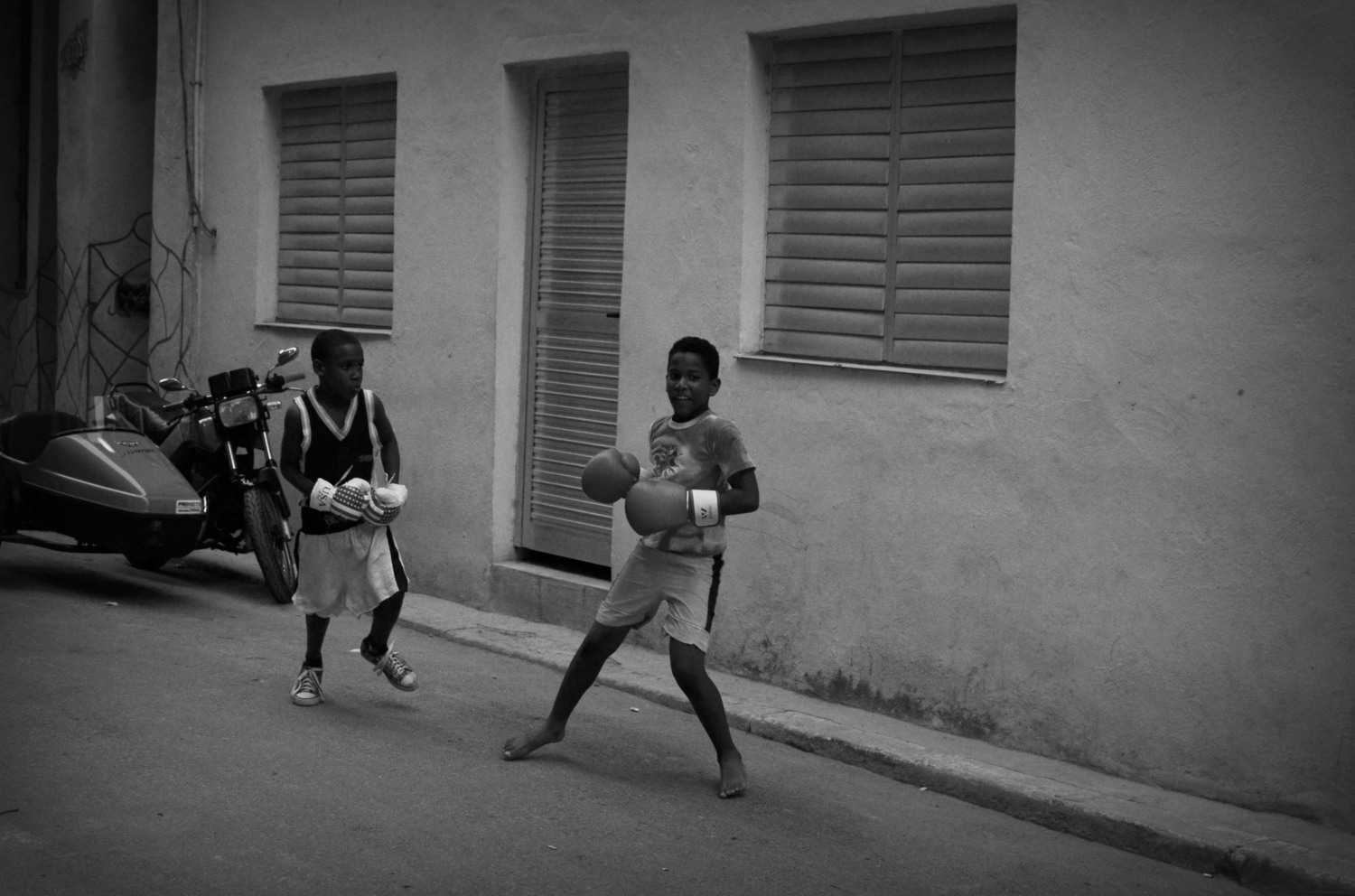

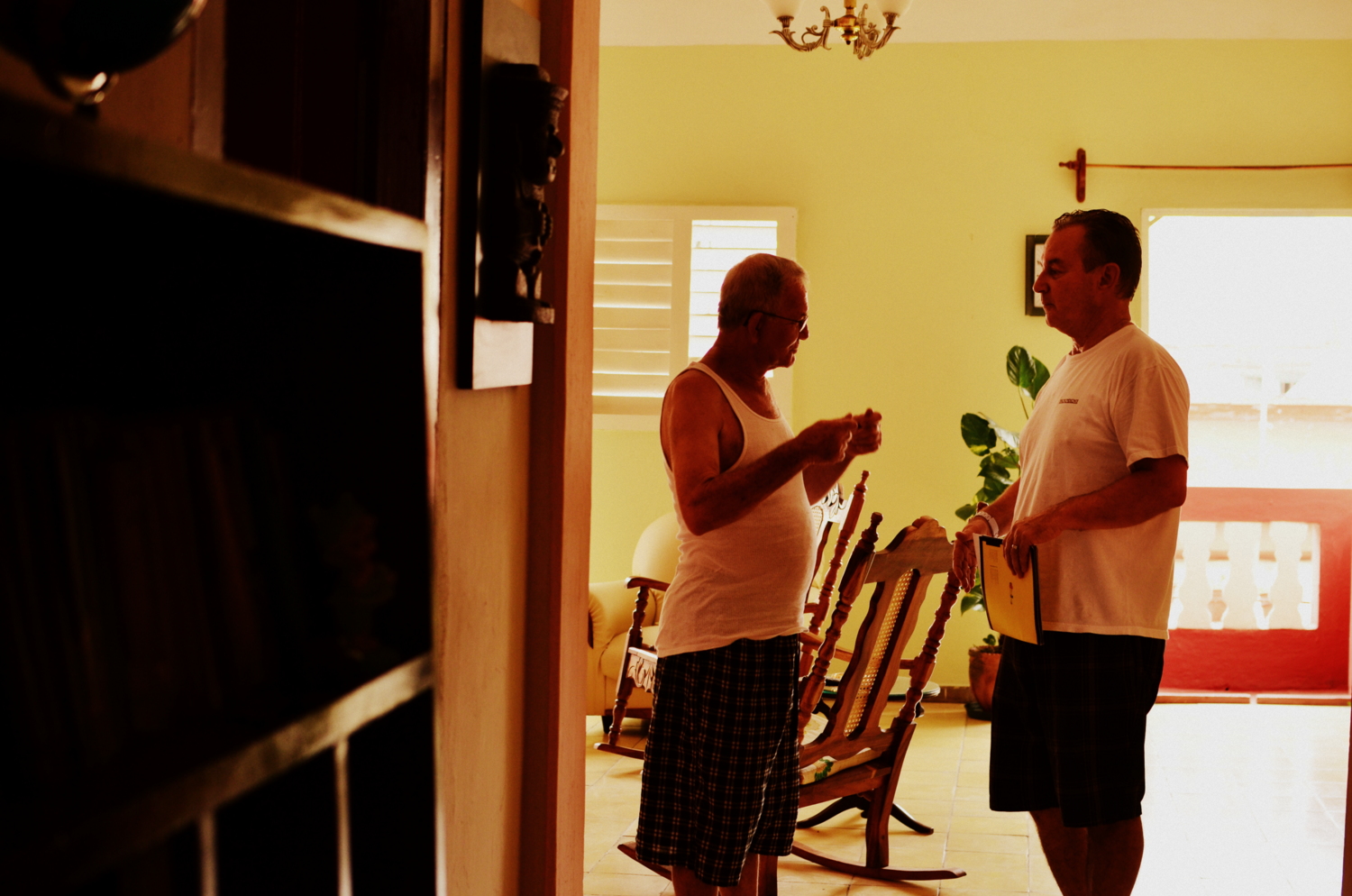

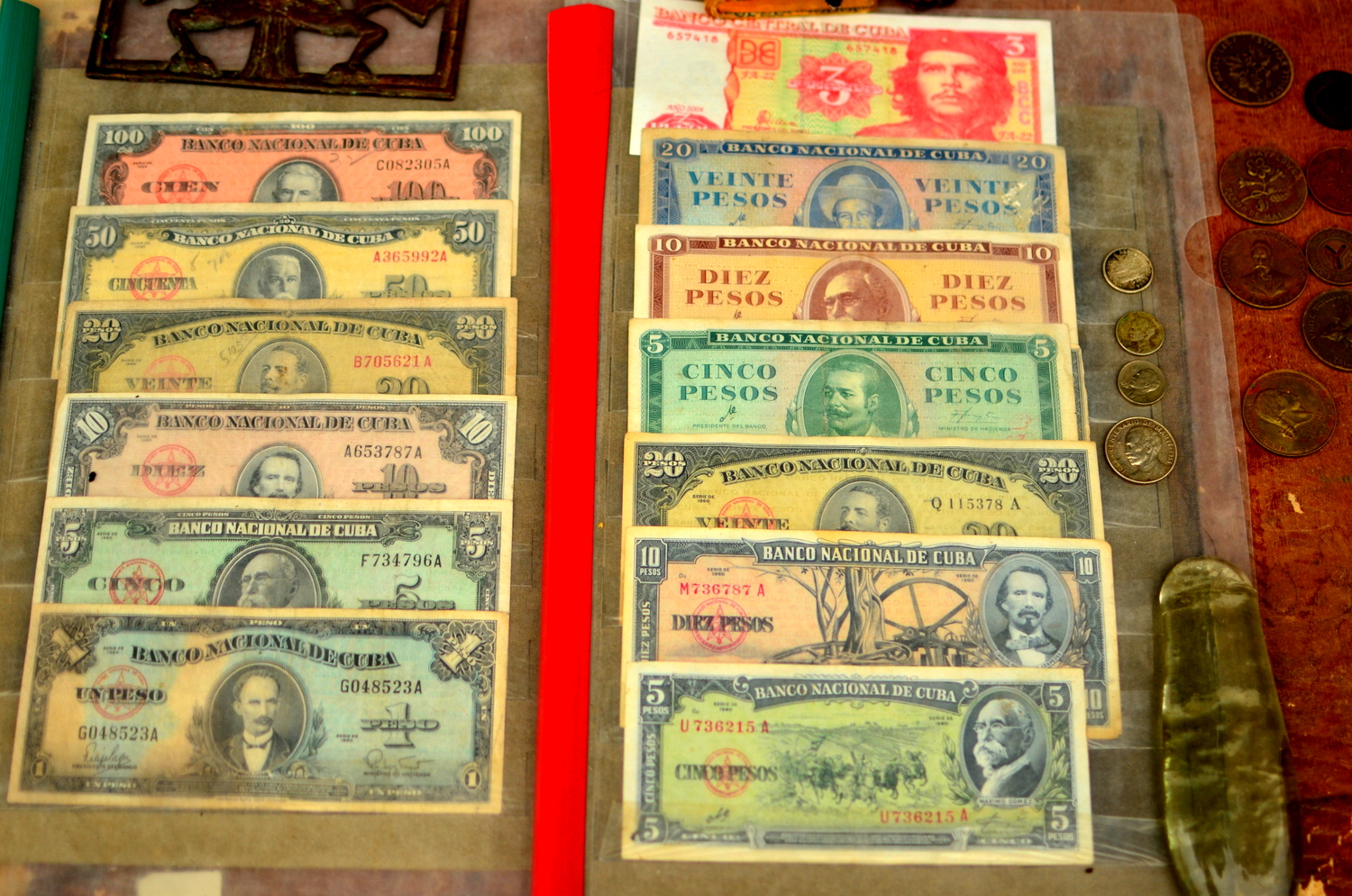
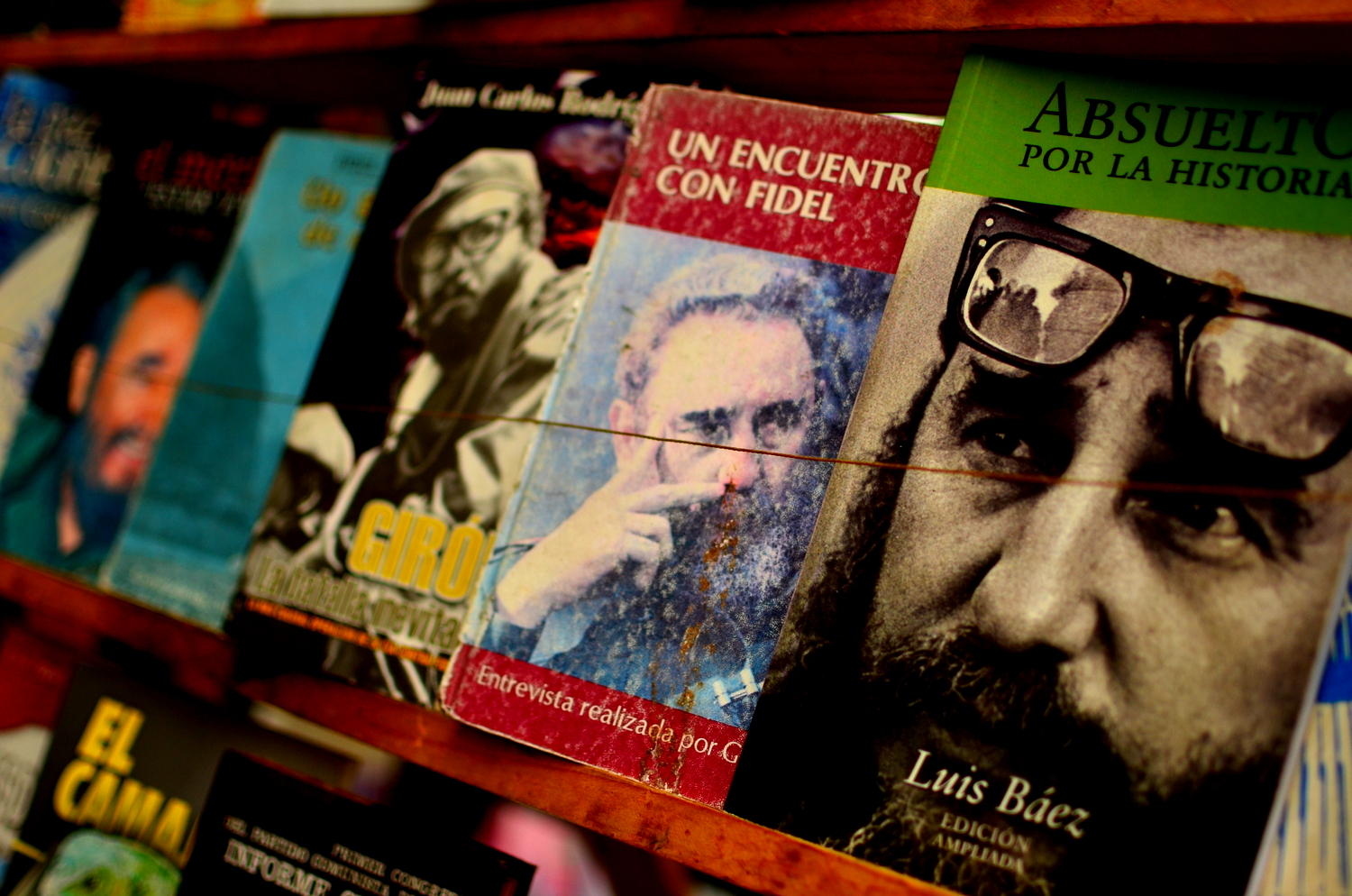
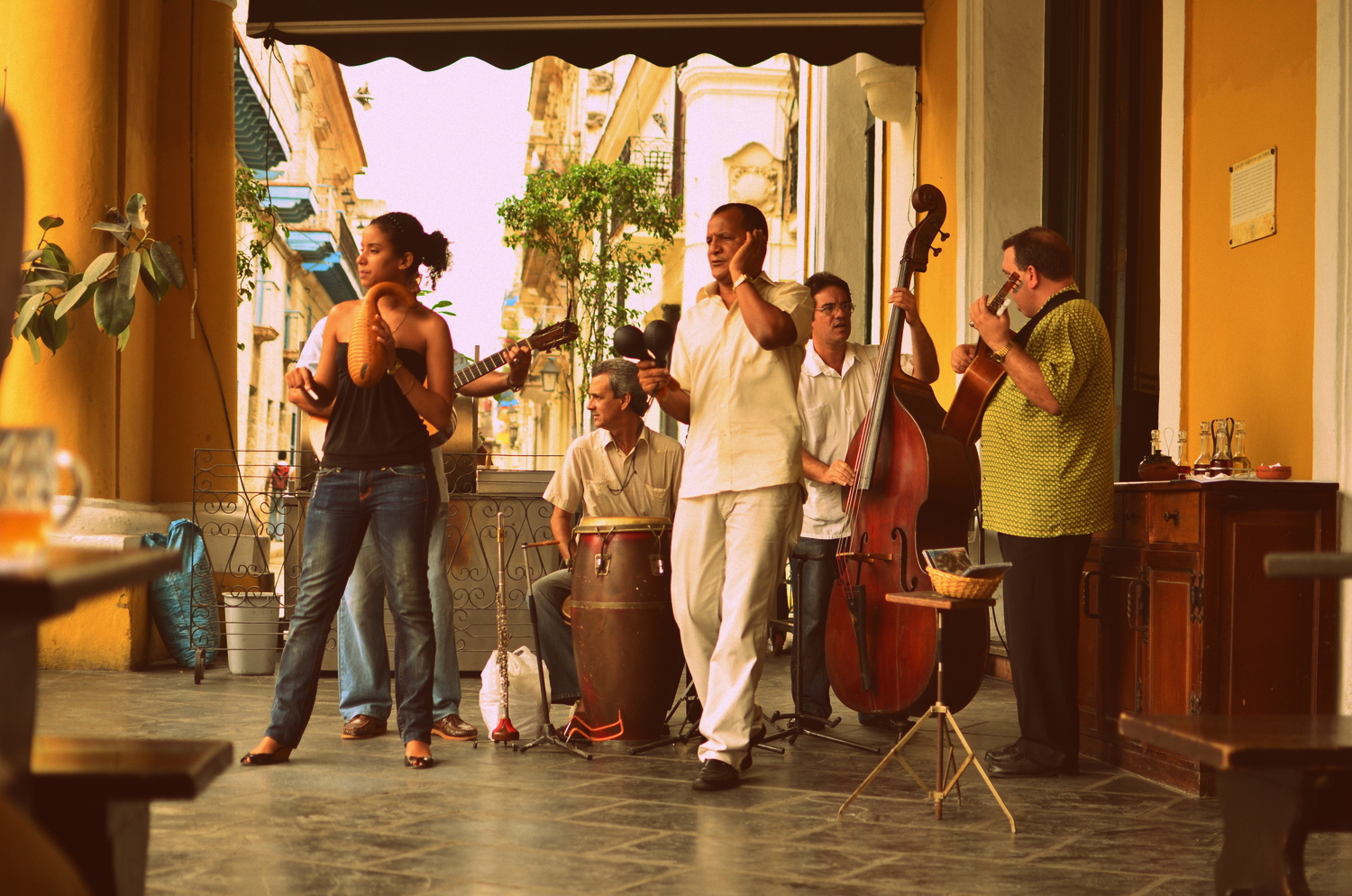
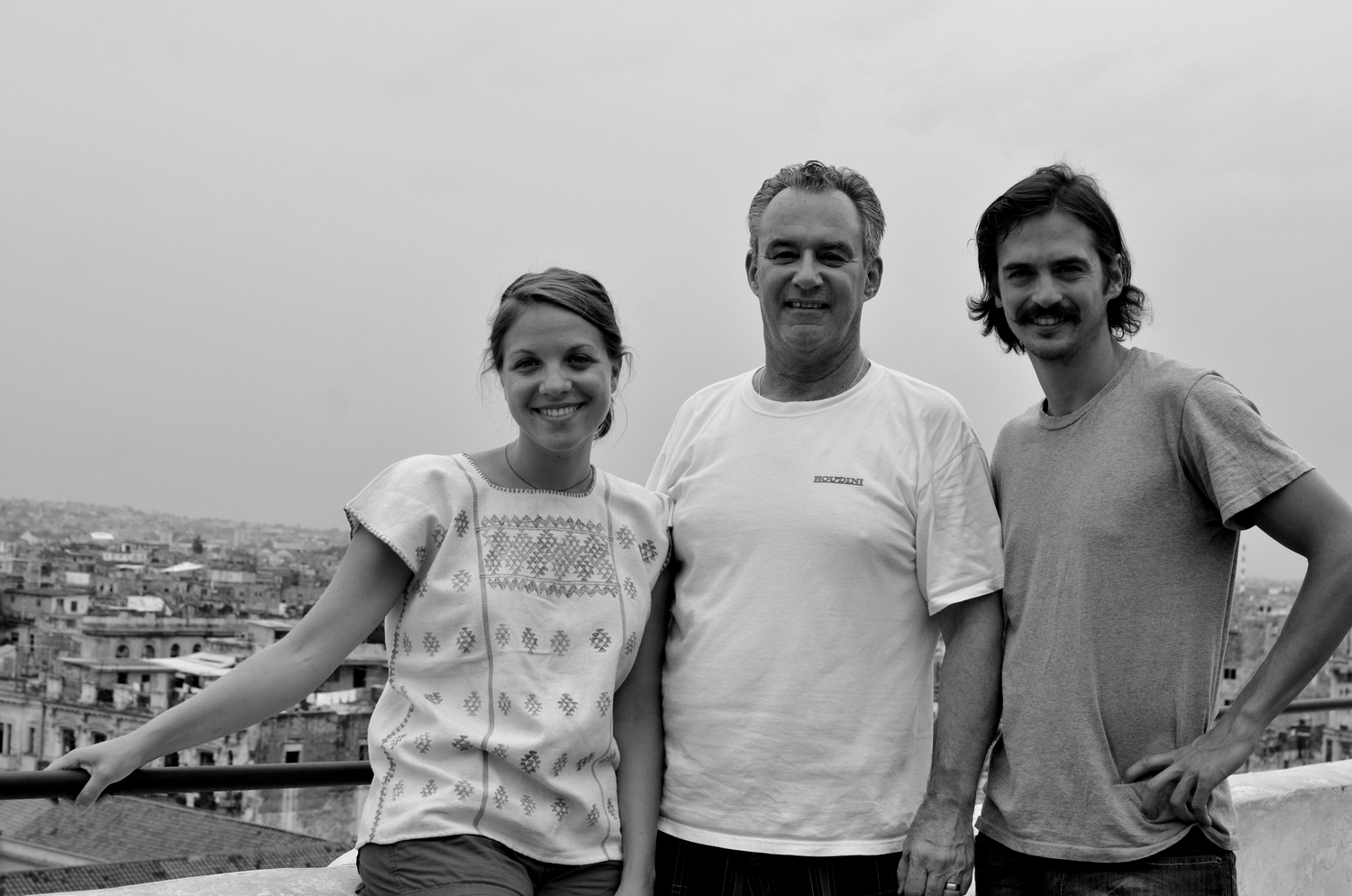


The plan was to wake up early in order get to the bank by 8 AM, which was approximately 14 blocks away, in order to catch our 9:10 AM bus to Vinales. If we messed this plan up we were going to push our whole schedule back a day and also be out 24$. This may seem like an easy write off to most but to long term travellers is a dire mistake, and for a normal Cuban is a whole months salary. I took a stroll through another part of town we hadn’t seen yet and was casually brought back to down town America in the 50’s with big wide roads, signs of the businesses of yesteryear hanging across the road, and a general hum drum of people getting their day started. Peering into an open door I found myself looking at a butcher shop with three massive dead pigs on the floor being inspected by potential buyers. The day before I saw a man put a live pig into a bag, hoist it up over his shoulder, and then casually walk away. It’s strange how normal scenes like this have become. After reaching the bank the guard informed me it would not be open until 8:30. This was a big problem. I quickly walked to the next nearest change house, which supposedly was open at 8, to take a stab at fate. Upon arrival I was informed that this bank opened at 8:30 and the only other bank in town kept the same hours. Frustrated I waited by the door and witnessed the magic of the Cuban line system’s birth. In Cuba there is never a normal waiting line for anything. There are people hanging around, chatting on the sidewalk, or even grabbing a beer to kill a few minutes before it’s their turn to step in. When a person arrives at a bus stop, bank, or the movies they ask “el ultimo?” and see who the last person waiting in line is. Little by little Cubans came and the invisible line was formed. When the bank finally opened the que magically fell into place behind me. After quickly exchanging money I started sprinting on the route I had mapped out in my head. Children, Men, and women were popping out of their doorways to hear the sound of two feet slapping the ancient pavement as I was taking strides at full speed back to our Casa. I could read the confusion in their eyes because running is absolutely void in this city. Nobody is ever rushing to be somewhere and the quality of the air less than favorable due to the black smoke that the piecemeal diesel engines are constantly belching out. I could feel all eyes on me while my heart was pounding and my legs were carrying me closer and closer to our ancient Casa’s door. Upon reaching home we had about 15 minutes to get to the station. Our cabby initially brought us to the wrong bus station, against our requests and questions, and we had to dash to get back in his cab before he disappeared. We passed our bus on the way to the right bus station and sprinted the moment we hopped out of the 57 Ford. Somehow luck managed to get us on the bus, or maybe it was a bit of the Cuban magic that we were becoming more and more aware of.
Penny Karma Kickoff
Penny Karma is based on the simple idea that a little generosity can go a long way. For more information about us and this concept of micro-donationing visit the Penny Karma page by clicking on the picture below or on the tab above.

{Flor de Maria}
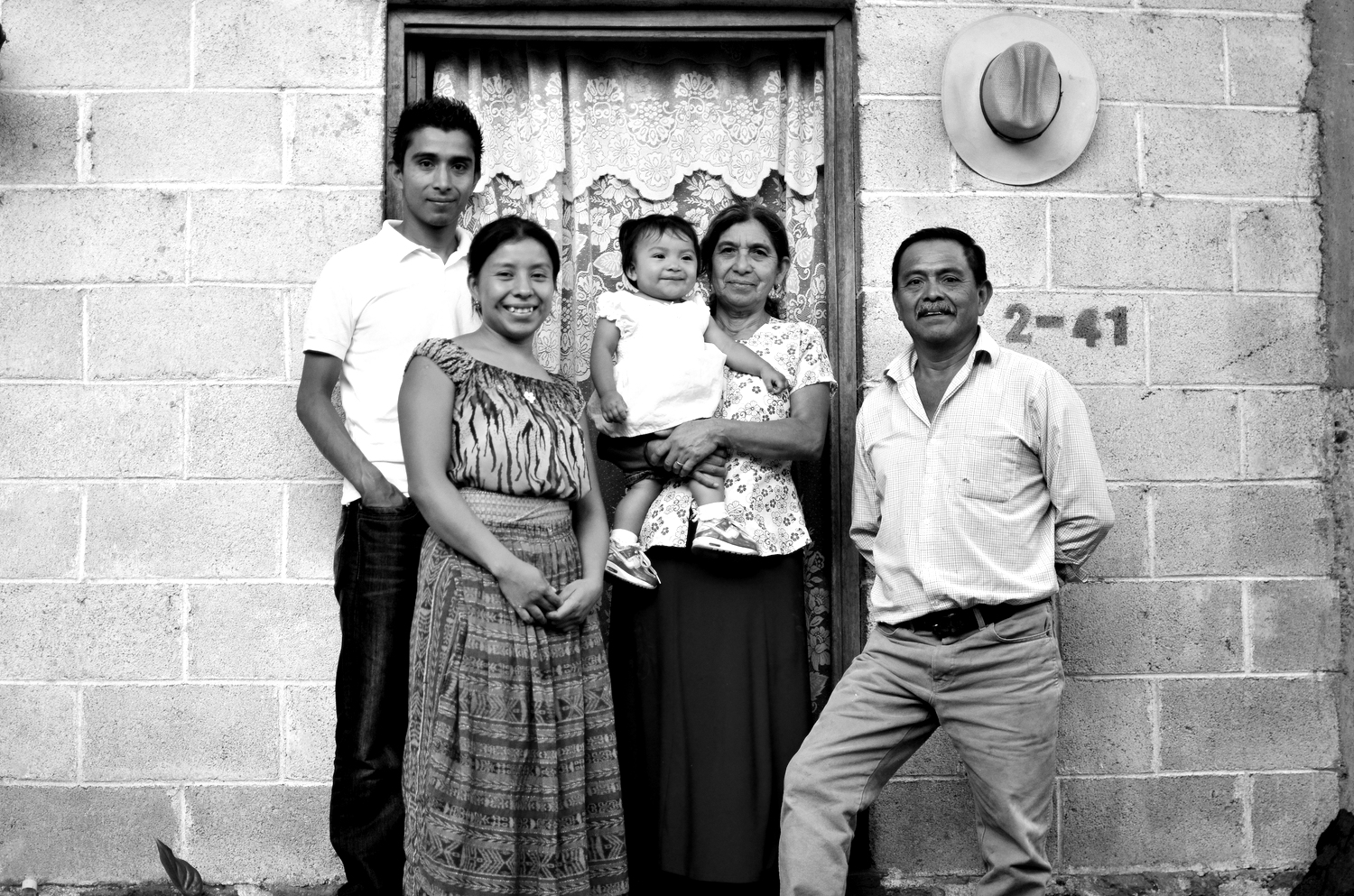
We met Rosa and her family through the Cooperativa Spanish School, a community oriented co-op that pays fair wages to their teachers, provides unique home stays, offers daily cultural immersions, and directly donates a percentage of tuition to local families and a primary school in need. (The school is also set in an absurdly tranquil tropical garden overlooking Lake Atitlan.) We quickly felt at home in the small Tz’utujiil Mayan village of San Pedro La Laguna. While the locals continue speak their Mayan mother tongue, they were taught Spanish as a second language in school and today have the opportunity to bring students into their homes. Nestled high on the hillside, tucked away from the village’s tourist infrastructure, we were welcomed into Momma Rosa’s family.
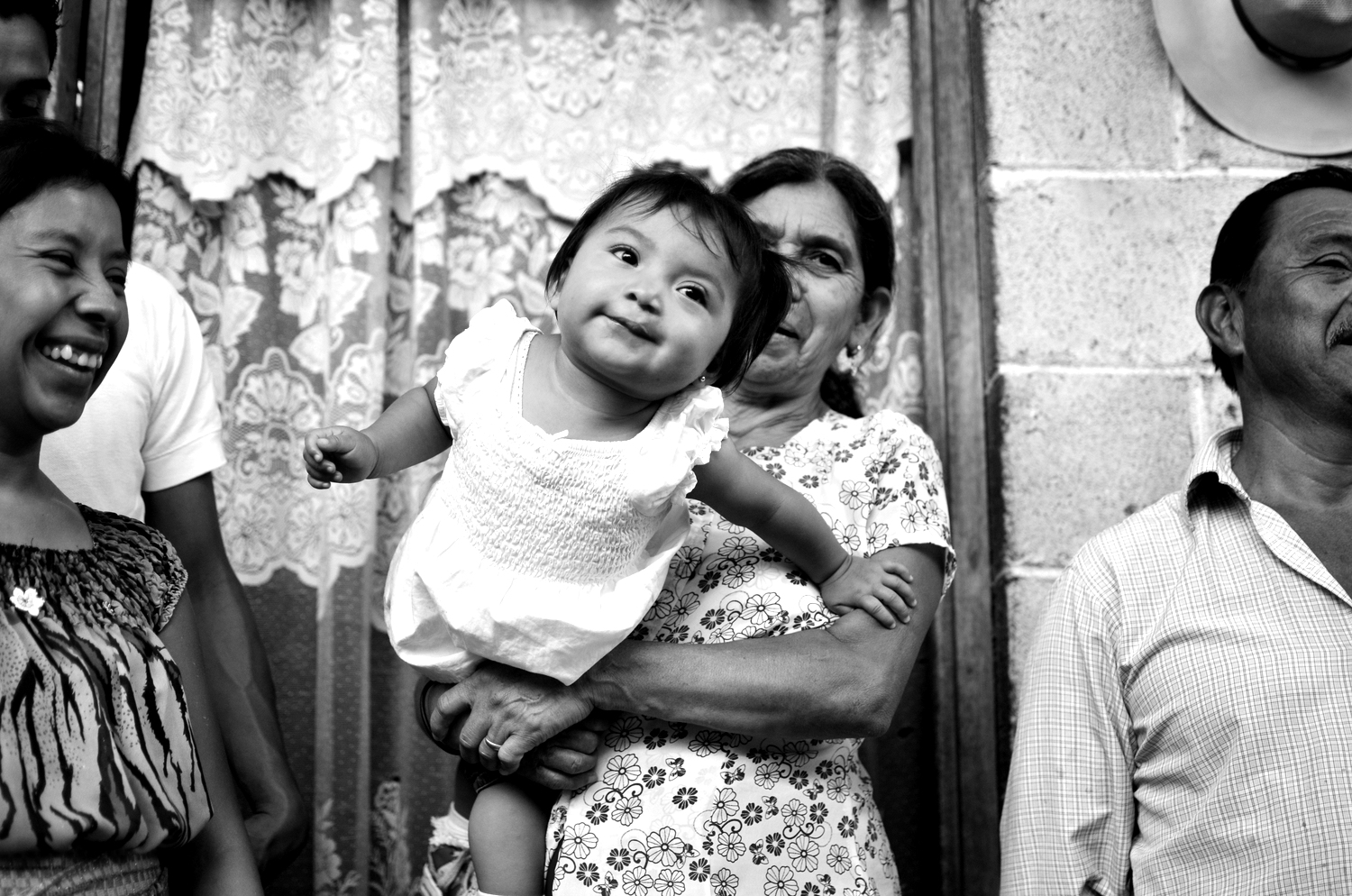
Rosa’s casa consists of cinder block walls capped with a metal tin roof sheltering a few small bedrooms and a living room area. Adjoining their home to the two guest rooms is a cozy kitchen- a tiny room with a dining table and a wood burning stove. The neighborhood fills with campfire smoke every morning, afternoon, and night as people prepare their meals. Clothes are hand washed and dishes cleaned by Andrea, Rosa’s extraordinarily amiable daughter-in-law, in a washing station beside the family shower and just outside the kitchen door. Rosa’s gentle husband, Domingo, works high up in the mountains every day from 5AM till 5PM cultivating coffee, corn, and beans for food and to barter. The income of the house includes only the money obtained from home stays, occasional laundry services, and the modest retail jobs of the two eldest boys.

Flor de Maria, Andrea’s daughter, absorbed our attention from the first moment we met. At just over a year, she actually learned to walk before our eyes. It’s hard to imagine a happier baby than Flor, always flashing us smiles in between her curious coos and wobbly steps around the kitchen as we savored our hand crafted meals. When we learned that she had not yet been photographed, we asked to do a photo shoot for the family as a token of appreciation. To our delight, and following a rainy trip to a neighboring village with a good photo shop, the photos came out better than we’d hoped. The anticipation of giving the first photographs of their beloved youngest family member was almost too much for us to handle and helped to foster this idea.

While baby Flor is clearly charming, the faint scar on her lip hints at our family’s current struggle. I’m sure everyone has at one time come across an ad for one of the many foundations that offer the common surgery for cleft lips and palates in undeveloped countries. 1 in 700 babies worldwide are born with the problem annually. In developed countries, the initial surgery is performed at 2-3 months. In Guatemala, where the disorder is more common both genetically and environmentally, babies often grow into children and even adults without adequate repair. The difficulty lies in their secondary complications with eating, speaking, and even hearing. As she hung our laundry on the roof one morning, Andrea explained the two surgeries in Flor’s future, one hopefully possible this upcoming September. In our world, this surgery likely costs the equivalent of our insurance co-pays. For a Mayan family busy preserving their strenuous way of life, Flor’s surgery will require incredibly careful budgeting, creativity, and crossed fingers. We have been researching foundations to back up our odds, and plan to send anything contributed over the month of July through a trusted teacher at the Cooperativa directly to the family. We know Rosa and her family will savor the generosity. For karma points, donate a dollar or spread the gospel.
Currently with almost 700 followers the math is simple. Change is more than money.
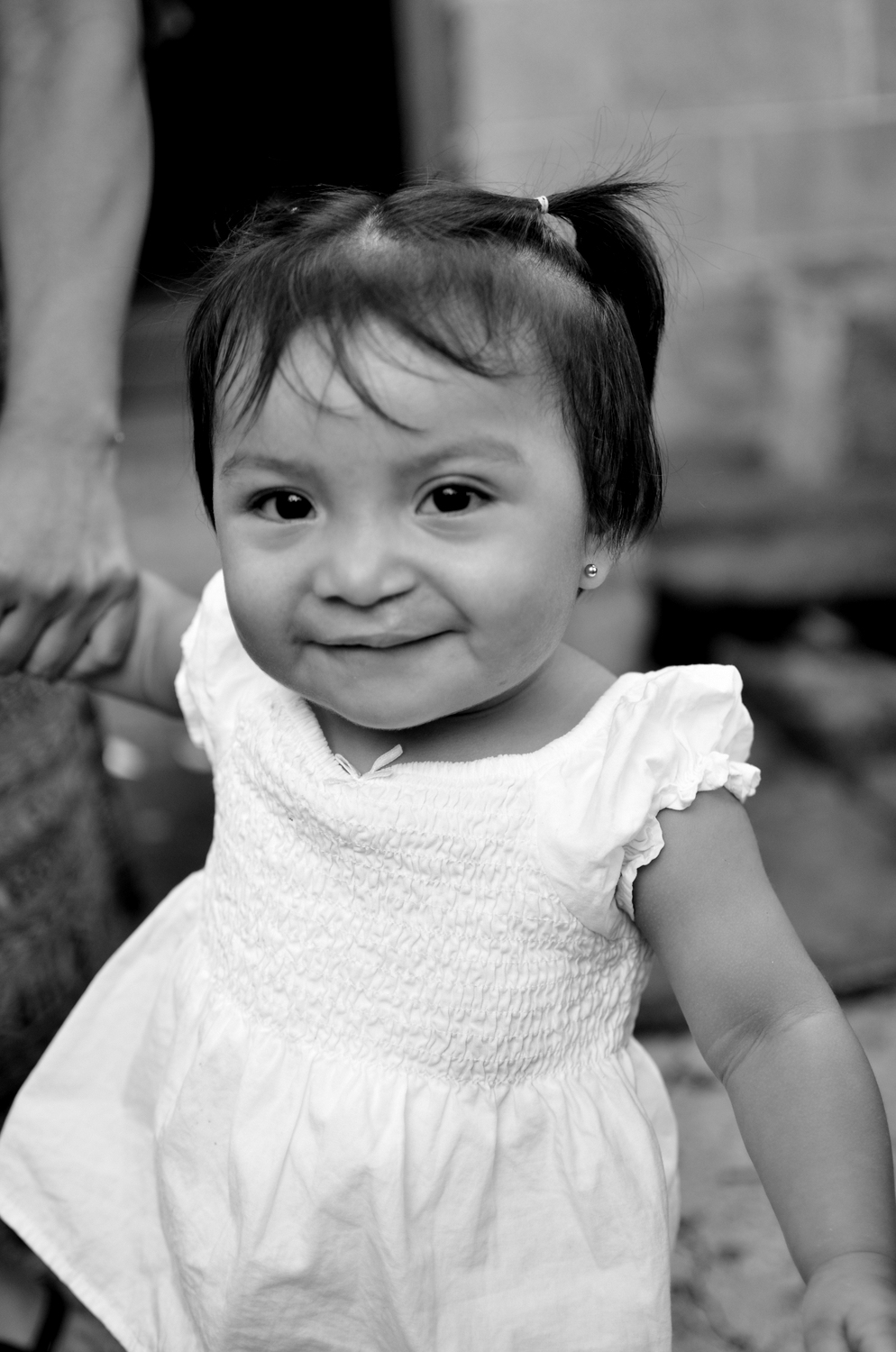

Come away with me

 TheAdventuresOfDr