
Yucatan, the other Mexico: Cancun and Isla Mujeres
First I would like to explain exactly why we ended up in Cancun. It wasn’t for the beaches, the champagne sand, the world renowned alcoholic free-for-all scene, or to hang with the endless stream of tourists nestled way up high in their all-inclusive hotel packages in resorts that were as attractive to my senses as a Mexican landfill set to broil under the steamy Yucatan sun. We were intentionally going to use Cancun, to take her out on a date solely for her connections and drop her off curbside without the intentions of ever calling her back. It wasn’t going to be a cheap date, but we were trying to check something off the bucket list and she had the right people. The allure of Cuba was too much for us to pass up and we needed to book a flight without using my credit card (paper trail). The plan was to pay for tickets in hot, damp Mexican pesos. Shortly after we pulled into the bus station we met a stranger eating a fish sandwich on the sidewalk who kept mumbling to us in English about where the cheapest hostel for backpackers was. This man led us past puma stores, hordes of overpriced travel agencies, money exchange booths, and chinese food shops and within five minutes we found ourselves being introduced to Dudeman. Dudeman was about 25 years old and ran the hostel like a 25 year old would. Dudeman was bearing no shirt, a distinguishable American accent, and hair that was about Axle Rose length. He immediately tried to “entice” us with tequila jenga night followed by an open-bar pool party for only 45 American dollars later that evening. We acknowledged his precious offer and asked what time the herd was leaving for said party so we knew when to safely return to the hostel for sleep. Normally we wouldn’t put ourselves in a situation like this but we were promised that this was a hostel and sleep was a priority. Dudeman also stated that he could set up our Cuba trip at a better price than anyone in town could do it for. We told him to get his agent on the horn and give us a price and then we didn’t see Dudeman until the following afternoon. The events that happened in between our interactions were horrifying for two tired travelers. Upon returning from the pool party at around 3AM the light was turned on and off for about 45 minutes in our 12 bed dorm while drunk party assclowns attempted to get ready for bed. Since our other bed was a blow up mattress on the floor we shared a twin bunk right next to the AC so I naturally froze my ass off. Another ass to add to the story was Dudeman’s managing partner, who kept us awake by having sex against our window at 4AM. By the morning our weary, burning eyes needed to get the hell out of Cancun. Fact; no pictures of Cancun exist on my camera.
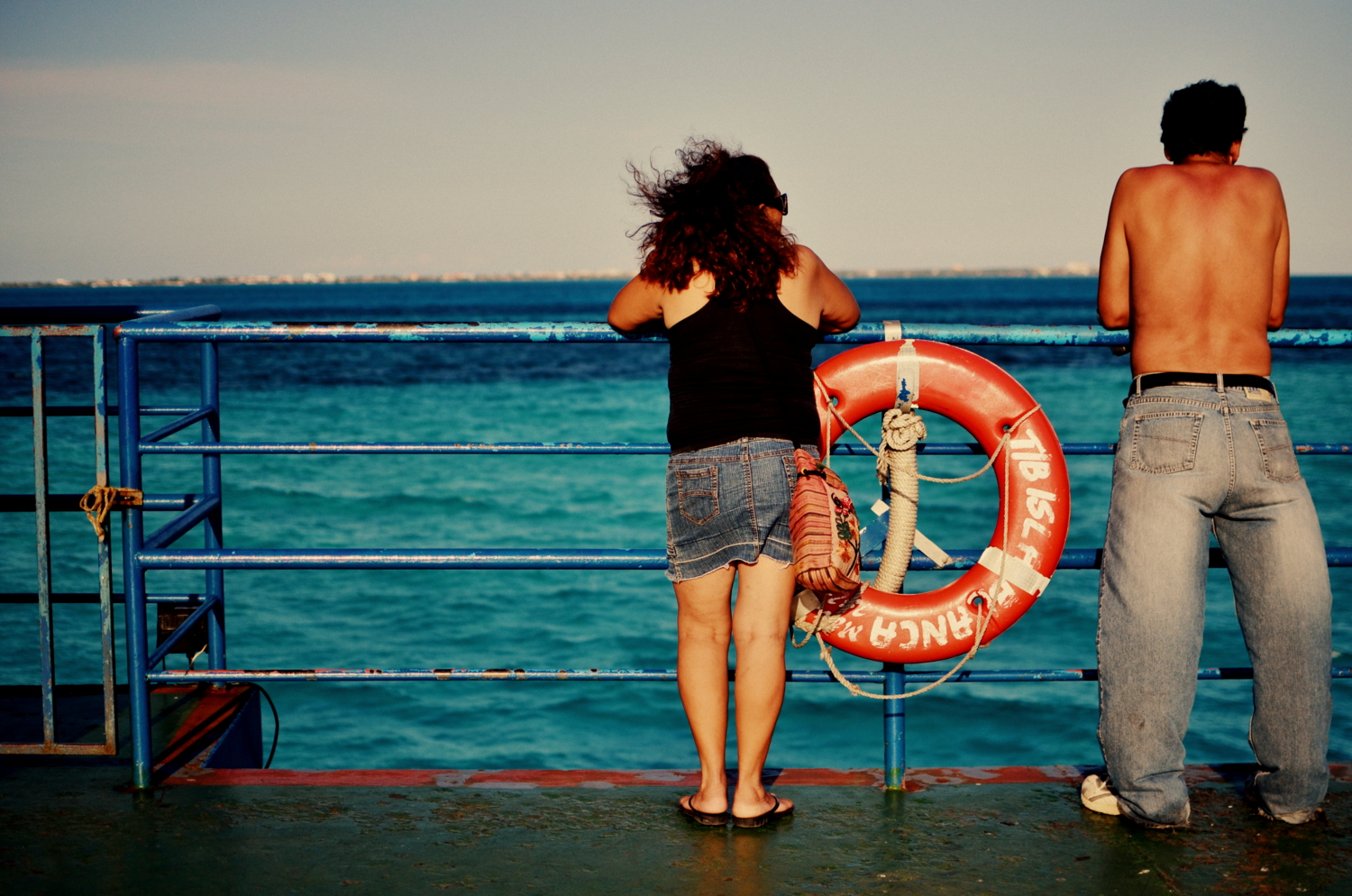


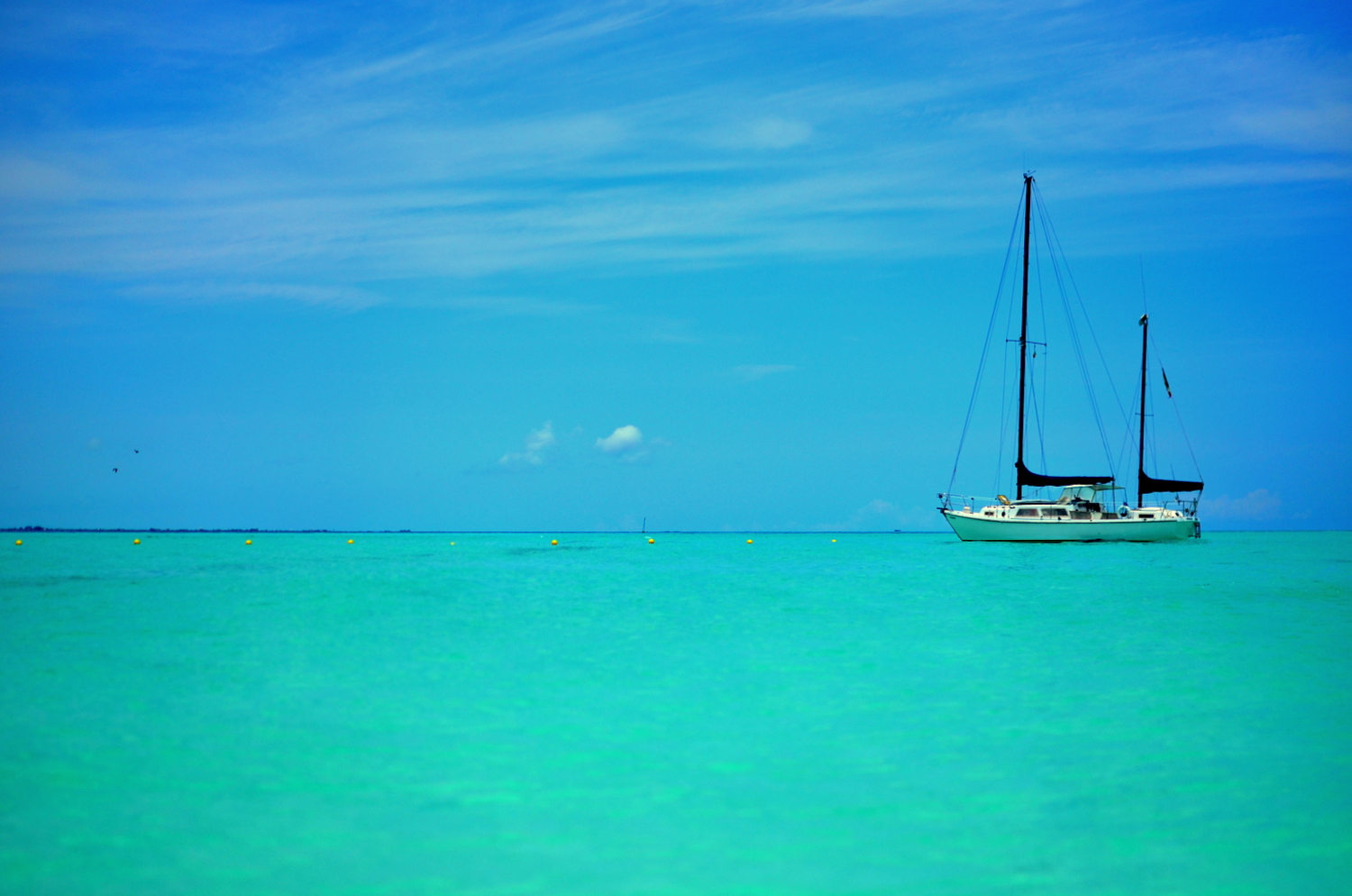


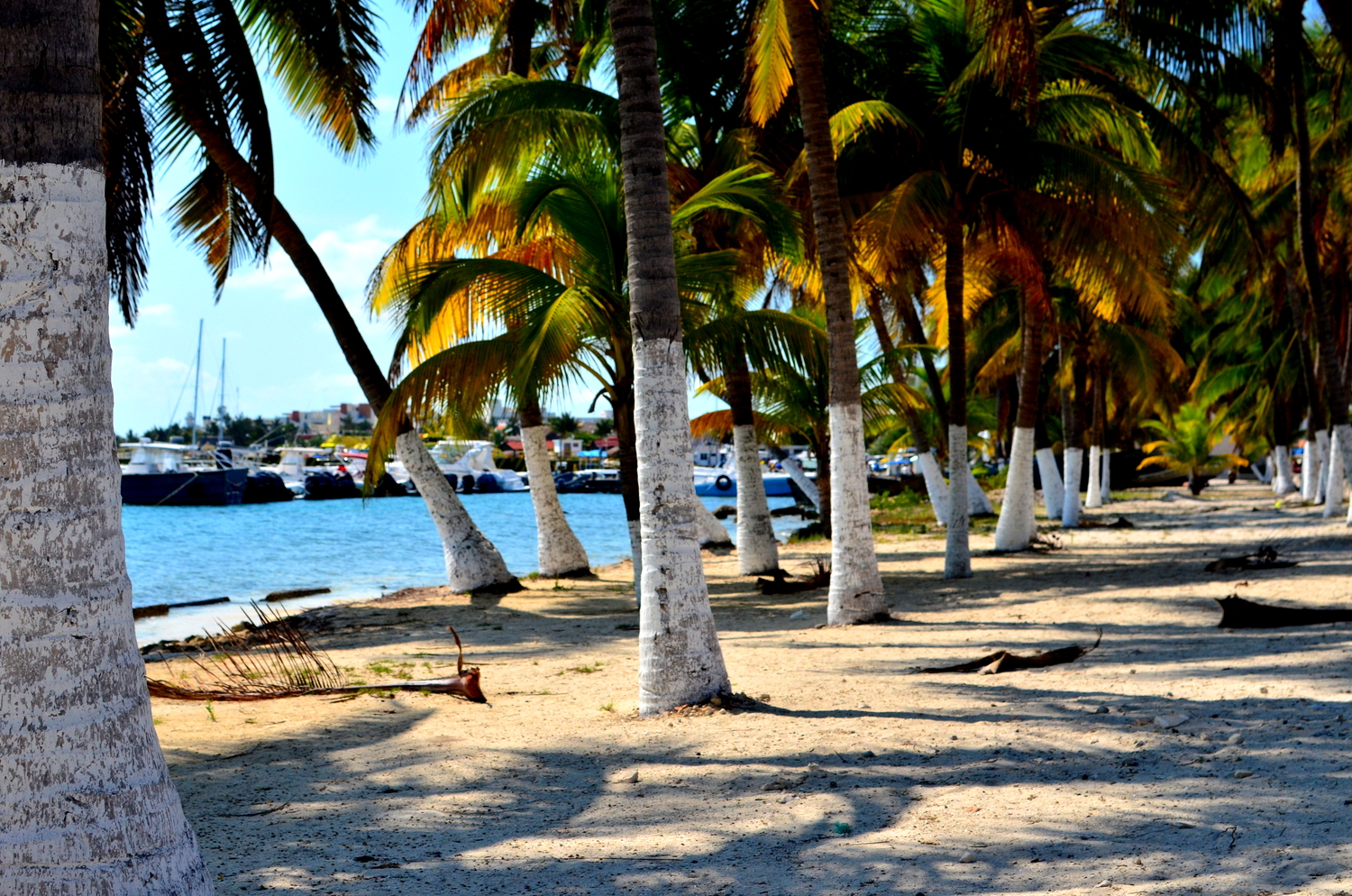
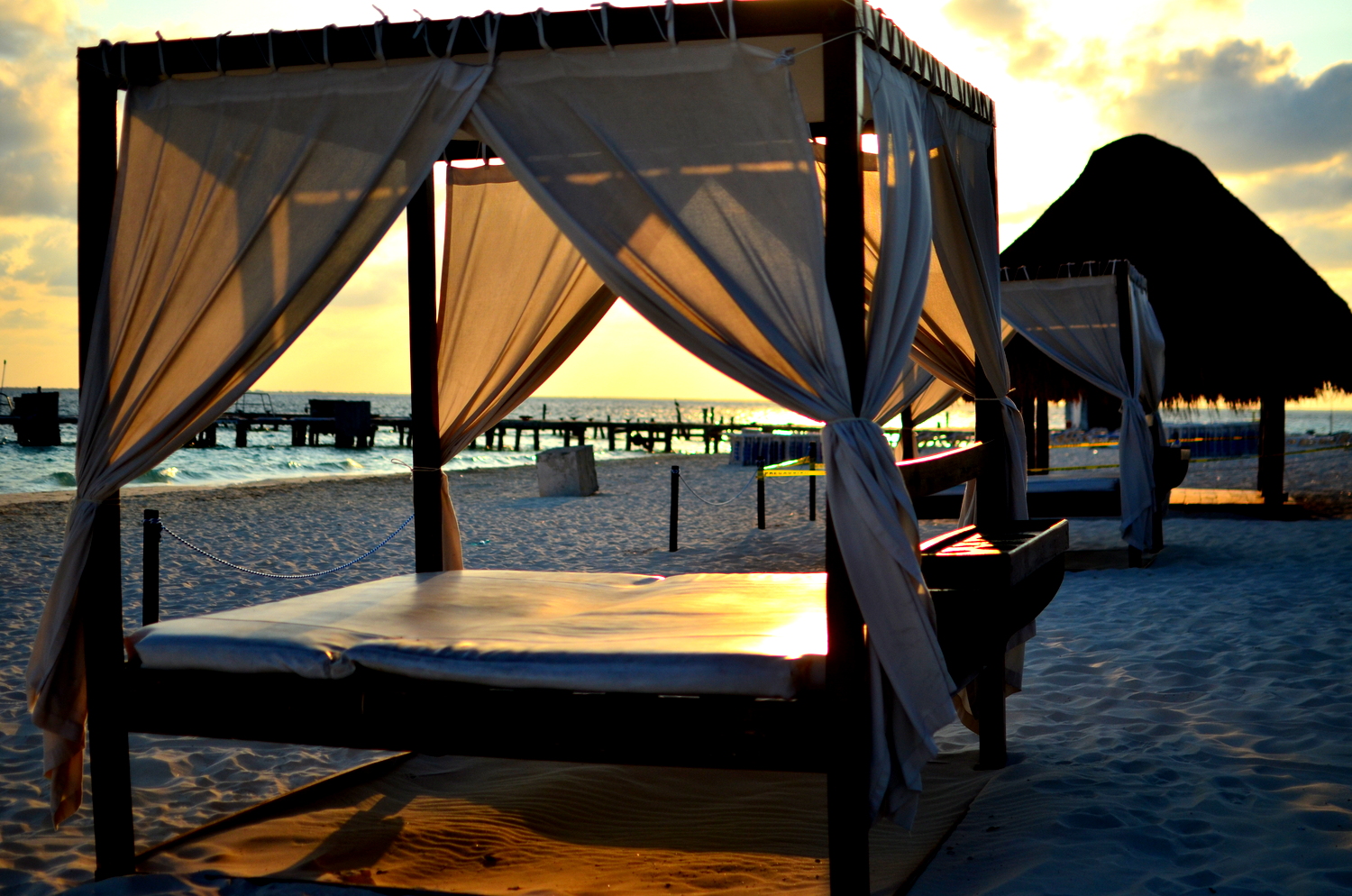
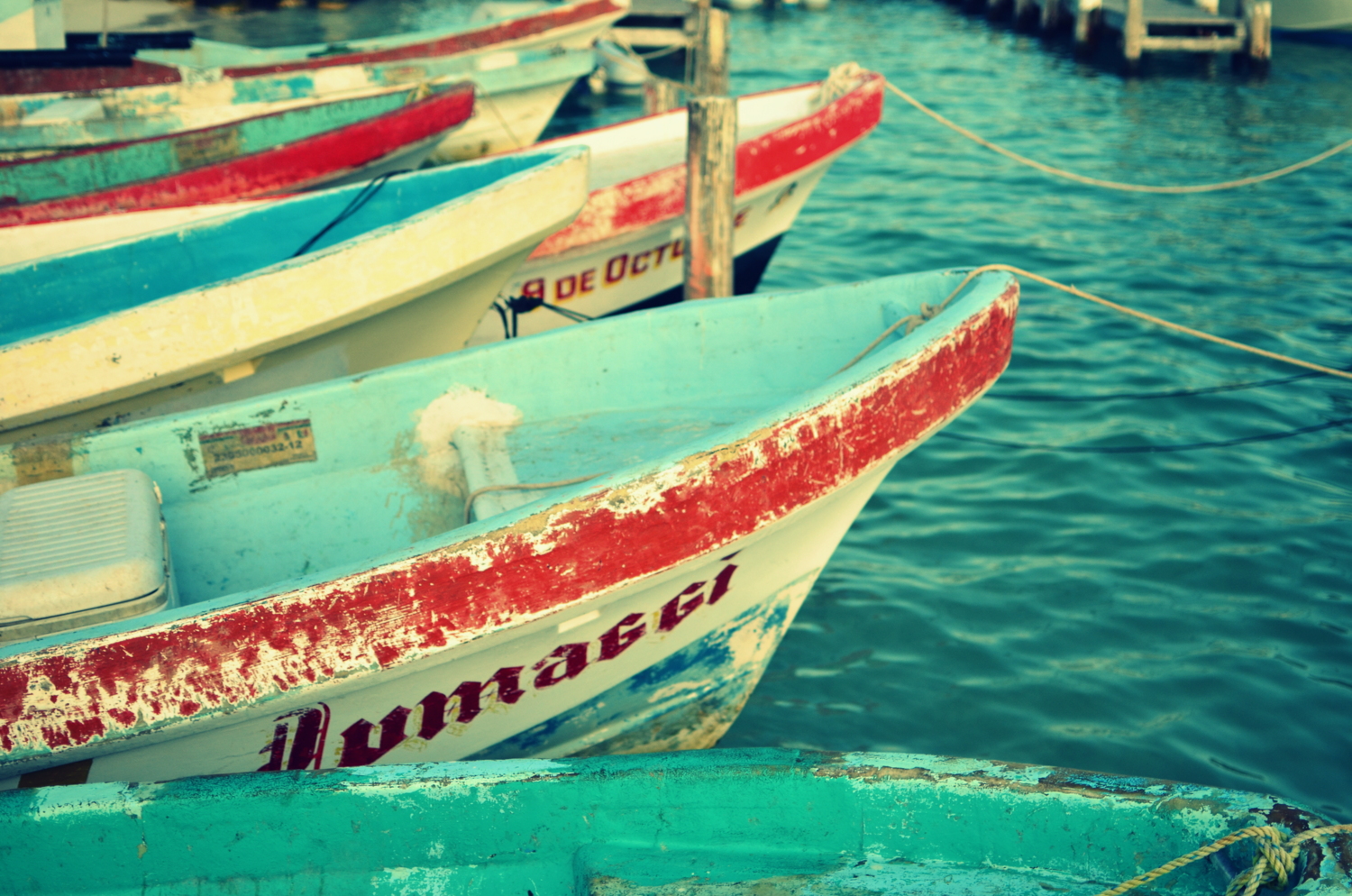
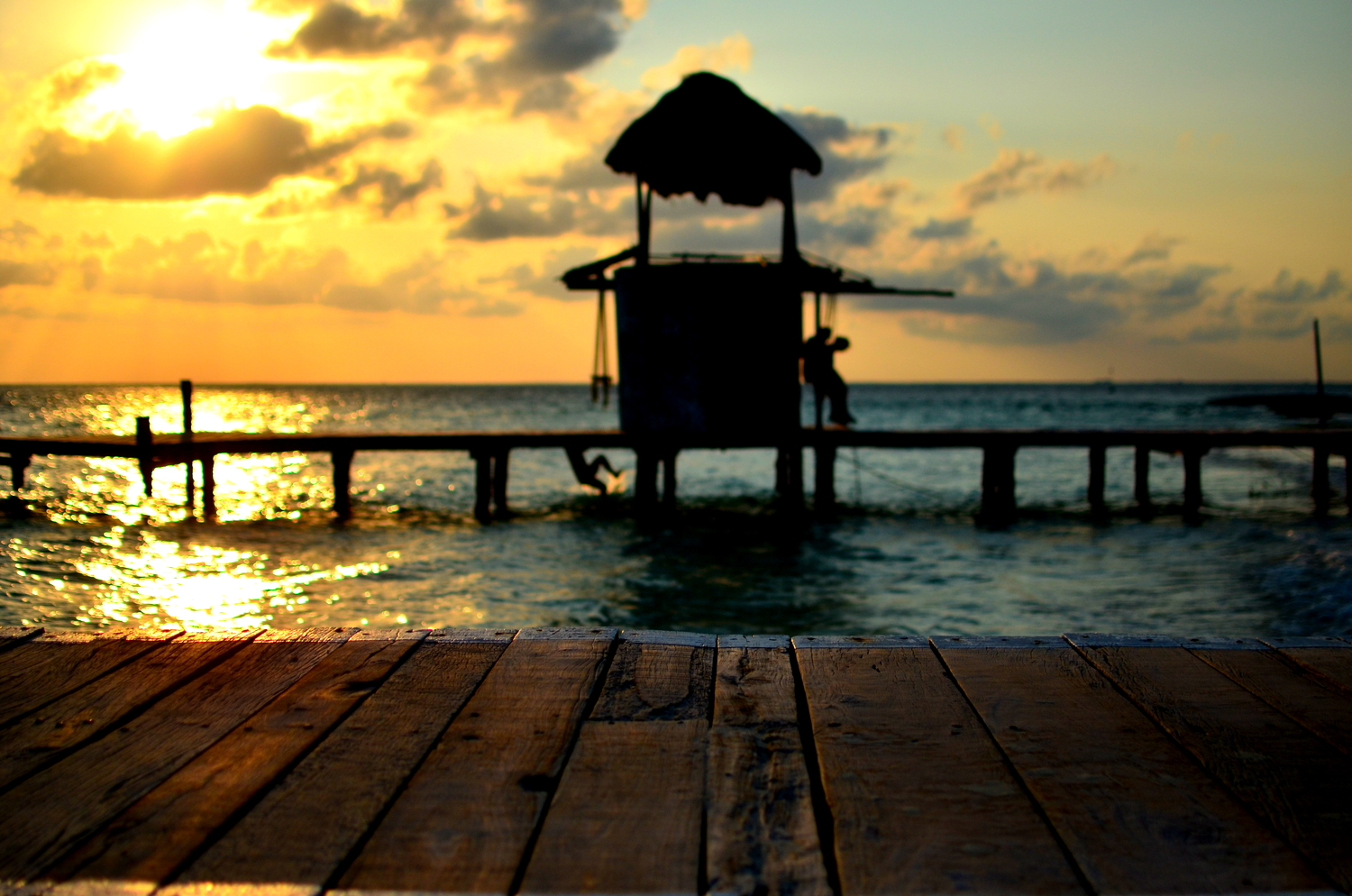
The following morning we flipped a coin on the whole Cuba project. It was looking more and more like all the efforts we were putting into getting there were not paying off and we were in a very foul mood from the realities of the “paradise” in perhaps one of the most developed beaches on the planet. Heads for Cuba, tails to move along. We were both not surprised when tails came up and we decided to spend a few days in Isla Mujeres to regain our balance. Isla Mujeres is the furthest point east in Mexico and also where the sun’s first rays touch the country just moments before they have to squint at the blight of Cancun. After a 45 minute ferry ride we stepped off into the slower, much more relaxed pace of island living, leaving behind buses and SUV’s for golf carts and scooters. We located a cheap hotel during reconstruction and scored a private room for cheaper than our hostel was in Cancun. It was located on the main walking strip (Hidalgo) lined with tourist eateries, shops, and tours. Don’t get me wrong, this island’s existence seems to have shifted from a small local economy to a tourist driven system, but on a much smaller scale. It was easy and refreshing to walk around here for some reason. It didn’t have any real feel or signs of Mexico but the shock wave that Cancun sent through our veins made this place seem, well, very pleasant. The only annoying thing about his place was the constant barrage of offers of “do you want to swim with the dolphins??” and the constant barrage of purveyors trying to lure you into their expensive restaurants. Other than that this island offered white champagne sands, that classic warm turquoise Caribbean water, and nothing but relaxation to forget about whatever it is that’s troubling you. Our first night we ordered a pork chop dish from a little restaurant called Freddies and both agreed that we have never had a better pork chop in our lives. The food, while pricey, was absolutely amazing here. After a few days we finally found a local restaurant run out of someone’s house that served up great, affordable Mexican food. And since our hotel owner gave us our own private mini fridge we could offset the costs a little more comfortably.



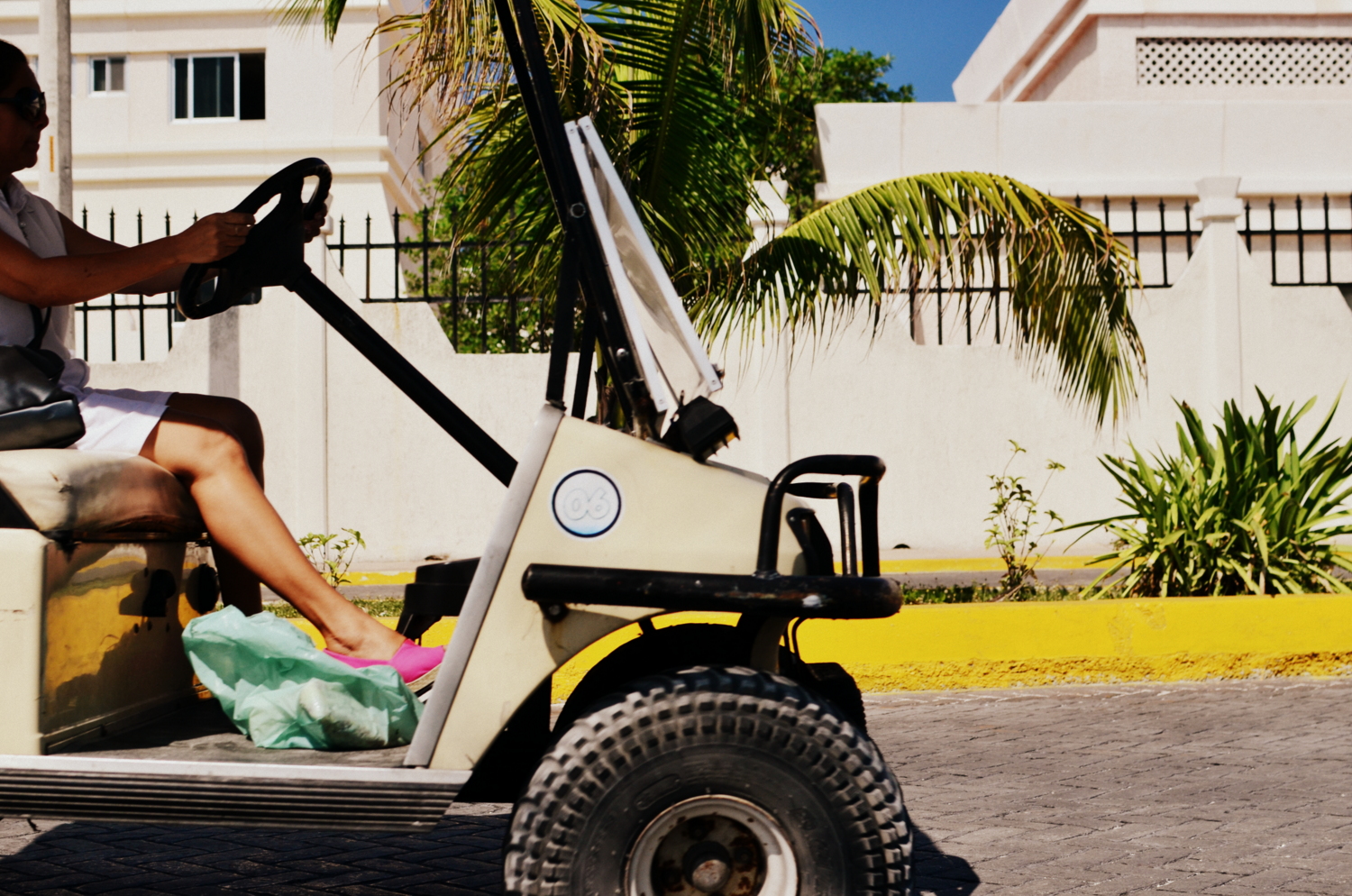


We spent 5 days playing around in the water, swimming in the shallow reefs, and getting some much needed sunsets burned into our cerebrums. We couldn’t resist hiring a scooter for a day so we could actually see the other ¾’s of the 8KM long island. We cruised around to get a feel for how the locals live life outside of the tourist strip. We stumbled upon a small hand built wooden home that was plunked on a tiny island in the lagoon forcing us to stop for a closer inspection. A woman there explained that it was her friend’s home, a completely man-made island comprised entirely of recycled plastic bottles. I’ve heard of this guy before and was amazed that I was seeing this in person. After creating the plastic floatilla footing he brought on sand, planted mangrove trees, uses solar and wind power as a supplementary power source, and even houses people for a cheap rate. He wasn’t home at the time or we may have found our new shelter. The small villages in the middle of the island offered a fresh sense of what it’s like to grow up on this little chunk of limestone. We circled around for a while and found a church with about 300 plastic chairs outside in the parking lot across the road for an outdoor service that night and cruised through neighborhoods watching people go about their day-to-days until it was time to return our sweet whip.





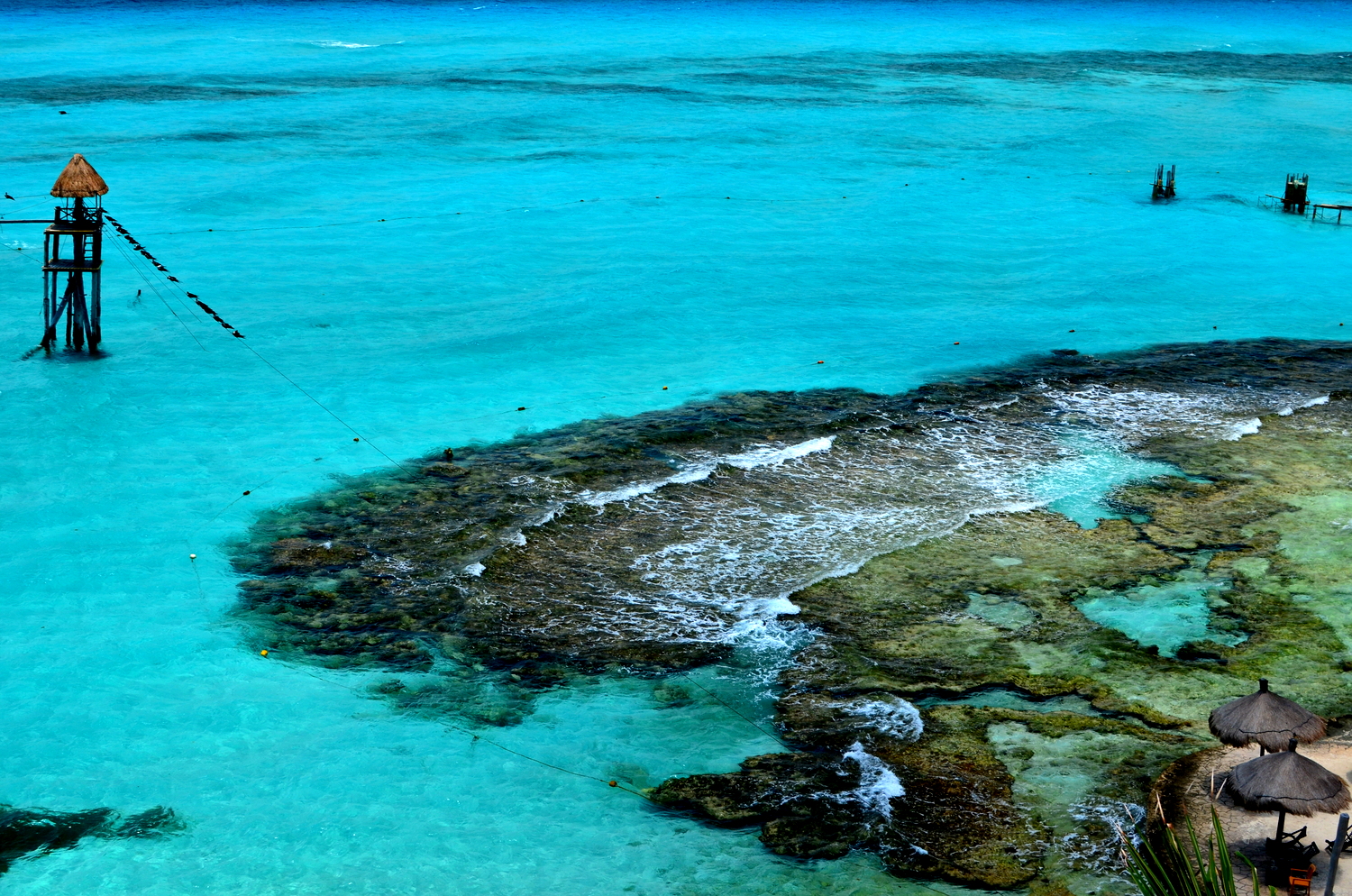
As fate would have it we stumbled upon a travel agency claiming they had the cheapest flight packages to Cuba. We immediately went in to go over the details of the package and see if it truly was the best value around. In total, with everything included, we figured out that we would be saving about 80-90 bucks booking through them vs. the best price Dudeman could muster up back in tropical hell. Our lady claimed that she could have us on a plane in 2 days at cruising altitude to the forbidden pearl of the south. We now had a new coin to flip and let fate decide if 100$ was going to change our minds.


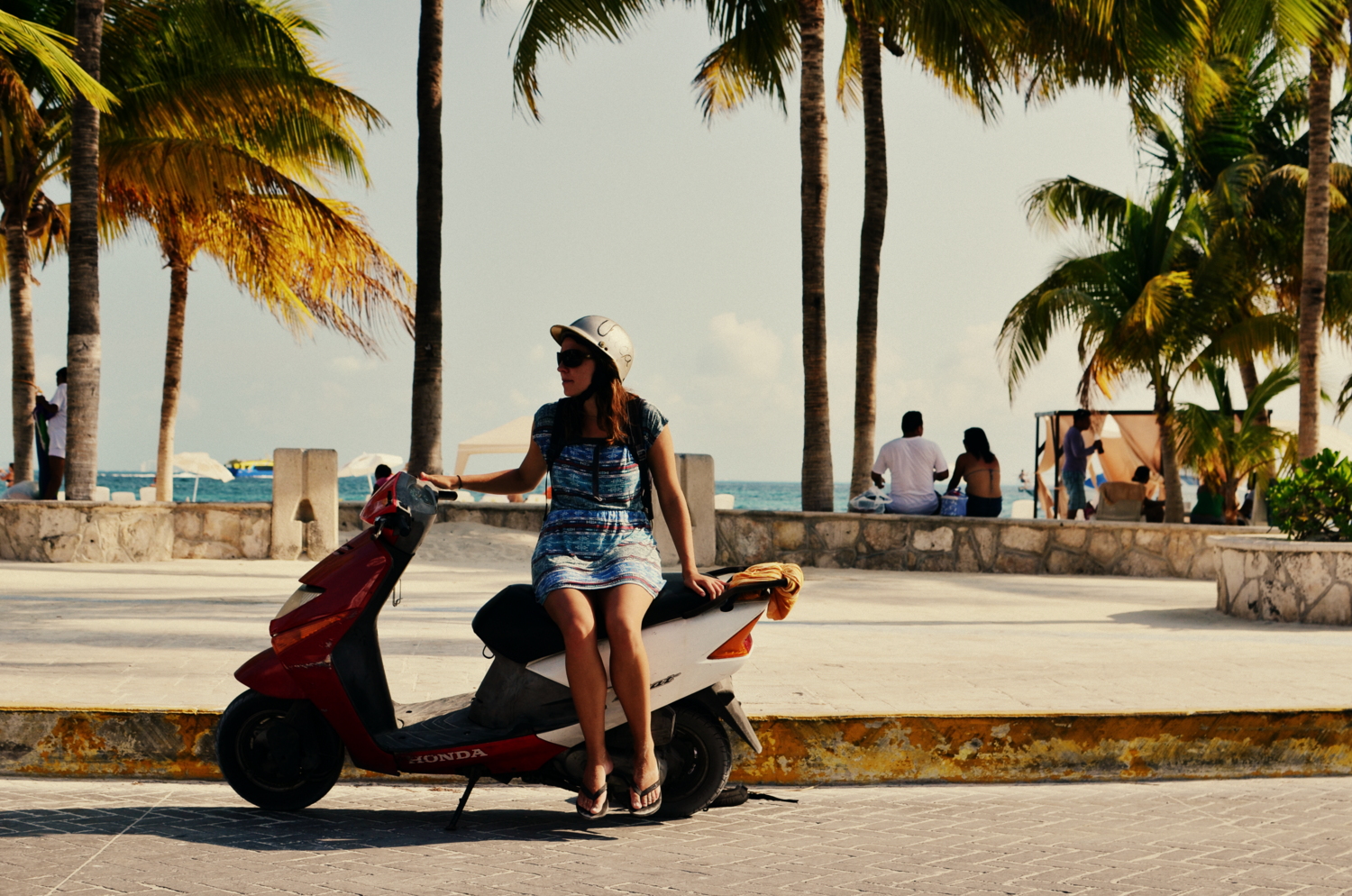
Yucatan, the other Mexico: Campeche and Vallodolid

The barely bearable humidity of the sticky jungle air eased the decision to get to water as quickly as possible. Our first stop was intended for Merida but we were suspicious that this would be another stop along the tourist trail where the hostel scene would gift us with blatant party tourism and the exact opposite of appealing (unappealing). Upon arriving into another hot Mexican bus station we found out that there was a departure heading for Campeche in 5 minutes. Naturally we took it as a sign and off we went. Campeche seemed like a reasonable destination to let our eyes adjust to the Caribbean Sea and our body temperatures adjust back to more livable conditions. Besides it’s proximity to water, the town was proudly boasting UNESCO world heritage status with a very well preserved downtown historic center. Now add to that list a fortified wall surrounding the city to protect it from constantly reoccurring pirate attacks in the late 1500’s and you’ve got my attention. From these details alone we chose to press forward towards the coast and without having completed any sort of research prior to our departure (no internets in the jungle) we blindly rolled into town. Immediately we noticed that it was just as humid as the jungle and would make the mercury in a glass thermometer dance a little more. The three hostels we went to were awful so we opted with a cheap hotel for a similar price. By now we had been walking around for about 25 minutes with all of our gear and were inundated in sweat. A quick spin around town confirmed that Campeche was a waste of time. It was a city that historically had a very interesting past but presently was a mix of preserved buildings with modern day amenities complimented with an over developed ocean front. Giant glass buildings, hotels, and fast food joints were planted firmly just outside the fortified bastions. Were we in Texas? We tried to see the beauty in this place but just couldn’t find it. The Mercado had the slightest whiff of authenticity but that quickly faded when we noticed that venders were watching movies on iPads and mangoes were 5 times the cost of what they normally would be. In the morning we fled Campeche and coasted into Vallodolid.
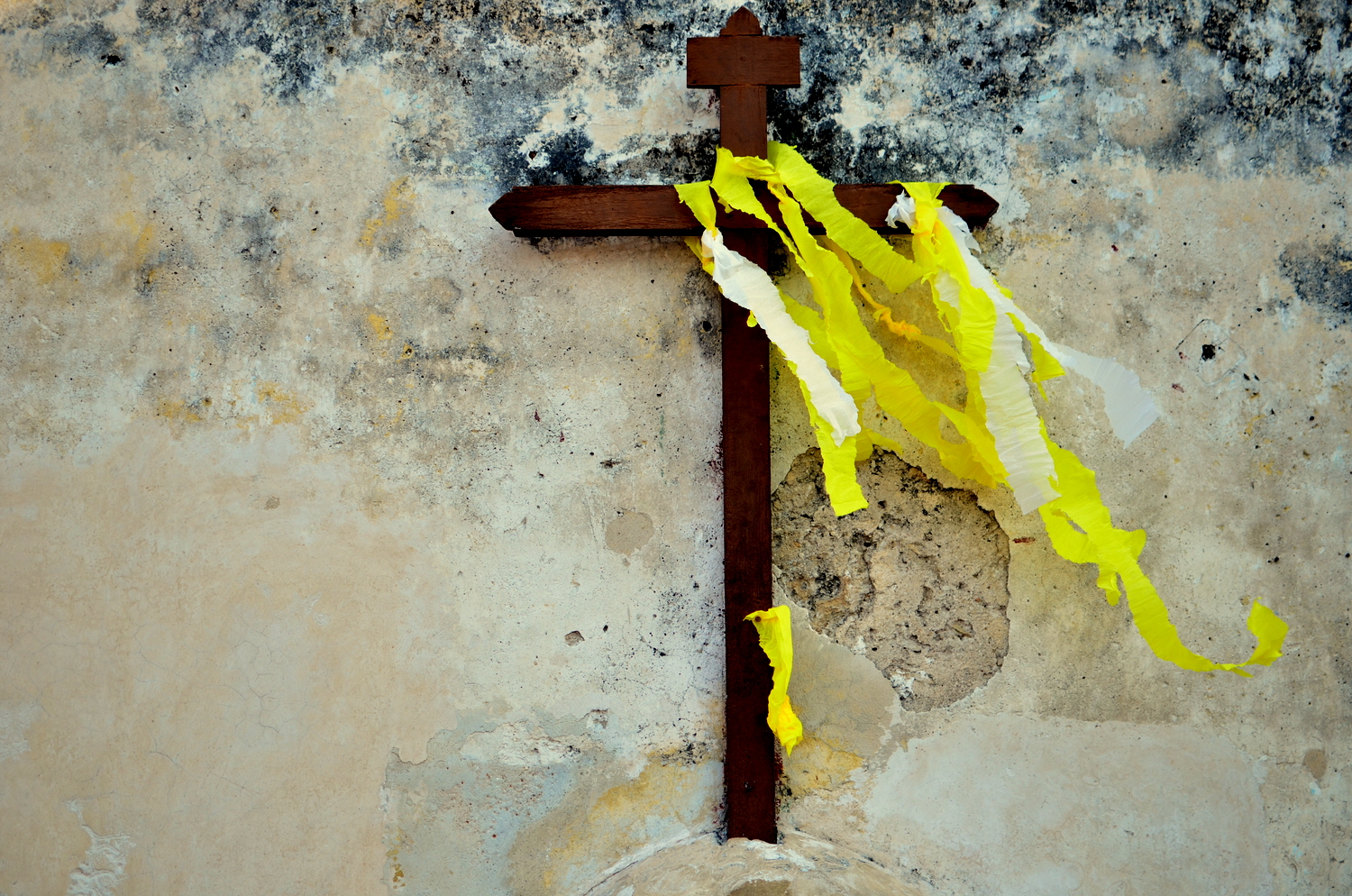
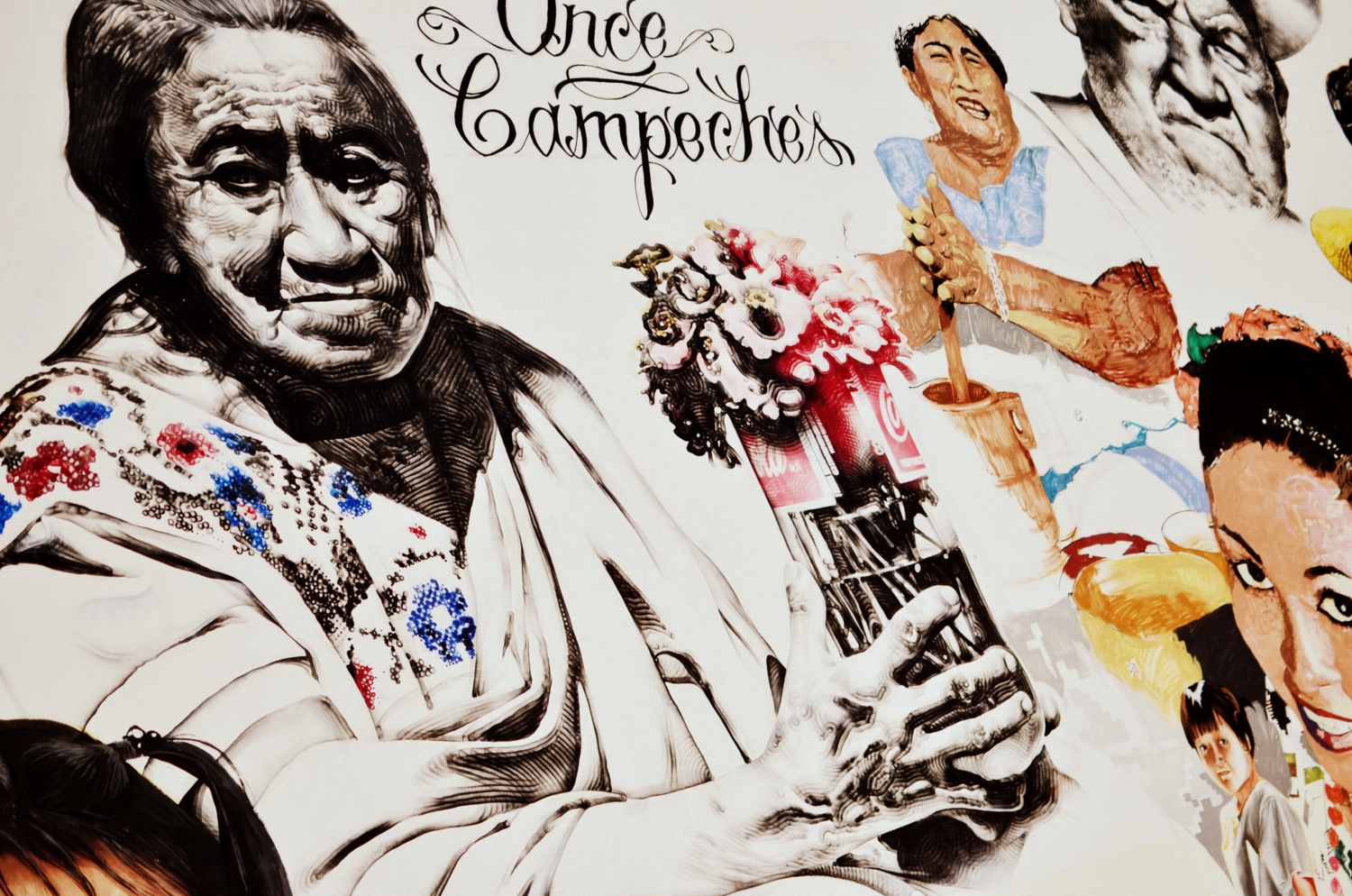


Vallodolid was our saving grace in the Yucatan. This awesome little place was once a Mayan city that was eventually was conquered by the Spanish, as most cities in Mexico, and thus turning into a colonial masterpiece that keeps a real small town vibe. The Mayans didn’t give up easily here having several revolts and even a successful sacking, reclaiming the city back for a short spell. Vallodolid lies in a part of Mexico where there are many freshwater cenotes to assist your contention with the hot and humid Yucatan air. Centotes are basically gigantic underground caves formed by dissolution of limestone bedrock by underground rivers and groundwater systems. Some cenotes are well over 200 feet deep from the top edge of the void to the surface of the water and can range from a fully unclosed cavern to a wide open hole in the ground. The roof of the caves in many of Mexico’s cenotes have completely collapsed giving the feeling that someone used a gigantic percussive action drill equipped with a diamond coated bit into the ground . We rented bicycles one hot afternoon and hunted down the locals’ favorite (and cheapest) cenote on the outskirts of town and lost a few hours swimming and rope-swinging into the blue-raspberry colored water. Schools of little fish swam around us while families were relishing a lazy Sunday at the swimming hole. Tree roots grew down from the lip of the hole some 125 feet to plant their wooden straws into the cool water for sustenance. On this day there happened to be some rock climbers descending into the water along the massive tree veins.

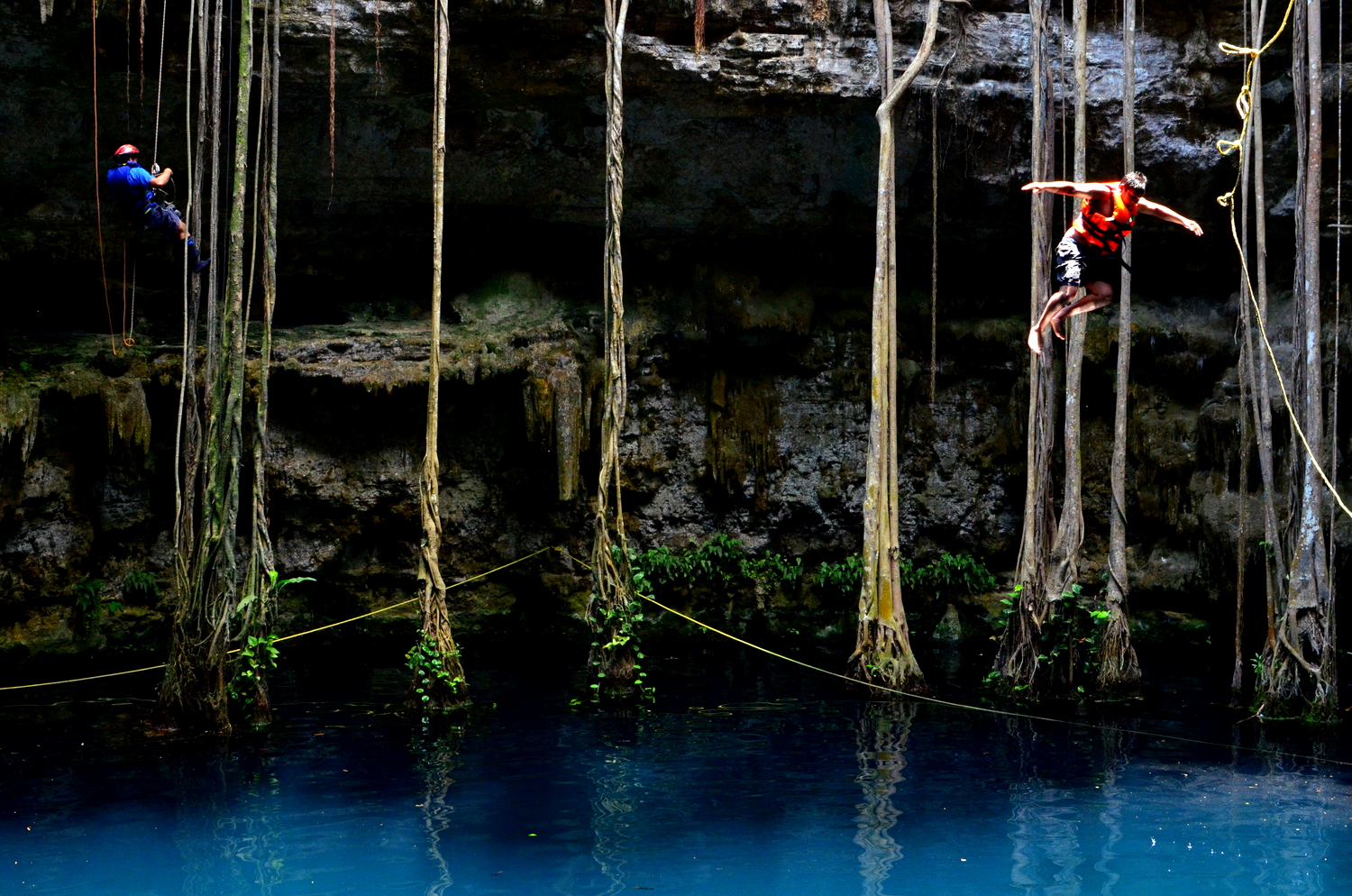
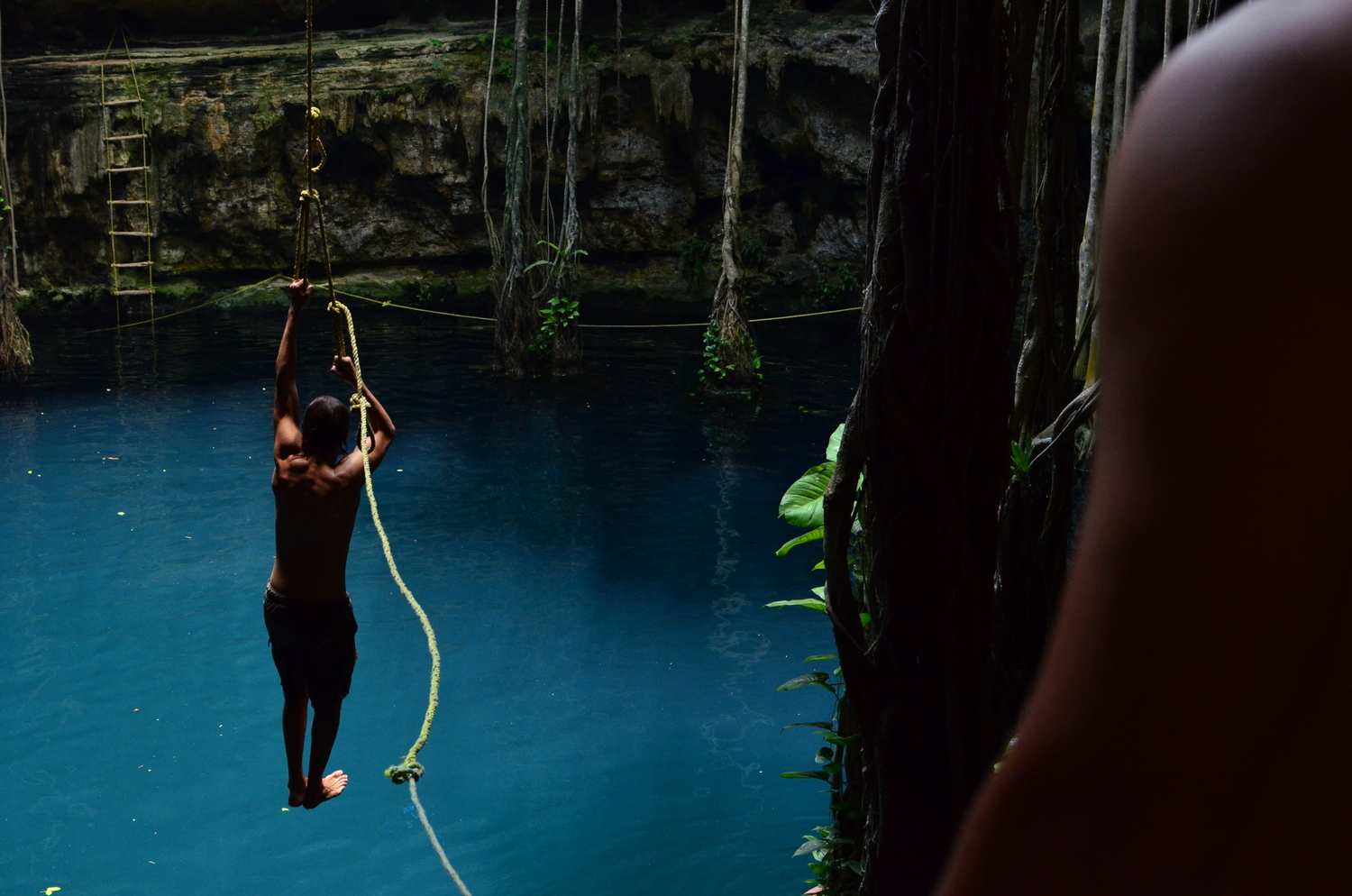


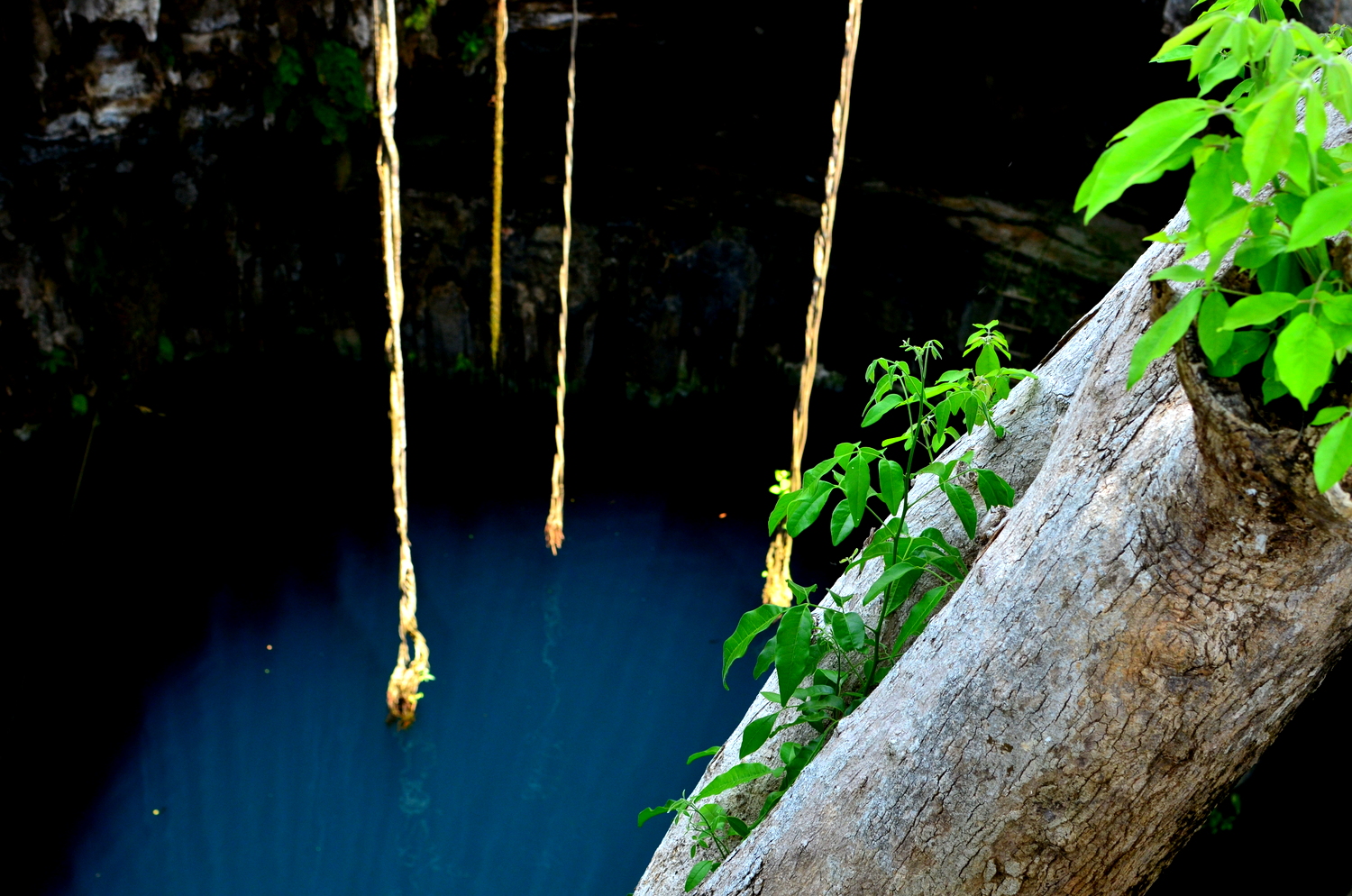
Vallodolid is a great backpacker’s hub for many of Mexico’s main attractions in the Yucatan, both along the coast and inland. It was in very close proximity to Rio Lagartos, a small fishing town situated in a preserved national lagoon that is home to one of the worlds largest flamingo population. We felt that we were destined to see these birds so we were disgusted when we saw the absurdly inflated prices of the tours offered through our hostel and other agencies in town. After a little internet research we decided to try and figure it out for ourselves using public transportation and hopefully a bit of luck. At this point I’d like to mention that as a traveler without a car you are bound to the Mexican bus schedule system, which rarely considers convenience for travelers outside of normal tourism behavior. We took a bus to our next little hub town and immediately found out the next ride to Rio Largartes would not depart for another 3 hours. This would have killed the entire day and probably our relationship. After asking a few questions to the right people we found ourselves in a sweaty collectivo van behind a grocery store full of locals. This is our preferred way of travel and truly is the most interesting and real way to get around. With only the name of a local fisherman we grabbed off the internet and rudimentary instructions on where he may or may not be located we set off to find Adriano.

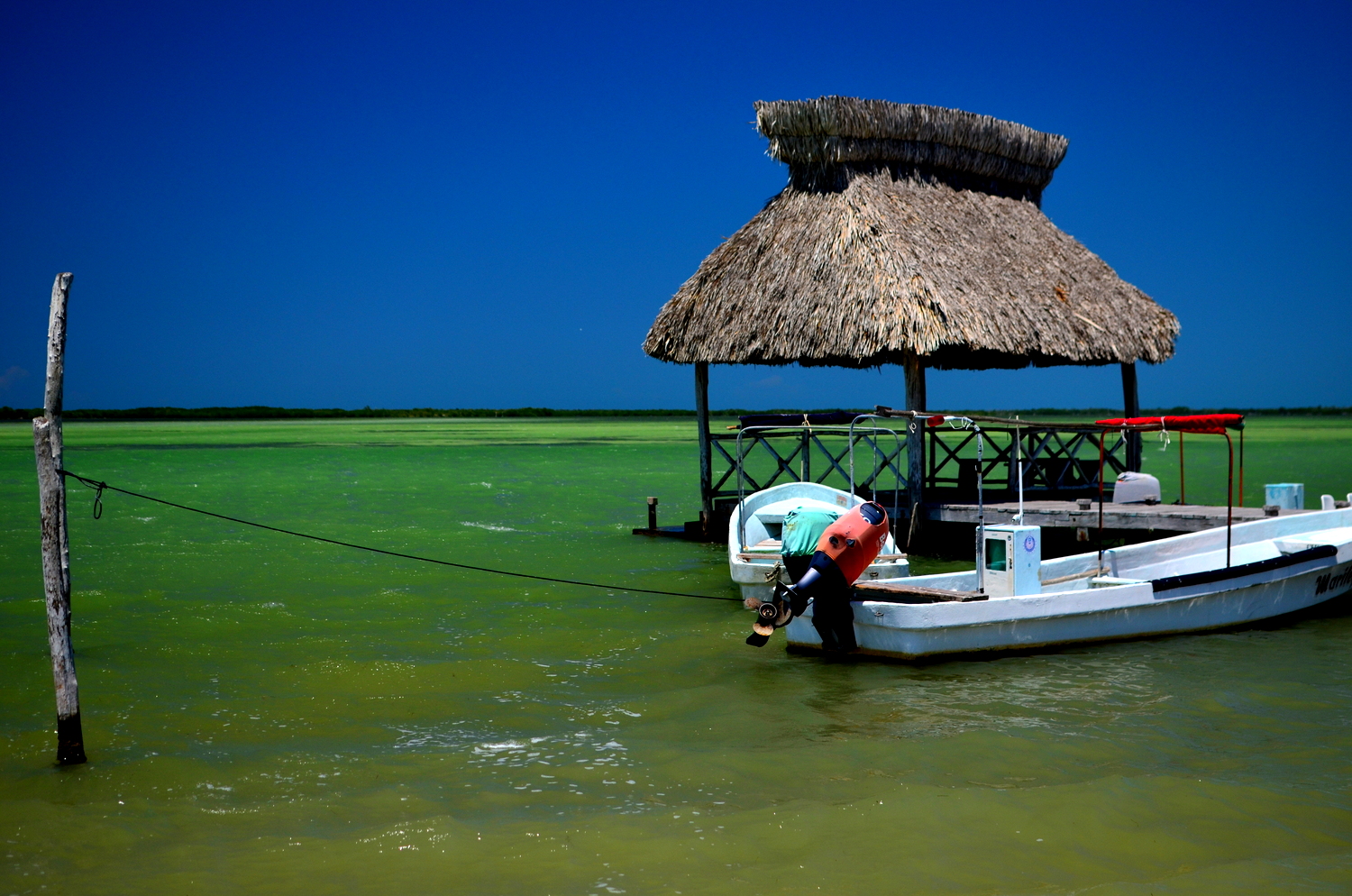
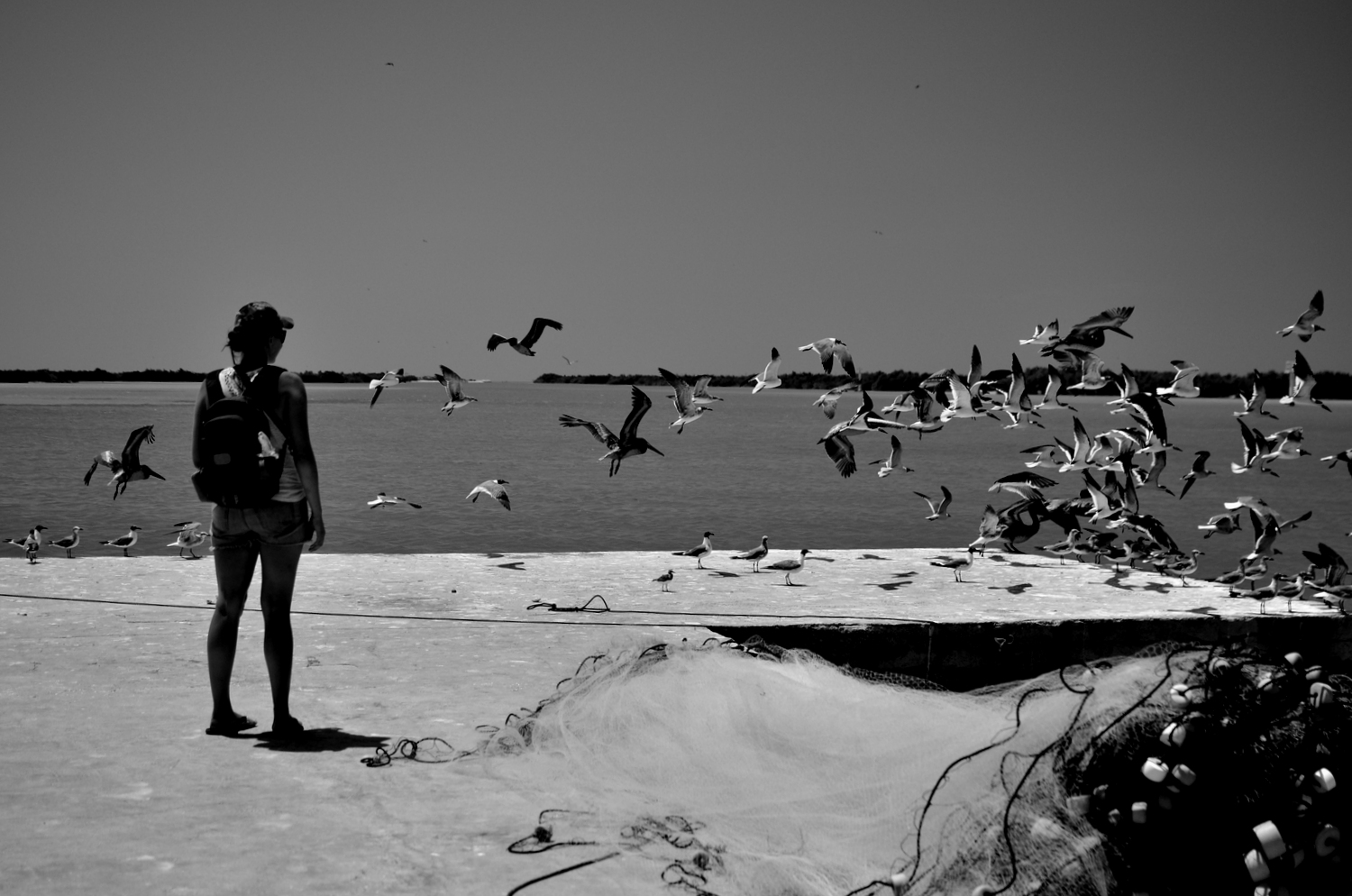


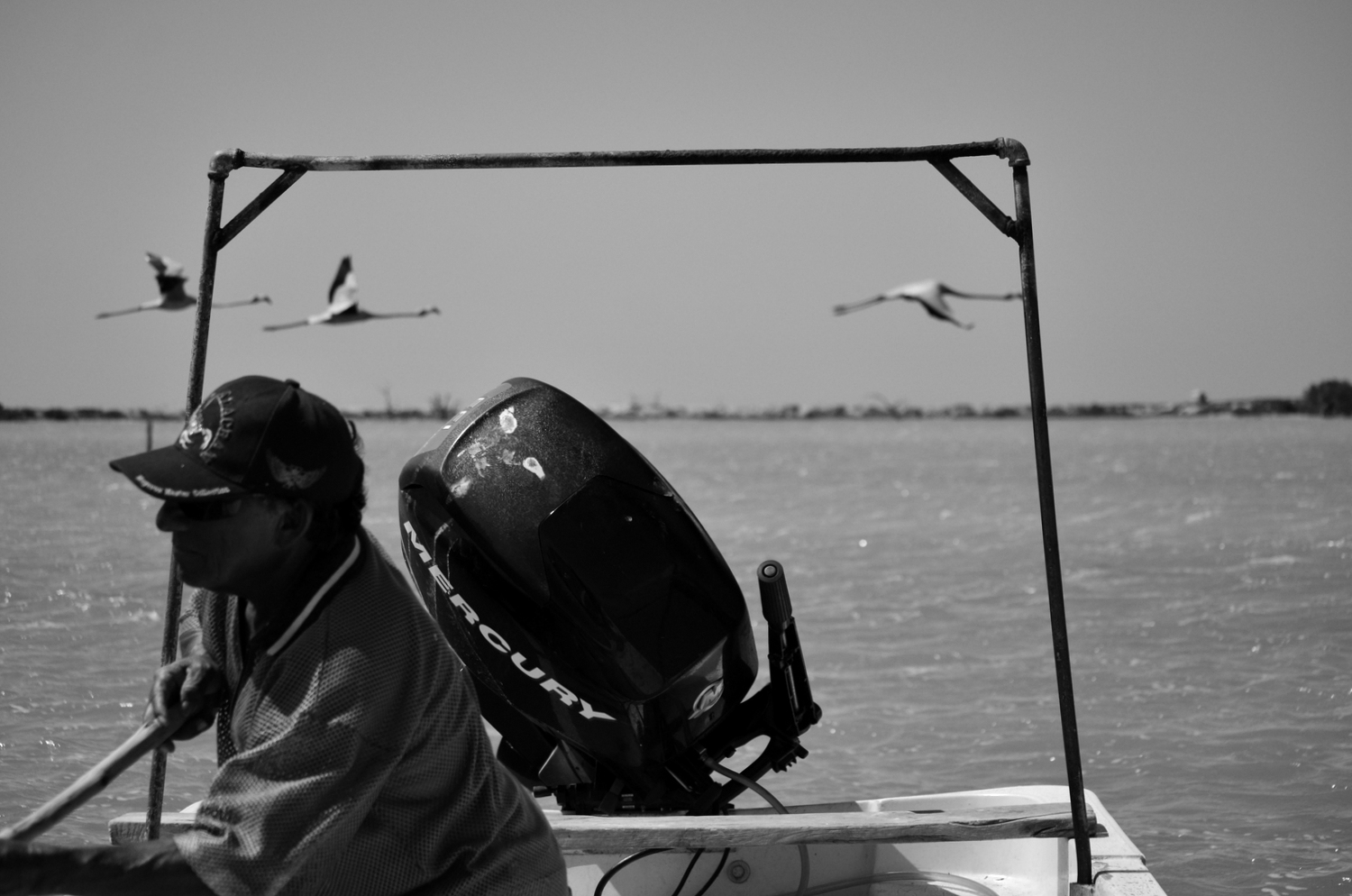
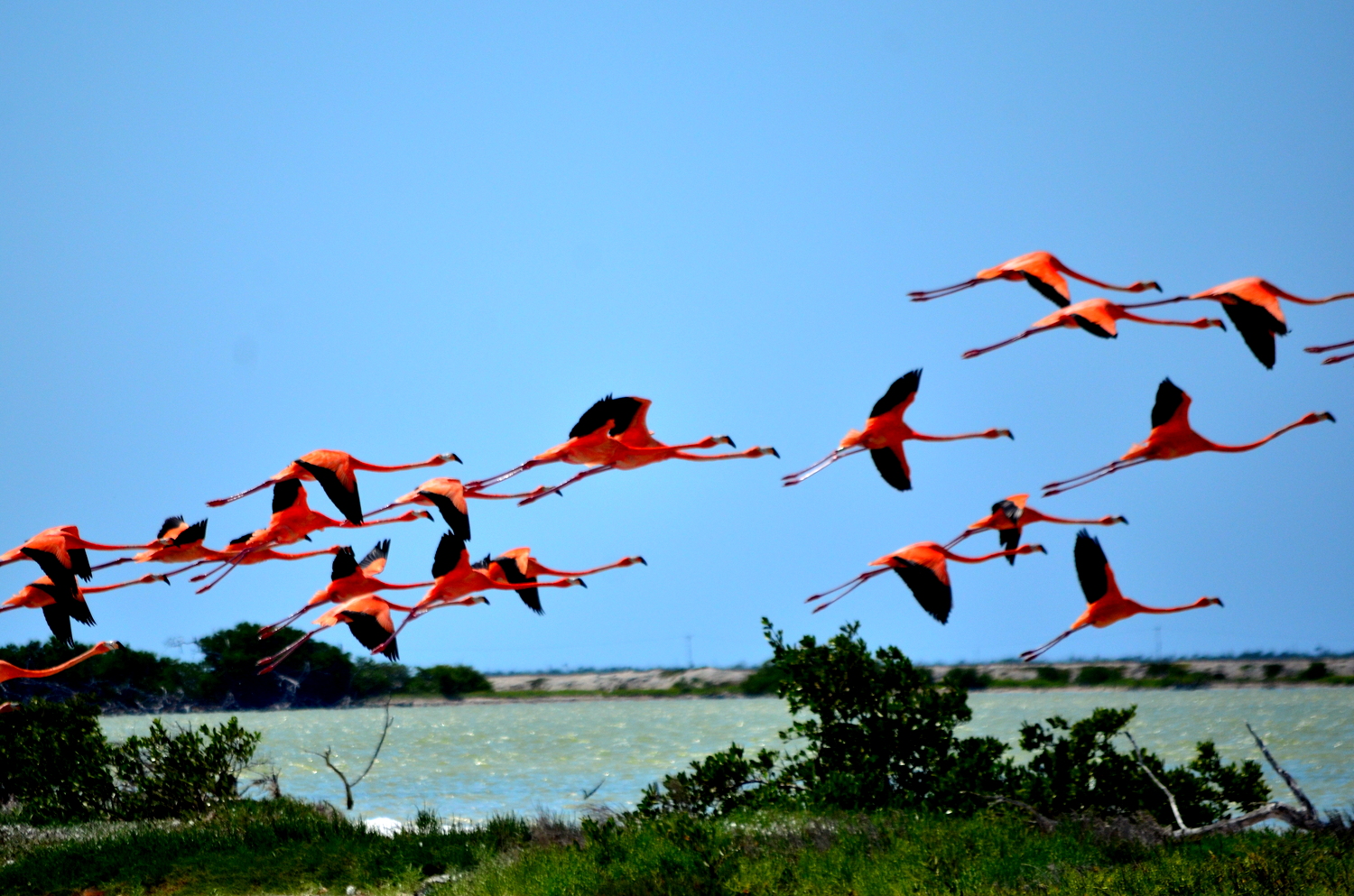
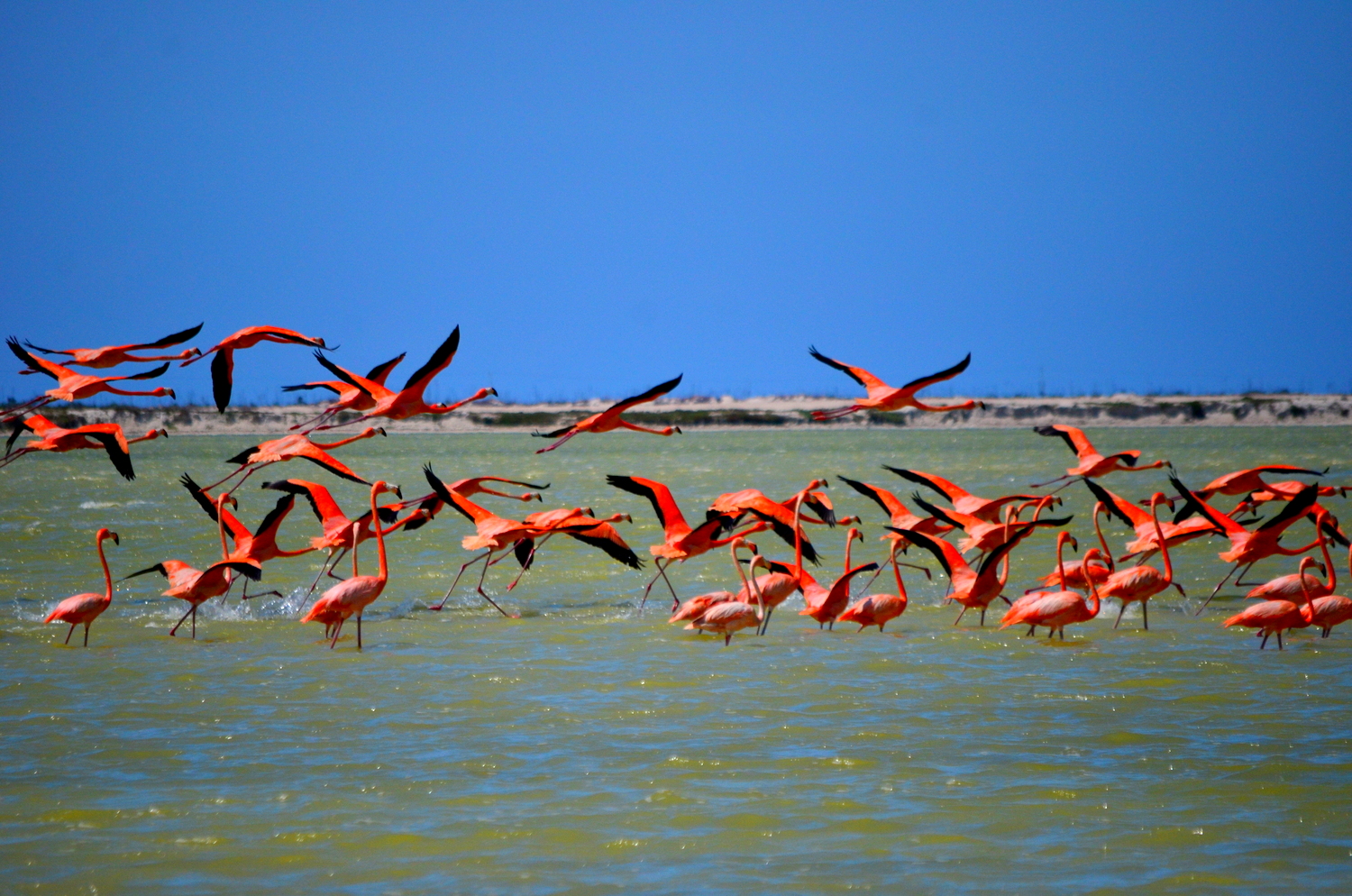
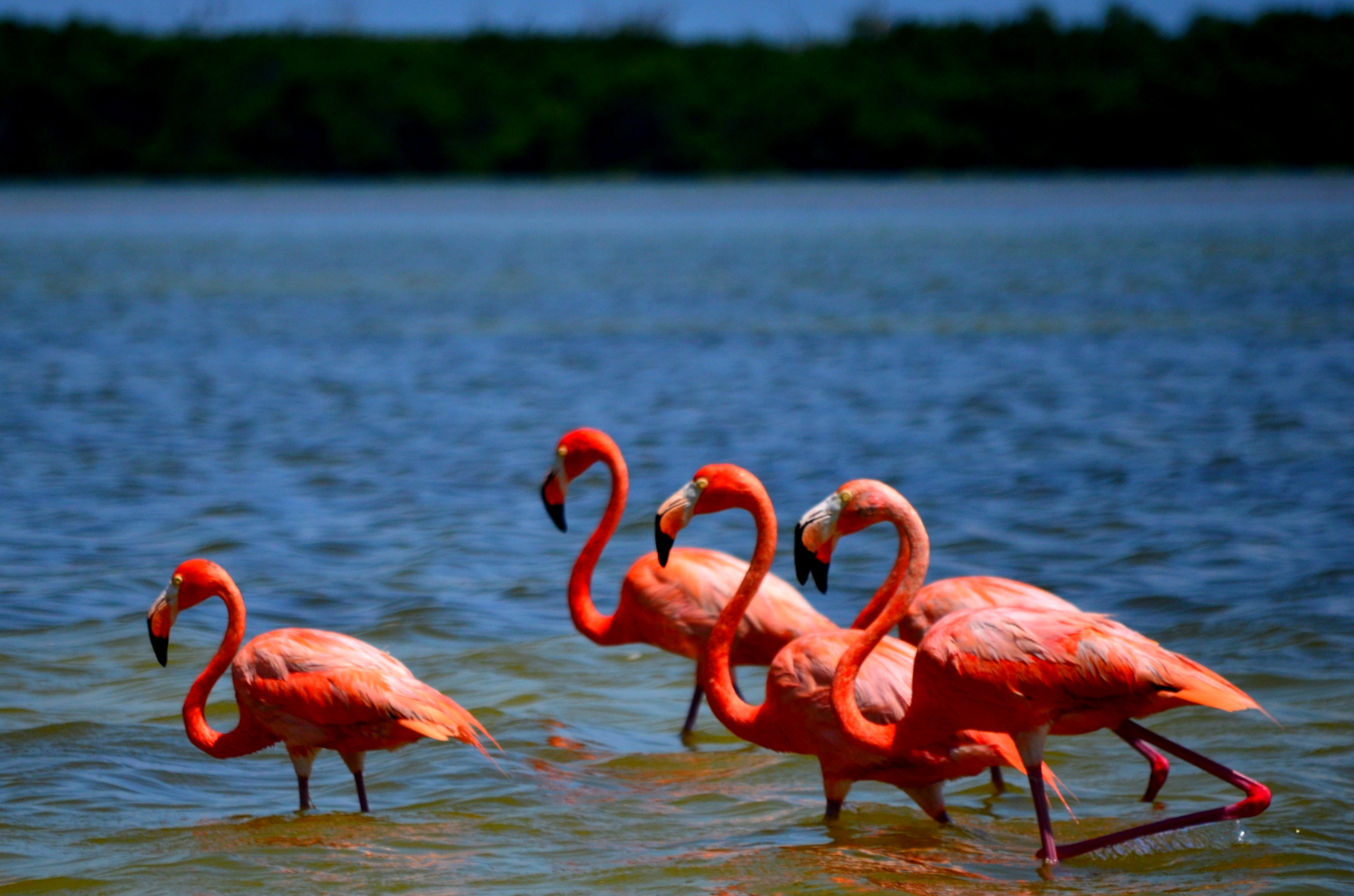
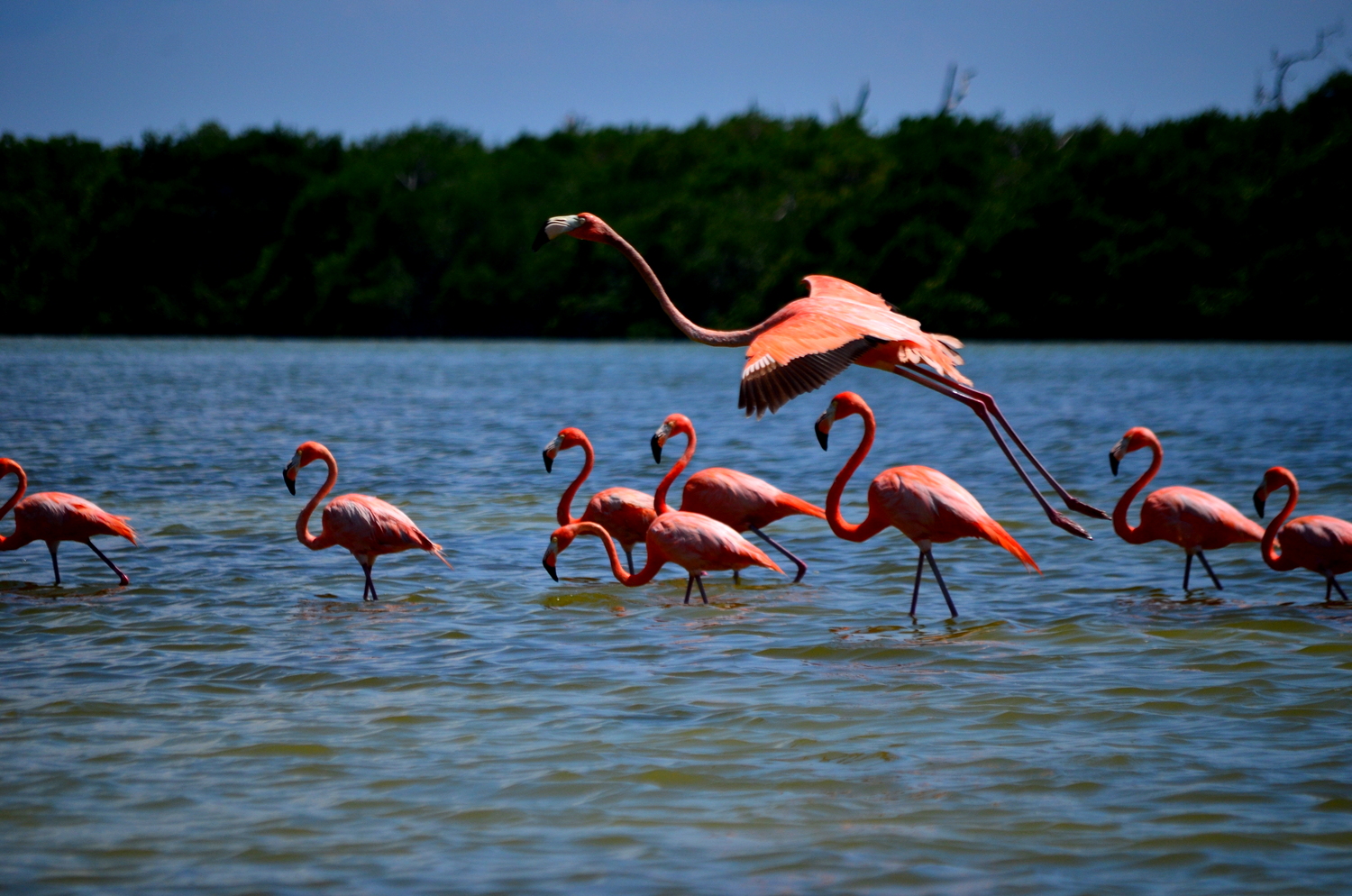
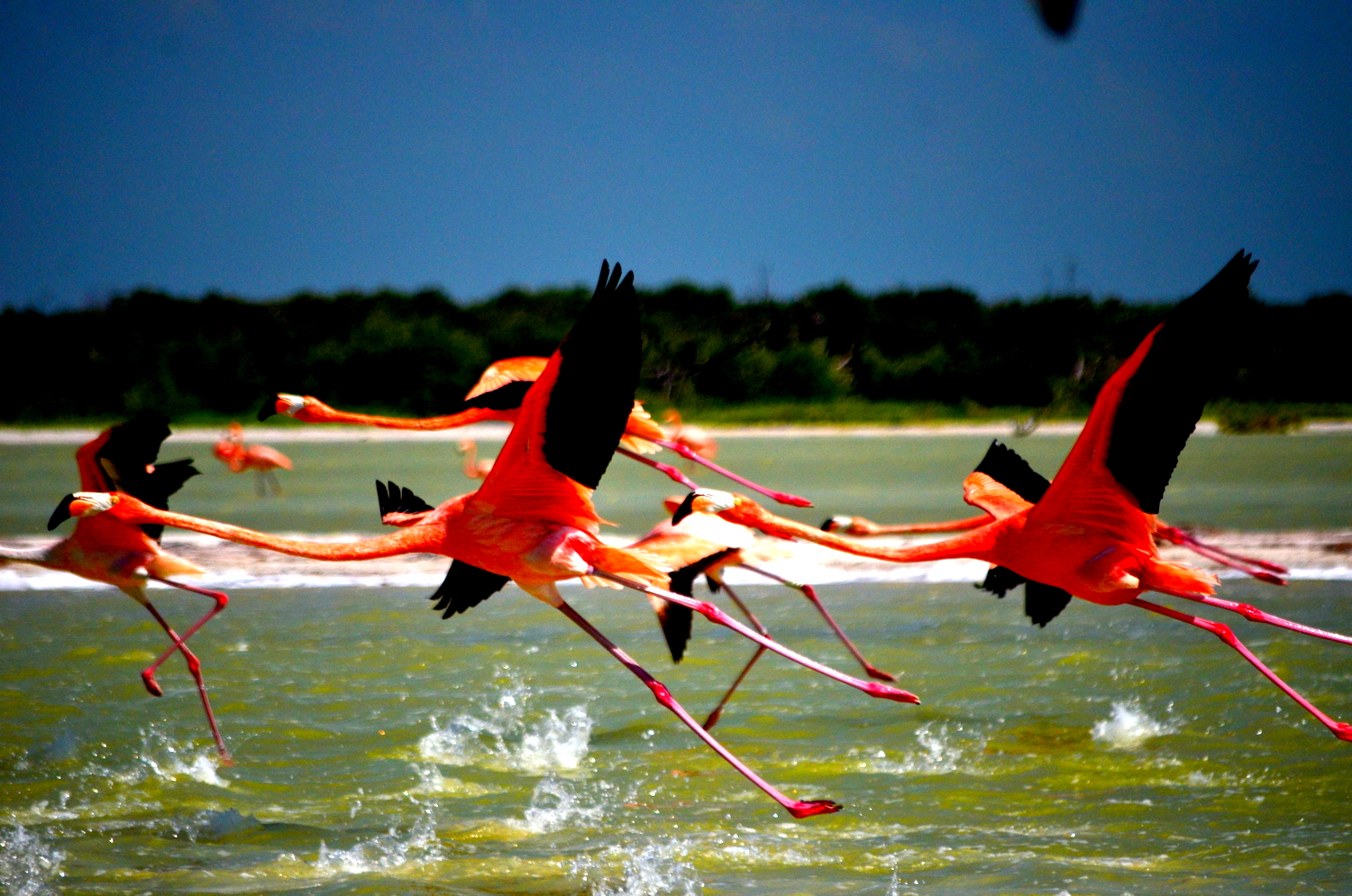
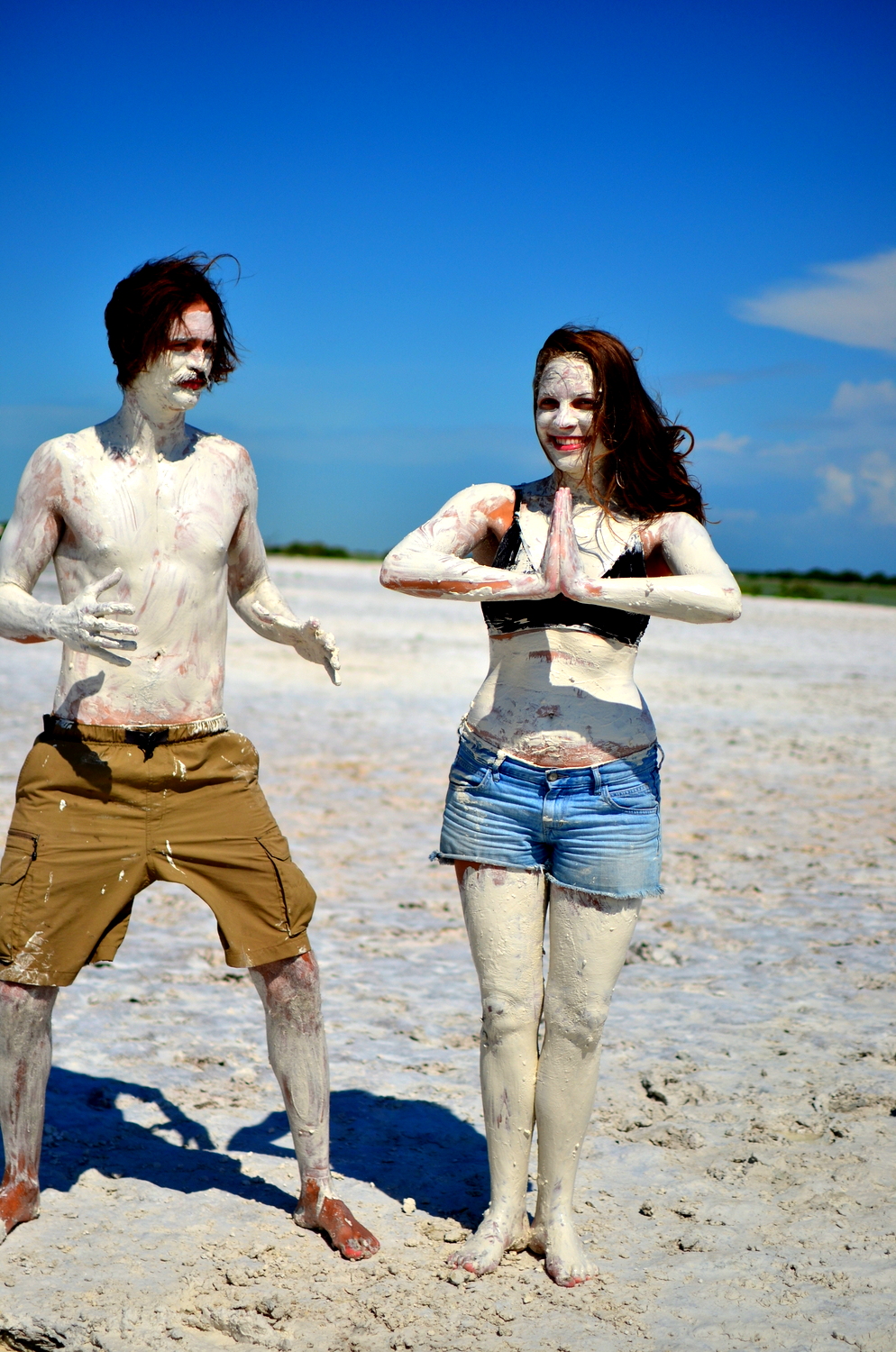
Adriano supposedly gives tours for about half the cost of what the tours were going to grab from our wallets. As luck would have it Adriano was pulling up to dock his boat as we were walking by his house. A short time later we found ourselves on his boat with some fresh beers flying through the untamed lagoon. Adriano knew this lagoon like the back of his hand and I watched with wide eyes as he maneuvered his skiff through a small maze of channels. For him it was probably like running to the grocery store to grab some milk, take a right past the 2nd mangrove tunnel, bear left at the fork with the gigantic dead tree… We killed the engine upon entering a large shallow channel about the size of a small lake and let our eyes focus on the majestic pink birds. Adriano grabbed a stick and punted us towards the pink flamingos in order to keep them from getting frightened. After slowly drifting up to about 20 feet from the 100 or so birds they started to take off. Since this was an afternoon excursion most of the thousands of flamingos were elsewhere in the mangroves but I think was a better experience because we were the only boat out there. Our guide told us that it is all too common to be amongst 20 or 30 other vessels in the morning or late afternoon. Adriano then took us to some breeding grounds to see larger flocks and guided us around the large open shallow waters where the birds were feeding. After letting us wander around on an island he took us to give us our traditional Mayan mud bath. Here he scooped out fresh mud from the ground and smothered us in the thick, white, heavy muck head-to-toe in a mask that we sported on the ride back into town. The overall experience was amazing and I’m still finding remnants of the mud on my bag and camera gear to this date.


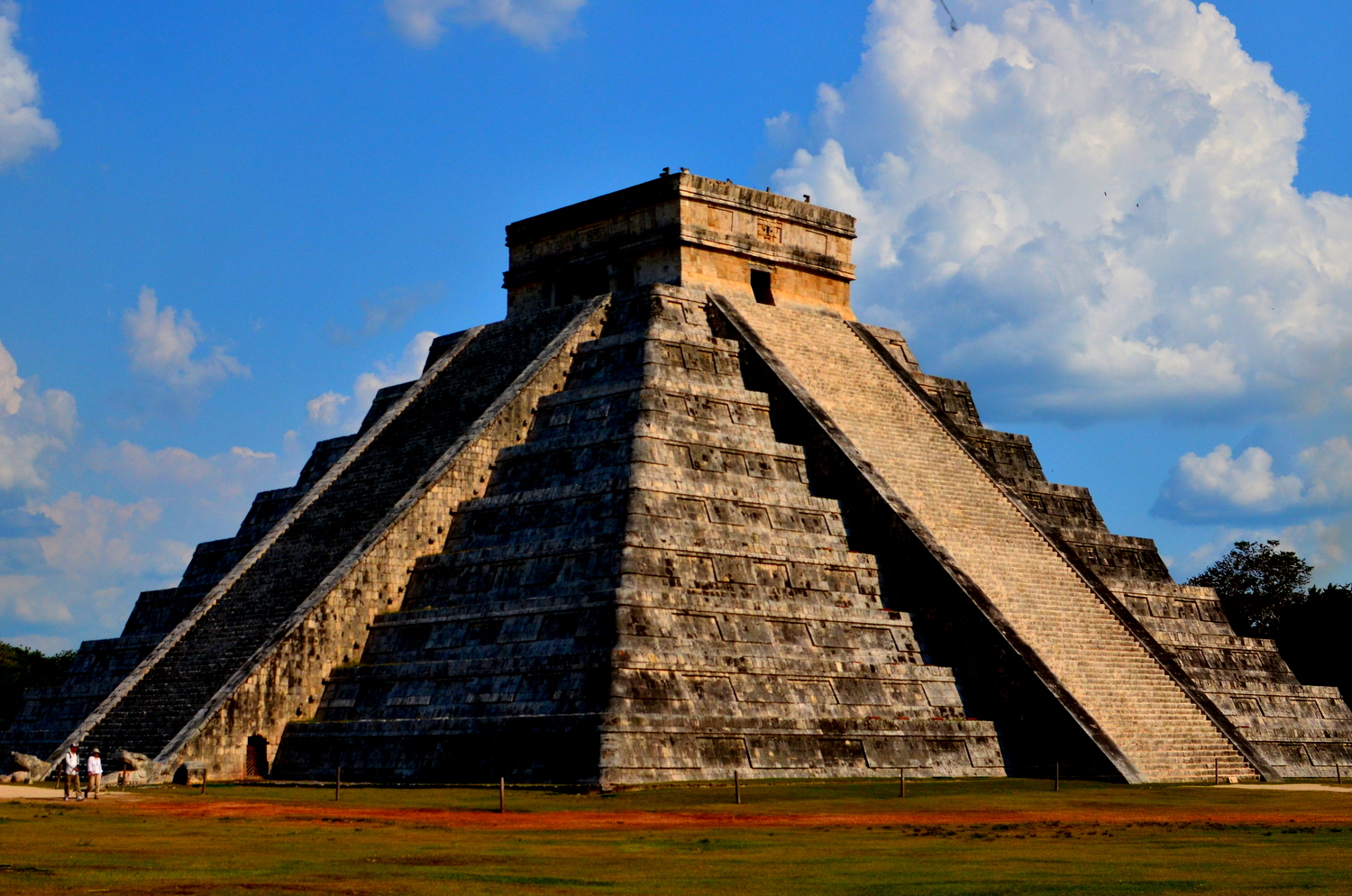
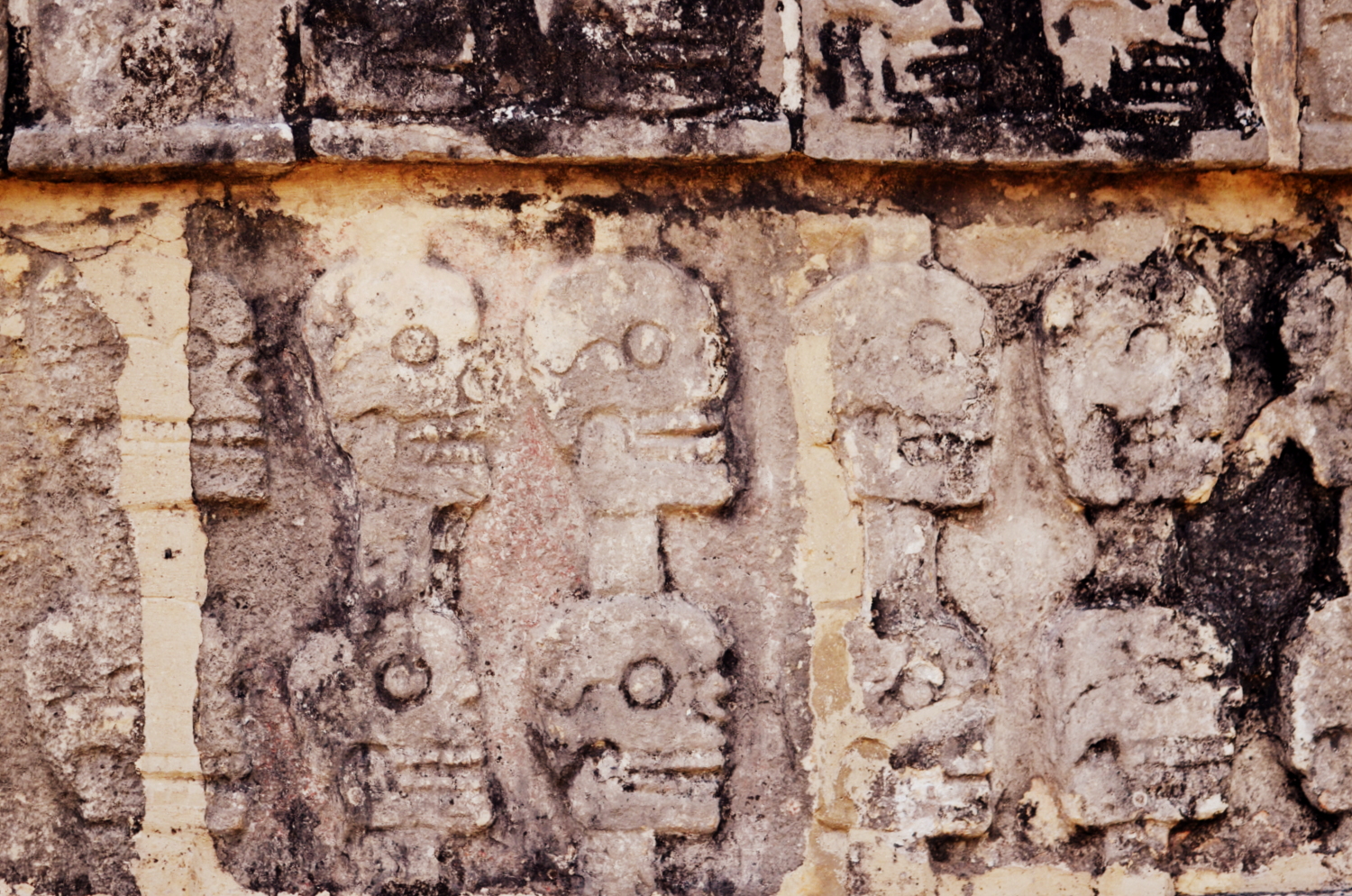
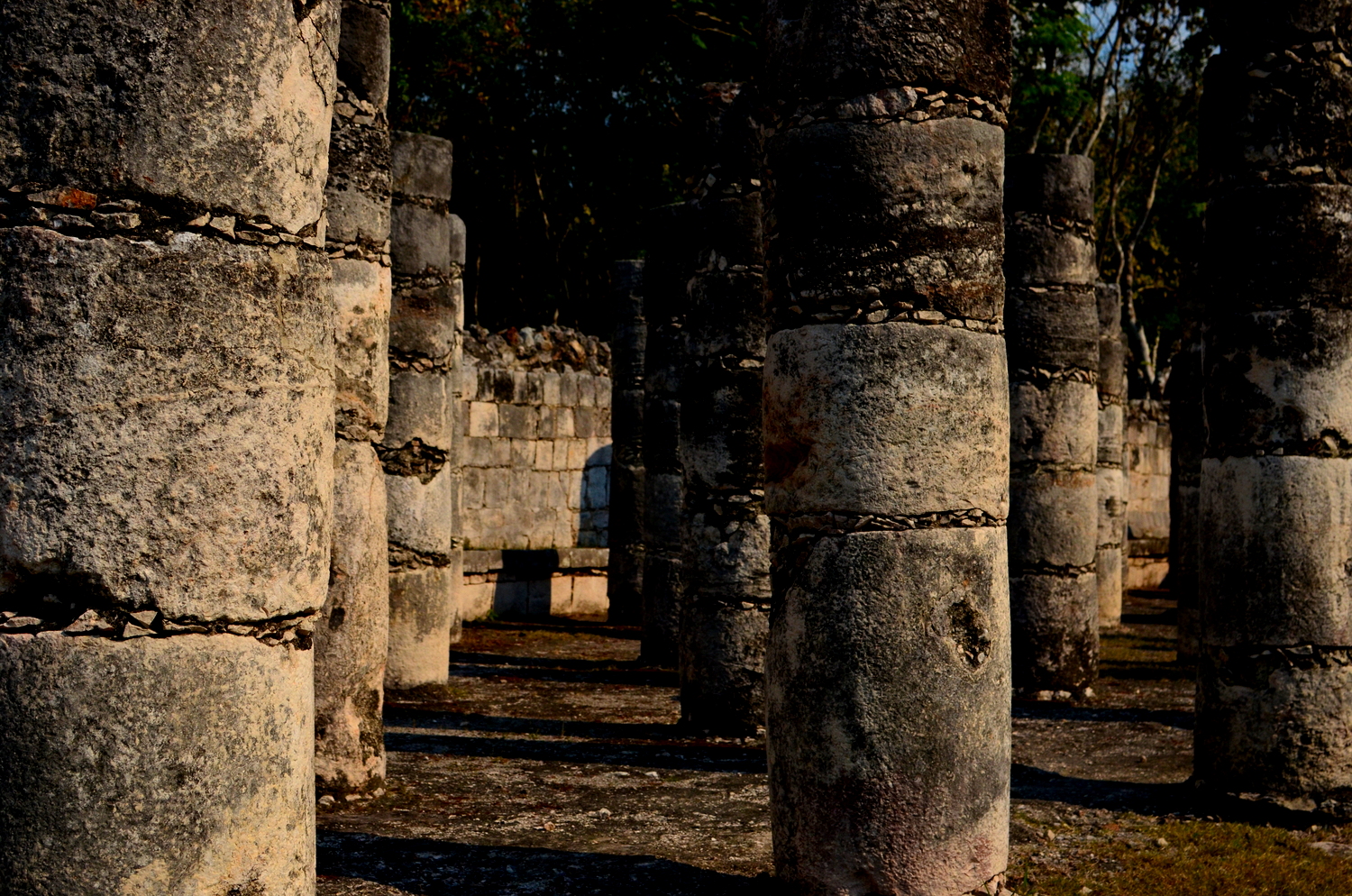
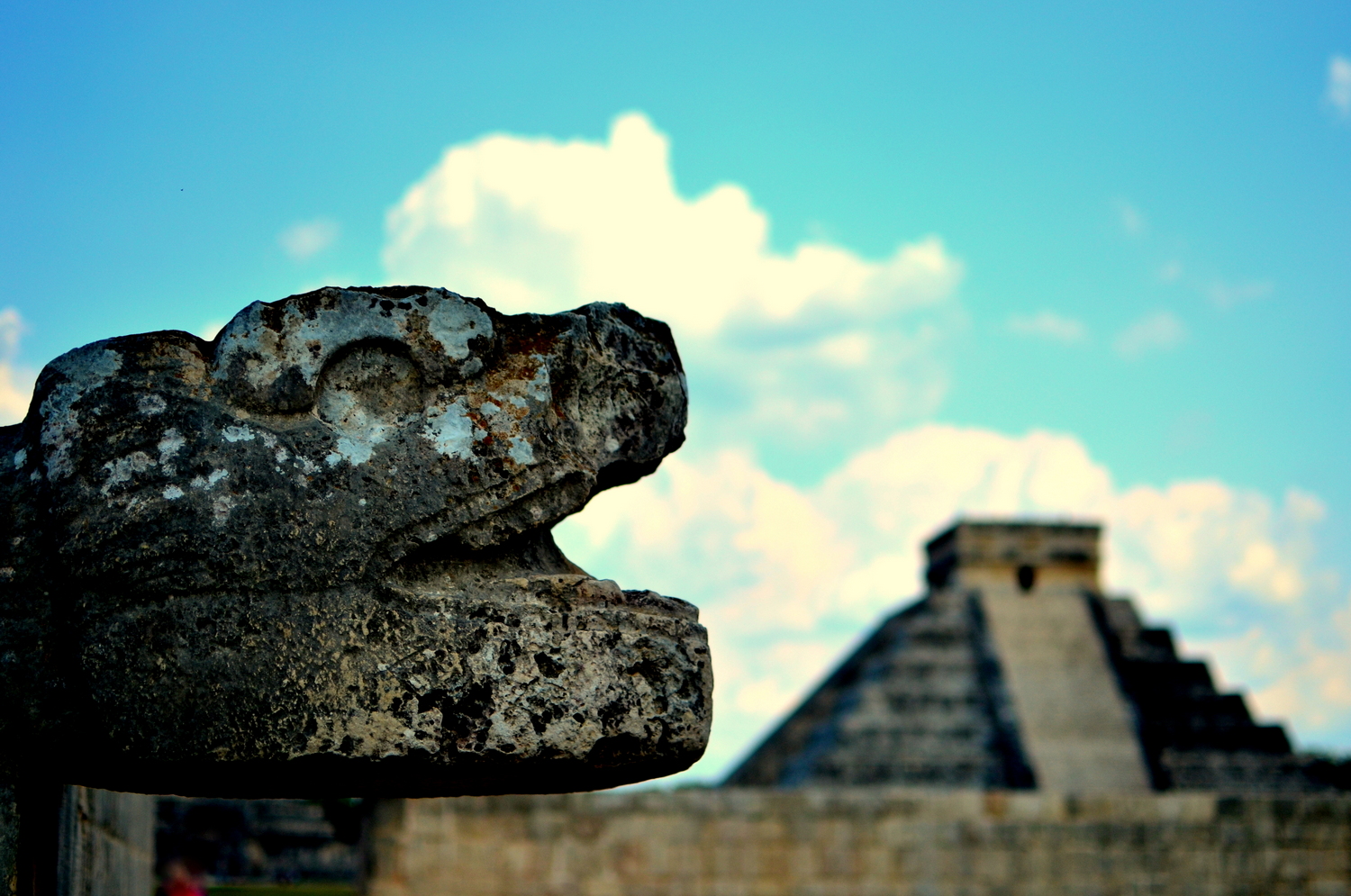
One of the main reasons we came to Vallodolid was to visit the world renown ruins of Chichen Itza. We were severely disappointed to find out that the ruins themselves cost about 3 times the price of all the other ruins we’ve been to at this point and is a very streamlined tourist destination from the blight of Mexico known as Cancun. Something like 1 million people visit the ruins each year and this ultimately results in a Disneyland-like feel to something that is supposed to be reflective, meditative, and spiritual. Seeing as how this was not really in our budget we opted to get there around 4PM when supposedly the gates were open to anybody until 5PM when the park closes. This would give us an hour to see the sight free of charge and better fit our budgetary needs. Being victim once again to the bus system in Mexico we had to take another impressively hot van to the site which was approximately one hour away. Within minutes I was in a conscious state of oblivion, pouring sweat from every pore of my body while miles slowly melted past. We arrived slightly later than 4PM and only had about 20 minutes in the site before areas began to get roped off to prepare the park for closing. We were able to see some of the main attractions but missed the sacrificial cenote and the planetarium. But since we didn’t pay to get in it was an easy pill to swallow. And from the looks of the site it seemed to be doing quite well with the constant Cancun tourist pipeline bringing in paper gold. Chichen Itza was also tarnished with hundreds of vendors hawking absolute garbage bastardizing the Mayan culture and significance of the ancient city itself. While waiting for the bus I humored a vendor with a “hand carved” mayan calendar and watched the price drop from 500 pesos down to 100 based on my complete disinterest in the molded plastic souvenir.
On the way out of town we passed by a small leather goods shop that was on our daily route to and from the hostel. It had had handmade boots on the sidewalk to entice pedestrians and walls full of sandals. We stopped in and spoke with the small shop owner who was making boots with an old, foot peddled sewing machine during our entire conversation. He wasn’t even looking anywhere near his work while he was perfectly stitching leather into rubber soles. I bought a pair of sandals from him for 12 bucks that fit like a glove and are probably the most comfortable pair of sandals I’ve ever owned. Riding off this high we met a nervous plastic surgeon from Miami in the bus station while waiting for our chariot out of town. After a few minutes of chit chat he told us he worked for Doctors Without Borders and had been robbed of everything, including his passport, the previous night. He was stuck in a situation and if he could make it to Mexico City they would set him up in a hotel while his new passport was processed. Having only 5 minutes to decide on how we could help him out we handed over 1,000 pesos and kindly asked that he pay us back as soon as he could because that was a lot of money for us in our current situation. I remember seeing the look of silent horror in the Mexican woman’s eyes to his left as we were giving this stranger a wad of money moments after meeting him. We exchanged information and never saw or heard from this man again. The decision was like trying to grab a double-edged sword. It was either helping someone out who really might be in a bad situation or giving up on the decency of humanity and saying “sorry pal, good luck”. In the end we got ripped off and now the next poor bloke that is stuck in a hard spot will have to figure it out on their own, unfortunately. A lesson that I’ve heard many times before was learned, at a price of 1000 pesos of course.
Palenque

Walking through the thousand doorways in my cluttered mind to find what room I put my thoughts about Palenque is quite tricky considering the ground that has been covered since. We are currently amidst another beautiful Belizean thunderstorm in a private casita in Placencia two countries away from where I left off. Traveling and writing is often impossible at times, especially if you want to find yourself in the moment where your mind and body currently are. It can often be a frustrating waste of time to grab your pen and write just because you finally have a moment only to realize that the words are just out of reach like a fly ball destined to be a home run no matter how high you jump. Thoughts typically come out as if someone else was writing them for you to an audience you don’t know. This paragraph is a perfect example of avoiding the task at hand. I’ll let this tropical thunderstorm charge this coastal stretch while I shake the dust of the layers of moments captured and stacked frantically in my brain until they all fall into a tangible and legible place.
Ahem. I remember the route to Palenque very well. Our bus moaned and groaned through the mountains and valleys of Chiapas breaching through the cover of the thick, pine highland forests and surfacing into lush, light green jungle flora. Banana trees emerged in huge swaths while our bus climbed up along ridges in the heart of this indigenous region. I remained firmly planted at the window catching glimpses of little villages between narrow mountain roads that looked like they had been precariously sutured onto the side of the cliffs. This was Zapatista country and evidence of their influence was seen by the various schools established with political signage tattooed onto these buildings and even some homes. The thousands of vantage points dotted along this asphalt strip flew by too quickly, mainly because my vision was constricted by about 2 feet of window space. Along windy, mellow turns inside the concave shell of mountain ridges panoramas of the wet wilderness passed by my wide-eyed gaze. The sun eventually broke through the dark grey rainclouds and boasted its yellow underbelly onto the farmlands below. Turquoise colored streams cut lazily through the valley floor while figurine sized farmers raked, tilled, and planted their fields. This was coffee country and it was easy to see why the fresh java treat tasted so good here.

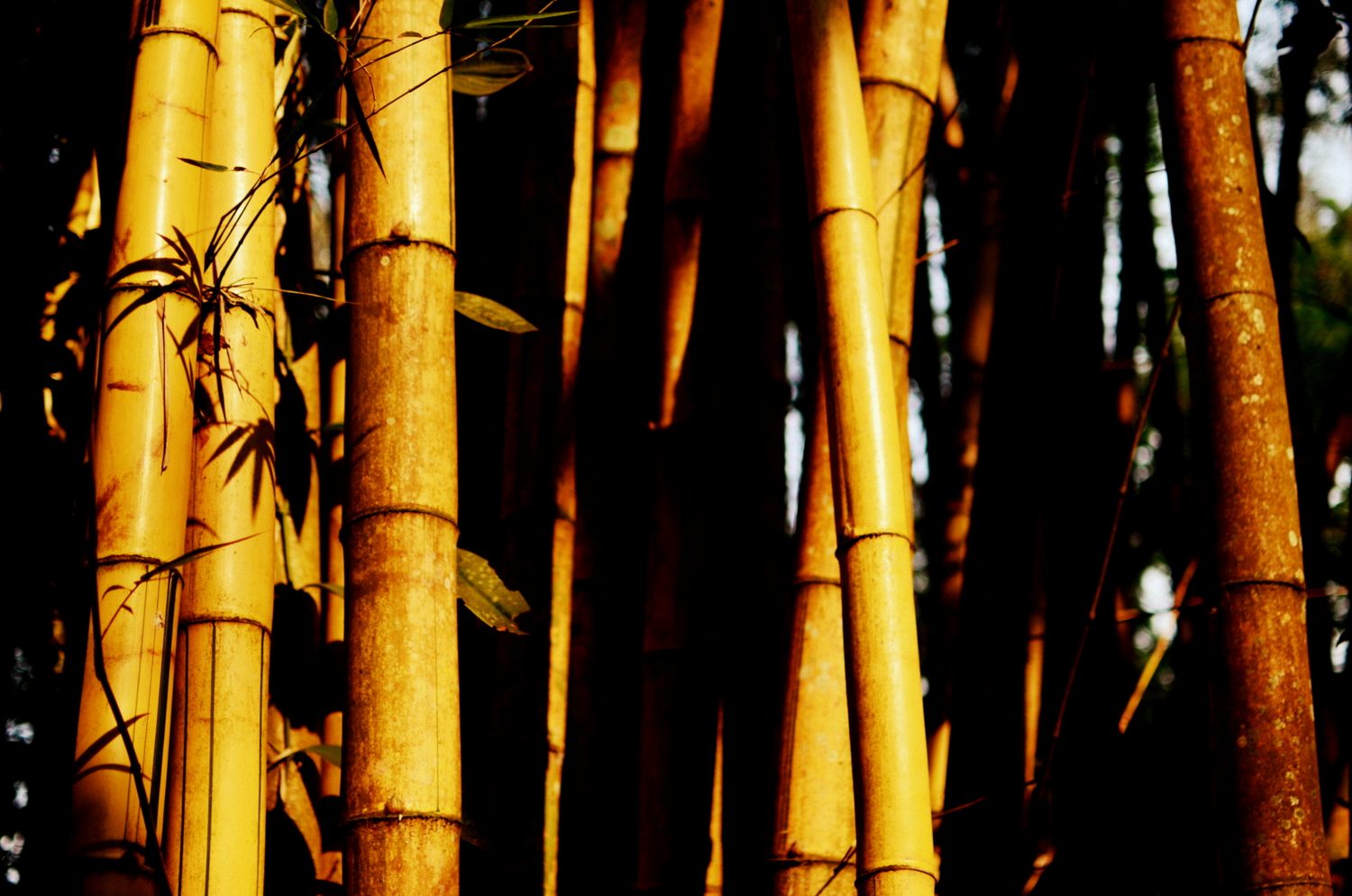
We stepped off in Palenque and were hit with a wall of some of the thickest humidity I’ve ever been in. We split a cab with a Canadian couple we met as we exited the bus and head off for El Panchan. Palenque didn’t have anything we were remotely interested in seeing and our camping village destination was situated right inside the jungle and in very close proximity to the Mayan ruins. When we stepped out of the cab the tropical forest greeted us with its fanfare of insects, birds, singing frogs, and gigantic green leafy trees. A local named Margarita set us up in our own screened protected thatched-roofed cabanas, a must for any jungle experience in my opinion. Without mosquito netting and screens we would have been fish in a barrel for those twisted flying vampires. We immediately scorpion-proofed our door and took cold showers to combat the heat. At around 3AM sleep ended abruptly due to the intensely graphic sound of the devil himself. Howler monkeys were practicing witchcraft in the trees with their deep, throaty bellows that sound oddly familiar to the soothing vocals of Slayer. This was my first experience hearing these little black creatures. “Jesus what’s that?!” came out instinctively when I opened my eyes in mild state of panic. I naturally woke Elissa up who was not very interested in hearing the monkeys and a bit more focused on the reason she was awake at 3 in the morning (whoops).



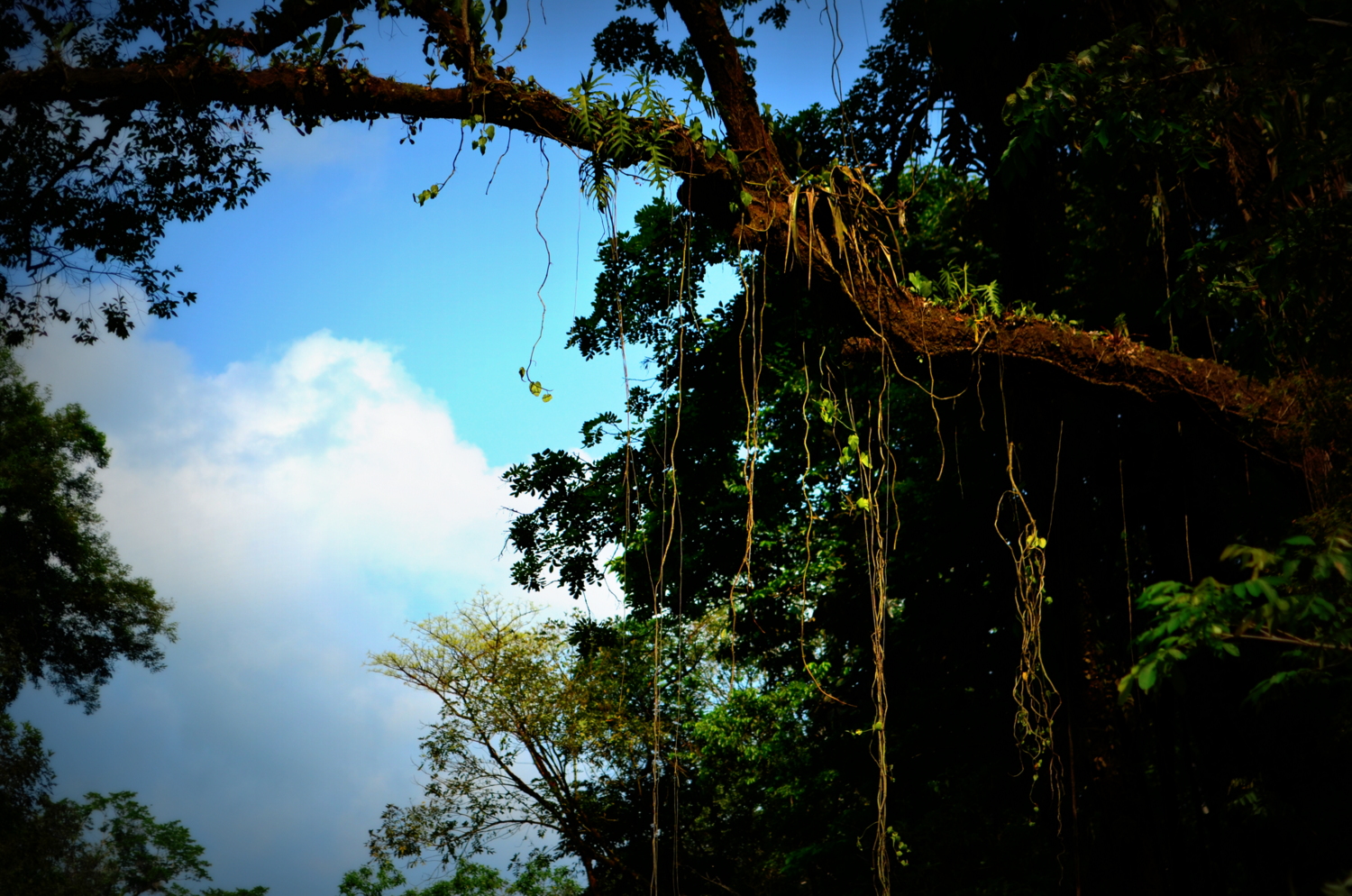
I spoke with Margarita for quite a while about the jungle and her little business housing travelers here. Trees here grow at a rate of about 1 meter a year to compete with all the other plants for the delicious sunlight that feeds the system. The astoundingly high rain fall this region further drives the growth of the flora and gives life the shelter and resources it needs to flourish. They had satellite internet here for about two years but the trees soon reclaimed their wilderness by blocking out the signal. The soil in the jungle is about 1-1.5 feet of forest mat and organic material sitting on top of thick, impermeable clay. The roots of the trees grow down into the organic soil layer and run along the clay, thus creating a very fragile tree root system susceptible to violent weather systems. A common threat in the jungle is the wind that powerful thunderstorms can bring. Very heavy trees fall down easily because of their unstable foundations. She has a 70 foot tree looming over her house that no one will cut down no matter how much money she offers because the sheer size of the beast. Jungle problems.


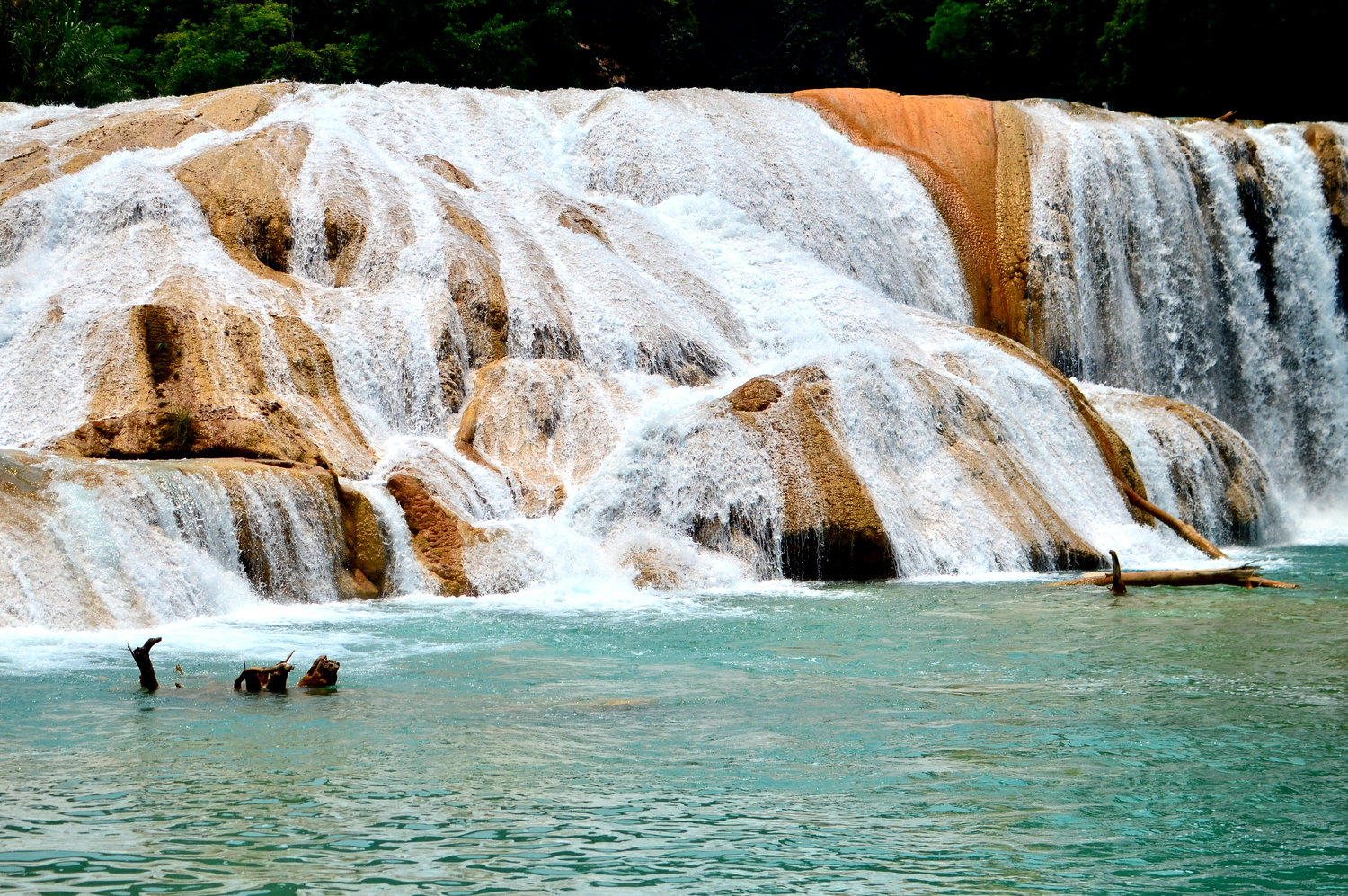
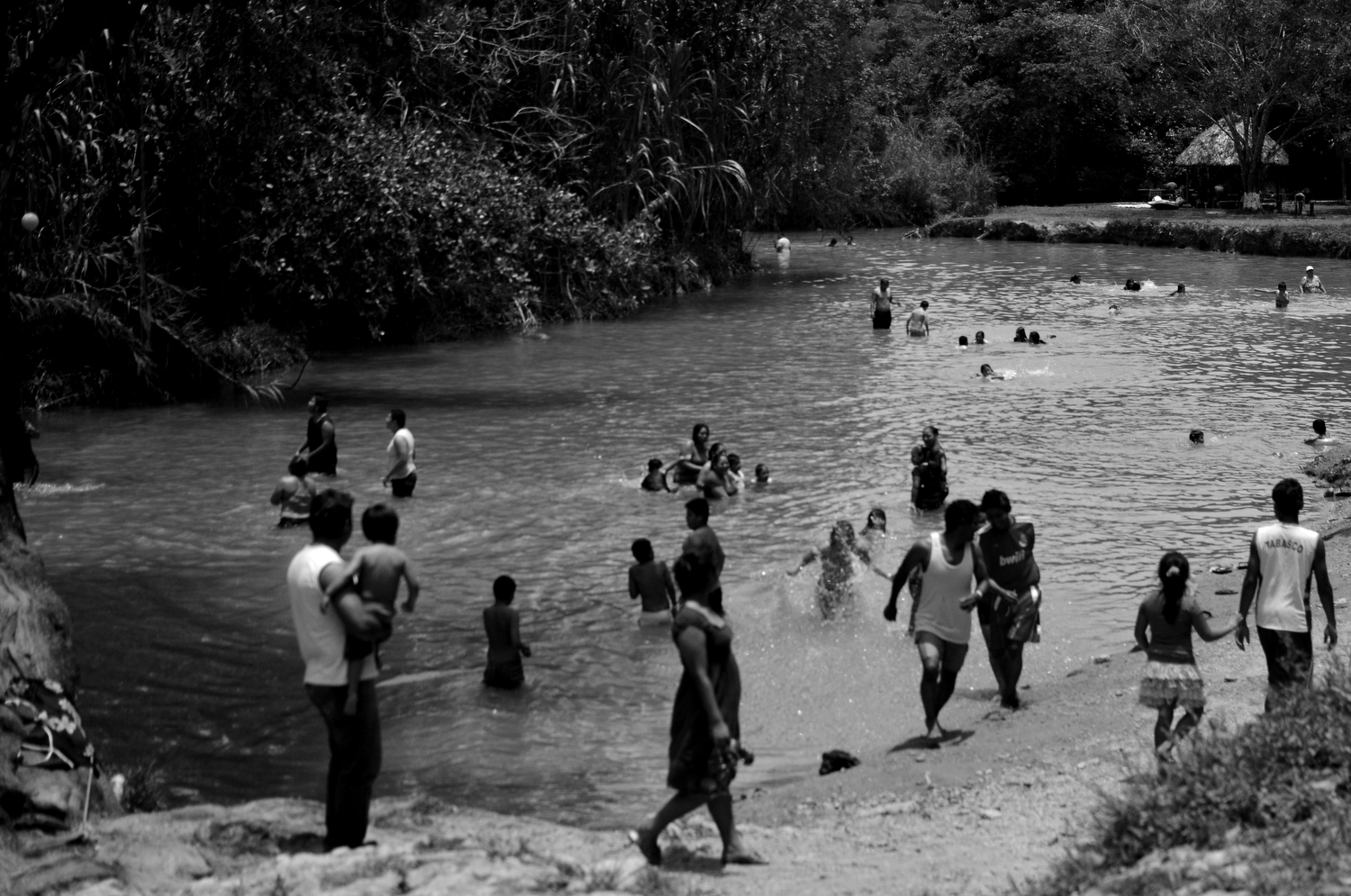
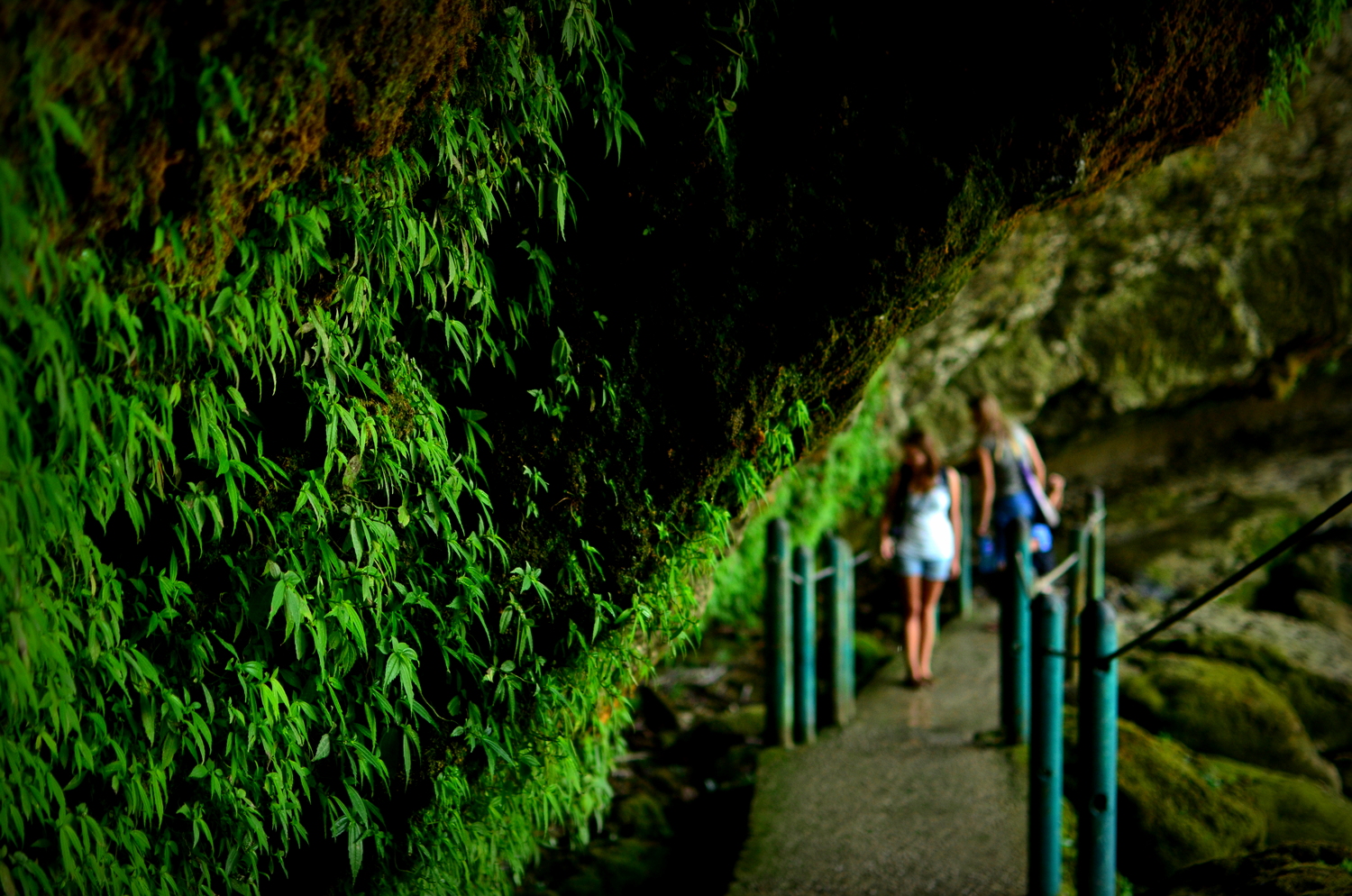
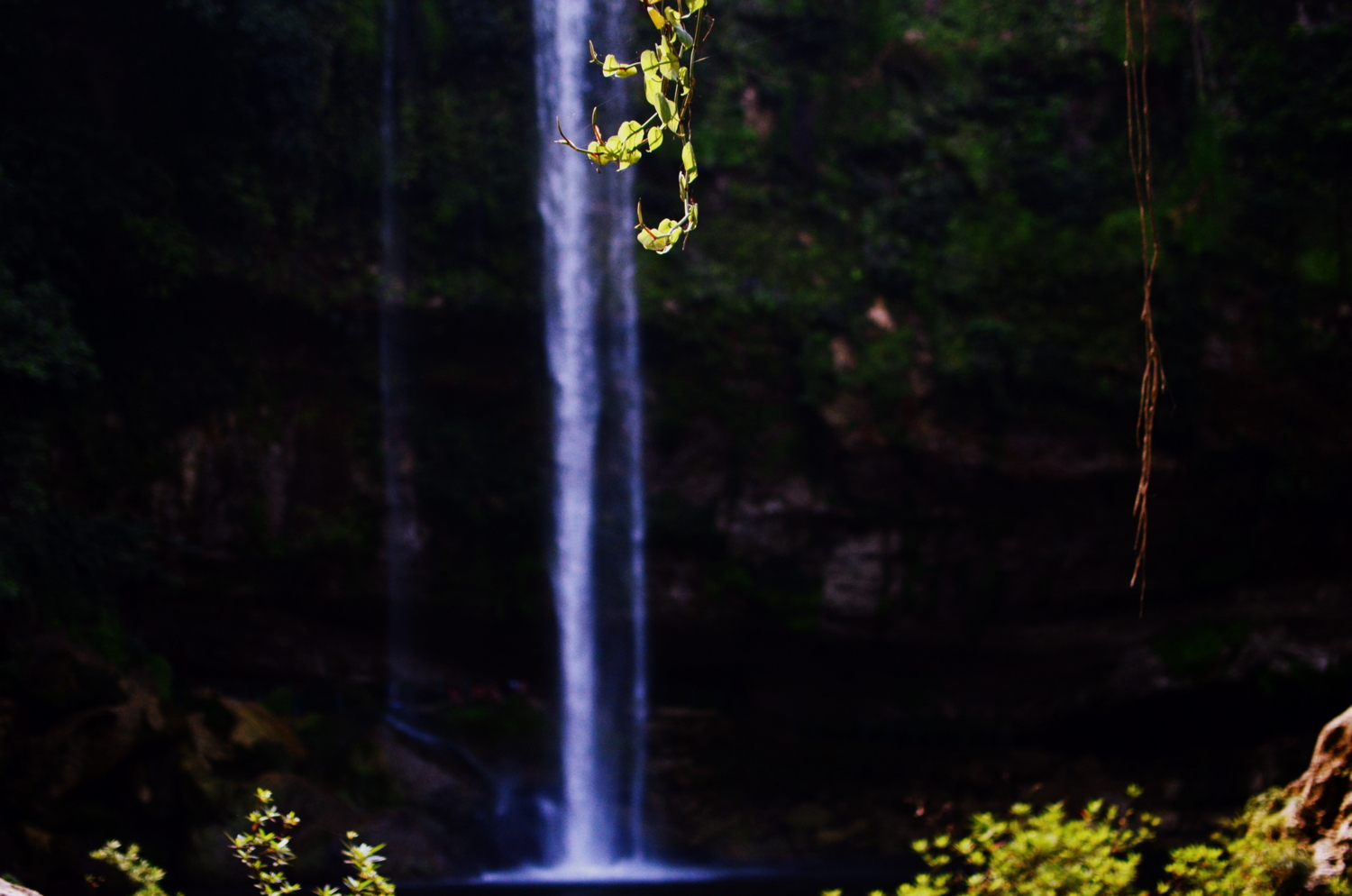
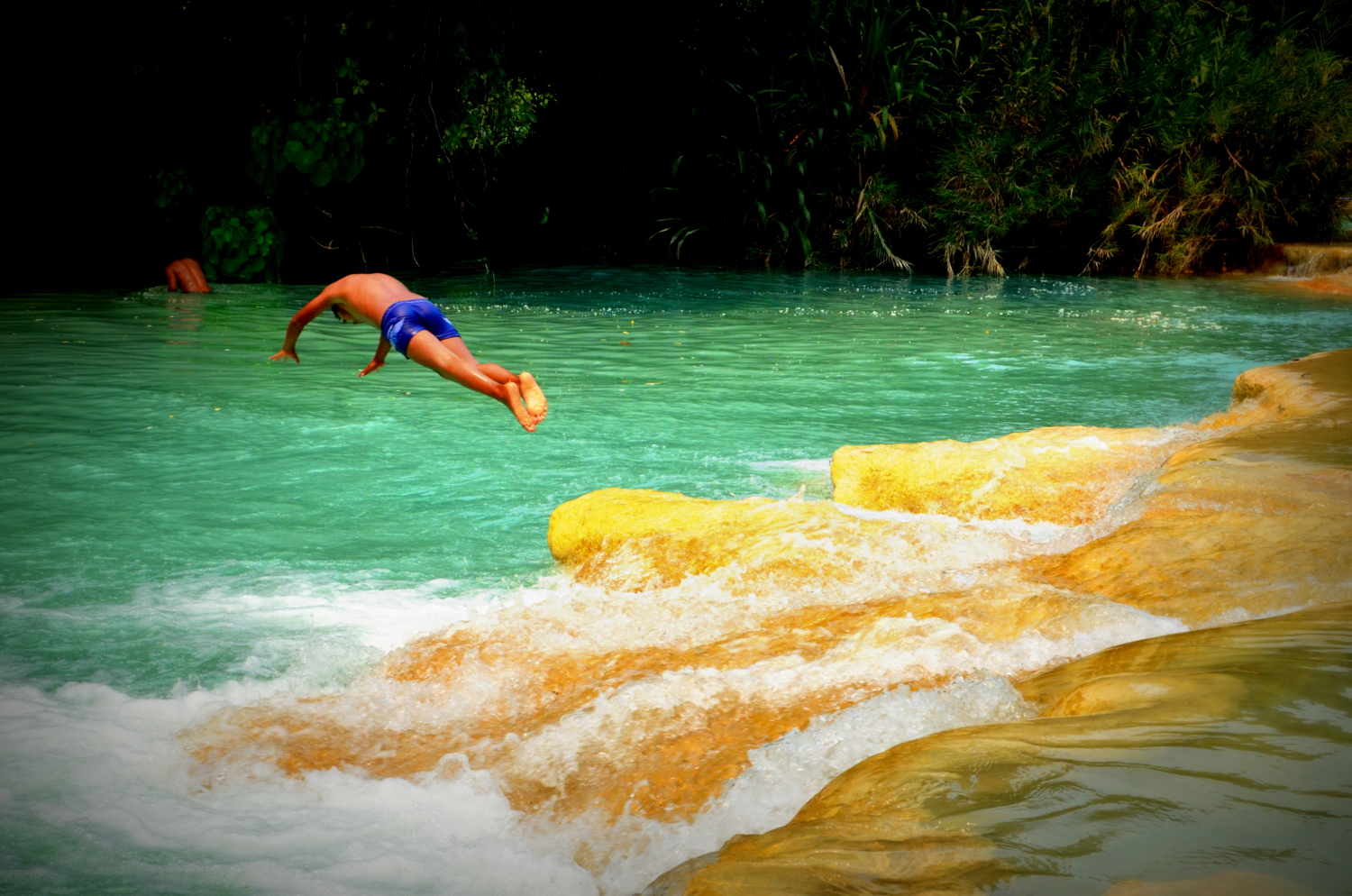
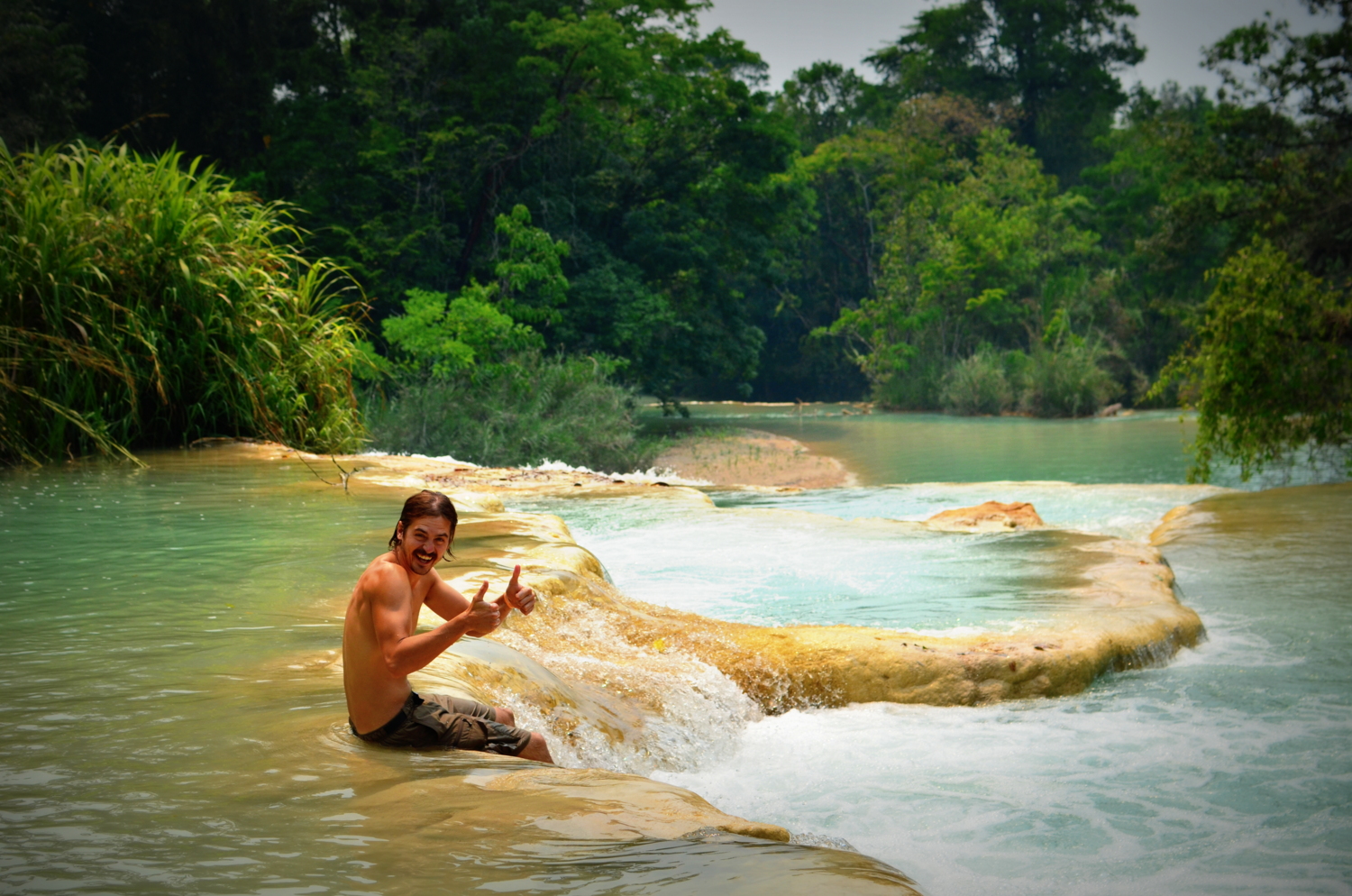
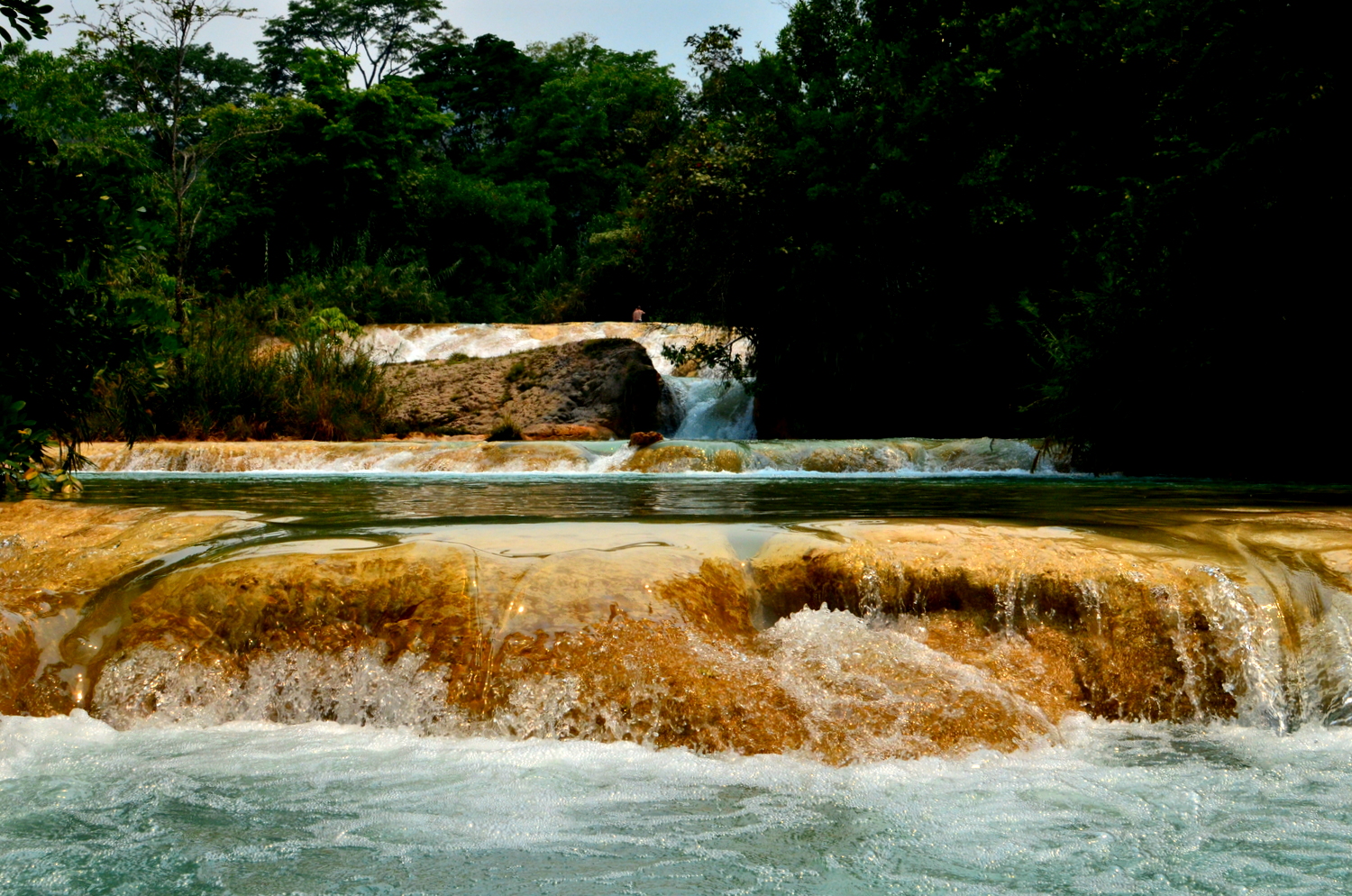
The heat that was ubiquitous here helped guide us to our decision to visit Agua Azul for some cool blue waters on our first incredibly hot morning. After an hour of windy mountain roads our mini-tour dropped us off at Misol-Ha falls. I’d like to say at this juncture that I am not a fan of tours. They are a little too structured for me but the only real and affordable way to experience natural features in this part of the world sometimes. We had 45 minutes to take in the massive waterfalls and the life around it. The temperature dropped a little in the shade behind the falls and was teeming with small bright green plants that clung onto the hanging bedrock wall. There was also a small cave with a river coming out creating its own fresh little waterfall straight from the heart of the mountains. After soaking in the falls we filed back into the van and sped towards Agua Azul. Agua Azul is comprised of probably several dozen cascades that are all mountain fed tributaries joining into larger streams and rivers. The platforms that create the various sized waterfalls are eroded limestone sequences that are smooth and can be very slippery. One slip into a deeper than expected pool almost saw the untimely death of my camera. The water itself is the primary attraction and when caught in the right season is an aqua teal color that is hard to forget. The mineral content of the water is thought to be healing and consists mainly of calcium carbonate (eroded limestone) and magnesium hydroxide. The mineral rich water absorbs the entire color spectrum with the exception of blue creating the deeply saturated turquoise shade. All four of us welcomed the cool, crisp mountain water as our new best friends as we cooled our overheated bodies playing and exploring the pools around us. A nice Mexican family gave Damien and Marianka some barbecue pork ribs and limes for us to share in this beautiful natural park.



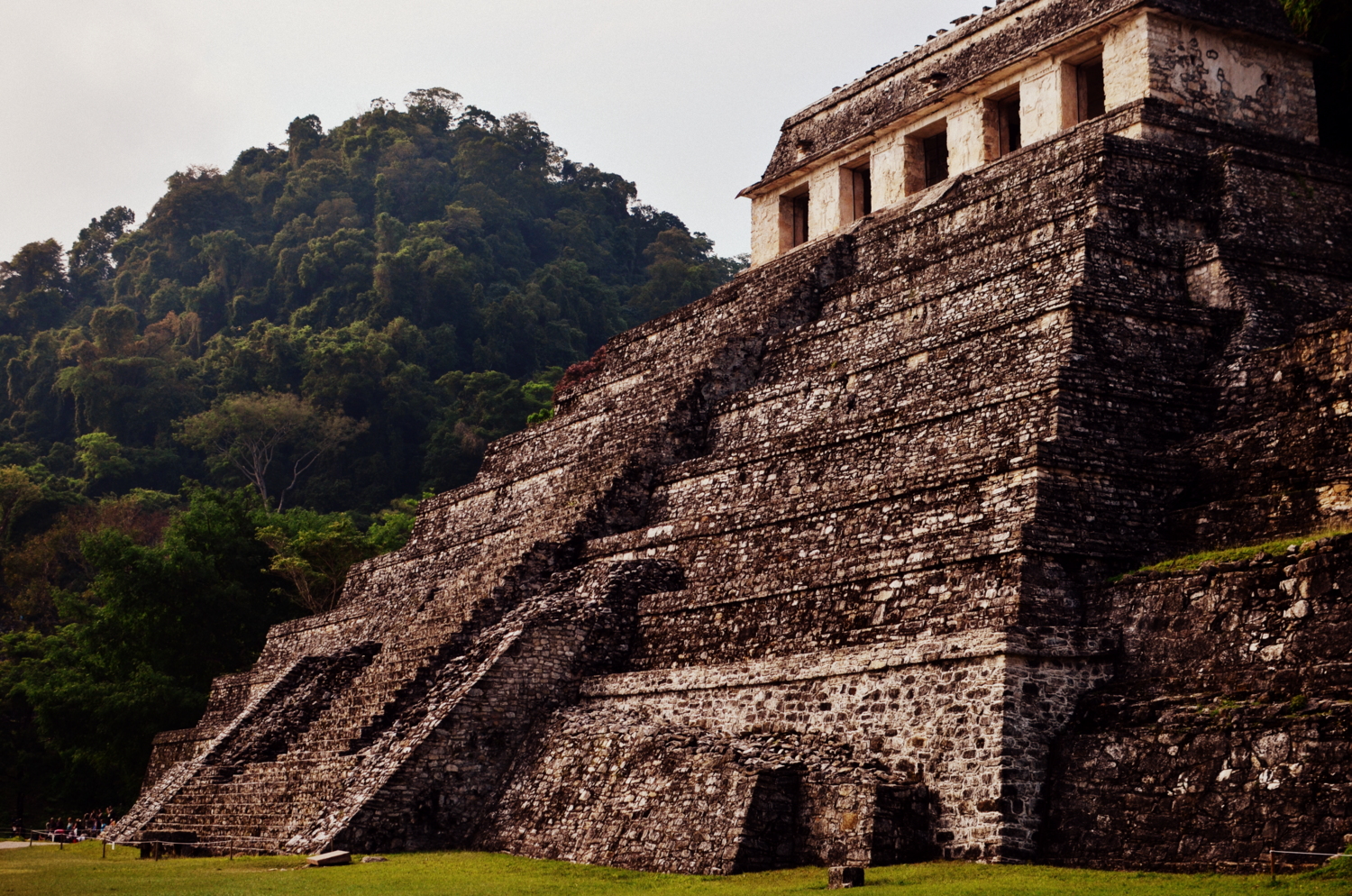
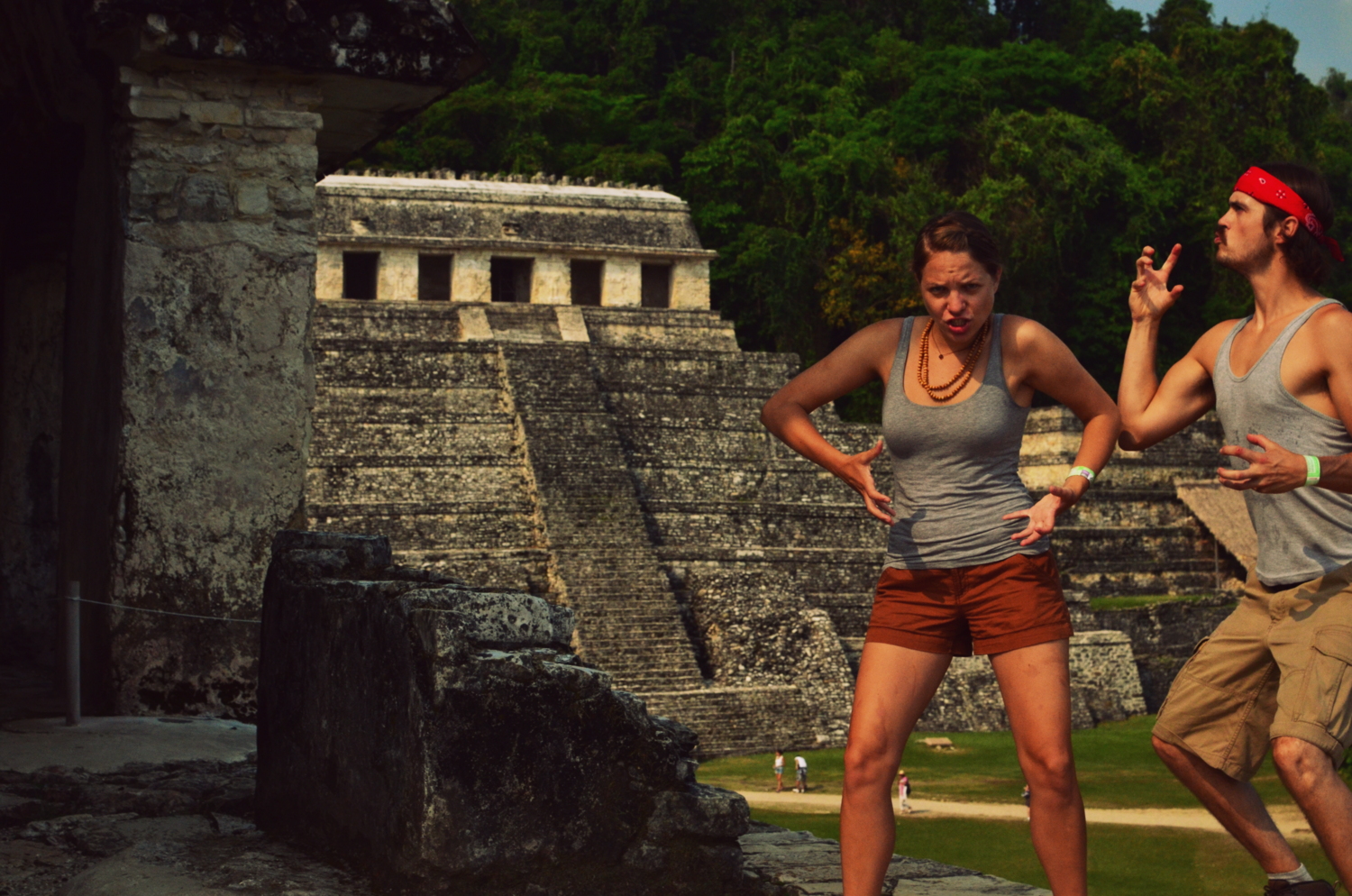
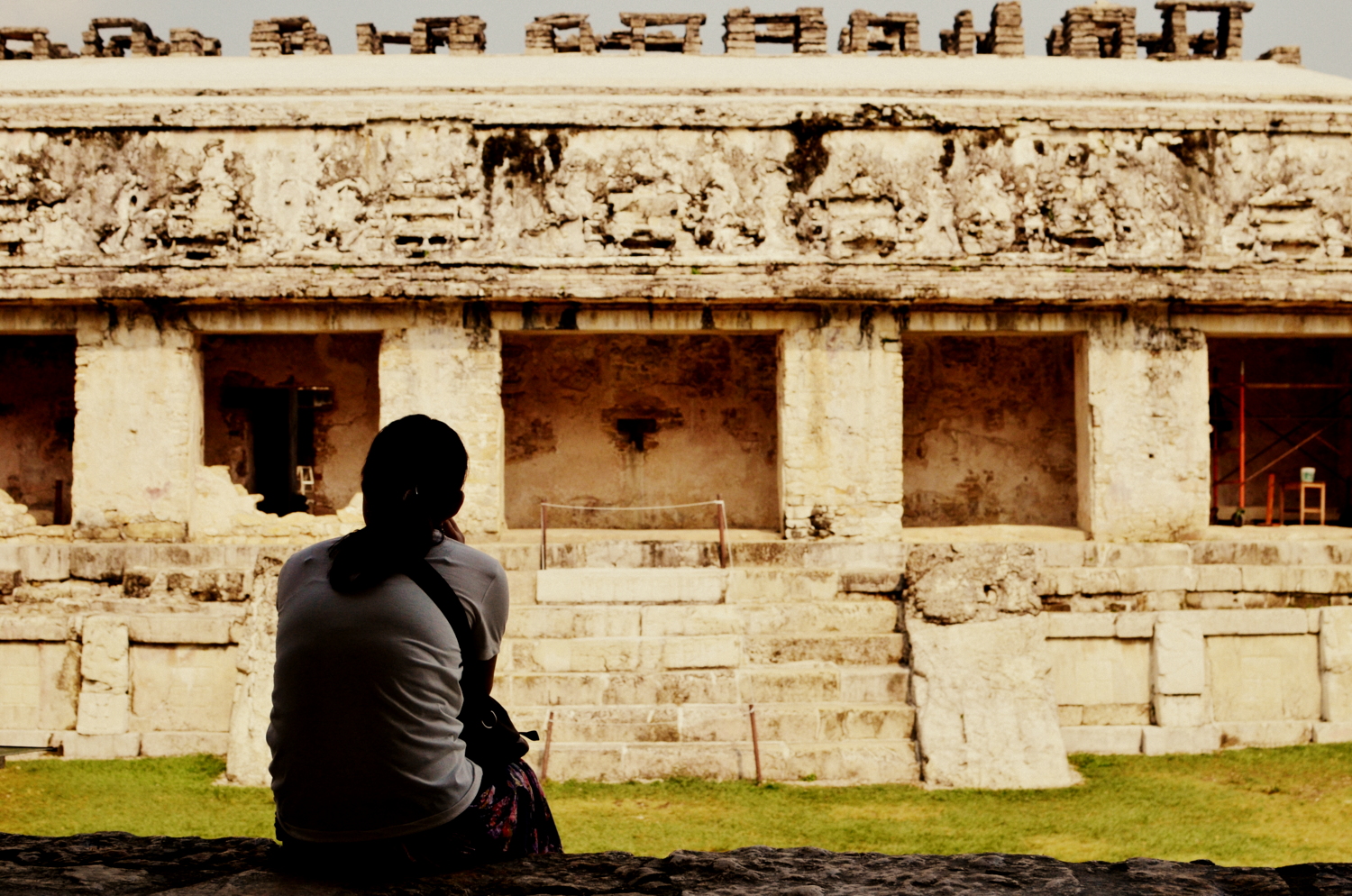
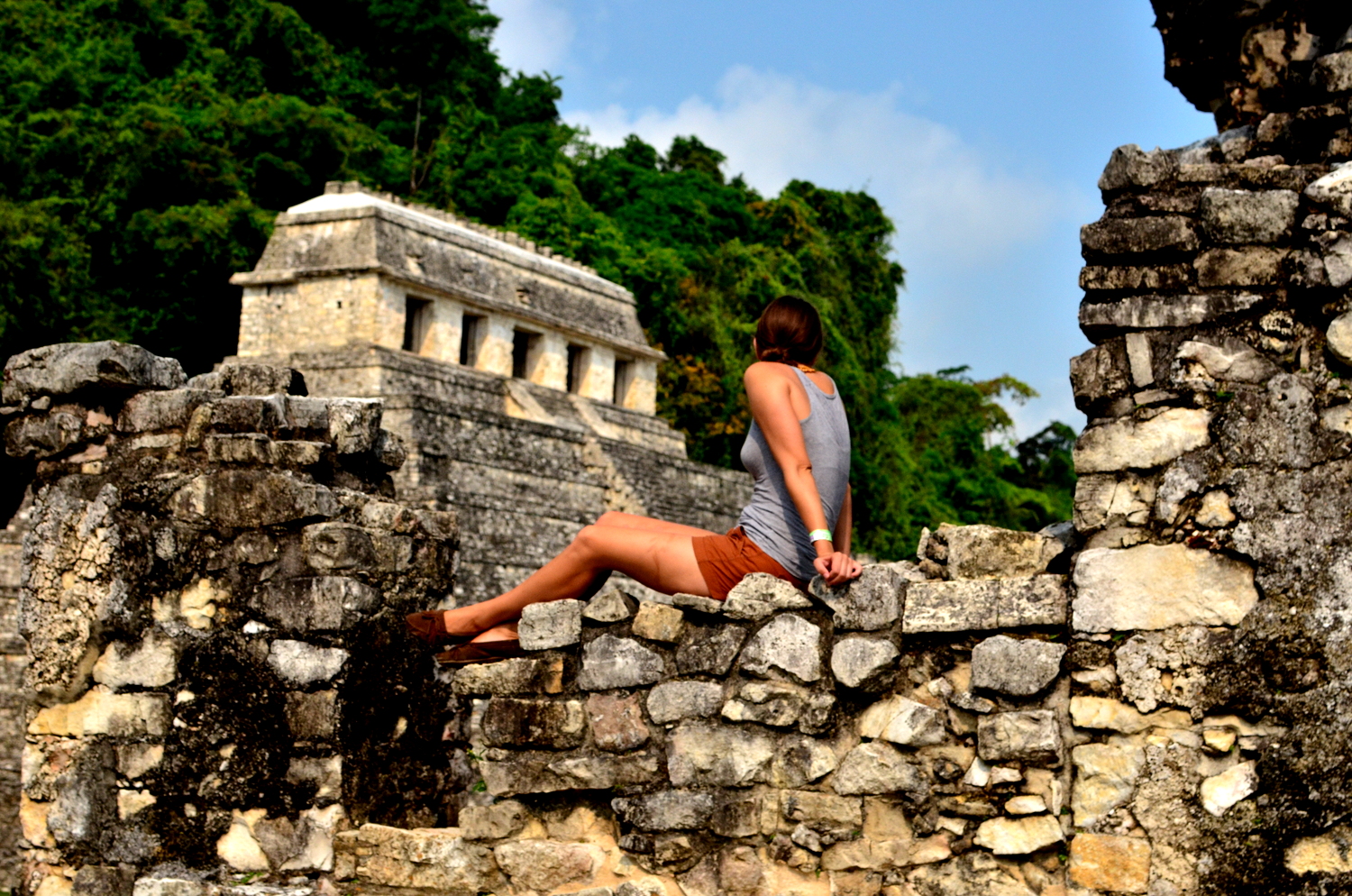
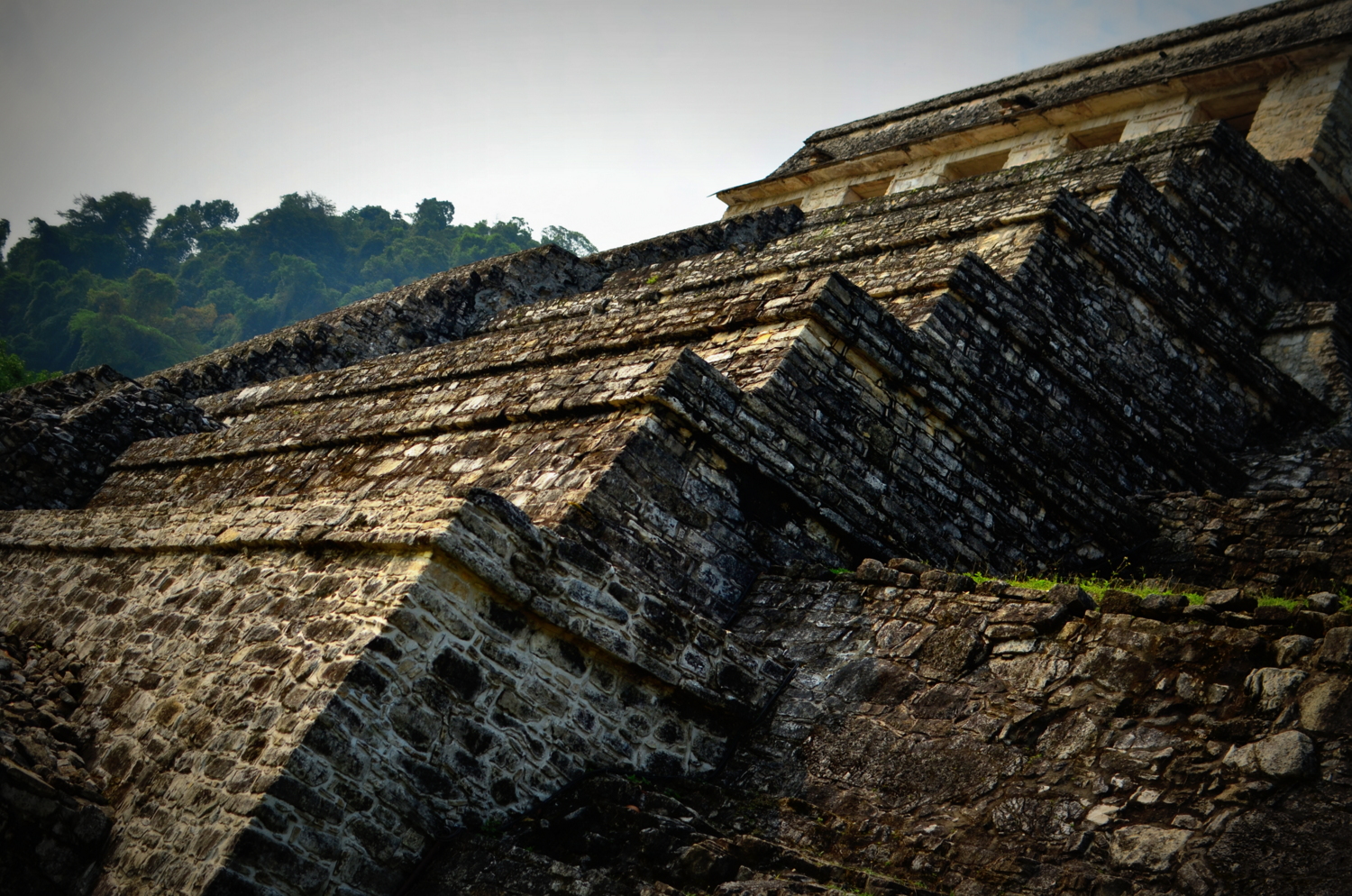
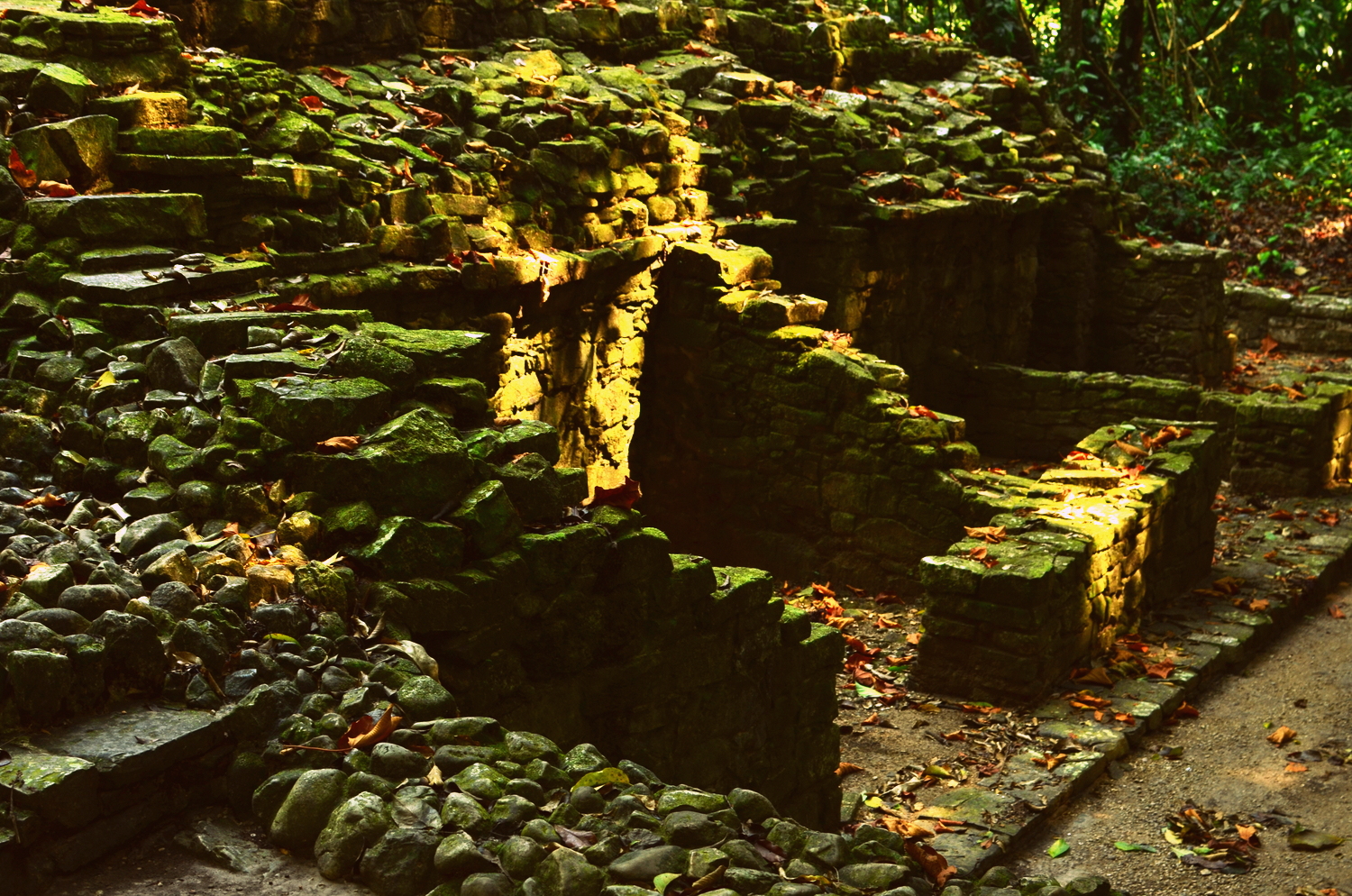
The following day was spent at the ruins of Palenque. Having seen quite a few ruin sites by now we were glad that Palenque had some fresh new twists on old things. This ancient Mayan city was decidedly built right in the middle of a vast jungle territory. Pyramid-like castles rose from the ground with green banana tree backdrops accompanied by the constant hum of nature’s orchestra tuning it’s instruments. A majority of Palenque’s buildings are structurally sound and in good condition for an active archeological site. Visitors are allowed to walk, climb, and explore just about every feature here. There are teams of archeologists actively uncovering, researching, and drawing their finds throughout the site. The trail leads you through various parts of the ruins and then into the jungle where other buildings and structures are peppered throughout. Gigantic moss covered trees were always in eyesight, stretching sky high towards the sun. We came across two waterfalls within the site and one was paired with a small footbridge affording a straight on view. After getting ruined we decided swimming was the only logical thing to do. The only problem (other than the complete disregard for cleaning the water) with the free pool was it was almost the exact temperature of the air thus defeating the purpose of the pool. Since it was free there was no reason to be anything but content.


One more night in our cabana in the jungle and one more night of live music and great but slightly pricey food at Don Mucho’s (the only happening bar in our community). We bee-lined it for the coast hoping that the salty air might have some sort of delicious breeze to cool our heat soaked skins. Another day in the jungle might have been it for me, just enough to push me over the edge and into any air conditioned box with a bed in a glorious retreat from backpacking.




San Cristobal de Las Casas
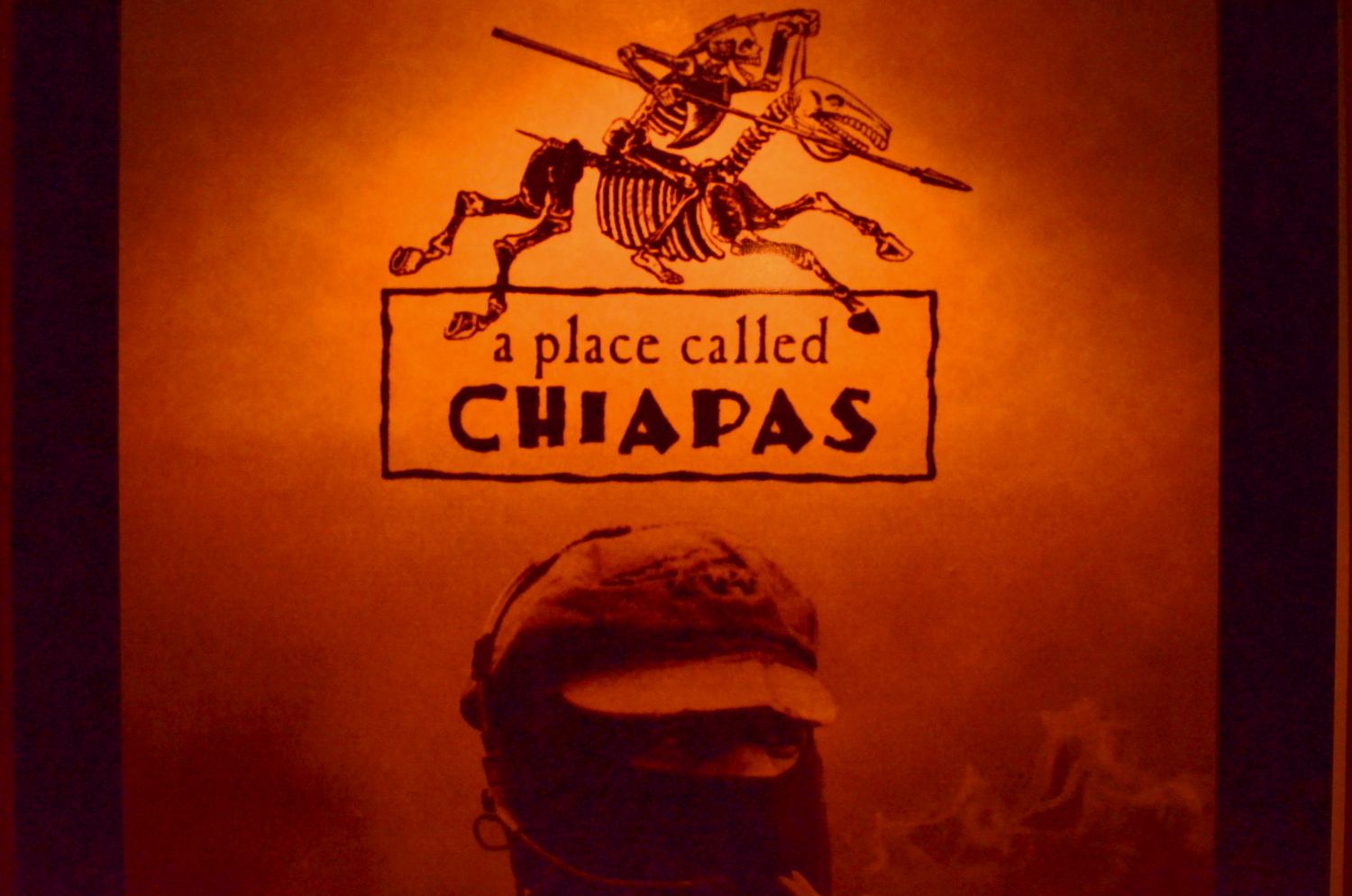
Oaxaca sent us off with sweltering hot, humid air and about a thousand memories of a city we will surely miss. After a 10 hour overnight bus ride through mountainous terrain full of surreal half-sleep dreaming and sub zero air conditioning we stepped off the bus in San Cristobal de las Casas. Dawn was upon us now and after exiting the bus we could see our breath for the first time in Mexico. The temperature was hovering slightly above 0° in this highland valley perched in the Chiapas mountains. We fell victim to the convenience of a hostel tout at the bus station boasting of cheap rooms and a free taxi. After a brisk ride through the maze of tiny one-way streets we found our temporary home for the day was bad enough to immediately start looking for another hostel. We found a blissful place called Los Camellos (http://loscamellos.over-blog.com/) run by a Mexican and French duo who are two righteous dudes. I wound up spending a day helping them paint the entrance hallway, helping them spruce up the place a little for business.


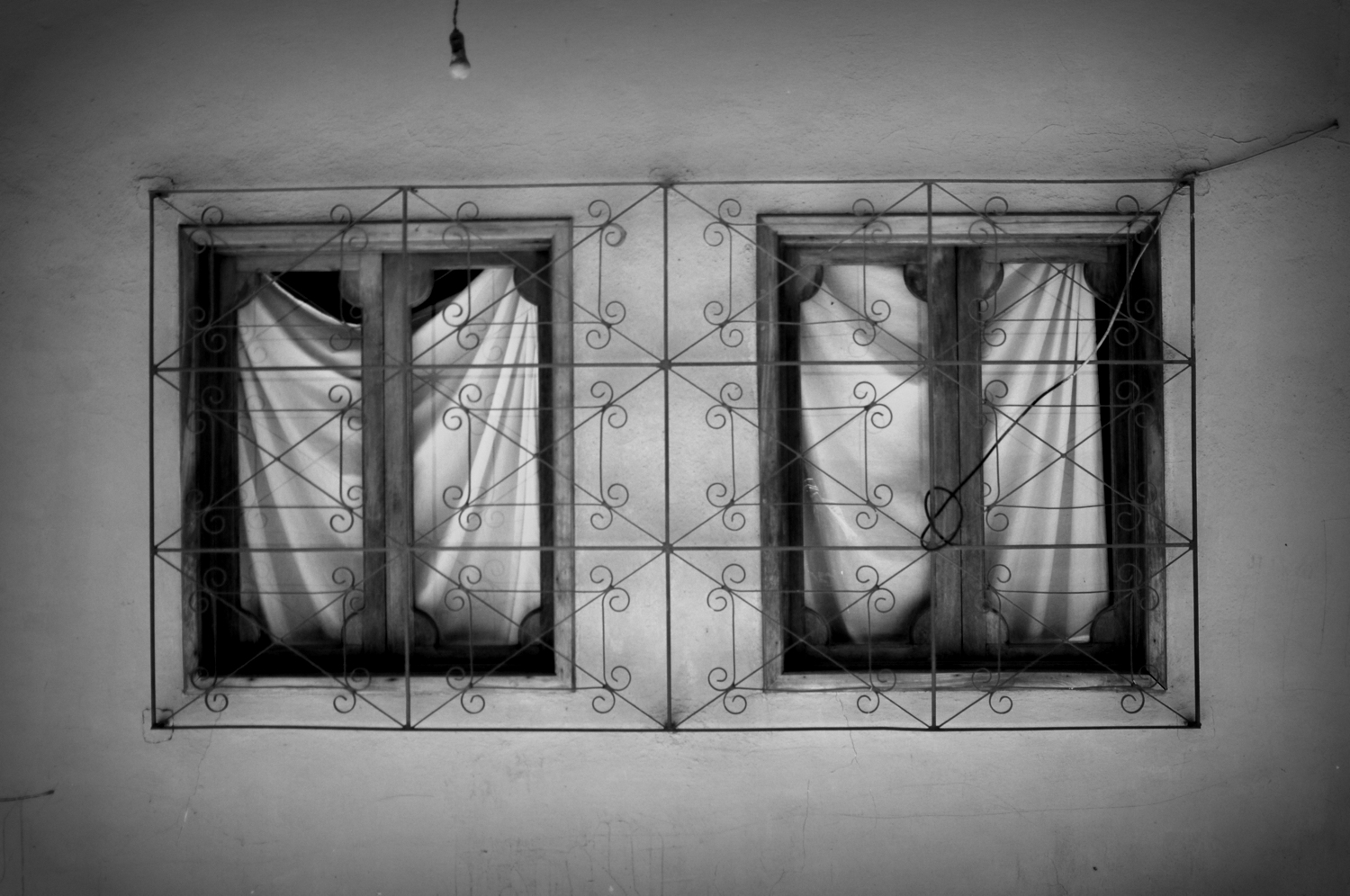
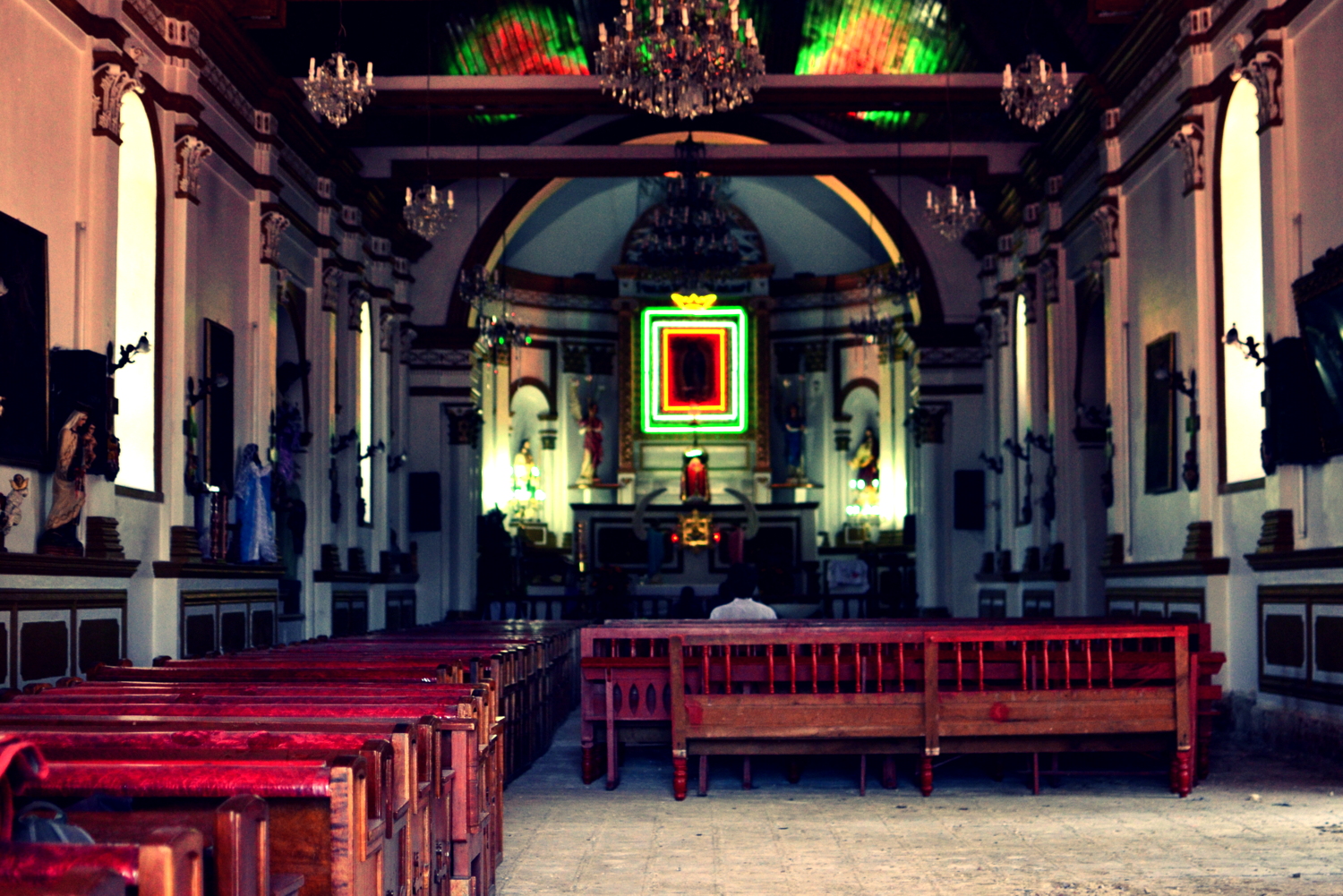
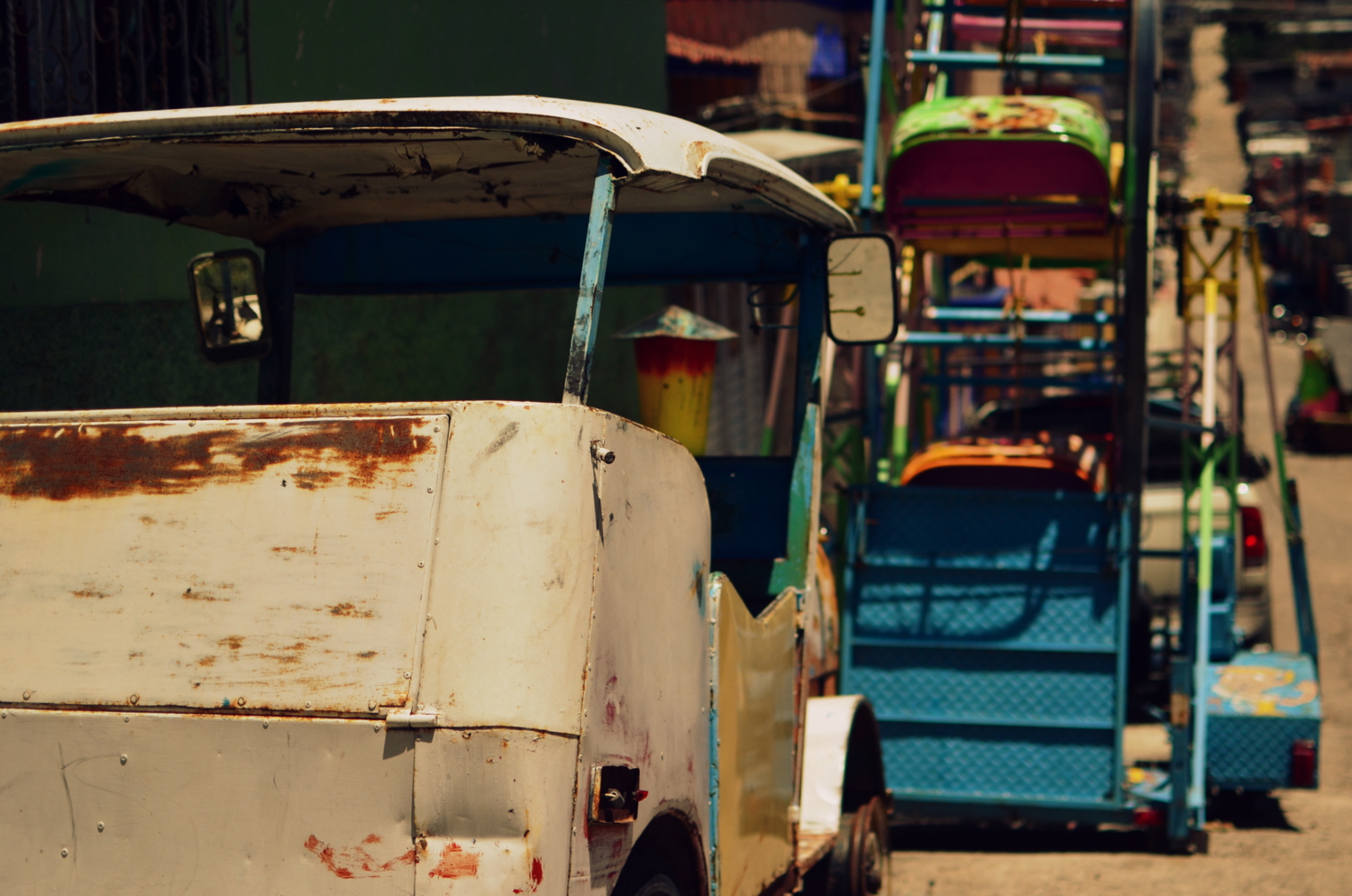

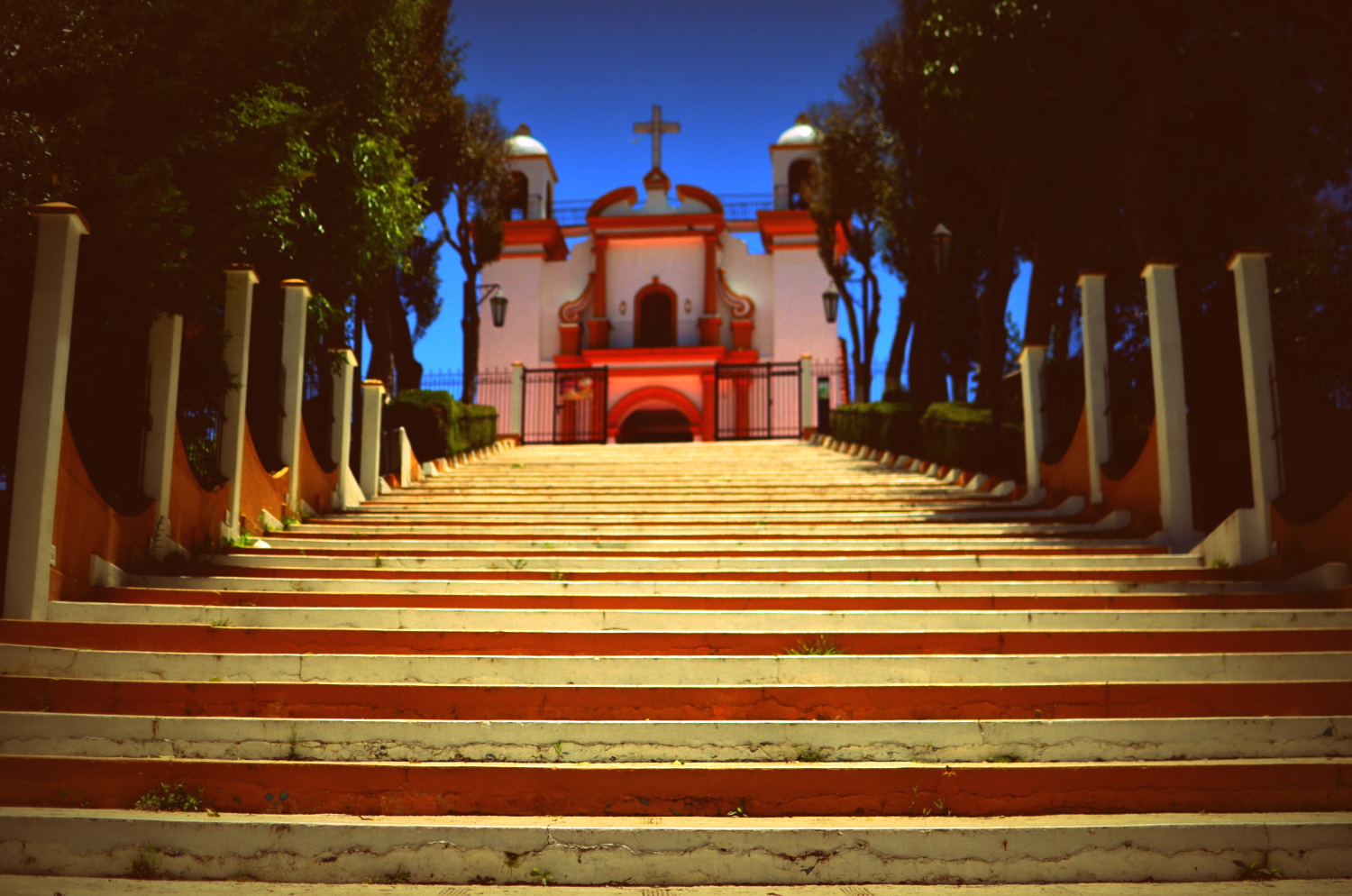
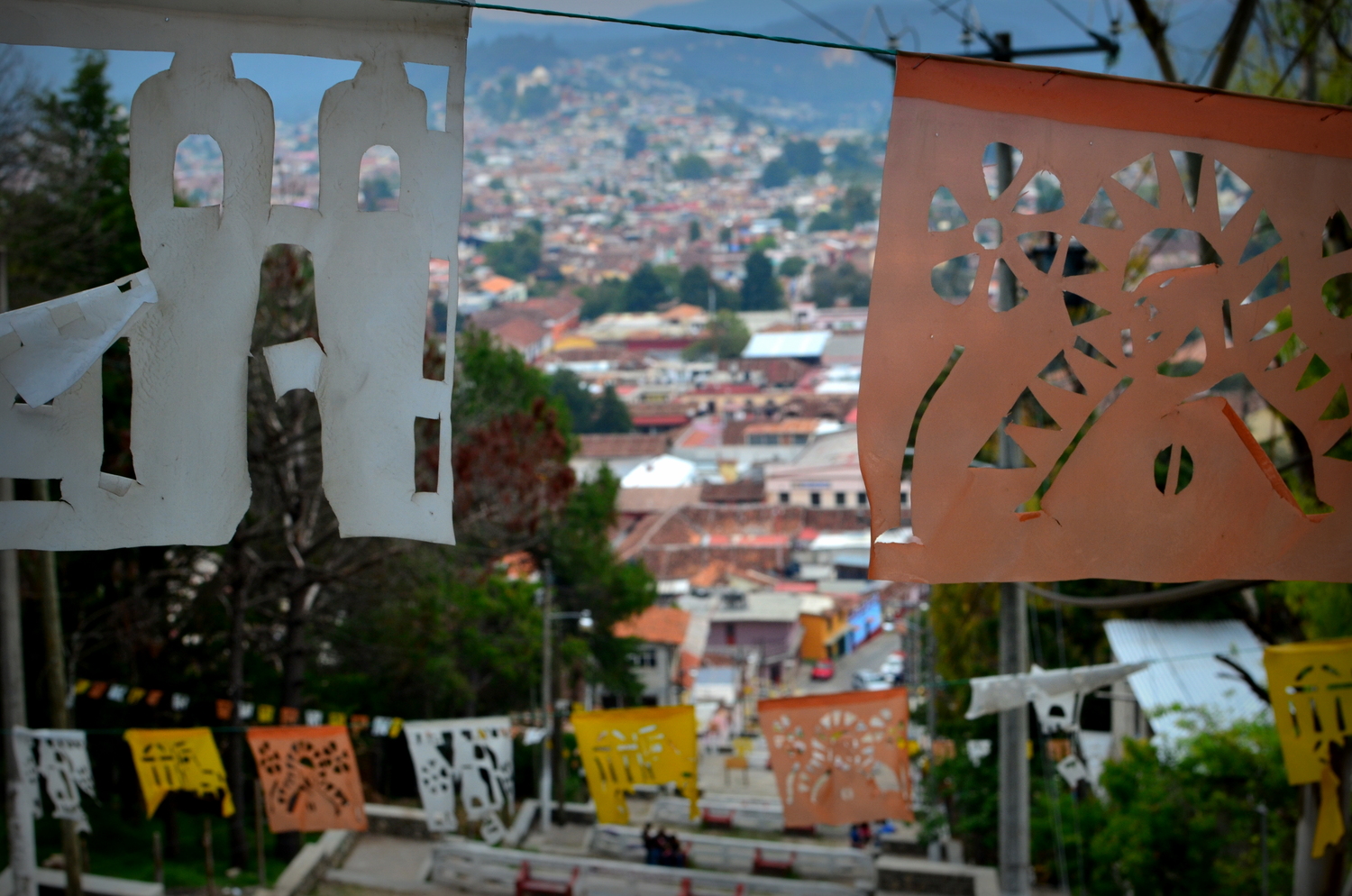
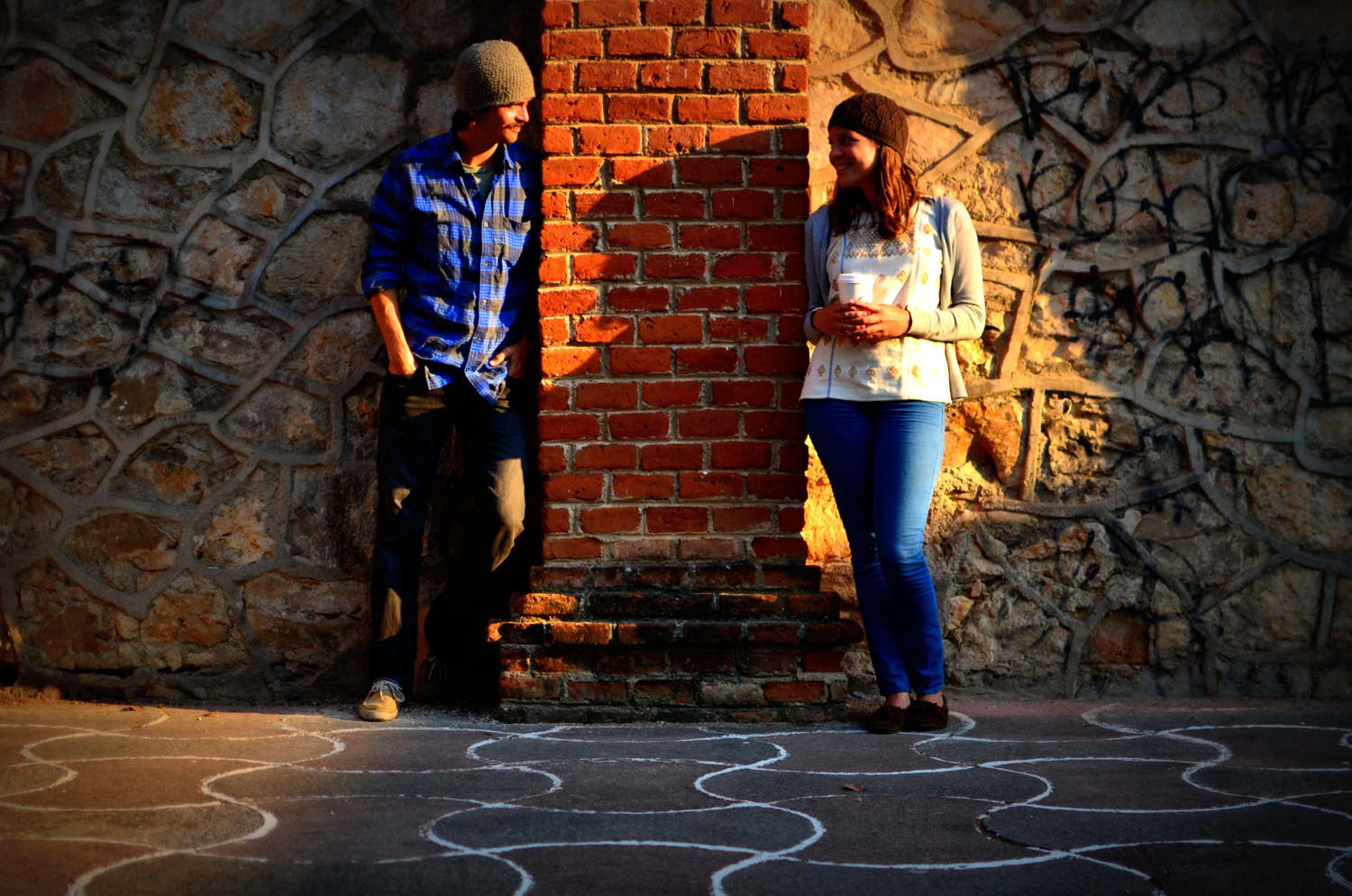
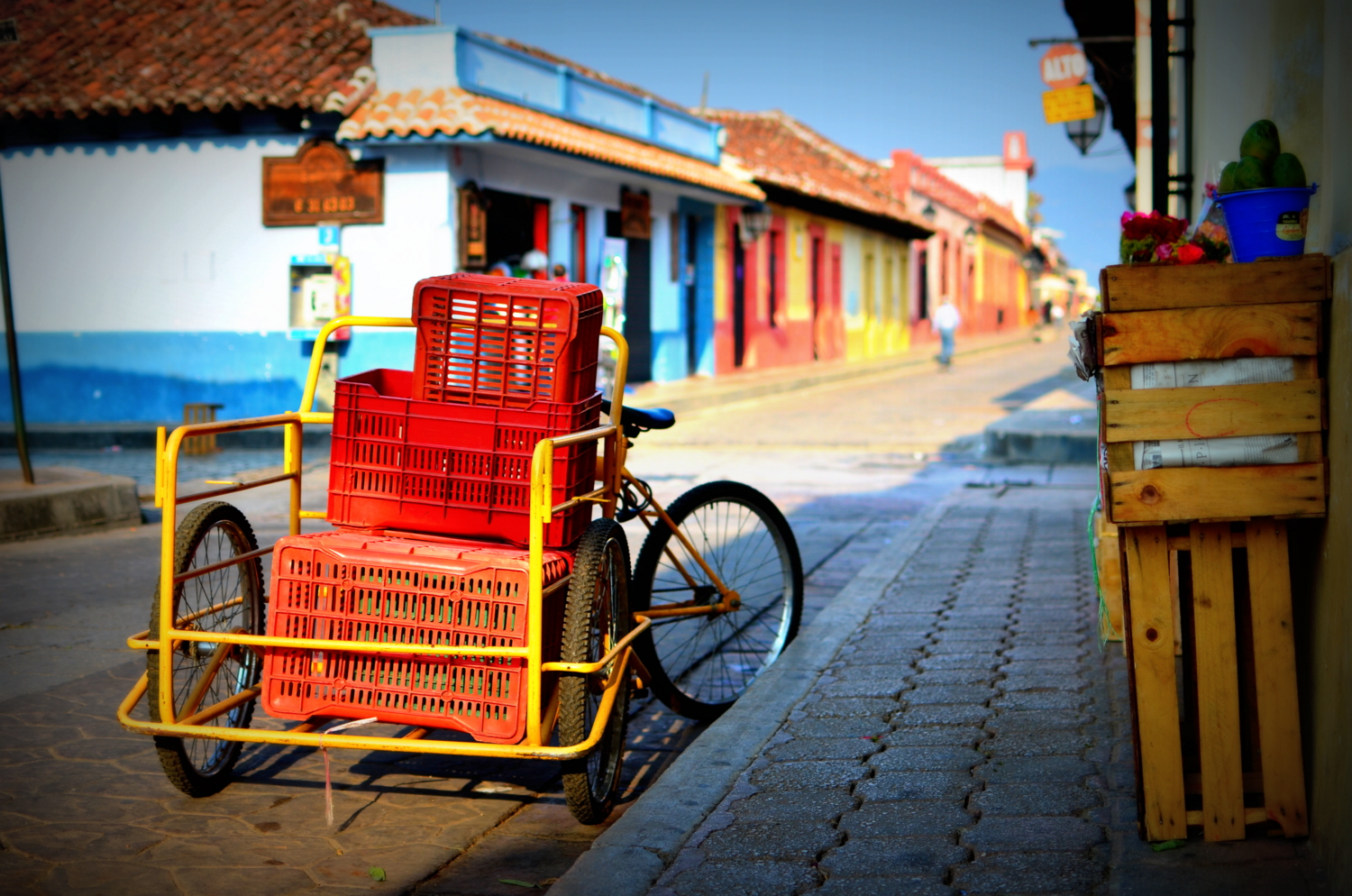
From the first moment we set out walking these beautifully petite cobblestone streets decorated with brightly colored colonial Mexican abodes we were comfortably absorbed into the intentionally tranquil pace of life created here. Everyone walks at a very leisurely pace and there is no rush for anything ever. Messages posted on restaurant menus stress that the food is slowly prepared, which is more or less a polite way of stating that if you want fast food you are in the wrong town. The intimate size of the tightly packed street grid paired with narrow knee high sidewalks force you to walk with the locals at their pace thus becoming part of the flow of the city. A quick trot around this beautiful old town unveiled this as an expatriate haven for those looking to match this blissfully tranquil speed of life. There were numerous assortments of eclectic worldly tastes and accents from Thailand to Argentina and everything in between. We got lost and wound up hiking up the back side of the iglesia de Cerro de Guadalupe at the top of a very steep hill. San Cristobal has another church on the opposing side of town on yet another very steep hill. I witnessed people coming here for their daily church visit to which I conclude there are very devout followers in San Cristobal.

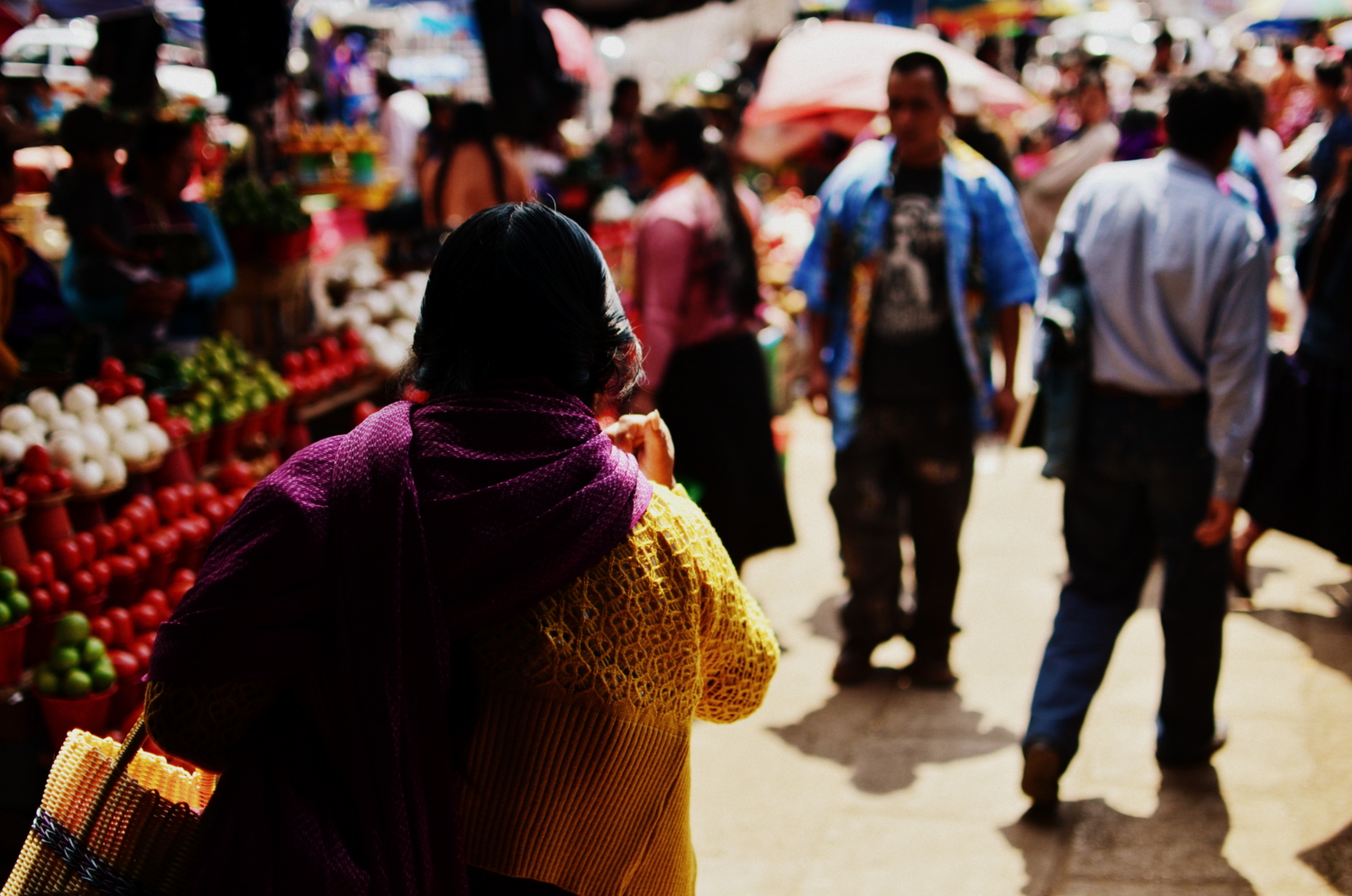
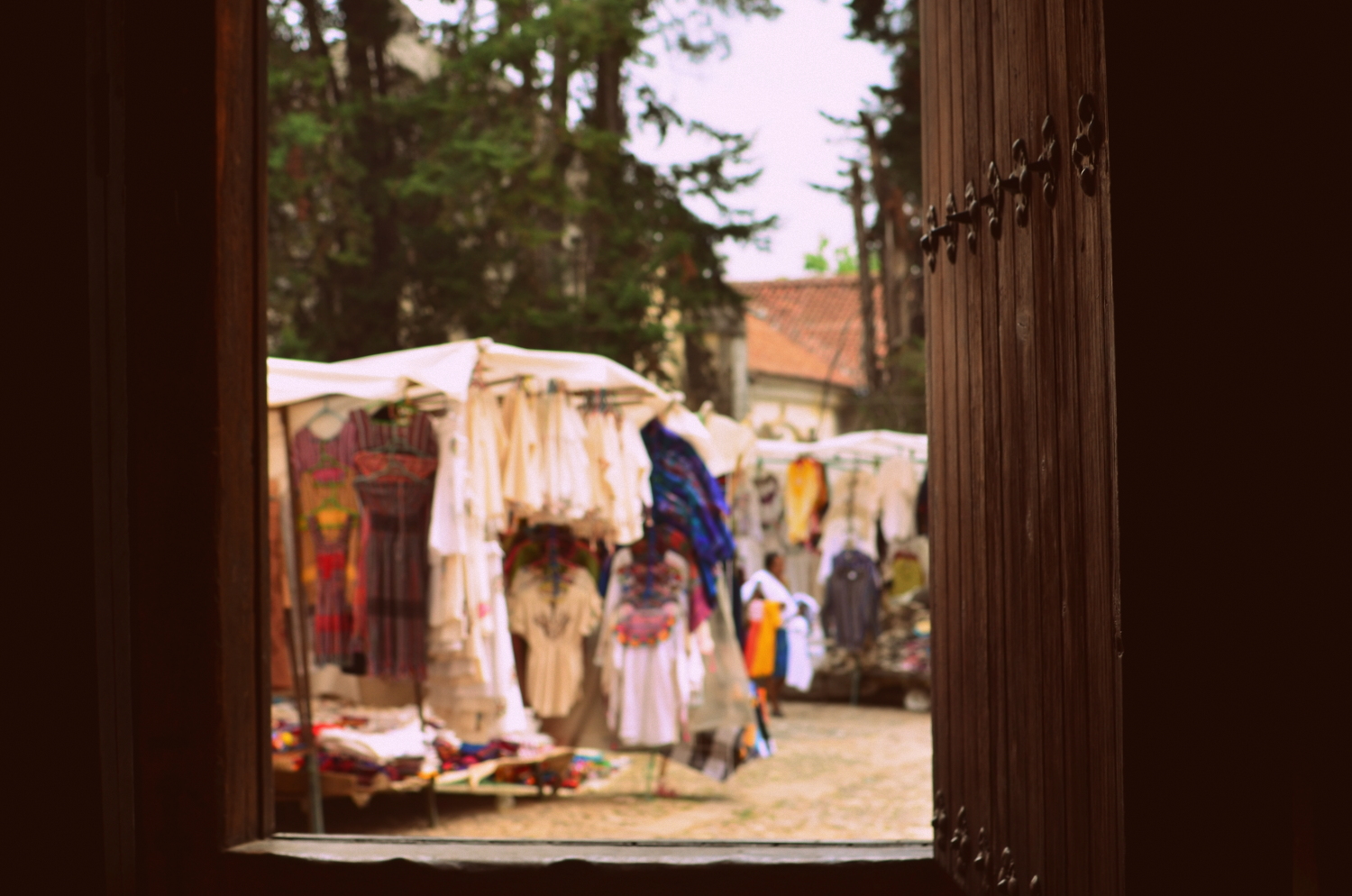
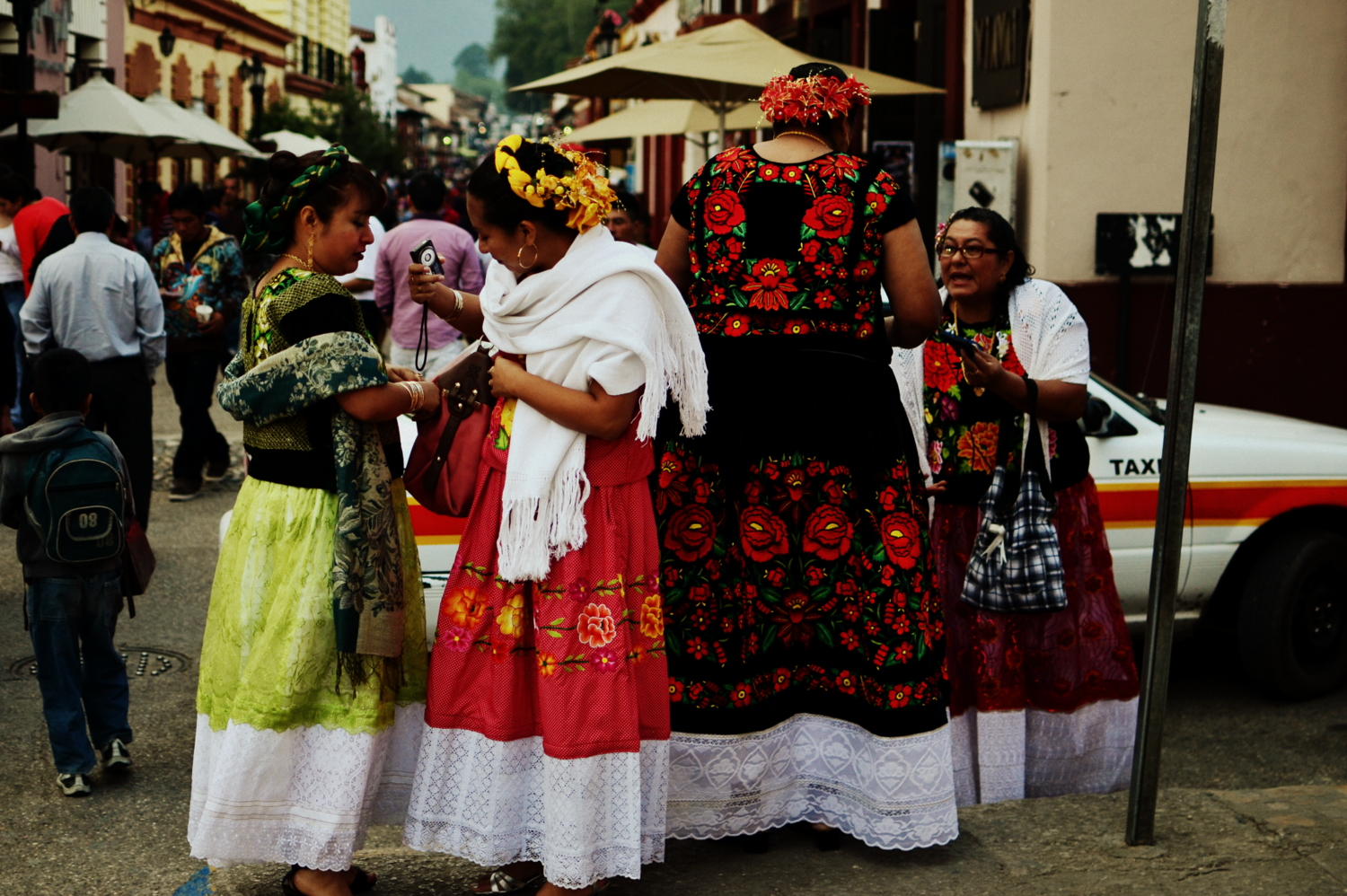
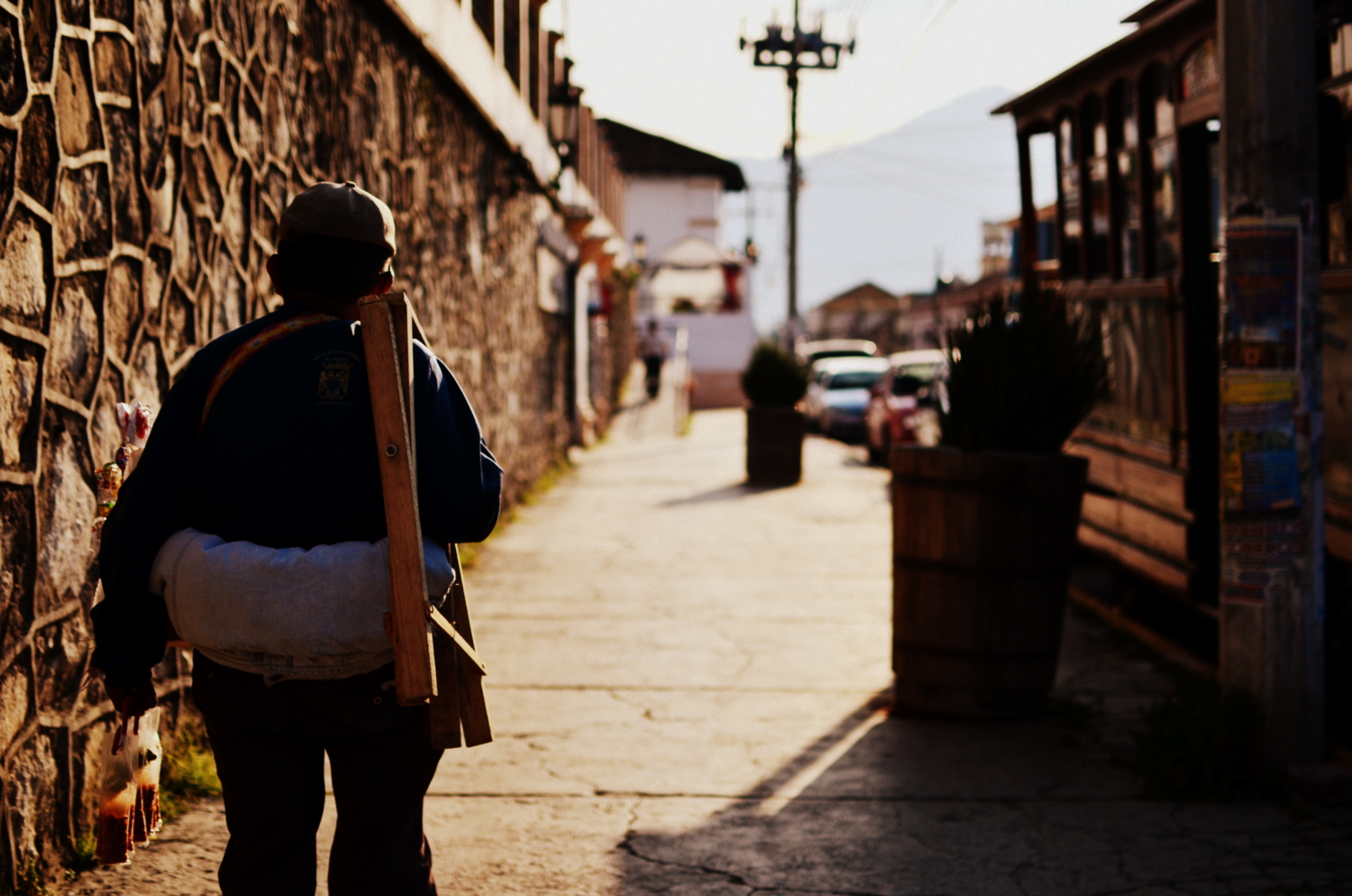
San Cristobal is brimming with an indigenous population bringing their cultural heritage, food, produce, and crafts into a mid-sized modern cityscape. The buildings outside of the main walking strip are all ancient with smooth, slippery limestone rock sidewalks full of Mayan women dressed in wool skirts toting their hand made specialties for the market. The city limits are in the heart of the most deeply rooted indigenous area in Mexico with small villages just a stone’s throw away in all directions. Temporary purveying stations are set up along the streets, on sidewalks, in front of stairs of churches, and within daily craft markets around the city. With only a blanket on the ground as their cushion they sit patiently on the ground and wait for someone to express interest in their crafts every day. The vast array of beautifully hand knit wool sweaters, hats, jewelry, religious affections, and blankets were all treasures for travelers.
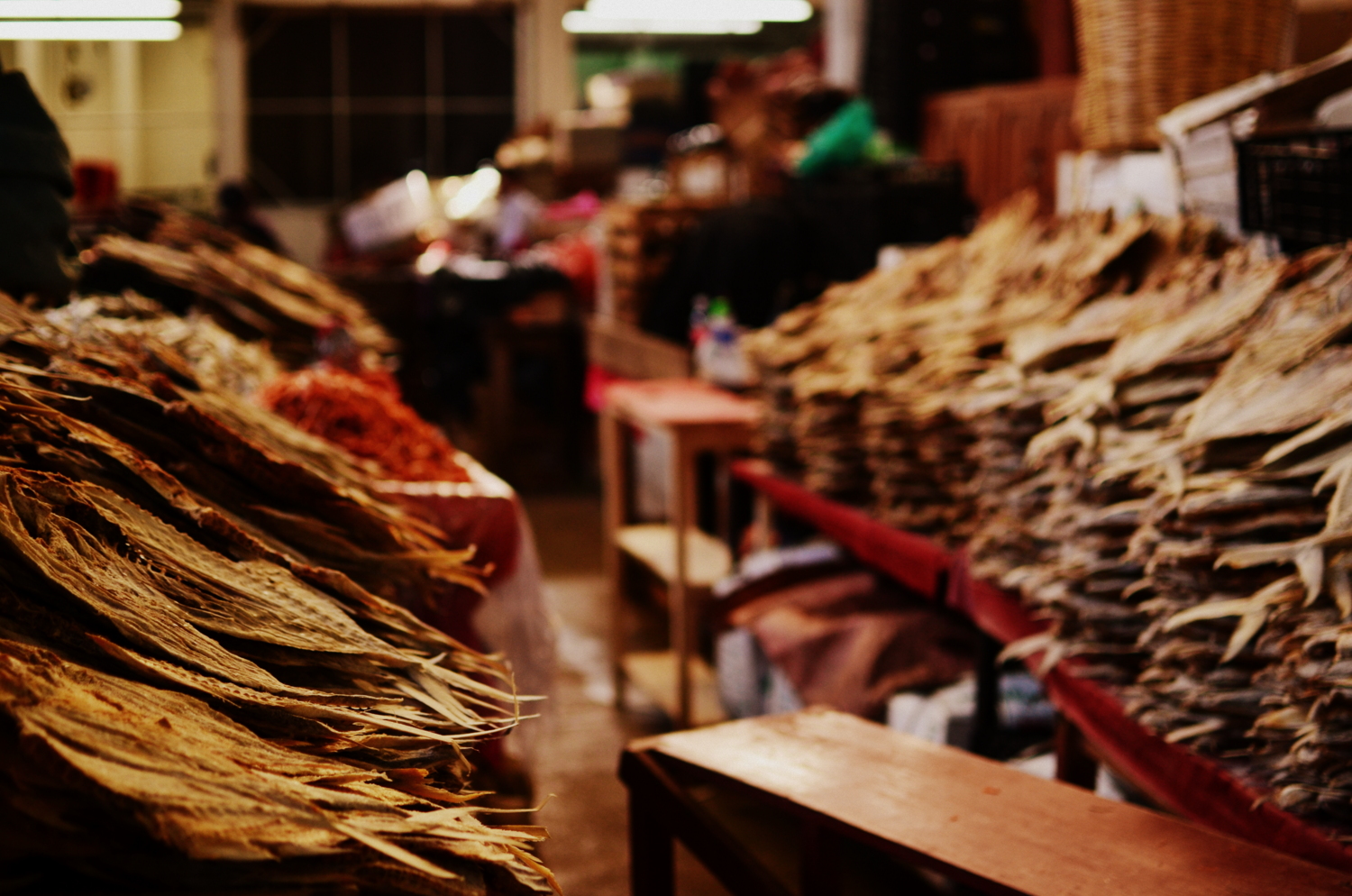
The food Mercado was primarily indigenous locals offering their produce around the perimeter of the central market building. After passing through ancient wooden doors we found ourselves in a world full of bread, meat, cheese, and fish. These markets are truly a sight to see and are not for weak stomachs. The meat sections can be an eye opening experience, especially in San Cristobal’s Mercado. Most butchers have the cow’s head propped up right on the counter portraying the animal’s ultimate sacrifice while showing you exactly where your dinner came from. Traveling in these mercados has become quite a normalcy to us despite the cultural visual overload. One day I casually cautioned Elissa “be careful, you’re going to step in blood”. This warning came out so natural and nonchalant it had me stop in my tracks and follow up with “Well, I don’t get to say that too often back home”.


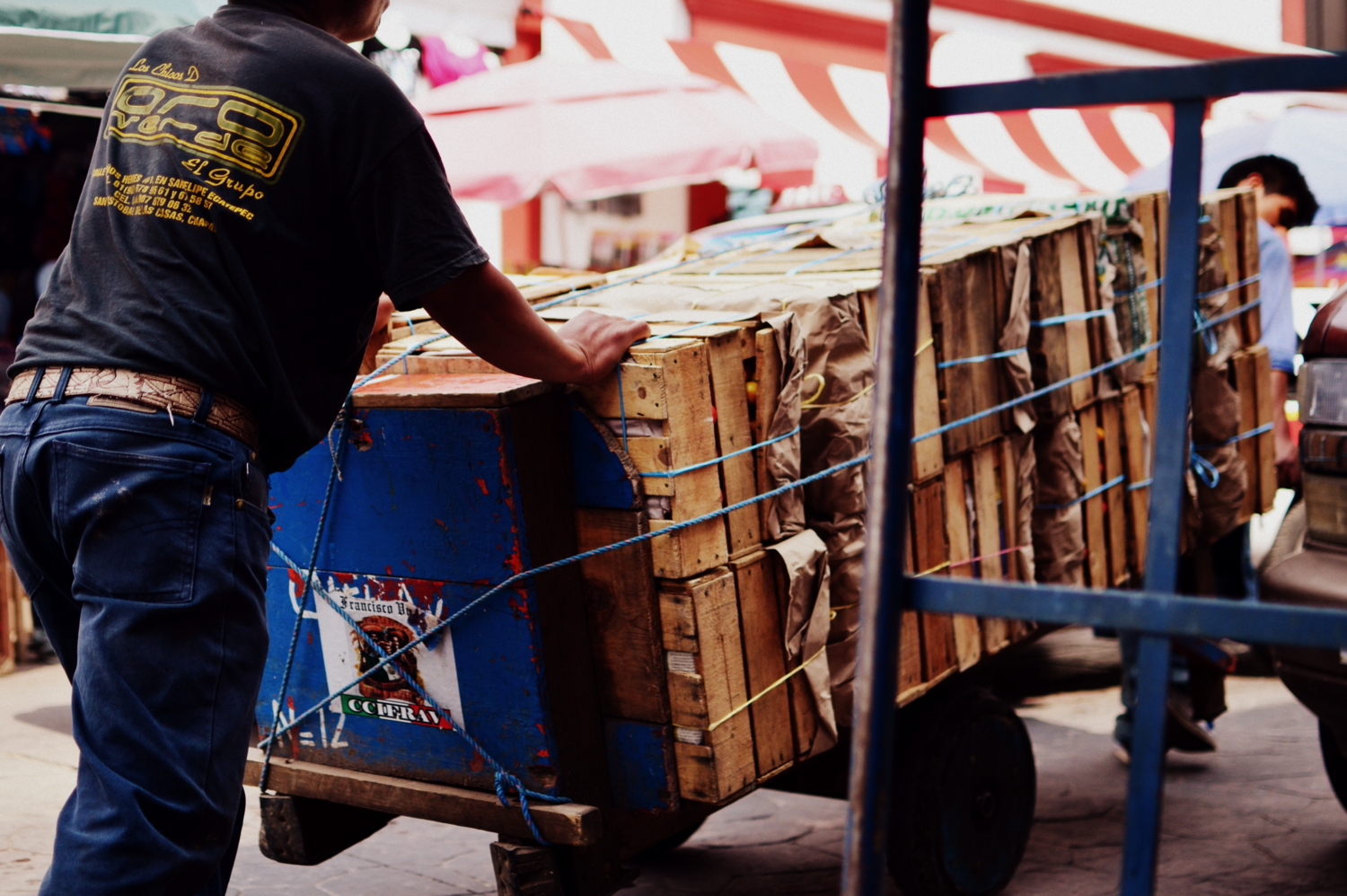
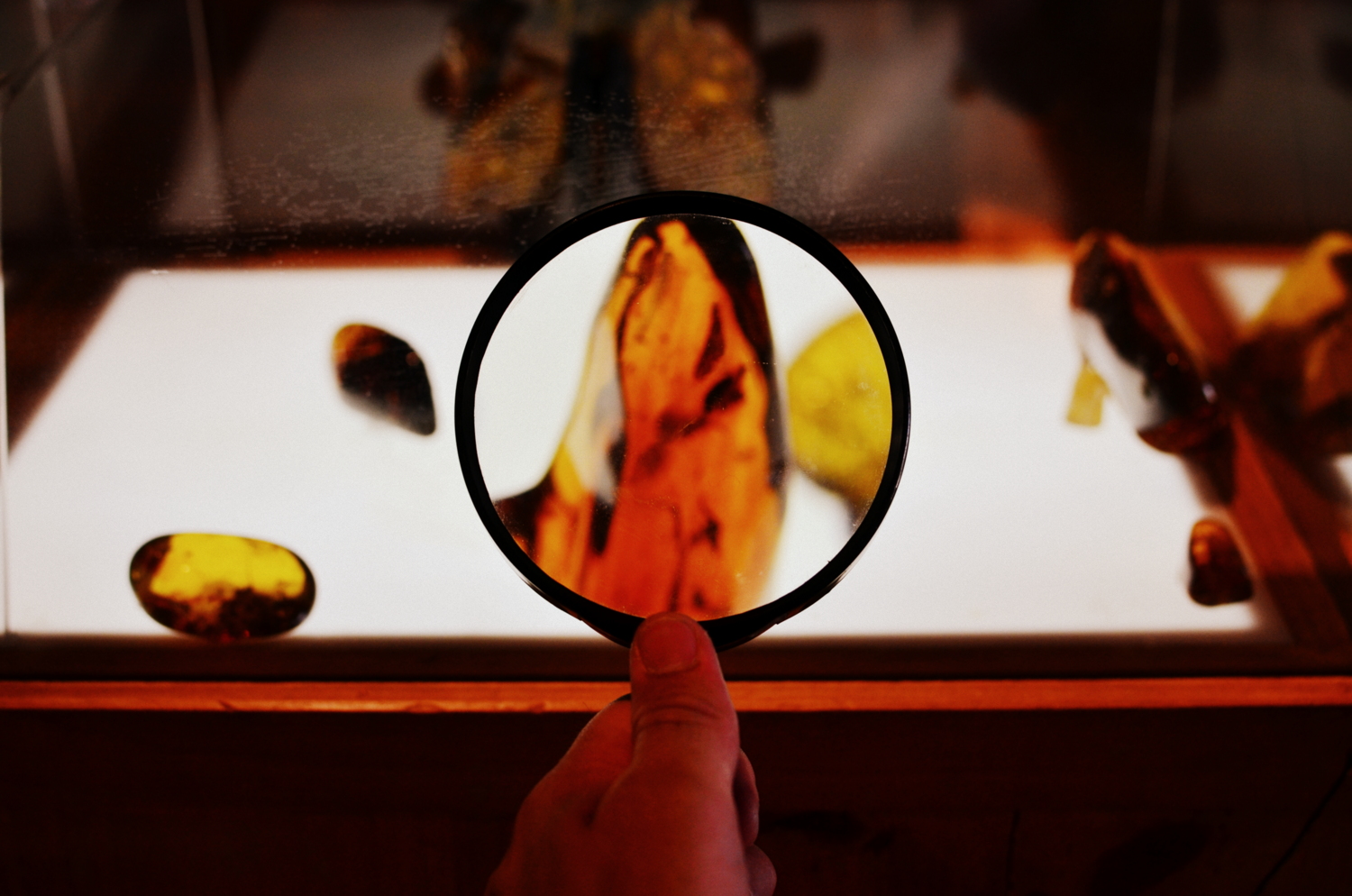
Indigenous gente make up about 25 percent of the population in the state of Chiapas and make their living on agriculture, coffee, and selling artisanal goods. We discovered that the local coffee industry in Chiapas is yet another one stained with the greed of outside influence resulting substandard wages and treatment of the workers growing the crop. Spaniards came into the coffee scene upon discovering the land and immediately capitalized on the communication barrier, illiteracy, confusion, and trustworthiness of the locals and in no time set up plantations focused on reaping in fortunes while paying the workers barely livable wages. The bosses often canceled contracts over small infractions, underproduction, or whenever they saw fit. But today the indigenous agricultural industry has become autonomous through the persistence of agricultural techniques and taking matters into their own hands, more or less. Almost all the coffee grown in this area is peasant farmed on small plots of land usually between 2 and 5 hectares. This coffee was utterly delicious and I can still taste the dark roast on my tongue when I think about it. San Cristobal is also home to the third largest amber mine in the world and has yielded some of the most beautiful specimens in the world. A visit to the Museo de Ambar brought light through the deep yellow-orange resin that is mined locally. It turns out the amber industry also has a tainted history in regards to mining rights and ownership. Upon discovering the massive yields these mines were capable of the scene quickly became full of exploitation, incredibly insane working conditions, and extremely little pay (sounds familiar). Old photographs show the mining techniques and the tools for workers consisting of solely of candles and hammers. Amber is sold throughout the streets of San Cristobal but fake versions of the fossilized pine pitch are very common. I’m not sure the amber industry has a happy ending to the industrial side of the story that coffee seems to have but I do know that I was tempted to pick up some of the beautiful fossils.


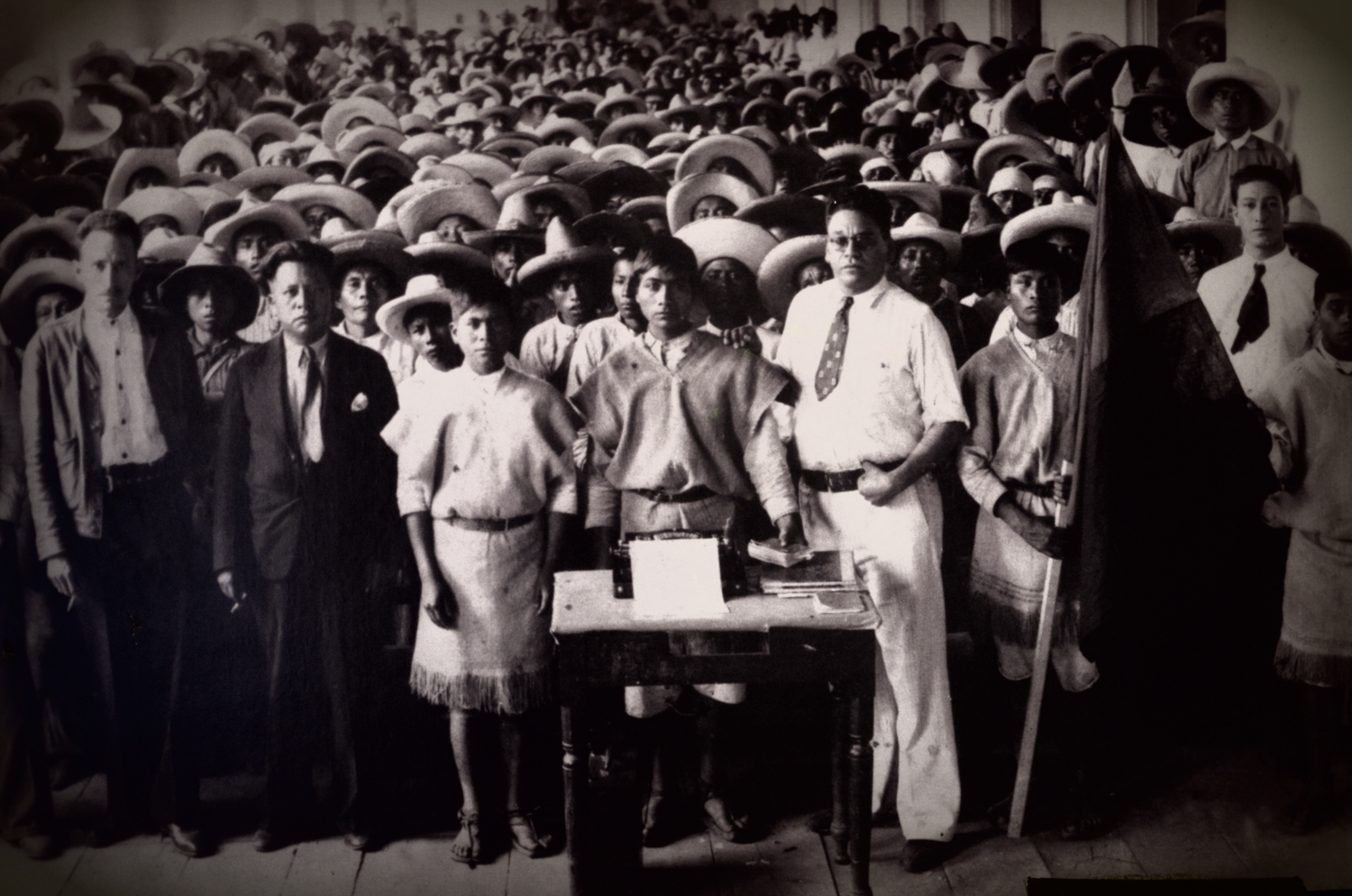
In our quest to get deeper into the history of the places we travel we parked ourselves in a tiny movie theater in the back of a restaurant researching a documentary about the Zapatista revolution. The movement started right here in Chiapas and was aimed to bring attention to the gap between the rich and the poor, Mexico’s participation in NAFTA, and the growing distance between the government and the actual will of the people. Donning handkerchiefs, guns, and anything that could be used as a weapon farmers amassed their numbers and took over city hall on January 1st, 1994. Raw footage of the events were highlighted as well as the progression of the political side of the movement. The Mexican army’s reaction to this movement was mainly military tactics causing bloodshed, permanent displacement of entire villages and population, a massive tide of homelessness in the depths of the Chiapas jungle terrain. This ultimately put them at risk and within the reach of paramilitary groups trying to take matters into their own hands against the Zapatista movement. We sat with our mouths open in horror as peace talks and false political promises temporarily hushed the movement only to completely ignore their cries for injustice within the walls of Mexican parliament. The movement gained so much support and public backing that the masked, pipe smoking leader Subcomandante Marcos led a country wide tour to Mexico city complete with hundreds of thousands of supporters right into parliament. This was their chance in the spotlight with the whole country listening and backing their cause but the momentum was halted and ultimately stopped due to the lack of attendance of politicians who refused to hear their requests for change. The movie ended with questions for us as to where the movement lies today and what exactly is going on to help those communities looking for education, healthcare, and general rights. What I do know is that Mexican people are persistent and have been caught in a constant battle between a political system that often fails them, forcing them to fight for themselves and to take matters into their own hands if something needs to be fixed. I respect that.


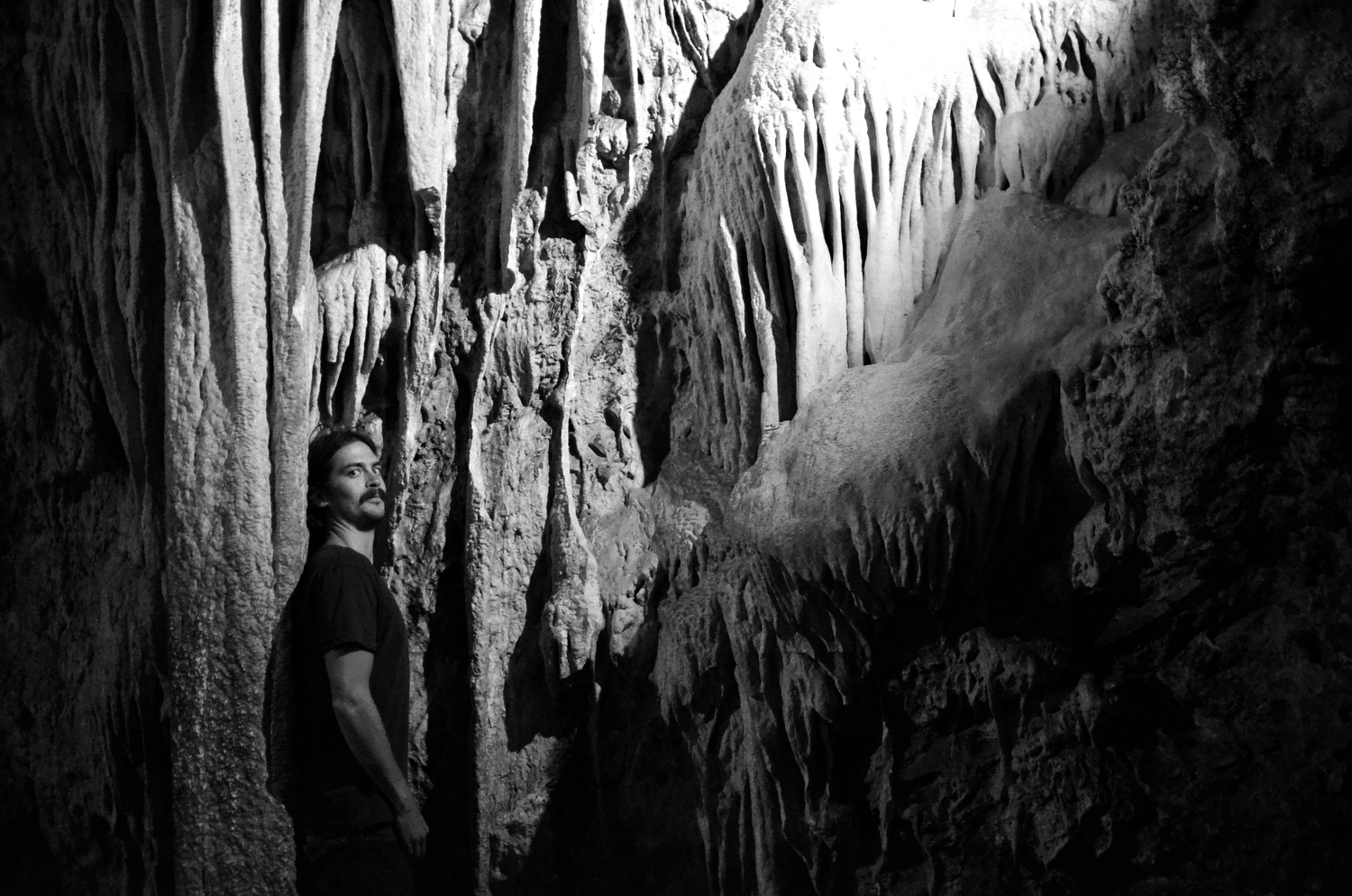
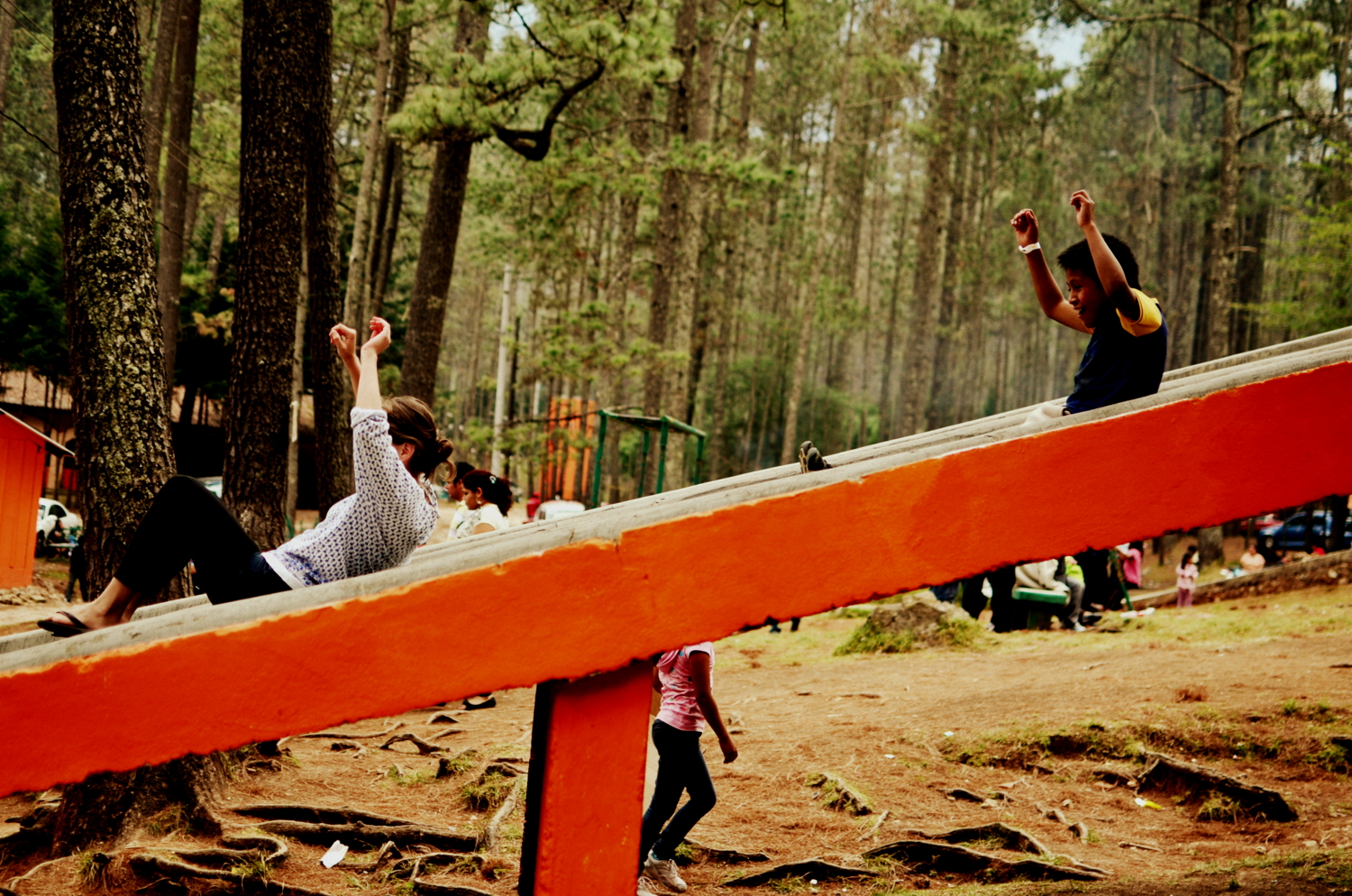
On one of our last days in San Cristobal we took a collectivo to Las Grutas to appease the geologist’s voice in my head and spent some time in a cool cave during a warm Sunday afternoon. We wandered through a lit maze of stalactites, stalagmites, and dripping limestone walls with echoing chambers of this surreal underground river system. Outside there were hundreds of families enjoying birthday parties, barbecuing, and playing on the dangerously fun tobaggon ride. There was a concrete set of four slides put together similar to the potato sack slides you would find at county fairs only they lacked any organization and safety precautions. Hundreds of kids were climbing all over the 5 meter high slides while four lanes were clogged with children sliding on flattened plastic water bottles, potato chip bags, and lids to 5 gallon plastic buckets (the fastest option by far). We found a bottle on the ground and soon began racing down with them. It was like human bowling at the bottom as kids were climbing up the slide and often not looking at who was sliding down at them. This form of entertainment would never fly in America but here parents were laughing and smiling as it seemed to be a natural way of survival of the fittest.


The morning we left San Cristobal I took a stroll through town around 7 in the morning to see the it wake up. Waking up at this time was easy due to the ceremonial 6AM fireworks that went off daily. I wanted the experience of seeing the market’s birth, people on their way to work, and empty walking streets normally packed with tourists. After returning we went to the bus station and scored the last seats on the bus. Just outside of town a small group of indigenous people donning masks had blocked the road carrying large sticks asking for donations to pass. They rapped the side of our bus as we putted along looking through the safety of our bus windows at the reality of their existence. Our worlds were miles apart and only separated by glass at the exact same time.


El Tule & Hierve el Agua
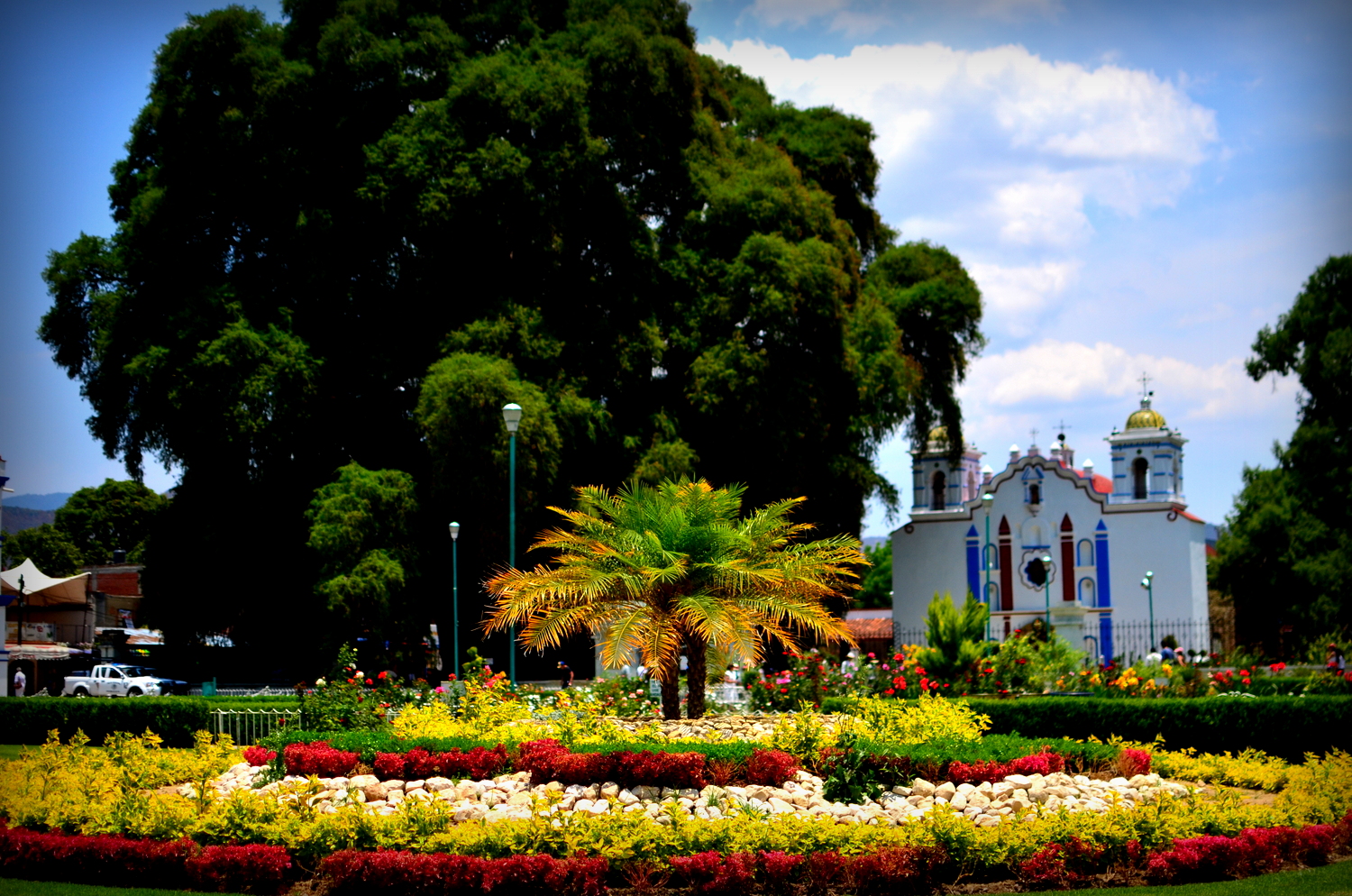
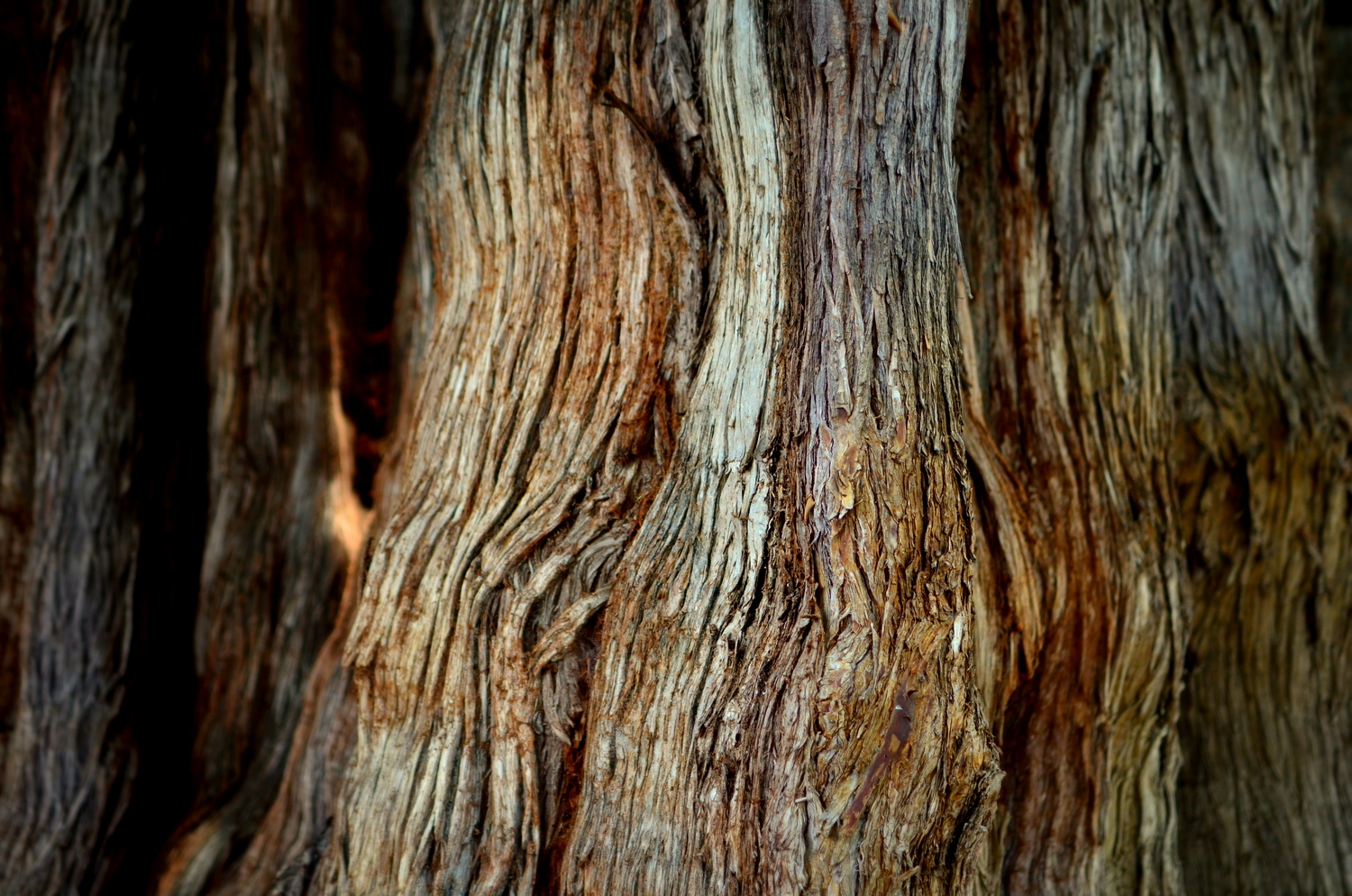
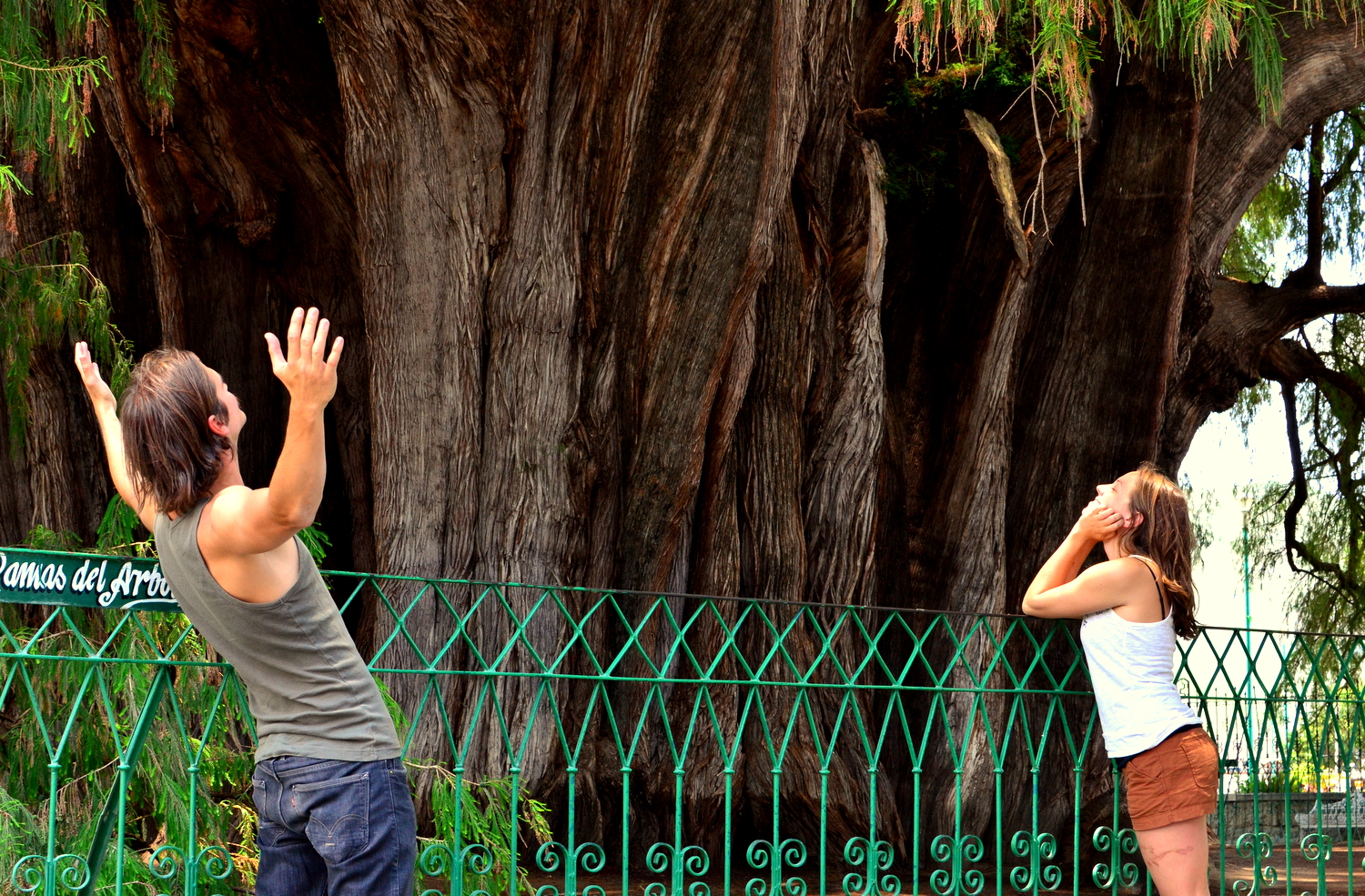
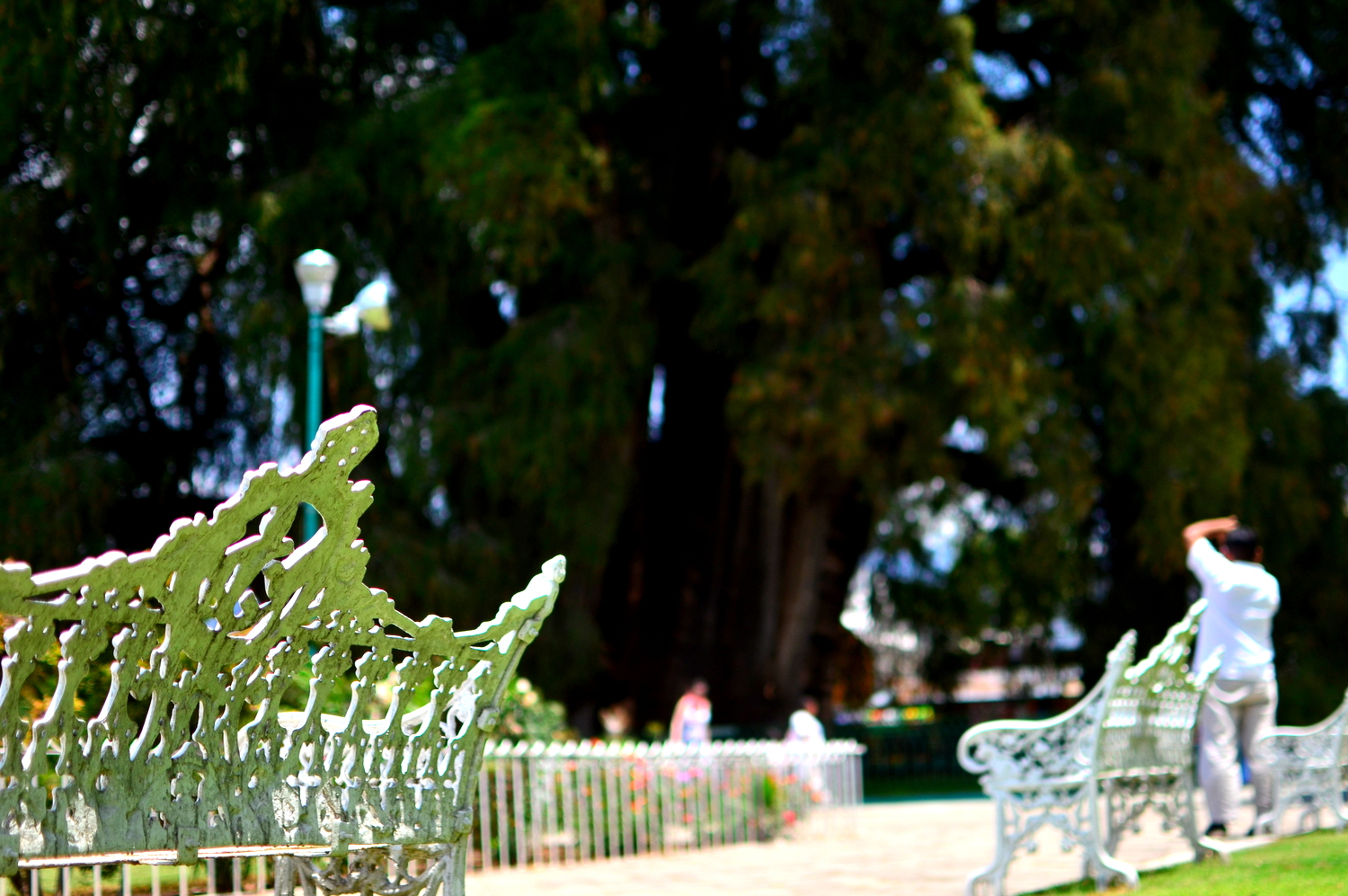
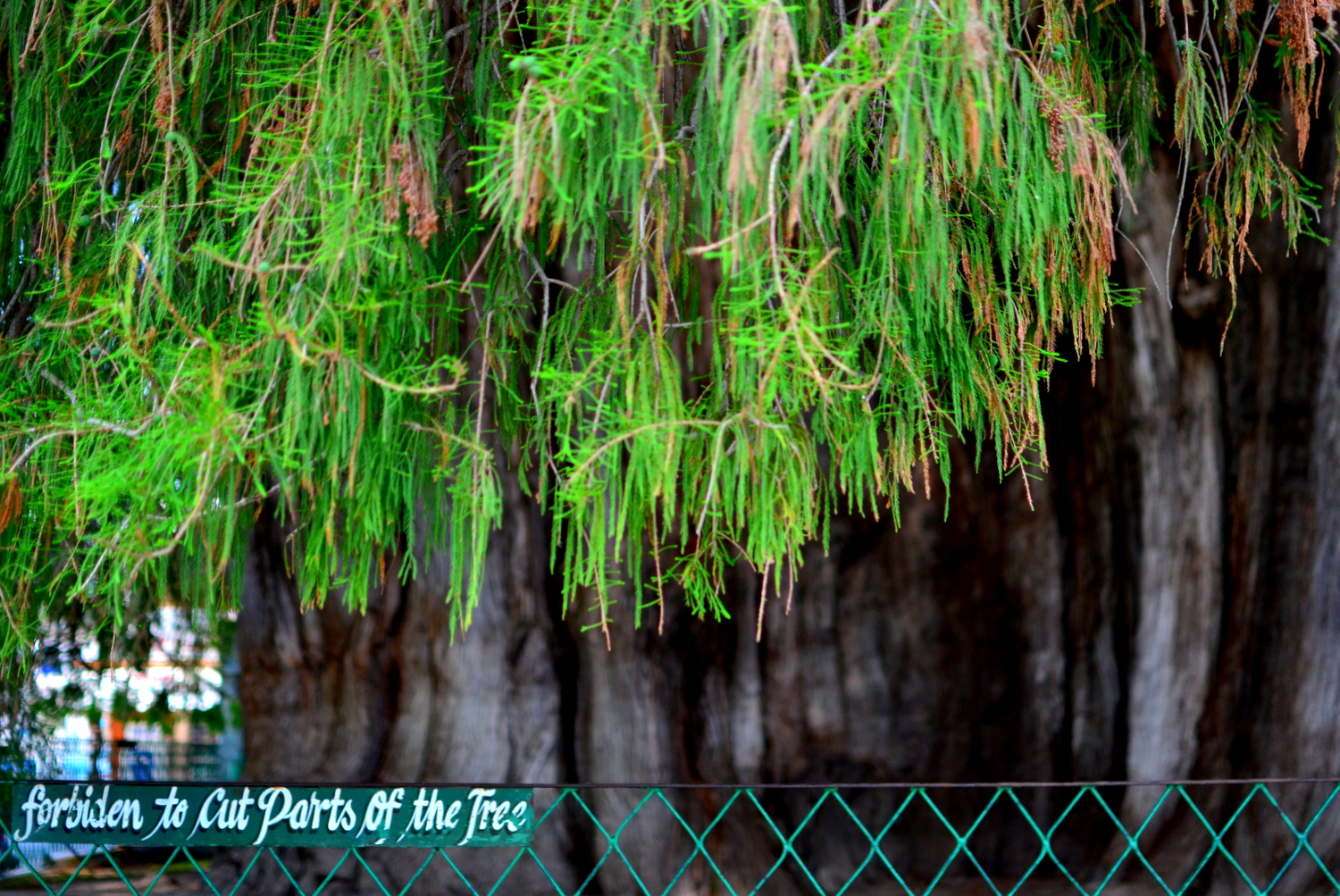
There are two natural wonders just outside of the limits of Oaxaca that deserve some extra special attention in my opinion (hence this post). Located just 15 minutes from Oaxaca’s city center is one of the oldest trees in Mexico and also boasts the largest waistband of any tree in the world. El Tule measures about 115 feet tall with a diameter of roughly 38 feet at its widest point. Having an estimated age of about 2,000 years old this gigantic Montezuma Cypress was stretching it’s roots and waving in the wind while the Zapotec civilizations were engineering their ancient cities nearby. Its monumental stature completely dwarfs the little church within the gated compound giving it a toy-like appearance in comparison. El Tule’s larger than life size weaves the story of its age and the generations that it has surpassed. You can almost feel the energy of the gigantic tree possesses when you scan the twisted, gnarled bark that bear the resemblance of animals with a little bit of imagination.
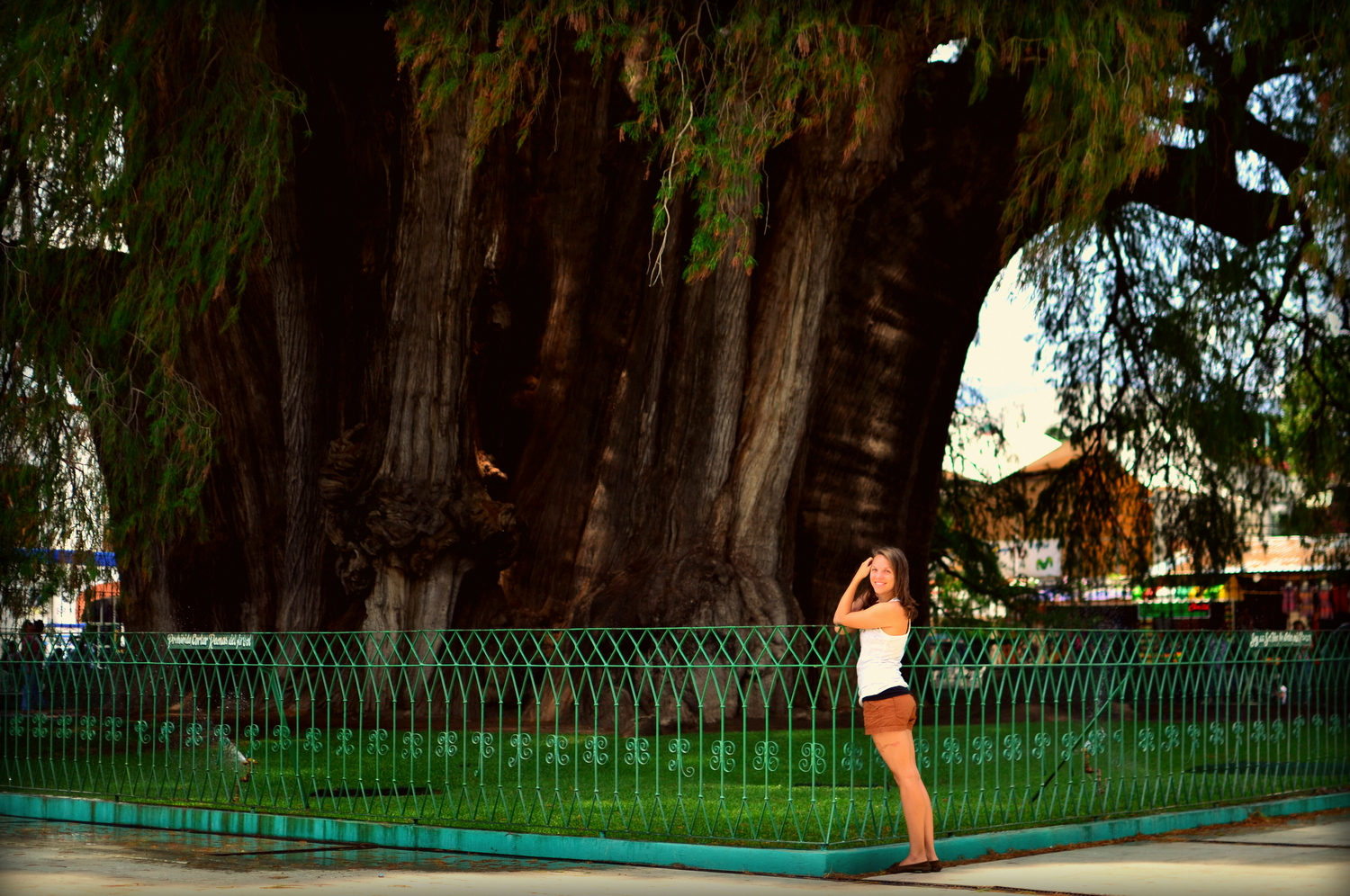
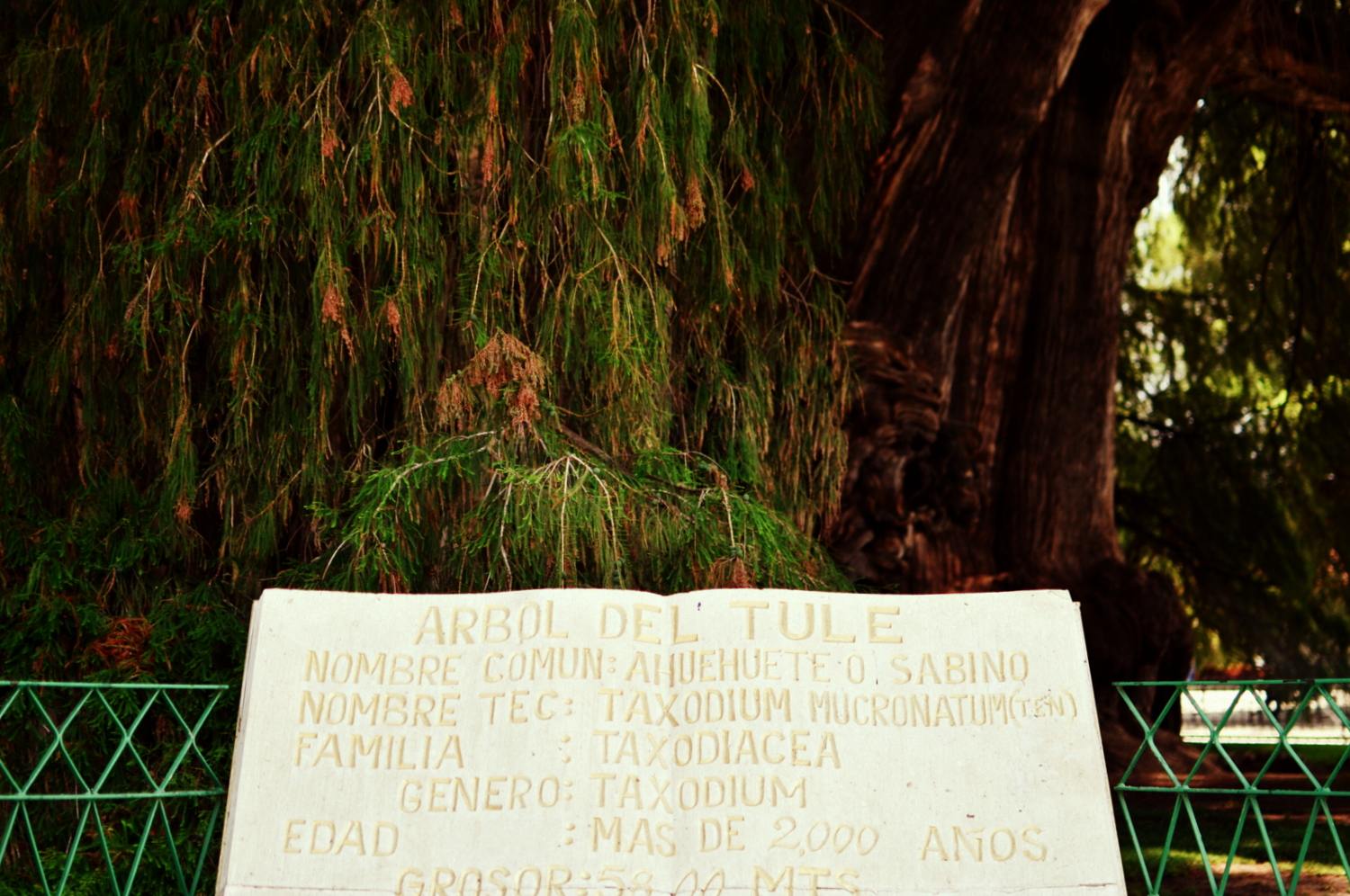

The entrance to El Tule pays for landscaping maintenance, upkeep, and constant watering efforts to keep it alive. Some literature claims that the massive tree is in danger due to nearby farming and irrigation practices that have altered the water table that feeds it. When standing in the shade of Tule’s massive canopy it’s easy to imagine the immensely large volume of water it siphons up through it’s roots. The town itself is very compact and centered around the church’s limits with plenty of local Oaxacan crafts, food, and mezcal tiendas found in the little Mercado and surrounding streets.
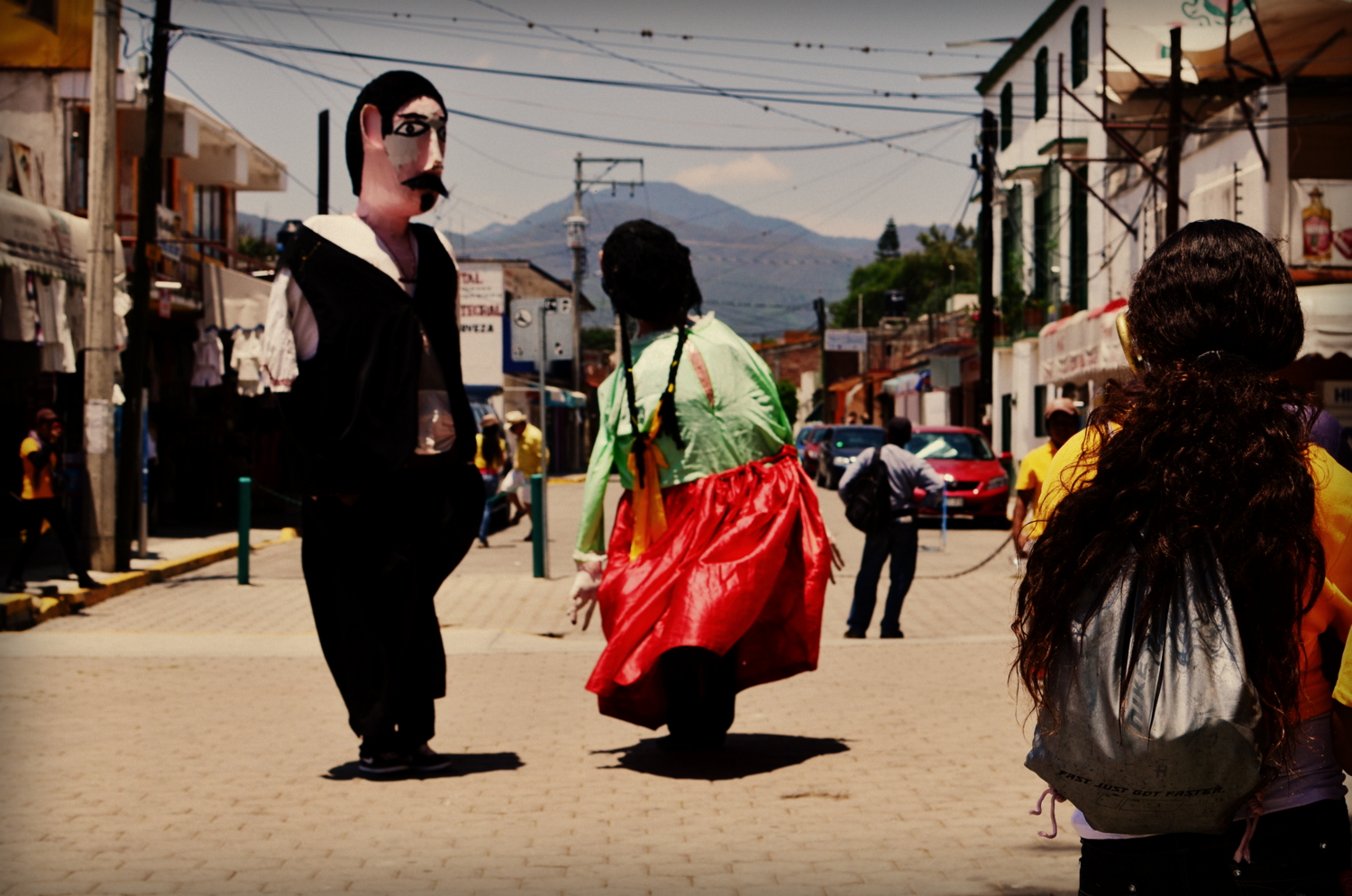
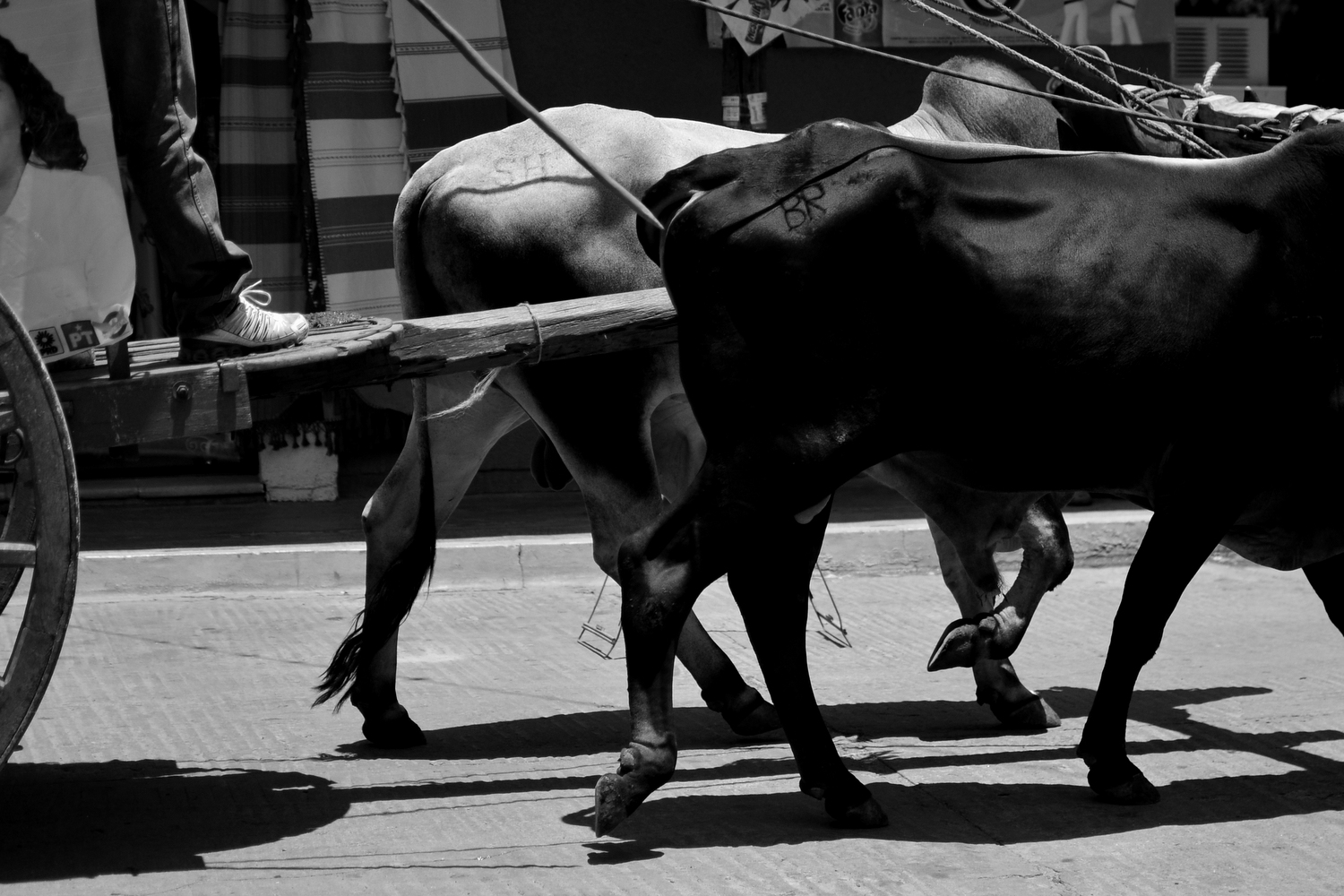
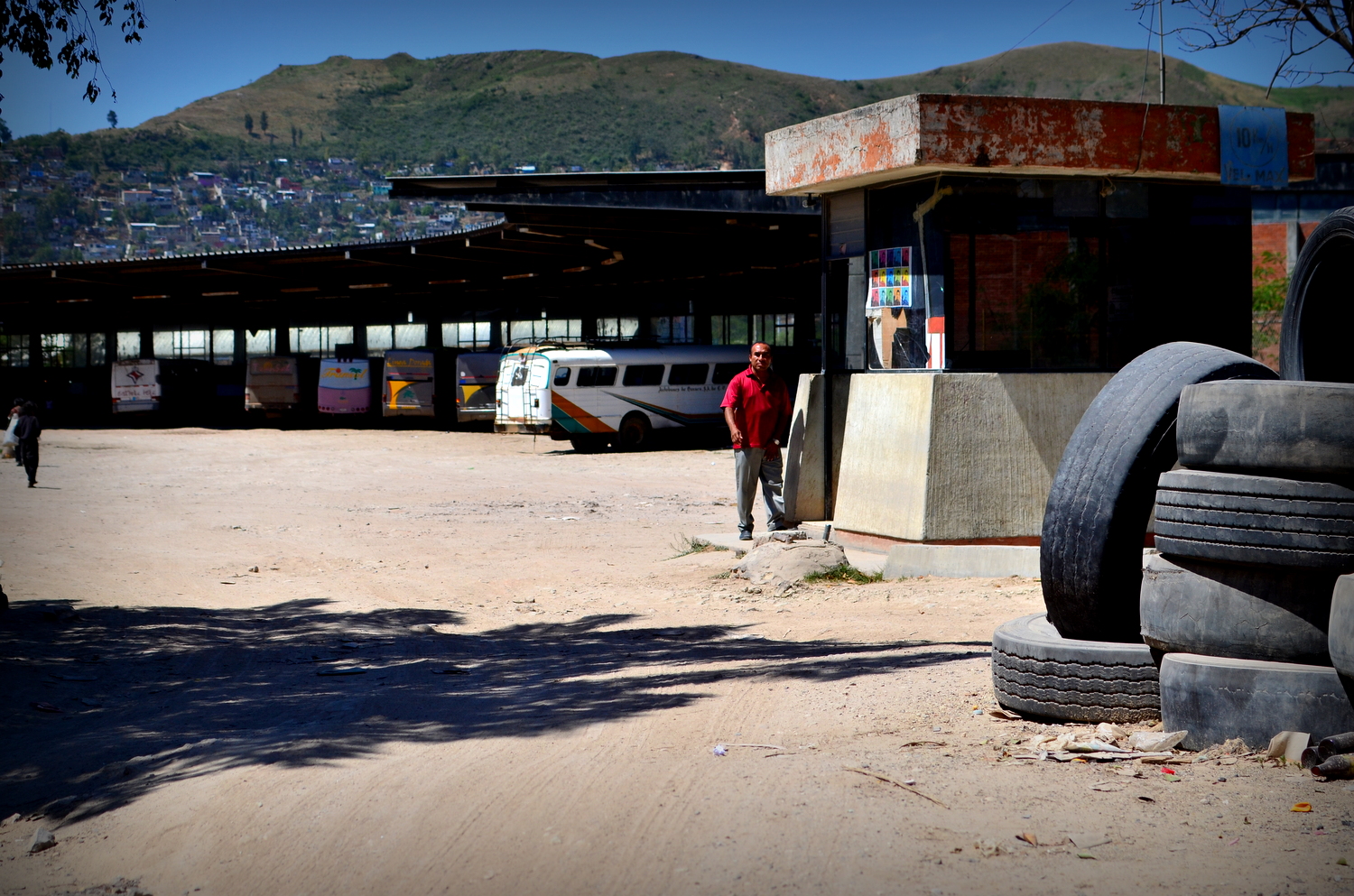
On earth day we made a trek for the little town of Mitla, about an hour outside of Oaxaca’s limits, to catch a collectivo for Hierve el Agua. Our adventure started off at the 2nd class bus station in Oaxaca, which consisted of a concrete canopy housing the front end of about 2 dozen banged-up buses in a large, open dirt depot complete with a pile of rubber tires at the entrance. After arriving in Mitla other travelers were tired of waiting for the camionetas the guide books told of and we arranged similar fare in taxi cabs for the hour ride into the mountains. After the first cab filled up with 6 travelers we got into the 2nd cab along with 8 other locals in the back. There were a total of 11 beating hearts in one Toyota corolla for an entire hour. If I could have grabbed a picture of this I certainly would have but the upper half of my body was hanging out of the window for the duration of the ride and it was best to hang on instead.
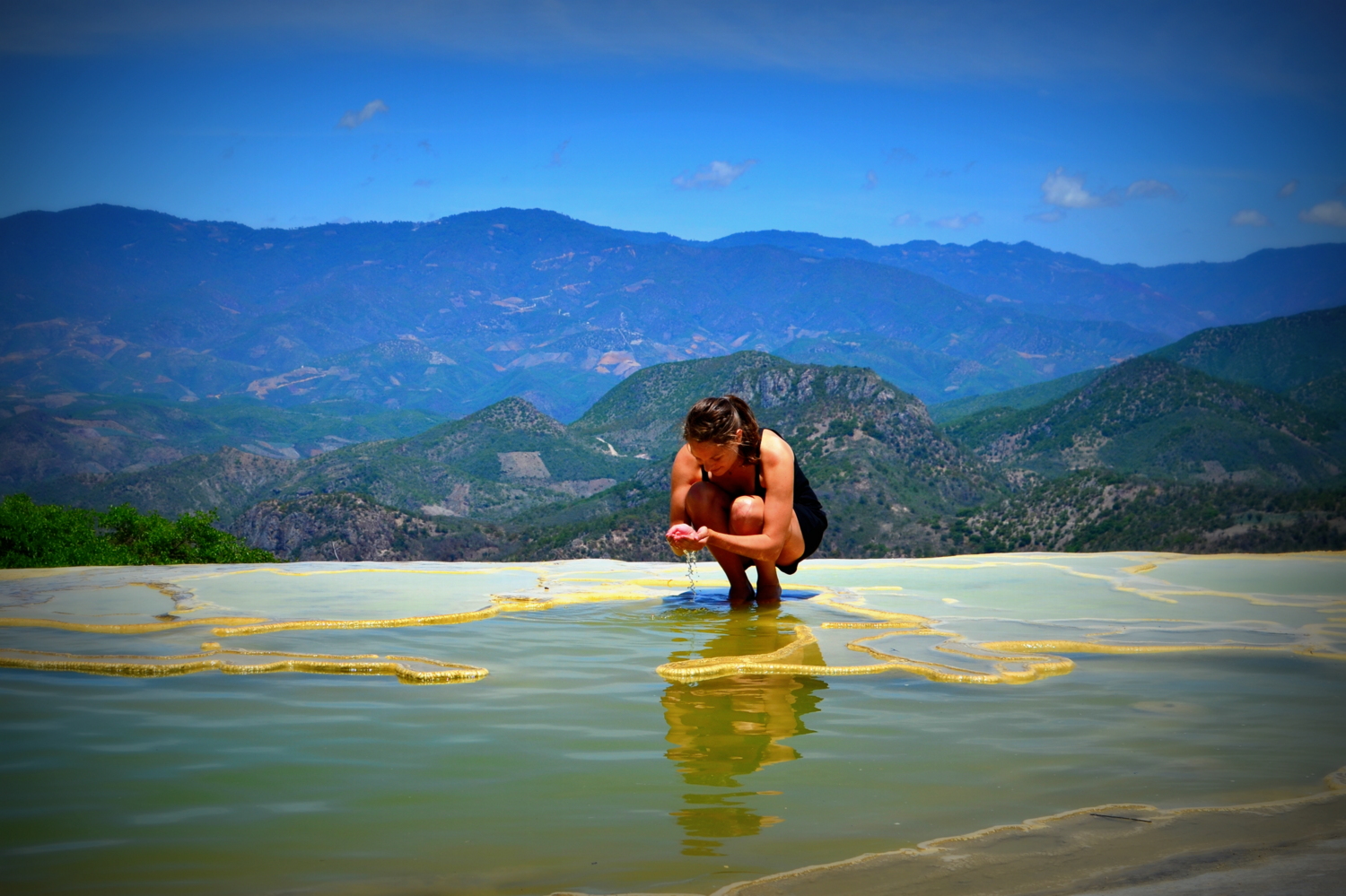
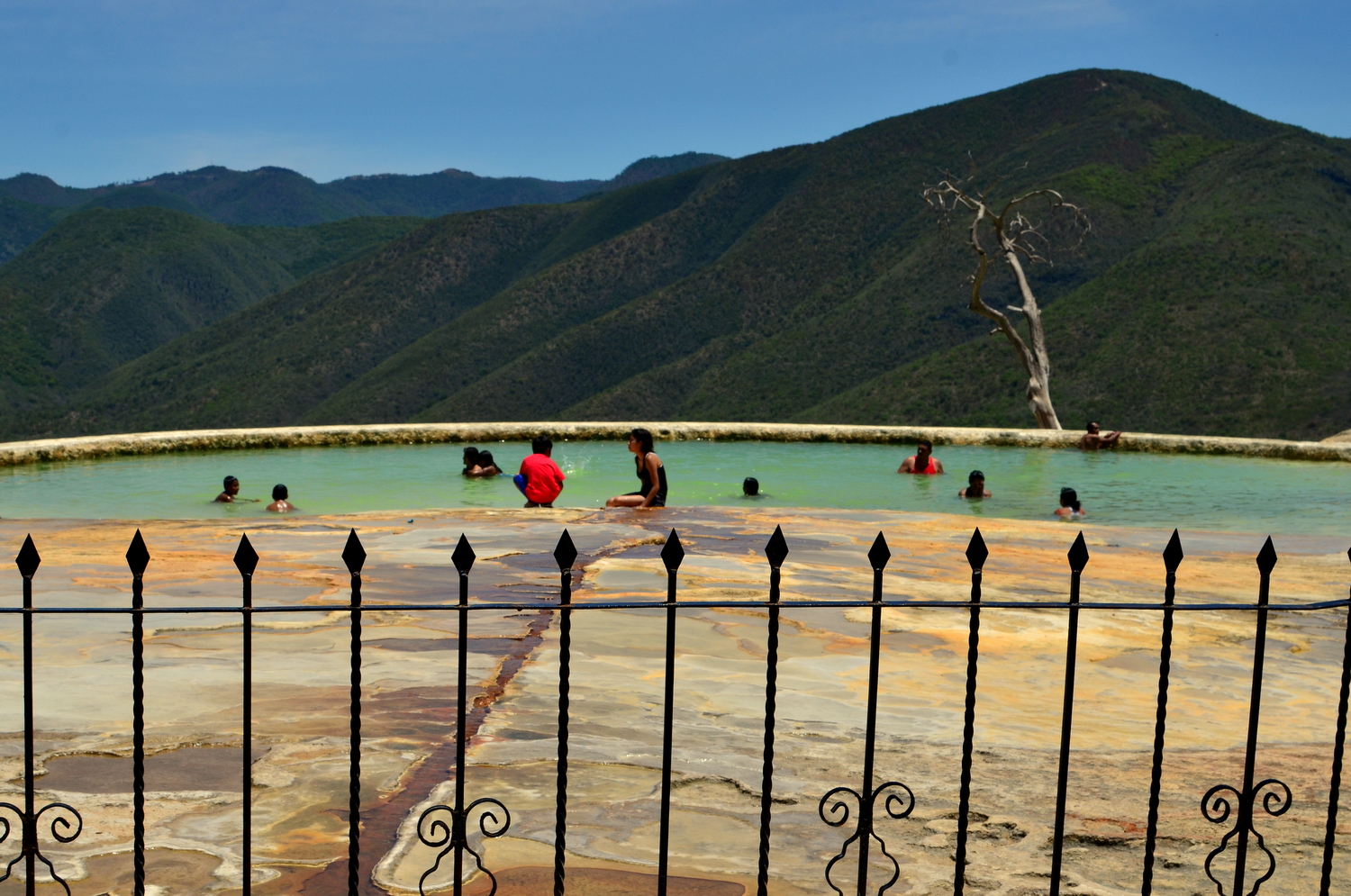
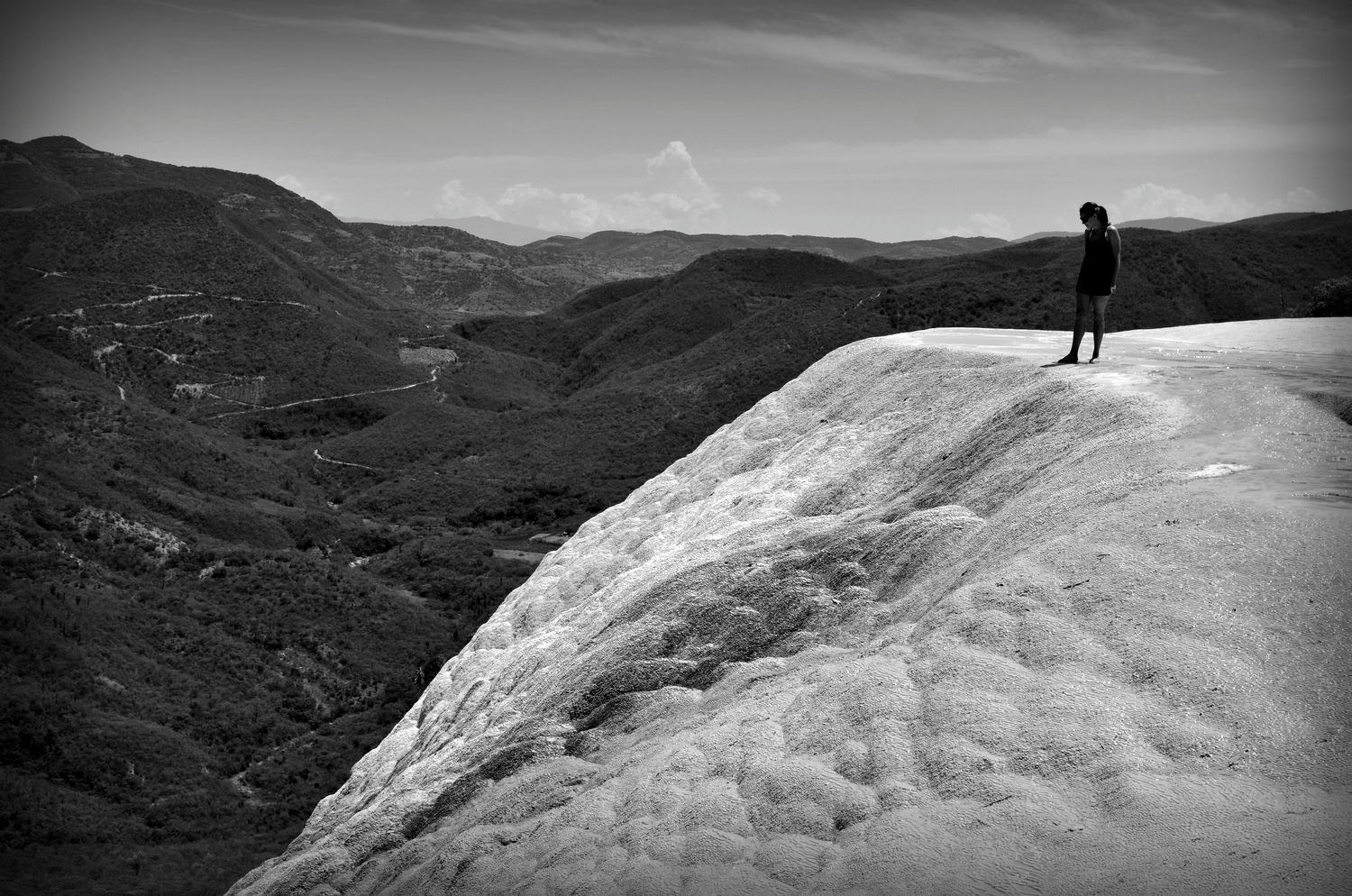
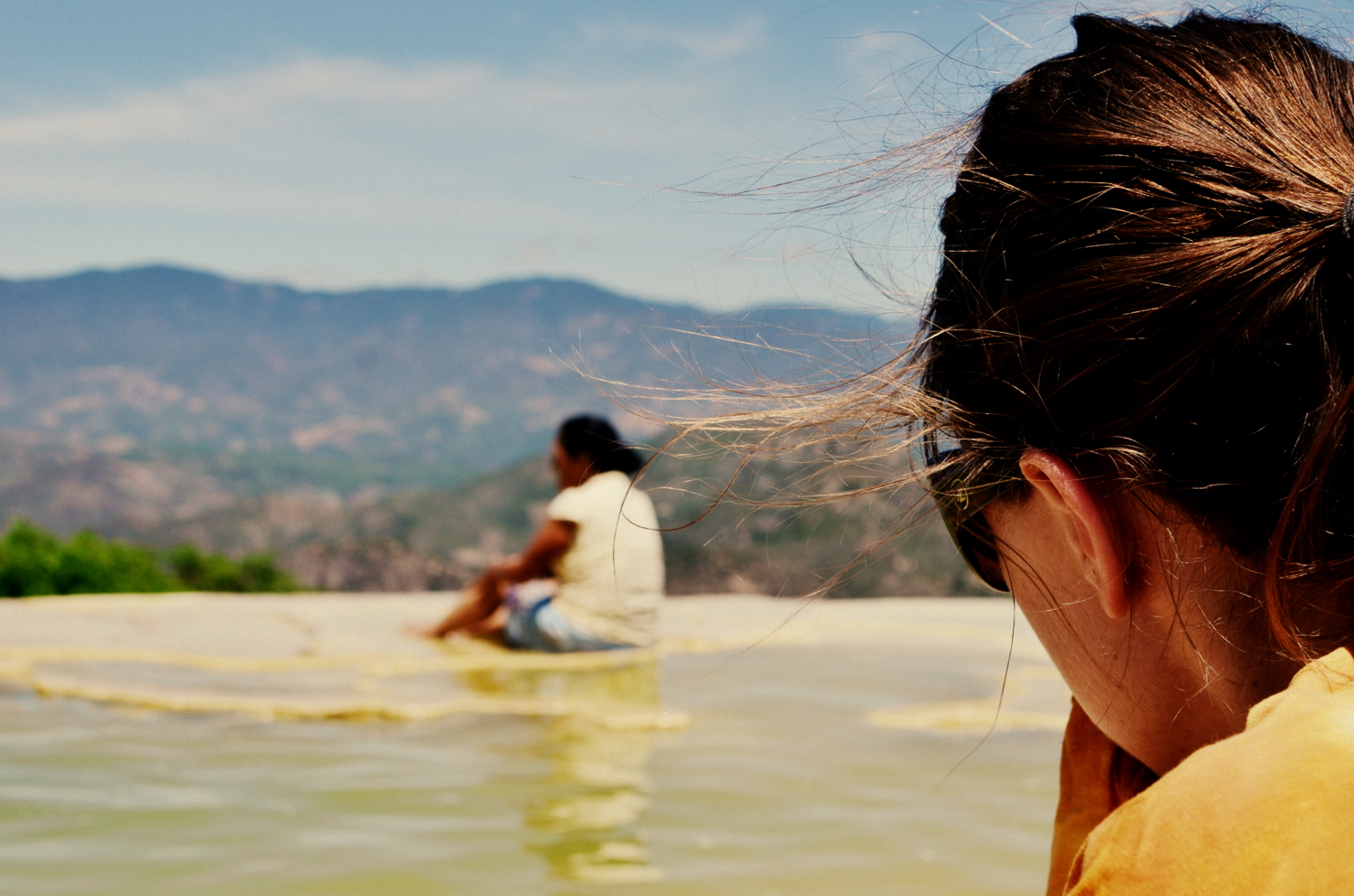
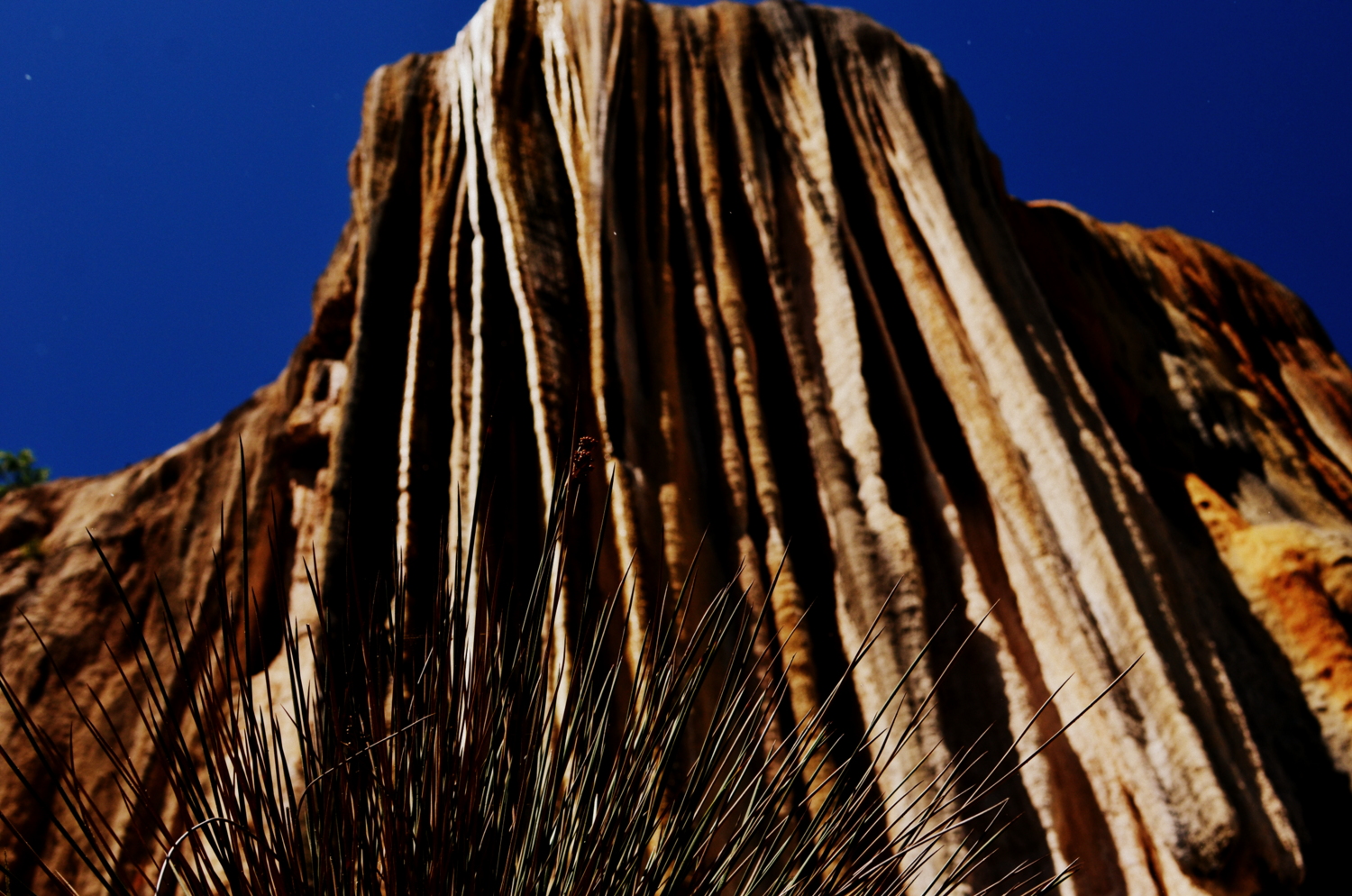
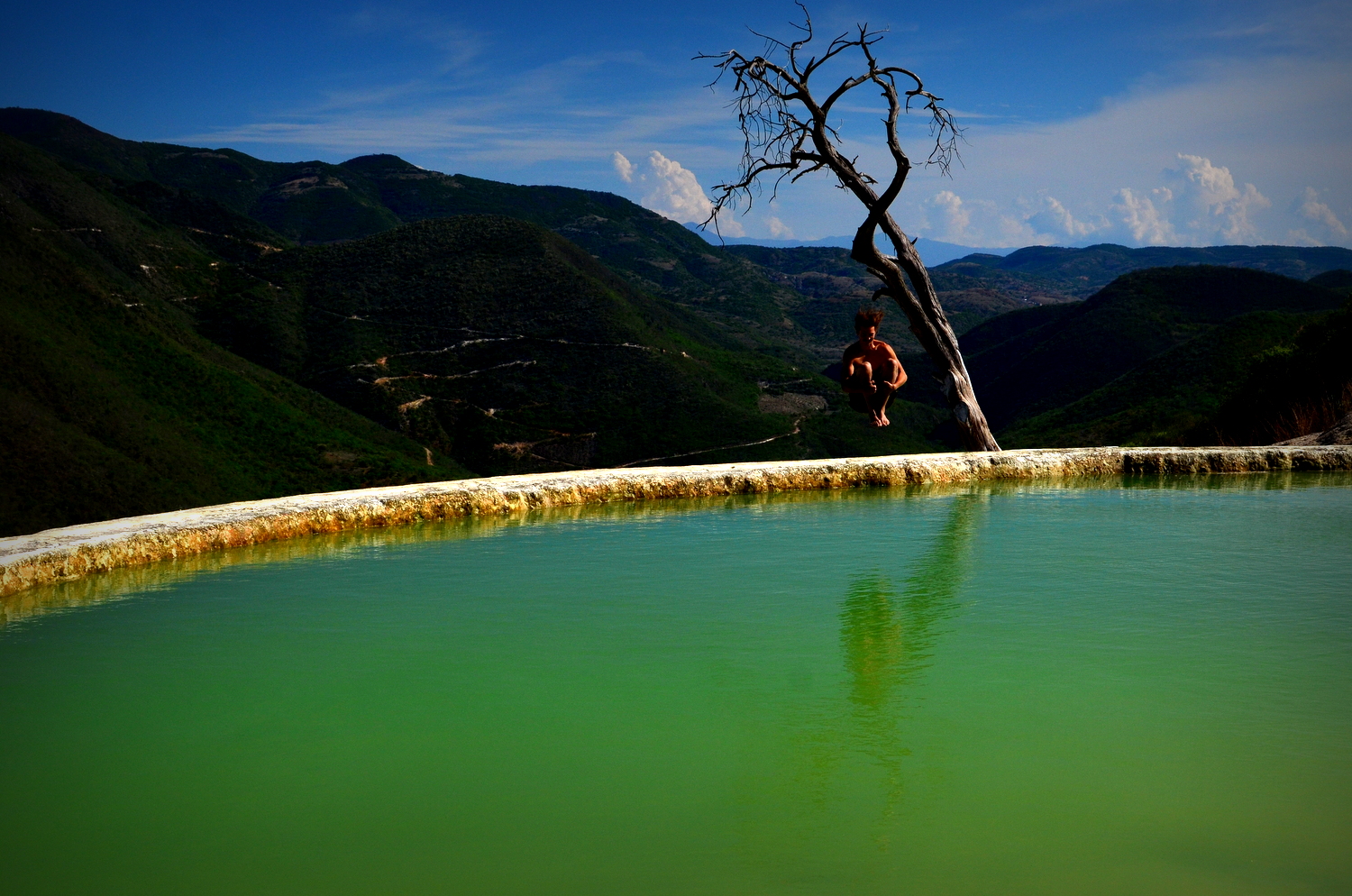
Hierve el Agua is a natural phenomenon comprised of an artesian spring high up on a bluff in the Oaxacan mountain range. It’s water is saturated with calcium and other minerals that has slowly deposited layers upon layers of calcium carbonate enriched with other minerals, giving the appearance of petrified waterfalls that are frozen in time. The park preserved this unique phenomenon by building two infinity pools where people can swim and soak in the cool, mineral rich waters and explore different vantage points for views of the cascades.
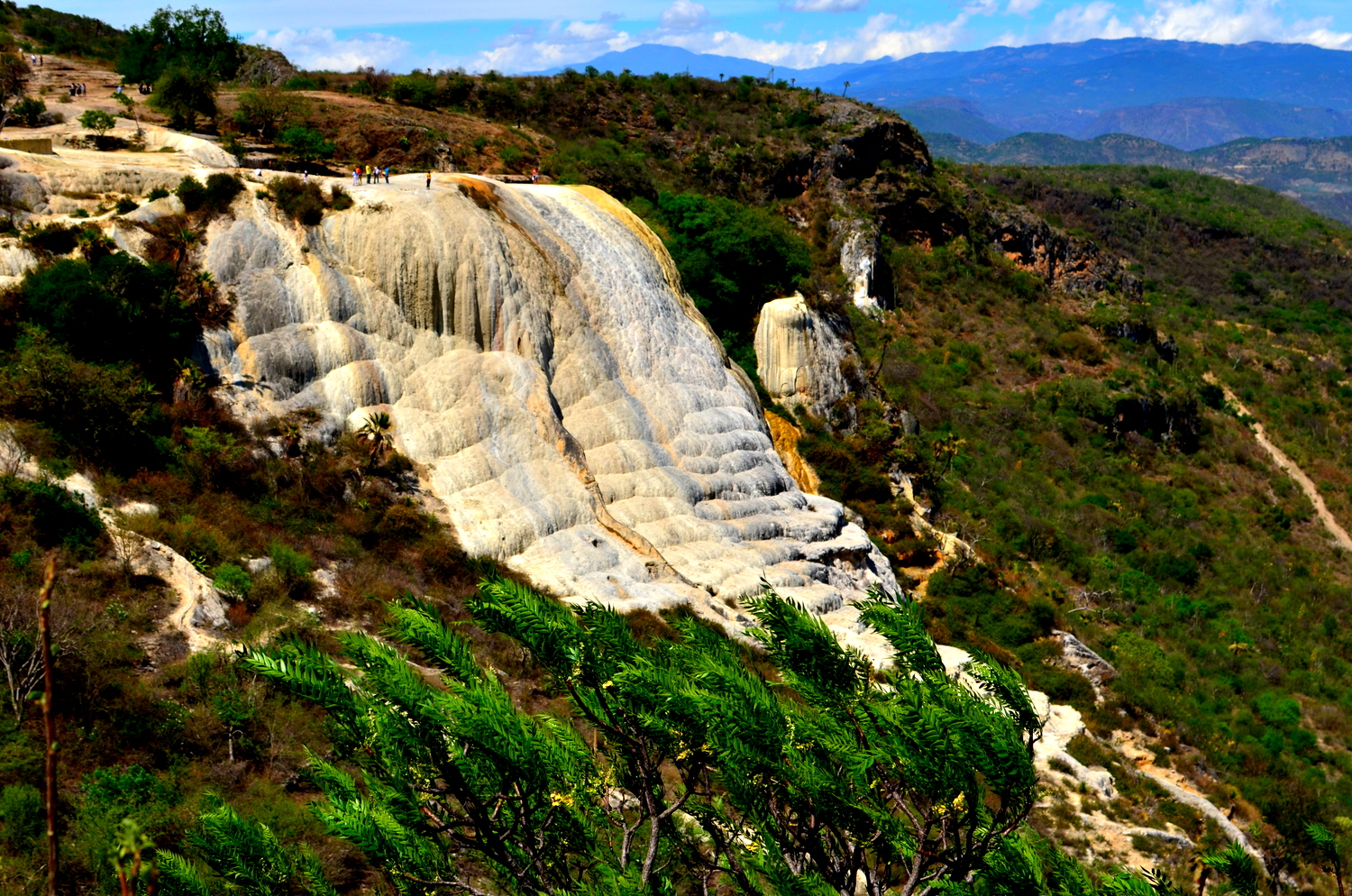
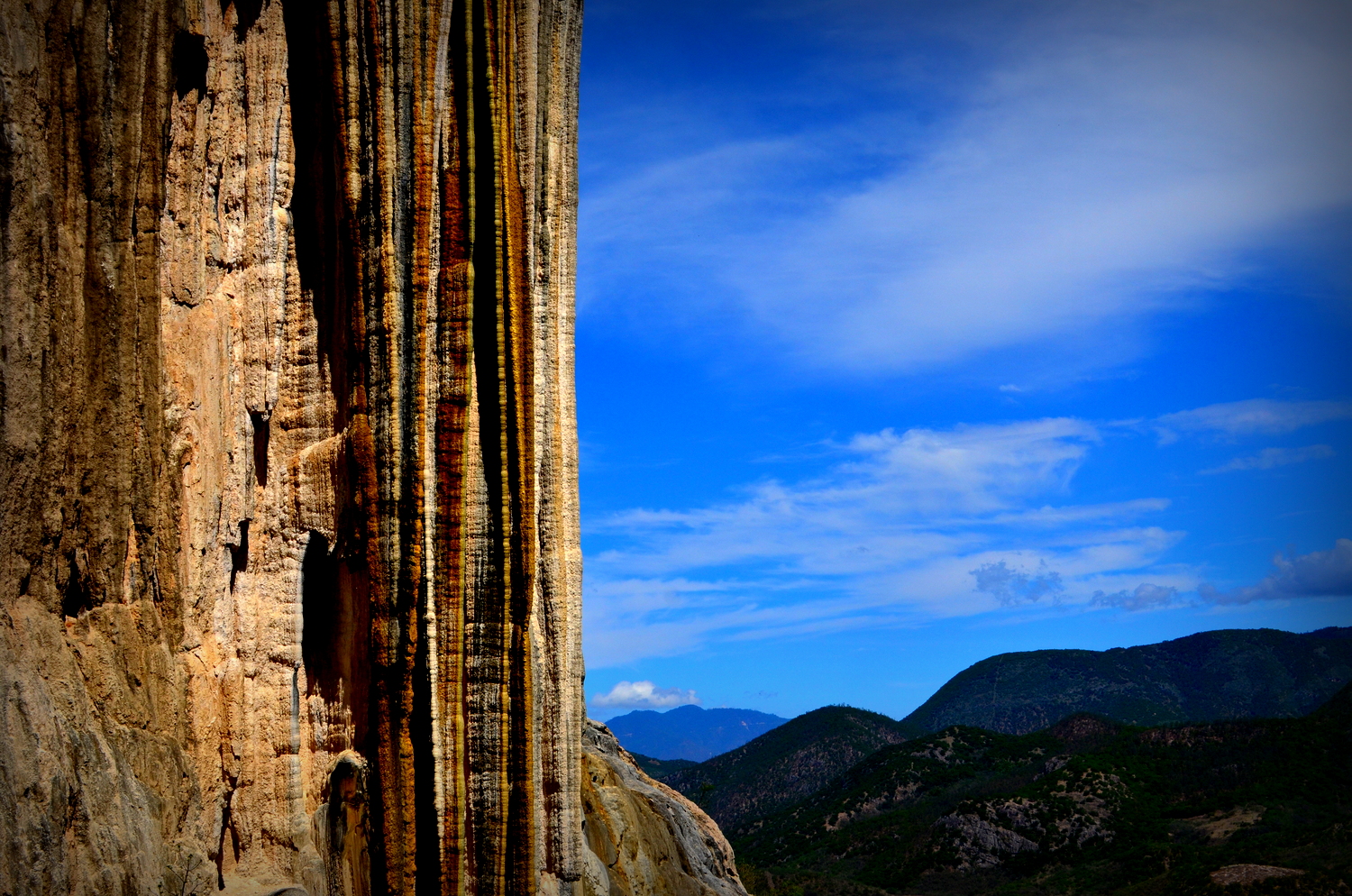
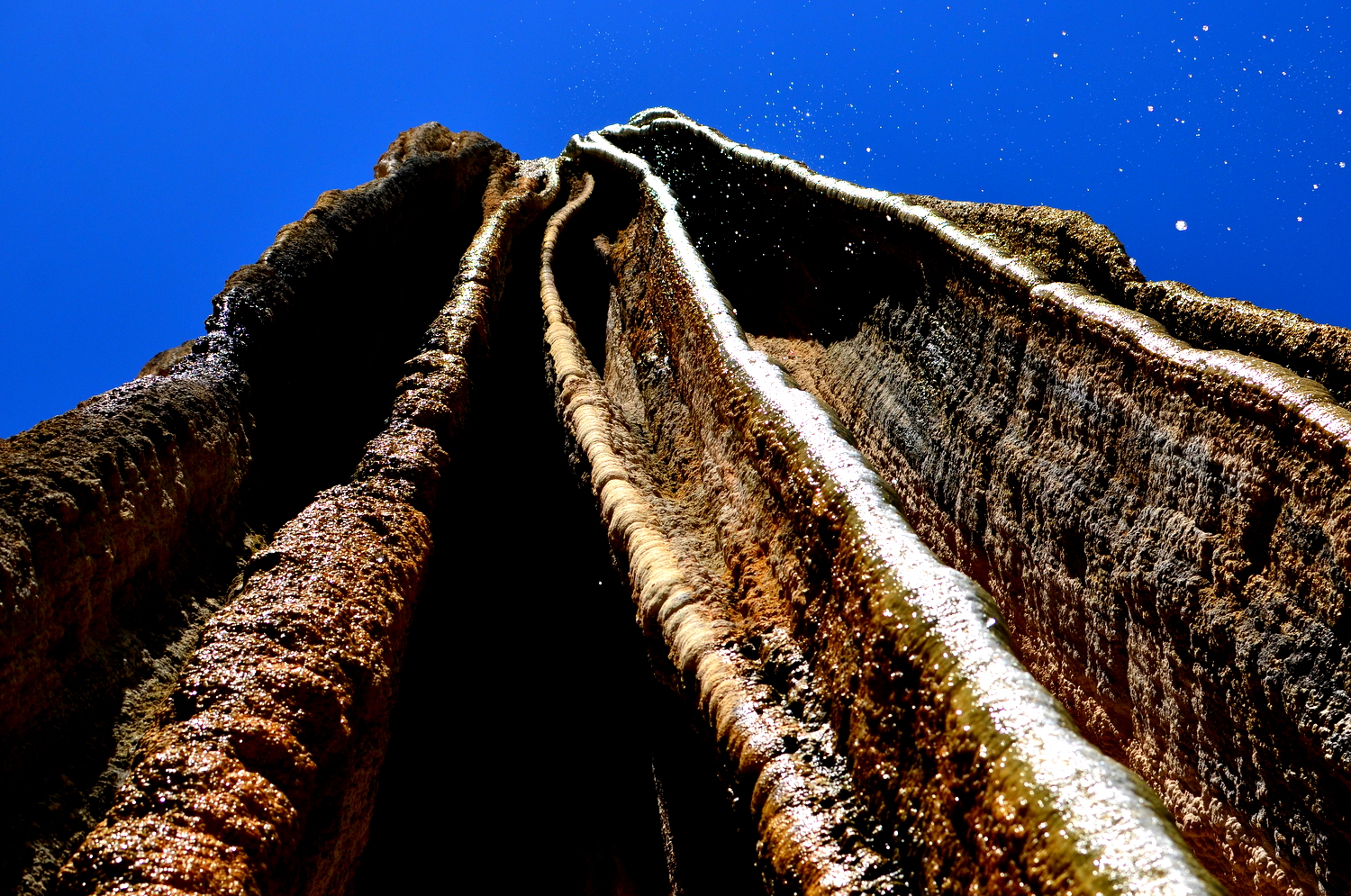

After enjoying all there was to see and do the reality of our transportation problem was at home plate waiting for the next pitch. There were a few small fees we were not privy to for entrance into the park and we had barely enough money to get back on about 2 hours of hot, sweaty 2nd class bus rides. With Elissa and the mountains as my witnesses I put it out into the universe that someone will be returning back to Oaxaca in a rental car and have extra room for us to bum a ride. We walked back to the pools to have another swim and to take a few cannonball photos when we were asked by a man named Matteo to take his photo at the main pool. Matteo was from San Francisco and traveling for pleasure and research for his Mexican restaurant in San Franscisco on a 2 week tour of Oaxaca and the coast. Matteo offered us a ride and off we went. We had great conversations about the experience of traveling, relationships, and taking things as they come into your life. He didn’t have time to visit El Tule yet so a wrong turn serendipitously brought us right back to the little town center on Earth Day. We quickly went and saw the giant arbol again before heading back into town. If you ever are in Bay Area zip on over to Taco Jane’s in Marin (http://tacojanes.com/) and tell Matteo that Dan and Elissa from Oaxaca sent you.

Oaxaca, take 2

The shuttle bus back to Oaxaca was more or less the same nauseatingly twisty stretch of road we’d been on a few weeks prior. It was like a bad joke that was a little funny at first but then remained funny far too long to be comfortable about the truth of the situation. When the bus finally breached the green surface of the mountains and into the valleys at the foot of the Sierra Madres rain was ready to greet us as we sped through flatter terrain adorned with pueblo’s and grassy fields. The soil composition in this area is mostly clay and this short heavy rainstorm turned calles (streets) into rios (rivers). The muddy wake from our van was cresting over the curbs as we passed cars stuck on side streets and people drenched to the bone. Rain is relished in this area during the dry season so I’m sure it was a blessing and welcomed wholeheartedly.
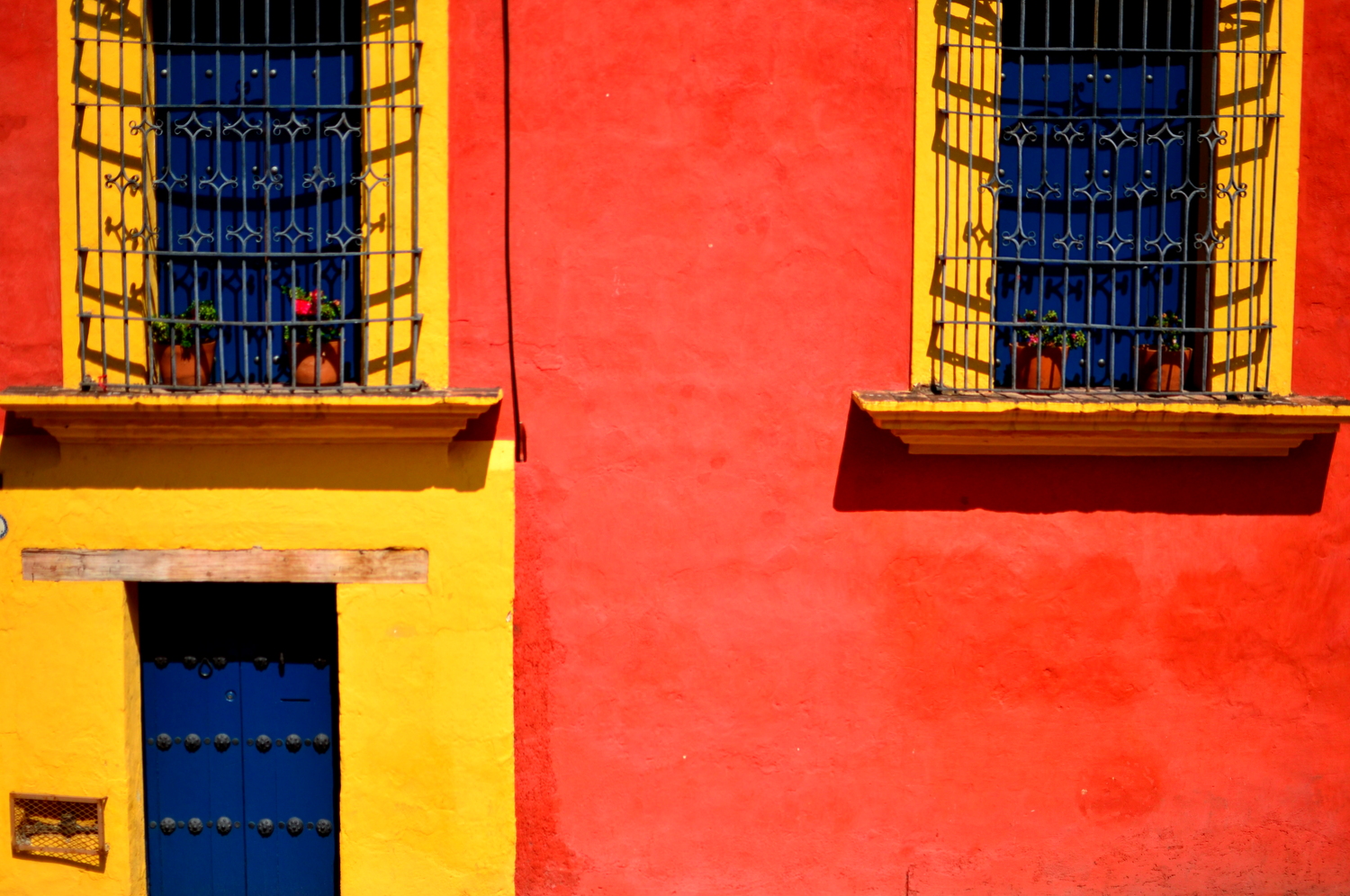
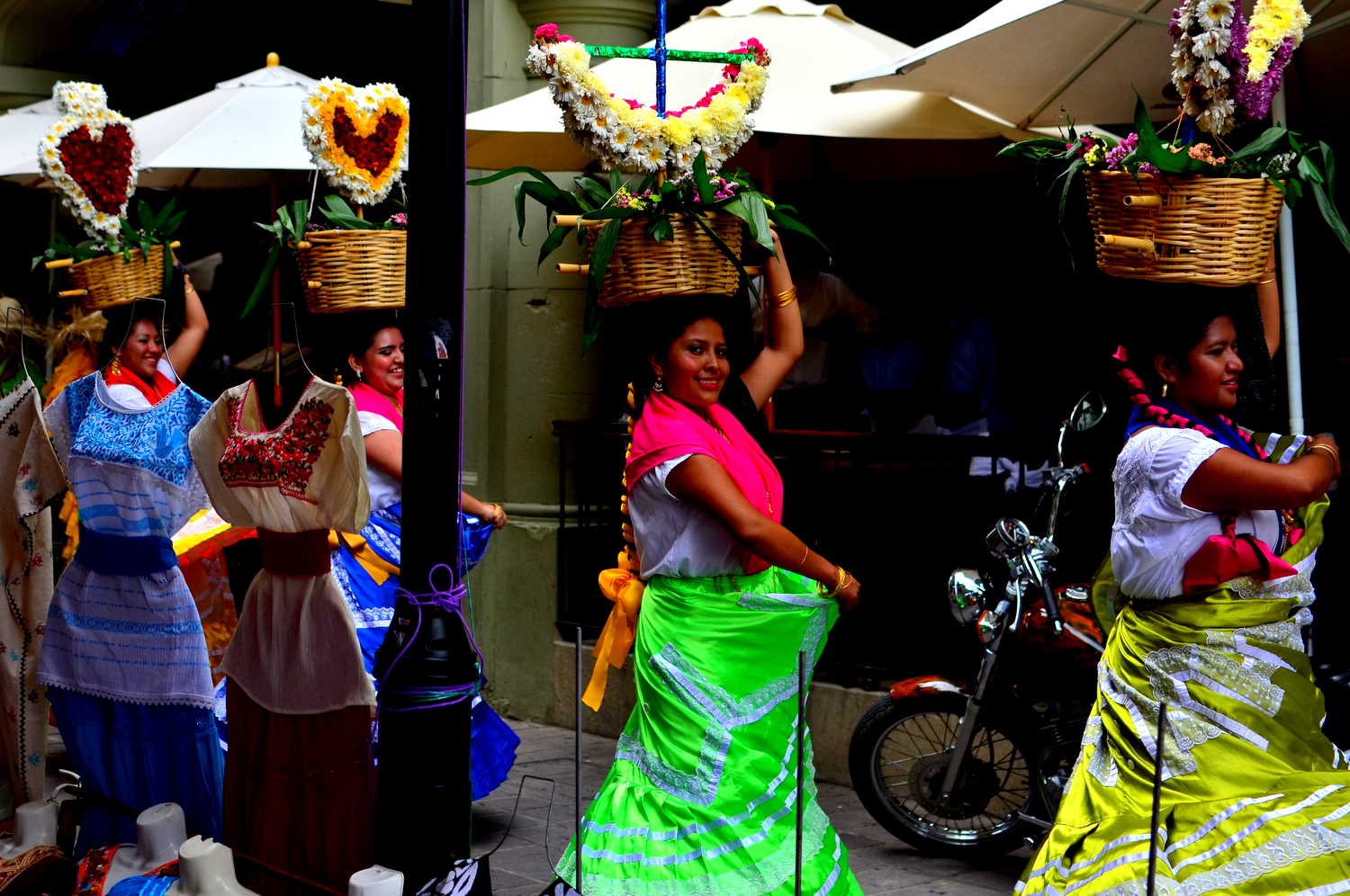

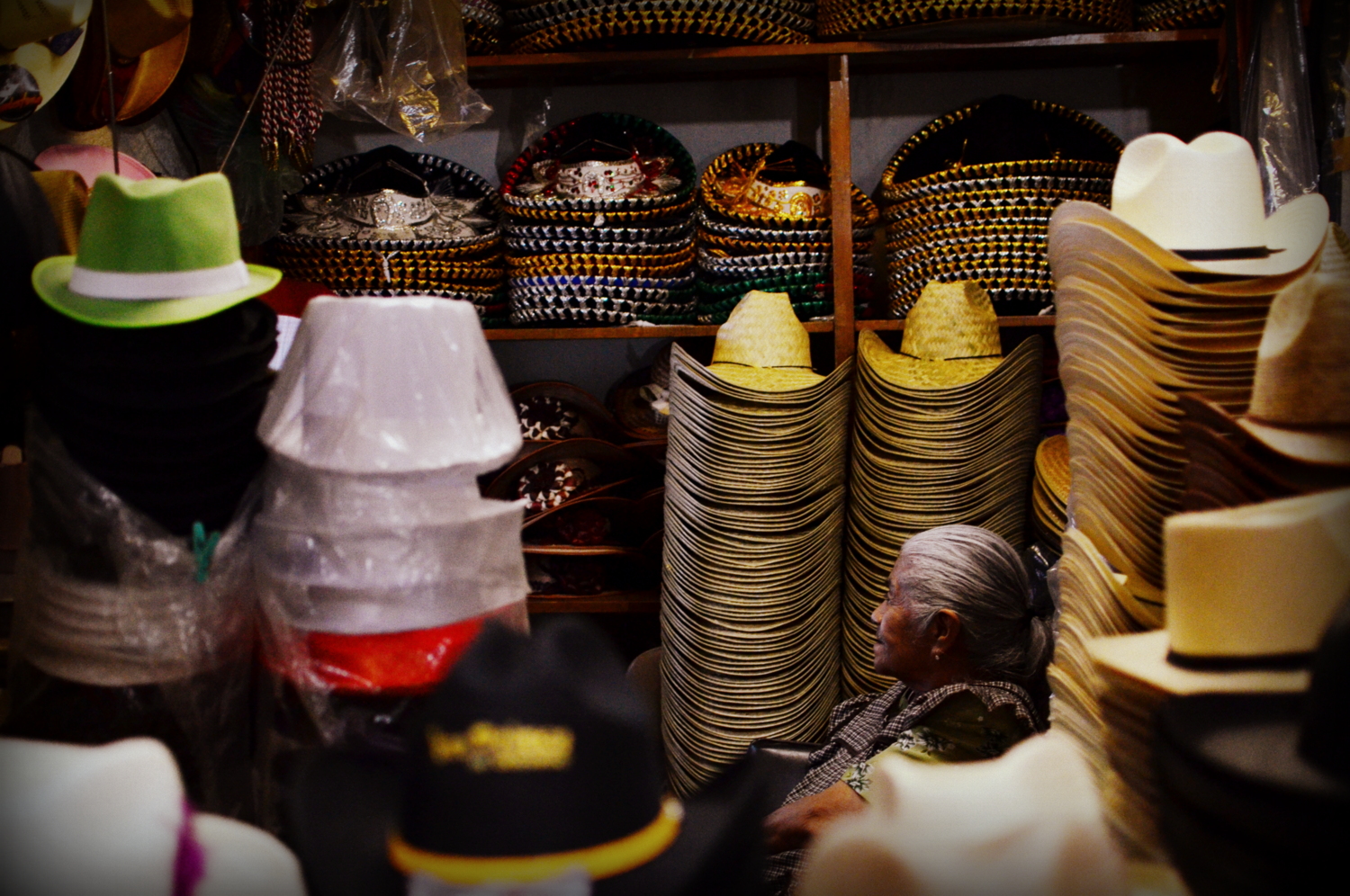
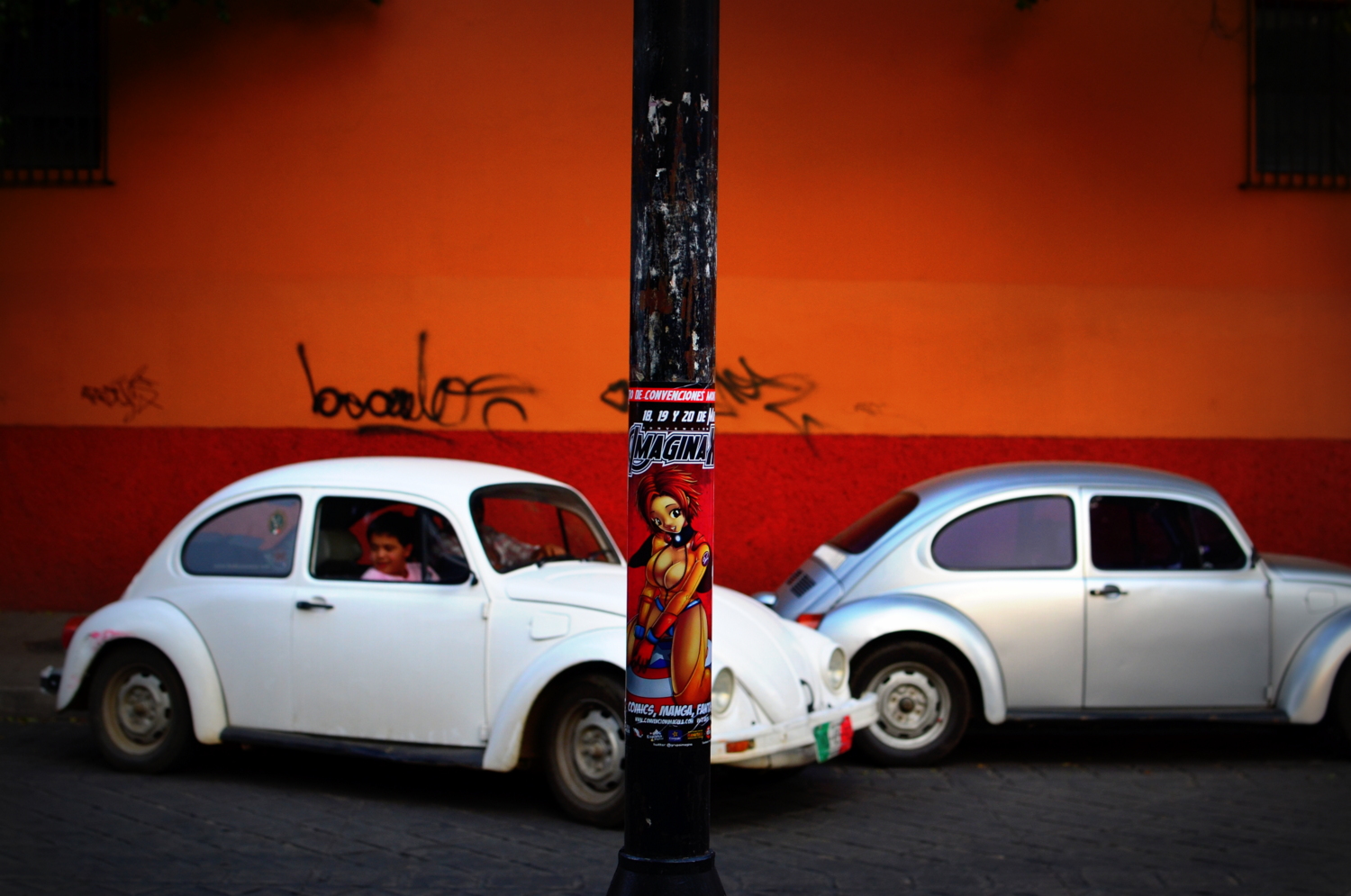
A healthy walk through Oaxaca from our bus shuttle depot brought us through numerous streets filled with puestas breaking down their mobile stores and packing away their goods for the night. We found a decent hostel and strolled around for some of the classic Oaxacan food we’d been dreaming about. It was quickly decided that Oaxaca was a perfect place to call home for a week so we could get serious about learning Spanish. It had everything we wanted and needed in one convenient, beautiful city. The pace of life here felt a little slower than other larger cities in Mexico and we became instantly comfortable. The historical roots run deep in this artisinal wonder and can be found throughout its entirety. Colonial style churches, beautiful old mansions with 12 foot tall wooden doors, and buildings splashed with the classic Mexican color pallet are nested on square block streets. The roads around the city center are immaculately clean and it’s zocalo is brimming with activity just about every day and night. On one Friday night we stumbled upon Mariachi Oaxaca playing in the gazebo to a crowd of hundreds. After wandering right to the front of the stage we were wowed by the supremely talented musicians entertaining the masses showcasing their musical talents and insanely fast-tongued comedic interludes. This whole experience was encapsulated when we were watching an old couple dance comfortably together hand-in-hand for the thousandth time in their lives. Beautiful.


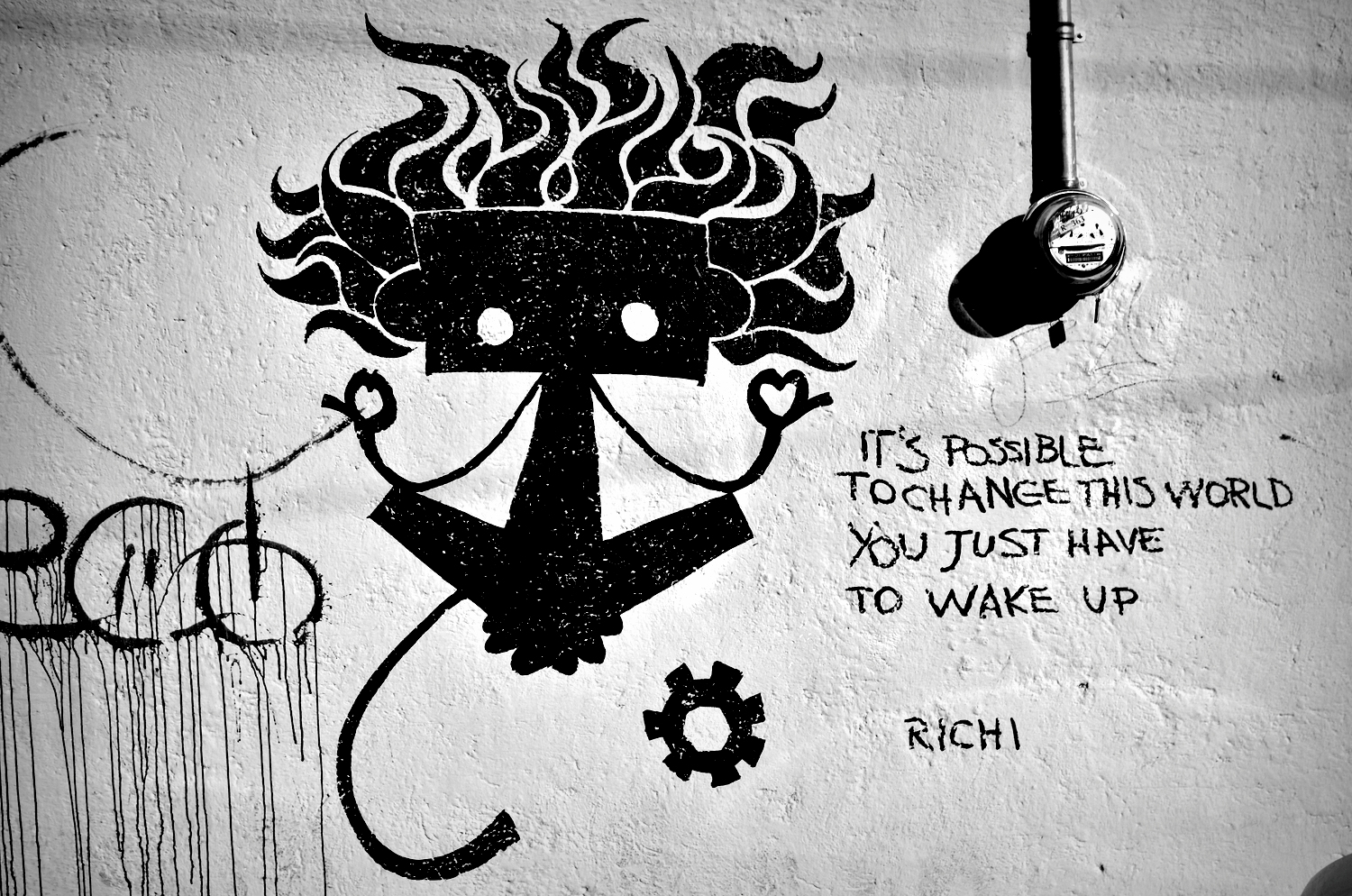
I’ve surmised from talking with people during our travels that Oaxaca is the jewel city of Mexico. Oaxaca seems to be what Mexicans picture as the perfect version of what a city should be. Stores, mercados, and street vendors all offer their version of beautifully sewn clothing, hand-made metal sculptures, painted pottery, and incredibly detailed paintings on brown leather squares. Today’s generation contributes to the modern art scene with amazing graffiti clinging to walls, murals covering entire buildings, and poster’s wheat pasted to walls advertising upcoming shows and events. But step into the Mercado de Artesanias to get a real gauge on the classic handmade works of Mexican heritage and art. It is evident that some of the crafts available are completely geared towards tourists but most of the clothing and textiles found in the markets all have that Oaxacan flavor embedded into every thread. Oaxaca has a large population of indigenous people, mainly Mixtecs and Zapotecs, who continued to work well beyond their golden years using needles and threads instead of canes and rocking chairs. A walk through these markets would afford the view of these small, tough, and weathered senoras making their beautiful art by hand while passing time between potential sales.
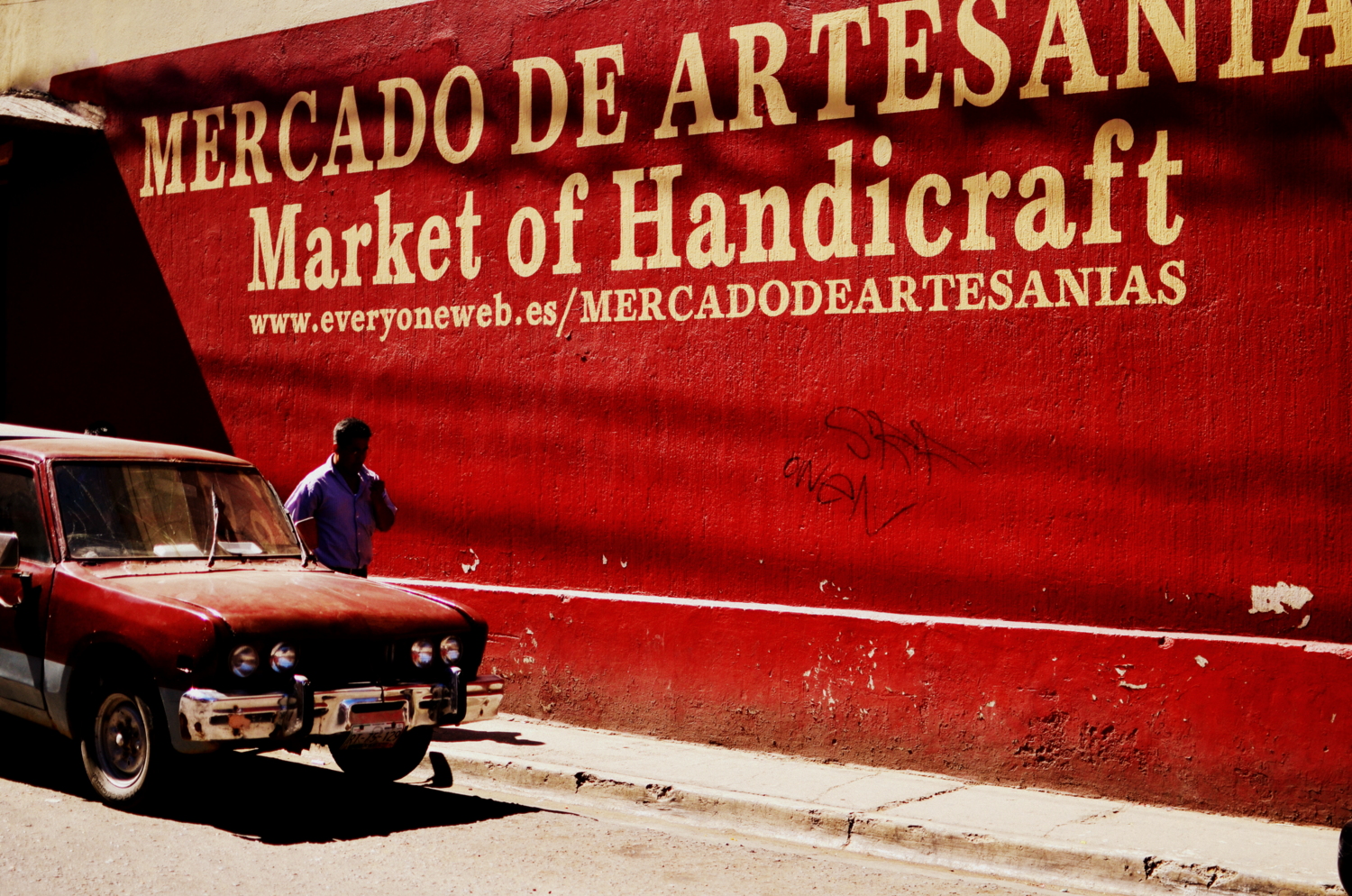
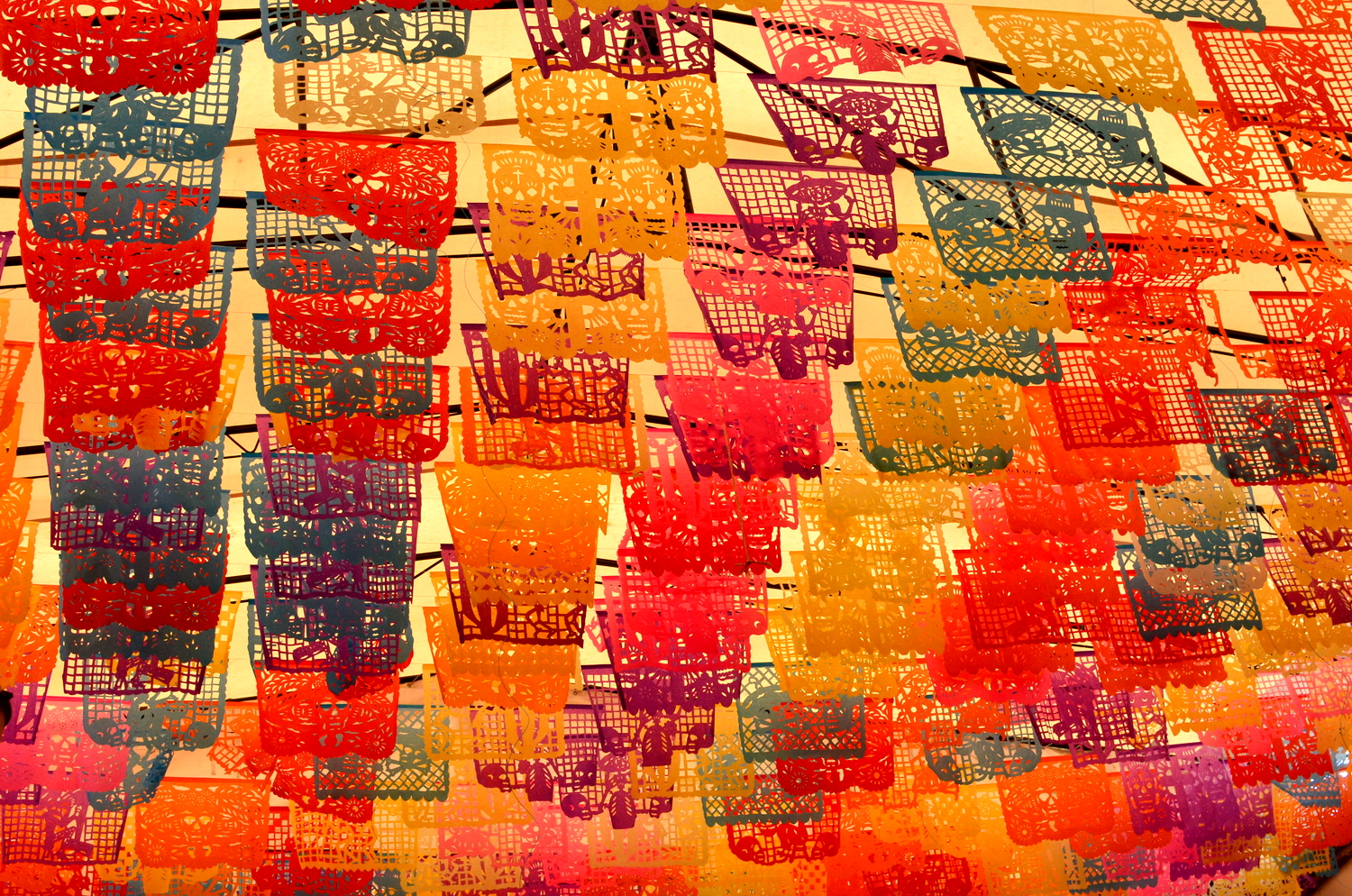


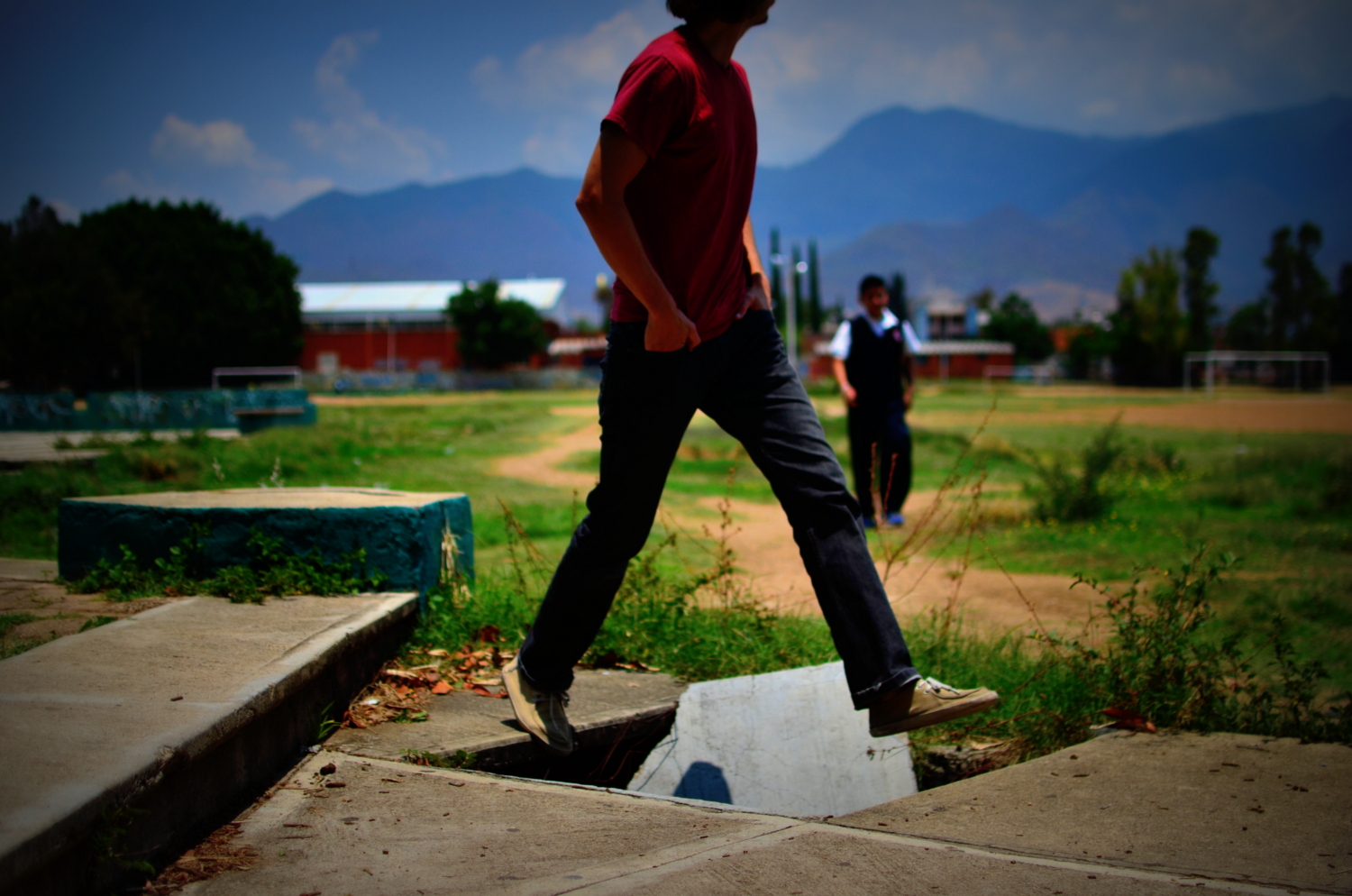
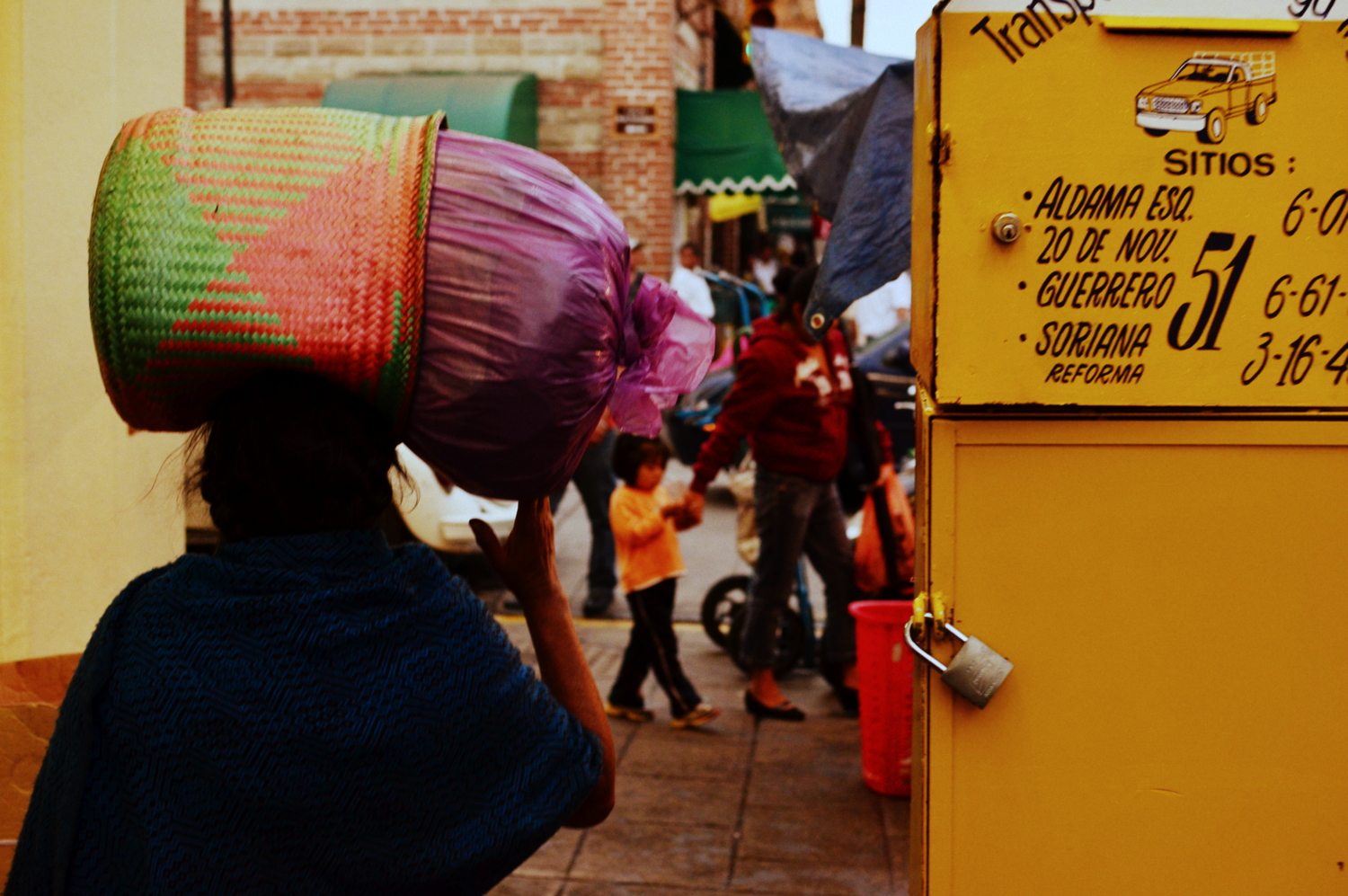
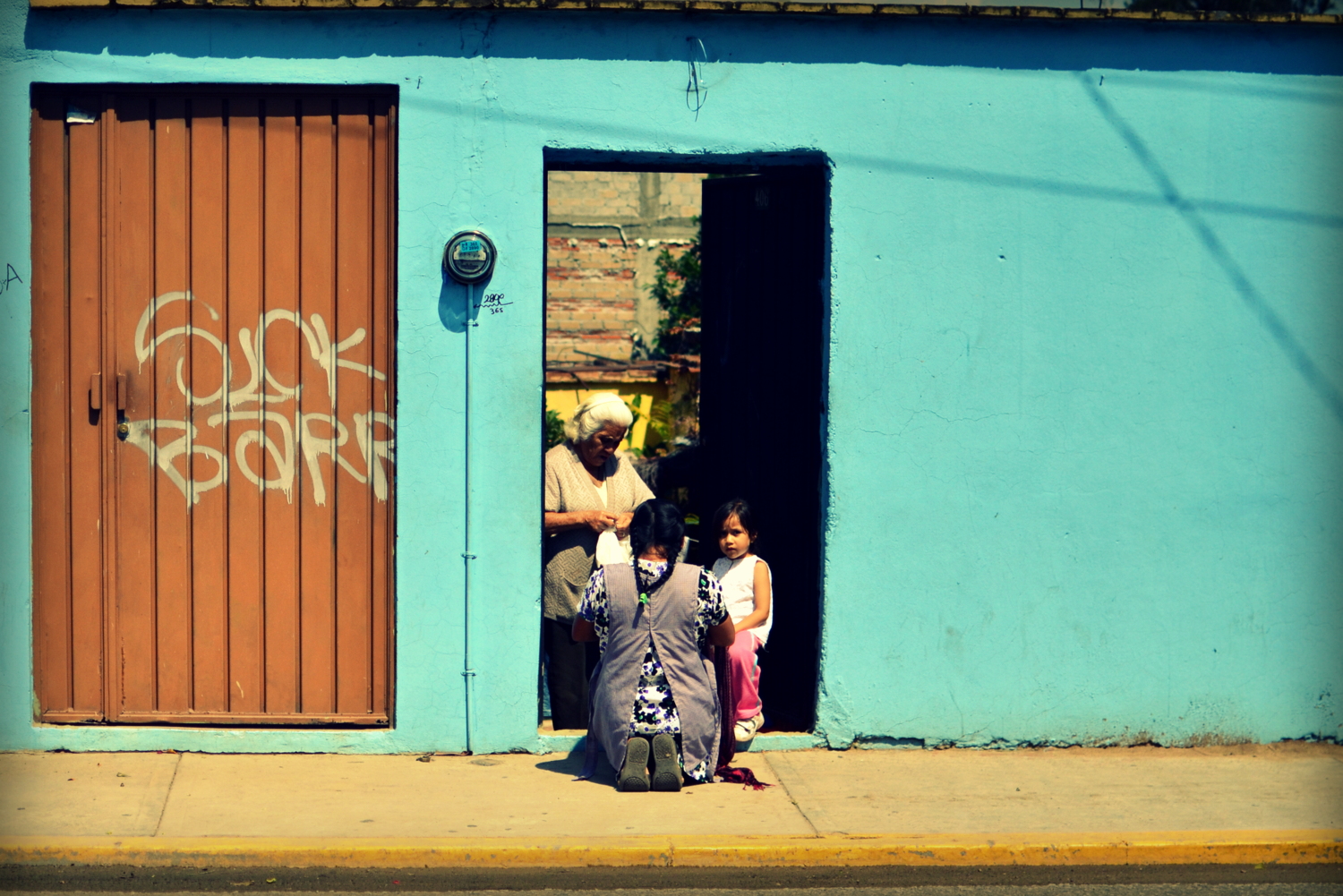
But there is also another side of Oaxaca that is often overlooked an unseen by most travelers glued to the city center. Oaxaca is one of the poorest states in Mexico and the fringe of the city consists of very impoverished communities. Tensions from the poor and indigenous communities often flare up into protests near the city center in front of government buildings. A protest involving public teachers blocked the main road one day and on another the road to Mexico City was blocked from a group voicing their opinions on the lack of government interaction with the indigenous communities in the short time we were there.
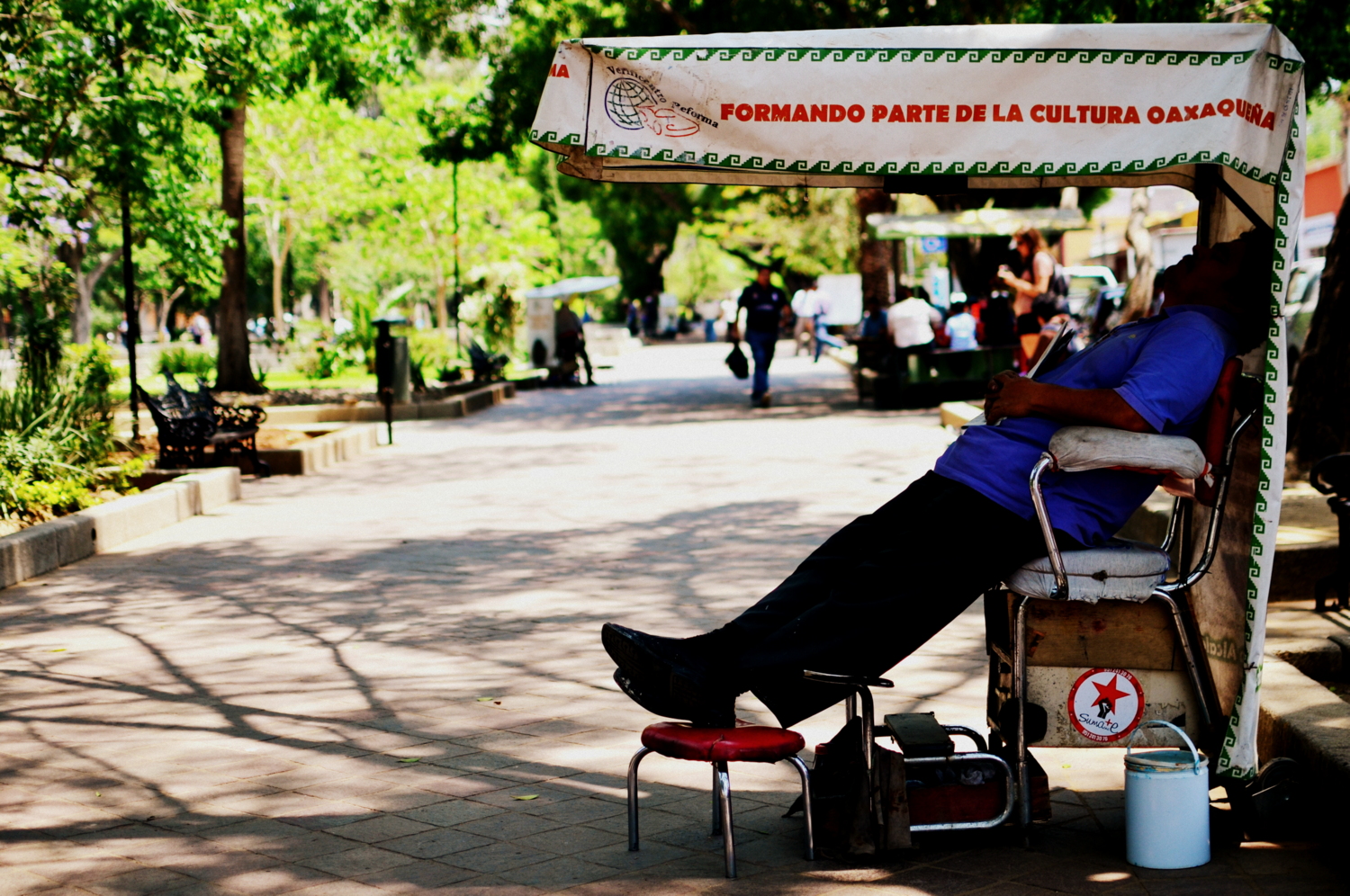
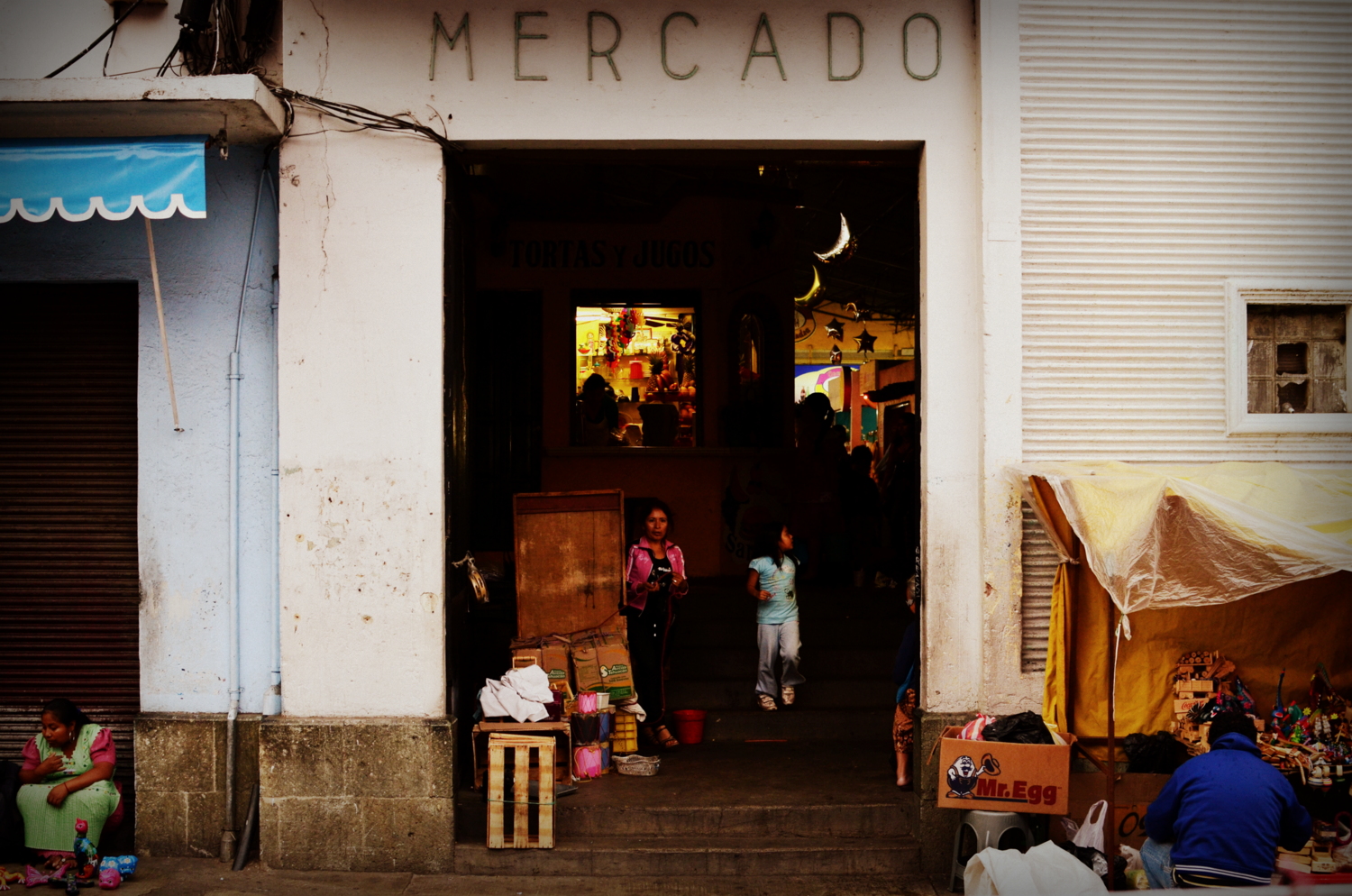
The overwhelmingly massive and lively food markets of Oaxaca are where we felt at home. We found ourselves ducking into the shadowed entrances on the hunt for fresh produce, enjoying delactable licuados, scanning the carne stands for a freshly cut meat, sampling locally made chocolate, and searching for the best Oaxacan cheese on a daily basis. Our first adventure into Benito Juarez Market involved us getting lost and ending up at the same location time after time. It was as if the market was continually expanding in all directions. Convinced we saw everything we noticed smoke billowing out from the small entrance of the carne asada (grilled meat) corridor. We walked into this smoky cavern during the busiest part of the day, shoulder to shoulder with people ordering freshly barbequed guisados. There were no signs or instructions and it was assumed that you haggle for meals along the endless rows of purveyors searing their meats and vegetables over coal. We were in a completely different world and it smelled absolutely delicious.


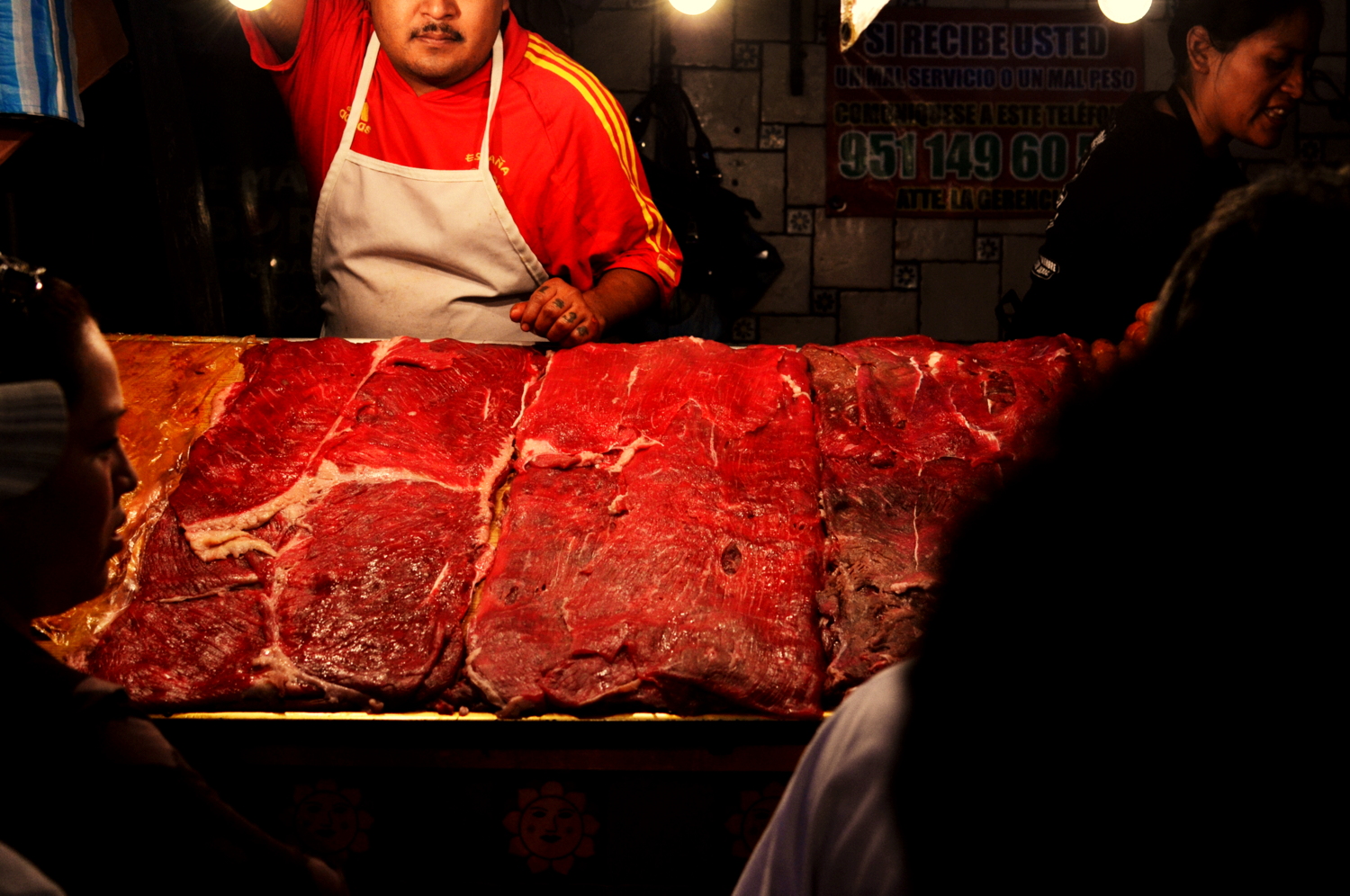

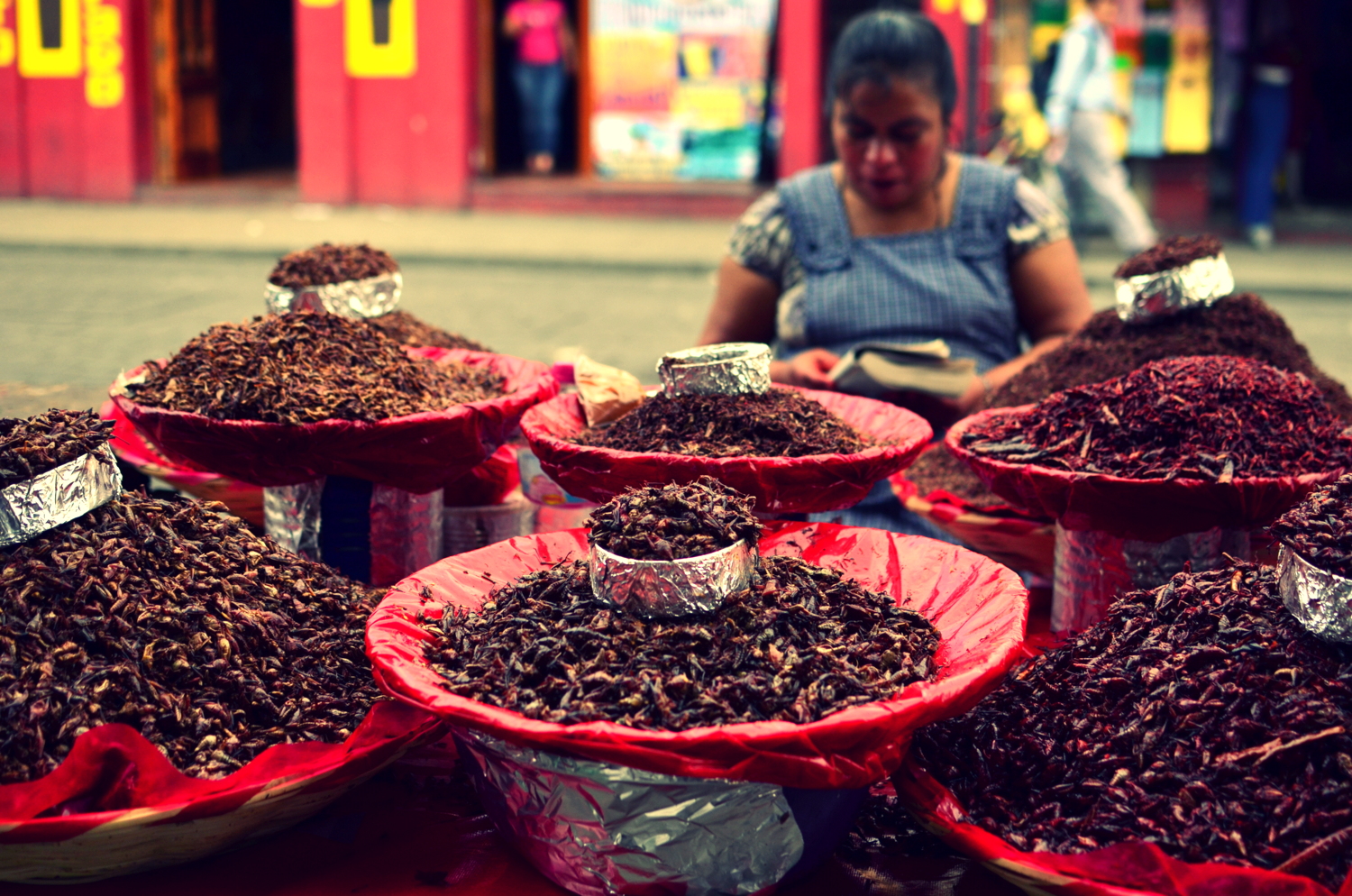
Oaxacan markets also had more obscure and adventurous fare including, but not limited to, fried grasshoppers (chapulines). We found it imperative to try things when a free sample is offered, regardless of how crunchy it is. We were given multilple warnings about petty theft and the dangers of the oversized Mercado de Abastos. We wandered throughout it’s mega-mall sized footprint that swallowed up entire blocks with blue tarps, display tables, and a massive amount of people. Goods ranging from shoes, kitchen equipment, live poultry, breads, cheeses, chocolates, and art were abundant in this never ending scene. It’s easy to get lost here and easy to get taken advantage of as a tourist and it’s more than common practice to get your pockets cleaned by teams working together.


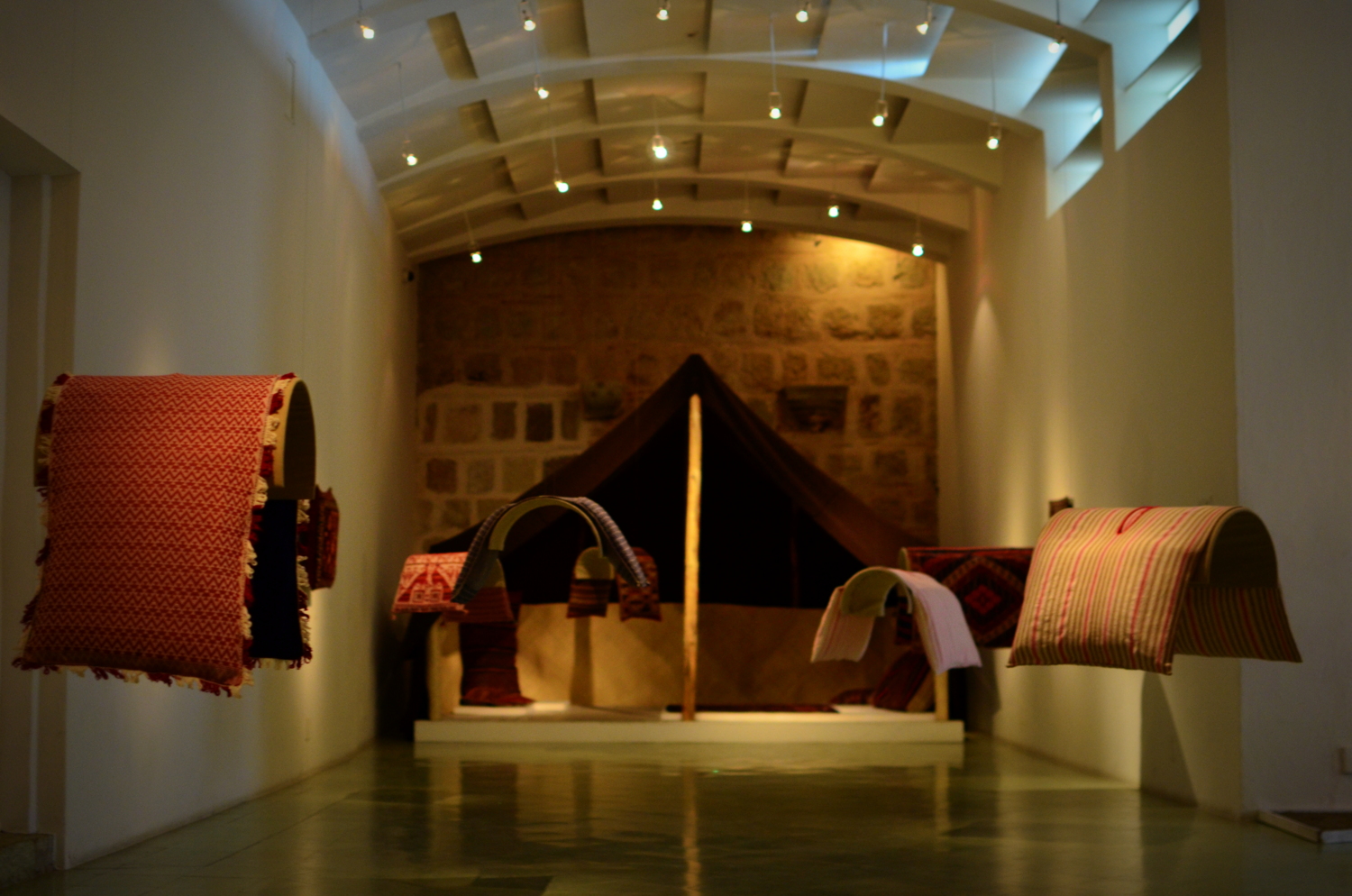
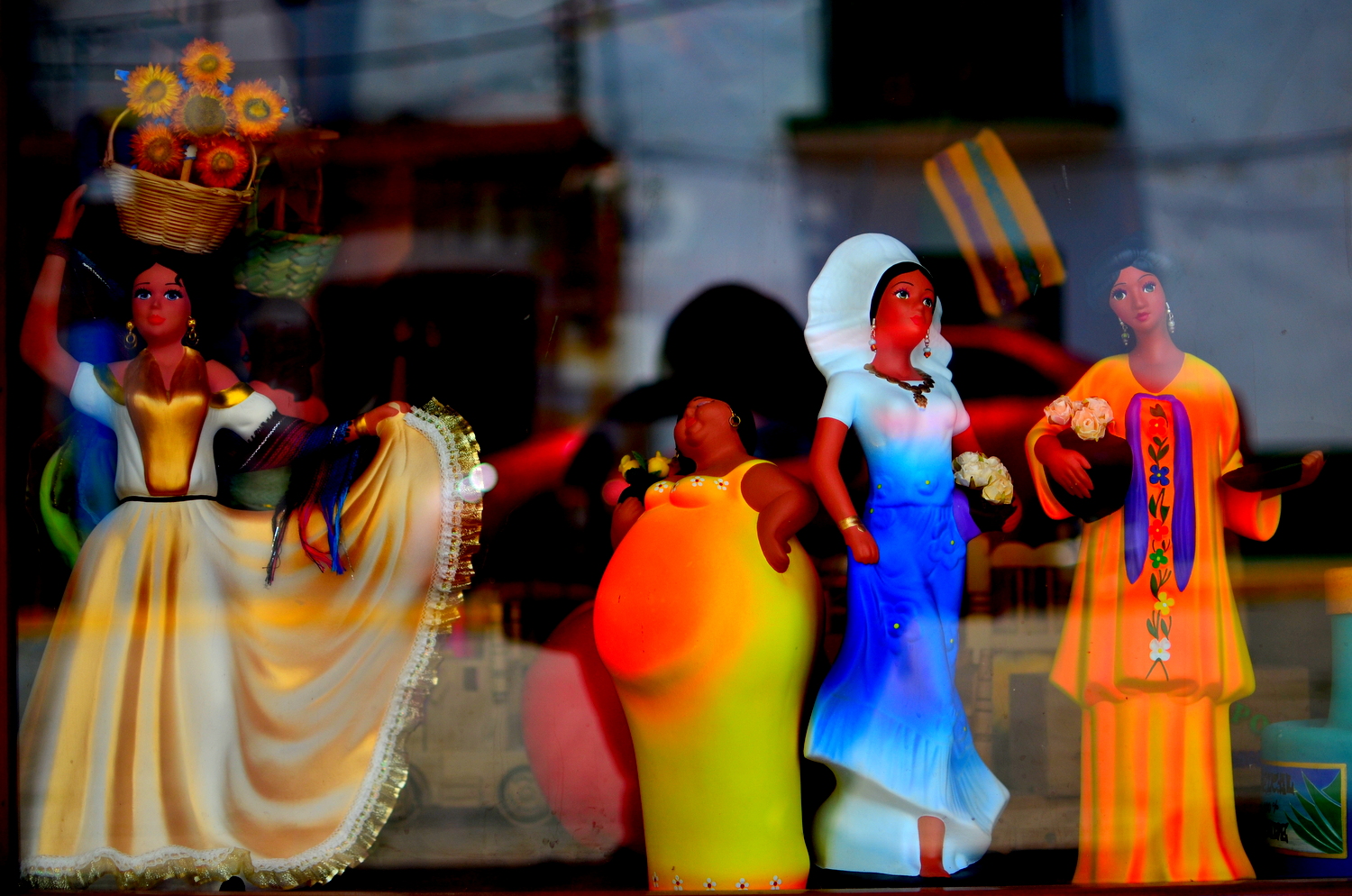
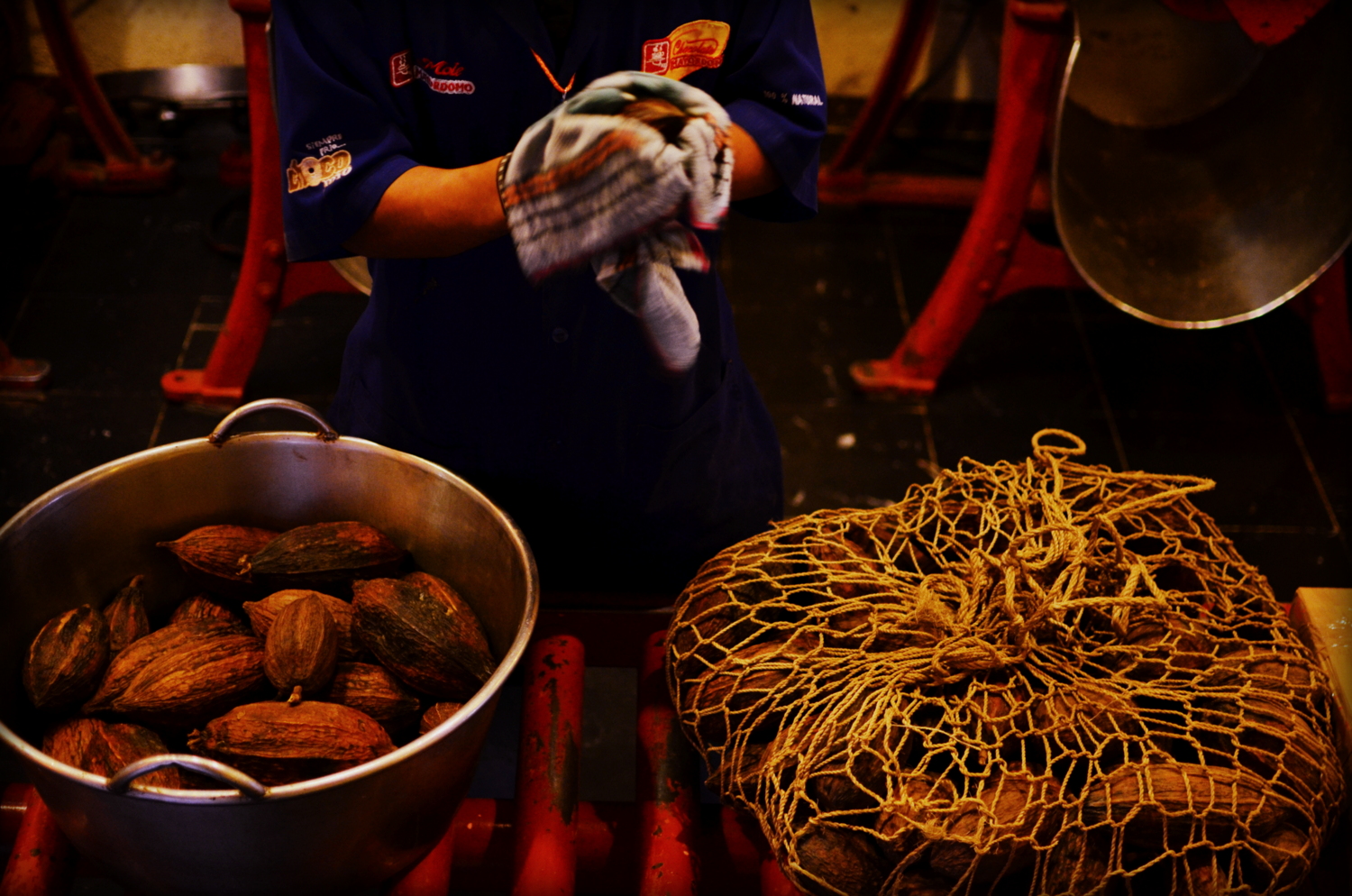
I must digress into the cheese and chocolate of Oaxaca. Oaxacan cheese is absolutely and utterly amazing. It’s crafted into a mozzarella-like consistency in long, flat strands that are the rolled up into a knot of delicious, freshly prepared chunk of heaven that will erase your memory of all cheeses consumed prior to it. Queso Oaxaca is found everywhere but the quality and taste can vary quite a bit so never say no to a free sample. The chocolate is also a prized and very delicious treat revered by Oaxacans . They make chocolate here in the most basic form, using natural ingredients like cinnamon, vanilla, and walnut for flavoring with cocoa pods, sugar, and soy lecithin. After scouring the markets we figured that Mayordomo (a chocolate chain store) had the best tasting chocolate and always gave free samples whenever we set foot in the store. Stick around the store to watch them make chocolate in person by grinding the cocoa pods, cinnamon sticks, vanilla, and the other fresh ingredients producing a thick, chocolate paste. They also offered a wide variety of classic mole variations para llevar for you to take a small piece of Mexico home with you.
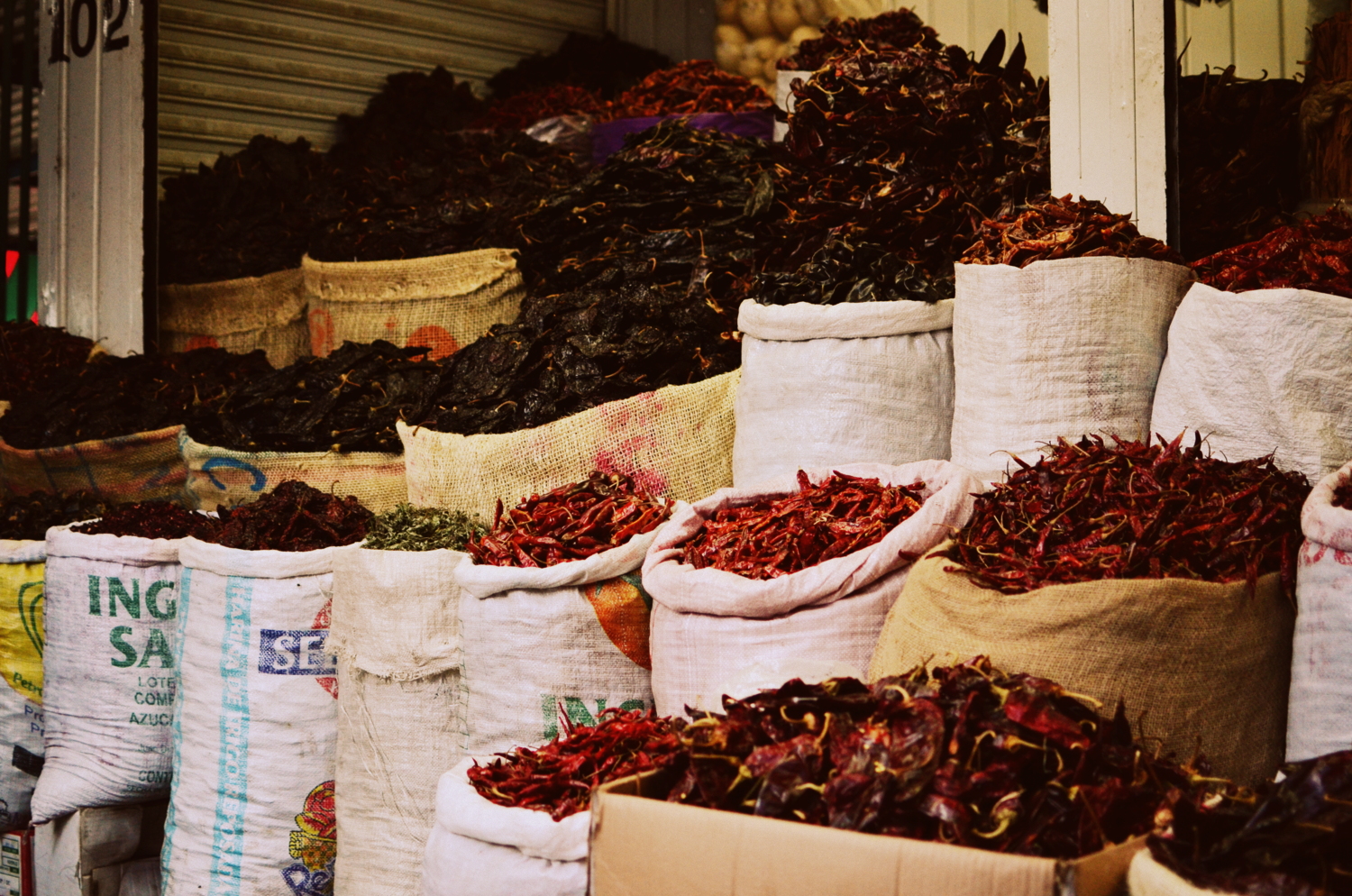
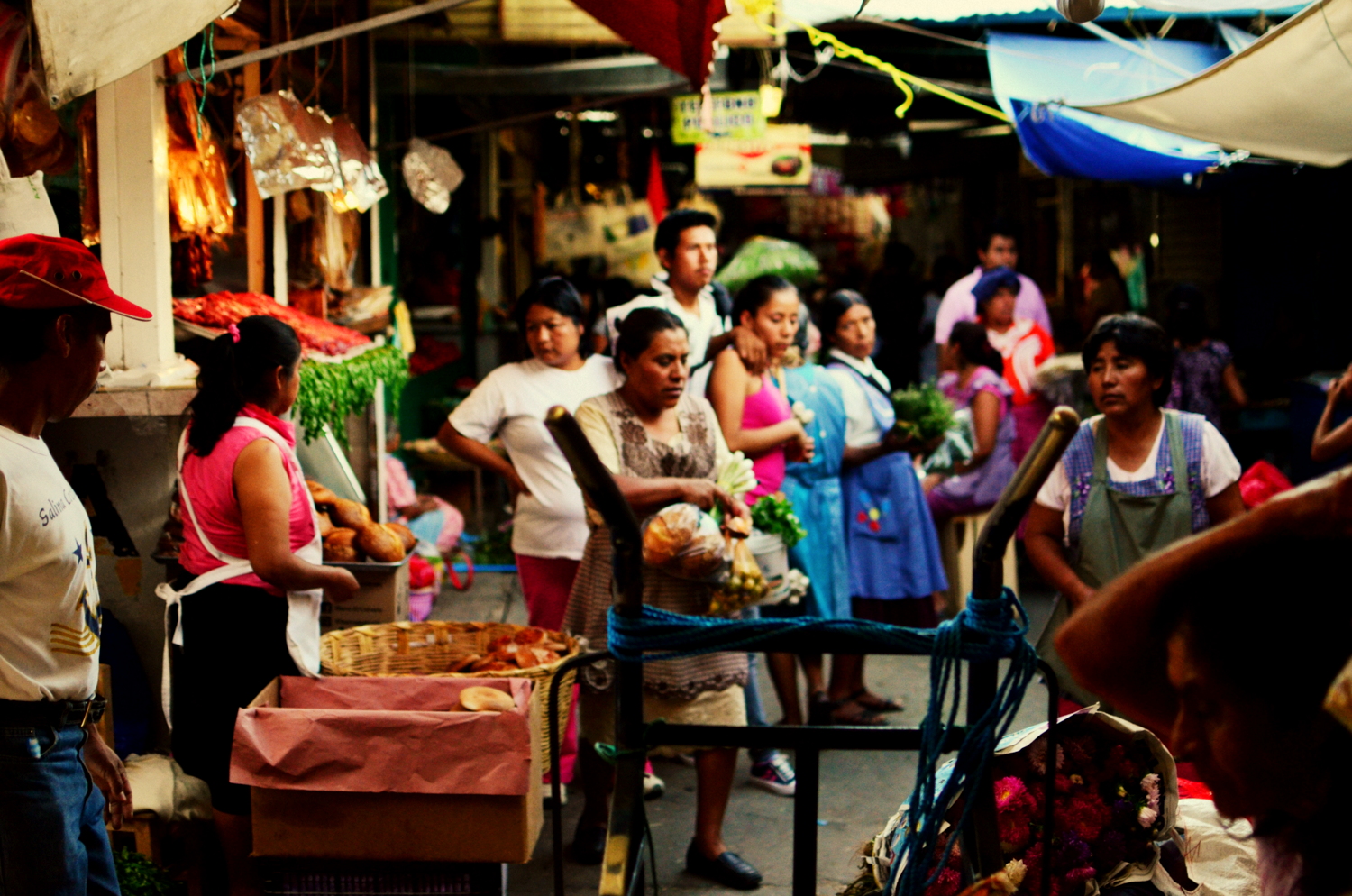

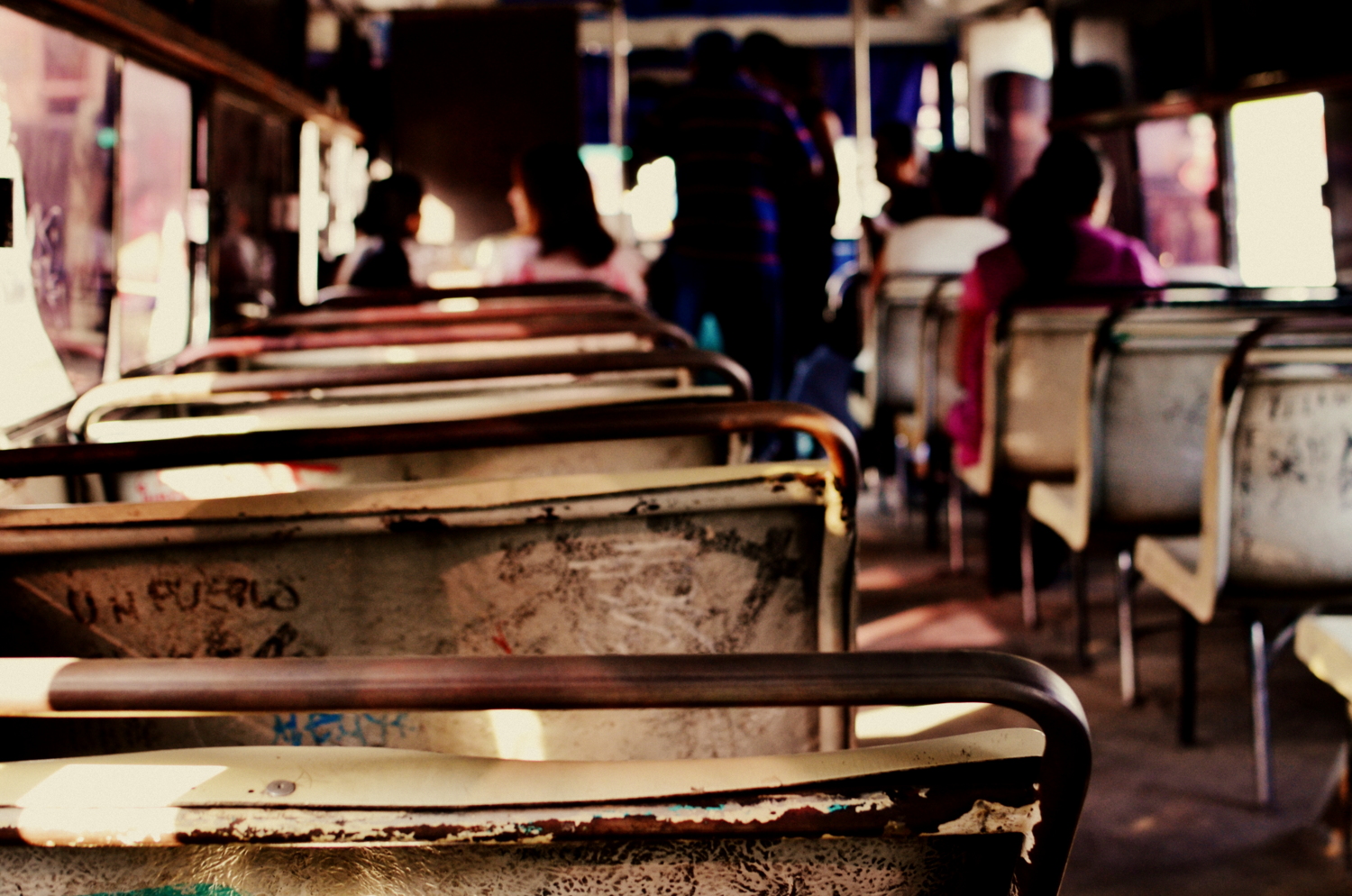

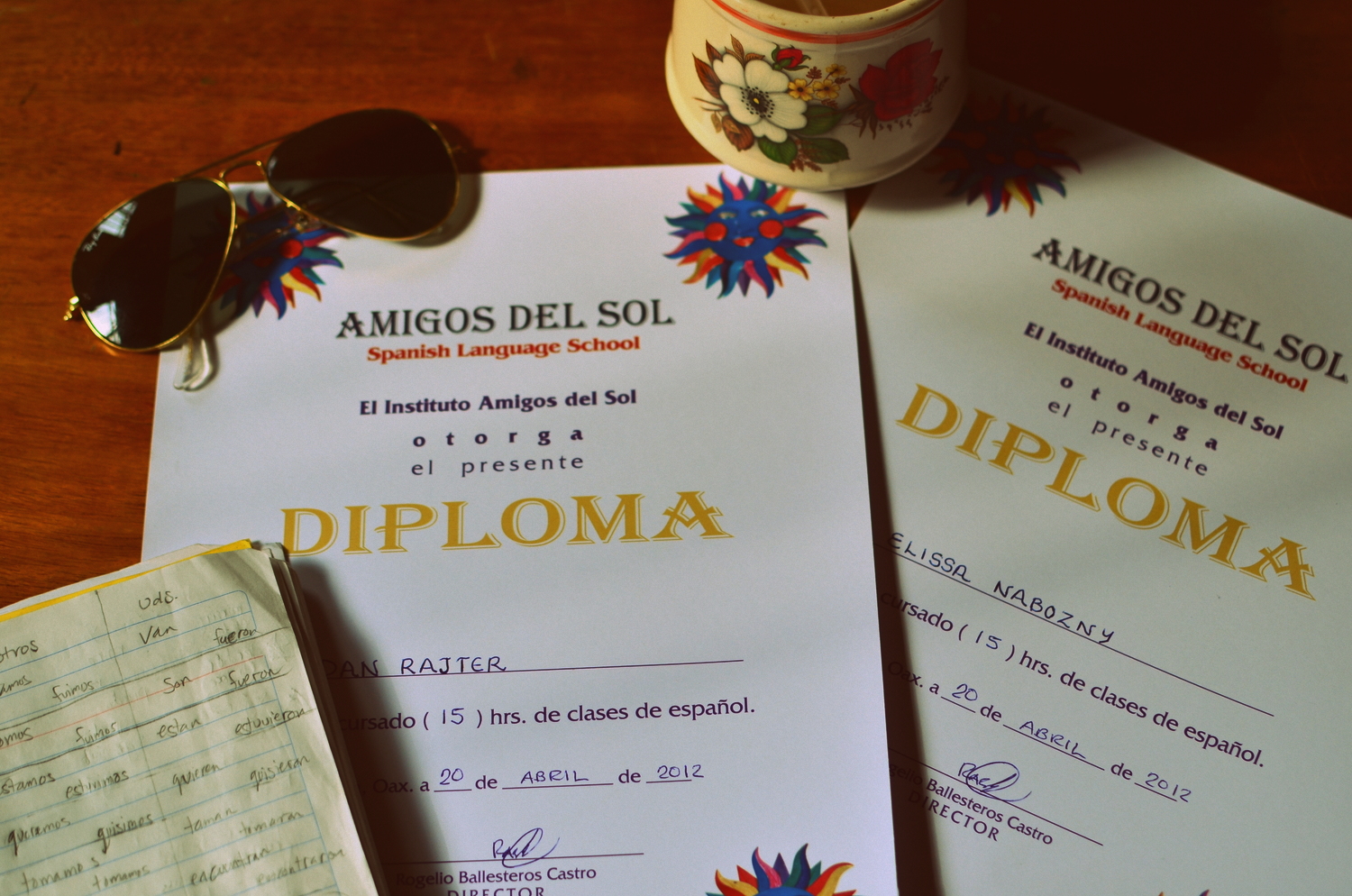
We also met an awesome couple from Australia on this leg of our trip who were in the final stages of completely our exact journey in reverse. They started in Brazil about 14 months ago and were working their way to Mexico City for a flight to LA to begin their cross country journey across the states (http://tomclaire.blogspot.mx/). They shared stories of their crazy journey and the bumps along the road (including hiking through the Darien Gap) without sugar coating the details of what’s to come. We all went out for some drinks in a really local bar with live music and wound up getting swept onto the dance floor for some free lessons in Mexican slow dancing. My dance was interrupted by a short bar fight that eclipsed when a bottle was smashed over the head of an hombre next to me. The music stopped, he was led out of the bar, and the music started up again momentarily. Ahh Mexico.

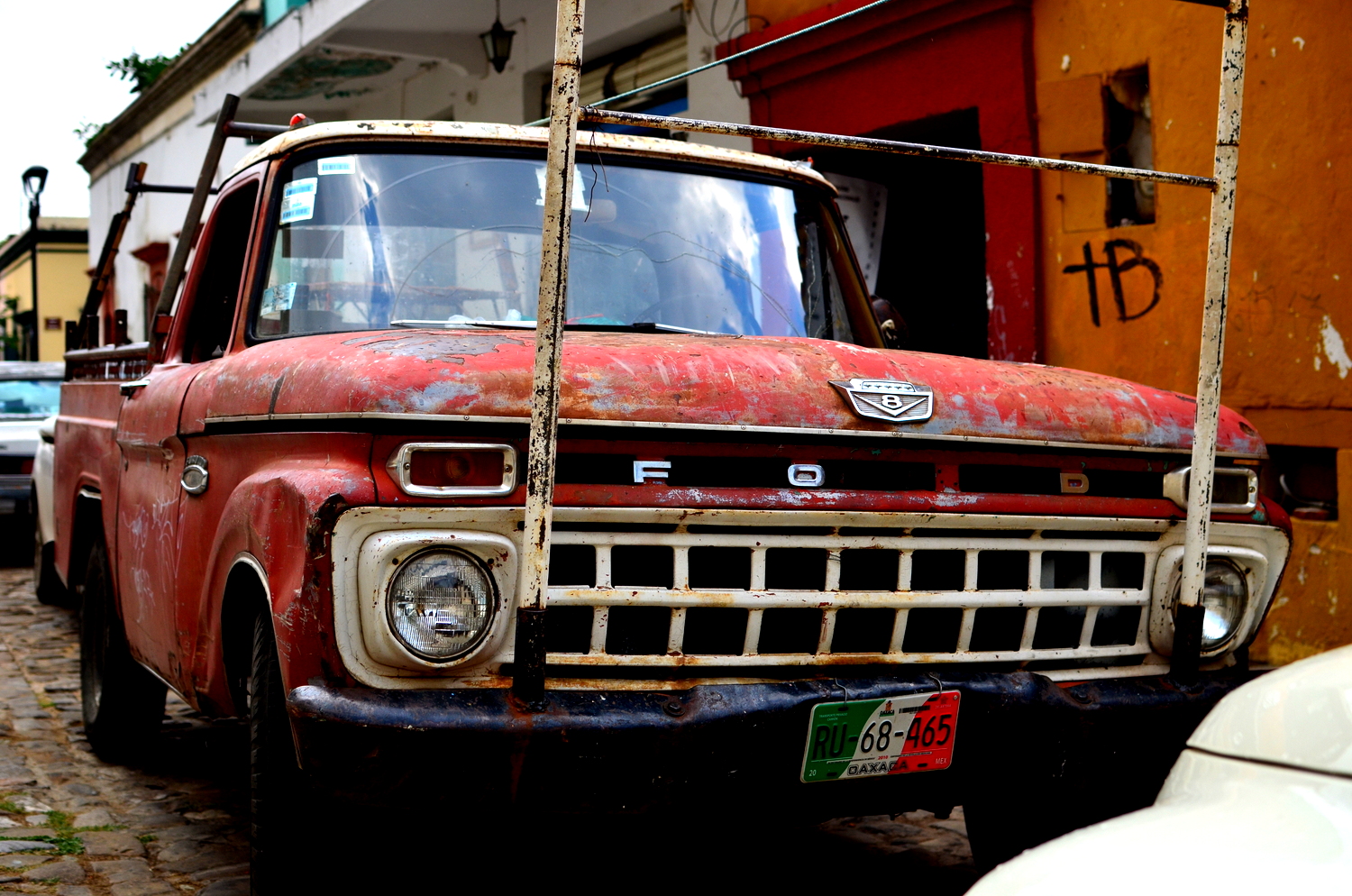


It was sad to say goodbye to Oaxaca’s warm embrace but it was time to get moving and see what Chiapas had to offer.



Oaxaca’s Pacific Coast: Puerto Escondido, Zipolite, and Mazunte
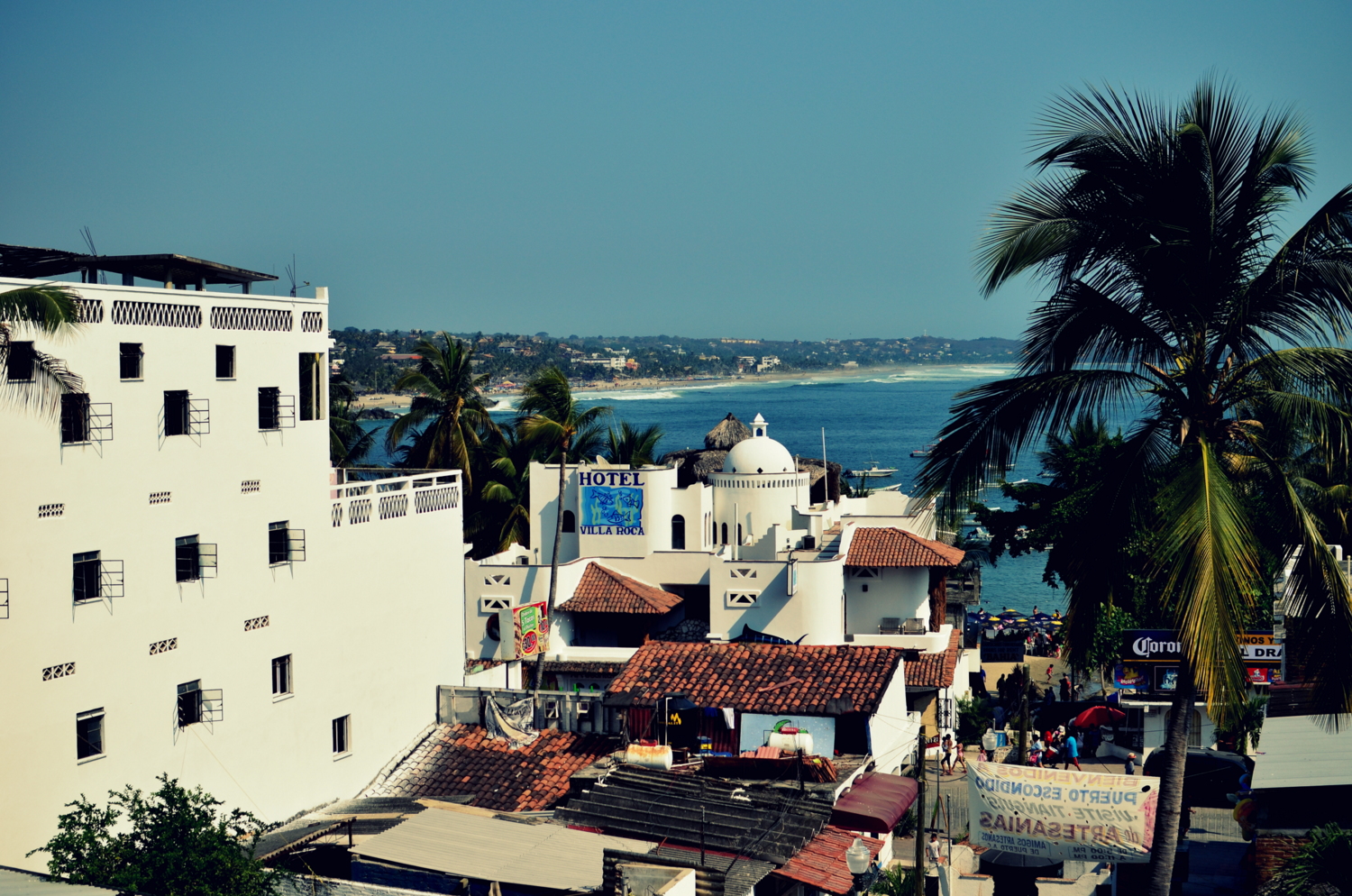
Back to Puerto Escondido. Back to electricity, showers, flushing toilets, and contact with the outside world. It was bittersweet to be in Puerto, both good and bad to be back in the urbanized beach town. But I believe that lessons learned from living with surf bums for nine days will stick with us. Surfers tend to have a good deal of experience living on a shoestring budget and useful tips were silently passed on throughout the previous week. A bar of laundry detergent was immediately purchased to keep our handwashing skills honed.
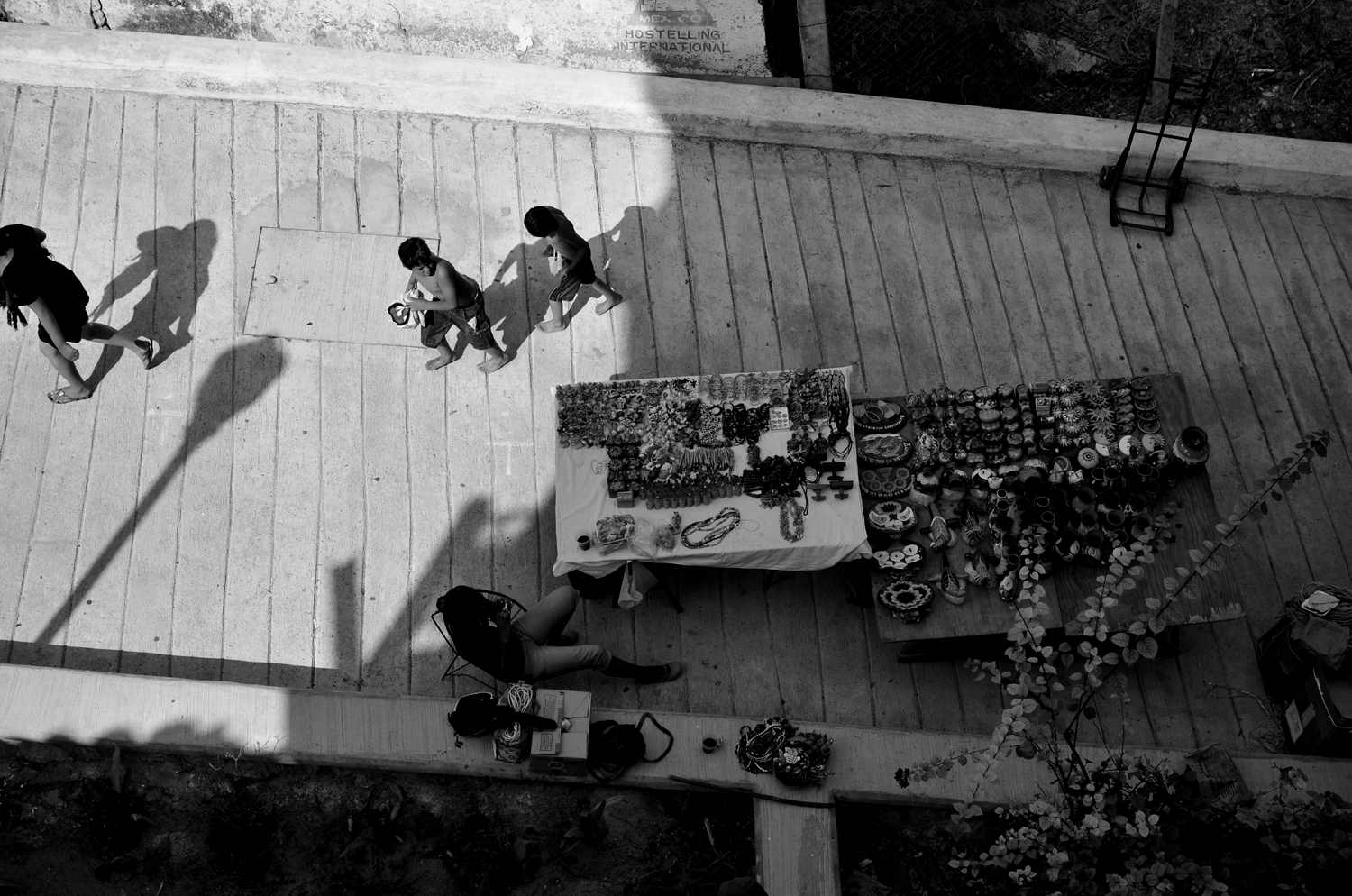

Puerto Escondido translates to “hidden port” and it’s Bahia Principal is protected from the brunt of the mighty Pacific by it’s rocky headlands to the west. This gives the beach a calm and tranquil nature and I’m certain it was pretty damn awesome years ago. Puerto today has a very streamlined tourist feel to it with many savvy “business” men offering boat services for dolphin spotting, whale watching, and deep sea fishing. They speak English well and show you pictures of what they have to offer constantly while you stroll the beach. Being tourists I’m convinced we have dollar signs above our heads that are just out of range on the color spectrum for our eyes to focus on. I ran into Martin, a Mexican who we met the first time around, and noticed his prices increased due to the continuation of Semana Santa. He promised the world on his tours but after speaking with some others around town it became apparent that the tours promise to “look” for whales, dolphins, and turtles, not necessarily see them. I also believe we just missed the “tail” end of the whale spotting season and hiring Martin didn’t sound like a promising venture.
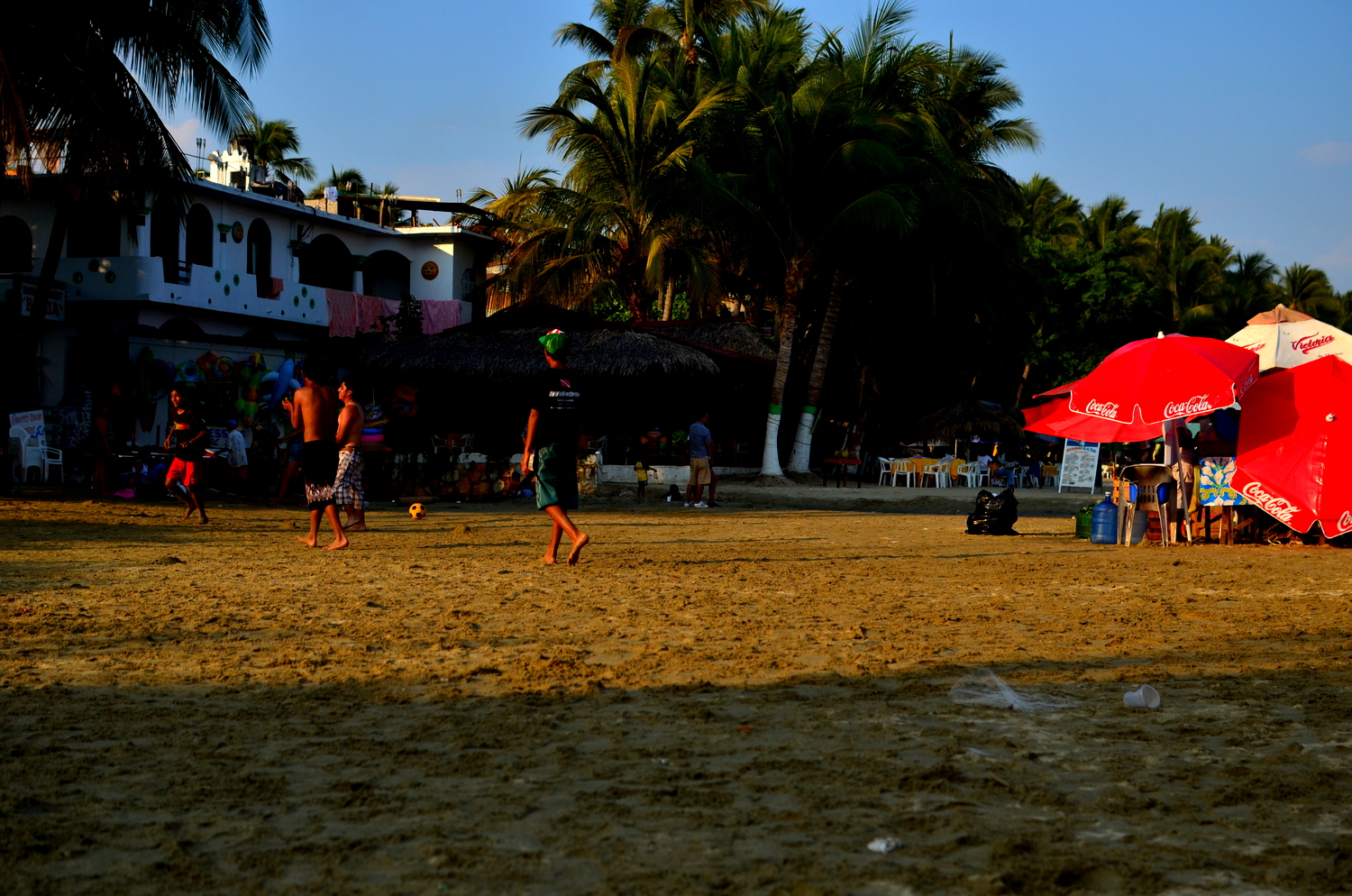
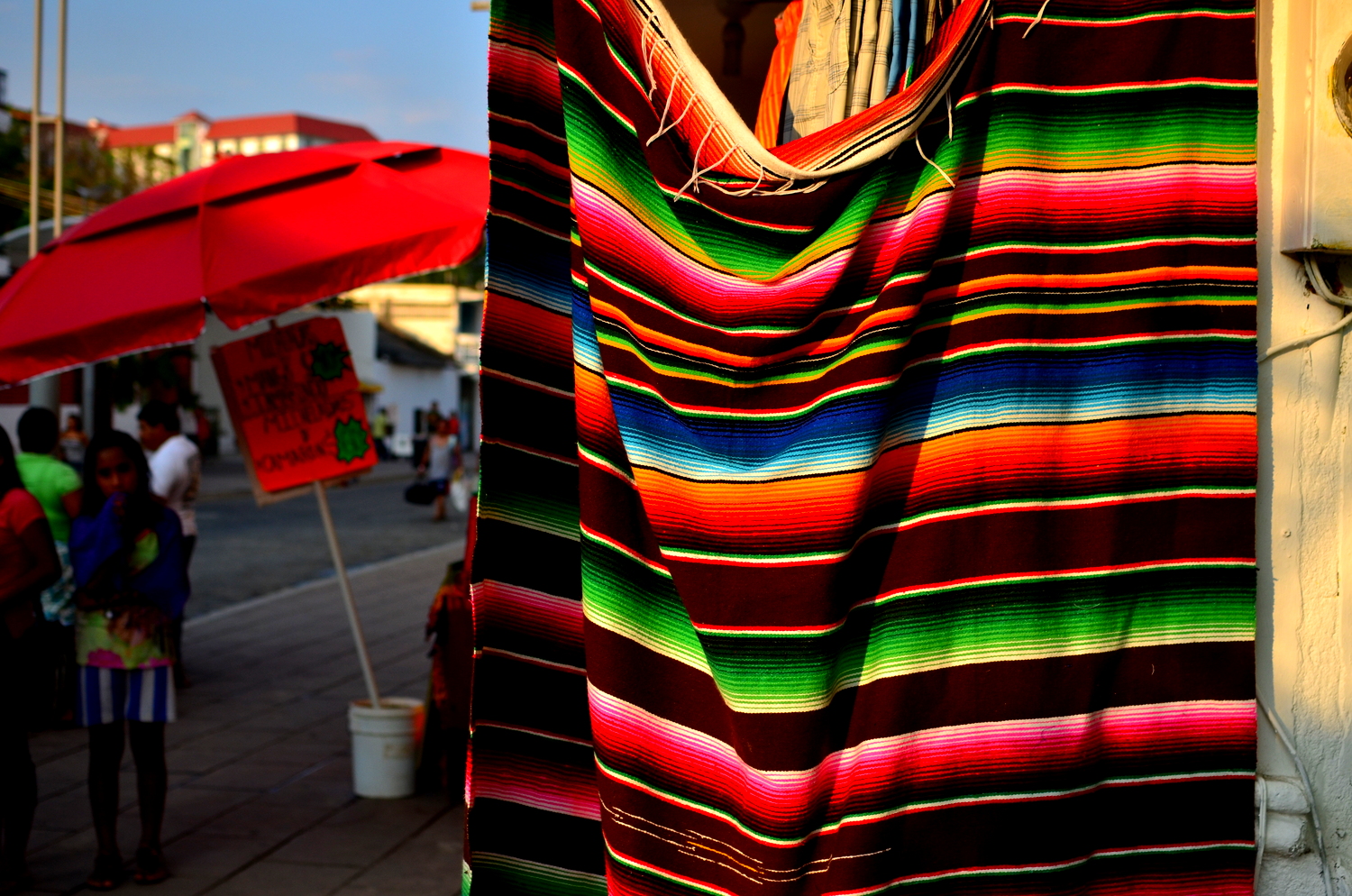
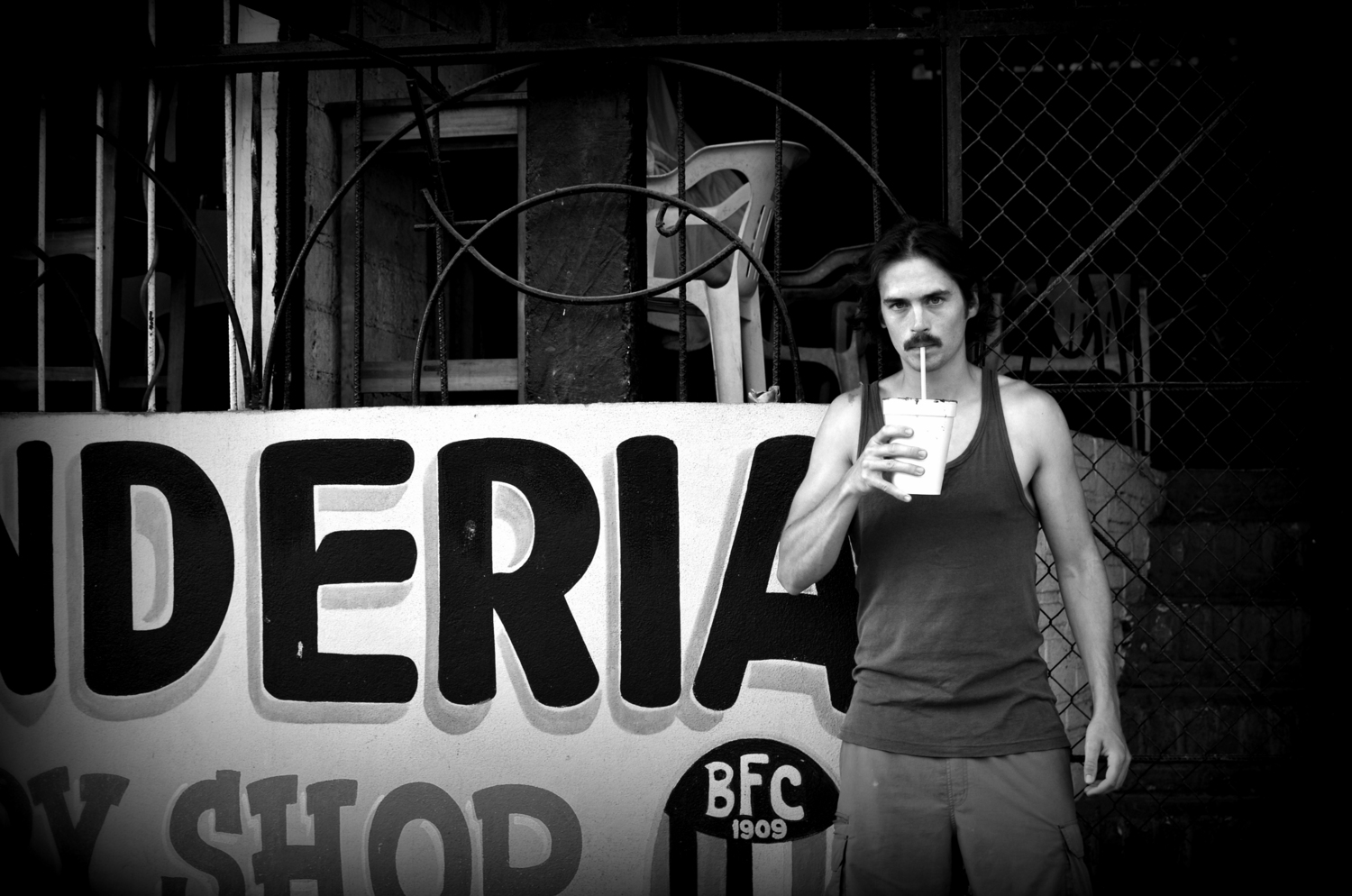
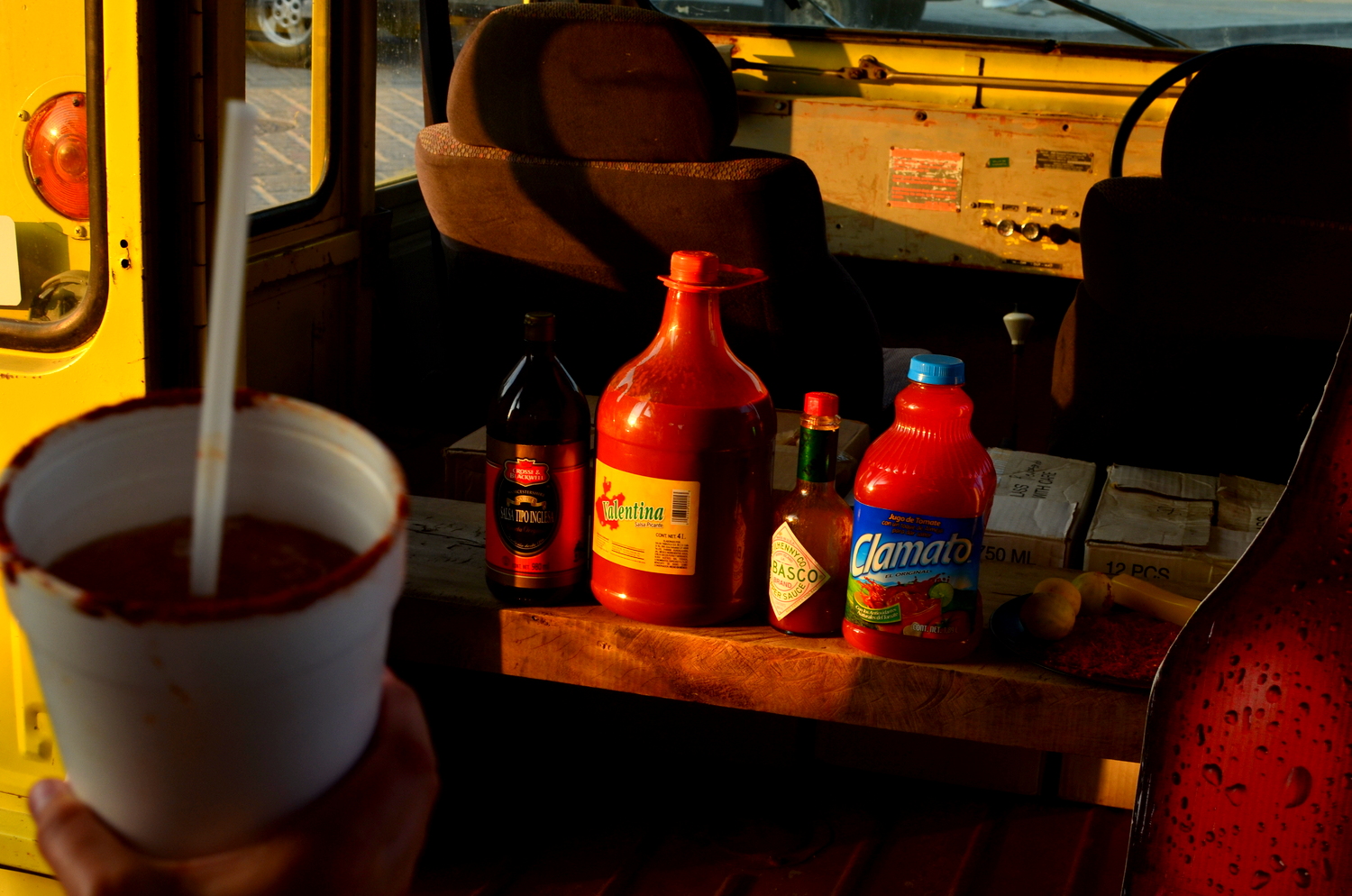
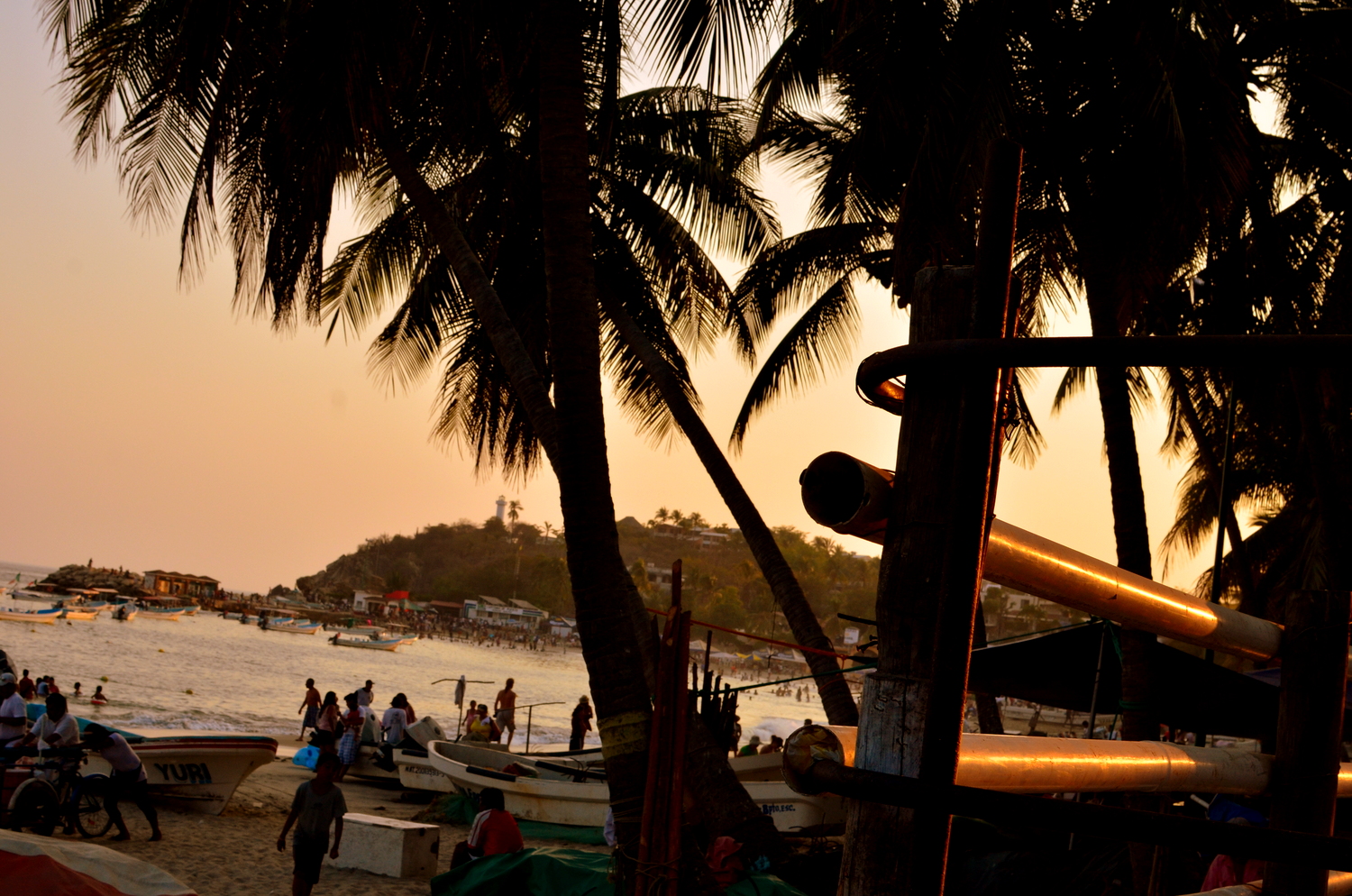
Puerto kind of feels like a beach town in California but has sweltering hot days and a party-town vibe at night. There are dozens of places on the streets offering Micheladas and shops are open late to cater to the crowds. Its neighboring town/strip is Playa Zicatela where the surfers migrate to try and catch some of the classic pipeline waves this beach routinely churns out. Take a walk down the main strip to see how ex-pats have adopted this town as their home and run a wide array of businesses and eateries that can keep you stuck in Puerto for longer than expected. We spent two days here recharging and getting a hold of our parents to let them know that we were still indeed alive after disappearing for nine days. The next leg of our journey was to head east for the pristine Oaxcacan coastline we’ve been hearing about since our feet hit Mexican soil.
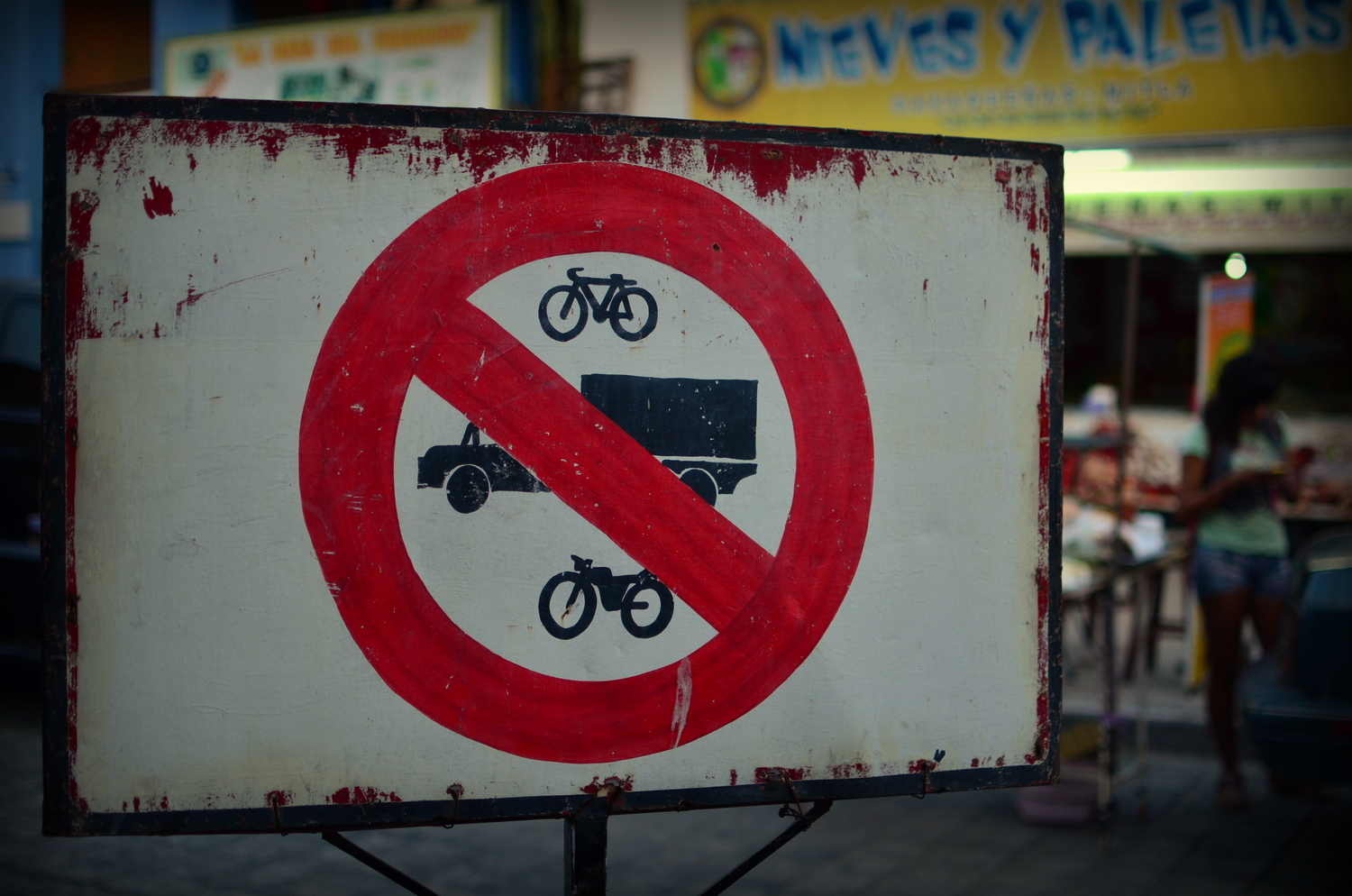
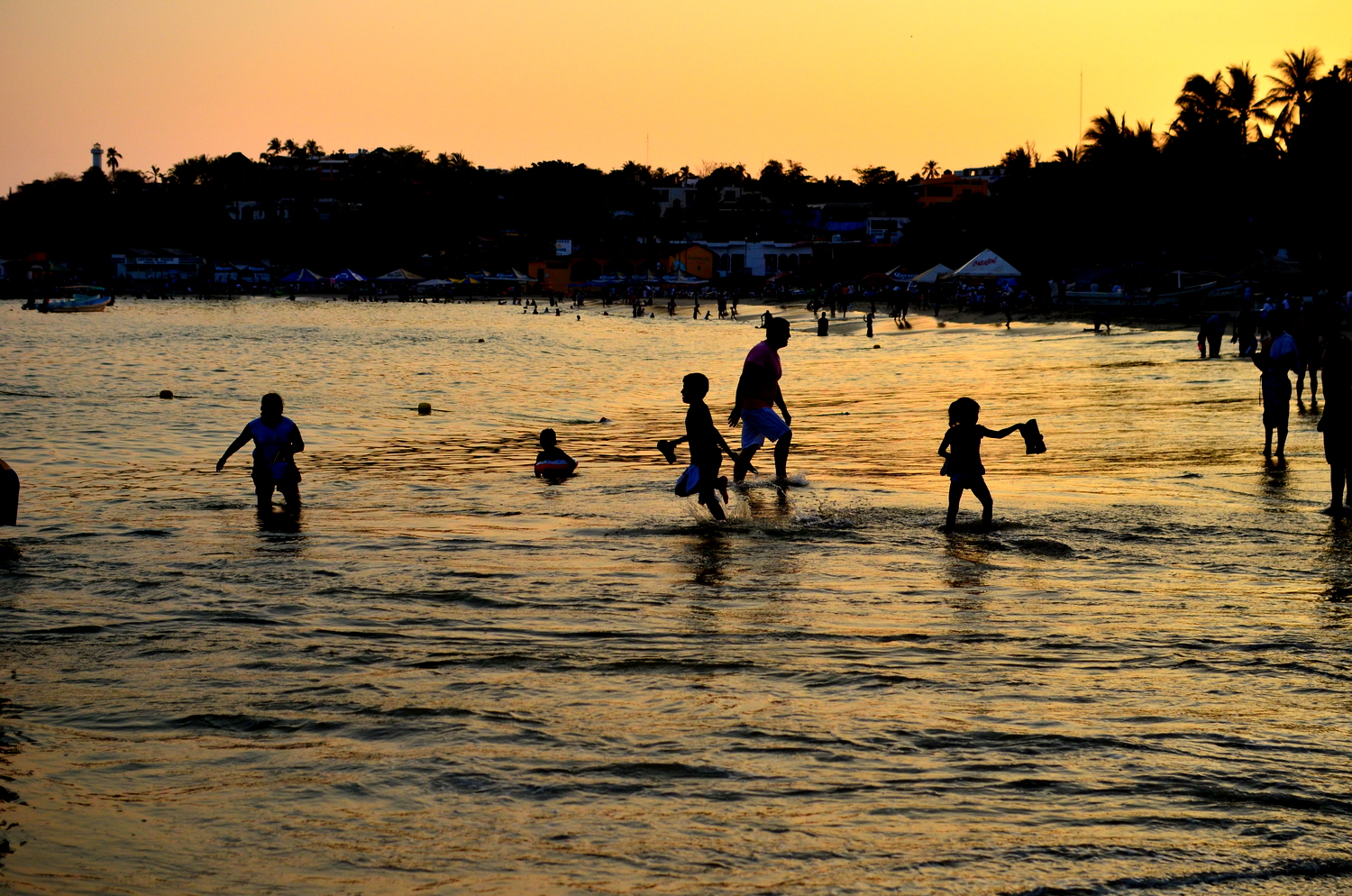
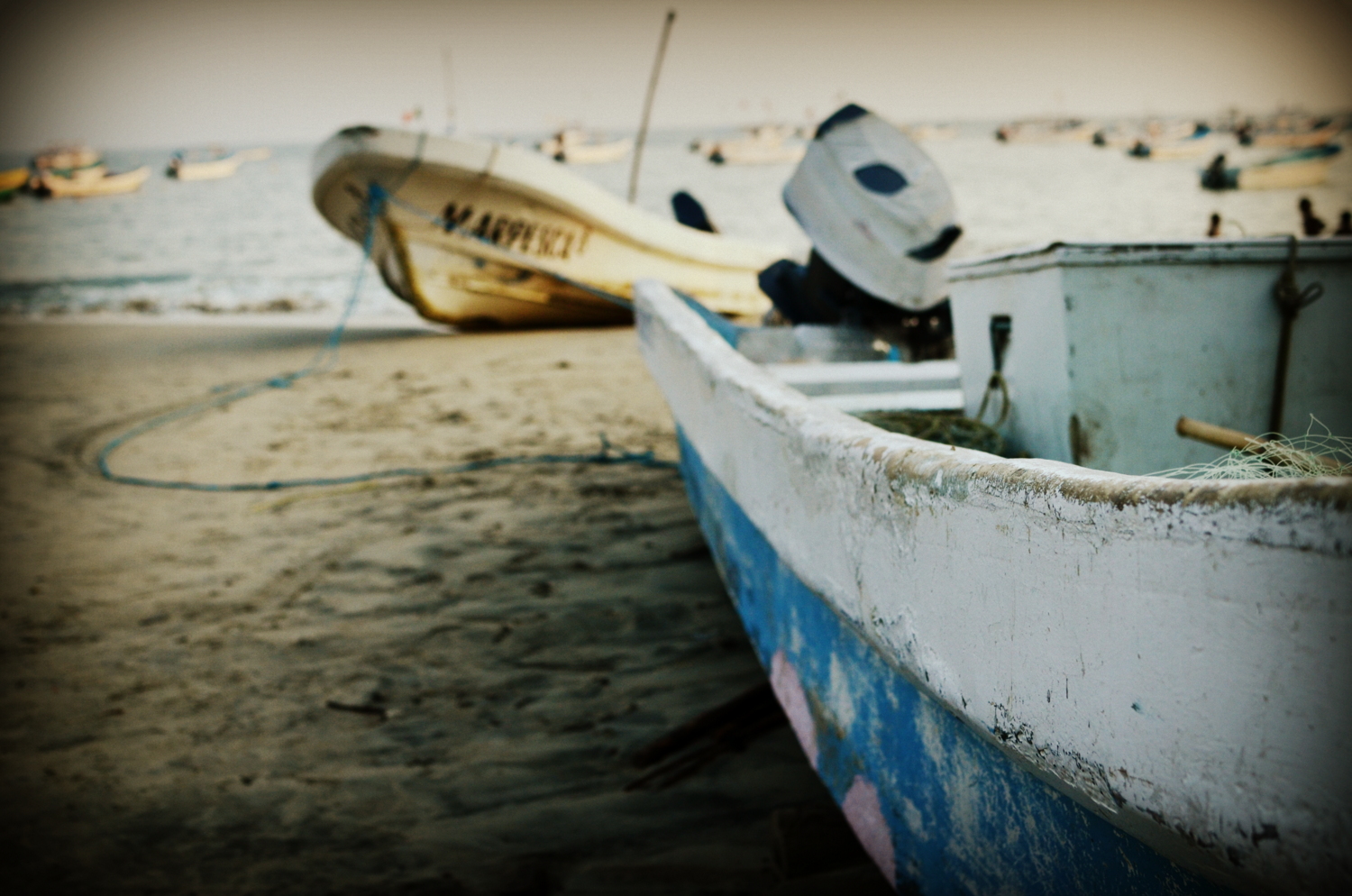
An hour long bus ride dropped us off in the chaotically busy and horridly humid town of Pochutla. Pochutla’s existence seems like soley based on its location as a transportation hub between larger cities to the east, west, and north and the beautiful beaches south of it’s last “alto” sign. We had to ask about 5 locals where the camioneta (truck collectivos) were running to the coast before success was reached. Every soul in this town seemed to have weary eyes for travelers and no one seemed to notice we were walking in circles with hulking backpacks through the mid-day heat. After 45 minutes in the back of the truck we stepped off in the blissful little town of Zipolite.
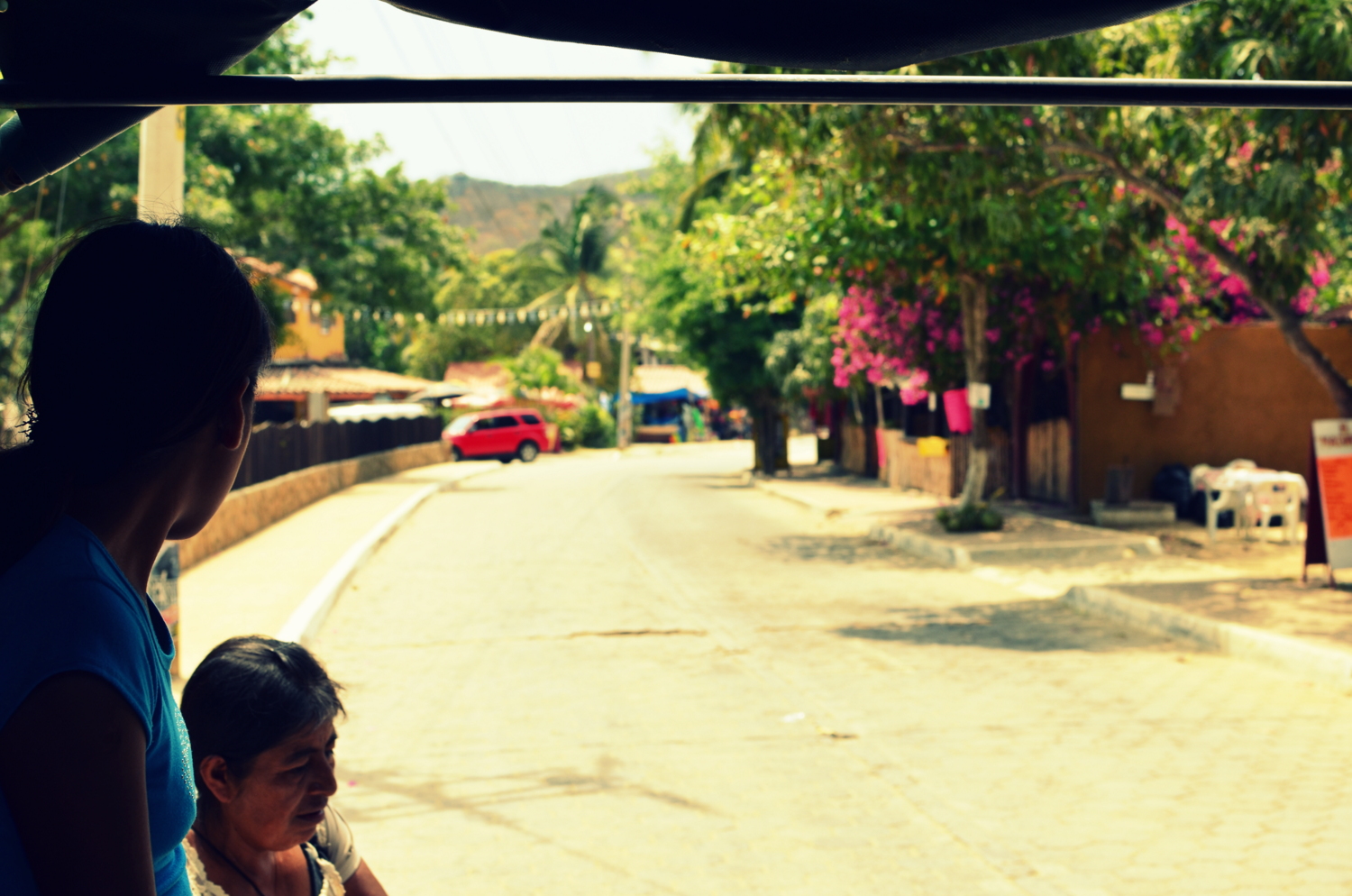
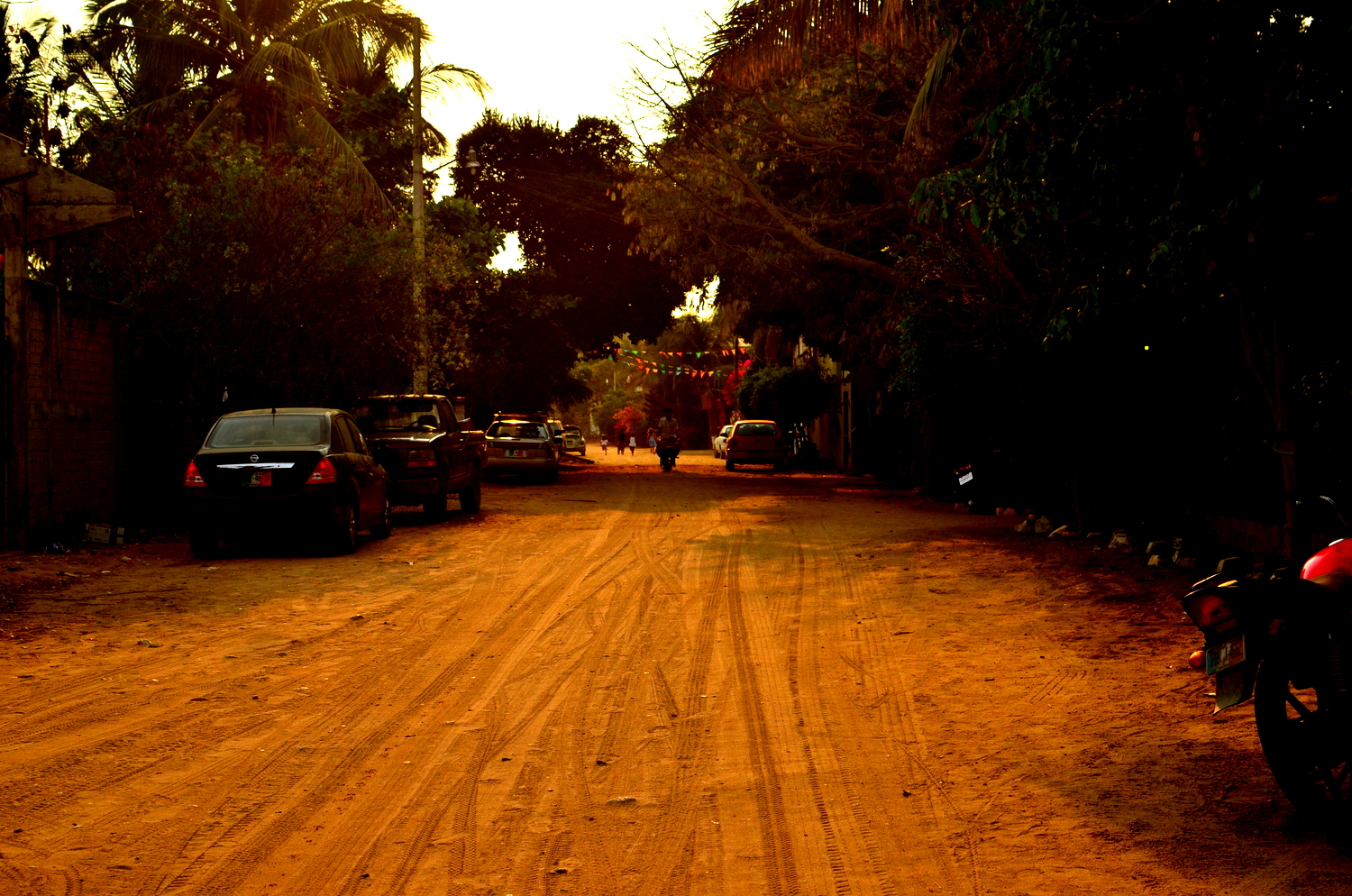

We walked down to the main walking street determined to shop around and avoid the routine of striking a deal the first place we could lay our backpacks down. Zipolite’s main street was comprised of an eclectic bag of eateries from around the world with the most laid back beach atmosphere you could possibly imagine. This was a place for souls to get lost and relax while watching the sun sink and the sands shift. There are plenty of transplants who found this place and made it their mission to call it home. French cafes, Italian bistros, Argentinian barbecues, and of course local fare line both the road and the beach.

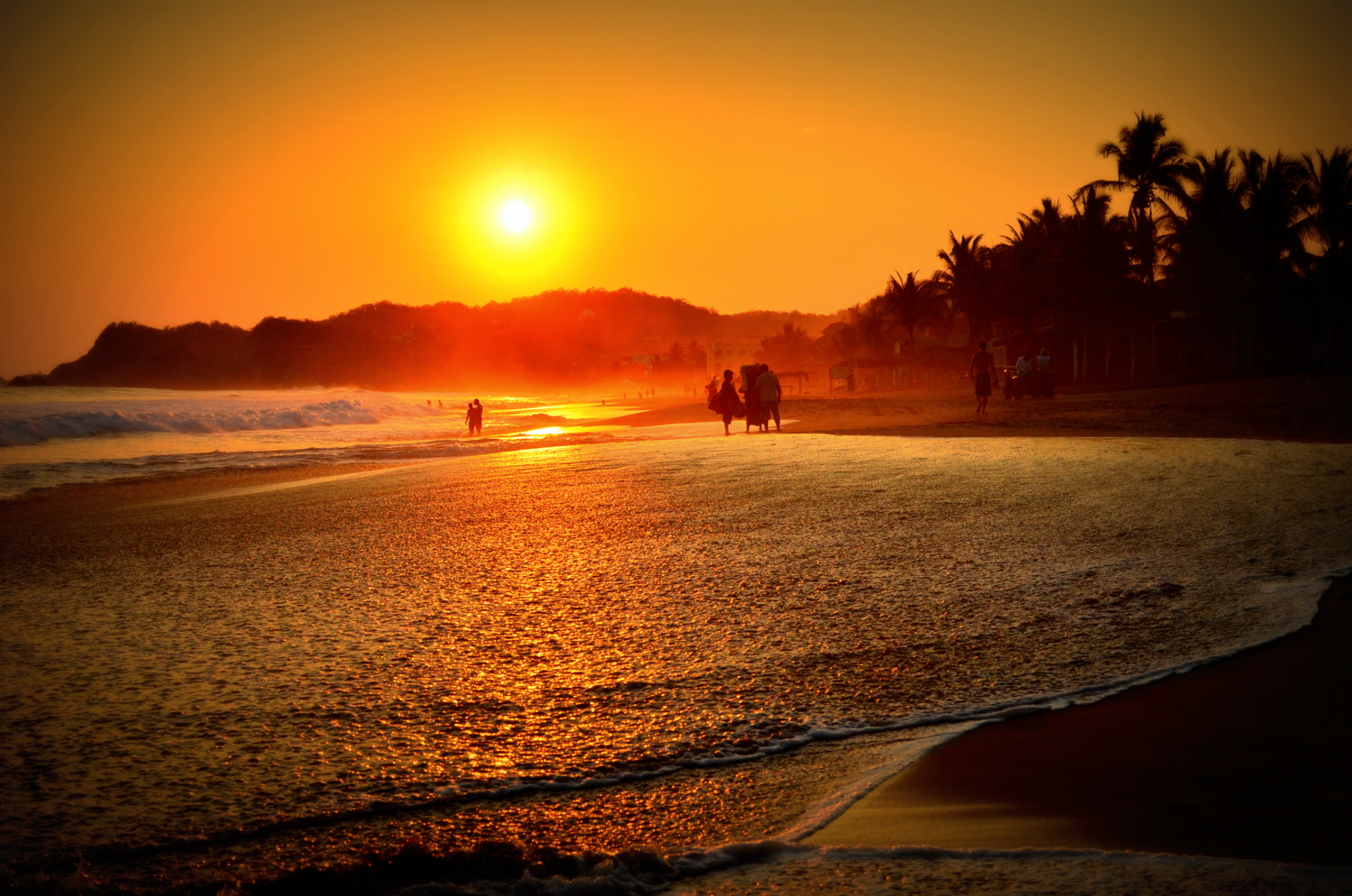
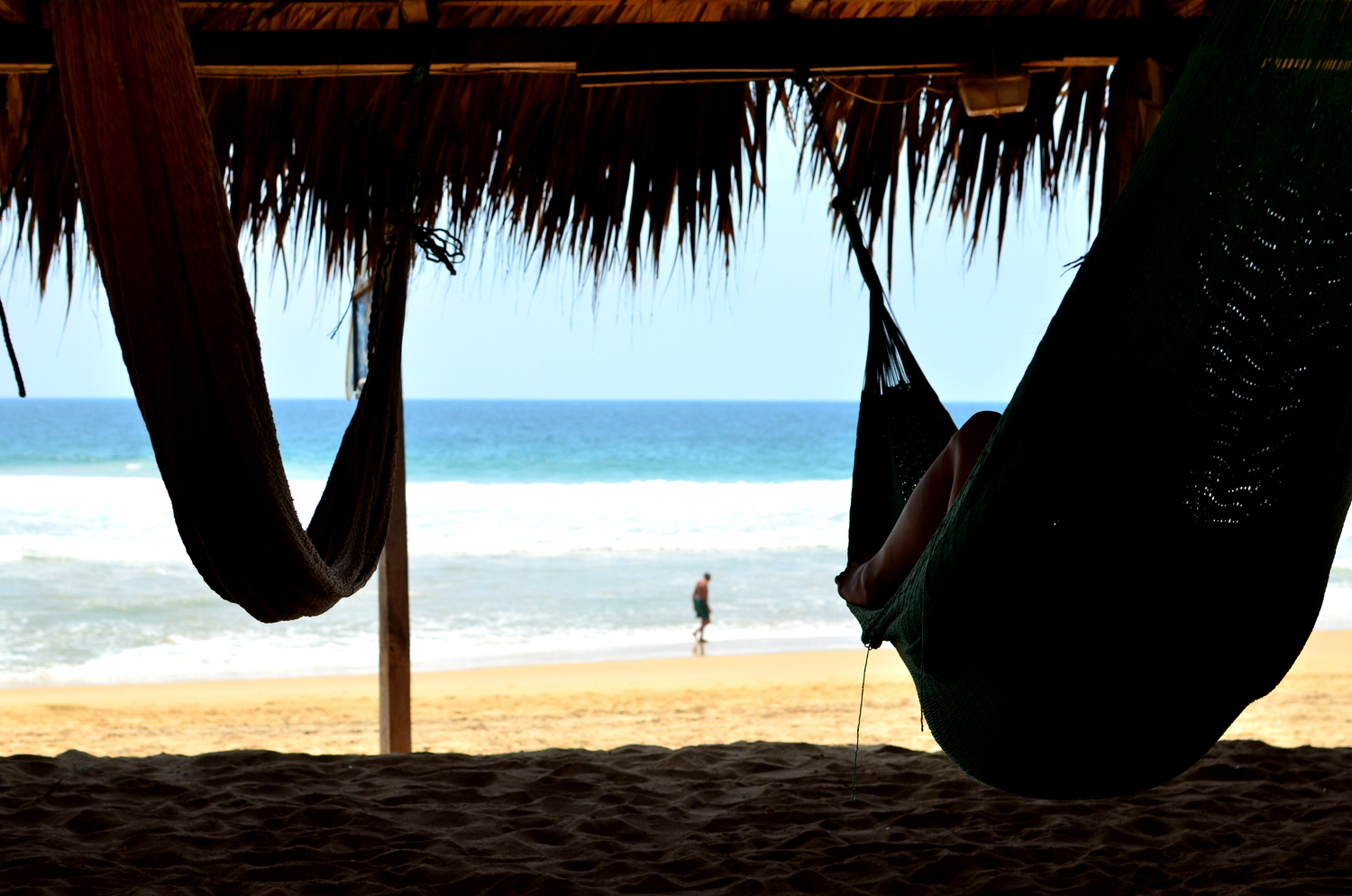
After looking confused enough some hombre lead us to the Brisa Marina hotel, coincidentally owned by a Polish transplant named Dan from California. Dan wore aviators, no shirt, and carried around a book along with a thousand stories whenever we saw him. Dan made millions in California during the real estate boom of the early 90’s only to lose his empire moments later. He found Zipolite by chance when his daughter left the LA Times open on his table with an article exposing the town as a place in Mexico where the beaches were gorgeous, hammocks cost a buck for a night, nudity was commonplace, and grass was everywhere. He immediately took us in offering us his humorous stories, knowledge of the town, and booze. He even conducted a paypal transaction for us when we were a little shy on cash. Good people. He immediately forced us to relax and lay in the hammock to take in the sights, the sounds, and smells of his little slice of paradise. I liked Dan.
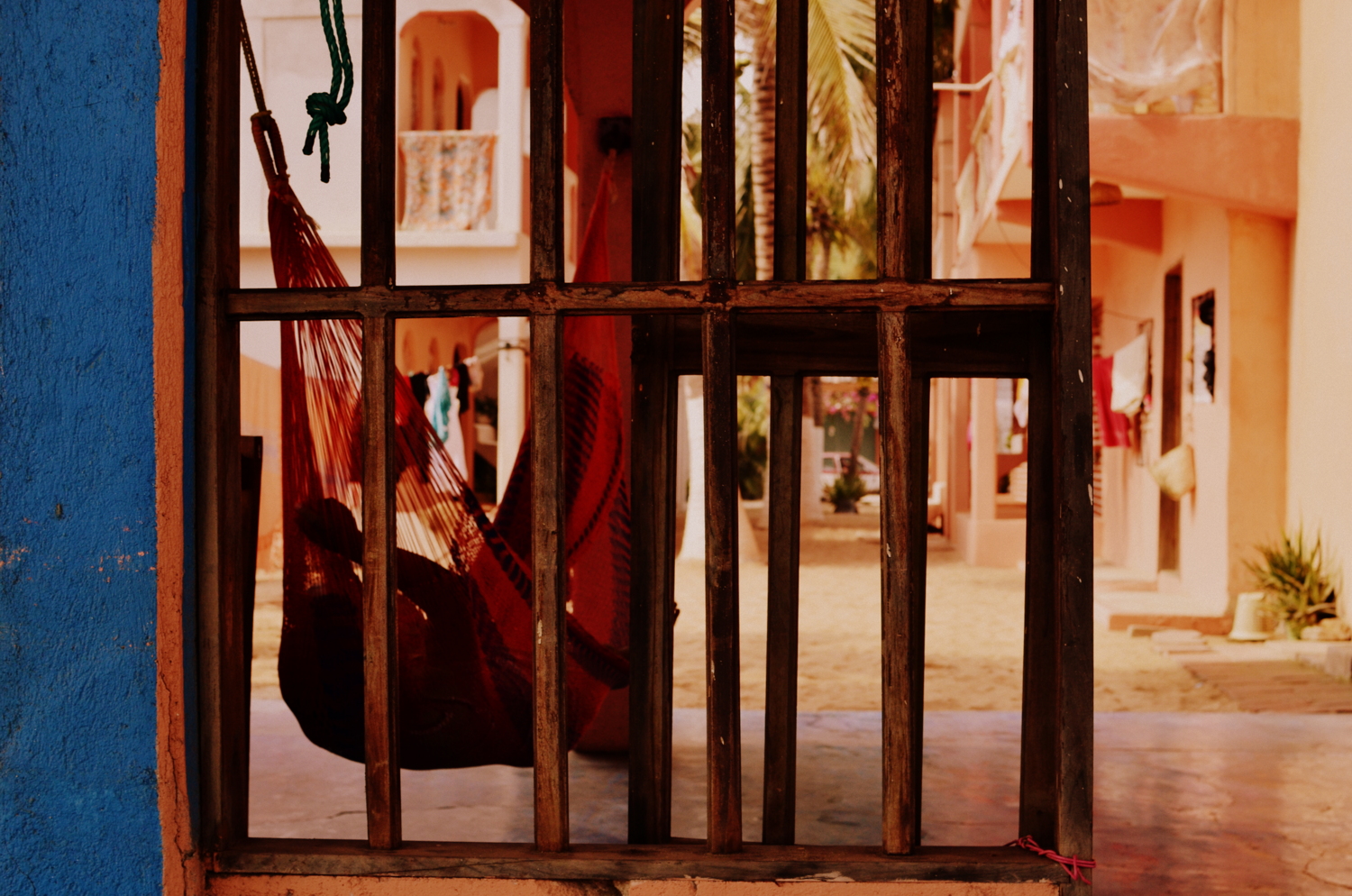
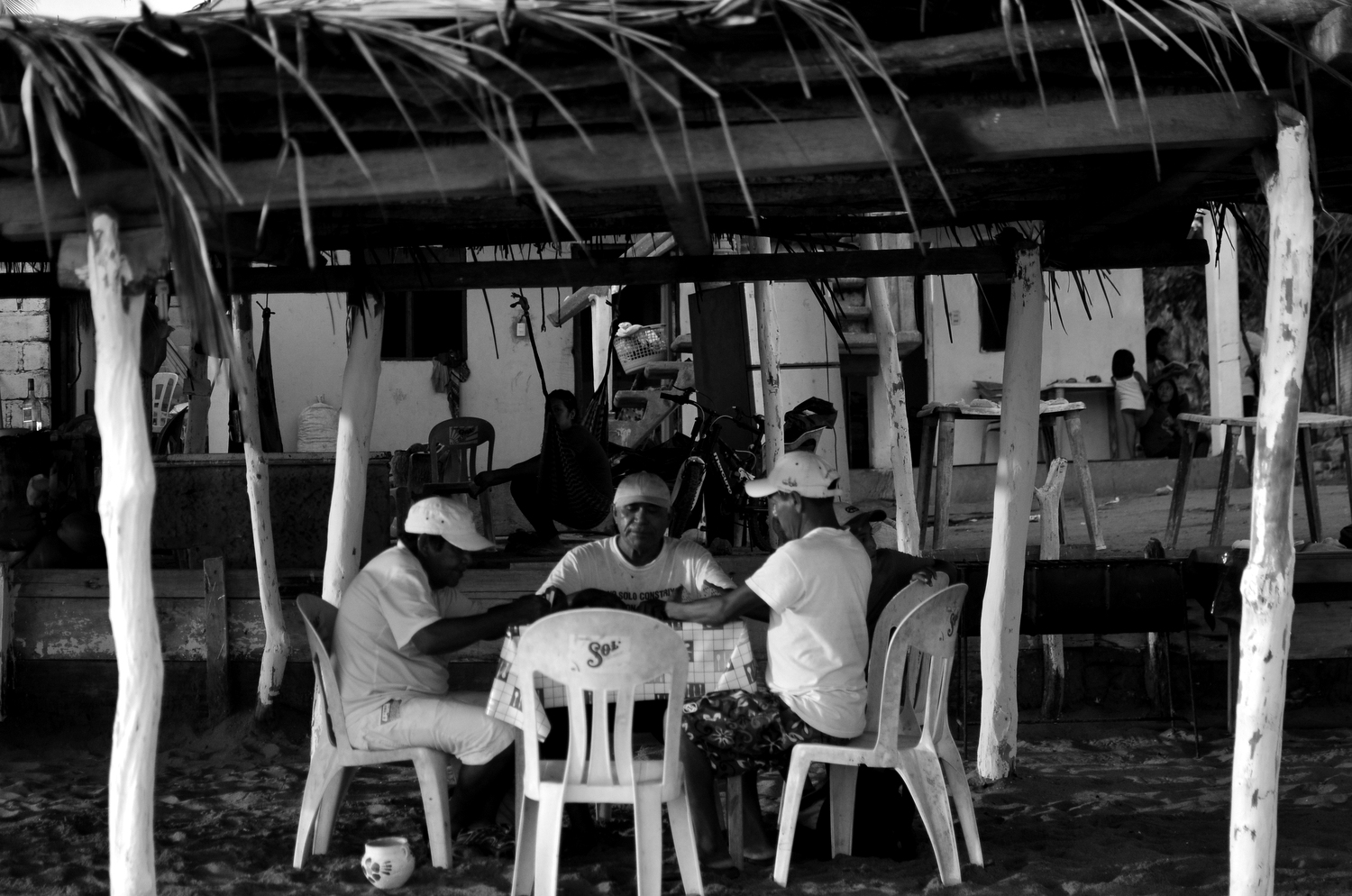
The water on the beach was a warm and welcoming teal-bluish color with very high salinity. It’s said that Zipolite translates to “beach of the dead” with good reasoning. The undercurrent, convergent waves, and riptides here can be brutal and unforgiving. Flags on the beaches shores indicate the level of warning that swimmers should pay attention to and lifeguards routinely pulled people out of the water. I borrowed a boogy board and chased the big waves further out, naturally. A lifeguard came up to Elissa and asked if I was a good swimmer after noticing my repeated attempts. Su novio nada bien?
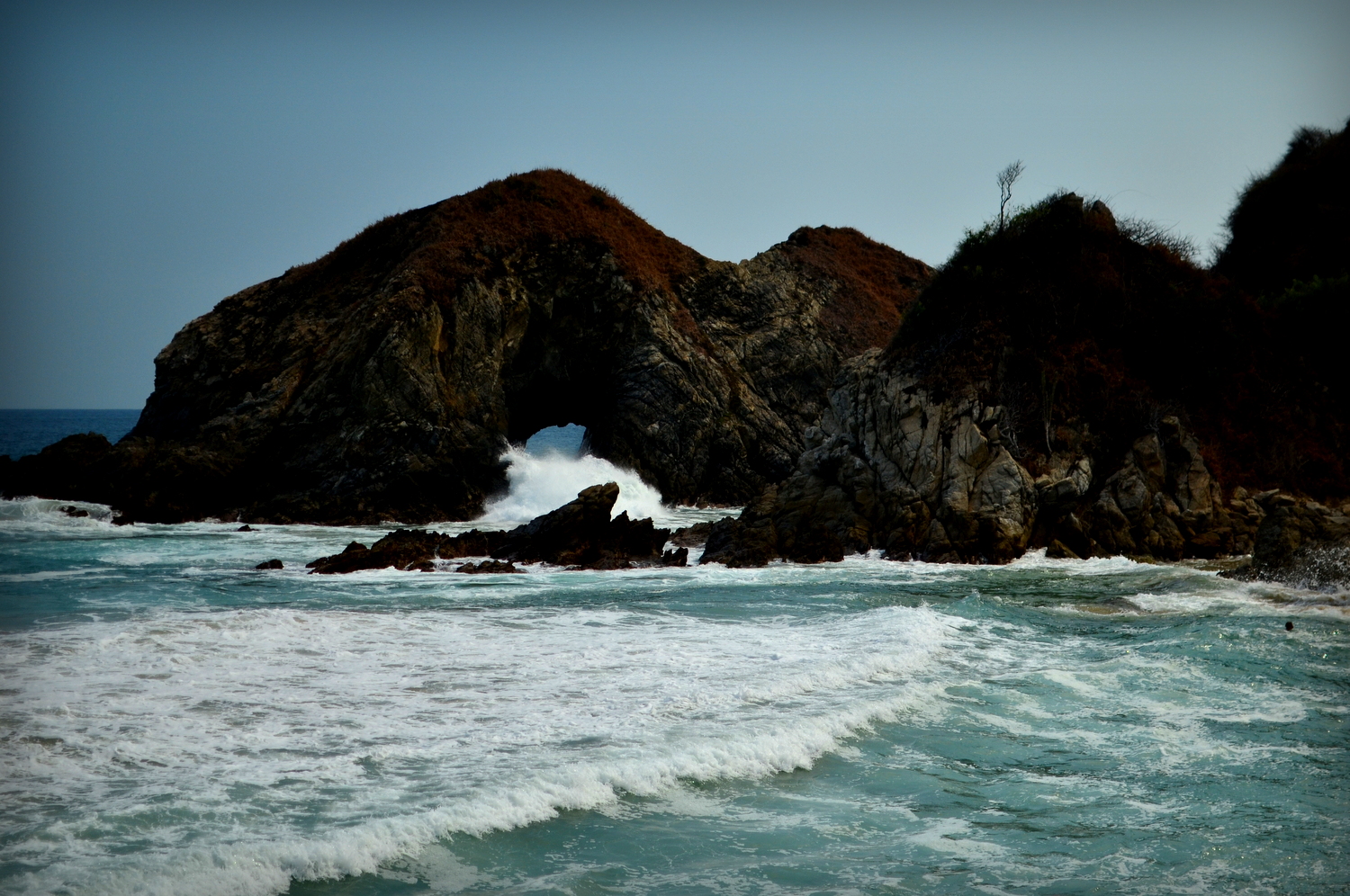
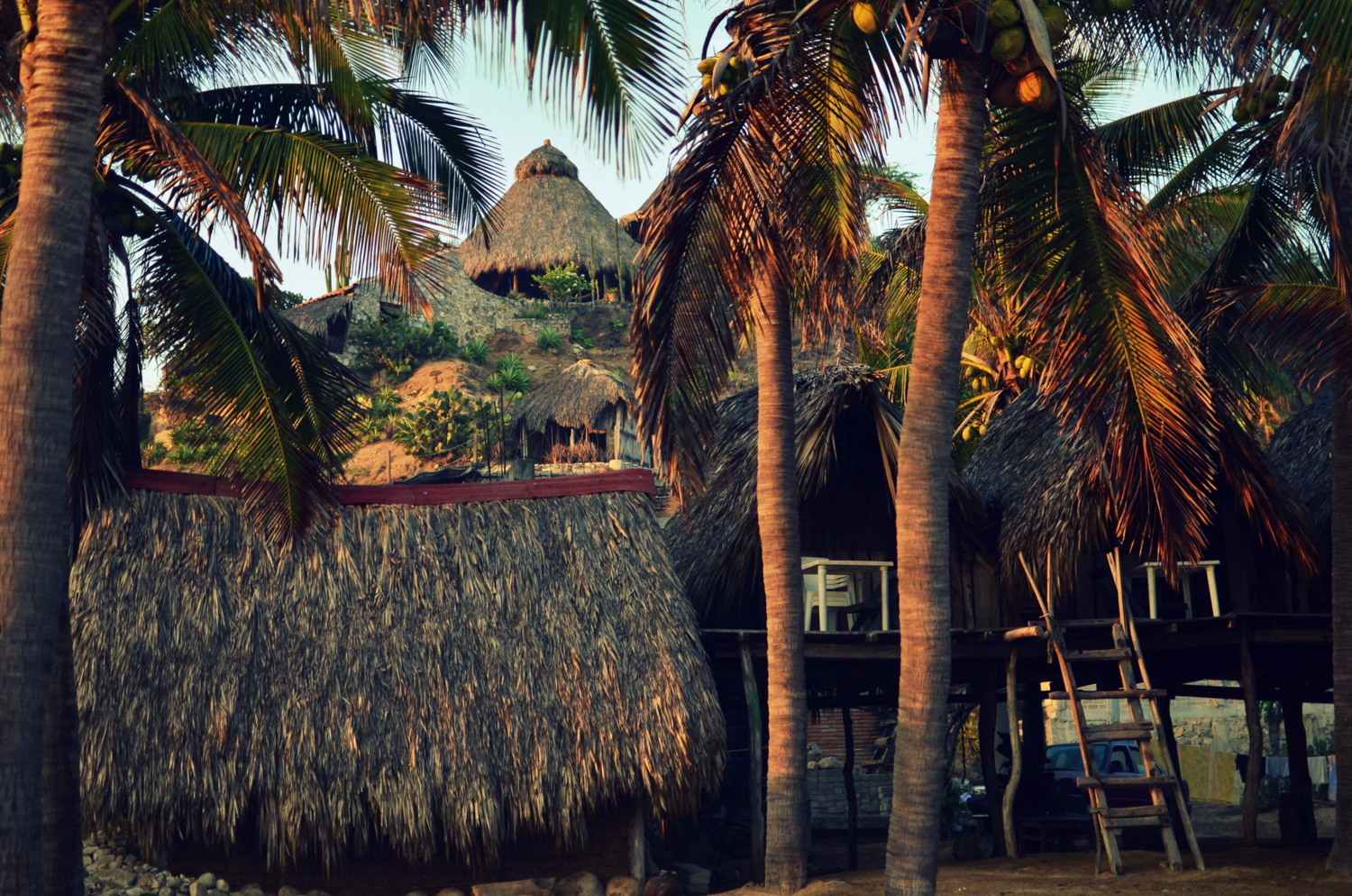
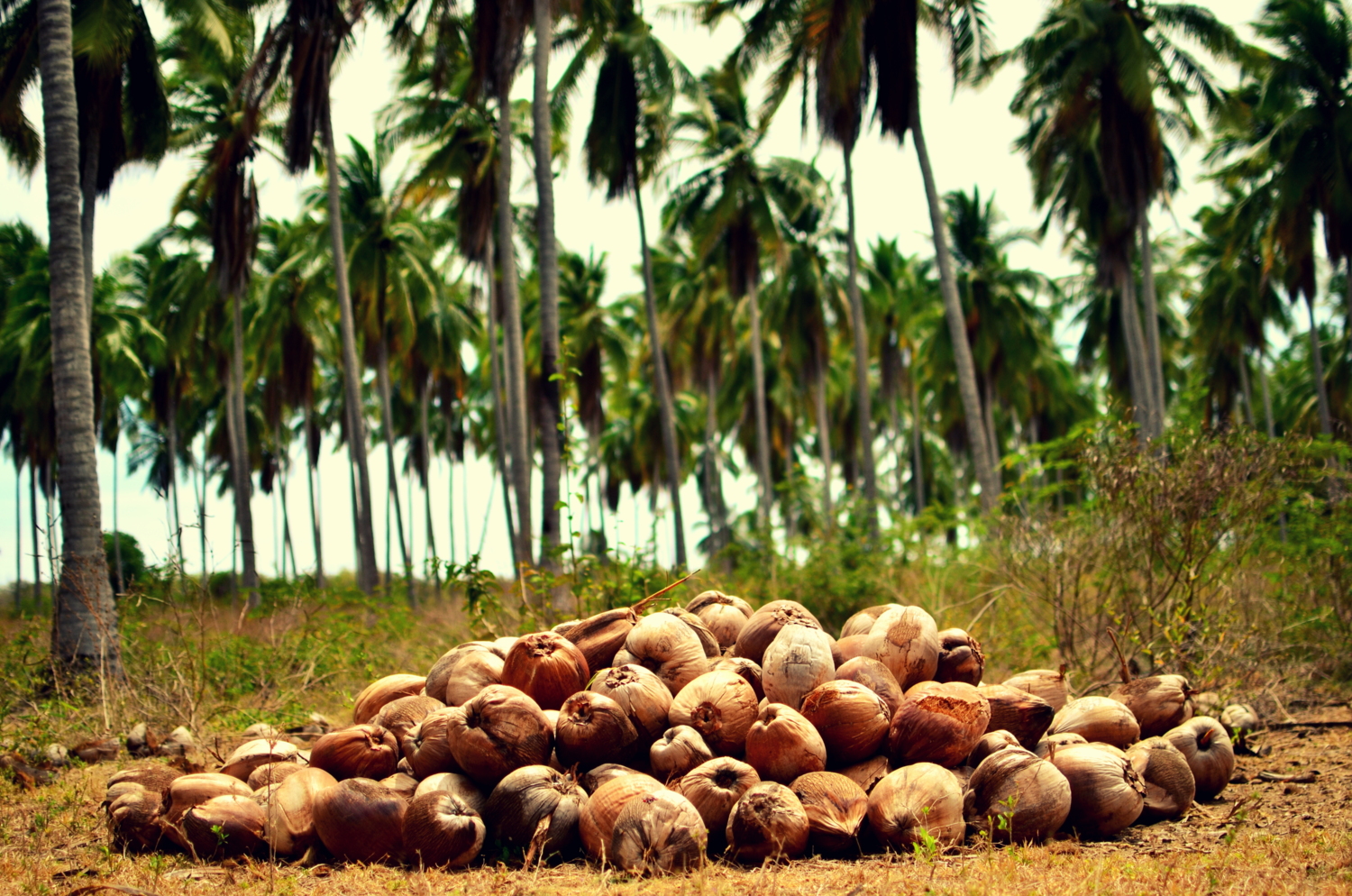
We spent hours walking the beach that was lined with a wide array of interesting and unusual accommodations. There were hammocks, tents, parked campers, stilted cabanas, hotels, and all-in-one hotel/restaurant/campground/bar/Jamaican music joints to lay your head down. Boogy boarders here were at a professional level, riding waves like surfers right into the beach. This stretch of sand was like none I’ve ever seen before, a wild-wild west of coastal towns bearing people of all flavors who flock here to stretch out their legs and do, well, whatever. Beaches have a magnetic attraction to most people and it’s easy to see why people get stuck in Zipolite’s field for months. The lodging was very cheap, the food was awesome, and there was plenty to entertain yourself with. This was also hippy land, most easily identified by the presence of bongo drums, devil sticks, bare feet, glazed eyes, and pot food expecting you to to give them your money for their efforts. The nudity kept us amused at first but eventually desensitization set in after continual exposure. They all blended into the background of the softly focused beach portrait our eyes were adoring. We also had the best coconut to date from an old spirit offering only furniture and the delicious fruit. Upon asking for a coco frio he looked up, got off his hammock, and cut the fleshy fruit open right before our eyes. It was worth the 15 pesos for the demonstration alone.
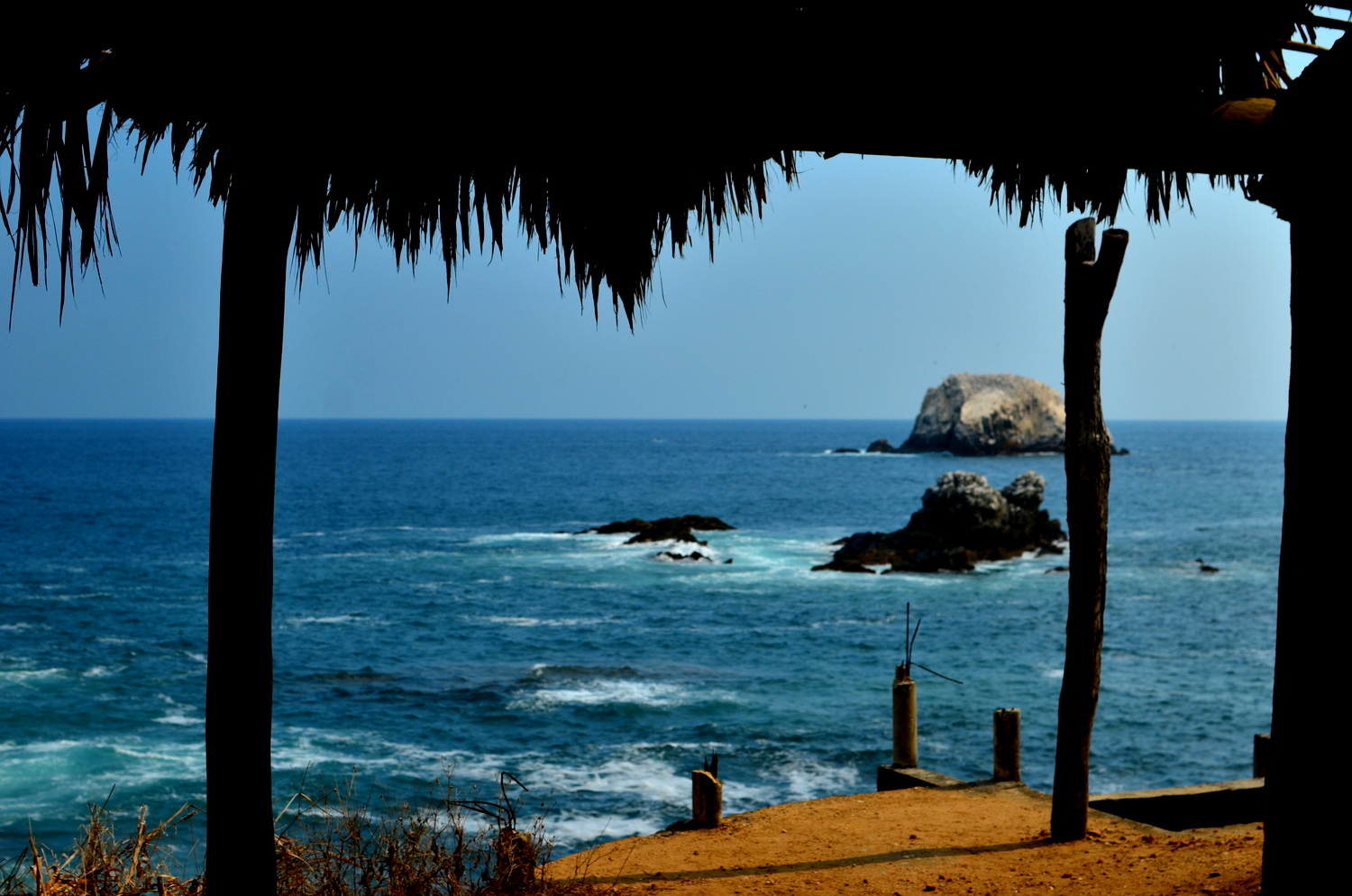
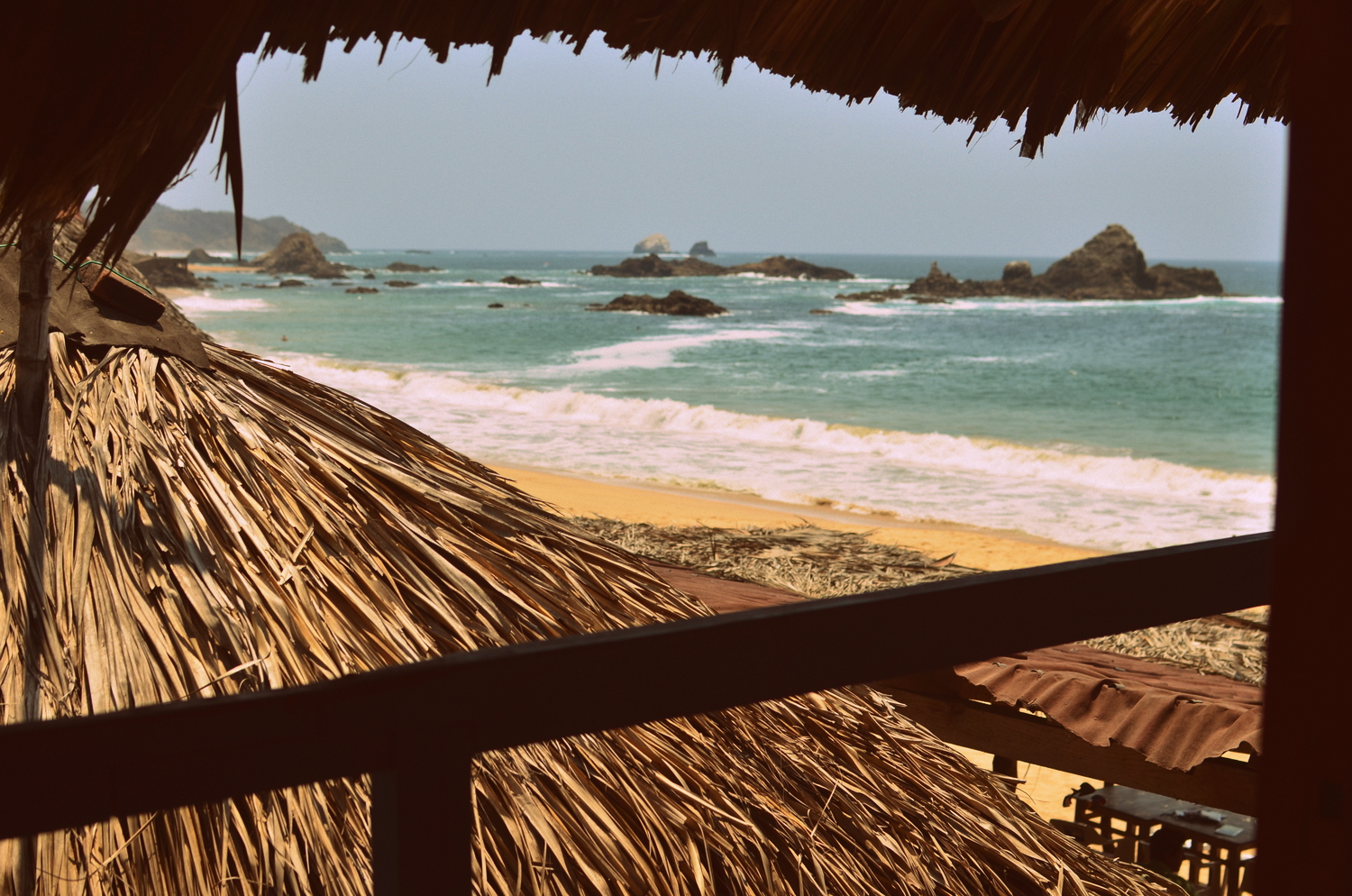

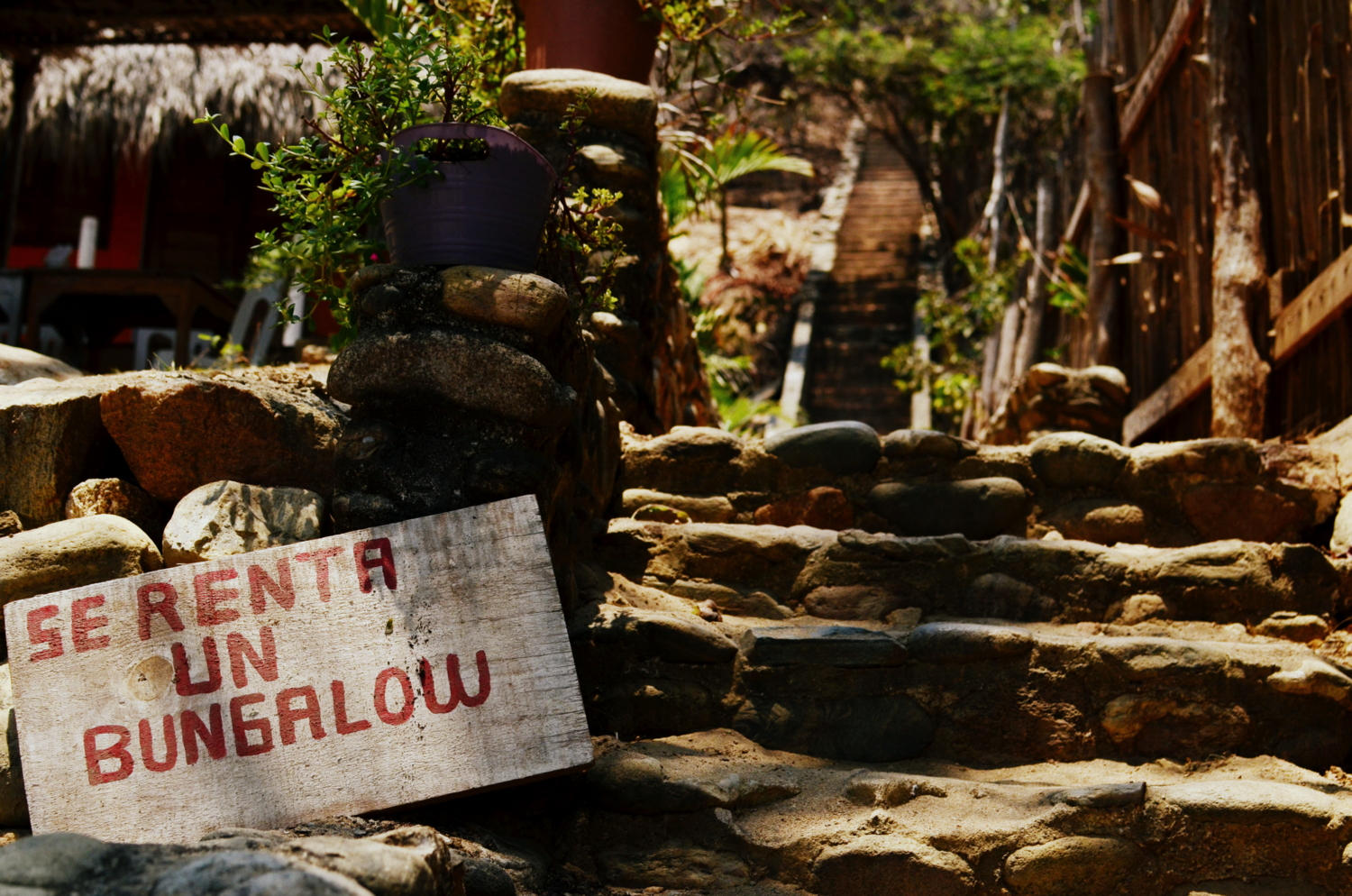

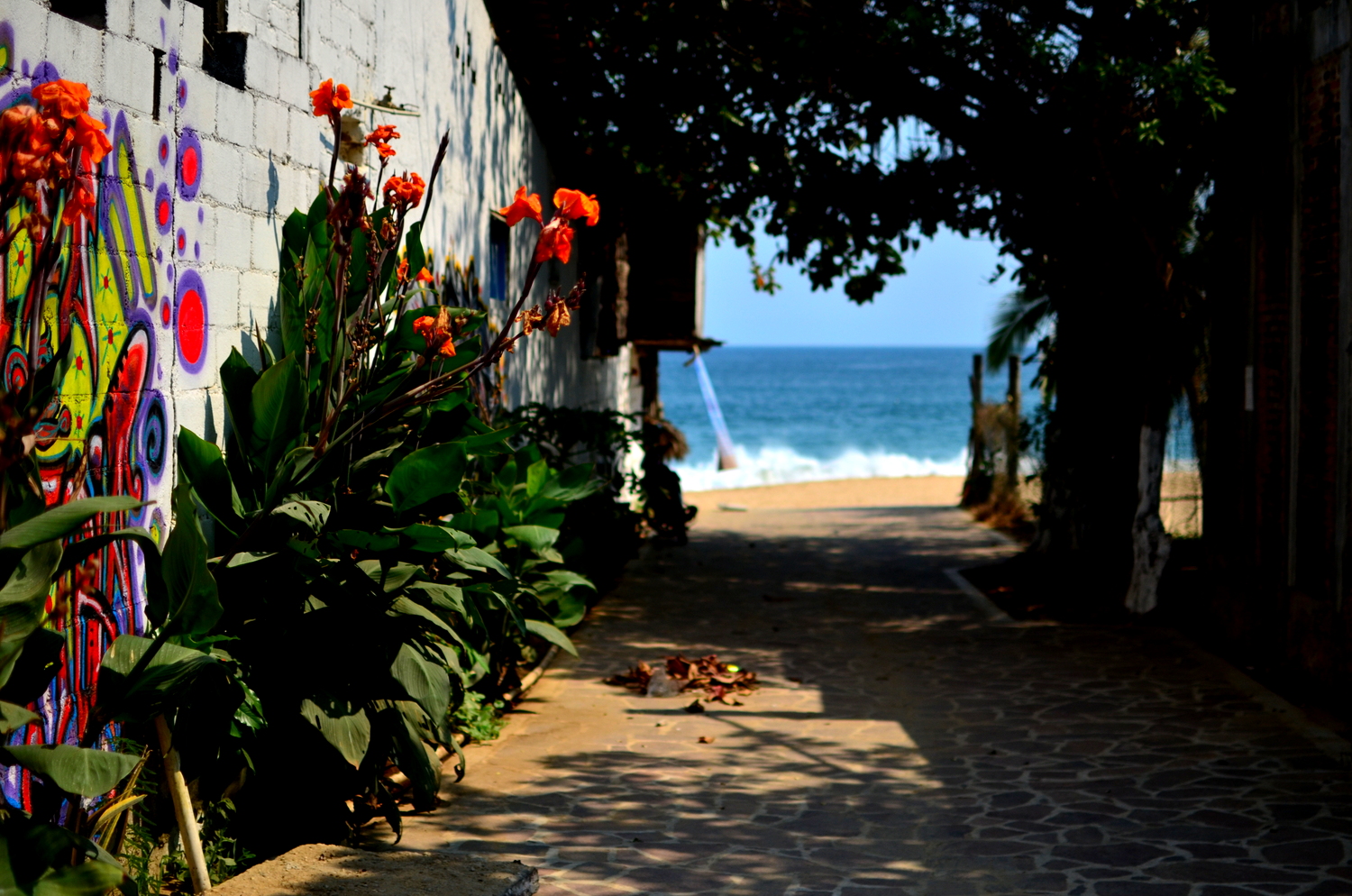
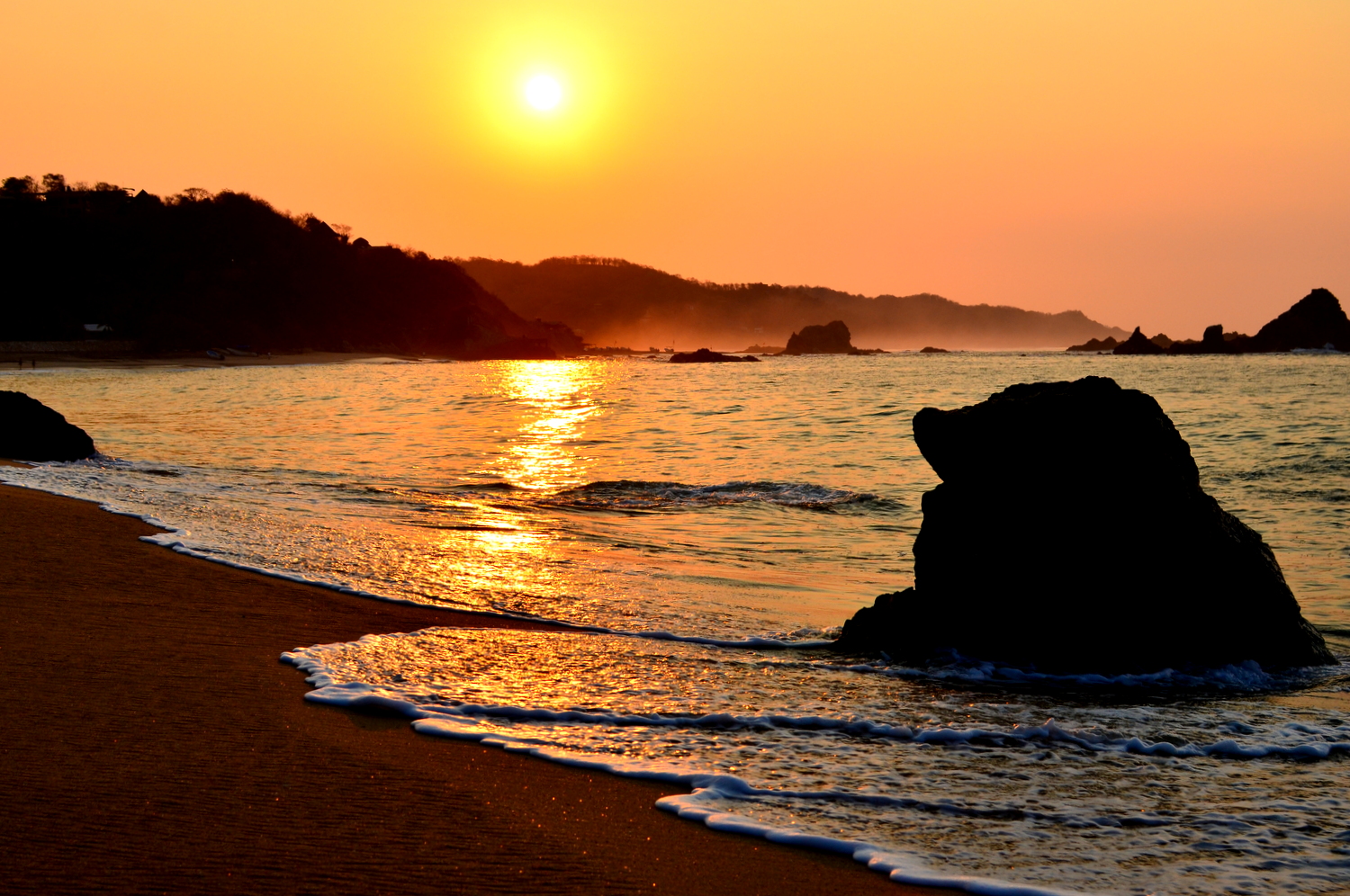
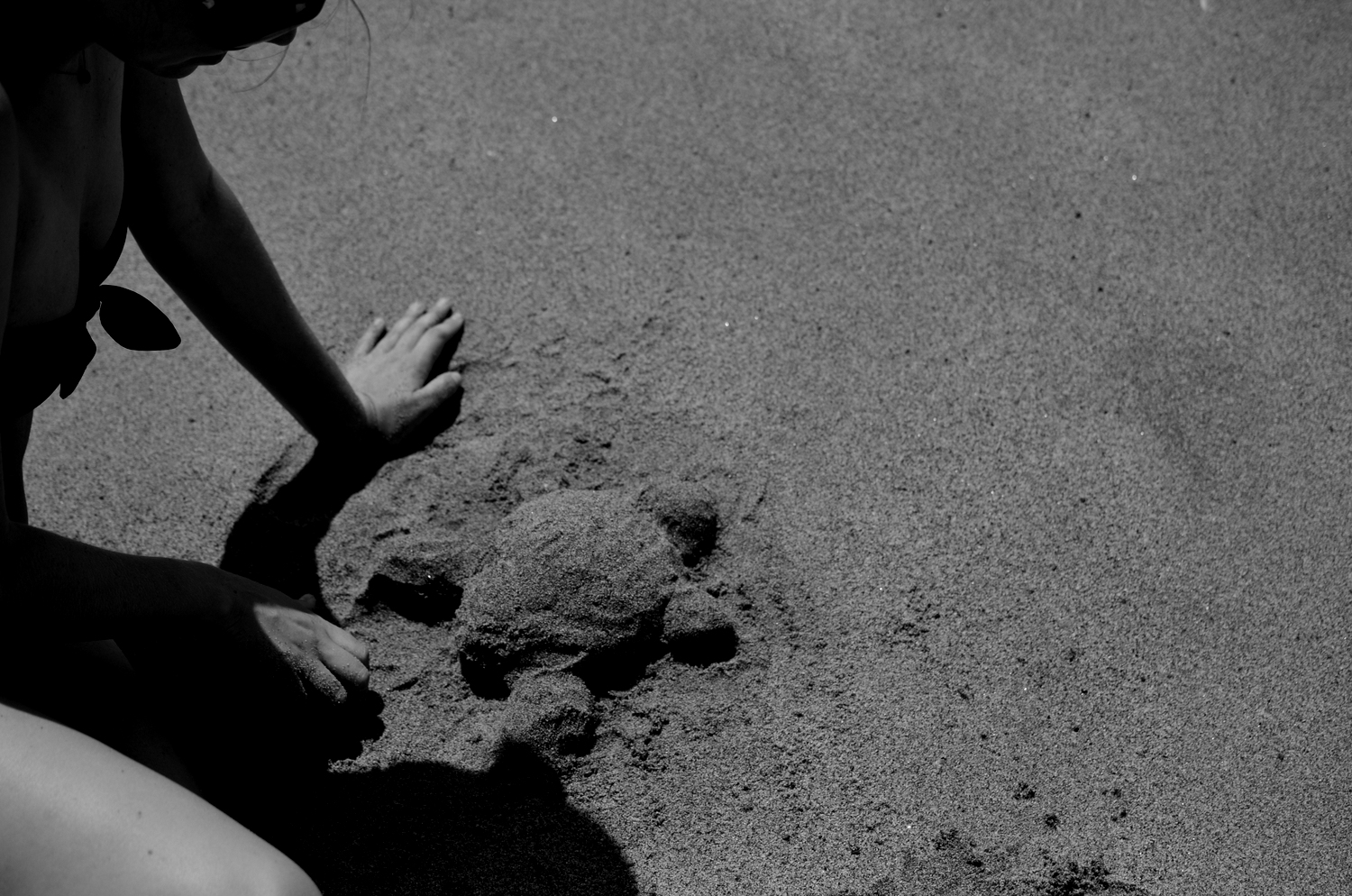
The next and final beach we sought out was Mazunte. It was a close neighbor of Zipolite and took about 10 minutes by truck to reach. We fell victim to staying at a thatched roof hotel/restaurant/bar on the beach due to the heat and discovered that we were back to bucket showers and toilets post payment. But Mazunte’s beach more than made ammends and was indeed gorgeous, carved out of the rocky headlands resembling giant stretched out horseshoes leaving sand behind for feet and bodies to enjoy. The bedrock tongues stuck out past high tide levels, isolating little sections and giving them a “next town over” feel. Mazunte is also home to a turtle reserve compound raising and releasing turtles back into the ocean. We spent hours watching the first part of their lives unfold in their temporary homes. Mazunte’s waves were bone-crushing and broke right onto the sand itself. Body surfing here should be performed with caution and the expecation that you will be tossed around like clothes in an industrial-strength washing machine. This was a prime location for skim boarders because beach shelf was kind of a like a steep ramp that rolled right to the water.
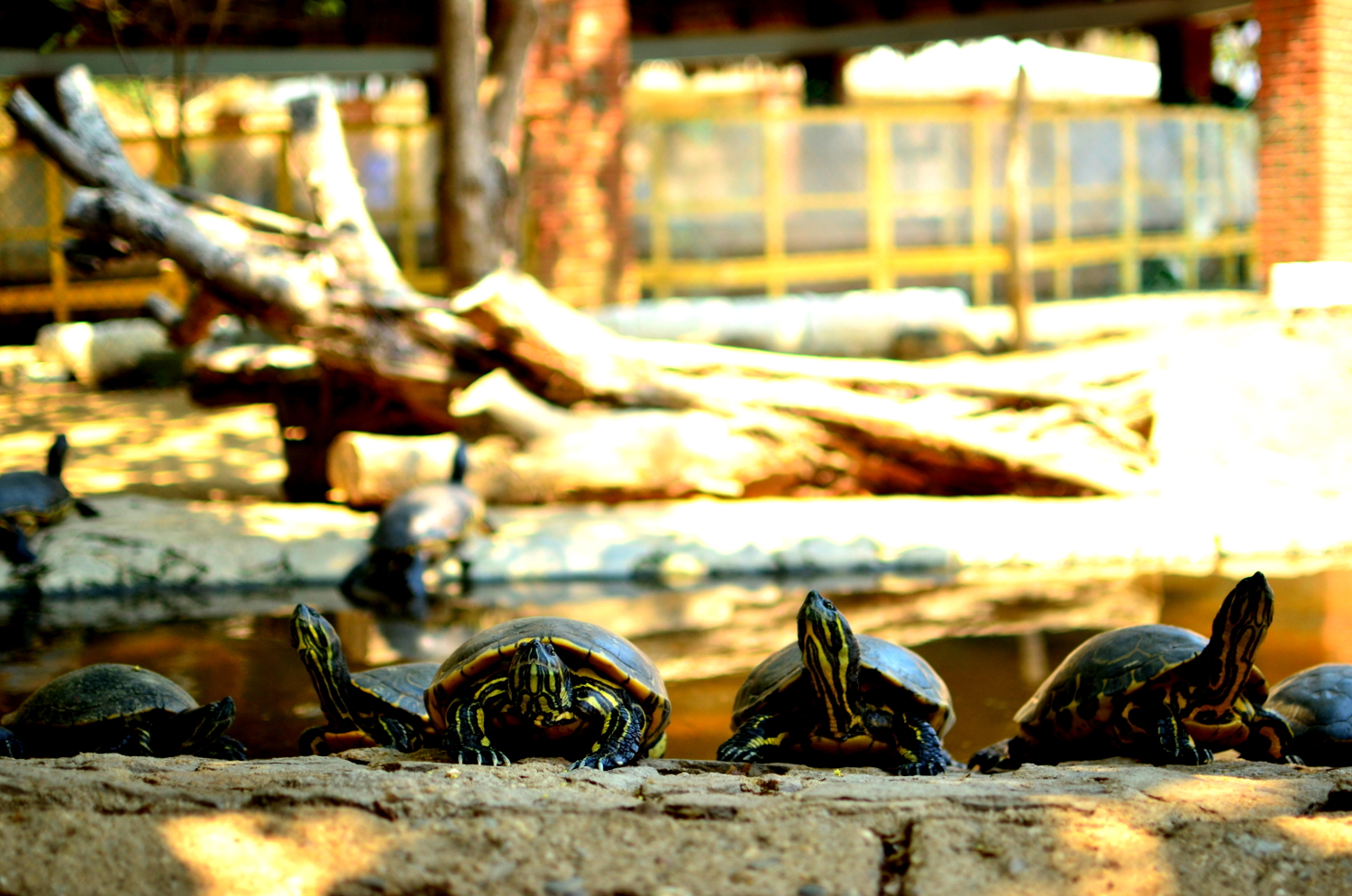


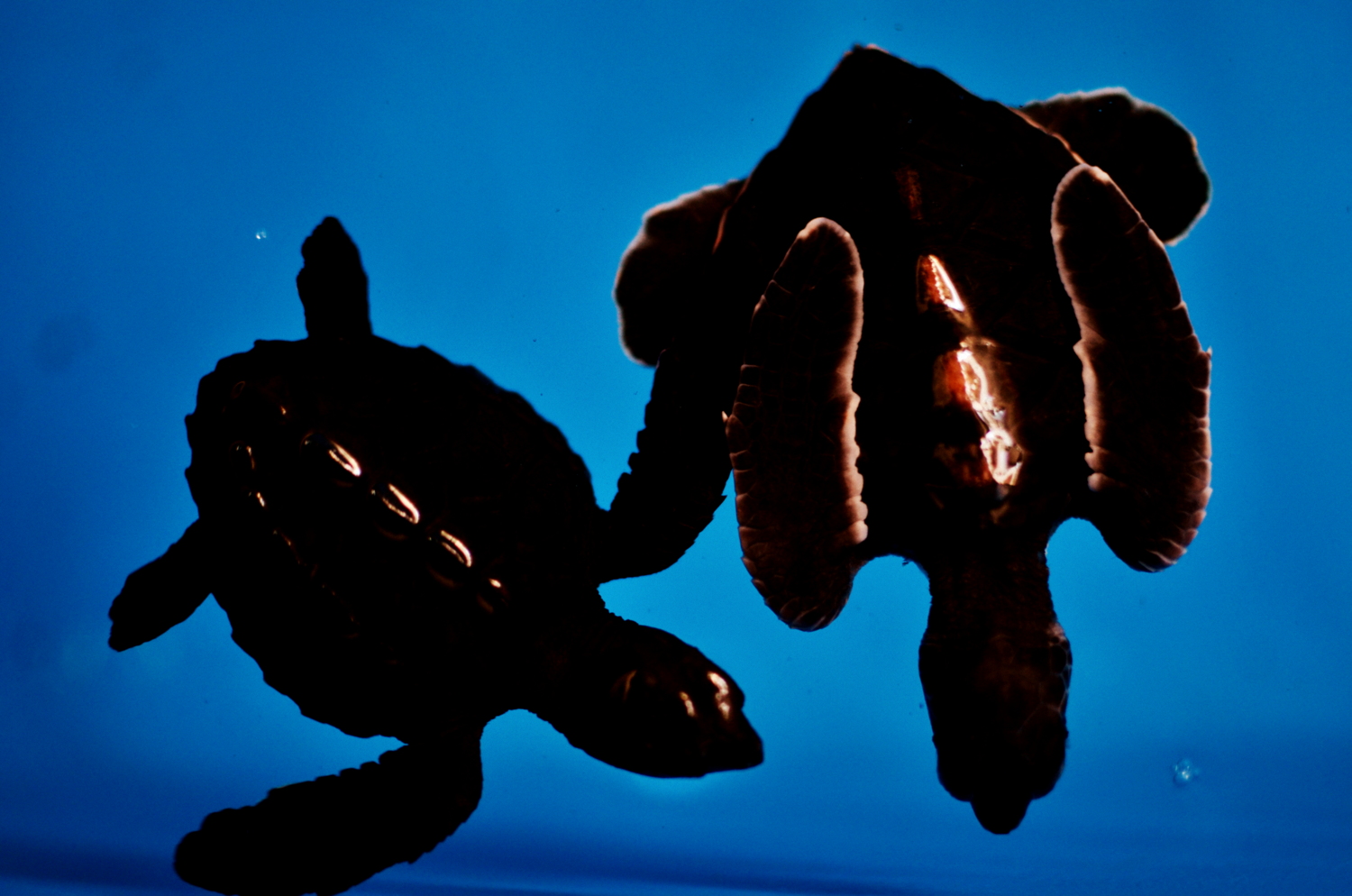

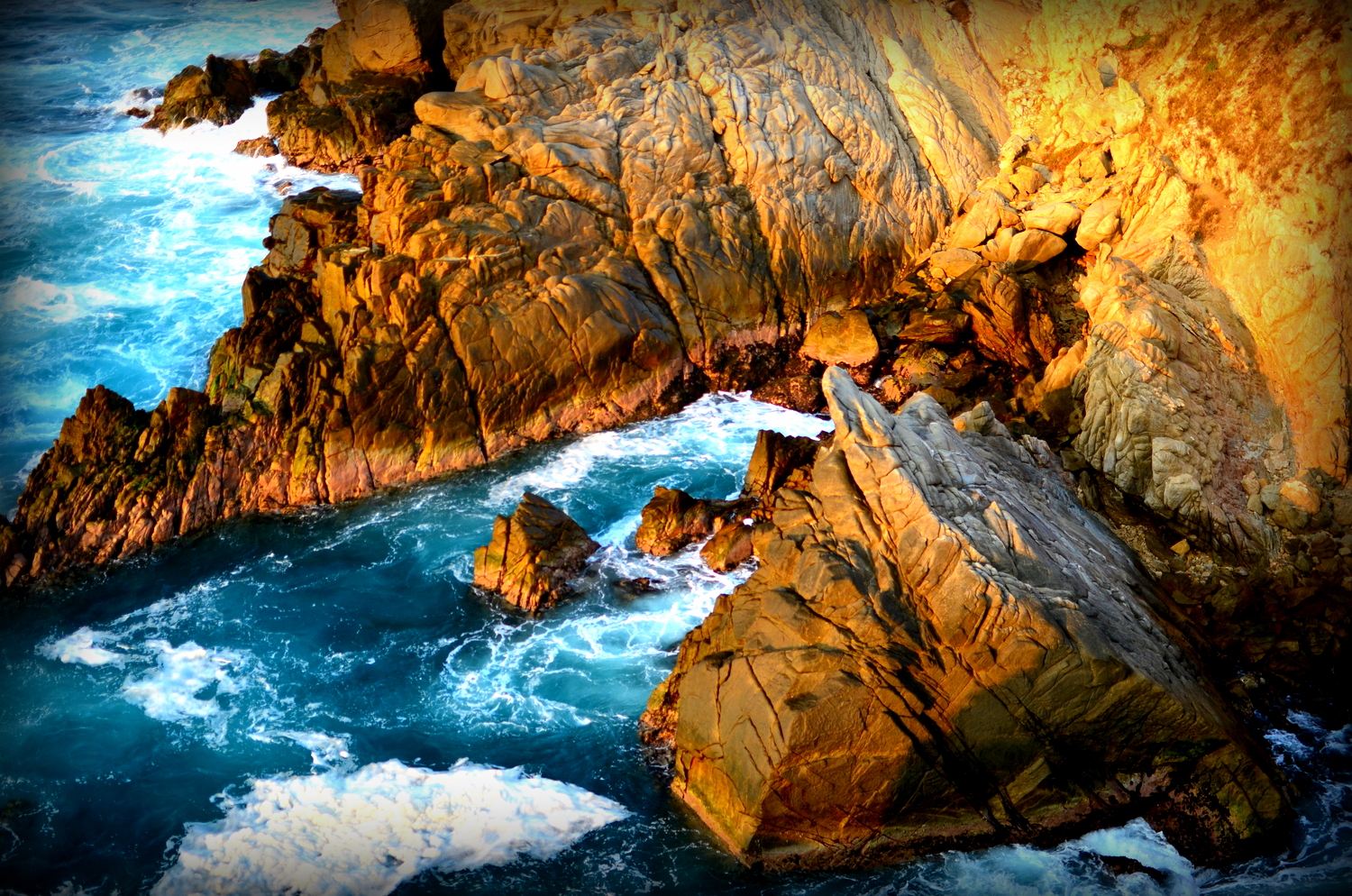
Mazunte’s unreal turquoise waters were best observed along the little hike to Punta Cometa just west of it’s beach. This 30 minute adventure brought you up and down some of the most spectacular cliffs overlooking coves, hidden beaches, and coastal ridgelines bearing giant cacti. I did not bring my camera for our sunset walk and immediately regretted this decision. Elissa and I sat on a rocky ridge that separated the headland from the arm of an ancient bedrock spit and took in another gorgeous Mexican sunset. The night life in Mazunte was relaxed and fun and we spent the evening listening to live reggae and acoustic versions of classic rock tunes. The following morning I took a quick hike back to Punta Cometa but the natural lighting and magic was just not the same. Departure from these dreamy sand havens was tough but we had another intense bus trip through the mountains to endure to get back to Oaxaca. The universe loves balance.

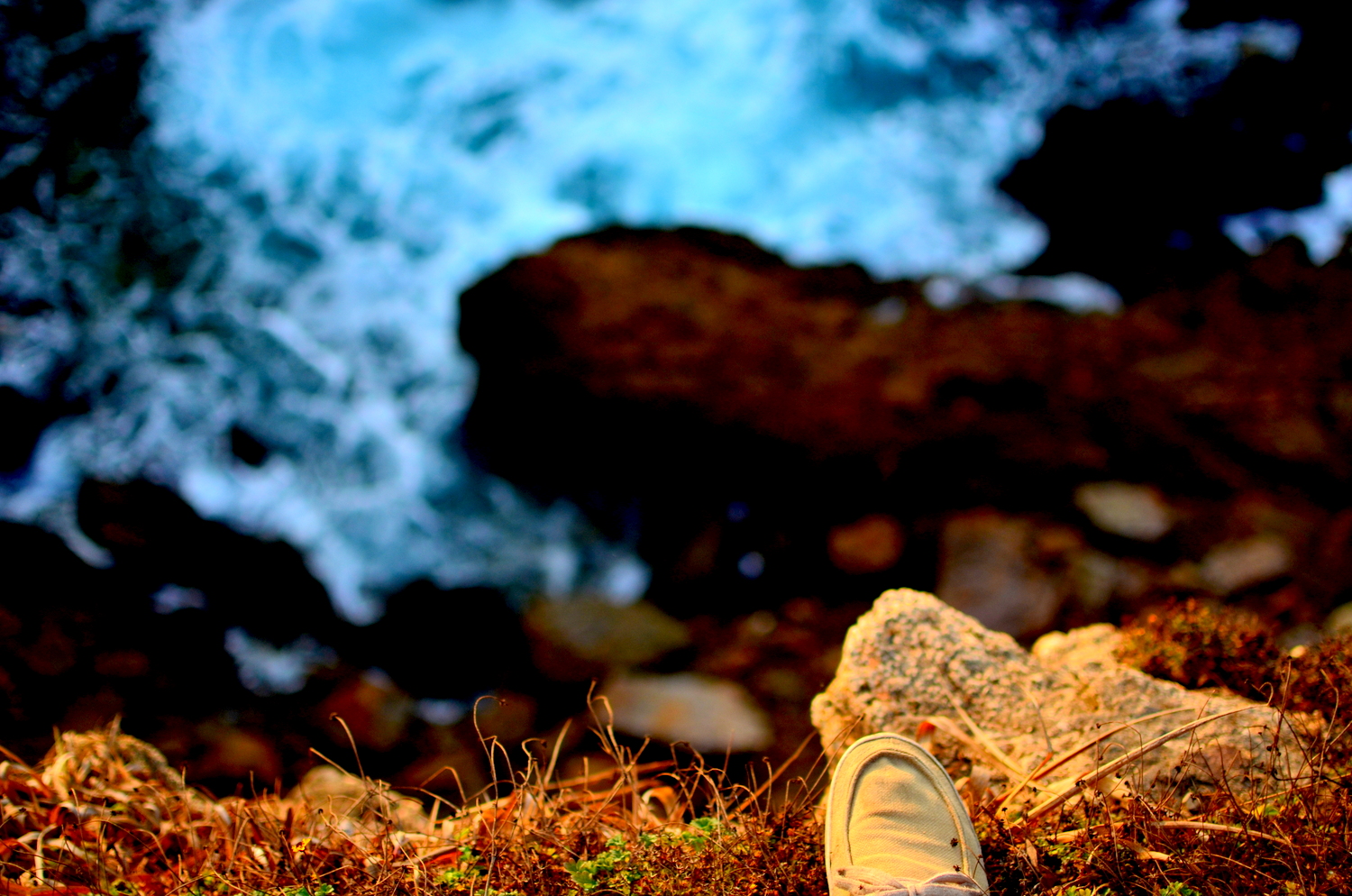
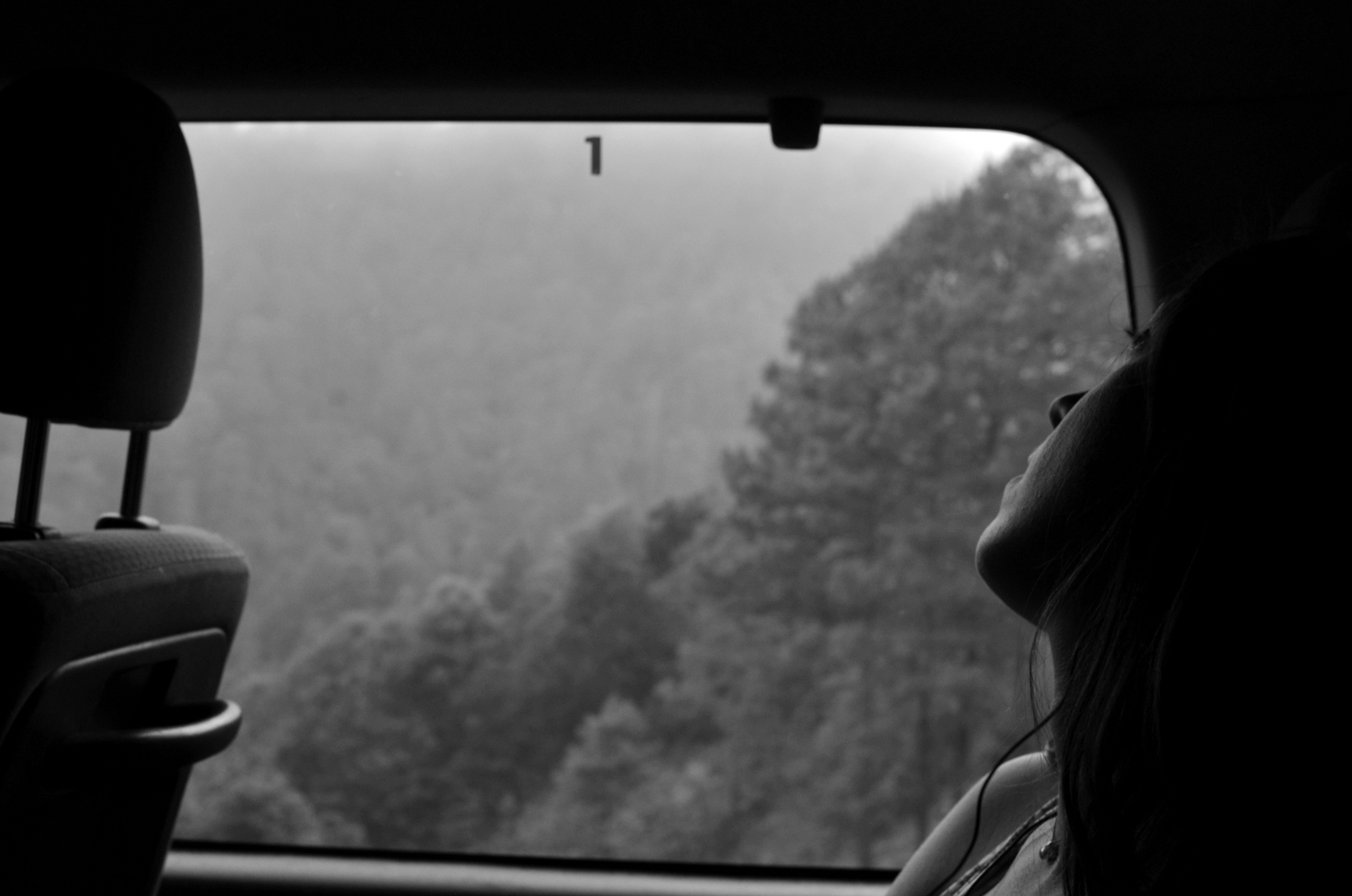
Chacahua
It’s a bit tricky to reminisce about the experience of getting to our first beach destination in Mexico with bandamax blasting from the TV in the hostel. These two places are worlds apart, but I’ll reach into the inner depths of my overly stimulated brain to try and paint a picture to the best of my abilities.
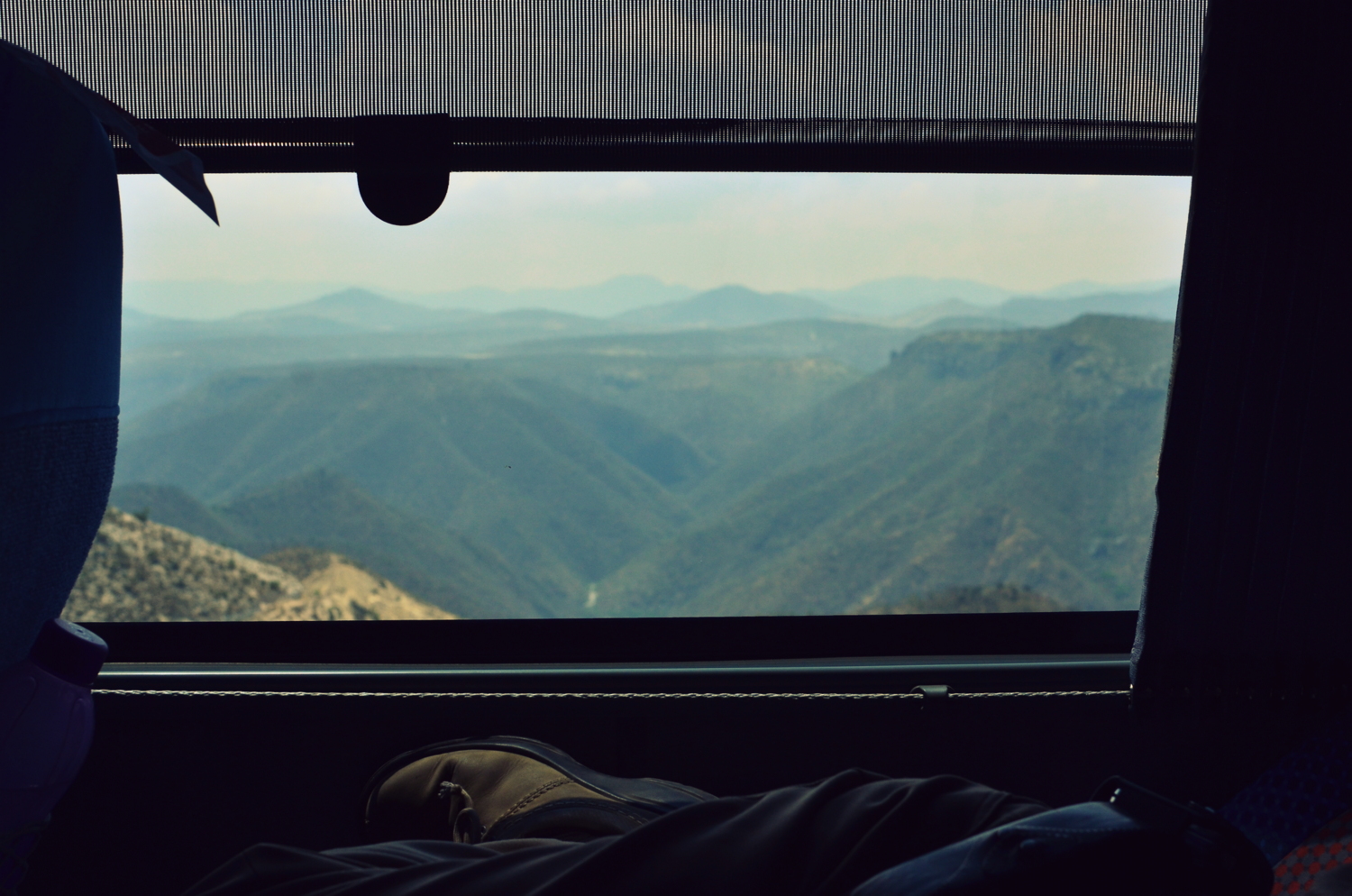
We departed from Puebla in a mad dash to catch a bus and I left another lock behind in the hostel. I’ve been leaving bits and pieces of belongings here and there as a sort of metaphorical breadcrumb trail so we can find our way back someday (justification). The bus to Oaxaca brought us through sweeping mountain views and our first healthy dose of highways that cling onto cliffs with the feeling that they were carved out of the rolling Mexican landscape with a giant chisel. After arriving in Oaxaca we immediately hopped onto a city bus, walked through the bustling zocalo (this almost made us change our plan again), and found the shuttle van depot (literally a hole in the wall with vans). We had 2 minutes before the bus departed, so we figured fate was telling us to get on.
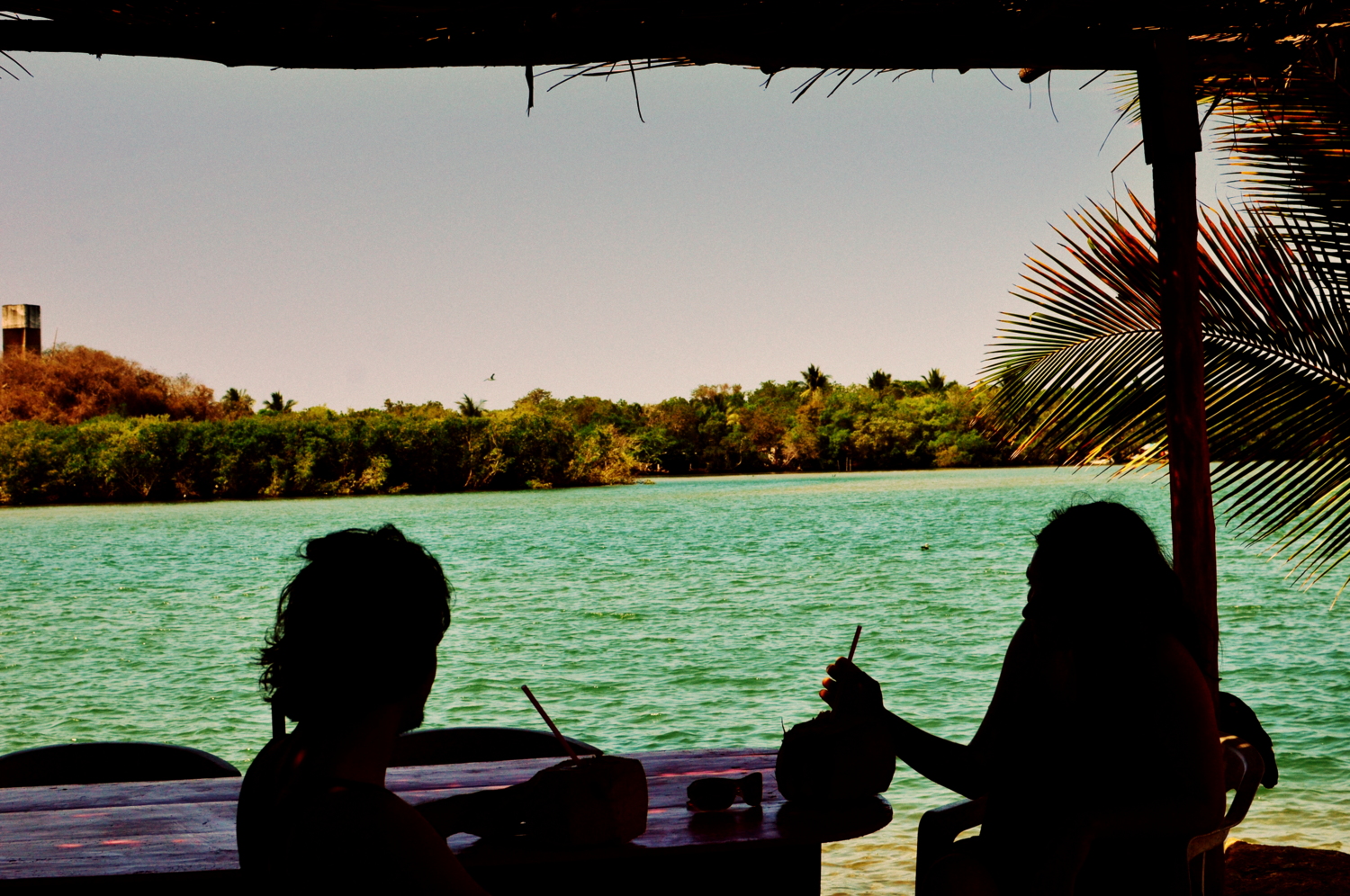

The shuttle from Oaxaca to Puerto Escondido was horrifying to say the least. There were two traveling options to get to the Pacific coast from Oaxaca by rubber and asphalt. One was a gentler, longer route that would chew up about 12 hours of life while the other was about half the time straight through several mountain ranges. You can probably guess the choice we settled on. It was later confirmed that this stretch of road was the toughest terrain in Mexico to cross. The journey started out nice as we found ourselves driving through fields dappled with small pueblas towards a poetically yellow setting sun. That false sense of security immediately disappeared as we started switch-backing up the side of mountains. The driver seemed to a have a strong proclivity for the gas pedal and a disinclination for brakes and would zip around corners in the other lane cutting turns whenever possible. Our journey turned into an erratic version of human pinball in the van. At one point we did not have a straight section of road for almost 2 hours straight. As night approached I found my eyes glued to the windshield watching the headlights illuminate the edge of the road and the sheer darkness of the void just beyond the white line. It seemed like our chariot was going to careen into the abyss at every outside turn only to miraculously recover at the last possible moment while we clenched our seat’s arms waiting for the end. A water bottle dropped out of my bag and it took about 2 minutes to retrieve as it flew across the floor from left to right. We were the only travelers on the shuttle and didn’t know if this was normal or utter madness. Our fears were confirmed when the driver had to pull over to let a passenger off to vomit. The route was dotted with small towns along the way, all offering 24 hour food options and bathrooms. We stopped in a small town for food and ate fresh tacos in a Mexican family’s living room that was completely open to the street. The shuttle at this point had become my worst enemy and I wanted nothing to do with it. For three or so more hours we desperately looked for any signs of flat, gentler landscape ahead. After 7 hours in this maddening van I damn near kissed the ground upon arrival in Puerto Escondido. We spent a total of 12 hours on Mexican highways and welcomed the humid, salty air.



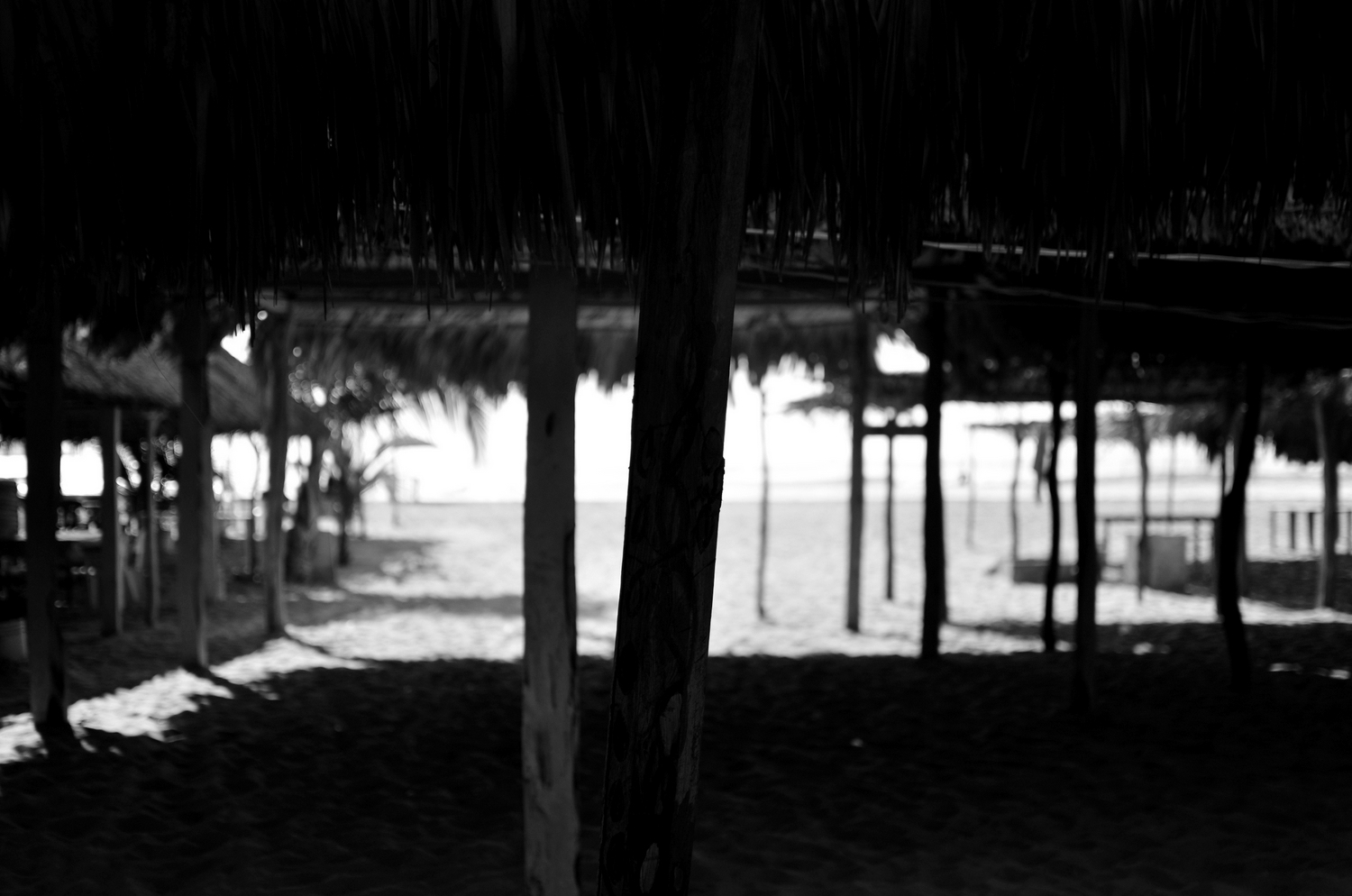

We spent a night in Puerto and saw the blue Mexican Pacific for the first time in the morning. By noon we had our packs on our back, and were sweating profusely trudging up hills towards the shuttle location. A taxi driver heard us talking and stated he was going that way anyway and would give us a great deal to get closer to our little beach haven. We agreed, and wound up running errands with him and his aunt (his other passenger and reason he was in this town in the first place). He kept telling us “10 minutes, no problem, we leave soon”. We waited at the bank, went to a social program office, and got an oil change. Frustrated from an hour and a half of personal personal and the climbing thermometer we were finally heading towards Zipolite. Palm trees were now dominating the landscape and my mind was reeling thinking about our destination. A small fishing boat brought us through a lagoon and dropped us off on land where a collective truck was waiting. We crammed 10 humans and supplies into the back of a pick-up truck and drove down a sandy road for about half an hour until we reached paradise.
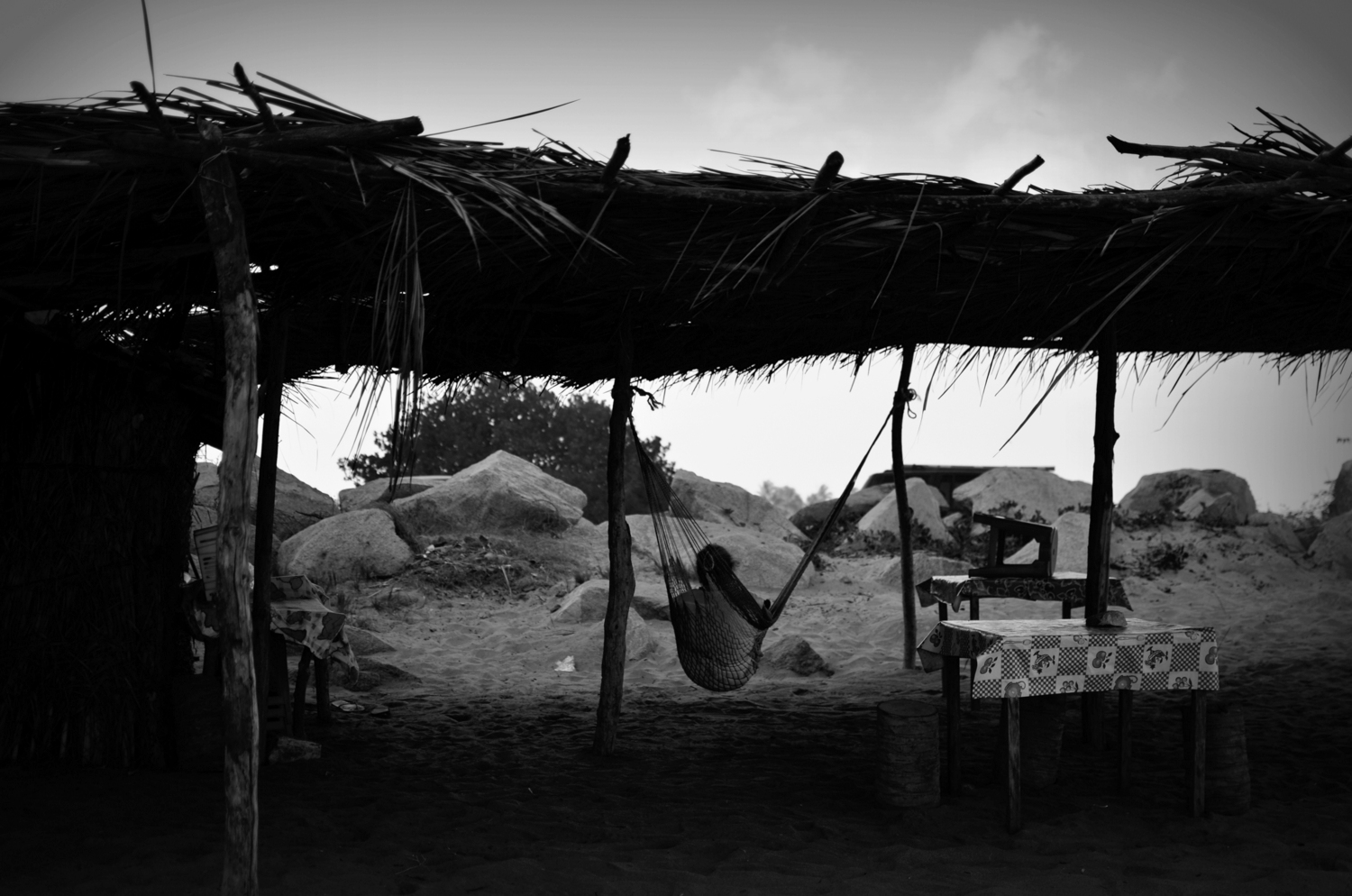
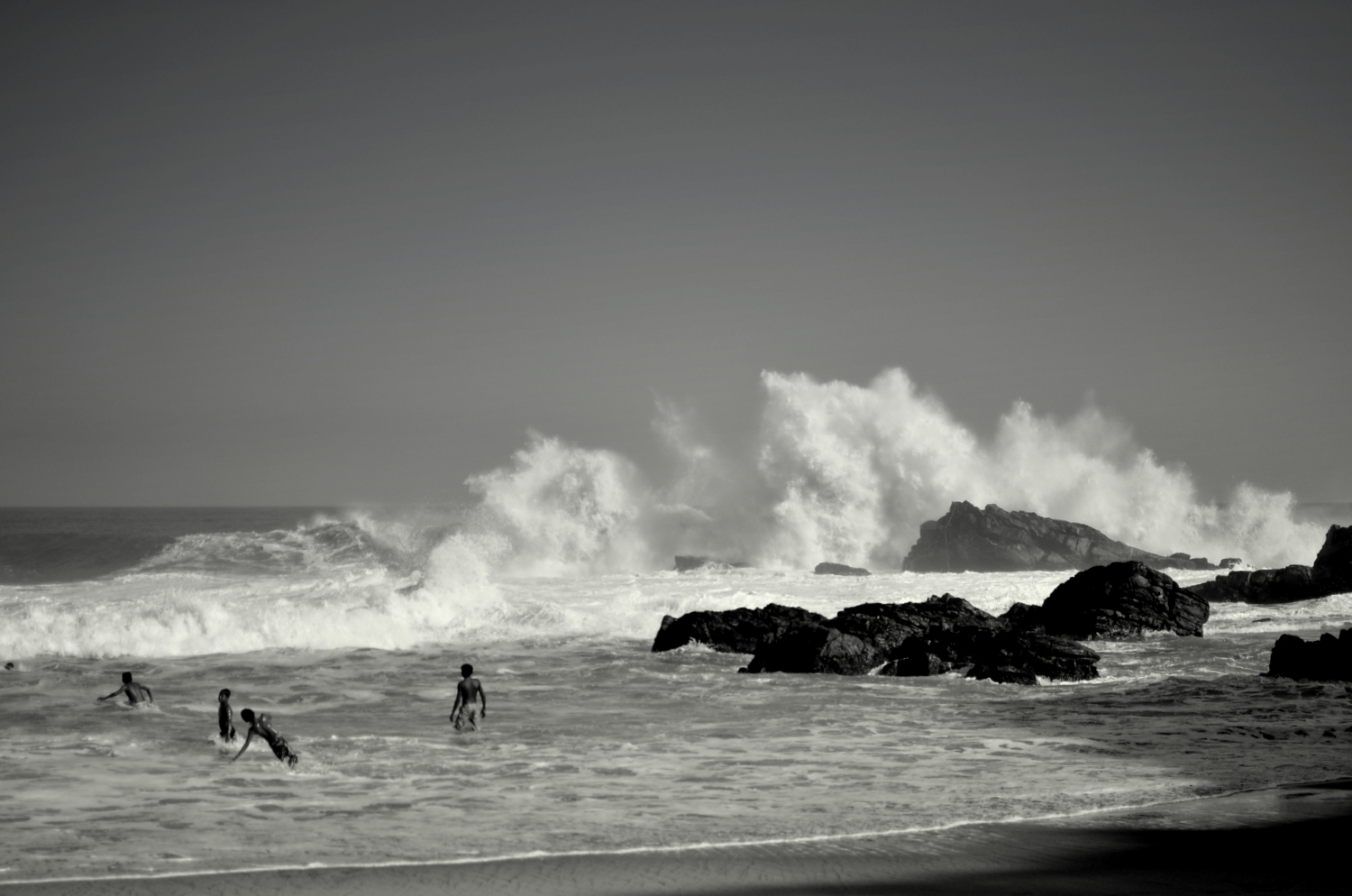
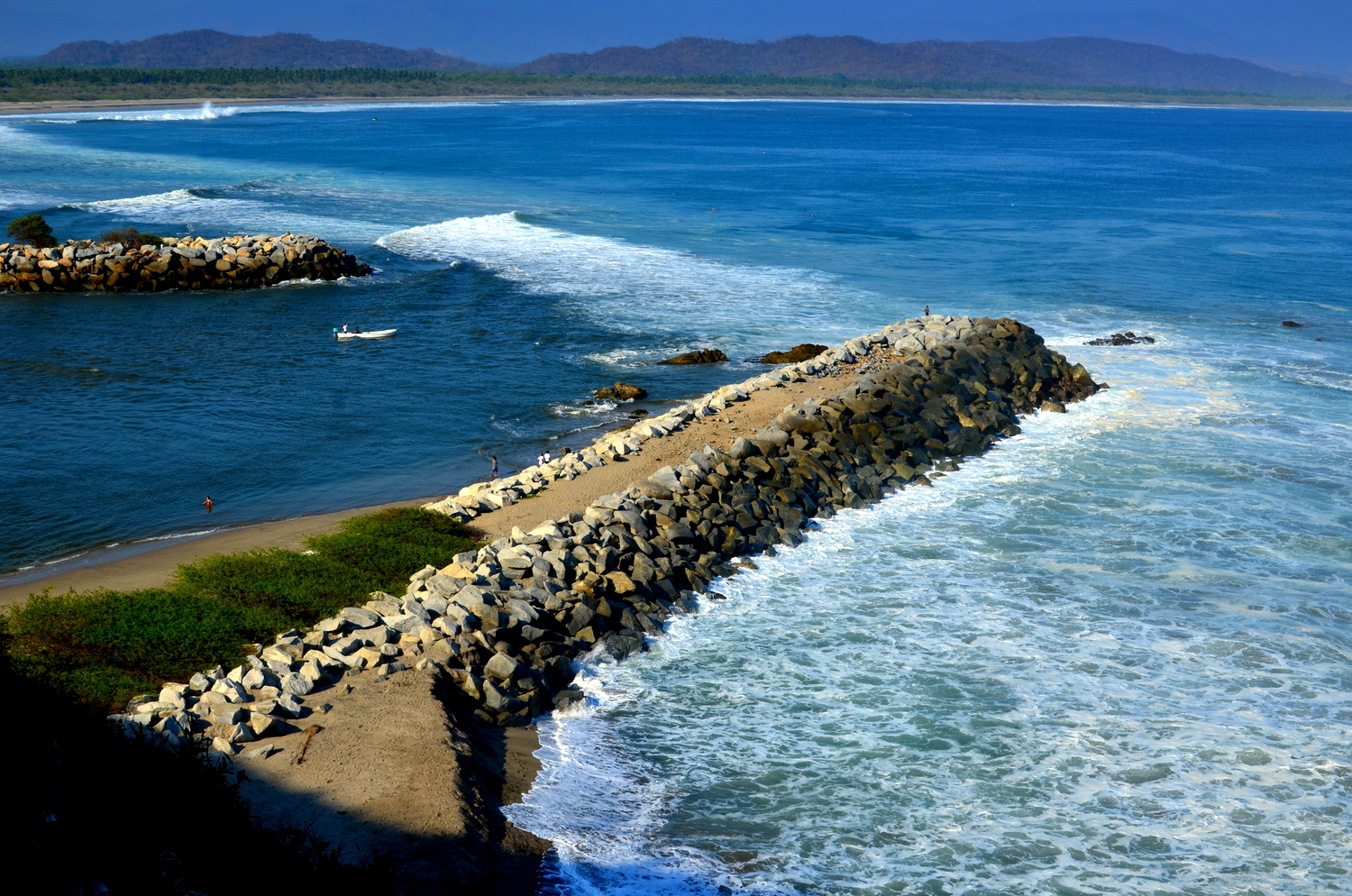

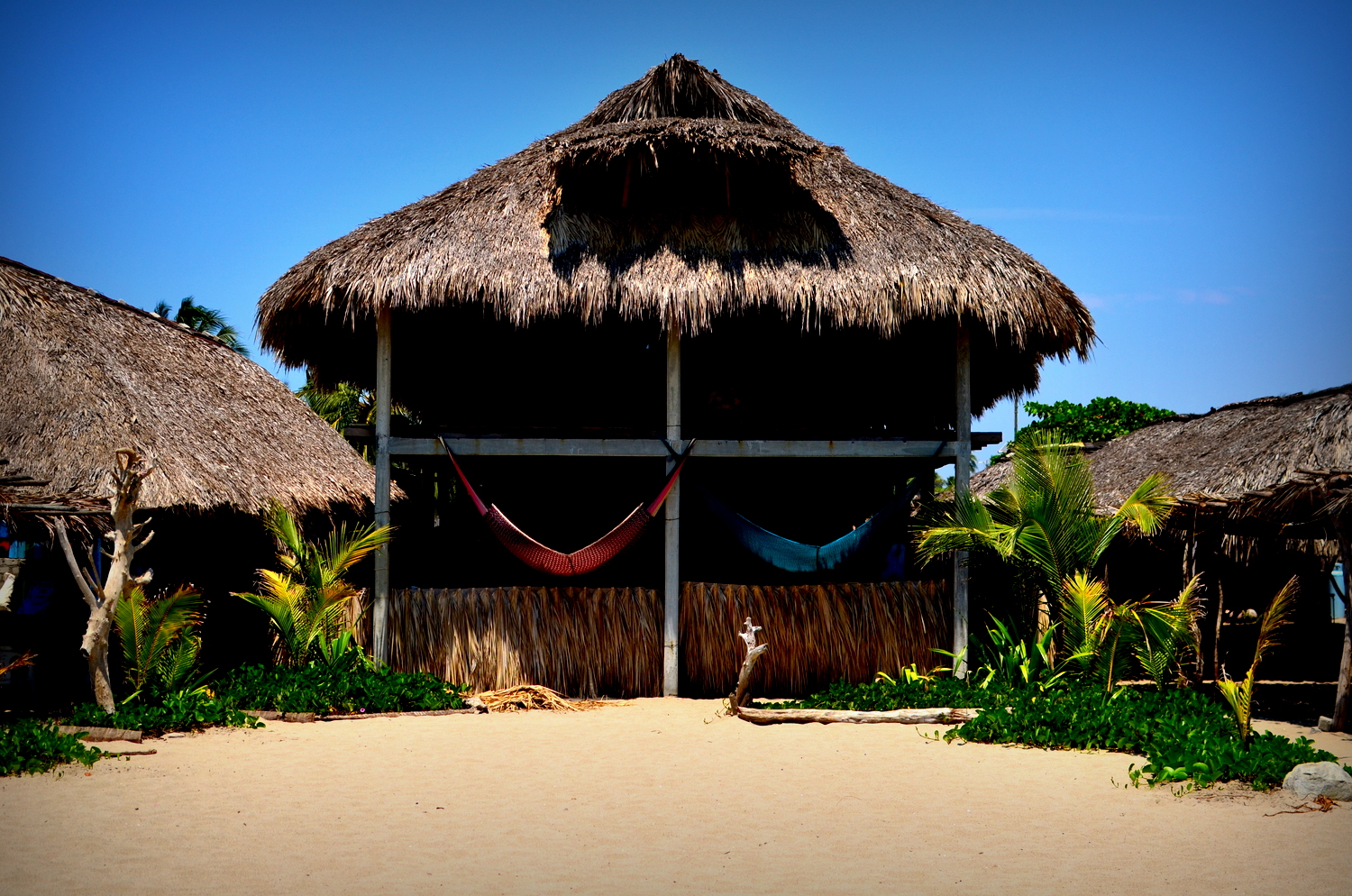
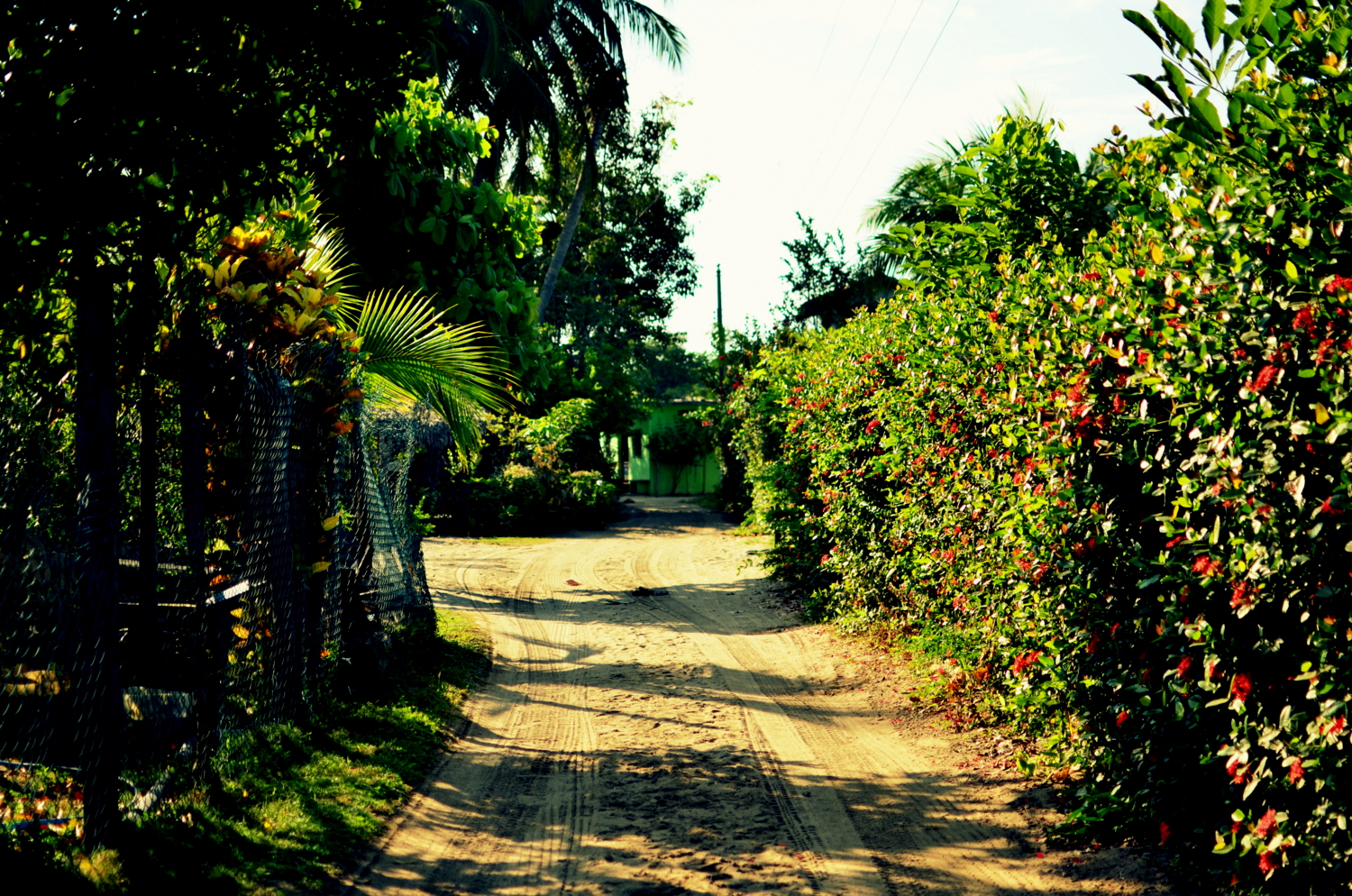
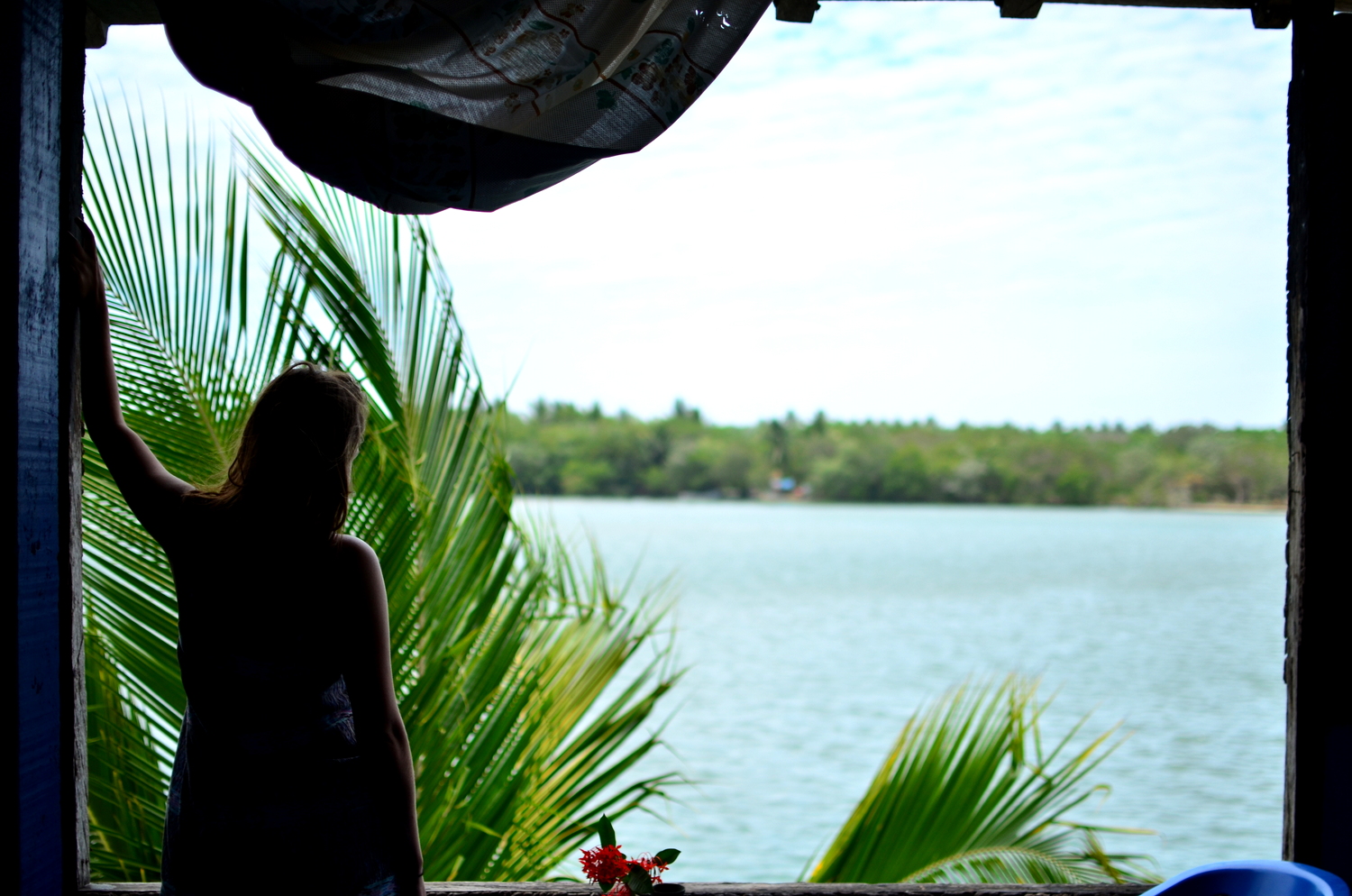
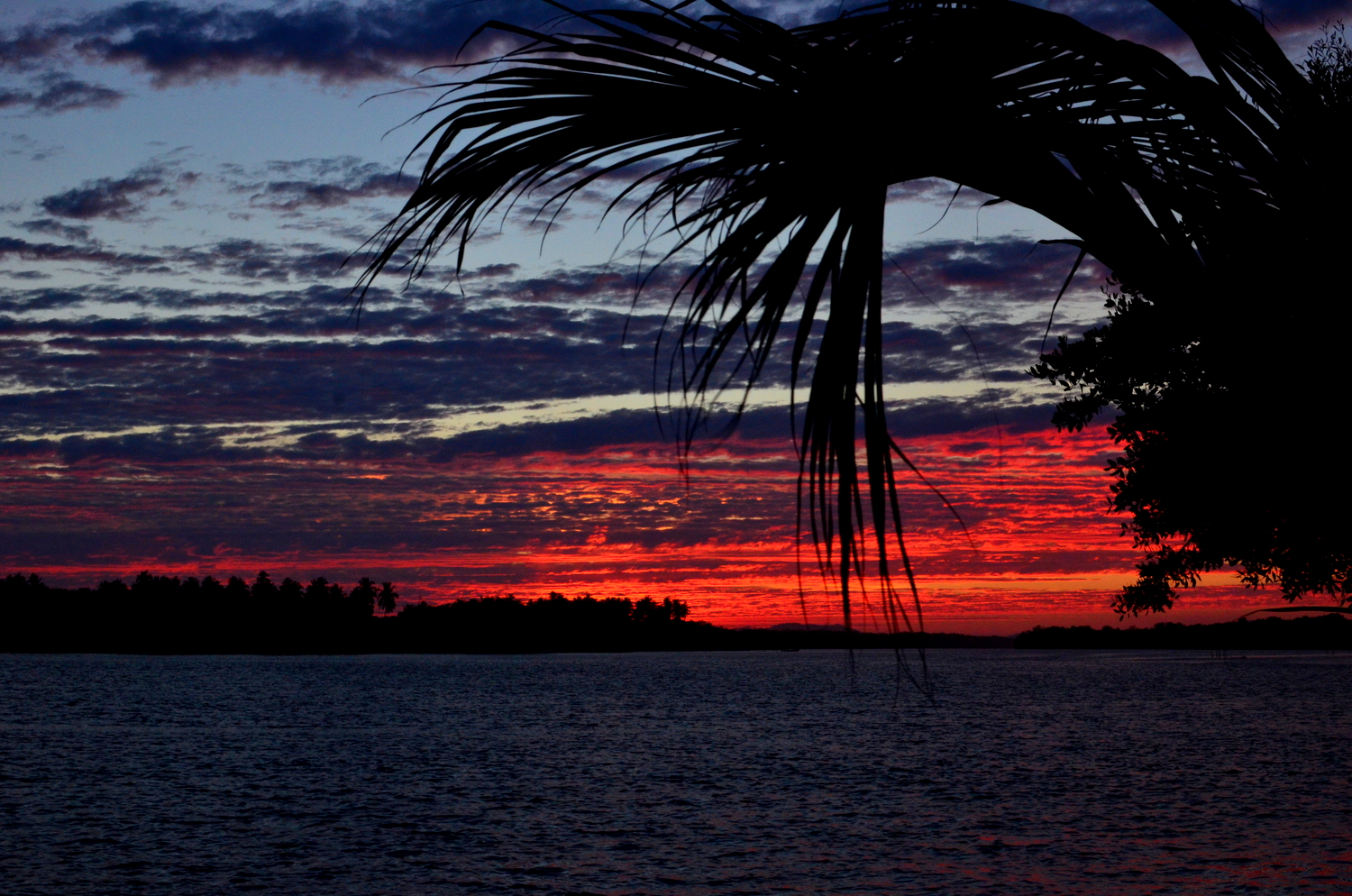
Imagine sand roads, thatched roof homes, palm trees, and endless empty beaches with animals dominating the sea and land. There were maybe two or three vehicles in this little village of about 400. Life here seemed to have been frozen in the past because of it’s isolation. Shoes were not necessary, or sandals for that matter, and shirts were optional. We found a cabana we read about in Lonely Planet and for 25 bucks a night. We lived in a dreamy, windowless room on the 2nd floor equipped with 2 beds with mosquito nets, an oversized view of the lagoon, and our very own palm tree that waved it’s fingers at us in the cool ocean breeze. The sun set straight down the lagoon offering an otherworldly feel as we looked at Pelicans and cranes searching for their next meal in the waters teeming with wildlife. It felt like this part of the world hadn’t been spoiled by human activity yet. The lagoon was teeming with birds, fish, and crocodiles and for a decent price you could pay to take a boat out at night to observe the bioluminescent algae.


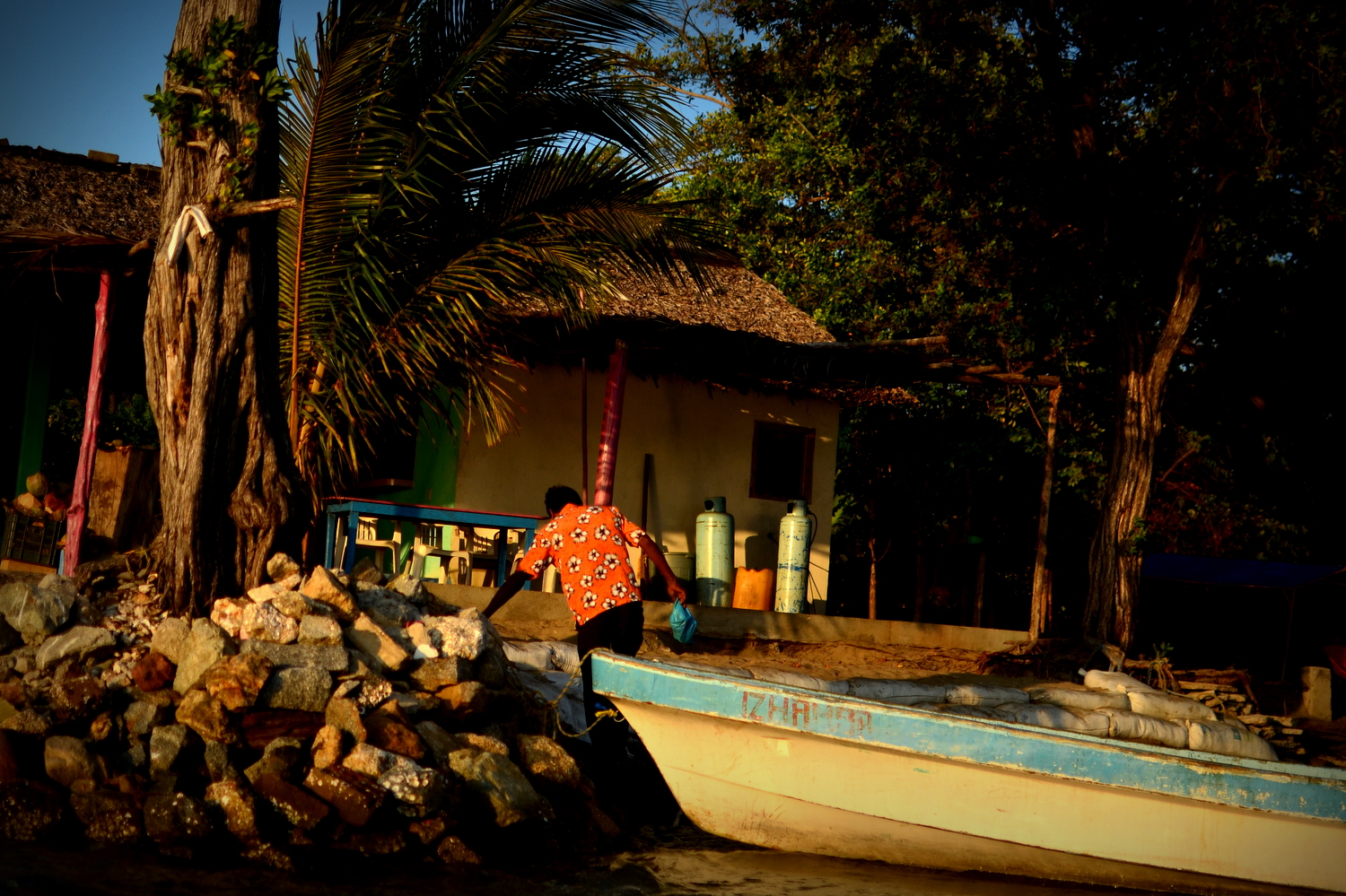
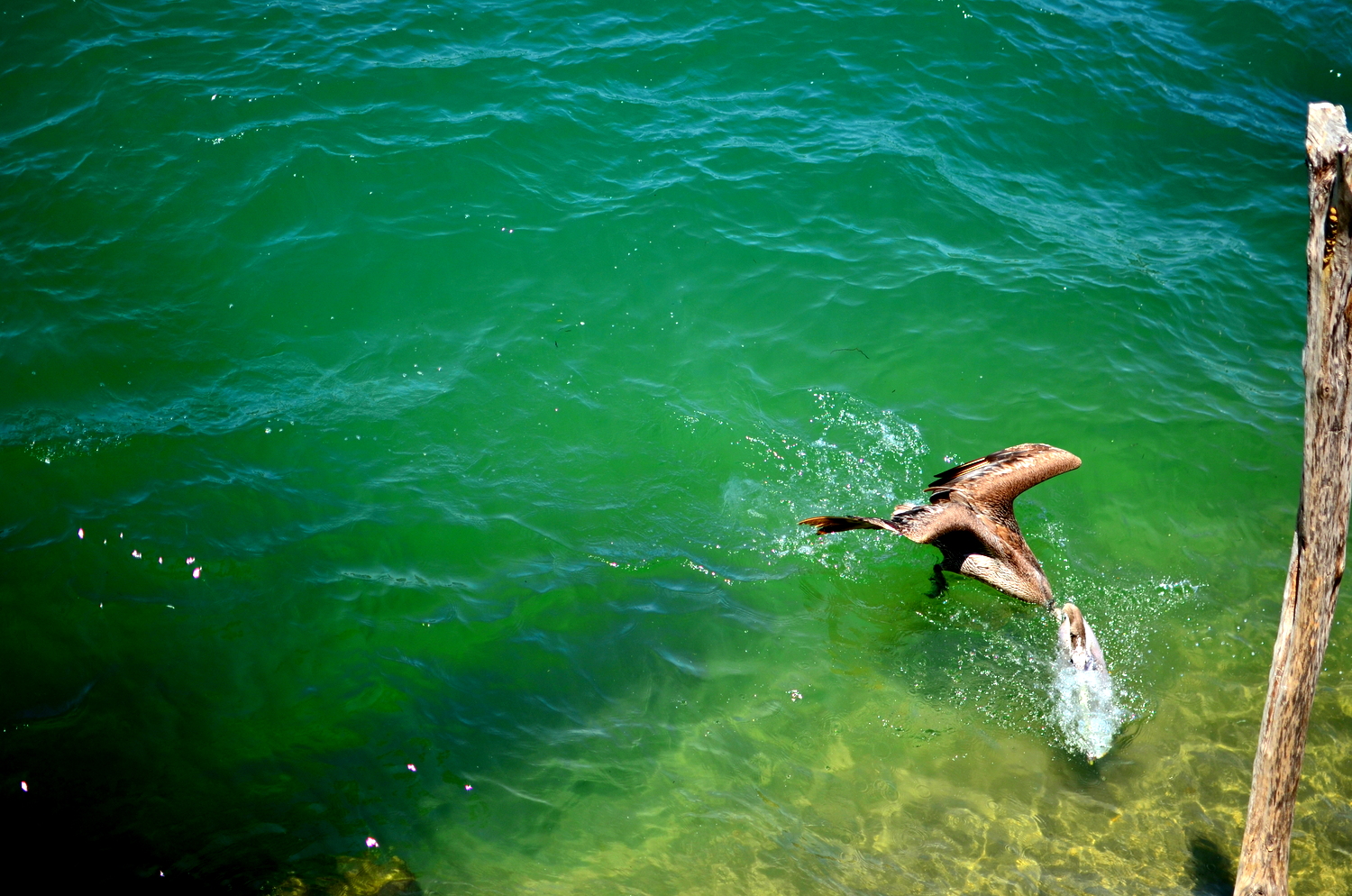
After 3 days we did some math and came to the conclusion that we would go broke if we stayed in our little hut so we shifted gears and decided to camp. After meeting some surfers we wound up renting an extra tent and wound up camping out under a thatched roof at a family restaurant/cabana compound. The surfer was from Oregon and a disagreement with his parents about school and life in general resulted in him living on his own since he was 15. He became progressively weirder as the week unfolded but kept us entertained for the most part. Camping was free granted you ate at their restaurant. The servings for every meal could easily feed two and were the freshest servings of home-cooked seafood you could ever imagine. We “survived” on whole fish, lobsters, octopus, fresh fruit, smoothies, and eggs all cooked to order. The mother running Restaurant Isahmar spoke island Spanish and barked orders all day long in a voice that held generations of hard work and modest living. Since most of the island lacked running water we bathed using buckets and flushed the ½ toilets (top half missing) with the same tool. I would like to make an author’s note here and say that as the week progressed I became quite skilled with buckets and developed shower techniques that save both water and time. We hand washed all our clothes and slept on the sand with the sound of waves lapping every night. The loudspeaker on the roof of the store next door gave us a healthy dose of Spanish every morning as the boats came in with supplies from the mainland.


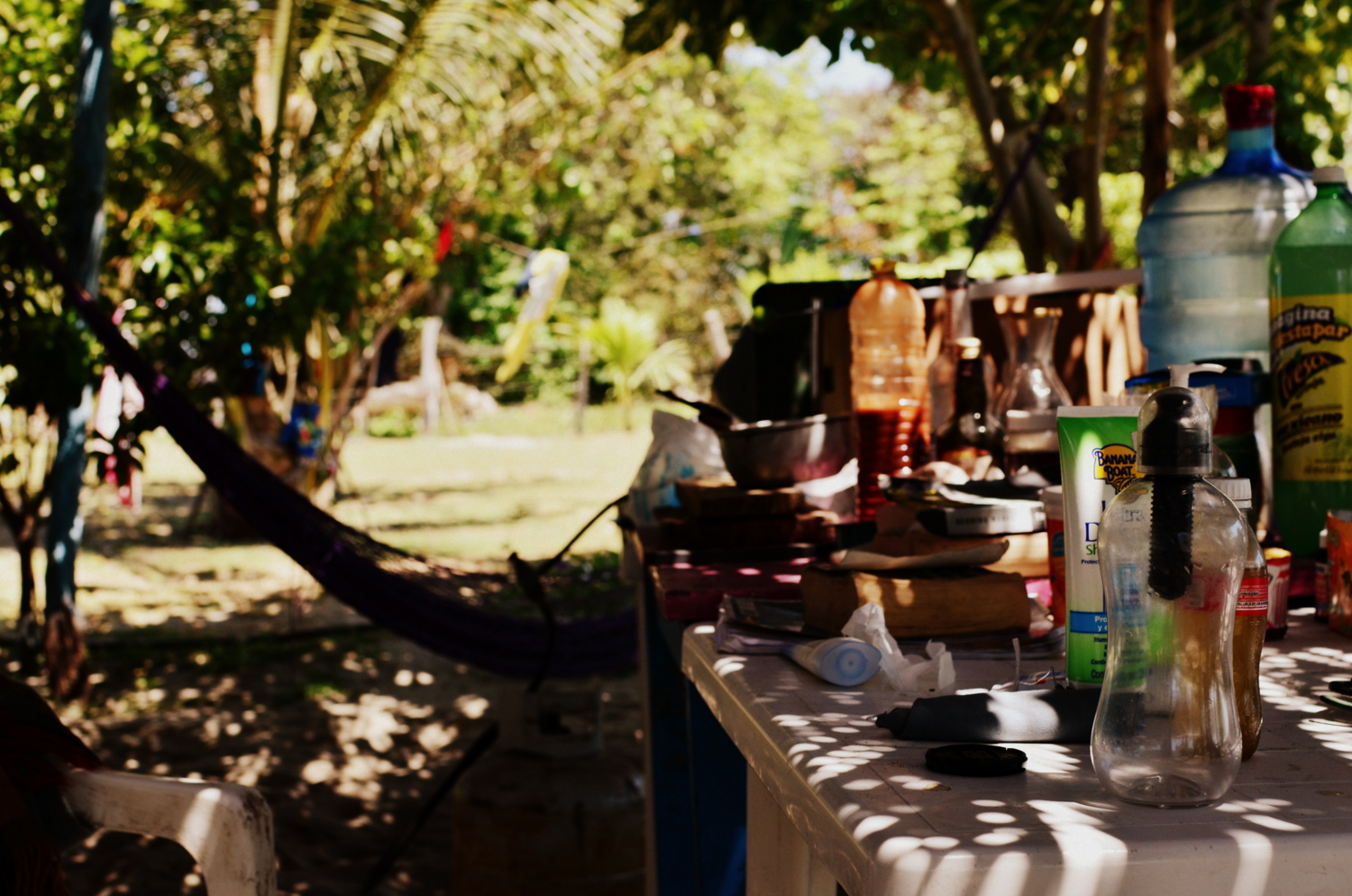
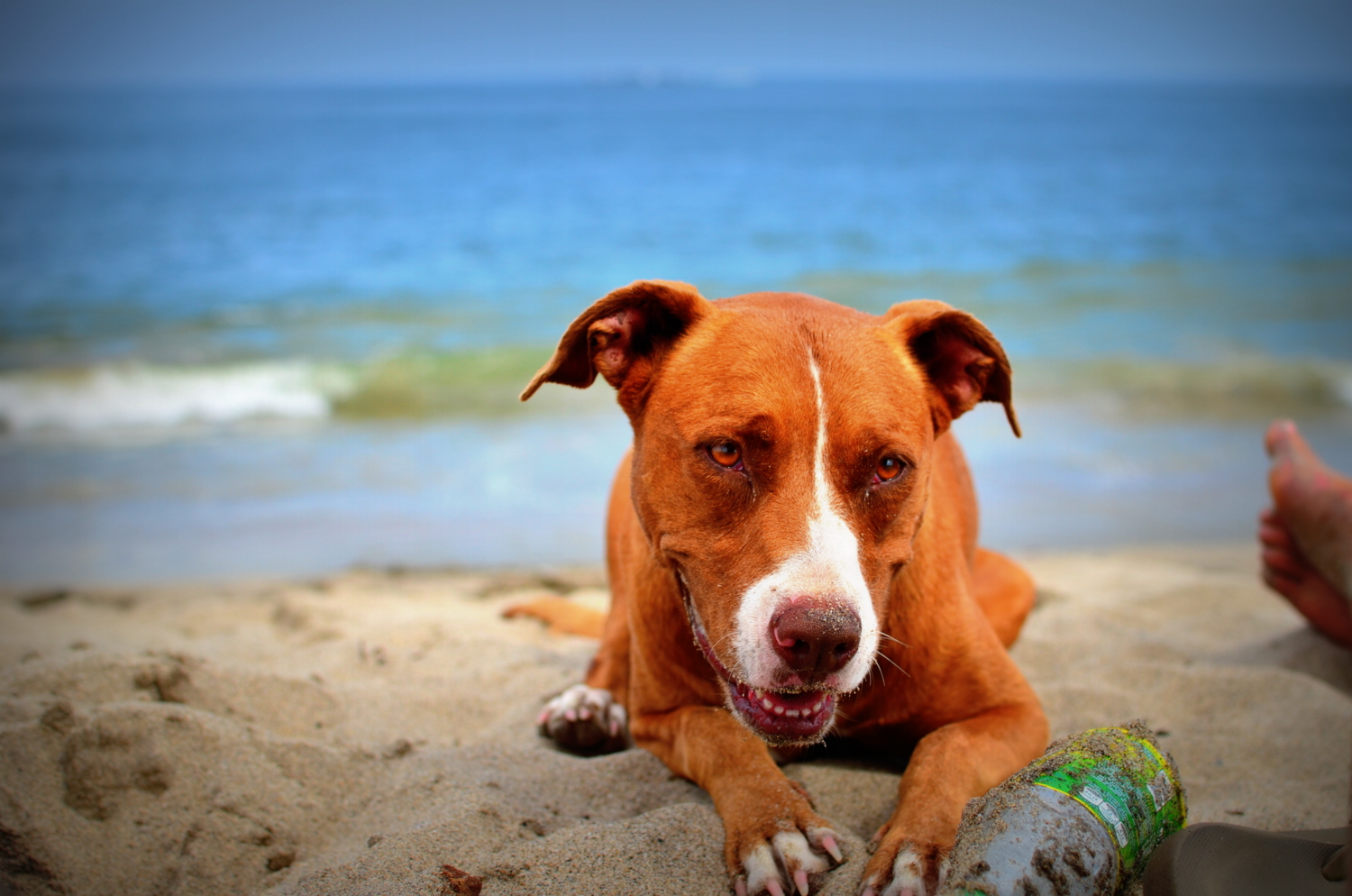
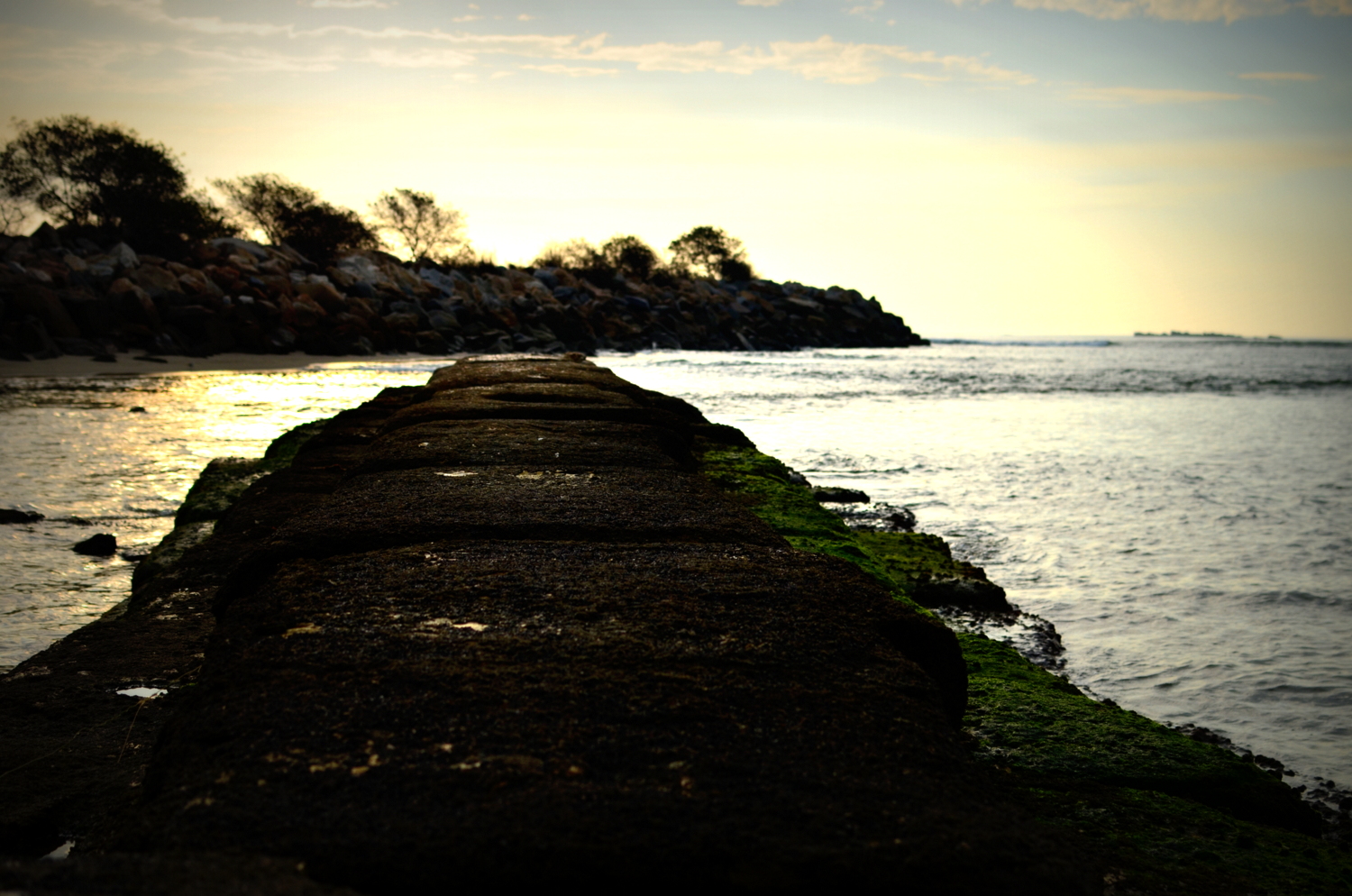

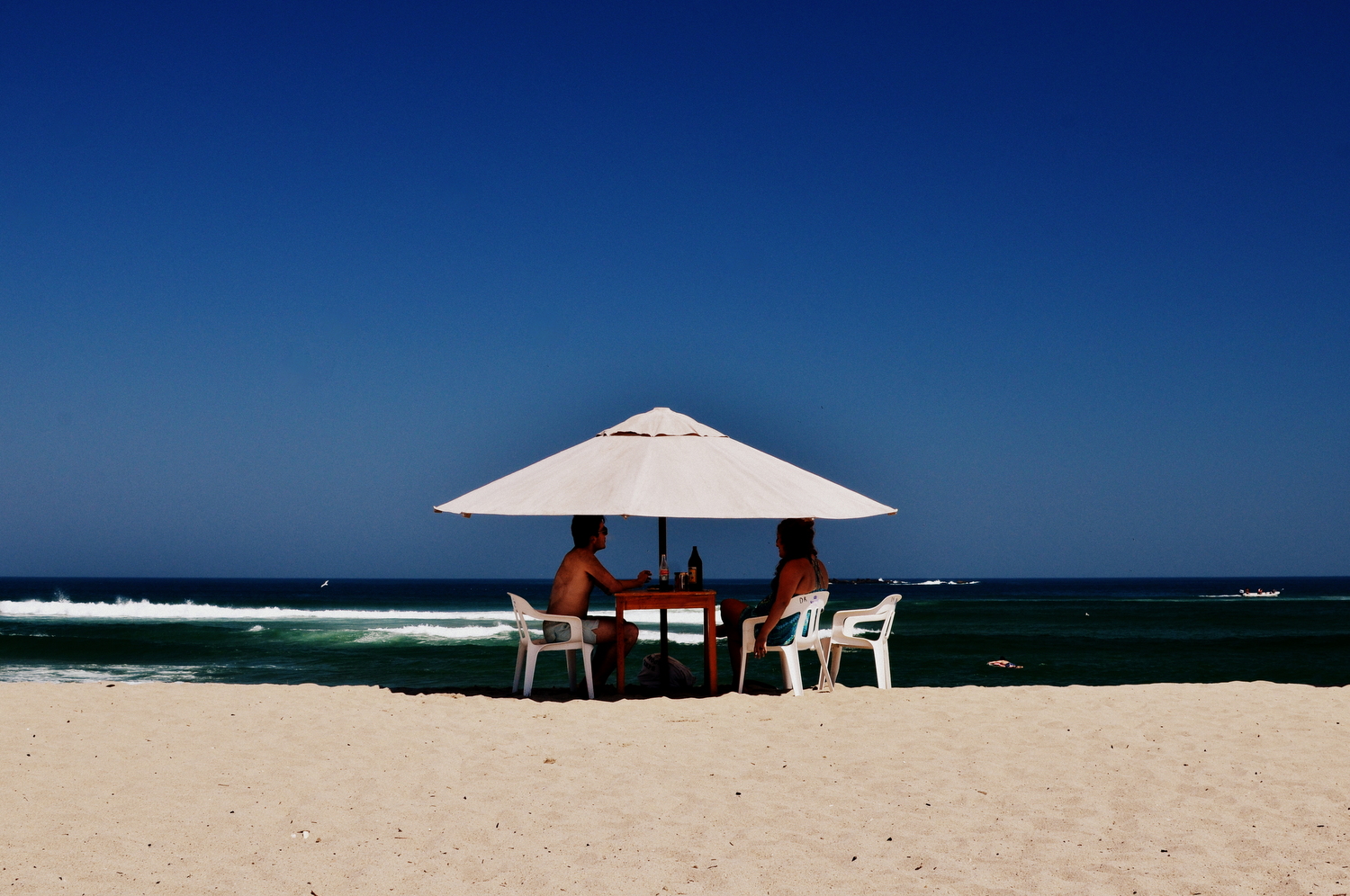
For the first few days it was just us and a small group of surfers in this slice of heaven. Days were spent with complete disregard for time paying very close attention to relaxation and letting our minds run out of thoughts until nothing existed. We thought we had successfully dodged Semana Santa in our beautiful bubble. By day four we had noticed that a younger college crowd began to arrive like ants marching to melted candy. They came in groups and all set up tents, which made the solitude of this place a little more interesting at first. As each day passed by we watched our paradise slowly melt away. It was like finding an oasis in the desert and watching it dry up before your eyes. Spring break came in like a tidal wave and by Tuesday and we were in the thick of it. Tents now inundated every thatched roof restaurant in sight and the beach became infested with bodies and bottles of booze. We did our best to escape by crossing the channel to the other side where pristine beaches were still barren to try and avoid the reality of the new situation. Nights were now filled with bad versions of beach rave parties, bon fires with stumbling drunks, grandfathers wearing g-strings, and beach vendors trying to earn a buck selling anything from sardine tacos to full size hammocks. When Friday came both Elissa and I felt that the age-old adage of “if you can’t beat ‘em, join ‘em” was appropriate. We determined the only way to feel at peace with the environment here was to drink pina coladas and 40 oz coronas while observing the madness. This was day three of “party mode” for the crowd and by now they all began looking like mutant versions of their previous selves. Their young bodies were now covered in bruises, bug bites, and impressive sunburns. As this thought passed through my mind I realized that the virus that spread through crowd had infected us as well, and we had become one of them too. On a walk through some thickets Elissa and I had come across some indigenous plant that locals called “the tiger’s hand” and had a poison-ivy like reaction on her legs that also showed up on my knee, stomach, and wrist. We also had a healthy dosage of sun and been worn out by days of watching waves curl, boogie boarding, and late nights. We were now worn down images of ourselves, caricatures in our own bodies.
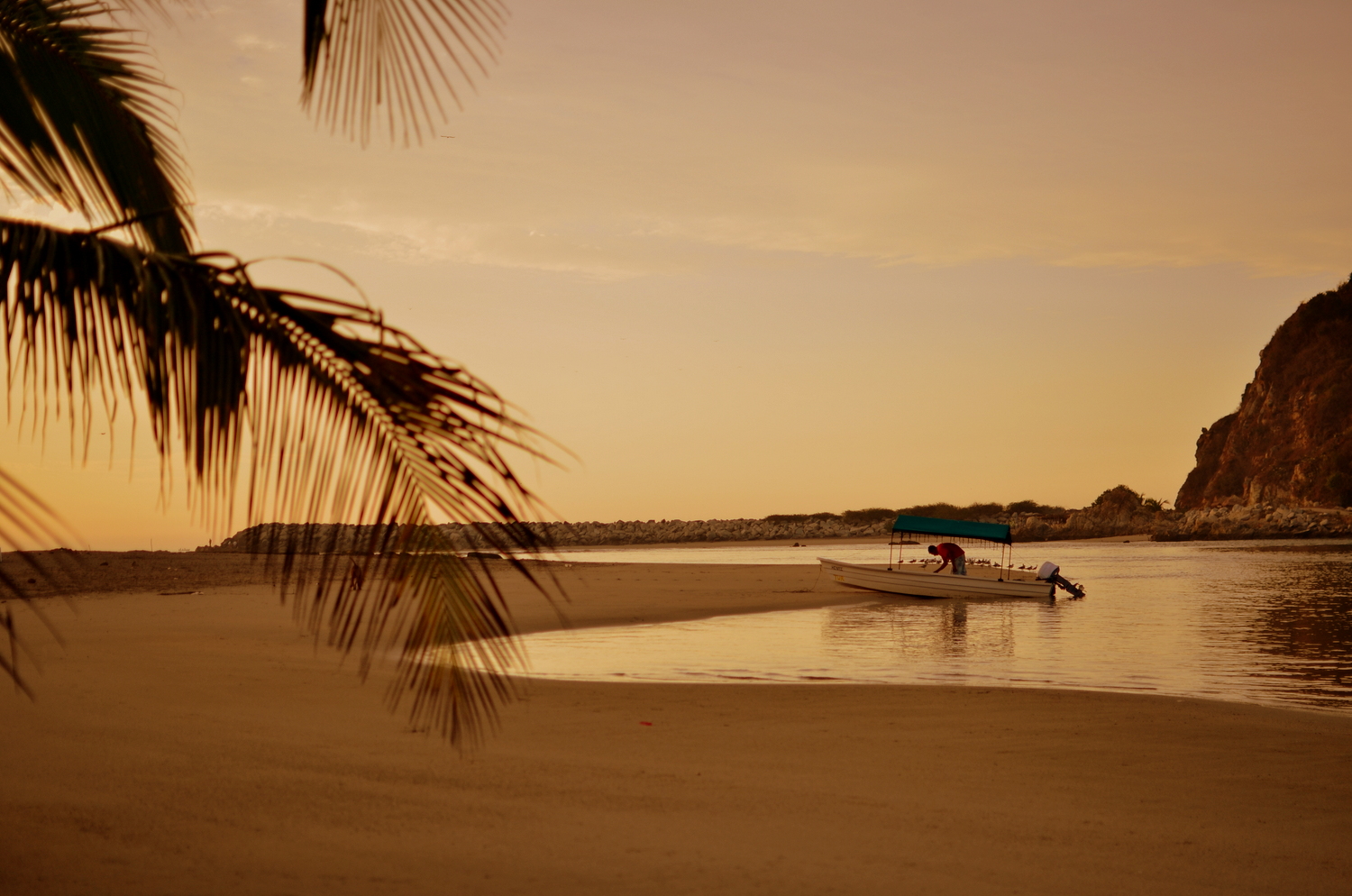
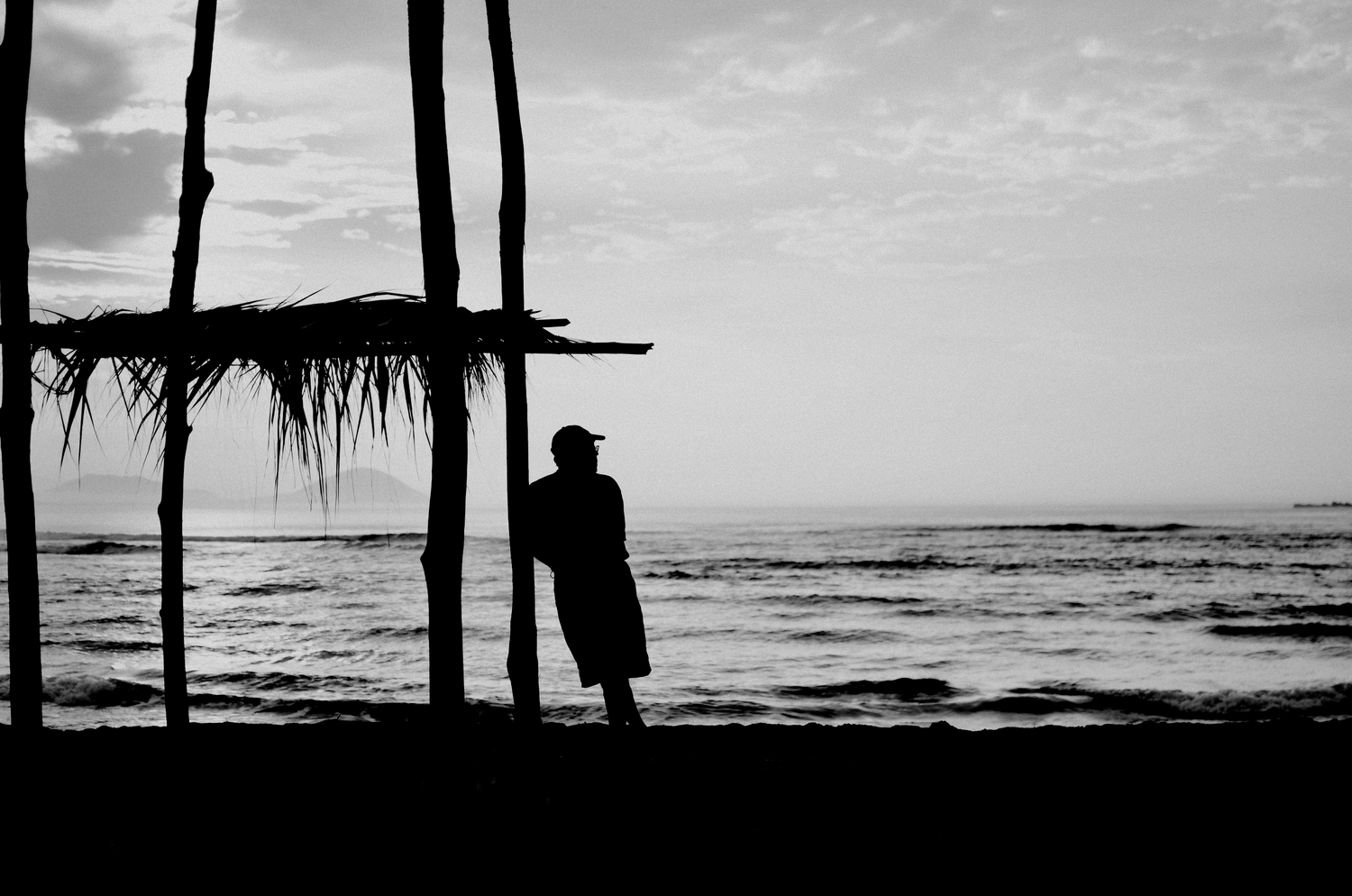


But we still managed to have great and memorable experiences amidst this vibe. One night we went out on a boat to check fishing nets with the one of the family’s nephews during the full moon. We cut the waters through the lagoon illuminated by the gigantic flashlight in the sky passing the mangrove jungles on either side of the channel. Hundreds of feet of weighted nets captured about a dozen fish for meals the next day. That is a memory that I’ll get to hold onto forever. We waited out the rest of the week until Sunday to escape back to the mainland which was welcomed by this point in time. An hour by boat through the mangroves brought us back to land. But the vision of the paradise still remains solid in my mind amidst the weirdness that came with jaded traveling surfers and the flood of college kids primed and ready to get wasted on a beach.

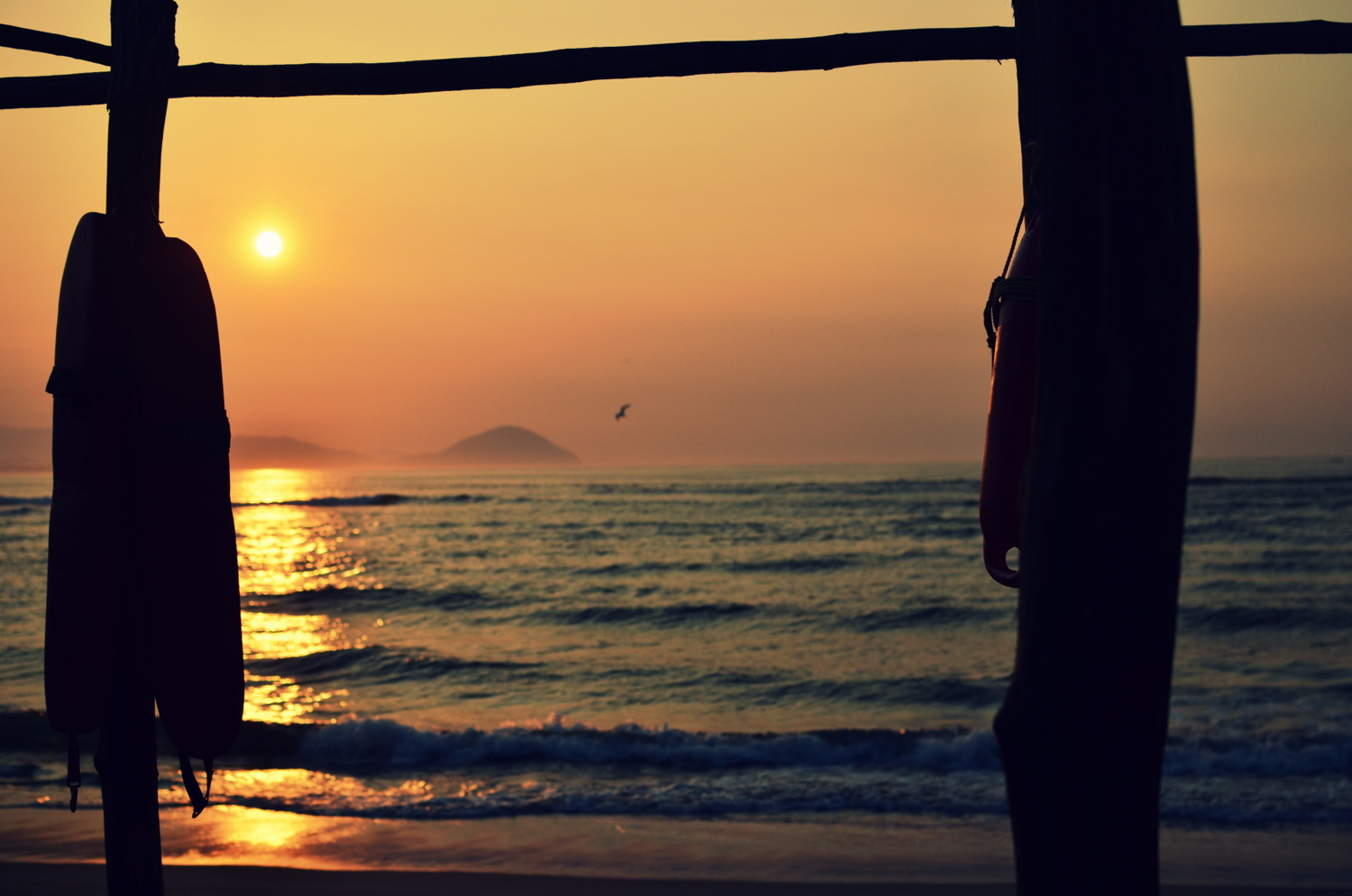
Cholula and Puebla
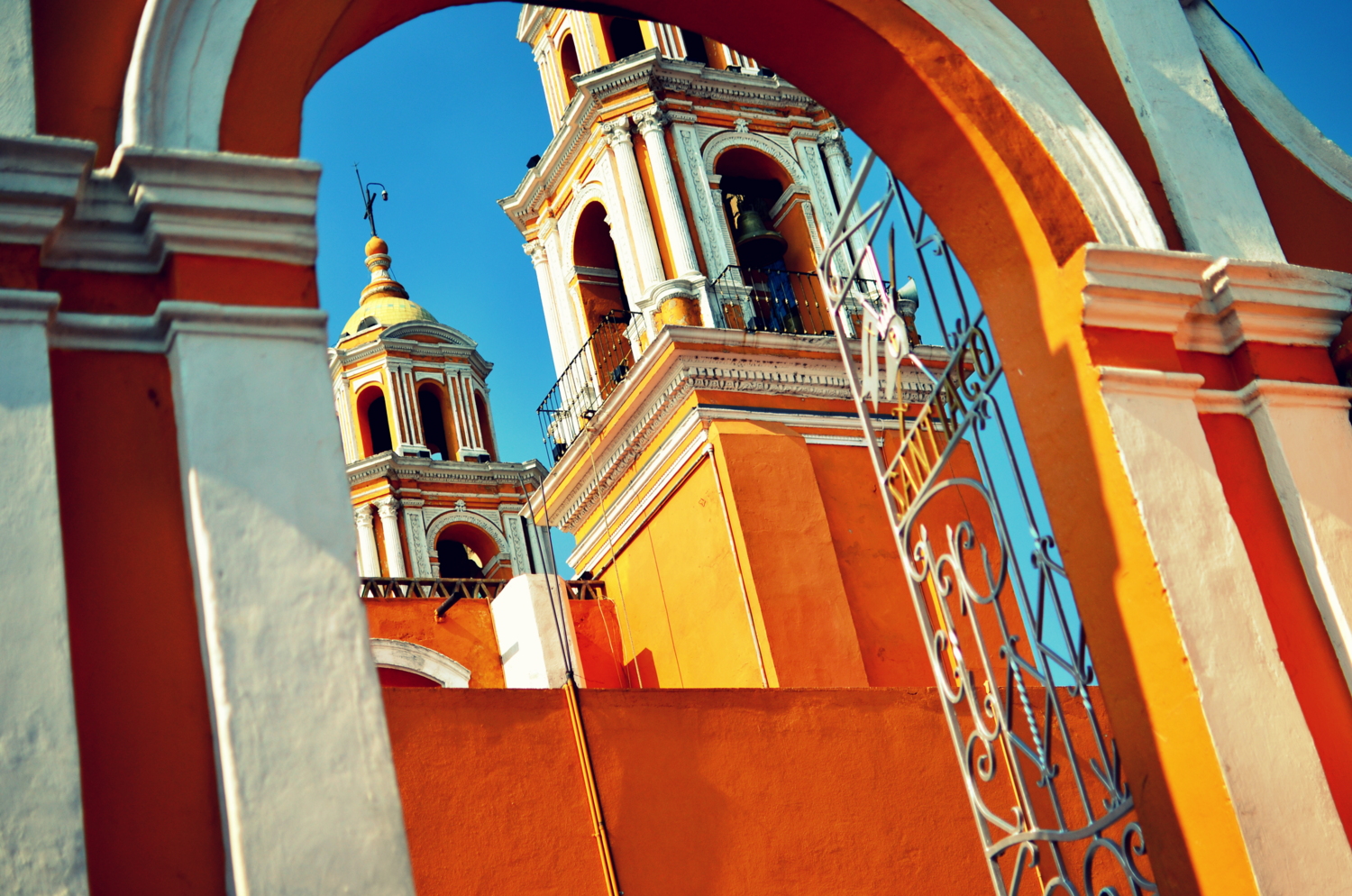
It was mutually decided that we needed to escape Mexico city before we became permanent residents there. After breakfast Santiago brought us to a café for some quick internet research before taking us to the Eastern bus terminal called TAPO. En route we encountered a road block through the main artery Paseo de la Reforma caused by a massive protest. After getting lost we eventually found the bus station and parted ways with the hope that we will meet up during Semana Santa.
The ride to Cholula brought us through many small villages that really gave us another glimpse of the other side of Mexico. Remnants of buildings bunched together appeared to be either half-built or half decayed, forming small networks of communities between the vast open spaces of farmlands and the folded, crumpled mountainous terrain. There seemed to be an endless stream of used tire shops, mechanics, and food stands planted along the main road with the purveyors sitting outside watching the traffic pass. Men tending fields in the distance looked like tiny figures kicking dust around while their horses and goats surveyed the scene with the tired wisdom only nature possesses. It’s times like these where a sense of guilt stirs within thinking about the difference in situations between us riding through on a bus looking into their lives and them fixated in their little corner of the world watching us roll into and out of their reality. Passing through these beaten down pueblas conjures up feelings that bring me back to childhood memories of looking through an old viewmaster 3-D plastic toy, seeing a scene that feels both real and out of reach at the same time. Traveling is eye opening.
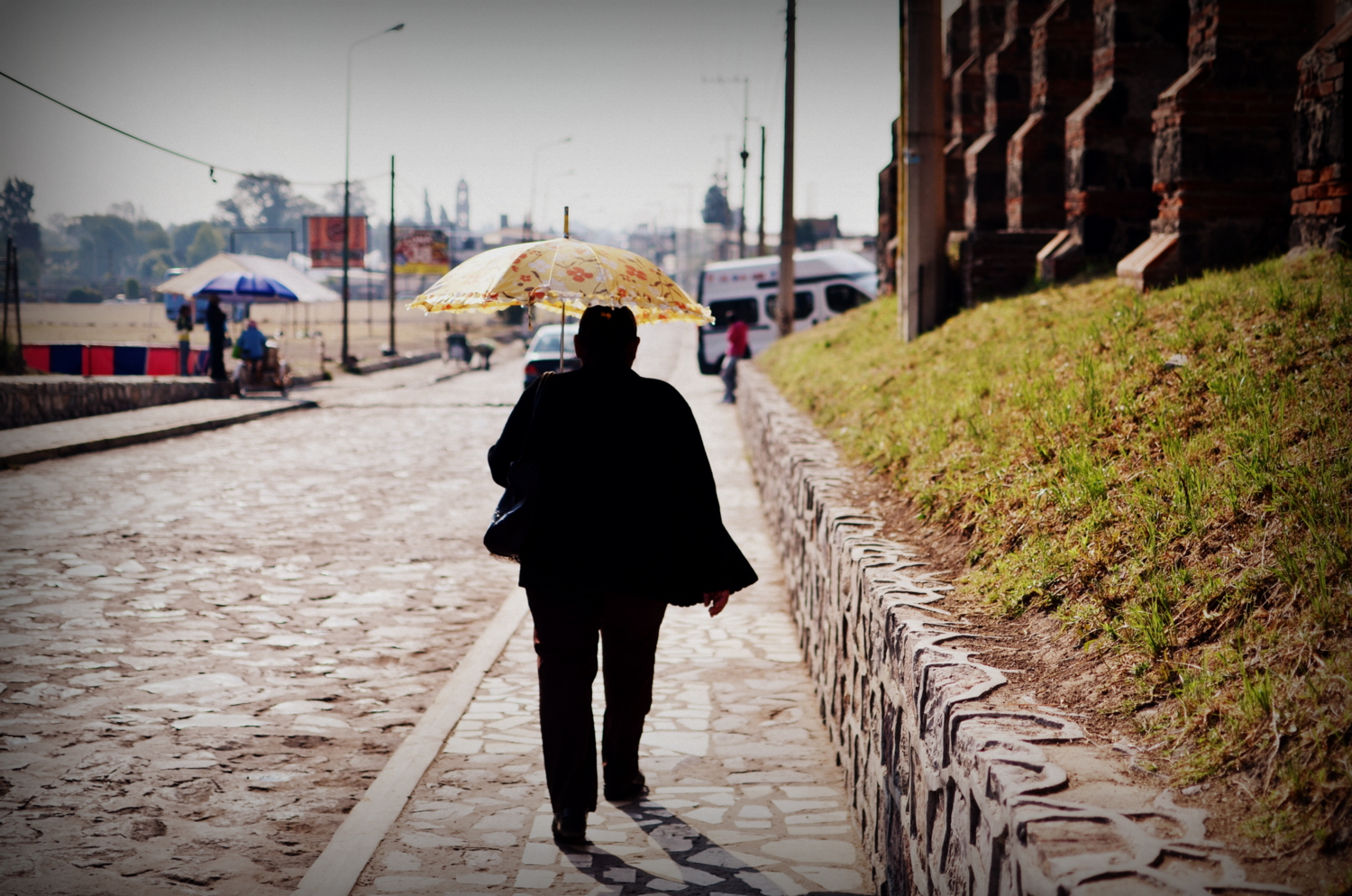
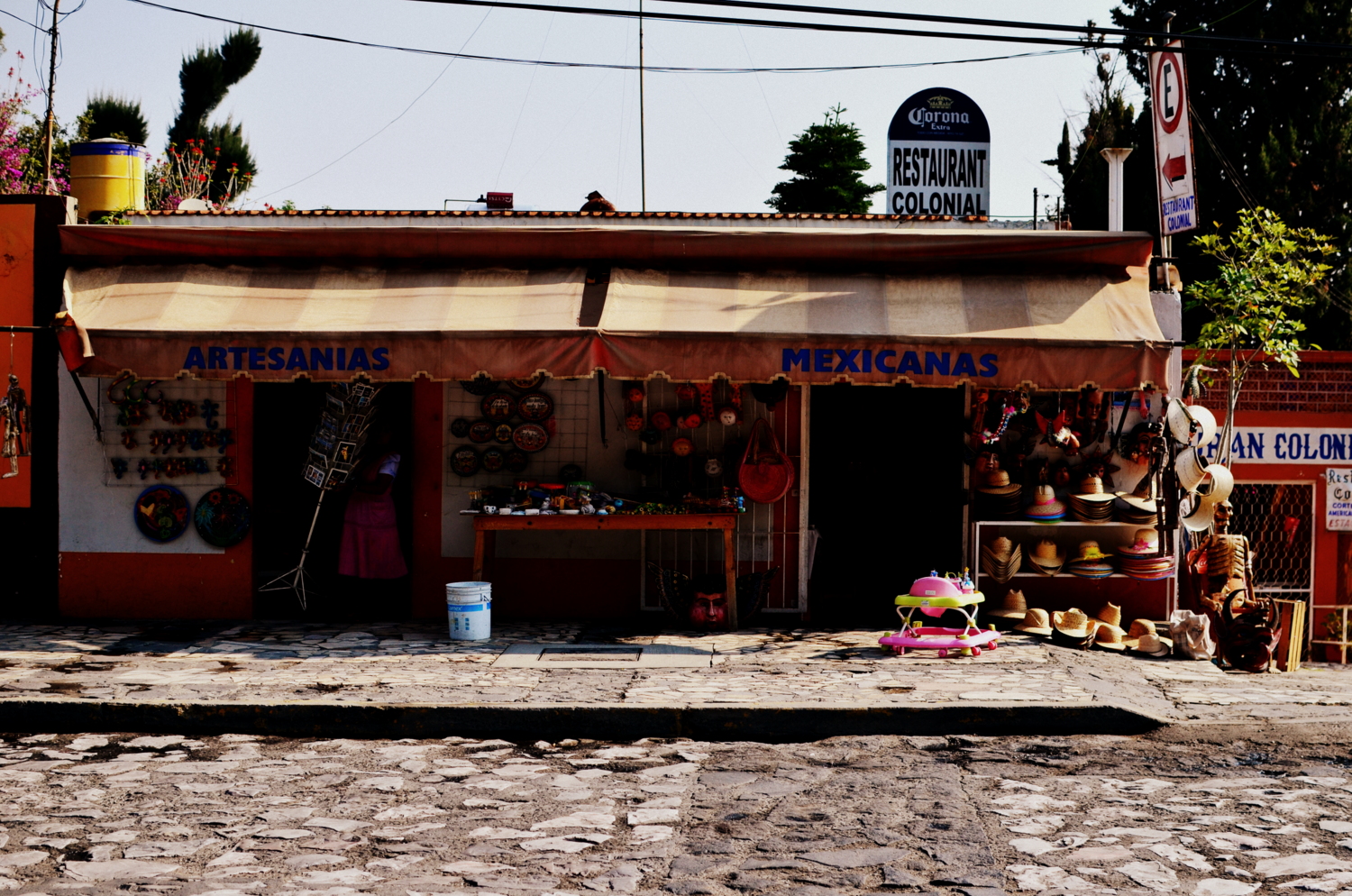
The bus dropped us off in the parking lot of an auto parts store on the outer perimeter of town. This version of a bus stop is turning out to be quite typical in Mexico between smaller cities. We wandered into the historic center and found our very first hotel together ever. It was joined with a bar bearing the same name and appeared to be part of a compound that housed the owners. 220 Pesos bought us a room without a key (you had to buzz when you wanted to get in) and the most basic version of a bathroom a hotel could possess. When you start at the bottom, the only way to go is up.


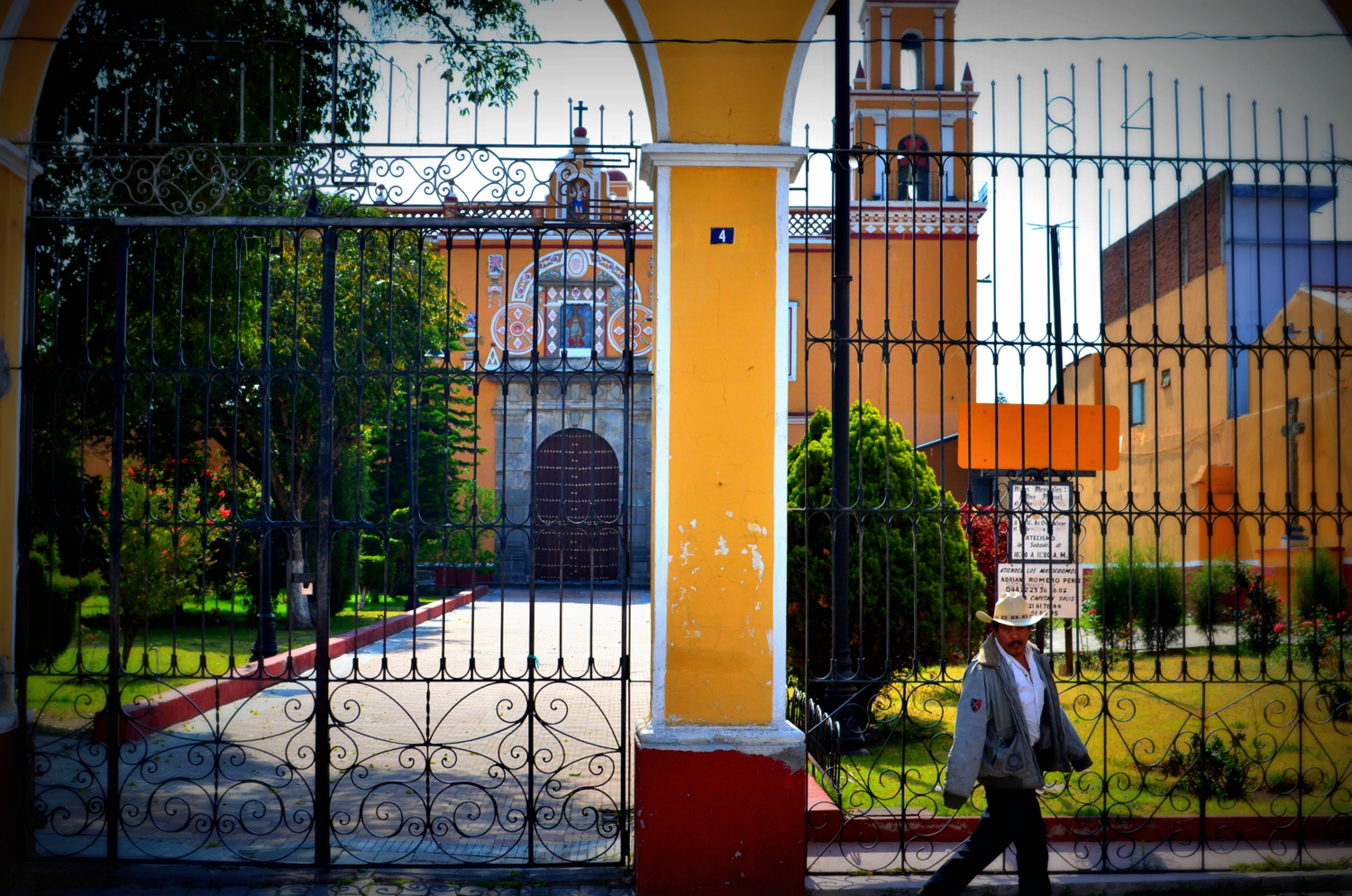
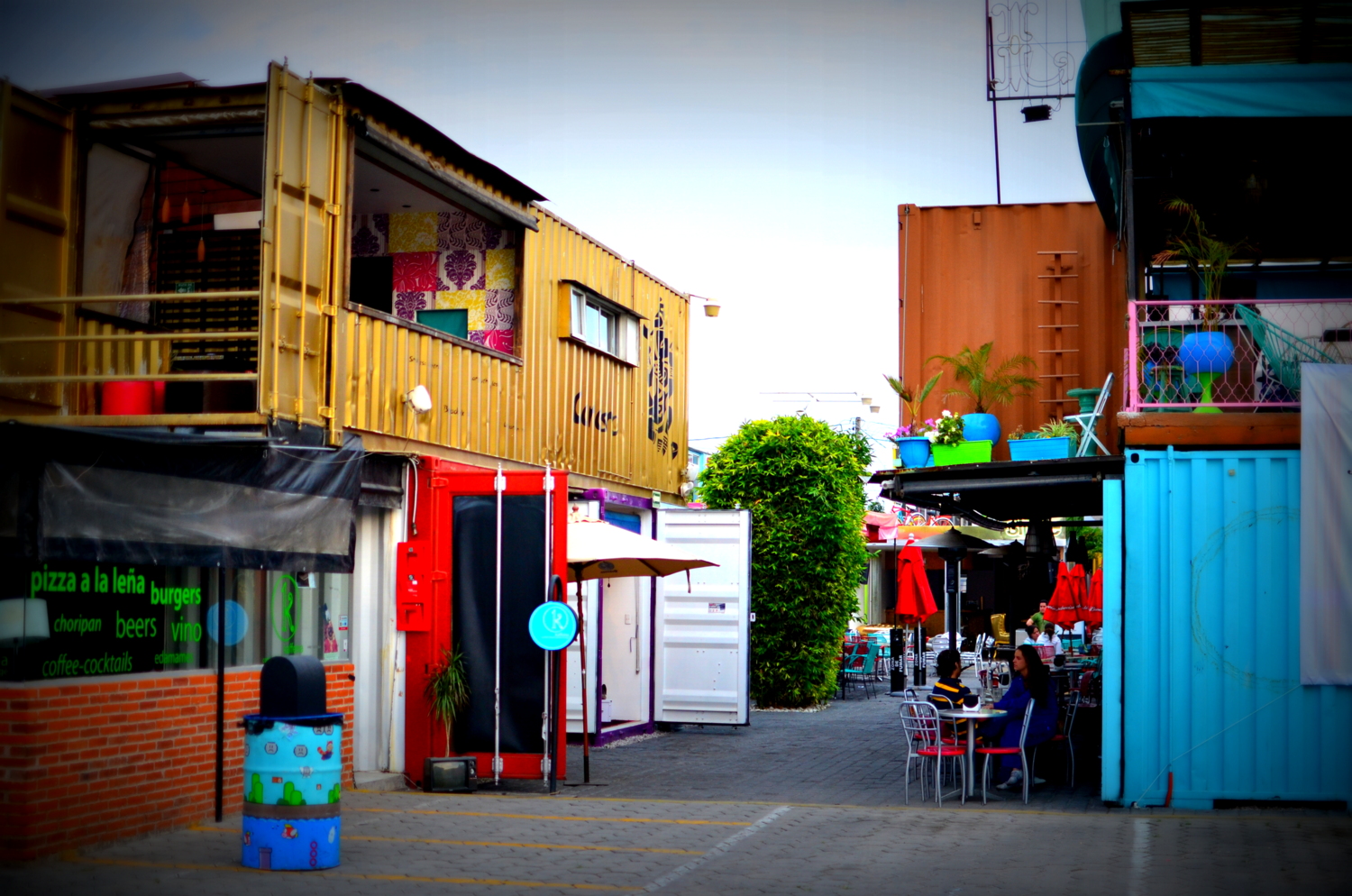
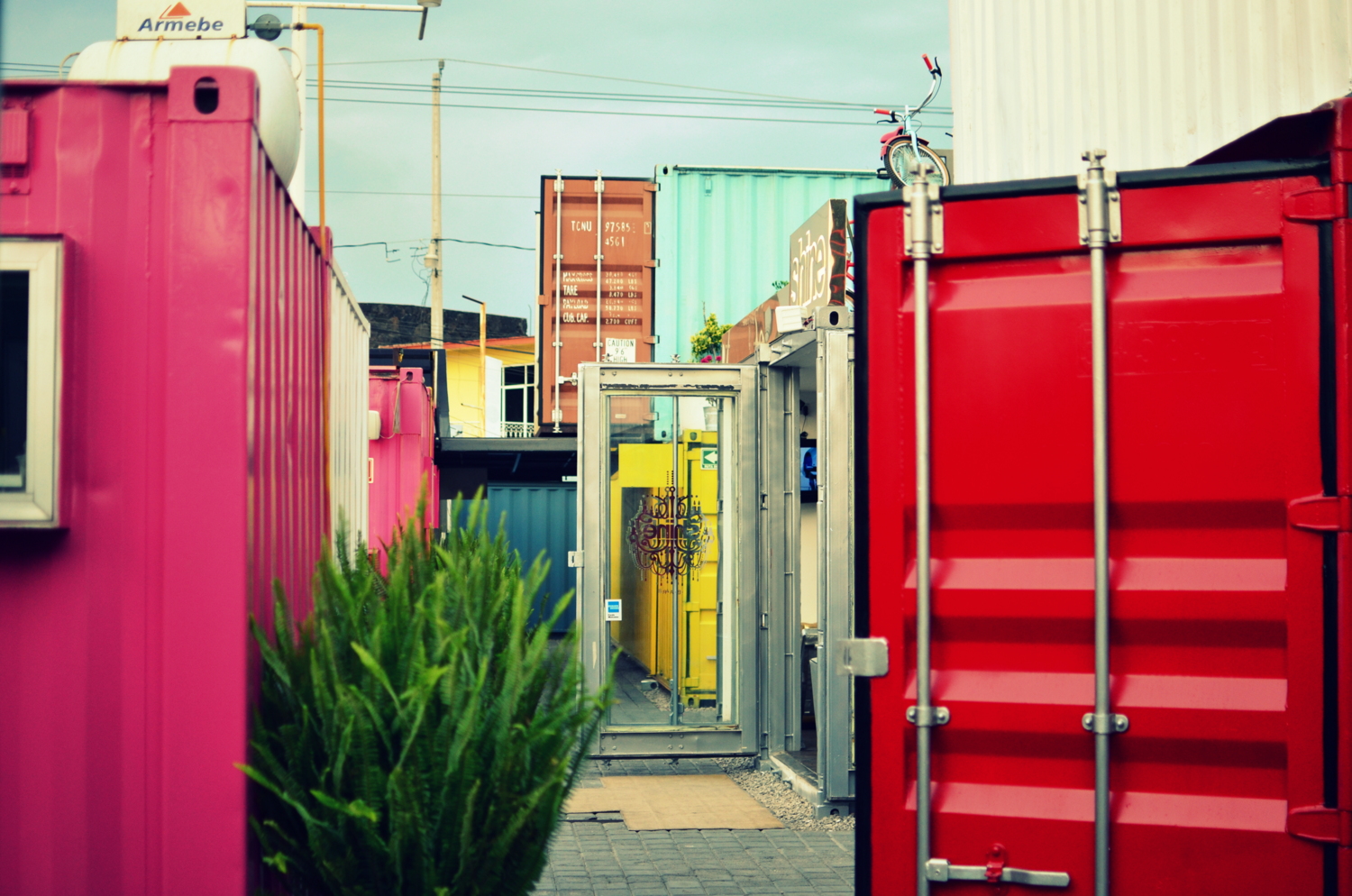
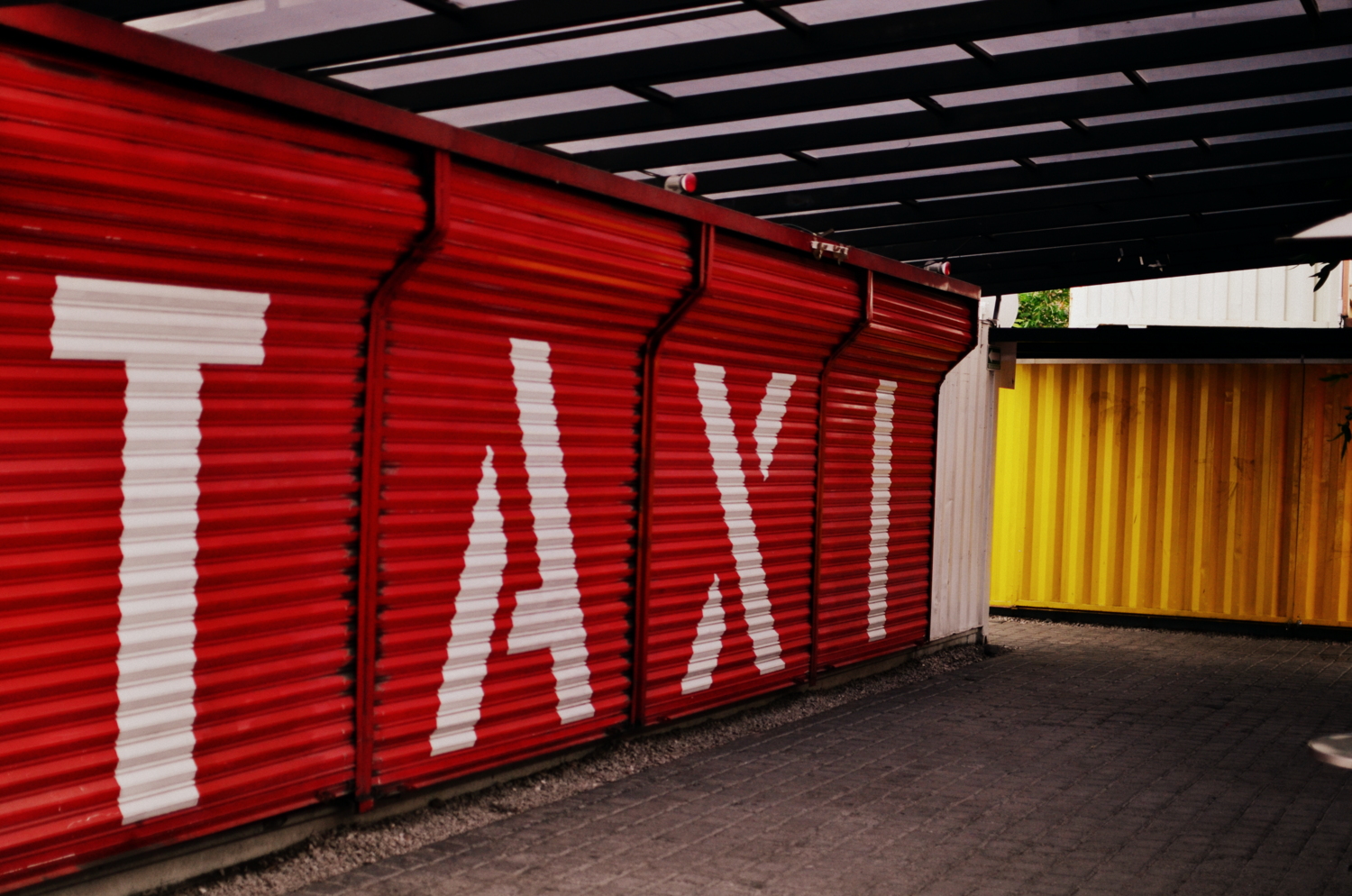
We came to Cholula particularily to see Container City, a small complex comprised of steel shipping cargo boxes made into a small network of stackable bars, stores, and public spaces geared towards the local college crowd. We snapped some pictures and explored around the brightly colored boxes before heading back for some food and libations. Our hotel/bar was decorated with vintage pictures of Marilyn Monroe amongst Mexican beer ads of yesteryear and happened to serve some great ice-cold Micheladas. Two old men chatted over a newspaper at the bar while we drank our beer with cacahuates. We took a stroll later on throughout the plaza during a soft rainstorm (a pleasant treat from the endless sunny, dry days) surrounded by beautifully lit cathedrals and restaurants. Cholula has the largest pyramid base in Mexico (by volume) and it was a short walk away from our accomodations. In the morning we found out that the ancient tunnels were permanently closed and had collapsed recently. As a concession we settled on some fresh fruit with yogurt before taking a very authentic bus ride to Puebla. I can honestly say I’ve been off-roading on a public bus now.

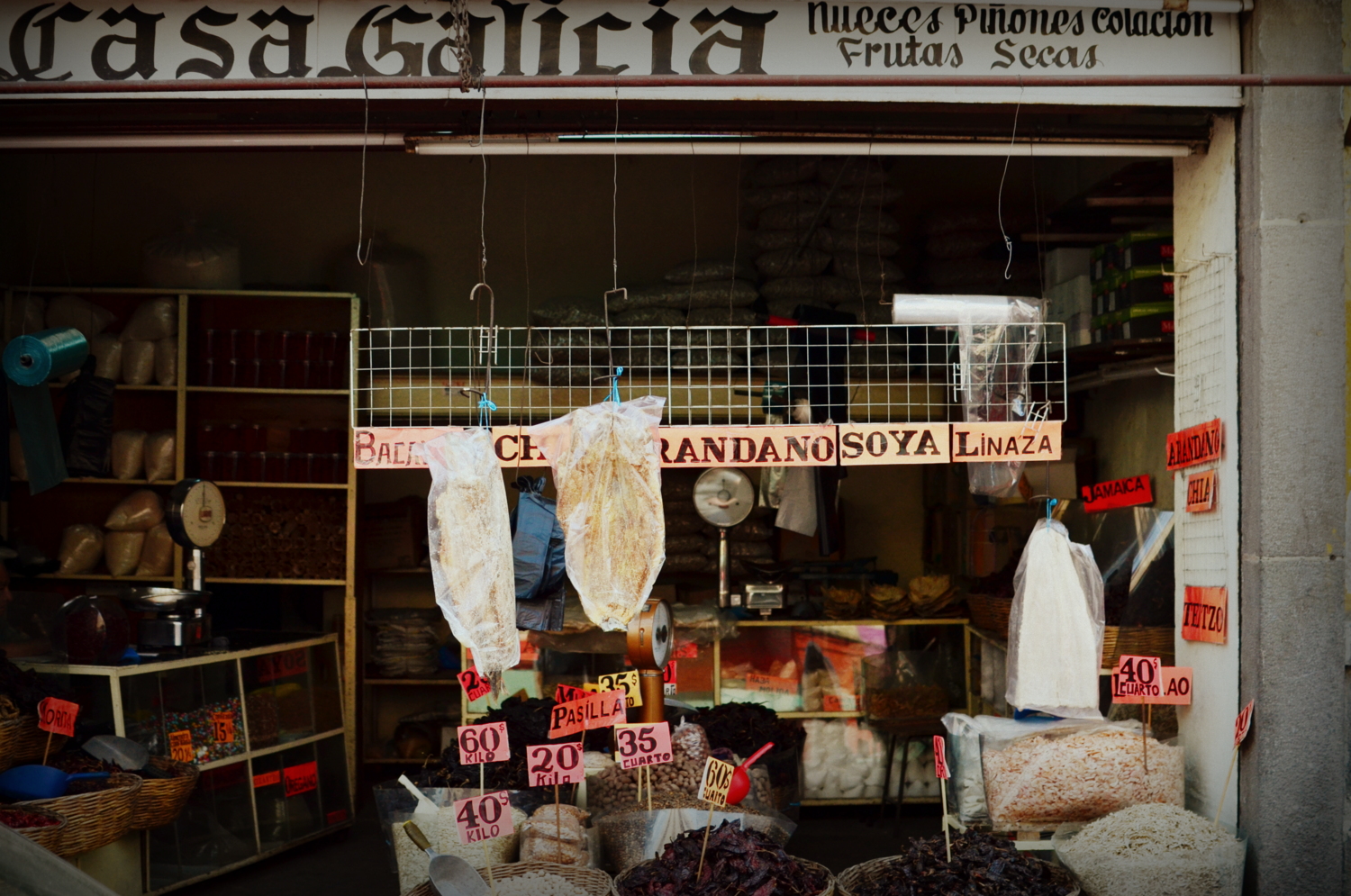
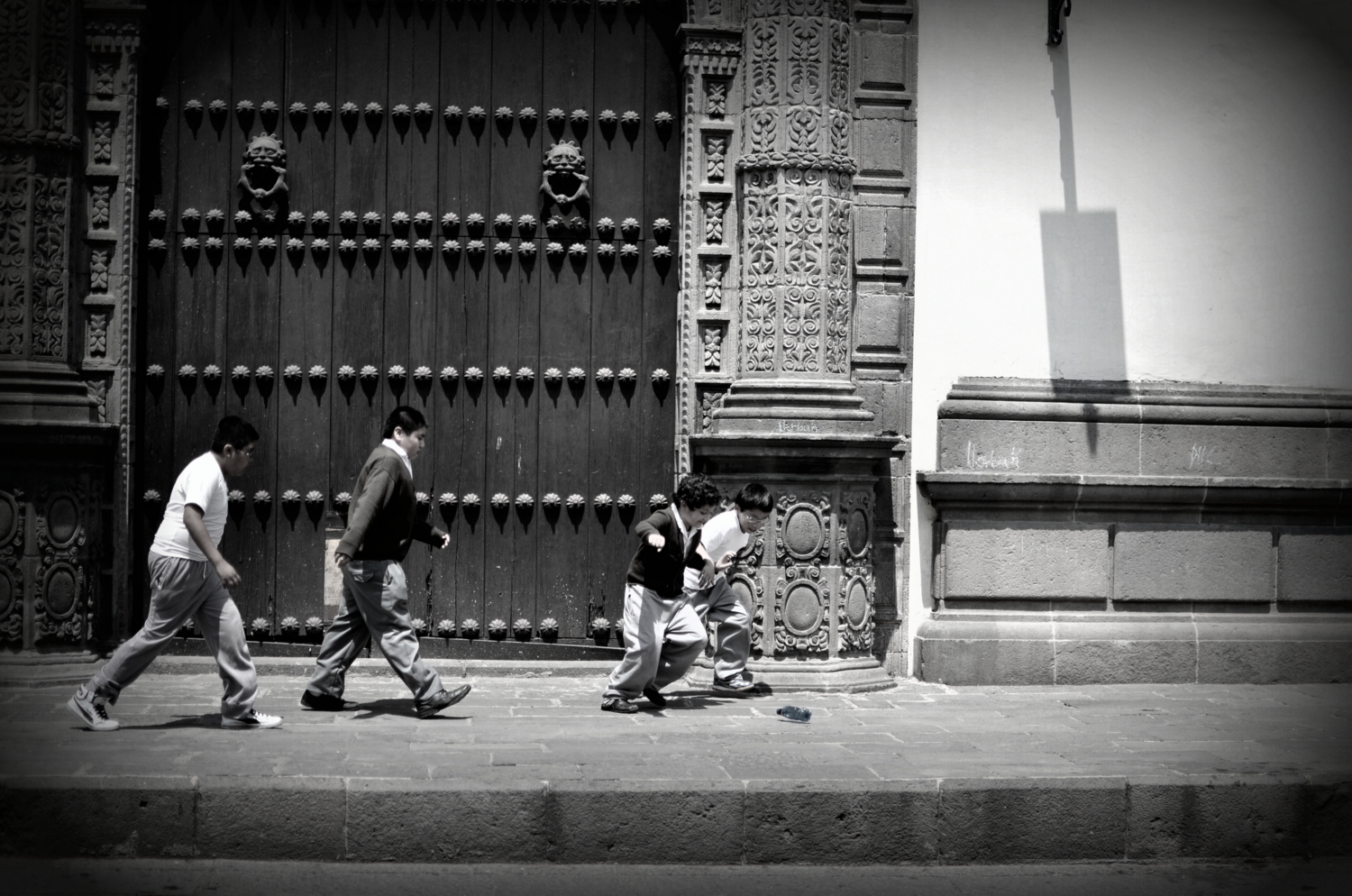
We were advised by many to take an afternoon for Puebla, get some food, and hit the road. Upon arrival our low expectations were melted and a pool of wonder appeared at the tips of our eager feet with the beautiful reflection of Puebla ahead of us. Our hostel was situated in a part of the town that had the look and feel of a finely tuned Chinatown, equipped with wall to wall craft vendors, random anything-you-could-imagine stores, eateries, fish markets, fruit and sandwich shops. We walked through an atrium-like mall and found ourselves buried in the picturesque historic center. Although we have been in the thick of Mexican history for almost a month now Puebla offered fresh perspectives and attractive structures to get absorbed in. Kids playing soccer with an empty water bottle at a church older than all of their living generations made my feet stop working and my eyes stop blinking. Moments where time seems to pause clears out the inner brain chatter and make me truly feel like we are connected to each other as humans by the purest and simplest form of all; joy. Moments in life like this truly let you know you are alive and part of a bigger scene than just the one you are directing.
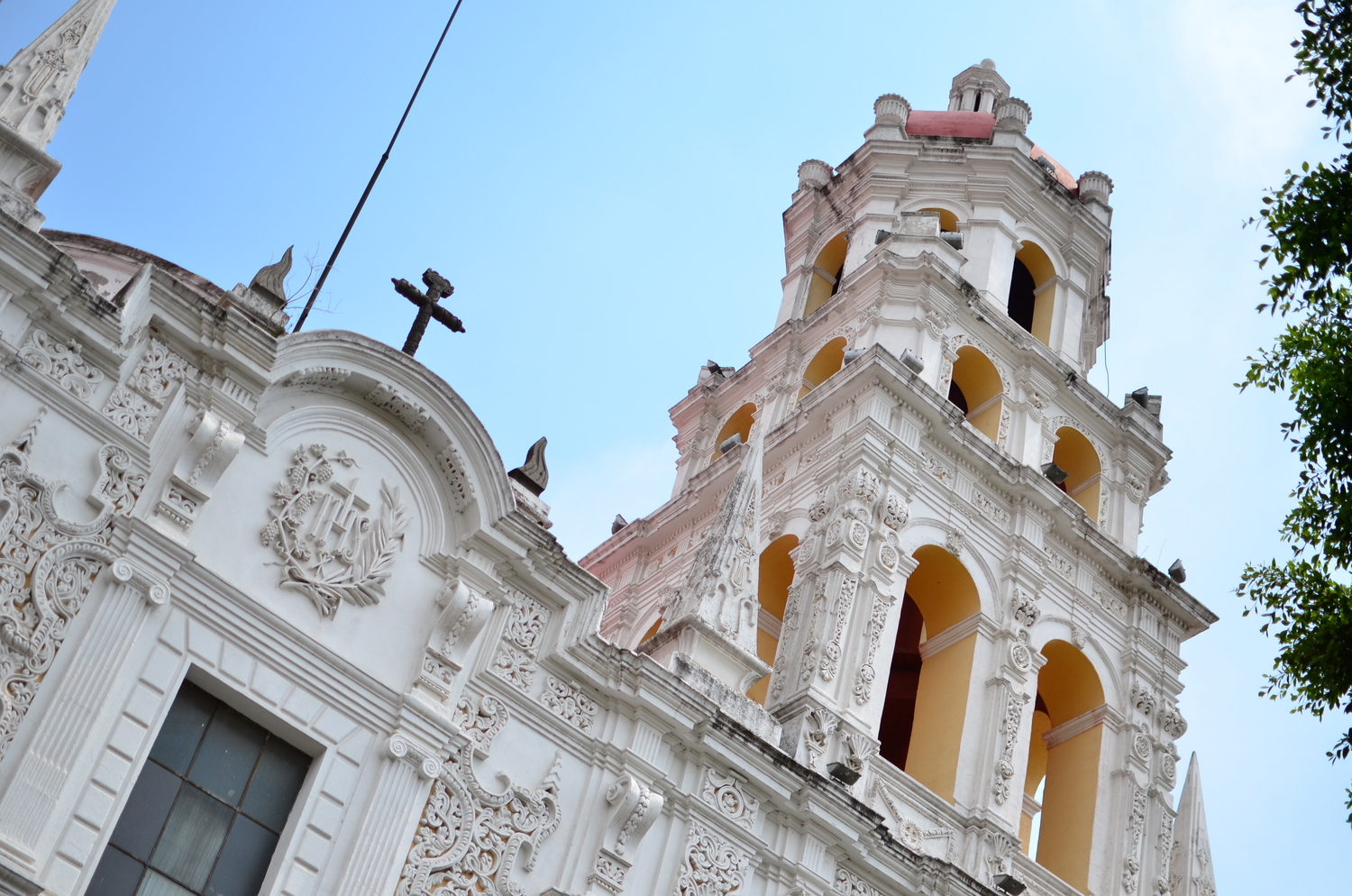
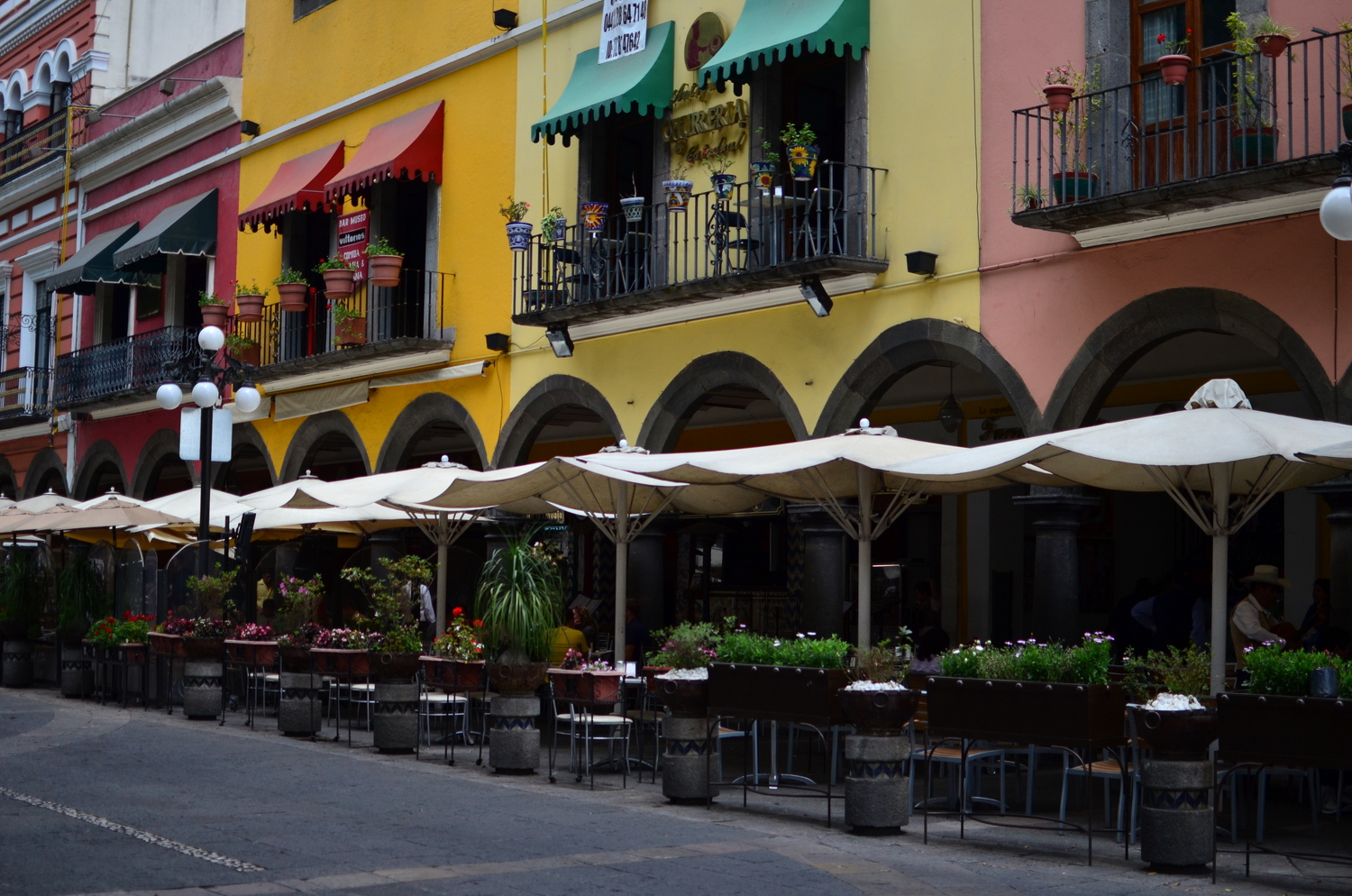
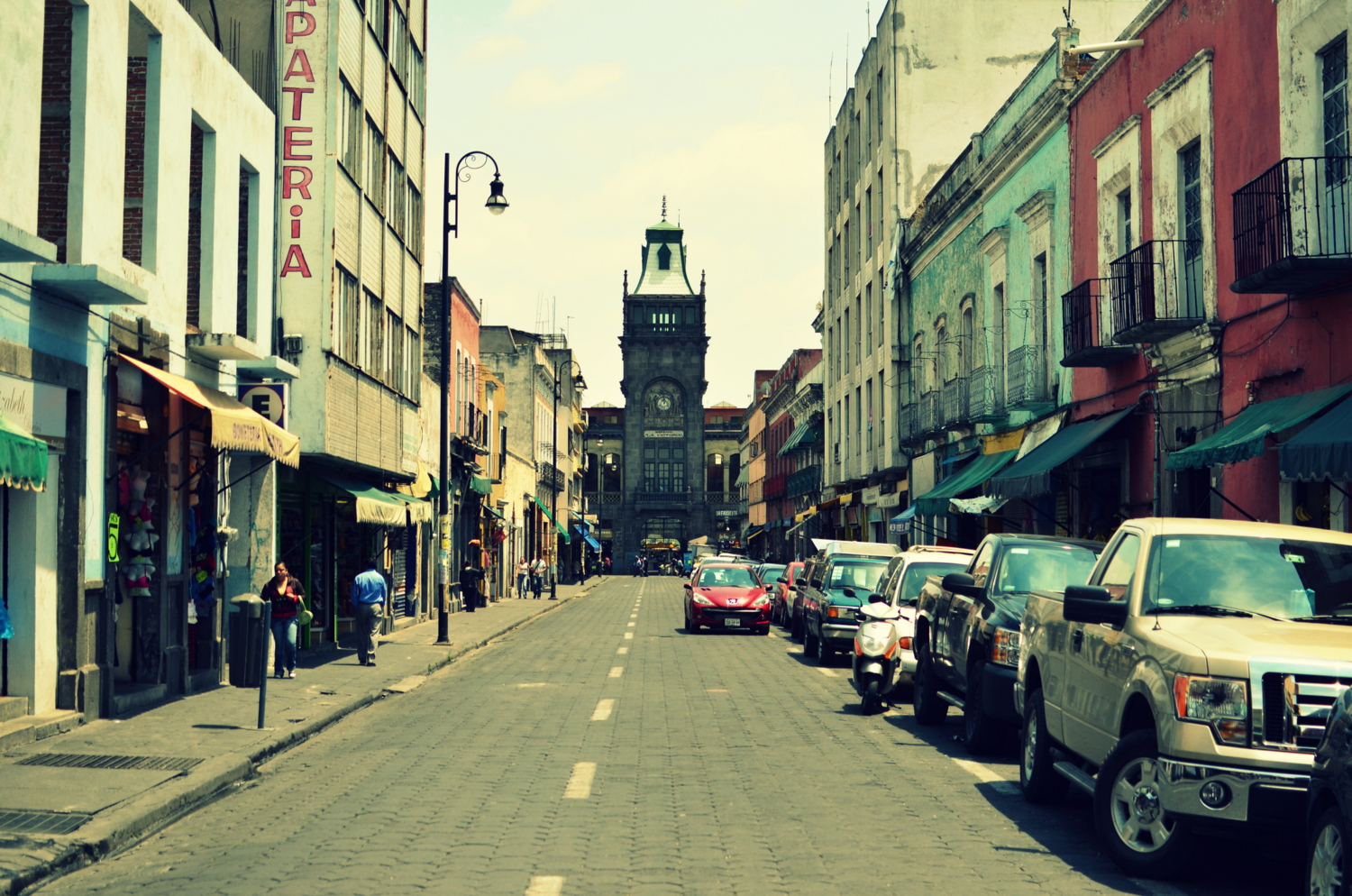
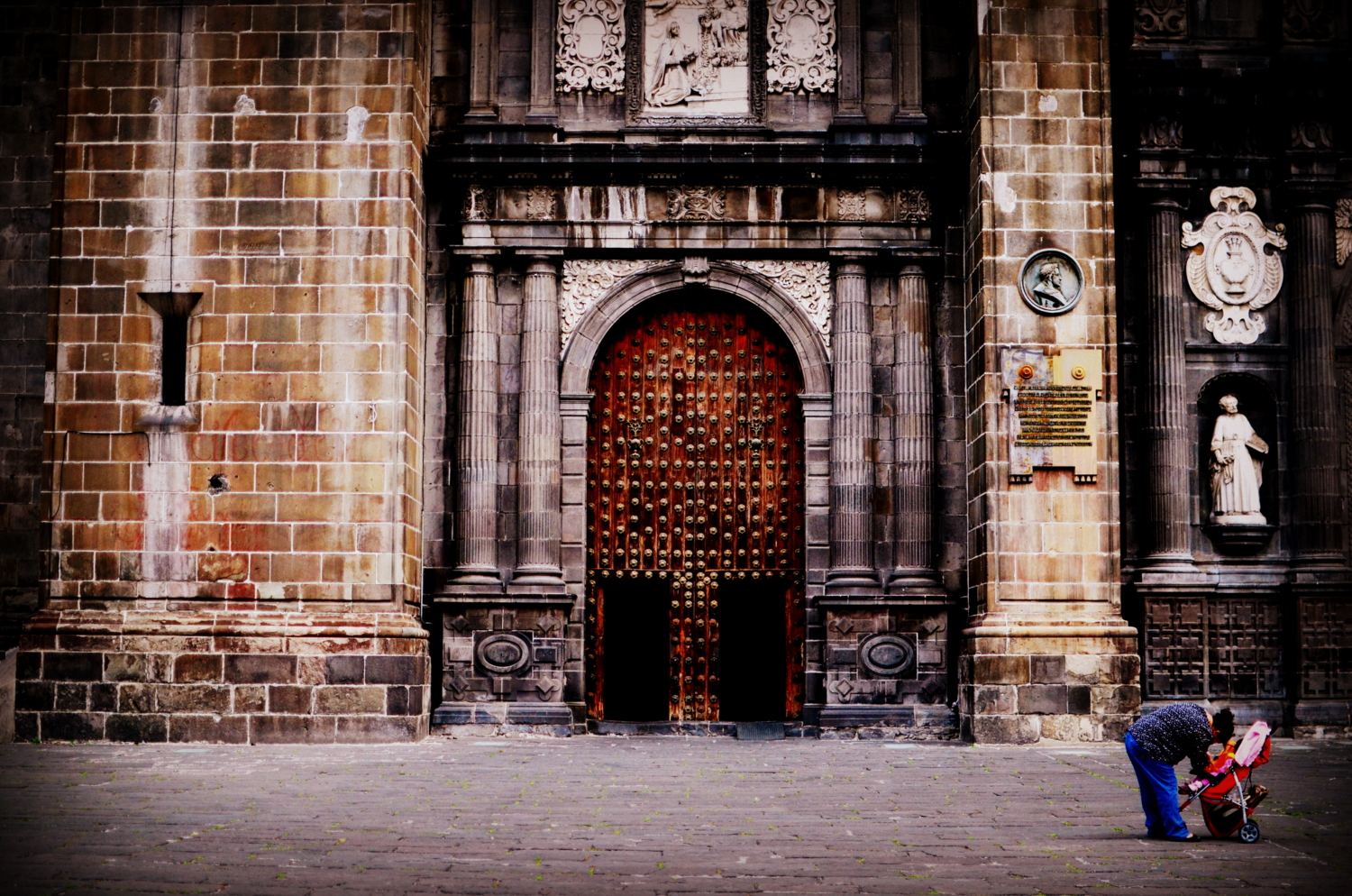
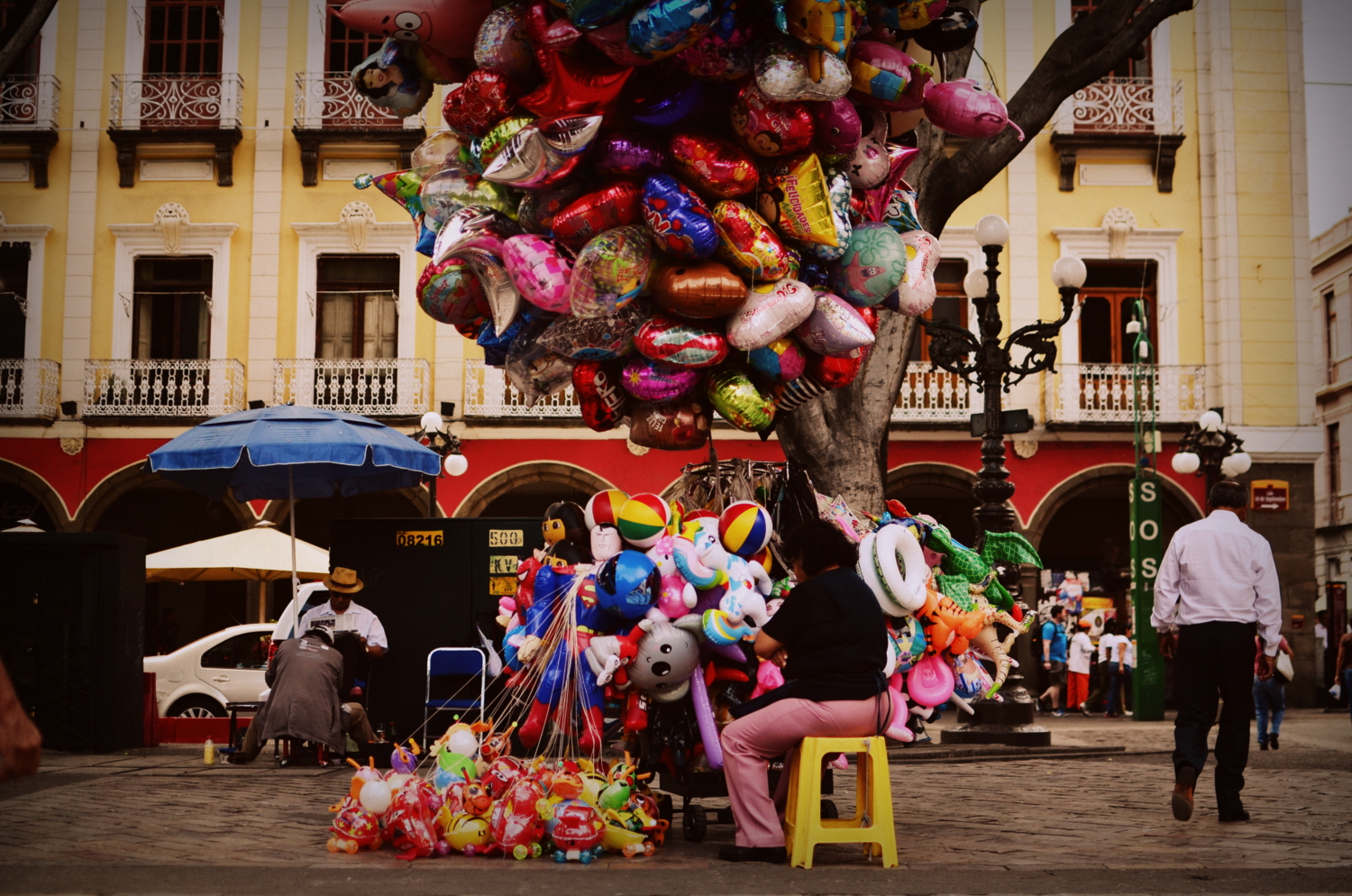
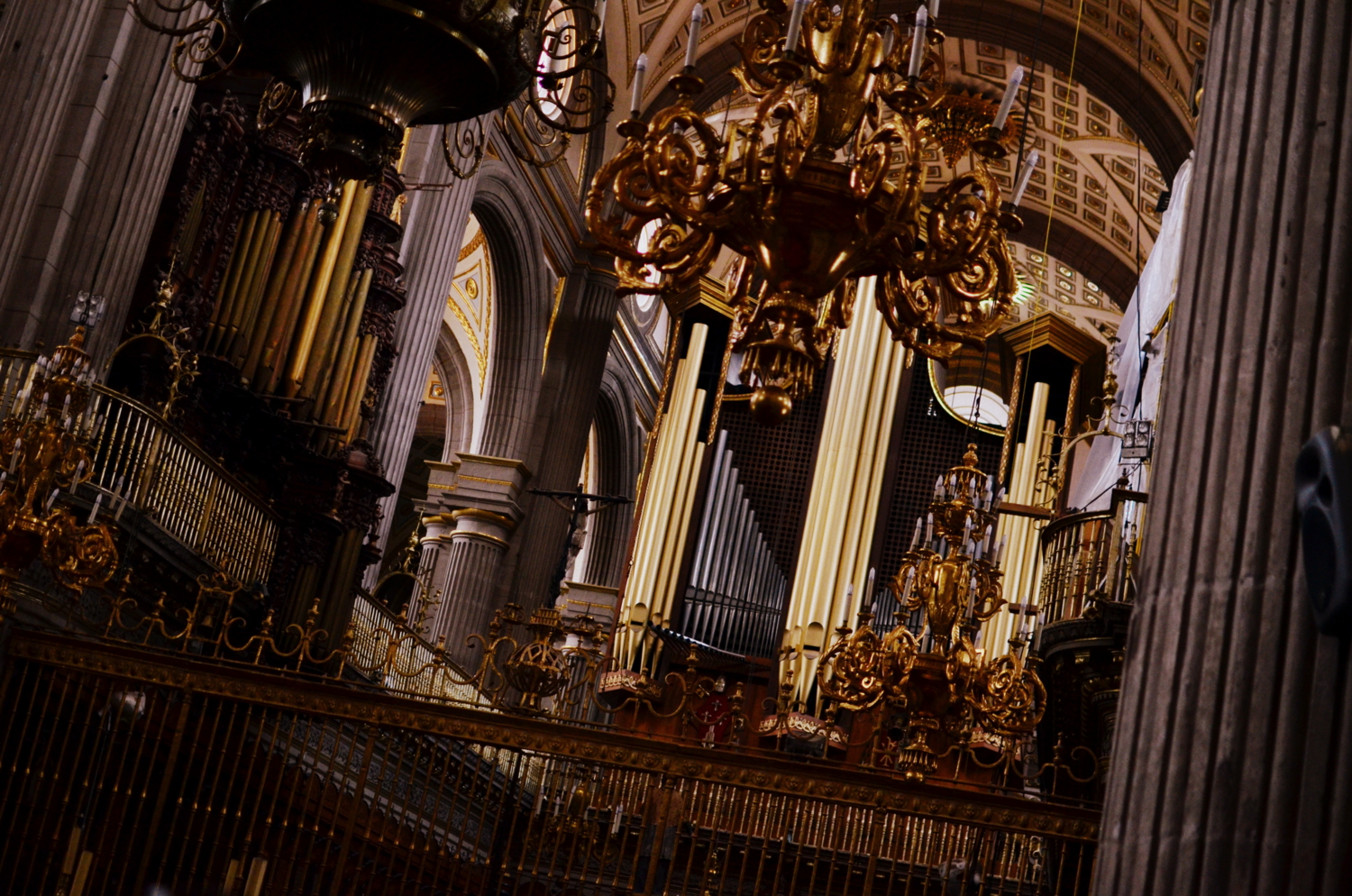
The Zocalo was an amazing mix of old architecture with modern art and was a very lively place to people watch on a Wednesday afternoon. Hordes of school children playing in the fountains were amidst city visitors, vendors, and restaurants galore. The Cathedral was cavernous and housed the biggest organ I will probably ever see in my lifetime. It’s two gigantic towers house larger-than-life church bells and are immortalized on the 500 peso bill. I can almost hear them ring whenever I see one.


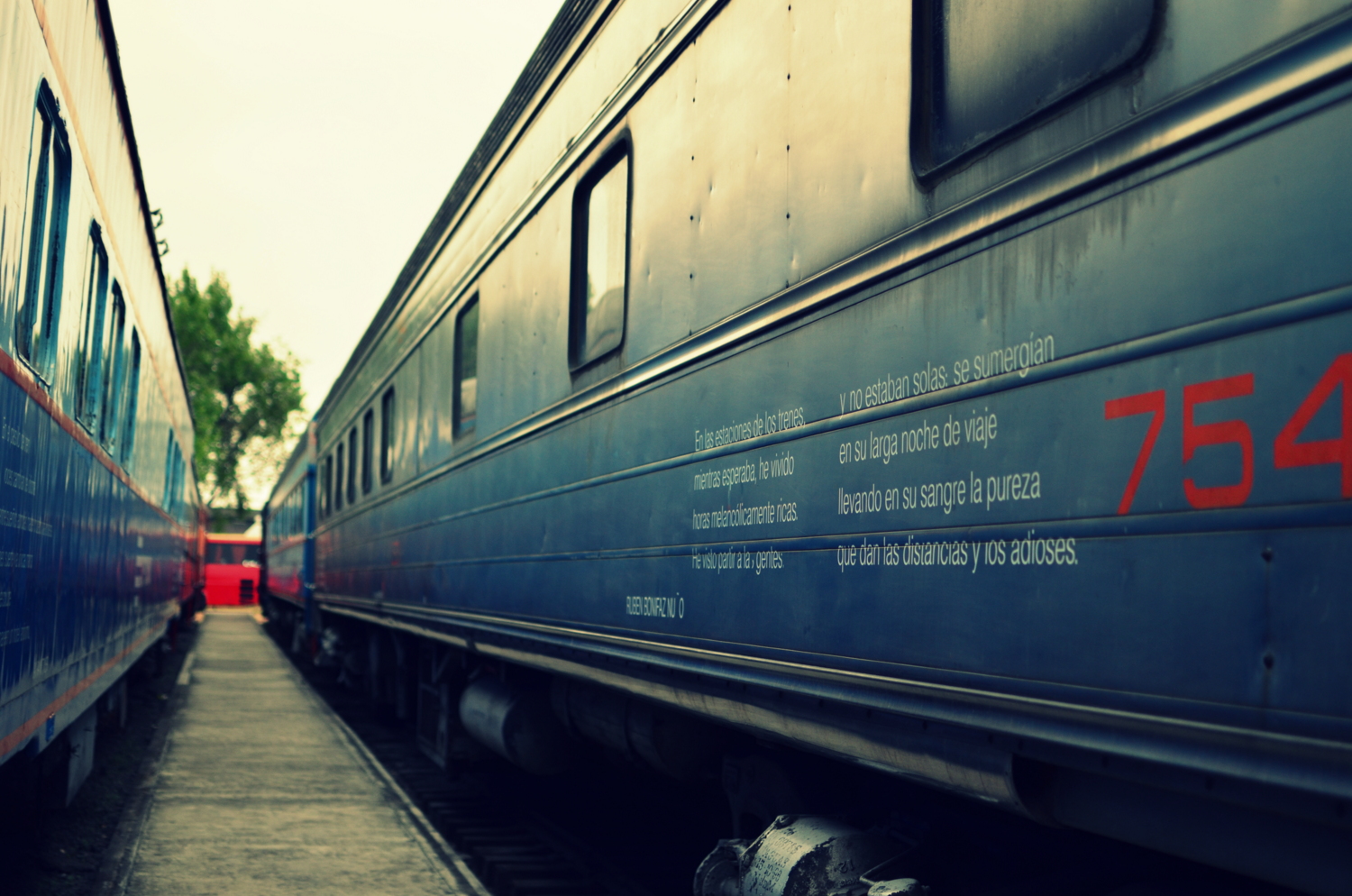
We decided to skip out on most of the museums in Puebla, having seen an exorbitant amount of culture and history already, and headed for the train museum for some large-scale interactive fun. We played around the old trains of yesterday’s past in what used to be the city’s train station. Several dozen old boxcars of all shapes and sizes were here with some open to the public to walk around and play in. We saw just about everything and crossed the street into the second part of the museum where a guard opened up some trains that are presently used for educational purposes. One held a public library packed to the gills with books, while the other was used for kindergarten classes. Four thumbs up for the train museum.
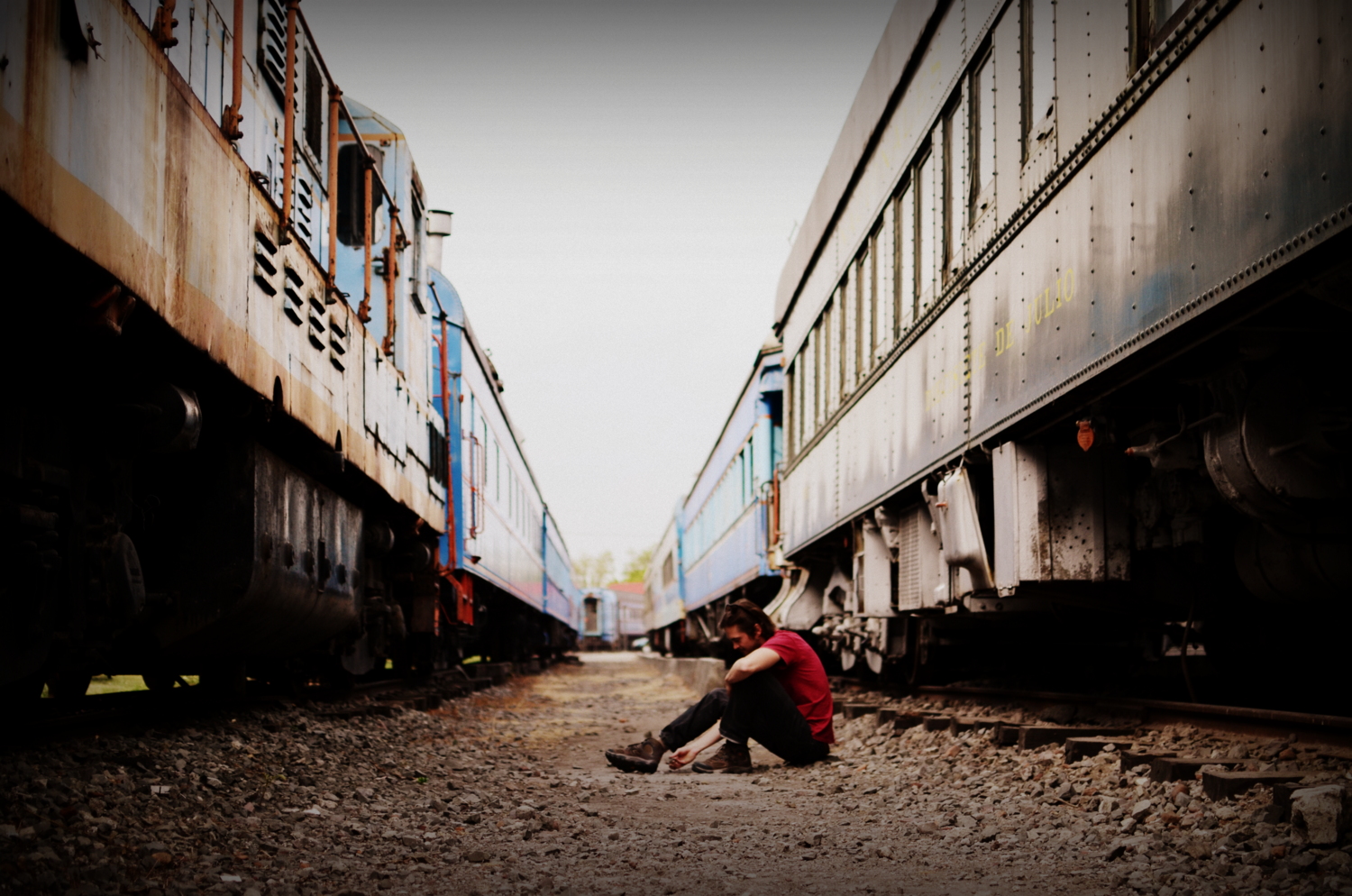

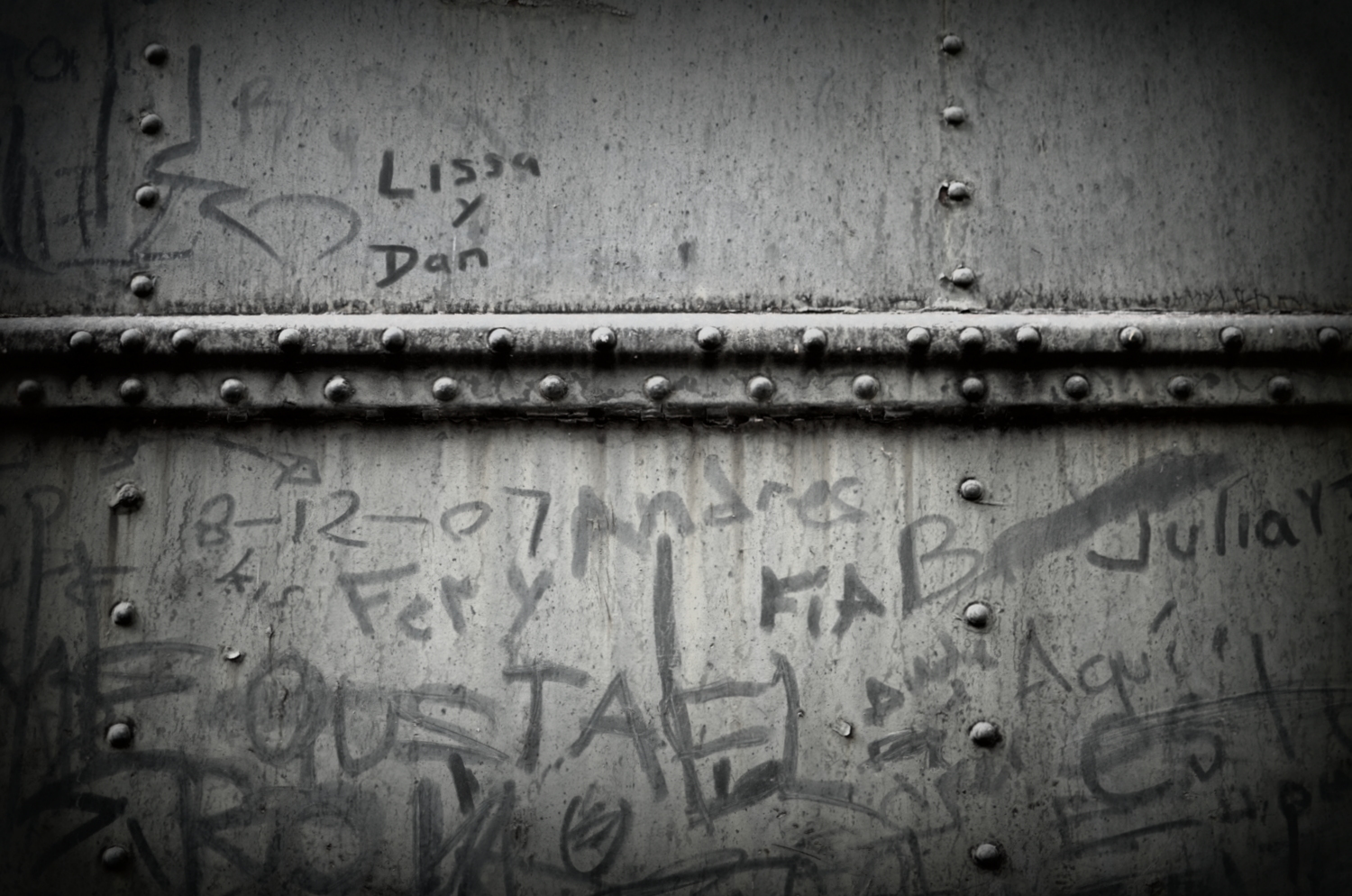
Since we were in Puebla it was absolutely necessary for mole to be consumed. Mole was dreamt up in Puebla but it’s origin remains a mystery. A museum at a nunnery claims it was first made in it’s kitchen and grew in popularity from there. Regardless, we went out and had some damn good mole poblano one night in an open air style restaurant. Ironically they had some 80’s classic rock bands playing their classics way past their expiration dates. It was classic watching Billy Idol belt one out while cabelleros tapped their feet and a toddler learned how to dance. Plus this gave us an extra chance to walk through the zocalo one last time at night to savor the visual.
The ingredients used to create Puebla craft a beautiful dish in my eyes. It has the perfect amount of grittiness, the right amount of historic preservation, and a tolerable amount of new-age shopping and city necessities. What is really appealing aesthetically is that all of the shops, restaurants, and hotels are housed within old buildings and have to make due with the space that is available for the storefronts. We passed by a movie theatre that literally had a drive in parking lot that was within the other half of the ancient structure. Some little food shops set up their goods at the front ten percent of the store while the rest was completely empty. You can never be sure what is beyond the open doors in these buildings and will probably be surprised at what they possess.


We left Puebla in a mad dash to try and figure out accommodations for Semana Santa, which is referred to as traveling hell. The big complication was that we are headed for the beaches the same time that everyone in Mexico would be. I would have liked another day in this comfortable walking city but it wasn’t in the cards. We’ve got a 5 hour bus ride to Oaxaca ahead of us accompanied by another 7 hour excursion to finally reach the Pacific.
Mexico City: Earthquakes, pyramids, and birthdays

Warning: We spent a lot of time in the Ciudad, so this post is unusually long.
Queretaro exits stage left. Mexico Ciudad enters. The massiveness that is city limits of Mexico City can’t really be described without seeing it, driving in it, walking through it, and roaming around it’s subway system. The suburban expansion seemed to have swallowed the mountainous landscape to it’s northwest as the bus inched closer to the Mexico Norte bus terminal. The slums and outskirts of the city are mainly grey block buildings in grey urban neighborhoods and reach out far beyond the city lines up and around mountains along the highway.
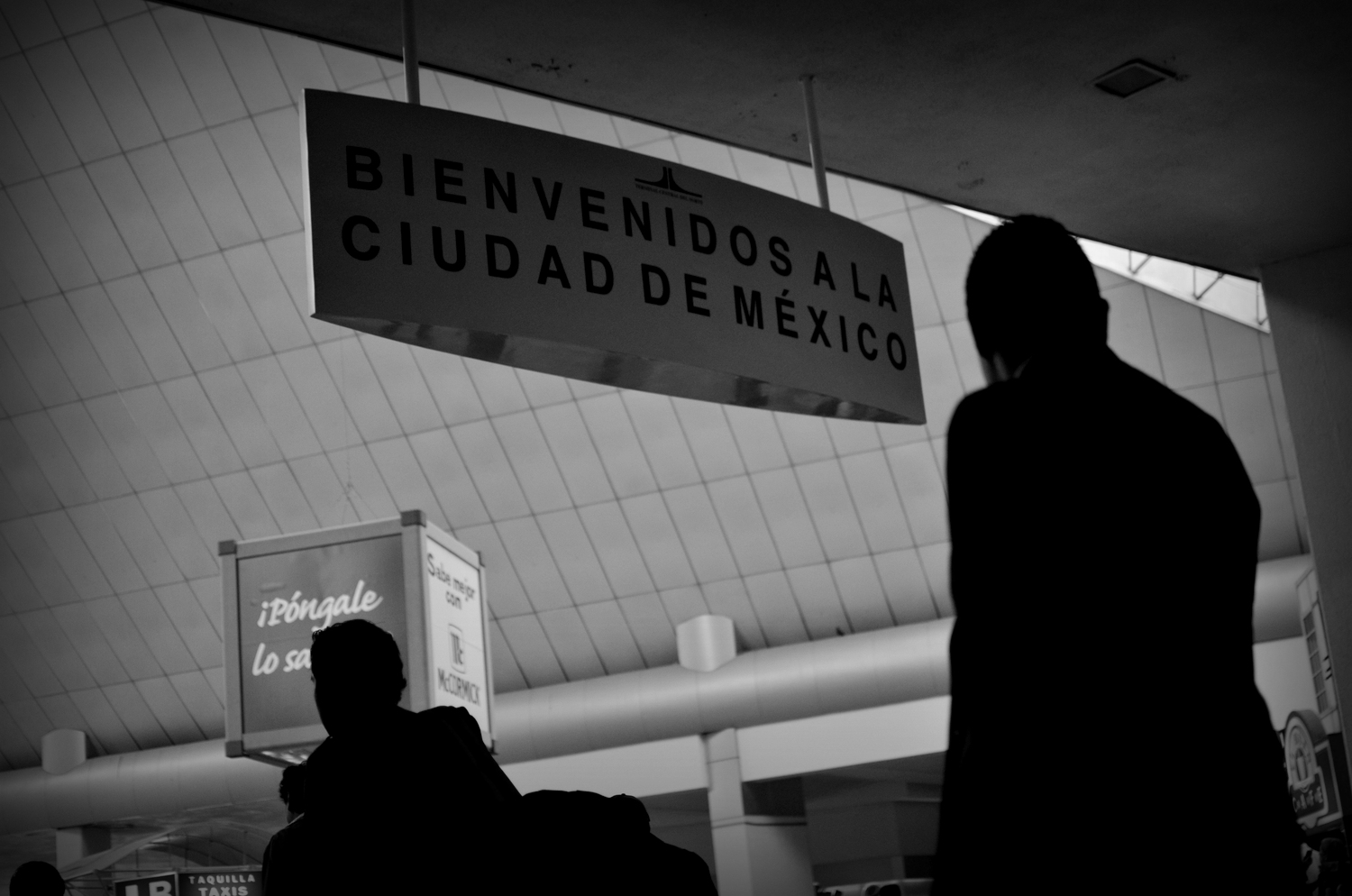
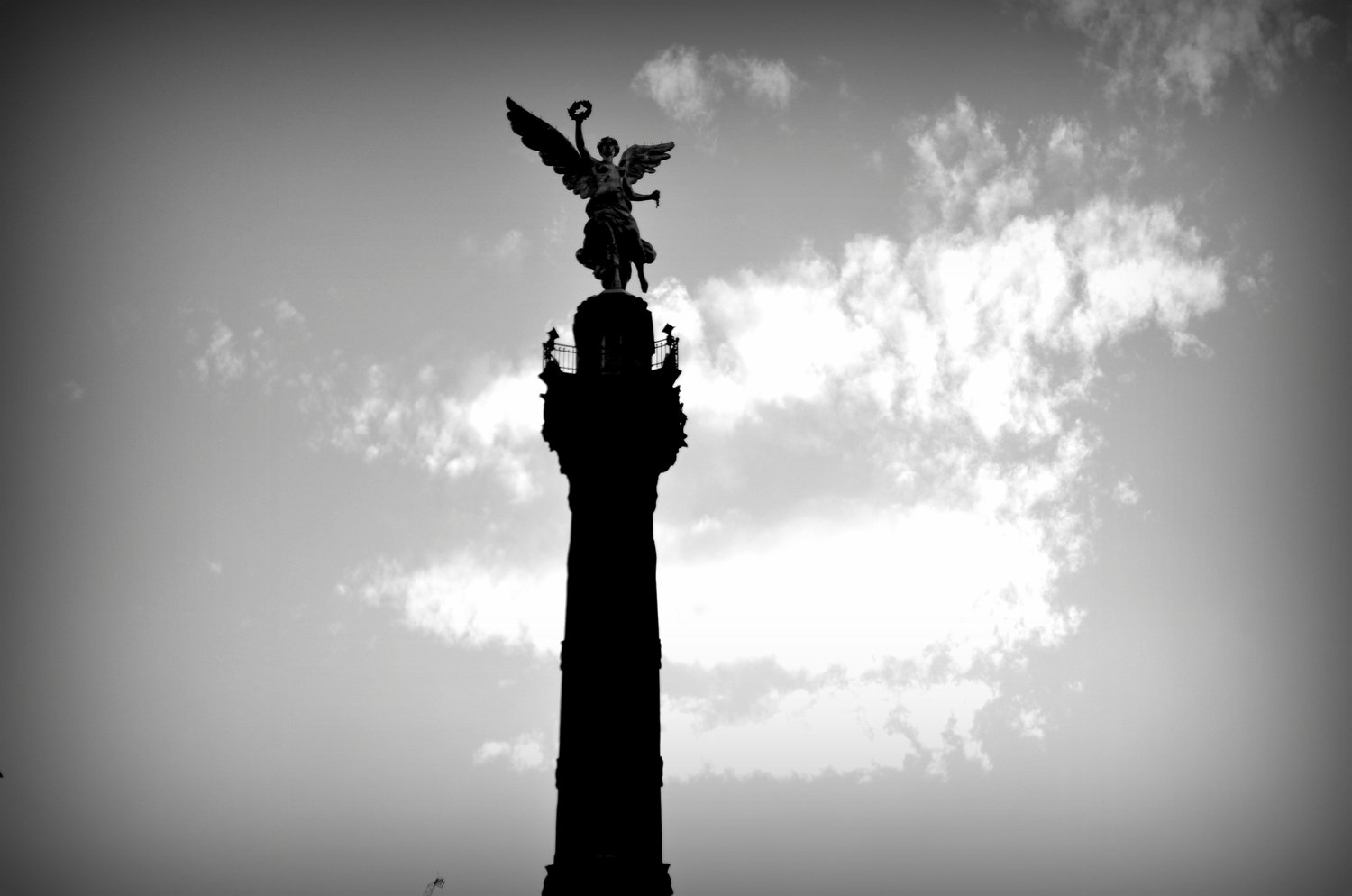
After the bus arrived we waited by the main entrance where my old pal Santiago picked us up. He brought us to his apartment located in Las Palmas, one of the more affluent and posh parts of the city. The city is divided up into many zones that each have some unique draw or characteristic to them, and I believe this one was business and real estate. Floor to ceiling windows covered his 3 bath, 3 bed apartment with hardwood floors throughout. It was a far reach from the hostels we’ve been staying at until this point and upgraded our traveling status from copper to platinum. Santi hadn’t quite moved in yet so the oversized apartment felt even larger. He gave us his entire place to ourselves for the duration of the stay, which wound up being 10 days instead of the 5 or 6 planned. Elissa and I gravitated towards doing what we do best and started cleaning the place up like it was our apartment, and even convinced Santiago to start buying living necessities like pots and pans to try and nudge him into finally moving in.
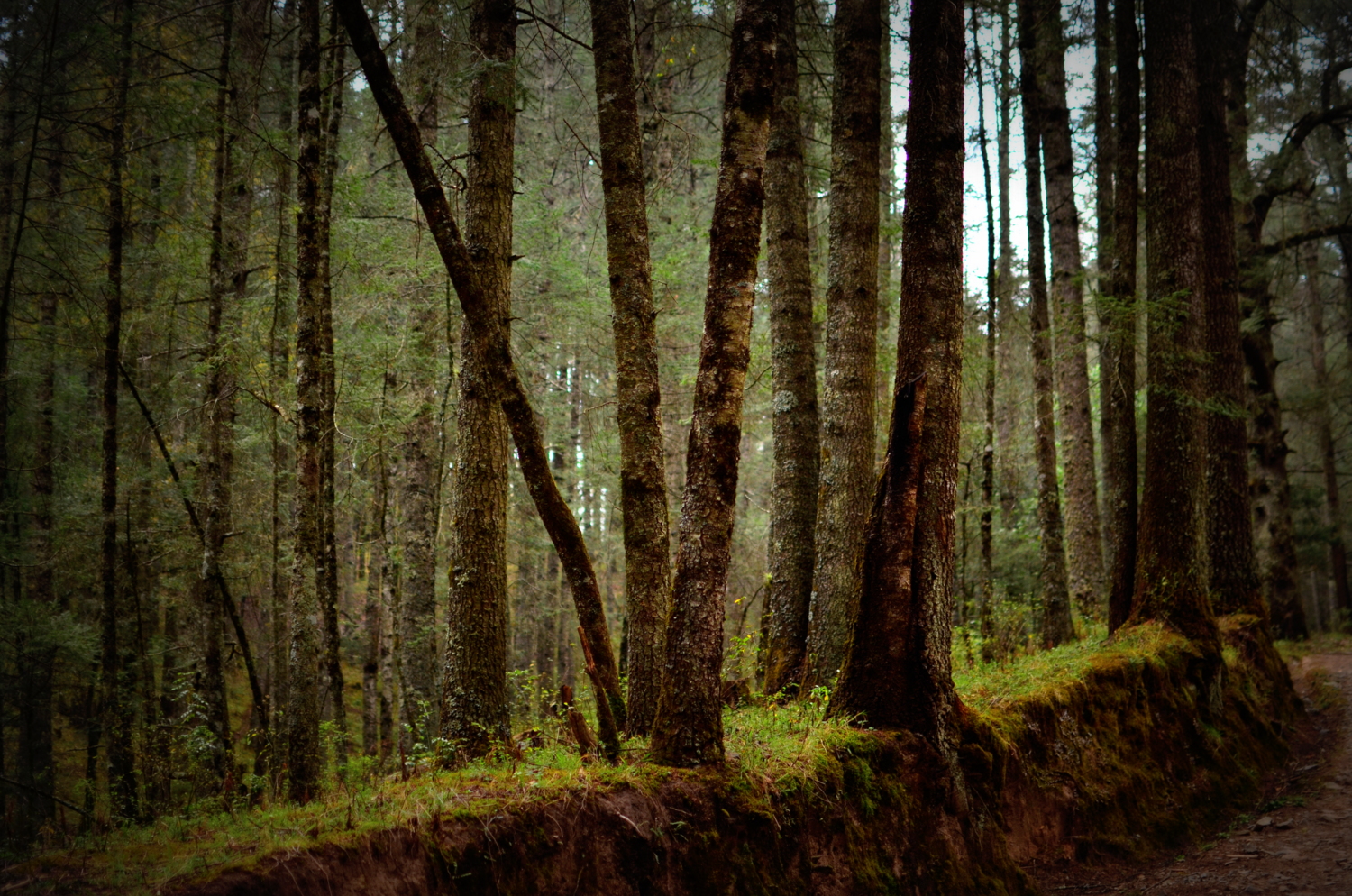
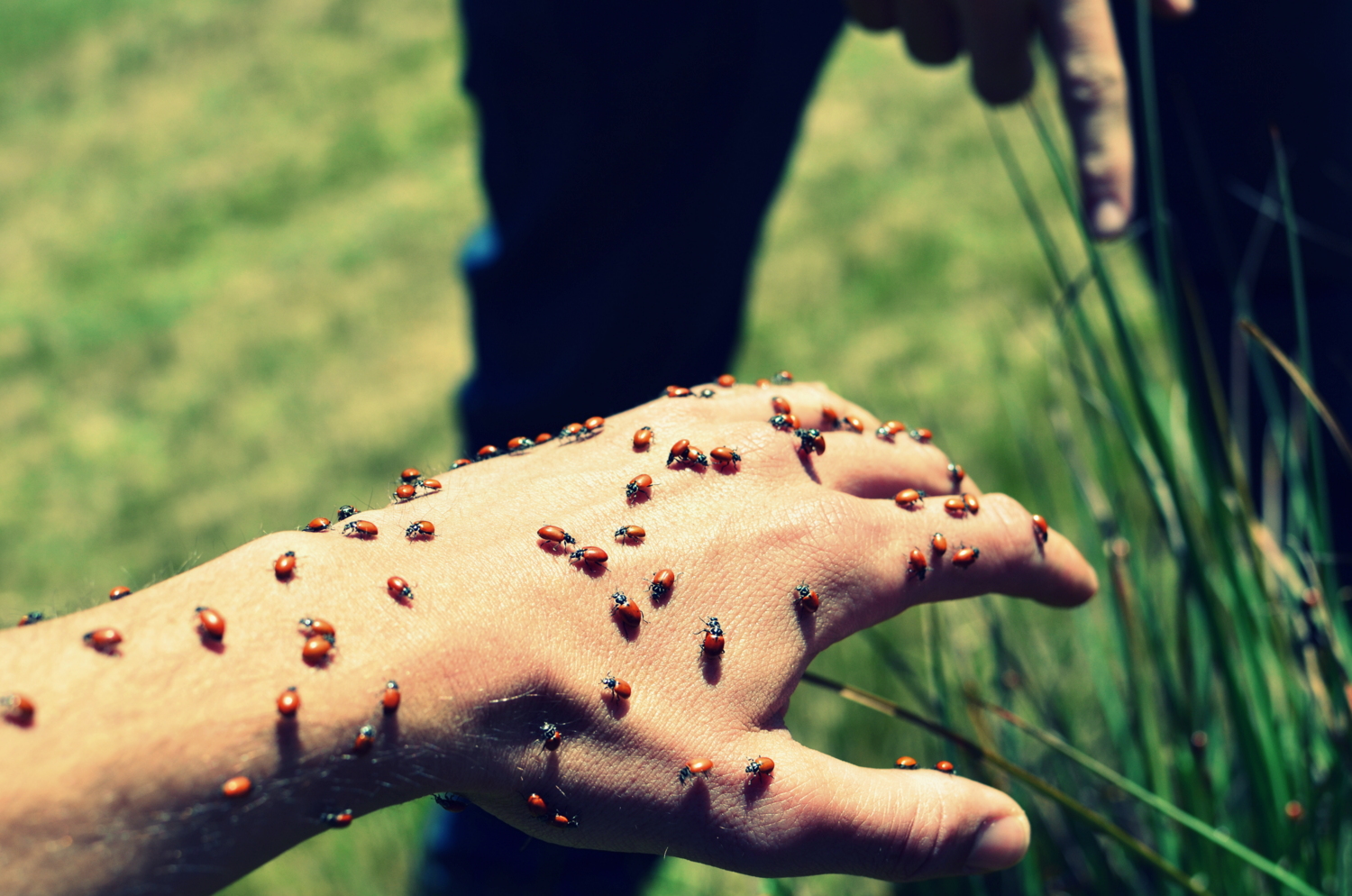
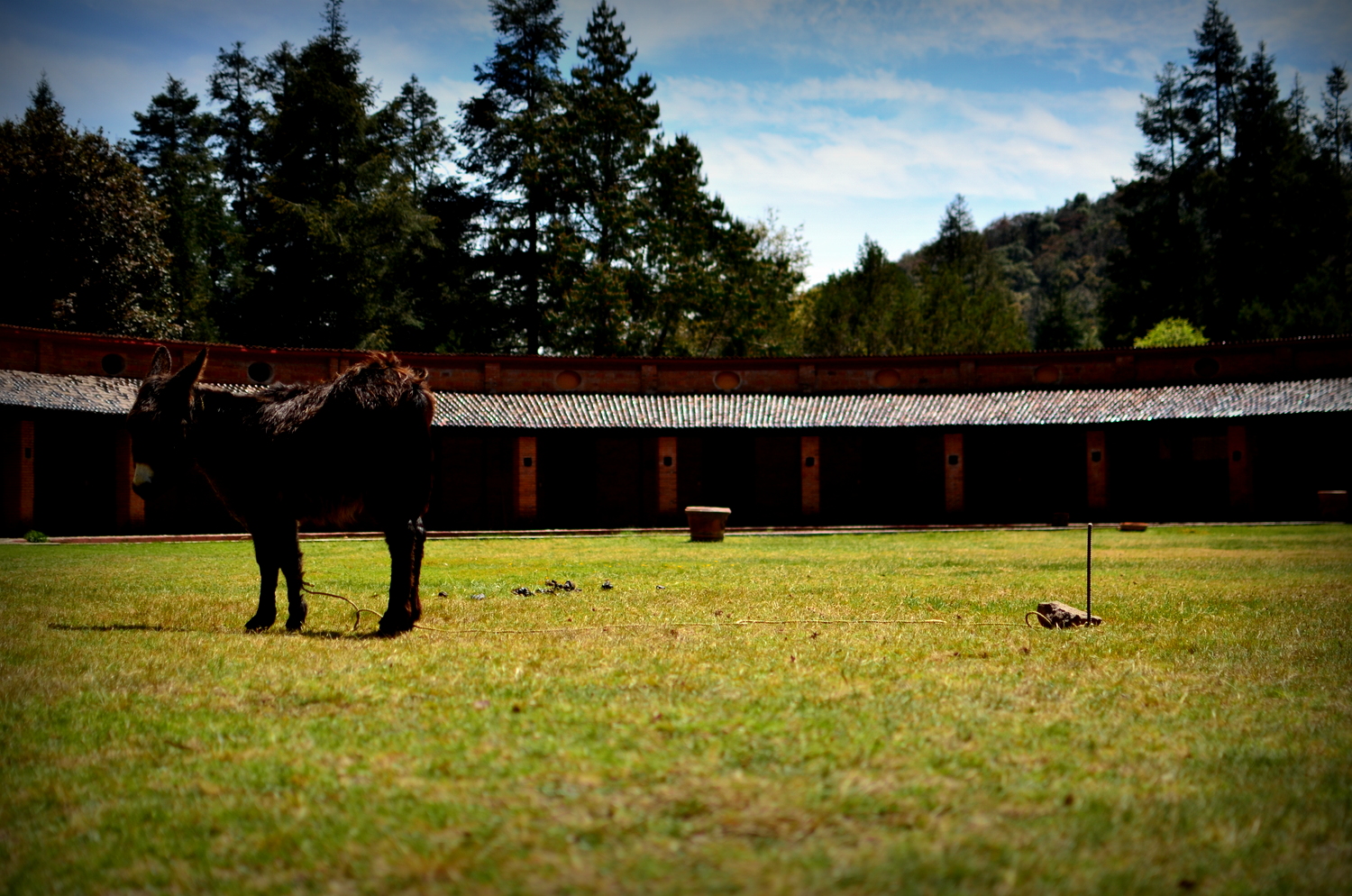

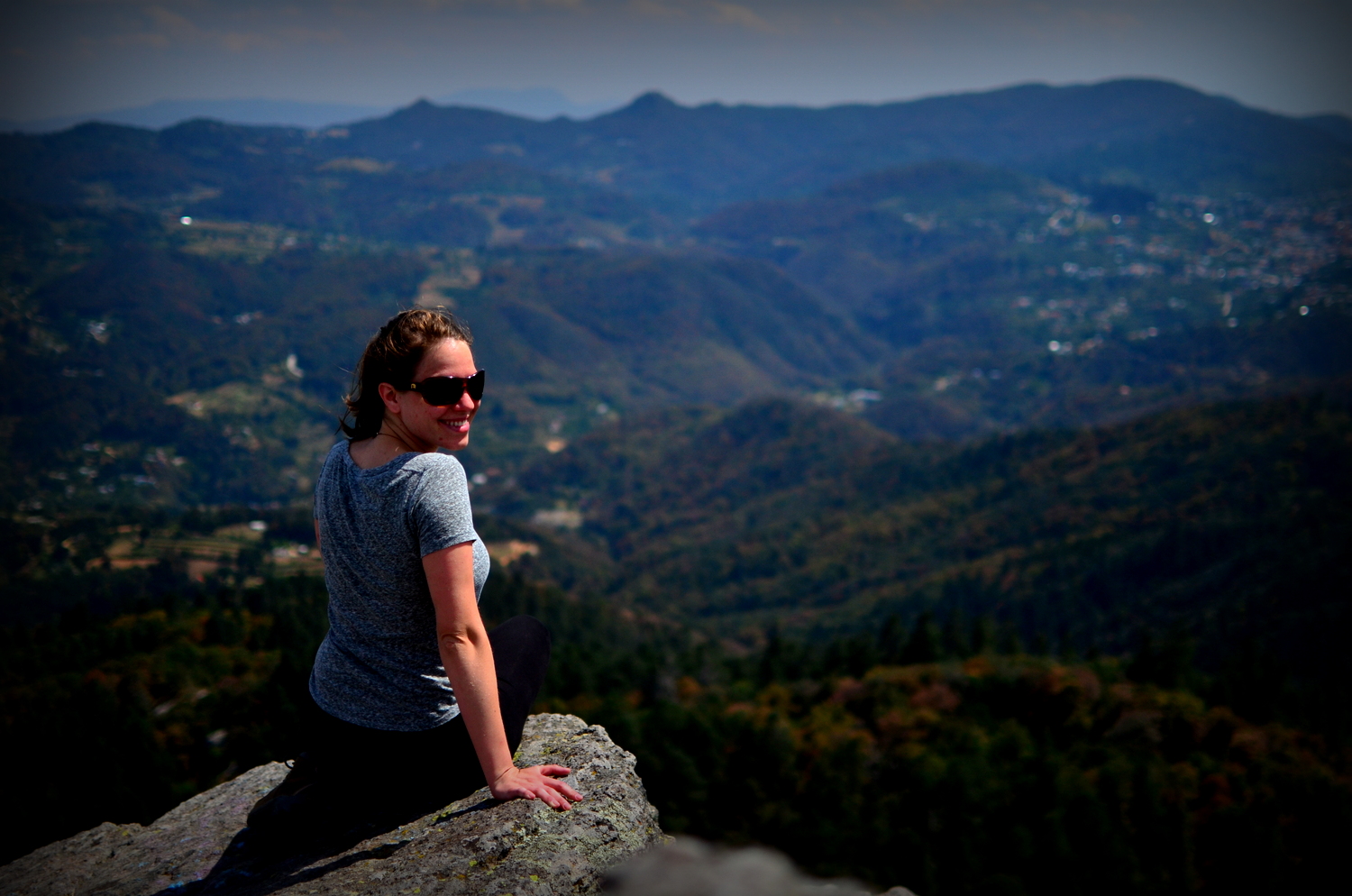
Santi’s aunt and uncle invited us to their ranch in the Pachuca area north of the city. Once outside of the influence of the metropolis the terrain is very flat and sparsely decorated with small towns and roadside taco stands. The Ranch turned out to be a massive, beautiful chunk of land in the valley of a national forest complete with a horse stable, a house for the groundskeeper and his family, and three houses tucked away in the back depths of the property. We were thoroughly entertained by his Uncle’s humor and fed very well. They ran a very successful archeology magazine and sports newspaper in the city and have full-time maids taking care of all the chores. It was my first experience having dinner served inside a home with maids and it felt a little awkward. This was a normalcy to them and a lot of other wealthy Mexico City citizens who partake in the service-based industry. With Elissa’s background experience in the restaurant industry it took all she could to not help clean up the dishes and settings. We stayed up late talking about Mexico City, different must see places to visit in Mexico, and philosophy with his uncle. They gave us a room with king sized bed to sleep in and Elissa and I became lost in both it’s size and comfort. The next day we hiked to the top of the nearby mountain peak and explored a small mining village for some Pastes, a pastry filled with anything from meats and cheeses to fruit and rice pudding. Verdict: delicious.
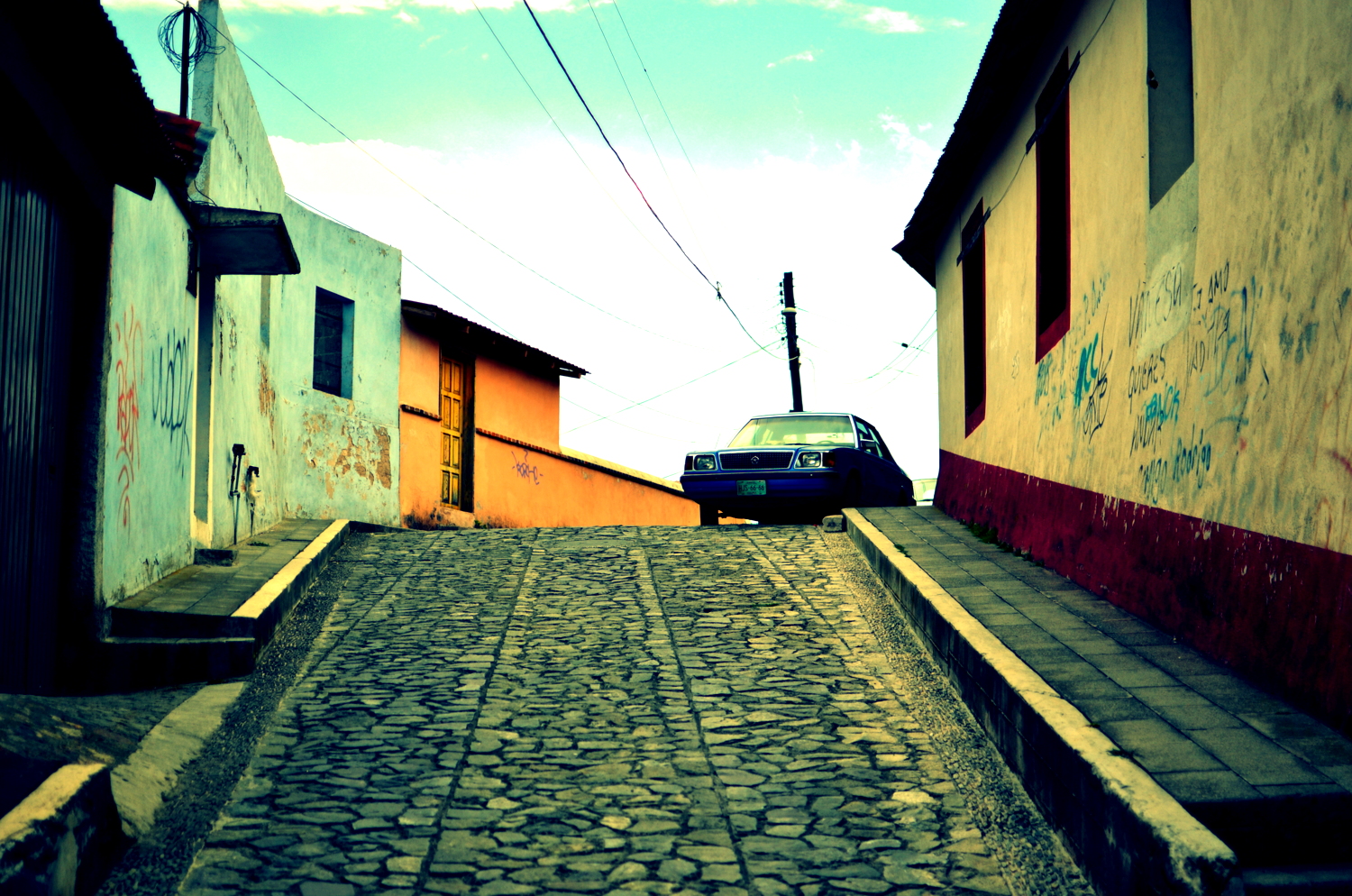
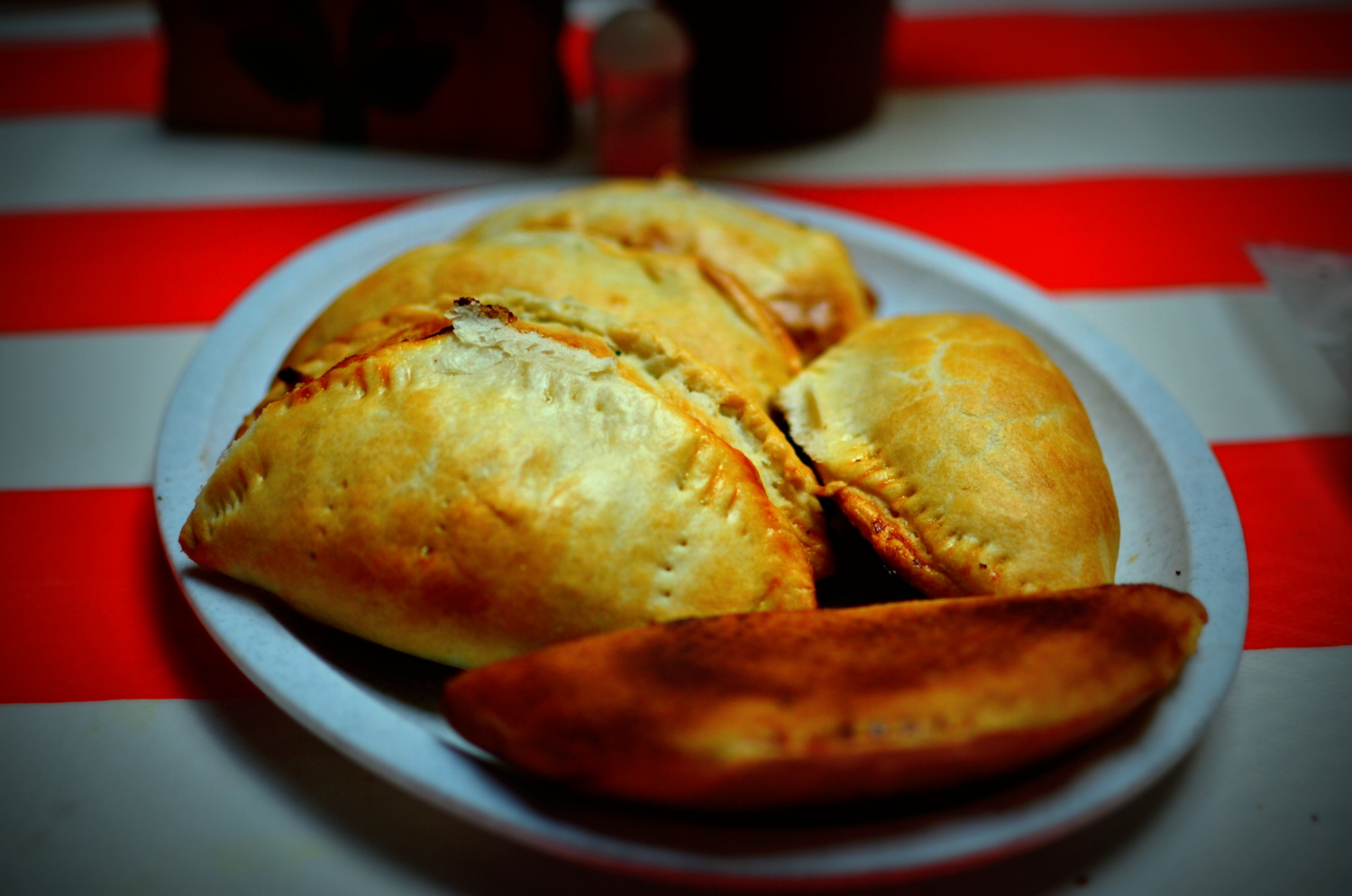
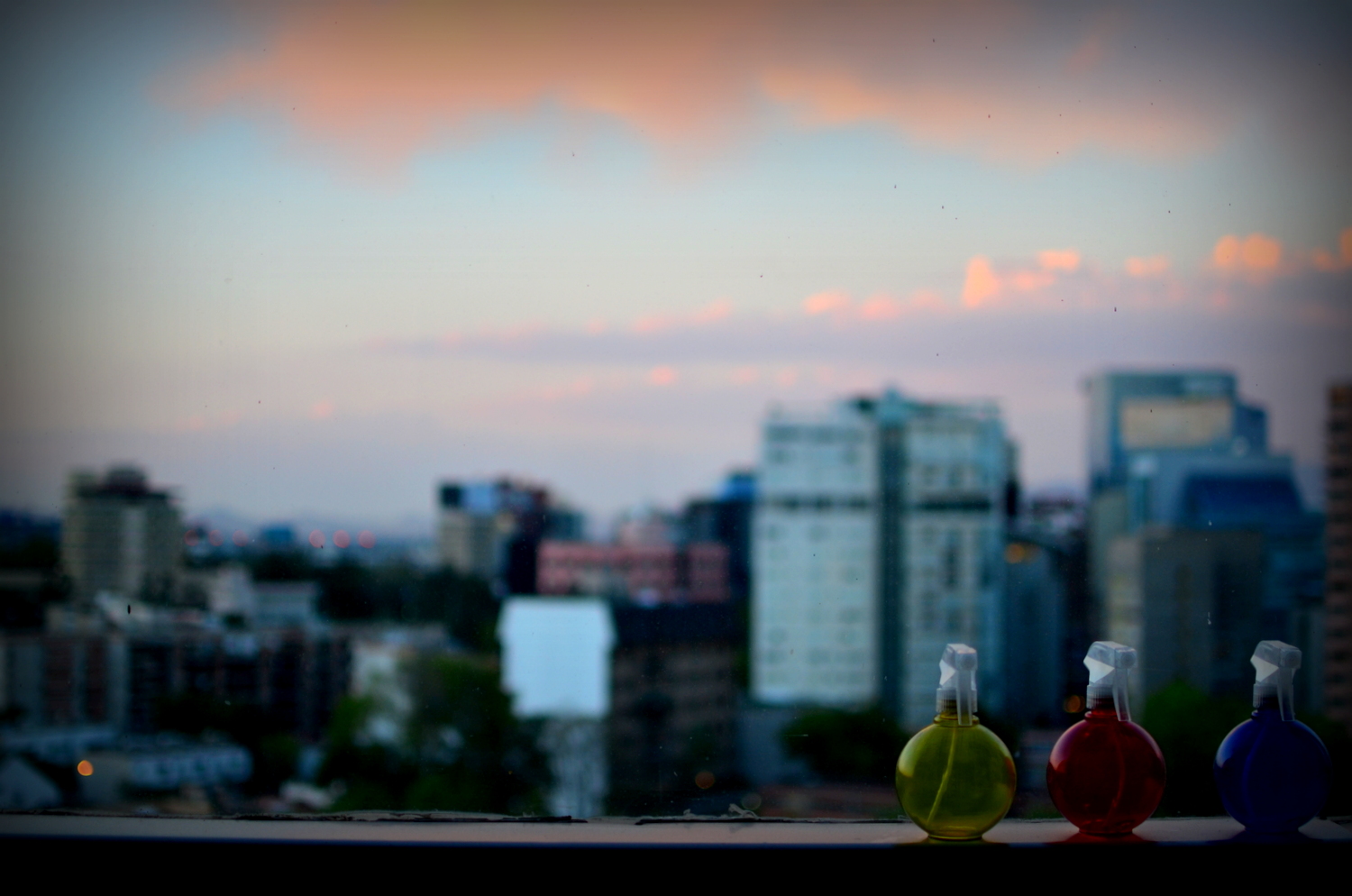
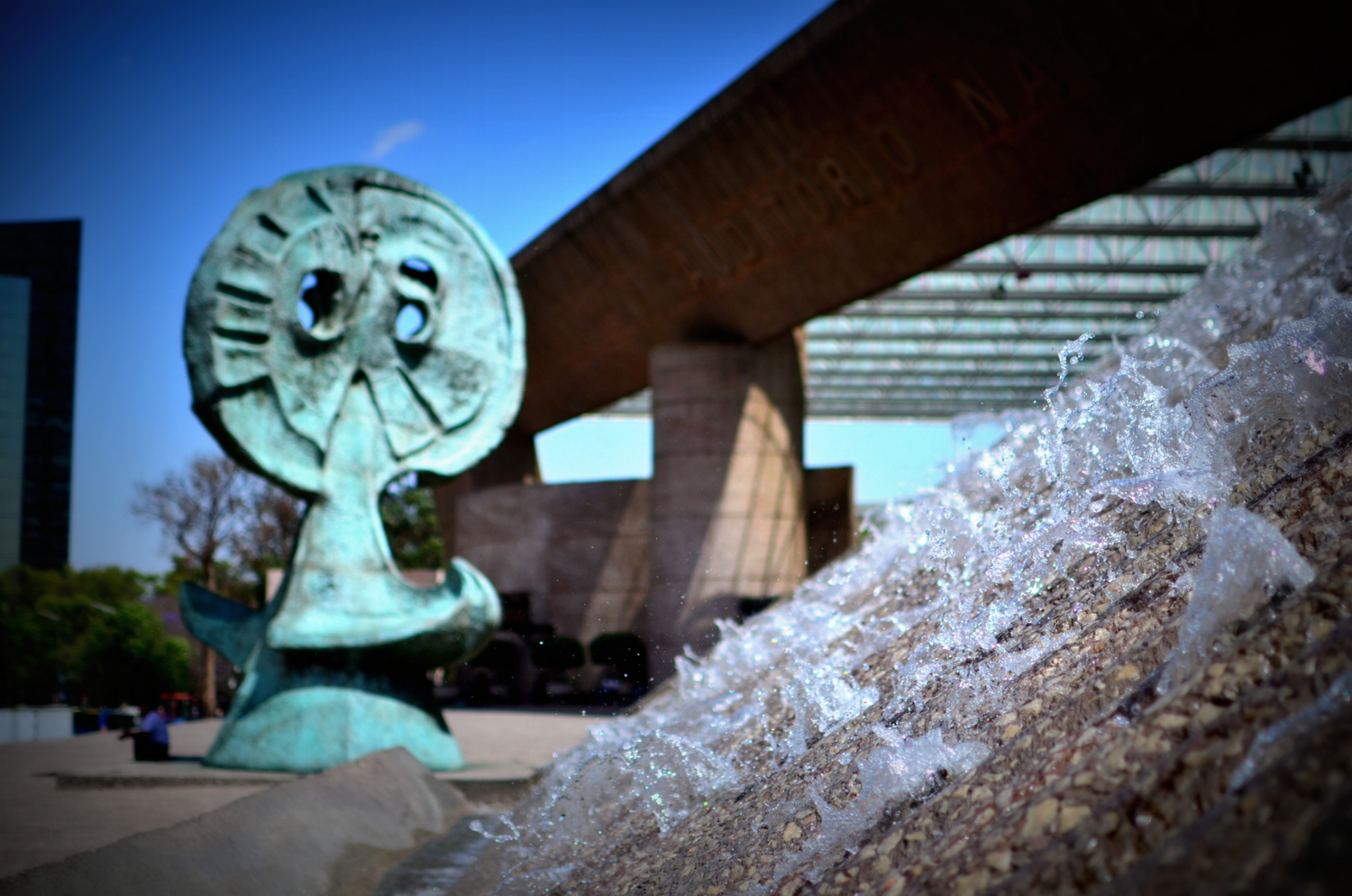
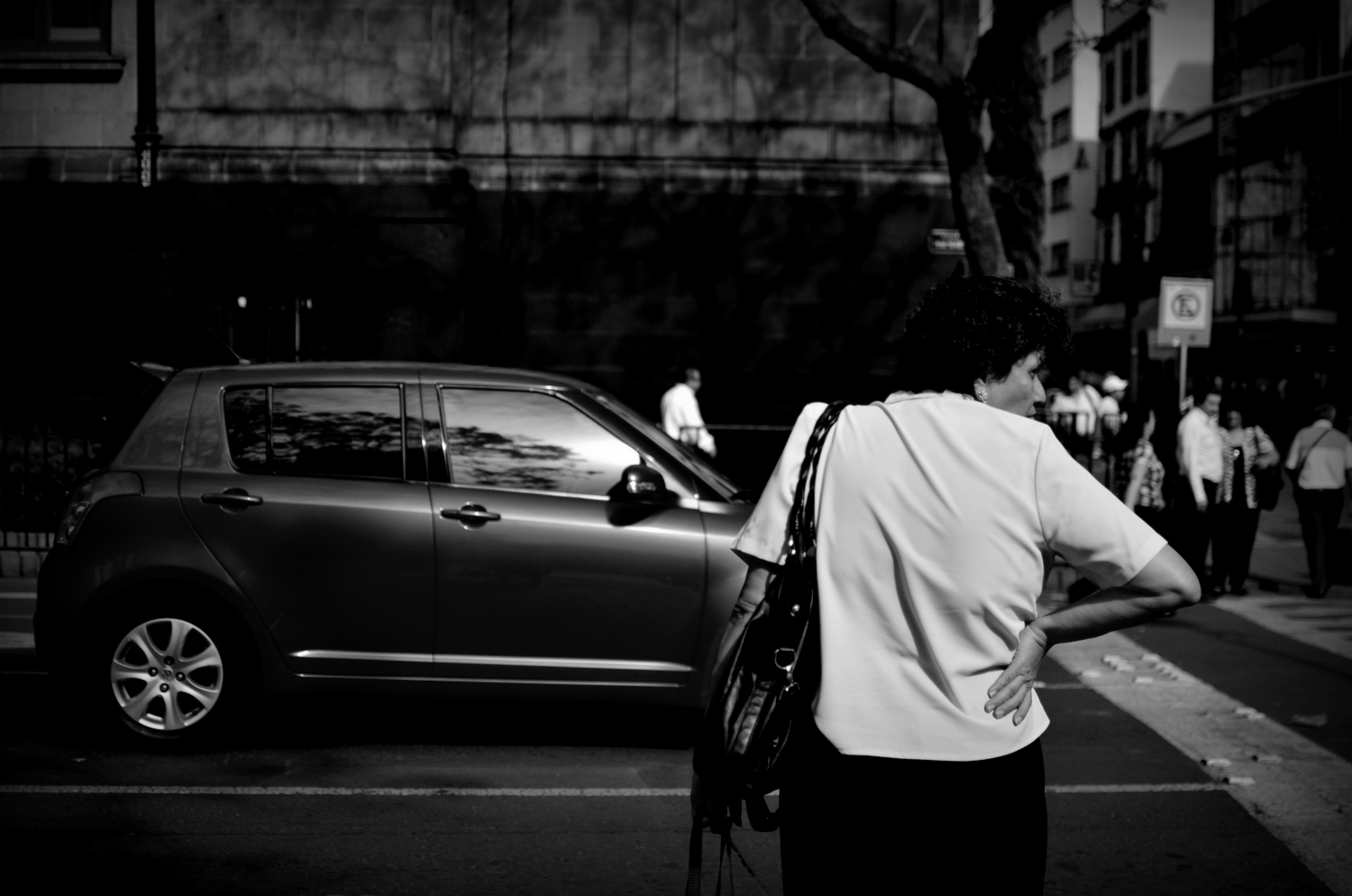
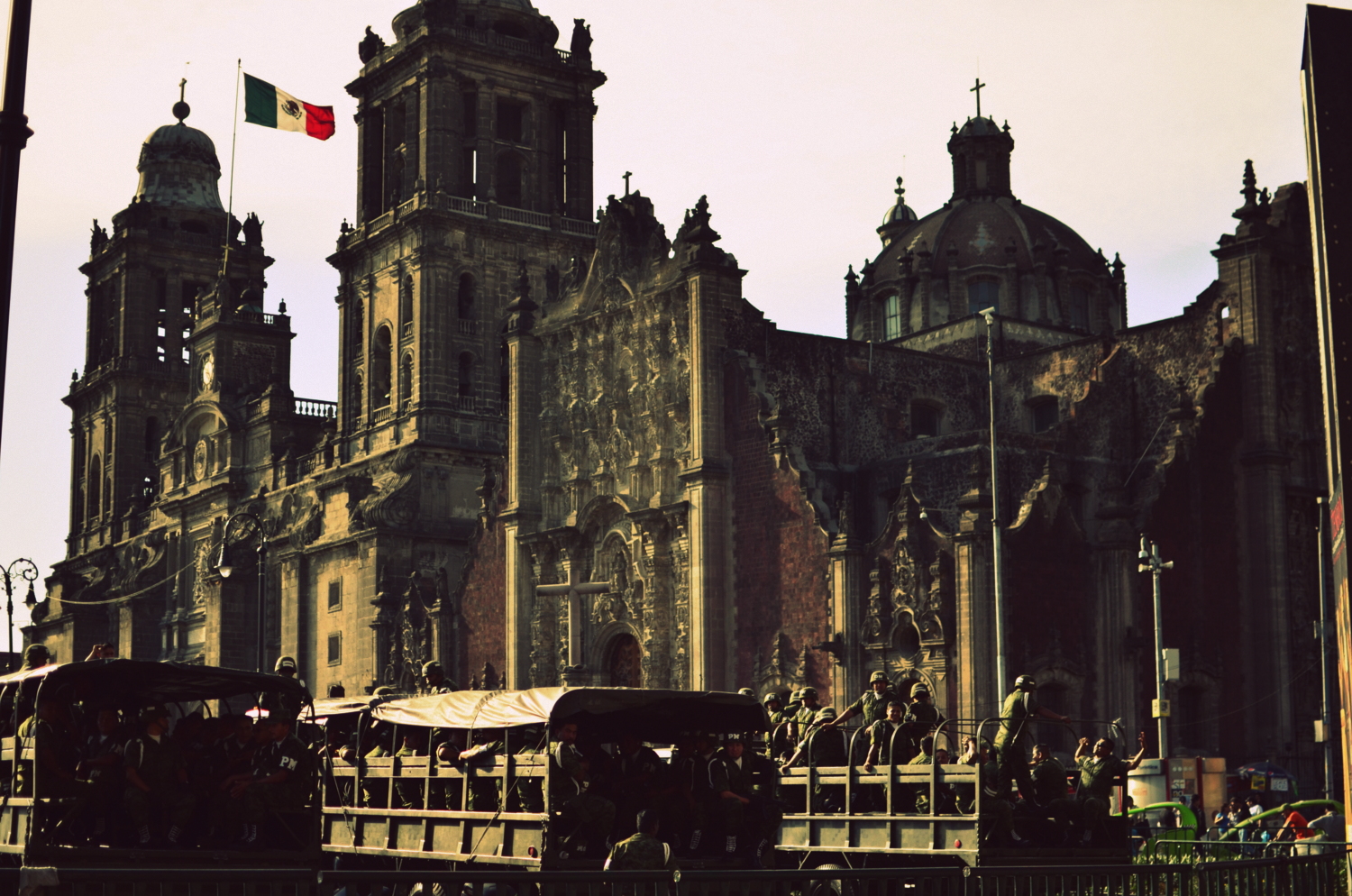
Our new apartment was a far cry from the convenience of public transportation. The nearest metro station was about a 30 minute walk and the nearest bus stop was about 20. The subway system and Mexico City in general has been portrayed as full of pick pocketing, petty theft, and elaborate money extraction schemes in literature but the truth is we didn’t feel unsafe or threatened for even a minute. The subway system, just like buses, are full of people that try to sell you things from candy, super loud dance music, to earphones between almost every stop. Since we both lived in Boston the subway and bus system was rather easy to get used to (a few mishaps here and there) and brought us into the city for about 25 cents a trip. We found that the biggest danger in the city was car traffic. Drivers here were absolutely mad and crossing the street felt like a real life game of Frogger. Drivers licenses are given without an exam (I was told) which I believe to be true based on our daily roulette game of crossing the road.

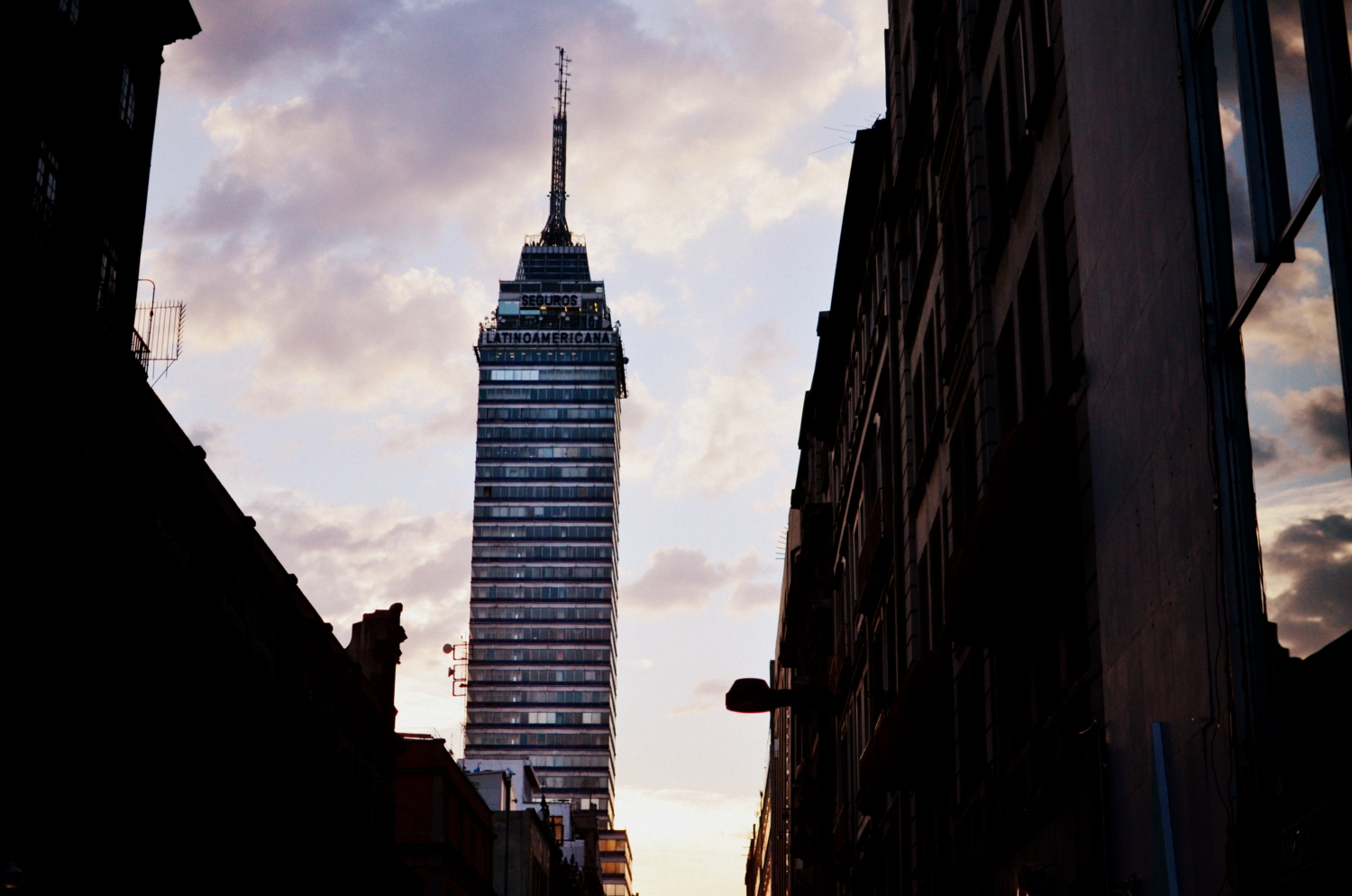
On Tuesday morning we experienced our first big earthquake! Being on the 8th floor may have amplified the effects as the building began bouncing for several seconds then swaying back and forth. We looked outside, saw people gathering outside of buildings, and figured we should too. The quake was fairly large and made headlines although I didn’t really see any damage anywhere we went. A lot of older buildings and churches here are listing, sinking into the fill and clay soils they were constructed on from years of earthquakes and just the weight of the structures themselves. Some were not noticeable until pointed out, with massive churches almost leaning over you at the entrance.
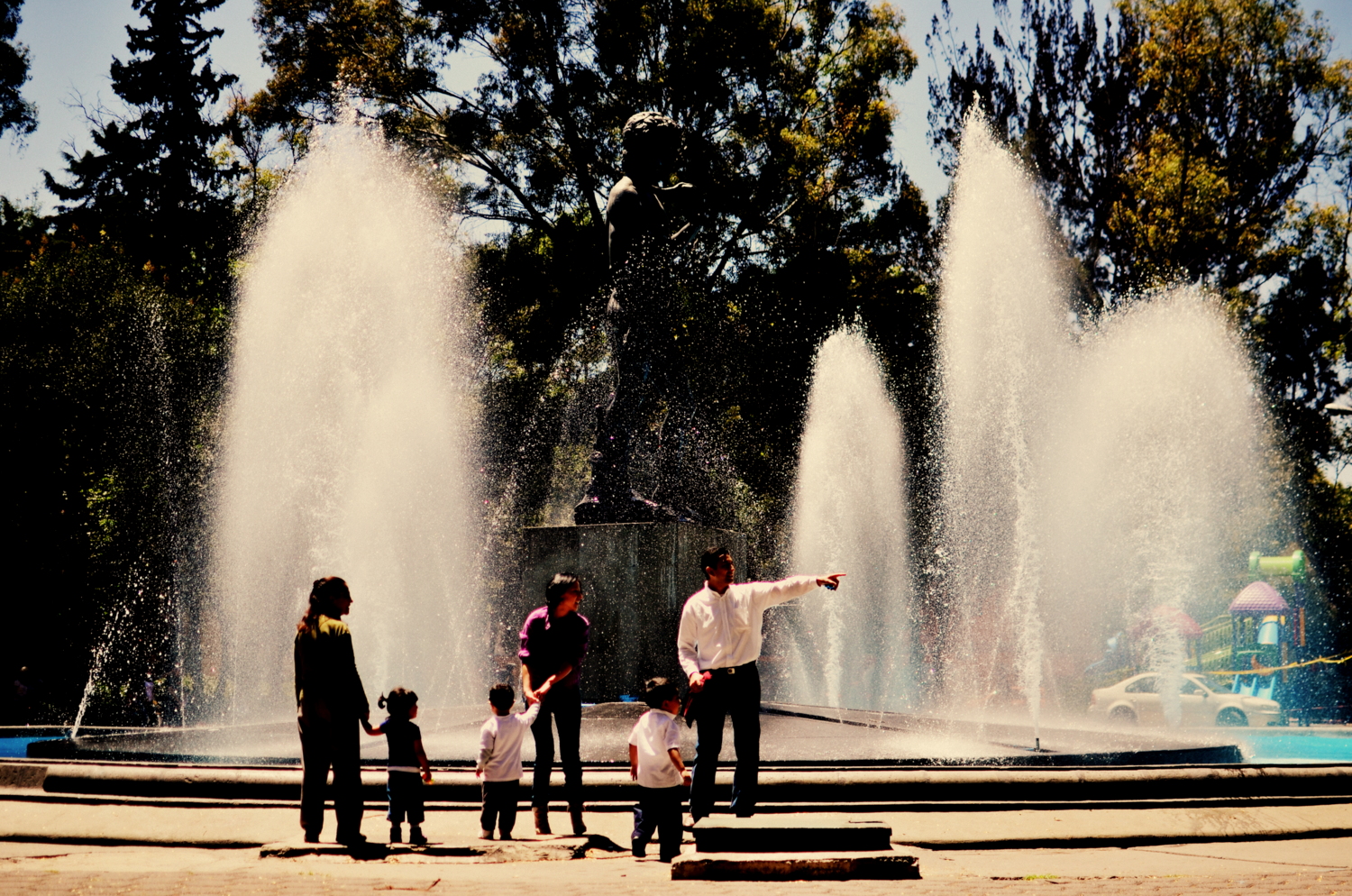


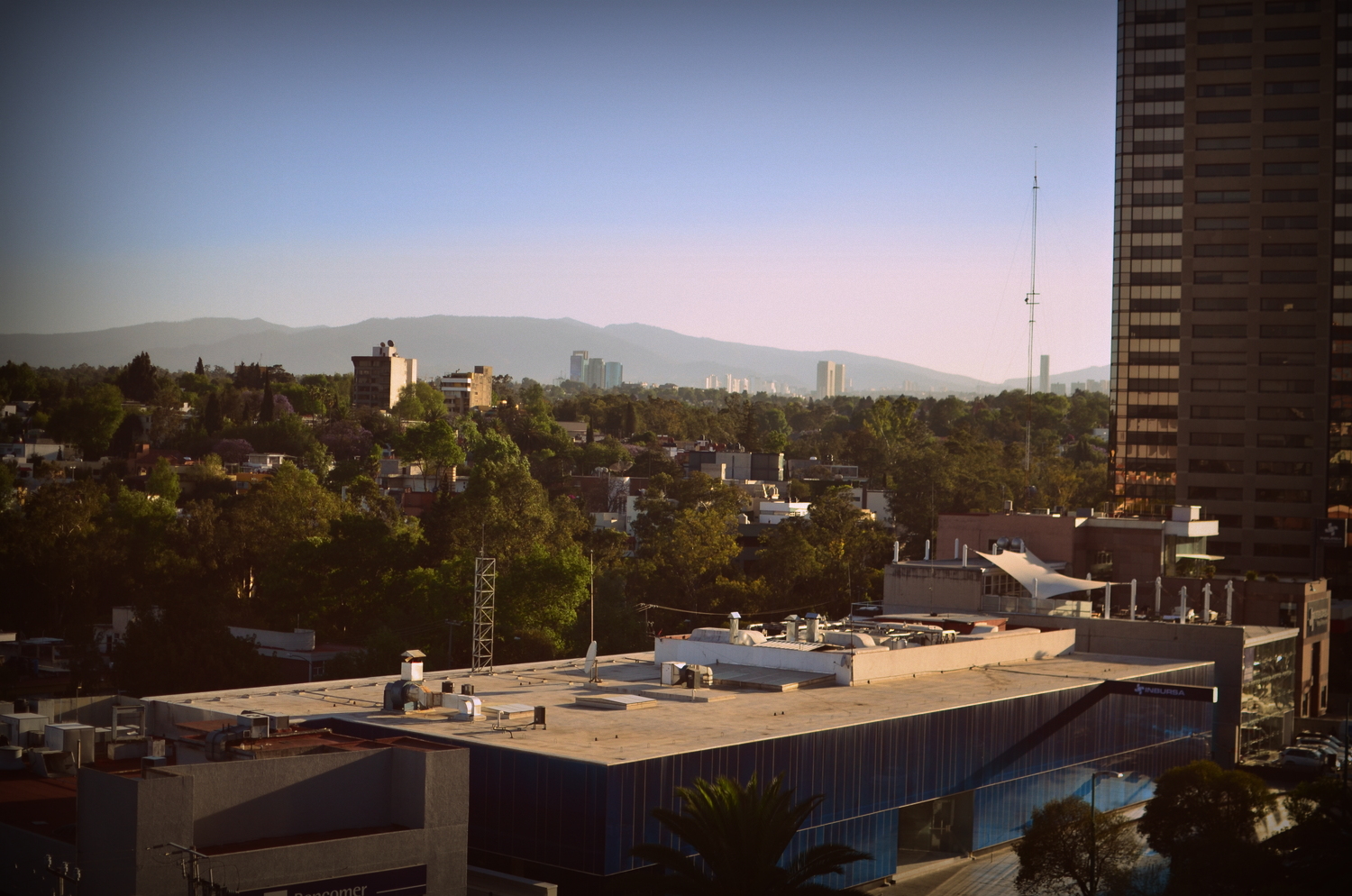
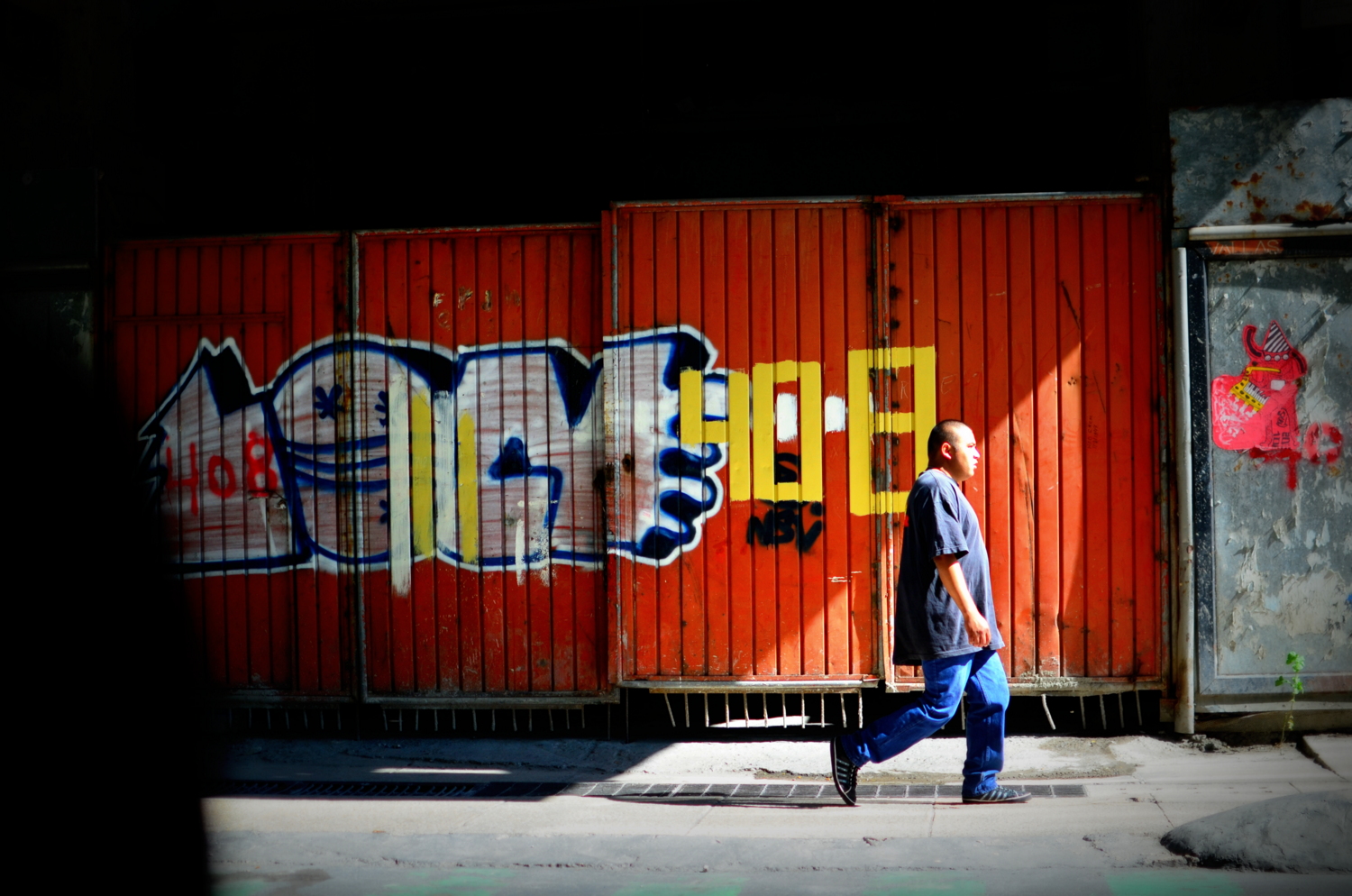
We visited the Zocalo one afternoon to check out the street markets and historic center of town to see how much free stuff we could find in the city. Numerous street markets were selling (once again) anything you could possibly imagine from food to fake purses to super glue (our big purchase of the day) all watching for the anti-piracy police to come around the corner. As soon as they saw them, they quickly gathered up their goods and dashed into stores or began walking away, only to return minutes later to set up their shop again. We went into a museum, checked out the cathedral, and wandered into the National Palace to check out some murals. While inside this monstrous complex a troop from the Mexican Army entered the palace with a marching band. We went outside and watched the daily lowering of the flag ceremony in the Zocalo, where the discipline of the marching troops vanished while they scrambled to catch the enormous flag before it touched the ground. We ventured down a walking street swollen with people in the crisp night taking in the night lights of the city.

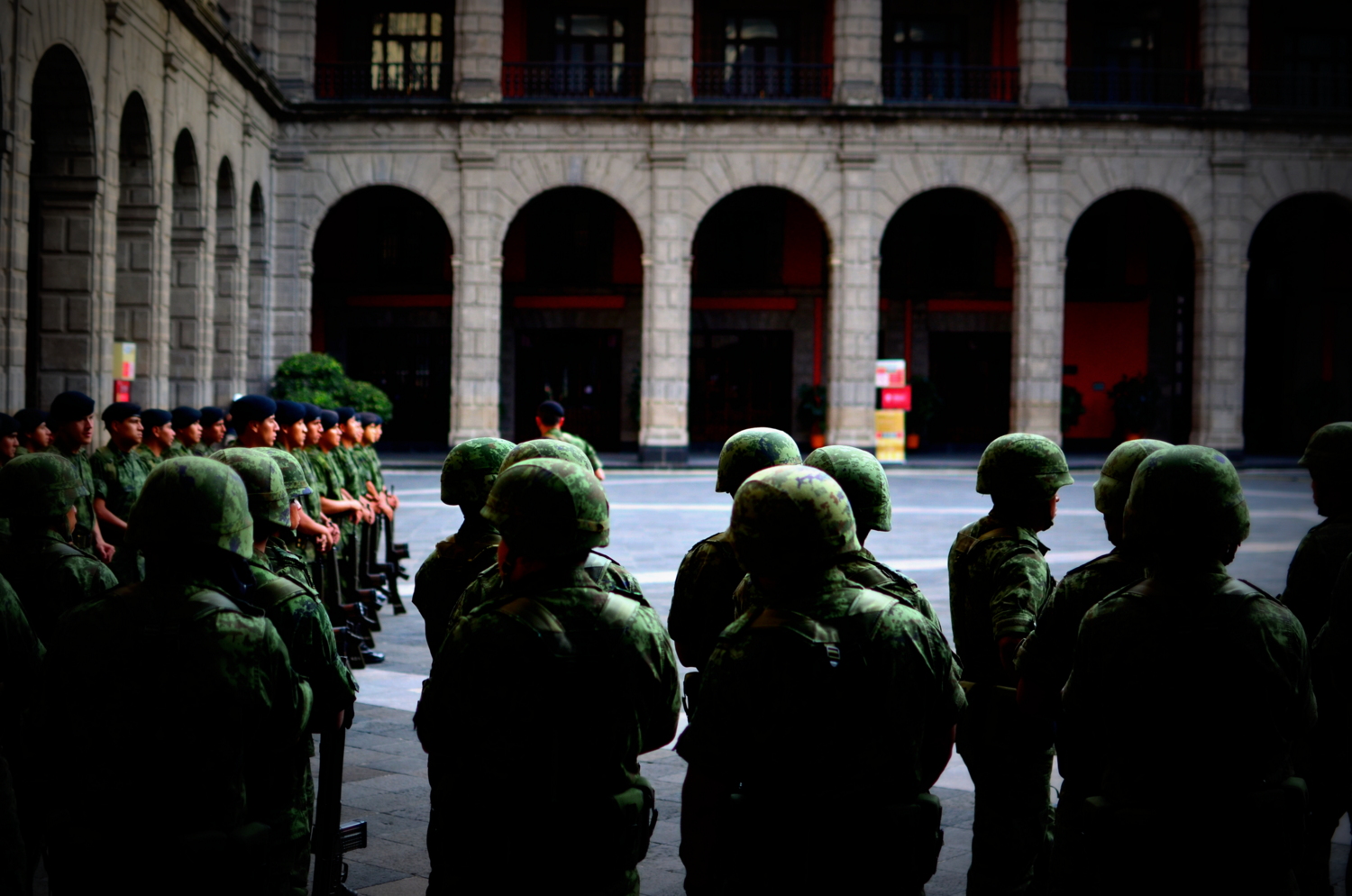


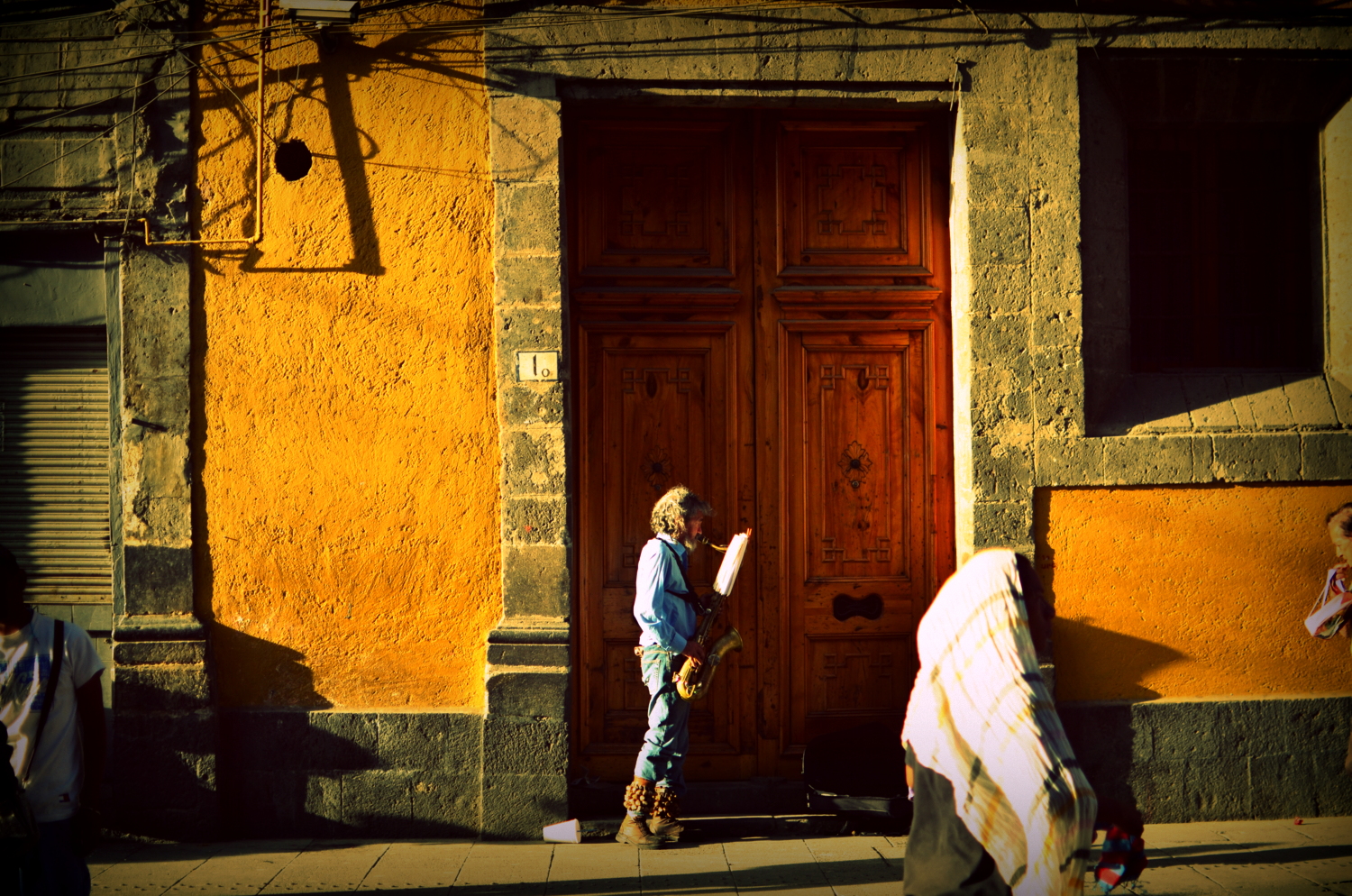

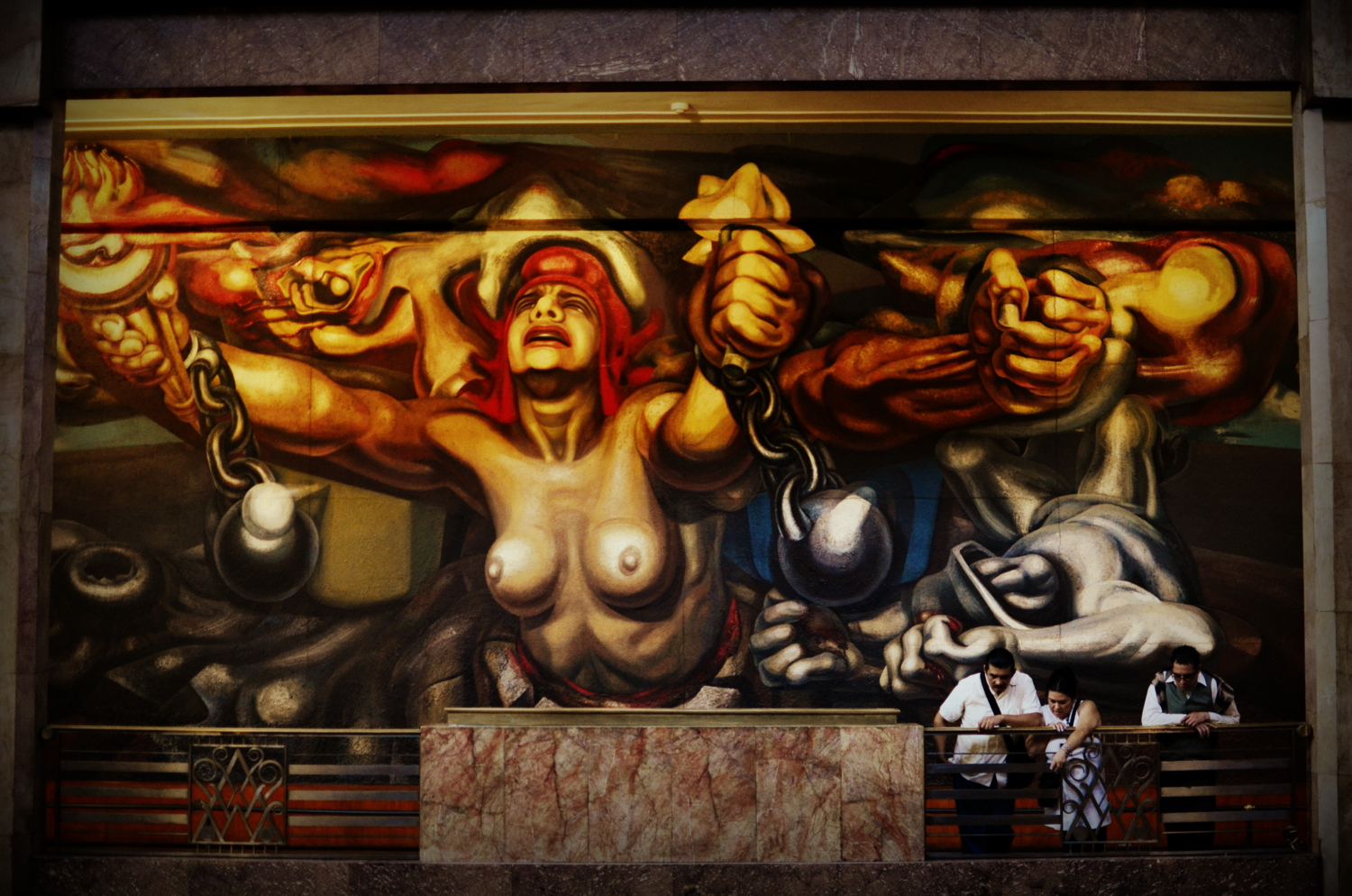

A few days later we found ourselves in Bellas Artes, a modern museum containing large paintings, murals, and an architectural exhibit. Afterward we hunted down the largest, busiest bakery we’ve ever had the pleasure of being in on the same day after seeing countless Mexicans carrying pastry boxes and wondering where they were coming from. The place was teeming with people and sweets, and after you self-served a small mountain of unexplored items onto your metal plate a boxing and wrapping station was nearby where 20 or so workers packed the goods in a mechanical fashion. We walked over to the Zocalo and ate the entire bag amidst people of all ages flying kites and made a new memory in the process.


Eager to finally check out the pyramids we hopped on a bus to Teohuatican early one morning. We had missed the solstice there, which may have been a good thing because it was very empty when we arrived a few days later. My best descriptive language could never do this place justice and wouldn’t accurately describe the sense of wonderment that you feel when you see what man is capable of creating without modern tools. The amount of effort put into building this city was astounding. Everthing seemed to be flush and squarely oriented astronomically. There were an endless amount of men and women selling the all of the same touristy stuff there at every step of the way. The annoyance of conveying “No thank you” to endless obsidian stones, fake bobcat mouth noisemakers, and necklaces was probably nothing compared to the toil they go through everyday trying to peddle these items. Everything worth seeing in Mexico has some sort of undertone of money extraction in some way, shape, or form and can take away from the experience while being part of it at the same time. But I digress. We climbed the huge Pyramid of the Sun, hung out with our Pyramid of the Moon, and walked around the backside of the pyramid for a view without the drones of people climbing up the overly steep steps. I imagined what this monster must have looked like in it’s time, painted red with hand carved sculptures everywhere, with thousands of devoted natives milling about on this hot, hot day. The view from the top was breathtaking. We saw a mini cyclone pass through swirling up dust several hundred feet in the air before disappearing into the hot afternoon. En route back to the city we checked out the old and beautiful Villa de Guadelupe, as well as the new rock concert-esque stadium built in her honor in the 70’s that can house up to 40,000 devout Christians. After walking up beautiful Spanish style stairs with flower covered archways the peak had some of the best skyline views of the city.
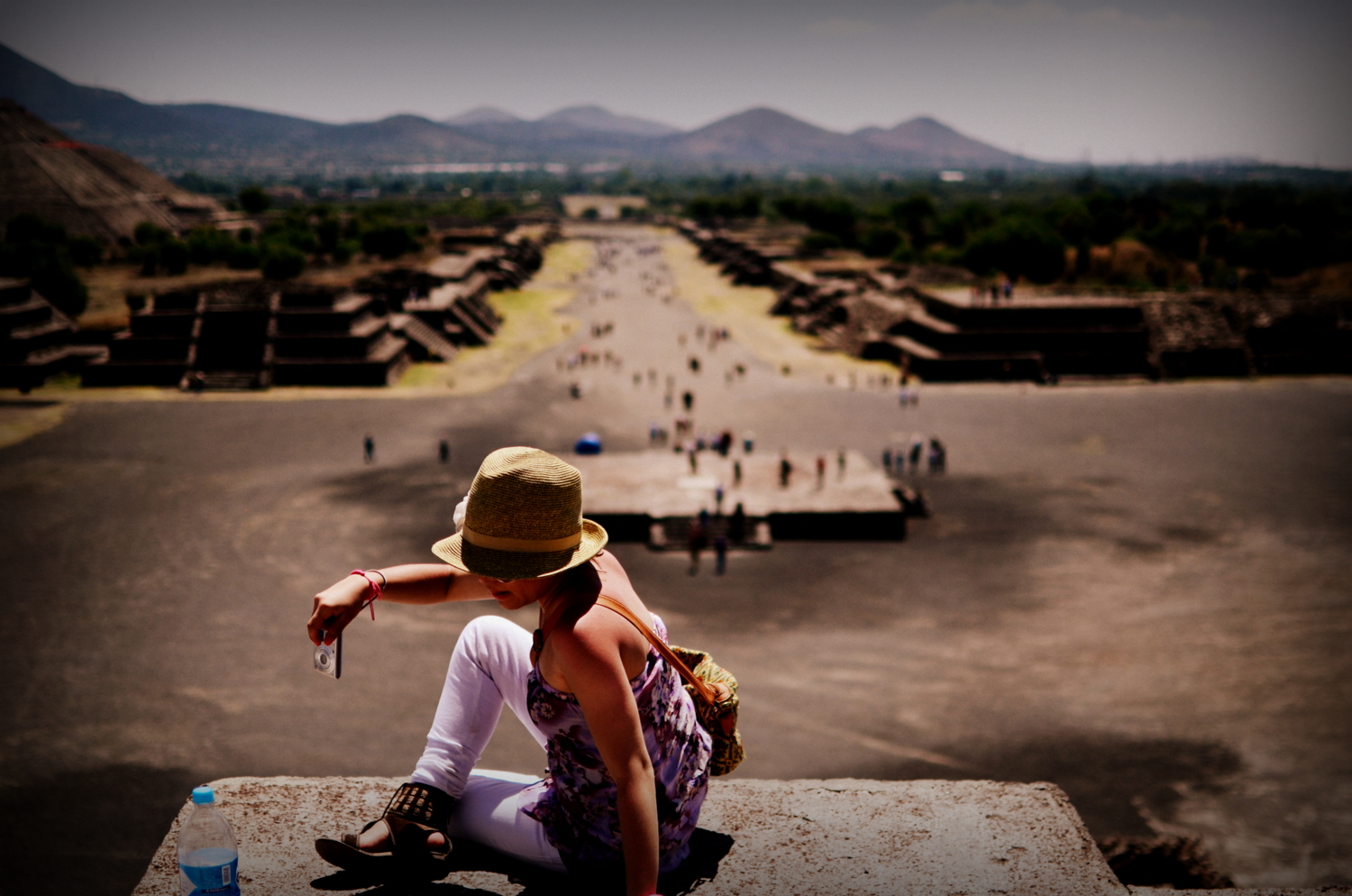


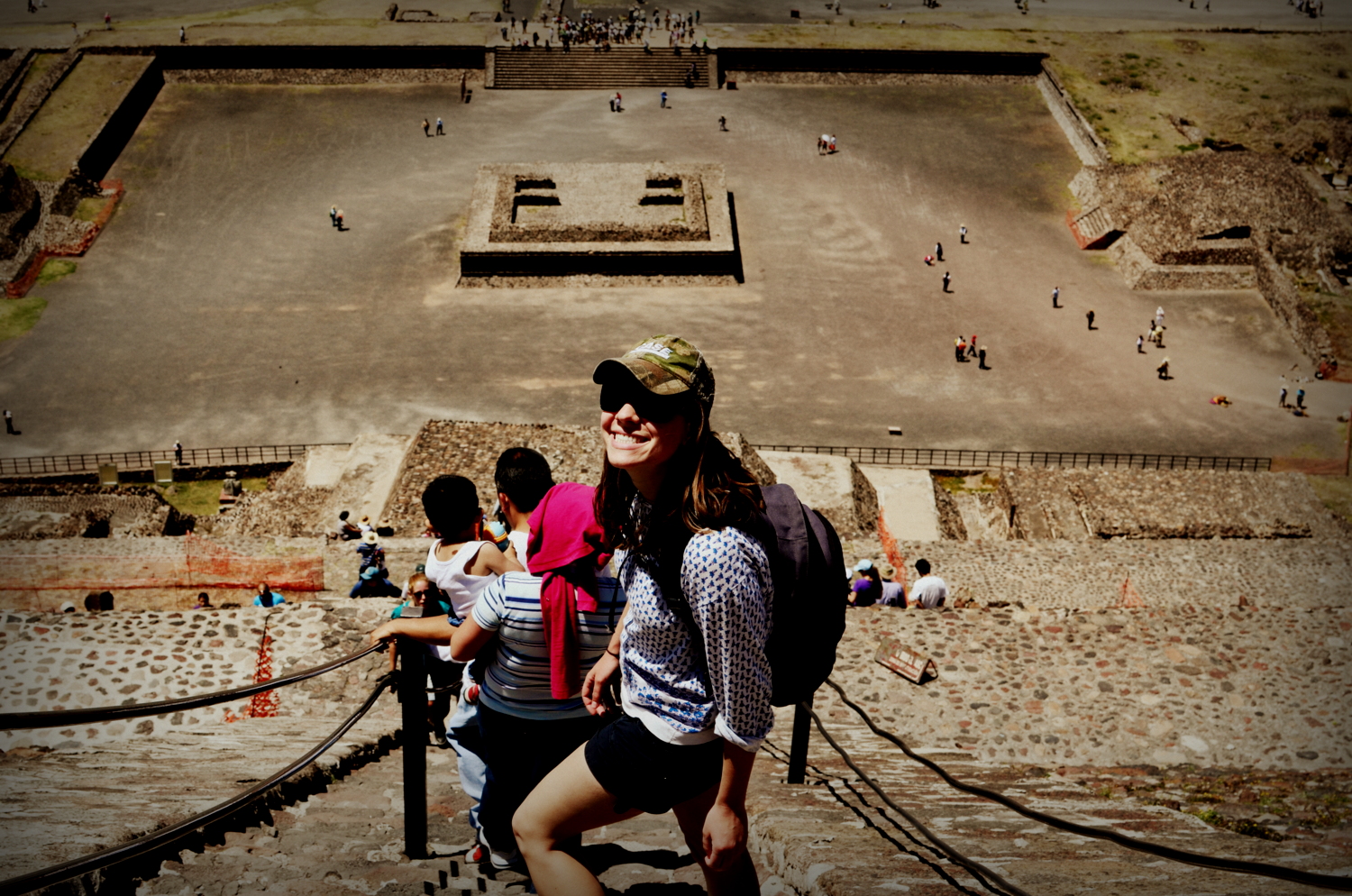
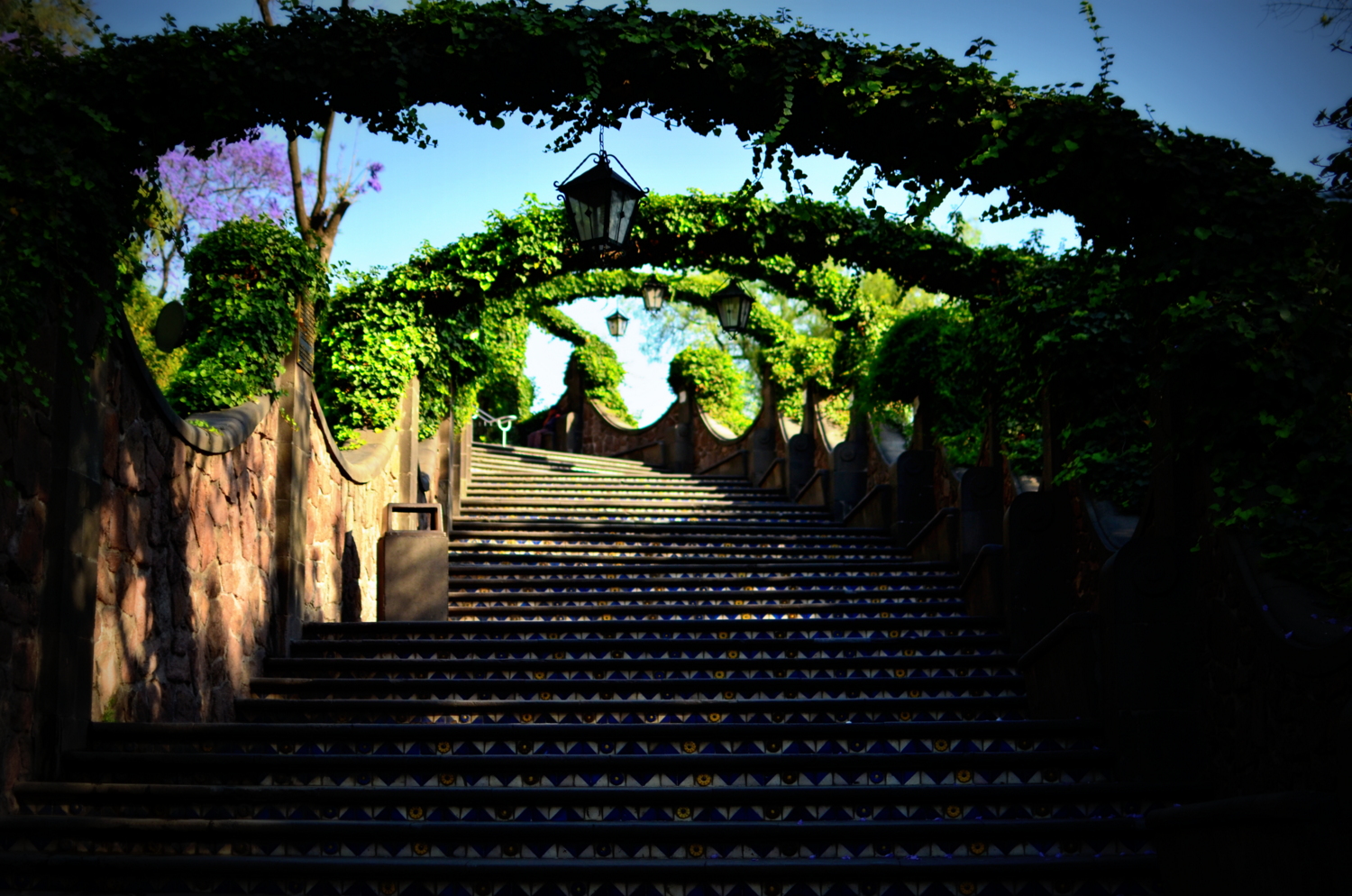
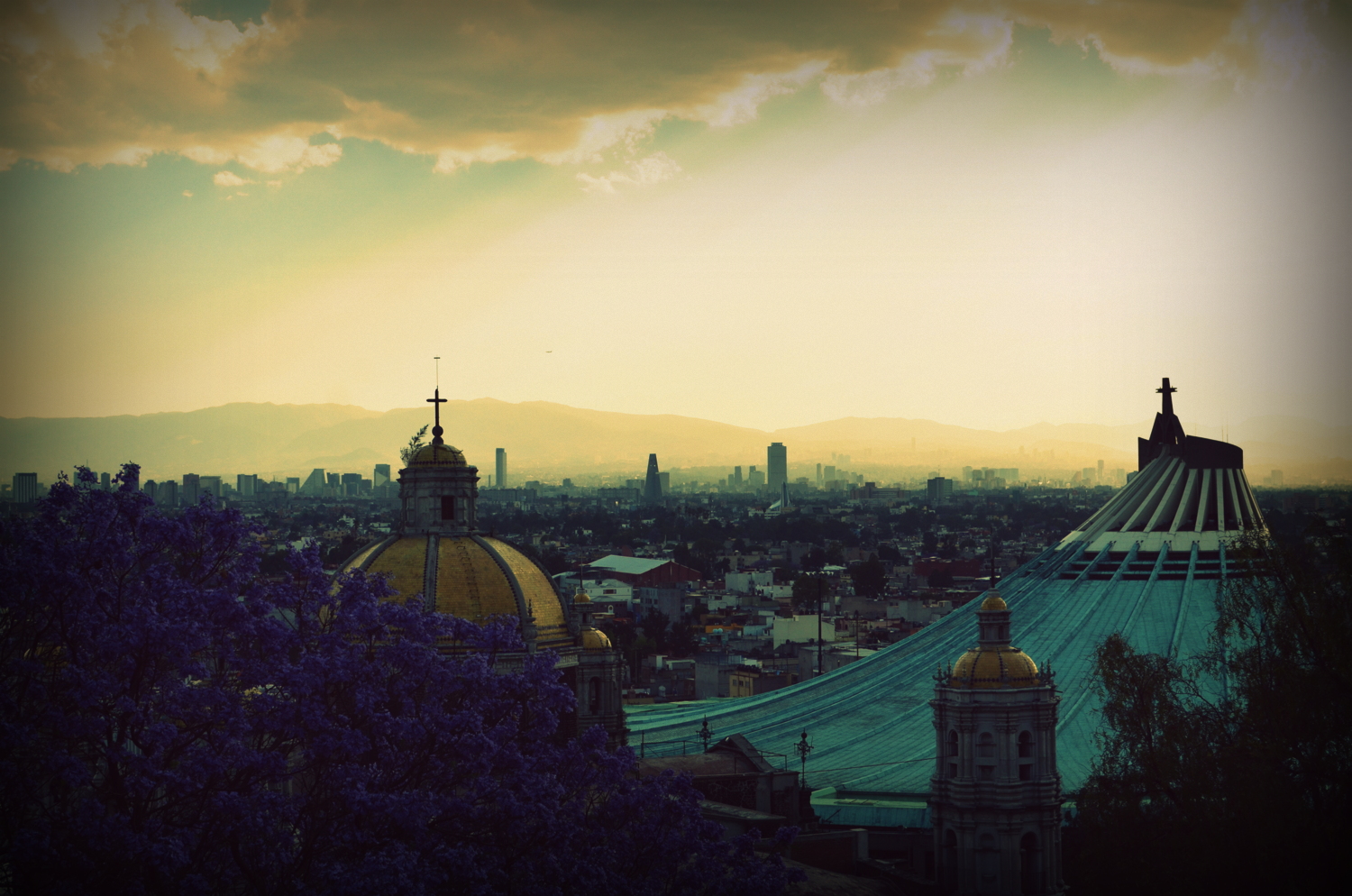
Since our laundry bag was bursting at the seams we killed an entire afternoon and a lot of energy trying to find a Laundromat. Protip: If you want to start a successful business in Mexico City run a functional Laundromat. They seem to be non-existent here mainly because people either have their own machines, know someone who does, or tend to pay someone to do it for them. After several hours we found one and were told our small bag would be ready in 3 days. 3 days is a long time to go without fresh underwear. Luckily one of Santiago’s cousins brought us into his house and we did a load of laundry there while we went to see a documentary at the Auditorio on Leonardo Da Vinci’s exhibit at the National Gallery in London. Culture points.
A day trip to Xochimilco brought us to a yet another massive and amazing street market. We sought out this area to take a trip on one of the many gondolas that leave from several embarcaderos and take you through irrigation channels still present. The city was originally comprised of these waterways fed by a large lake that slowly became filled in as the city grew. We bartered the price down for a 1 hour trip at an embarcadero that was filled with hundreds of brightly painted gondolas, each complete with tables and chairs for it’s passengers. To get to your boat you would walk through several others tied together, kind of like a floating dock comprised of jumbled boats. Once we got onto the water we cruised along watching large families with 2 or 3 boats linked together with rope blasting music, drinking, and eating food they had brought. There were gondolas full of Mariachis trying to sell you songs. Vendors were also out on the water selling everything from beer, food, ponchos, toys, you name it. Elissa and I joked and grinned as we took in all the sights of this cool and unique version of a family get together and wished we could share it with ours. The shores were decorated with flower and plant shops alongside food businesses and homefronts. Romantico.


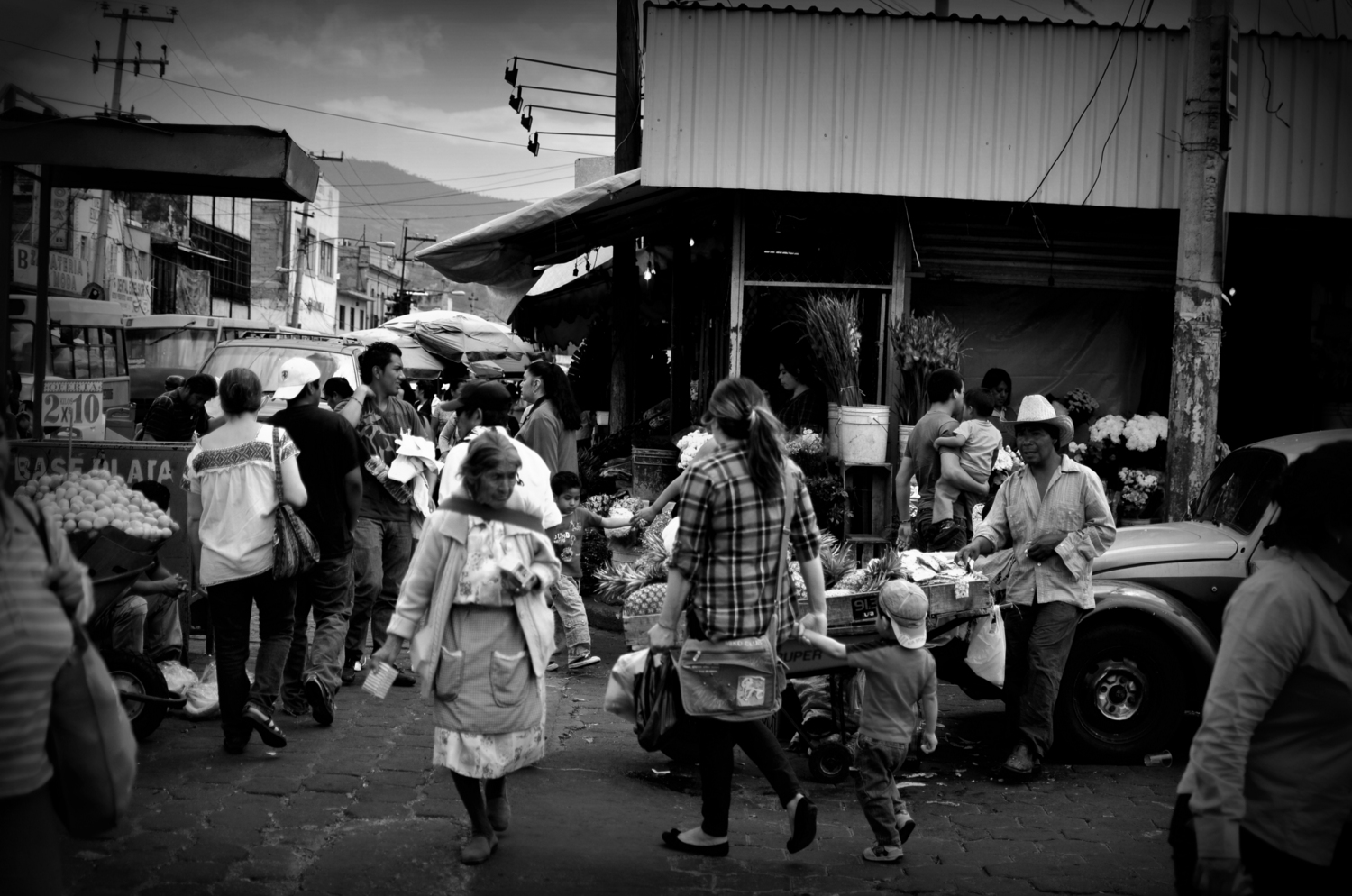
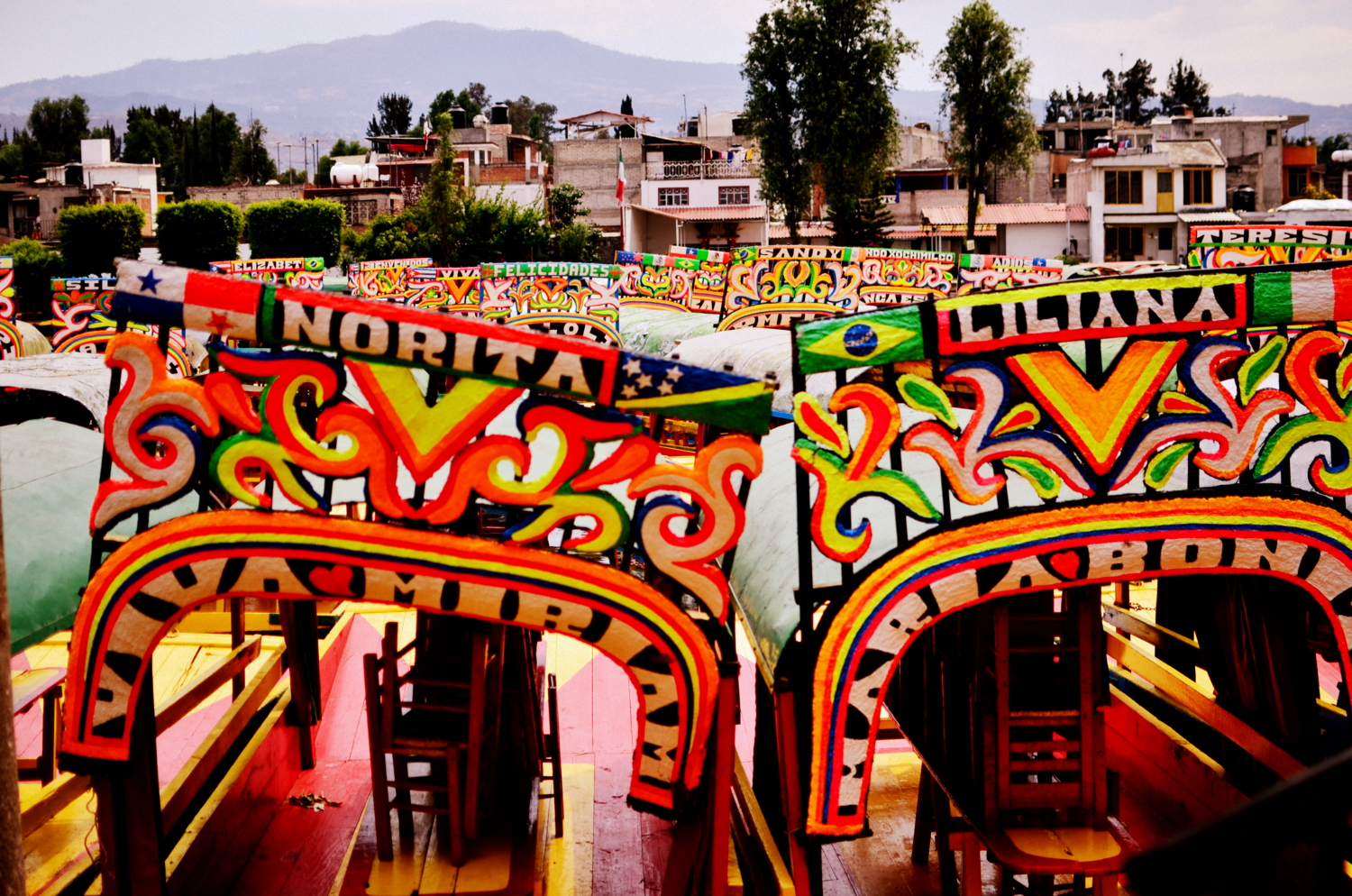

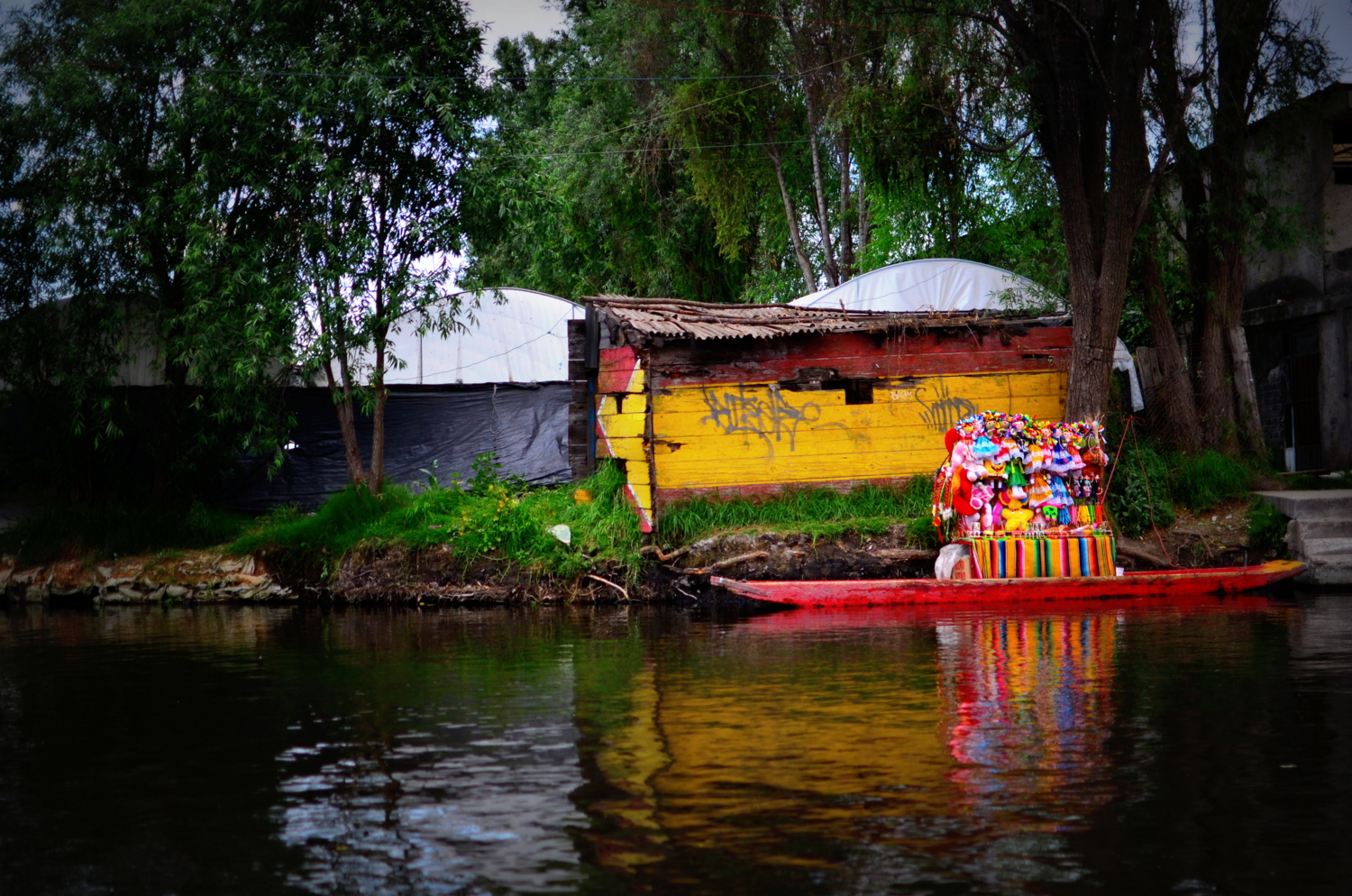


The next few days were dedicated to the birthdays. Santiago’s college buddy Mike flew in from NYC and both his and Santiago’s birthdays were the previous week. He was a true fish out of water here and seemed to be stuck in the upper west side bubble in life in general, so interacting with Mexican culture was almost non-existent for him. Santiago’s pal from the city also had a birthday, so we spent 2 straight nights in birthday party mode. Mexicans (at least these ones) tend to go right for the hard liquor and drink that all night long. The language barrier is broken by alcohol during the later portion of the night as our interactions were spent laughing a lot more and trying to talk a lot less. Physical humor prevails. After getting to bed around 6 AM we woke up and spent all day setting up Santiago’s apartment for his celebration. We utilized his projector to create a slideshow of pictures I’ve taken of Mexico thus far onto his ceiling, arranged his living room, and set up food and drinking stations. After eating tons of food, playing an intense game of marbles (I’m sure the neighbors were delighted by this), and drinking plenty of libations we found ourselves still awake at 6AM again, and we were thoroughly wiped out now. We needed a full day of recovery before leaving the scene. Monday I was sitting on his couch reflecting over the past week and felt completely content. Mexico City gave us opposing perspectives on life here. We saw the cushy, upscale kind of living in this part of town and hanging out with Santiago’s relatives. We also saw the poorer walks of life here getting by in their day to day shuffle scrounging for pesos. The classes established in this city, and in this country, seem well defined and hard to break out of. It’s a busy city to find yourself in with a more than enough to see and do. I can’t thank Santiago enough for his hospitality and making our Mexico City experience awesome. More than anything our stay in the city brought Mexican hospitality to light. It was stressed to me that Mexicans truly want you to have a good time in their country and that “mi casa es su casa”. This was truly conveyed.



Come away with me

 TheAdventuresOfDr