
All of Costa Rica in one convenient post

Before going into Costa Rica we knew that we were crossing into a country that not only embraced tourism, it married the industry. We also knew that we were crossing into Costa Rica without two essential items that were obligitory to enjoy your stay in Costa Rica; time and money.

A 5:15 AM school bus pick up at our finca eco-hostal brought back to the ferry dock just in time for departure, naturally. Our nerves were a little shot from lack of sleep, mainly because of jungle bugs that were biting us in bed. Any real or fabricated touch of the skin at night would snap me out of sleep, looking for the flashlight. But I digress, a lot. Another rough and rocking skip across the lake and we were off.
We hopped on the first bus leaving to the fronterra. This bus dropped us off in the depths of the mercado-ish metal shacks that line the Pan American highway where Nicaragua and Costa Rica meet. Prior reading let us in to the fact that the touts help assist you through the border crossing for a dollar, but are not necessary to pass. Confusion about procedures can grab the best of your judgement at times, but we had been crossing all borders by foot for months and stuck with our instincts. Had we paid for the assistance we would have saved us about 10 minutes of confusion. The migration office was a little out of the way and we wound up paying the money saved for a pedi cab ride that was beyond unnecessary. We knew the moment we were in Costa Rica because the buses were real and cost a hell of a lot more.

Since we didn’t have time for a transfer in San Jose our plan of an Ometepe to the Caribbean coast plan was kicked to the curb. The funny thing about San Jose was that it was incredibly sketchy and nobody ever knew the names of streets they used daily. Using a tried and commonly untrue lonely planet map we quickly found ourselves disoriented. I walked into a smoothy shop and asked what street the business was on and got two “don’t know” responses. We eventually went back to a hostel Elissa previously stayed at 3 years prior (Hostal Planet), and settled in for a night. Our hostel was full of adventure tourists taking advantage of all of the 10 tours the hostel conveniently offered at enormously inflated prices. Very accommodating and modern, English was almost mandatory.
The next morning we walked to the bus station, which naturally was much further than we imagined, and headed off towards Puerto Viejo. Elissa’s fond memories of this beach and fishing town from years ago sounded like a good place to crash for few days, which is all we really had. Simply strolling around was an acceptable behavior in this laid back surfing town, with a few offerings of foriegn cuisine luring us in. When we rode into town the bubble of yesteryear popped into expensive housing, expensive food, and an overall eruption in tourism. Places were fully booked, rooms were close to 40 bucks a night, and not worth half that in accordance with comforts and livability. We found a bed for 20 bucks in a dormitory that had a very basic kitchen. Mosquitoes were also everywhere, and attacked at an unprecedented rate.
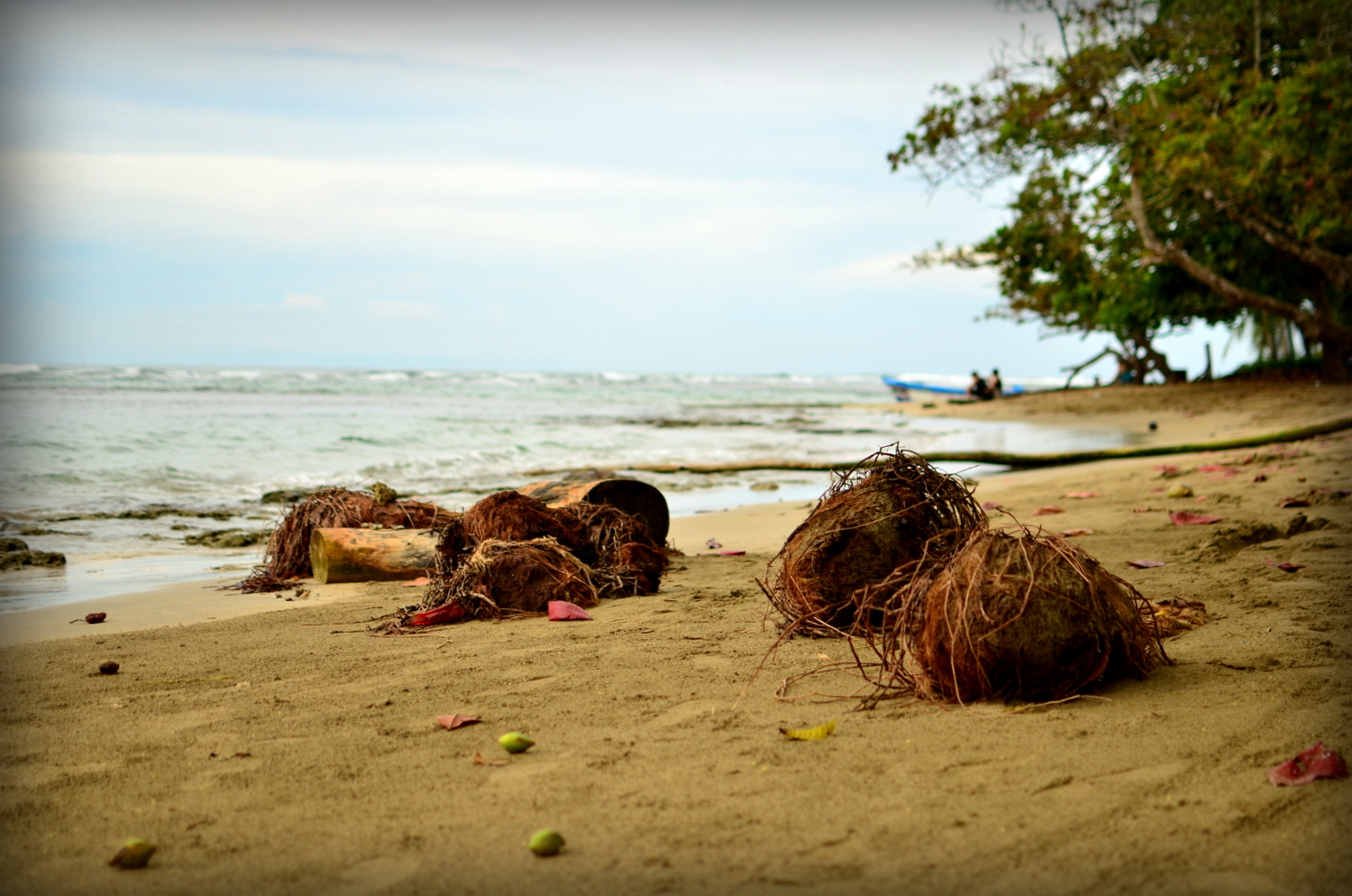
The simple pace of the slow life of the coast still existed, it was just draped in a tourist bulls eye cloth that uglied it up a bit. Every piece of main property fronting the main road was turned into a surf clothing shop, bar, discotek, an ex-pat restaurant, a place to sell hippy jewerly, pipes, rent bikes, or a bank. There were three large grocery stores supporting the little village with overpriced food. We did our best to not spend 10$ getting some fruit, veggies, and yogurt. Meals at restaurants, even the local platos called casados, set us back a minimum of 6 bucks. This may not sound like a lot of money, but for extended traveling simple pleasures like that will drain your bank one bite at a time. The beaches were still there, but the memory had vanished.
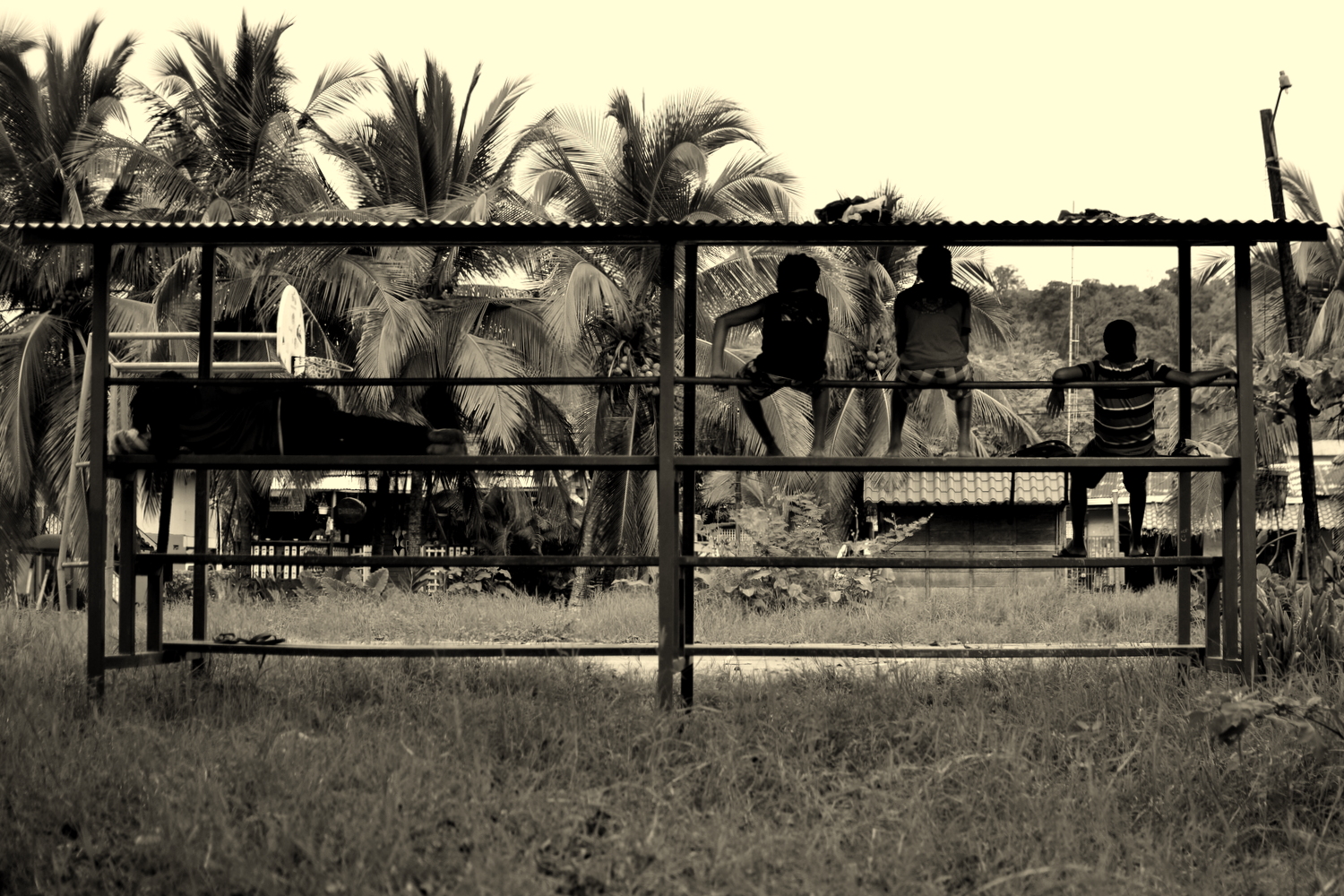
From an outsider’s perspective, when I looked around this tourism-took-over town I saw complacency mixed with melancholy. Sure, a lot of people were taking advantage of the opportunity for a healthy stream of income, but to me they didn’t generally look or feel happy about the influx of gringos using their town as a mode to fulfill to their wants and desires. When we asked for a slight discount for multiple nights it was generally met with a no, even with an empty house behind them. To me this village felt like a good example for a case study about how tourism can totally change the face of a place. The “pura vida” way of life led itself into a laissez faire approach to preserving a piece of what it surely must have had. Puerto Viejo today is completely geared to please the outsiders, which to me feels like it siphoned out the pleasantness of their once quiet, family beach town life. Fishing is still alive and well, but little else is, culturally.

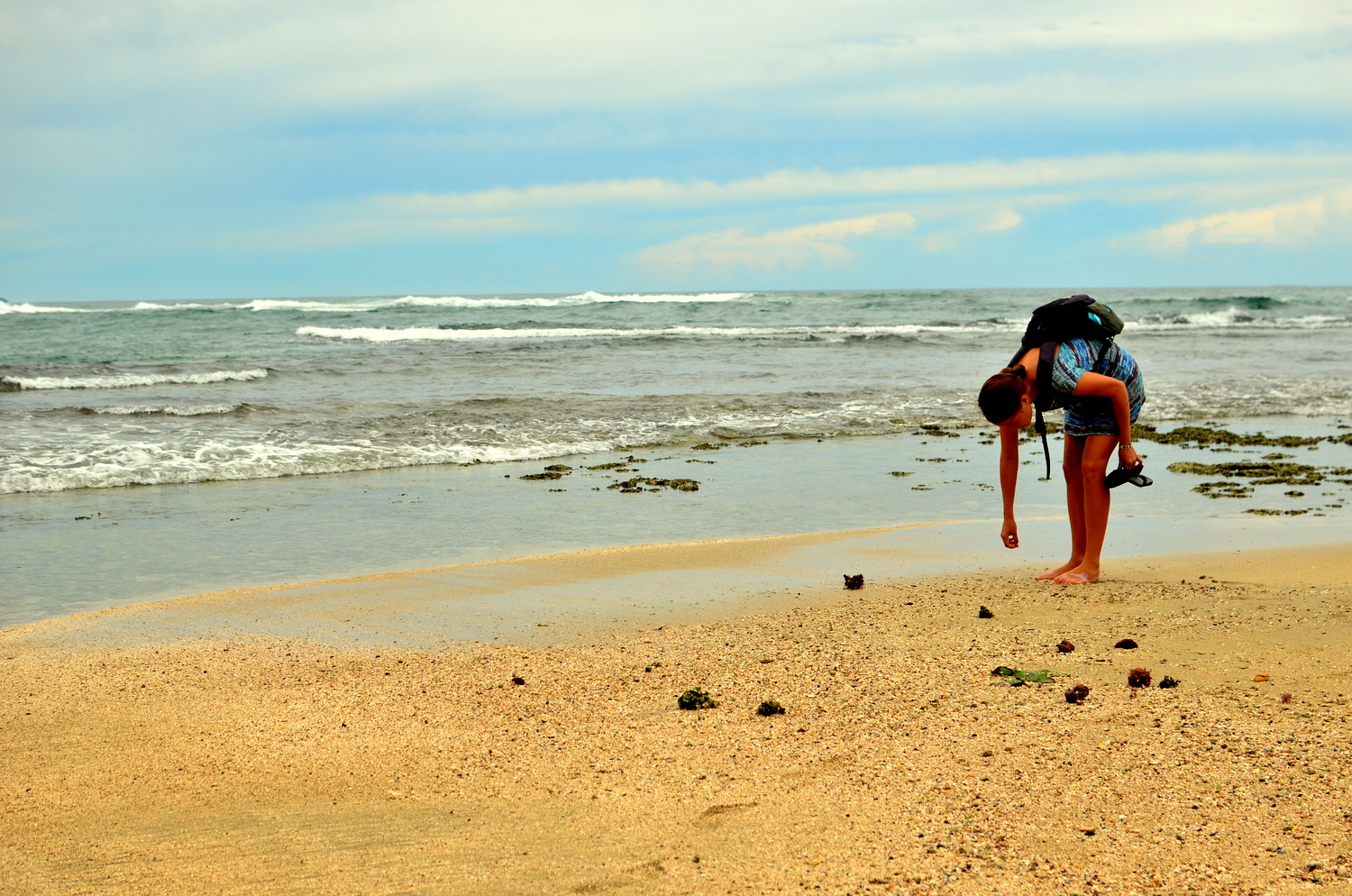
In our attempt to escape we rented bicycles for one day with our sights set on the furthest beach away. Moments outside of town we found ourselves in the thick of a jungle rainforest. The memories came trickling back in, until the first big, brand new Pete’s Texas Steakhouse restaraunt popped up, only moments later. Thick stretches of rainforests had vanished, broken apart here and there by spa’s, chocolateers, cuisine, retreats, hotels, and “plot for sale” signs. It looked as if the wild jungle between villages were slowly being parceled out for developmental dreams. We raced past the first beach, which was rough surf break waters with sun bathers lounging around. The further we got from the epicenter, the quieter the rumbling became. The next beach was a few years behind the swell that was approaching. The tourism wave hadn’t reached it yet. The rain became more and more steady as we biked down a sandy path towards what must have been the end of the road. By the time we got there it was fully pouring down.
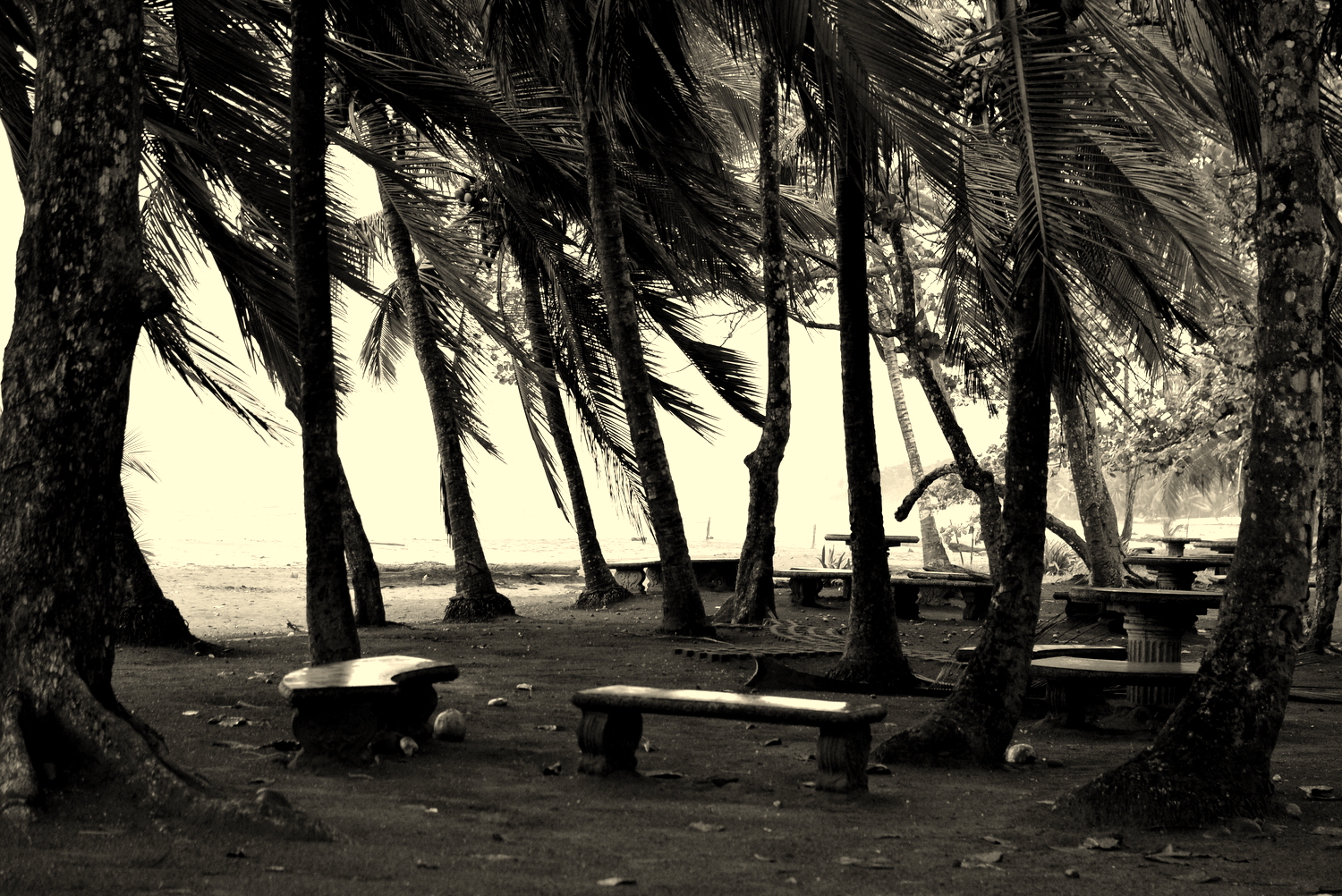
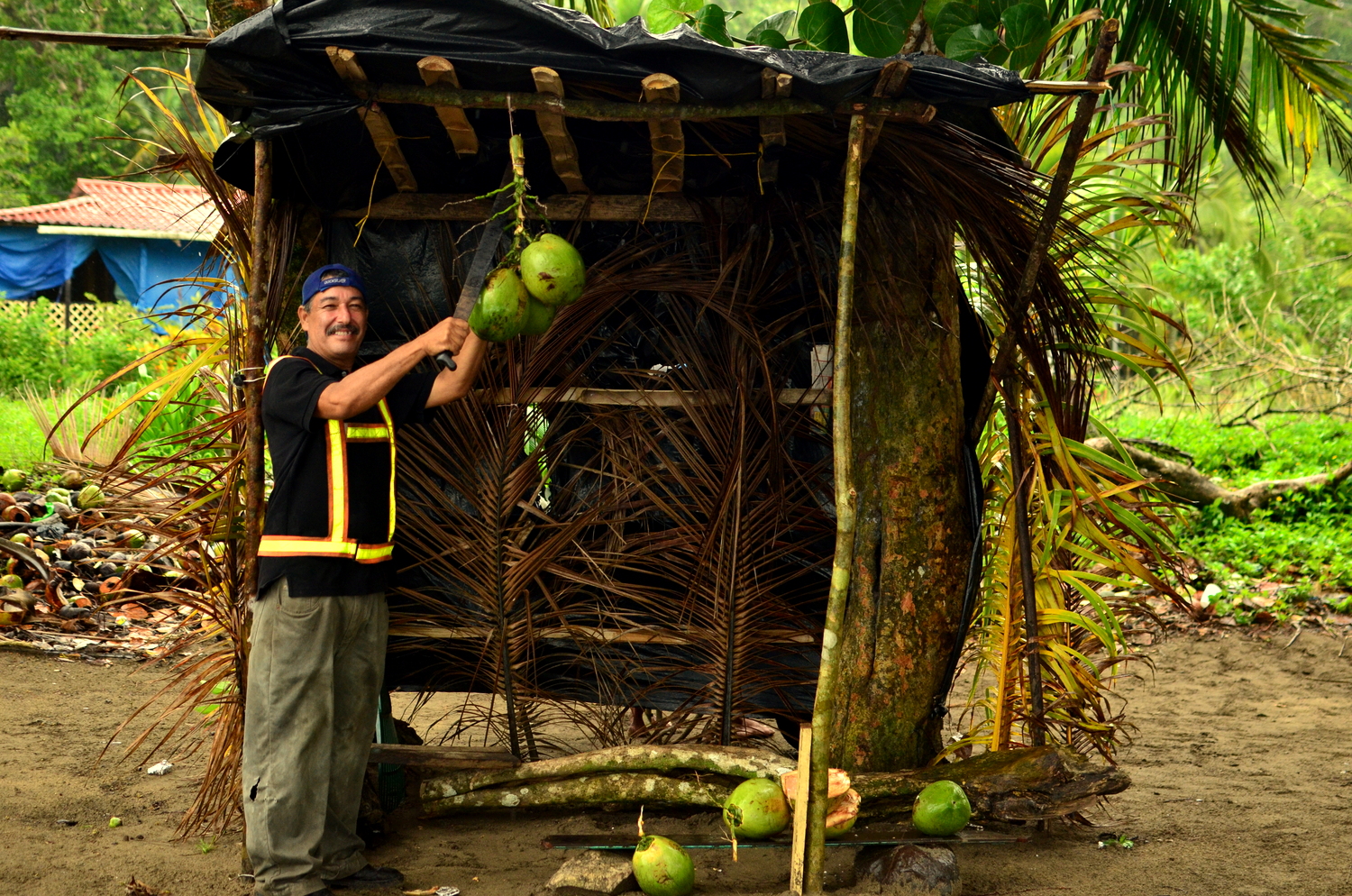
We wound up seeking shelter in a friendly local’s coconut stand for several hours. They offered up some great conversation and fresh coconuts for a dollar. The tall, young afro-carrib was drinking a little vodka behind the booth, riding out the storm in good spirits. Another man was with him wearing a bright reflector vest for some odd reason. He spoke of his love for classic rock and roll, and smoking marijuana. The rain came down from voraciously dark clouds and turned the ocean into a shattered surface of water, taking the full brunt of a constant barrage of kamakaze droplets. We waited it out until the conditions permitted a decision to start heading back. We said goodbye forever, and road our bikes past stretches of jungle turning into housing, but still with howler monkeys and jungle insects providing a natural soundtrack.

Our time spent in Puerto Viejo was not spent in vain. We did enjoy ourselves and the memories we made there, some of which were in depth conversations about perspective, life, and understanding others in a better light. There were plenty of stimuli for taking your thoughts elsewhere in order to make yourself more comfortable. For some reason the scene brought us on another wavelength of life. Higher thoughts were had. We chose Puerto Viejo as our one and only real destination because of it’s close proximity to the Panamanian border crossing near Bocas del Toro.
Costa Rica is surely a country that I’m certain has beautiful things to offer. In fact, I know it is. It has the highest Human Development Index in Latin America and completely abolished it’s national army in 1949. The government has also gone to some great lengths to make sure beautiful places stay beautiful, to protect it’s natural resources for years to come. Beach towns seem to be progressing towards cleaner futures as well, in leiu of the exorbitant amount of construction and development taking place. The jungle and national parks are supposed to be in great shape and highly protected, but I couldn’t tell you that firsthand.
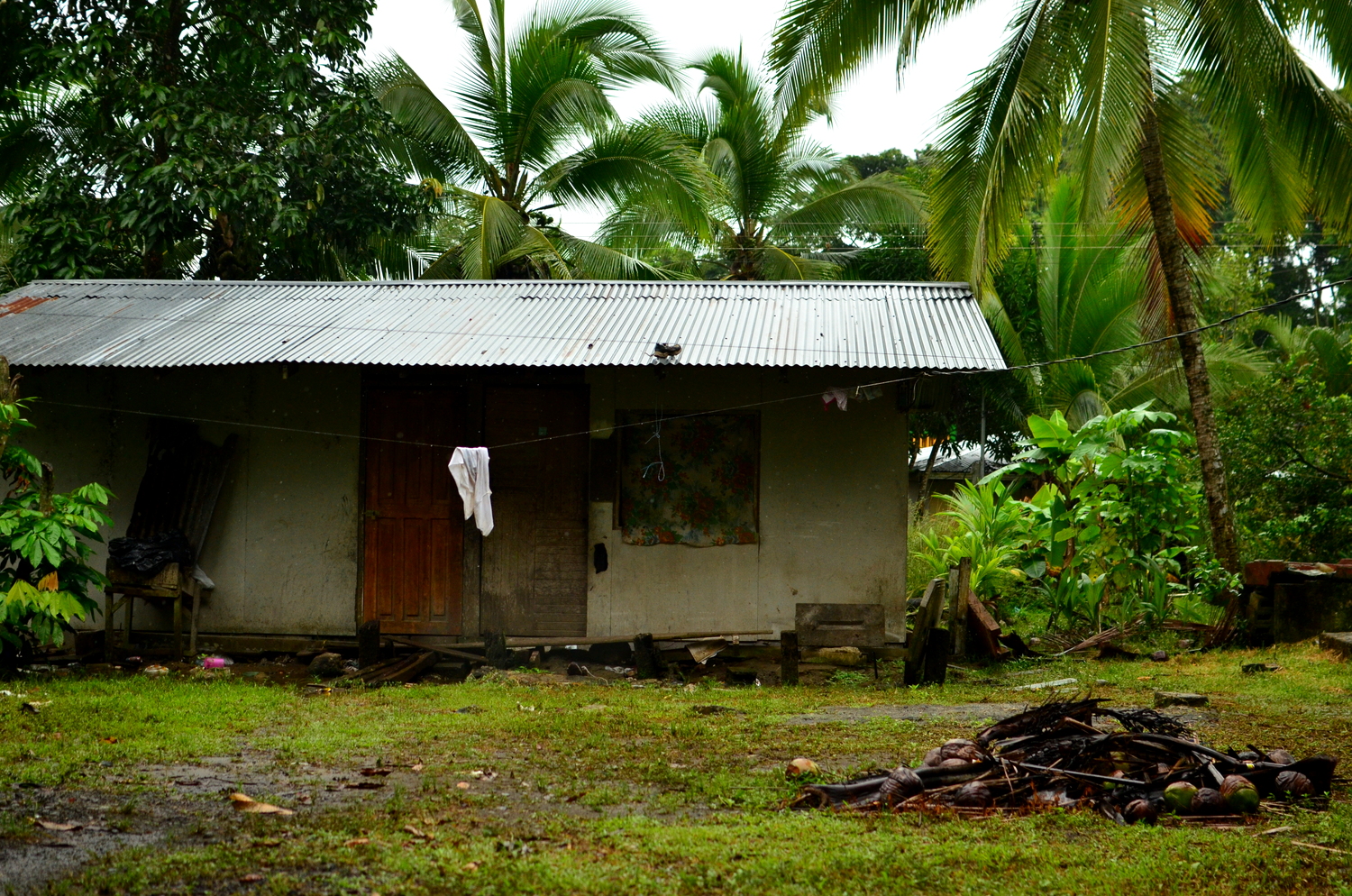
For our visit, we couldn’t justify spending a decent chunk of our overall budget seeing what is there. Transportation was nice but not cheap. Hostels and hotels were more than we’d seen since being in Havana, Cuba. I met a Costa Rican in Panama who left because of being out priced back home. Many travelers are spending only a few weeks in Costa Rica and have vacation budgets, which I believe results in continual price inflation. American tourists comprise the largest group of tourists at about 38% in this highly visited country of the Caribbean basin. It out priced our budgetary constraints and will only go up from there with time. For budget backpackers it’s not really a place to explore in great depth. But it was fun to dip our toes into the mix and see some of it for ourselves.
Weekly Photo Challenge: Renewal
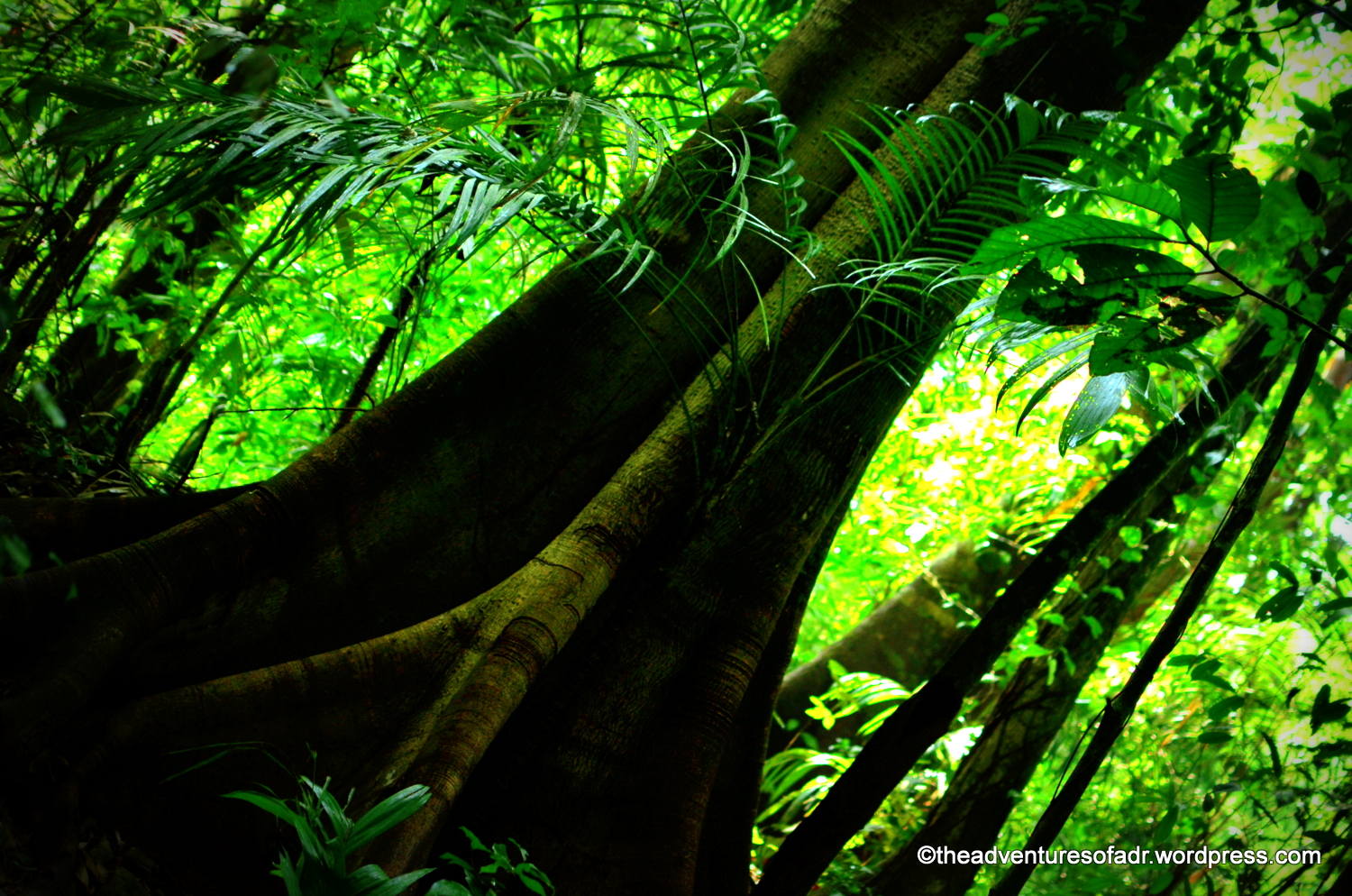
For this week’s photo challenge of renewal I am posting an image that encapsulates its definition. I found this tree within the limits of the Mayan Ruins of Palenque, a stunningly beautiful architectural relic of the past in southeastern Mexico. During the time when the city was occupied, a majority of the jungle was cleared out to accommodate for the population and functionality of the ancient metropolis. After the city was abandoned sometime in the 7th century the jungle eventually took back the land that it rightfully owned, and flourished back to it’s natural state once again. The light coming through the jungle canopy was a beautiful light green filtered hue on the day we went. Life seemed to be breathing all around us in harmony. Ah, Mexico.
Ometepe is made of two, very hospitable volcanoes.
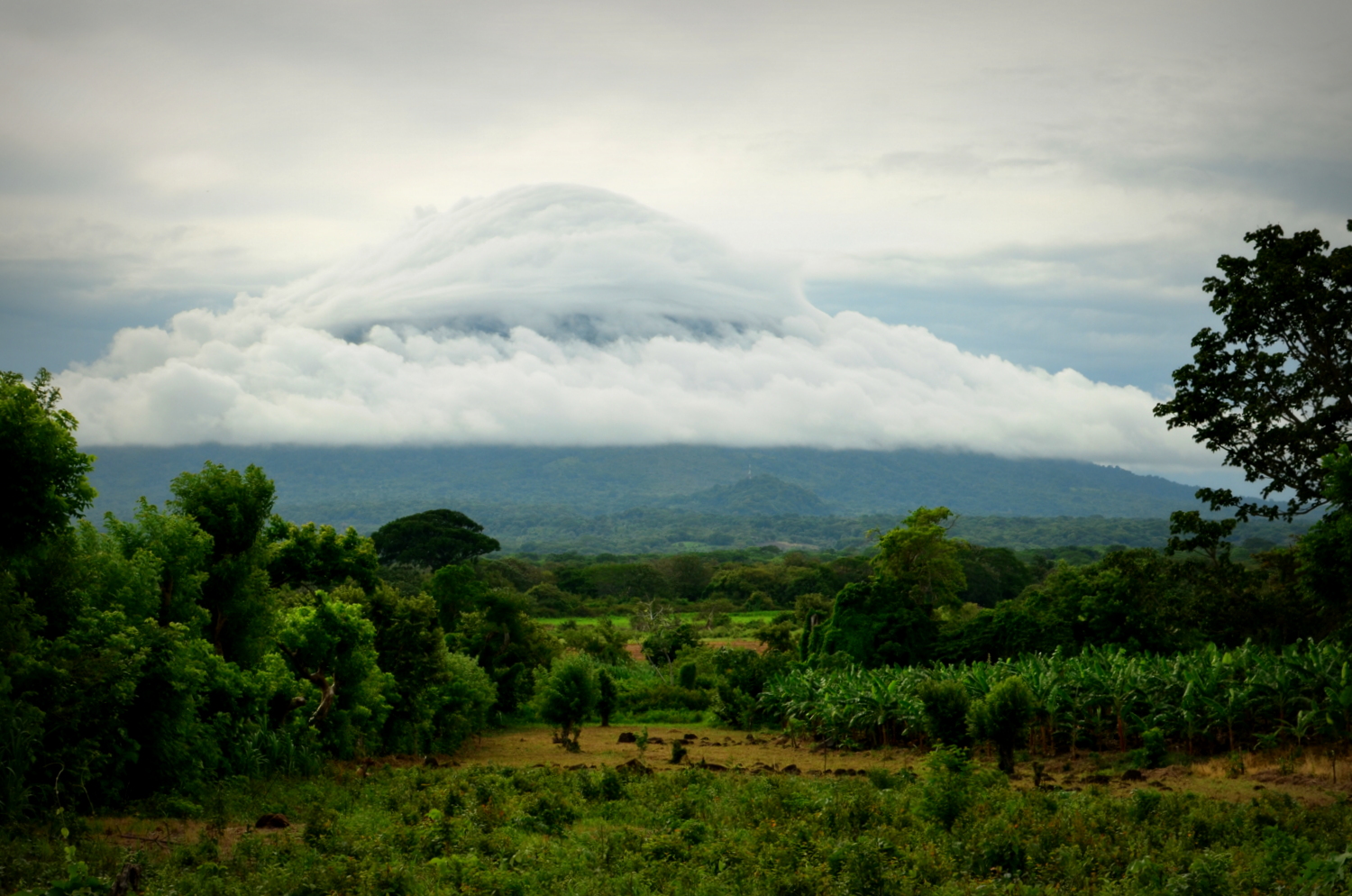
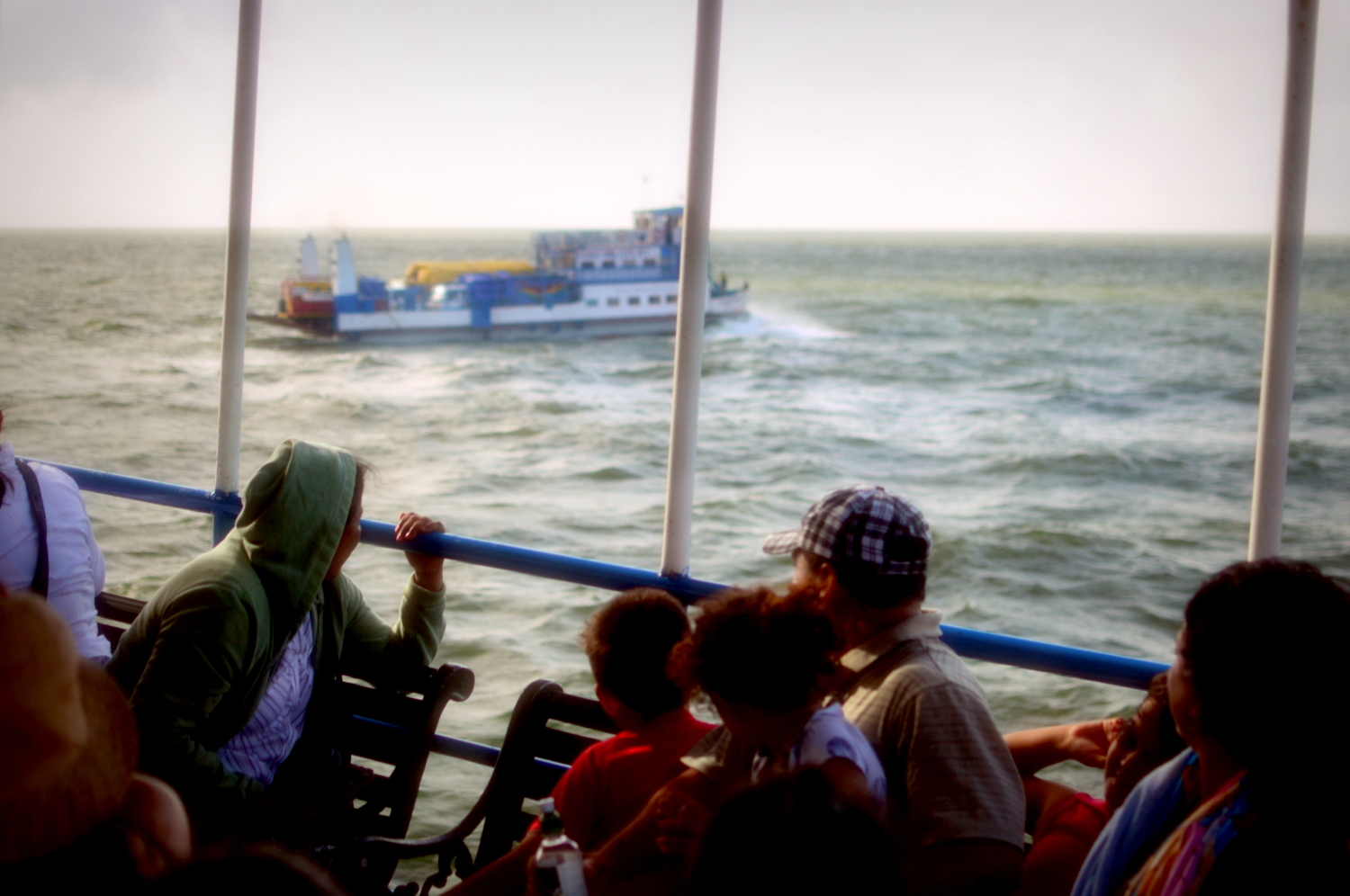
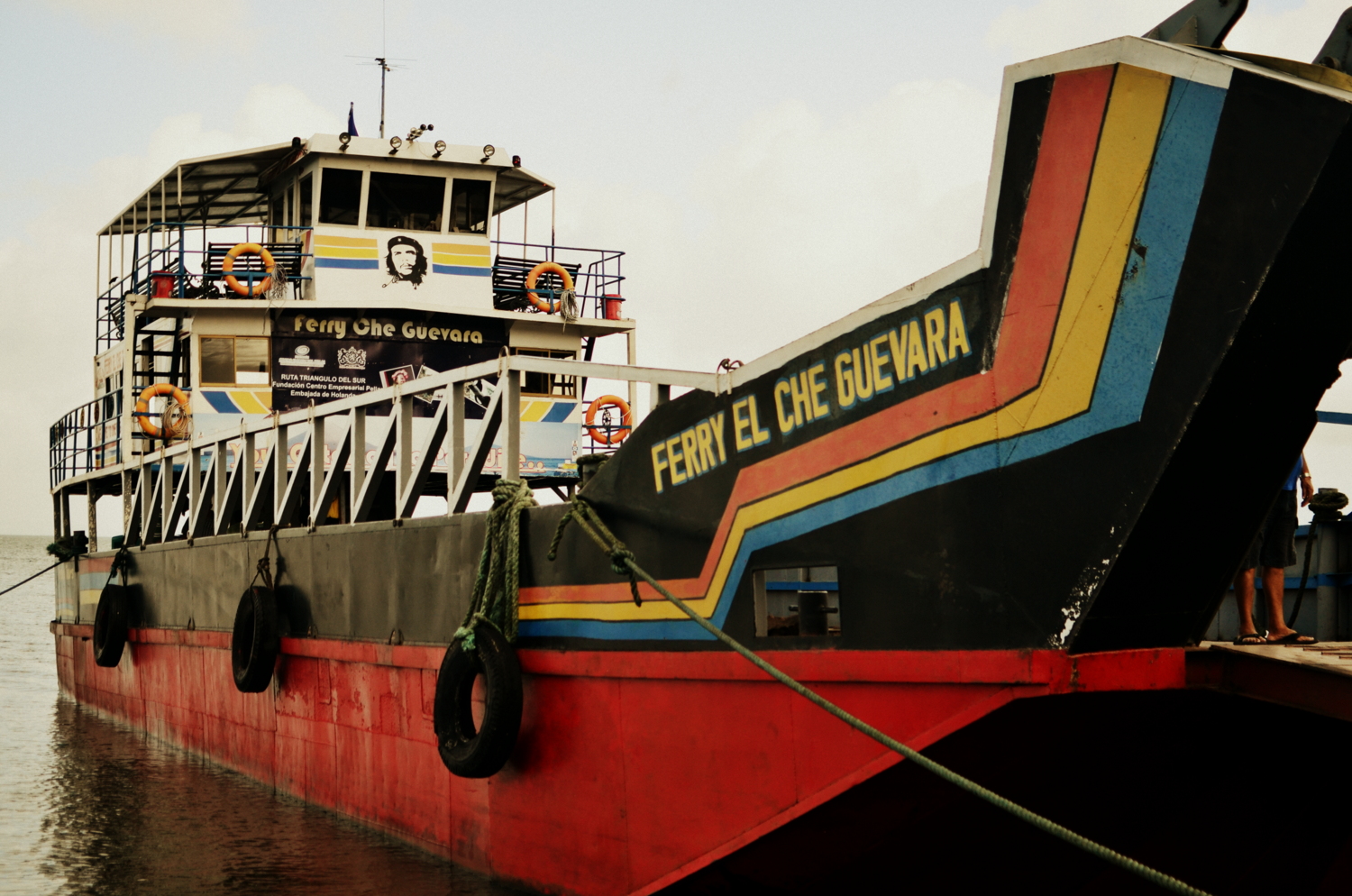
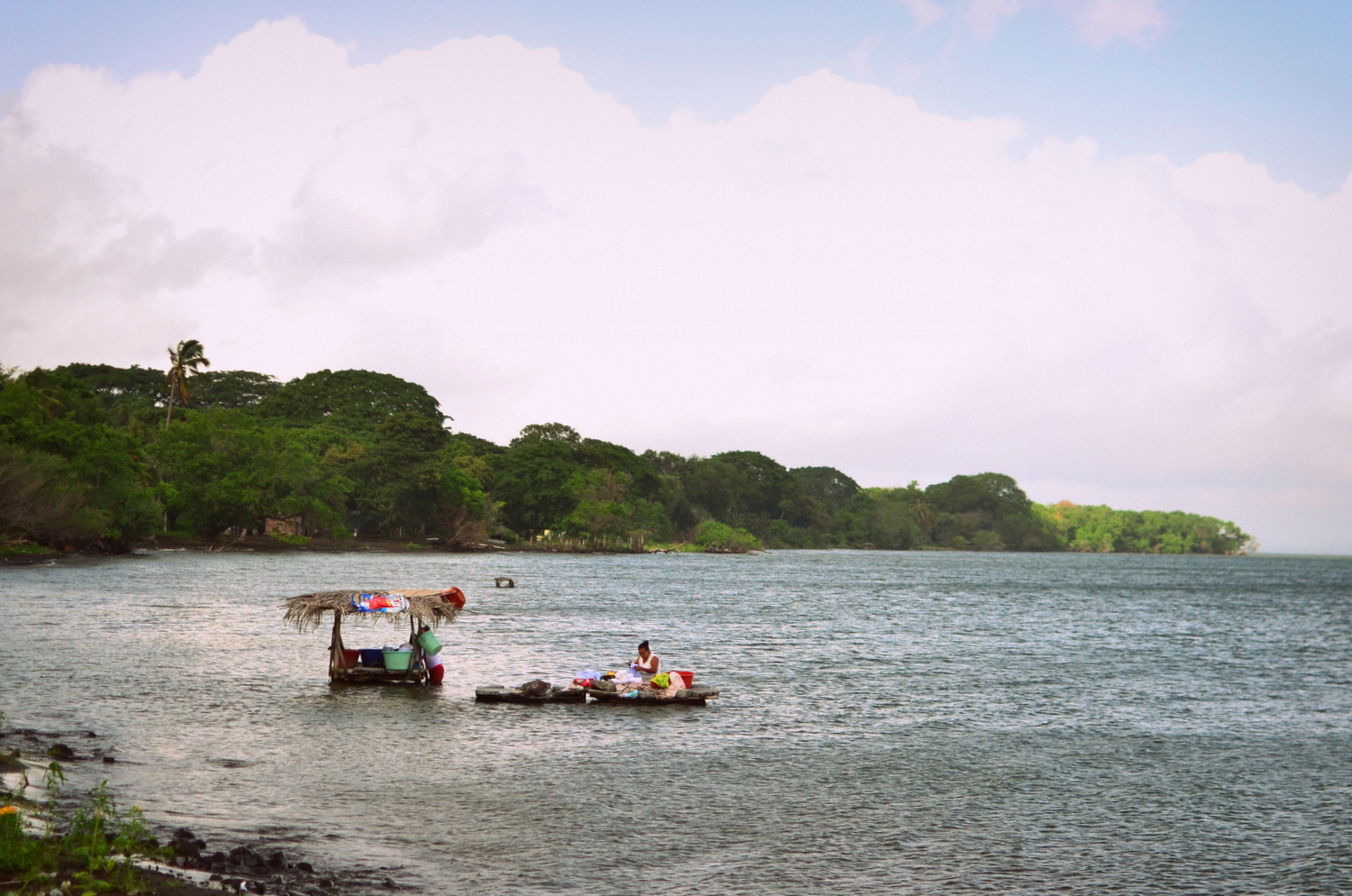
Any traveler who has ever set foot on the strikingly surreal island of Ometepe knows all to well the trials and tribulations of the journey to get there. This is especially true if your goal was an early arrival. Our passage to Ometepe started at approximately 5:45Am in San Juan del Sur. Catching the first bus back to the hub town of Rivas had us get to the ferry at the absolute last minute it was boarding. Our vessel, FERRY EL CHE GUEVARA, was jammed packed to standing room only. The metallic human transport vessel stepped on the gas the minute we set our bags down, straight into the full strength of a powerful northwesterly wind. The ship almost felt like it was testing the limits of it’s buoyancy several times, and quickly began turning smiles, thrills, and laughter into discontent, sea sickness, and eventual vomiting. It seemed like every kid around us began throwing up, and most had brought little towels specifically for this situation. The morning rain storm didn’t help matters. The thunderous applause from the ominous clouds that shrouded the cone tops of both volcanoes swirled ahead of us, hanging close to contours of each massive body that comprise the island. Then, like magic, the clouds were slowly unzipped by intensely purified rays of light. The green hills of Ometepe’s lush, rain forest covered slopes became illuminated shortly thereafter. When we reached the dock there were women waist deep in the lake washing their clothes using home made stone washing stations, which was a good sign that weather should clear up.

We had to kill about 2 hours before the one bus that morning eventually took off. I remember that one woman boarded the bus with a perfectly crafted home made cake smothered with yellow frosting. Within 20 minutes the bus’ ancient suspension and bumpy, unpaved roads proved to be too much force for the frosting to bear. What started as small fractures turned into canyons with each of the 100 potholes encountered. Almost 2 and a half hours of bumps and stops later we stepped back onto solid ground and into life on Finca Zopilote.
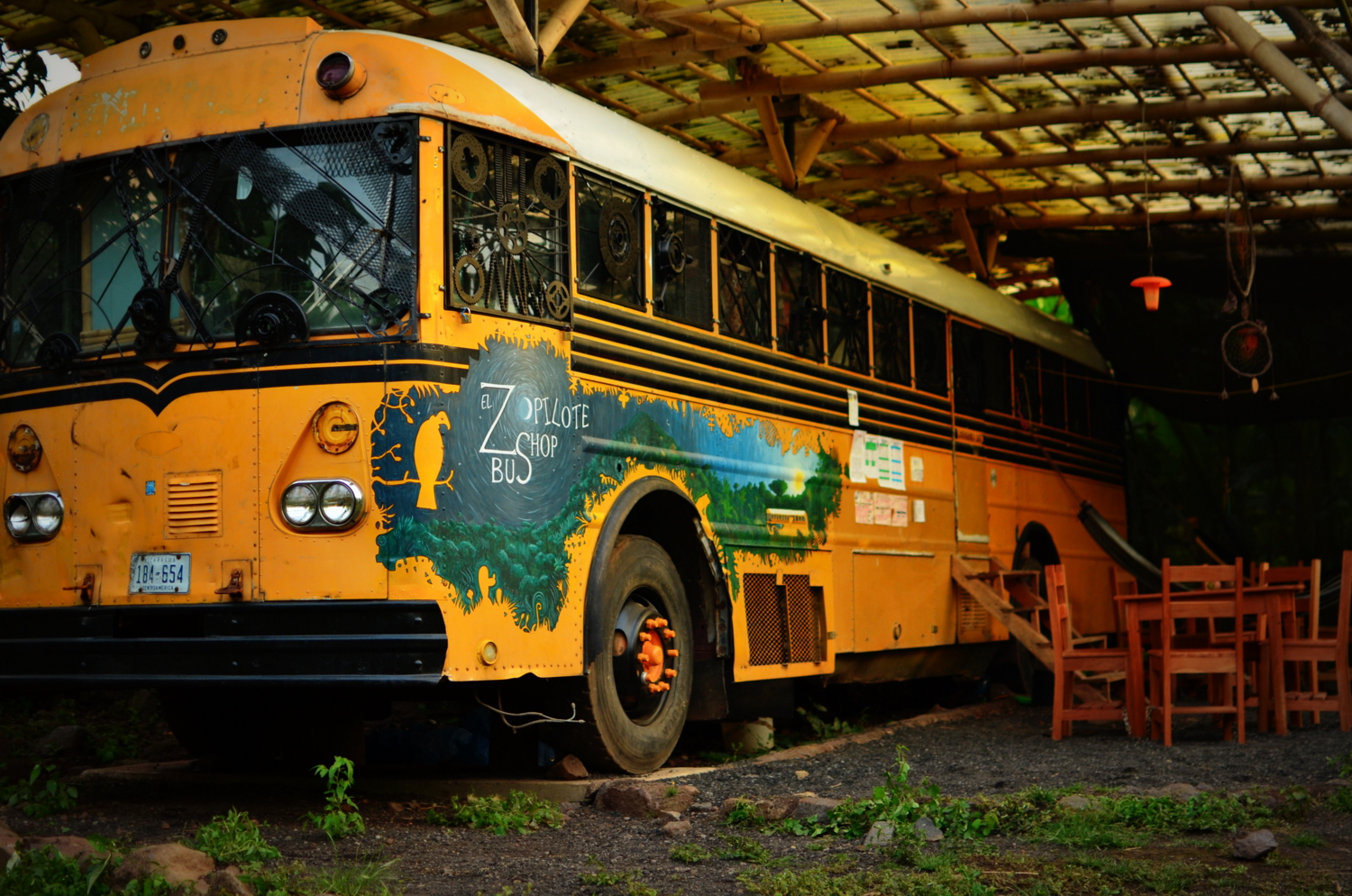
A bus turned coffee shop was parked at the entrance and offered up fresh coffee, snacks, homemade bread, and jewelry. After a little meet and greet, a ten minute uphill walk on a teeming lush jungle path brought us to the reception hut. We settled into the top floor of a wood and bamboo cabana, which was partially open to the jungle and would eventually allow the strangest insects, tarantulas, and soundtrack scored by nature into our bedroom. I remember vividly, after encountering a real scorpion, we found a bug that was a gigantic mix between a tarantula and a scorpion. The finca itself claims to be a self sustaining eco hostel/farm but we noticed most the work was being subcontracted out to locals instead of maintaining the farm from within. While providing jobs to locals that didn’t exist before, the finca’s goal seemed more oriented on filling beds than it’s image projects. But the finca was also populated with an immense amount of lush jungle plants, had composting toilets, provided fresh well water, and did practice self-sustaining farming techniques with working opportunities available with a 2 month minimum.


After getting settled we walked to the empty beach nearby for some afternoon sun. This little stretch of shore offered up stunning views of both volcano peaks (a rarity this time of year) for our eyes to feast on. It turns out that a wide lake beach with a volcano on each end can provide hours of entertainment! Tiny bushy plants were sprouting up everywhere in the sand while miniature waves crashed on the shores edge. We left just in time to catch a sunset that silhouetted Concepcion, the larger of the two volcanoes, and eyed it inquisitively from the lookout tower perched on top of the hostel property later that night.


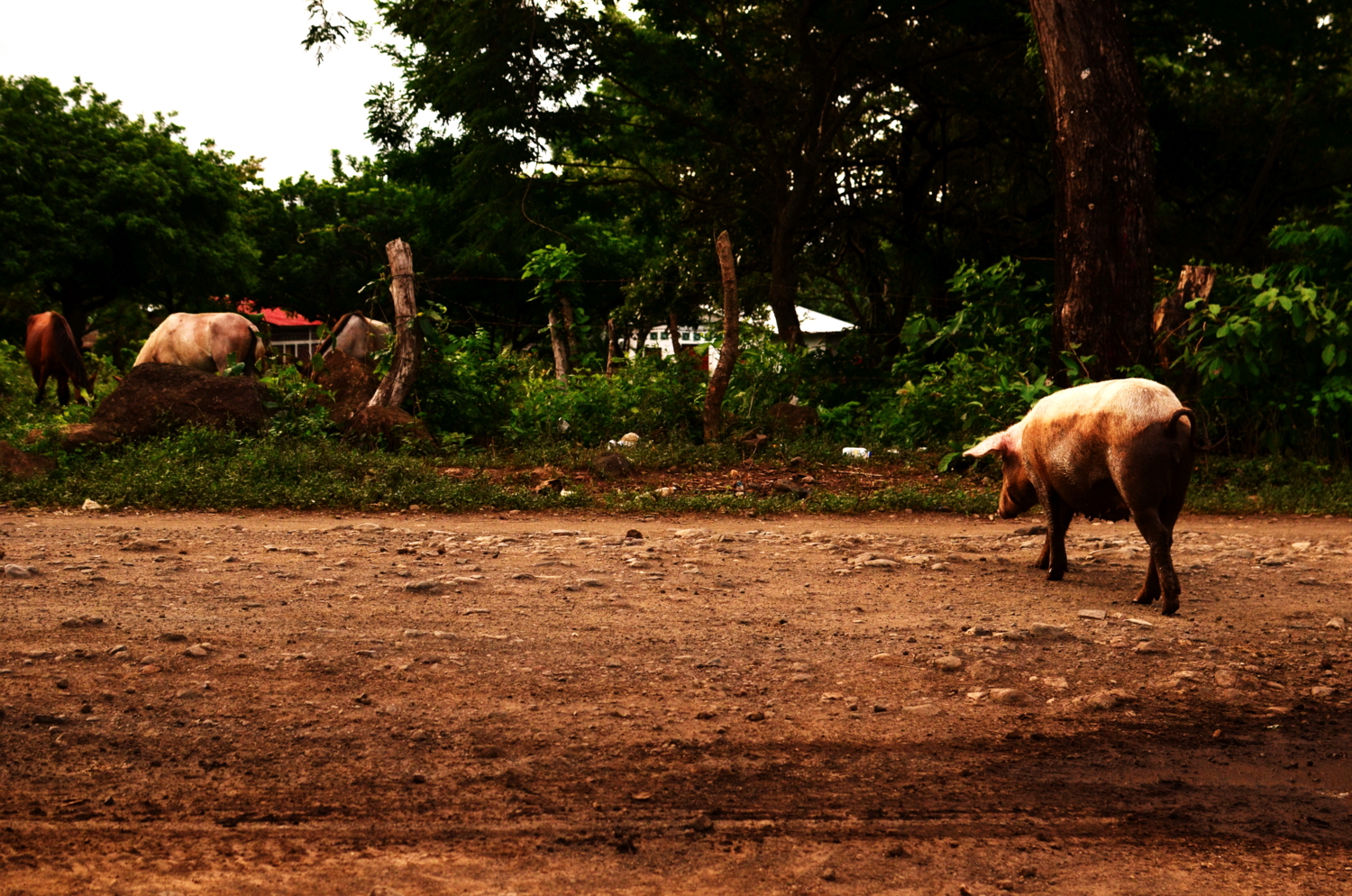
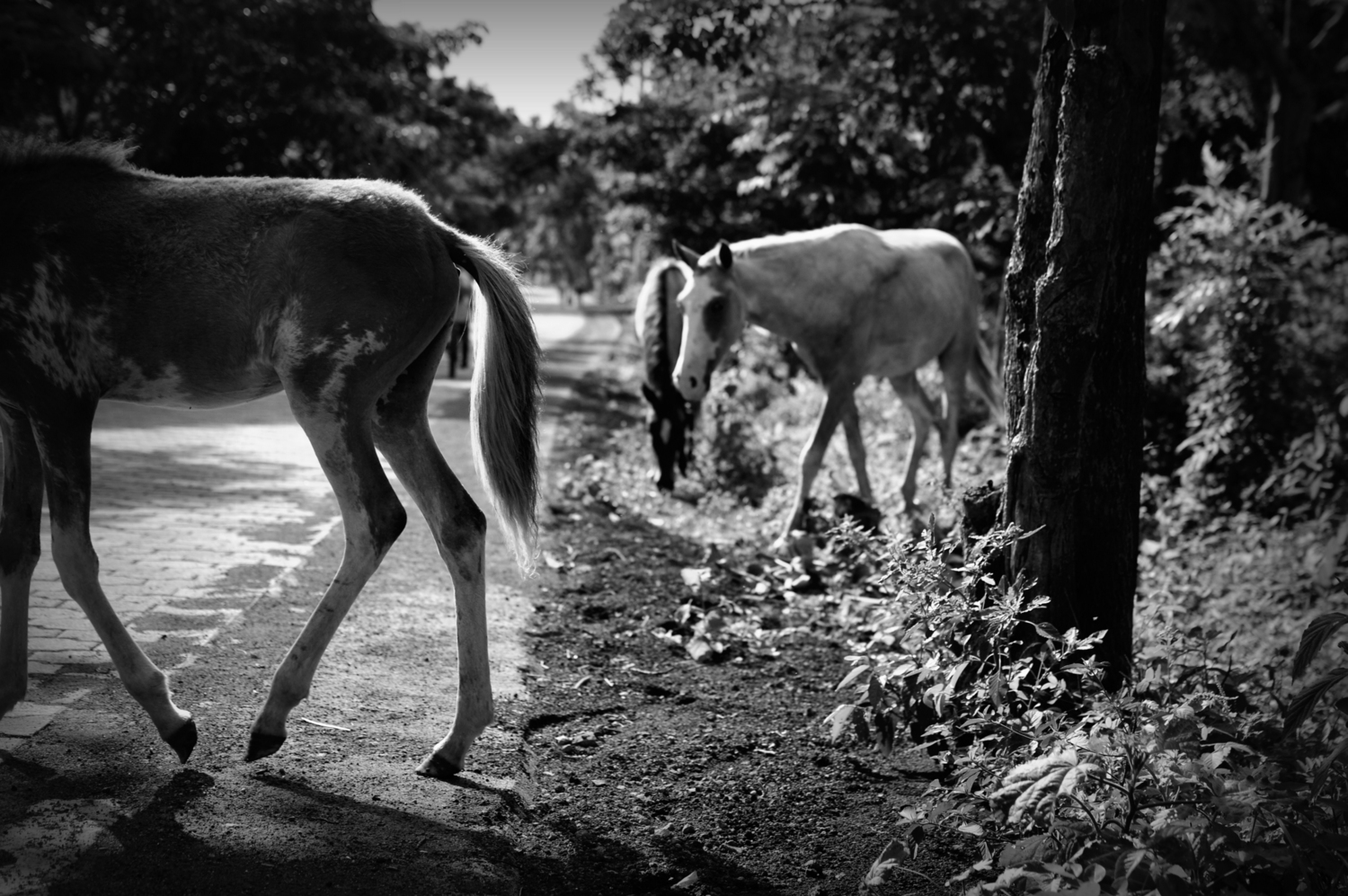
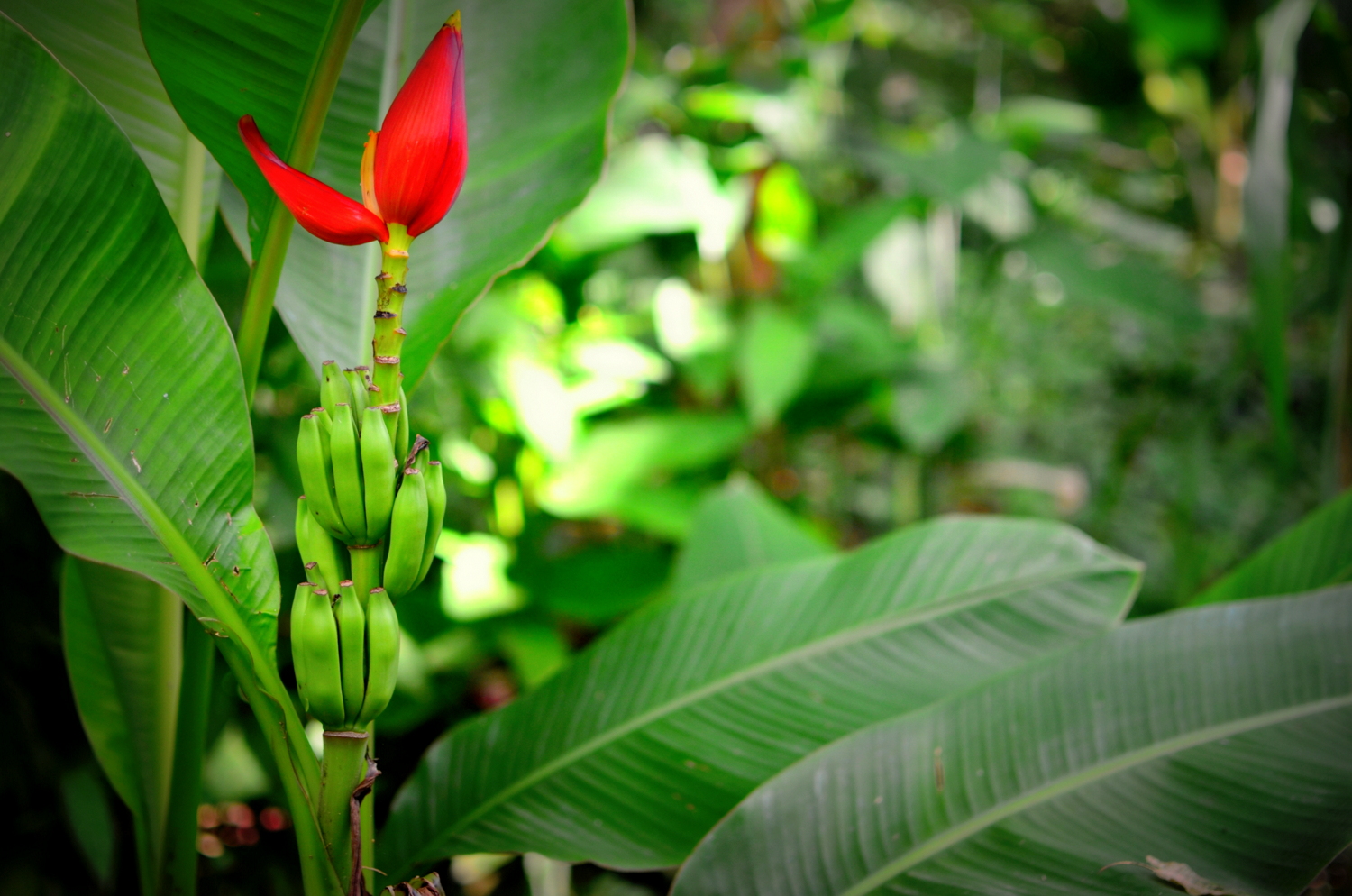
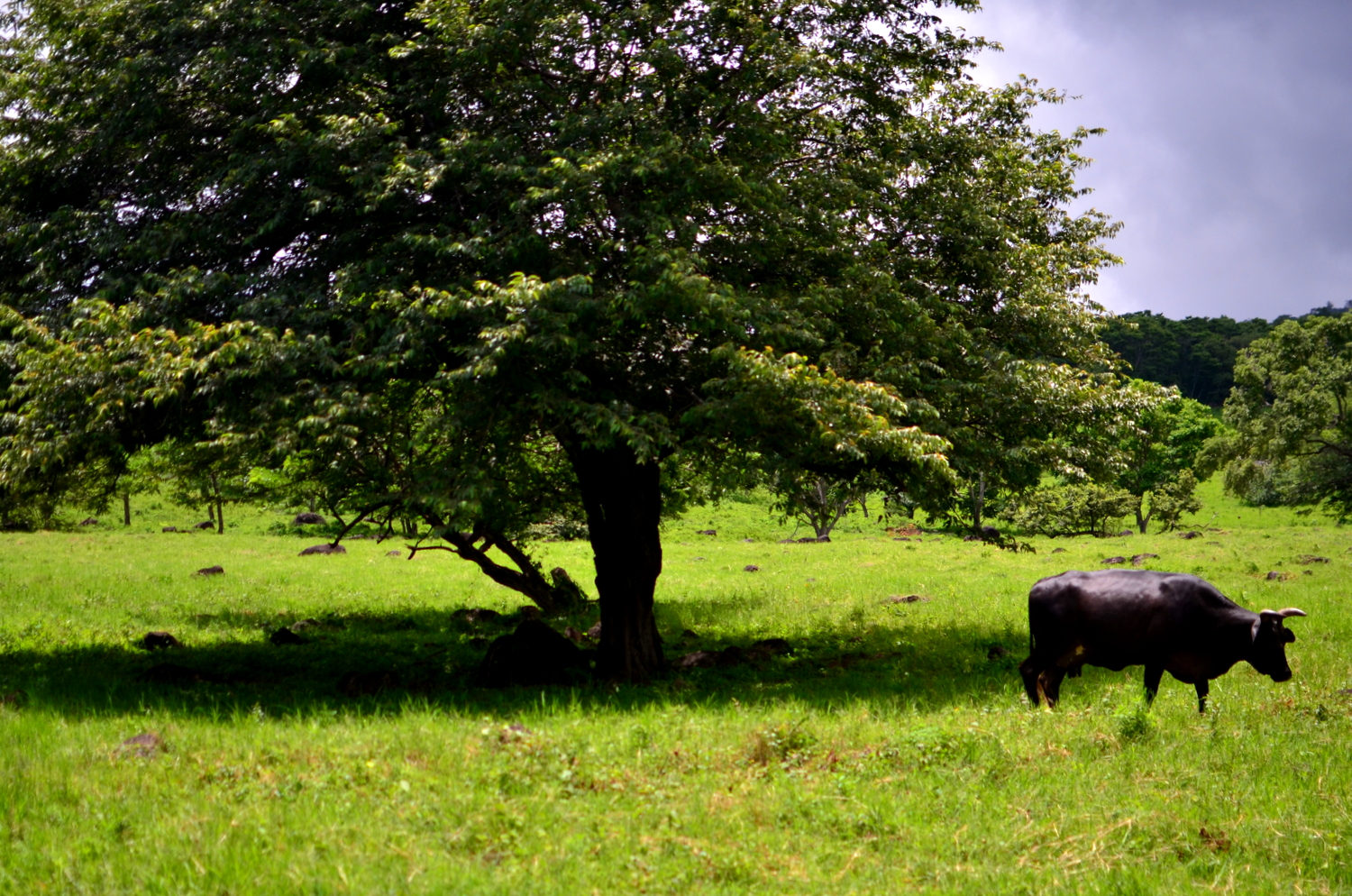
The next morning we were intent on renting bicycles and riding around the island to see the huge waterfall that exists deep into the forest of Volcan Maderas. We teamed up with Carmella, a Floridian we had met the day before, and found some wheels. The road immediately disappeared as soon as we set off, turning from hand placed pavers to wheel packed, cobbled dirt road. The road would get pretty intense wherever hills lived, turning a casual but bumpy bike ride into a white-knuckled, loose knee, tuck and prey for a smooth bottom event. There were several instances when I was convinced that there was a 50% chance of me getting tossed over the handlebars. After you surpass a certain speed in these conditions using brakes carries an almost certain guarantee of road rash in your future. There were a few little tiny congregations along the way, with houses on either side of the only road near the water’s edge. Banana farms and cornfields entered and exited our field of view while we skimmed past cows grazing right next to our tiny smooth path along the road’s edge. Eventually we found the entrance, gathered our breaths, and entered the park.

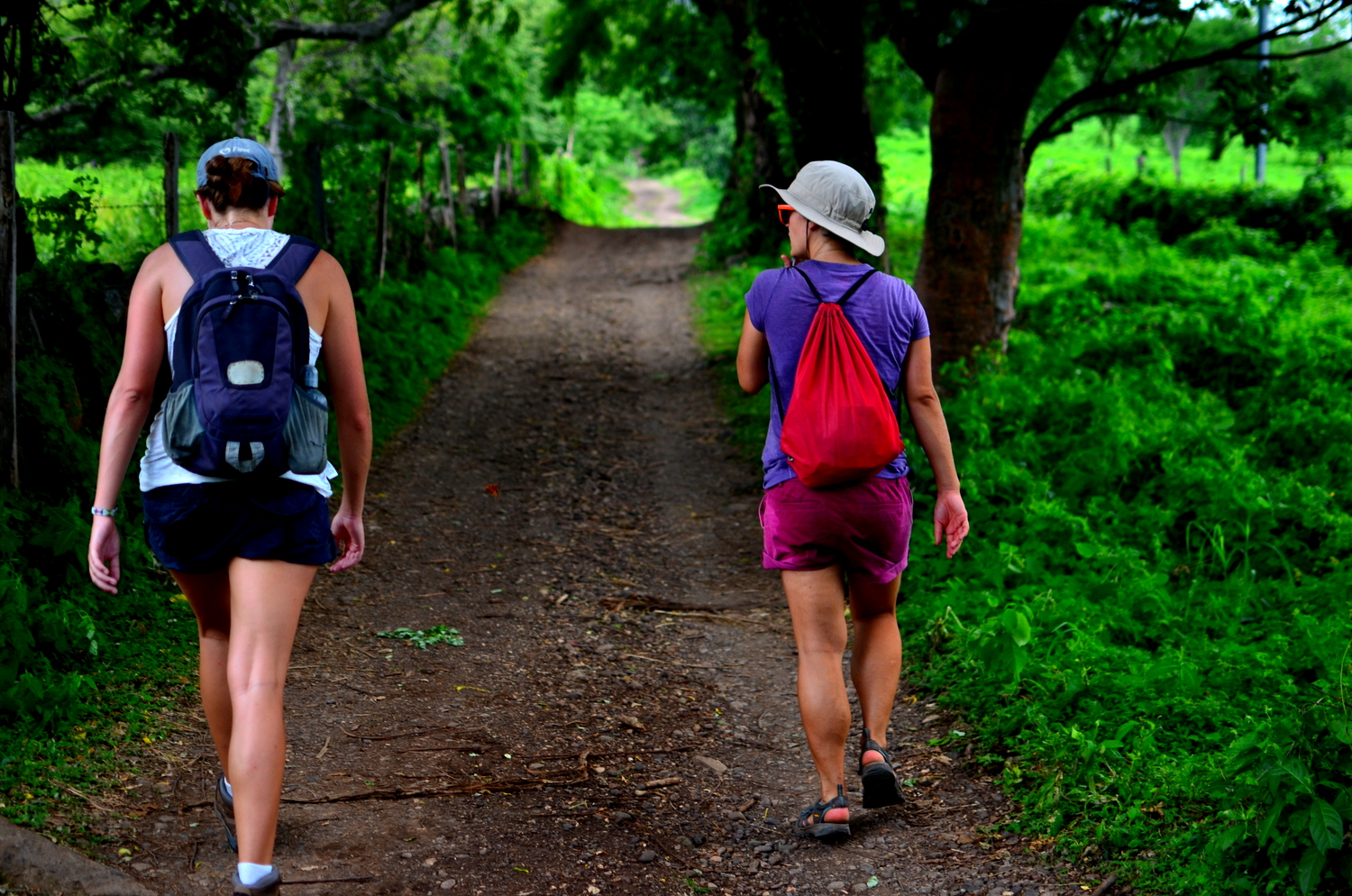
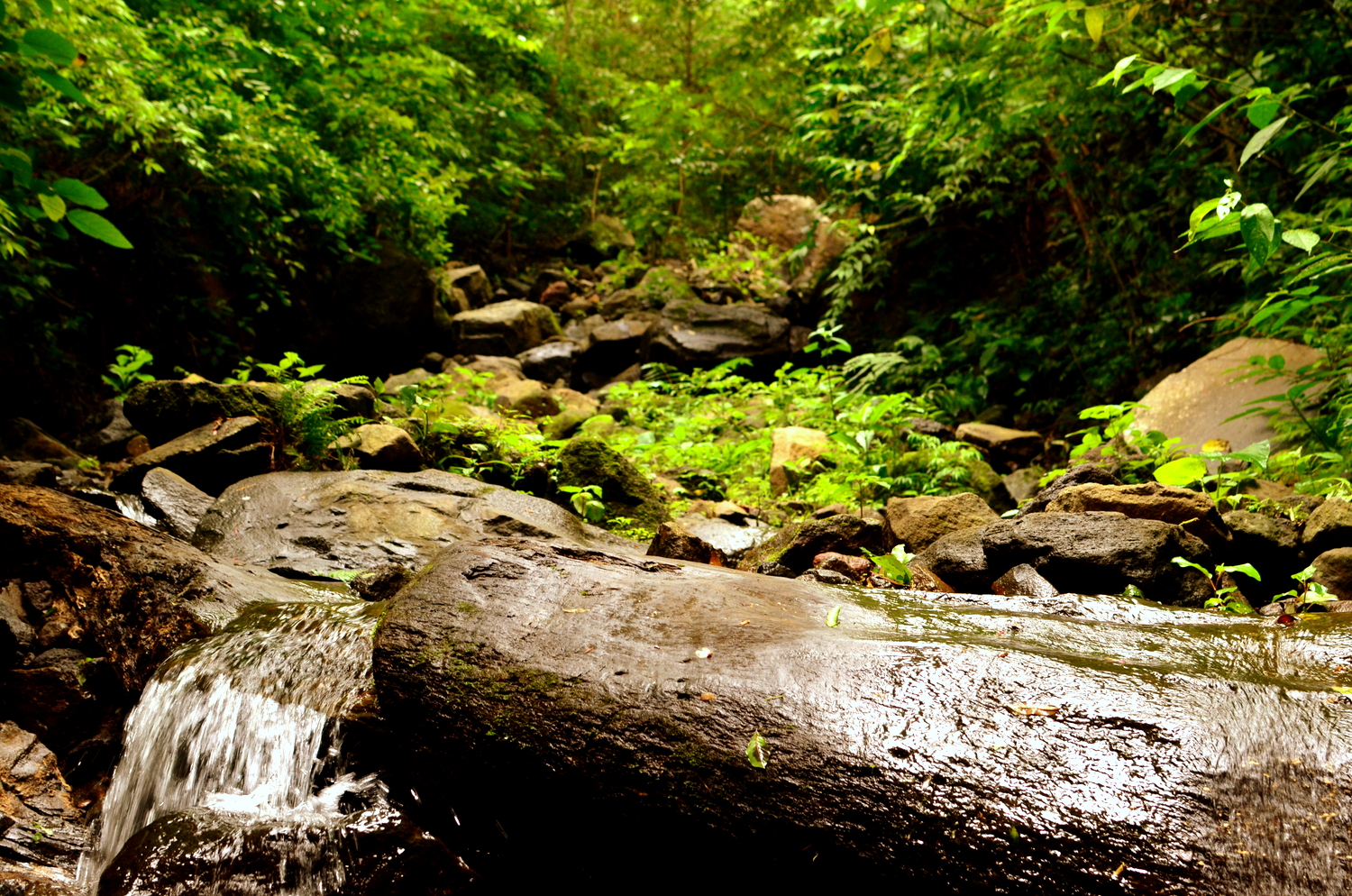
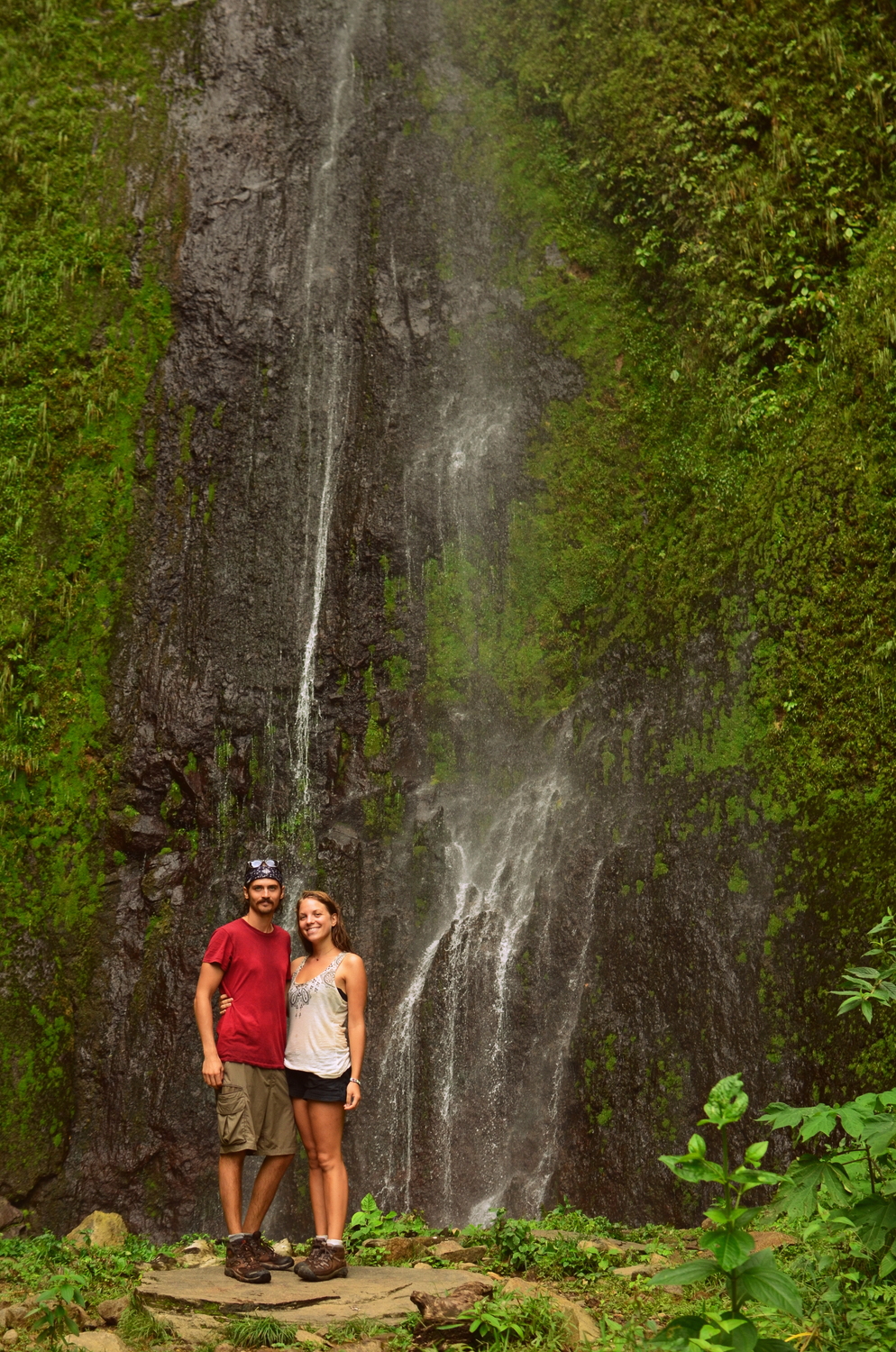
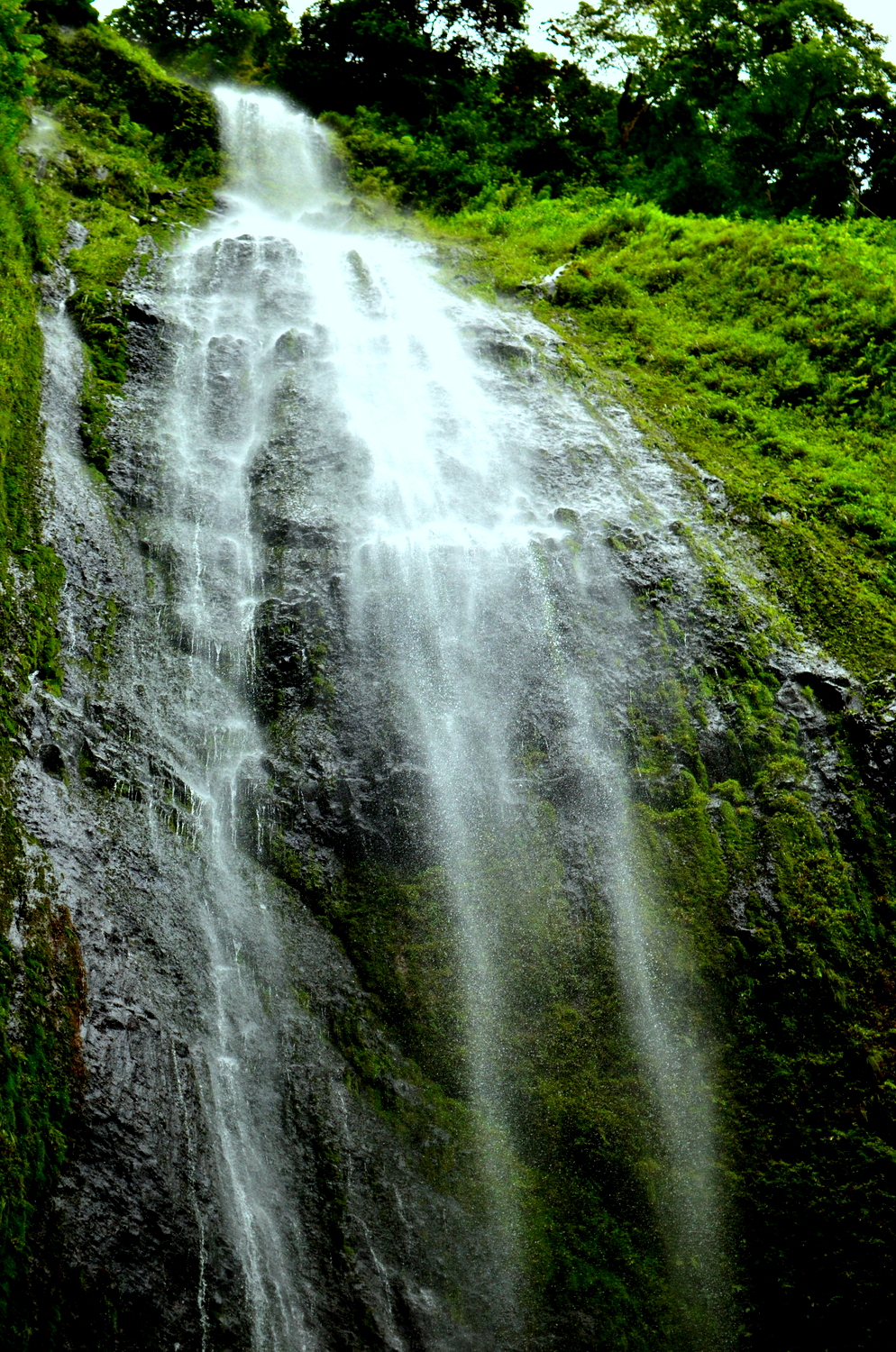
It began to rain as soon as we set foot into the thick of the woods. After about 2 hours of stream hopping, climbing, and occasional intense spurts of hiking we came upon a 200 foot waterfall that was teeming in mossy green plants on all sides. Life was clinging onto every crevice around the air born mist and coated with a thin film of water that glistened in the light. All the water fell into a small, refreshing pool before emptying out into the small rocky stream below. The wind created from the falling water chilled us to the bone as our sweaty bodies turned into fully covered goose-bumped shells. Our two hour walk back was topped off with a grueling, 2 hour bike ride that sent our legs into early retirement. We only had two nights in Ometepe, but the experience was enjoyed to the fullest. A visit to Nicaragua’s biggest lake to see it’s most famous twin volcanoes is a must for any traveler passing through.
Our game plan was to leave in the morning and set our sights on Costa Rica. We had to make up some time because a deadline was fast approaching. We choreographed an escape from the volcanoes and set our alarms for 4:45AM, once again.

Weekly Photo Challenge: Geometry

Weekly Photo Challenge: Geometry
For this week’s challenge I’m brought back to a recent trip to La Habana, Cuba for a picture that says “geometry” to me.
When walking around the crumbly, dilapidated colonial architecture of La Habana, it’s very easy for your eyes to carry your body around with total control. You truly never know what secrets will unveil themselves when you turn any given corner, walk into any old building, or stroll down the Malecon during postcard worthy sunset. The city entices your visual senses to keep searching, keep scanning, and keep walking around one of the strangest realities you’ve ever set your feet upon. Habana truly holds a magic that only those who’ve been down her constantly surprising streets will ever understand.
One particular day I serendipitously turned onto a street and discovered a mirror image of our state capital back in DC. The yellowy glow of a sunset illuminated the massive dome and highlighted every single angle, contour, and detail of the building’s breathtakingly designed face. The diminishing perspective of the classic colonial buildings on either side draws my eyes up and down their facades as they stretch towards El Capitolio in the background. The graffiti rectangle at the lower corner adds another element of geometry and offers a completely different surface juxtaposed with the architecture in the rest of the scene. But the geometry further draws the attention to the subject of the very busy photo.
Our one night stand with San Juan del Sur
San Juan del Sur is yet another destination that has been deemed a regular stop along the Gringo Trail, in my honest opinion. Places like this have long crossed the fragile boundary between a positive tourism effect and over tourism with the town that it interacts with. What once was a small, quiet fishing village has become a popular tourist destination that offers surfers, beach bums, and tourists from all walks of life a chance to be themselves completely without any fleeting attempt of immersing themselves into Nicaraguan culture. San Juan was not supposed to be our end destination, but as fate would have it we wound up stuck there for the night.
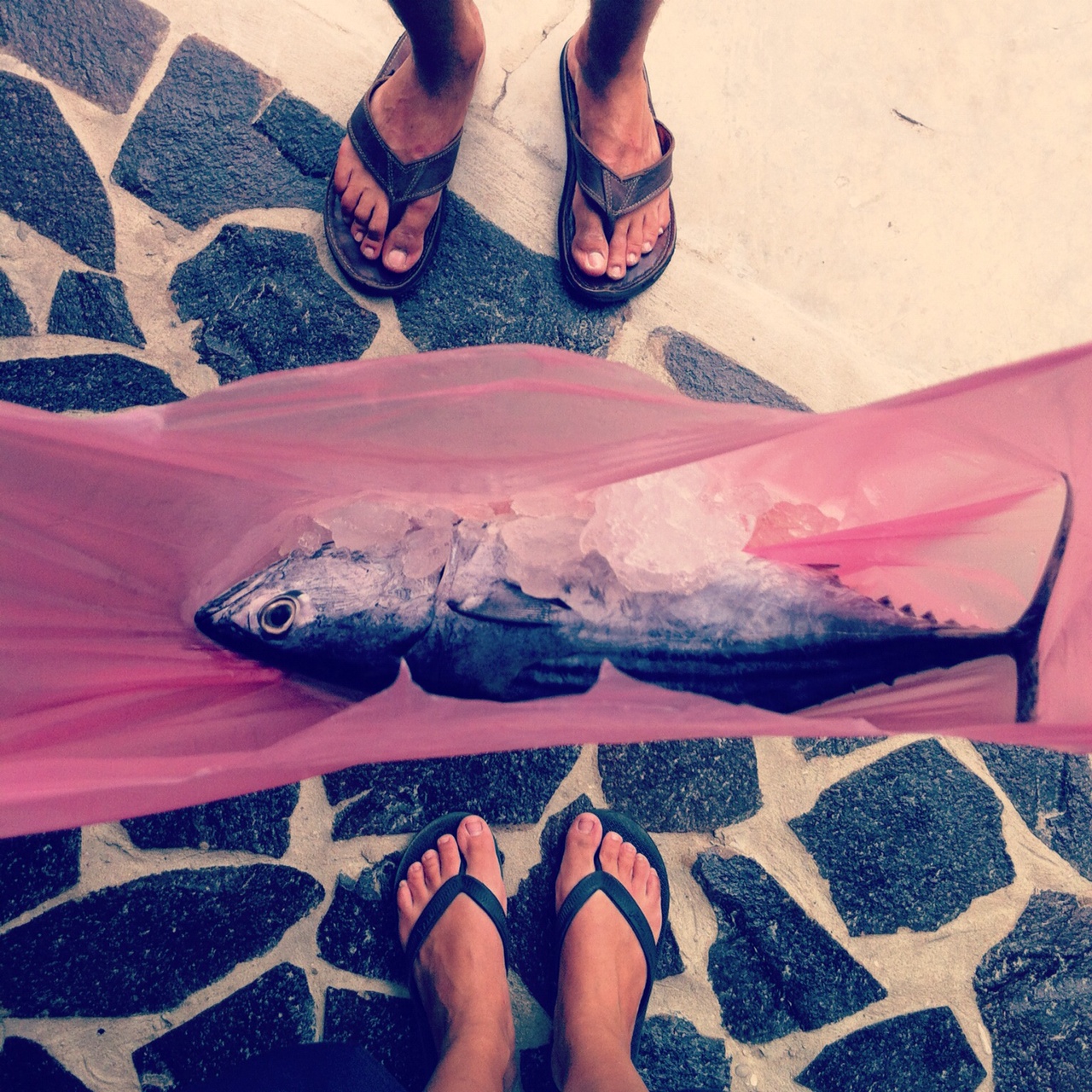
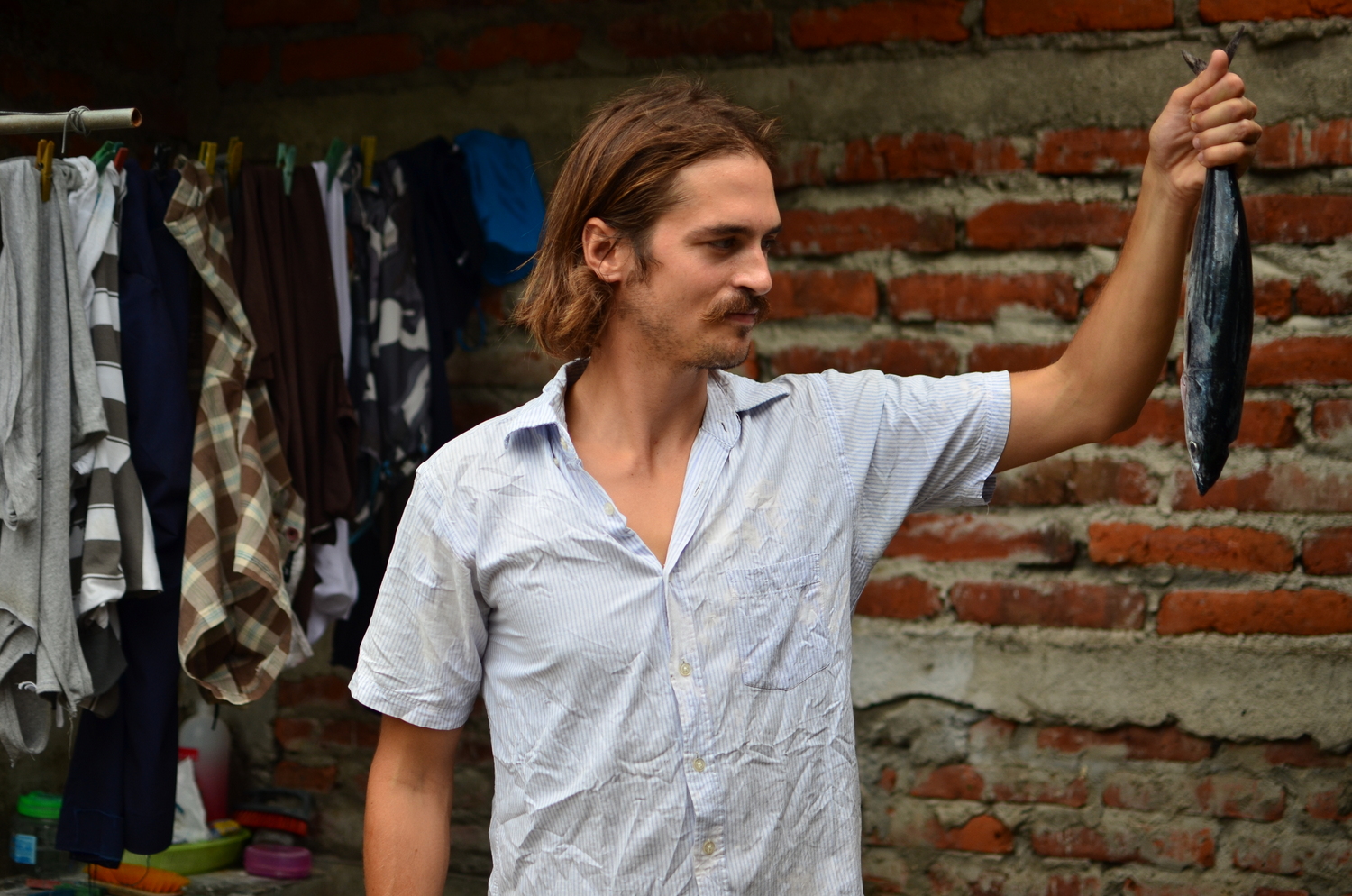

Immediately upon arrival young men scrambled to get our bags off the roof and demanded that all tourists needed to pay before receiving their bags. It was not the monetary value that left a sour taste in my mouth, because 2 dollars was not going to bust our piggy bank. It was just the principle alone that rubbed me the wrong way. This was the only place in Nicaragua where this new tariff was the norm. I couldn’t find an opportune moment to climb up myself and eventually gave in to paying half the price they stubbornly sought out. We were trying to get to a different beach called Playa Maderas, which sounded perfect for us; an isolated beach that was more laid back with the option of tent rentals under the stars (how romantic). When we asked about transportation options, we discovered transportation would cost 5 bucks per person each way. Since we only had 1 night available in our itinerary, this would skyrocket the cost of for a night to about 30 dollars, which takes all of the fun out of camping altogether. Quickly, as usual, plans changed.

The owner of a new hospadaje had given us basic instructions to his house while we were getting ripped off at the bus stop. We immediately began looking for this house, but got lost due to vague directions. While we were looking a woman offered us a room in her house. She made us wait for 5 minutes while she tidied up her daughters bedroom, complete with little girl bedding, posters, and toys. We politely passed on the offer and continued our search until we found our casa and settled in.

Since we were back on the coast we both wanted our toes to soak in the salty ocean once again. We made our way to the beach’s tranquil cove, which was stunningly sheltered by two massive headlands, and ran into the warm, gentle surf. Within 20 seconds I felt a very sharp pang in my foot, and realized that I had stepped on a small stingray. Blood came pouring out of a tiny incision in my right foot and eventually began throbbing with every step/heartbeat/breath. Foiled again. I limped back to our house, but not before buying an entire Tuna for 2 dollars.
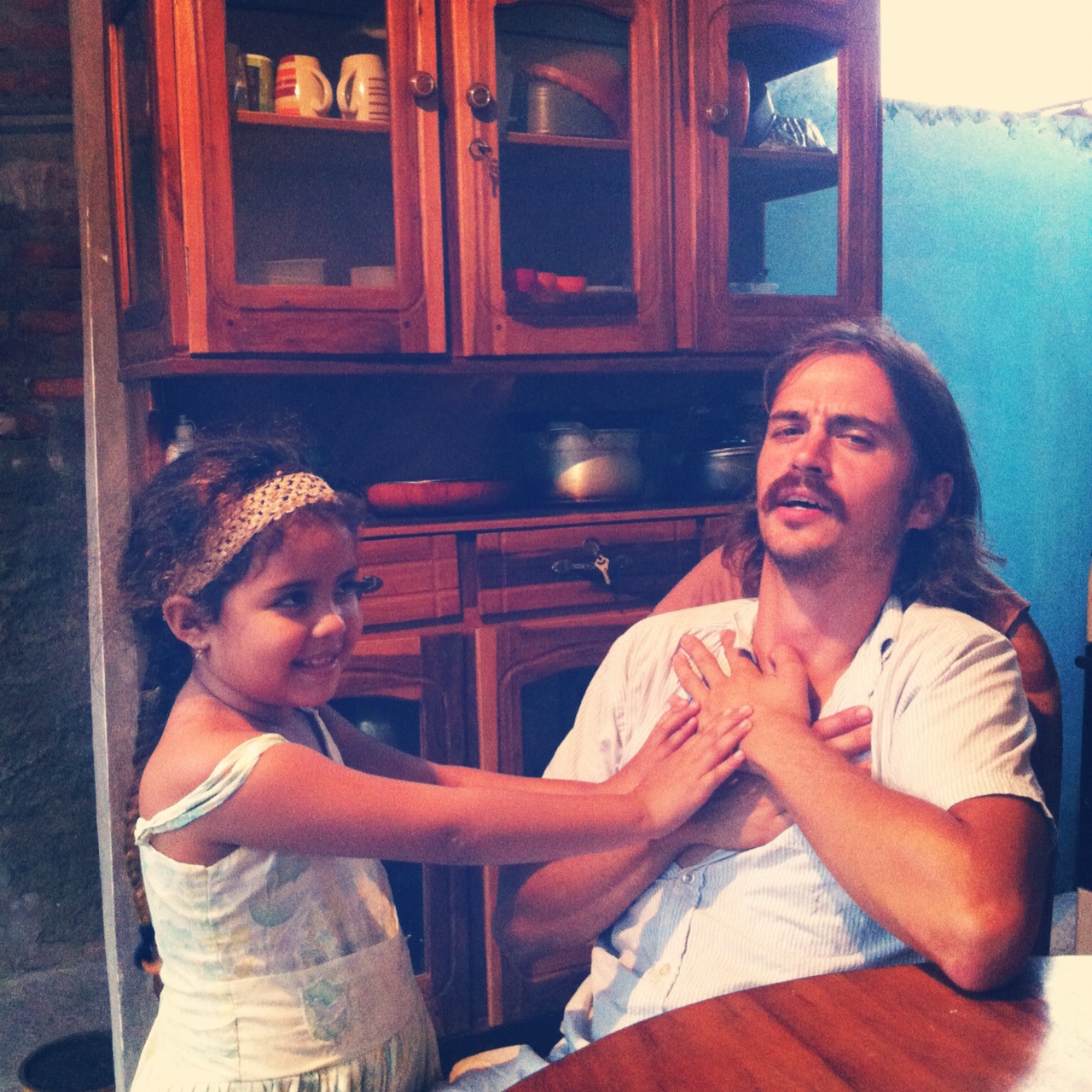


Our family immediately helped ameliorate the pain by keeping a pot of water boiling for my aching foot. They couldn’t have been sweeter to us. Their daughter was about 5 years old and probably the cutest Nicaraguan on the planet. We practiced Spanish with her while we played with toys, iPhone cameras, and pretended we were all hairdressers. Eventually the pain subsided and we made a smashing meal.

Just outside of the touristy beach scene the town itself is a very local, authentic, and has a that quintessential small town pace. The wet streets at night glistened in the gentle rain while elderly women in rocking chairs swayed in the soft glow of their television sets. We wandered around for a while and plotted our escape to Ometepe for the following morning. We got up at dawn, left our awesome little family house in San Juan, and were en route to Nicaragua’s most famous volcanoes.
Beautiful little Granada, our home for 3 days

At this point in our travels you would think we have learned our lesson about 2nd class bus stations in developing countries. But alas, we naively believed that if we got to the bus station by 2 we could be in Granada (only 4 hours away in a traffic free world) by sunset, enjoying a nice meal outside while leisurely sipping on a mojito. En route to the station, our teenage bike taxi peddler dropped us off on the outside of the market and instructed us that it would be easier to walk through than for him to bike around. Bueno. We carried our bulky bags through the narrow, dark isles trying not to knock over fruits, veggies, and knick knacks before finding the next bus headed for Granada. We waited for about 40 minutes in the profusely hot box on wheels with the promise of leaving in “cinco minutos” many, many times. When the driver started closing all the windows on the already feverishly hot human transport container due to an approaching storm, we gave up and sought out a more expensive collectivo instead. 2nd class buses also tend to take a hell of a lot longer when you add in every one of the hundred stops they make to pick up and drop off passengers. But regardless, off we were.

We had to transfer in the hellishly hectic bus depot of Managua during rush hour and wound up waiting in the wrong line for about 25 minutes. We narrowly missed getting stuffed into a van with 14 others because of people scrambling in front of us, completely cutting in front of the entire waiting line. We were finding that in Latin American culture it is almost 2nd nature to budge in line. This annoyance actually turned out to be serendipitous because we discovered that the van would let us off far outside of town instead of in the center where we needed to be.
Arrival in Granada came at about 9PM. By then our bodies were tired and our bellies were voicing their discontent. The hospedaje we picked wound up being down a very dark street without lamps. We saw shadowy figures lurking in an intersection that initially struck fear in our minds, but turned out to be power line workers trying to fix the temporary outage that had darkened the streets. After setting our gear down in an unexpectedly pricy and not so comfortable house, we went for a stroll down memory lane. Elissa was very surprised to see just how much the streets of Granada evolved since her last visit 3 years prior. Calle La Calzada is the street that stretches from the central plaza all the way to Lake Cocibolca and used to be seedy and sparsely occupied by restaurants. Upon turning the corner onto the calle, we discovered that the wide brick street was now developed into a bustling night walking scene full of imported tastes and offerings. There were Irish pubs, ice cream shops, grocery stores, live acoustic music, artisans vending jewelry, and an endless supply of outdoor tables and seating. What was once a street that was not recommended for a casual nightly stroll was now where the entire crowd flocked. We grabbed a huge burrito and much needed 2×1 mojitos to take the wearing travel efforts out of our minds.
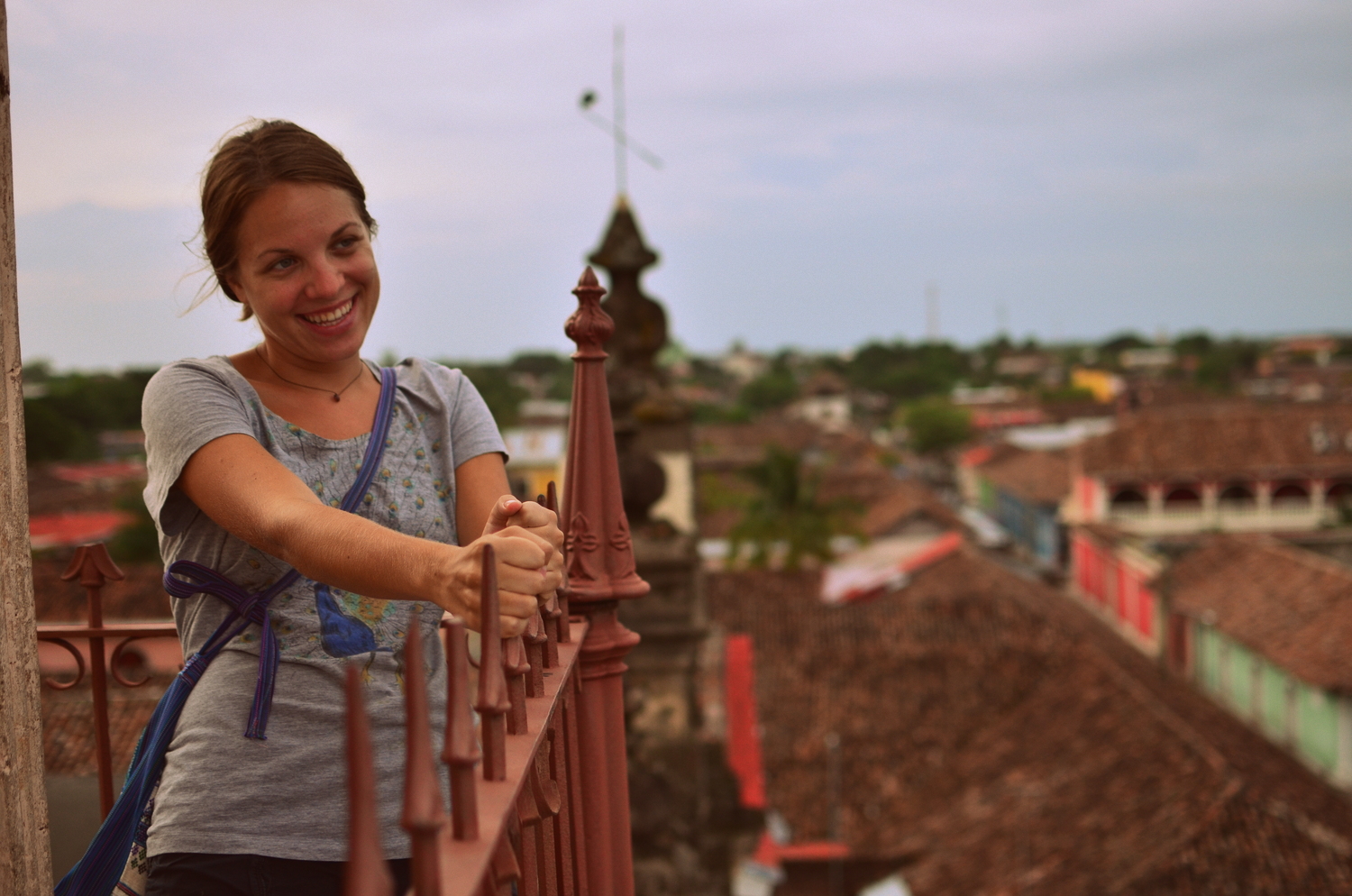
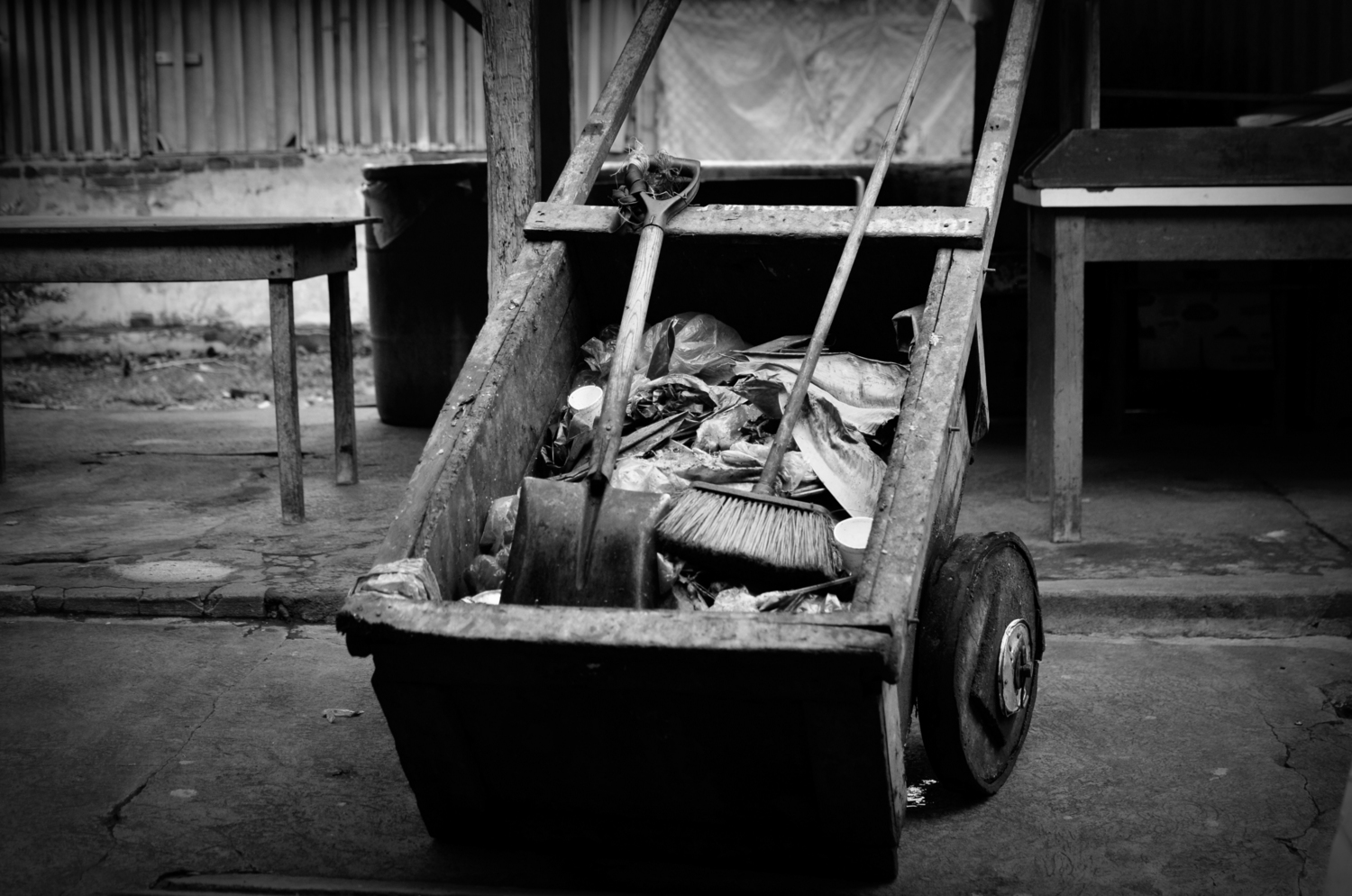
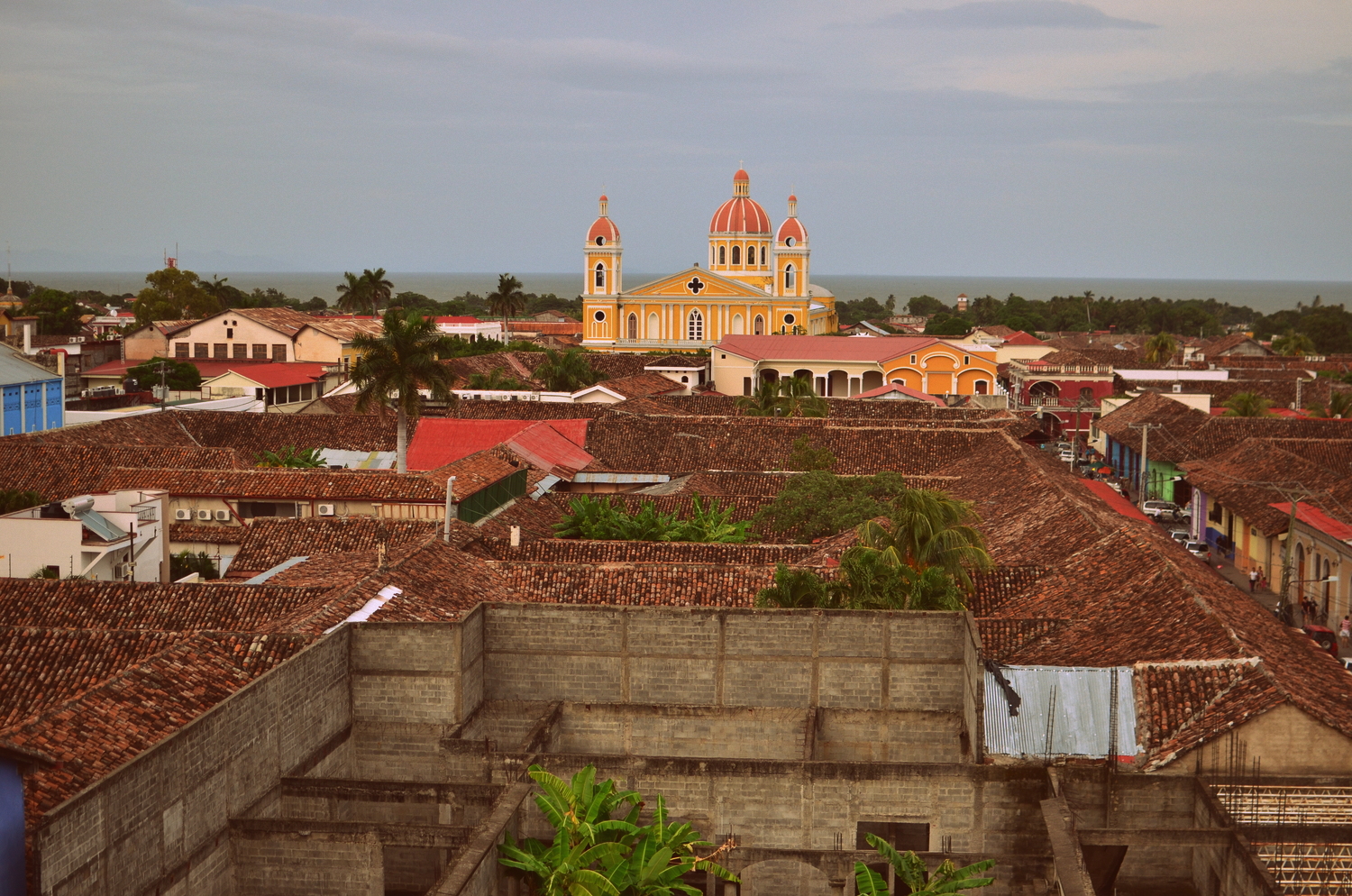
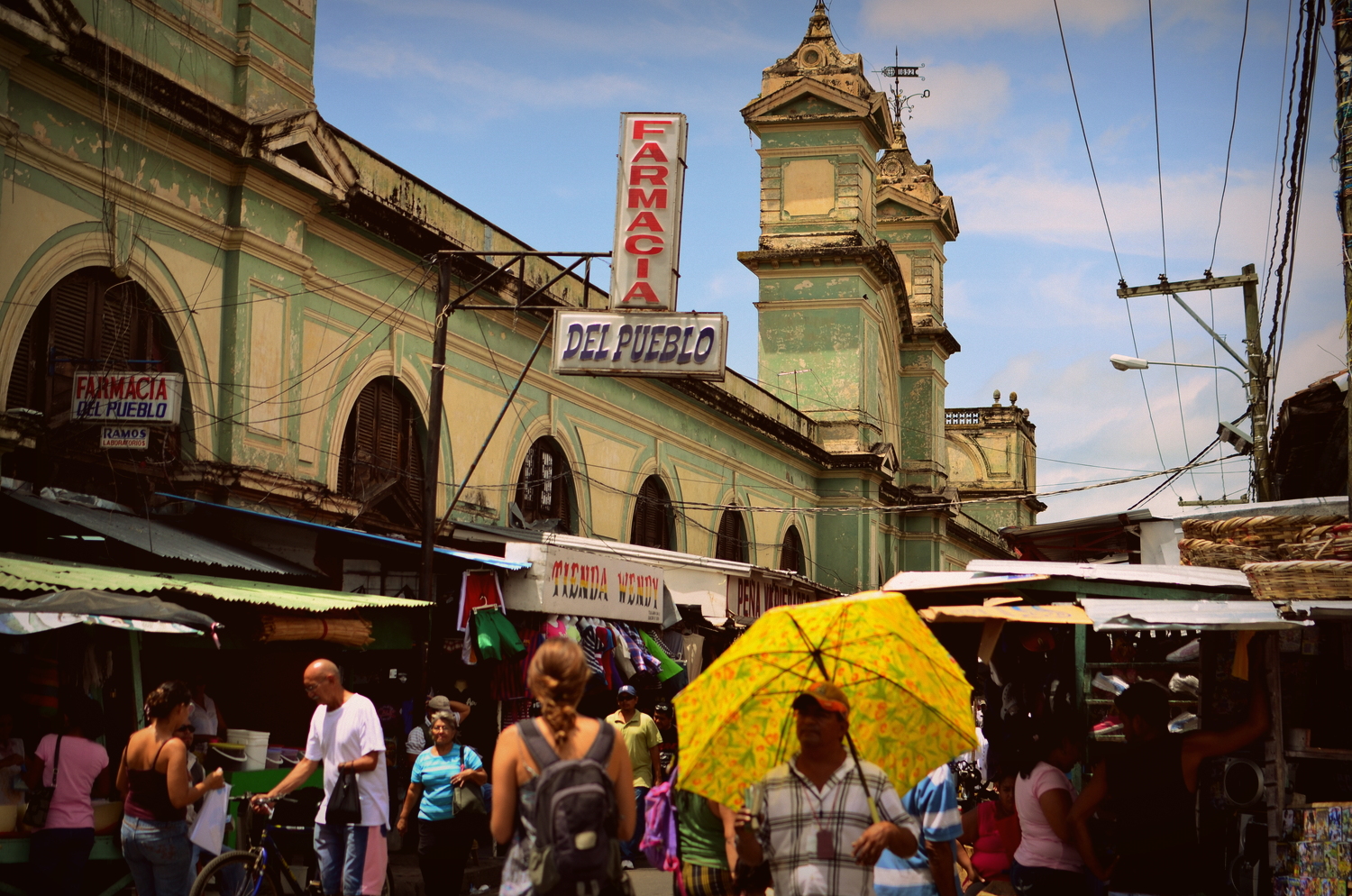
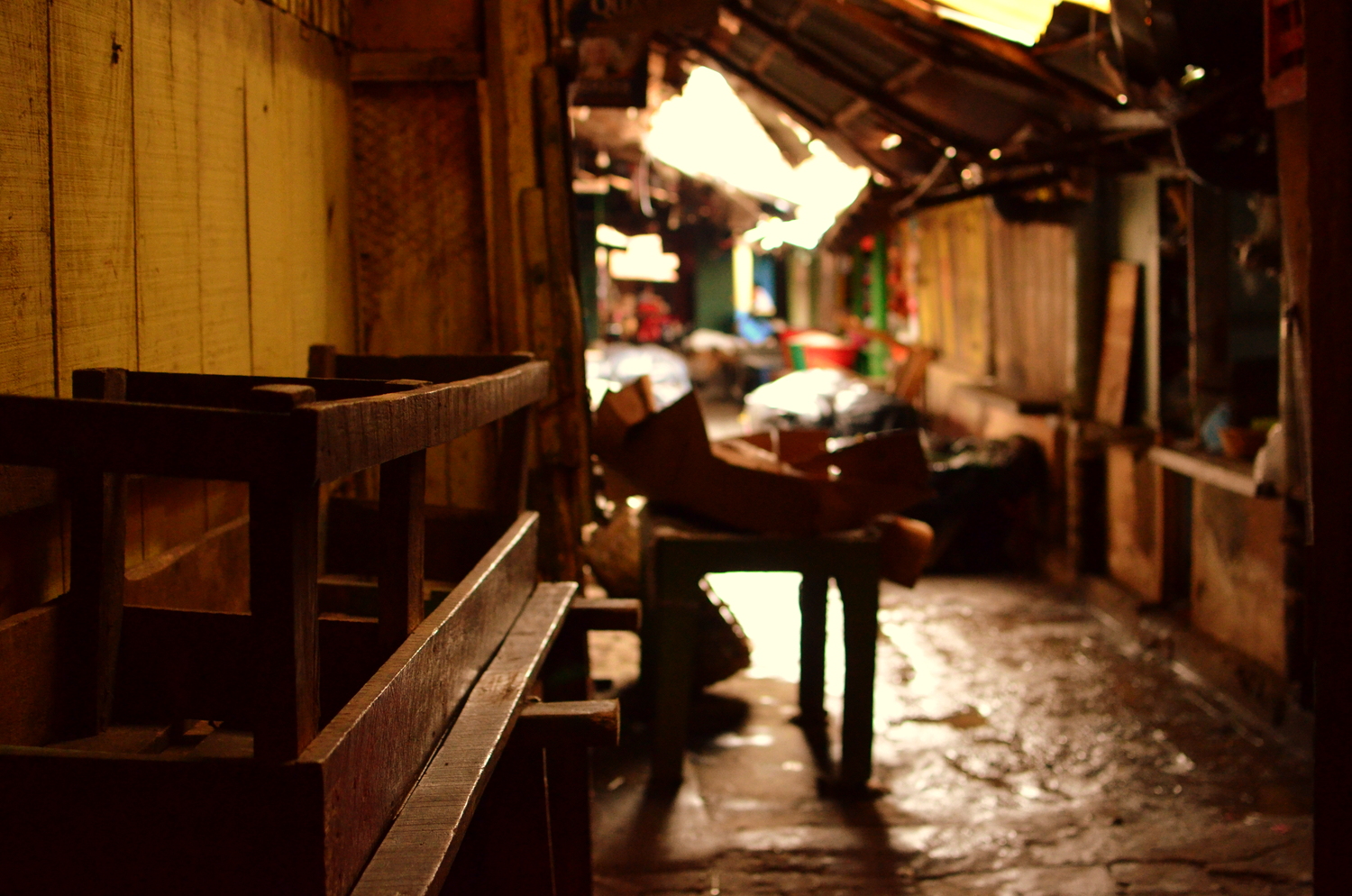
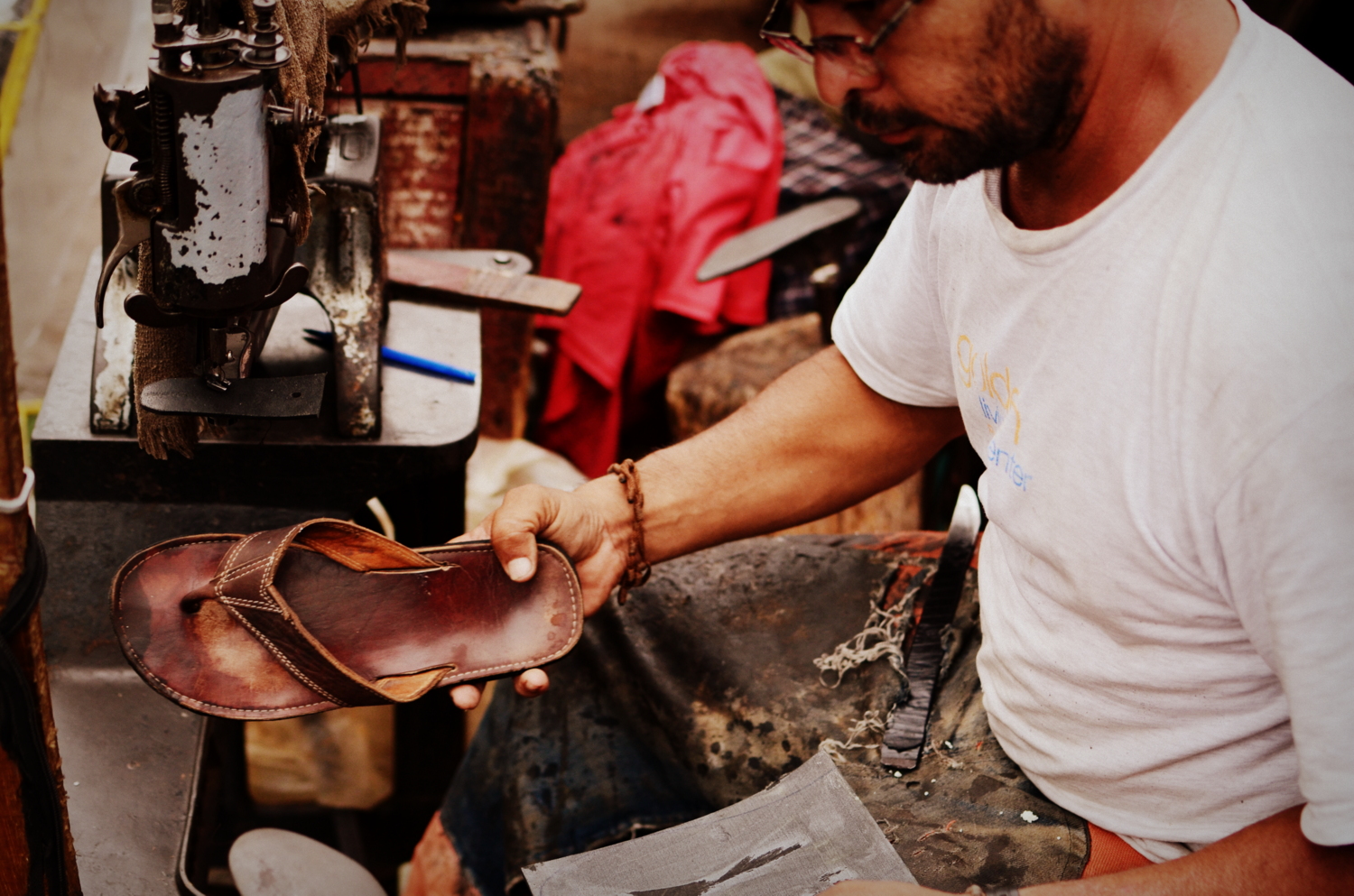
Granada felt like it was evolving more towards a city like Antigua, Guatemala. It has lots of beautifully restored colonial architecture in the center of town and preserved churches scattered throughout. It was also full of touristy puestas with typical souvenirs of various makings in the main plazas. Our favorite part of the city was definitely the chaotic and enormous mercado in the southern part of town. Only 4 or 5 blocks from the scenic center, drones of flesh and bones exchanged money for goods on a street that was swollen with bodies. Large trucks and cars would almost force ably part the sea on the street that didn’t seem to exist for them. The mercado building itself looked as if it fell out of the 1800’s and had that antique, vintage appeal. Transactions were occurring a hundred times a minute around us as we pushed our way into the cavernous buildings to see what treasures they held inside. These mercados almost feel like little versions of ghetto cities, and tend to have different neighborhoods within. In the northern section you have the fruit ladies. In the east part of town is where the meat neighborhood claimed it’s stake. The west side has wholesale grains, beans, and baskets while the south has veggies, clothes, and housewares. This mercado had character where ever you looked. I think we came back every day to really get to know it’s personality. I even had my hand made Mexican sandals fortified right on the street by a cobbler and his coworkers. I was promised they would last a thousand years and was ripped off due to a mental roadblock in quick math, but the craftsmanship was remarkable anyway.



A large part of the original city of Granada was set ablaze due to actions by an American firecracker known as William Walker. William Walker, who after years of attempting to colonize Central America as part of the United States, eventually defeated the Nicaraguan conservative party coined the “Legitimist Party”. After holding a fraudulent election he declared himself President of Nicaragua and immediately re-instated slavery, a cunning attempt to attack Southern US investors to help fund his tyranny down south. Eventually Guatemalan, Salvadoran, and Honduran armies surrounded his forces, who had been weakened by cholera, were overpowered resulting in a retreat from the city, but not before setting a large part of it on fire. One of his generals left an inscription declaring, “Aqui fue Granada” (Here was Granada). Interesting history here.

In short, Granada has evolved into a very visitable city for tourists. It has a sparkling city center yet still possesses a very authentic Nicaraguan experience outside of the UNESCO influence. Tourists can spend days wandering around the cobble streets, dining on all kinds of international or local cuisine, listening to live music, climbing church towers for panoramic views, and strolling down to the over sized lake. I think it’s a well developed stop on the gringo trail presently but it is well worth a visit if just for the mercado.
Our timing for leaving couldn’t have been better. As luck would have it, the minute we found the 2nd class terminal the bus was actually pulling out of the lot en route south. The ayundante was practically yelling at us to board the over-stuffed Blue Bird while we looked at each other for a good answer to this predictably uncomfortable situation. We knew what we were in for as we saw people hanging out of the front door of the bus while the ayundante was assuring us that this was the last bus leaving of that day. Shrugging our shoulders we handing him our bags, while the bus was rolling, and watched in horror as he tossed them on the roof in a frantic manner. We squeezed our way into the fleshy corral without knowing if our bags were secured before bouncing on down the road. Ahh, the memories of Central American transportation come flooding back again.
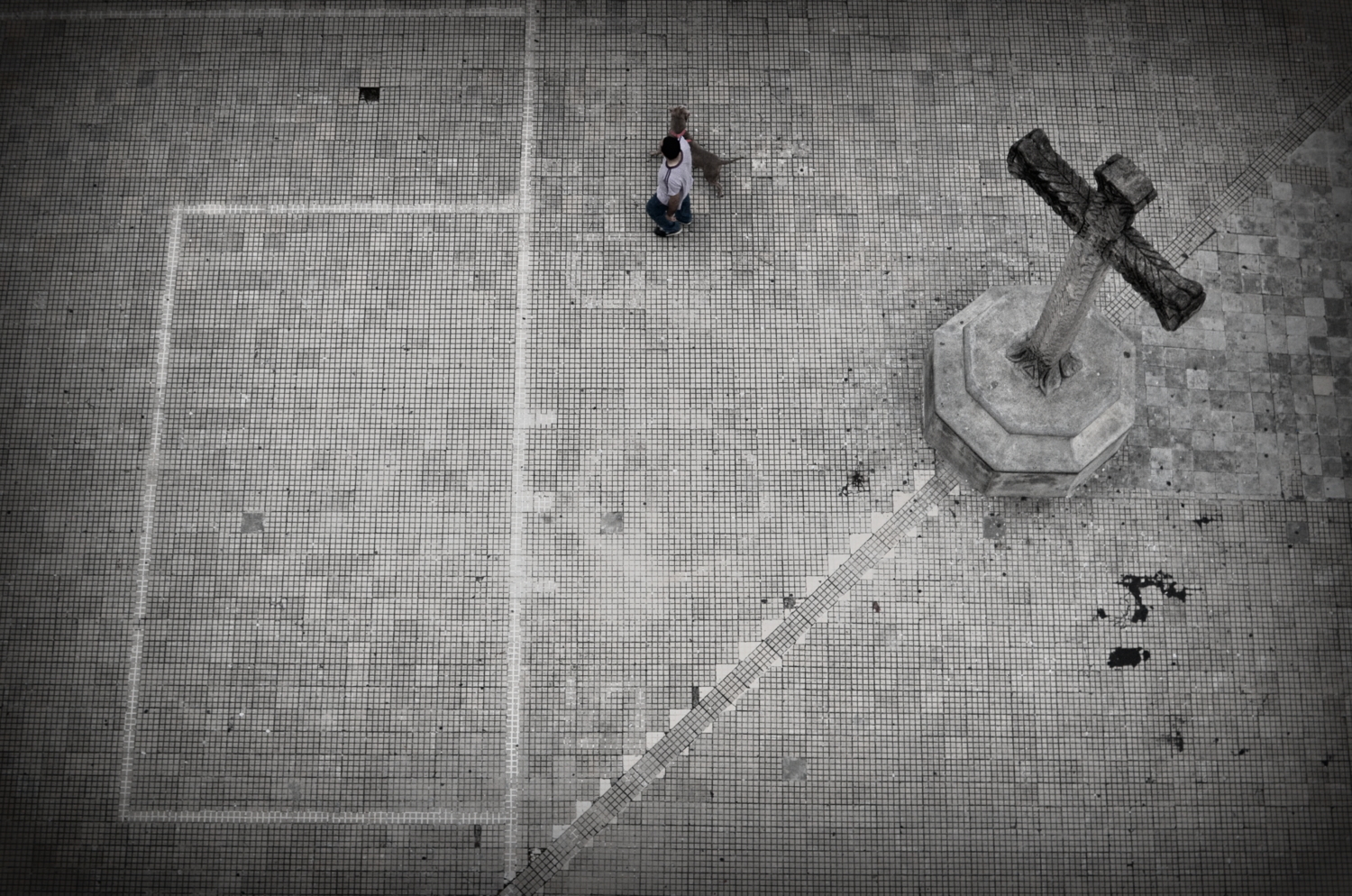
Weekly Photo Challenge: Foreign

My entry for the weekly photo challenge is based around the most foreign experience that I have ever been a part of. This is a very steep hill to climb for me because I have been through 11 countries in the past 8 months alone, spanning from Mexico down through parts of South America. For the weekly photo challenge “foreign” I chose to highlight a recent experience that occurred while traveling through Ecuador.


Nestled in a volcanic mountain range in northern Ecuador is a small city called Otavalo. This city lies within Ecuador’s self proclaimed intercultural capital and is home to a large population of indigenous men and women whose claim to fame is their large Saturday market (even though the market is operating just about every day). Artisan crafts of all shapes, colors, and sizes are sold at bargain prices. At the end of every day every vendor loads insanely large bags of their clothes, blankets, jewelry, and goods and have younger men bear the brunt of the load back to their homes.

The most interesting part of the daily life of Otavalenos had to be the live animal market. Beginning in the wee hours every Saturday morning, locals bring their best and most promising live animals to the market in hopes of selling theirs within the sea of competition. It was the most foreign experience I’ve had to date. For sale, to the best of my knowledge, were pigs, sheep, goats, chickens, cattle, horses, ducks, guinea pigs, cats, and puppies. While this tradition may seem cruel to us westerners, this has been a tradition for hundreds of years in this valley.

The noises, the sights, the smells, and the discomfort of being rammed by gigantic pigs that are being led through the bustling “standing room only” grounds are those that will remain in my mind forever. It was necessary to keep your eyes on your feet as there was numerous chances for ruining your shoes throughout the “no holds barred” area.
Penny Karma update! How 5$ brought joy to indigenous Wayuu children
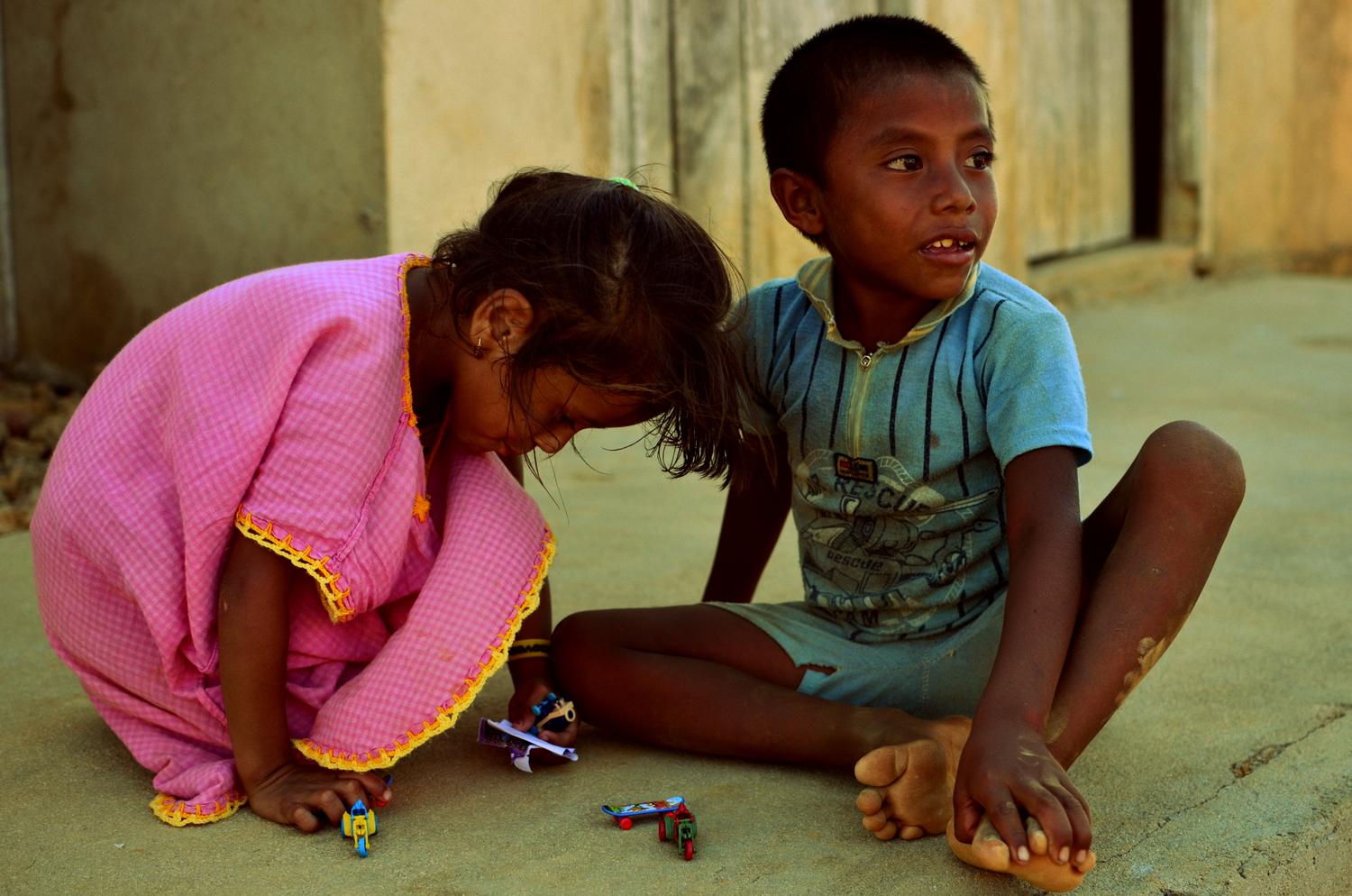
Although our departure from Santa Marta, Colombia came just as we’d sent our first sum of donations to Guatemala, our destination called for Penny Karma. From what we’d read, Punta Gallinas was a surreal headland at the most northern tip of the entire continent. The blogs we’d scoured for travel tips were full of awed accounts of a lawless paradise where the desert meets the Caribbean Sea. Situated on the tip of the Guijiara Peninsula, this area can only be defined as remote. It took 2 days worth of buses, vans, 4×4 trucks, and boats to reach this isolated desert community. The voyage there was spent shoulder to shoulder with locals, hitching the same ride North. Sometimes this entails a 4 hour ride on the back of a pick up truck stuffed with 2 dozen bags of cement, 55 gallon drums, huge sacks of sugar, and about 10 Wayuu women and children under the hot desert sun. We handed out our first few gifts on the roughest stretch of desert road to three wide-eyed Wayuu kids who passed the stickers between themselves glancing up at us and their parents as we bounced down the dusty unpaved road.
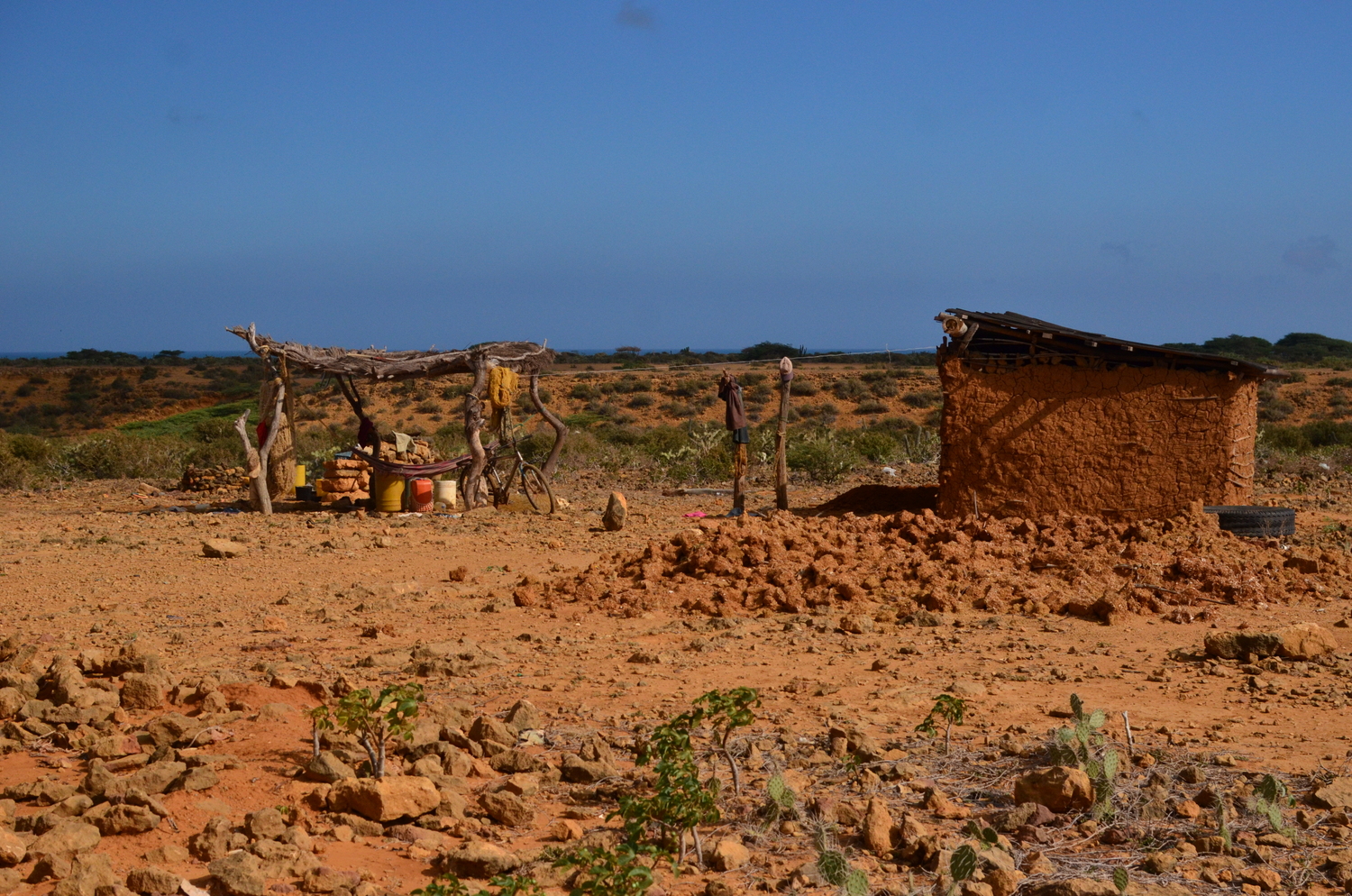
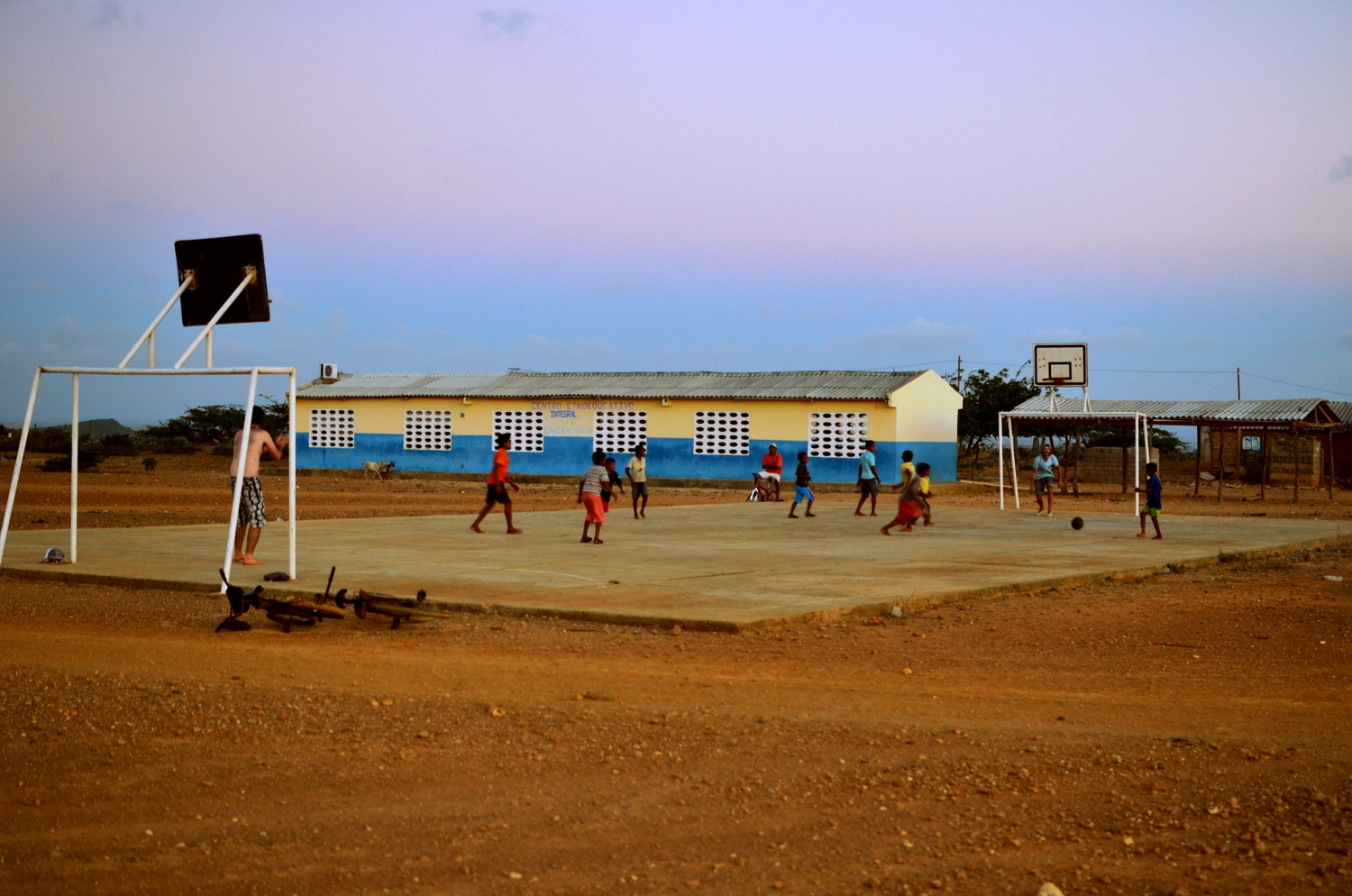


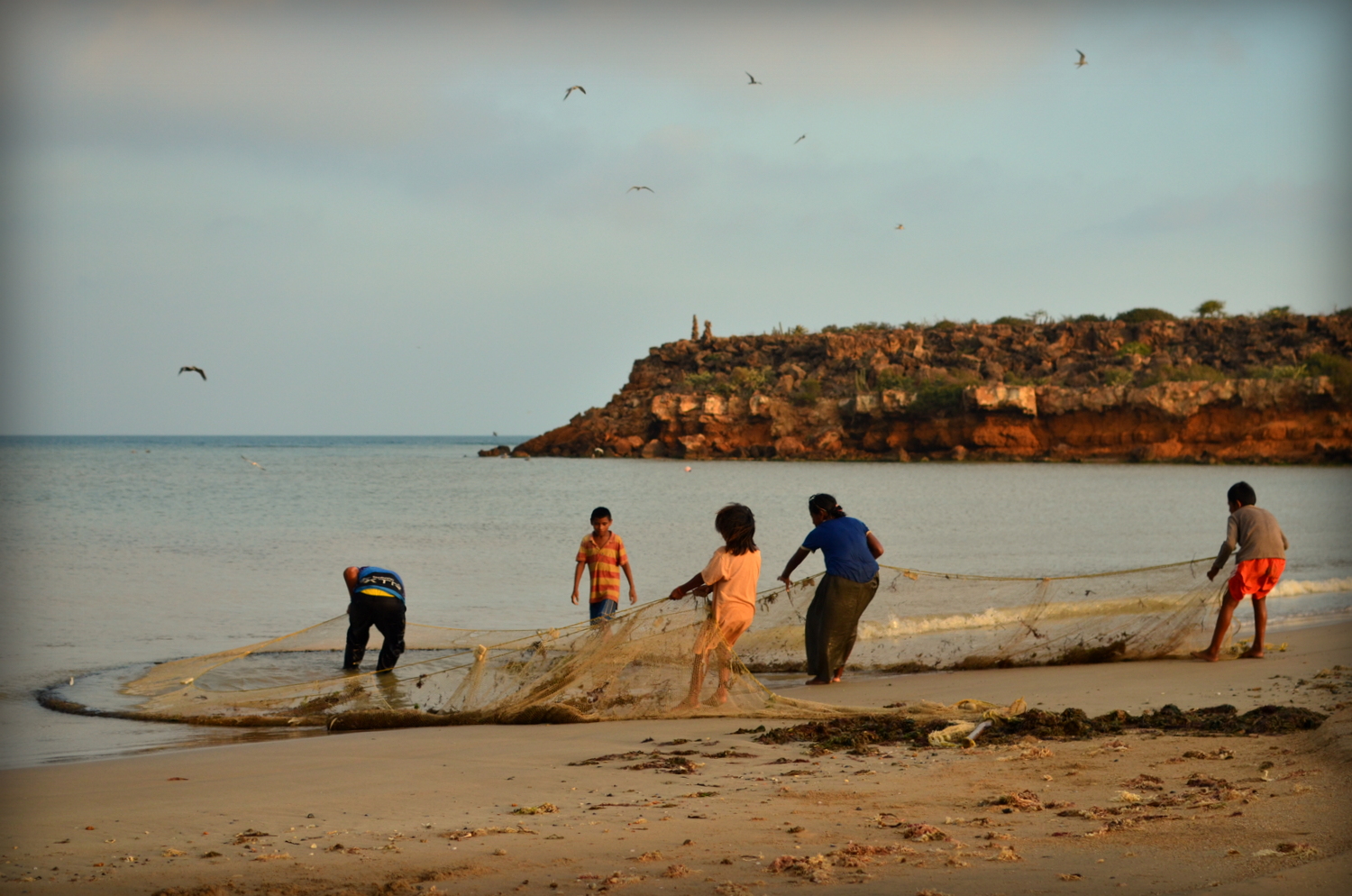
The people who call Punta Gallinas home are Wayuu Indians, a resilient group of natives who refused to give way to Spanish colonization and who to this day are well known for their strength. Prior research enlightened us to how separated from the entire world the inhabitants are. Our Lonely Planet guide suggested bringing candy for the kids that sometimes set up friendly road blocks for candy tariffs. Thinking about what life must be like being that distant from modern life, Elissa thought it would be fitting to bring a bunch of toys, stickers, and pencils for the kids to enjoy. When we finally arrived, we saw just how isolated their existence truly is from the rest of the world. Electricity is only available if families have enough money to buy gasoline for their generators, and running water is nonexistent. The blazing hot sun makes life stand still by midday, minus the goats, cows, and pigs all scrounging for the little food around. After returning from early morning fishing trips, Wayuu families spend their time preparing food and hiding from the sun in their hammock strewn homes.

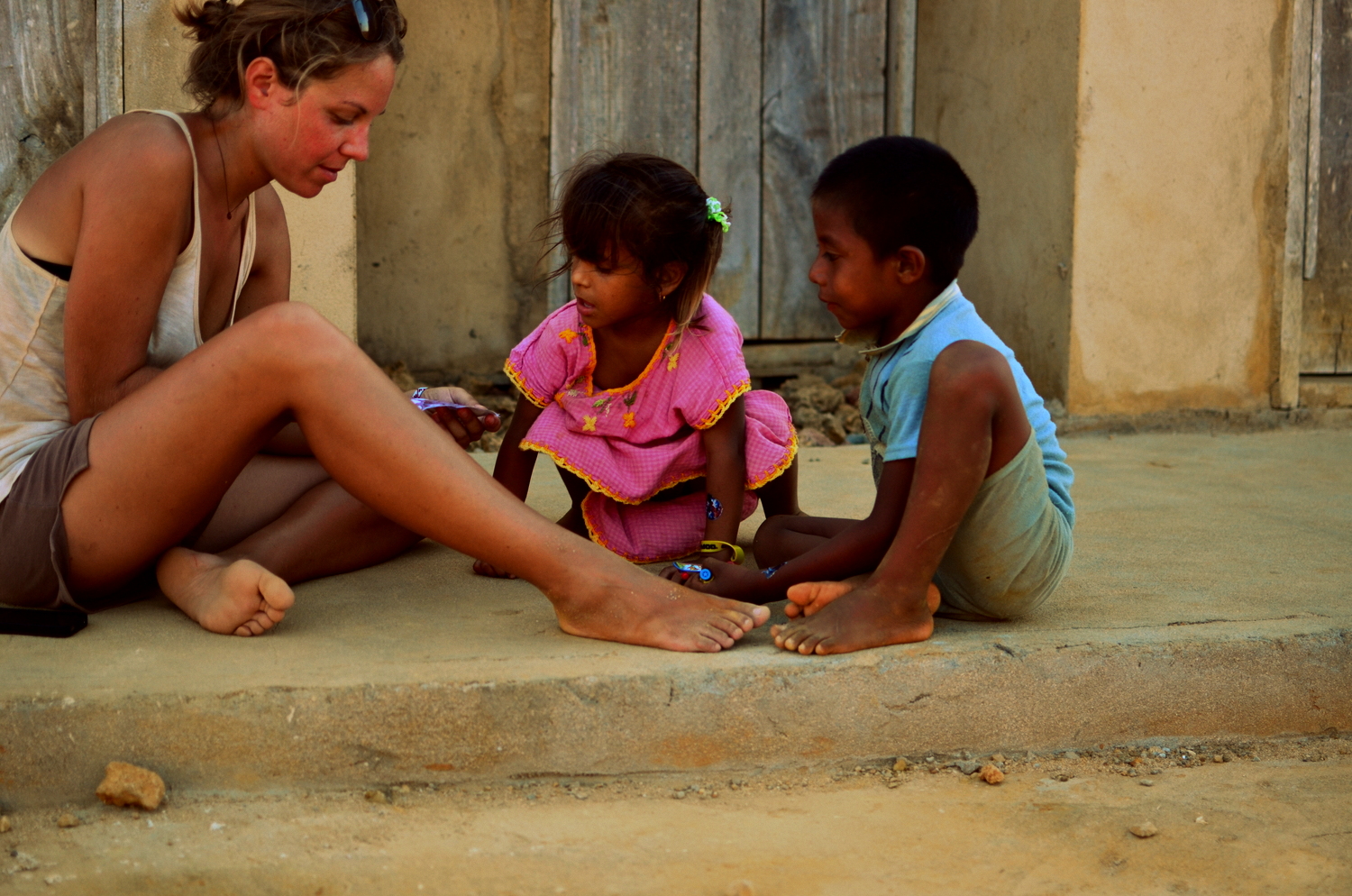
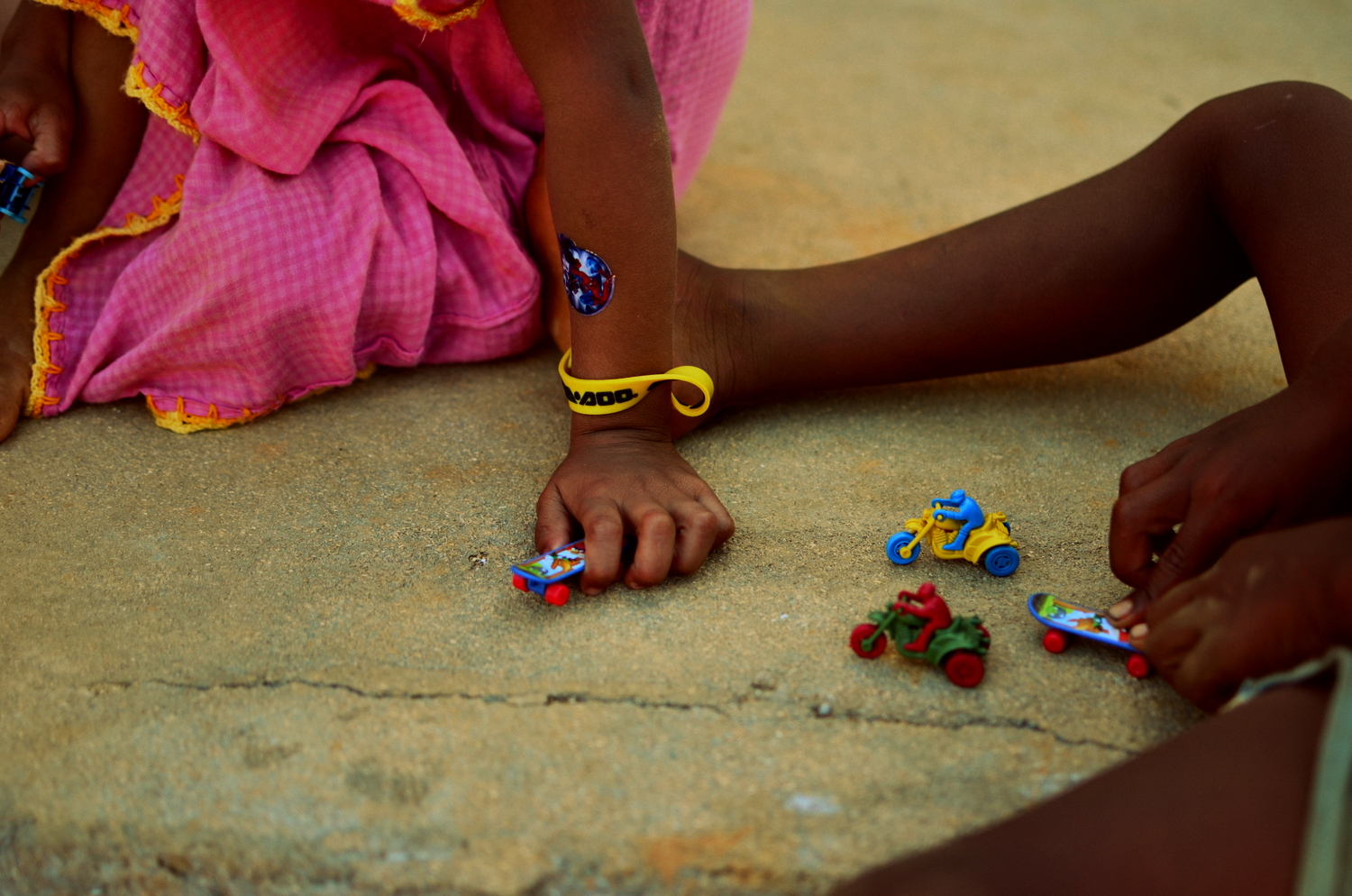

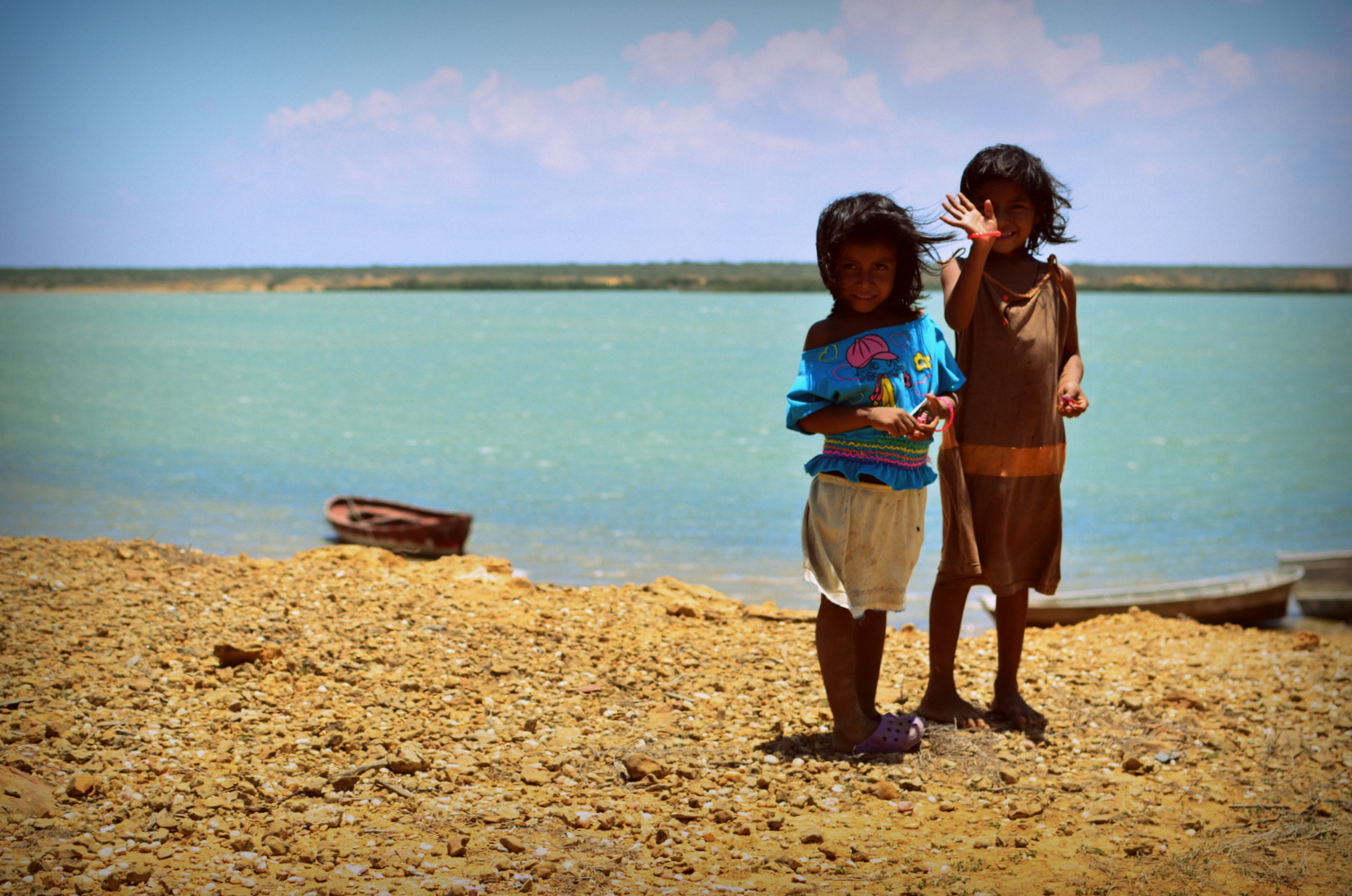
5 dollars bought us about a dozen pencils, a few dozen stickers, bracelets, toy trucks, and lots of smiles. Although most of them seemed to understand very little Spanish their gratitude was easily read on their little faces and watching them play. I think it was fair to say that by giving we were just as much on the receiving end too. We spent several days exploring the area and making new little friends. We got to show them how cameras work and enjoyed soccer matches way past sunsets and into the twilight in the warm desert nights. We want to thank all who have donated to this project again for helping us bring some joy along our journey. Please consider making a small donation to keep this project alive by clicking on the donate button below.


Weekly Photo Challenge: Silhouette
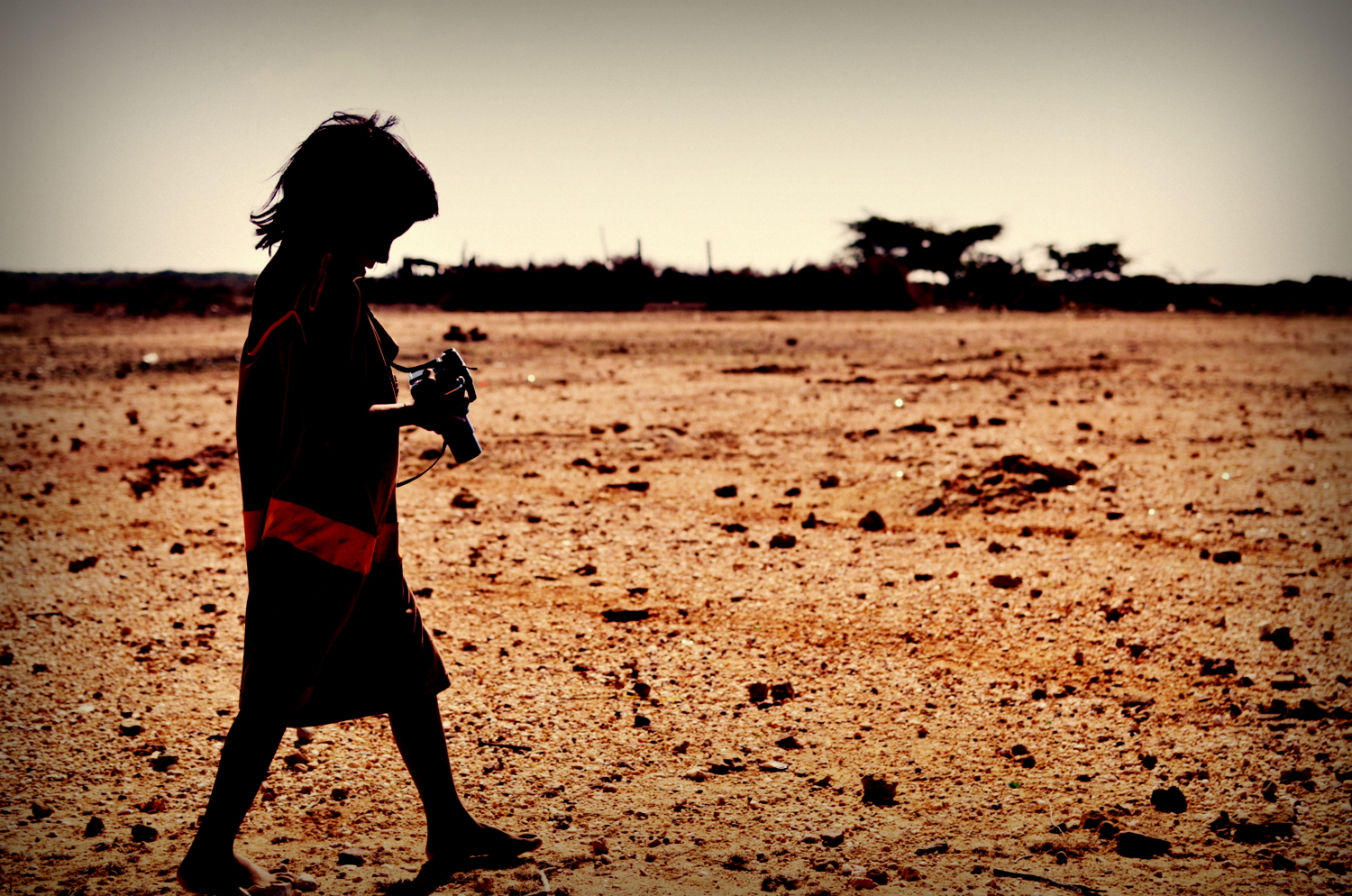
On a recent trip to Colombia my girlfriend and I made it to Punta Gallinas, which is the northernmost point of South America. Situated several hours from the nearest form of civilization, this was the most remote destination I have ever found myself in. It took 2 days of transportation to get there including buses, vans, 4×4 pick up trucks, and a 3 hour boat ride across the choppy Caribbean until we landed in this desert-meets-ocean location. Cacti dominate the landscape while goats, pigs, and very few cattle prod around looking for edible desert plants in the repressively hot sun. The indigenous locals that populate the area are part of the Wayuu tribe and rely on the sea to survive. They seem to govern themselves because of their isolation and it didn’t really feel like we were in Colombia at all. We got to interact with the children and villagers that live there with Spanish, which ironically was both our second languages. The children that live in such isolation only get to interact with the outside world when foreigners like us pay a visit. Families that can afford it buy gasoline to power generators as their only source for electricity. Running water is also non-existent. The children there were more than curious beings and quick learners as well! One afternoon we let them play with cameras and watched as they picked up photography for the first time.
I chose this photo because it wraps up the idea behind photography for me in a nutshell. It is an art, a form of expression, and can ignite the curiosity in our souls to help see the world in moments, not just a never ending experience that keeps trailing on. I thoroughly enjoyed watching the essence of what it is to be a child intermingle with capturing moments in time.
Stuck in Honduras; our layover to Leon
Remember that time we left El Salvador too late in the day and got stuck in Honduras? Oh you weren’t there? I forgot that fact in the middle of being terrified.

So we left El Salvador a little too late in the day to make our connections. Our lovely guide book (Lonely Planet) mentioned that there were collectivo vans just across the border of Honduras that could carry us through the small southwestern gap between El Salvador and Nicaragua. With this as our solid “no turning back now” plan, we left our little beach side safety net of Playa Esteron and set off for the frontera.
Anticipation always builds when we approach border crossings and this one felt a little heavier than usual. The landscape was even changing before our eyes the closer we got to the no man’s land between these 2 notoriously sketchy countries. I noticed miniature looking hills that looked like tiny volcanoes rolling by a few hundred meters from the rubber edge of our tires. Without warning, the bus pulled into a parking lot, began backing up down we were just on, and came to a halt. After the doors slid open, we put another notch in our border crossing belt and entered the chaotic scene on the other side. There were people milling about everywhere, garbage burning in barrels, and characters crossing in and out of the disarray while an imaginary spotlight seemed to be beaming on us. We encountered a collectivo van that was supposed to cost about 5 dollars (when full, of course) and were horrified to find out that we were the only people interested in getting to Nicaragua. The 10 dollar tickets turned into $72 right before our eyes and we now had a new problem to figure out. After a few preguntas we also learned that buses stop running around 5pm. At that time it was about 4:45, so we had very little options. I exchanged some dollars for Lampiras from an unofficial change man with a huge wad of cash, just enough to get us somewhere for the night and out the next day.


Off we went into the surprisingly pretty southwestern Honduran landscape. We picked a town that had some sort of description in our guide book and grabbed the name of a hotel from it’s black and white pages. The situation felt very black and white too. We had no intentions of staying in Honduras, but that was out of our hands. We scored a room and walked around the town looking for any place that had food and would take a credit card. Wendy’s wound up being the winner. After a nights rest, and another trip to Wendy’s, we regressed back towards the bus station. A white horse appeared suddenly in the road in front of us and seemed to realize it was very lost. This was quite a sight to see in an urbanized neighborhood, but didn’t surprise us as much as it should have. After a loud neigh the stud eventually turned around and went back from where he came from.
We were stuffed into a collectivo van in a gritty mercado that did not hide the truth about poverty in developing countries. After waiting and being offered almost every variety of snack on this planet, we drove all the way to the border, mostly on the wrong side of the road. I think that drivers tend to have a “the grass is greener” belief about all roads encountered, regardless of the condition it’s in. They always want to get on the other side, even when you can clearly see that both sides of the road are in the same state of disrepair. This continual game of chicken is not for the faint of heart. But I digress, a lot.

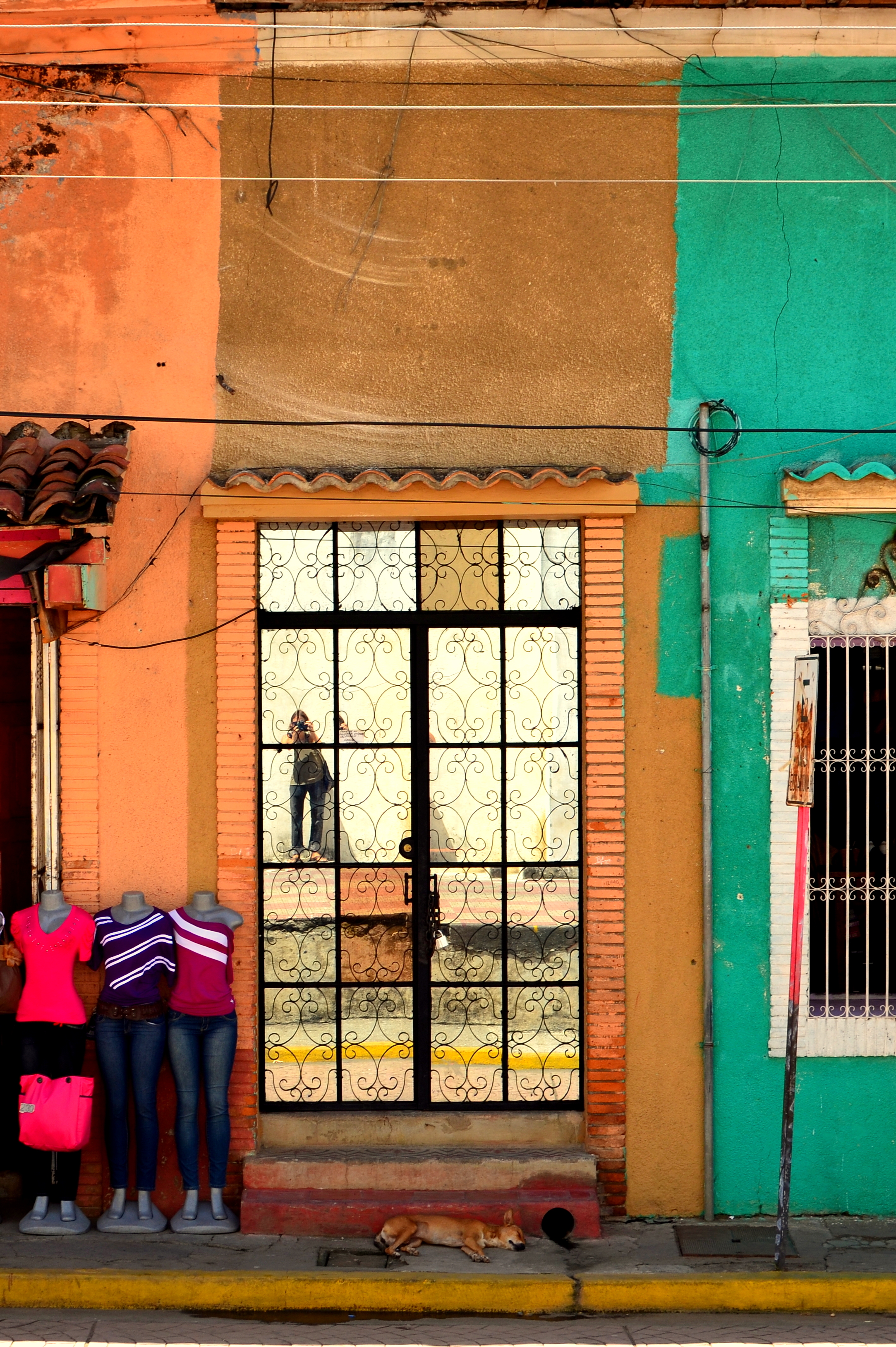
Eventually we made it to Leon that day. The moment we stepped off our bus we were approached by a goofy looking kid in his 20’s wearing a Mexican sombrero speaking perfect English about a hostel that offered two free shots for each new guest. We laughed as politely as we could and hopped into a bike taxi elsewhere. Passing through another jam-packed mercado along the way we wove through the maze of streets Leon possesses. We dropped our belongings off and immediately sought out our first tried-and-true destination that helps us get a real feel for a new place; el mercado. Leon boasts several of these but the closest was right next to an older, deteriorating sun soaked yellow colonial church. A quick spin offered gigantic avocados, cheeses, and a plethora of Latin American fruits and veggies. But a section of this mercado had numerous small stands selling every part required to build and repair bicycles. This kind of service felt long overdue because there have been an uncountable amount of unique two and three wheeled bikes used for carrying and moving just about everything under the sun.
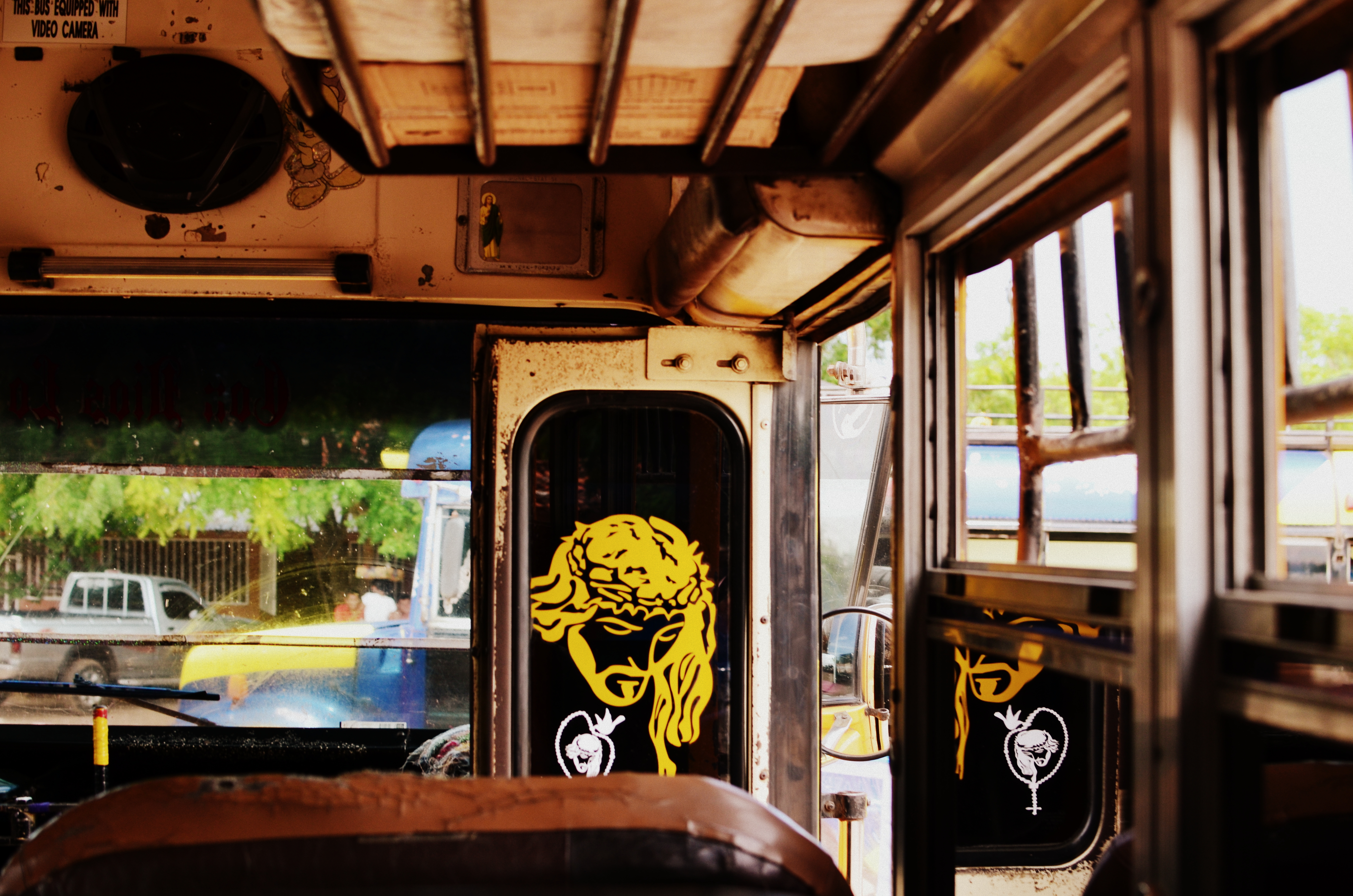
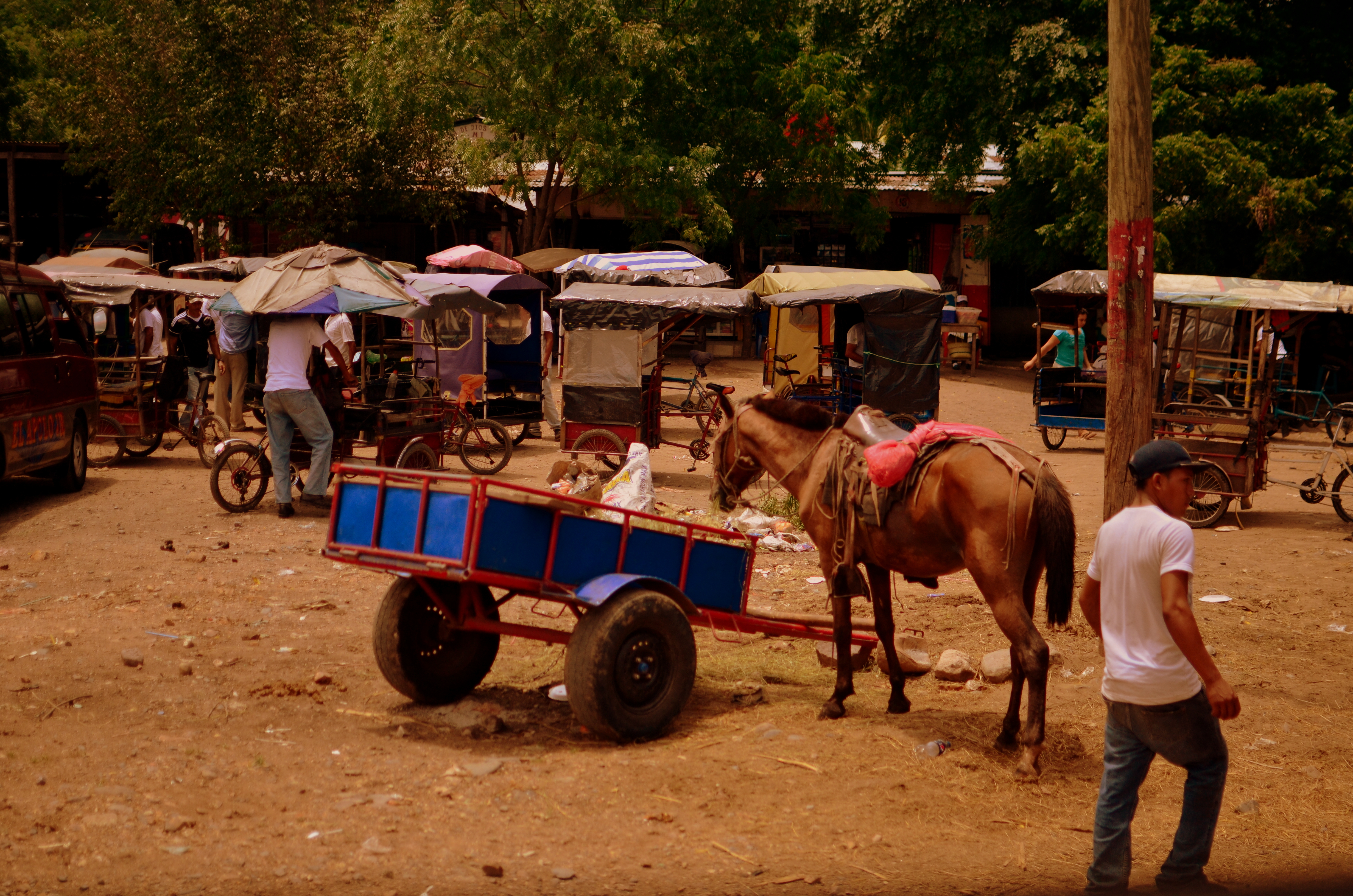


The first day in a new country is always one full of questions. The first of which that enters my mind is the overall sense of safety with the unfamiliar surroundings. Leon felt very comfortable to us and seemed to have a general adaptation to tourism, in a positive way. It didn’t feel too catered towards tourism and held a lot of it’s traditional Nicaraguan lifestyle for us to interact with. After talking with our native hostel owners and operators we learned that Leon had several sister cities in many different countries. As it turns out, there are three sister cities in the US alone! Janesville, Wisconsin is one random city, which made the question of “Ustedes son de Wisconsin?” in a tienda a little less random. With this Leon had a variety of tourists from all over the world, as well as a university presence, to give it a flavor that was quite enjoyable.
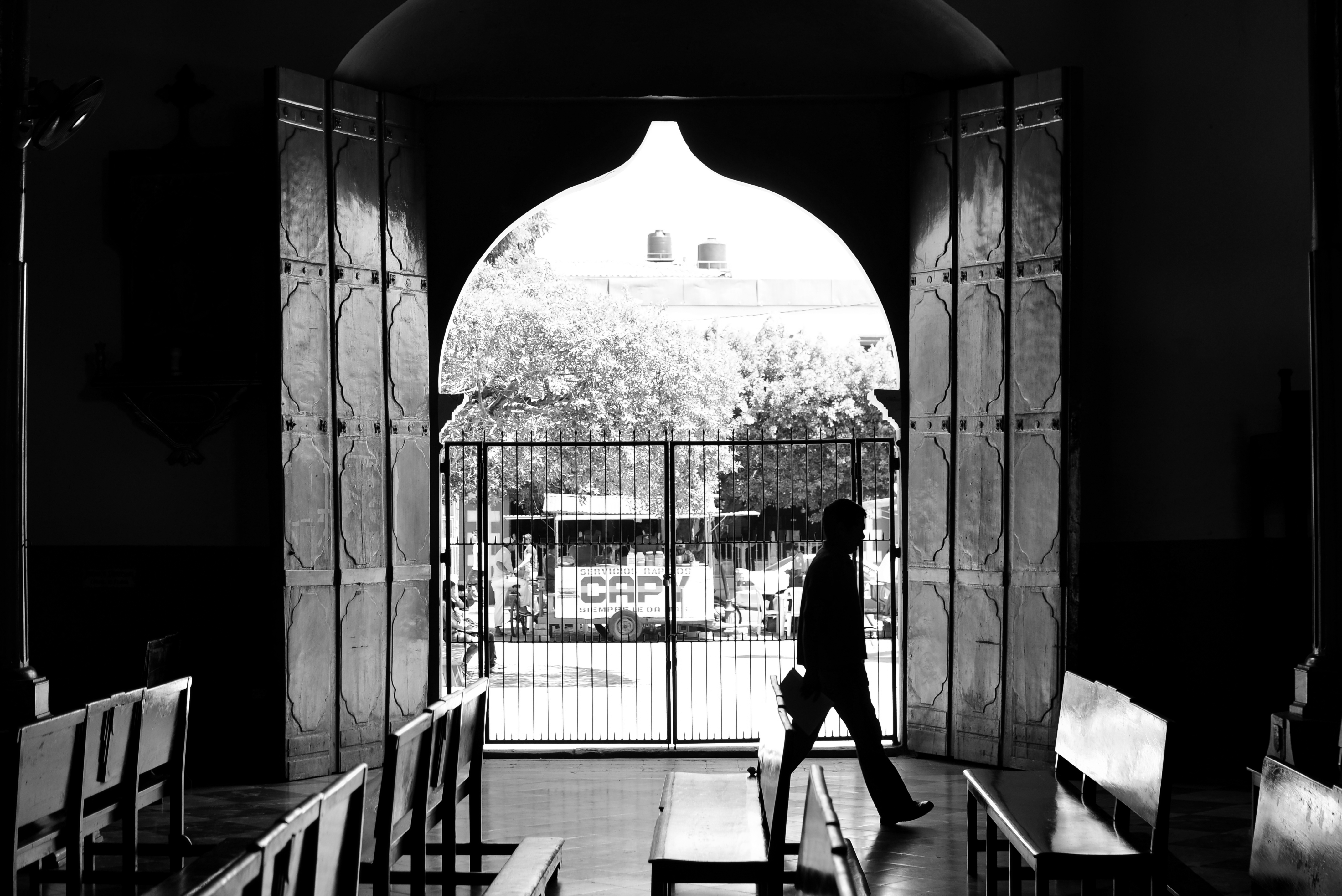
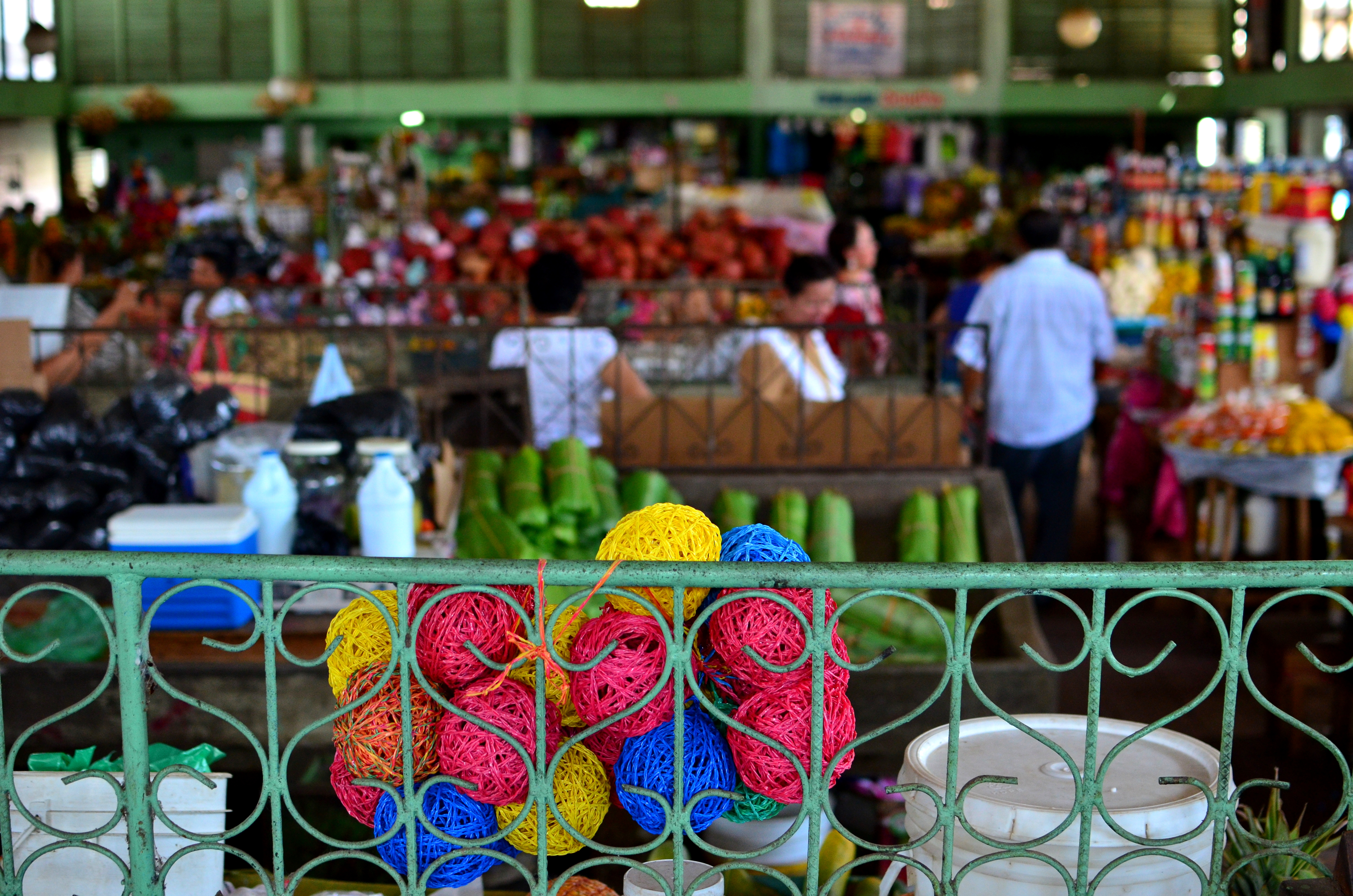
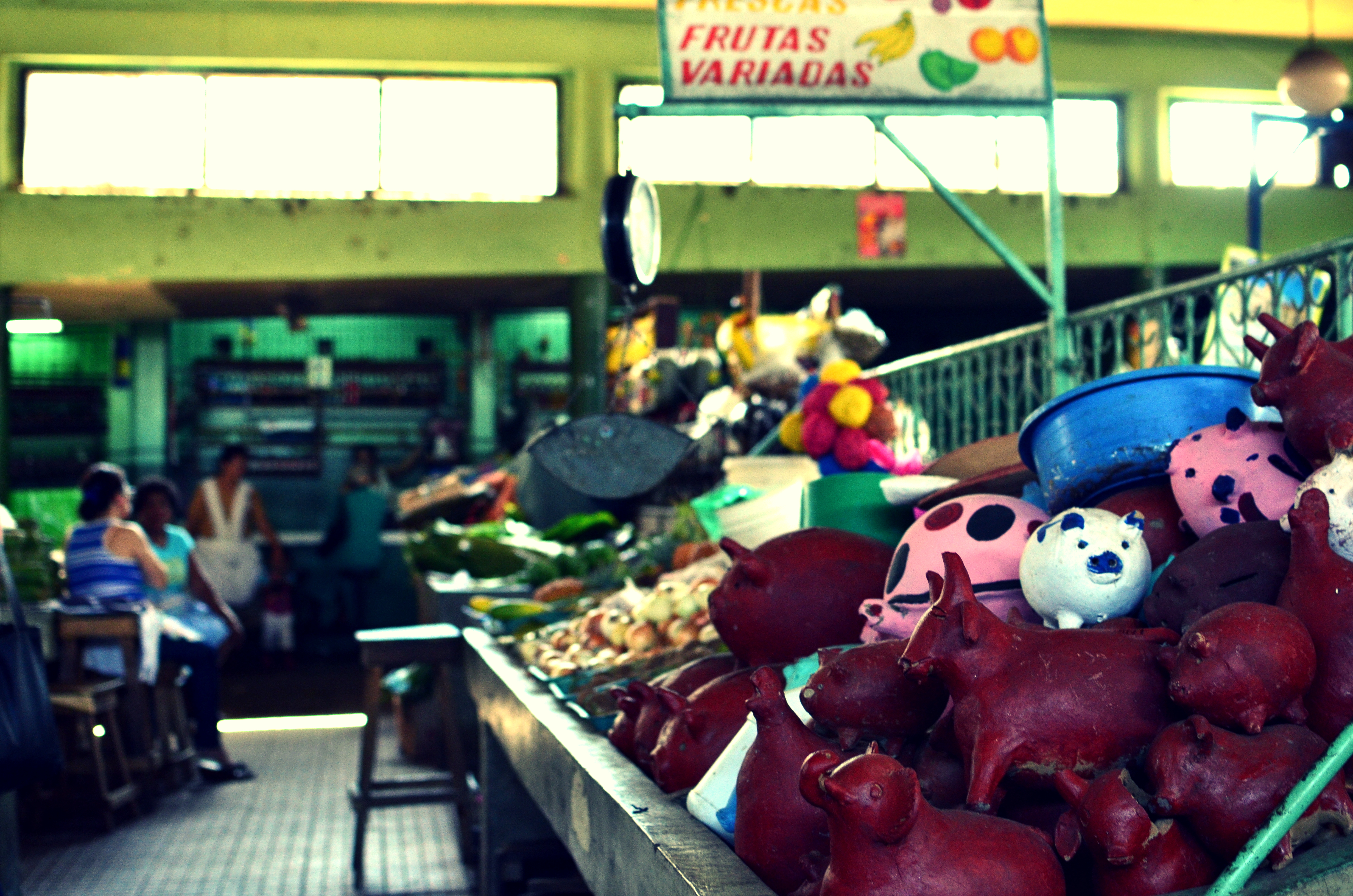
The next full day we spent was exploring the other mercados and the beautiful churches scattered around. We were wondering how their special corn based chocolate treat named Pinolillo tasted, so we sought out the large indoor market behind the Cathedral of Mary’s Assumption during siesta. I love going into empty markets during this time of day because it often is less hectic, more photogenic, and there seems to be less pressure exerted towards sales. This tends to gravitate towards a more relaxed atmosphere, leaving more energy towards general chit chat and friendlier interactions. We eventually eyed a stall that sold Pinolillo and eagerly ordered one immediately. Our smiles morphed into a more disappointing gesture as the woman made the drink straight out of a tap protruding from the wall. We each tried a sip but didn’t feel like it was worth the risk to suck down a bag of potentially contaminated water. We accepted our loss and rooted around more plazas, more churches, and more side streets taking in a day in the life of Leon.


In Leon we determined that our dream of making it to the east coast of Nicaragua wasn’t going to pan out for us this time around. The territory on the eastern side of the country was technically governed by Britain until the early 80’s when it was given back to the Nicaraguan government. It’s isolation and strange background history as a foreign governed land has created an environment that operates today as it’s own sovereign territory, and sounded like a whole different world to us. English, Spanish, Miskit, and several other languages are used in this area and the islands in the Caribbean sounded somewhat edgy, but utterly heavenly as well. It would have cost us about 2 days of buses, boats, ferries, and collectivos or over priced flights that were no where near our meager budget restrictions. Since Elissa had been to Nicaragua a few years prior we decided to get her back to Granada to see how the city has evolved. The next morning we checked out of Leon and hit the dusty road in an old, old school bus bound for one of Elissa’s old haunts.

Come away with me

 TheAdventuresOfDr