
The Forgotten City of Mompos
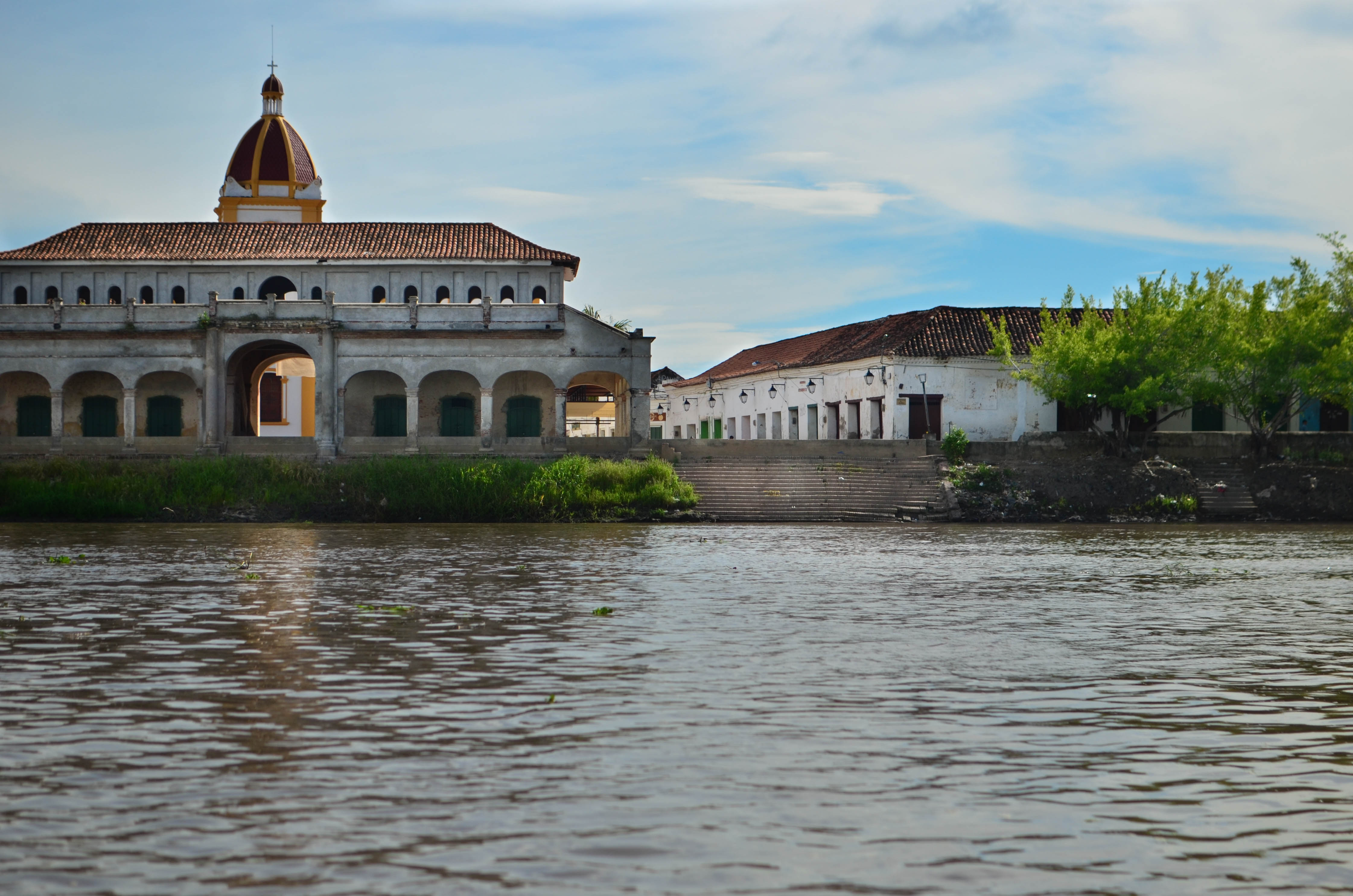
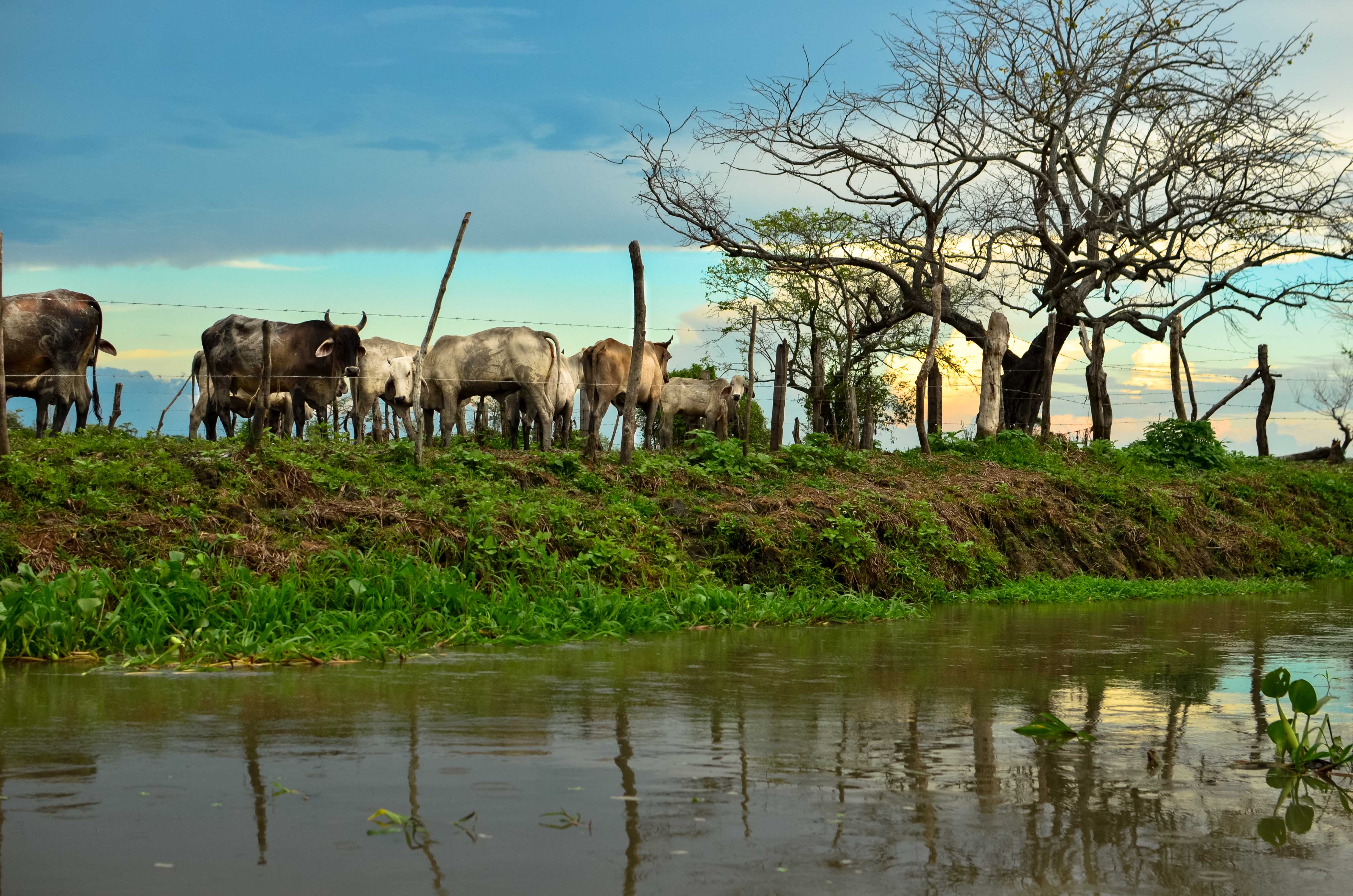
As far back as I can remember, rivers have always given me something that I can never give back in return. I’m like a bad friend in that sense; I hope other rivers don’t catch wind of this. Anyway, I grew up in streams, rivers, and creeks during the summer months and can’t ever really remember a time when I was further than a bike ride away from one. I think in a past life I worked on a riverboat. The scene on the banks of a river is like a moving still, where life on the edges sits idling right on the cusp of constant motion created by two essential elements of life; water and gravity. This is a big reason why I was craving the lost little city of Mompos. Mompos is situated right on the muddy banks of the mighty Magdelena River, about 6 hours southwest of Cartagena. An old town that has been “forgotten”, Mompos used to be one of the key trading ports of the past. It was built up from merchants looking to connect the coast with the Andes, and also hide their goods from seafaring pirates (damn pirates are always making things complicated). The river is a thick, brown color and carries a large volume of silt, which eventually filled in the channel and deterred it’s use as a port, leaving Mompos somewhat frozen in time.
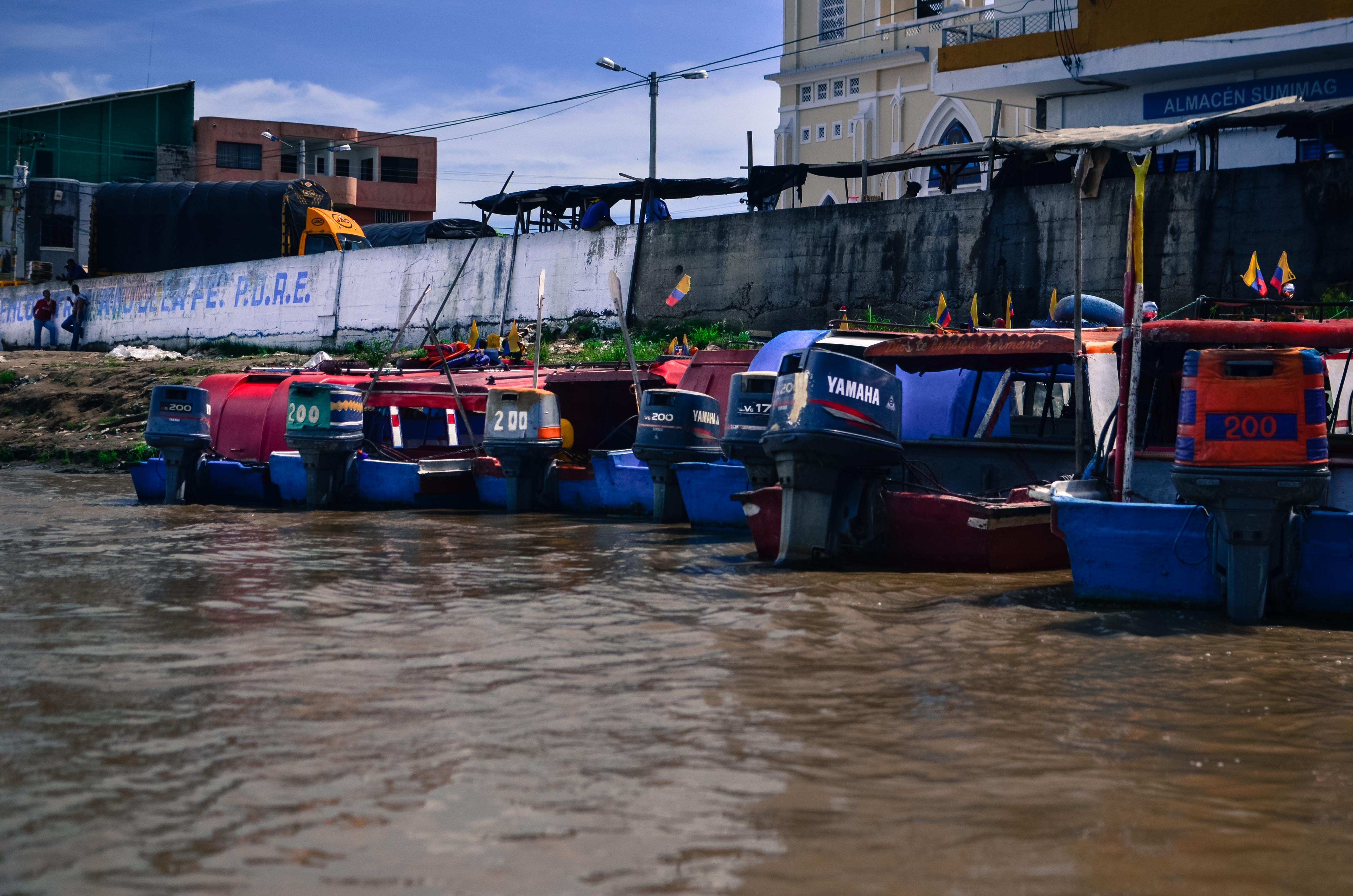
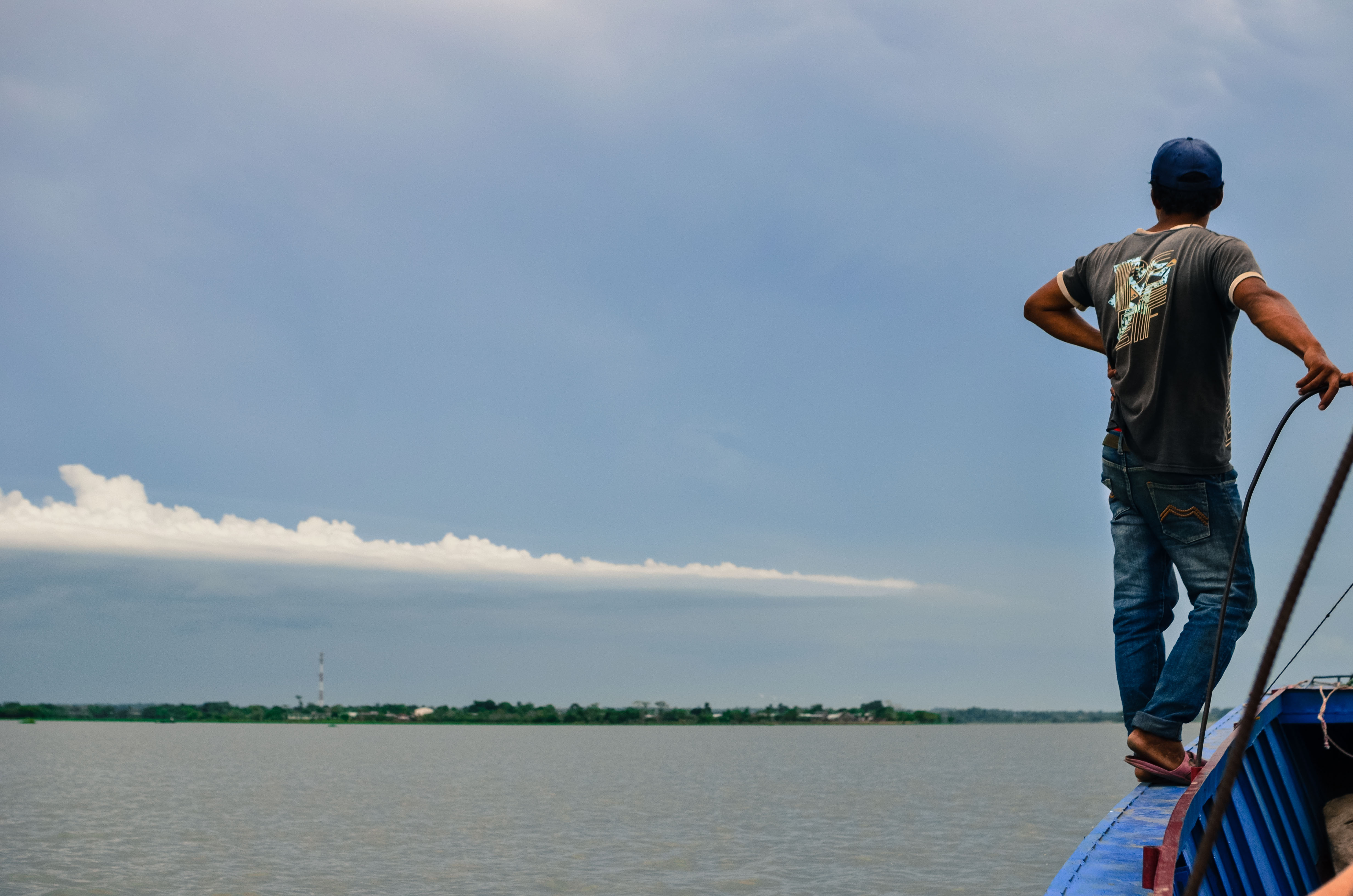
I’d love to say our journey to Mompos went smoothly. I would be lying if I made that statement. At the time we departed from our beachside hospedaje in Tolu we were refreshed, recharged, and relatively dry. About 10 humid minutes later equipped with our land anchors with straps in tow, we found ourselves soaking wet and waiting for our non-conditioned solar heated tin can of a bus to take off. We took 5 forms of transportation that day: Bus, collectivo van, chalupa (river boat), taxi, and finally a moto taxi. The last vehicle could have been avoided had our taxi’s front wheel held strong against the brutal force of the dirt road between the dock and Mompos. I’m actually not sure that referring to it as a road would be reasonable. Let’s say it was a surface lacking vegetation that was infected with conquered by the avian pothole flu. I’ve never seen more hard lefts and rights performed to avoid the impeding doom of hitting a hole in our barely drivable faded yellow taxicab loaded to it’s maximum weight capacity. On a lighter note, the best ride award goes to the Chalupa, which carried us from the chaotically sketchy port town of Magangue up the wide, brown, Mississipi-esque Magdalena River to the dock near Mompos. The current was strong and swept away everything from small plants to entire trees while we bobbed around in the brightly colored cigar shaped vessel. Smiles were exchanged while water lapped up over the edges of the boat as we flew past fisherman in their dugout wooden canoes. When we arrived dockside, we were heckled by low season seagulls that were refusing to take us to Mompos for reasonable prices. It seemed once again that, like magic, collectivos didn’t exist, and the taxi drivers were banding together in order to get the most from our wallets. We eventually found someone who accepted 30 percent less than the rest were trying to extract and off we were. Until it broke down.


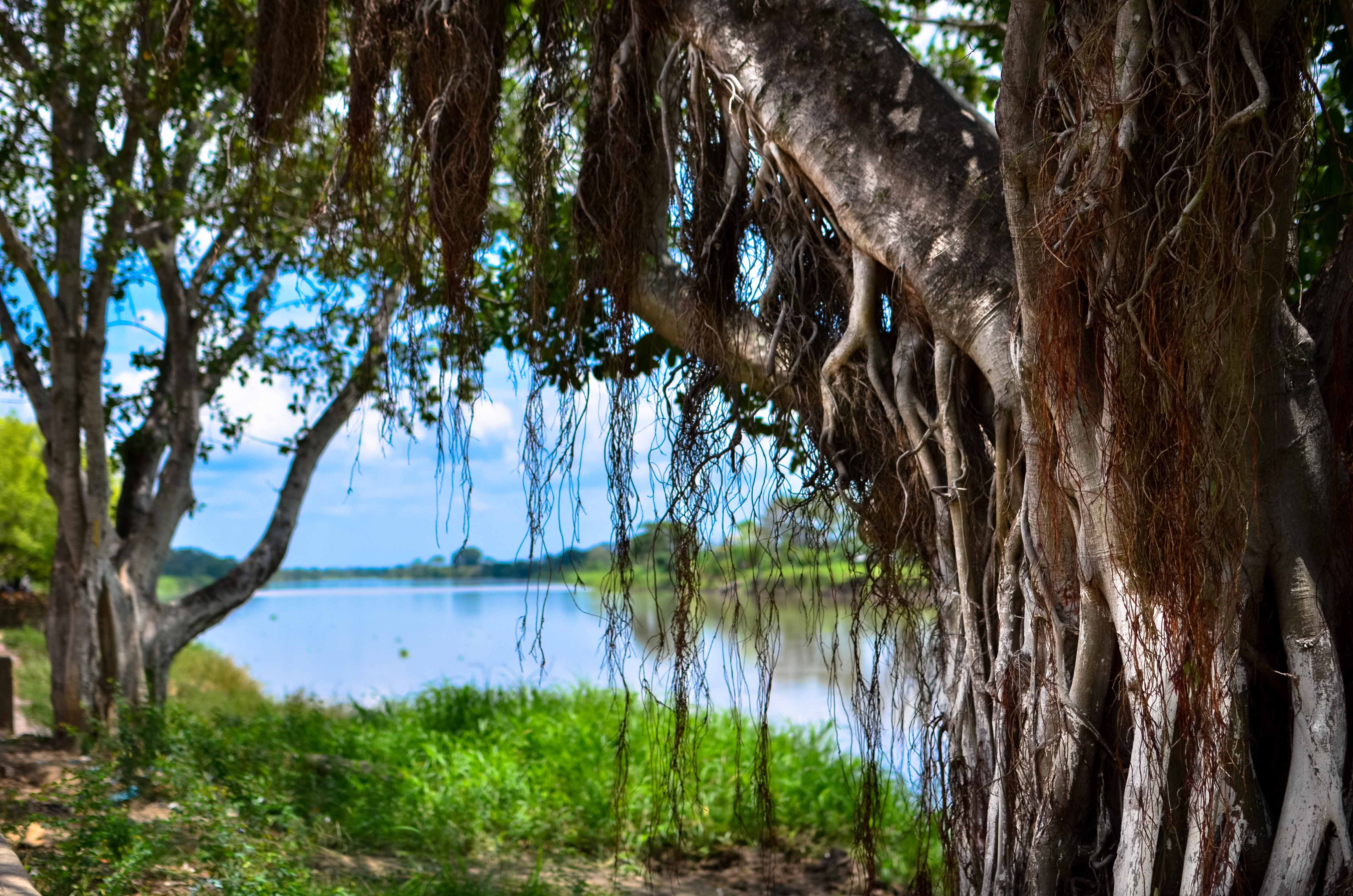
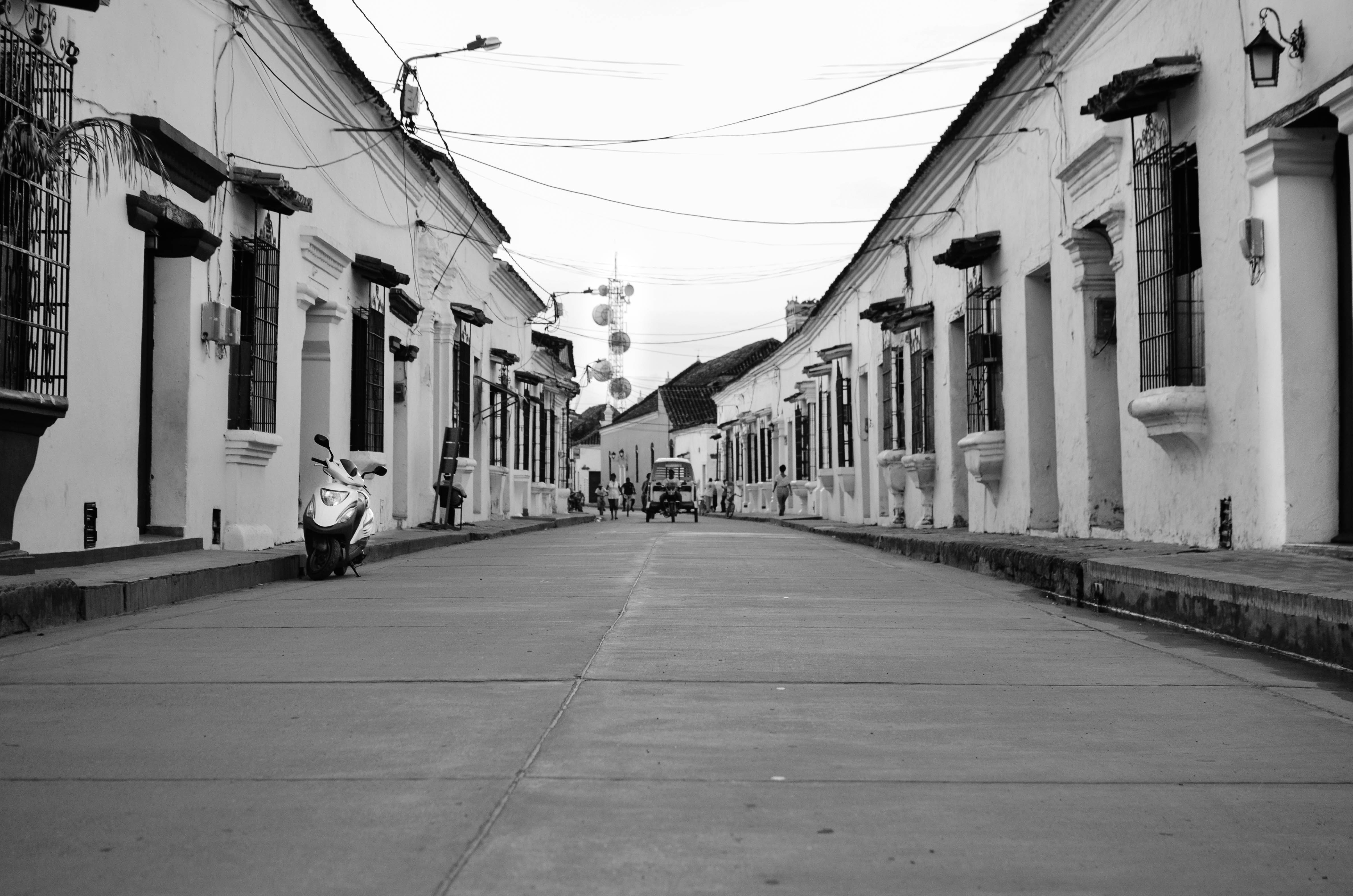
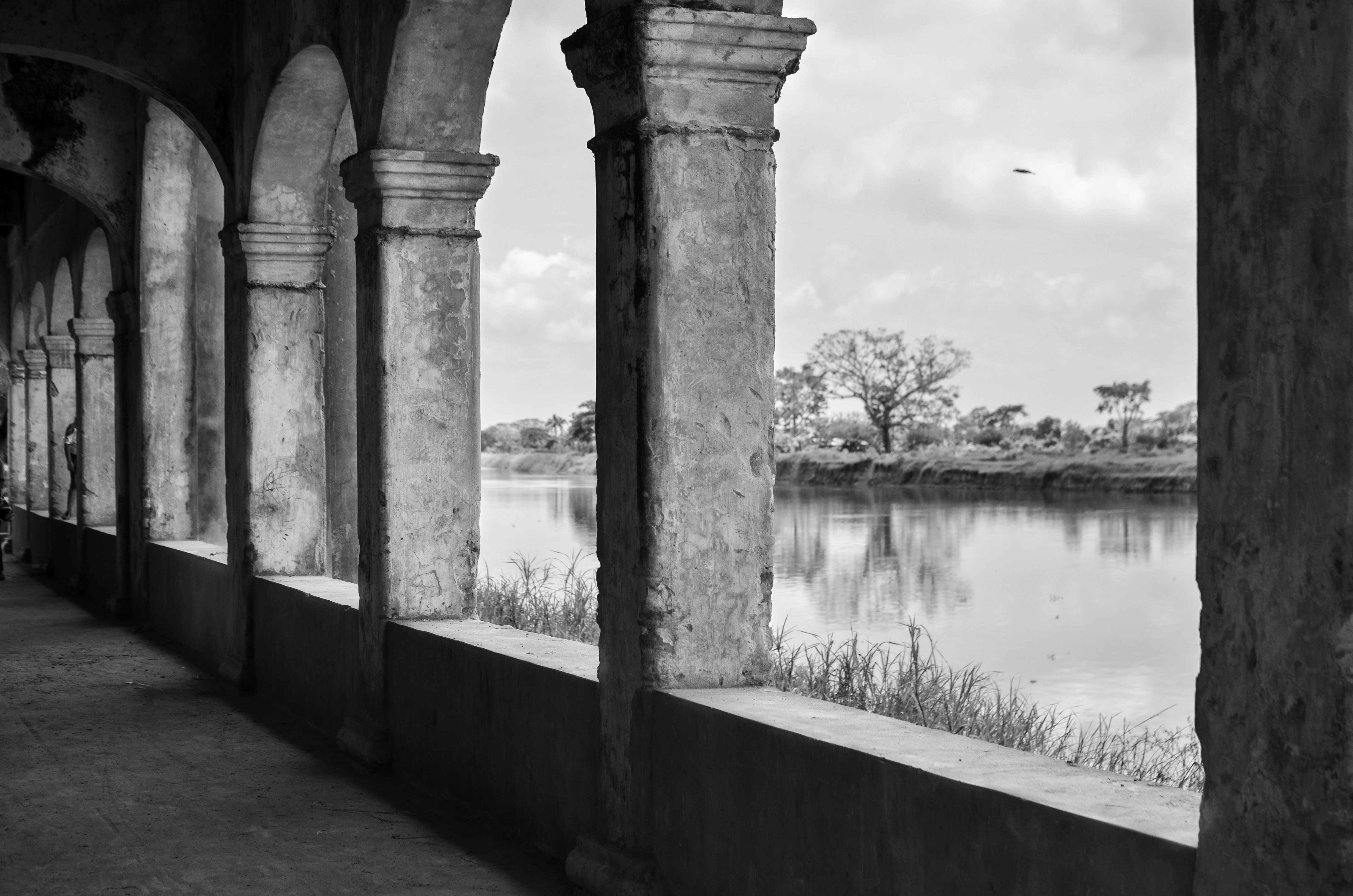
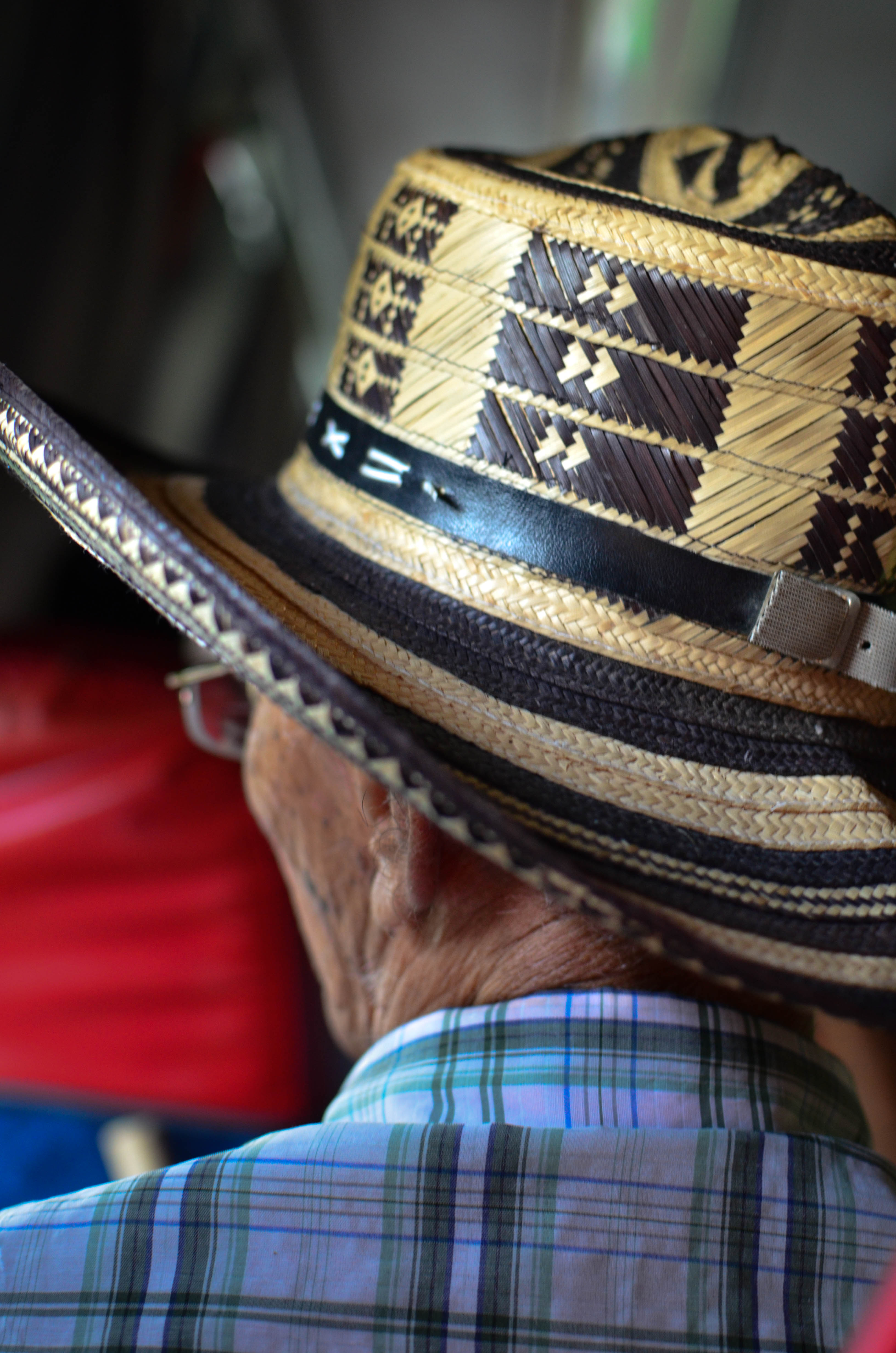
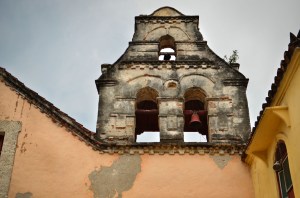
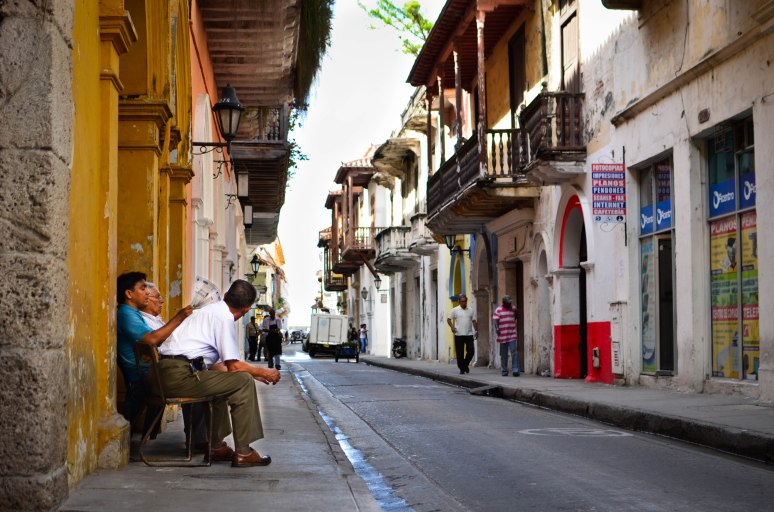
Mompos had been described to me as a river town that was stuck in the deep south of the US during the 60’s. It’s persona was enhanced by steamy, hot lazy days and the overall isolation from any main road and nearby cities. Riverside mansions of yesteryear lined the edges of the Magdelena on the city limits, facing farmland and a more rural way of life on the opposite bank. The immaculate preservation of old colonial architecture mixed with small town charm has granted this slow, almost lazy, and virtually vehicle free city UNESCO World Heritage status. Walking down the streets of Mompos was truly like stepping through a time-warped door and into the past. People tinkered about during the heat of the day going here and there and in the same breath the streets felt wide and empty.

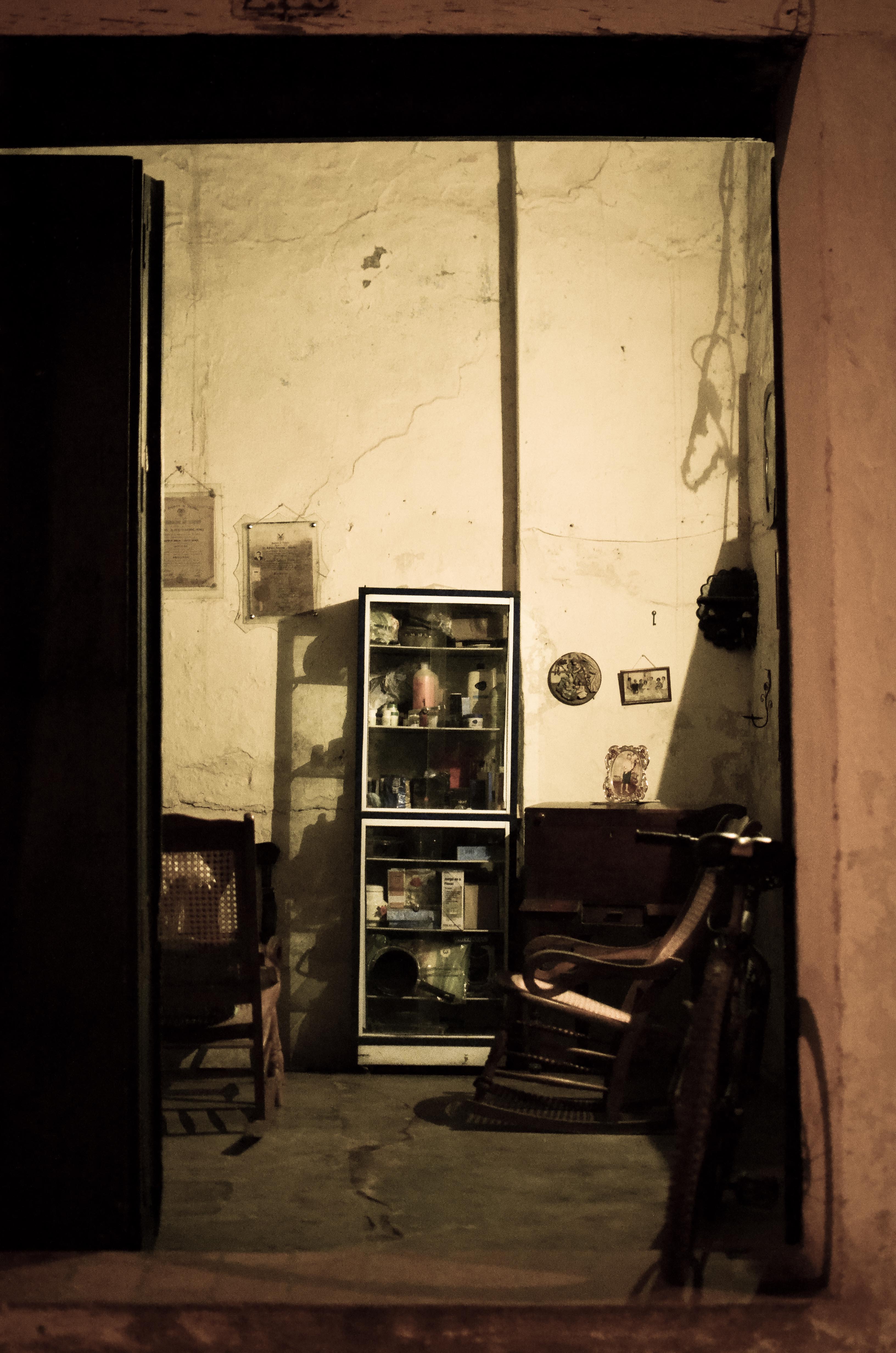
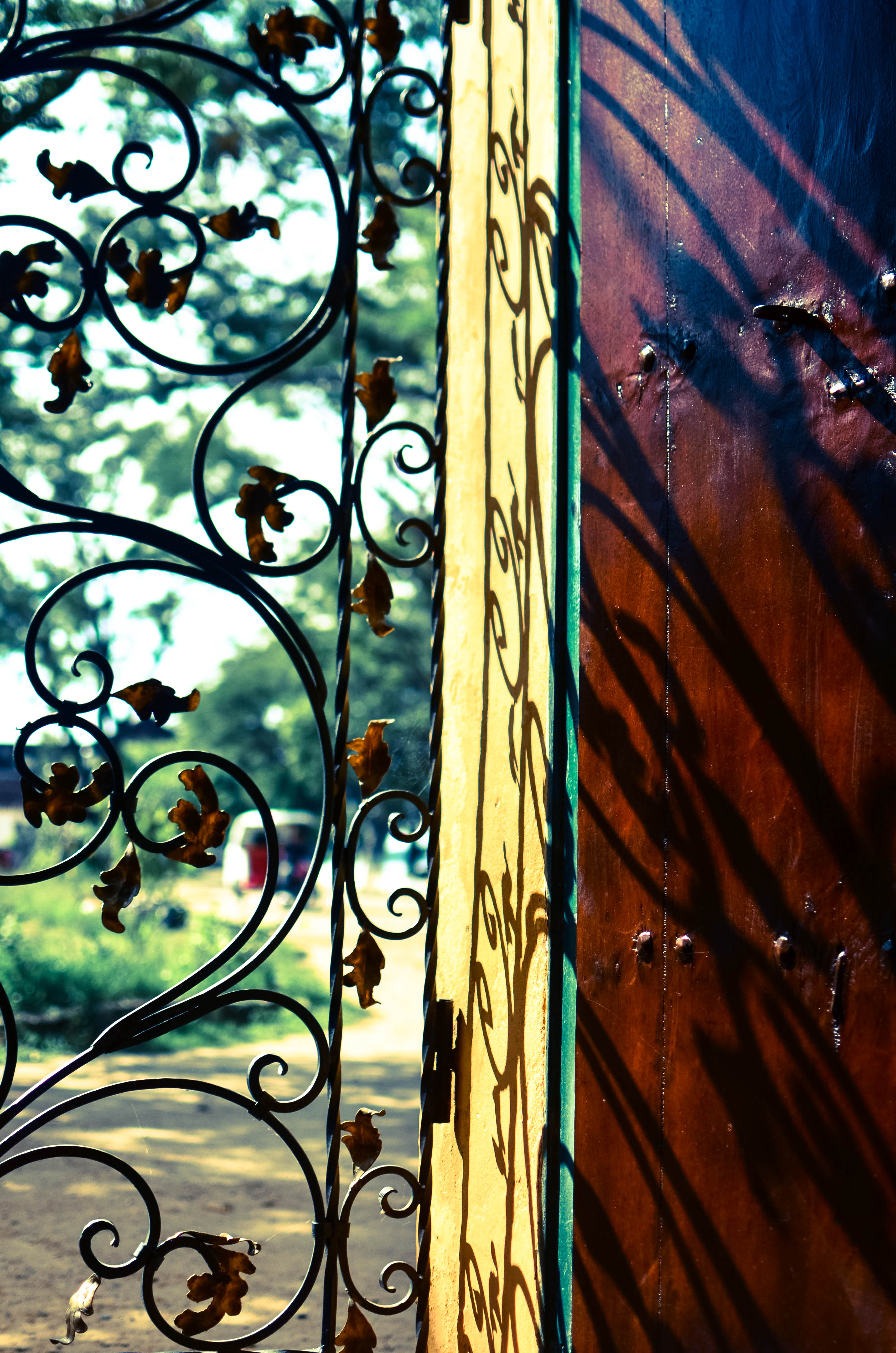
For travelers, there aren’t many touristy things to do in Mompos. That fact, along with it’s architecture, are it’s main draws. It’s a chance to break away from being a tourist and step into that quiet town life we rarely get a chance to be a part of in this rapidly evolving world. The streets are occupied with rickshaws, tuk-tuks, horse drawn carriages, and motorcycles but never feel crowded. Barber shops, panaderias, a few restaurants, and closed for low-season discoteks stand guard on the streets of Mompos while a slower pace of life carries on around them. It wasn’t uncommon to peek through the omnipresent wrought iron window grills to see an afternoon snooze in full force. The river along the malecon is lined with a waist high wall that separates the grassy slopes of it’s banks to the streets above. In several spots steps flow from the street all the way into the muddy waters, disappearing out of existence into the depths of moving current. This proved to be a great spot to sit and watch the light shimmer across the broken surface of the constantly churning tributary. During the day it is almost unbearably hot. So hot that you find yourself wondering what the meaning of life is. I know the answer is not eating ¼ roasted chickens during said hottest part of the day with clear plastic gloves on your hand. But when in Rome, you play like a Roman. For travelers that must see it all, Mompos has a beautiful cemetery full of ornately designed mausoleums, ostentatious old merchant family headstones, and above ground coffin sections that were surprisingly touching to be amongst. I’d like to also mention there is an awesome fruit, vegetable, and meat market about 6 blocks out of the center of town away from the river that is worth checking out. A day was spent buying all accessible fruits and consuming them at a leisurely pace (highly recommended).


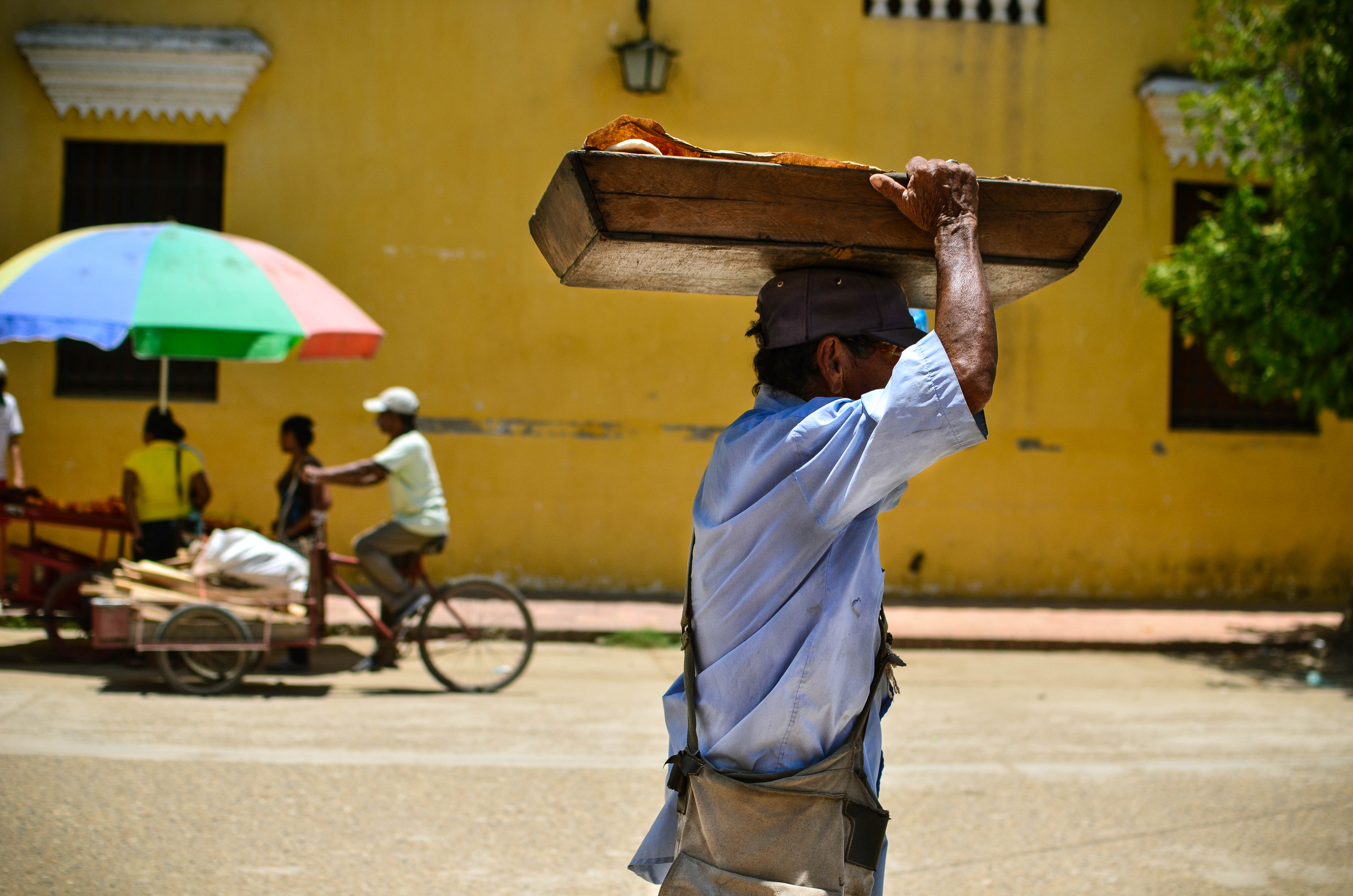


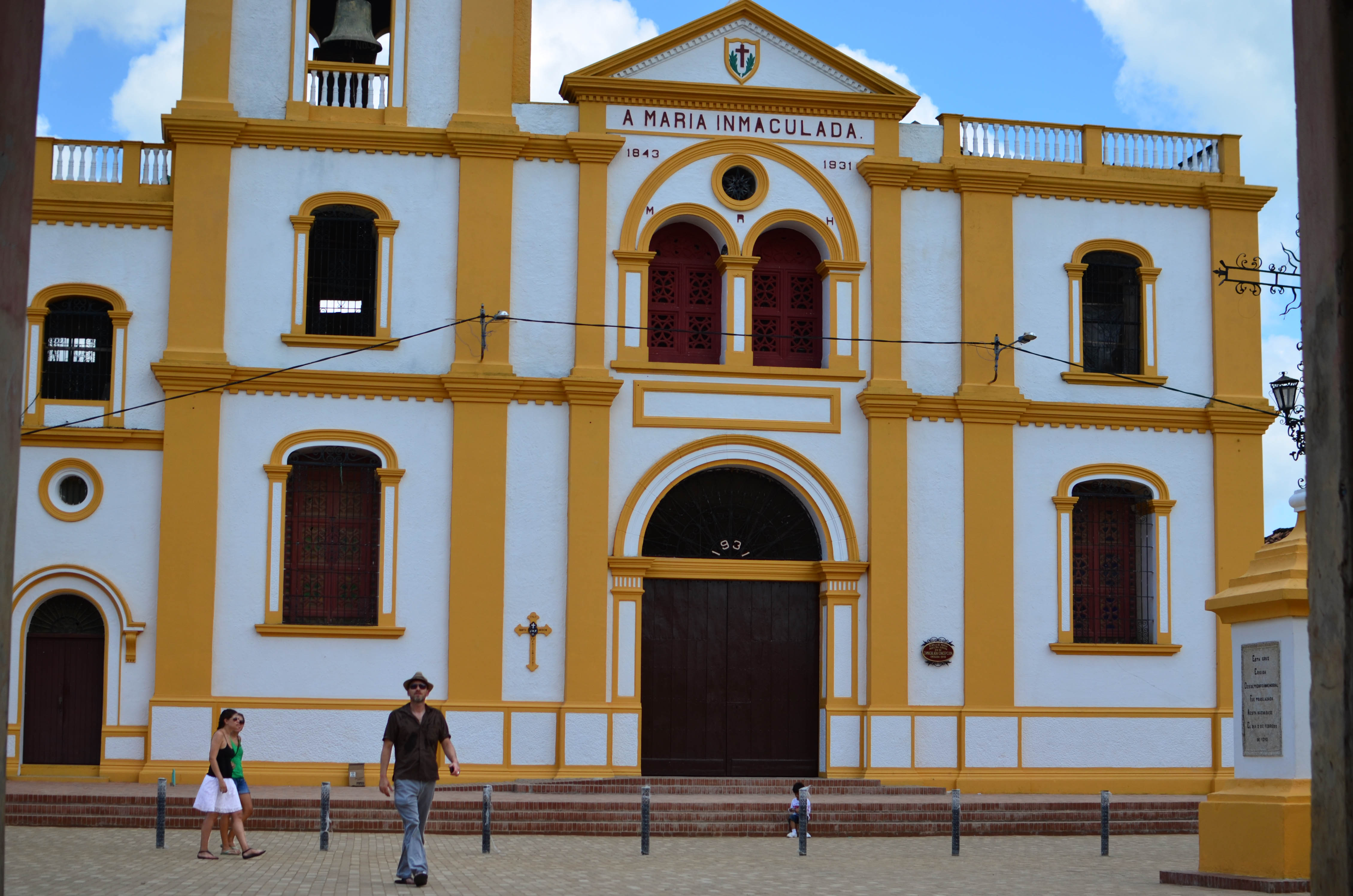
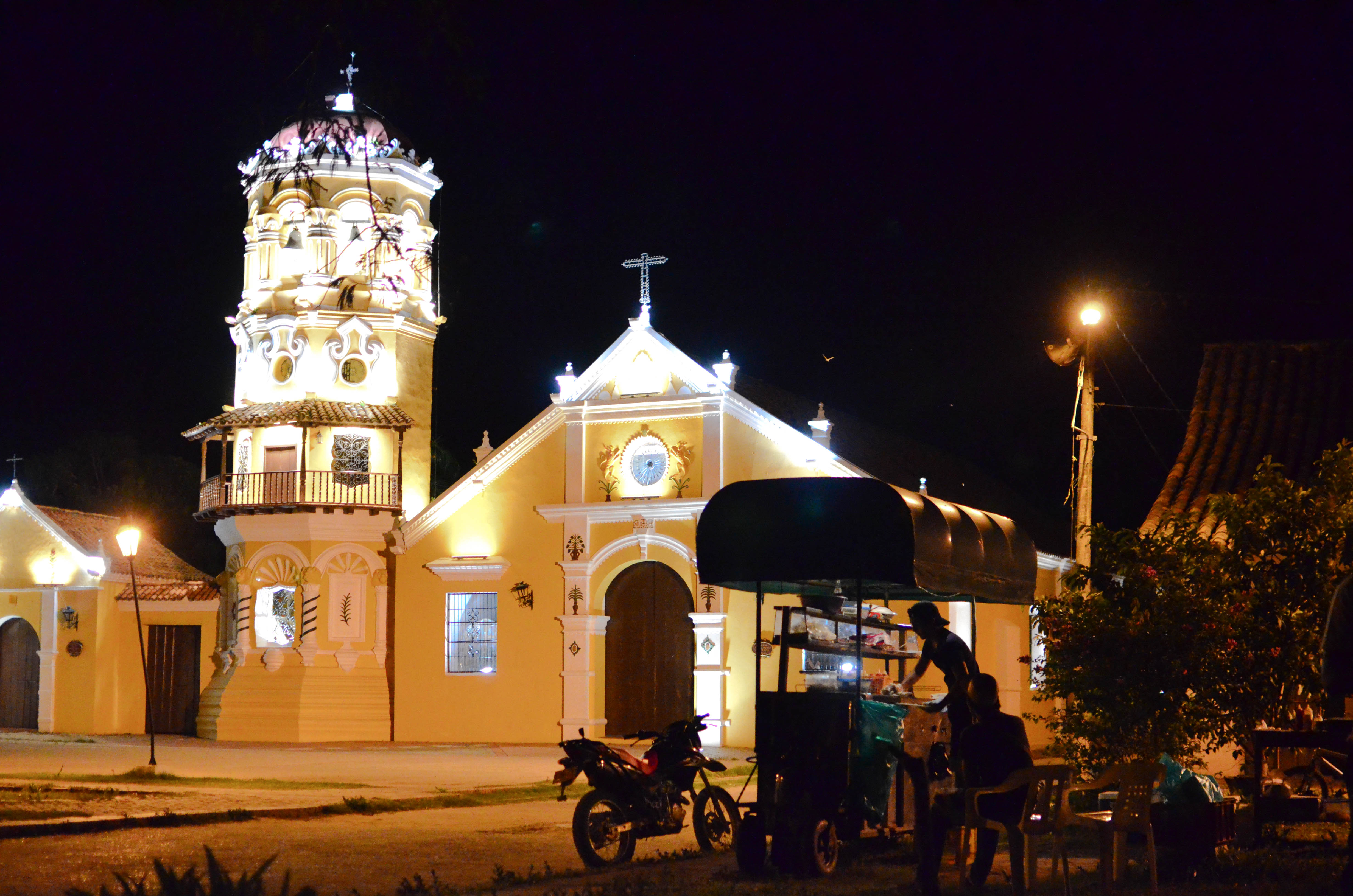
Like clockwork every night the square in front of the main church in town would fill up with food carts and pop-up restaurants. These mobile kitchens would serve up the most delicious (and cheap) fresh fruit smoothies, pizza dripping in mozzarella (hard to come by in this part of the world), big barbecue dishes, and Colombia’s version of hamburgers (very thin patty of interesting looking beef. There was even a 3-stool outdoor bar in the mix. Our routine would start while the sun slinked away in a blanket of saturated red and pink clouds that seemed to be seared into the sky. For us it was the only place to go for food each night, and we looked forward to it each and every time. Fresh limonadas, banano con maracuya, and fresa con leches were engulfed while laughter chased the last rays of light away. It was a local affair, and each night different characters turned up for great food and a jovial atmosphere. Homemade bikes and rickshaws of all shapes and sizes would pull and line the side of the street to join the chatter that was surrounded by the scent of delicious food emanating from the square.

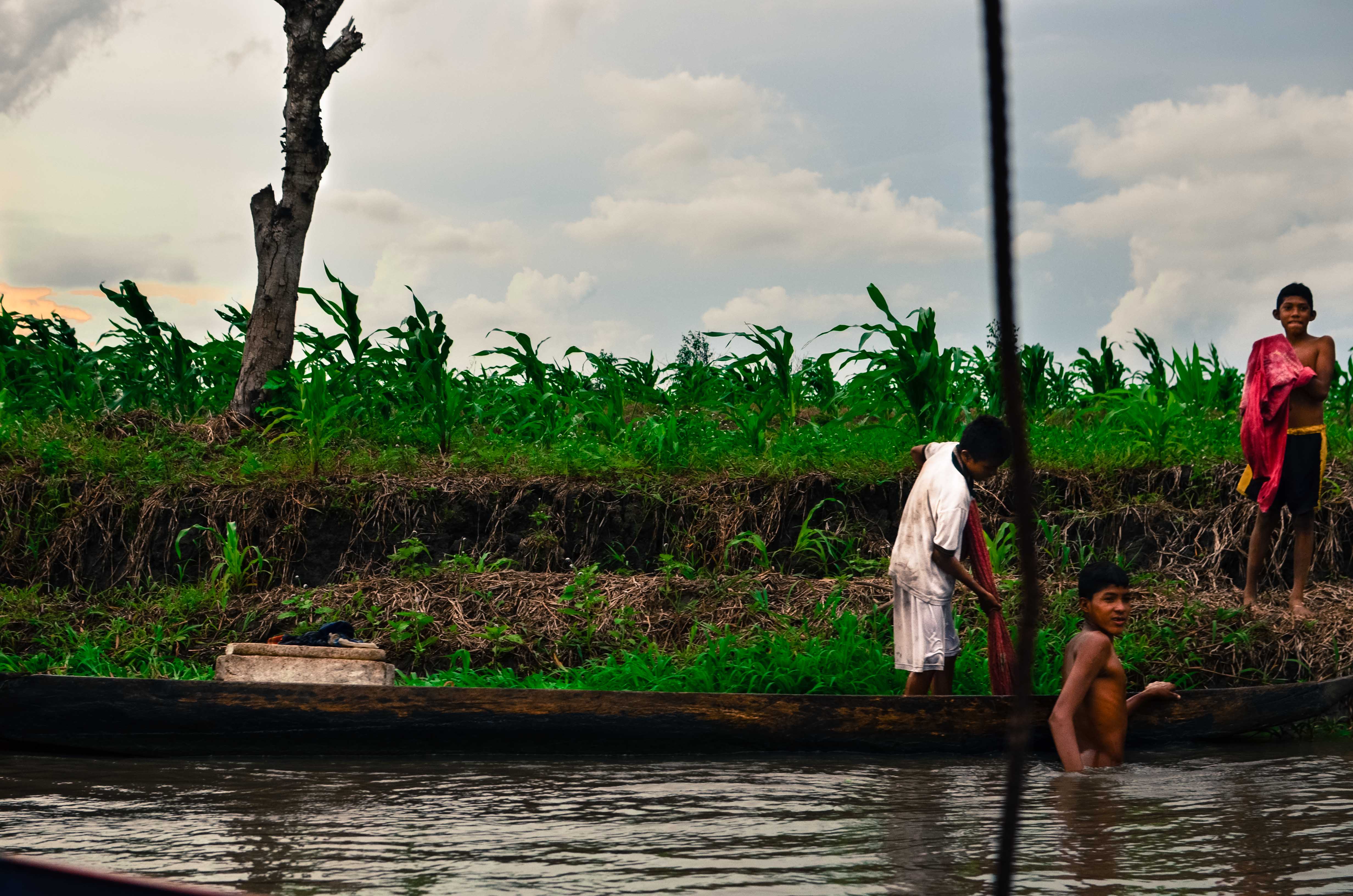
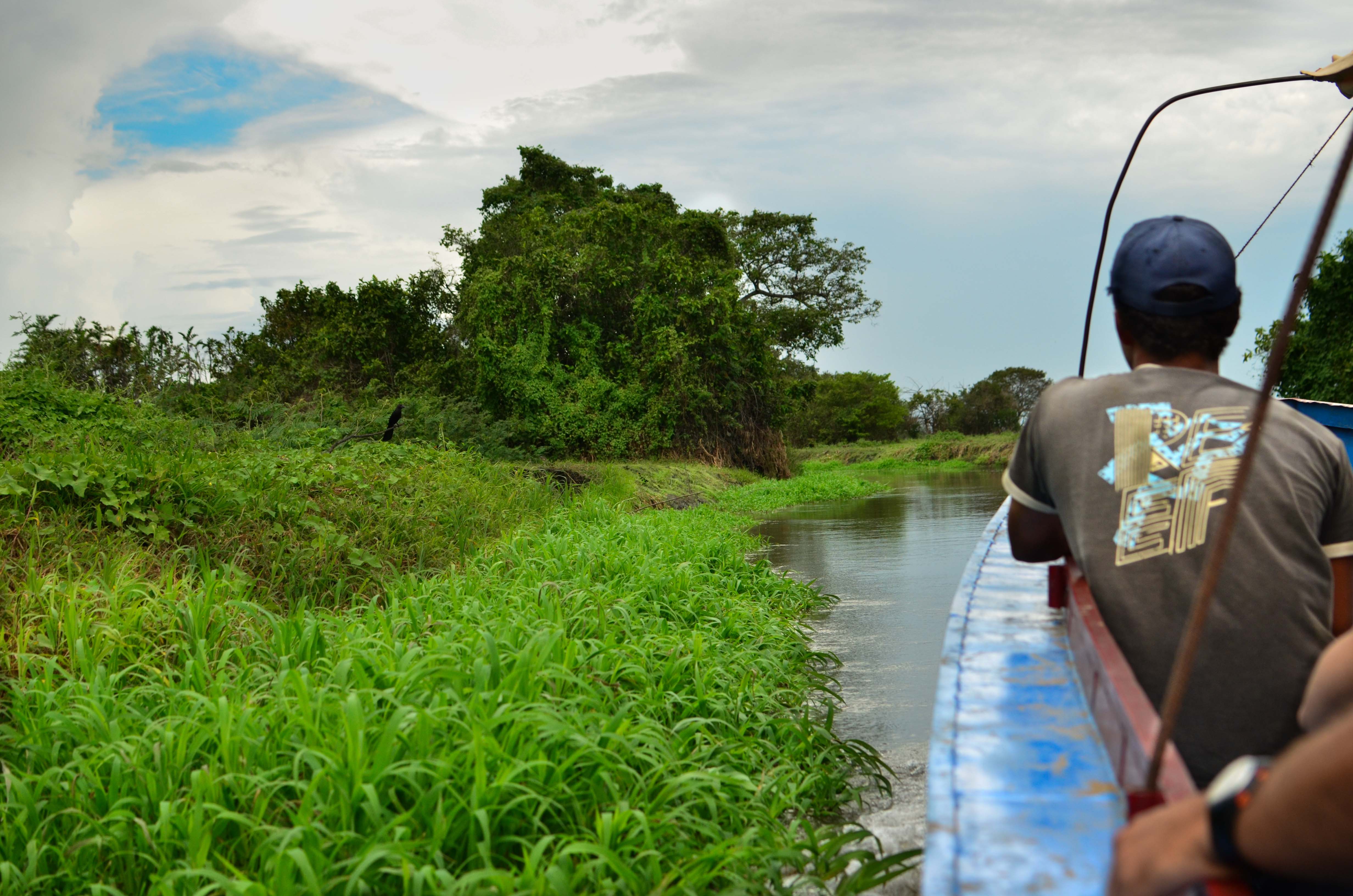
After we sweated through a few afternoons worth of shirts we caved into temptation and took a riverboat ecotour. The tour consolidated all tourists who agreed to the terms and conditions into one boat, which was probably borrowed from a friend of our tour guide. As we took off upstream, Mompos faded away and the rural farm life became illuminated in that classic yellow afternoon glow. Dug out wooden boats rested up against the silt banks next to hand dug mud stairs that disappeared up into the fields above. Our boat slinked off the main river channel and into a narrow tributary on the side. Naked kids were playing in the shallow muddy waters and gave out friendly waves as we zipped past, returning the gesture with the wake of our boat. We were given glimpses of their world from vantage point of the meandering stream that was also teeming with wildlife. Our guide was constantly pointing out the hundreds of iguanas hanging out in trees, cows grazing along the waters edge, floodplain birds in the grass, and large falcons looming over the sliver of water we were floating down. Remote villages that were completely cut off from the rest of the world came and went out of our vision. Imagining what life was like living in a Colombian version of Huckleberry Finn wasn’t hard because we were peering right into it. I can still picture the tall water grass swaying in the breeze and the sound of insects swooning in the thick summer air. We eventually broke out of the stream into a wide-open bay filled with lilly pads just as the sky began to darken. Our guide killed the engine and told us all to jump in for a swim. It’s moments like these when you question the safety of being on a “tour” with a “guide” but eventually we all ended up in the water. The current was strong and instantly swept us away from the boat. Tiny, acrobatic fish were pecking at our limbs when we stopped treading water and would often leap out of the water right over our heads. I remember having the constant fear that one of these silver bullets was going to careen straight into my face. My feet sank about 6 inches into the muck on the bottom of the muddy river and that eerie feeling of not being able to see anything combined with sludge between toes flooded my veins. With dark clouds looming overhead, we boarded the boat and puttered back to where we came from, passing by fishermen punting their boats with long, thin sticks heading home for the day. I let go of the last glimpses of the simple, separate life before we pulled up to the shoreline of Mompos once again.



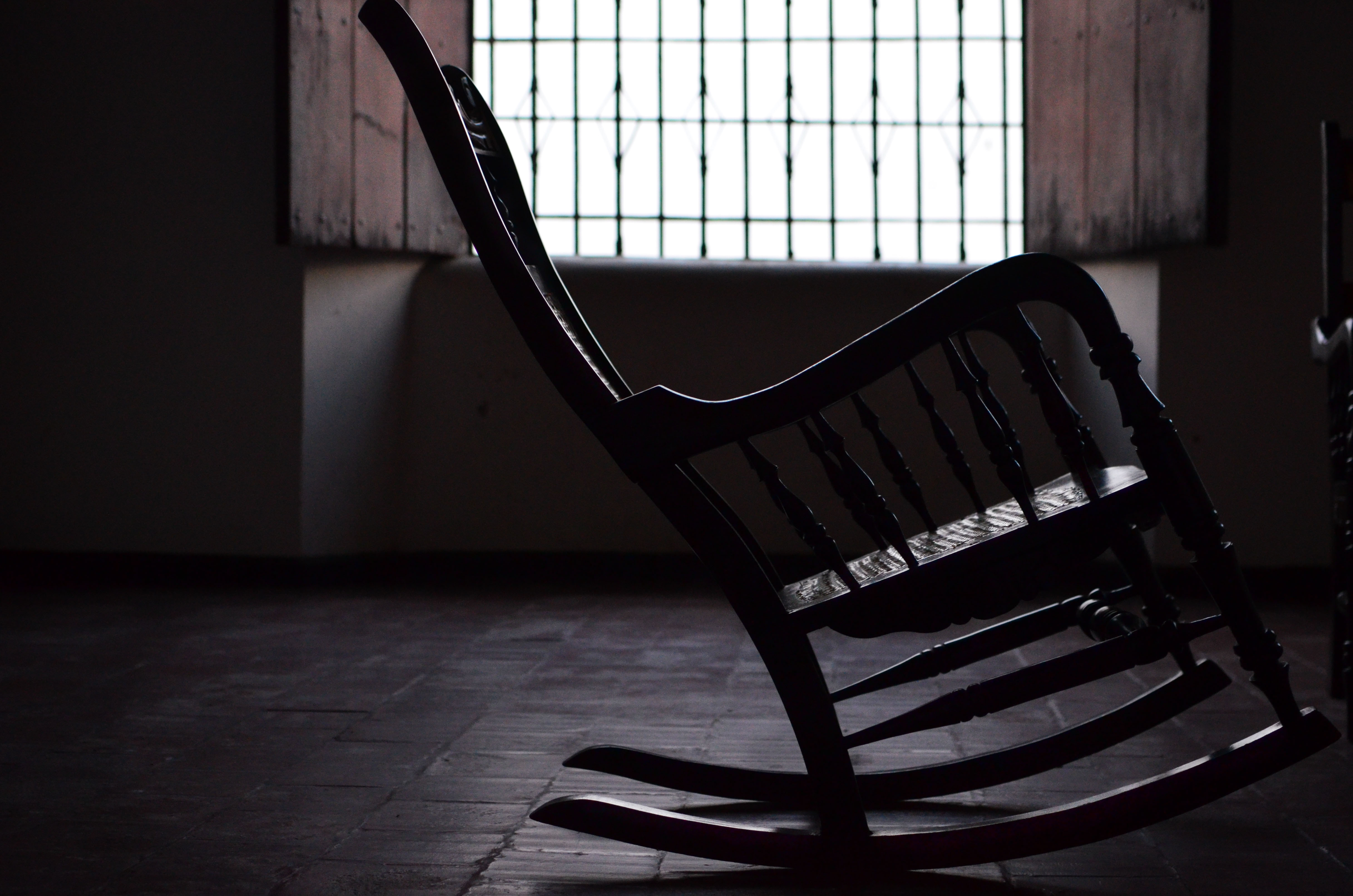
At night the air was crisp and the once dull empty streets and sidewalks filled up with rocking chairs. A quick glance through the open doors and windows of any home afforded views of antique furniture and usually a broad quiver of the classic and essential seats that Mompos was known for. Hand woven straw furniture was ubiquitous in local homes. I saw several professional repair men bringing chairs and bench seats back to life on the sidewalks in the shade . Tradition seemed to be alive and well here. Crowds of men and women would gently rock back and forth, dimly lit from the puddle of light pouring out from their doorways. Most doorways were wide open, letting any curious eye into their living rooms without worry. Crime felt non-existent in this town, especially at night. But nature was also prevalent at night too. One walk was interrupted by a shouts and screams from locals just ahead of us. Elissa and Brook saw something slightly askew that I didn’t. Suddenly my eyes focused on the large black serpent weaving a slithery “S” shape on the sidewalk in front of our hotel door straight in my direction. The black beast was craning it’s neck, sending out a silent warning to anyone who went in front of it’s path. At that moment, the owner of our hotel came out of his home with a large wooden club. With a few thunderous blows to the head the venomous snake was vanquished. Another night in Mompos.
It was hard to leave behind the fresh food, lazy days, and crisp nights that Mompos let us in on. Any traveler who wants to get away from the normal routine in Colombia should definitely spend the extra time and effort to get there. The rewards for hard travel are more often than not immeasurable by any standards. Mompos had that, and left us with some great new memories. I strongly recommend you to go there and see for yourself!
Colombia’s Caribbean Coast: Tolu and Isla Mucura

Fresh off their own adventures in Bogota, my longtime college friends (and the most adventuresome travel couple I know) Jason and Brook turned up in Cartagena. We showed them a little bit of the city before quickly deciding to make tracks off the beaten path. Our sights were set on showing them a truly unique experience, something that we had been magnetically attracting since our feet set down on the dusty ground in Guadalajara almost 5 months prior. Cartagena was beautiful, but it was a far cry from the cultural experiences we were looking for, as cities often feel for me. Outside of its limits we were exposed to a healthy dose of the poorer side of Cartagena through the window of our taxicab en route to the bus station. I live for these glimpses of how polarized life can be and find them especially captivating in the Latin world. Our sights were set on Tolu. The bumpy, frequently unpaved roads to get there brought us through the open fields of the lush green Caribbean countryside. We bounced passed cattle fields, beaten down little towns, and children filling in the potholes that the dirt and gravel roads adopted with every passing vehicle.


Our bus’s final stop was yet another classic bus station in the middle of nowhere. Conveniently waiting for us were bike taxis that naturally couldn’t come up with a fare price on the spot. When we arrived at our hostel we had to argue the price down significantly and still wound up paying too much. Avoid this trickery by demanding to know the price before, a trick we knew but often forgot to stick too. After getting settled we took a spin around the beach town looking for something to do. During the week, Tolu is pretty much dead. There aren’t really beaches in Tolu, just little patches of sand between man-made jetties. Warnings from locals, including a police officer, kept us from walking too far away from the town center along the malecon. Tolu is a Colombian party destination on the weekends and caters to that type of crowd. Lot’s of delicious cevicherias lined the road facing the water right alongside bars, restaurants, and boutique hotels that were out of our price range. It appeared that Tolu was a favorite destination for Colombians with money, and was also a stepping-stone for the resort destination of Isla Mucura. After some hard bargaining, including walking away from the same little booking office several times, we hooked a decent price for a round trip to Isla Mucura at about 50,000 pesos per person (roughly 30 bucks). Every other office/tout/boat owner was insistent on charging 35,000 one-way if we wanted to spend the night and not return on the same day.

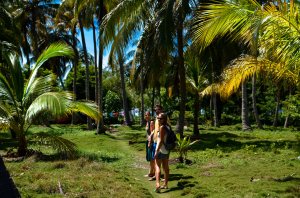
In the morning we schlepped our belongings over to the docks and were sea bound shortly thereafter. Our boat was packed with a mish-mash of Colombians on vacation. We, along with one other backpacking couple, were by far the youngest on the boat and by far the least affluent. The water was the classic turquoise blue you read about in travel magazines and there wasn’t a cloud in the sky. En route we cruised up to (supposedly) the most densely populated island in the world, Isla Santa Cruz del Islote. The drive by felt slightly distasteful as all the rich Colombians on board were jumping at the chance to snap pictures at locals. There was an animals at the zoo kind of feel about it. I have to admit that I took a few snaps myself, but I also take pictures of just about everything I see. There was a certain air of fascination seeing buildings stacked upon buildings with nothing but walking space in between. My curiosity about how garbage is dealt with was answered a short while later when we passed a boat surrounded by floating plastic bottles and rubbish. Plastic waste only has one place to go in this kind of living environment, and unfortunately it’s in the water.
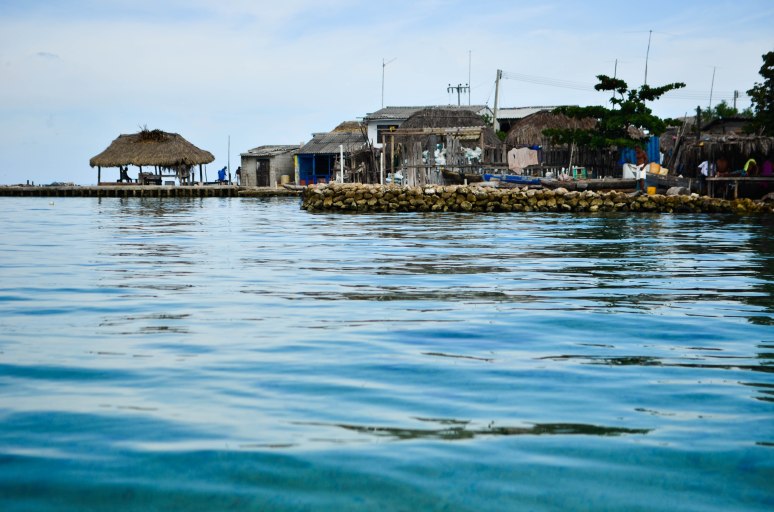
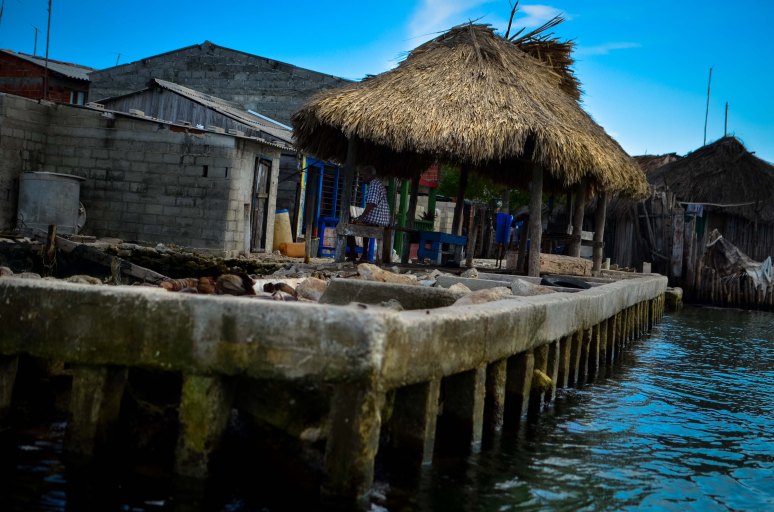
Isla Mucura was a short paddle away from Santa Cruz del Islote and gave a decent amount of it’s inhabitants a source of income. The beach that is accessible for visitors is lined with restaurants and tables selling crafts by locals. Upon stepping off the dock we were greeted by Jovenas, a local tout who makes his living giving tours and getting kick backs from restaurants and the accommodations he brings tourists too. The only options for staying on the island were all inclusive hotels “no trespassing” hotels, a mid range hotel complete with a lagoon water park, and the only hostel on the island where we wound up. We followed Jovenas with suspicion as he led us through a maze of mangroves, across small streams, and into an alternate reality that traveling beyond the beaten path can often procure. We broke out of the mangroves and entered into a small, Afro-Carib village with small palm leaf huts, naked babies playing marbles, fishermen pulling their boats in with the day’s catch, and passed the only tienda on the island. Everyone who we encountered all greeted us with hearty and friendly “Holas”. Passing little house after little house decorated with imagery of santa claus, flowers, and sunny painted landscapes, we found ourselves in travel bliss once again. Seeing real people in real settings always has this affect on me.





After we exited the village and left our curious little tag-alongs, we walked through lush green grass spoiled only by healthy, leafy palm trees. Huge piles of conch shells next to fishing boats silently spelled out a local staple source for the little community. Jovenas brought us to the hostal we sought after, but not before setting us up with a snorkel tour the following day. Sleeping options were rooms in the main building, hammocks, or the stilted hut on that sat on it’s own concrete slab, jutting out into the ocean and just happened to be available that night. I’ll give you a guess what we chose. Although the beds were beaten down and salty, geckos and mosquitos were everywhere, and the air was supremely hot and sticky during the day, it quickly became our favorite new home. Waves were swishing and splashing on 3 sides of the hut and we felt like we were on an abandoned island completely surrounded by surf. I could fall asleep to that sound every night for the rest of my life.
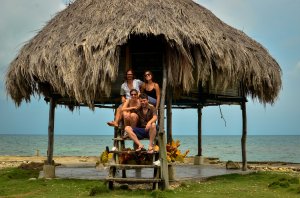


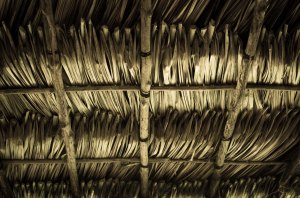
The beach was visually the kind of beach that most would dream about. Shallow, warm teal waters and bright white sand everywhere. Seafood was abundant and way overpriced. We all decided to split a whole fish as a snack and were presented with what could have been nothing other than a parrot fish. This saddened Jason and I especially, because we had studied reef ecosystems in school and knew the importance of parrot fish to the general health of the environment. That aside, it was probably the best tasting whole fish I had ever consumed (it was already dead at that point, right?). Baby lobsters were presented to us and were followed by our polite refusals. It appeared that forethought was lacking in responsible fishing. Responsible tourism was also to blame.


The next morning our snorkel tour confirmed the health of the reefs, or what was left of them (later we heard that dynamite fishing techniques were still being used). We were joined by the couple that we cruised into the island on and with a Dutch gent named Roger. Roger was traveling solo and was finishing up his South American adventures in spanning from the Antarctic to Venezuela and provided us with great tips and conversation. Jovenas brought us to a few spots on his little boat equipped with snorkels that appeared as if they were found on previous snorkel adventures. There were some pretty cool looking fish out and about but there was also empty bottles and lots of coral bleaching.
After the tour we decided to check out the other beach near one of the hotels and walked around the deserted low season wooden adventure-like park that surrounded it. We didn’t see a single person on staff and got to mess around on the stairs and towers while the sun was turning yellow. A beautiful sunset was taken in and plenty of rum was later consumed. It turns out that geckos liked rum and cokes as much as we did and would jump on the chance to get in on one of our little plastic cups whenever they could.

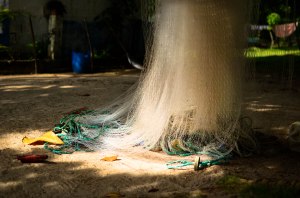


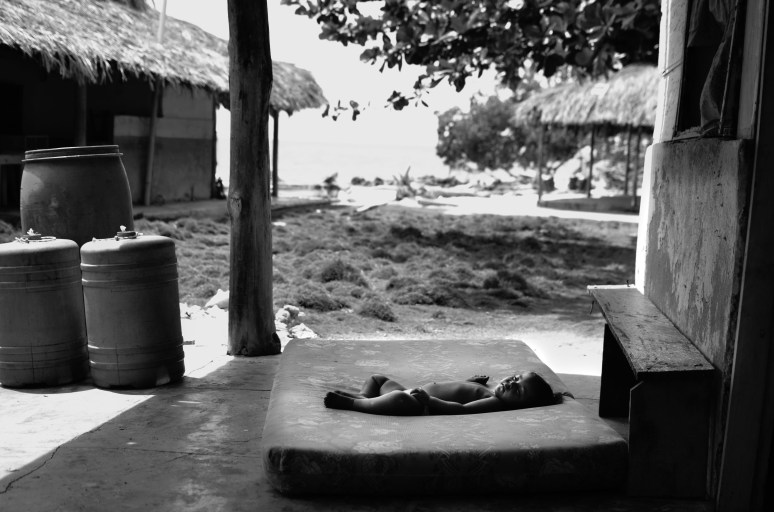
The island life was filled with copious amounts of relaxation, especially during the hot mid-day sun. It was a common sight to see plenty of hammock-induced comas, and shirts were always optional. The family pig, goats, sheep, and chickens were constantly prodding the ground for sustenance and milling about with the soothing sounds of waves slapping against the sand. I found one of the youngest daughters sleeping peacefully on a mattress and was incredibly moved by the sight (It wound up being one of my favorite images). Wanting to give these isolated kids something to enjoy, Elissa and Brook spent an afternoon creating simple collages using magazine clippings and glue sticks. We dolled them out to some little tykes on a stroll through the little village much to their delight.
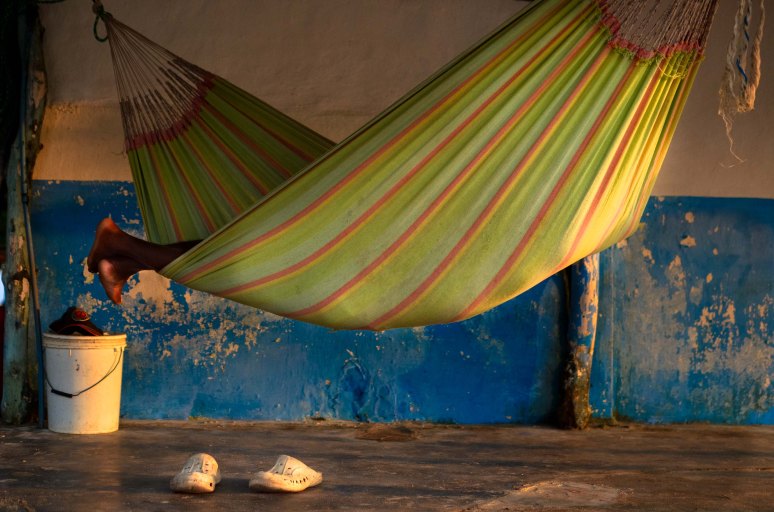
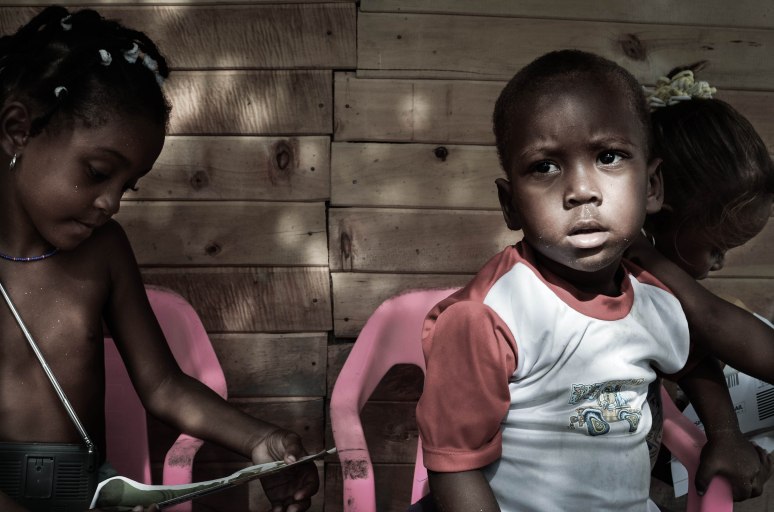
The time came for us to leave the island of Mucura. The day we left was stormy. Waves were crashing into the dock as offshore winds were gathering steam. The ride was epically disastrous on many fronts. Waves began landing into our laps as rain began to add it’s frustrations upon us. Visibility disappeared and the captain lost sight of land and sense of direction. We stopped several times to try and orient ourselves, allowing the larger waves to fully saturate our bodies. Eventually land was found, and we were way off course. As the boat pulled up to Tolu we were dropped off in a shallow inlet and waded back to the shore. Memories once again made, incredible imagery seared into our minds.
Thanks for reading and please share with anyone who likes travel!
Touchdown in Colombia: The Cartagena Chronicles
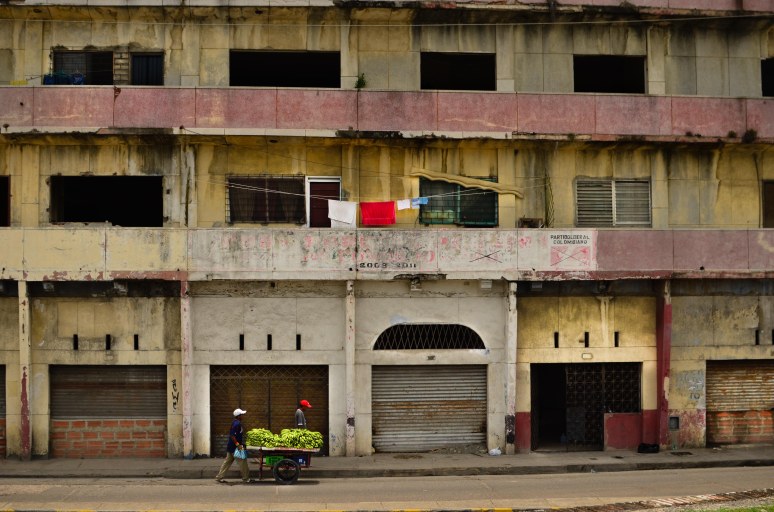


Cartagena Colombia holds UNESCO world heritage status for reasons that are obvious to those who have ever visited this classic colonial city. Cartagena has a rich history deeply seeded with pirate attacks, hurricanes, conquests, and heroes. Cartagena also consists of the largest and poorest population in Colombia outside of it’s historic fortified walls of the “old town”. As our plane from Boston began to prepare for landing, our view of beachfront development, luxury apartment condominiums, and new age concrete fingers that were stretching towards the light of the sun changed into rough and tumble lean-to’s, concrete block houses with metal roofs, and the reality of yet another Latin American country with a huge gap between the rich and the poor. Instantly I felt like I was home again. This whole traveling thing has sunk it’s fangs deep into my skin by this point, and I felt incredibly at ease with the chaos of figuring out what defines a new place, what makes it’s heart beat.



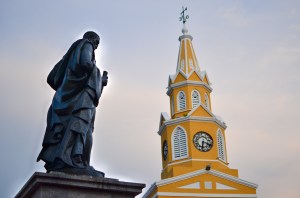
Without any set plans (as always) we naturally asked for the maximum stay at custom. 90 days seemed like an enormous amount of time to spend in one country, but in my eyes it’s always better to be safe than sorry. We grabbed a cab and set off for the Caribbean city that was beckoning us to come. Hostels within the walled part of the city were almost 3 to 4 times the price that our guidebook (the newest edition) had listed. Instantly I knew this was going to be a common theme in Colombia. We walked with our 40 pounds in tow through the thick, humid air until we found ourselves in the Getsemani area, a few blocks from the infamous clock tower. Casa Venecia was the first hostel we found and wound up being our home base.

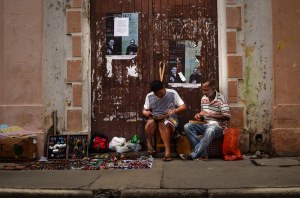
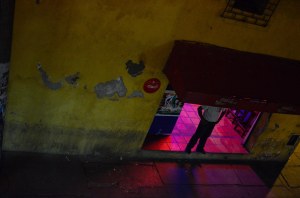

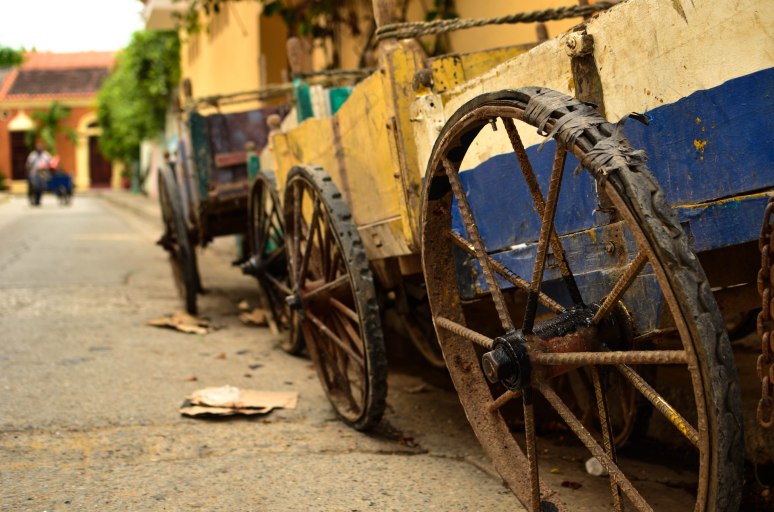
Our new home was an absolutely perfect location to bring us back into the swing of Latin life and get acquainted with Colombia. Colombia was a country that we had been a little nervous about considering it’s history that is rife with Guerrilla warfare, drug production and trafficking, and random acts of robbery and violence. But as soon as we settled onto the dusty streets of Getsemani, we took in the raw elements of the Caribbean Colombian lifestyle. The neighborhood seemed like a more realistic and poorer one than it’s touristy counterpart, but it was nothing like the life seen on the fringes of the central city limits. Life and culture was still very much preserved in Getsemani. I watched life for hours from our little balcony in our hostel, and studied it like it was an intrinsically detailed snow globe. I saw men without shoes pushing massive carts containing fruit, beer bottles, bread, and everything else you could possibly imagine up and down the street. In the small inlet opposite the Castillo de San Felipe de Barajas we watched fisherman on small wooden fishing boats throwing nets for their daily catch. In a city like this, every moment and experience is a truly unique one. The parts of the equation are constantly changing, but the answer always remains the same.

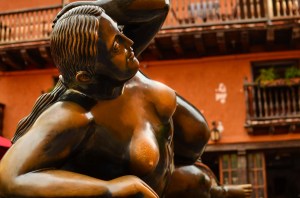
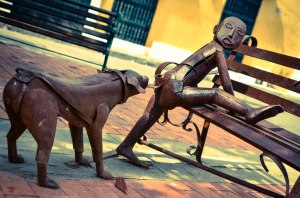
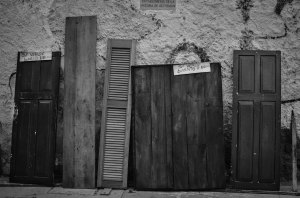
Coffee, as it turns out, was ubiquitous. Men holding homemade metal carriers with around a dozen or so white thermos containers with blue, red, and green tops were never more than a 5 second search away. Although I read they normally had coffee of different variations, they only ever seemed to have “tinto”, which is a highly sweetened black coffee. Each small cup cost about 12 cents. I was officially in trouble.
Anything and everything would surprise me when I turned corners in Cartagena. I almost walked into a man carrying a 55-gallon metal drum over his shoulder and watched him walk down the street and out of my life like so many strangers before him. A lot of eyes were on me, a gringo walking around in sandals, cut off jean shorts, a summer shirt, and a camera that kept popping out from my hand made llama wool bag I purchased in Guatemala. Fear melted away as smiles were returned and the secrecy of Colombian friendliness revealed itself. I found myself walking down lonely streets without any destination in mind just to see what would present itself for me. At the end of our street I found a community church with a pet birdcage hanging from a tree housing a little parejo. At night the square would fill up with a local crowd, kids honing their soccer skills, and multiple stands whipping out the best street hamburgers and zapote smoothies I’ve had to date.


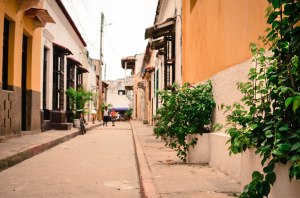
Up and down the streets that were devoid of car traffic I could easily peek into the windows of everyday life. Windows were always barred in by hand carved wooden pillars, aged by years of wet sticky air, heat, and rain. Flowers overflowed from trees and balconies throughout the entire city. Some streets were only 7 feet across, just wide enough for a tuk-tuk to squeeze through and nothing more. On side streets it was almost impossible not to stumble into someone’s metal and woodworking shop, shoe repair business, or Colombian style restaurant. Behind each thick, omnipresent facade usually existed a classic open-air Spanish Colonial courtyard full of plants, sunlight, and rocking chairs.


Large portions of the old city are surrounded by a huge, thick, fortified wall consisting of bricks, limestone, coral, and chunks of rock cemented together with heights ranging from about 15 to 30 feet in some locations. The wall was built to ward off frequent pirate attacks and various attempts to gain control of this Caribbean port city, which was growing rapidly and had the attention of different countries for it’s potential riches. In fact, a one-eyed, one-handed, one legged Spanish mariner named Blas de Lezo helped save the city from one of many gruesome attacks, thus helping write history and keep the city alive.



Inside the walls are some of the best-preserved Spanish Colonial Architecture, churches, public spaces, and walking streets that the city has to offer. Bookshops, museums, and restaurants were planted throughout the old town. This is considered the touristy part of town and is priced rightly so. We couldn’t really afford to hang out too much there, but we did walk and explore for many days in the hot, sticky air. Most of the days we were searching for places that had air conditioning and pretended to be interested in whatever the store had to offer. Coco frio carts were never too far away and gelato was ingested to help beat the heat.

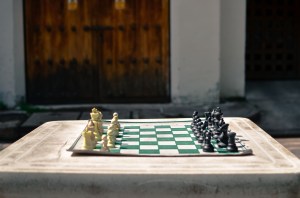
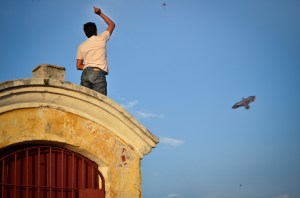
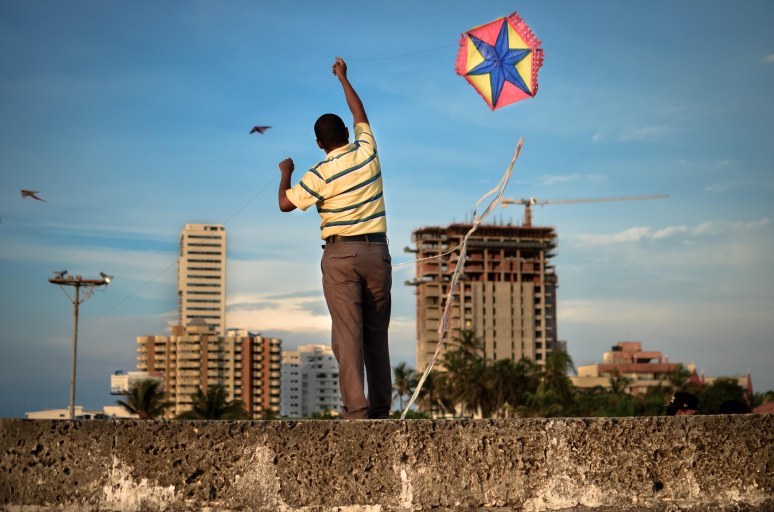
Churches, plazas, parks, and public spaces were nearly spotless and usually occupied by street performers with a wide variety of talents. Afro-Carib dancers would beat out deep-rooted rhythmic percussive performances combined with highly energetic dance routines almost nightly by the clock tower. Comedy squads would keep crowds in a state of laughter while fruit ladies dressed in brightly colored dresses would dole out mini platters for non-mercado prices. We saw the friendly same cotton candy man wandering around almost every day with fluffy pink bags hanging from his wooden pole. Tables for chess were set up with the owner sitting wearily nearby, waiting until people wanted to play in the thick, humid air. On weekends, children and adults that never grew up would gather outside the wall to harness the natural energy of Caribbean coastal winds by flying kites. Hundreds of plastic vessels of all shapes and sizes were filling the sky while I wondered how they could possibly avoid getting tangled with each other. Kite watching has turned out to be a great spectator sport for me.

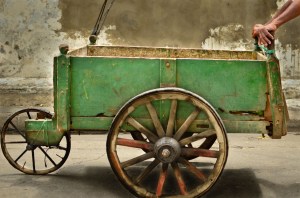
One of the first things I noticed about Cartagena was the omnipresence of bread. Right next to our hostel was a bakery, and there seemed to be one never more than 3 blocks away in any direction. Hot, delicious bread filled with cheese, butter, and topped with some sort of sugary sombrero would force me to stop in my tracks and buy a small bagful every time. Fruit was available everywhere on the streets. Fresh Banana, pineapple, mango, grape, mandarin, avocado, zapote, and lime carts were frantically zipping around the worn, historically rich streets. Crime, just like any large city in the Latin world, was a concern here but fortunately for us it never showed us it’s ugly smile.


We knew we needed to check out what the newer portion of the city had to show, regardless of prior expectations of what development does to this part of the world. Huge skylines fronted what little beaches existed, protected by a sequential series of man-made jetties. We walked from the old town to the approaching Miami-like city scene of Boca Grande, one of the main attractions to the city. What we found was exactly what I was expecting. The polarity between old vs. new was ever apparent. The westernized way of life had blossomed into a full onslaught of fast food, upscale restaurants, luxury services, and the “comforts” of living. While we were swimming we were being barraged with offers to ride jet ski’s and crazy looking float able tubes that get pulled behind boats. While we floated in the salty waters we looked in the distance at the domes of old churches and castles of the old city and compared them with the modern white washed sky rises just a stones throw away.


We fell right back into the metaphorical music of Latin America like the ease of getting back onto a bicycle. We had 5 days to kill before our friends from Boston, Jason and his wife Brook, were scheduled to arrive. They booked their flights months ago and were anticipating our adventures together the entire time. We couldn’t wait for them to join us in our journey and looked forward to showing them how budget traveling creates some of the best memories. We knew they were coming from a completely different world than the one we had become so familiar with since beginning our journey in Mexico. We had no plans of holding back and knew Colombia would not disappoint us with surprises, beauty, and experiences that couldn’t possibly be described in written word.

Summertime Siesta in Upstate New York
A halfway point between Newport, Rhode Island and Fort Johnson, New York brings you to Chicapee Mass. Elissa’s parents drove us to go and meet my Dad who would be waiting in a McDonald’s parking lot right off an exit. As we pulled into the lot I saw my Dad standing right next to my brother’s cherry red ford pick up truck. He was wearing his prescription glasses and round john lennon-ish colored sunglasses on top. My dad. We slipped into McDonald’s where we all shared breakfast accompanied by an apple pie with a slice missing that my dad had brought into the restaurant. My dad.
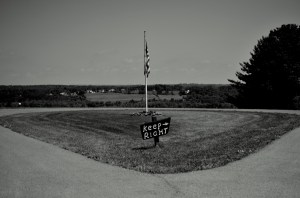

Upstate New York is always a bittersweet experience for me. I practically ran away to college when I was 18 and enjoyed the distance I kept. I always feel the same familiar urge to get back home when I go without it too long and I often end up with the same familiar anxiousness to leave when I get there. I saw the writing on the wall when I was a teenager that if I stuck around too long I might never leave and live with complacency. Personally, it wasn’t the kind of environment for me to flourish in. Some friends I know are doing well in life there. A lot I know seem to be oscillating between personal, legal, financial, and or drug related troubles. But it is home to me, and home has always been important. With that aside, we were driving westbound on I-90 with my Dad, whom I was more than happy to be sitting next to after 5 months of sitting next to strangers on buses. Green fields of corn appeared on the hilly landscape in and out of forests, pastures, and stretches of river. We did the whole trip chit chat in about 5 minutes and quickly went to only jokes that Stan could possibly come up with. My brother had also given me rights to his new truck until he came home. Score.
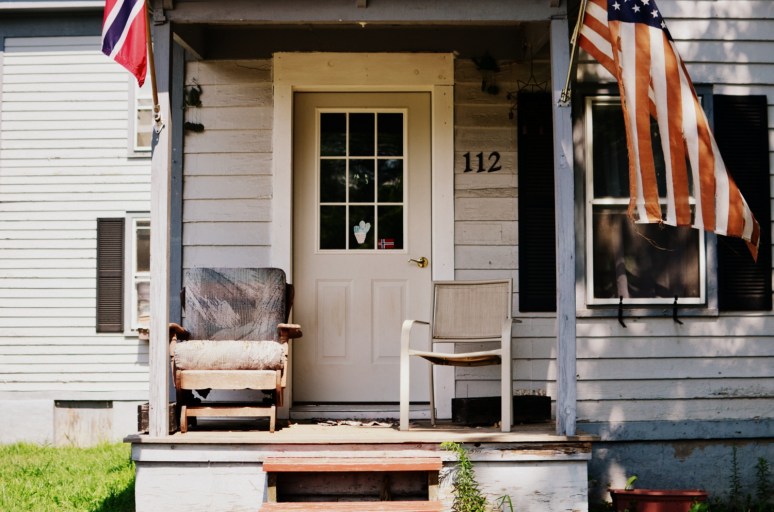
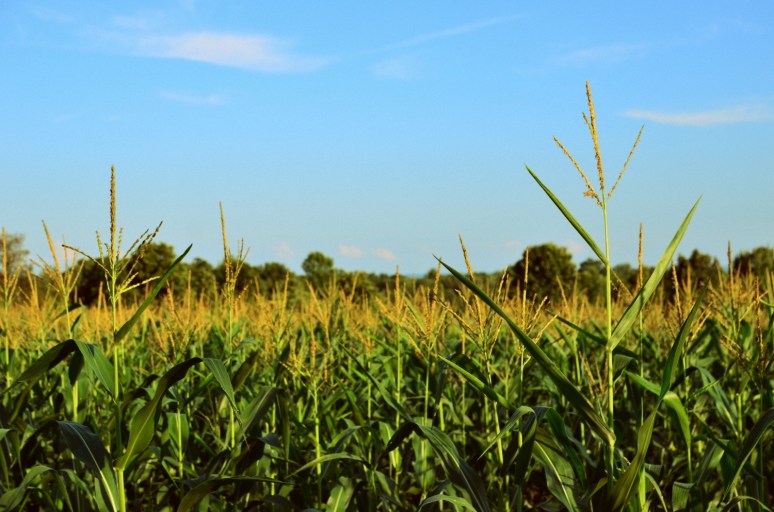
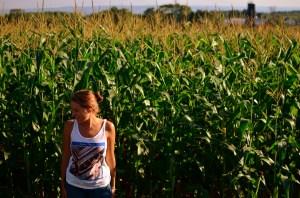
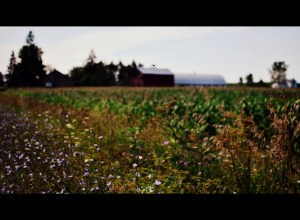
The first sign of upstate familiarity was the waving seas of corn rustling in the summer breeze. Rolling hills came to life in shades of green and yellow as we drove down back roads and short cuts that definitely take a lot longer than going on the main roads. This is a classic dad move for me. I can go way back to the depths of my mind and remember 3 or 4 hour breakfast trips to a diner that is “just a little further down the road”. The field in front of my mom’s house was brimming with corn almost 7 feet tall. It seemed like it was a decent season, although I kept hearing that it was tasselin’ too early. Yellow tassels as far as my eyes could make out in about 180 degrees. It was warm out and that golden sunlight color was popping through the late afternoon, illuminating the blades of freshly trimmed green grass. My mom came out and doled out big hugs and a warm hello. My gramma, who usually keeps to herself in her bedroom, came out and chatted friendly with me for a while, giving way to a smile here and there (a hard thing for my gram). It smelled like home again.


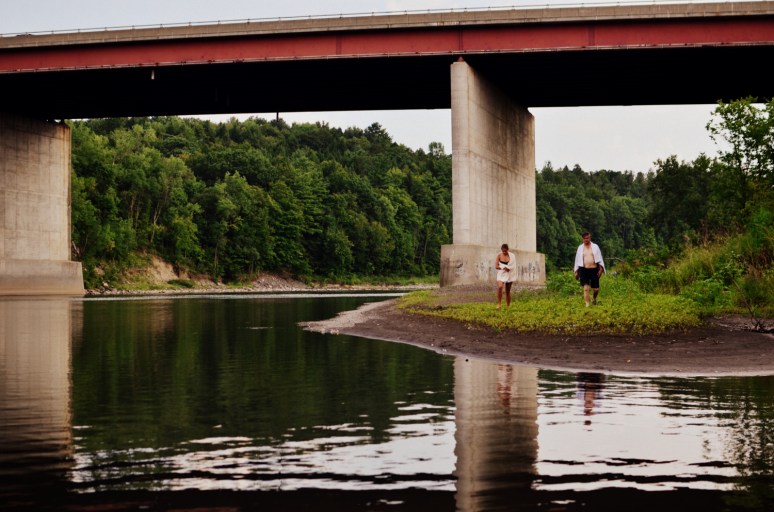
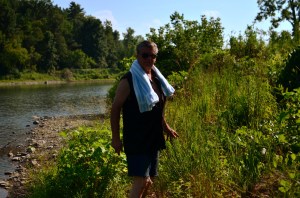
It was summertime things that we absorbed ourselves into during this visit. Barbeques were a nightly affair and soaking up sunsets was our number one priority. Mom spoiled us with food (as always) and I took the helm of the grill. A trip to our favorite swimming hole in a stream near the thruway bridge behind Karen’s was absolutely non-negotiable. The old path seemed to have disappeared and was now inhabited by the extended corn field. No problem with 4 wheel drive. We rode over rocks, logs, and brush to get to the entrance, which appeared to be impassable. We waited by the water and witnessed Stan come out of nowhere with his car, which had to drive over a bank and around my brothers parked truck to get to the entrance. My dad.




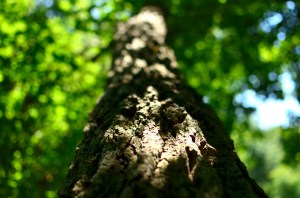
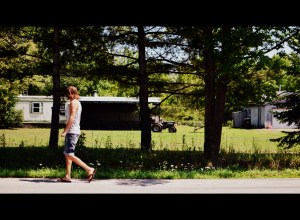
Later we drove past the first house I grew up in. After parking the car on the turnoff that was so familiar to me I walked roadside along the trailer on 30-A. The house was there, the garage was there, and it was just the soul that was missing out of this piece of land. The mailbox that was installed when I lived there was still intact, just weathered dramatically. The garage was in disrepair. The basketball hoop was gone leaving a sun soaked shadow on the paint job that me and my brothers did ourselves almost 20 years ago. Our favorite tree in the backyard that had one massive tree trunk that split into 3 large trees overhanging the creek had been cut down. Where the garden used to be was now a used car parking lot of sorts, complete with overgrown grass and weeds. It felt like I was looking into a movie rather than my home. This was a pretty bad movie.

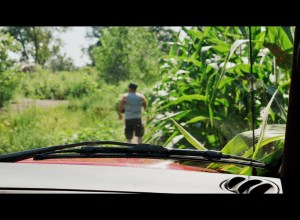
I needed to meet up with some much missed friends so I fooled Elissa into agreeing to head to Johnstown’s annual block party. This felt like a trip back to high school, except being my 28 year old self now. I was told that night that I had both the best and the 2nd best mustache by two gentlemen. I was more proud of the 2nd best mustache title, because I feel it has more honesty behind it. Going against the greats like Reynolds, Sellack, and the entire cast of Super Troopers and coming out above any of those was a metaphorical trophy in and of itself. Outside in the parking lot, a mere 10 minutes later, we witnessed 2 bar fist fights and were told to go f*#% ourselves by two or three different girls for absolutely absurd reasons. Ahh New York. But I had a good time with my friends, and that is what matters most, I think.
It came time to leave upstate for an undetermined amount of time again too soon, as usual.
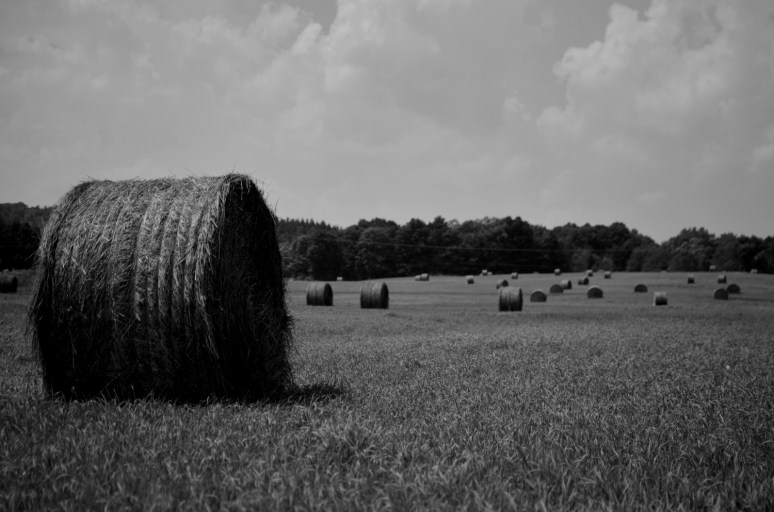
We packed up our backpacks and took a greyhound bus to Boston, where we had a few days before our next flight. A mere five minutes after arriving at South Station I bumped into a friend in the streets of Chinatown, which reinforced the fact that Boston is indeed a small city. Without a whole lot of time we savored a few summer nights in Boston with friends, drinks, and bon voyages as we prepared for our next stop, Cartagena. The South American leg of our trip was about to begin, and we were ready to leave the state of limbo in the states to get back to into the unknown. A red eye flight had us arrive in the hot and sticky heat of Colombia the following afternoon.
Backstage at the Newport Folk Fest
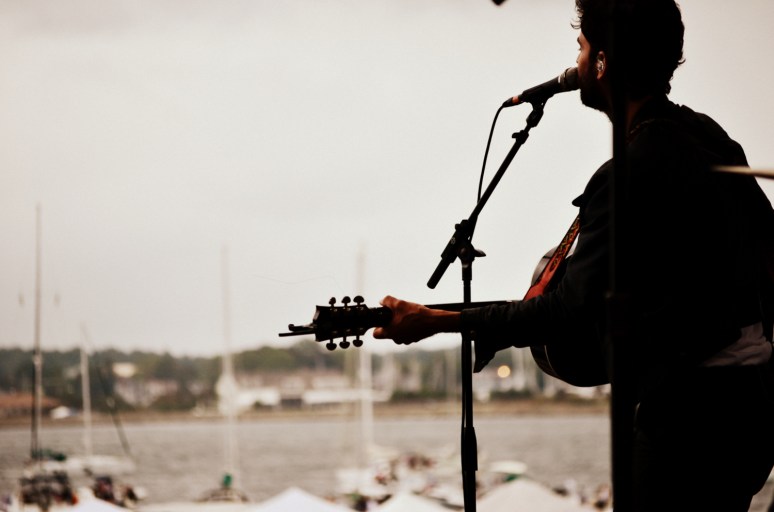
So the long and short of it is that our trip across the Darien Gap routed us to Boston, Massachusetts for a 2 week layover and then onward to Cartagena, Colombia. While this route does not seem cost effective, it actually was. The option we were hoping was available was a new cargo and passenger ferry that was supposed to arrive in Panama by early April. By the time we were in Panama in late July it was still sitting in a harbor somewhere in Greece. Sailing trip costs have more than doubled in the past 3 years and now cost between 500-600 dollars to get from Colon to Cartagena, and the stories we’ve heard from fellow travelers were completely polarized. They either had the time of their lives or were fearing for them, based on weather conditions, captains, how many people were crammed into one boat, etc. The flip of a coin decided that we should head home for a short break on our trip to soak in a tiny bit of summer, to recharge, and to purchase a few needed items.


And then came Boston. It seemed like such a new place to see now, through my Latin American colored lenses. We were picked up at Logan International by Elissa’s very excited parents. It felt like a strange dream being all together again. The last time we had seen Caryn we were traveling on chicken buses through Guatemala (something you should not do with your parents by the way) and showing her what Latin America was all about. We were quickly spoiled to a delectable lunch at Toscano’s on Charles street before wandering around downtown crossing to replace old t shirts. It was the same city, but I was now noticing details about familiar places that had become washed out by the blurred presence of overexposure. The buildings had a different character to them. I found myself taking in the culture from an outsider’s perspective, and my ears now honed in on Spanish for the first time in a city that I called home for 8 years. We even bumped into a family from Mexico on Charles street and chatted away about their hometown for a hot minute.


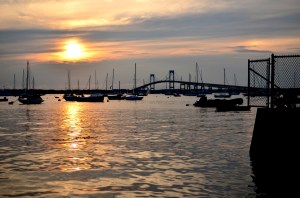



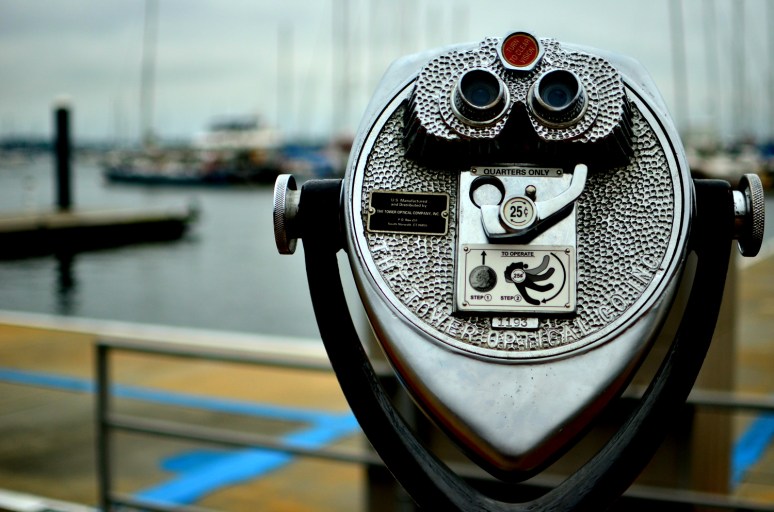
Elissa’s parents had prepared for our arrival for weeks and only had one setting on their parenting meters: spoil. They set up a bedroom for us complete with air conditioning and force fed us delicious food night and day. During a lobster dinner, Elissa pointed out that I had the rubber bands from 6 claws on my plate thus concluding that I had eaten 3 lobsters in one sitting. Massive fruit platters were cut up fresh by her dad Dave and Caryn was beside herself that we were in their living room after tramping around for 5 months. Summertime in Newport is full of tourists, boats, great weather, and beaches. We fired on all cylinders in Elissa’s home town. We intentionally selected this weekend in order to see the Newport Folk Fest, which was headlined by one of our favorite bands, The Head and the Heart.



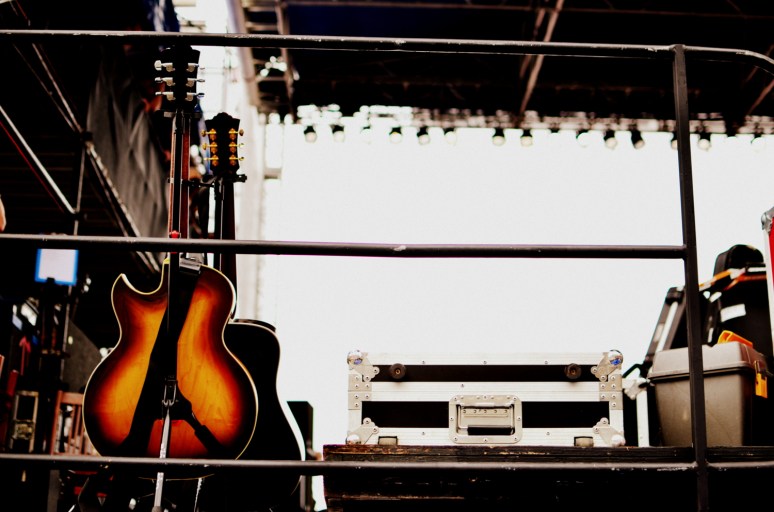
Since the event had sold out months before we decided to fly back home we were scrambling to figure out a way to get in. I often heard Elissa and her friends claim that they never get tickets in advance and entrance always tends to work out one way or another. This year it worked out in a huge way. Tara, Elissa’s best friend, was working as a video producer for the Obama campaign. As luck would have it she was in contact with The Head and the Heart’s manager and was going to be working with them to produce a video for the campaign. In fact, she was going to talk with the band in their trailer before going on stage and performing. This scored her 2 general admission tickets in and 1 photography press pass, granting backstage access on all 3 stages for whomever wears the sticker. This person was me.

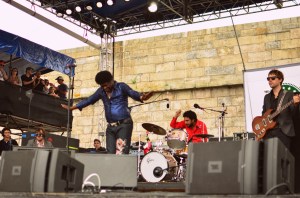
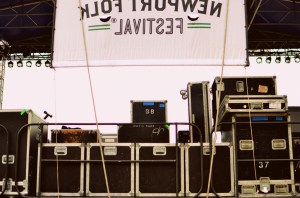
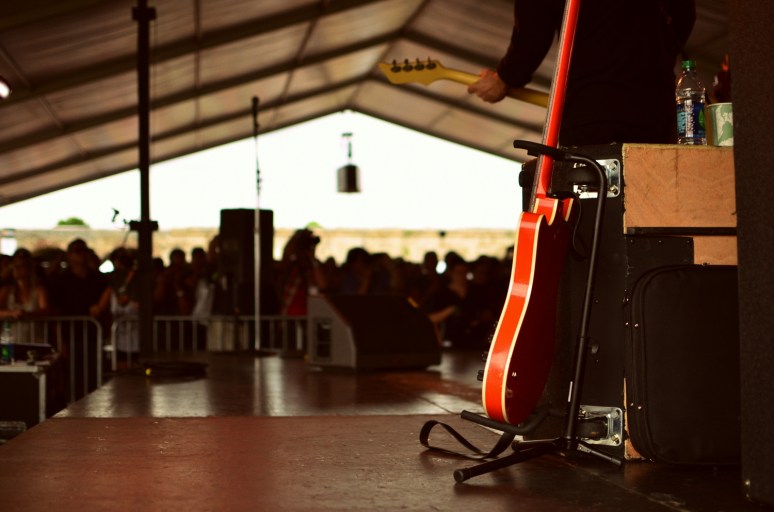
My mission was to try and capture images and video for potential use in an upcoming video. I grabbed the only fresh memory card I had before we took a water taxi to Fort Adams. Having 2 tickets and 3 people is generally a problem, but we did the old wrist band trick near the entrance without a hitch. We found a good spot to set up camp with our cooler and I immediately began testing the limits of my backstage privileges. Before I knew it I was behind the scenes, listening to some modern day greats from an incredibly close vantage point. I was like a kid in the candy store. So much amazing music is played at the Newport Folk Fest every year and it creates a vibe that only a live music show can ever have. The Folk Fest has such a unique, magical setting within the Newport Harbor that becomes filled with sailboats, kayaks, and has the infamous Pell Bridge in the background that spans from Jamestown to Newport. It’s an endless sea of smiles where everyone is themselves, enjoying music and everything that summer has to offer.



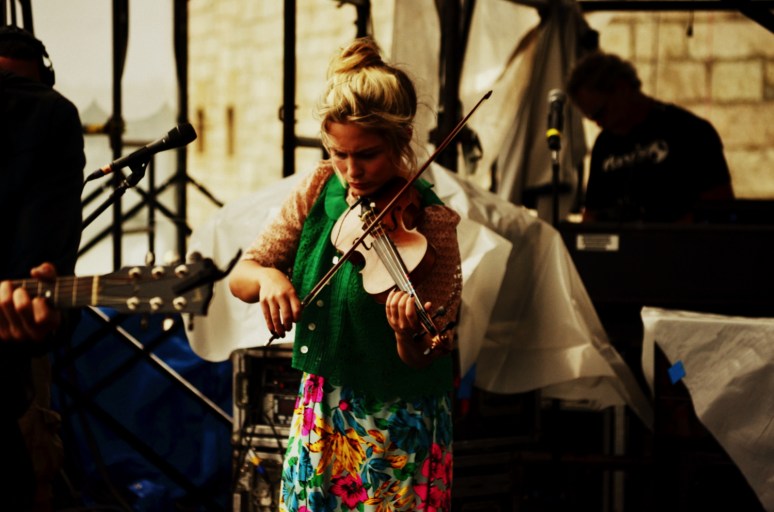
When the band came on stage I was one of the first to run into the photography pit and I immediately claimed my spot. Last year THATH played on the smaller Harbor Stage, but this past year they exploded in popularity and were now on the Fort Stage. Chills ran up and down my spine as the first chords were played. The music could be felt through the ground as hundreds of people stomped in unison and sang along. It couldn’t have been more surreal. After the first 3 songs security cleared out the photo pit and I slipped backstage. Without question I walked up on stage and got closer and closer to the band. Before I knew it, I was on stage looking out over a ocean of faces, a mere 15 feet from the center mic. For some reason I thought that no one would be paying attention to the mustachioed man wandering around the set and put forth their focus on the band. I would be told later that was not the case as I was spotted by several friends while milling about for different angles. But not a word was mentioned as sound engineers moved about while the band was playing their awesome set list.
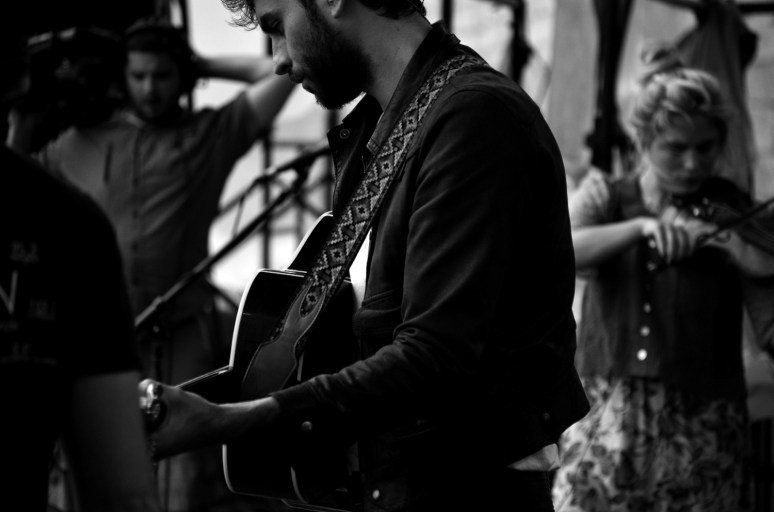


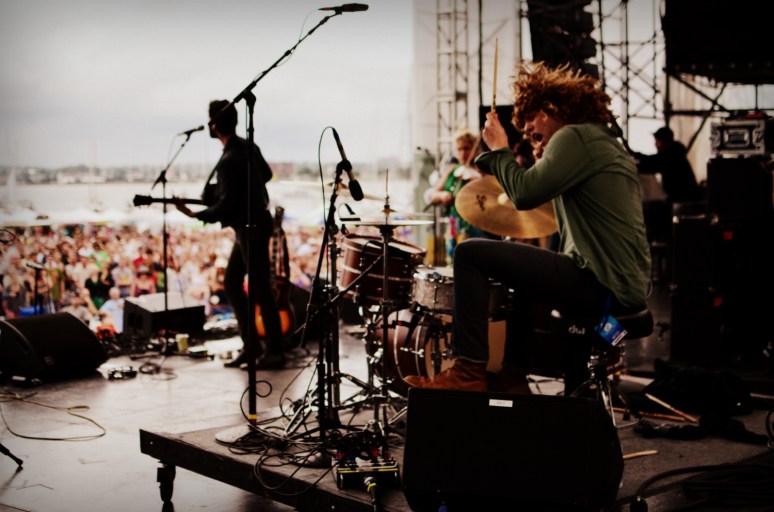
It was one of the most magical experiences I have ever been a part of. I clicked away for about 45 minutes and was treated to a truly unique perspective of the performance behind the scenes. Although this was yet again an unpaid assignment, it gave me a taste of what it would be like to cover a live event. It was a very valuable experience and was one of the most thrilling assignments I have been a part of to date. After their set was over I abused my press privileges to get closer to the action for The Tallest Man on Earth, Gary Clark Jr., Charles Bradley and His Extraordinaires, and The Berkeley City Music Choir. Ryan Gosling was even floating around the grounds that day and got in my way when I was trying to shoot Gary Clark Jr at one point. I found myself thinking “I really wish Gosling would get out of my way”, which is not something I ever thought would be bouncing around in my mind. The Newport Folk Fest is truly very hard to put into words and capture in feelings. I think there is a bit of magic weaved into the soul of music. It truly feels like anything can happen, like any reality is possible when you are surrounded by a crowd filled with enthusiasm and wonder being brought to the brink of a utopia by skilled artists on stage. You need to be there to truly get it. This is my 2nd year attending the Folk Fest and I now know that I have to get photography press passes or it will never be the same.


After the set ended the sky looked as if it was going to open up and unleash a storm of epic proportions. My head was still spinning from the weight of the experience, and I needed to process what had just happened. We were treated to a huge farewell dinner from Tara’s parents that night complete with all of our close friends and family, which was followed by the realization that I put on about 5 pounds in three days. The next day I spent some quality time with Elissa’s dad Dave helping him pack up an entire Uhaul truck with antique items to be sold at his flea market stand south of the island. Her dad always has a million stories to tell and my ears love listening to them. He sold out all of the Cuban cigars we sent him at the flea market and I reveled in hearing his stories about how he had blast playing with them. Newport was more than kind to us with special thanks to friends and family who have taken me in as part of theirs. The next stop was summer in the fertile Mohawk Valley of upstate New York to visit my family.
Panama City: Old vs. New and instructions on how to get robbed

Without any prior research, I am going out on a limb to say that just about everyone who visits Panama ends up in Panama City one way or another. Our Panama City adventure began at exactly 4:30 AM in the bus station. Weary, red eyed, and absolutely exhausted, our bus pulled up curbside and shook us out of our tired state of overnight bus restlessness. I’d love to go on about the some of the most illogical bus schedules in Latin America at this point, but I fear that I will lose my audience in a long winded diatribe. Entonces, we were way too early to get ourselves into a hostel (not that we had a reservation anyway). This was the first time in our trip that I both needed to and used a payphone, which was a old familiar feeling I remember from my early teens before cell phones went viral. After getting in touch with Mama Llena near la ciudad vieja, we killed some time watching the infamous Red Diablos of Panama City. Red Diablos are ornately decked out chicken buses that look as if they rose from the gates of hell, and at about 5 am that morning they were making their first bus station pick ups. Picture a school bus with a custom paint job, giant chrome tailpipes protruding from the roof, LED scrolling signage, and fluorescent light accents under the body. Now picture hundreds of them driving through a metropolis, juxtaposed against sky scrapers, palm trees, and ancient colonial buildings. I took a picture of that.
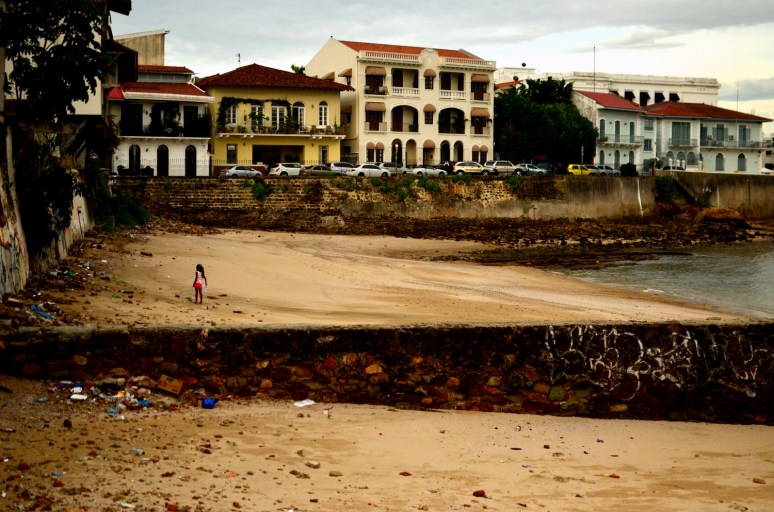


After getting to our hostel we crashed for a few hours from pure exhaustion. Our first destination was the Old town, Elissa’s favorite part of the city. We chose to walk from our hostel (near midtown) all the way to la ciudad vieja. Parts of the neighborhood were reminiscent of our old haunt, La Habana. The city felt and looked as if it was created in the mid part of the 19th century and didn’t evolve much from there. Signs of yesteryear were hung in front of most businesses that looked like retro versions of grocery stores, sporting goods shops, and restaurants. Outdoor markets were abundant on side streets and time was chewed up marveling at the wide selection of randomness each wooden stand possessed. There was also a sense of awareness in the air that kept us from getting too cozy taking out cameras to capture images here. There were plenty of warnings in literature as to the invisible boundaries we should adhere to for our general safety. It was also spelled out to us twice that day by both uniformed officers and a fellow patron in the Coca Cola diner, Panama City’s oldest diner. An elderly man who lived in the area said that he doesn’t even go outside past 6 at night. A quick peer down these roads never led to curiosity and there was plenty to see elsewhere anyway.
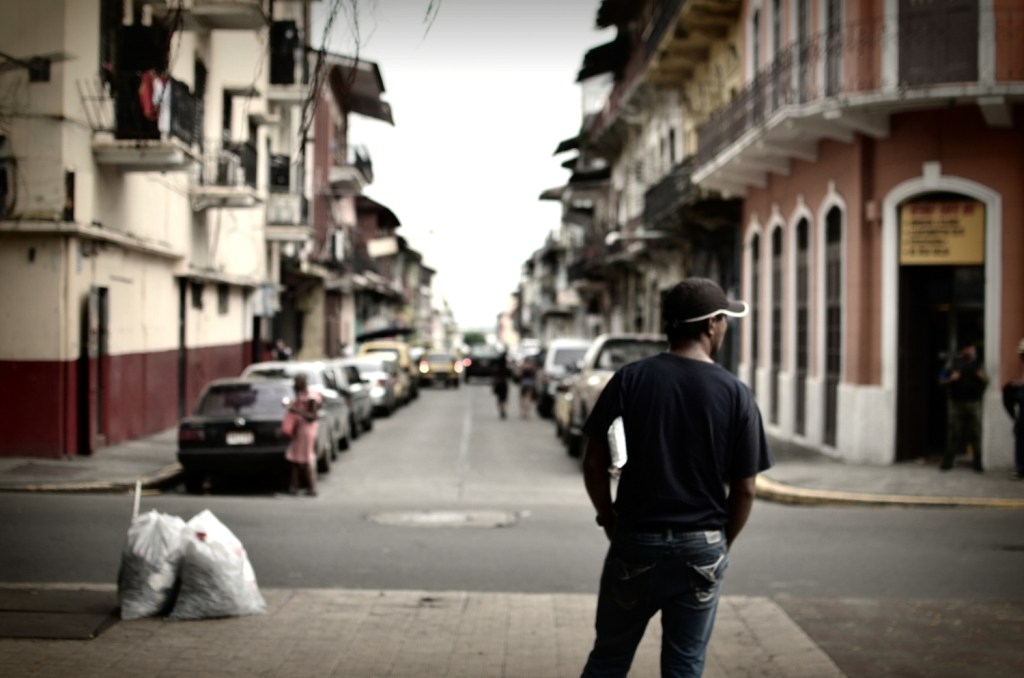


The old town was under a whole lot of construction during our visit. Development and restoration projects were occurring everywhere, and the old crumbly buildings that used to house city dwellers were now turned into fancy shops, restaurants, and high end homes. There were numerous empty, gutted old Colonial buildings that held hundreds of years of history within their walls just waiting for the wrecking ball to come in and let real estate do it’s thing. It was a sad state of renewal for me, because I knew that preservation is what keeps places like this magical and humming to the tune of real life versus the controlled environment that investment opportunities foster. But there was plenty of beauty still to be had here and a bit of normalcy still on the cusp of changing forever. We gravitated towards the water and found the most wide variety of sea glass on a beach to date. The beachfront property seemed like some of the last to be untouched and still inhabited by Panamanians. Little girls picking up sea glass with a backdrop of boys playing a pickup game of soccer spoke organically and clearly about the simplicities of life. Other parts of vieja had beautiful walking streets, hidden little shops owned and run by artists themselves, and gorgeous views of the skyscrapers that modern life had created.

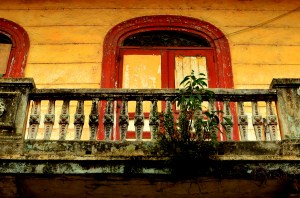

The next day we decided to head over into the concrete jungle by walking along the newly developed malecon. This endeavor turned out to be much larger than expected. The city itself is a lot bigger than our eyes perceived it to be as we found ourselves walking for a solid hour without feeling like we covered any distance. We didn’t see another soul in sight the entire trip, which was puzzling due to the grandiose scope of the pedestrian area. Gleaming towers stretched towards the sun in every direction with bleach white waterfront condos in the background. It was very hot that day and even the slightest effort we made flirted with sweat. It was decided that the best place for us on this day would be the mall. I’m a sucker for air conditioning in Central America on hot sunny days in a city. It’s also fun to play around with things you can’t afford anyway. The Ray Ban store was especially satisfying that afternoon. All the glasses were on boxes on a wall allowing you to try whatever you wanted without having to ask.
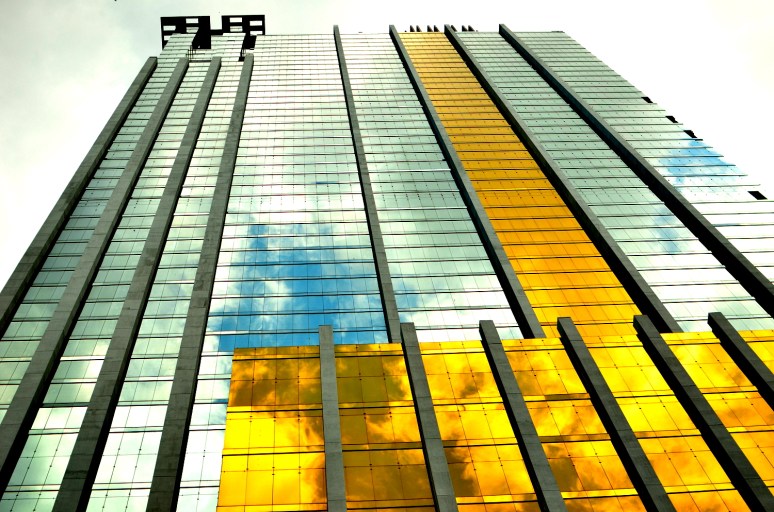


After leaving the mall I wanted to get close to an interesting looking building to shoot some photos. We found ourselves lost beyond comprehension a short time later. This part of the city is definitely not for pedestrians. Sidewalks would dead end at 4 way intersections without traffic lights routinely in the mid day congestion. It appeared like the city was developed to be westernized like a city in the states without actually giving it the time to find it’s characteristics, it’s neighborhoods, or it’s sense of identity. A prime example of rapid fire development without proper infrastructure planning.


GETTING ROBBED.
After walking around lost for a while we eventually found our bearings and walked about 2o more large city blocks back towards our hostel. Since it was our last night in Panama we thought a good way to say goodbye was to get to a market to enjoy some fresh fish on the cheap. We also didn’t want to walk anymore than we had to, since virtually every part of our day was spent on foot. We flagged down a Red Diablo heading our direction and stepped onto the hot and dark bus. The familiar feeling of traveling snapped back into place instantly as music blasted at a casually deafening volume from speakers custom built into the ceiling. I had actually missed these buses at that point. I missed being fully immersed in that backbone of everyday life in the developing world: public transportation. Being true to character, our bus unpredictably turned off the road and began heading towards the on-ramp of an overpass. We quickly had the driver drop pull over and he let us off in a sketchy parking lot before right before the overpass was reached. Confused and completely exhausted, we mistakenly used a map on Elissa’s iPhone. I remember looking at the map for no more than 2 seconds until a hand slapped down on the phone and tried to pry it out of my hand. My hand clasped down as I was mentally wrapping my mind on the fact that I was being robbed. Both of his hands pried the phone out of mine and he began running. Elissa screamed “No!” and, after a moment of realization, I took off after the bastard. My flip flops instantly flung off both my feet and I now found myself galloping at full stride, barefoot on a crumbly road in Panama City. I got to within 5 feet of the guy, and kept pace with him for about 10 seconds. A taxi, seeing what was happening, tried to veer him into the wall but did not succeed. At that point my feet were probably bleeding and felt like feet do after you run full speed on broken pavement topped with rocks. The guy disappeared around the corner and was not seen again. The police told us to go to a station, 7 blocks into the neighborhood where the man disappeared, to file a report. We knew that would be a complete waste of time, especially because we were going to be on a plane in 5 hours time anyway. Find my iPhone didn’t absolve any of the issue because it was not connected to begin with. It was time to get out of Panama, and we mentally and physically knew it then.
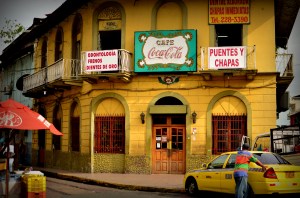
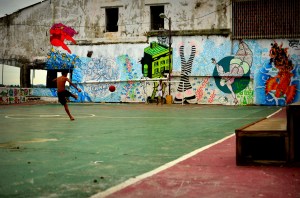

Our central American Journey had come to an end. At that point we had been traveling for about 5 months. We started our journey back home with a one way ticket to Guadalajara, Mexico and were ending the first leg in Panama City. By that time we had been through 9 countries, traveled well over 4,000 kms on buses, and flew in and out of Cuba, which had been a dream of mine. We had been part of so many amazing experiences that words and photos themselves could never do justice. It had to be experienced there, as it happened, to truly grasp the gravity of it all. Spanish was slowly being picked apart and digested, traveling seemed like second nature, and we were embracing Latin American like we had dreamed of before we left US soil. Our next destination was going to be a familiar one. We hopped on a 3 AM flight heading for Newport, Rhode Island for a 2 week siesta from traveling.

Weekly Photo Challenge: Reflections

This week’s photo challenge of reflections couldn’t come at a more fitting time in my life. I have been doing a lot of reflecting lately. I have been reflecting most about my family and the indescribable journey I’m on, while also thinking about what to make of this time in my life. Reflecting almost has a balancing affect on me. When I reflect it often lets the thoughts that were lingering in my mind way past their expiration dates finally expire. This frees up mental real estate more positive energy and thoughts.
During a solo walk along the malecón in Lima, Peru I was instantly drawn to this reflection. Instincts framed this shot that I feel captures not only a specific moment in life, it almost projects the feeling of reflection right out from screen. The reflection here might be impossible to be a perfect mirror because of the offshore winds, but it sure played nice for me that day.
It’s always sunny in Bocas del Toro
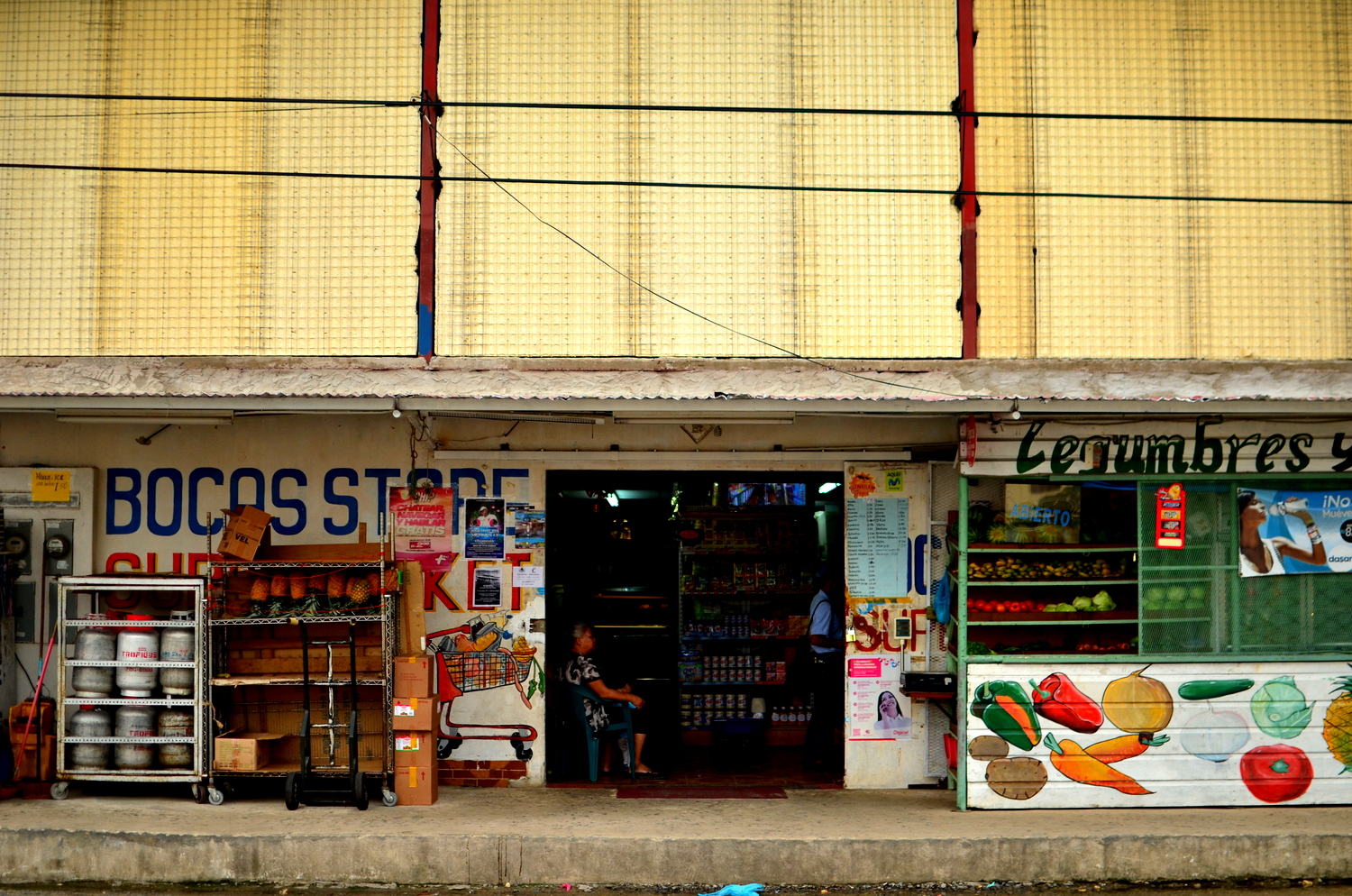
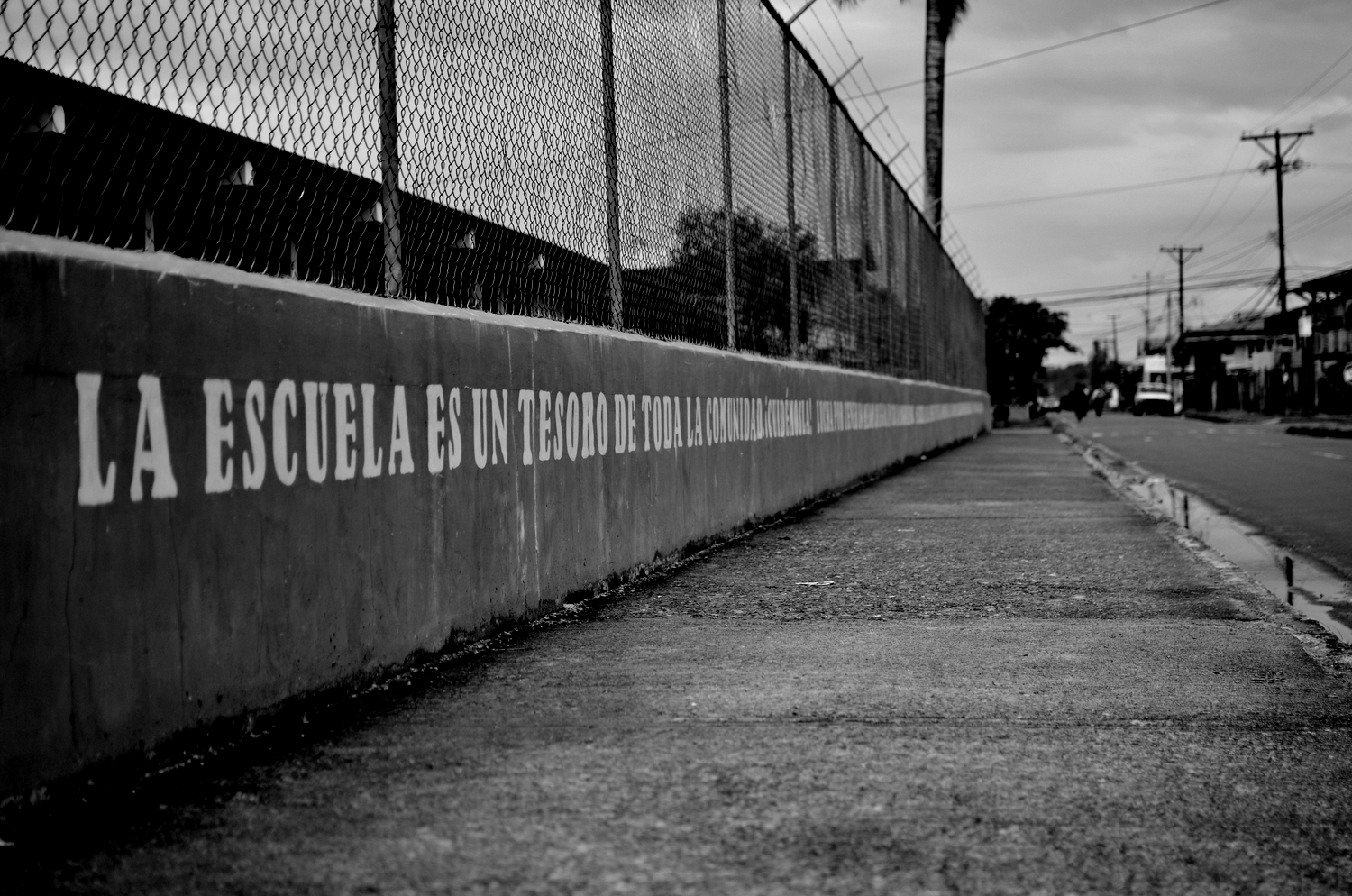
Almost as soon as we said “hola” it was already time to say “adios” to Puerto Viejo. A short bus ride to the border dropped us off at the old, silver painted bridge that separates Costa Rica from Panama. It was one of my favorite border hopping experiences yet. To cross by foot everybody has to walk over an old steel bridge. This was previously the only physical path available to cross by foot, by car, or by train but was now kept company by a newer bridge for vehicle traffic off to the side. New stamps were donated and we were soon reunited with peanut butter from a grocery store right next to the immigration office. We hadn’t seen affordable peanut butter in about 2 months and didn’t leave without a jar of jiff in tote.

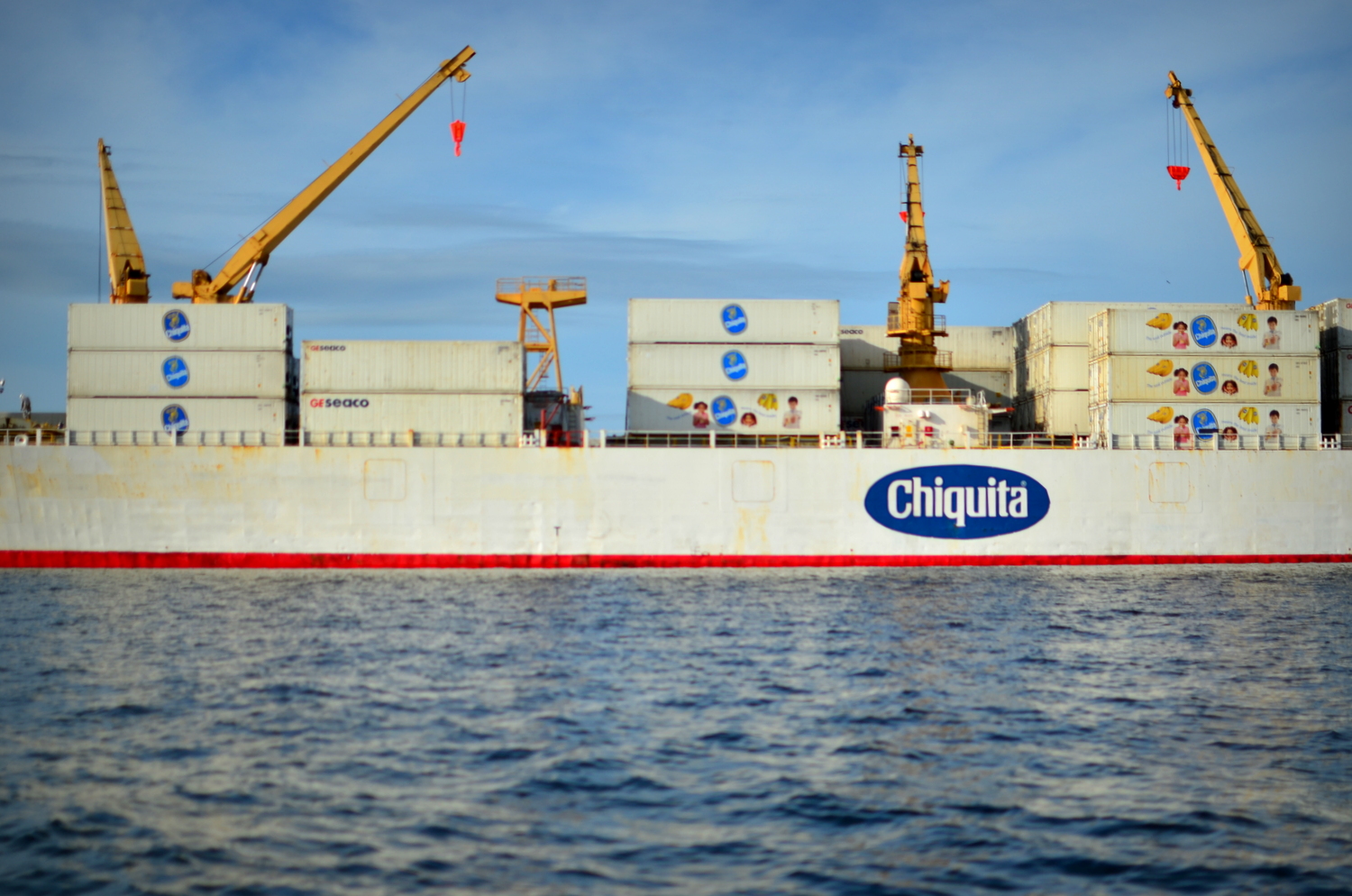
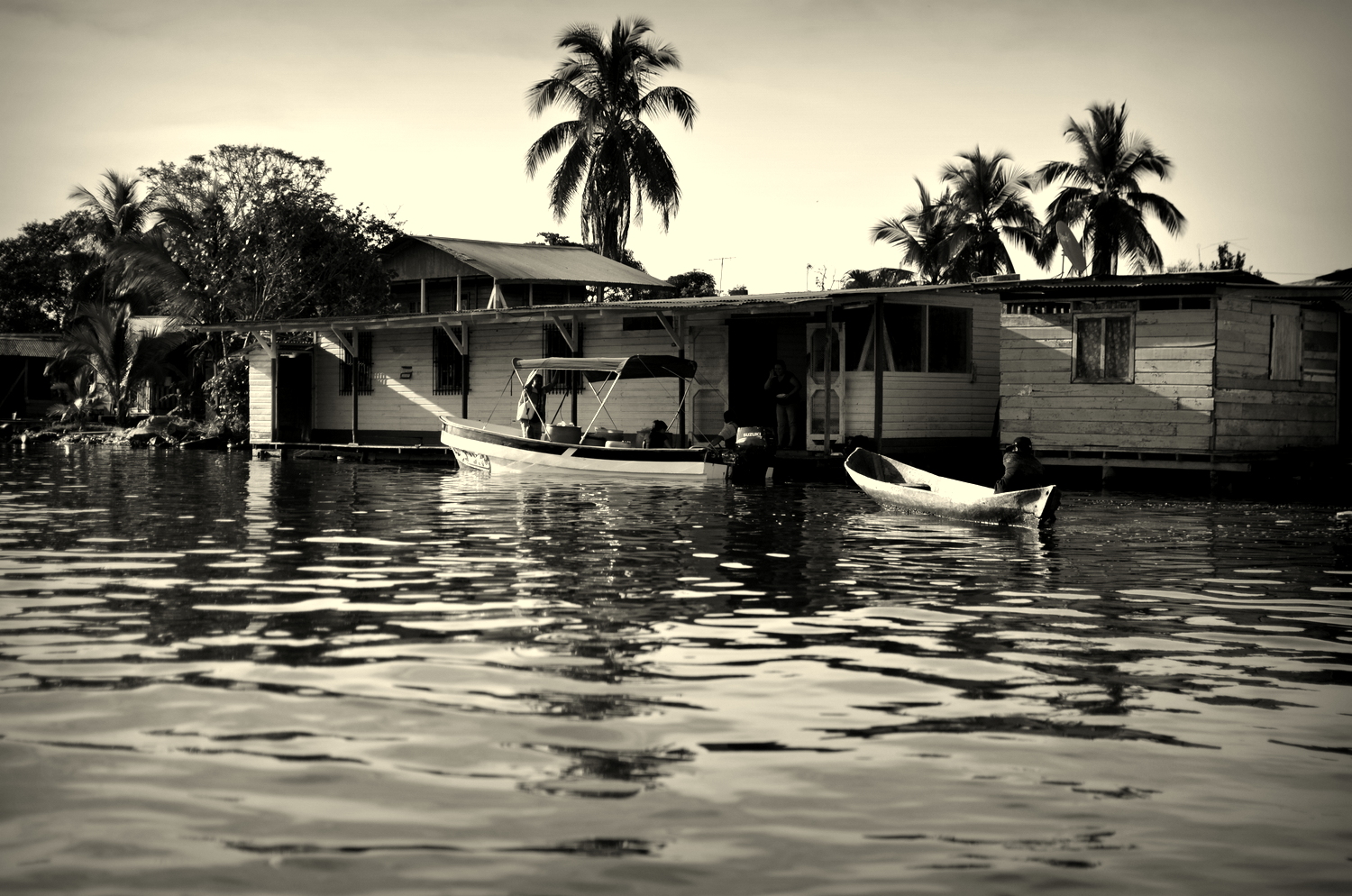
The van left us at a small dock where waited for the next boat to take us to Bocas. From the sturdy wooden platform I caught a glimpse of what it’s like living on the salty waters of a Caribbean lagoon. Almost every stilted house possessed the ubiquitous wooden fishing boat parked dockside. Time was passed watching kids fishing from their front porches on that hot, lazy day. Naturally the boat taxi service fit as many bodies as humanly possible into our vessel before setting off. En route we passed gigantic Chiquita Banana carriers with what must have been hundreds of thousands of bananas on board each one. The commercial banana industry had hid itself beyond big fields of banana trees up until this point, and the enormous business that it must be finally revealed itself in tangible, humongous carriers. Once we carried ourselves out of the channel and into some open waters we pulled up to an anchored personal wooden fishing boat for yet another curbside service drop off a la Latin American.
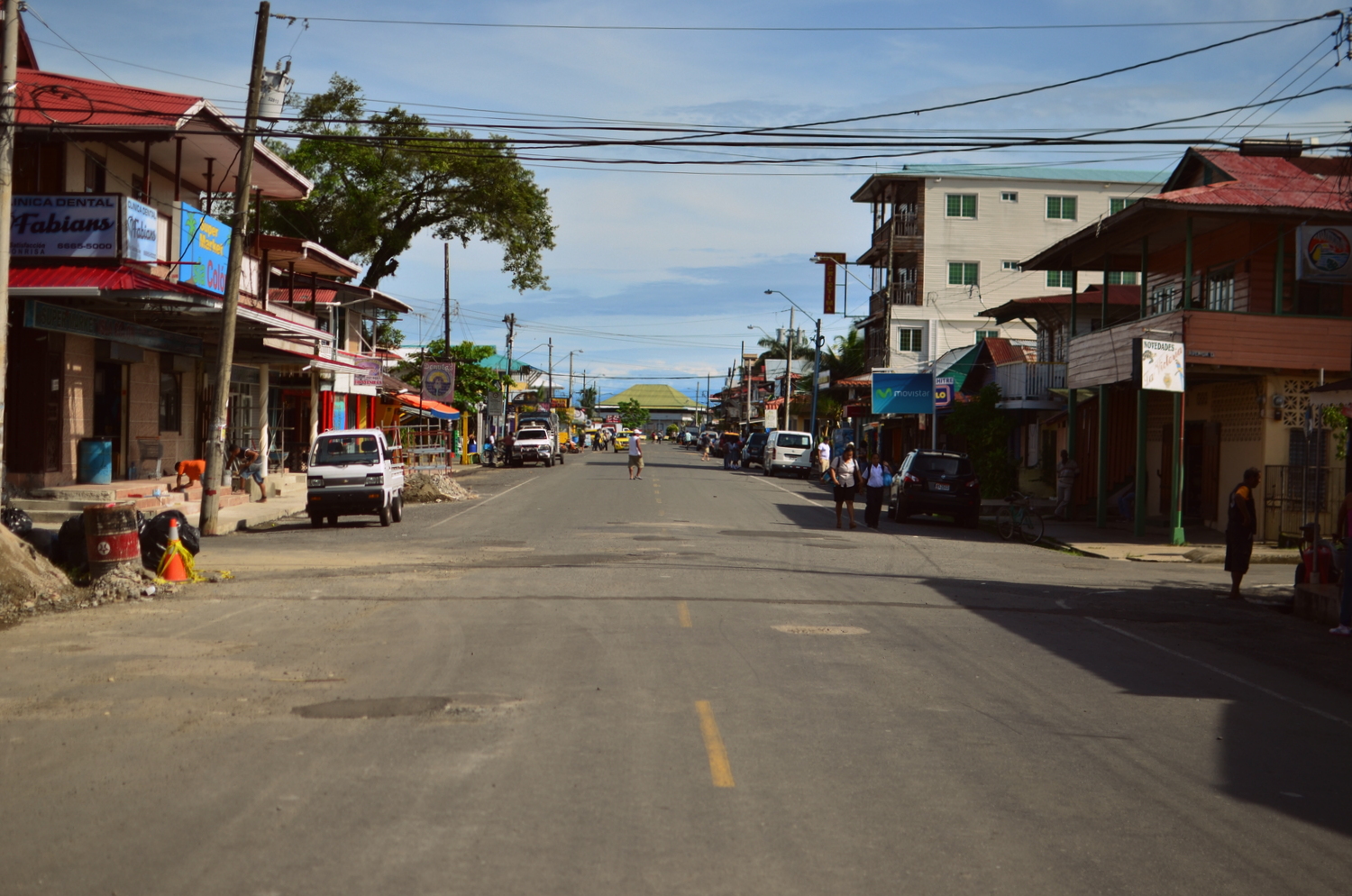

Bocas Del Toro came into view with it’s old docks, weathered buildings, and colorful houses. Our dock was sufficiently worn in to the point of total trust that it has seen bad times and is still standing for a reason. The streets were humming at a casual island pace. A quick scan revealed lots of construction, which tends to mean outside investment in this part of the world. New grocery stores were being built right across the street from grocery stores. The hostel we planned on staying in was owned by the same person Elissa had rented a room from in a previous trip. Since I used the phrase “planned on” you, the reader, can probably guess it didn’t end up that way. This hostel was under renovations, thus changing our plans. Our dorm room score came in the form of Casa Verde (there seems to be an uncountable number of Casa Verde’s in our travels) that came equipped with a much needed AC. Whenever affordable, AC is a huge luxury that to me is worth splurging on once in a while. There is nothing that makes me sleep nicer than when a the window unit is set on “Siberia”. I swear that some mornings I can make out smile lines in the mirror after a freshly chilled night of air conditioning. In this case it was more affordable than other options, sweetening the deal. The Afro Carib owners called us “my love” and the bar/dock/restaurant/live act area had dockside views into the crystalline Caribbean waters. Big red and orange starfish were accompanied by schools educating thousands of fish within spitting distance from the edge. The bar had live music until 10pm every night and drew a small crowd regardless of the acts.


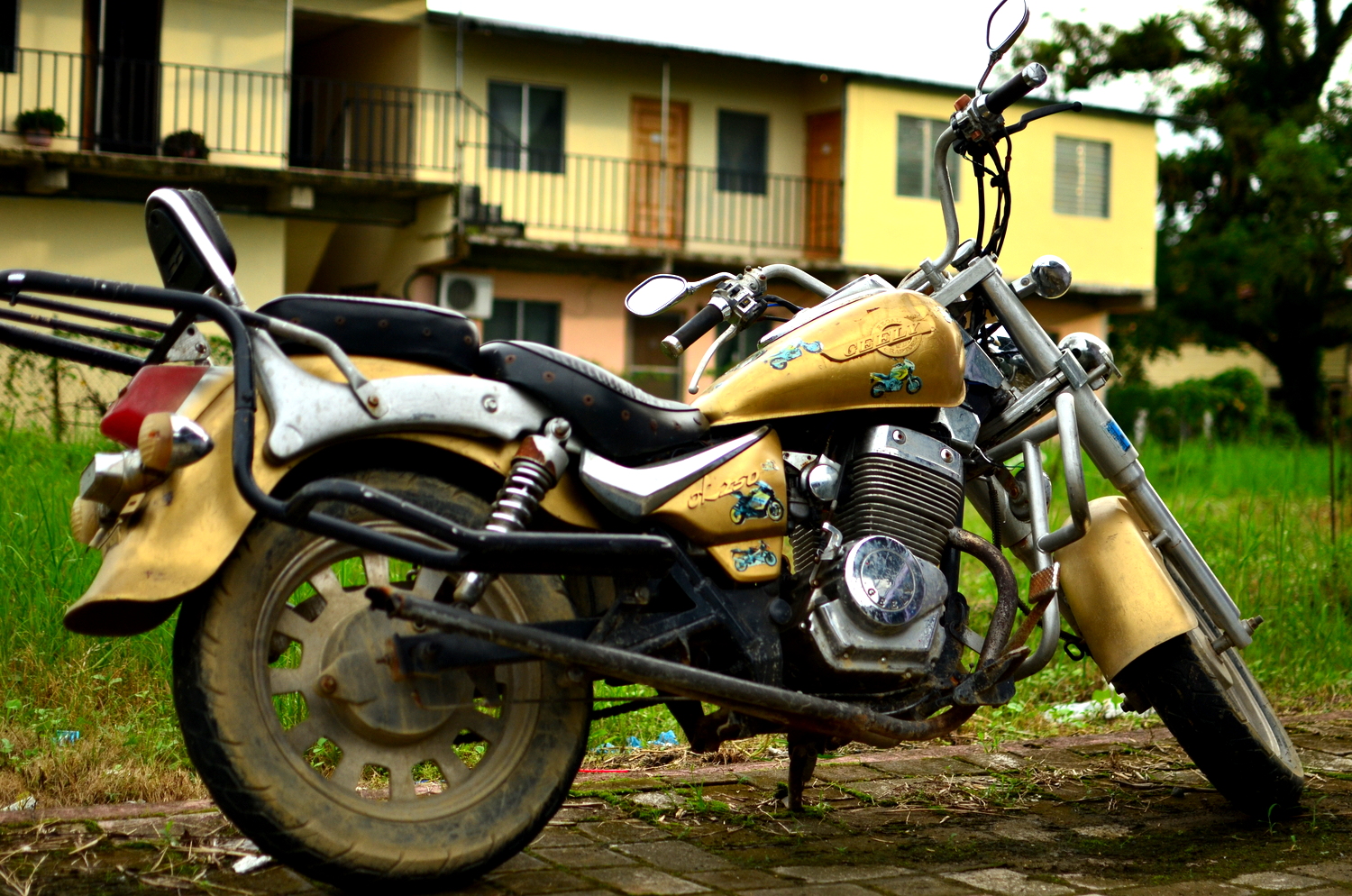

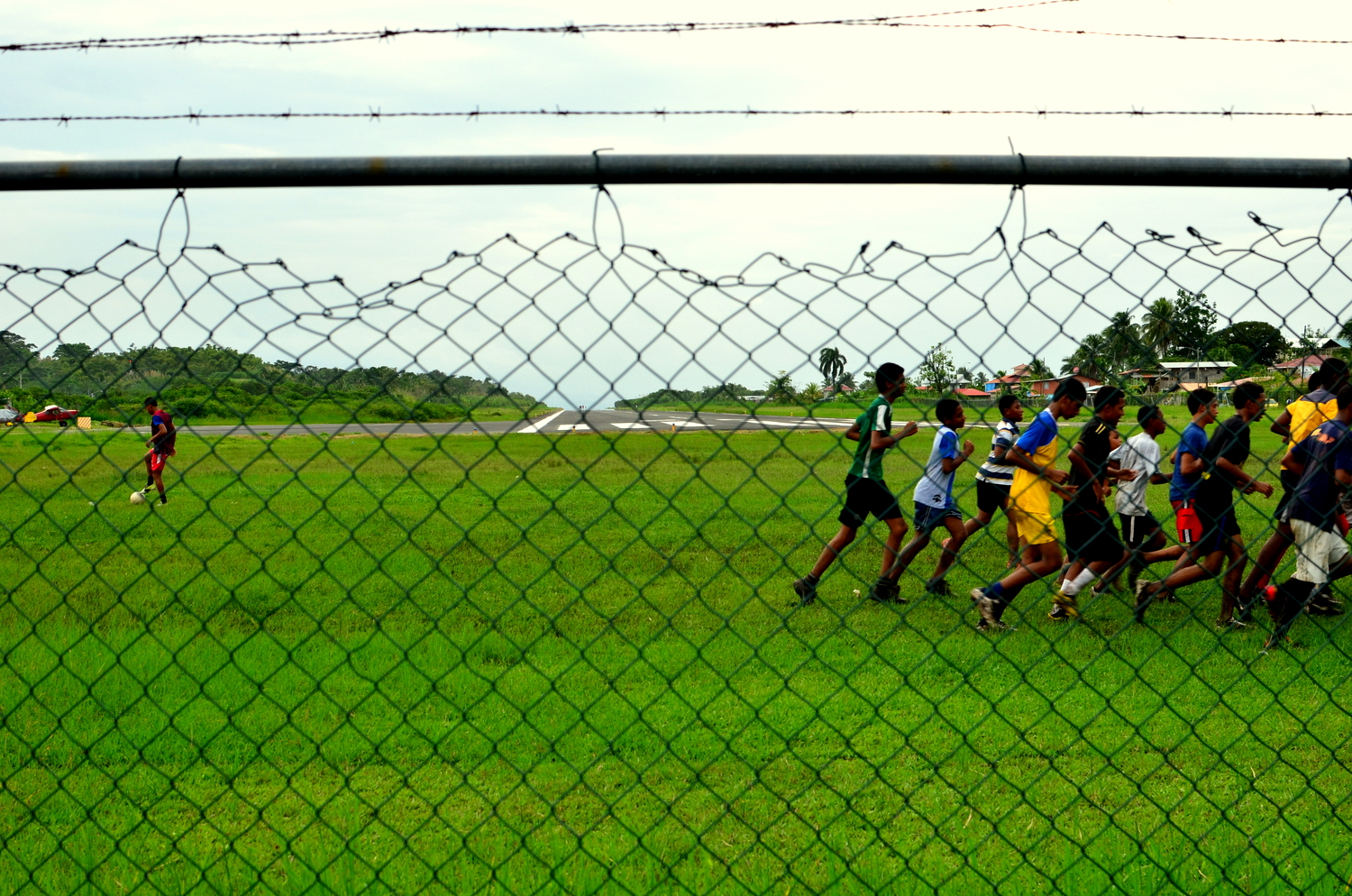
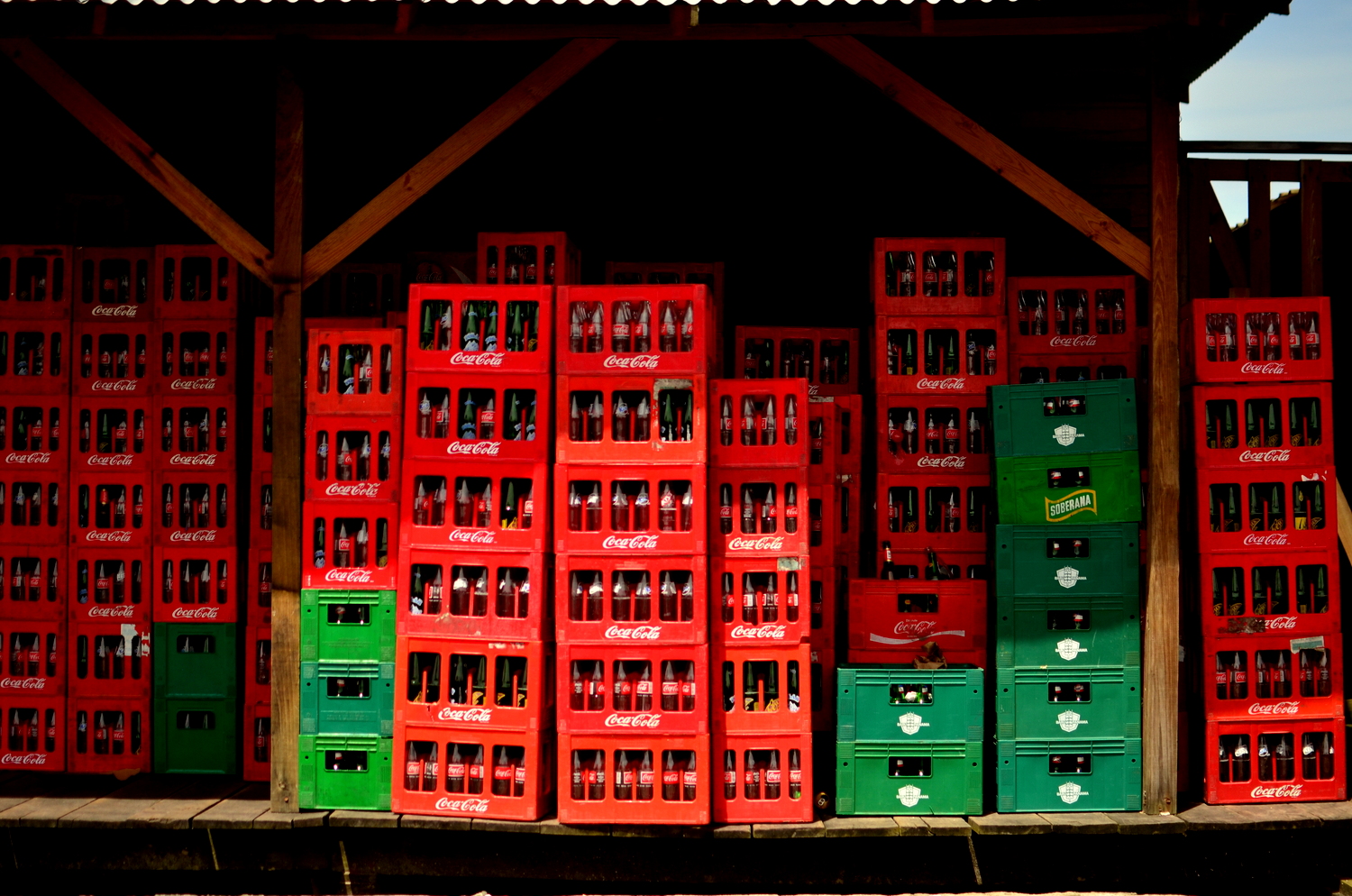
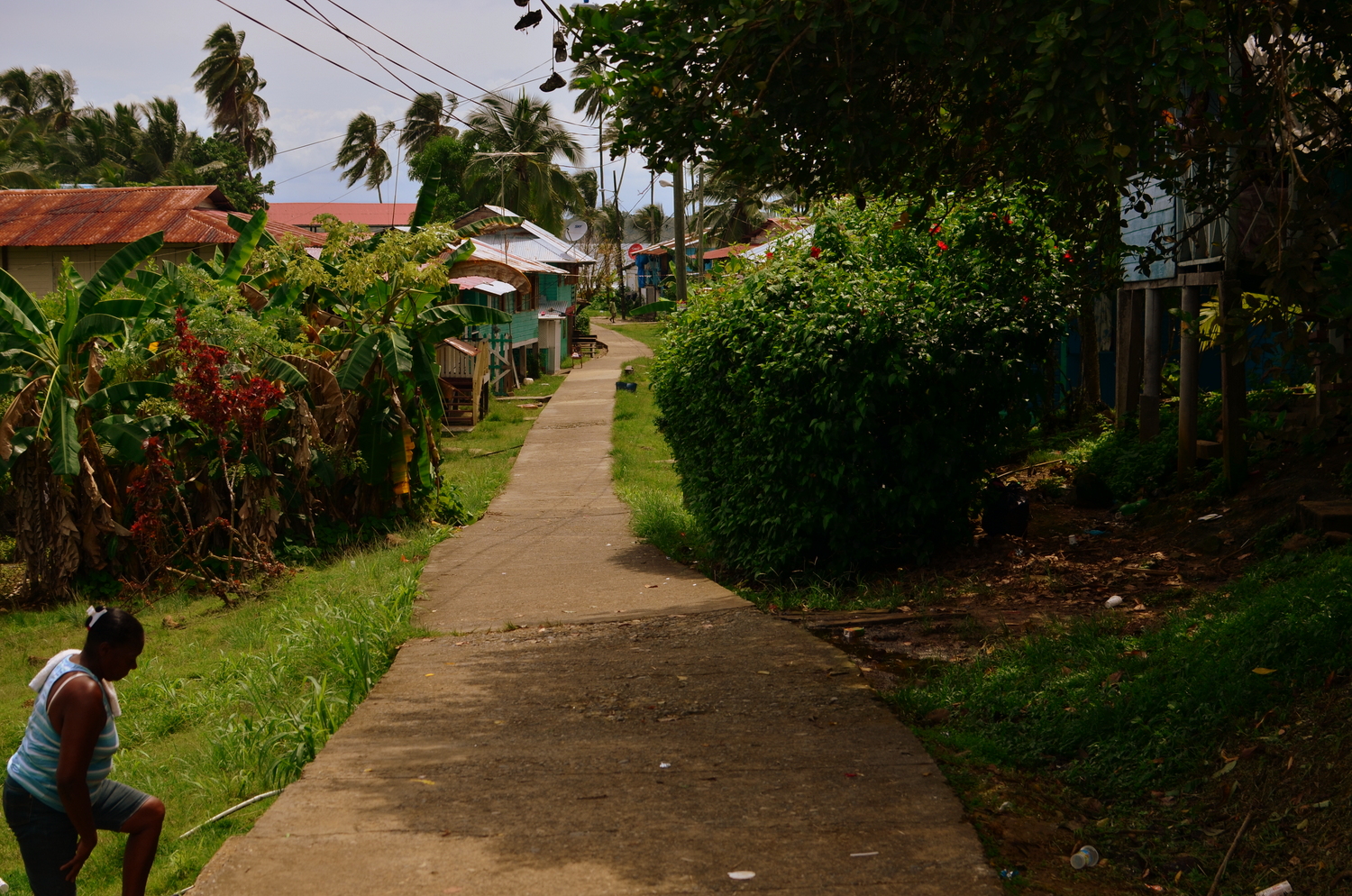
The streets were like any street in a hot, Caribbean island setting. At noon the sun was always very intense and usually resulted in a slow, things can wait kind of pace. Small bodegas, large restaurants, grocery shops, beach shops, and cheap eats all lined the main road through town, which was swarming with full size yellow pickup truck taxis. There also exists a jail that abuts the sidewalk on a normal looking road, with life inside only separated from the outside by a 10 foot fence of the outdoor recreation area. I also noticed that all the larger grocery stores now seemed to be owned an operated by Asians, similar to Belize. Just a few blocks off the main strip the normalcy of the culture were ever present and refreshing to see again. Friendly kids were punting soccer balls at each other, elderly folks wandering about with friendly greetings always ready to roll off their tongues, and salty sun soaked stilted houses as far as the eye could see. Soccer practice was held in the grassy section of the airplane landing strip and each block seemed to have it’s own local tienda.


A trip down memory lane to starfish beach was mandatory. Memory lane is a tricky friend to keep close. She can and often does surprise you and the picture that you painted on a canvas years before. Often, when you take the painted back out to shake off the dust you find that it has, like time, ultimately moved on. On this go around, a taxi trip was much more costly. A 5 dollar return trip on a boat now cost around 20, and the local bus option had been narrowly missed and would cost us a 2 hour wait. A yellow pick up truck cab wound up being the best option, for a return trip of about 16 bucks. The walk to the beach could be described as heavenly. Walking along the water’s edge we were tip toeing in the surf through the kind of palm trees that Corona seeks out for it’s advertising campaigns. Not a soul in sight as hidden bays were unveiled in the bright, Panama sun. That is, until we reached starfish beach. We immediately saw boats anchored, heard the faint sound of Latin American bass, and saw a beach full of sun bathers. Three seemingly long years before, Elissa was one of three people on this beach, surrounded only by orange starfish in the shallow, warm Caribbean waters. The starfish were still there, but people were picking them up out of the water and rearranging them for photo opportunities. Two stands were selling food and beer using a gasoline generator to power the large speakers and refrigerator. Once again, the image of our destination popped with the reality of exposure.
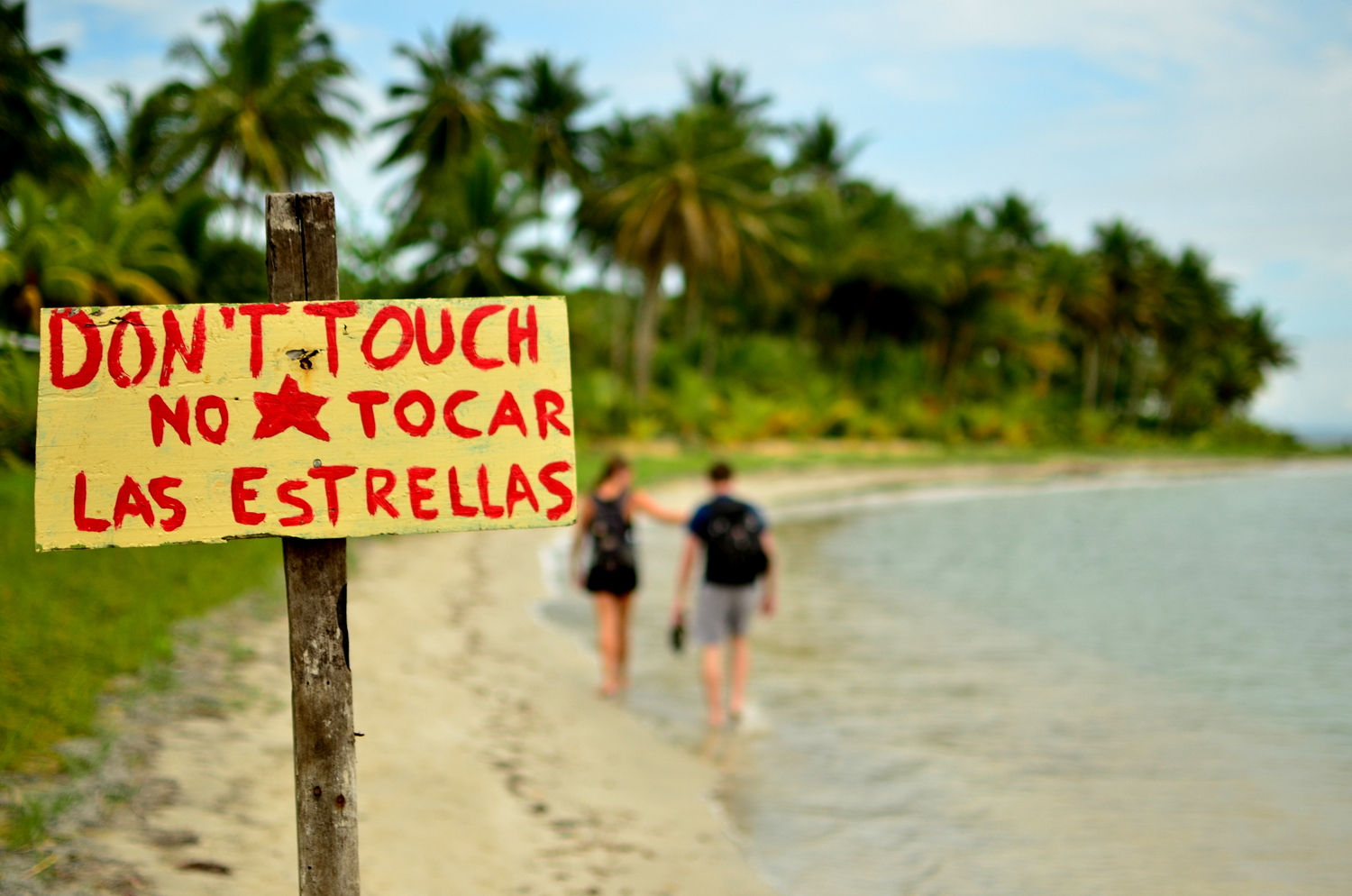

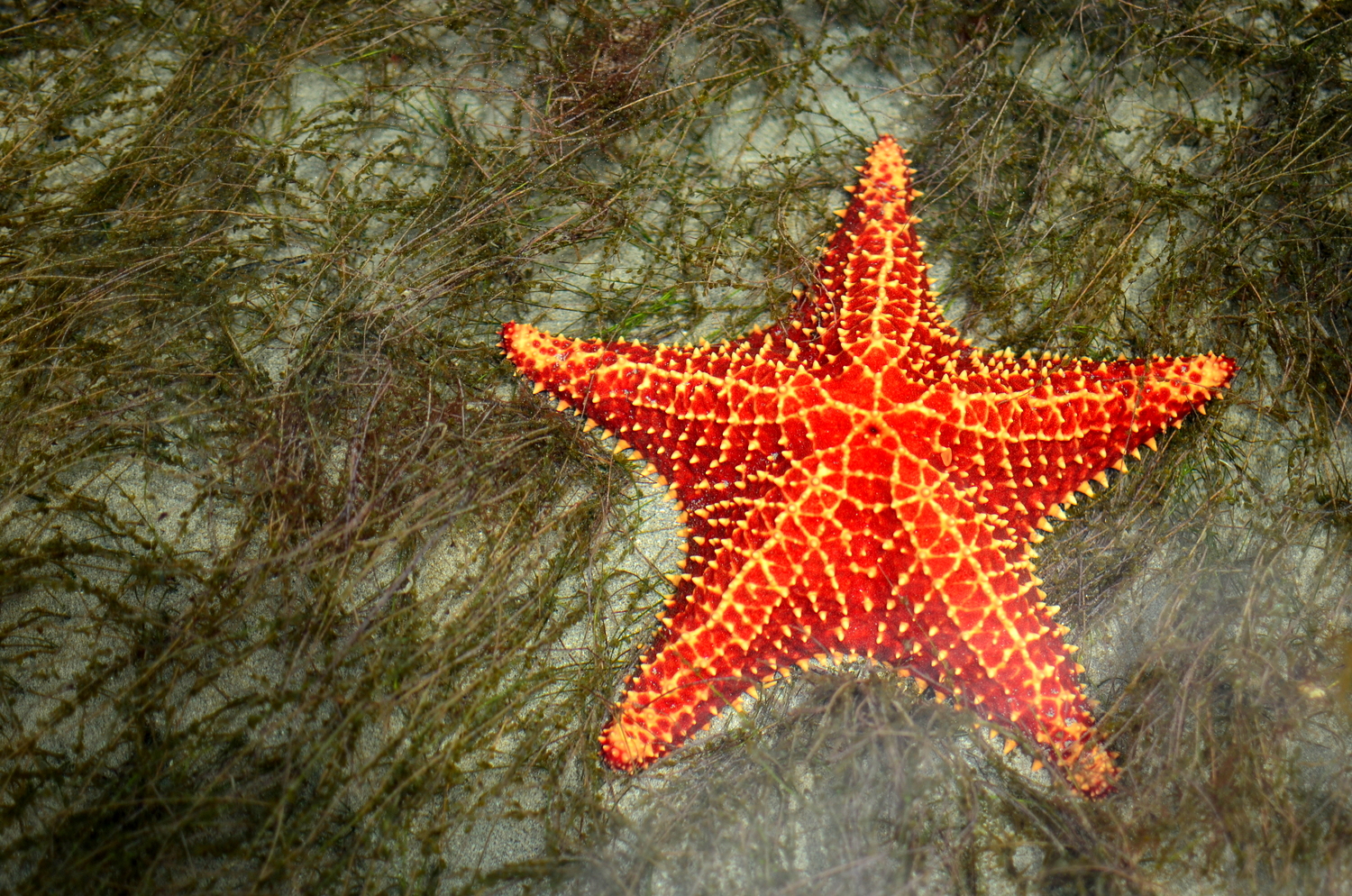
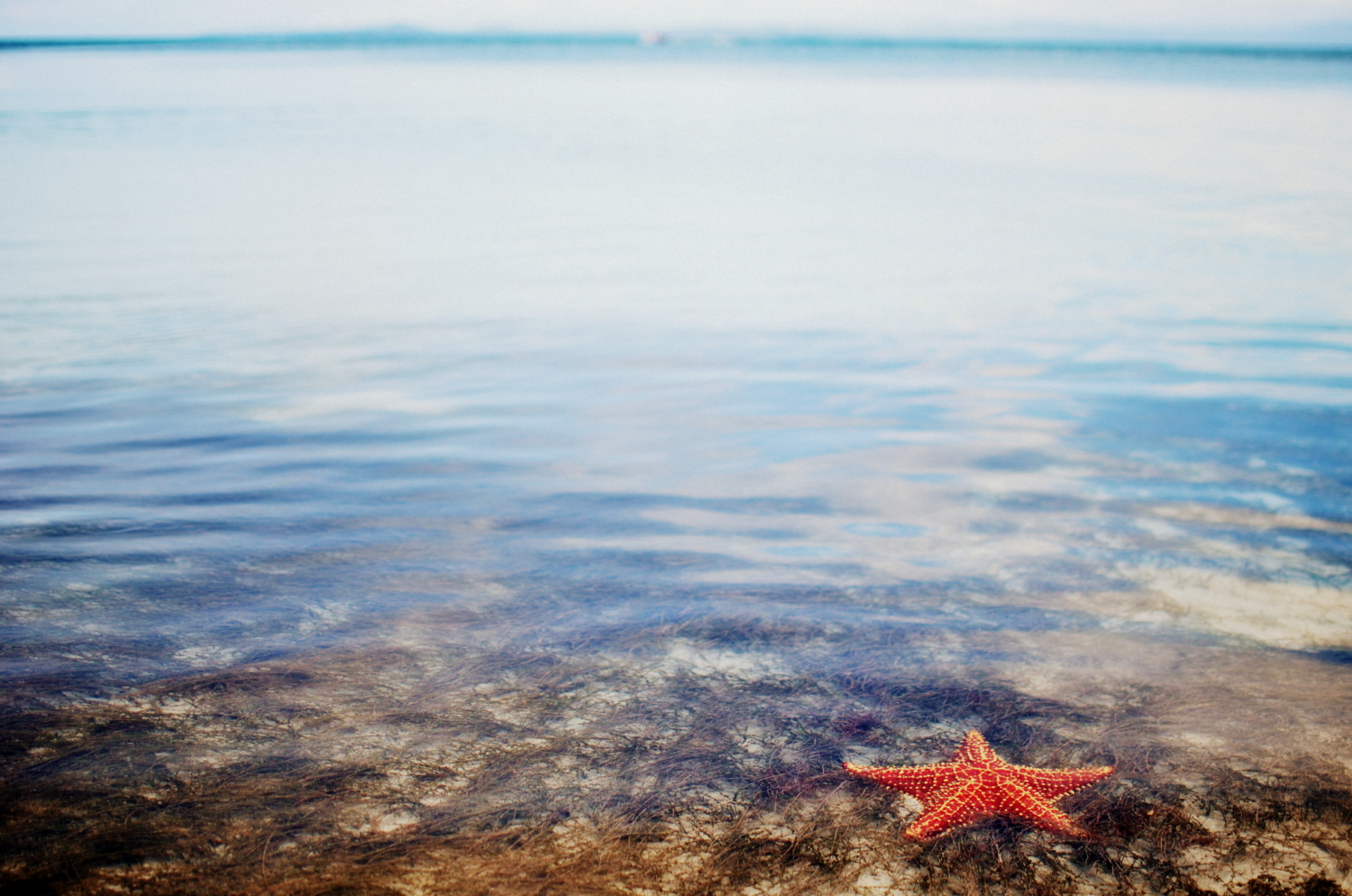
Not discouraged from our Starfish beach experience, we hopped on a boat for Bastimentos, a locals island nearby that had two beautifully kept isolated beaches on the opposite side of the island. After a short skip across the puddle, we docked up and set off into the little village. There wasn’t much to see here except the houses and simple way of life complete with some friendly, curious folks and chickens scratching about. En route to find the path to Wizard beach, we were stopped by the police and strongly encouraged to leave all valuables and money at the station. There have been numerous instances of armed robbery on this walk, and we eventually gave in to their suggestion and left our stuff. After walking just 10 minutes through the jungle we started to see why the water taxis were telling us to pay for a ride around instead of walking. It was rainy season, and we soon were up to our ankles in thick, slippery mud. The path became treacherous after a few more minutes as we began sinking our limbs further into the saturated earth. Some surfers passed us with mud caked up to each of their knees, laughing at our questions about the path ahead. Our sandals quickly became useless, although I stuck it out till the bitter end with my handmade leather thongs which are still kickin’ it all the way from Mexico. Slips and falls were almost unavoidable as we danced on tree roots, the occasional aid from wooden planks laid down, and the slipperiest, slimiest mud I’ve ever walked on. A 45 minute walk turned into well over an hour and half, but the sight of the beach coupled with the deafening sounds of the crashing waves was well worth the effort.
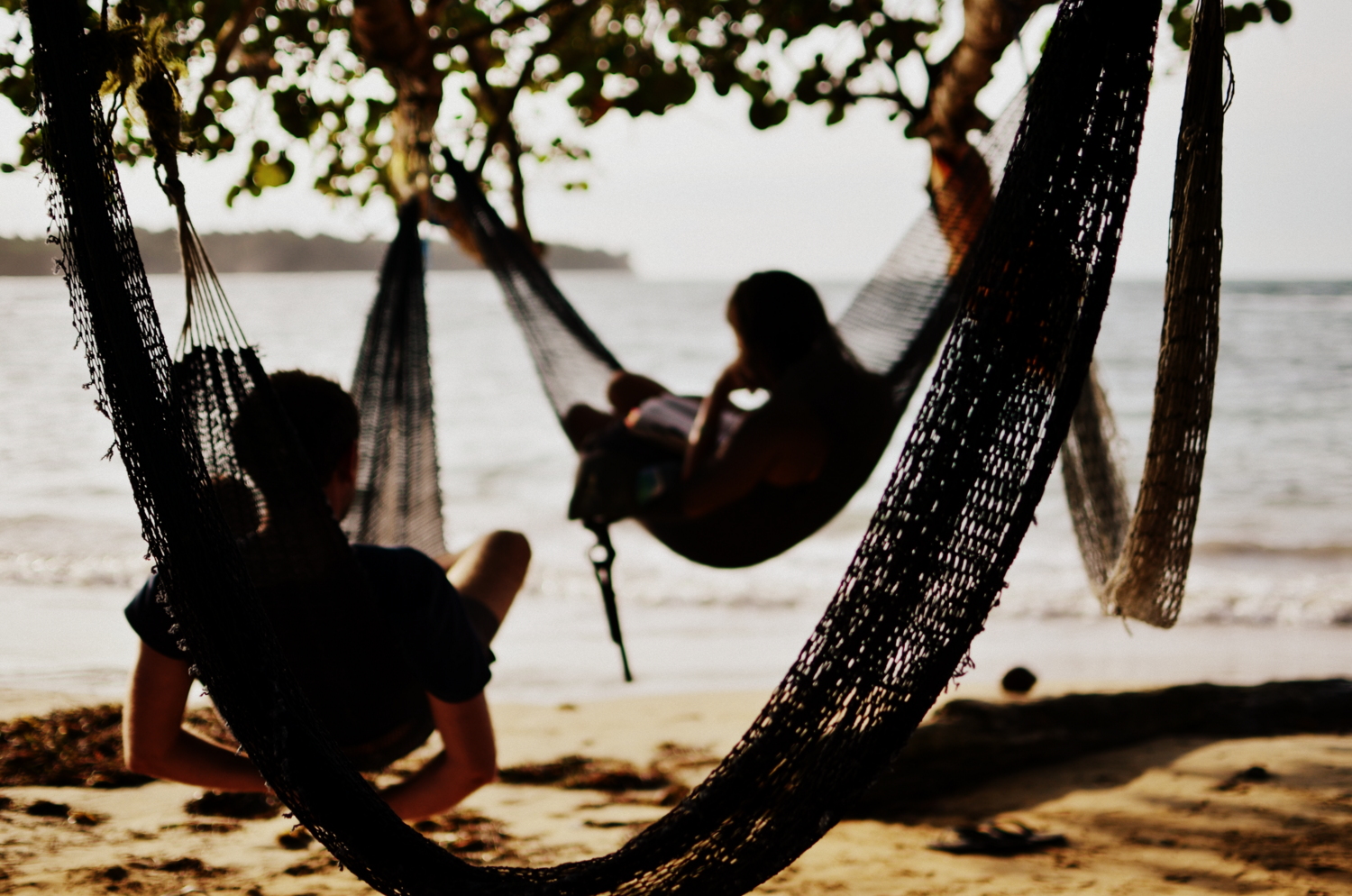
The surf on this beach is intensely invigorating and will test your swimming abilities. I heard warnings about the current here but didn’t take them too seriously until trying to swim. Fantastic exercise or struggle for survival? I’m not sure which I’d pick. After a bit of cardio and relaxing I was began to wonder how we were going to fare walking all the way back through the saturated mess between us and our backpacks once again. A couple from London arrived shortly after and made the decision for us. They couldn’t fathom going back the same way again and convinced us to walk to Red Frog Beach and take a taxi from there with them. So off we were, walking along a beautiful private beach again. Then the beach ended, the jungle began, and we were knee deep in thick, gooey mud once again. This path was much less defined, more muddy, and split off several times leading us towards dead ends with no promise of finding the end destination. I lost my sandal about 1 foot below seemingly solid looking ground and had to reach through the muck past my elbow to get it back. But along the way we found numerous red, orange, and yellow poisonous dart frogs that give the beach it’s namesake. The tiny, vivid, penny sized frogs were not hard to spot hopping along the ground near our muddy feet. We heard a toucan, but couldn’t get an eye on it amidst the thick jungle cover. With a “no turning back now” attitude, we pressed on and once again found solace on a beautifully barren beach. Felled trees covered the shore in ways too beautiful to describe, with the deliciously cool salty surf pounding our tired lower limbs.

After exiting the beach we took a wrong turn and ended up in the Red Frog Beach development that was completely opposite of the old town on the other side of the island. Massive dream houses were grouped together with hot tubs, outdoor pools, and perfectly manicured lawns and gardens surrounding each dwelling. Convinced we were lost, we asked someone for directions and got a thick, American accent response as to where to go. When we found the dock we also found a wide array of large yachts, catamarans, and personal water crafts lining this privately sheltered bay. A clear division of wealth and poverty exists on this little Caribbean island. This invisible line is drawn through the differences between those that choose to retire here and those that have called this place home long before the contractors moved in.


Bocas treated us very well for three Caribbean nights. Late night tropic squalls tempted me out of bed to listen to the rain pound down on the endlessly flat sea in front of my weary eyes. I can still picture the pure white lightening bolts touching down in the near distance, followed by the boom that echoed as if I was in an enclosed empty warehouse watching them touch down on the cold concrete floor. Bocas graced me with some fond memories that I’ll keep in safe storage forever. Now some images are yours to enjoy too!
Weekly Photo Challenge: Green

For this week’s photo challenge of green I chose to highlight a photo from the Valle de Cocora in Salento, Colombia. Salento is a quiet little town during the week that turns into a bustling, bursting at the seams pueblo each weekend. Just a short ride in the back of an old Willy Jeep dropped us off at the start of the trek. Steeply sloped mountains smoothed out to a lush, verdant stretch of a naturally perfect valley withing cows grazing in the pastures surrounding us. Thick forests were cut by deliciously crisp streams with rickety swing bridges providing the passageways across. Shortly after getting into the thick of the forest it began to rain hard. Visibility was lost for the next hour or so as we ascended into a cloud forest that was home to massive pine trees. At this point it looked like we were not going to have decent conditions to see the highlight of the walk, the valley filled with gigantic wax palms that stretch up to 180 feet in the sky. At the top of the forest we paused and watched as the clouds were swept away by the mountain winds. As we began descending down into the valley we were greeted with a view that stunned all of us. The green of the valley was more beautiful than I could have imagined, highlighted by the afternoon sun.
Penny Karma gives soccer balls!

Nestled at 3550m (roughly 11,800ft) into Ecuador’s central highlands exists bright green countryside and a sweet little town named Salinas. We had followed long neglected traveler’s cravings for cheese and chocolates to the cooperative village. Since the 80’s, Salinas has been home to humble little factories that create only the highest quality products both for sale in their community shops and for export to locations including Italy and Japan. A small donation gave us an official tour for two of the Salinerito brand’s home bases. Collaboration in a place that would be struggling without their unity was energizing to watch in action. Happy to put our money where it counts, we loaded up on everything from twisted balls of mozzarella, to wool sweaters, to a small collection of locally created soccer balls. We had hoped to donate the soccer balls through a US based organization to children in Ecuador. Unfortunately, the idea got lost in administrative details and we soon found ourselves on the bumpy road out of Salinas with soccer balls bouncing from our backs.
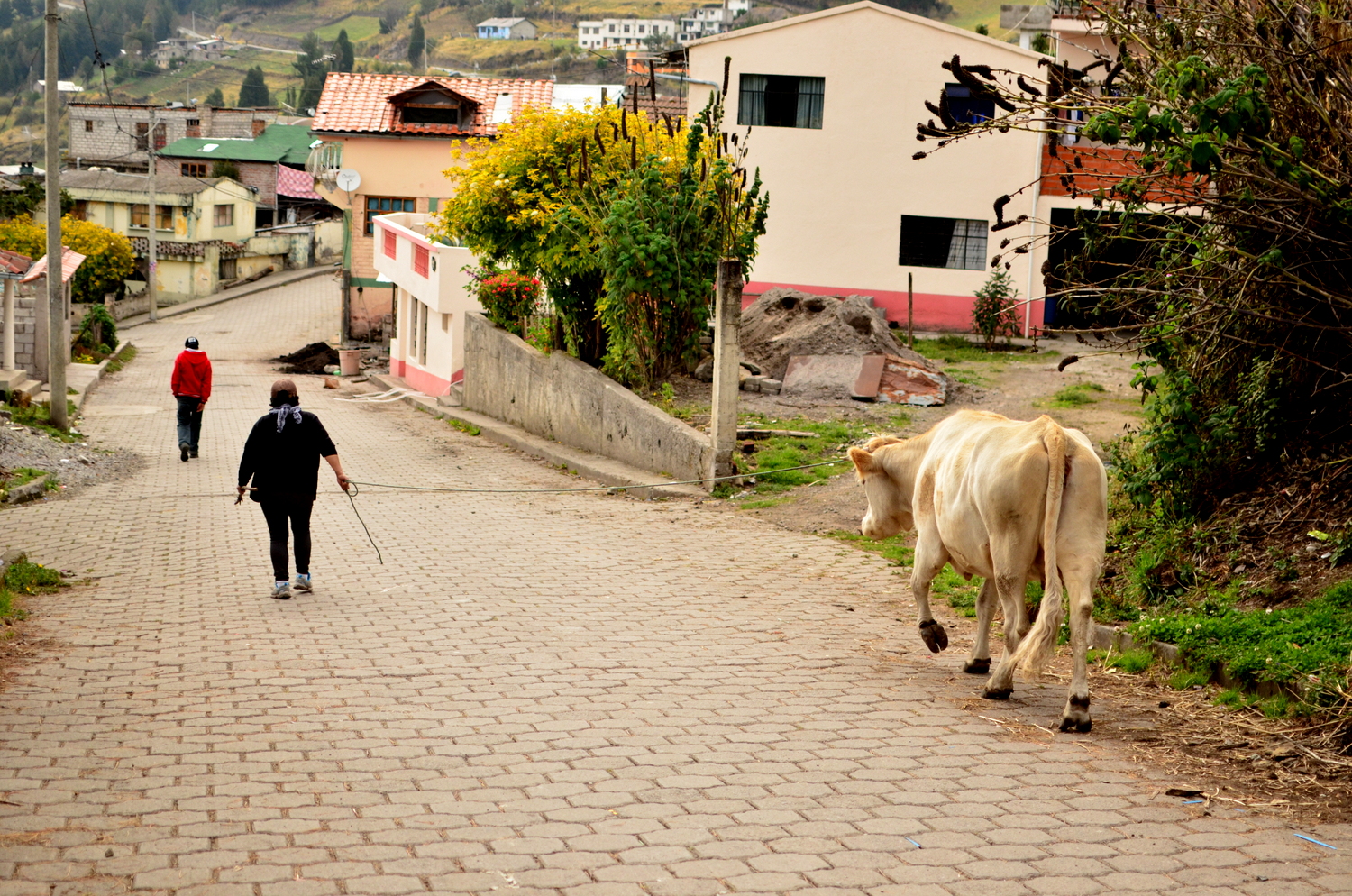


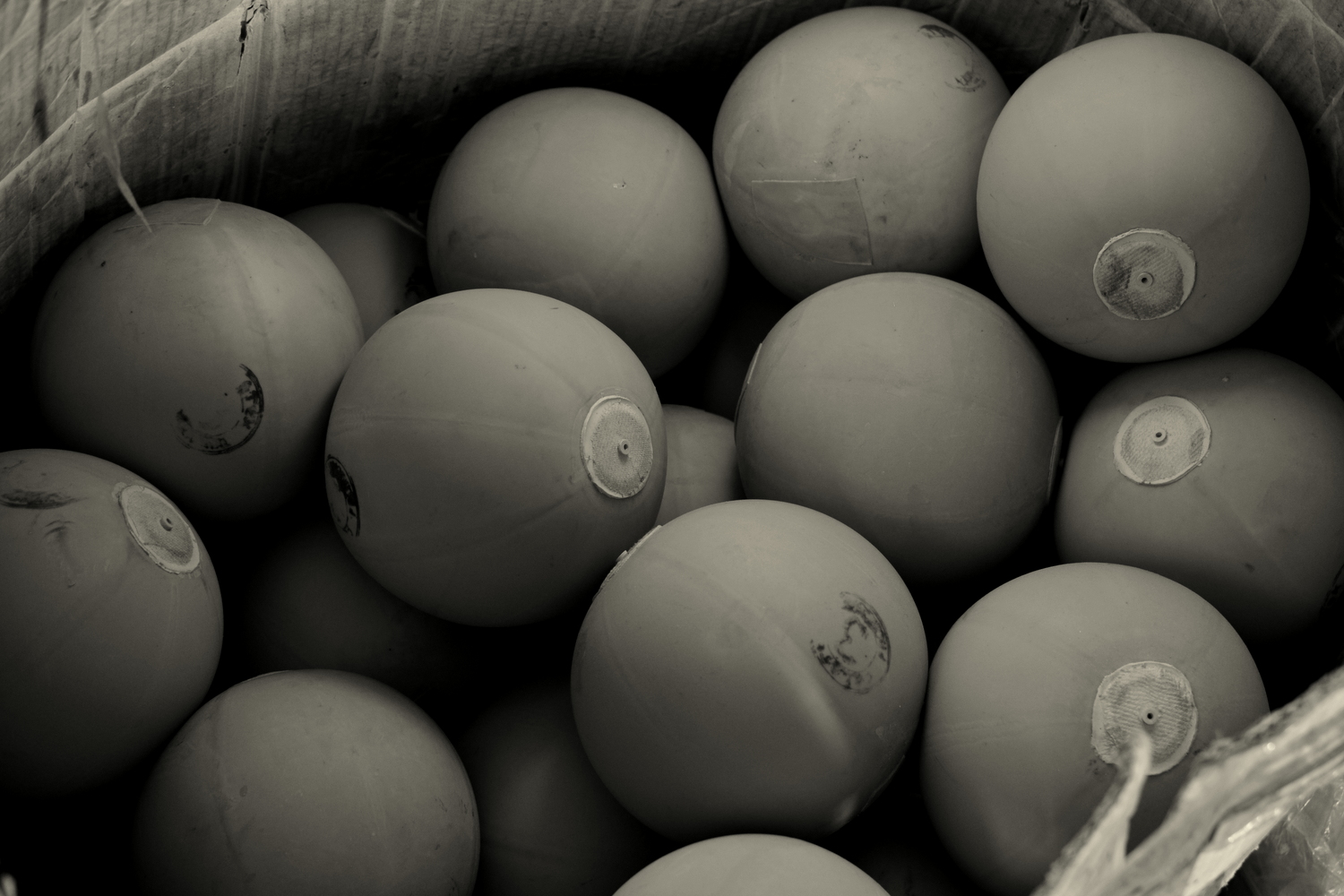


As we traveled south, Ecuador suddenly seemed to be bursting at the seams with soccer balls. Even the dustiest little pueblos and schools were blessed with a big stack of balls being sold from nearby convenience stores. Slowly the Salinas balls made their way across a border, through an unforgiving desert, and to a growing seaside town named Huanchaco.
Peruvians have quickly proven to be some of the friendliest people we have encountered along our path. Even the usually impersonal scene of a chaotic market has left us with memories of numerous new friendships and bellies full of gifted fruit. With trust in this nature, we set out with questions along Huanchaco’s malecon in search of children in need of soccer balls. A local restaurant that works closely with a volunteer organization called Otra Cosa was our first stop. The ex-pat owner sent us to find a man he had heard offers free soccer lessons in the area.
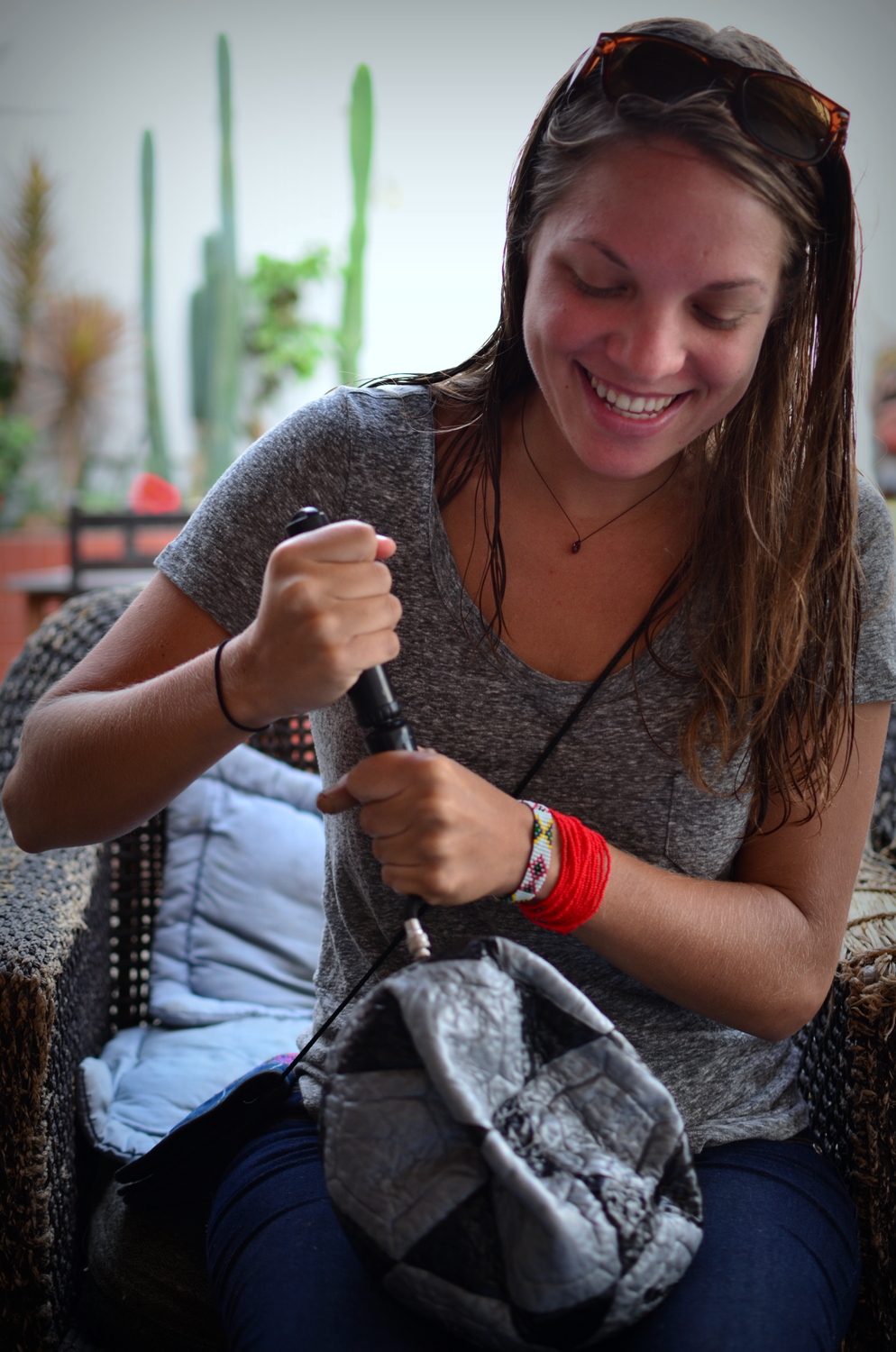


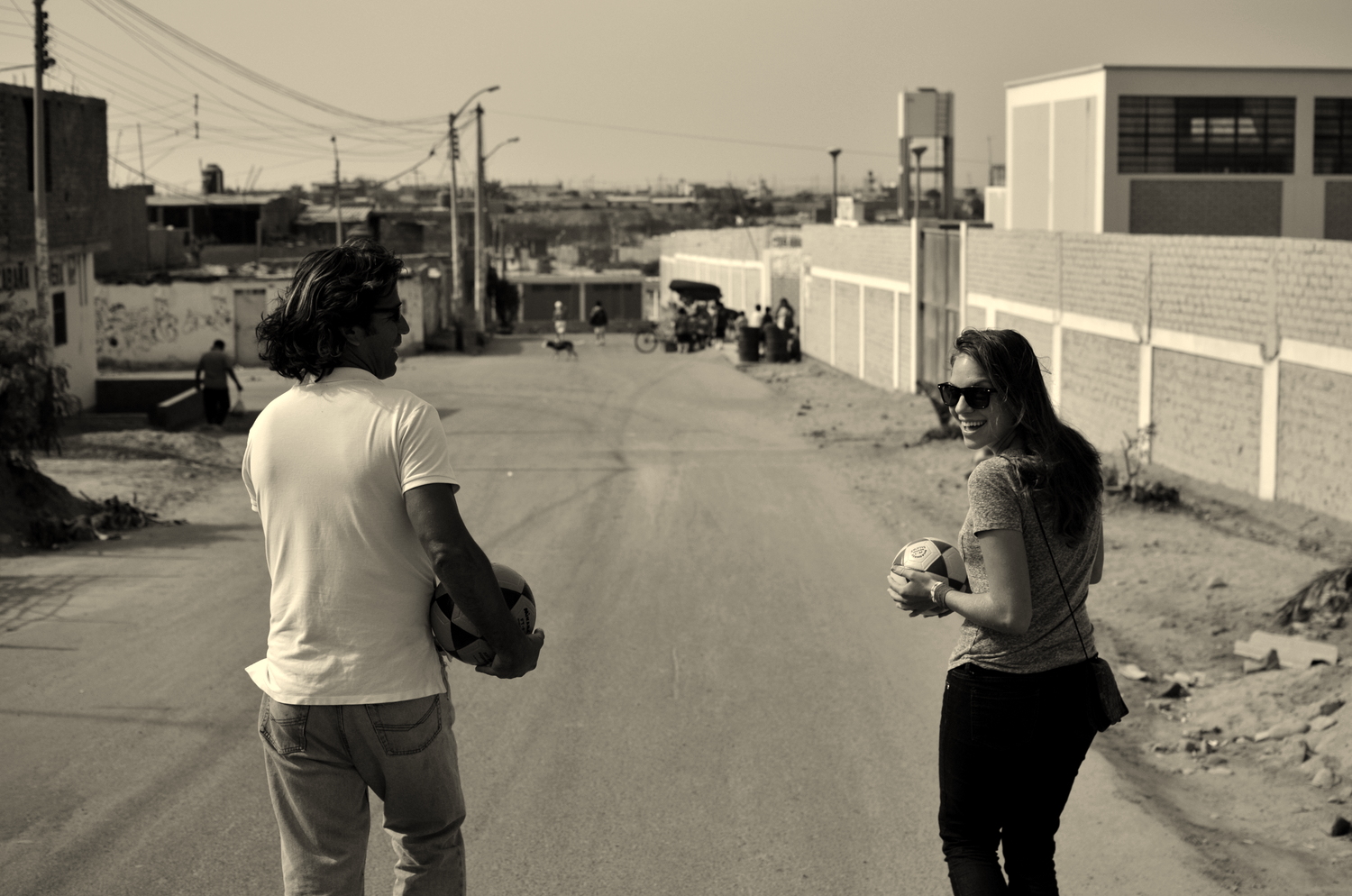
Juan Jose “JJ”, the owner of the beachfront Hostal Sudamerica, is a true character. His hostel offers creative volunteer opportunities including the free meal we’ll receive tonight after cooking for 15+. The good vibes flow right into the sound of the Pacific, and he often ends up with guests who have very much made themselves at home. The moment we met began the animated telling of his life story, a tale that has strung soccer along since his first kicks as a child outside of Lima. JJ’s passion for the game, something in the blood of every South American from what we’ve seen, has been the focus in his life. He played with A league US teams until the birth of his children, at which time he evolved into coach. In small US towns and big US cities, JJ taught private teams and organized all age summer camps. Three years ago he moved back to Peru, opened his hostel, and scouted a team of young local talent to guide. His boys are now nearing high school and he complains with a smile about their overconfident spirits and need for old school values—like gratitude. As he tells of his commitment to the kids that hang in a team photo behind his head, JJ brings to mind times where the frustration has given way to moments of recognition. While his team is decently furnished with donations from soccer clubs back in the US, our few soccer balls quickly stirred his excitement to join a small mission that might be enjoyed the way he once savored his first pair of soccer cleats.


The next morning we set out uphill into the heart of the village that persists beyond their increasingly tourist worn shore. Directions were asked until we found ourselves at the gate of a well-built school. Inside we could hear hundreds of children in the midst of recess. The principal and teachers greeted us comfortably and set us free in the playing crowds. JJ passed a big ball off to a group of boys who instantly posed proudly with their new possession in a way only a child with much experience glued to futbol games could pull off so smoothly. The ideal moment, though, was being able to upgrade a paper and tape ball that a group of girls had been tossing around with a bright white and blue handmade replacement. Nearly a month of patience (and a bit of extra weight) felt worth it in that courtyard.
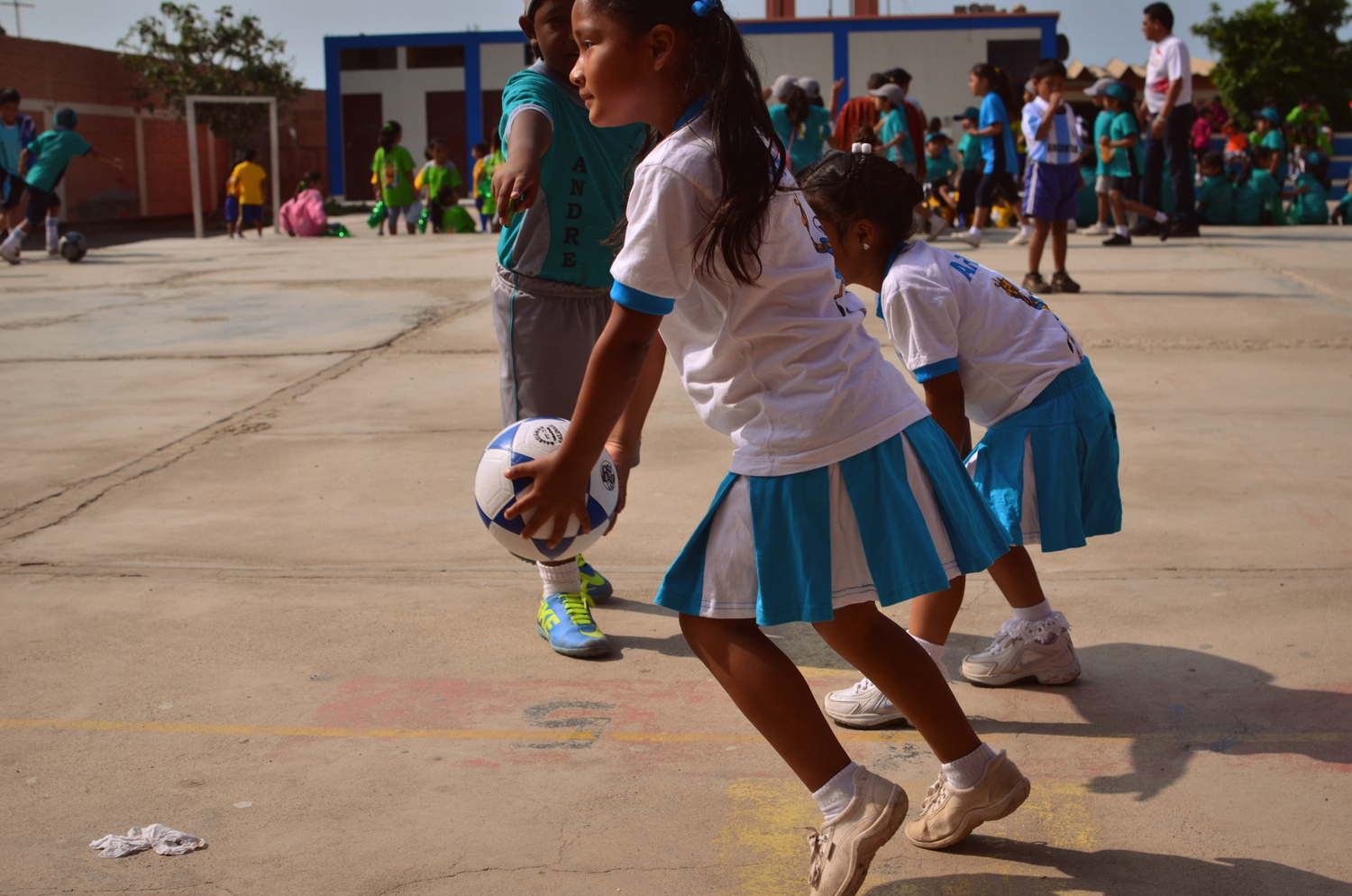
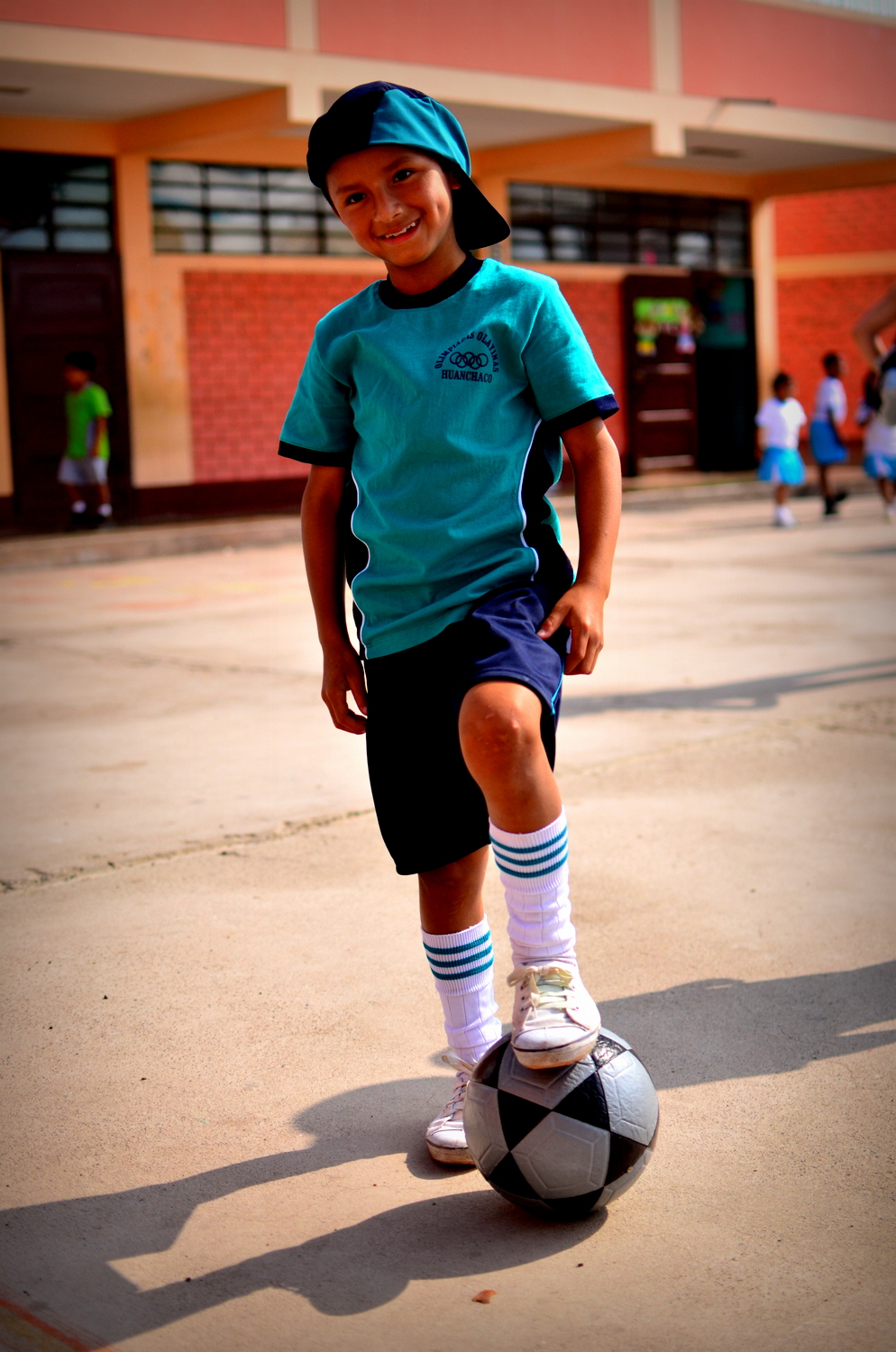
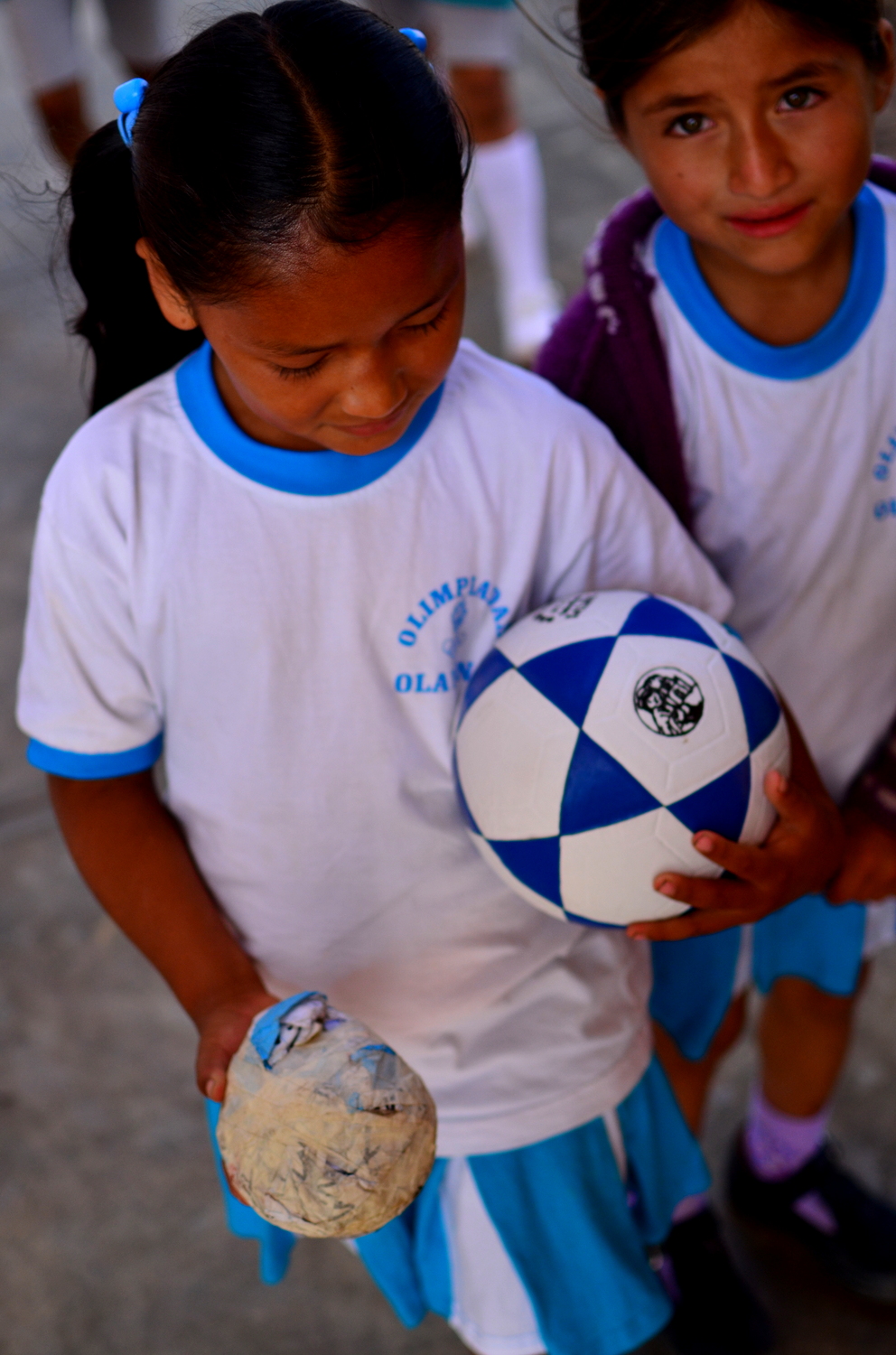

Thank you to those who donate to our Penny Karma fund for making another moment possible. With only $23 we were able to support a close knit cooperative community and put smiles on the faces and entertainment into the hands of deserving kids growing up in a less gentle part of the world. Your sharing sparked sharing!


Fuel the fire and we’ll keep our eyes open. Make a donation today!
PS,
Hit the like button if you do!

Come away with me

 TheAdventuresOfDr